Getting Around Houston Prior to 1952.

December 14, 2009

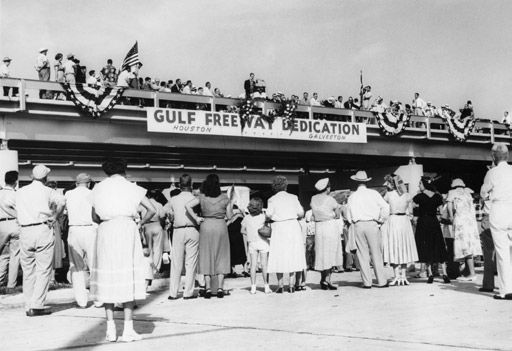
Prior to it;s August 1952 Opening, Houstonians referred to this answer to all our local travel problems as "The Super Highway"!

Our hopes didn’t fly for long, but there was a brief time in the late summer of 1952 that Houstonians thought that we had solved our local transportation problems for all time.  Under construction since 1948, the Gulf Freeway opened in August 1952 as the four-lane (two each way) clear shot passage from downtown Houston as a fifty-mile bullet car path to Galveston Island. All we had to do was to climb into our cars, enter the freeway, push the petal to the metal, and zoom on down to the Gulf of Mexico without ever stopping for a single traffic light.

It seemed too good to be true. Getting around this city of 490,000 souls without traffic would soon enough be an issue of the past in 1952. Of course, the fact that Jesse Jones and the Lamar Hotel “Good Ole Rich Boys Developers Club” had already bought up most of the land between Houston and Galveston and other boondocks places that could be turned into new housing subdivisions never occurred to most of us as the real motivation behind the construction of the Gulf, Southwest, Katy, Eastex, North, and Baytown freeways that soon enough spiderwebbed Houston like a form of concrete Kudzu vines. By 1965, we were hopelessly tied to freeways and the use of personal automobiles in this town. For a city as spread out as we had become, nothing les than the personal automobile could give many Houstonians the flexibility they needed to travel around and do business. Those who could’ve been served by trains to stationary work places were kept on the freeways too as the Texas Department of Transportation moved in to buy up usable rail lines and take them out in favor of freeway expansions like the recently completed I-10 route west into Katy.

The Gulf Freeway in 1956 wasn't wide enough to handle what was coming.

This past summer, I was coming back from an appointment far out the Gulf Freeway during the rush hour hour when I ran into a totally stopped up block of traffic in the old Gulfgate Mall area next door ro my old Pecan Park neighborhood. I thought, “Why not?”

I got off the freeway at Woodridge and took Redwood to Griggs, Griggs to 75th, 75th to Lawndale, Lawndale to Telephone, Telephone to Leeland, and Leeland to downtown. The whole detour took me no more than 15-20 minutes, just as it did in the old days prior to freeways. Then it dawned on me. We didn’t really have traffic jams back in the days prior to August 1952, but we did have a lot of really very   inconvenient red lights that today seem to run just fine with proper timing. We were sold on freeways as a route that wouldn’t stop us. We just didn’t understand that our impending glut of the freeways with increasingly necessary additional cars would stop us dead in our tacks without any red lights on our freeways. By the time I reached downtown using the old way, I could’ve still been siting out there on I-1o and Telephone via the freeway.

Oh well, what’s done is done. I’m just left thinking about all the old travel routes we once used to fan into our neighborhoods from downtown prior to the freeways. To travel east, you took Navigation, Harrisburg, or Leeland. To head south, you wanted Almeda or South Main. To head west, you had many choices, starting with Buffalo Drive (now Allen Parkway) to Shepherd and from Shpehred north and south to the western paths of Westheimer, Alabama, Richmond, Bissonnet (used to be Richmond Road), Memorial, Washington, Hempstead Highway, and Old Katy Road. To go north, the most obvious route was North Main, but you could also take Houston Avenue, Heights Boulevard, Fulton, Jensen, or Irvington as other options among the most travelled routes.

Regardless of your direction from town in 1950, you could be home inside of a one to eight mile trip. It was pretty simple stuff, this travelling, til we committed to the freeways. Now we’re back and looking for ways to living closer to work downtown so we don’t have to use the freeways we once built to escape the same scene we seek to recapture today.

Our problem is not the freeways. Our problem is that we once bit into the idea that freeways were our answer. Now we can’t make them go away. For one thing, we are hooked on having to using them. For another, the freeways have too much money and power behind them now to ever disappear.

Have a nice week, everybody!

Texas and The Babe.

December 13, 2009

Babe Ruth was baseball from the 1920s forward. He still is, if you scratch the surface of things even ever so slightly. And he had all the makings of an unforgettable character from the very start too. His unbelievably gifted joint talent as first a pitcher and then a slugger remains unmatched in the game to this day. Baseball has never known another player who could’ve made it all the way to the Hall of Fame in Cooperstown with either of those singular talents for throwing or slugging the baseball alone, but “The Babe” had them both, and he owned them at just the right moments in baseball history. By now it’s a biographically worn out story. After sparkling in two World Series championship seasons for the Boston Red Sox in 1916 and 1918, Ruth moved over to the New York Yankees in 1920 by way of a devilishly infamous/heavenly fortuitous trade, dependent upon the presence of your Red Sox/Yankees red corpuscles.

Regardless, Babe Ruth got to New York just in time to help America soon forget about/or recover from the terrible blow inflicted upon the game by the Chicago “Black Sox” Scandal of 1919. For those who haven’t heard, eight members of the 1919 White Sox club were expelled forever from baseball after the 1920 season for conspiring to fix the 1919 World Series in favor of the Cincinnati Reds. They were kicked out of the game in spite of the fact that they were never found guilty of such an act by a court of law. It consquentially fell upon the broad shoulders of one George Herman”Babe” Ruth to help fans find positive distraction from the dark side of things – and to do it with his ability to blast a baseball out of the park with a bat. He did it often – and for prolific distances.

During the 1920s and early 1930s, Babe Ruth came to Texas and Houston often in the springtime as a barnstorming member of the New York Yankees. The club played minor league teams and sometimes even squared off against the local Texas college clubs where they toured. My late father often told me the story of how the New York Yankees came to Austin in the spring of 1928 to play the Universty of Texas Longhorns during the time that Dad was a prep school outfielder at St. Edwards there. Somehow the school arranged to get the entire St. Edwards Bronchos team into the game over at UT for seating down the right field line, where Ruth was playing that afternoon against the Longhorns.

Dad long ago forgot the final score, but he implied that it was a heavily crushing “no mercy” margin in favor of the Yankees over the Longhorns. One of these days I may get around to actually checking Dad’s memory against the library line score record of that game, but I have no question about his most vivid recollection of that afternoon. During the game, Babe Ruth had an autographed baseball business set up down the right field line at UT. Ruth had a guy posted in foul territory with a bag full of balls. For five dollars cash, Babe Ruth would run over to the sidelines between batters and sign one of these balls for any fan who was willing to pay. The assistant would then toss it up to purchaser and that lucky fan got to leave with an authentic Babe Ruth signature on a baseball for the price of five dollars.

Of course, my adolescent question of Dad always rose quickly to”Why didn’t you get one?” That always opened the door for Dad to launch into the subject of prep school student poverty and the value of five dollars in 1928. It never even occurred to Dad that getting one of those Ruth signed baseballs was within the realm of possibility. “It would have been like you going to Buff Stadium in the spring and finding out that Stan Musial was signing balls during the game for those who were willing to pay him five hundred dollars for the thing,” Dad said. “Could you have bought one of those Musial balls in 1954 at that rate?”

“No, Dad,” I always answered, “I got the point a long time ago.”

Stiil, the Babe didn’t always come to town just to take people’s money. In 1930, the Yankees were in Houston to play the Buffs at Buff Stadium in single games scheduled for March 29th and March 30th. The Yankes took both games by scores of 17-2 and 6-5. while he was here, Babe Ruth went downtown and gave an address to Houston kid members of the Knothole Gang. The presentation took place at the old City Auditorium on the corner of Lousiana and Texas, on the site of the current Jones Hall building. The full house meeting was sponsored by the Kiwanis Club and a good time was had by all.

Wish we had the text of what “The Babe” actually said that day in 1930 Houston. It would be sort of  interesting to see if Ruth gave any advice to the kids that day that we wasn’t actually living up to in his own real life adult adventures. On the other hand, it really doesn’t matter what Ruth said or didn’t say that long ago day in Houston history. He was Babe Ruth, a guy who led by example on the field – and by the fact that he would even show up on a spring day in 1930 to speak with hundreds of Houston kids for free.

He was Babe Ruth and, for a few hours long ago, he walked among us here in Texas as our flesh and blood, larger than life hero. For those who were around at that time, nothing could detract from the power and magic of those Ruthian moments of joy that they were simply here together in his presence – and in their very own state and home town.

A Short Baseball-For-Fun Quiz.

December 12, 2009

(1) If the great Negro Leaguer Josh Gibson really was the black version of Babe Ruth, and vice versa, what would be a good right-on-target nickname for the white version of Josh Gibson? How about …”The Cracker Jacker!”

(2) When former Astros slugger Jimmy Wynn throws a big celebration weekend, what do they call the small dinner-dance party that highlights festivities? Why, they call it “The Toy Cannon Ball,” of course.

(3) Whenever former Astro phenom Rusty Staub had a really bad night of batting at the Astrodome, he was allowed to leave the ballpark by way of a private exit in an attempt to escape the media. What was this private exit appropriately called? What else could it be? They called it “The Rusty Gate.”

(4)  (And here’s a Harry Kalas favorite): Milwaukee Braves reliever Mel Famous once had a beer right before he was called into a game at the Astrodome in 1965. Pitcher Famous lost his usual pin-point control. He proceeded to issue a four-pitch base-on-balls to Nellie Fox of the Astros that forced in the winning run for Houston in the bottom of the 13th. And what did Fox say about that beer, once he later learned about it? Answer: “Well, I guess that makes it the beer that made Mel Famous walk me!”

That’s it for now. It’s Saturday morning and I’m long on errands and short on good ideas. Hope you each scored perfectly on all four questions. Here’s one more riddle of a football nature, just in case you are doing this one with your girl friend, wife, or best bud and need a tie-breaker. The first three here were mine, but like the more famous Mel Famous line, I can’t take credit/blame for this one, but I sure would’ve been happy to do so, had it first occurred in the slightly less dazzling humor chamber of my old porcupined brain. I think I wrote about this one several days ago, but nothing has changed to alter its veracity by way of another passing NFL weekend:

Question: What’s the difference beween the Houston Texans and a dollar bill?

Answer: You can get four quarters out of a dollar bill.

Have a nice weekend, everybody!

Irvin-Dierker Movie Saved by Sony Hand Camera!

December 11, 2009

Monte Irvin on Fidel Castro’s Failed Tryout: “If we had known he wanted to be a dictator, we would have kept him around and made him an umpire.”

Larry Dierker: “Did I ever have any pitchers who fought to stay in games when I went out there and asked for the ball? Nope. Those guys were all gone by the time I became a manager.”

“Not sure what it is, Monte. When you have a guy like Dave Raymond moderating a thing like this, it just seems to liven things up!:

Forgive my liberal translation above of what was being said by the participants in these stills from the DVD movie of Tuesday night’s SABR-sponsored Monte Irvin-Larry Dierker panel discussion on baseball history that many of us attended at Minute Maid Park on 12/09/09.  I simply wanted to use the photos to show all of you who couldn’t be with us some examples of the joyful moments you missed. I also want to let you know that we are lucky to have what we have in the digital movie.

Our plans for a professional coverage of the panel discussion fell apart at the very last moment. We didn’t even have a digital movie camera to do the job ourselves. Late in the afternoon, Bob Dorrill of SABR and I had just about given up on the matter as another lost opportunity to get get the 90-year old Hall of Famer Mone Irvin and Houston Colt .45s/Astros icon Larry Dierker on video record of wht promised to be a landmark evening,

Then we got lucky. I recently bought a new full 100 HD Sony Cybershot hand camera for doing still photo work. It came with its own rechargeable battery, a moviemaker option, and a capacity for capturing as many photos as the user could posssibly load onto a memory stick. Not really knowing if I would ever need it, I went overkill on the memory stick, purchasing one that could hold 16 gigs of recorded visual material. I wasn’t thinking about doing movies, nor had I ever used the moviemaking function until this past Tuesday night.

Man! Am I ever happy with the way this little camera saved the day for us!

I started out, sitting on the front row, to record as much as I could get before the battery went dead, I’m thinking I may be lucky to get 15 to 30 minutes, but was that ever selling this thing short. The panel lasted about two hours and I got the whole thing on digital copy, with adequate sound from the little mike within the camera. I had the power and the storage space by chance to capture the whole thing, a fact I only learned for certain when my adult son Neal came home and helped me upload the thing onto my computer hard drive. (My computer dependency far exceeds my computer geekiness, unfortunately.)

At any rate, the whole thing took up about 10.3 gigs of the 16 gig memory stick. I’m not a pro, but I think I got a fairly steady picture, along with the isometric exercise of my life. Holding that camera in the air without tripod or wall-lean support for the duration of the show was quite challenging.

I don’t how many DVDs it will take to now transfer this material intact into copies from my computer, but we will figure it out, along with a way to make copies available to those who want them. The Irvin, Raymond, and Dierker families will all get copies, along with copies we will make for our SABR and Cooperstown recorded history libraries. If there is a way to post the tape on our SABR website so that people can watch it from there is another option to be explored. Of course, if someone like our own Greg Lucas wanted to use the material for any kind of report he wanted to do for FOX, we will make the data available to him too.

I’m just thrilled that we were able to save a little bit of history that looked for a while as though it was going to be lost. As things turned out, the evening became one of the greatest moments that many of us have ever experienced with living baseball history. Monte Irvin and Larry Dierker are both one-of-a-kinds. And moderator Dave Raymond did a magnificent job of lighting the matches that started the fire of passionate storytelling. Those of you who weren’t there Tuesday night really missed something special.

The Chicken Shack: A Memory Jogger of the 50’s Culture..

December 10, 2009

The Chicken Shack was an East End institituion back in the 1950s. I don’t remember much about the South Main location, nor did I know that the place was a Texas chain of some sorts back in the pre-big chain era of places to eat out. People mainly ate at home during the 1950s. Restaurants, cafes, drive ins, and other kinds of away-from home eateries were all special in their own rights, and some, like our East End Chicken Shack location at the corner of Telephone and Wayside were honestly downright held close to institutional status by their favorite local patrons.

The Chicken Shack was renowned for its “chicken fried chicken.” As opposed to “chicken fried steak,” “chicken fried chicken” had that sweet and greasy chickeny flavor that so many of us artery-clogging galoots of that era preferred with our french fries and creamy apple pies. Man! It’s a wonder that any of us survived our culture of misinformation on what was good for us.

Want some real fun? Go shirtless all summer in the sun! Want to stop those mosquito bites? Run behind that neighborhood DDT spray truck and rub that foggy smelling dew into your bodies! As you do, say goodbye to the little critters! Not sure if your shoes fit? Stick those little feet in the store’s foot x-ray machine! See for yourself how much room you have inside your current shoes for your toes! Want a healthy meal when you can’t get a good one at home because Mom is too sick to cook again tonight? Come on down to the Chicken Shack! Anything on the menu should fix you up just fine with that “stick-to-your-ribs” goodness people came to expect from one of their favorite away-from-home eating places.

Of course, we avoided certain unhealthy practices back then too. Whenever we practiced baseball or football in the early and late summer, we took salt tablets and drank no water. That made a lot of sense. Only babies and mama’s boys needed water at practice when they turned blood-red in the face and started vomiting in dry heaves on the smoldering summer grass! Those of us who were ready, made it through steady!

When we awoke to the biological messages of adolescence that seemed to overnight change and drive how we thought about the opposite sex, everything in general, and fun in particular, we simply put sex out of our minds in the consoling knowledge that we could always pick it up again one day, once we were actually married to someone really gorgeous and we were only yielding to that powerful new drive for the sake of having children.

We didn’t waste time talking with adults about what we wanted to do with our lives when we grew up, nor did we talk with our parents or counselors about what was important about love and relationships between men and women. We just played ball and drove around in our cars as we also knuckled down in school, as best we could, for the sake of getting the right answers and making good grades. If we really wanted to learn about love and relationships, we listened to the lyrics from songs sung on the radio by entertainers Frank Sinatra and Nat King Cole. Those guys were much more eloquent on the subjects of love and marriage than our parents ever dreamed of being.

We didn’t get lost in drugs either. We had beer and whisky to get us by legally without ever breaking the law. That is, as long as there was somebody around of legal age to do the actual buying for us, or we could find a merchant who could do a wink-purchase sale to honest, well-intentioned minors who were just trying to have a little fun.

We didn’t need adults to set up “self esteem building” experiences for us. We just assumed that it was up to each of us to either get something done or be written off as worthless. That seemed pretty fair to me as I look back on it now. The idea, or even the phrase “self esteem,” were neither topics nor words that even came up for discussion back in the day. It was up to each of us to either make something of our lives or else, fall by the wayside.

We must have done something right back then. Look how healthy and well adjusted so many us turned out to be.

In the Cool, Cool, Cool of the Evening!

December 9, 2009

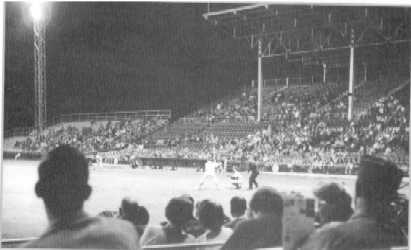
On another long ago cool evening at Buff Stadium, dreams lived big!

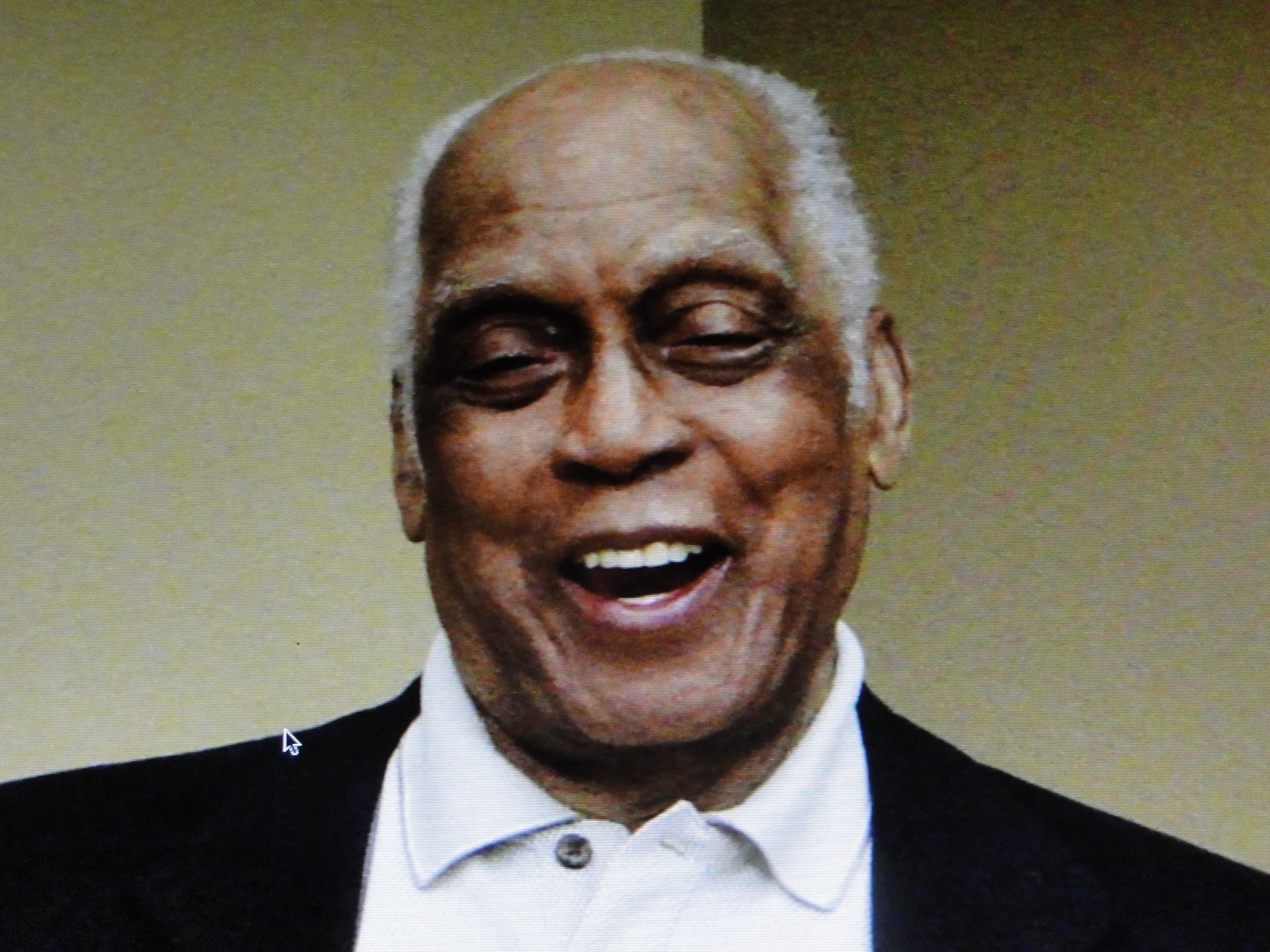
Sometimes it just takes a memory jog from something someone else says about life in Houston during the 1950s. Well, at last night’s SABR meeting panel at Minute Maid Park  that featured the wise and wonderful 90-year old Hall of Famer Monte Irvin and the simply younger, but also cool as evening  icon of Houston baseball Larry Dierker and erstwhile moderator glue and spark man Dave Raymond, there was a whole lot of soul-deep mind-jogging going on.

As I listened to Monte Irvin, images came forward that I have few words to back up. I recall him being here before in the early 1950s. The New York Giants came through Houston on a spring training ‘storm through Buff Stadium playing the Cleveland Indians. I can still see the black and orange in the Giants’ uniforms, the red and blue colors in the Indians’ uniforms. Also detached, but flowing from the talk of the Negro League days, I again see the Indianapolis Clowns all decked out in blousy flannels with some bright red, white, and blue shining forth in a pre-game exhibition of shadow ball at Buff Stadium. This image too floats from some some early long forgotten until now moment in my early baseball game watching career. I don’t even recall who they played, but the Clowns were unforgettable in this little patchy scene.

After the meeting, I asked Monte Irvin if he remembered a pitcher named Octavio Rubert from his days in Cuba as an outfielder for Almendares. Monte’s eye ignited in apparent joy at the question. “Oh yes,” he said, “Octavio Rubert and I played together and grew to be very close friends.” Irvin laughed at how Rubert used that false left eye of his to keep runners close to first. It was Larry Dierker’s mention only moments earlier of what righthanders do to hold runners on first that made me even think of Rubert. Now my mention of Rubert to Monte Irvin was bringing one of Rubert’s notable traits full circle to how it had landed in my mind in the first place. Octavio Rubert had the ability to to position that false left eye so that it appeared to be watching the runner on first. Monte Irvin added Rubert’s other trait, a ball he threw that simply dropped off a cliff as it reached home plate, one of those hard-to-pass-up, but just about impossible-to-hit pitches. I remember that pitch from Rubert’s Buffs days, as did former Buffs teammate Larry Miggins, who walked up to join us in these late night recollections of Cuban-born Rubert.

It was one of those cool, cool evenings that no one could ever count on having, chockful of new memories and observations about the old days of the Negro League, the fall of the color line, winter baseball in Cuba, how players and the game have changed, and what two great former players have learned that they are so feely willing to share. Dierker talked about his fortuitous striking out of  Willie Mays when he made his major league mound debut at age 18. “I had a pitch that broke left when it reached the plate, but I was so pumped that I threw it way inside. It probably made Willie think he was going to get hit because it came in right at him,” Dierker said. “It caused Mays to freeze and back off, just as the ball then broke left and crossed the plate for a called strike three.”

Monte Irvin spoke of his early admiration for Yankee greats Lou Gehrig and Joe DiMaggio. And, of course, Irvin also spoke of the great catches of Willie Mays, the fluid power of Josh Gibson, and the all-time greatest Negro Leaguer skills of players like Oscar Charleston and Martin Dihigo. Dierker chose Babe Ruth as his greatest player of all time. “There aren’t many people who can become both great hitters and also great pitchers,” Larry explained. “Because he was both, I have to go with the Babe.”

Monte Irvin saved the best story of the evening til nearly the very end: “When I was playing for Almendares in Cuba during the early 50s winter ball season, a young fellow named Fidel Castro tried out with us as a pitcher. He could throw the ball hard, but he was way too wild. He walked too many batters and we had to let him go. Of course, he went from there to the mountains and became a dictator. – As things have turned out, it’s too bad we didn’t know that he wanted to be a dictator. We could’ve kept him with us and made him into an umpire.”

Thanks to Tal Smith from SABR for making our cool, cool evening at Minute Maid Park possible. It turned out to be one of those once-in-a-lifetime nights. I caught the whole thing on digital movie mode with my little hand-held Sony regular camera. If we can determine that I’ve captured something usable, we will try to figure out a way to make it available through SABR for viewing by others. Keep your fingers crossed.

Welcome to the Hall of Lame!

December 8, 2009

Former manager Whitey Herzog and former umpire Doug Harvey were voted into the Baseball Hall of Fame yesterday by the Veterans Committee. They each garnered 13 votes, the minimal number required for approval of older candidates from this group of veteran selectors.

Herzog missed induction status by a single vote the last time. This time, one of his former players, Ozzie Smith, was a new member of the voting group. You do the math.

Herzog is not one of my favorites as a pick for the Hall of Fame, but what do I know? Maybe six pennants and a World Series victory as manager is enough to punch the ticket. Maybe it made a difference that he sometimes did some “creative” thing, you know, like put a pitcher in right field for a couple of batters rather than remove him from the game and lose him for the rest of the struggle that day. Gee! If that’s what did it, Al Hollingsworth of the old Buffs and half the other managers in the old Texas League ought to be inducted too. With those 19-player rosters of that minor league era, Texas League managers of the 1950s were constantly placing pitchers in right field for a batter or two, just to keep them available for a return to the mound.

This comment is  nothing deeply personal against Whitey Herzog. I just think his induction is typical of how a lot of new members get into the Hall these days. They go through long periods of being almost totally off the radar screen. Then, all of a sudden, a sympathy article comes out, questioning why they were overlooked. Then several years of “near miss” unfold as the public becomes more and more aware again of the old forgotten figure. In effect, induction moves from merely being a sympathetic emotional issue into one that now has political arms and legs working to get that person into the Hall. Whitey Herzog is only the latest example of how that works. It starts with sympathy, moves to empathy, and concludes with the completion of a successful poltical movement.

In that light, I’d like to set in motion a question of my own, about someone whom I think is truly deserving. If Whitey Herzog can reach the Hall of Fame, how can we continue to overlook Larry Dierker? Oh sure, Herzog bagged six pennants and a World Series ring, but look what Dierker did. – Larry led the Astros to 4 playoff appearances in his 5 years as manager (1997-2001) and, while he never reached the World Series, he threw a no-hitter as a pitcher (1976) and posted a 20-win season (1969) and wrote two very thoughtful books on baseball after his retirement from the field. And did I mention the facts too that he also came out of a two-decade other career stint as a baseball tv analyst and baseball historian, just to manage the Astros in the first place?

I’d  like to get some sympathy started for Larry Dierker as an overlooked Hall of Fame candidate right here and now! Are you with me? We’ll worry about how we get the right people added to the Veterans Committee later. Right now, we just need more articles of awareness to Larry’s Dierker’s lonely  plight.

Think: Larry Dierker deserves to be in the Baseball Hall of Fame! It’s a cryin’ shame he’s been overlooked until now!

UH Needs To Become a Destination School.

December 7, 2009

Elvin Hayes & Bill McCurdy

Easier said than done.

The University of Houston has served this community well since 1927. For thousands of  students like me, the presence of UH and the opportunity to work our ways through school because of all the job availabilites in Houston were what made college possible. These UH gifts put me in position for an academic  scholarship to Tulane, where I did my master’s degree work, and later, for the chance to do my doctoral work at the University of Texas.

The differences between UH, Tulane, and Texas back then were quite interesting. UH was an “opportunity” school that made college possibile for a lot of us young Houstonians in the post World War II years. Tulane and Texas, on the other hand were both what I would call “destination” schools, academically. You only went to either of those schools if you could afford it, had some kind of scholarship, or, in the case of Tulane, if you could pass the entrance exam.

As a student, I can tell you now that the academic differences betweeen UH and Tulane/Texas back in the day were more reputational than actual. In all three places, you had to be able to handle the work or you weren’t going to be around very long.

Today it occurs to me that those academic differences between all three of my universities are probably even smaller in 2009. As an adjunct faculty member for several special courses offered in the past through the Department of Continuing Education, it’s been my impression that UH has steadily raised its standards and expectations over the years, while Tulane and UT have certainly maintained theirs, at least.

One thing hasn’t changed reputationally. UT and Tulane are still viewed strongly as “destination” schools, acdemically, and UH still seems to hang under the old “opportunity” school label that it has flown since inception. That’s not bad; it simply isn’t the whole truth. UH is a fine school academically, one that is now old enough and good enough to viewed as a destination school in its own right.

Some obstacles impede the path to new perceptions of UH. First all, young Houstonians may be the last to ever view UH that way because the university rests in the same town where their parents live. A big part of seeking a destination for college involves picking a school that is away from mom and dad in another city. On that level, UT and A&M will undoubtedly remain the top choices for Houstonians, but there’s no unmovable reason that UH couldn’t became more competitive for students from Dallas. San Antonio, and elsewhere in the nation and world.

One thing that needs to be changed is the perception and reality of crime in the surrounding UH campus area. UH and nearby TSU both are aware of the problem and seem to be making some progress. If you haven’t been to the UH campus area in recent years, go take a look some time. The physical and architectural change in the area is everything from pleasant to artistic to beautiful.

The “opportunity/destination” distinction still applies vividly to the UH NCAA atheltic program. UH is still an opportunity school, sort of performing with all the respect once attributed in baseball to clubs like the old St. Louis Browns and Kansas City Athletics. Those clubs didn’t sign many good players and, when they did, they soon enough lost them to “destination” teams like the New York Yankees and St. Louis Cardinals.

At UH, the danger is in losing good coaches like current football mentor Kevin Sumlin to a destination school like Notre Dame, or even to a lesser destination site like Kansas or Louisville. Heck! Two years ago, UH couldn’t even hold onto one of its own, losing former Cougar Art Briles to the football program at Baylor, of all places. The good news there was that “we” got a better coach in Kevin Sumlin as his replacement in the process. The bad news is that, as long as we continue to play and pay as a lesser respected “opportunity” school, it’s just a matter of time before we lose Sumlin to one of the bigger fish in the sea.

I talked at length the other night with former UH great Elvin Hayes about our university’s need to become a “destination” school and he totally agrees.

The problem is always the same. UH has to go out there and gather all the power and money it can muster and round up and get it behind the goal of becoming an academic and athletic “destination school,” or else, stop complaining about losses that emanate from a basic lack of respect. I just think we, as a UH community, first need to do a better job of defining the goal for those whose help we seek. Donors need to understand that we aren’t trying to simply become a richer “opportunity” school. We are out to become a well-endowed “destination” school with some very clear academic and athletic goals in mind.

UH doesn’t have to give up all of the “opportunity” it historically has provided to local students, however, it most definitely will need to toughen admissions standards in some agreed-upon, most fair way. Change, even essential change, rarely comes easy, but you don’t become a desirable “destination” school by wishing yourself there. You have to do some things to make yourself desirable as such. That always involves breaking the strings on some old ways of doing things.

Will UH have the will to take on this challenge? As always, time will tell.

Steve Herskowitz for Judge.

December 6, 2009

Last Thursday night I had the pleasure of attending a campaign fundraiser for Steve Herskowitz, a 2010 candidate for the 311th Family District Court position that come up for a vote. I’d never met this son of Mickey and Sue Herskowitz until the other evening, but I had heard of him and his accomplishments for years. For me, it was time to make up for lost time getting to know another member of this wonderful Houston family.

In addition to scores of everyday people like me, the campaign party was attended by numerous local legends in sports, including original Houston Colt .45 member Bob Aspromonte and Hall of Fame Astros radio broadcaster Milo Hamilton, former UH Cougar and Houston Rocket Hall of Fame basketball player Elvin Hayes, tv-radio sports personality Craig Roberts, and tennis promoter, businessman extraordinaire Jim “Mattress Mac” McIngvale, plus numerous others. Almost needless to add, Houston’s iconic sportswriter, major biographer, and current journalism professor at Sam Houston State University, Mickey Herskowitz, “The Proud Papa,” was very much at the center of attendance, as was “The Proud Mama” and longtime champion of improvement in our Houston approaches to education, Sue Herskowitz.

There’s a lot of distraction to one of these parties for all the right reasons. Candidates don’t get grilled on whatever the issues may be. And most people who attend are already in the camp of the person they came to support in the first place. I attended as a friend of Mickey and Sue Herskowitx – and for the chance to meet the son I’d only heard about for years. I wasn’t even sure of the office he was seeking until I arrived. I left that night quite impressed with Steve, even if that positive impression already came served on top of some considerable bias in his favor. That being said, I wouldn’t, even couldn’t have been wriitng this article had I not found him both likeable and suitable to the office I now know that he is seeking.

For the better part of a half century, my professional life was totally absorbed by the complicated social and psychological business of working with Houston families in therapy. I still do that kind of work on a selective basis. At my age, I’ve simply gained a better grip on the kinds of situations I think I can help as opposed to those that only God or a fool would take on. And I never work with people simply because they have the ability to pay me out of pocket. The money motive alone isn’t right for the client or me, nor does it serve the interest of achieving whatever the best family resolution outcome that may be possible.

In that light, I came to some strong first impressions about Steve Herskowitz that will get him my vote and serve him well, should he be elected as a Family District Court Judge. These are all issues of major importance to those who pass through any kind of domestic legal resolution through the court on the way to decisions that will alter their lives and the lives of all family members involved forever. As I saw with so many people who pass through the domestic court system, their chances for a lasting peace with a courst decision hinged a lot upon the skill of those court personnel who were best trained in the practice of conflict resolution.

Thursday I learned that Steve Herskowitz has eleevn years experience as a conflict mediator and that he now even teaches courses on conflict resolution. I can’t stress this point enough: That is a big, big plus, folks! In my experience, judges who understand the  mediation process tend to make the most fair and realistic adjudications in matters that defy reason.

Steve Herskowitz comes across as a strong family man with good intelligence, passionate concern, and an open heart to the complicated pain of emotional suffering that he may someday soon face on a daily basis as the 311th Family District Court Judge. That is so very important too. We don’t need a judge sitting on that very important bench who only sees the client litigants as faceless names on those thousands of sheets of paper that fly across his or her bench each year. We need a judge who never forgets that the body and soul people whose fates he or she controls are sitting right out there in that courtroom everyday, – full of fear and anger – and in much need of help that can only come from the rendering of the best court decision possible.

One more thing on the asset side: Steve Herskowitz is also infected with his father’s marvelous sense of humor. And that’s good. Very good. Essential. In the direction he is traveling, he will need every last smiling ounce of it.

Bill McCurdy & Mickey Herskowitz

Steve Herskowitz is going to get my support for all the reasons I’ve tried to put forth here, and not simply because he is the son of Mickey and Sue. If I didn’t like his chances of dealing effectively with what I know he is getting into, I wouldn’t be writing this article in his behalf, even if he were my own son. If my own son Neal were unqualified to be family court judge, but still wanted the job, I’d be using all my energies trying to talk him out of it.

Please check out Steve’s site and make your own important decision about rendering your support. It’s very important that we support candidates for all the right reasons. The address for Steve Herskowitz is:

http://steveforjudge.com/about.html

Simply cut and past it to your http:// address line and click on over for a look-see.

THE TOY CANNON: The Life and Baseball Times of Jimmy Wynn.

December 5, 2009

Hello, everybody! It’s good being back here on the blog site after an absence of about a week. The publication deadline took me away for awhile had everything to do with a project very dear to my heart. Allow me to explain.

About two weeks ago, former Houston Astro slugger Jimmy Wynn and I learned that the book he and I had been working on about his baseball and personal life story had been picked up for publication by McFarland Company, the largest publisher of baseball biographies in the country. The good news simply left me with some last minute manuscript editorial barbering and detail work to perform that took priority over all other projects in the short term. That work wrapped up yesterday when I tromped on out through the snow and FedExed all our submisson materials to the publisher. What a great sense of relief that turned out to be.

The working book title is identical to the title of this blog article, but could change between now and our release date. We missed the McFarland dance card for a spring list release, but “The Toy Cannon” will be available for purchase through bookstores and Internet sites like Amazon.Com some time between July and December 2010. We’re hoping for a publication near the 201o All Star Game.

All I can tell you for now is that working with Jimmy Wynn on his life story turned out to be the labor joy of my life. We were already friends, but this project simply drew us closer. The guy was an amazing ballplayer, alright, but he’s an even more incredible human being. Jimmy doesn’t allow an ounce of ego fat to get in the way of any life lesson he’s needed to learn for the sake of his own survival and spiritual growth. And it will all be right there on the approximate 300 pages of this book to soon be.

Jimmy and I did the book with him telling his story in the first person over numerous hours of taped interview sessions. The story begins in the snow of his Cincinnati childhood and it moves all the way through his sometimes misadventurous big league playing days and finally forward to this incredible moment today in his late-in-life second career as an Astros community services representative and blossoming FOX Network baseball television analyst.

Along the way, Jimmy doesn’t play dodgeball with the consequences that arose from certain personal experiences, nor does he miss the wisdom that only comes strongly from enrollment time in the school of hard knocks. Those lessons carried forward as the invisible binding of  this work. To put it in plain and simple terms:  This book is not just about the yearly stats of “The Toy Cannon;” it is eventually and inevitably about the soaring wisdom and soul of a man named Jimmy Wynn.

As we get closer to knowing the actual release date of the book, I will keep you informed. In the very sweet and lovely meanwhile, I have to say that it’s good to be back in the land of The Pecan Park Eagle. I’ll try not to spam you too much, but I won’t make any promises.

Have a nice weekend – and try not to eat too much as you’re watching all the conference championship NCAA college football games that are unfolding before our sports-weary eyes this very cold Saturday!