Houston’s Historic Downtown Dilemma

February 4, 2012

Houston Texans Grille in City Centre on the West Side is Heart of Night Life Boom.

Yesterday our own Greg Lucas of FSHouston wrote an informative and entertaining column on the rise of Indianapolis as a Super Bowl host and major United States entertainment city center. The article was entitled “NFL Chose a Good City for Its Big Event: Indianapolis Makes Move To Even Bigger Time.” Check it out for yourself:

NFL Chose a Good City for Its Big Event

One of Greg’s interesting points is that Indianapolis, a city of 820,445 people, has about 6,000 downtown hotel rooms to offer – or about 1,000 more downtown hotel rooms than the City of Houston with its population of about 1.5 million more people than the City of Indianapolis. That comparison simply drove home the struggle we have here locally in generating any kind of sustained revitalization of downtown Houston.

We have built two, and soon to be three, major sports venues for baseball, basketball, and soccer in downtown Houston, but efforts to make the downtown area a “happening place” to both live and play seem to have again stagnated and slowed in growth as an attraction to the younger dynamic population that must be in place to make downtown viable again – or for the first time – depending on how you argue you the point.

WIth our vast availability of land for expansion, even early Houston did not stay downtown all that long – and now “going downtown” is still more associated with the long dreaded freeway to commute to work in an area that gets a little dangerous at night. That’s not exactly a magnet for people out looking for an easy, affordable good time on a Friday or Saturday night – nor is weekend business all an area needs to make it also work as a place to also live.  You also have to have those everyday amenities like easy and safe to reach grocery and drug stores, shopping centers, movie house, and medical centers covered by you health plan to make it work – and you must have a place free of panhandlers and everyday street reminders of our worst ongoing, unsolved social problems. Downtown Houston developers haven’t figured out that one at all, so far. It’s just very complex.

Adding to the complexity of downtown Houston’s development problems, or maybe the strongest cause of them, is that Houston has some well-heeled business developers in the suburbs all around the southern, western, and northern perimeters of the city that are beating the pants off downtown in the development of attractive places to go for nightlife entertainment within minutes and an easy drive from people’s suburban homes. The City Centre at I-10 and the Sam Houston Parkway most recently looms as the best example of that fact nearest to me.

The Civic Centre on the west side is like a small town unto itself. Loaded with restaurants, bars, and entertainment options, the place is busy all the time and like a small segment of Manhattan on weekends. People are walking all over the place and lining up to get in the most popular spots, starting with the most popular spot on the west side Houston planet, the Houston Texans Grille. When the Texans made the NFL playoffs, many fans lined up the night before to make sure they got to see these games from inside the arguably biggest sports bar in town. I’m presuming the Texans football team either runs or license the use of their name in this enterprise. For now, at least, it is a pure gold moneymaker for those who run the NFL popularity show.

And they didn’t build the place on Kirby Drive where the team plays and few people live. They built the Houston Texans Grille on the west side, off Memorial, where many of the Texan fans live.

That being said as little more than an update, what do you think? Can Houston ever really bring downtown to life? Or is it important to the city that we even try? There doesn’t seem to be any shortage of new hotel space on the west side. I don’t know about Sugar Land, Pearland, Champions, Kingwood, Humble, or The Woodlands, but similar things seem to going on in those places too.

Just how much do we need a revitalized downtown Houston? And what will it take to make that happen? ANd can it happen with so many big spending investors tied up in micro-center suburban development?

Those of you who know me understand that my heart is on the side of history and Houston doing a much better job of honoring and preserving its history. Then I have days, or periods of time, when I look around at the quick fruits of these City Centre-like projects and think, “Wait just a minute. This IS Houston and what it does. It tears down the old and throws up the new – or whatever makes money for now. Then it tears that down and starts over – or uses the space as parking lots or strip malls until somebody comes up with the next boomtown quick-bucks plan.

This is the same city that put land aside for Hermann Park, the Texas Medical Center, the Museum District, Rice University and the University of Houston, the incredible Houston Ship Channel, and the heart of what used to be our space program. Don’t we have some historic reasons for doing something to preserve the land and culture of the downtown area that still serves as home to those two classic buildings we once called the Gulf and Esperson buildings? Or does it really matter?

Maybe I’m wrong, but it doesn’t appear to me that downtown interests will ever be able to compete with the suburban big boys for the easy night out entertainment dollar. The question facing downtown is: Can it ever attract enough growth in the residential base to make serious downtown development of entertainment offerings worth pursuing?
Asa Brainard: First Ace of Aces

February 3, 2012

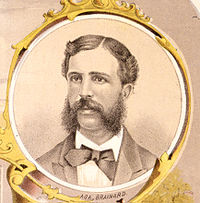
Asa Brainard: Ace of the 1869-70 Cincinnati Red Stockings

What happened in 1869 is unlikely to ever repeat itself in baseball history. In 1869, America’s first all-professional base ball team, the Cincinnati Red Stockings, went undefeated over the course of their entire season, a 57-0 barnstorming trek that took them from wins at home to victories on the Atlantic Coast and then, to add icing to the cake, they piled on further defeats of all challengers on the Pacific Coast in San Francisco. Guided by the future Hall of Fame-bound managerial wizardry and playing ability of Harry Wright and his kid brother George, and the brilliant, beyond the curve pitching ability of team hurling ace, Asa Brainard, the Red Stockings were able to teach everybody a lesson about the finer points of America’s dazzling new game.

It didn’t matter if the opposition caught on. The “Reds” had become the first all paid professional team by no coincidental accident. They not only learned the game fast under the Wright Brothers, but they also played it better and faster and smarter than all others. Remember. This was the era of bare hands play and no catcher’s protective gear. The pitcher threw underhanded from 45 feet away. Fair-foul bunts could produce some crazy results on the base paths and defense – and one-bounce outs on batted balls compensated partially for the absence of gloves. Batters also got to signify to the pitcher whether they wanted the ball pitched high or low.

What the batters couldn’t do with Cincinnati is adjust to the two major pitching qualities of Asa Brainard. – Brainard could control to extreme degree where he chose to throw the ball – and he rapidly learned each batter’s worst spots – even in the batter’s requested area. And if that were not enough – Asa also learned to vary pitch speeds for the sake of upsetting the timing of a “striker’s” swing. – And, since Brainard hurled 70% of the club’s game-consumed innings, the Red Stockings stayed right on top of things behind Brainard. They also developed the relay throw system on defense, struck hits on offense like summer afternoon thunder, and stole bases like the James Gang descending upon a small town bank.

Harry Wright only counted victories over sanctioned opponents. That’s why some sources will show the 1869 Cincinnati club winning a few more in their maiden professional year. Staying with Harry’s game count, the Red Stockings would win a streaking total of 81 games into 1870 before finally losing to the Brooklyn Atlantics in New York by a score of 8-7 in 11 innings. And that historic game played out before 10,000 wildly biased Brooklyn home fans.

The ten-man roster of the 1869-70 Cincinnati Red Stockings only made a gross total of $11,000 per season, with Harry and George Wright both drawing $2,000 and close to it – and Asa Brainard grabbing about $1,000. And it was a great start while it lasted.

Money issues and the formation of the new National Association in 1871 proved the temporary death of the first professional club. Harry Wright took most of the best players with him to Boston, along with the Red Stockings name, for a swing at league-based professional play.

Asa Brainard signed with the Washington Olympics of the short-lived National Association of Professional Base Ball Players in 1871, but never fared again as he did in his halcyon short run with the iconic Red Stockings. In four season with Washington, Middletown, and Baltimore, Brainard went 24-53 with an unremarkable 4.40 ERA.

The base ball world had caught up with the 34-year-old former ace and he reacted by doing the right thing. He retired from serious play.

Sadly, Asa Brainard died in 1888 at the age of only 48, but deaths in that decade of life were not as surprising back then as they are today. Baseball is not the only human activity that’s changed since the late 19th century. – Science, nutrition, and medicine have also moved further away from their own barnstorming days.

New Astro Uniforms, Old Models

February 2, 2012

Houston big league baseball began in 1962 as the Colt .45s.

Now that the door is closed on a team mascot name change in conjunction with Houston’s 2013 move to the American League, the “Astros” will be turning their attention to the less difficult task of designing a new color scheme and uniform style for the occasion. I’d say the odds on the “Astros” changing nothing about the uniforms for 2013 is about as remote as it was that they would change their name from that beloved space-rock-icon that so many season ticket holders apparently are so attached to keeping forever.

The only questions are: What are we going to ride as team’s New colors? And how about the design? Will the club go for something traditional or will they return to the marmalade fruit mix color scheme that we once experienced during the rainbow days? (All this discussion of style is not a bypass on the more important question: Will the team be going all out to make sure that the players who put on whatever uniforms provided are capable of getting better and winning it all?)

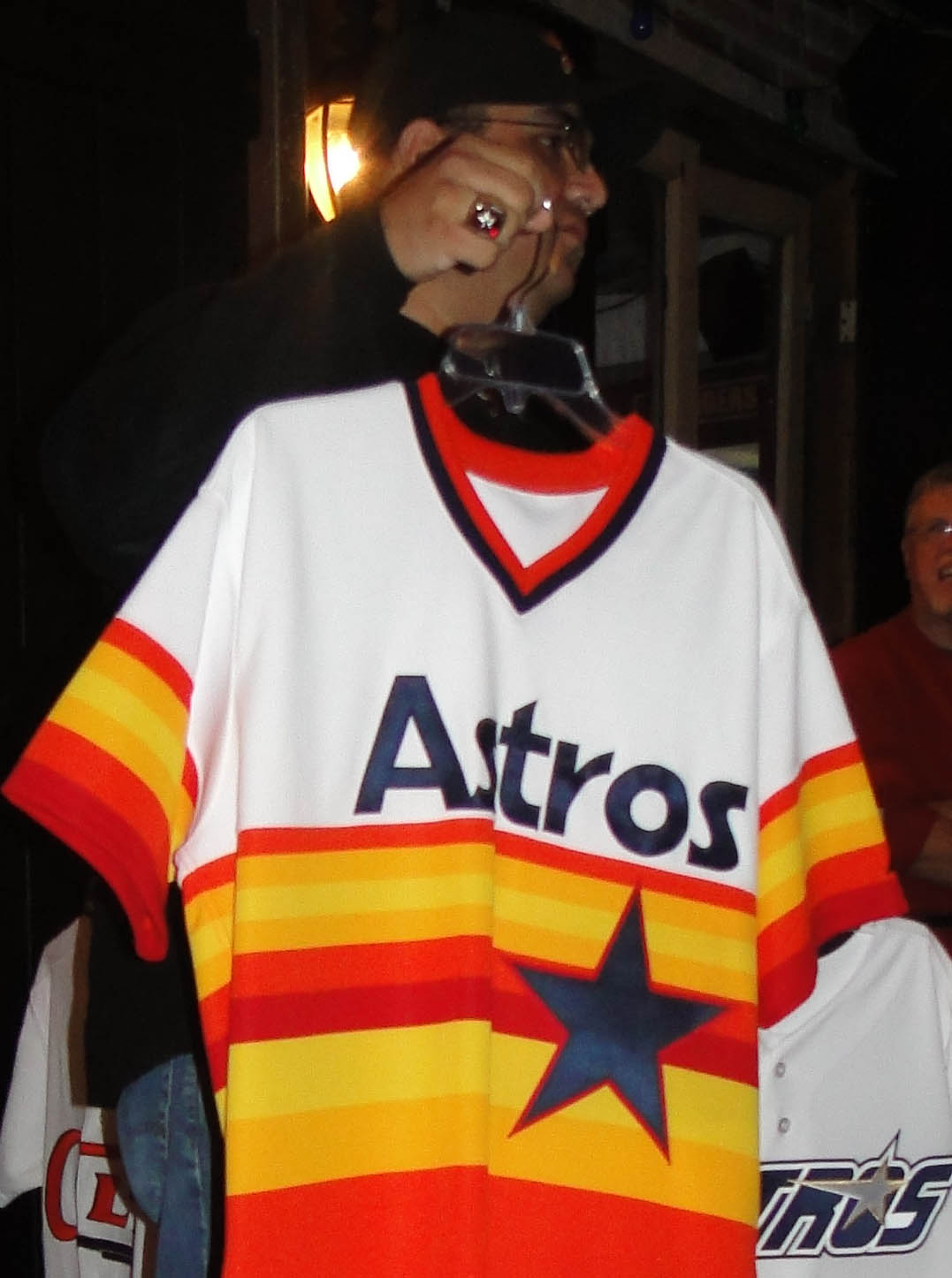
All the photos shown here today are available through the unceasing energy and passion of Astros Authentication Director Mike Acosta. Mike brought these to show the audience that attended our January 2012 SABR meeting. They are a literal parade of almost everything we have done in the past to garb our baseball warriors. The only iconic pattern missing prior to the current MMP uniform scheme is the rainbow-stripe sleeve uni that followed on the heels of the full rainbow garb. Mike showed that one too. I was just asleep at the wheel with my camera when he did.

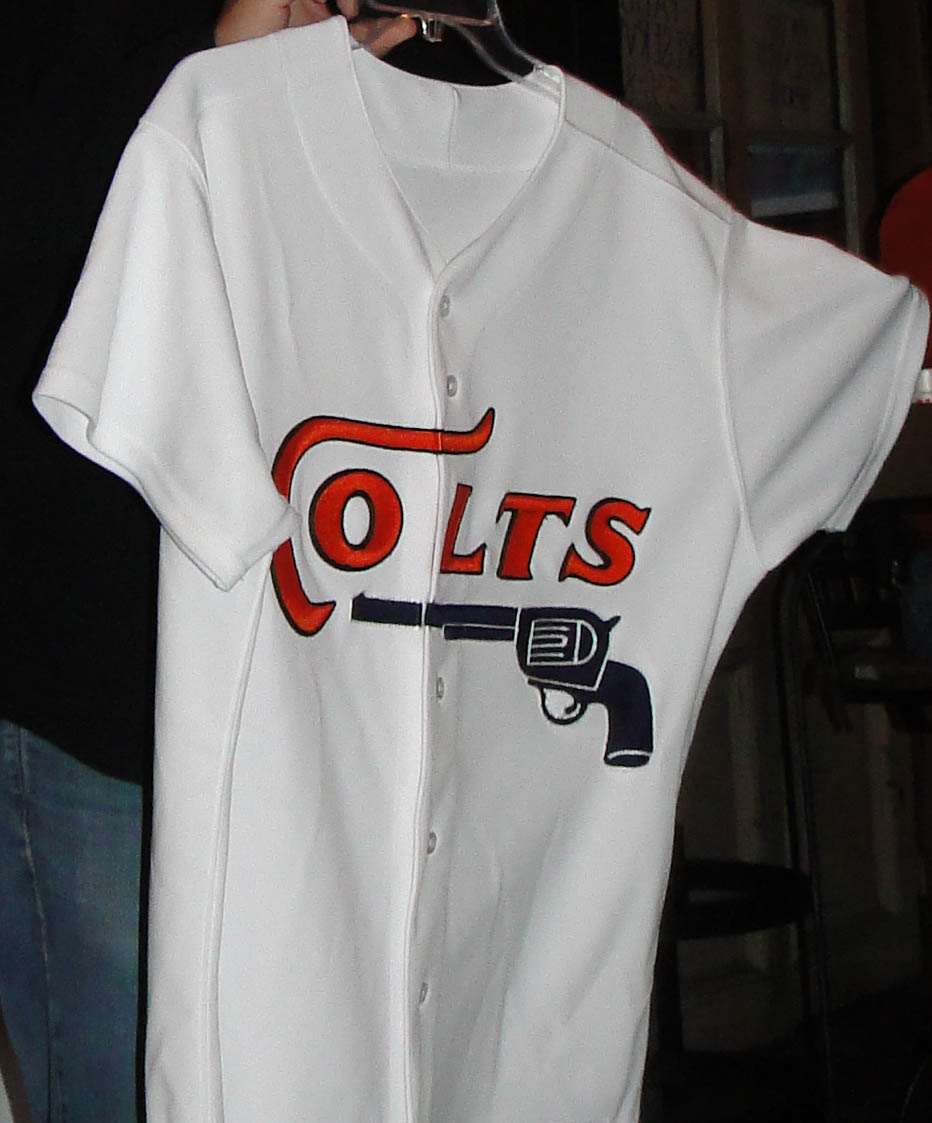
As most know, that first one up top is the 1962-1964 Colt .45 style that Judge Hofheinz put into play without working out the legalities of using that name with the Colt .45 gun company. When that company began to press for revenue sharing on souvenir sales, the Judge had an easier solution in mind. He changed the name to “Astros,”

Aren’t we lucky?

At any rate, the questions are now settled as to who they are and moved over to how are they are going to dress out as a space-theme team playing on the apparent site of a 19th century railroad station that is located just two or three blocks away from Buffalo Bayou?

I like the simplicity of the Colt .45 uniform, plus the orange major color and the navy blue trim and cap color. An adaptation of the orange and navy colors with a new star logo that connected the club better to its historic setting at Minute Maid Park would work for me. Heck, I wouldn’t mind a return to the old shooting star uniform front. That’s enough antiquity patina for me.

From the 1960s: My all-time favorite shooting star.

The psychedelic 1970s saw the introduction of the famous/infamous rainbow jerseys that even today are the favorites of many fans. Amazingly, the marketplace of the 1970s had not yet caught up with the idea that actual replica jerseys could be a popular and pricey sales item. All the fans could get back then were tee shirt versions of the rainbow. Now they are available as one of the most expensive replica jerseys for sale anywhere.

Somewhere Over The Rainbow, Skies Are Blue.

You may be one of those people who would love to see the Astros return to the land of the rainbow to show their fighting colors. If you are, you also may want to speak up soon. Who knows? Maybe someone will listen.

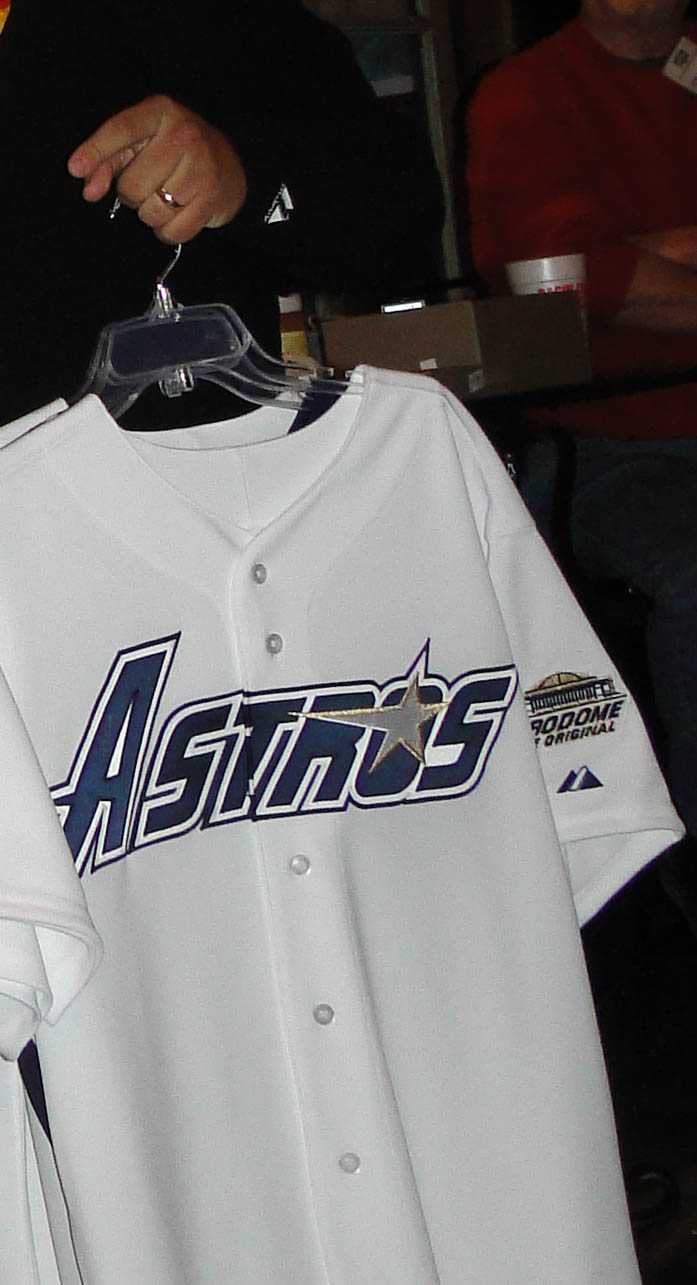
The only other historical model I photographed from the Mike Acosta-Houston Astros Collection was that bland, almost colorless jersey that the club wore in the 1990s during their last few seasons at the Astrodome. (See the next and final photo.)

Plain Jane Could Not Explain - Why She Had Astros on the Brain.

That’s it. My only real point today is that I think the club will be researching and developing a “new look” for their 2013 American League debut and that this might be the best or only time for fans to organize and transmit to the club their own preferences.

For some fans, it doesn’t matter what they wear. It does matter to all of us how they play. If the Astros don’t commit to winning and actually take a World Series or two in the next decade or so, it isn’t going to matter much they wear, anyway.

One more thing: simplify the duds: whites for home; grey for the road. And no pinstripes. Pinstripes on any club besides the Yankees look like kid pajamas to me.

What do you think? And beyond a winning team, what do you want to see in the club’s public uniform look?

R.I.P., Houston Buffs

January 31, 2012

Houston Buffs: Born 1896; Died 1962; Died Again 2012; but they will live on forever in the hearts of a few old fans like yours truly.

All my realistic friends told me that it wasn’t going to happen, but I’m old now. And hope rises in the strangest ways. Thank you, Mr. Jim Crane, for a week of false hope that the Houston Buffs were coming home for a major league reincarnation. It just wasn’t meant to be. The name that so dominated the consciousness of our baseball identity in the late 19th and early to middle 20th centuries is not coming back for a 21st century reprise.

I get it. I don’t like it. But I can live with it.

If you include this past season as worthy of account, our National League club has played baseball the past 47 consecutive seasons (1965-2011) as the “Houston Astros.” Had I been a new-to-Houston season ticket-holder or a six-year-old kid back in 1965, I would undoubtedly feel some of the same strong attachment that those folks who are still around still have for the name “Astros.”

I just don’t have it for the “Astros” name.

To me, “Astros” will always first be the marketing ploy name that Judge Roy Hofheinz slapped upon us after first executing the hope that many of us had that our “Houston Buffalos” would make it to the big leagues as our ongoing identity. Hofheinz did it by renaming the new big league club the “Houston Colt .45s” in 1962 without first working out the naming rights legalities with the famous gun company that made that iconic pistol. Rather than share revenues produced under the gun name, the Judge simply changed the name of the team with the opening of the new domed stadium and the introduction of the club’s new space theme.

“What kind of team plays baseball in an Astrodome? – Why, those would be the Houston Astros, of course?”

“Astros? – What’s an Astro?”

“Don’t ask me, but I think it may be one of those large rocks that hurdles through time and space, going nowhere in particular, but always getting there in a hurry.”

“Can an Astro land in a World Series?”

“Not likely. Hurdling through space, the odds against an Astro hitting earth, let alone landing in a World Series, are infinitesimally discouraging.”

Enough. Enough. We all got used to the name. Some people, the ones who wrote Mr. Crane this week in favor of keeping it, even bonded with the brand. And I must admit, if we were not going into the American League in 2013, there would not be another good time to change our history. We all bled together as a fan base when the “Astros” lost the NL pennants of 1980 and 1986 to the Phillies and Mets. – And we all felt the sting as “Astros fans” when Sir Albert Pujols stung us that night in 2005 with a home run that caused an extra playoff game and messed up our pitching rotation for our only World Series appearance. Going into the American League was the only open door for landmark change.

It just didn’t happen.

Today the name “Astros” has a life of its own – one that goes beyond space rocks, astronauts, or artificial turf. It is the iconic name of Houston’s major league brand – whether we all prefer it or not. It’s time to end this bump-pause in history and move on.

Rest In Peace, Houston Buffs.

Rest In Peace, Houston Buffs. The door just closed forever on your last chance to rumble the herd roughshod over the plains of major league baseball, but don’t worry. Some of us down here will continue to do all we can to make sure that you are both remembered for all time and also celebrated correctly for your important role in Houston baseball history.

Welcome to the Cardinals’ Virtual Museum!

January 30, 2012

New Cardinal Virtual Museum Opens Today, Jan. 30, 2012.

The new website, www.cardinals.com/museum, will be launched today, Jan. 30th, to showcase the team’s extensive collection of baseball memorabilia, as it encourages fans to explore and learn more about the 121-year old, very deep and accomplished history of the  team with the two redbirds on one bat.  The exposition includes hundreds of historical photographs, newly developed virtual exhibits, and educational videos that  examine the internal side of the collection and also highlight the biographies of the great Cardinals in club history. The new webpage also has interactive elements designed to encourage fan input. Bill DeWitt III, president of the Cardinals, commented, “We wanted to create a place to showcase our vast museum collection, while giving fans a chance to learn more about the rich history of the Cardinals.” In terms of size, the Cardinals Hall of Fame and Museum collection of 15,000 items and 80,000 archival photographs is the largest team-held collection in baseball and is second only to the National Baseball Hall of Fame

(The preceding comments were reformulated from information sent to me late yesterday by Bill Rogers of St. Louis from an original notice that had been posted by broadcast e-mail to numerous Cardinal fans by Jerry Berger. Because of my ties to the St. Louis community, many of these kinds of communiques quickly reach me too. I have known St. Louis Museum Curator Paula Homan for years and all I can say is, “Paula and the other Cardinal people really know how to give history the right treatment.” – I haven’t had much chance to explore this new offering, so let’s visit it together. Maybe we shall hit upon some ideas that could ignite here in Houston.)

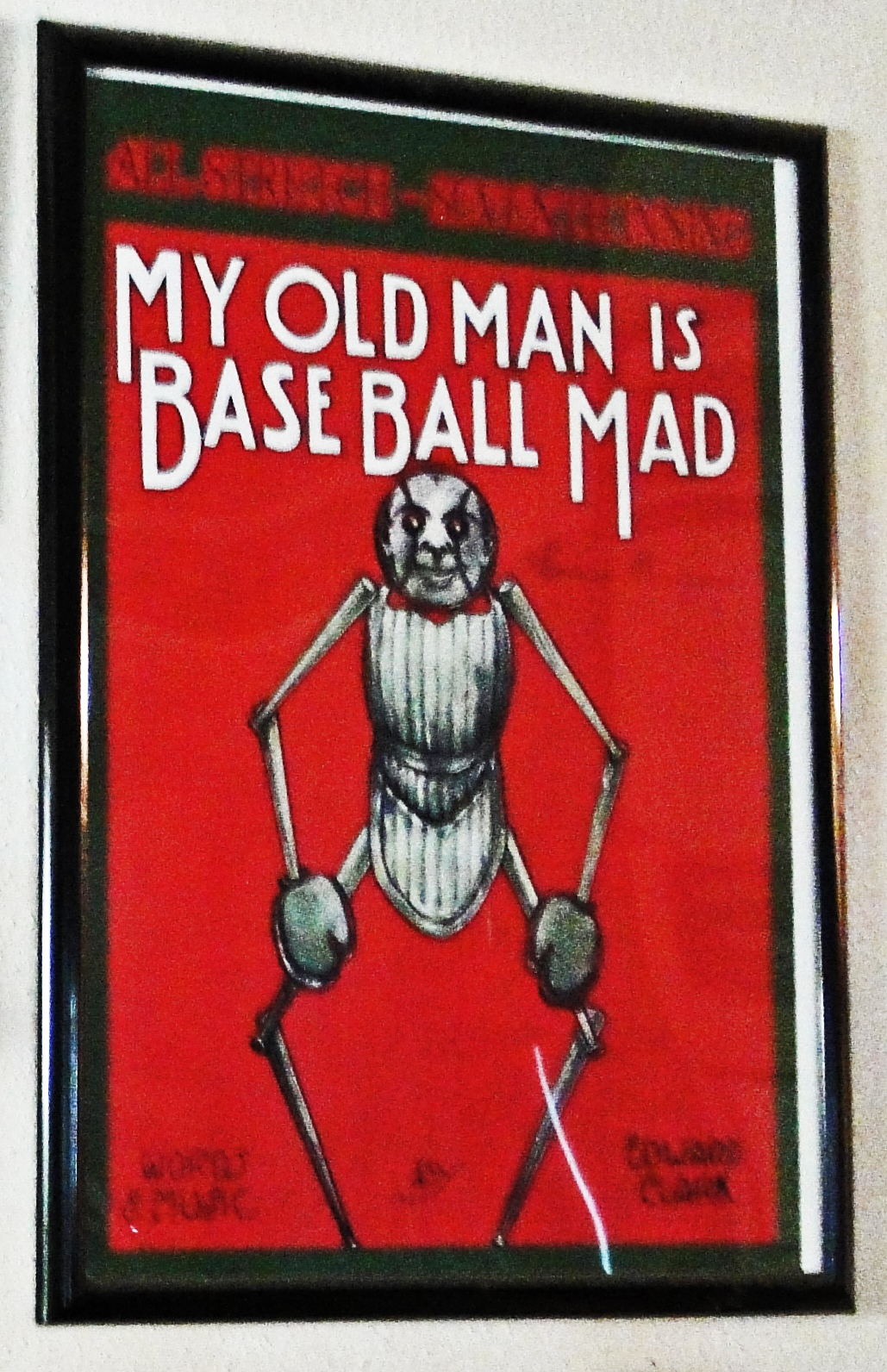
Is Your Old Man Baseball Mad?

January 29, 2012

Sometimes the line between passionate devotion and clinically diagnosable psychosis gets a little blurry. Sometimes it disappears altogether. And when the latter happens with enough people simultaneously at the same time in the same place it becomes “normal” – henceforth making “normal” both a fun and scary place to be for all those family members who are either standing on the perimeter of things – or not really into the flow of the “love thing” (as actor Gary Bussey now calls it in that local Chevy dealer commercial) with their Mad Old Man (or Mad Old Lady) family member.

Yes, some mad passions are trans gender afflictions and being a baseball fan is living proof that there is no sanity clause for some of us in our contracted “love of the game.” – We just have it – and it “ain’t” going away.

If you are a confused spouse, child, relative, or disengaged friend of a hard-core baseball fan, here’s a brief anecdotal test on where you may be with a loved one lost to the love of the game. If your lost loved one sounds similar to any of these exemplary fans, it just goes to show you that you are not alone.

The examples are all based on mostly true private disclosures. For the protection of confidentiality, all quotes are attributed to various John and Jane Does. Each example is for a separate individual.

(1) “My husband is an Astros season ticket holder. Last September, we had a chance to take an anniversary weekend flight to Paris, but he turned it down. He had seen every Astros loss of the 2011 home season in person and did not want to miss any of the others that might have happened (and did) during the time we would have been gone.” – Jane Doe.

(2) “My dad says it’s not OK to curse or use foul language, but he seemed to forget that rule last year. As the Astros’ 2011 season got worse and worse, I learned words that I didn’t even know existed. … By the way, what’s a long word that suggests unthinkable behavior between you and your own mom. I heard that one a lot.” – Little Johnny Doe.

(3) “Last year my ninety-year old mom died and we scheduled the funeral for the same day that the Astros were beginning a three-game series that night against the Cardinals. My husband refused to miss the opener. He figured we’d have time to get to the ballpark from the cemetery if the eulogist didn’t talk too long, and if we didn’t have to go home to change into our matching Biggio/Bagwell jerseys after the services. Since I didn’t want to see those veins that pop out in his neck whenever he doesn’t get his bratty way, I went along with his plan for reaching Minute Maid Park on time. We wore our Astros jerseys under our funeral clothes. That way, all we had to do after the funeral was to remove our shirt, blouse, and coats – and we were game-ready.” – a guilty looking Jane Doe.

(4.) “My Astro-Nut wife has to make every pre-season Astroline radio broadcast in person. Same with any other public appearance by Astros Hall of Fame broadcaster Milo Hamilton. If Milo were not retiring after this 2012 season, I’m afraid I would have been forced to draw a line in the sand with her on this one. – It would have to be ‘Milo or me. There’s no room for three!’ I may not be as young and as dashing as Milo, but sixty years of marital loyalty ought to count for something!” – dejected senior league John Doe.

(5) “My wife was never much of an Astros fan until I took her to her first bobble head giveaway game. I think it was Jose Cruz night. – Well, as a bona fide hoarder, the old gal took to it like a duck to water. now she has to go with me to every giveaway game, especially if it’s a bobble head night. She’s disappointed that they didn’t do a Drayton McLane bobber before he sold the club. Now she wants a bobble head of new owner Jim Crane and one for every umpire that’s ever worked an Astros game at Minute Maid Park. – Man! I never would’ve taken her out to the ballgame. You ought to see what it’s like walking into my house these days. It’s like a Sam’s Club where nothing ever gets sold from the shelf.” –  tired and overwhelmed  John Doe.

(6) “My husband is the most amazing season ticket holder the Houston club has. He personally attends 81 home games a year and only takes one person with him to each time. All of his guests have to have these qualities in common: (a) a willingness to get there in time for BP and an equal resistance to the idea that they would be there for the entire game; (b) they have to be quiet folks who don’t talk much – and don’t mind going for hot dogs in the 3rd inning, beers in the fifth inning, and pop corn in the seventh inning. – My hubby never leaves his seat. He just keeps score on every pitch that’s thrown in the game, never feeling the need for a bathroom break. His lone functioning kidney apparently was a gift from Superman. – It’s my job to make sure that dear hubby has fresh pencils and  scorecard books in his car at all times.” – long-lost Jane Doe.

(7) “My husband is one of those guys whose love of the game is not an act of inconsideration to me, the kids, his family, his work, or his faith in living to make this world a better place. – He belongs to SABR because he loves the narrative lore and statistical symmetry of baseball’s oh so beautiful, measurable game. – He goes to a lot of games, but he wouldn’t let baseball keep him from a chance to see the northern lights – nor would he allow a baseball game to taint the mourning of lost life – nor is he likely to sacrifice his intelligence or sense of decency to join the ‘mo fo’ crowd in their denigration of communication as a higher level art form. – He also bonds with all those who have grown up and even old with baseball as the fairest, most enjoyable shared constant factor in their lives. – My man loves baseball because it is the game that is not governed by the clock – and as such – its sandlot equivalent joy potentially plays out from here to eternity. – My man loves baseball, as do I. – You see, moving into the 21st century, we’ve finally survived long enough to listen and hear the truth about our love of the game. Men don’t possess a lock on tis magnetic attraction. – Women get it too. – And if this does make us mad men, and mad women, so be it. We are at peace in our madness for the greatest game of all time.” – the Soulmate Jane Doe of the Deep Blue Baseball Fan.

Play Ball, fellow mad men and women! Play ball!

My Early 2012 Valentine’s Day Lineup

January 28, 2012

My Early 2012 Baseball Valentine Lineup


Nothing like being early on a subject that most people won’t even cover, but I enjoy putting together or reading about various theme lineups based upon baseball names. I’m not even sure now how i handled this one last year, but here is my 2012 Valentine’s Day Lineup based upon baseball names. Please feel free to amend my choices or post your own suggestions here too. My research on the subject this morning was not particularly exhaustive.


Players By Position

Pitcher: Ben Flowers (1951, 1953, 1955-1956) (3-7, 4.49)

Catcher: Dante Love (2007-2009 minors) (.186, 2 HR)

1ST Base: Pete Rose (1963-1986) (.303, 160 HR)

2nd Base: Cupid Childs (1888, 1890-1901) (.306, 20 HR)

3RD Base: Jim Ray Hart (1963-1974) (.278, 170 HR)

Shortstop: Bobby Wine (1960, 1962-1972) (.215, 30 HR)

LF: Jake Flowers (1923, 1926-1934) (.256, 16 HR)

CF: Ellis Valentine (1975-1983, 1985) (.278, 123 HR)

RF: Bob Bowman (1955-1959) (.249, 17 HR)


Batting Order

 Ellis Valentine, CF

Cupid Childs, 2B

Pete Rose, 1B

Jim Ray Hart, 3b

Jake Flowers, LF

Bob Bowman, RF

Bobby Wine, SS

Dante Love, C

Ben Flowers, P *

* Of course, if “Flowers” fails, we can always call upon Candy Cummings.

The Houston Team Name Flame

January 27, 2012

One of the 80 36" diameter steel buffalo medallions that once rimmed the exterior grandstand walls of Buff Stadium in Houston from 1928 to 1961.

As Greg Lucas, Jerome Solomon, and others have noted, we have to hand it to Jim Crane, George Postolos, and the new ownership of the Houston major league baseball franchise this week for really doing a good job of stirring the pot of interest in the ball club this week. Their teasing offer earlier this week to be open to changing everything from prices to the the team’s colors and uniforms to the club’s nickname did the trick of drawing brief attention way from the afterglow of the Texans’ recently completed sort-of-happy football season and the onset of the win streak by a mediocre Rockets basketball team and caused fans to tug with each other over how they disparately view the scared identity of the local baseball nine.

As might be expected, most responding fans did not like the idea of changing the name of the team from Astros. Having played the past 47 years as the “Astros,” many fans grew up with that identity alone as their guiding light to loyalty. They could have been called the “Worms” and the reaction would have been just as strong under the circumstances. In 47 years, the word “Astros” has gone from “What the heck is that?” to an iconic identity of its own as the name for Houston baseball. To a slightly lesser degree, a few people expressed the same allegiance to “Colt .45s,” the name the club used during their first three years of big league play.

Then there are people like me who grew up with the names “Buffalos” or “Buffs” as our identity for Houston baseball. Our minor league club was first known as the Buffs in 1896 – and then consistently called the Buffalos/Buffs from 1907 through 1961.  Those of us who originally hoped that our first MLB club would keep the only powerful nickname from Houston history when they entered the National League in 1962 would welcome a second chance at that connected-to-Houston identity when the club moves to the American League in 2013. After all, the current ballpark sits on ground that was once roamed by real Houston Buffaloes – and it’s located only two blocks or so from Buffalo Bayou – and bringing back the Buffs identity would mark the third consecutive century in which our city had used that cherished identity for its professional baseball team.

And don’t tell us that Buffs is bush because it was once minor league. Tris Speaker was a Houston Buff in 1907 and Dizzy Dean pitched for the herd in 1931 as two of many greats who once played as Houston Buffalos. Plus the San Diego Padres, baltimore Orioles, and Miami Marlins have already demonstrated that major league clubs can bear up well by remaining or renewing their attachments to historical identities that began at the minor league level.

If the team remains the Astros, I get it – and I will not be surprised or hurt by the forces that work in favor of Astros. I just don’t have the strong emotional attachment to that name that I have with the Buffs imagery of my East End childhood. By now, Astros is iconic to the idea of Houston baseball and needs no attachment by reason or rhyme to space or the space program. – Sort of like the “Dodgers” in LA are simply who they are, without any connection to the art of dodging impact with Brooklyn trolleys that started them out as such a thousand seasons ago.

Houston Buffs 1947.

The only change I could not abide would be if the new ownership changed the nickname to something windy and stupid like “Hurricanes.” Don’t people who make long name suggestions realize from the start that their suggestions will never survive in print as such? Apparently not. As we have seen with the “D Backs” and “D Rays” (who wisely dropped the “Devil” and settled for “Rays) have learned, Hurricanes would quickly and forever go to print as “Canes” and then we would get to encounter the forever fun of checking out articles on Miami U. because we saw a “Canes” headline and thought it was about Houston baseball.

That’s all I’ve got on this one, except to add: “Give me a home where the buffalo roam – and I’ll be perfectly happy – as long as they win.”

By the way, history notes this other connection between the Buffs and our current major league team. – When Buff Stadium opened in 1928, the Union Station location of our current Minute Maid Park was the primary departure depot for downtown fans who wanted to catch the interurban train that ran by Buff Stadium after they got off work on game days.

Enough said. Go Buffs. Go Astros. Or whomever. – Just win.

The Cost of Human Imperfection

January 26, 2012

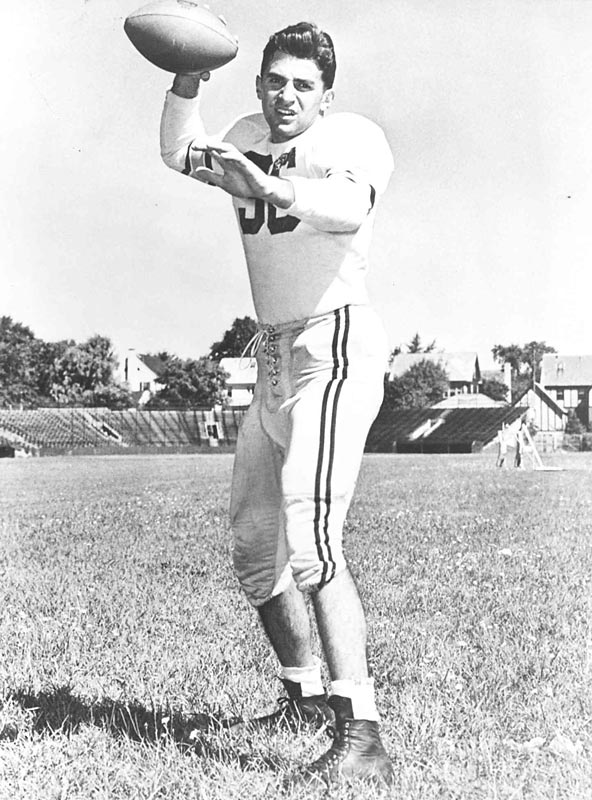
Joe Paterno, QB, Brown University, 1949.

I forget the precise quote, but I think it’s biblical in origin and it goes something like this: “To those who have much, much shall be asked.” Add that special requirement to the many times blessed life of the now deceased legendary coach, Joe Paterno, and you have a perfect storm formula for what may happen when our expectations of the great ones collide with the human condition of imperfection that rides within us all, and even in the hearts of the high and mighty.

Joe Paterno was a great football coach and human being, but in the greatest quiet challenge of his life, he failed all the still uncounted children who allegedly suffered in the hands of a Paterno employee, the now infamously accused Jerry Sandusky.

OK, the guy has not been convicted, but there has been enough there by eyewitness accusation to have pulled him out-of-place from doing any harm, or more harm, until his guilt or innocence could be sorted out and settled.

One big reason that earlier remedy never happened will always be the fact that Joe Paterno simply turned the matter over to his Penn State superiors and took no further action, even though the university quickly settled into a “let’s watch this situation and hope it goes away” pattern well over a decade ago.

As a mental health professional whose work has taken me through this unpleasant territory a few times over the years, I can tell you this much very clearly: It is horrible for the children involved and the longer they have to stay at risk, the more damaging it is. It isn’t easy for the eyewitnesses who stand up to the reality either. The offender is most often a family member, good friend or close neighbor, or a co-worker. It isn’t easy for most people to stand up to the reality of that behavior in people they love or value. The human escape wish is common: “Make this turn out to be untrue. Just make it go away.” Others turn the corner and make an abuse report and then quickly peel back into: “OK, I’ve done my part. Now leave me alone. I’ve got a life to live.” Psychologically, Joe Paterno apparently  got that far with the Sandusky allegations and no further.

I cannot remember a child abuse case from my own professional experience that hasn’t included someone who either made a report, or pushed the information upstairs for an institutional report, and then did nothing else, but these were just everyday people. They weren’t Joe Paterno.

The world expected more of JoePa and it didn’t happen. That makes him human, but unfortunately, it also stains his memory, his record, and his reputation from here to forever. That’s a heavy burden upon Paterno’s family and all the people who love him, but it is nothing by comparison to the harm done to those innocent children.

The casualty list from child abuse is similar to the casualty list from war. It will take years to get even an imperfect reading on how damaging this one alleged perpetrator’s actions in the Penn State case turn out to be for so many people.

One other note. It’s even hard to discuss this situation without treating Jerry Sandusky as a convicted perpetrator. He deserves a fair trial, if that’s even possible. It probably would’ve happened more fairly had everything been pressed to full light years ago, but that didn’t happen. It had to get tried in the media just to get our attention.

And now – even the opportunity for all around justice gets lost in the flight.

Two Musial Bios: Stewart Over Vecsey

January 25, 2012

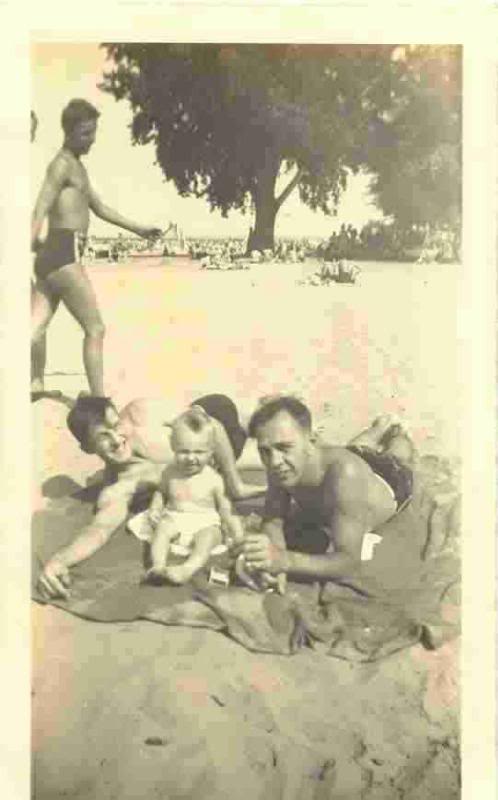
Stan Musial with former coach Chuck Schmidt with daughter enjoy day at the beach in early 1940s ST trip.

Just finished reading the earliest of two recent biographies of Stan Musial, “Stan The Man: The Life and Times of Stan Musial” (2010) by Wayne Stewart. I had read the other, “Stan Musial: An American Life” (2011) by George Vecsey a couple of months ago.

Both writers had taken upon themselves a daunting challenge. It’s very hard to write a fascinating book about a popular, accomplished, good citizen, and already well-known athlete that will hold the readers’ interest for very long – and no baseball player in history fits that bill of difficulty any better than Stan Musial. Even Babe Ruth, the greatest bio object in baseball attracts new readers to new books about him. Because of the Babe’s character, people will read another treatment of his life to get either a new take on his famous past sins – or maybe get unlucky and read of something new that’s been unearthed.

Not so Musial. It all comes back as “modest man … the guy next door … a smile and a handshake for everyone … and he loved and took care of his mother … never cheated n his wife … was a great dad and role model … best teammate ever …. always willing to do whatever was best for the team … never put on airs around ordinary folk … and in business, was as honest as the day is long … even got to be close friends with Pope John Paul II as a very active practicing (and famous) Polish-American Catholic.

How many pages can a writer roll with that one and still hold his or her audience?

Stewart and Vecsey both did credible jobs – because of their abilities as researchers and writers – and because I really wanted to read what they had to say about my favorite active major leaguer from my post World War II childhood.

I didn’t really learn a lot of new things about Stan’s public performance, but I found Wayne Stewart’s trail on the factual unfolding of Musial’s personal life, from childhood to old age, just about the most complete I’ve ever read, and right down to a blow-by-blow unnecessary description of the deterioration in Musial’s physical health through 2010 on his way to age 90.

George Vecsey spent too much time trying to analyze Musial’s speech patterns for some fresh light on the inner soul of this seemingly perfect man. Maybe due to the fact that I come from the primary field of behavioral analysis in my lifelong “day job,” I have an aversion to excessive attention from writers who turn on a subject with a paraphrasing “AHA! The subject is smiling when he should be crying.”

Don’t go there, fellas – especially if you go there only armed with something you heard from Dr. Phil. It isn’t fair to your subject.

Vecsey exposed his writer’s expertise as a speech analyst on page 41 when, talking of a Musial childhood speech issue, he wrote:

“Musial would retain a trace of a stammer into his adult life, sometimes speaking fast in the local accent of his childhood, sometimes using familiar mantras – whaddayasay-whaddayasay, wunnerful-wunnerful – as  a defense mechanism, to soften having to speak seriously.”

Thank you, Dr. Vecsey, but we could have gone all day without reading that.

In the end, both writers paraded out the narrative, but personally found more enjoyment in the fact-centered linear account of Stewart.

In the end, I do always enjoy reading how mathematically it worked out that Stan Musial proved the even-steven quality of his hitting at home and on the road.  He finished his 22-season career (1941-1963) with a ,331 BA, 475 HR, and 1,951 RBI. His 3,630 career hits came evenly. He nailed 1,815 hits at home and 1,815 hits on the road.

The day I met Stan Musial, May 1996.