Til The End of Time

June 24, 2012

Ralph Whittington’s Barber Shop, Beeville, Texas, Circa 1910-1980 (roughly).

I’m in no position to confirm the specifics of Ralph Whittington’s exact age or period of service as a barber in my birthplace of Beeville, Texas, but I do know he was around early to cut the hair of my late father as a child, and Dad was born in 1910, and also around until either the late 1970s or early 1980s to cut my hair on those trips to Beeville with my folks and really need a haircut. (I grew up in Houston from age 5, but Mom and Dad moved back to Beeville during my junior year in college.)

Walking into Ralph’s Barber Shop was the equivalent of stepping through a worm hole into a place of the past that never changed. Ralph was always the same. And so was his shop. The place wreaked from the fragrance of  sweet tonics that the cowboys and ranchers preferred, both as after-shave lotions and hair compression mixtures. Located next door to the downtown Washington Street main drag movie house, The Rialto, Ralph’s chairs were packed on Saturday market day gatherings of men wearing khaki shirts and pants with their sweat-stained tan-colored work Stetsons.

“Have you gotten any rain over at your place lately?” was most often the question of the day. And most often, in the dry, hot-as-Hades-in-summer climate of the upper Texas Gulf Coast above Corpus Christi, the answer to that question was either a resounding silence or an occasional smile of “Yep, about an inch fell, but I could use a whole lot more.”

The way I always heard it from Dad, Ralph Whittington was there in his shop six days a week for about seventy per cent of the 20th century. He closed on the traditional Mondays that barbers always used to take, but God and his family alone only knows what he did with that precious time off. Also the way I heard it, Ralph Whittington never traveled any further than 16 miles from his own birth home in Beeville during the 90 some-odd years he was breathing the air of this earth. That’s enough distance to get you to Pettus in the north, Papalote to the south (I think),Berclair to the east, and a good start on Three Rivers to the west.

I never met anyone beyond the shears and scissor members of his family. Ralph was a small, soft-spoken man, one with the ability to help keep a conversation going without saying much on his own. It’s a social quality that good barbers used to universally share with bartenders. They each knew how to listen. Unlike today’s stylists, the old-time barbers were not filling the air with commercials for new hair care products. Vitalis and Wild Root Cream Oil were usually all you needed to cure and calm whatever ailed your freshly cut hair.

And barbers didn’t spend thirty minutes cutting the heads of bald men for the sake of justifying a fifty to seventy-five dollar fee that today’s style experts charge. Bald guys paid the same four to six bits (50 cents to 75 cents) as everyone else, but they also got the bonus of a quicker finish to their stays with Ralph.

In time, I came to think of Ralph as though he were more like the calendar or clock that each hung on his shop wall than he was anything like all the hot-shot change salesmen in my world from those earlier times in my life. His range of thought was always the same, even though the hours of each day flowed steadily by. His smile never varied either, even though the days of the months and years flew off the calendar as they always once did in the old really classic black and white movies of the 1940s.

Ralph Whittington was just one of those figures who lived out his life as a reliable, friendly symbol of his era. He didn’t live by the clock. He was of the clock itself, and so he shall always be remembered – til the end of time.

Thank you, Ralph, and all you other old-time barbers. Thank you for just being there when America needed a good, quick, affordable haircut.

That was Ralph Whittington’s Barber Shop, in the similar more narrow building that was once just to the right of the Rialto Theater on Washington Street in Beeville.

Hell’s Big Game

June 22, 2012

Hellzapoppin Park, The Netherwprld. (Actually photographed in Colt Stadium, Houston Texas, on just about any Saturday afternoon in June 1962.

Hell’s Big Game


Once upon a red-sky time – in a ballpark down below,

All hell was burnin’ brimstone – as was the usual show.

They had a game a churnin’ – as they played into the last,

The Devils 3 – The Demons 3 – the 9th came hard and fast.


The game had much a ridin’ – as the Demons came to bat,

The Devils aimed to goose ‘em – and then to drown the cat,

By bringin’ Dolphie Hitler in – to panzerize the Demons,

Lucifer hoped to kill the need – for extra inning schemins’.


Old Dolphie was a cranker arm – goose-steppin’ every pitch,

But when he let each damn ball fly – many slipped a hitch,

And sailin’ wide and wild, they flew – and landed in the ditch,

And Dolphie walked four Demons – before he killed the glitch.


And headed for the bottom – of Lucifer’s last hope,

The Demons led the Devils – by a 4-3 Hitler mope,

Twas time for Satan’s big sticks – to show up with the soap,

And wash away disaster; – they simply had to cope.


But Saddam went down swinging – and Osama pulled up lame,

And Qaddafi bit the bullet – the lodged one in his brain,

And the Demons took the Devils – moved up to higher ground,

To the Underworld Series – off they go, …


Are the Unholy Ghosts around?

The Old Ball Game Was Never Pure

June 21, 2012

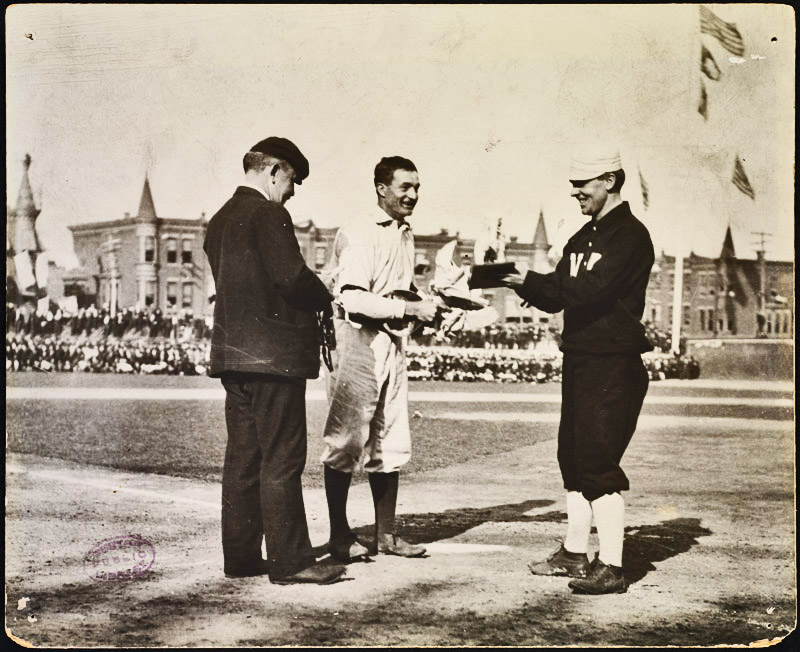
John McGraw (in black) gets ready for his Giants to square off against the Athletics in Game One of the 1905 World Series. Muggsey already had $400 in even money down on his Giants.

The exoneration of Roger Clemens in his second perjury trial this week reminded me again of how much we hypocritically condemn those who have even had their reputations smeared for things that a hundred years ago would not have even caused a bug-eyed glare. Personally, I have no idea if Roger ever used steroids, but I do know that a jury found him innocent of lying to Congress by his denials of same – and I would love to believe him – and add to that: Don’t keep a worthy candidate out of the Hall of Fame for reasons that add up to little more than full character assassination.

There is no proof of anything else.

Besides, steroids don’t give a batter the ability to hit a baseball. They just supply the strength to hit it farther, converting ordinary homers to Ruthian clouts and, sometimes, lifting ordinary fly ball outs beyond the fence for home runs.For pitchers, steroids don’t cause a ball to curve more, but we are given to believe that they may help pitchers to work longer or heal faster from the normal wear and tear of pitching. Should quick healing be indicted as a crime against the record book. What if we come up with a medicine someday that would allow a starting pitcher to work more often without risk of permanent injury or contraindicative side effects? Should we ban the substance to save the continuity of our record books?

Or should we simply send out a warning to Cy Young? “Hey, Cy! Watch out! The robotic arms of 21st century pitchers are coming for you!”

Back in 1905, John McGraw bet $400 on his Giants to defeat the Athletics in the first official World Series that had been agreed upon as an annually automatic contest between the champions of the National and American leagues. Pete Rose apparently bet on his Reds club fairly regularly in the 1980s.

Nothing was said to McGraw about his betting. His club won the 1905 World Series behind three shutouts by ace Christy Mathewson and McGraw found his way quickly in later years to the Hall of Fame. – Rose, on the other hand, got creamed for betting on baseball and for lying about it for years. As a result of his actions, Pete Rose, the all time hit total leader was effectively excommunicated from baseball and banned from the Hall of Fame, a condition that continues to this day.

When you ban some people and overlook others, for essentially doing the same thing, but in different eras of permissiveness and prohibition, you essentially alter the record book by making that distinction. Either let everyone into the HOF whose playing records merit their mention, or else, go through the ranks of current members and kick out the ones whose behavior matches up with those who are now prohibited. And then just treat the thing as the “Good Boys’ Hall of Fame,” a place where career and character are both important to induction.

The baseball sub-culture, like society itself, has never been perfect nor is it likely to become so.

We will continue to chemically progress in the ways we treat injuries and illness to the body, and our ability to prolong the physical capacity of youth is likely to keep increasing as well.

The so-called war on drugs has become nothing more than a bee line for making some of the meanest people in the world nasty rich –  and it has provided a bureaucratic vested interest in many officials that serves to keep alive a war that will never be won – simply because it keeps alive the careers of the forever chasing good guys.

After a half century in my day job, and more than a little time back in the late 1960s and early 1970s as the administrative director of one of the earliest drug treatment programs in America, I say it’s time we stop the war and legalize the production and use of drugs in a way that takes their delivery out of criminal hands and places it in controlled production for sale to those who choose to use them in cheaper, safer form.

And while we are also disarming that one big chapter in societal hypocrisy, This is where I stand in 2012 and where I shall continue to stand: I favor attacking others too, including the steroid proven or tainted bunch with great career records. Let’s induct Clemens, Bonds, McGwire, Sosa, Palmeiro, and their earlier gambling sinning brothers, Rose and Shoe Joe.

The face of the Hall might not be as pretty, if we did, but it would sure be a lot more complete.


Wayne Roberts and The Perfect Storm

June 20, 2012

The perfect storm generates a lot of energy.

SABR Friend Wayne Roberts left this comment on the Roger Clemens question I raided yesterday  in this blog column:  Does “Not Guilty” Roger Now Make it to the Hall?” I cannot remember when I’ve enjoyed a column comment as much as this one. It was like bearing witness to the form and structure of a perfect storm – sort of like one of those in-motion time exposure films of a hurricane rolling into the mainland. Wayne, I shall be forever grateful that you let it all hang out  so explosively. Everything was there, from the composed start to the formation of an unfolding pattern that finally goes KA-POW – only to aftershock it all with a parting call to “screw Nolan!”

Here it is. The thing speaks for itself. Thanks to Wayne Roberts. You can see the whole force building to impact in your own mind:

“A jury of 8 women and 4 men said ‘not guilty’ of lying to Congress when the alleged lie was saying he did not do ‘rhoids. Therefore, they found him not guilty of using ‘rhoids. Just because you don’t like his personality (and I do like his) should not exclude anyone from going into the Hall. There are lots of jerks in the Hall. Bagwell is not Hall worthy on career accomplishments alone. Biggio is marginal but will get in on the basis of the 3,000 hits. I still think the number of players in the HOF should be capped and when one goes in, one gets booted. Also, stop the stupid fan vote for All Star, move back to player/coach system, and stop that moronic Selig rule that winner of All Star game gets home field in the Series. And while we’re at it, get rid of Selig, move the Brewers to the AL, and put the Astros back where they belong. I missed the Cain no-no because I had to go to bed in order to work the next day. I wasn’t alone. You will have a lot of that happening beginning next year…screw Nolan.” – Wayne Roberts, SABR. Houston Astros of the National League fan.

Thanks too for not leaving out much, Wayne. “Screw, Nolan” was probably a good stopping point.

Hope your day goes to morning-glory clear after un-tethering all these thoughts. And I also agree with you about the increase in west coast games next year (which I think you earlier said you weren’t planning to watch, anyway, because of the American League shift by the Astros). – I’m going along for the ride, anyway, because I can’t swear off my Houston club, I have no power to change what Selig did,  and because I’m also a little curious to see what the AL is really like while there are still a few hopeful moments left in my lifetime, but those extra 9:00 PM PDT starts may also cause a lot more of us to miss the next perfect game loss by the Astros. I know I missed the Cain non-mutiny in Frisco last week.

Have a nice day too, everybody. If anyone else out there has a storm they’d  like to deliver, feel free to leave it in the comment section at the end of today’s topic. Don’t just e-mail it to me. Let everyone else know what you’re thinking too.

Does “Not Guilty” Roger Now Make it to the Hall?

June 19, 2012

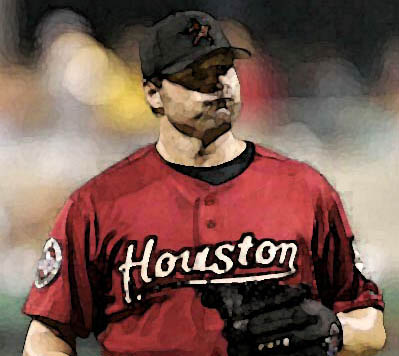
What do you think? Does a perjury charge-exonerated Roger Clemens, damaged reputation and all, now make it into the Hall of Fame?

You already know the question. It’s the headline in almost every front page sports article and column on Rogers Clemens’ “not guilty” finding yesterday in the perjury trial that he lied about not using steroids to Congress. The man was one of the biggest winners in big league history and his seven Cy Young Awards place him miles ahead of everyone else, but …..

BUT … after five years of his reputation taking the batter of the damaging steroid stain, does even exoneration of all charges in his second trial for perjury before Congress do enough to open the door for his induction into the Hall of Fame? Please express your voice with a comment here at The Pecan Park Eagle.

We all know that a legal finding of not guilty here is not enough to eliminate all the damage to his reputation, but was it enough for Roger to even have a remote chance with the writers who vote on the Hall ticket?

What do you think?

Altuve Deserves Start at 2nd for NL

June 18, 2012

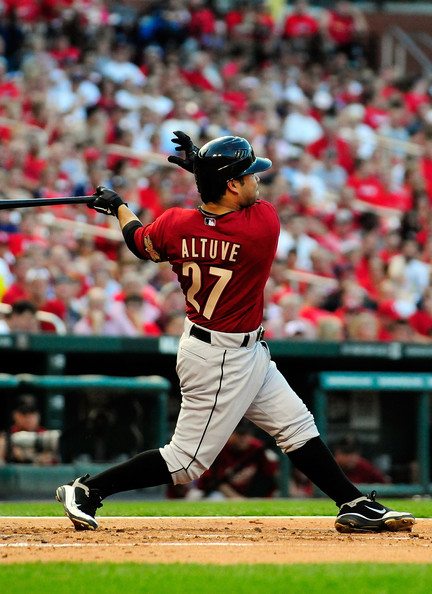
Jose Altuve is also a pretty nifty little fielder too.

In a truly fair and balanced world, Jose Altuve of the Houston Astros would be the runaway choice to start at second base for the National League in the 2012 All Star Game. The game’s smallest player at 5’5″ just happens to carry the biggest offensive production among all second basemen in the NL, forged big by his .317 batting average through games of June 17th.

Altuve is the only NL second baseman with any substantial playing time hitting over .300 this year – and his nearest competitor, Brandon Phillips of the Cincinnati Reds, is twenty point back of Altuve with a BA of .287. If I’m not mistaken, Altuve also leads all second basemen with the most multiple hit games – and he also ranks high among RBI leaders at his position.

He’s also an adroit fielder who positions well and handles the tough plays with all the moxie of a seasoned veteran.

Unfortunately, the only thing that could keep Jose Altuve from starting, the fan vote, most certainly will. I’ve been against the fan vote from the start for all the obvious reasons. Fans pick players on the basis of name recognition, partisanship, and popularity. It also caters to fans of the large market teams. How could we play an All Star Game without a boatload of Yankees? Obviously that will not be a problem. The Yankees have  some great players, but they also have more fans – and more votes. If MLB and the networks think that fan voting makes for better TV viewing numbers, and they obviously do, then we are likely to keep seeing the same soup warmed over every year until either the end of time, or the death of the All Star Game, whichever comes first.

As a kid, I liked it much better when the players and managers voted for the All Star teams of each league and were simply barred from voting for anyone from their own teams. If you wanted to see Hank Aaron in left, Willie Mays in center, and Roberto Clemente in right for the NL, the player vote was the best way to get there – as long as these players were having years that affirmed they deserved it. The players were told to only pay attention to what players were doing during the current year – and not to vote on the basis of past season greatness. Players may not have followed this advice perfectly, but it seemed to me they were much closer to the truth each year than the fans ever are.

Unless he gets hurt, Jose Altuve will make the NL All Star team as the representative of the Houston Astros. It’s just too bad he can’t go there too as the starting second baseman. – Nobody else in the NL has done it better in 2012.

Happy Father’s Day, Alexander Cartwright!

June 17, 2012

His name is Alexander Cartwright and, as most of you already know, he’s considered by most historians today as the almost unarguable Father of Baseball. The only holdouts are those who trace the genesis of the game to nameless evolutionary forces that shaped the sport from its roots in either American town ball or English rounders. Of course, we probably should also acknowledge the possibility that there still exists a small population of folks out there too that never got the word about Abner Doubleday either, but that tiny sub-group grows smaller by each passing year.

I’ll settle for “Papa Alex” as the most identifiable father of our great game. As far as I’m concerned, Cartwright and his new rules for playing the game on the plains of the Elysian Fields near the Jersey Shore in the mid-1840’s were the existential equivalent to the “Big Bang” event in the evolving history of baseball. Once the basic baseline length was set at 90 feet, and a few other structural rules about puts out, balls, strikes, and play by innings were put in motion to evolve into their current form, baseball had the fuel it needed to go the whole distance.

Cartwright did not think out the needs of the game all by himself. The Knickerbocker Rules developed by Cartwright’s Knickerbocker Base Ball Club by 1845 were the product of a committee put in place for this purpose, but it was the energy and leadership of old Alex that got the ball of innovation rolling.

Laying the field out in a diamond shape, with its three bases and home all configured at right angles, and each set 90 feet apart from home to first, first to second, second to third, and third to home – well, that pretty well set in motion the defining structure of what a team had to accomplish, by intellectual stealth or mindless power, to win a game. Cartwright also gave us “three strikes and you’re out” forever, and he forcefully led the game away from the New England practice of “plunking” runners with a thrown ball as a means of retirement. Tags and force plays would now be the only normal back ups to strike outs and caught flies. Of course, setting the number of game-active players at any time at “9” for each team was also very important to the development of fielding strategies.

Here is a Baseball Almanac presentation of the Knickerbocker Rules for Baseball:

http://www.baseball-almanac.com/rule11.shtml

So, Cartwright simply didn’t do all he did for the game without help, nor was he only possessed by thoughts of baseball. Alexander Cartwright had more than one dream. In 1849, he fled New York for the California Gold Rush and later moved from there to Hawaii, where he taught baseball to residents and natives of the Sandwich Islands. In Hawaii, Cartwright spent a number of years working as a fire chief and he was also very active in local politics. He died in Oahu in 1892 at the age of 72, but to very little attention from the powers-that-be in the game back on the mainland. By the 1890’s, former pitching great and evolving baseball equipment magnate Albert Spalding was coming into his own as a force behind the scenes – the same force that sixteen years later would buy into the unfounded legend of Abner Doubleday as baseball’s “inventor.”

Had Cartwright and Spalding been socially closer, history night have developed clearer, sooner.

Spalding passed through Hawaii with a world baseball touring group late in Cartwright’s life. They stopped briefly in Oahu for a banquet, but Spalding had no time to arrange a contact with Cartwright.

Fortunately, Alexander Cartwright was never totally forgotten. He was inducted into the Hall of Fame in 1938 and, in 1953, the United States Congress even officially declared him to be the “inventor of baseball.”

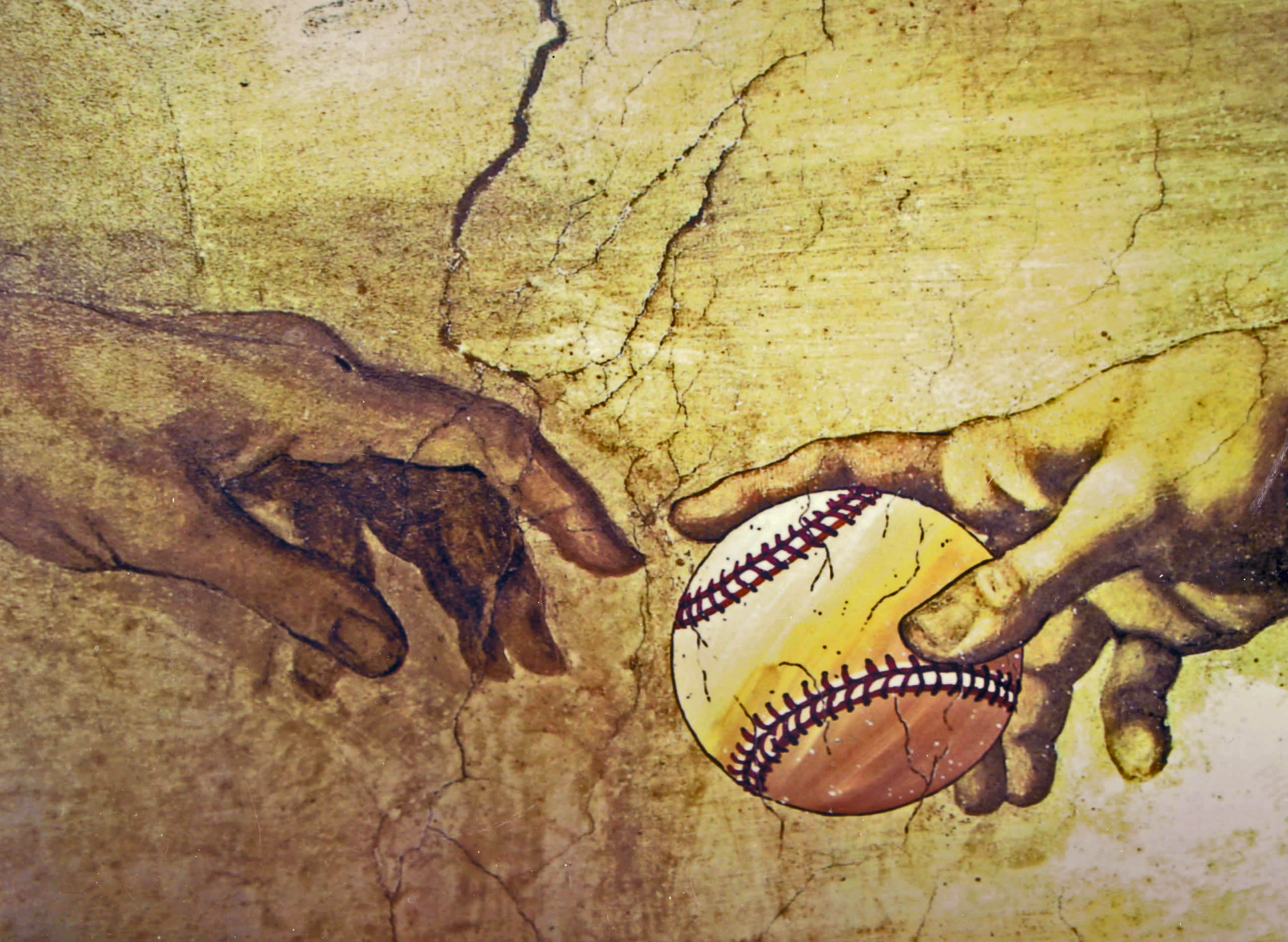
Happy Father’s Day, Alexander Cartwright. I think the following picture best describes how it all came about.

In the big inning, God said to Alex, “Go and invent the game of baseball in my behalf so that people will have some glimpse of what eternal life is like behind the Pearly Gates – and please save this original first ball. It’s going to be worth something someday.”

A-Rod Ties Gehrig for Most Career Grand Slams

June 16, 2012

Lou Gehrig

Recorded baseball history got updated Tuesday night, June 12, 2012, in Atlanta. Paced by a grand slam homer off the right-handed bat of Alex Rodriguez, the man probably best noted as the guy who made “first initial dash last name abbreviation” so cool and popular a pastime among younger writers, went out there and did something even bigger on the direct page of recorded baseball accomplishments.

As you’ve probably heard by now, A-Rod’s 23rd grand slam home run tied him with the late Lou Gehrig for most career MLB grand slams with 23, a record that had stood for 74 years as the sole property of the great former Yankee they called “The Iron Horse.” I’m not an insider stat-guy, but I imagine the odds against ever hitting a grand slam home run are pretty high, let alone hitting 23 in a single playing career. It boggles the mind to even consider all the variables that have to be in place for something like A-Rod’s or Lou’s accomplishments to have happened at all.

Alex Rodriguez

No doubt too. Playing all or most of one’s career with the Yankees is a boost to any real slugger’s chances. You also are helped if you happen to be a power hitter who is cool under the pressure of a bases loaded game situation. If not for the Yankees, you have to play for many years with teams that are capable of loading the bases, and in ballparks whose dimensions and climatic conditions are conducive to your kind of power-direction.

I first became aware of Gehrig’s record as a kid while studying the MLB pitching career of an early 20th century player and fellow native of my own birthplace, Beeville, Texas. Lefty Lloyd Brown wasn’t around for me to ask him personally how he felt about it, but I noticed that his name kept popping up in various books and articles on Gehrig’s grand slam feat.

Lloyd Brown of Beeville, Texas gave up two of Lou Gehrig’s 23 career grand slams. No other pitcher gave up more than one, but you have to dig to find many of their names. I had to wonder. Did Lefty Brown really mind the fact that his singularly worst record on the Gehrig pitching victim list had resulted in him being a little better remembered than some of the others?

Who was it that said, “there’s no such thing as bad publicity?” Was it Scott Boras or Lindsey Lohan? I don’t know, but I don’t think it was Lefty Lloyd Brown. People from Beeville aren’t generally raised to pursue or celebrate notoriety. At any rate, here’s a link to how Lou Gehrig reached 23 career grand slam home runs:

http://www.baseball-almanac.com/players/Lou_Gehrig_Grand_Slams.shtml

I have not yet located a posting on the comparative list for Alex Rodriguez, but I’m sure it will pop up soon. In the meanwhile, the career grand slam leadership list is interesting in its own right:

http://www.baseball-almanac.com/hitting/higs1.shtml

Wow. Carlos Lee of the Astros is tied for 9th place on the all time grand slam list with 16 big ones. And who is Senor Lee tied with? Some guys named Hank Aaron, Babe Ruth, Ken Griffey, Jr., Dave Kingman, and Richie Sexson.

It’s a wondrous world, this world of baseball. Some accomplishments can propel an average player into company with some of the greats.

Abraham Pugg, Vampire Hunter

June 15, 2012

Abraham Pugg, Vampire Hunter

There is a new movie opening soon called Abraham Lincoln, Vampire Hunter. Apparently Lincoln had a fairly unknown underlife as a vampire hunter while he was also championing the Union through it’s most difficult crisis in history.

Abraham Pugg, Vampire Hunter is my suggestion for the initial sequel in this new franchise film trunk, assuming that people buy into the original premise that John Wilkes Booth was nothing more than a hit man for the International Brotherhood of Bloodsucking Children of the Night.

In this sequel, Lincoln’s part alien Pug, Toby “Abraham” Pugg, picks up the challenge of carrying on the fight after his master falls to the hired assassin’s bullet on April 14, 1865.

When Abraham Pugg (Toby Pugg) gets wind of his master’s/best friend’s violent mortal wounding at Ford’s Theatre, he immediately dives through an open window at the White House for the long run over to Ford’s and the recovery house across the street where Abraham Lincoln lays dying. Unfortunately, Pugg is on the second floor when he makes the jump and is knocked unconscious for about ten minutes on the east lawn.

Revived by President Lincoln’s secretary, John Hay (Shia LaBeouf), Pugg scampers past every tree on the way as he scurries to Ford’s. After a quick trip through all the legs across the street to listen to the voices of hopeless desperation about his master’s impending demise, Pugg ambles back to Ford’s Theatre. At Ford’s, Pugg picks up what he can about the man identified  as Lincoln’s assailant, actor John Wilkes Booth (Johnny Depp).

Back on the street, Pugg sniffs the spring night Washington air as his ears also perk to hear the rumble of horses moving quickly toward the bridge that leads to Maryland. Pugg quickly deduces that it is the movement of troops in hot pursuit of the scoundrel Booth and he immediately heads that way too.

Once the trail leads to a farmhouse deep in Maryland, it is Pugg who sniffs out Booth and his traveling co-conspirator, the dim-witted David Herold (Sean Penn) hiding in the barn.

Herold surrenders, but Booth holds out to make his last stand. The siege is shortened when Pugg’s barking lures Booth into an abortive attempt at strangulation of the super canine, only to lean his body into firing range of a soldier named Boston Corbett (Matt Damon). Corbett gets off a shot to the neck that mortally wounds Booth. Like Lincoln before him, Booth experiences a lingering death that only completes itself with the dawning of a new day,

For his role in bringing Booth to anger’s quick justice, Abraham Pugg is taken back to Washington by the army and hailed as a national hero. No one in Washington ever learns that Pugg also speaks, writes, and understands every language in human history – nor do they learn that he also is the only son of Archimedes Pugg, who taught math to the Incas.

In a long and winding road from the Booth death moment, Pugg is cared for by a Washington conservancy from April 1865 forward, where he secretly carries out his will to continue the initial work of Abraham Lincoln, Vampire Hunter. By the power of his magnetic intergalactic will, Pugg is able to get all kinds of help from Washington politicos. Only his personal manservant Albert (Arnold Schwarzenegger) knows of his true identity and powers – and the two often converse in the words that fit into Albert’s limited capacity for dialog. (When Arnold says, “I’ll be back!” in this movie, it’s usually because he has excused himself in mid-conversation with Pugg for the sake of consulting a dictionary.)

One day, a Hungarian actor named Bela Lugosi (Adrien Brody) drops in on Pugg to discuss the death of Booth. What happens from there is incredible, but, if you want to know more, you will have to wait and go see the movie. In the meanwhile, don’t discount the possibility that this film may likely morph into the first really great monster rock show since the iconic Rocky Horror.

Print News Remain as Our Main Voice of History

June 13, 2012

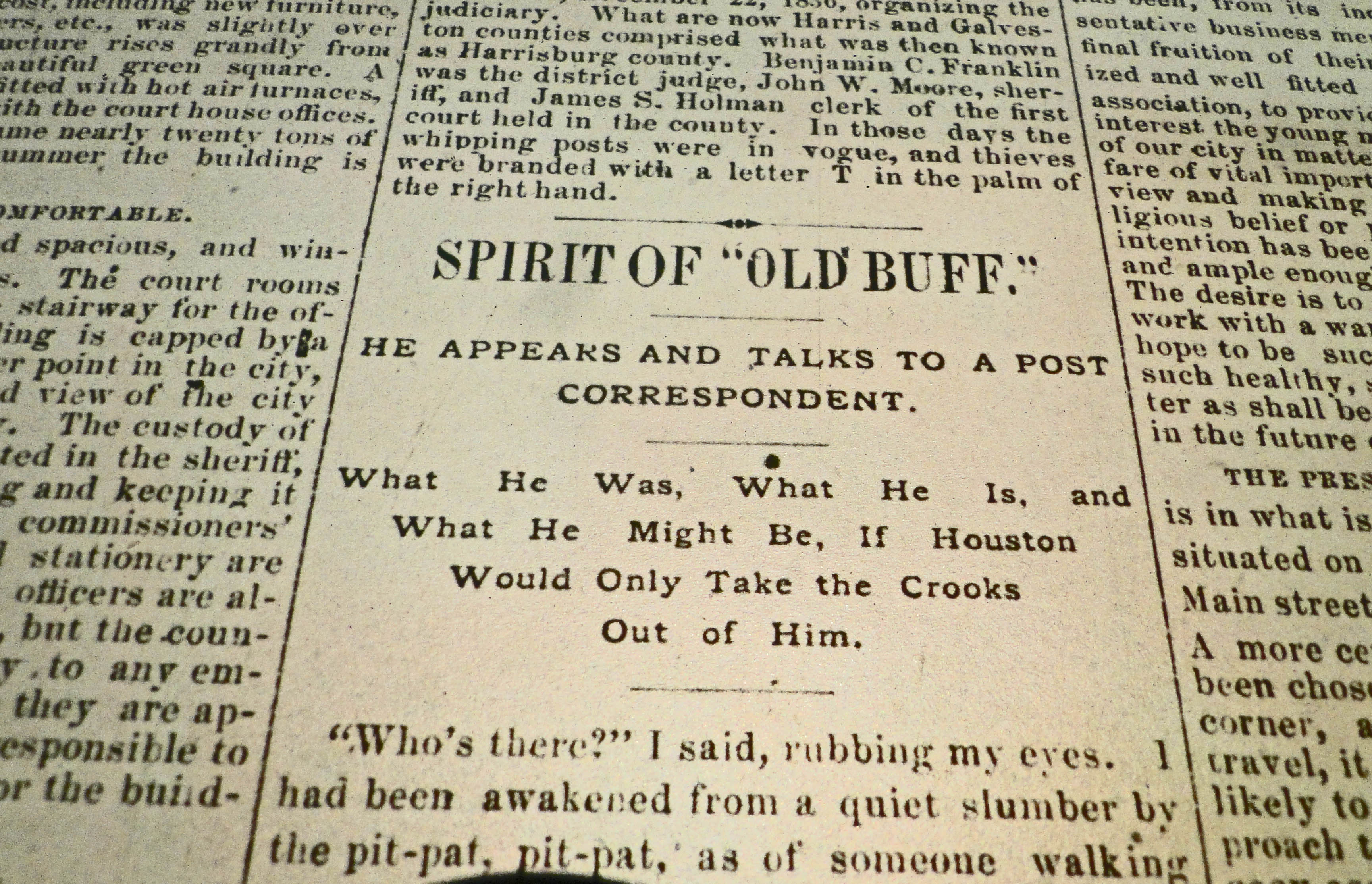
See the last paragraph of this article for an explanation of this item’s inclusion as our story’s visual of the day.

Newspaper reporters don’t write for history, they write to sell newspapers, but they still often leave us over time with the only surviving active voice on history we are likely to find, unless someone from the same period has written a personal letter or observation that pertains to our subject and we are lucky enough to find it. The precious quality of old news stories only increases as we go back in time to the turn of the late 19th century when there were no radio, television, or recordings of public comment.

Our relentless SABR research team drilling into the news files on the early history of baseball in Houston from 1861 to 1961 has been a ride to both teach and remember both the value and pitfall effect of old newspaper stories. I will not steal the thunder of our major previously unknown findings on early Houston baseball here, but I do want to talk briefly about the major methodological problem that anyone doing this kind of research needs to keep in mind:

News writers, especially those from the 19th century, often assume that readers know the full names of people and places, and also the names and locations of certain sites, so they simply write their stories on top of these assumptions. (Fictional Example: “Mayor Bob spent the afternoon watching the game at the ball park.”)

Problems for Research: What was Mayor Bob’s last name? Was Mayor Bob really an elected official – or was that simply a nickname that had been placed upon some local character who behaved as though he had more personal authority than he actually possessed? What was the name of the ball park? Or did it even have a formal name? And where was this field of play located?

This is where the research fun begins. You would check the list of Houston mayors to see if the city ever had a leader whose first name was Bob or, more likely, Robert. If you found nothing there, you might check the names of mayors for Galveston or other local communities. Or, if you were not concerned that the identity of a game patron dubbed as “Mayor Bob” was not that important to the history of baseball, you could simply put it aside and press forward in the search for more direct information about the actual games and their social and administrative developments, still noting yourself to watch for the name coming up again in the volume of stories that lay ahead of you on the reading list.

There is no one-way to resolve hard to answer questions that come up in social history research. A researcher has to be able to imagine all kinds of cross-referential avenues for finding answers that lay hidden or buried in the printed records of history. And with wonderful researchers like Mike Vance leading the way in this area, we have come up with a number of significant early findings that were previously unknown. You will have to wait until our SABR book on the early history of baseball in Houston comes out in 2014 to see what some of these discoveries have been for us. All I will say for now is that they have been considerable.

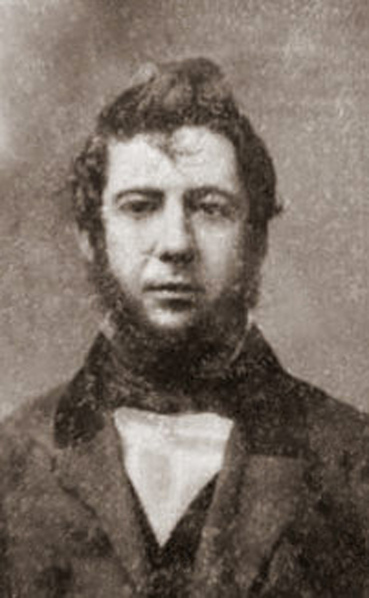
(Wink! Wink!) Some of us have talked about how wonderful it would be if we could actually travel back in time to see some of these things for ourselves – and maybe spend some time also talking with some of the anonymous writers from the Houston Daily Post of the 19th century about why they wrote what they wrote. – Our starting plan was to send a 2012 research team member by the code name “Old Buff” back to 1887 to talk with a Post writer about the coming of the new Texas League in 1888. In deference to all any of us had ever seen or read in sci-fi works, our “Old Buff” would ask the Post writer to promise he would not write about our visit from the 21st century. – We had not come to alter history. We had come only in search of the truth. (See the storyline photocopy and it’s inscription for a full understanding of this paragraph. (Wink! WInk!)