Sentimental Journey to Beeville

August 27, 2012

Last Thursday afternoon. Mortimer II headed southwest on US 59, somewhere close to Goliad. He was either rolling on to the last roundup land of ancient hearses – or to a place where all our fire bird beings go to wait until they each shall rise again from the ashes – like all true Phoenicians. My hearse-collecting son Neal and I were headed for Beeville, to the place where Mortimer II shall rest in peace (forever or for now) on the quiet plains of South Texas. There would be time to explore some of the places of my birthplace hometown.

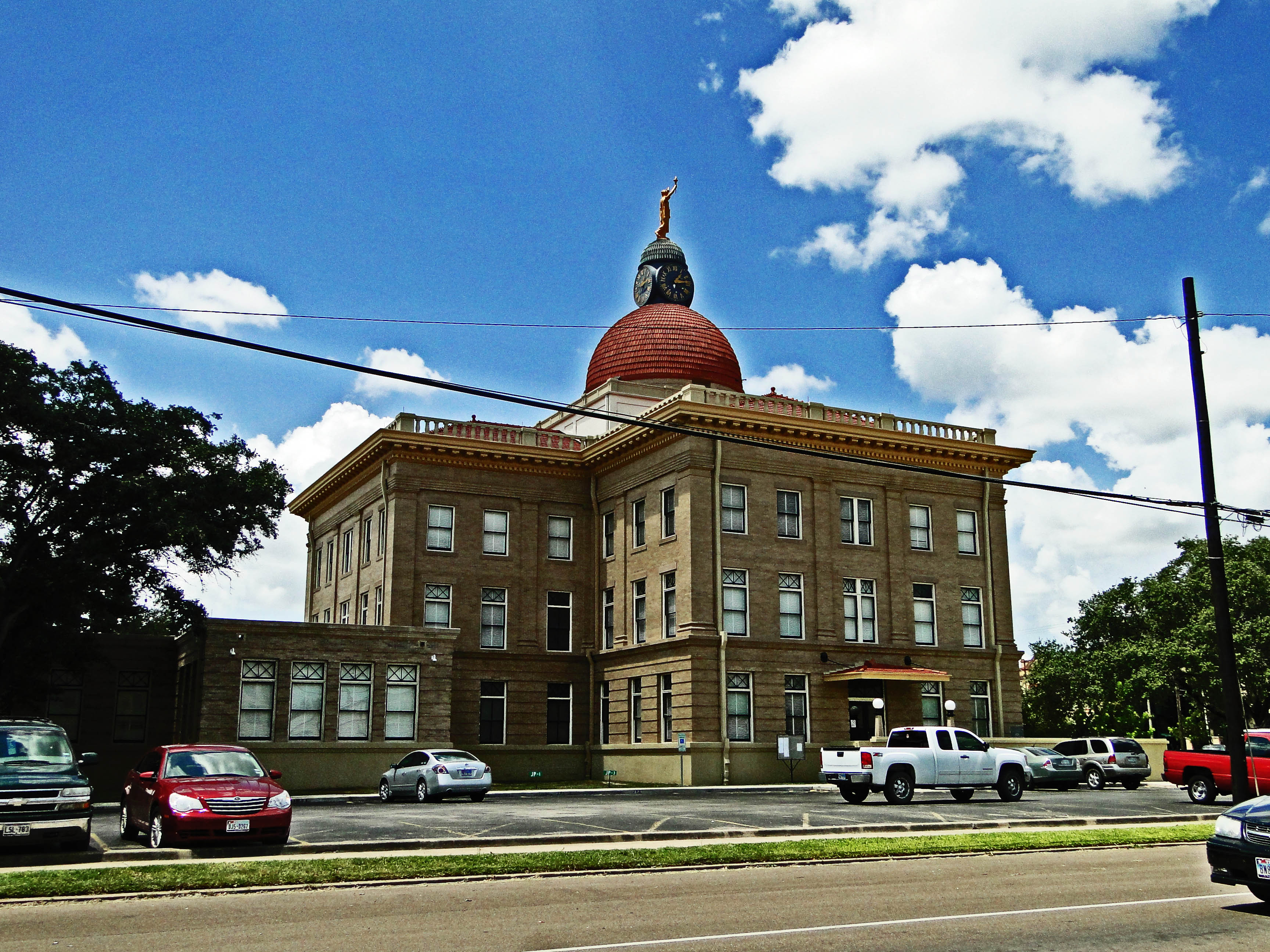
he Bee County Courthouse Building is celebrating its 100th anniversary in 2012. It replaced the wooden courthouse that had been lost in a fire. Bee County was formed in January 1858 and it is named for Barnard E. Bee. The county seat of Beeville was originally called St. Mary’s St. and it is located about 50 miles NW of Corpus Christi. This photo faces NW from St. Mary’s St. where it corners at the Houston Hwy.

The Joe Barnhart Bee County Library is located at 110 W. Corpus Christi at the corner of Washington St., Beeville’s main drag. It occupies the Albert Praeger Building, built in 1906. The Praeger Bldg. contained the city’s first elevator and is listed on the National Register of Historic Places..

Built in 1922, the Rialto Theatre in Beeville remains on the State of Texas List of Endangered Places with no clear plan or funding for its future. It would be sad to see the old girl fall to the always present indifference to history because this lady really is the embodiment of “The Last Picture Show” with her own small band of dedicated warrior-supporters.

Beeville today has a population that is just under 13,000 with a getting healthier economy based on the staples of cattle, farming, and oil, plus service as home for one of the TDC maximum security penitentiaries. (The view here is heading N up Washington St. – Next we will look at some Beeville houses that are notable to me.

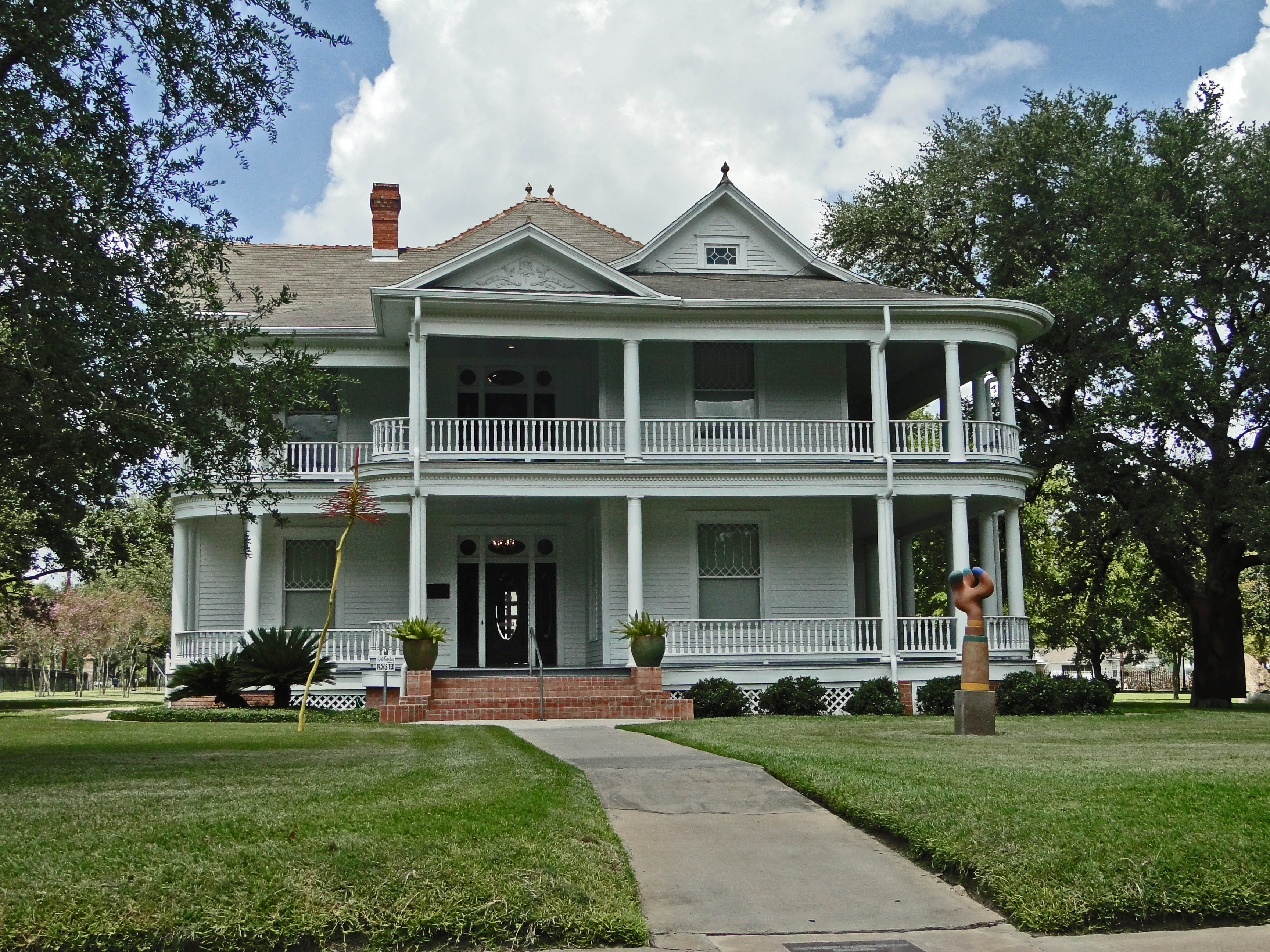
The Beeville Art Museum occupies the old Hodges place on Fannin at the corner of Adams St. The BAM maintains a nice permanent collection and offers an active program for teaching the arts and art appreciation. The late Joe Barnhart is also responsible for the fact this beautiful slice of culture exists in Beeville,

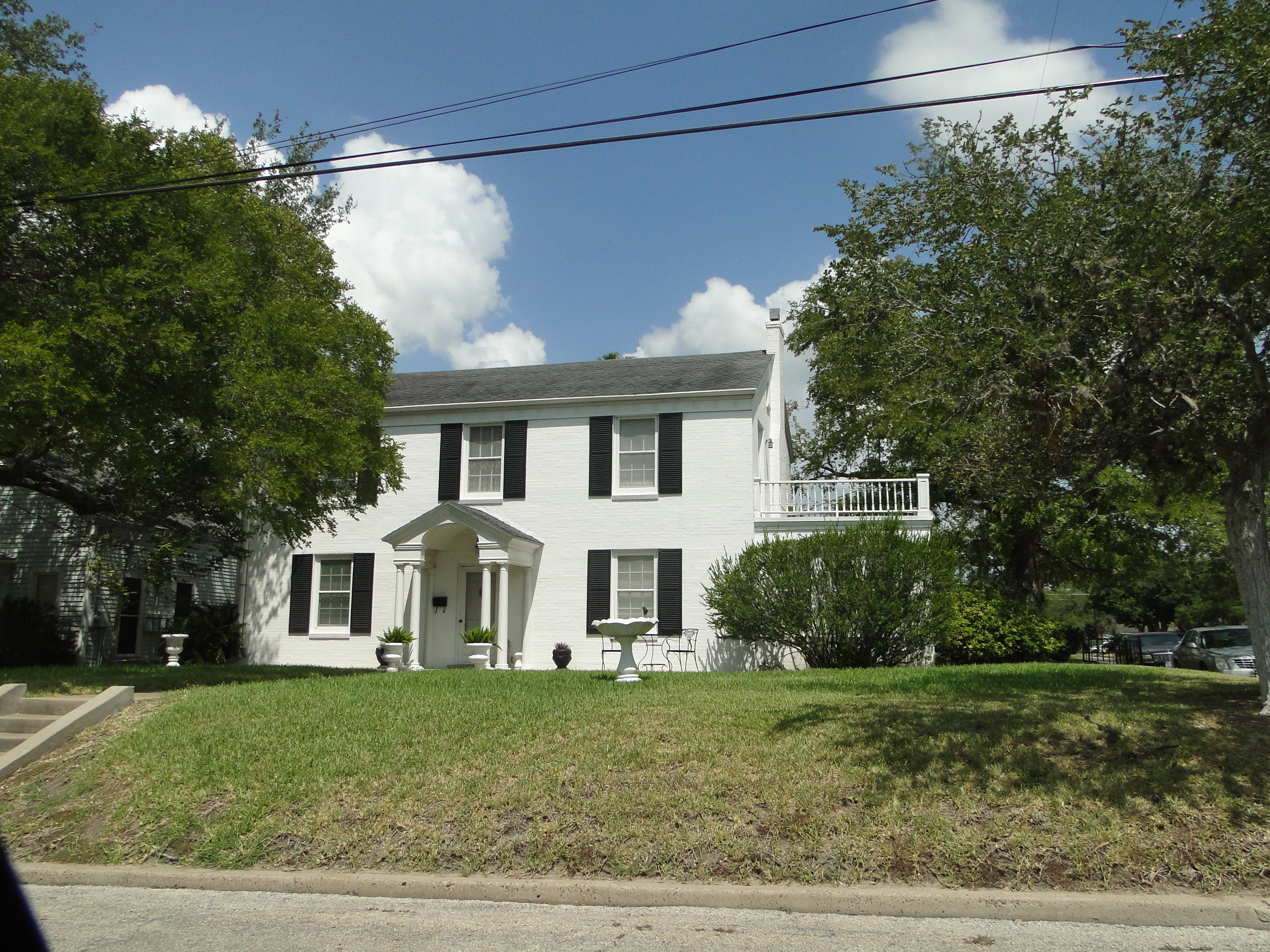
The late Curt Walker, who batted .304 in the big leagues from 1919 to 1930, once lived in this still beautiful home near the Houston Hwy. – God bless you, Curt!

My late grandmother once lived here in this beautiful 2-story place on Cleveland St. She built it in 1924 for herself and her 4 kids (my dad and his 3 sisters) and she built it on the spot where my late grandfather built their original wood frame home in 1904. The property is no longer in the family. Grandfather McCurdy was a writer who started the town’s first newspaper, The Beeville Bee, in 1886. He died in 1913; grandmother passed away in 1966.

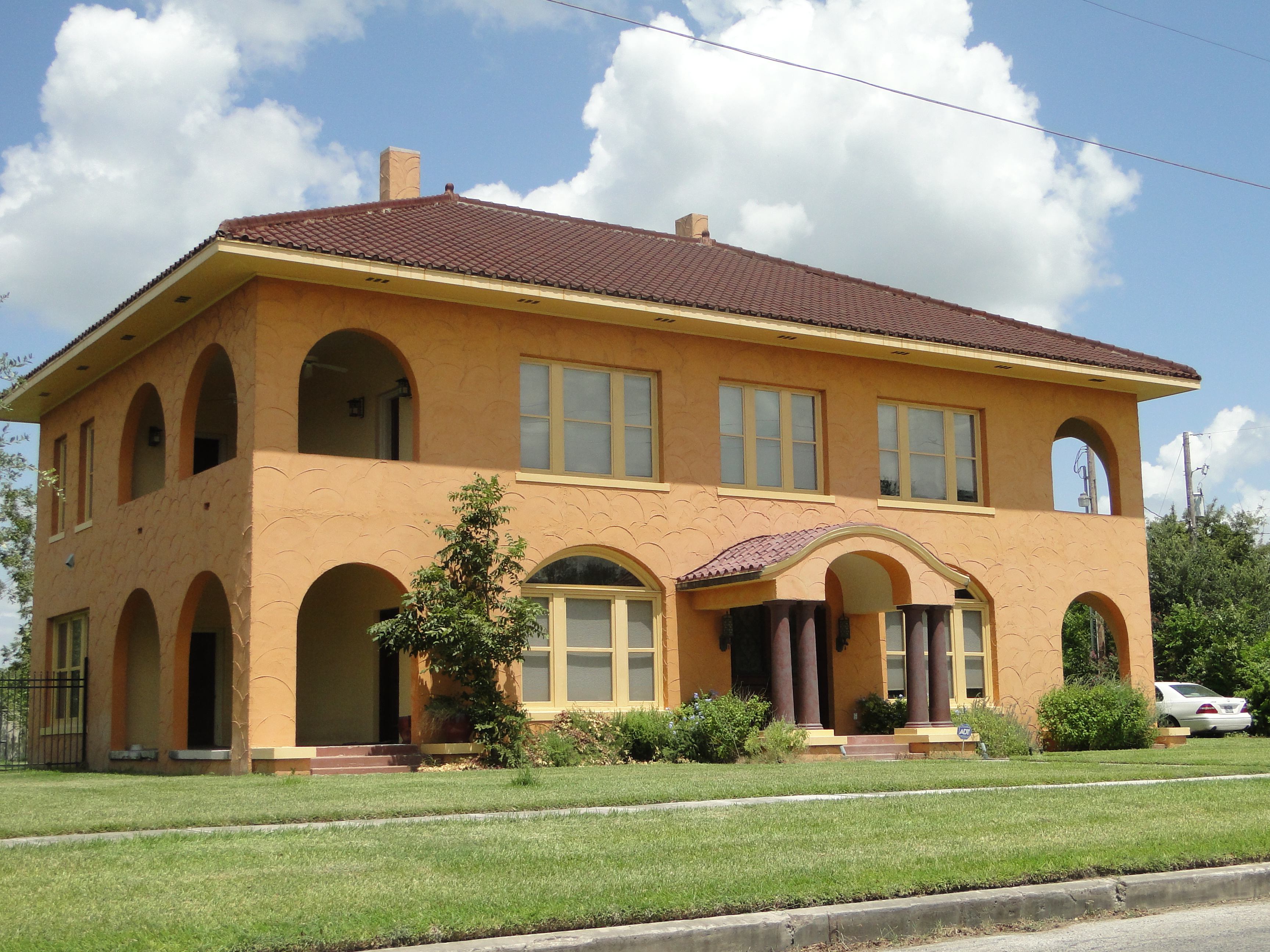
My Aunt Mary McCurdy Welder lived here on Adams St. in Beeville until her death in 2005 at the age of 99. This place also remains special to her four children and six nieces and nephews.

This little house on Fannin St. in Beeville was my first home back in 1938. Dad was already three years deep into his title at age 25 as the youngest car dealer in America with “WO McCurdy Motors” – a Dodge-Plymouth shop, but WWII would soon shut that industry down and re-direct us to my permanent home town of Houston.

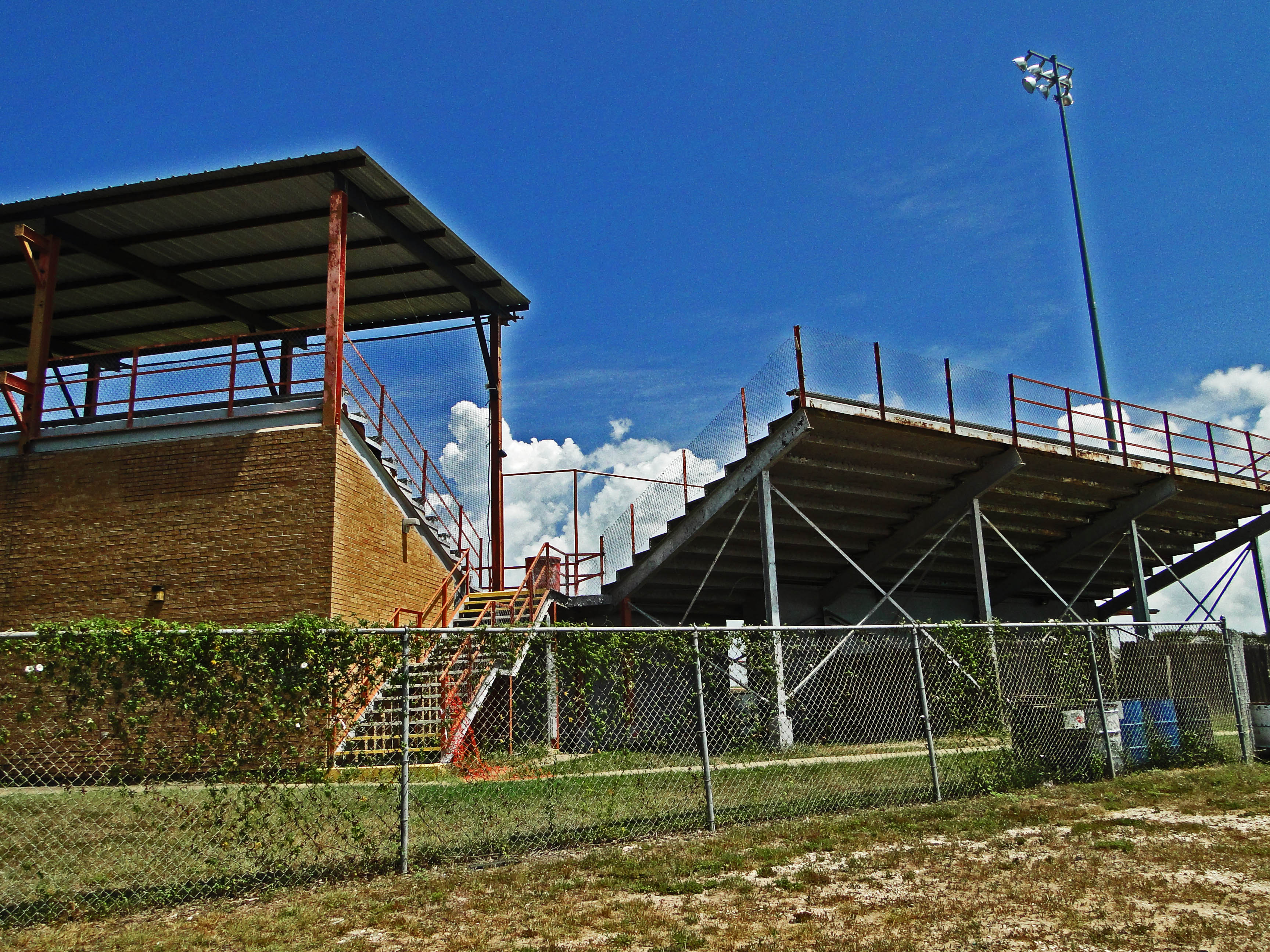
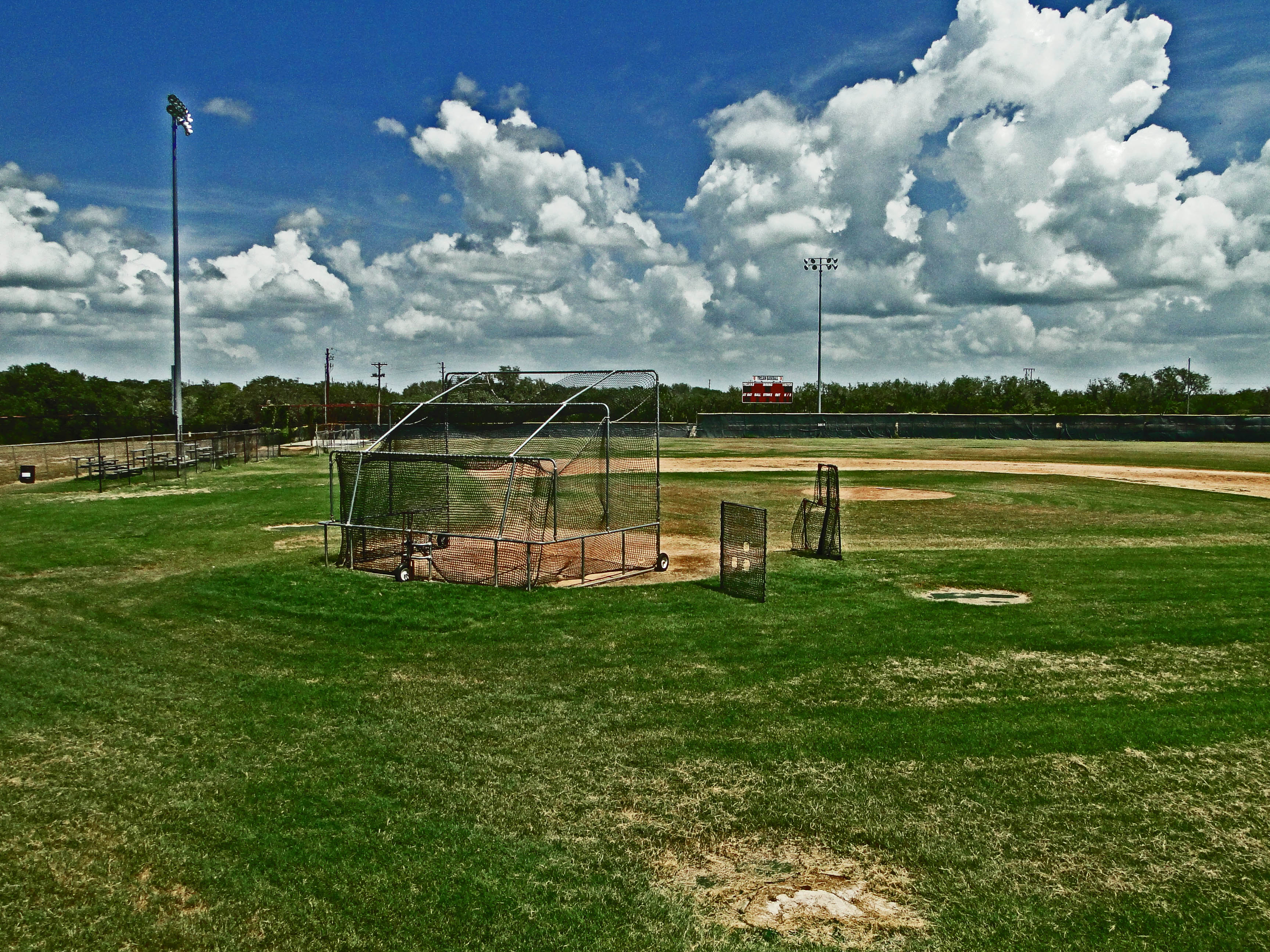
Joe Hunter Field out ay Coastal Bend College still stands, but it is in need of a real groundskeeper and a couple of tanker trucks of “Rustoleum” and fresh paint.

Joe Hunter Field, August 25, 2012: Get the drift of my previous comment from this photo?

Joe Hunter Field is home to the both the AC Jones HS Trojans and the juco-level Coastal Bend College Cougars, who revived the sport in 2012 after years of non-activty in any sport .

In the end, Neal and I said goodbye (or good night) to Mortimer II on the plains of South Texas ….

… and drove home to Houston. – Have a nice week, everybody!

Clemens Not the Oldest Pitcher at Sugar Land

August 26, 2012

“Several weeks ago I pitched in a championship game at Constellation Field home of the Sugar Land Skeeters. – Tonight Roger tries at 50 what I did at 62.” – Bob Blair, 8/25/2012.

Congratulations, Roger Clemens, for doing what most of us had hoped you would do.

For a man of 50 to come out of retirement at you age, after five years away from the real game and do what you did last night for the Sugar Land Skeeters is truly both amazing and grandly admirable. Only your meanest, most dedicated enemies would deny you that much. For the rest of us, you are another new vital symbol of the hope that even the most discouraging news can be overturned with courage, dedication, and a few frreak-of-nature miracles along the way.

That being said, today’s column is not just about Roger Clemens and the fact that he went three and a third innings last night, giving up only one single, with no walks and two strikeouts on the way to helping the Sugar Land Skeeters to a 1-0 win over the visiting Bridgeport Bluefish in an ESPN Classic telecast to the four corners if the earth, He didn’t pitch the five innings he would have needed to get credit for the win and, frankly, I’m not even sure when Sugar Land got their lone tally, but that fact and Roger getting the “W” was not really what this appearance was about, anyway.

The fact is, he did it, and did it well. If he wants to go again, that’s fine. if not, that’s fine too. If really wants ro pitch in the majors again and, maybe, move up on the all times win list and put off his own first consideration by Hall of Fame voters to a time apart from his steroids-era brethren, that’s fine too. If it’s wins he wants, however, he probably would be wise to consider any offer that are forthcoming from some of the contending clubs. Signing on with the Astros would produce the greater probability that Clemens would be more likely to pick up a few extra “L”s.

The real story this morning is a fellow named Bob Blair, one of our stalwart hurlers for the vintage base ball Houston Babies. Bob has pitched the Babies to a number of wins over the course of their five-year old reincarnation as Houston’s first professional club from 1888 that now plays a game based on 1860 rules.

Unfortunately, I only have the information about his recent championship game appearance at the same Constellation Field that hosted Roger Clemens last night and all I know about it is what Bob Blair said in an e-mail to one of his Babies teammates, Larry Joe Miggins, and quoted here beneath the photo of Blair working the mound that night for a club that apparently called itself the Indians.

Again, that doesn’t matter either; even the game outcome itself doesn’t matter. What matters is that Bob Blair, like Clemens, is not a man to let age deter him from giving the effort another try. Roger Clemens did it last night at age 50. Satchel Paige did it long ago at age 59. Bob Blair did it a few weeks back, and at the same Constellation Field where Clemens worked under worldwide media scrutiny – and Bob Blair did at age 62.

Bob Blair doesn’t get ESPN Classic attention. Bob Blair gets a write-up in The Pecan Park Eagle – and only weeks later, when the trusty old PPE finally gets wind that it even happened. – What a deal, that is!

AT any rate, way to go, Robert Blair! If you care to post the story of your actual effort, either post it here as a comment upon this column – or else, send the story to me and I will add it here as an addendum to this column. Just tell us something about how it came to be; what it was like for you; who was playing; how did you do; were you the oldest pitcher in your game; did you get the win; and what was the final score?

The outcome is something we already know. Just getting out there to pitch at age 62 puts you ahead of 99% of the population of 62-year old males. – Once again – WAY TO GO, BOB!

Root. Root. Root. For Roger.

August 23, 2012

Roger Clemens won his 7th and final Cy Young Award, and his only one as a National Leaguer, as a starting pitcher for the 2004 Houston Astros.

A friend told me yesterday that tickets for the Roger Clemens “one-time-only-for-fun” pitching appearance for the Sugar Land Skeeters this coming Saturday night are already going for upwards of $200-300 each over the Internet on Stub-Hub.

So what. That’s how the law of supply and demand works. If people didn’t want to be there as eyewitnesses to a little baseball history, the inflation on the price of admission wouldn’t exist.

But it does.

His fans want to see what he can still do at age 50. A few of his critics want to watch him take a whacking from a bunch of raw kids and sad has beens, Others are hoping to see Roger Clemens have the kind of game that will convince him to try a real come back and go for those 20 extra big league wins that would propel him up to undivided third place on the all time list for career MLB wins as the first man in history to win that many games beyond the half century age mark. AT age 50, Clemens now sits in 9th place with 354 career MLB wins, just one game behind Greg Maddux nd 19 games back of the HOF great tied for 3rd place, Christy Mathewson and Grover Alexander.

Others, like AP writer Paul Newberry writes off Roger’s decision to pitch again as just another boorish display of ego, at best, or something more sinister, he considers that it may be part of a plan by Clemens to pitch again and get his consideration for the Hall of Fame pushed back five more years and separated from all the steroid-era suspects who are up on the HOF ballots for the first time this year, with Clemens, for consideration by voters. Newberry said as much yesterday in an Internet article entitled as “Column: Please, Rocket, just go away – for good.”

I say, Relax. Let Roger have his fun. Have some fun in celebration with him, if you like. This guy still loves the game and loves to play – and at an age when many folks are just lucky to still be moving at all. He’s our inspiration for playfulness in the wake of legal pressures that could have wrecked the physical health of many people who might have been forced by circumstance to go through what he endured legally for years.

The man was found innocent of perjury charges that he lied to Congress. Shouldn’t that be enough to free Roger Clemens from our condemnation as just another steroids user who successfully covered up his real behavior with a successful legal defense? Unless I’ve “misremembered” how our system works, when charged with a crime, we are supposedly innocent under our system of justice until proven guilty – and once found innocent, we are exonerated from further punishment beyond the anxiety, energy, and money we already have expended to prove our case.

Roger Clemens won his legal vindication. And we each have the right to join with him, or not, in the fun he now wants to have in Sugar Land. I think my choice is clear. I’m on the  side of having fun with Roger on this one – as well as any further pitching he chooses to do.

I just won’t pay $300 to watch him pitch for anybody. Unless they decide to put this special Skeeters game on TV Saturday night, I will just have to watch for a game report on the ten o’clock news with almost everyone else who even cares.

Closing Note: Here’s a list of the Top Ten MLB Career Wins Pitchers, along with their vivtory totals:

1 Cy Young 511
2 Walter Johnson 417
3 Pete Alexander 373
Christy Mathewson 373
5 Pud Galvin 365
6 Warren Spahn 363
7 Kid Nichols 361
8 Greg Maddux 355
9 Roger Clemens 354
10 Tim Keefe 342

Hey Astros! How About Houston Buffs Night?

August 22, 2012

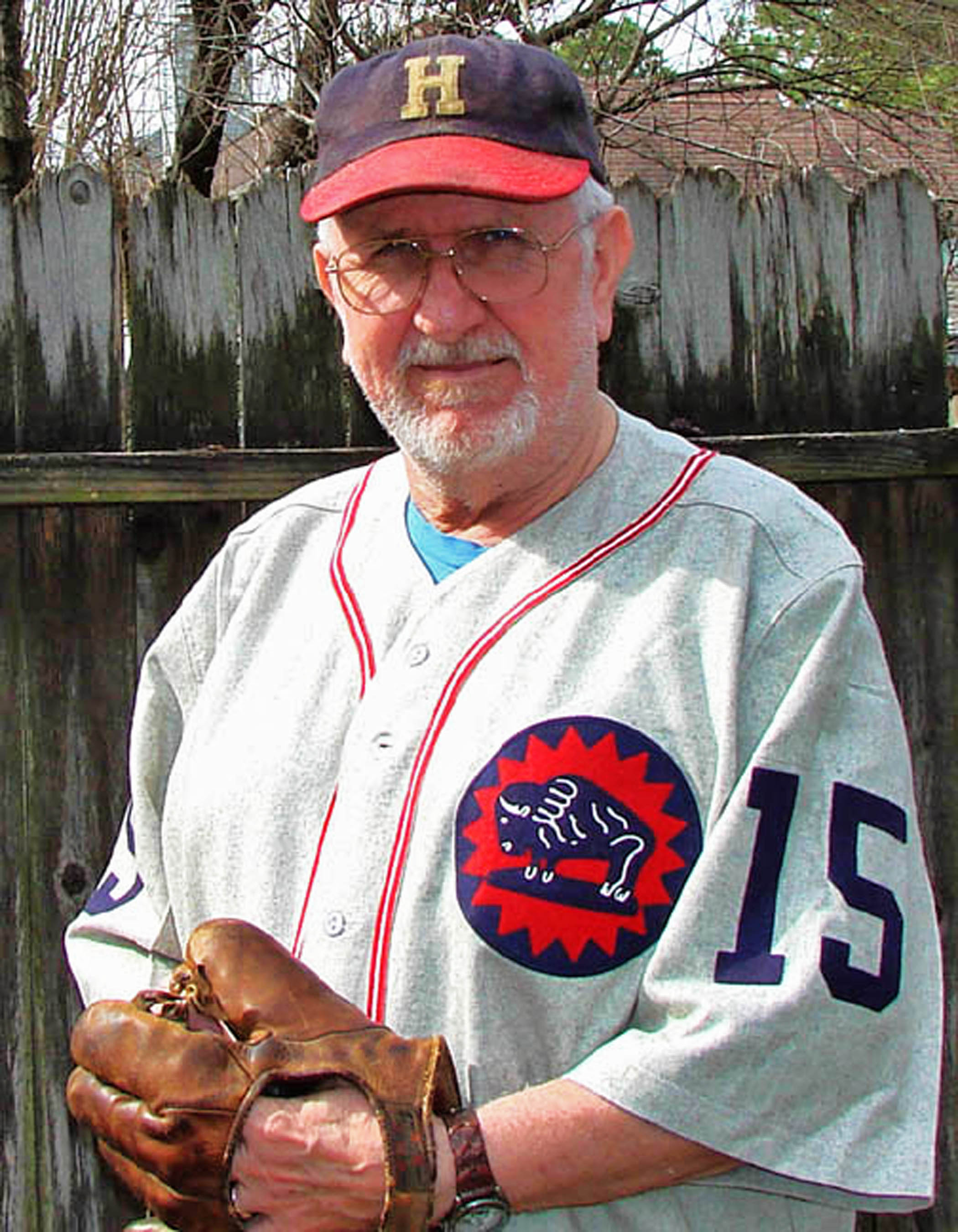
Outfielder Eddie Knoblauch models the uniform of the 1947 Texas League and Dixie Series Champions Houston Buffs. The breastplate buffalo logo was my all time favorite design. Several other clubs wore buffalo logos, most notably the 1931 Texas League Champions of Dizzy Dean’s big local year, but none were as detail-classy as the ’47 version. The red trip and socks of that Knoblauch year were burgundy red, with the buffalo appearing in natural shades of brown and a departure in color and style from the parent club St. Louis Cardinals.

Yesterday I received this sincere and heartfelt note from friend and Early Houston Baseball research colleague Steve “Iron Man” Bertone. (When our SABR book is published in 2014 on “Houston Baseball, The Early Years, 1861-1961,” you will see why we affectionately refer to Steve as “Iron Man.” His “only” assignment on the project has been to basically write Volume II of our work, a year by year annual summary for every season of minor league professional baseball in the city’s history that was played, from 1888 to 1961.

Like yours truly, Steve grew up a Houston Buffs fan. Everything he writes on the subject comes both from the head and the heart of personal experience as a lifelong fan of the club and the game from childhood forward, If people like us didn’t care about filling in the holes that exist in our local baseball history wall, and that includes about a dozen or so others additional to Steve and me, we would not be so bound into the volunteer task of producing this work for our local chapter of the Society of American Baseball Research.

The past matters. And baseball has been an important part of our Houston past, documentable to 1861 and the formation of the city’s first baseball organization and probably back to 1836, when the city was founded by two New York brothers and an onslaught of early settlers from the northeastern states that “invented” baseball back there around the same time.

Long wind up. Quick pitch. Here’s how Steve Bertone expressed it to me by e-mail yesterday:

Bill,

We have not been consuming the spirits, but I think we are on to something here. A group of us think that for the Astros last home game as a National League team they should wear throwback Buffs uniforms!  It is every fitting since the game is with the Cardinals and our roster is not much above AA ball. One gentleman suggested that the Cards could play their minor league call-ups to make it an interesting game. Buffs shirts giveaways to the fans that show up.

Get the word out (to) start the movement, we only have a two weeks to get it done! I plan on wearing my Buffs shirt that night.

– Steve Bertone

Hey! I totally support Steve Bertone’s group recommendation that the Astros should pull a major “Carpe Diem” by designating the last official game here against the St. Louis Cardinals as “Houston Buffs Night!”

Because of the Houston Buffs’ long-time history as one of the first farm teams ever owned directly by a major league club (The Cardinals), one  that then immediately bled into direct National opponents as two cities when Houston went big-time in 1962, that last game with the Cardinals represents a night of last goodbyes to a connection that had existed for ninety years.

It was only broken by the decision to send Houston to the American League in 2013. To ignore this “Long Goodbye to the Cardinals” in recognition of St. Louis’s involvement back over time with the Astros, Colt .45’s, and Buffs is nothing less than an unpardonable snub of history on the part of the club.

Notice to what can be done short-term is all the club has to do under the present circumstances. We would love to see the Astros wear Buffs uniforms that special night, but we realize that the logistics of recreating and then making these uniforms available with only a month to go would be tough, but if it’s doable, please do it! It’s still not too late to declare that final game on September 26th as “Houston Buffs Night” and to encourage fans to wear Houston Buffs caps and jerseys – or just to bring stuffed buffalo toys, if they have them. Or maybe pass out Houston Buffs pennants to the first 10,000 fans who show up.

What better way to say it: “Goodbye Buffs! Goodbye Cardinal! Goodbye National League!”

We don’t expect the Astros to do everything for “Buffs Night” at this date. We just hope that they will do something positive with this request, which I know they will know about. The club always has the ability to ignore our past, if they so choose, but we fans also always retain the power to ignore the club’s future, if we feel that our past is being put to sleep as unimportant to their bottom line.

Astros, please show a little all-that’s-possible respect for some kind of conscious acknowledgment of that last Cardinals@Astros game and it’s nearly a century-old significance to the history of professional baseball in Houston.

Of course, if you had time for Buff uniforms, here are three other models:

That’s me modeling a 1932 Buffs road uniform. The cap is a 1954 model.

First baseman Jerry Witte models the shorts uniform worn briefly (How else do you wear shorts?) by the 1950 Houston Buffs.

On “Knothole Gang Night,” catcher Frank Mancuso poses with one of the members as he also models the 1953 Buffs home uniform that was quite popular for several seasons in the 1950s. It resembled the home Cardinals uniform, minus their famous “Two Birds on a Bat” logo.

Let’s Go Buffs and All Their Long Time Fans! Let’s give the Cardinals the goodbye we all deserve in respectful exchange! – And thank you again and again, Steve Bertone and Friends, for making this most worthy suggestion!

Wednesday, September 26, 2012, the Houston Astros play their last official National League home game at Minute Maid Park against their most storied longtime NL rival, the St. Louis Cardinals. Let’s do it right as “Houston Buffs Night!”

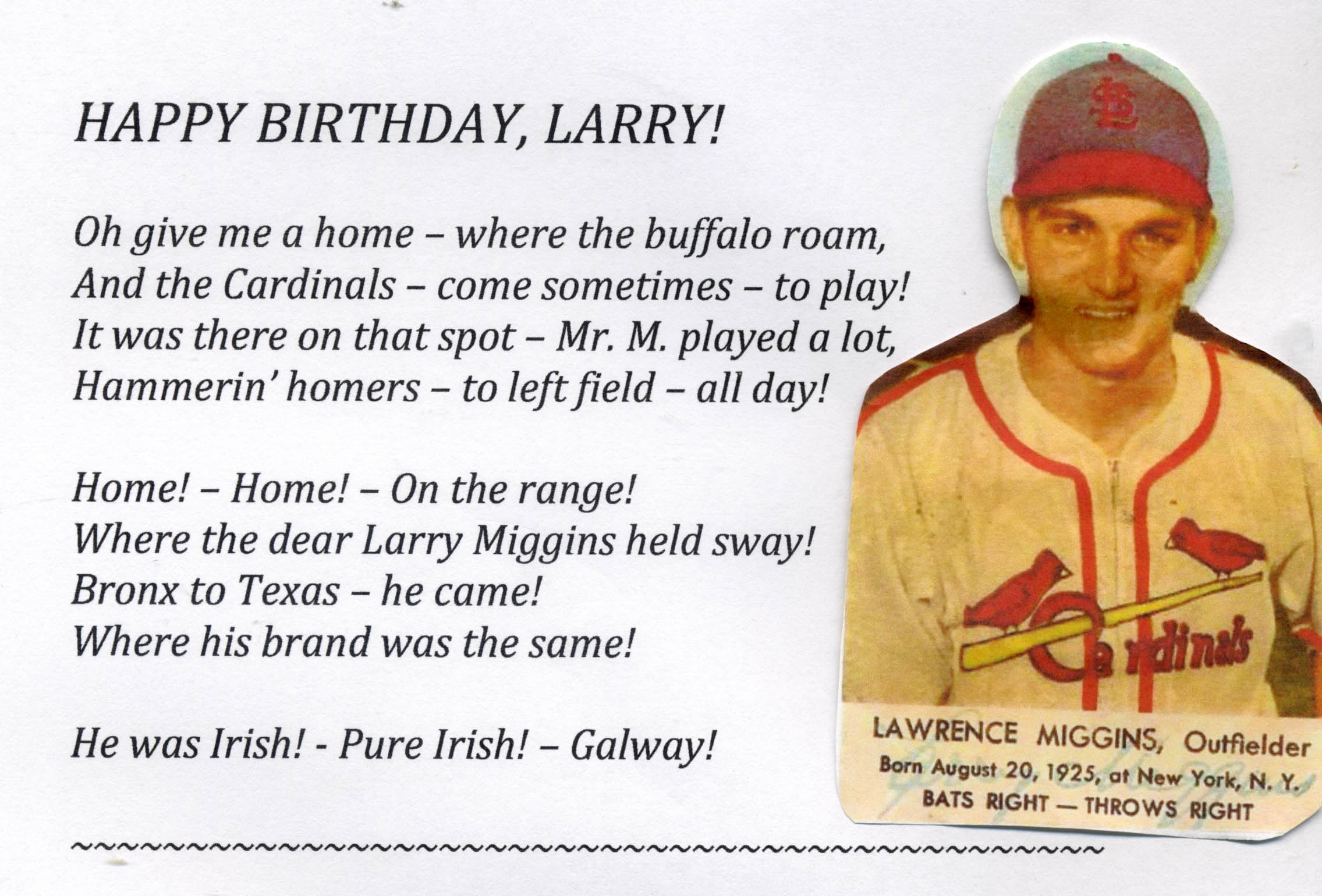
Home on the Range: In Honor of Larry Miggins

August 21, 2012

“Slainte O m’ anam!” (That’s Gaelic for “Cheers from my Heart!”)

I’ve had some requests since yesterday to include a little parody I wrote for the occasion of Larry Miggins on his 87th birthday as its own column here. I did perform the piece for Larry at the Sunday party, but not everyone got to here it who wasn’t in the particular room we occupied when his early gifts were given out.

If you know that Larry’s family is pure Irish, and that he was born and grew up in the Bronx to later come to Houston and become a homer-bashing left fielder for the Houston Buffs, and if you also happen to know the melody of “Home on the Range,” the basic theme of this little ditty will be extremely easy to follow.

I was just lucky enough to have been one of the Buff Stadium Knothole Gang members from the East End who got to grow up idolizing the man who later became my close adult years friend and devoted baseball buddy and fellow member of SABR.

How lucky can this guy get? Thank you again, Larry Miggins, for your part in making the charm in my life shine and work so beautifully.

Happy 87th Birthday, Larry Miggins!

August 20, 2012

His Original Birthdate was August 20, 1925.
Happy, Happy 87th Birthday, Larry Miggins!

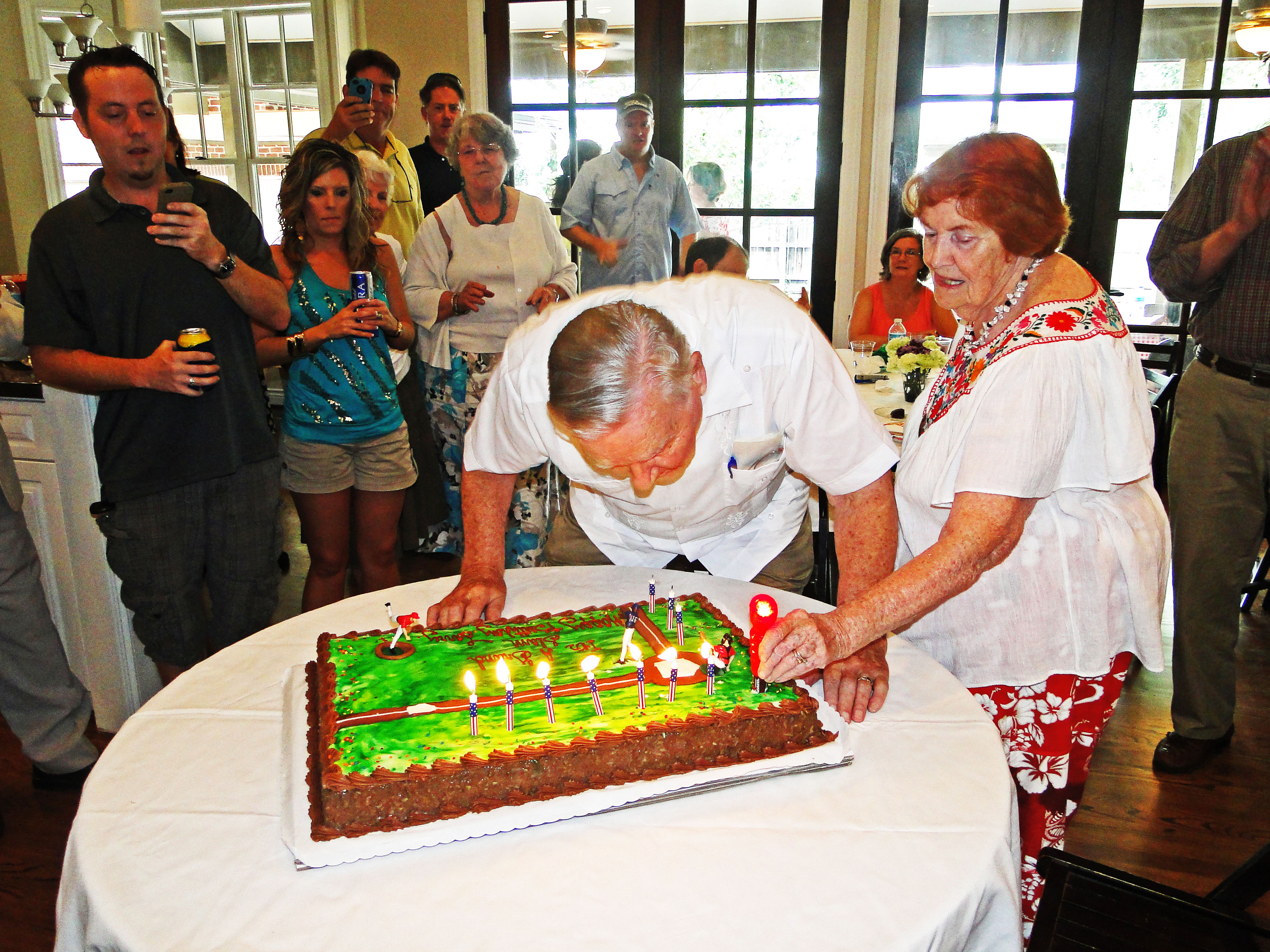
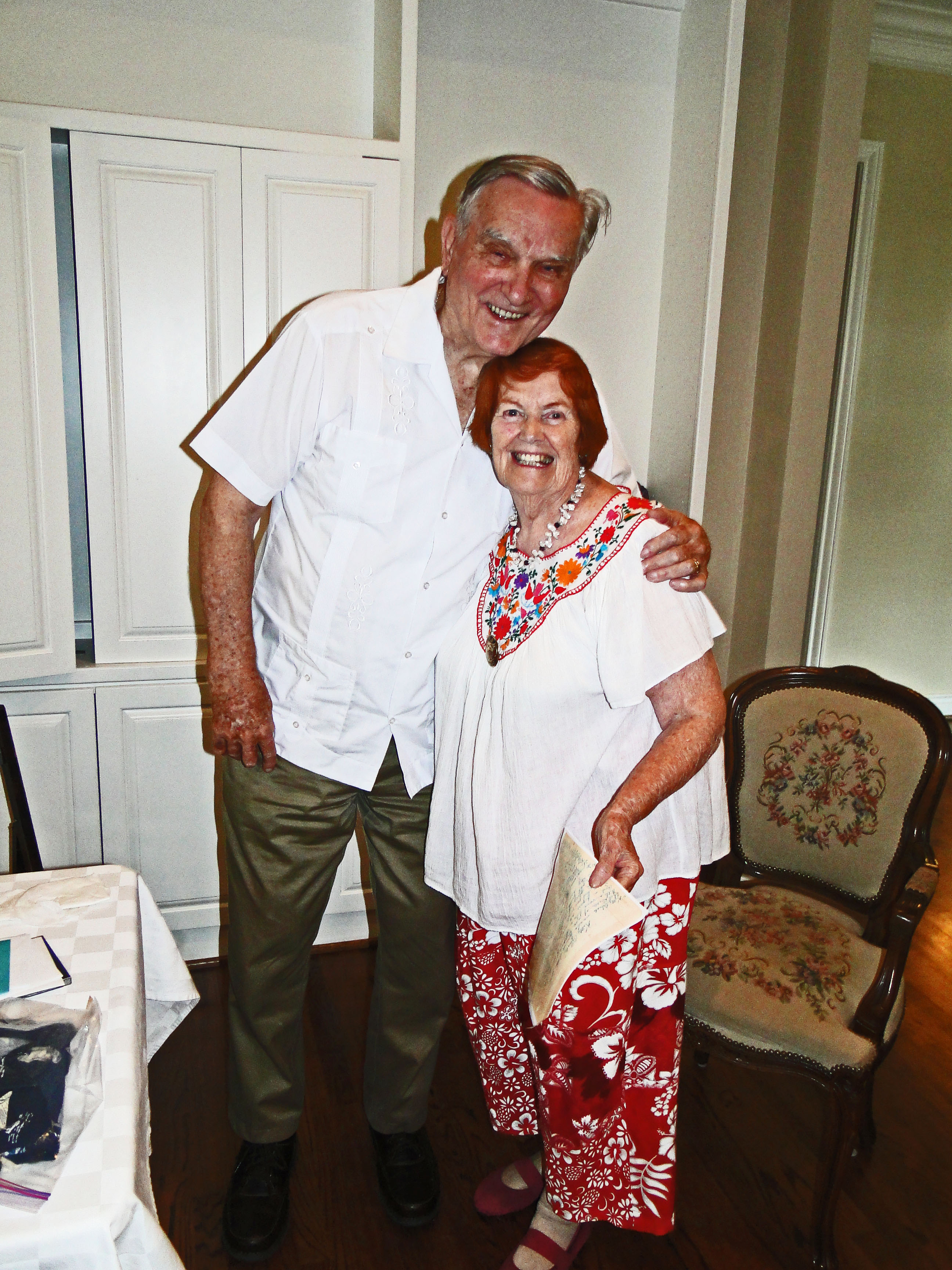
The party for family and friends was held yesterday at the new Houston home of Maureen Swanson and her immediate family. As one of Larry’s daughters, Maureen did things up right and, as with all things Miggins, there was an overflowing of love, laughter, fun, and good times, even theatrics. With the help of another guest, Larry and his lovely wife of nearly 69 years, Kathleen, acted out a side-splitting “Irishman Goes Courting” skit that was the highlight of the day, even if I cannot begin to recreate what you really had to see and hear with your own eyes and ears to fully appreciate.
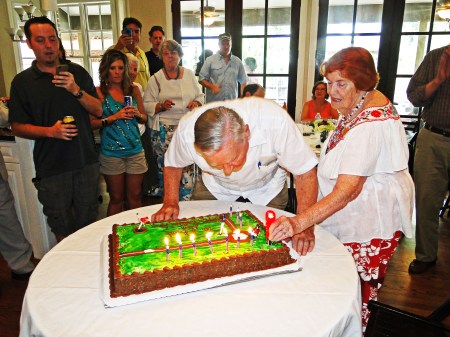
With some help from Kathleen, Larry Miggins blew out the candles on his 87th baseball birthday cake just fine.

The actual 87th birthday for Larry Miggins, the former Houston Buff and St. Louis Cardinal is actually today, Monday, August 20th. The actual birth year (in case you don’t have that many fingers or a calculator handy was 1925. Larry’s parents were Irish immigrants, but he was born and raided in The Bronx, NY. When Larry and Kathleen later married after meeting in Chicago, they actually kept the family Catholicism and Irish bloodline in the family about as purely as possible. Like his parents, Kathleen is also a native of Ireland who immigrated to the USA and “just happened” to meet the 6’4″ outfielder for the Cardinals on a road trip to the Windy City. – See Larry and Kathleen together and it should erase any loose notion that they met by accident. These two loving souls have belonged together since the beginning of time.

For those who don’t know, Larry Miggins is one of the last few remaining Houston Buffs from the period of great rejuvenated interest in minor league baseball that followed the end of World War II. The other two from my period of close Buffs adulation are Solly Hemus.and J.C. Hartman, and maybe, if we care to get technical, a few really famous ones like HOF outfielder Billy Williams and former Colt .45 pitcher Dave Giusti and catcher Hal Smith.  All others have either passed on from this earth or moved out of the area and our collective conscious memory. I’ve never done any formal research on the list of surviving Houston Buffs still above ground anywhere, but I would be surprised by any list that exceeded 15-20 names.

Still, the deepest blue names of former Buffs I idolized as a young impressionable kid today are only two: Larry Miggins and Solly Hemus. J.C. Hartman and the only mentioned here came along after I was already in college – and a little beyond the hero-worshipping stage of my love affair with baseball. My other two deep blue Buff heroes, first baseman Jerry Witte and catcher Frank Mancuso passed away in 2002 and 2007. Those men also were irreplaceable on my shelf of childhood baseball role models.
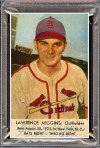
 Larry Miggins played professional baseball for 9 seasons (1944, 1946-54). He played two full seasons as a left fielder for the Houston Buffs (1949 & 1951) and two partial seasons (1953 & 1954). His major league career consisted on only two partial seasons with the St. Louis Cardinals in 1948 ( 1 time at bat) and 1952 (99 total plate appearances), working itself out as a .227 MLB batting average that did include home runs off HOF pitcher Warren Spahn and also the great Preacher Roe. In his 9 minor league seasons, Larry hit 143 home runs, including 27 for the 1951 Texas League champion Houston Buffs. Miggins hit those blue-streak liners that just took off on a straight line for the fastest, shortest, lowest trajectory they could find to get out of the park.

Later in life, Larry learned some things about hitting that could have turned his professional record on its ear had he met the right hitting mentor earlier, but that’s treading upon a path of common human regret. A lot of us have something we’ve learned that we regret not having with us at an earlier point in our lives, but Larry Miggins, at least, did something with later-in-life discovery. He wrote a wonderful instructional book called “The Secret of Power Hitting” that has helped a lot of young players improve their game. The book is still available at Amazon on the Internet.

Larry Miggins has experienced three direct brushes with baseball history that we should note here. When he was breaking in as a baseball player for the University of Pittsburgh during World War II, he showed up early for the first spring practice, eager to get started and make an impression. When he got to the practice diamond, however, the only other person there was an old man who offered to play catch with Larry and help him warm up. Eager Larry dove right into the invitation, not even wasting time on the ordinary business of personal introductions.

By the the time others started arriving, Larry had picked up on the identity of his partner in the game  of catch. Larry had been throwing the ball around with a fellow named Honus Wagner, one of the volunteer coaches at the University of Pittsburgh during Larry’s freshman season.

Larry eventually signed with the New York Giants and was assigned in 1946 as a third baseman to their Jersey City club. As a result, Miggins was playing third base for Jersey City on April 18, 1946 when Jackie Robinson of Montreal became the first black player to break the color line of Organized Baseball since the late 19th century. There’s is a photo somewhere that shows Robinson stealing his first base in the former segregated-from-identifiable-blacks world of professional baseball. Robinson is sliding into third base, beating the throw to third baseman Larry Miggins.

Finally, and this story leaves chills when you you hear Dodger broadcaster Vin Scully telling there is the tale of Scully’s connecting prophecy about Larry Miggins. It goes like this: Vin Scully and Larry Miggins were high school classmates in New York. As larry left to play baseball and football at the University of Pittsburgh, and Vin was moving out to begin his broadcasting career, Vin says he made this prediction to Larry:

“One day, Larry, you are going to be breaking into the big leagues and I will be one of the broadcasters on hand calling the game. You will hit your first major league home run in that game and I will be there to make the call over the air.” (The preceding was a parenthetical representation of Scully’s claim.)

Larry Miggins hit his first major league home run off Preacher Roe of the Brooklyn Dodgers as a member of the St. Louis Cardinals and Vin Scully was there as the rookie broadcaster for the home club Dodgers who made the call.
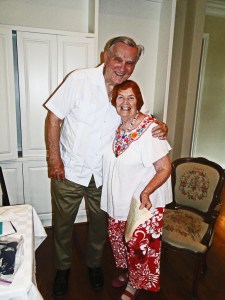
Larry & Kathleen Miggins
August 19, 2012

What more can I say? Maybe I could just sail away on a funny line that Larry threw out there yesterday in response to a personal question that one guest asked of him. The guest wanted to know why Larry had fathered twelve children, which, of course, he did. Most people who have just met the Migginses don’t feel the need to ask about the larger family.The hear and see “Irish Catholic” and just assume that the ethnic and religious- cultural situation speaks for itself.

Fortunately, some people fail to realize an even more basic truth: “Never ask an Irishman for a straight answer when a funnier one is possible.” Here’s how that exhange hit the ground running:

Guest: “Larry, whatever possess you to think you could ever afford to raise 12 children? How did this happen?”

Larry: “It happened because my dear wife Kathleen was hard of hearing.”

Guest: “Hard of hearing?”

Larry: “Yes. she was hard of hearing.”

Guest: “How so?”

Larry: “Simple. – You see, every night we went to bed, as I was turning out the light, I would softly whisper to Kathleen: ‘Are you ready to go to sleep or what?’ She gave me the same answer every time. She’d say, ‘What?’ ”

Good fun. Good Friends. Good people. Hope you have a second day of celebration on your actual birthday, Mr. Miggins. Give Kathleen another kiss for me too.

Slainte O m’anam


Deja Vu All Over Again

August 19, 2012

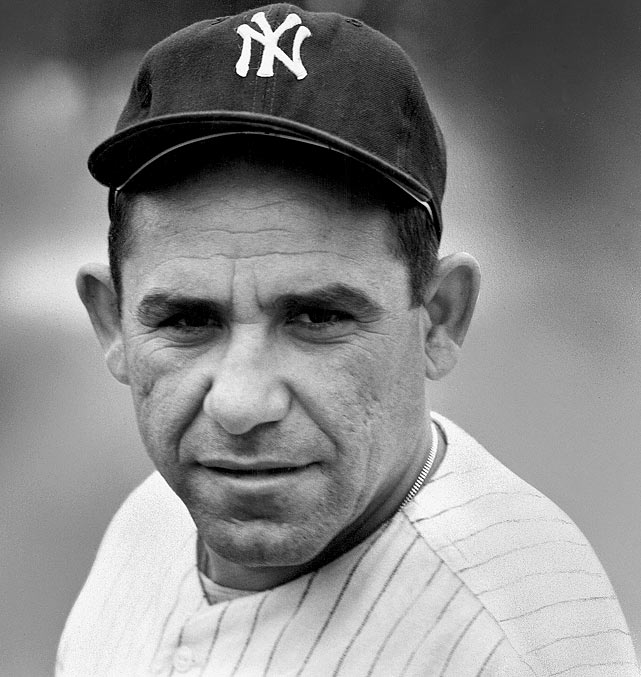
“When it comes to firing baseball team managers, there’s a lot you can learn by observing.” – Yogi Berra (by parenthetical attribution)

The first problem I had with this column was the title. It belongs to Yogi Berra by cliché deflection.However, the sudden news that the Astros had fired Manager Brad Mills and two of his coaches after last night’s most recent bug-squashing 12-4 loss to the Arizona Diamondbacks was just to big to ignore – almost as big as the news that third string Houston Texans QB got off a pretty good placement pass on his first try late in the 4th quarter of the NFL boys’ 20-9 win over the San Francisco 49ers.

The next problem I had was “why Millsie? Why now? And why, in particular, did they fire those two assistants, hitting coach Mike Barnett and first base coach Bobby Meacham?”

The coaching terminations were the easiest to decipher, Take Barnett, for example. The guy couldn’t take a team full of AA and AAA batters and turn them into real major league hitters. Of course, you fire him. – As for the first base coach, that’s fairly basic too. The guy’s not Jose Cruz. It’s probably time to put Jose back down there on the field. He’s got to be antsy to get out there again and serve as the reminder in these troubling times that the Astros were once a respected winning ball club.  At 7 AM this Sunday morning, we don’t know if you’re coming back the field, Jose Cruz, but we hope that you are.

Then I got to the question about Brad Mills and I realized the problem. I had already written that column back on July 27, 2012:

https://thepecanparkeagle.wordpress.com/2012/07/27/how-to-lose-your-job-as-manager-of-the-bakery/

It was called, “How to Lose Your Job as Manager of the Bakery.”

The Astros are going to sort all of this stuff out at a 10 AM CDT press conference later this morning.

Have a nice Sunday, everybody! You too, Masseurs. Mills, Barnett, and Meacham. What happened to you is just part of baseball, right? It really has nothing to with bakeries, correct?

Tal’s Hill: The Bigger View

August 18, 2012

Minute Maid Park: It may be quirky, but that’s baseball. And it’s ours.

Yesterday’s column here on the eminently approaching decision about Tal’s Hill stimulated some of the best real discussion we’ve had in some time on one of the built-in anomalies on the Houston baseball venue we now call Minute Maid Park, In fact, it spilled over into several other recognizable peculiarities of our base, most notably, the presence of the Crawford Boxes in left field.

The Issues Beyond Tal’s Hill

(1) Pitchers have learned over the total 13 seasons in residence to play MMP as it is. What happens next isn’t simply about Tal’s Hill – or the Crawford Boxes, for that matter. It’s about: Do we really want to alter the ballpark to the extent that it wipes out all the training pitchers have gone through in learning how to perform successfully in Houston?

That was the underpinning thought behind my too brief comment on the throwback similarity of MMP to the old Polo Grounds and its ridiculously short foul lines and impossibly deep center field. Mike Vance picked up on it exactly as I intended it. Beyond the hill itself, pitchers need every one of those 436 feet in dead center to make MMP the park they have all learned to play.

Move those fences in to 390-400 feet, and you create the band box that frightened all of the Astrodome courage out of Jose Lima and a few others back in that first 2000 season. It was learning how to force batters to hit the ball into the big center field pasture that separated the successful Astros pitchers from those who needed to seek work elsewhere.

Do we really want to change that anomaly now? It is my hope that someone from within the coaching and playing membership will get Mr. Crane’s ear on that one. As a former ballplayer himself, he certainly must understand what I’m talking about here.

(2) New “owner” Jim Crane is under great pressure. He has both the need and the right to run things on the Astros his way from stem to stern, as long as he does it under a 24/7 assault of suggestions from everyone, including little people like me, on what he should and shouldn’t do – and as long as his own needs to imprint the franchise with his own brand doesn’t hurt the fans of Houston in the long term.

I’ve always seen it this way when it comes to the real ownership of the Astros: Our fan-passion for the game is your business, Mr. Crane. Please handle both with care – and please maintain a respect for the past while your eye is on the future. The important heritage of Houston Baseball is much older than any single ownership of the current major league club.

Good luck with your practiced balance on these issues too, Mr. Crane. As with everything else, we are all ultimately judged by what we do.

(3) Baseball is a timeless game played on a field of randomly expressed configuration anomalies. As we all know, and very unlike football, baseball is not played by the clock on a field that is invariably the same size. Once we get past the right angles that configure the infield diamond and its four infield stations at 90 feet apart, and a pitching rubber that is 60 feet six inches from home plate, the far away outfield walls appear at random distance from home. At 1912 Fenway Park in Boston, the short wall in left was due to the limitations on additional space – and that led to the latter construction of the Green Monster as one big deterrent wall to  cheap home runs. At 2000 Enron Field in Houston, however, the short porch in left was by design.

Call it gimmicky, if you like, but that’s baseball. By requirement or design, baseball has been building these anomalies into ballparks for ages. During the era of the cookie-cutter multi-purpose stadiums that cities built in Houston, Pittsburgh, Philadelphia, Cincinnati, and St. Louis, among others, during the 1960s and 1970s, people briefly liked, then rebelled against the sameness. As the world’s first domed stadium, only the Astrodome maintained any unique charm over time, but even that smile had faded by the turn of the 21st century.

Enron Field, now Minute Maid Park (MMP), was a product of planned anomaly, and these included Tal’s Hill, what came to be known as the Crawford Boxes, the train, and the rambling column style of its interior architectural face. If the ball park is now reconfigured into something closer in resemblance to a band box sized cookie-cutter field, it’s not going to be very pretty – and it is going to be boomer baseball for whichever team brings the biggest bombers to games here.

A lot us don’t like a constant dose of bomber baseball, but the Astros are going into the AL WEST in 2013 as opponents of the Rangers and Angels, two of the biggest bomber squadrons in the game. We will need every inch of that 436 feet center field wall – and I’ll take the Hill and flag pole with it  too. As for this kind of ball, only the park is sort of ready, via our pitchers’ abilities to “play it like the Polo Grounds.”

We aren’t close to winning any slugfests any time soon. The Astros don’t have an air force. Right now, they don’t even own a plane.

Goodbye Tal’s Hill

August 17, 2012

Tal’s Hill, Minute Maid Park, Houston.

The closing paragraph of today.s “Astros Report” on page C8 of the Friday, August 17, 2012 Houston Chronicle sports section pretty much says it all. Astros owner Jim Crane is reported saying that the club has been busy soliciting fans’ opinions on the future of Tal’s Hill in center field.

According to the article, Crane reports that fans have said “they don’t see a lot of sense in having that 436 (-foot fence) in center. We”re looking at a design that would incorporate some other things out there. We would use that space for a lot of different things.”

Other things like what, Mr. Crane? More seats that are too small to sit in without getting married to the two people on either side of you? Two or three more aisles that are so narrow that everyone has to stand when one person in the middle leaves to buy a hot dog? Another over-priced restaurant that everyone quickly learns to avoid? More advertising space, or perhaps, a center field corral of Chick Filet cattle? And, hey, bringing center field back to something like 390 feet and a better match for the short porches in left and right?

OK, I’ll back off this much to say: Please take anything i say on this subject with a huge grain of salt, Mr. Crane. It’s your ball club and money at risk here, not mine. I’m just one of those people who like liked the idea of Tal’s Hill in the first place and also the fact that it is one of the traditional and characteristic quirky  features of our unique venue in Houston. I also liked the guy it was named for. Tal Smith will always be the real father of Houston major league baseball and I will always believe that he and the Hill are both very much deserving of more respect than they have been getting from this transitional period.

Boston Fenway has the Green Monster. Chicago Wrigley has the ivy wall. Both are traditions – something that rarely, if ever, gets fed in Houston, but we had the makings of it in Tal’s Hill and that deep center field dimension. Those fans who haven’t been around baseball long enough to see it need to take another look at the rationale for that deep and spacious middle pasture. The “436” in center takes away almost all of the band box taunts we get from out-of-towners because of the Crawford Boxes – or the almost as short wall in right. The current distances make MMP like a modern-day Polo Grounds – one that just awaits only time and circumstance some day to bring us a play that will stand up in history as a memory rival to Willie’s famous “The Catch” in the World Series of 1954.

Just don’t tell us that Tal’s Hill will be coming out because most of the real Houston fans want it out. You either haven’t talked to enough fans, or you’ve been talking to fans who are ready to tell you what they think you already want to hear. It’s easy to see that happening.

If Tal’s Hill comes out, as it now appears you have already decided it will, just say it’s because that’s the way you want it. We can handle the truth. We just don’t have to like it.

As Tal’s Hill goes, a lot of us will grieve over the latest lost opportunity to preserve a little tradition in Houston.  Call off the demolition of Tal’s Hill and give tradition a chance in Houston. If you can’t do that much, then give us the space to grieve its loss and, while you’re at it, if you could give us more comfortable seating room and aisle space in the nosebleed section now, you might even win the eventual battle with HD home TV viewing comfort that is now totally lost to the currently overwhelming attractions of the latter option.

The Arms of Ruth’s Summer

August 16, 2012

As Time Goes By, It’s Still the Babe

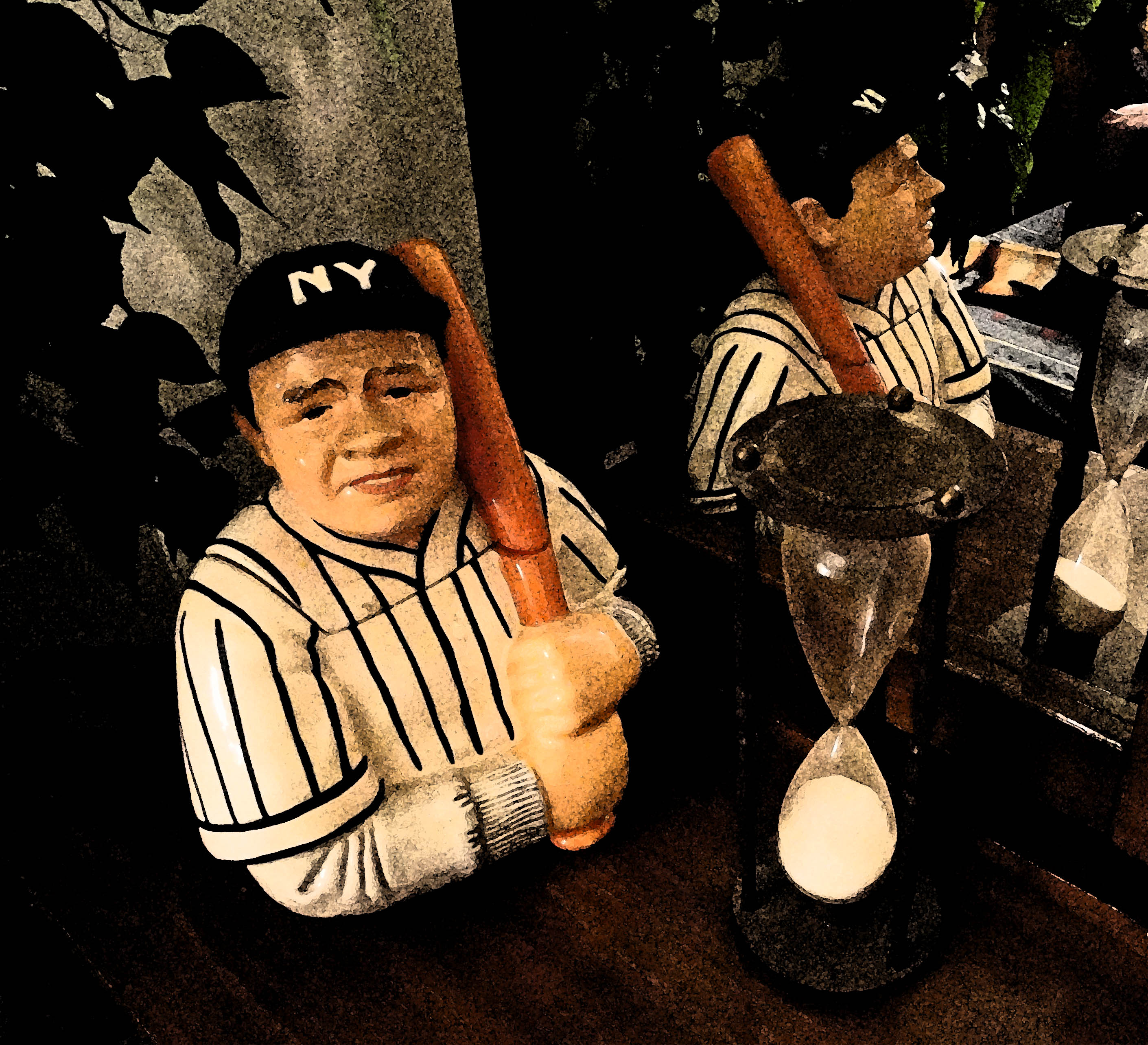
Sooner or later, I always go back in baseball history to the guy who even now seems like Superman to this ancient fan. Babe Ruth was the man all right, even his portrayal by WIllim Bendix in the 1948 biopic “The Babe Ruth Story” did nothing but enhance the heroic imagery I had embraced of him from my earliest readings of his exploits on the field. These too were only amplified by the stories my dad told me of him. I was eleven years old in 1948, the year the Babe died, and I remember just being devastated by the news. I knew that he had been sick for a while, but I didn’t really expect him to die. Not the Babe. But he did.

In the Babe’s honor, The Arms of Ruth’s Summer are the 33 fine pitchers who served up the Bambino’s 60 record homers in 1927. When it happened, many people, including Ruth, harbored thoughts that the mark might stand forever. It didn’t, but it stood fro 34 years, long enough to be carried into every battlefield in World War II in the minds of every young American soldier who also grew up loving baseball and the Babe.

Thanks to the graphic help of Baseball Almanac, here is the path that Babe Ruth took through the Boys of His Summer back in 1927:

The Original 60 Home Runsby Babe Ruth
Home Run # Date Pitcher
1 04-15-1927

Howard Ehmke

2 04-23-1927

Rube Walberg

3 04-24-1927

Sloppy Thurston

4 04-29-1927

Slim Harriss

5 05-01-1927

Jack Quinn

6 05-01-1927

Rube Walberg

7 05-10-1927

Milt Gaston

8 05-11-1927

Ernie Nevers

9 05-17-1927

Rip Collins

10 05-22-1927

Benn Karr

11 05-23-1927

Sloppy Thurston

12 05-28-1927

Sloppy Thurston

13 05-29-1927

Danny MacFayden

14 05-30-1927

Rube Walberg

15 05-31-1927

Jack Quinn

16 05-31-1927

Howard Ehmke

17 06-05-1927

Earl Whitehill

18 06-07-1927

Tommy Thomas

19 06-11-1927

Garland Buckeye

20 06-11-1927

Garland Buckeye

21 06-12-1927

George Uhle

22 06-16-1927

Tom Zachary

23 06-22-1927

Hal Wiltse

24 06-22-1927

Hal Wiltse

25 06-30-1927

Slim Harriss

26 07-03-1927

Hod Lisenbee

27 07-08-1927

Don Hankins

28 07-09-1927

Ken Holloway

29 07-09-1927

Ken Holloway

30 07-12-1927

Joe Shaute

31 07-24-1927

Tommy Thomas

32 07-26-1927

Milt Gaston

33 07-27-1927

Milt Gaston

34 07-28-1927

Lefty Stewart

35 08-05-1927

George Smith

36 08-10-1927

Tom Zachary

37 08-16-1927

Tommy Thomas

38 08-17-1927

Sarge Connally

39 08-20-1927

Jake Miller

40 08-22-1927

Joe Shaute

41 08-27-1927

Ernie Nevers

42 08-28-1927

Ernie Wingard

43 08-31-1927

Tony Welzer

44 09-02-1927

Rube Walberg

45 09-06-1927

Tony Welzer

46 09-06-1927

Tony Welzer

47 09-06-1927

Jack Russell

48 09-07-1927

Danny MacFayden

49 09-07-1927

Slim Harriss

50 09-11-1927

Milt Gaston

51 09-13-1927

Willis Hudlin

52 09-13-1927

Joe Shaute

53 09-16-1927

Ted Blankenship

54 09-18-1927

Ted Lyons

55 09-21-1927

Sam Gibson

56 09-22-1927

Ken Holloway

57 09-27-1927

Lefty Grove

58 09-29-1927

Hod Lisenbee

59 09-29-1927

Paul Hopkins

60 09-30-1927

Tom Zachary

Home Run # Date Pitcher
The Original 60 : by Babe Ruth

Babe’s 60th home run came in the next to last game of the 1927 season before only 6,000 home fans at the cavernous Yankee Stadium. The Yankees had much earlier wrapped up the pennant and, even though Ruth had cruncher homers 58 and 59 only a day earlier, there apparently was little interest among fans in the idea of coming to watch him try for 60.

Ruth finally nailed number 60 with one out and one on in the bottom of the 8th off lefty Tom Zachary of the Washington Senators. It was a mob he hit down the right field line, but things were briefly tense as everyone waited to see if the fall would remain fair. It cleared by no more than six inches, giving Ruth the record and the Yankees a 4-2 win. The date was September 30, 1927.

Tom Zachary gave up 3 of Ruth’s record homers, as did six others. Milt Gaston of the St. Louis Browns and Rube Walberg of the Philadelphia Athletics were the other pitchers to surrender 4 homers each to Ruth;s 1927 record bag. – 7 other pitchers gave up 3 homers each to Ruth that years and the Babe also tagged 17 pitchers for one long ball each.

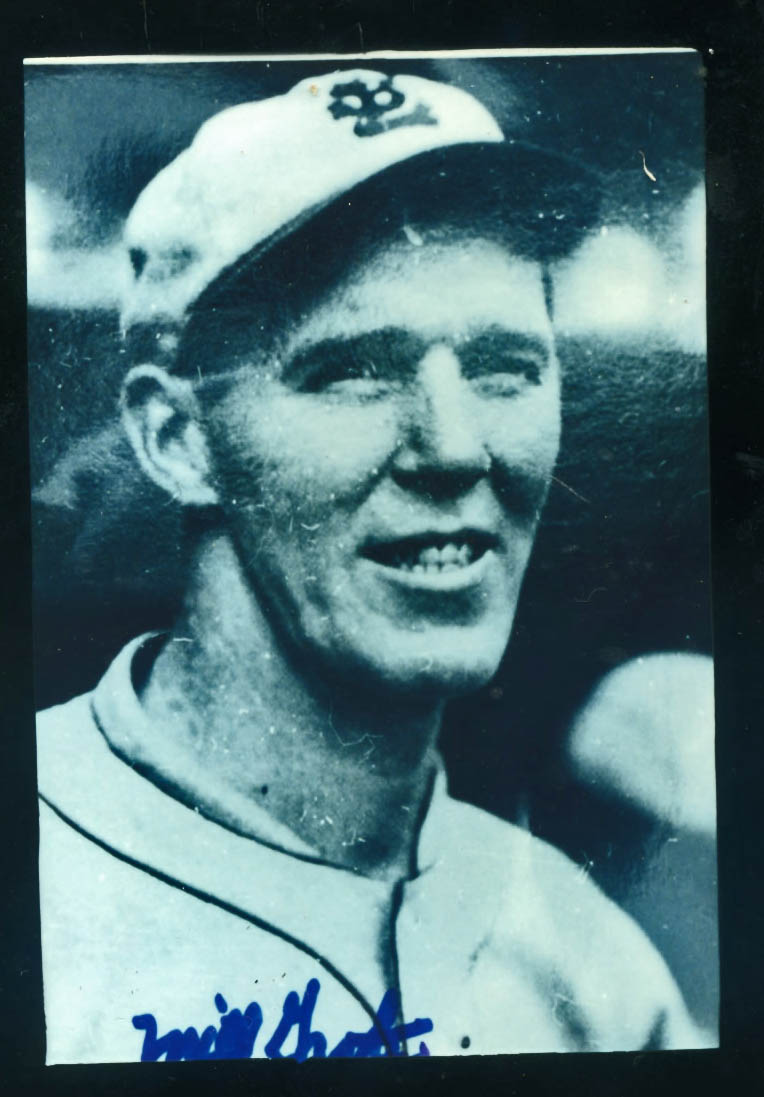
Milt Gaston
1924-1934
5 AL Clubs

 A Milt Gaston Sidebar; When Gaston turned 100 years old on January 27, 1996, I sent him a baseball and asked for his autograph. By this time, Gaston was living in a nursing home in Maine and I wasn’t sure if he could even still write, but I could resist trying. I also included a few bucks to cover his mailing and also help supply him with some loose change. I also told him in a note that I wished I could go back in time and watch him pitch one more game.

I never heard a things. Weeks passed and I had pretty well written off the contact effort to Milt’s age and inability to deal with a request from a faraway fan in Texas,

The one day i picked up the paper and learned that Milt Gaston had died in his Barnstable, Massachusetts nursing home setting on April 26, 1996, The new saddened me greatly. I figured that was it for sure for the last hope of ever hearing from the old pitcher, Then, two or three days later, about April 29-30, 1996, I went to the mailbox and found the shock of my life,

It was a small box wrapped in brown paper, addressed to me from Milt Gaston, and all in this large all over the place blue-ink handwriting, I side the box, Milt had signed the ball I sent him and also had enclosed an autographed signed picture of himself, The ball is now in secure storage. The player photo shown here s a copy of the one Milt sent to me. The original is in storage with the ball.

I’ve compared my Gaston signature with others I’ve seen and am convinced he did it, but I have no idea if had help wrapping the ball for the mail. That handwriting appeared to be his, as well, but I must have either absent-mindedly thrown out the wrapping or stored it separately somewhere I’ve forgotten – which is most probably what happened.

That’s OK. What matters to me is the fact that I know it happened exactly as I’m telling you here. And I have been in contact with, and own a signed ball from one of Babe Ruth’s Arms of Summer. It’s in a bank box because of its sentimental value to me. It’s no big money deal. It’s just that I know that one of Babe’s boys sent that ball and picture to me as one of his last acts on earth. And that makes me a very lucky guy.