Same Old Song, Gazillionth Verse

April 14, 2013
Looks like there are some things that work the same in either big league.

Looks like there are some things that work the same in either big league.

Last night, Saturday, April 13, 2013, the Houston Astros held a 4-3 lead over the Los Angeles Angels going into the bottom of the 9th at Anaheim. An Astros victory would have extended the club’s winning streak to 4 games, could have given 4th place Houston a 3-game lead over 5th place Los Angeles, and should have  been in the bag with a Mariano Rivera in-his-prime closer performance, but hey, the ‘Stros don’t have a guy like that on a $20 million dollar total team budget roster.

Bottom of the 9th: Enter Jose Veras for Rhiner Cruz of the Astros.

(1) Thinks start well. Veras strikes out pinch hitter Hank Conger swinging.

(2) Veras gets a 1-2 count on Luis Jimenez, but then walks him.

(3) More good news: J.B. Shuck flies out to left fielder Brandon Barnes. Only one out away from victory.

(4) But, Mike Trout dribbles an unplayable ball to shortstop Marwin Gonzalez. Jimenez moves to 2nd.

(5) Albert Pujols time again. Pujols drills a fast-rolling worm burner down the left field line that scores both Jimenez and Trout for a come-from-behind 5-4 walk-off Angels win over the Astros.

Jose Veras needs not hang his head this morning. He did nothing that was original last night. In fact, if they ever decide to mint a silver dollar with Albert Pujols’ likeness on the head’s side, Brad Lidge would be the only choice for the tail’s side.

Anyway, it’s now Sunday. A brand new day. Time for the Astros to start a new winning streak. Just hope they stay away from pitching to Albert Pujols with the winning run on the bases or at the plate in the bottom of the 9th.


“42”: A Beautiful Profile in Courage

April 13, 2013
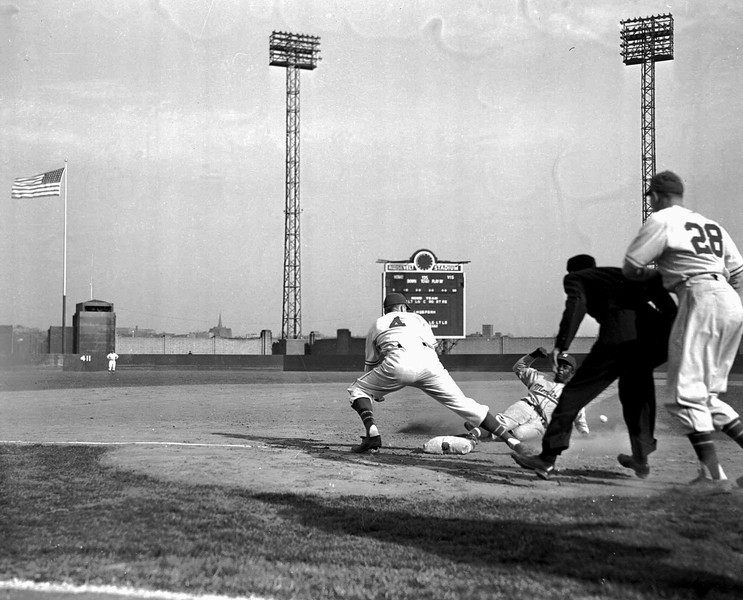
April 18, 1946: Jersey City 3rd baseman Larry Miggins takes late throwing on a sliding Jackie Robinson in the latter's debut game into organized baseball.(Photo Courtesy of the Houston Chronicle and the San Jose Mercury News.)

April 18, 1946: Jersey City 3rd baseman Larry Miggins takes late throwing on a sliding Jackie Robinson in the latter’s debut game into organized baseball.(Photo Courtesy of the Houston Chronicle and the San Jose Mercury News.)

In writing and producing “42”, filmmaker Brian Helgeland has hit one out of the park. He says that he wanted to make an accurate movie that showed Jackie Robinson’s personal courage – and that’s what he’s done. Along the way, we also get to see and emotionally experience the courage of Robinson and others, like his boss and mentor, Branch Rickey;  his loving wife Rachel; his struggling-to-grow-into-their-own-big-shoes teammates, fellows like Pee Wee Reese, Eddie Stanky, Bobby Bragan, and Ralph Branca; writer Wendell Smith; and all of the little everyday people, from kids to adults, both black and white, who pull for Jackie’s success as their own hero for fair play and baseball opportunity based upon performance, even in a time and across certain Deep South places it wasn’t exactly popular for them to do so.

Two hours plus is not a lot of time for storytellers, but it is just about the brink of the blowout hour for today’s attention spans. With that in mind, Helgeland leaves out a lot of in-depth detail about Jackie’s life prior to his recruitment by Rickey for the Dodgers. On the clock, “42” takes place between Robinson’s 1945 signing by Rickey through the time the Dodgers win the pennant in his 1947 rookie year.

It was enough key time in the life of Jackie Robinson to profile both the ugliness of racism and the courage it took for Robinson and those who involved themselves in the process to show either their courage or their cowardice.

Branch Rickey was the architect of it all. The man loved baseball, but he admittedly had been living with regret since the early days of his turn-of-the-20th-century coaching experience at Ohio Wesleyan College that he had not done more to strike back at the racism that ruined the sport for one of his black players so long ago. In the movie, Rickey admits to Robinson that he needs to take this step against the organized baseball color line to restore his full love of the game.

He also is not pure of heart. Rickey admits to others at another point that he is aware that the color “green” is one that only comes to winners, and that the employment of great black ball players increases both the chances for winning as much as it also expands the fan base to include the growing population of black fans. He is not talking about a plan to destroy the Negro Leagues, but it is pretty well understood by everyone at that time that organized black baseball only exists because of segregation and the color line – and that the total fall of these barriers will sound the death knell for a racially segregated league for blacks. – The movie doesn’t touch the concerns that Effa Manley of the Newark Eagles and other Negro League team owners had about compensation payments for MLB signings of their stars.

Jackie Robinson, of course, is the man given the Rickey charge of responsibility in this groundbreaking role: “I want a man with the courage not to fight back!” As such, Robinson has to endure the quiet to underhanded forms of racism that come to him from certain teammates to the horribly flagrant vitriol that pours from the n-word flowing mouth of Ben Chapman, the heckling manager of the Philadelphia Phillies. Add to that combination a file cabinet filled with hateful, mindless, and often marginally literate death-threat mail and the National League Season of 1947 doesn’t exactly stack up as the Summer of Love for Jackie Robinson.

Rachel Robinson is the loving young wife of Jackie and the new mother of their only son. A California girl, on her own in the Deep South Florida training base of the Dodgers in 1946, is exposed to segregated rest rooms and drinking fountains for the first time (along with segregated everything else) and has to deal with it on her own as the only wife in camp of any color. She, of course, also has to deal with the cruel things people yell from the stands to her husband and also bear the courage not to explode in public from the baiting. And she is as cool as Jackie to the challenge.

Then there are the teammates. Ralph Branca befriends Jackie from the start, leaving himself open to the job of dealing with the racist element that is offended that he will not sign their “get rid of Robinson or else” petition. Pee Wee Reese just lays it on the line with the petitioners: “I’ll play ball with any man who proves he’s good enough to handle his job on the field. If Robinson proves himself there, that’s good enough for me.” Before his suspension for a year on a morals charge, manager Leo Durocher tears the petition crowd apart with a clear statement: “I don’t care what color a player is if he can do the job. He can have stripes like a zebra for all I care. If you guys don’t want to play in Brooklyn by our game plan, just meet me in Mr. Rickey’s office and we will do all we can to move you out of here.” Eddie Stanky finally walks over to Phillies manager Chapman during the famous ugly heckler game and threatens to bust his chops if he doesn’t get off Robinson’s back. When Jackie later tries to thank Stanky, the latter just brushes it off with “I’m supposed to take up for you. You’re my teammate.”

When a road trip crowd at Cincinnati begins to boo Jackie while the Dodgers are in the field, Pee Wee Reese, who has a lot of friends and family in the area, calls time out. He races across the infield from short to first and simply puts his arm around Robinson as the two then face the crowd and look into the stands. Boos turn to cheers. Asked later why he did what he did, Reese answers, “I wanted them to know who I am.”

Finally, young Bobby Bragan goes to Mr. Rickey and asks to have his name removed from the list of players who have asked to be traded since the “Dump Robinson” petition was killed. As an Alabama native, Bragan had been one of those who had grown up in a racist culture that valued segregation as the only way of life, but he had gotten to know Jackie Robinson and now felt differently. When asked by Rickey what has changed, Bragan explains in words that come across clearly: “Life is about change – and I’ve changed too. I’ve grown up.”

Please note: None of the quotes I’ve offered here are anything but paraphrases. I wasn’t memorizing the script; I was watching the movie – a movie that fully absorbed me – and it was my favorite kind of movie, one in which the real life good guys triumph over the real life bad guys. I may have missed some exact quotes, but I think I got full-bore what each was saying.

Chadwick Boseman did a fine job in his portrayal of Jackie Robinson and Harrison Ford, flat-out, WAS Branch Rickey in every way you measure looks, mannerisms, actions, and attitude. His Mahatma performance gets my early thumbs up for a nomination in the best supporting actor category.

The visuals and costuming are out of this world true to Post WWII – and Ebbets Field dances before our eyes like an animated baseball card. It really appears to be still with us on a stretch of land in Brooklyn that includes a border on Bedford Avenue.

Anyway, check out “42” for yourselves. If you like Jackie Robinson and what he accomplished, just relax and be prepared for an educational and entertaining afternoon or evening.

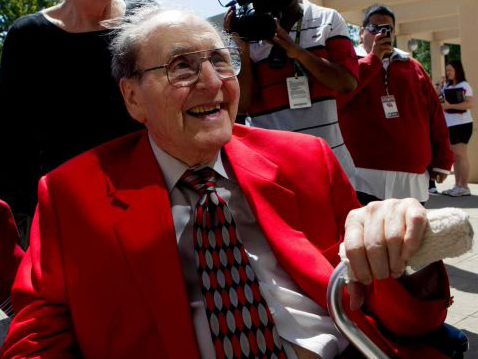
My movie experience was also enhanced by the company I keep. I watched the film on Friday afternoon, aril 12th, at the Greenway 24 Cinema with one of the seven survivors from Jackie Robinson’s first organized baseball game at Jersey City on April 18, 1946, one of my childhood Houston Buff heroes and very dearest friends, Mr. Larry Miggins.

Ain’t life grand?

HR for David Barron and Houston Chronicle

April 12, 2013
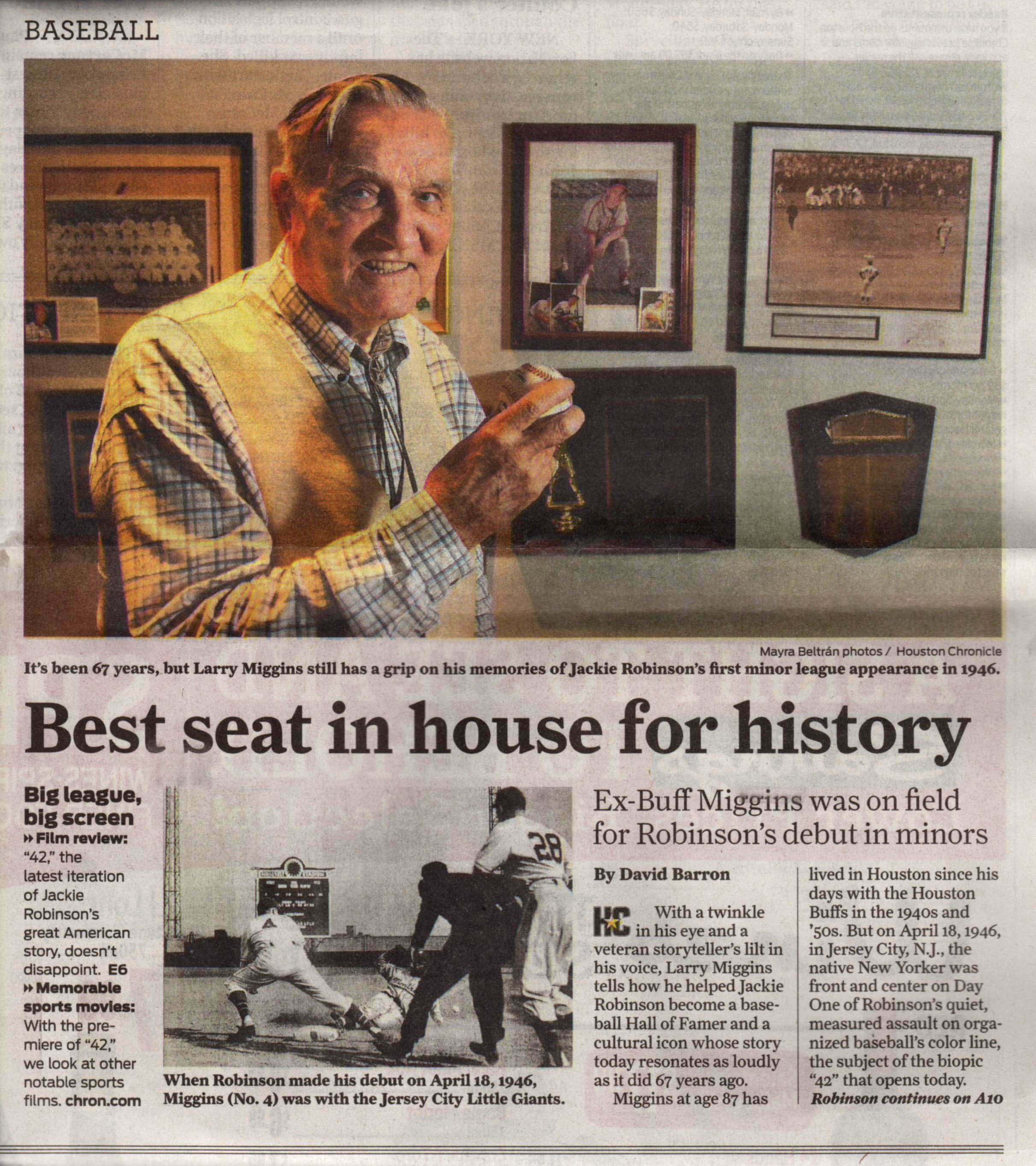
Excerpt from the Front Page of the Houston Chronicle, Friday, April 12, 2013.

Excerpt from the Front Page of the Houston Chronicle, Friday, April 12, 2013.

Today, Friday, April 12, 2013, the Houston Chronicle deservedly gives up front page space to a beautiful piece of historical writing by David Barron on the role of longtime Houstonian and former Houston Buff Larry Miggins in baseball history with the great Jackie Robinson.

Please pick up a copy of the Chronicle today and read it for yourselves. It is both an entertaining and eloquent treatment of Larry Miggins’ personal role in the real debut of Jackie Robinson into the formerly all white organized baseball ranks in a game at Jersey City, New Jersey on April 18, 1946.

This is one of the finest examples I’ve ever seen of the Houston Chronicle paying due and full attention to the role of a fellow Houstonian in the larger history of our culture and world, and also one of the finest pieces of writing I’ve ever read in this context. David Barron is quite empathic in his quick grasp of what the Irish Miggins mystique is all about. After a home visit with Larry and his lovely wife Kathleen of nearly 59 years, David apparently left their residence showered with enough rainbow dust to write the column of his professional life.

Nice job, David Barron! A very nice job, indeed! The City of Houston is all the richer this morning because of your efforts and the good sense of the Houston Chronicle to place the story on the front page.

Thank you, Houston Chronicle! The Pecan Park Eagle trusts that you will not mind us publishing a scan of the Barron article in partial form as a visual companion to this totally supportive review.

Antstros Anthology: Entry 1

April 11, 2013
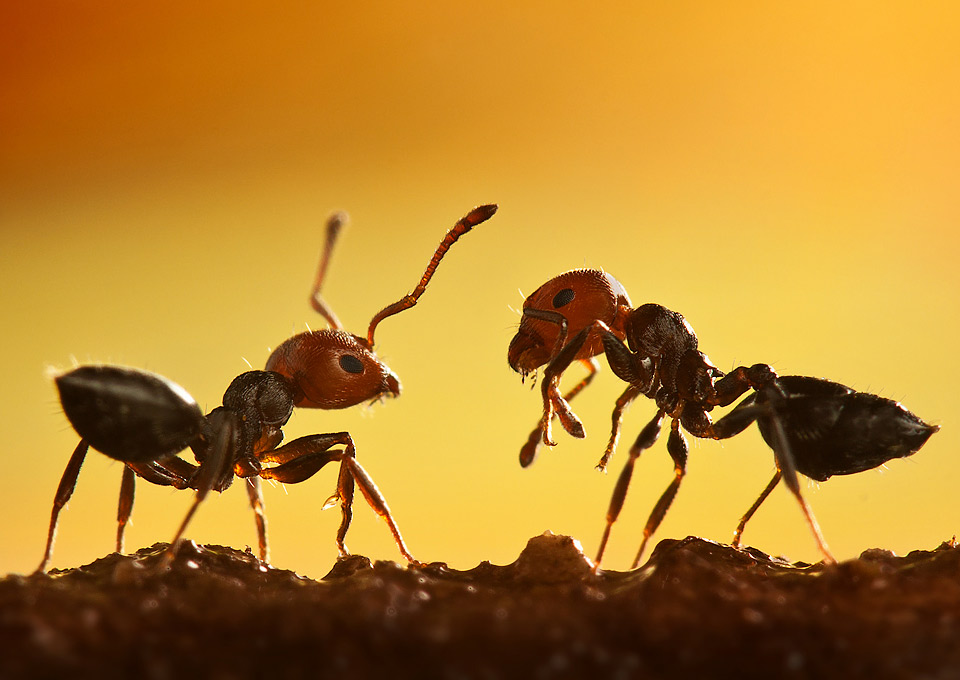
"How do you explain what we just did in Seattle?"

“How do you explain what we just did in Seattle?”

"Easy. - Sometimes in life we just have to find the strength to push back against the odds."

“Easy. – Sometimes in life, we just have to find the strength to push back against the odds.”


Time to Redefine “Breaking News”

April 10, 2013
How long are we going to continue treating a stolen auto as breaking news?

How long are we going to continue treating a stolen auto as breaking news?

Unless you are a home-in-the-daytime person who enjoys television, you’ve probably missed this one, so far, but it does strike in the evening too upon occasion, and lately, it seems, it seems to hit every night during the scheduled news hours of the Channels 2, 11, and 13 local news programs in Houston.

That is, that scheduled programming that some of us have tuned in to see is preempted suddenly and offensively by some kind of “all out” coverage of an event the stations like to bill as “breaking news.” Today it was the mysterious stabbings that crazily broke out at Lone Star College on their Cypress campus. The local stations were on that event for at least two hours with helicopter shots of cars parked on campus, roving reporters interviewing students for their fifteen seconds of fame, and watching the hospitals for the arrival of casualties that never seemed to materialize.

Meanwhile, our intended shows and time were allowed to just slip away. Way beyond the time it took for us to get the “news” of what had happened in this already contained situation, one of the anchor ladies had the doo-doo dippity-brain audacity to ask one student on remote call this thoughtful question: “Was the person who stabbed your friend the same person who was running around campus stabbing other people?”

DUH!

The sad facts are these: (1) We have become a violent culture in which people who cannot cope often simply express their discomfort by lashing out randomly at others; and (2) We are also a gristly, self-centered culture in which some people do all kinds of unconscionable things to their children, spouses, other family members, lovers, friends, strangers, and themselves, using some sickly reasoned basis as their justification.

Each day produces new examples of the same diseased well-spring, but is it any longer news that it happens? Do we really need to reenforce on a daily basis through our newscasts and frequent entertainment program blackouts the idea that the only thing that happens in our American cities is this overflowing toilet of human meanness to self and others? I don’t think so. And I really hope not.

Violence is an ongoing threat to public welfare, of course, and please use these same broadcasting tools to help bring a bad situation to a better conclusion, but don’t helicopter hover like media buzzards over a the site of a student’s mental illness breakdown once the threat to other students and the general public has been secured. The inanity of the questions asked by some of these so-called electronic journalists is almost as painful as the stabbing wounds themselves – and it contributes little to nothing to our deeper understanding of human behavior at its worst.

School violence is no longer news. It is another manifestation of our unresolved national sickness.

As for happy, though unlikely, news stories, how about waiting for these:

“Congress solves country’s tax and social program gridlock; Most now put USA ahead of personal interests.”

“Governor Perry Retires; Will Open ‘Aggies Only Malt Shop’ on the UT Drag in Austin.”

“Astros Win Their First World Series in Four-Game Sweep of the Cubs.”

“Domezilla Re-Opens as World’s Largest Classic Horror Movie Theatre.”

“Regular Annual Rainfall and Cooler Temps Restore Houston to Garden Spot of the World title.”

And while we are waiting for those nice or funny dreams that may likely never hatch, let’s dig a little deeper for good news, and whole news, and any news of what we are actually doing, if anything, to better understand and effect some kind of change in the aberrant pattern that now tragically and regularly hatches into a Sandy Hook level horror show.

My guess is that we are not doing much because, to do so, we will have to engage all of the already politically charged elements that make up our dance to each of these “deranged assassin” moments: The Bill of Rights, the 2nd Amendment, the NRA, Gun Lobbyists and Opponents, Our American Family concepts, Education, Parenting, etc. As a problem awaiting solution, the prevention of gun violence is one of our shakiest Jacob’s Ladders of social challenge.

And today in Houston wasn’t even about gun violence. It was about knife violence. Almost anything can be used as a weapon of some type. Still, once discovered and contained, it wasn’t news. It was just another variation on an ugly theme of contemorary life in America.

That’s as far as I can take my unhappiness with what passes for news today in one sitting. If we watch another 1,000 stories like today’s from Lone Star College, or if we are shown another 10,000 convenience store shootings, or if we watch another 100,000 older citizens sitting on their front porches in undershirts after the police arrive to investigate another home invasion, it will not solve anything – and it will not be news.

Now, if we could learn what really caused the young man who did this thing at Lone Star today to act as he did, that would be news, but that does not justify turning the airways into an open-ended pictorial on the scene of the crime simply because the director of this show is in competition for viewers among the local media channels.

The Flamethrowers

April 9, 2013
"Can't be a fastball 'cause fastballs never look this big. - Heck, you don't even see the really good ones."

“Can’t be a fastball ’cause fastballs never look this big. – Heck, you don’t even see the really good ones.”

Pat Callahan, one of my old friends and fellow ancients from the St. Thomas HS Class of 1956, sent me a hardcopy of this wonderful article from the Wall Street Journal of Friday, March 29, 2013 on “The Flamethrowers”, and how the science of developing fastball pitchers is changing the game of baseball at a record clip. I’ve since learned that the same article is available online at …

http://online.wsj.com/article/SB10001424127887323419104578376793663086624.html

According to former Astro Chris Holt, now a pitching coach for young prospects at Pro Bound USA, a Florida baseball academy, says that young pitchers who can’t hit 90 on the radar gun don’t get a serious look. “Ninety-two is the new 88,” Holt says. “The cutoff is 90, 91 minimum.”

Article writer Matthew Futterman hits early on these two big changes in the current MLB pitching culture:

“”In the 2003 season, there was only one pitcher who threw at least 25 pitches 100 mph or faster (Billy Wagner). In 2012, there seven according to Baseball Info Solutions.

“In 2003, there were only three pitchers who threw at least 700 pitches 95 mph or better. In 2012 there were 17. There were 20 pitchers  decade ago who threw at least 25% of their fastballs 95 mph or faster. Last year, there were 62, including Carter Capps, the Seattle Mariners’ 22-year-old right-hander, whose average fastball travels 98.3 mph, tying him with the Royals’ Kelvin Herrera for the top spot in the game.”

Strikeouts are also increasing as the average pitching speed climbs through the roof. “Nearly 20% of all plate appearances last season (2012), resulted in a strikeout.” In 1968 (the famous Bob Gibson Year of the Pitcher), only 15.8% of all plate appearances resulted in a strikeout.

The article goes into some detail on how modern digital technology is help science measure all the correct body part movements that are necessary to make faster pitching possible in a way that doe not damage the arm. And that was something we definitely did not have only a short while. As a fireballing kid pitcher, all I did was ruin my arm on the coaching advice of “throw it hard as you can for as long as you can.” We neither understood or learned anything about the importance of body movement, especially from the legs, fully behind the release of the ball.

We just pitched until our arms fell off. Today, it seems, the really effective fireballers just get to keep pitching until they mow down all those would-be hitters with the useless no-ball-contact bats in their hands.

Speaking of bombs, the Astros just lost their third shutout of the season at Seattle on Monday night. With only 8 strikeouts registered by their hitters in the 3-0 loss, they fell two K’s short of making it their third game of the season to go scoreless while registering double-digit strikeouts at the same time.

Maybe next time. The season is young.

Farewell, Jack Pardee

April 8, 2013
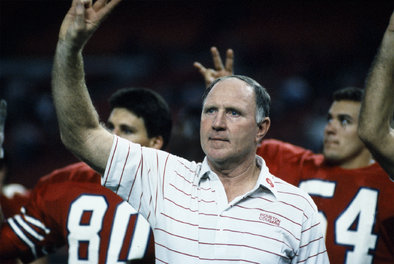
Jack Pardee, UH Head Football Coach, 1987-89.

Jack Pardee, UH Head Football Coach, 1987-89.

It’s been a week since Jack Pardee passed away on April 1, 2013, but we’ve needed all that time and then some to thank him for his contributions to the game of football and to the State of Texas for this contribution of another world-class human being in athletics.

Pardee died of gall bladder cancer at a hospice in Centennial, Colorado that he had chosen for sake of being near his family in his final days. He was 76 years old when he died.

Jack Pardee was first noted as a survivor of Texas A&M Coach Bear Bryant’s 1954 “Junction” camp in the Hill Country near Kerrville. He survived well enough to become one of the best linebacker/fullback two-position players in Texas Aggie history, becoming a second round draft selection of the Los Angeles Rams in 1957.

Pardee played linebacker for the Rams from 1957 to 1964 before sitting out a season in 1965 for the treatment of melanoma. He returned for five more seasons with the Rams (1966-70) before finishing his playing career with the Washington Redskins (1971-72).

Jack then tried is sure hand at coaching with the Chicago Bears (1975-77) and the Washington Redskins (1978-80), and in 1979, he was named as NFL Coach of the Year. On a break from the NFL, Pardee then used a previously conceived offense called the “run and shoot” to steer a new club called the Houston Gamblers before taking the offense on a three-year tour under his coaching auspices at the University of Houston (1987-1989). In that last season under Pardee, Cougar QB Andre Ware captured the Heisman Trophy.

From UH, Jack Pardee was hired to coach the Houston Oilers, which he did for the better part of five seasons (1990-1994). He was fired in 1994 after the club started with a 1-9 record and replaced by assistant coach Jeff Fisher.

Jack Pardee is survived by his wife, Phyllis, five children, and twelve grandchildren.

Rest in peace, JP. You did a great job for a boy coming out of tiny Christoval, Texas and a six-player football team conference to become one of the 35 players from 100 that started and survived the 1954 Junction Aggie football camp of Coach Bryant. “I never thought about quitting,” Pardee said of his time with the Junction Boys. “If I did, where would I go, Christoval? Hey, I worked hard to get out of there.”

Good traveling on God’s Road too, Jack. – The whole State of Texas should treasure your memory as your footsteps now take you over the hill that none of us ever see in person until it’s our time to be there too.

Astros AL Move in the Hopper for Years

April 7, 2013
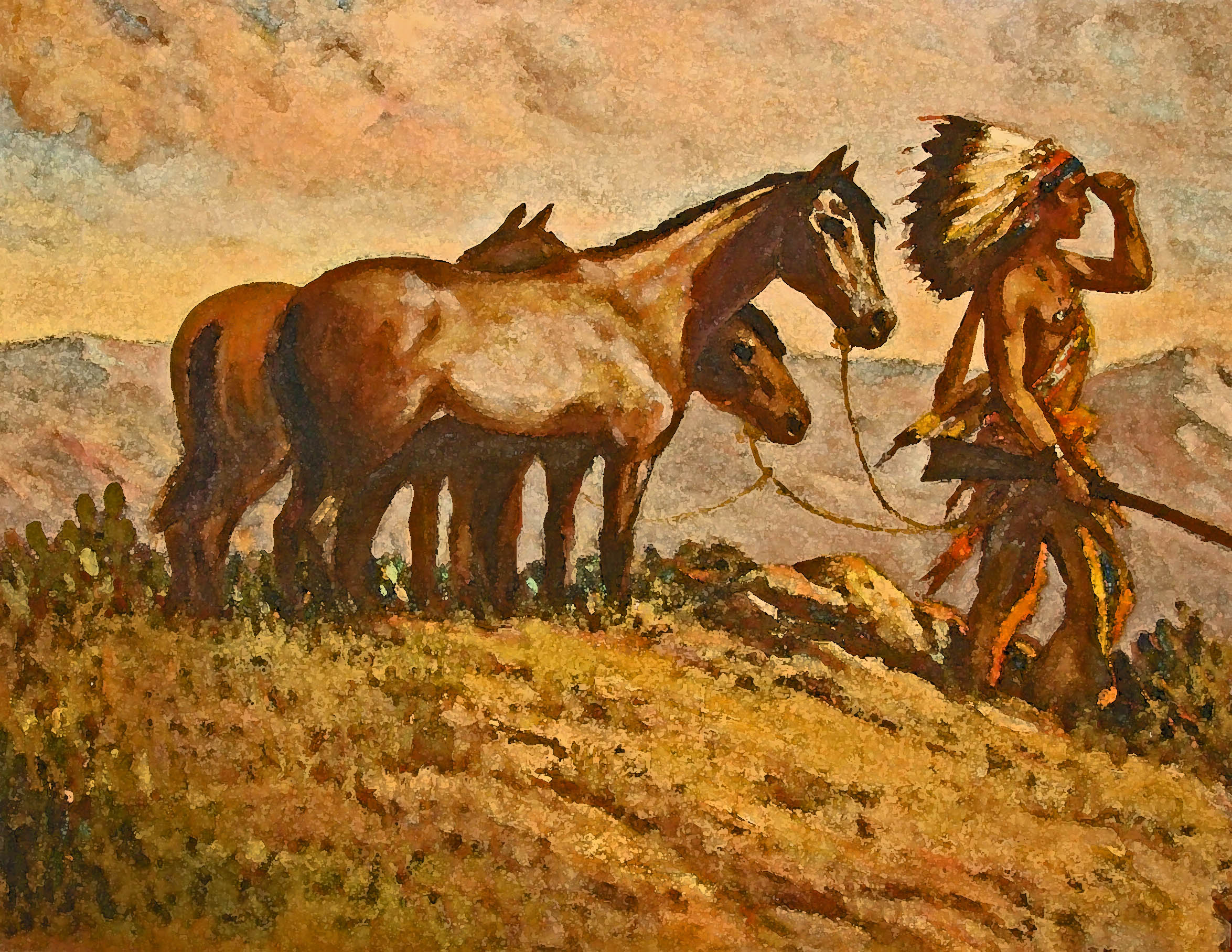
The Cleveland Indians, Bob Feller, Larry Doby, and Satchel Paige were some of my AL favorites as a kid. I will be looking forward to their first visit to Houston.

The Cleveland Indians, Bob Feller, Larry Doby, and Satchel Paige were some of my AL favorites as a kid. I will be looking forward to the first visit of the 2013 Tribe to Houston.  (Artwork by Myrtle Hunt in the 1930s)

Last Thursday I had this wonderful luncheon visit with good friend Greg Lucas in which he also brought me a copy of this most interesting article from the June 6, 2000 USA Today Baseball Weekly and a “Leading Off” column by writer Paul White.

It was all about figuring various ways to realign the 16/14 club NL/AL in a way that would make inter-league play and the playoffs more attractive to fans. All of the plans were not spelled out in expressed detail, but the pony being pushed by Commissioner Bud Selig back then was not the one that happened when Houston was finally forced to the AL as a sales condition placed upon new owner Jim Crane in 2011.

In Selig’s 2000 plan, one AL team from the ALE (probably Tampa Bay) would move to the ALC, producing a 6-team division to go along with the two remaining post-change 4-team divisions in the ALE and ALW. By some other (here unspecified) formula, the NL would be reorganized into four 4-team divisions.

At the same earlier time, however, the Major League Baseball Players Association drafted its own counter-proposal to the Selig-streaming MLB plan. In the MLBPA counter-plan, the goal was to create two 15-team leagues, with the most likely way to go being the movement of Houston from the NL to the ALW, as actually happened over time.

Very interesting, but not that surprising. After all, there are only so many ways to do things like this actual change to the 15/15 two league format. It wasn’t likely that it would happen by a way that had not been suggested previously.

In spite of all the NL tradition issues “the change” has spaded in Houston’s baseball soil, I do prefer the symmetry of the six 5-team divisions it gives baseball over one large 6-team division fitting its way into the old pattern that included four 5-team units and one dinky 4-team division.

4-team divisions are unacceptably too small for competitive purposes over the season. 5-teams may not statistically be much better, but they certainly look better on paper as competitive units and, the more clubs you have, the more you increase the odds of competitive presence.

The Astros may not win much this year, but they will not quit, not with a guy like Bo Porter at the helm. There is no room for quitters on a club managed by Mr. Porter.

On that optimistic note, have a beautiful baseball Sunday, everybody!

Congratulations to Coach Guy V. Lewis

April 6, 2013
Former UH Basketball Coach Guy V. Lewis, looking pretty much as he did that day we spoke together at UH back in 2009.

Former UH Basketball Coach Guy V. Lewis, looking pretty much as he did that day we spoke together at UH back in 2009.

The fall of 1956 will always be a special time for both Coach Guy V. Lewis and yours truly. Coach Guy was beginning his 30-year career (1956-1986) as the head basketball coach for the University of Houston Cougars. I was starting my life as an undergraduate student at UH (1956-1960) and fixing my red and white corpuscled soul firmly as a Cougar forever.

Since we didn’t grow up playing basketball in Pecan Park, it was only when I got to UH that I saw my first college game. There was no local NBA club in those days, just occasional stories in the Houston Post about some tall white guy who had been a former player named George Mikan, some nice feeds about former UT, NBA star, and fellow Houstonian Slater Martin, another couple of white guys named Bob Pettit and Jerry West, and a high rising new giant player at the University of Kansas named Wilt Chamberlain who apparently both hung the moon and also lowered the baskets for easy delivery.

UH played their home games in the Jeppesen (later Robertson) Stadium Field House on Cullen and Wheeler south of the football field in those days. It didn’t hold many fans, but it was loud, and Cougar students were just starting to get behind what Coach Guy V. was setting in motion. With early Cougars stars like Ted Luckinbill and Gary Phillips leading the way, folks were beginning to get behind the ball-bouncing Coogs of that early period. I remember big games we played and barely lost or won over Chet Walker and the Bradley Braves and Oscar “Big O” Robertson of the Cincinnati Bearkats.

The excitement was emanating from the spirit and skill of Coach Guy V. Lewis.

By the early to mid-1960s, Coach Lewis of UH basketball was doing exactly what Coach Bill Yeoman of UH football was doing – making sure that UH was leading the way in the recruitment of black athletes to their formerly all-white university athletic program. By the time that schools like UT and AM had awakened to what was happening, UH was light years ahead of most southern/southwest schools in that regard.

Naming those recruits today is a virtual trip to the Basketball Hall of Fame and NBA All Star Annals in itself. The great Elvin Hayes and Don Chaney were the two earliest Lewis recruits. It was around these two stars that Coach Lewis built his “Game of the Century” at the Astrodome against Lew Alcindor and the UCLA Bruins in January 1968. “The Game” drew 50,000 fans and changed the face of basketball as a marketable commodity in the world.

Led by Elvin “The Big E” Hayes, UH defeated UCLA in the Astrodome Game of the Century, 71-69.

The stars of UH basketball history are a book unto themselves. I won’t begin to try to name them all over the years in this article. Suffice it to say, (H)Akeem Olajuwon, Clyde Drexler, and Phi Slama Jama in the early 1980s should be enough.  There’s barely enough space here to bullet drop all the reasons that Coach Guy V. Lewis’s induction this week into the Robert Naismith Basketball Hall of Fame at the age of 91 is long overdue:

As head coach at UH from 1956-1986, Lewis posted a career record of 592-279.

Twice (1983, 1984) Guy V. Lewis was named National Coach of the Year.

Lewis posted 27 consecutive winning seasons.

Coach Guy’s Cougars made 14 trips to the NCAA tournament, 5 Final Four appearances, and 2 finals games.

The day I got to thank Coach Lewis for all he’s done for all of us at UH, he looked exactly as he does in this story’s featured photo. It happened at a tailgate party outside Robertson Stadium near the H Association pavilion back in 2009. I had gone over to speak to Coach Lewis when, all of a sudden, like the parting of the Red Sea, everybody else just peeled away, leaving us there together alone to talk for a precious five minutes or so. A best I recall, here’s how that time passed:

“Coach Lewis,” I said, “I just have to repeat what I’m sure so many others have already told you. Thank you for all you’ve done for UH. We would not be all we have become as a university without you.”

Coach Lewis grabbed my hand and gave me a quiet sincere smile. “Thank you,” he said. “That means a lot to me.”

Then he really brightened when I told him that I had arrived at UH during his first season as a head coach. He sort of lit up when I recalled the names of our early foes, Chet Walker and Oscar Robertson, and he seemed to like hearing  that I once gave a hitchhiking Ted Luckinbill a lift on Cullen because he was late for practice.

“We’ve been here a long time, haven’t we?” Coach almost whispered before other new people saw him and started pouring in to make contact with our shared treasure of UH greatness.

“We may have been here a long time,” I thought, as the newcomers descended upon Coach Guy, “but you’ve got much further to go. Forever is a very long time.”

Thank you, Universe of Fair Play, for making sure that Coach Guy V. Lewis finally got his just recognition from the Hall of Fame while he was still alive to know of it.

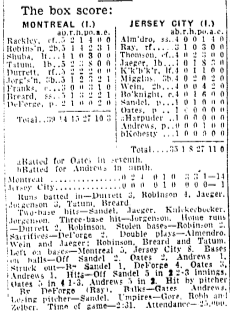
The Montreal@Jersey City Box Shows…

April 5, 2013
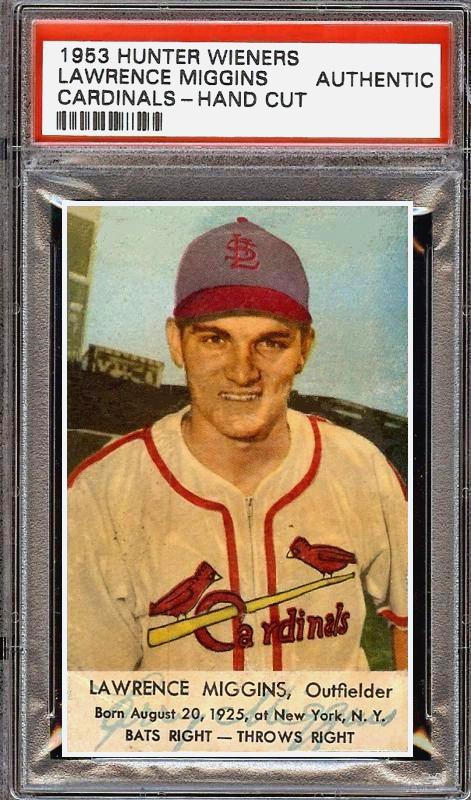
Larry Miggins of Jersey City went 2 for 4 in the Jackie Robinson debut game with Montreal.

Larry Miggins of Jersey City went 2 for 4 in the Jackie Robinson debut game with Montreal.

Thanks to Cliff Blau of SABR and David Barron of the Houston Chronicle, I today received two independent copies of the box score on Jackie Robinson’s initial minor league color line breaking game from Opening Day of April 18, 1946. Here’s how the game and survivorship of the participating players over time has played out, starting with Montreal and feeding directly into Jersey City:

MONTREAL AB R H RB1 2BH 3BH HR SB
Marv Rackley, CF 5 2 1 0 0 0 0 0
Jackie Robinson, 2B 5 4 4 4 0 0 1 2
George Shuba, LF 4 1 0 0 0 0 0 0
Tommy Tatum, 1B 5 2 3 1 0 0 0 0
Red Durrett, RF 5 2 2 3 0 0 2 0
Spider Jorgensen, 3B 5 1 2 3 1 1 0 0
Herman Franks, C 3 0 0 0 0 0 0 0
Stan Breard, ss 5 1 3 1 0 0 0 0
Barney DeForge, P (W) 2 1 0 0 0 0 0 0
TOTALS 39 14 15 12 1 1 3 2
JERSEY CITY AB R H RB1 2BH 3BH HR SB
Jaime Almendro, SS 4 0 0 0 0 0 0 0
Charlie Ray, RF 3 1 0 0 0 0 0 0
Bobby Thomson, CF 4 0 2 0 0 0 0 0
Norman Jaeger, 1B 4 0 1 1 1 0 0 0
Austin Knickerbocker, LF 4 0 1 0 1 0 0 0
Larry Miggins, 3B 4 0 2 0 0 0 0 0
Russ Wein, 2B 4 0 0 0 0 0 0 0
Dick Bouknight, C 4 0 1 0 0 0 0 0
Warren Sandel, P (L) 1 0 1 0 1 0 0 0
Phil Oates, P 1 0 0 0 0 0 0 0
Mel Harpuder, PH 1 0 0 0 0 0 0 0
Hub Andrews, P 0 0 0 0 0 0 0 0
ED Kobesky, PH 1 0 0 0 0 0 0 0
TOTALS 35 1 8 1 3 0 0 0

Of the 9 players who took the field for Montreal that record day, 3 are still living: winning pitcher Barney DeForge, age 95; center fielder Marv Rackley, age 91; and left fielder George “Shotgun” Shuba, age 88.

Of the 13 players who took the field for Jersey City on April 18th, 1946, 4 are still with us: second baseman Russ Wein, age 96; pitcher Phil Oates, age 90;  third baseman Larry Miggins, age 87; and shortstop Jaime Almendro, age 85.

In total, 7 of the 22 players who participated in the original color line breaking game in Jersey City on April 18, 1946 are still alive. *

Larry Miggins is Houston’s strongest connection to this game because of his years of service as a Houston Buff in 1949, 1951, 1953, and 1954, and his sixty plus years as a Houston resident. This little research, however, has brought to light that Montreal’s catcher in the big game, the late Herman Franks, also bore a Houston connection into the game as a former Houston Buff catcher from 1936 and 1937.

The following season, another greater Houston area player, a first baseman, the late Ed Stevens of Galveston, would have his own direct connection to the great Jackie Robinson when No. “42” would replace him at that position in the Brooklyn Dodger lineup on Opening Day 1947.  It wan’t the original color line break, but it was the major league level version. And that was the big wall that needed to fall.

Just one more footnote on the box score. Remember the reason behind the fact that Montreal scored 14 runs on the day, but only had 12 RBI. It was because of the fact that Jackie Robinson twice reached third base with his aggressive base running and then provoked balks-home scores off Jersey City relievers Phil Oates and Hub Andrews.

After the game, fans applauded and clamored for Jackie’s autograph. Now that would be a nice collector’s item today, especially if it came from one’s own parent’s or grandparent’s experience. I always wonder how many items from these kinds of momentous days actually get saved over time.

Thank you one more time, Cliff Blau and David Barron. And thank you Baseball Reference.Com for making it so easy now to look up the rosters and current survivorship information of past players from even the most obscure organized baseball backgrounds. All of you guys made my day. Again.


* Since this column was posted, a member of the family has contacted us to clarify that Norman Jaeger, first baseman for Jersey City in this historic game, has been dead since August 18, 1997. I have since that contact informed Baseball Reference.Com for the purpose of getting this update posted into his playing record. – Bill McCurdy

JR Debut 02