Game Rule Oddities and Curiosities

July 15, 2013
Don't look for big-time chess on TV anytime soon.

Don’t look for big-time chess on TV anytime soon.

There are more strange game rule conditions, oddities, and ironies out there than we will ever have time to remember or consider in total here today, but let’s have some fun, anyway, with a run at a few. Please enter your favorite example(s) here as a comment.

(1) Baseball gets criticized by some for being short on action and but too long on the time it takes to play a full game. If that’s so, how about chess? The action is 99% mental and only 1% physical – and the amount of time it takes to play a full game by mail between foes on different continents can take months. – Small wonder that the highest level chess action is not a big-time TV attraction.

(2) Sometimes different sports take totally opposite views of the same game condition. In football, the team that last had control of the ball before it went out-of-bounds gets to keep it on offense. In basketball, the team that last touches the ball before it goes out-of-bounds must then give up to the other team.

(3) I have never quite “gotten” the intentional grounding rule in football. If a QB throws the ball away to avoid getting sacked, he will be found guilty of intentional grounding and his team assessed a yardage penalty on the next play. If, on the other hand, the QB takes the snap from center and immediately throws is straight down into the ground to stop the clock, there is no penalty at all. How is the second circumstance NOT intentional grounding too? It’s even more obvious as an intentional act than the QB condition that draws all the penalties for throwing the ball away.

(4) I’ve always disliked the rules governing sacrifice fly balls in baseball – in addition to the fact that these acts variably have counted and not counted as times at bat over the years. – Why should a player be given credit for an RBI and a sacrifice attempt and not be charged with a time at bat for a ball that is caught 395 feet deep in center field just because his mighty swat gave a runner at 3rd base time to tag and walk home for a run? Are the rules makers asking us to buy into the idea that the batter gave himself up on purpose here as the batter who bunted in this situation more credibly might have truly done? – I don’t buy it. Let the long fly out guy keep his RBI, but charge him a time at bat. – If we must keep this ruse-rule, then give the guy who grounds out up the middle credit for a sacrifice grounder when it scores a runner from third base. He should get a pass on a time at bat charge too – especially, when we consider that the only difference sometimes between the ball that is driven in the air to the wall – and the one that goes bouncing on the ground up the middle – is little more than the break on the ball thrown by the pitcher. – How does “sac grounder” sound? In my book, it’s as sensible and intentional as the “sac fly”.

(5) Up through some time in the 1920’s, baseball teams occasionally asked permission from their opponents for the use of a “courtesy runner” for a player who had reached base, but had been temporarily hurt or shaken up on the play that made him a base runner. With permission granted, another healthy (presumably fast) runner would take the wounded player’s place on the base paths, but the relieved player would remain in the game once the inning changed, if he were able. Then it all stopped. – I’ve never been sure if this action was permitted by the official rules – or if it were simply one of those things that was permitted by a cavalier dismissal of the official rules by the baseball culture that was once in place. – It’s impossible to imagine it happening today.

That’s enough for one morning. Like the rest of you, I’ve got other fish to fry on my Monday calendar, but I would love to hear from the rest of you on any of these ideas – or you own favorite game curiosities.


Buff Biographies: Willard Brown

July 14, 2013
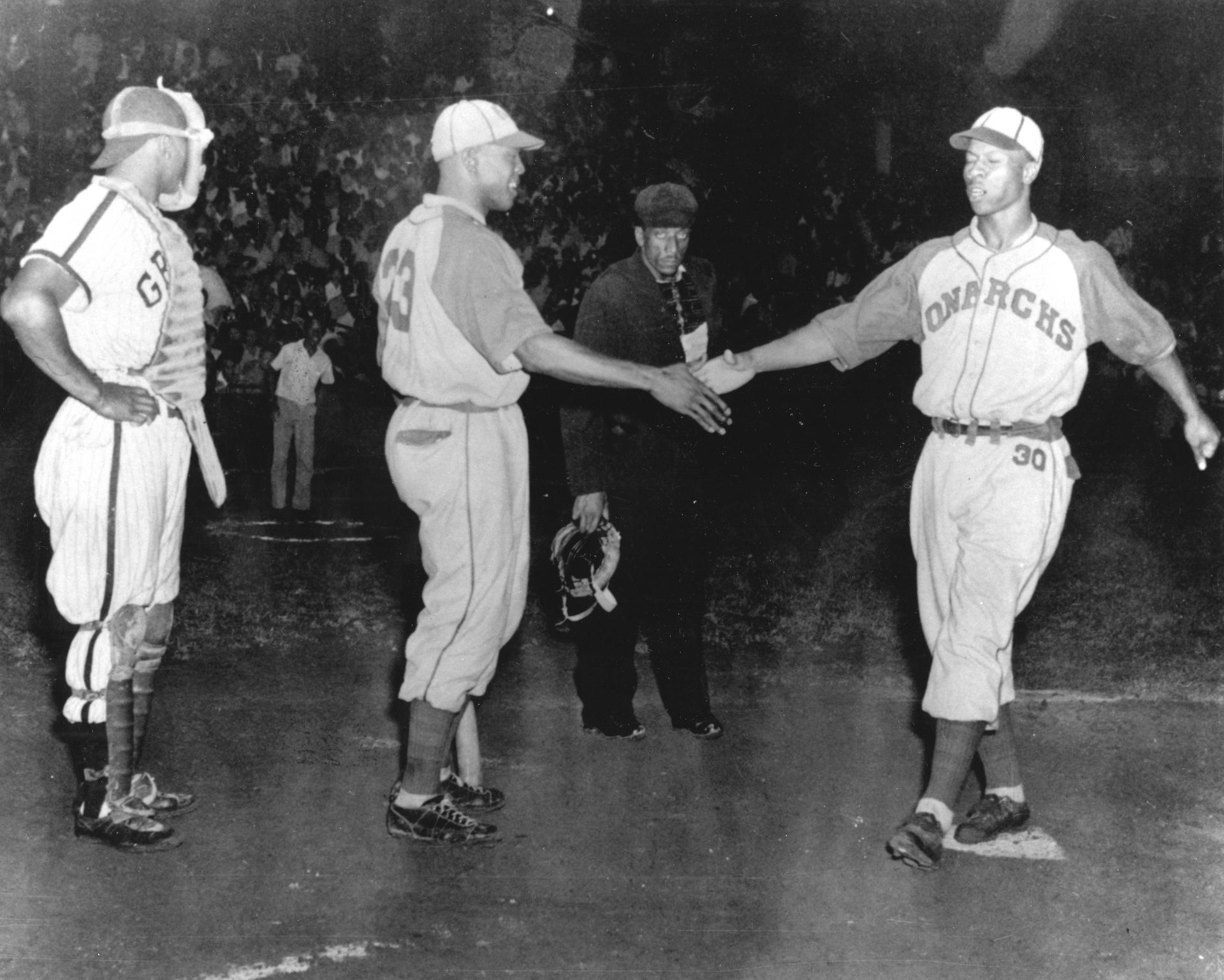
KC's Willard Brown completes his HR trot as Grays catcher Josh Gibson looks the other way. On the record, Gibson was a big fan of Brown's power. He just didn't enjoy being on the stinger side of it..

KC’s Willard Brown completes his HR trot as Grays catcher Josh Gibson looks the other way. On the record, Gibson was a big fan of Brown’s power. He just didn’t enjoy being on the stinger side of it..

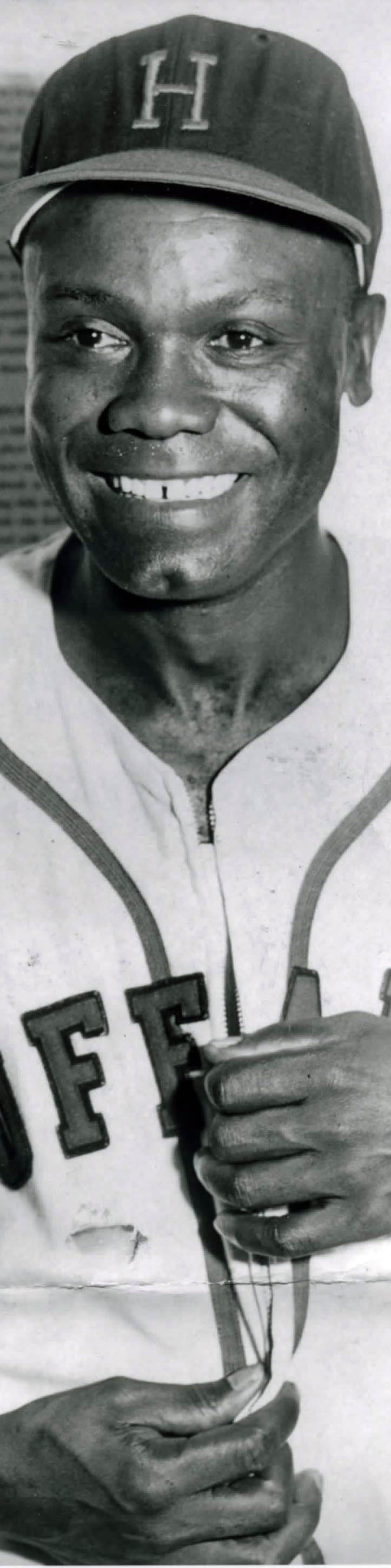
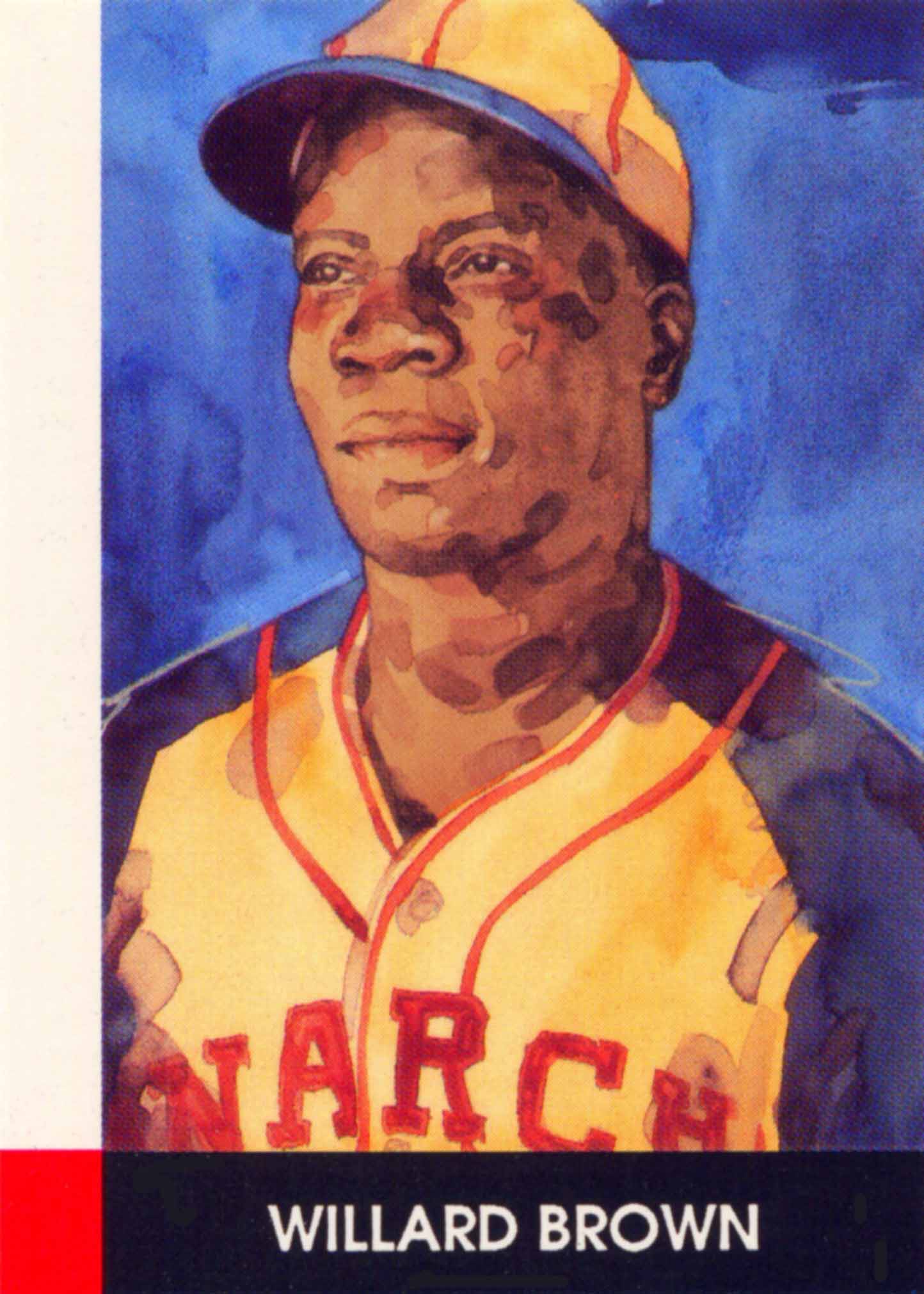
Willard Brown 03 Bob Boyd triumphantly “broke the color line” as the first black member of the Houston Buffs on May 27, 1954. Later that same year, and to much less fanfare, but to quite a bit of baseball interest, the Buffs acquired the second black player in their history. the former great slugging star of the Kansas City Monarchs and future member of the Baseball Hall of Fame, the great Willard Brown. They got him in a deal with Dallas, where he had been playing out the dregs of his baseball career as a steady .300 hitting outfielder on his way to 30 plus home runs for the season.

By the time he joined the Buffs, the 39-year old Brown was no longer the svelte-bodied and speedy base runner of his youthful Negro League days, but he still held the edge of being one of the best batting eyes and power-pounding hitters in the higher class minors in 1954. In 108 game for Dallas and 36 for Houston, Willard Brown batted .314 with 36 HR and 120 RBI.

Not bad for an old man.Willard Brown arrived in time to make his own late season contribution the late 1954 Texas League championship of the Houston Buffs. He also returned to Houston for the entire 1955 season, batting .301 with 19 HR and 104 RBI.

After 1955, Willard Brown (BR/TR) (5’11”, 200-240 lb.) finished up his four season minor league career (1953-56) with four clubs, retiring after 1956 with a career minor league average of .309 with 95 HR and 405 RBI. His earlier prime years played out as an incredible H hitter and high average batter and base running fool for the Kansas City Monarchs and several clubs in the Latin winter leagues. Although records for those times (1936-51) are spotty, Brown is credited by most with having hit more home runs than the great Josh Gibson. From 1937 to 1946, Brown helped lead the Monarchs to six pennants in ten seasons

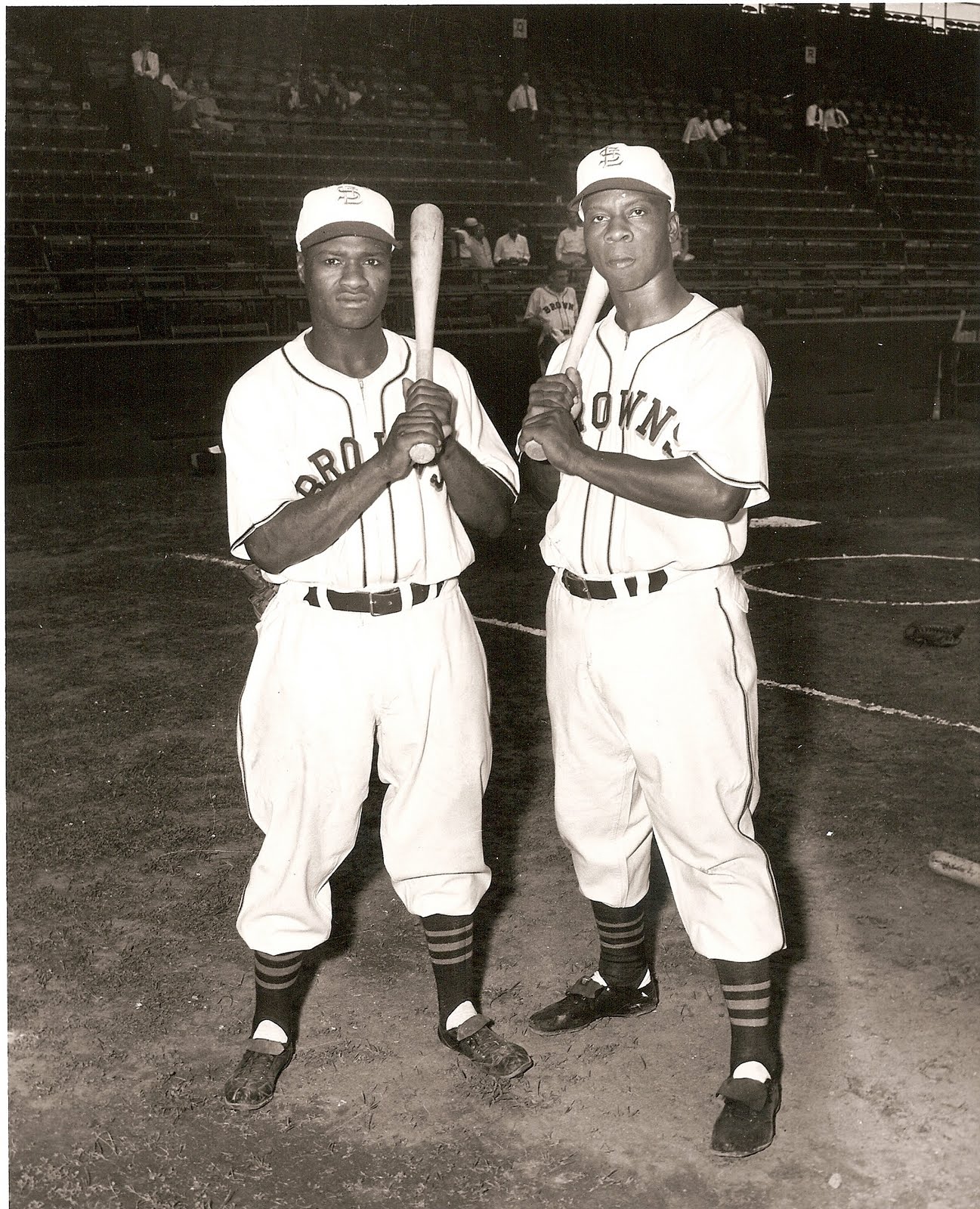
Willard Brown also got a brief stopover in the majors with the St. Louis Browns in 1947, the Year of Jackie Robinson, when he and black third baseman Hank Thompson broke into the lineup together on July 20th for a game against the Boston Red Sox. It was also the first time for two black players to appear in a major league lineup together.

Hank Thompson and Willard Brown were the fist blacks to play for the St. Louis Browns on June 20, 1947. Brown would be the first black player to hit an American League home run.

Hank Thompson and Willard Brown were the fist blacks to play for the St. Louis Browns on July 20, 1947. Brown would be the first black player to hit an American League home run.

Things didn’t go well for Brown and Thompson with St. Louis. The impression is that some of the southern white boys on the Browns team didn’t exactly welcome the two new guys with open arms. Regardless, things became a little academic when Brown hit only .179 with one HR in 21 games. Brown and Thompson both left the team before season’s end. Thompson, of course, would make a later return with the New York Giants, but it was a closing door on Willard Brown’s only shot.

Willard Brown didn’t leave the St. Louis Browns with a empty hand. His solo home run, an inside-the-park job, was the first American League home run by a black ballplayer.

How good was Willard Brown? Well, he is respected as one of the great hitters in Negro League history and, in 2006, he was deemed good enough during his prime years for induction into the National Baseball Hall of Fame,

Willard Brown acquired the Spanish nickname, Ese Hombre (“That Man”) during his playing time in the Puerto Rico Winter League. Fortunately for Houston, Ese Hombre still had some gas left in the tank during his twilight seasons with the Buffs.

Willard Brown liked Houston enough to make it his home after his playing days were done. Born in Shreveport, Louisiana on July 26, 1915, Willard Brown died in Houston at the age of 81 on August 4, 1996.


Buff Biographies: Bob Boyd

July 13, 2013

Buff Logo 4

Bob Boyd

Bob Boyd

First baseman Bob Boyd (BL/TL) (5’10”, 170 lb.) “broke the color line” for all professional, collegiate, and high school sports teams representing the City of Houston as a player for the Houston Buffs Baseball Club on May 27, 1954. For those of you who may be too young to remember, “breaking the color line” means that Bob Boyd was the first black athlete to cross that invisible line of segregation that dictated American life in the South by keeping people of the black race from participating with whites in so many areas of life well into the 1950s and 1960s.

Back then, black fans who chose to support the all-white Houston Buffs, had to sit in a segregated uncovered grandstand section located down the far right field line of Buff Stadium. Black fans also had their own segregated water fountains and restrooms. It truly was an embarrassing time for civil rights, freedom, and common decency, but it was – the way things were.

“Breaking the color line” was not always blatantly contentious. It wasn’t in Houston. Not at all. Some people don’t seem to get that fact. Often times, “breaking the color line” truly was, as it was with Bob Boyd in Houston, an act of celebration over the death of one segregation tentacle.

There was only one Jackie Robinson – and not all “color lines” by team or league were hostile propositions. The color line for all players in the Texas League, in fact, already had been broken in 1952 by pitcher Dave Hoskins of the Dallas Eagles. By the time Houston’s breaking away from this one piece of social segregation in our local baseball operation was upon us, the appearance of Bob Boyd in a Houston Buffs home uniform was pretty much greeted by most Houstonians as an inevitable development. Add to the cause for celebration the fact that the 1954 Houston club had championship potential running throughout its roster and the belief that the addition of Bob Boyd from the White Sox may have just answered our quest for that one last missing piece.

It certainly helped that Bob Boyd came though in his first game as a Buff with a triple in the second and a double in the fourth to pace Houston to a well-deserved victory over Shreveport, Bob had a steady likable personality and a baseball talent that kept on producing as he hustled his way to a .321 average with 7 homers in 94 games of  the team’s road to the Texas League pennant.

The man still had to do his baseball work in an environment that didn’t allow him to take his meals with teammates in public restaurants, stay in hotels where his co-workers stayed, drink from water fountains, use rest rooms, or attend movies in the direct company of whites.

It is a far better world today in Houston. And that is why we celebrate the coming of Bob Boyd as the man who came to town in 1954 as our guy who crossed over the old color line and buried it with both his ability as a player and also his likable dignity as a really fine and decent human being.

Bob Boyd also played for the Houston Buffs in 1955, batting .310 with 15 HR. He then moved back up to the major leagues for the completion of a 9-season (1951, 1953-54, 1956-61) career and a .293 career BA with 19 HR. Over his 10-season minor league years (1949-55, 1962-64), Bob Boyd batted .321 with 53 homers.

Bob Boyd’s best year was 1957 when he hit .318 with 4 homers in 141 games for the Baltimore Orioles. He struck out only 31 times in 552 plate appearances.

After baseball, Bob Boyd went back to his home in Wichita, Kansas and drove a municipal bus until his retirement. He died on September 7, 2004, just seventeen days shy of his 85th birthday.

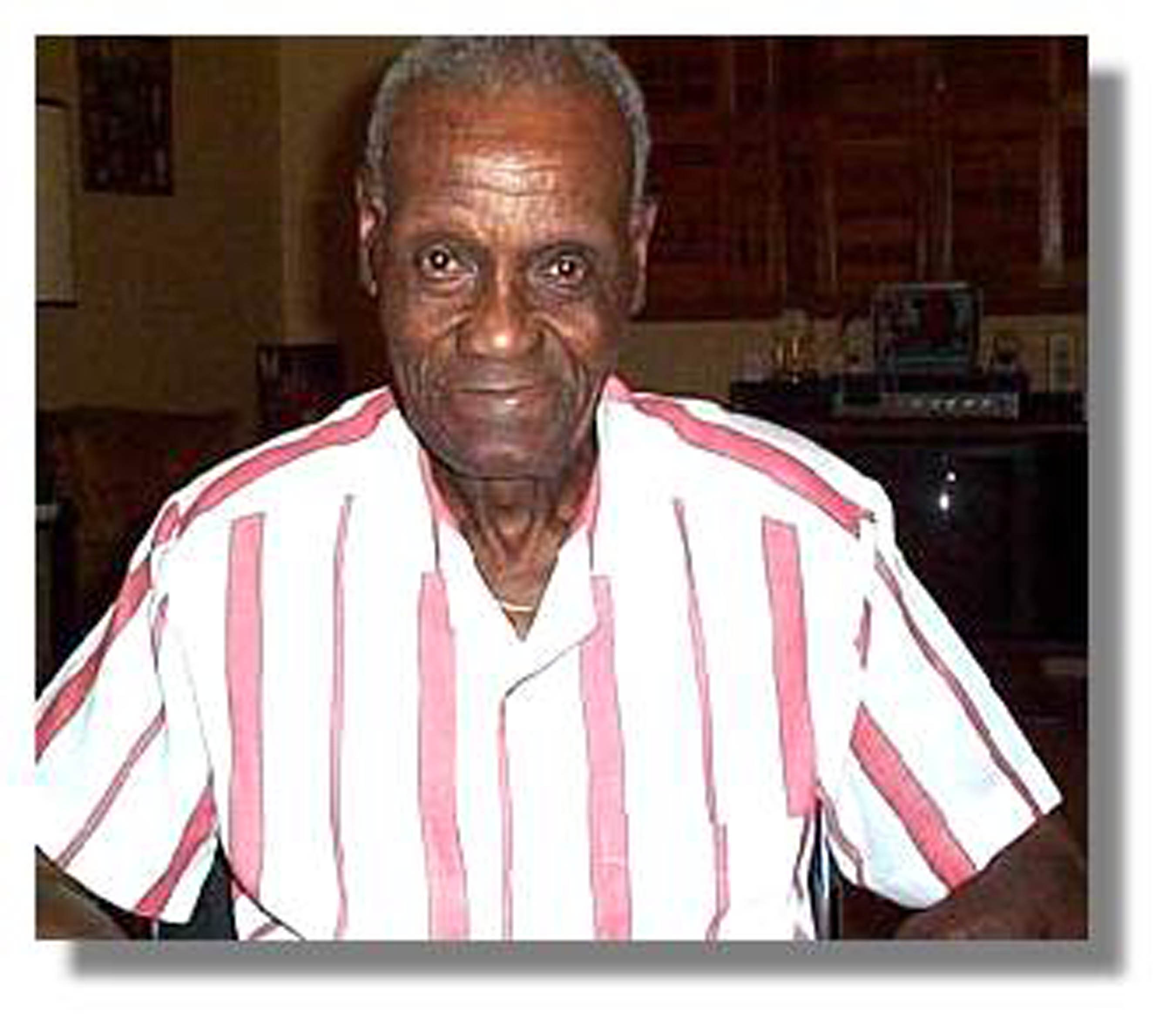
Bob Boyd ~ Late in Life.

Bob Boyd
~ Late in Life.

God rest your soul, Bob Boyd. You “did us proud” down here in Houston. As one who was there to watch you break the color line as an act of celebration, I shall never forget you. You will always be honored by all who remember, know of, and understand the importance of your contribution to Houston baseball history.

Did Ruth Call His Shot in Chicago?

July 12, 2013
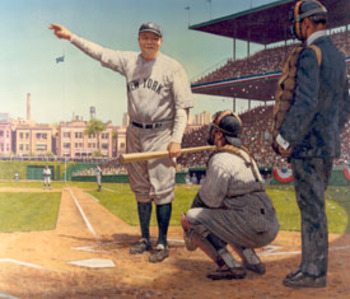
Wrigley Field, Chicago Game 3, World Series 5th Inning October 1, 1932

Wrigley Field, Chicago
Game 3, World Series
5th Inning
October 1, 1932

I’m sorry, but I choose to ask it one more time, one of the most over-asked and over-worked questions in baseball history: Did Babe Ruth really call his shot in the 5th inning of Game Three in the 1932 World Series at Wrigley Field in Chicago? The answer is about as rhetorical as the query  that is so flippantly applied these days to all things obvious, “Is the Pope Catholic?”

Did Ruth really predict his 440 foot home rune to deep center field that day off Cubs pitcher Charlie Root? The answer is plain by now, or should be: ~ No! Not only “No!”, but “Hell, no!”

After more than eighty years of selective media myth-building, rational evidence-building to the contrary, and plenty of off-the-cuff denigrating comment by players who were there that October 1, 1932 afternoon in Chicago, the person who still thinks Ruth called his shot is right in there with the Mills Commission and its selection of Abner Doubleday and Cooperstown as the proven inventor and definitive home of baseball’s first game.

The whole “called shot” thing was set in motion by writer Joe Williams of the New York World-Telegram, who wrote the following headline for his same day story of Game Three: “RUTH CALLS SHOT AS HE PUTS HOME RUN NO. 2 IN SIDE POCKET.” In his article, Williams described events this way: “In the fifth, with the Cubs riding him unmercifully from the bench, Ruth pointed to center and punched a screaming liner to a spot where no ball had been hit before.” The words of the lone cherished writer who took that angle were like flint upon flint in a small pocket of sawdust-textured myth. The thing just grew into baseball’s version of the 2nd Great Chicago Fire.

For me, the greatest confirming evidence to the ruse would have been to have had one hundred ear witnesses to the following exchange between Babe Ruth and pitcher Charlie Root in 1942:

In 1942, during the making of The Pride of the YankeesBabe Herman (who was at that time a teammate of Root with the minor league Hollywood Stars) was on the movie set as a double for both Ruth (who played himself in most scenes) and Gary Cooper (who played Lou Gehrig). Herman re-introduced Root and Ruth on set and the following exchange (later recounted by Herman to baseball historian Donald Honig), took place:

  • Root: “You never pointed out to center field before you hit that ball off me, did you?”
  • Ruth: “I know I didn’t, but it made a hell of a story, didn’t it?”

Root went to his grave vehemently denying that Ruth ever pointed to center field. 

– Wikipedia …  http://en.wikipedia.org/wiki/Babe_Ruth’s_called_shot


The Most Famous Unassisted Triple Play in History

July 11, 2013
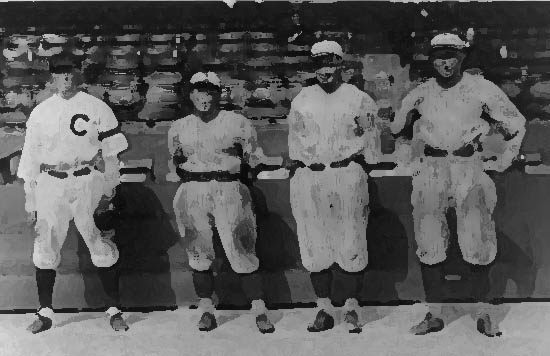
An Impressionist View of Bill Wambsgans and the three men he retired on one immortalizing World Series play.

An Impressionist View of Bill Wambsganss and the three men he retired on one immortalizing World Series play.

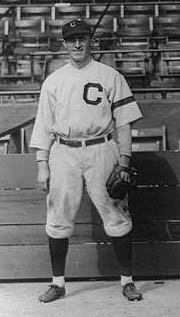
Bill Wambsgans: The Synonym for Unassisted Triple Play.

Bill Wambsganss: The Synonym for Unassisted Triple Play.

Any name beyond 1920 Cleveland Indians 2nd baseman Bill Wambsganss doesn’t count here. From the moment we first read of him in the baseball books that circulated for kids in the days beyond World War II, the name Bill Wambsganss rose to the level of deep respect in our nation of sandlot baseballists. My first impression was drawn to the fact that his name so fit the deed. A guy who is capable of pulling off one of baseball’s most unusual plays, and in a World Series, no less, ought to have an equally rare name.

What is a “Wambsganss”? He’s a fellow who makes unassisted triple plays – in the World Series, for Chris sakes!

Nobody had done it in the World Series until Bill did it 1920 – and no other player has done it since then on baseball’s biggest stage. Like Don Larsen’s 1956 perfect game for the New York Yankees in the last World Series played against the Brooklyn version of the Dodgers, Bill Wambsganss pulled off the only unassisted triple play in World Series history as a 2nd baseman for the Cleveland Indians in 1920 against the Brooklyn Robins.

Let’s recount how it happened:

“In game five of the 1920 World Series played at League Park, Wambsganss caught a fifth-inning line drive batted by Clarence Mitchell, stepped on second base to retire Pete Kilduff, and tagged Otto Miller coming from first base, to complete the first, and to date, only unassisted triple play in World Series history.” – Wikipedia.

Re-Cap (L>R) Pete Kilduff was Out #2 on a tag of the bad at 2nd;; Clarence Mitchell was Out #1 on a line drive; and Otto Miller was Out #3 on a body tag as he attempted to get back to 1st.

Re-Cap (L>R) Pete Kilduff was Out #2 on a tag of the bag at 2nd;; Clarence Mitchell was Out #1 on a line drive up the middle; and Otto Miller was Out #3 on a body tag as he attempted to get back to 1st.

The Cleveland Indians won the best five games of nine 1920 World Series, 5 games to 2, over the Brooklyn Robins. Games Five’s famous Wambsganss play also included the first Grand Slam HR when Elmer Smith hit one off Burleigh Grimes of Brooklyn in the 1st inning.

After the season, Cleveland fans presented Bill Wambsganss with a special medal for his unusual triple play on the field. Sadly, he lost the medal on a train ride in spring training the following year, fostering the imaginations of some that it’s probably in an old Mason Jar on a shelf in some ancient flea market in Georgia by now.

Bill Wambsganss retired after the 1926 season from a 13-season career that saw him bat .259 as a major leaguer, but, because of one play in the World Series, he will never be forgotten.


My Baseball Movie Fiction All Stars

July 10, 2013
The Hollywood Fictions: I picked this 22-man roster of fictional All Star baseball movie players for the first time this morning. If some o the more elite magical stars could perform in reality as they have on the screen, we wouldn't need all 22 to defeat either of the two big league 2013  All Star teams, with or without the DH rule in place. My weakest spot is 2nd base, whee I placed Richard Pryor after I could not come up with a better fictional 2nd base candidate than relocated outfielder


The Hollywood Fictions: I picked this 22-man roster of fictional All Star baseball movie players for the first time this morning. If some of the more elite magical stars could perform in reality as they have on the screen, we wouldn’t need all 22 to defeat either of the two big league 2013 All Star teams, with or without the DH rule in place. My weakest spot is 2nd base, where I placed Richard Pryor after I could not come up with a better fictional 2nd base candidate than  the relocated outfielder Charlie Snow that Richard Pryor played in Bingo Long.
Additions and changes are most welcome here. So let me hear from you. All I know is that this club’s lineup has one of the strongest power one-thirds in the 3-4-5 holes that the game has ever seen. It also helps to have a pitching ace that uses a chemical fluid that makes the ball wood-repellent. 🙂
 Pitchers ~

1) Mike “King” Kelly (Ray Milland) ~ It Happens Every Spring (1949)

2) Elmer Kane (Joe E. Brown) ~ Elmer the Great (1933)

3) Henry Rowengartner (Thomas Ian Nicholas) ~ Rookie of the Year (1993)

4) Bingo Long (Billy Dee Williams) ~ Bingo Long Traveling All Stars and Motor Kings (1976)

5) Ebby Calvin “Nuke” LaLoosh (Tim Robbins) ~ Bull Durham (1988)

6) Henry “Author” Wiggen (Michael Moriarity) ~ Bang The Drum Slowly (1973)

7) Saul Hellman (Bruce Bennett) ~ Angels in the Outfield (1951)

8) Ricky “Wild Thing” Vaughn (Charlie Sheen) ~ Major League (1989)

Catchers ~

9) Crash Davis (Kevin Costner) ~ Bull Durham (1988)

10) Leon Carter (James Earl Jones) ~ Bingo Long Traveling All Stars and Motor Kings (1976)

11) Bruce Pearson (Robert De Niro) ~ Bang The Drum Slowly (1973)

1st Base ~

12) Fat Sam Popper (Leon Wagner) ~ Bingo Long Traveling All Stars and Motor Kings (1976)

2nd Base ~

13) Charlie Snow (Richard Pryor) ~ Bingo Long Traveling All Stars and Motor Kings (1976)

3rd Base ~

14) Roger Dorn (Corbin Bernsen) ~ Major League (1989)

Shortstop ~

15) Louis Keystone (Sam Brison) ~ Bingo Long Traveling All Stars and Motor Kings (1976)

Left Field ~

16) Joe Hardy (Tab Hunter) ~ Damn Yankees (1955)

Center Field ~

17) Willie Mays Hayes (Wesley Snipes) ~ Major League (1989)

Right Field ~

18) Roy Hobbs (Robert Redford) ~ The Natural (1984)

Infielders ~

19) Emory Chambers, 3B/2B/SS (Jophery C. Brown) ~ Bingo Long Traveling All Stars and Motor Kings (1976)

20) Monk Lanigan, C, 1B, DH

Outfielders ~

21) Charlie Snow (Richard Pryor) ~ Bingo Long Traveling All Stars and Motor Kings (1976)

22) “Esquire” Joe Callaway (Stan Shaw) ~ Bingo Long Traveling All Stars and Motor Kings (1976)
Starting Line Up for the Hollywood Fictions:
1) Willie Mays Hayes, CF
2) Louis Keystone, SS
3) Joe Hardy, LF
4) Roy Hobbs, RF
5) Leon Carter, C
6) Fat Sam Popper, 1B
7) Monk Lonigan, DH
8) Roger Dorn 3B
9) Charlie Snow, 2B
Mike “King” Kelly, P

Buff Biographies: Danny Gardella

July 9, 2013

Buff Logo 12

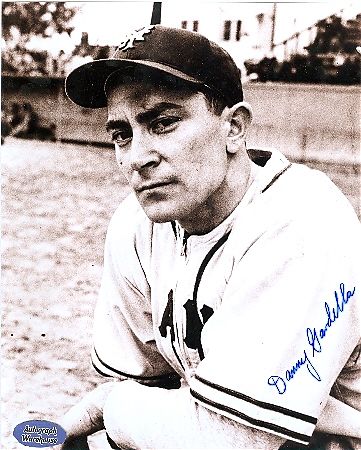
Danny Gardella He was only a Houston Buff for 39 games in 1950, but he came here as a historical character who had broken his contract with organized baseball to play for “big money” in the outlaw Mexican League in 1946. For that offense, Danny Gardella and his handful of defecting baseball brethren were banned for up to five years from American baseball and forced to either fight the ruling or flee the game. Gardella chose to fight, filing a $300,000 law suit against the Giants and the other lords of baseball for unfair practices that kept him from getting a job in the sport. In the suit, he described the reserve clause as an instrument that is “monopolistic and (one that) restrains trade”.

In the end, Commissioner Happy Chandler and MLB backed off in fear of Gardella’s suit as a strong potential threat to the reserve clause. They lifted the ban on players who had defected to Mexico and settled with Gardella for his discomfort. Gardella dropped his suit, later explaining that he had received a $60,000 settlement check to do so. I am presuming that these actions were taken quietly to help MLB avoid paying all the players who found themselves in Gardella’s position.

Gardella got in a little more minor league service in 1948-49 and then, after a one-out, one-at bat career with the St. Louis Cardinals on April 20, 1950, Danny Gardella went back to the minors for 26 games with Class D Bangor, Maine before coming to Houston for 39 games with the 1950 Buffs.

Danny Gardella (5’7″, 160 lbs.) (BL/TL) batted only .211 with 144 hits and 2 HR as a right fielder for the 1950 Buffs. He played another year at Class C Trois-Rivieres in 1951 and then retired at age 31.

Danny Gardella (DOB: 02/26/20 in New York City) batted .256 with 41 homers over 9 seasons (1938-40, 1944, 1946, 1948-51) as a minor leaguer. He hit .267 with 24 HR as a major leaguer in 3 seasons with the New York Giants (1944-45) and St. Louis Cardinals (1950).

During his short stay with Houston, Danny Gardella became one of those players recruited by Buffs President Allen Russell to sing at home plate prior to a game as an added entertainment attraction. For whatever now-lost reason, Gardella sang “The Donkey Serenade” the night I was there.

The lyrics to “The Donkey Serenade” go like this:

There’s a song in the air,
But the fair senorita
Doesn’t seem to care
For the song in the air.
So I’ll sing to the mule
If you’re sure she won’t think that I am just a fool
Serenading a mule.

Amigo mio, does she not have a dainty bray?
She listens carefully to each little word we play.
La bella senorita?
Si, si, mi muchachito,
She’d love to sing it too if only she knew the way.
But try as she may,
In her voice there’s a flaw!
And all that the lady can say Is “e-e-aw!”
Senorita donkey sita, not so fleet as a mosquito,
But so sweet like my Chiquita,
You’re the one for me.

There’s a light in her eye,
Tho’ she may try to hide it,
She cannot deny,
There’s a light in her eye.
Oh! the charm of her smile
So beguiles all who see her
That they’d ride a mile
For the charm of her smile.

Amigo mio, is she listenin’ to my song?
No, no, mi muchachito, how could you be so wrong?
La bella senorita?
Si, si, la senorita,
She loves to sing it to me
If only she knew all the words,

Her face is a dream
Like an angel I saw!
But all that my darlin’ can scream
Is: “e-e-aw!”
Senorita donkey sita, not so fleet as a mosquito,
But so sweet like my Chiquita,
You’re the one for me.

Playing the outfield or defecting to Mexico had to be easier than remembering all the words to this song, plus staying in tune with the melody. Gardella was another tenor, if I remember correctly.

Danny Gardella passed away at the age of 85 in Yonkers, New York on March 6, 2005. God rest your donkey spirit and New York Italiano soul, Danny Boy!

Jason Castro is All Star Astro

July 7, 2013
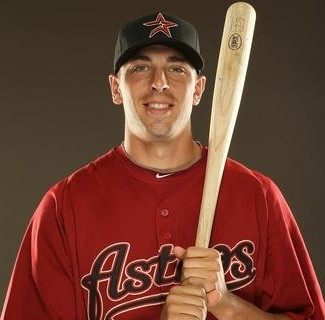
2013 1st Astro AL All Star Jason Castro ~ Wearing a New Smile and an Old Uniform.

2013 1st Astro AL All Star Jason Castro ~ Wearing a New Smile and an Old Uniform.

It fits. The only Astro from the Houston organization’s first abysmal American League team just happens to be the only player on the roster to have a surname which takes in the singular version of the club’s mascot name. i.e., Astro, as in Castro, rings a bell for one of only two positional players who even came close to having 2013 season stats that might qualify either for inclusion by the “every team must be represented” rule necessity. Like many of you, I was pulling for Jose Altuve to make the grade, but it wasn’t to be.

Through games of Saturday, July 6, 2013, catcher Joel Castro (BL/TR) (6’3″, 215 lbs.) is hitting .271 with 23 doubles, 31 RBI, 12 HR, and an OPS of .814.

Here are the nearly complete rosters for the starters and reserves of both the American and National League All Star teams. If I remember correctly, the fans now have a few days to pick an additional player or two for each league roster, but these are most of the talent fold for the 84th Annual MLB All Star Game that will be played on Tuesday, July 16, 2013 at Citi Field in New York.

Each player listed below is linked to a page on his season and career statistics – and these ae a lot easier to get to than any you may find in the Houston Chronicle or in most Internet report sites:

AL Starters
Joe MauerTwins
1B Chris DavisOrioles
2B Robinson CanoYankees
SS J.J. Hardy, Orioles
3B Miguel Cabrera, Tigers
OF Mike TroutAngels
OF Adam Jones, Orioles
OF Jose BautistaBlue Jays
DH David OrtizRed Sox

AL Pitchers
RHP Max Scherzer, Tigers
RHP Felix HernandezMariners
RHP Clay Buchholz, Red Sox
LHP Brett Cecil, Blue Jays
RHP Justin Verlander, Tigers
RHP Justin MastersonIndians
LHP Chris SaleWhite Sox
RHP Mariano Rivera, Yankees
RHP Bartolo ColonAthletics
RHP Yu DarvishRangers
RHP Hisashi Iwakuma, Mariners
RHP Jesse Crain, White Sox
RHP Joe Nathan, Rangers
LHP Glen Perkins, Twins

AL Reserves
1B Prince Fielder, Tigers
OF Torii Hunter, Tigers
SS Jhonny Peralta, Tigers
2B Dustin Pedroia, Red Sox
OF Nelson Cruz, Rangers
UTIL Ben ZobristRays
Jason CastroAstros
1B Edwin Encarnacion, Blue Jays
OF Alex GordonRoyals
2B Jason Kipnis, Indians
3B Manny Machado, Orioles
Salvador Perez, Royals

NL Starters
Yadier MolinaCardinals
1B Joey VottoReds
2B Brandon Phillips, Reds
SS Troy TulowitzkiRockies
3B David WrightMets
OF Carlos Beltran, Cardinals
OF Carlos Gonzalez, Rockies
OF Bryce HarperNationals

NL Pitchers
LHP Clayton KershawDodgers
LHP Patrick Corbin, Diamondbacks
RHP Matt Harvey, Mets
RHP Adam Wainwright, Cardinals
RHP Jason GrilliPirates
RHP Jordan Zimmermann, Nationals
RHP Craig KimbrelBraves
LHP Aroldis Chapman, Reds
LHP Travis WoodCubs
RHP Jose FernandezMarlins
LHP Cliff LeePhillies
LHP Jeff Locke, Pirates
LHP Madison Bumgarner, Giants

NL Reserves
OF Andrew McCutchen, Pirates
OF Michael Cuddyer, Rockies
Buster Posey, Giants
3B Pedro Alvarez, Pirates
OF Domonic Brown, Phillies
SS Everth CabreraPadres
2B Matt Carpenter, Cardinals
1B Allen Craig, Cardinals
1B Paul GoldschmidtDiamondbacks
OF Carlos GomezBrewers
SS Jean Segura, Brewers
2B Marco Scutaro, Giants

Anatomy of Two 1948 Buffs Game Tickets

July 6, 2013
Tom Murrah

Tom Murrah

Thanks to SABR friend Tom Murrah, I received a couple of cancelled reserved seat tickets to a July 24, 1948 game at Buff Stadium that he ran across among some of his own things while going through an old storage box. Tom remembered nothing about the actual game played that day. He grew up in San Antonio, but may have been in Houston visiting friends or relatives as a kid and actually been at the game. Tom grew up as a San Antonio Missions and St. Louis Browns fan, but, because of his awareness of my connection to the tickets as a kid fan of the Houston Buffs, he passed on the 65-year old ducats to me.

Thank you, Tom. In spite of all the games I saw at Buff Stadium from 1947 through 1961, these are the only ticket artifacts to my name. I shall treasure them forever and make sure they end up in the right place for the sake of history someday. Today, however, they need to come alive as our anatomy lesson on two old 1948 Houston Buffs game tickets

These two game tickets were for reserved seats in Section H, Row 25, Seats 27 and 28.. They each cost $1.25, which included 21cents in tax for each ticket.

These two game tickets were for reserved seats in Section H, Row 25, Seats 27 and 28.. They each cost $1.25, which included 21 cents in tax for each ticket.

The Buff Stadium rain check guarantee was explicit, but Buff fans worried little, President Allen Russell would set the field afire in gasoline before he ever cancelled a game due to wet grounds alone.

The Buff Stadium rain check guarantee was explicit, but Buff fans worried little, President Allen Russell would set the field afire in gasoline before he ever cancelled a game due to wet grounds alone.

According to the Sunday, July 25, 1948 San Antonio Express, the Houston Buffs lost a night game on July 24, 1948 to the Fort Worth Cats by a score of 3-2. Dee Fondy of the Cats singled in the deciding run in the top of the 8th, pinning the loss on Buffs pitcher Pete Bryant before a nearly full house of 10.595 fans.

According to the Sunday, July 25, 1948 San Antonio Express, the Houston Buffs lost a night game on July 24, 1948 to the Fort Worth Cats by a score of 3-2. Dee Fondy of the Cats singled in the deciding run in the top of the 8th.

By "coincidence", the fellow we featured in yesterday's Buff Biography, pitcher Pete Bryant, took the loss in today's 1948 tickets game.

By “coincidence”, the fellow we featured in yesterday’s Buff Biography, pitcher Pete Bryant, took the loss in today’s 1948 tickets game before a near sellout crowd of 10.595 fsns. Lefty Chis Van Cuyk earned the win for Fort Worth.

Even though the Buffs lost that game of July 24, 1948 that is connected to our featured tickets, fans went home that evening with the club's best wishes for comfort and courtesy in their every trip to Buff Stadium.  Of course, they did.  Allen Russell guaranteed it on the back of their game tickets.Even though the Buffs lost that game of July 24, 1948 that is connected to our featured tickets, fans went home that evening with the club’s best wishes for comfort and courtesy in their every trip to Buff Stadium. Of course, they did. Allen Russell guaranteed it on the back of their game tickets.