Philadelphia Was A Great Trip

August 8, 2013
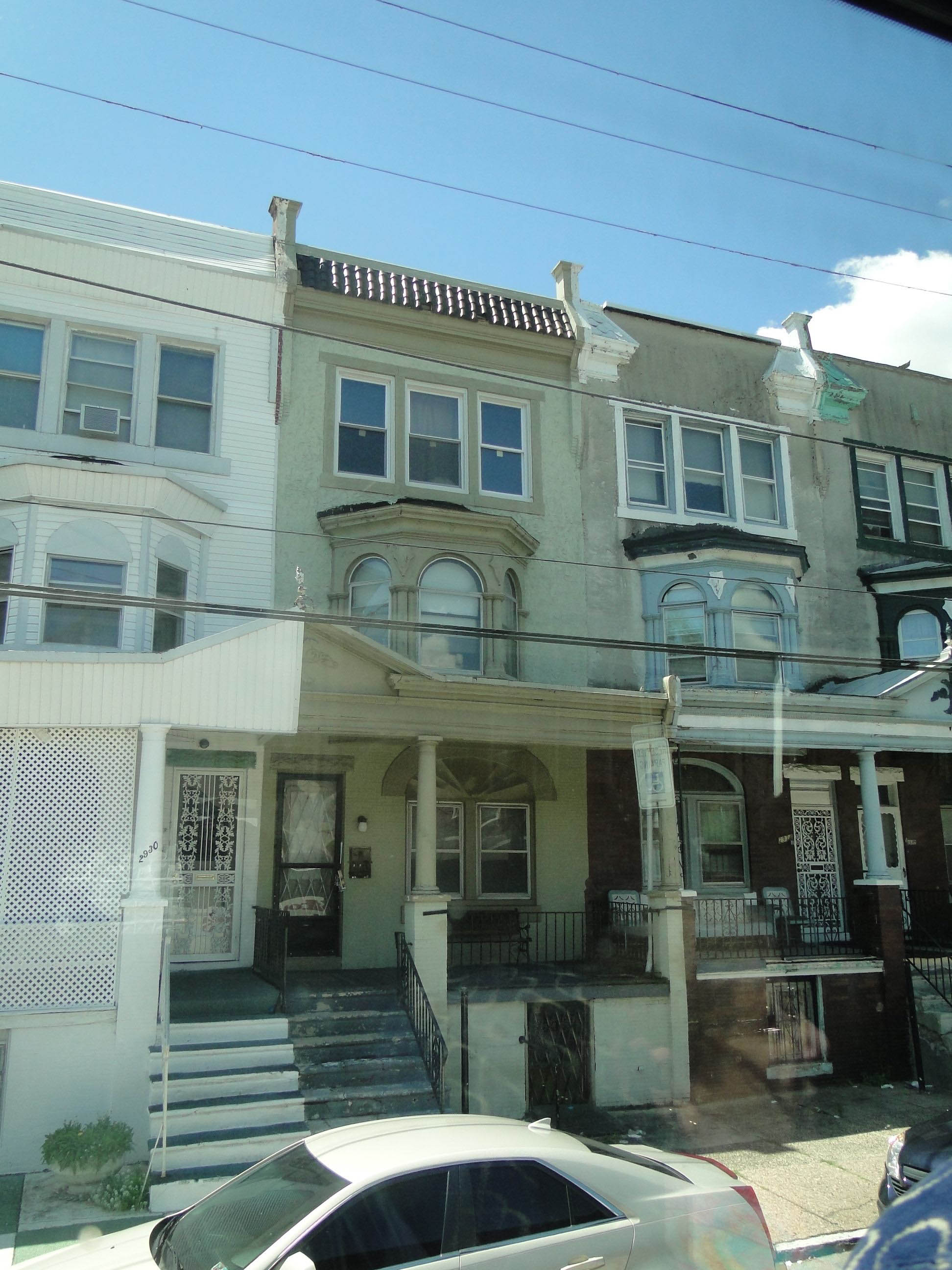
House of Connie Mack on Lehigh (2nd from right, greenish tint)

House of Connie Mack on Lehigh (2nd from right, greenish tint)

On our last day in Philadelphia for SABR 43, the 2013 National Convention of our “Society of American Baseball Research” on August 4th, some of us took a tour of old ballpark sites going back into the 19th century. The tour director for this exciting little exercise was longtime Philadelphia baseball historian Jerry Cassway.  Somewhere along the way, somewhere on the north side of Philadelphia, somewhere between the former locations of old Baker Bowl and Shibe Park, we came across a place that some of us would have taken the tour alone just to see.

We got to see the home of Connie Mack, the Philadelphia Athletics part owner and full-time manager of the AL club for 50 years – as it appeared during the several years he and his family lived there at 2922 Lehigh Avenue in north Philadelphia. At least, I think that was the address that tour director Cassway used for it. I could not find quick and easy confirmation amidst the pile of unseparated words that rolled over these bedraggled eyes in Volume I of the voluminous, but beautifully done work of writer Norman Macht.

Norman: If you are reading this column, perhaps, you won’t mind checking in with a comment on any address correction that may be needed and any other details you might care to offer about the Mack family at this particular house. If you don’t have time, a page reference to where you speak of it in your first book will be appreciated. – Thanks.

NOTE: Two hours after the publication of this column, I heard from Norman Macht, the much respected biographer of Connie Mack. If I read Norman’s comments correctly, Connie Mack never lived at the pictured house on Lehigh Avenue. If that is so, I must apologize for presenting the information we received as accurate, even as I leave it here in its original form for your inspection relative to new information from our Mack scholar.

Here’s what Norman Macht wrote to me within the past hour:

“Bill: The first house where Mack lived in Philadelphia fits the description of the one your tour guide took you to — but at a different location. Mack first rented such a house at 2932 Oxford, near Columbia Park. Three years later he moved to 2937 Columbia Avenue. When Shibe Park opened in 1909 Mack bought a similar row house at 2119 Ontario. He lived there until 1916 when he bought a house at 604 W. Cliveden out near Fairmount Park, the first time he did not live near the A’s ballpark. (Norman Macht, Connie Mack scholar)”

Now we return to the original column text – again, with my apologies:

We wondered if the current residents on Lehigh had any idea about who had lived in that house long before them. Based on the Sunday basketball activity I saw at certain playgrounds nearby, I quietly and privately decided that Connie Mack most likely could now be close to a total unknown to North Philly residents these days. After all, he first lived there over one hundred years ago.

Friend and SABR colleague Bob Dorrill offered that the Mack house would have been a perfect place for a historical plaque. Then he threw in the opinion that historical plaques are easily stolen. They have cash value with collectors and scrap metal dealers.

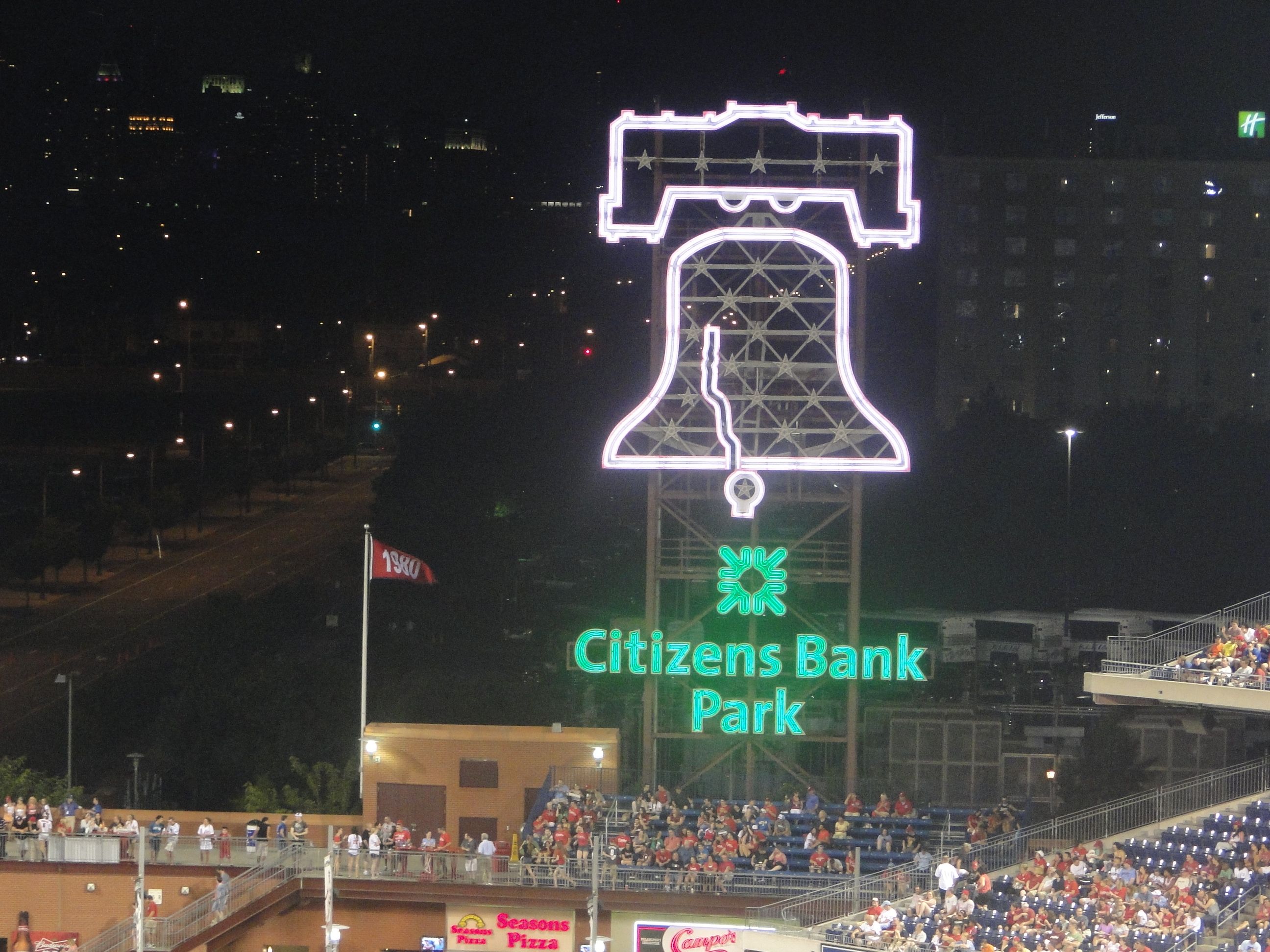
We also got a pretty good exterior tour of Temple University on the north side and, of course, a nice exterior tour of the current venue, Citizens Bank Park, on the south side prior to the trek north.
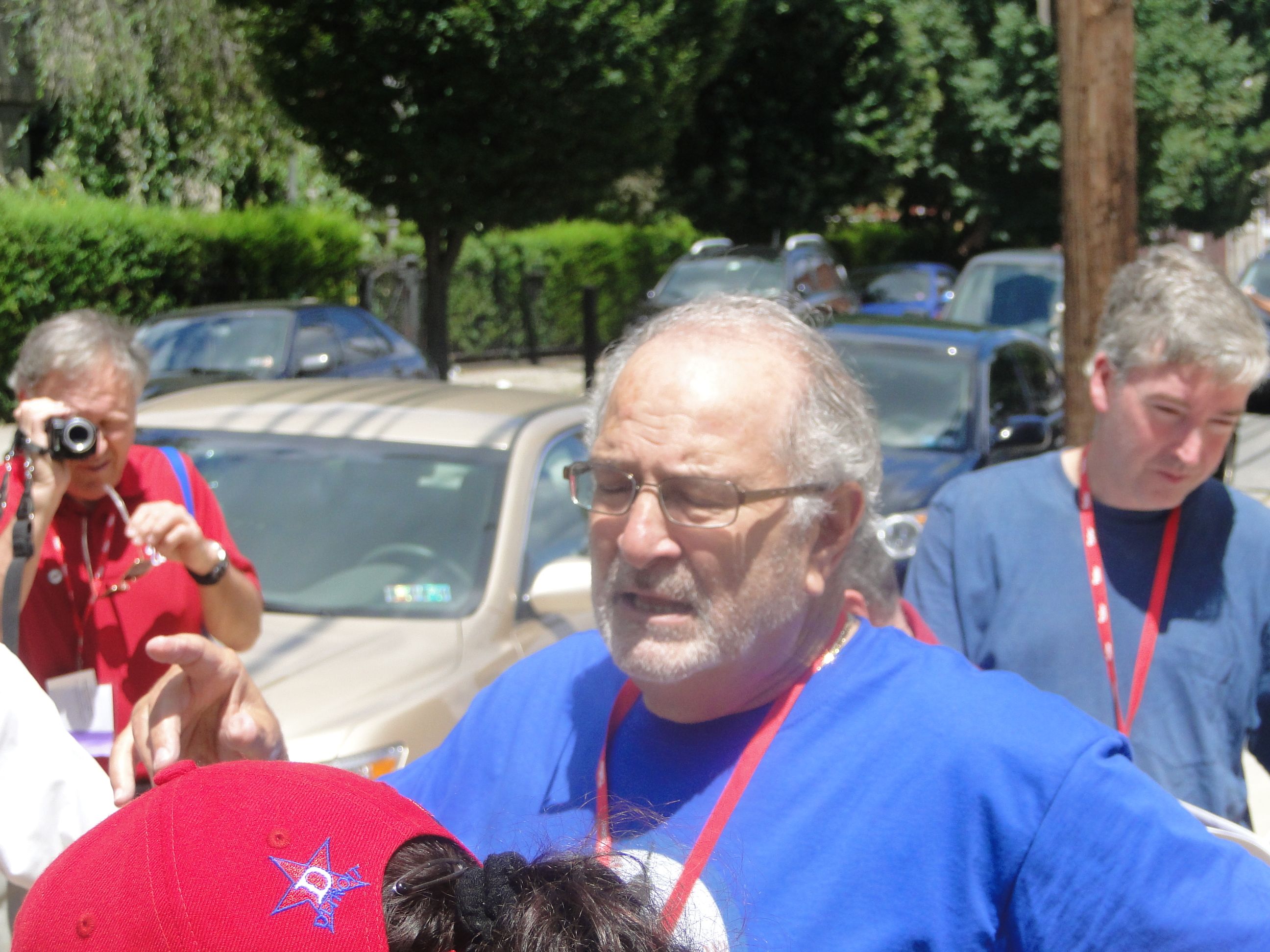
Jerry Cassway, Ballpark Tour Director (Close your eyes on the bus, and Jerry sounds like actor Danny Divita.)

Jerry Cassway, Ballpark Tour Director (Close your eyes on the bus, and Jerry sounds like actor Danny Divita.)

I was impressed with the beauty and dedication to preservation we saw in Philadelphia. And why shouldn’t they be good at it? After all, they were the birthplace of our declared independence from England and the residence of Benjamin Franklin, one of our genius-level founders for the better America that we are still striving to become. Add to the mix a diverse racial population that seems to come together very well as the gracious, welcoming face of Philadelphia. I’m sure they have their bad cats and troublemakers too, but the Philadelphians I met at all levels went out of their way to make us SABR visitors feel welcome.
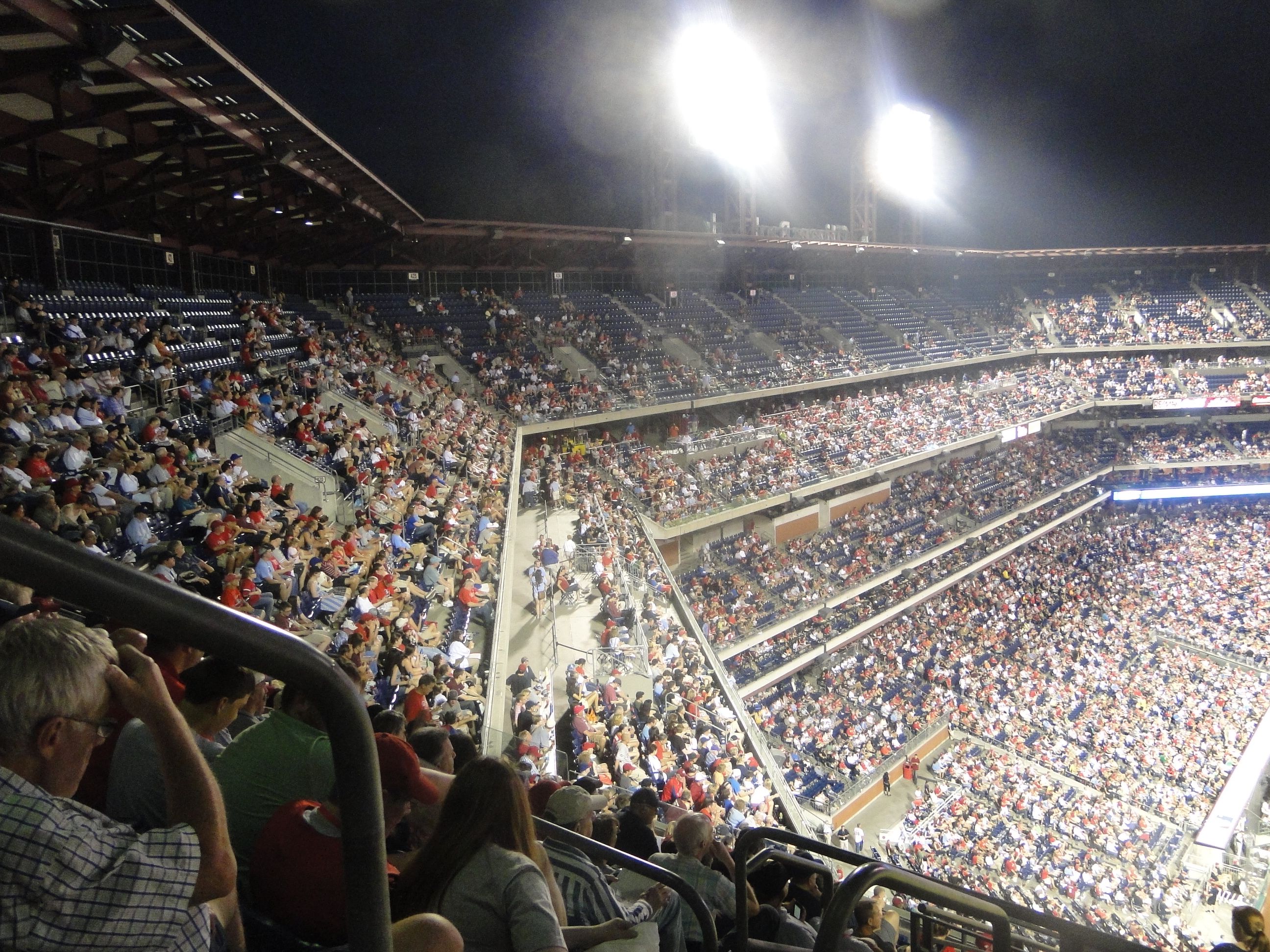
BRAVES EDGE PHILS, 6-4. BOOOOOOOOOOOOOO!!!

BRAVES EDGE PHILS, 6-4.
BOOOOOOOOOOOOOO!!!

Maybe, if we had come to town to play for the Phillies, we could have earned our own share of the Philly-Phan Boo-Bird Salute!
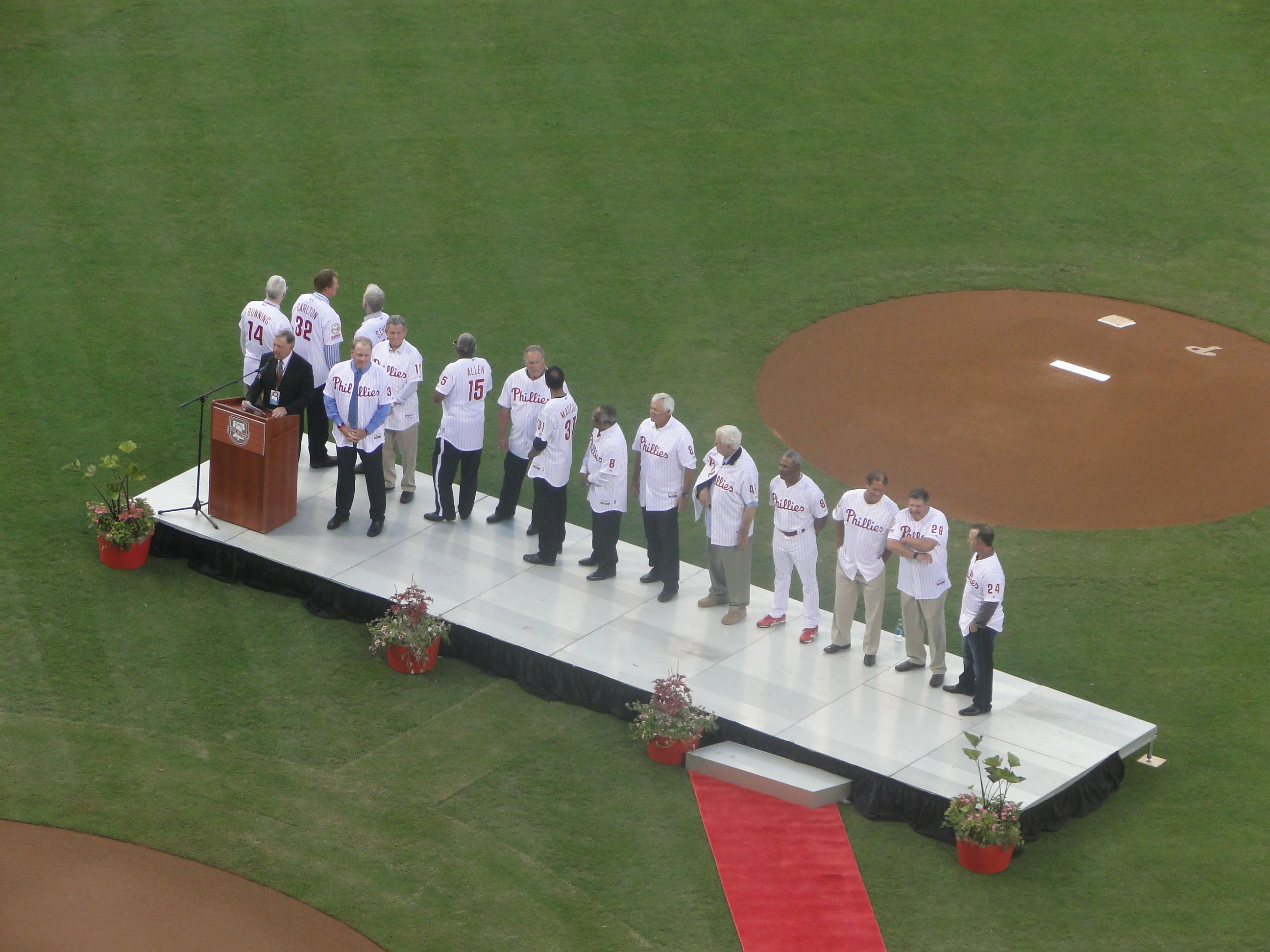
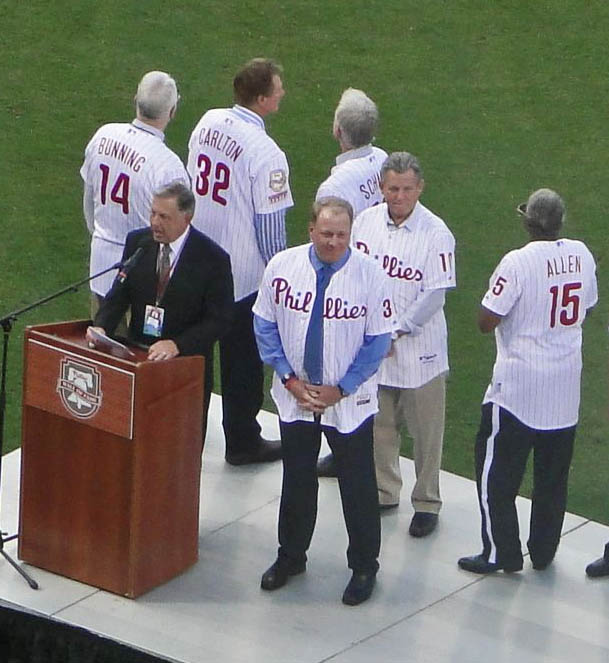
Curt Schilling Inducted into Phillies Wall of Fame

August 7, 2013
Curt Schilling Inducted into Phillies Wall of Fame.

Curt Schilling Inducted into Phillies Wall of Fame.

On Friday night, August 2, 2013, in Philadelphia, many of us SABR 43 Convention attendees went railing south from the Marriott Downtown on the subway to Citizens Bank Park for a game between the soaring Atlanta Braves and the plunging Philadelphia Phillies. As expected, the Braves soared – and the Phillies plunged. Atlanta won, 6-4.

Curt Schilling & Friends

Curt Schilling & Friends

Prior to the game, however, it was all devotion to Philly’s fairly recent glorious past. As shown in the lead photo here, a slew of former Phillie Greats showed up to help honor one of their own as Curt Schilling (also shown above) was inducted into the Phillies Wall of Fame. We cannot name them all from facial recognition in the picture, but the assembly includes Philadelphia Hall of Fame icons like Mike Schmidt, Steve Carlton, and Jim Bunning – along with lesser light good ones like Dick Allen, Larry Bowa, Darren Daulton, Tony Taylor, Garry Maddux, Sr., and John Kruk.

It’s hard to say if the local induction move was designed in some way to help boost Schilling’s chances for the Cooperstown Hall next year when his name comes up again, but no matter. Curt was good enough for the Phillies Wall in 2013, even if he did leave the club amidst a cloud of acrimony for Arizona a few years ago. As a character trait, it was the Schilling way: Never leave your baseball home for some place else without pissing off the people you are departing.

Well, let’s be fair. Acrimony wasn’t always the answer. Sometimes Curt’s early clubs failed to recognize what they were dumping:

After three years with Baltimore (1988-90), the 1 win, 6 loss Schilling slid to Houston as a throw-in player in an Orioles trade with Houston. The Astros kept Schilling for the 1991 season, using him exclusively as a reliever in 56 games. He finished with a 3-5, 3.81 ERA record and 8 saves before getting traded to Philadelphia and 8 seasons (1992-2000) in which he established himself as one the game’s top starters and a 16-7, 4.02 guy for the 1993 NL champion Phils.

Here it comes. …

Philadelphia August 2, 2013

Philadelphia
August 2, 2013

Schilling provoked a deal to Arizona from the languishing 2000 Phillies, alienating both the club and local fans. At Arizona for 4 seasons (2000-03), Schilling jumped into the 20-game winner club, taking 22 for the 2001 D’Back World Series Champions and 23 for their 2002 club. After 2003, he was off to the Boston Red Sox and 4 final seasons (2004-07) with two more World Series champion Red Sox clubs in 2004 and 2007. As a member of the Sox team that broke “The Bambino Curse” in 2004, Curt won 21 games in 2004 and another 15 in 2006. He suffered injuries that ultimately led to some unhappiness and retirement, but he hung in there, bloody sock and all, and helped 2007 Boston to their 2nd WS title in four years after a skein of zero titles in eighty-seven years.

Curt Schilling finished his 20-year MLB career with a record of 216-146, 3.46 ERA, 3 World Series titles in 4 tries with 3 teams, and enough charisma left over to heal old wounds with words and charm. Last Friday, if you listened in person to Schilling’s speech, you easily could have concluded that everything he did on the field, he did for the City of Philadelphia.

Cooperstown is another road altogether from the Phillies Wall of Fame. Curt Schilling only drew 38.8% approval among the voting HOF writers in 2013 and he would need 75% for induction in 2014. It’s not probable that he will get the nod.

SABR 43 Trip Was Phillie-Phine

August 6, 2013
On Friday night, we saw the Braves whip the Phillies, 6-4, at Citizen's Bank Park in a game that featured back-to-back HR tricks by both clubs.

On Friday night, we saw the Braves whip the Phillies, 6-4, at Citizen’s Bank Park in a game that featured back-to-back HR tricks by both clubs.

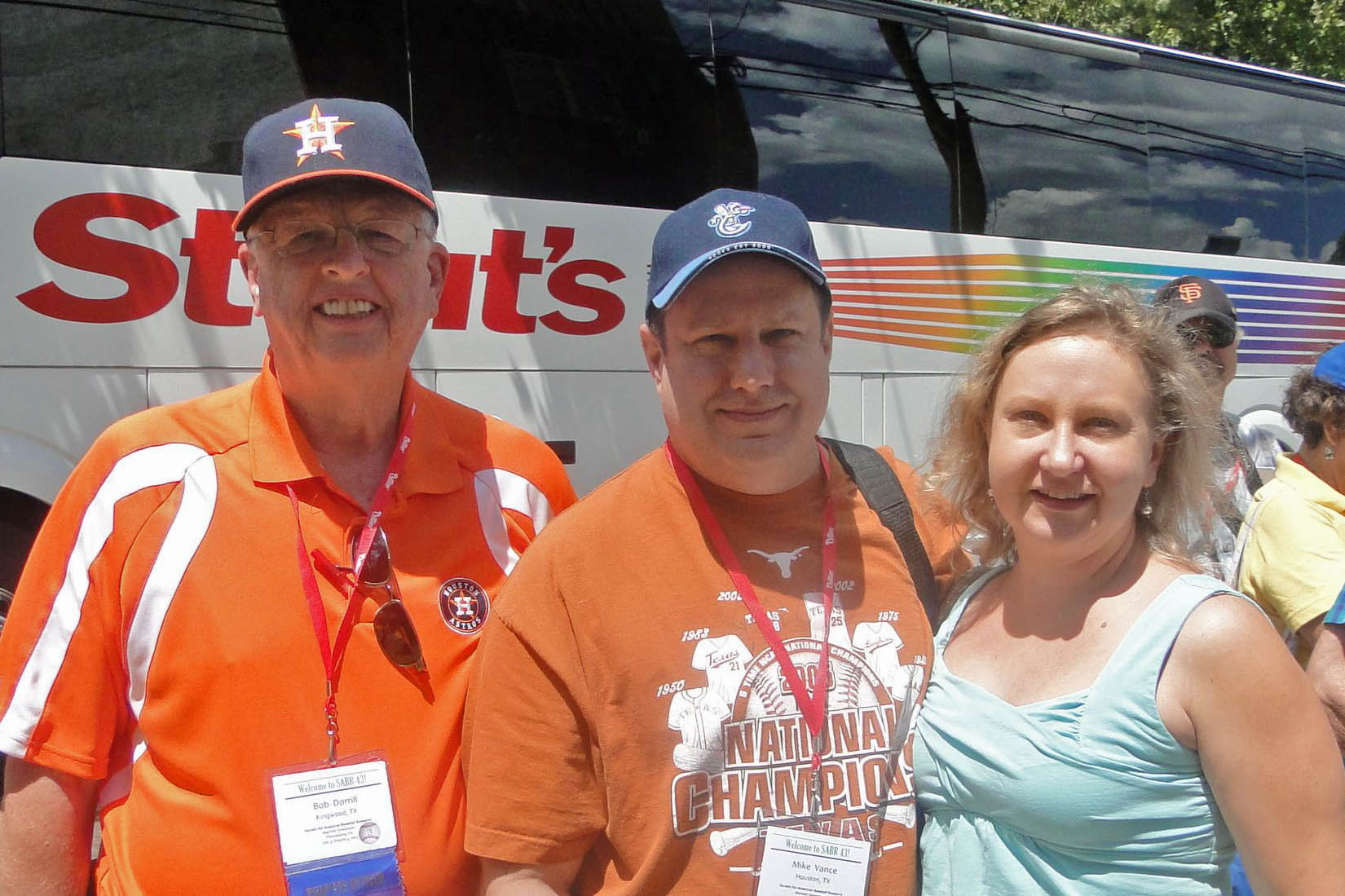
The Larry Dierker Chapter was represented at the 43rd Annual Convention of SABR in Philadelphia last week by Chairman Bob Dorrill, Marsha Franty, Mike Vance, Art Spanjer, Mike McCroskey, and yours truly, Bill McCurdy. We all came to learn, to enjoy, to dialogue with others, and to grasp all we could about what seemed to work and not work there for the sake of our own planning for SABR 44 in Houston in 2014.

The Philadelphians could not have been more helpful, and our special thanks go out to Seamus Kearney and Dick Rosen of the Connie Mack Chapter for the advisory time they spent with us in discussion of our plans for the convention in Houston next year.  We are preparing to give it our best shot, but that will require more volunteers from our Houston group to step up to the plate as soon as possible.

Patricia Anderson, the 86-year old niece of the late White Sox third baseman Buck Weaver, served as a panel member on the Black Sox Scandal discussion.

Patricia Anderson, the 86-year old niece of the late White Sox third baseman Buck Weaver, served as a panel member on the Black Sox Scandal discussion.

There was far too much content to report in-depth here. I especially enjoyed listening to the niece of Buck Weaver, one of the eight banished Black Sox players from 1919, talk about her uncle. She says he never freely talked about what happened, but that she holds no belief that he (Buck Weaver) personally did anything wrong. She points to his record in the 1919 Series as a .324 .hitter as evidence of his honest intent to play for victory.

Mike Vance & Marsha Franty: There was time for group merriment ...

Mike Vance & Marsha Franty: There was time for group merriment …

Bob Dorrill & Grandson: ... time for reunion ...

Bob Dorrill & Grandson: … time for reunion …

Solly Hemus: ... time for discussing ancient heroes ...

Solly Hemus: … time for discussing ancient heroes …

Mike McCroskey & Bob Dorrill: ... time for hanging out with Houston buddies ...

Mike McCroskey & Bob Dorrill: … time for hanging out with Houston buddies …

... time for the phanatical pursuit of happiness ...

… time for the phanatical pursuit of happiness …

... time for love and friendship ...

… time for love and friendship …

... time for remembering the greats of the game ...

… time for remembering the greats of the game …

Philadelphia: ... time to discover a great and beautiful American city. ...

Philadelphia: … time to discover a great and beautiful American city. …

House of Connie Mack on Lehigh (2nd from right) ... time to explore history ...

House of Connie Mack on Lehigh (greenish in middle) … time to explore history …

Independence Hall: ... time to explore what's important to our American history ...

Independence Hall: … time to explore what’s important to our American history …

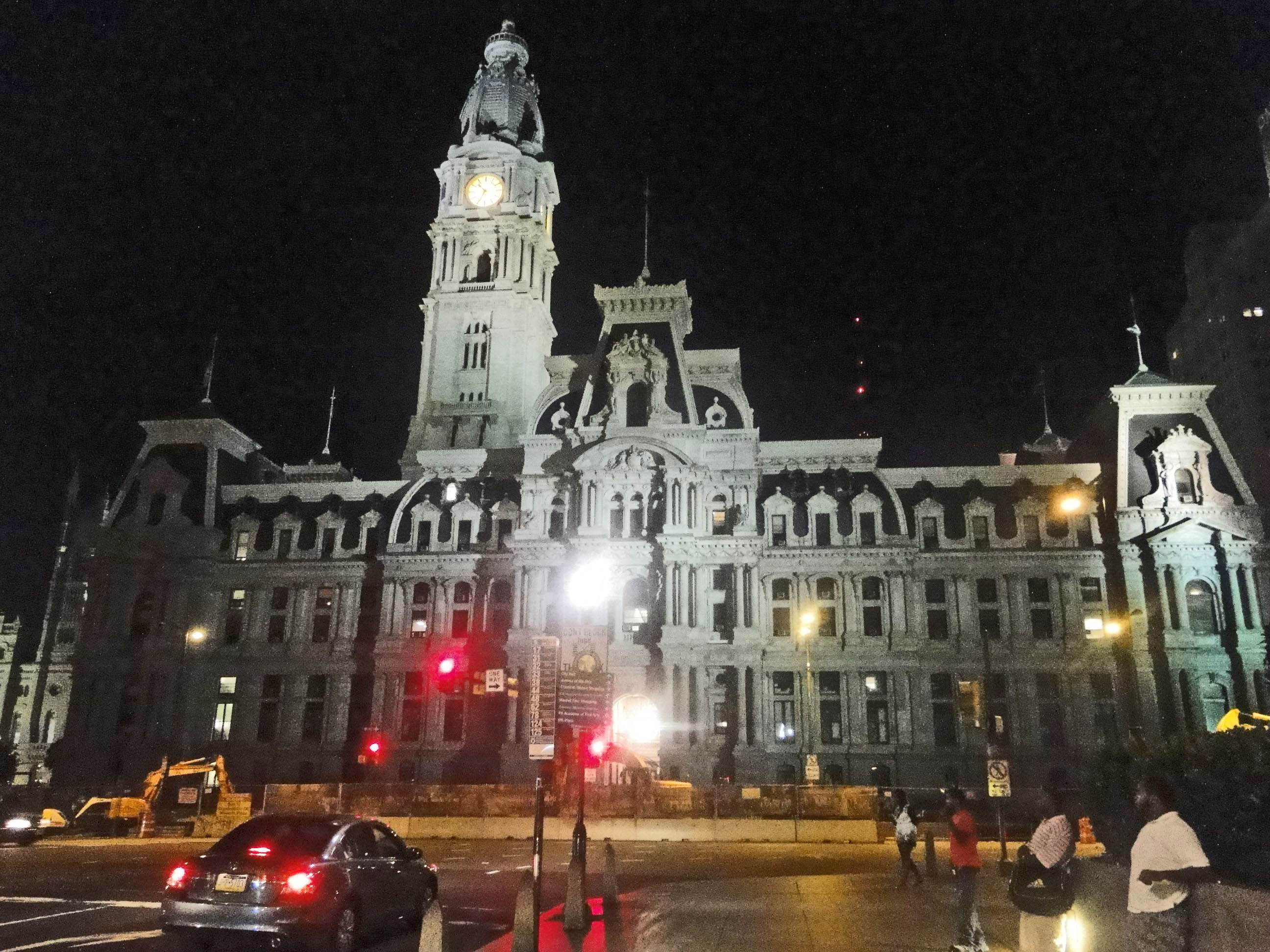
The Courthouse: ... time to celebrate the beauty that emanates from the creative mind. ...

City Hall: … time to celebrate the beauty that emanates from the creative mind. …

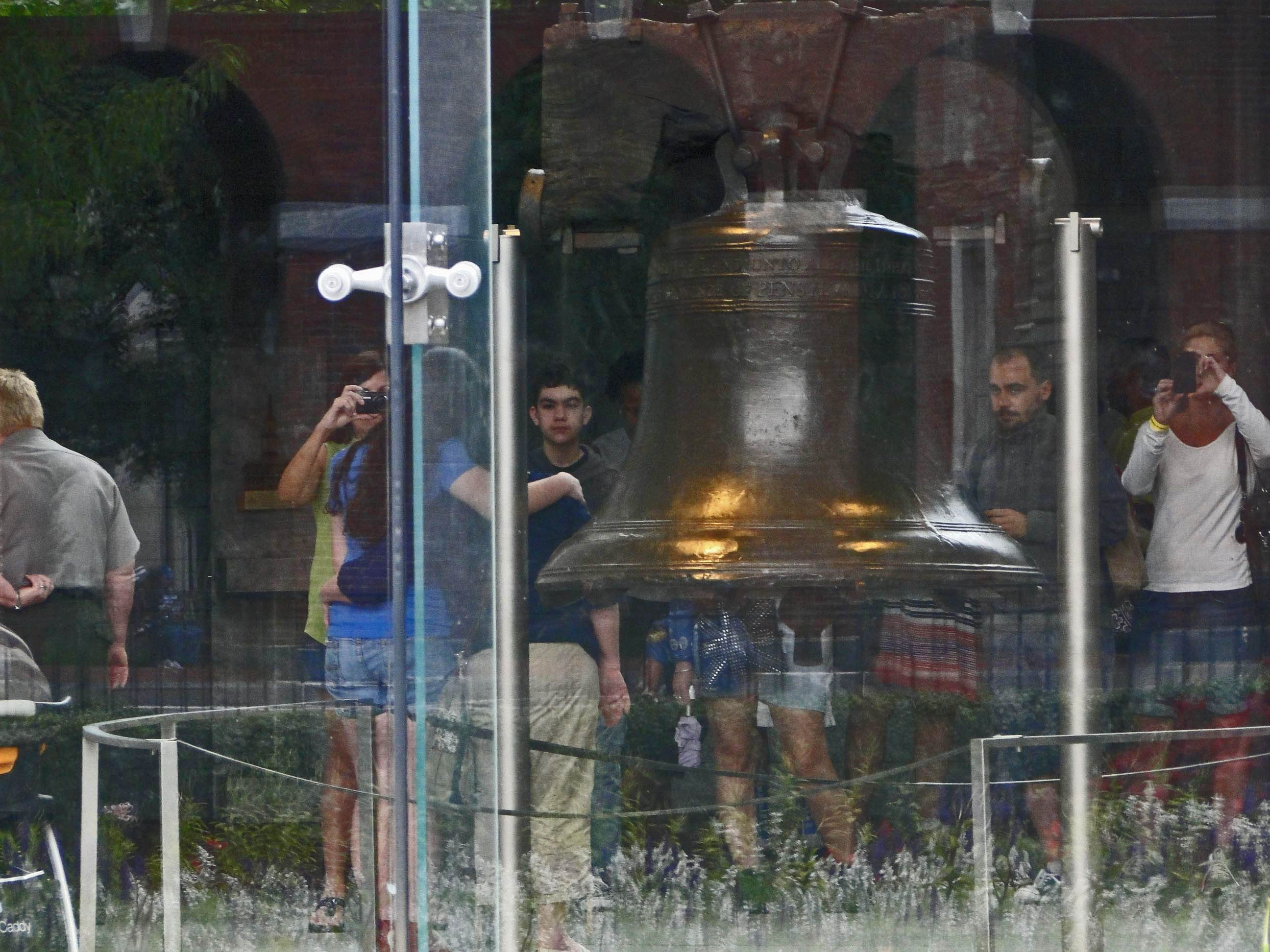
The Liberty Bell: ... time to remember that this bell is our breathe of life itself.... forever.

The Liberty Bell: … time to remember that this bell is our breath of life itself…. forever.

DSC03757

Thanks you, Philadelphia, for all of these remembrances!

Thank you, Philadelphia, for all of these remembrances!

Bill Gilbert: Astros Hit Bottom in July

August 5, 2013

Hi. Everybody!

The Pecan Park Eagle just got back late last night from a four-day trip to the 43rd Annual Convention of the Society of American Baseball Research (SABR) in Philadelphia, but more on that little expedition, starting tomorrow. First we need to catch up on baseball in our backyard. For today, here’s Bill Gilbert of the Rogers Hornsby Chapter of SABR and his July monthly report on the 2013 season of the Houston Astros. …

Astros Hit Bottom in July
By Bill Gilbert
            The Astros picked up their first July win on July 3 and closed out the month with an 11-0 win over Baltimore on July 31.  However, they only won four games in between resulting in a 6-18 record for the month, the worst in the major leagues. The Astro finished the month with a record of 36-70, five games behind the Miami Marlins in the “race” for the worst record in baseball and the first pick in the 2014 draft.
            Despite the overall poor performance, there were some bright spots.  Three of the prospects obtained in earlier trades achieved some success in the majors.  Pitcher, Jarred Cosart, one of the prospects in the Hunter Pence trade, was promoted in July and made 3 strong starts. (1-0, 0.86 ERA).  Pitcher, Brett Oberholtzer, obtained in the Michael Bourn trade, made his first start on July 31 in the 11-0 win over Baltimore. Jonathan Villar, obtained in the Roy Oswalt trade, has become the regular shortstop since his promotion after the All-Star game, and has added some excitement with his defense and speed (5 stolen bases including a steal of home).
            The Astros rank near the bottom in most offensive and defensive categories as shown below:
Offense                                  Astros             MLB Rank
Runs/Game                          3.82                  26th
Batting Average                   .236                   29th
Slugging Average                .377                   29th
Strikeouts                            995                   30th
Pitching
Runs/Game                          5.28                   30th
ERA                                        4.89                   30th
Defense
Fielding Pct.                          .961                  26th
Double Plays                          122                   1st
 
            The numbers above suggest that the pitching has been worse than the hitting but not by much.  The Astros are not considered to be a strong defensive team but they rank first in turning double plays.  This is at least partially due to so many runners on base.
            The Astros picked up several more prospects by trading Bud Norris, Jose Veras and Justin Maxwell prior to the July 31 deadline.  While this trade could be helpful in the future, it will likely further weaken the team for this year with the loss of their best starting pitcher, their closer and a productive outfielder.
            The Astros minor League teams continue to do well.  All four full-season teams are at least 13 games over .500 and the three short-season teams are also over .500.

Buff Biographies: Fred Martin

July 31, 2013

Buff Logo 12


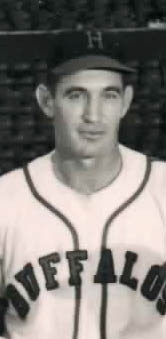
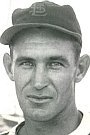
Fred Martin, Pitcher 1951 Houston Buffs

Fred Martin, Pitcher
1951 Houston Buffs

Fred Martin (6’1″, 185 lb) (BR/TR) was a tough, talented, and wily pitcher who spent 3 years in the majors with the St. Louis Cardinals (1946, 1949-50) , putting up a 12-3, 3.78 mark for his time in service at the highest level. Over the longer run of 25 years (1935-60), Martin also posted a 17-season minor league mark of  169-135, 3.38 for mostly Cardinal clubs, including  4 whole and partial seasons (1941, 1951, 1953, 1959) with the Houston Buffs.

Martin had his greatest statistical year when he went 23-6 with a 1.88 ERA for the great 1941 Buffs and then returned in a decade to contribute heavily (15-11, 2.54) to the success of the 1951 Texas League champion Buffs.

Over time, Fred Martin earned a lot of respect as a teacher of pitching mechanics, particularly as the game pertains to a pitch that many experts give him credit for either inventing – or redefining from its use in earlier eras by turn of the century greats Christy Mathewson and Rube Foster of the early Negro League. The pitch we speak of here, of course,, is the one we now know as the “split-finger fastball”.

Martin is also given credit for being the mentor who taught the pitching-life-changing weapon to Hall of Fame reliever Bruce Sutter and to Roger Craig who then taught the split-finger to the great Mike Scott, among others.

Stories of mentorship are common and often hard to verify, but if they begin to happen in bunches about the same teacher bearing the same lesson, you begin to listen and consider giving them credibility.

Fred Martin

Fred Martin

Fred Martin was one of those guys. And he was a guy who even looked as though he was born to play baseball. Born on June 27, 1915 in Williams, Oklahoma, the 20-year old “Okie” pitched his first game, just barely out of the Dust Bowl in 1935 for Class D Siloam Springs, Arkansas – and he didn’t hang ’em up until he was 45 and pitching his last two games in relief for Class C St. Cloud, Minnesota. By then, the clock had rolled all the way to the year 1960.

Fred Turner Martin left this world on June 11, 1979 in Chicago. He was just 63 when he passed, looking near his end like a guy who could still bring it, had he been called upon to do so.

Keep your seat, Fred. You did enough. More than enough.

Buff Biographies: Ben Steiner

July 30, 2013

Buff Logo 12


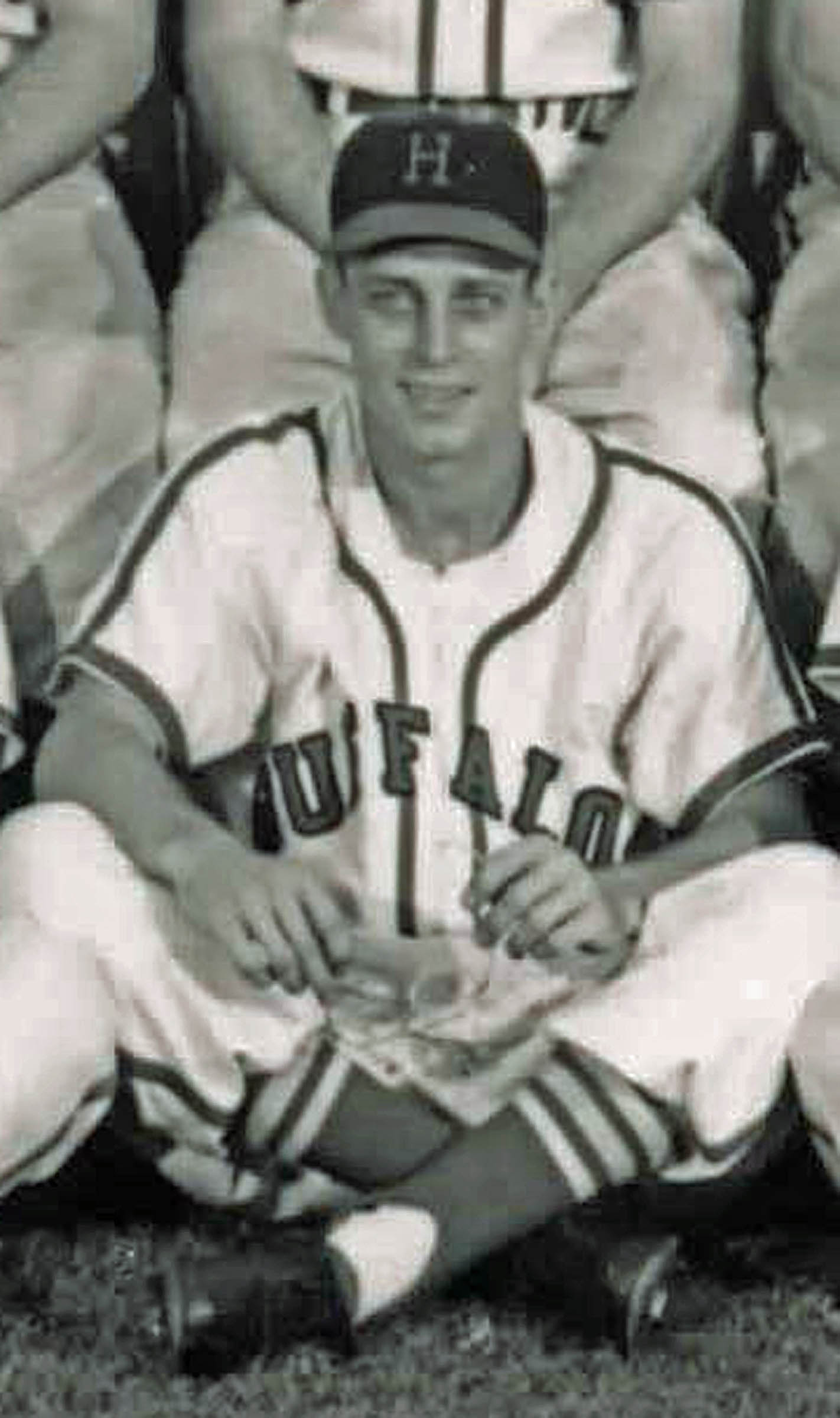
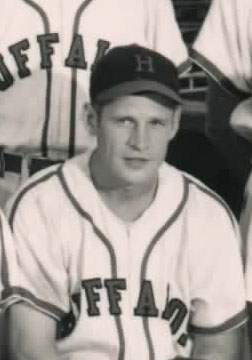
Ben Steiner 1951 Houston Buffs

Ben Steiner
1951 Houston Buffs

Second baseman Ben Steiner (5’11”, 165 lb) (BL/TR) was born in Alexandria, Virginia on July 28, 1921.. He broke into minor league baseball at the age of 19 in 1941 with Class C Canton, batting .295 with 0 HR in 49 games before up to Class B Greensboro that same year and hitting .206 with no HR in 8 games.

Over the course of his 11 season minor league career (1941-51), Ben Steiner hit a respectable .272 with 19 home runs. The Buffs were his last professional game stop in 1951 and he batted .262 with a single homer in  130 games at second base for the Texas League champion Buffs that season. Steiner also had played for another champion at AAA Columbus with other former Buffs like Larry Miggins and Solly Hemus. The 1950 Columbus Red Birds were winners of the Little World Series that season.

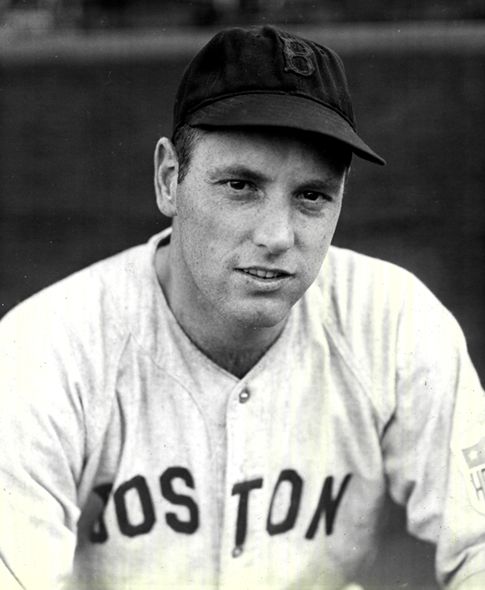
Steiner also played three earlier seasons in the big league with the Boston Red Sox (1945-46) and the Detroit Tigers (1947). His play was limited to 82 games with 78 of those coming at Boston in 1945. He only picked up 4 at bats in 3 games with the 1946 AL champion Red Sox playing behind future Hall of Famer Bobby Doerr and 1 game for the 145 Tigers. Ben Steiner’s MLB career totals included a .256 batting average and 3 home runs.

For whatever reason, Ben Steiner was through with professional baseball at the end of his 1951 Houston Buffs season. At age 30, he retired to pack his dreams away into the regular 9 to 5 work crowd.

Ben Steiner, Utility 1945 Boston Red Sox

Ben Steiner, Utility
1945 Boston Red Sox

Ben still valued his time in baseball.  As the assistant county clerk of Middlesex County, New Jersey during the 1970’s, Steiner wore his championship ring from the 1950 Little Word Series team from Columbus, Ohio.

We don’t much about Steiner’s personal life beyond his baseball career, but we do know that he died at a relatively young age. Ben Steiner passed away in Venice, Florida on October 27, 1988 at the age of 67.

As a kid, I always liked Ben Steiner. When his early season average hovered above .300 well into June, my 12-year old mind wanted to give the bespectacled  second sacker credit for out-thinking the Texas League pitchers who were trying their best to keep him off the bases. In fact, in my own little world of private baseball ideas, I always thought of Ben Steiner by the phrase that most of baseball already had assigned to Dom DiMaggio. To me, Ben was  “The Real Little Professor”.

I remember being disappointed that Steiner did not return to the Buffs for the 1952 season, but I wish I knew more today about his reasons for quitting at age 30. Maybe it was injury. Maybe it was the fact that  he realized he had gone about as far as he could go in the game by that time.. Maybe some other opportunity away from baseball looked more attractive to him.

Who knows? I will now post “whatever happened to Ben Steiner after 1951?” as another question I’d like to know more about. If you have any data on that subject, please post it below as a comment.

Meanwhile. “R.I.P., Ben Steiner! – My Buff memories of you are golden!”

Buff Biographies: Eddie Kazak

July 29, 2013

Buff Logo 12

Eddie Kazak, 3B 1951 Houston Buffs

Eddie Kazak, 3B
1951 Houston Buffs

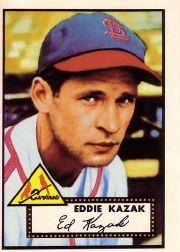
Eddie Kazak (6’0″, 175 lb.) (BR/TR) was a wiry-muscular third baseman who played for the Houston Buffs in both 1942 (.257, 5 HR) and 1951 (.304, 13 HR).

EdwardT. Tkaczuk (Eddie Kazak) was born in Steubenville, Ohio on July 18, 1920, three years after a fellow named Dino Paul Crocetti also was born in the same Ohio steel mill town. Crocetti would grow to fame as singer/actor. It’s unlikely that Dean Martin and Eddie Kazak ever met (by any names) as kids. Eddie’s family moved early on to  the small coal-mining town of Muse, Pennsylvania where he grew up.

Eddie Kazak enjoyed a 16-season career in the minors (1940-42, 1946-48, 1951-60), coming out of same with a career minor league batting average of .307 with 153 career home runs.

As a paratrooper in the U.S. Army Air Corps during World War II, Kazak suffered a bayonet wound to his left arm and shrapnel damage to his right elbow in a landing that followed the invasion of Normandy in 1944.  Kazak spent the next 18 months in a hospitals, enduring numerous surgeries, including one to replace the missing bone in his left elbow with a plastic patch. His doctors told Kazak to forget about baseball upon his release from the army and medical care, but Eddie couldn’t do it. In spite of shooting pains in his right arm every time he threw a ball, Kazak attempted a comeback in 1946.

When Eddie couldn’t break into a spot with the AAA Rochester Red WIns in 1946, he moved down to A Columbus Cardinals of the South Atlantic League for an absolutely amazing first game at second base. In a 10-3 win over Savannah on April 23, 1946, Eddie Kazak signaled his come back with 2 home runs, a double, and a single in five times and bat, throwing a steal of home for good measure. Nobody AKWS bout Eddie’s ability or will to play the game after that night. – With results like that, the guy could play with pain, even if his superman production couldn’t happen most of the time.

In human terms, Kazak’s best minor league season was 1954, when he hit .344 with 1992 hits and 19 HR for Beaumont of the Texas League. That same year, hot third base prospect Ken Boyer of Houston had comparable totals that included a .319 BA, 202 total hits, and 21 total HR.

In his best major league season, Eddie batted .304 with 6 HR in 92 games for the 1949 St. Louis Cardinals. In his 5 MLB seasons (1948-52), Kazak played in only 208 games, never reach 100 games in any single season.  All years but 1952 were spent with the Cardinals, but that last season was split between the Cards and the Cincinnati Reds. Eddie was just one of those who ate up AA pitching, but struggled some against the MLB arms. His MLB career marks included a respectable .273 BA and 11 career homers.

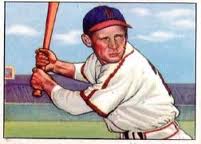
Seeing one your favorite former Buffs on a real MLB baseball card always felt so good back in the day.

Seeing one your favorite former Buffs on a real MLB baseball card always felt so good back in the day.

Eddie Kazak was a slashing line-drive hitter with pretty good base-path speed and athletic ability as a defensive third baseman. He was also an Allen Russell kind of guy. Russell was the Buffs President during Kazak’s 1951 second tour with the club and he was also a major owner at Beaumont in 1954. Kazak finished his professional career with 3 games at Austin in 1960, and that was another club touched by Russell late in the 1950s. Russell liked players with strong working class ethics and that definitely took in the Planet Earth space occupied by Eddie Kazak.

Kazak settled in the Austin area following the conclusion of his baseball playing career. He died in Austin on December 15, 1999 at the age of 79.

Former 1951 teammate Jerry Witte and Eddie Kazak hit it off as buddies due to their shared Polish ethnic background.  (Witte was half-German and Half-Polish, but he hardly recognized the former in preference for the other.)

“You know how two Polish ball players stay out of trouble when they have time on their hands in Houston?” Witte used to ask. “Me and Kazak would get a line and a pole and go fishing down on the banks of the (Sims) bayou near where we lived. We’d also take a .22 rifle and shoot at turtles when we got the chance. They could be pretty tasty too.”

I still can’t believe that they cooked and ate any turtle that came out of any bayou in Houston, but sometimes it’s just better to listen rather than over-think the camaraderie stories of ball players from the Post-World War Two era.

Eddie Kazak in Line Drive Form!

Eddie Kazak in Line Drive Form!

R.I.P., Eddie Kazak! ~ R.I.P, Jerry Witte! ~ Hope you guys are having fun on the banks of those heavenly golden shore bayous these days!

Baseball Expressions We Use in Everyday Life

July 28, 2013

Baseball Expressions We Use in Everyday Life …

(1) Sam “couldn’t get to first base” with Sally.

(2) Joe was in prison for life due to the “three strikes and you’re out” policy on three felony convictions.

(3) Tim and Bob were going to need “a homer in the bottom of the ninth” to keep their little burger joint open against the competition they faced from all the new corporate retailers.

(4) Selling that bad-running, but good-looking used sports car to that hungry-eyed, 21-year-old buyer for too much money this afternoon was salesman Tom’s “can of corn” deal of the day.

(5) Jack’s four-point business plan for the new corporate fiscal year received “grand slam” approval from this boss and the board of directors.

(6) Joe’s ideas for his company’s business plan, on the other hand, were rejected as too radical, too “out in left field”, if you please.

(7) “Double Play” Dolan was an old-fashioned politician. When he ran for office, he always promised the people more service and less taxation.

(8) Sales manager Sidney says to his commission-based land line phone service and reconditioned typewriter company sales staff: “You gotta have heart – miles and miles and miles of heart! – When the odds are saying you’ll never win – that’s when the grin should start! – You gotta have hope – mustn’t sit around and mope! – Nothing’s half as bad as it may appear – wait’ll next year and hope! – When your luck is batting zero – get your chin up off the floor! – Mister you can be a hero! – You can open any door! – There’s nothing to it – but to do it – FIRST – you gotta have heart!”

(9) Mary took an “intentional pass” on Harold’s invitation to the Star Trek Fans Convention.

(10) Harold later “struck out” with three Trekkie girls he tried to meet at the same convention.

(11) … And finally, for here, anyway – J.D. Salinger may or may not have had baseball in mind when he came up with this next title. – I don’t think you will even need the following picture to figure it out, even if it isn’t an expression from the game that we use every day. It’s still a phrase so closely associated with baseball that one of the game’s figures, Bob Uecker, even used a play on these same words as the title of his own autobiography.

catcher

Now that the barn door is open, please list your own favorite baseball expressions from everyday life as comments on this column. There’s no way we came even close to doing anything more than simply referencing a few of the more popular ones for the sake of getting things started.

And have a great, peaceful Sunday.

How Do You Boil A Frog?

July 27, 2013

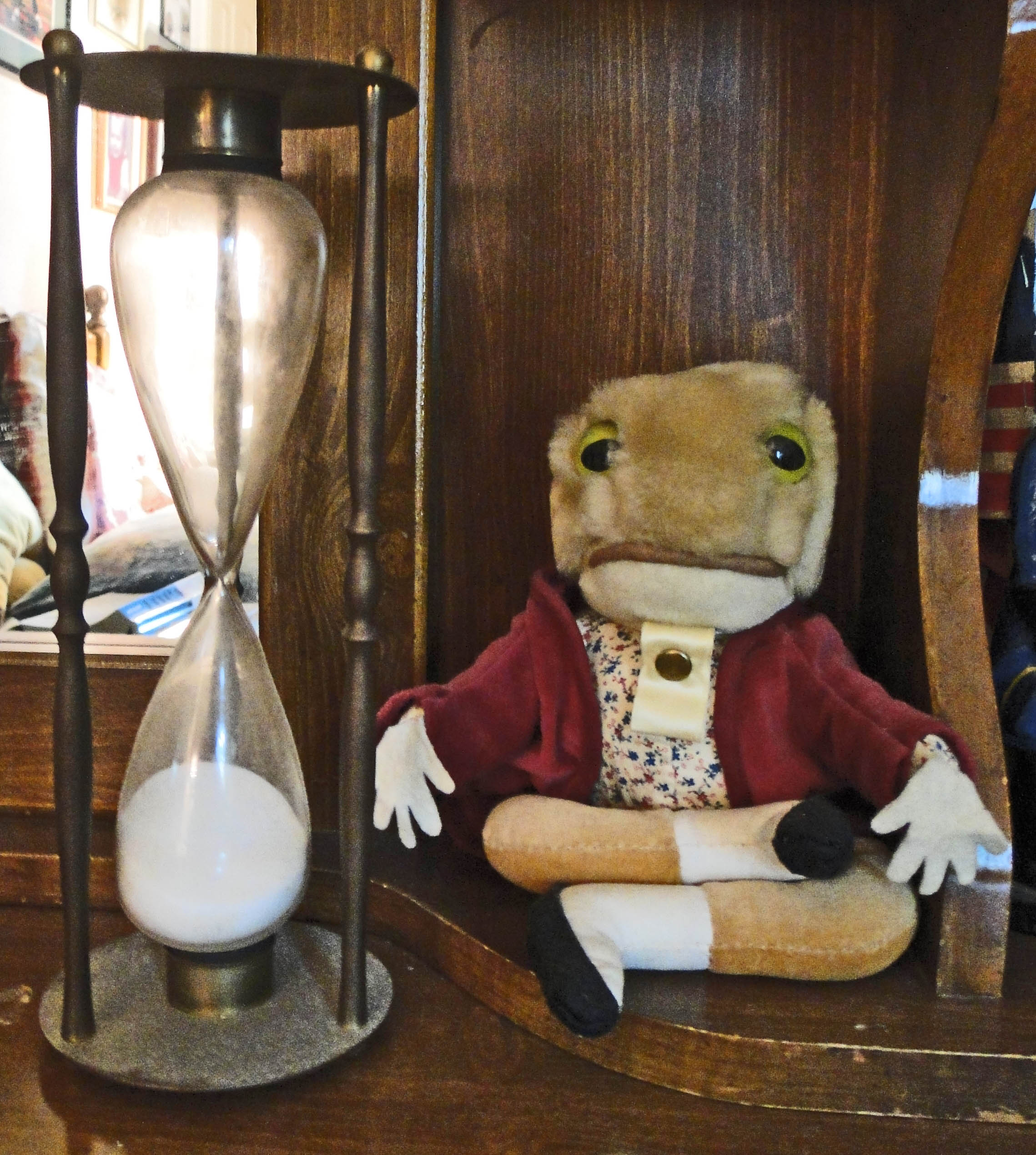
The Frog and the Hour Glass

How do you boil a frog?

ANSWER: Never drop a frog in a pot of boiling hot water. He or she will reflexively jump right out and hop away.

Always place the frog in a pot of cold water and then light the fire, bringing the water to a slow, but sure boil. He or she will get used to the gradual change. By the time the water temperature has reached a good cooking boil, the frog’s goose will be cooked and dinner will be served.

And what does the story of the frog in boiling water have in common with baseball fans who are called upon to watch a 100 plus losses per season team finish last for several years in a row?

ANSWER: Just about everything.

The seasoned fans are like the frog dropped into the pot of boiling water. Because they know how the winning game is supposed to be played, the veteran fans will have short patience with “rebuilding logic” and soon lose interest in a club that cannot hit, run, throw, or protect a lead in the late innings. After a max-time exposure of no more than three years to dead weight losing (as the hot water), the knowledgeable fans will either pick another team or just go away to pursue some other precious pastime. After three years, there must be some measurable signs of significant progress, or all is probably lost.

The rookie fans are the ones who are most in danger from the slow boil of bottom-feeder losing. Because they don’t know any better, many of the rookie fans may just stay with losing as the way things are. That’s what the old St. Louis Browns fans once did. Former St. Louis Browns pitcher Ned Garver still expresses his gratitude to the small, but quietly loyal Browns fans with these words: “Our Browns fans would not think of booing our club in 1951,” Garver says. “They wouldn’t dare. – We outnumbered them.”

Some Cubs fans today have gone so long since they last won that World Series in 1908 that they simply expect a guy like Steve Bartman to show up and mess with any opportunity they next seem to have. How can you be a rookie fan to the Cubs experience and not be negatively touched by the idea that losing is normal? As someone who is not a Cubs-hater, I would really welcome some true Cub fan feedback on that question. As one who always has marveled at the curious heart and loyalty of true Cub fans, I would welcome some Cub fans feedback.

And now we have some more rookie fans in our own City of Houston. Somebody needs to tell them that what they are watching in 2013 at Minute Maid Park is not the norm for championship baseball, but that we are trying like crazy to be patient. –  If things are not radically better by no later than 2015, it will be time for Houston baseball fans to pick another leisure time killer.

I hear that dipping snuff is making a comeback, but you sure wouldn’t want to try that one in a pot of boiling water.

Buff Biographies: Tommy Glaviano

July 26, 2013

Buff Logo 12

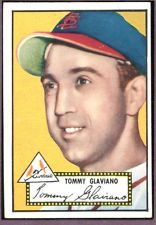
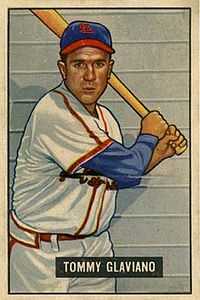
Tommy Glaviano 01 Over the years, a lot of shortstops have managed to spin double-digit year MLB careers as “good field/no hit” players due to the importance of speed, range, and athleticism at the critical middle infield spot. Not so third basemen. Strong arms and a good reflexive reaction capacity are important to third base defense, but the guy’s got to hit, preferably for average and power – and he needs to be a killer batter with men on base.

The legion of those who couldn’t cut it offensively in the majors at good old “3B” is large in numbers and, sadly so, it includes Tommy Glaviano,  the third baseman for the 1947 Dixie Series champion Houston Buffs.

Born October 26, 1923 in Sacramento, California, Tommy Glaviano (5’9″, 175 ib.) (BR/TR) signed with the Cardinals out of high school at the age of 17 and played a couple of seasons (1941-42) at Class C level before serving in the Coast Guard during World War II (1943-45). Early Warning: At two city team stops at Fresno and Springfield in his first two seasons, .253 was Glaviano’s best mark.

Things seemed to change after the war. In 1946, Glaviano returned to Fresno and batted .338 with 22 HR in 126 games. It looked like a bright new beginning. It turned out to be his career-best year – and the only time Tommy would hit over .300 and only twice more come anywhere near that magical good-hitter mark in his professional career.

In his 1947 AA Houston Buff season, Tommy batted .245 with 13 HR in 125 games at 3B. In 1948, he pumped it up to .287 with 18 HR for AAA Columbus, Ohio. Things were looking good.

Tommy Glaviano 02 Glaviano began his five season MLB career (Cardinals 1949-52; Phillies 1953) the next spring. 1950 would prove his best MLB season when he hit .285 with 11 HR. For all five seasons in the Bigs, Glaviano played 389 games, batting .257 with 24 HR.

After 1953, Glaviano played two more seasons (1954-55) with AAA Sacramento and 12 games with 1957 AA San Antonio before retiring from active play at age 33. Over the long haul of his 8-season minor league career, played variously from 1941 to 1957, Tommy Glaviano posted a career minor league mark of .257 with 69 HR.

Tommy Glaviano passed away in Sacramento, California on January 19, 2004 at the age of 80.

R.I.P., Mr. Glaviano! You were the first third baseman of my Buffs fan years – and you played your spot right there at 3B with my other Houston Buff infield heroes: Solly Hemus at 2B, Billy Costa at SS, Johnny Hernandez at 1B, and Gerry Burmeister at C. – And let’s not forget outfielders Eddie Knoblauch in Left, Hal Epps in Center, and Vaughn Hazen in Right, – and, oh yeah, 1947 Buff pitchers Clarence Beers (25-8) and Al Papai (21-10), – and a certain manager named Johnny Keane.

Long live Tommy Glaviano and the memory of all the 1947 Houston Buffs!