Found: The Warwick Record Long HR Game Story

January 28, 2014
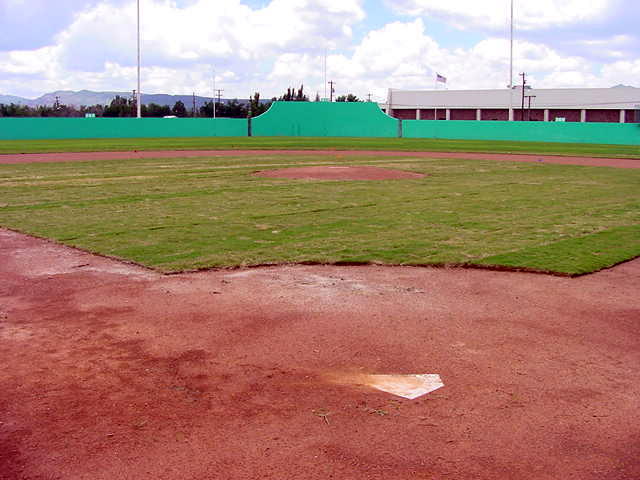
Here was Carl Warwick's view from home to the 430 feet away 20-foot high wall in center field back on June 8, 1957.

Here was Carl Warwick’s view from home to the 430 feet away 20-foot high wall in center field at Kokernot Field in Alpine, Texas back on June 8, 1957.

Found it!

Two days after the “Carl Warwick Hits Longest HR Ever at Kokernot” column, The Pecan Park Eagle found one brief report in the June 9, 1957 edition of the Odessa American that described how the record Warwick home run left the yard within the context of a game played on Saturday, June 8, 1957 between the Fort Bliss Falcons of El Paso and the home club Alpine Cowboys at Kokernot Field in Alpine, Texas:

___________________________________

Fort Bliss Tips Alpine, 10-7

Alpine – (Special) – The Fort Bliss Falcons from El Paso made the home opener for the Alpine Cowboys a dismal one Saturday by defeating the host nine, 10-7.

Fort Bliss overcame a 6-2 deficit with a five-run rally in the sixth and then closed out with a three-run ninth inning.

Jack Shultea was the winner and Jerry Wolff took the loss.

The same clubs play here Sunday at 3 p.m.

Carl Warwick, (the) TCU star playing outfield for Alpine (this summer), hit the longest homer ever blasted out of Kokernot Field. His blow cleared the 20-foot high center field fence, 430 feet from home plate.

Tom Chandler hit  two homers for Alpine and Toby Newton also delivered one for the Cowboys.

…. (Special) – Odessa American, Sunday, June 9, 1957, Page 26.

____________________________________

Watch the streets in Houston this Tuesday, folks. That ice – ain’t so nice.

—————————————————————

01/29/2014: Addendum. – Yes! The Fort Bliss pitcher in that Carl Warwick record home run game was Jack Schultea (spelled with a “c”) of Reagan HS and UH. This morning, the Eagle was able to find a corroborating story from 1958 that shows Houston’s Jack Schultea as a star pitcher for Fort Bliss that following season and another from 1952 that showed him winning the state championship for Reagan HS with a 15-0 record and a finals win over Doyle Stout and Crozier Tech.

Both Schultea and Stout made the 1952 state high school all star team – and Stout also is now the author of the book we mentioned in the first column on this subject, “The Amazing Tale of Mr. Herbert and His Fabulous Alpine Cowboys Baseball Club.”

Small world. Also a reminder of how some early encounters in life sometimes bond two people together by history forever. (See Bobby Thomson/Ralph Branca as a prime example.)

Here’s the copy on the 1958 reference to Jack Schultea:

(1958): “Jack Schultea, pitching ace of the Fort Bliss All Stars, will get the starting call Friday when the Falcons play host to Santa Rita, N.M. at Carpenter Field. Game time is 7:30 p.m.

“Schultea, who has compiled a 3-0 mark and fanned 44 men in 27 innings, returns from leave Friday and is expected to bolster the  team’s attack considerably. Aside from his pitching talents, Schultea is carrying a .600 batting average.

“Having compiled a 6-5 record so far this season, the All Stars only recently bounced back from a double loss to Alpine by edging White Sands Missle Range, 9-8.”

…. El Paso Herald Post, June 25, 1958, Page 32.

______________________
 

To Hades with All Star Games

January 27, 2014
Team Rice: "Do you care who wins this game?" Team Sanders: "No, but I do care about not getting hurt!"

Team Rice: “Do you care who wins this game?”
Team Sanders: “No, but I do care about not getting hurt!”

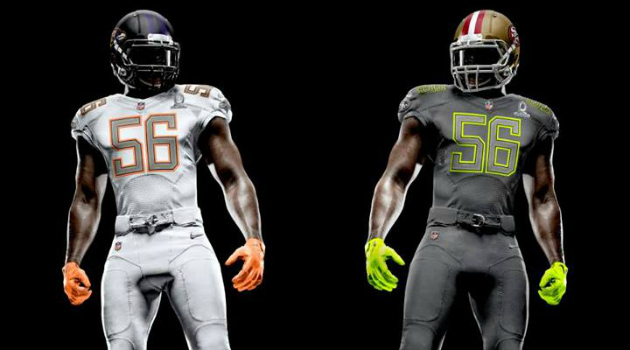
Some of us less enlightened souls were surprised last night to TV surf into the NFL Pro Bowl and find a school recess-like game going on between “Team Rice and “Team Sanders.” The NFL, we learned, had decided to do away with the “AFC vs. NFC” identity of their All Star Game this year due to an apparent lack of fan interest in same.

Huh? Then allow us the stupid question? If nobody’s even interested in “AFC vs. NFC”, why have the boring game in the first place?

Oh! Forgive the stupidity, please! Somehow, the game still makes money on TV – and, this year, it even takes NFL big wigs, rich fan hot-n-tots, and the big TV eye to beautiful Blue Hawaii as an even greater contrast to the miserable site of this year’s Super Bowl next Sunday in freeze-your-asterisk-off Sopranoville, New Jersey.

It’s all about the money. Always. But this is football, a game played by 300 pound behemoths, who can still give each other a career-ending injury under the guise of playing out a friendly ballet of their normally violent war against each other. With all their silly new rules, all designed to re-focus the game on the players, and not the final score, so they say, even the broadcasting shills were pushing the new corporate slogan: “People don’t come to Hawaii to see who wins the game! – Fans come to the game and tune in at home to see the players!”

Oh, really? – It still makes you wonder how many people, including the players, only make the trip as an excuse to go to Hawaii once a year. Would they have as much “fire” for attending the Pro Bowl, if the game were played in Omaha, rather than Honolulu?

As a baseball guy, I do have to give the NFL credit for one thing. – At least, their latest all-star game rules do-over represents something of an effort to treat their contest for what it really is – a meaningless exhibition game where the damage from accidental injury is still self-defeating to the players and teams effected.

Meanwhile, Bud Selig’s Vision of Baseball has carried the MLB All Star Game in a 180 degree direction, making the winner of the MLB recess-game contest the factor that determines home field advantage in their very-important-to-millions-of-us World Series that same year!!!

What??? After all these years, I thought I’d be over it by now, but I’m not!!! How stupid! How distorted! How unfair! When do we get rid of this guy again? Some of us can hardly wait until Bud Selig retires from baseball and goes home to Milwaukee. Hopefully, his sinister activities there will be then forevermore contained to his former business of selling “previously owned” cars at one of those plastic flag, shimmering-light evening lots.

Imagine things for the NFL if they now decide to add the “Selig-Touch” to their own new, improved Pro Bowl format! – Perhaps, the rosters of future Rice-Sanders games can be secretly playing for the AFC and NFC. Once the game is determined, that secret assignation is revealed for the winning team at the post-game stage.

And here’s the benefit to being the team that eventually gets to represent their Pro Bowl winning conference the following season. The very next year, the Pro Bowl-winning conference gets to play the Super Bowl at the home field of their secret conference winner from the previous season.

So, you see? Every time things look that they are as bad as they can get, there’s always something out there that someone can do to make things worse.

I say – “to Hades with All Star Games!” – Just keep the break in baseball and let all the players have some time with their families – and then let the team with the best season record have home field advantage in the World Series.

Have a nice Monday too, Houstonians, and remember – the ice man is coming back upon us Tuesday.


Carl Warwick Hits Longest HR Ever at Kokernot

January 26, 2014
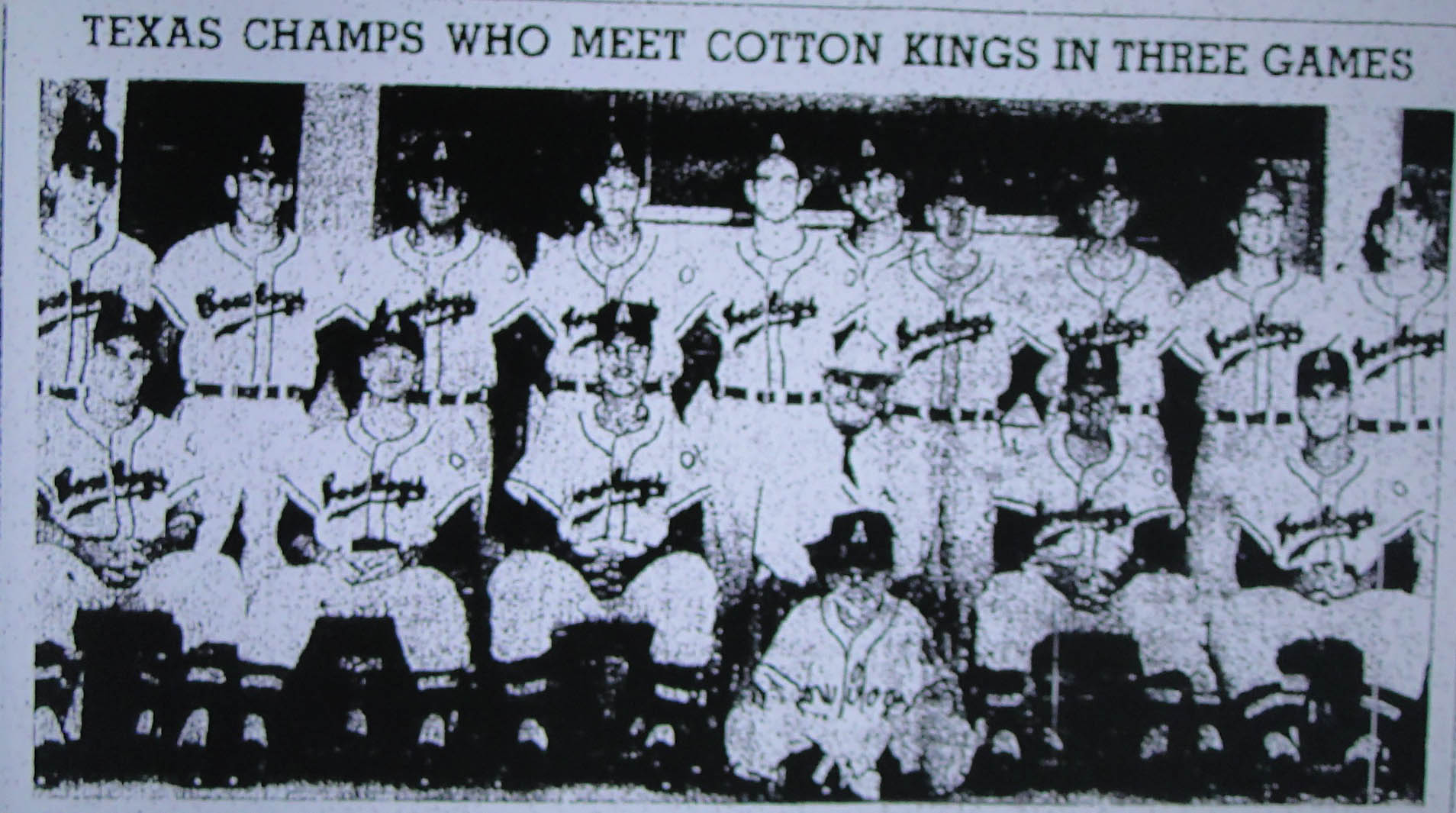
1957 Alpine Cowboys (L>R), Front Row: Pete Embry, Ray Van Cleef, Manager Tom Chandler, Sponsor Herbert L. Kokernot, Coach Chuck Ellis, Carl Warwick, and batboy, squatting, Daryl Mueller. Back Row: Toby Newton, Larry Click, Pete Swain, Nick Herrscher, Gaylord Perry, Butch McCollum, Jim Ward, Bob Bierderman, Ron Debilius, and Jerry Wolff.

1957 Alpine Cowboys (L>R), Front Row: Pete Embry, Ray Van Cleef, Manager Tom Chandler, Sponsor Herbert L. Kokernot, Coach Chuck Ellis, Carl Warwick, and batboy, squatting, Daryl Mueller. Back Row: Toby Newton, Larry Click, Pete Swain, Nick Herrscher, Gaylord Perry, Butch McCollum, Jim Ward, Bob Bierderman, Ron Debilius, and Jerry Wolff.

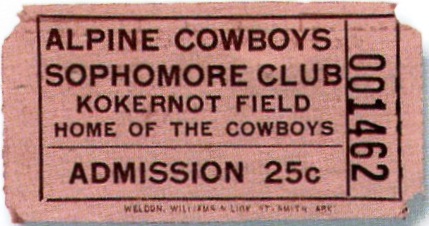
Kokernot Field in Alpine, Texas is like a baseball oasis in the vast range of lonesome doves, arid deserts, and almost always faraway stony mountains that make up the heart and soul of West Texas. Built in 1947 by rancher Herbert Kokernot, Jr. for 1.5 million dollars, it has been the home of of the constantly reincarnating semi-pro to independent league baseball club known as the Alpine Cowboys almost constantly in some form now for something like 68 years and counting. Now under the control of a group ownership, the fate of the Cowboys remains pretty much of a year to year thing, but there seems always to be a spiritual entity present that will not allow the club and what it represents to die.

Kokernot Field also serves as the home venue of the Sul Ross University Lobos collegiate baseball team as well.

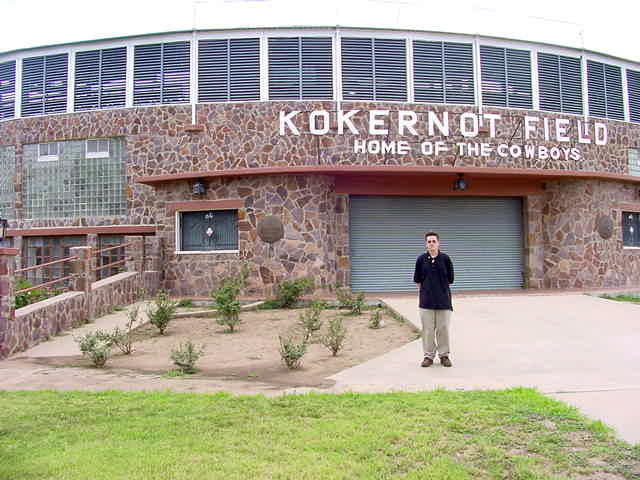
Kokernot Field, Alpine, TX, 2002

Kokernot Field, Alpine, TX, 2002

Anyone who chooses to write a knowledgeable in-depth story of the Kokernot Field experience in one column on a Sunday morning would be kidding themselves and performing a disservice to readers, but anyone with genuine interest can get a good head start on their own. There’s a volume of information available over the Internet, probably starting with this link as well as any other:

http://en.wikipedia.org/wiki/Alpine_Cowboys

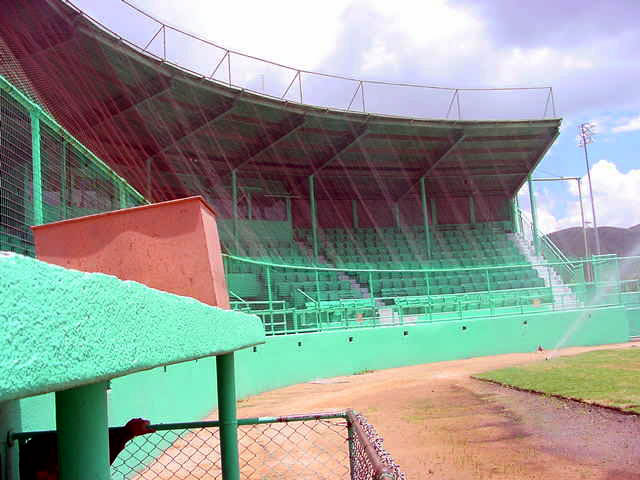
My son Neal and I visited Kokernot Field during the summer of 2002. Neal was considering Sul Ross for his choice of colleges at the time, so we drove out for a site visit at the end of his high school junior year. Kokernot Field was one thing we knew nothing about until we got there, but we were blown away to find this jewel of a park so far removed from our part of the so-called civilized world. It was old and a little used up and neglected by the time we saw it, but it wasn’t hard to imagine how things must have once been. The stadium’s gates and interior were loaded with little extra touches of decor like polished brass baseball plates on the doors, gates, and walls at critical points.

Kokernot Field, 2002.

Kokernot Field, 2002.

Over time, I learned that Mr. Kokernot had brought some great ballplayers through his baseball window in Alpine. Players like Gaylord Perry and Norm Cash both played at Kokernot Field, as did greats like Satchel Paige and Ned Garver on a spring barnstorming tour.

Kokernot Field Grandstands, 2002.

Kokernot Field Grandstands, 2002.

Carl Warwick, later of of the Houston Colt .45’s, also played for the Alpine Cowboys in the summer of 1957. While he was there, future Hall of Famer Gaylord Perry was a teammate. And also while he was there, Warwick reportedly hit the  longest home run in Kokernot Field history:

“TCU outfielder Carl Warwick, playing with the Alpine Cowboys this summer, recently blasted the longest home run in Kokernot Field history – some 430 feet.”

… Words and Musing by Charles Gillespie, Lubbock Morning Avalanche, June 19, 1957, Page 13.

Alpine 08

Wish I could have found the actual game account of that monster shot, but I was unable to pin it down with my normally expansive digital news file account services. Still, Gillespie was a reputable writer from Lubbock. A 430 feet fly ball would probably have cleared most dead center field walls in the big leagues, although the brief event quote does not tell us where Warwick’s big hit left the field of play. Had it been hit to dead center at Minute Maid Park, the ball would still have been six feet shy of departure, but the center fielder would have been required to catch up with it at break-neck speed while running up Tal’s Hill.

Former Colt .45 Carl Warwick and Houston Astros owner Jim Crane, 2013,

Former Colt .45 Carl Warwick and Houston Astros owner Jim Crane, 2013,

Perhaps, someone can remember to ask Carl Warwick about his distance record homer at the Colt .45’s discussion panel that will be conducted this coming summer at the 44th Annual Convention of SABR in Houston. Players rarely forget the details of their greatest hits and plays over time. Nor should they.

Alpine 07—————————————————————–

Above is the title to the book that Mar Wernick sent me about the Alpine Cowboys. I would imagine it is available on Amazon.

Above is the title to the book that Mar Wernick sent me about the Alpine Cowboys. I would imagine it is available on Amazon.

Indians 4 – Browns 3 (19 innings), 7/01/1952

January 25, 2014
Even Satchel Paige couldn't win them all.

Even Satchel Paige couldn’t win them all.

This brief story of a game played between the home club Cleveland Indians and the St. Louis Browns on July 1, 1952 speaks volumes for how differently baseball was played from today with all the specialization and pitch count controls placed on pitchers these days as we head soon into the 2014 season. The only major similarity? The basic rules of the game were the same, except for the DH. There was no AL designated hitter back in 1951, but, as for the time of play, baseball games were even then taking a longer toll on the clock – and without much help from TV commercials. And, oh, yes, the MLB players were not all millionaires back in 1951. Most of the players worked the off-seasons they way most of us today work the whole year. It was, and is,  called “making a living.”

Sports writer John Barrington of the International News Service (INS) described the game this way in a story published on July 2, 1952:

———————————————————————————–

He Falters in 19-Inning Ball Games, Cleveland Beats Browns –

Find Satch-Mo’s Weakness

By John Barrington (INS), El Paso Herald Post, July 2, 1952, Page 28. The law of averages has been around even longer, if possible, than Satchel Paige, and not even the ancient Satch-Mo can flaunt it forever.

Satch’s trouble, it turns out, is that he weakens in 19-inning ball games.

Old Folks pitched ten innings of scoreless relief to knock off Washington in an 18-chapter marathon less than a fortnight ago. But one more inning got him last night at Cleveland. He and the St. Louis Browns lost to the Indians in the 19th 4-3.

The shame of it was that the Browns even scored a run for the super-annuated all-star in the top of the 19th, who had relieved Ned Garver in the 9th. Paige couldn’t hold the advantage. The Indians scored twice in the last half. Pinchhitter Hank Majeski singling home Al Rosen from second with the winning tally.

The four hour and forty-five minute contest tied the major league night game longevity record set last July 17 by the Chicago White Sox and Boston Red Sox. (The time of the game was later corrected to 4 hours and forty-nine minutes as a new American League night game record. See the Baseball Almanac box score for this game below that accompanies this one game presentation.)

Lou Brissie, who went the last ten innings for Cleveland after replacing Bob Feller, was credited with the win – his first of the campaign. Paige’s loss was his third against six victories.

—————————————————————————————-

Baseball Almanac Box Scores:

Cleveland Indians 4 – St. Louis Browns 3.

Game played on Tuesday, July 1, 1952 at Cleveland Stadium
St. Louis Browns ab   r   h rbi
Young 2b 6 1 2 0
Rivera cf 8 0 2 1
Kryhoski 1b 6 1 1 1
Nieman rf 7 0 1 0
Courtney c 8 0 1 0
Delsing lf 8 0 2 1
Michaels 3b 8 0 0 0
DeMaestri ss 2 0 1 0
  Zarilla ph 1 0 0 0
  Marsh ss 4 0 0 0
Garver p 1 0 0 0
  Bearden ph 1 0 1 0
  Dyck pr 0 1 0 0
  Paige p 4 0 0 0
Totals 64 3 11 3
Cleveland Indians ab   r   h rbi
Pope rf 2 0 0 0
  Fridley rf 7 0 1 0
Avila 2b 7 1 2 0
Mitchell lf 8 0 0 0
Rosen 3b 8 1 2 1
Doby cf 4 1 2 0
Boone ss 5 1 1 0
  Combs ss 3 0 0 0
  Majeski ph 1 0 1 1
Simpson 1b 4 0 2 0
Tipton c 3 0 0 0
  McCosky ph 0 0 0 0
  Hegan c 4 0 0 0
Feller p 3 0 0 1
  Reiser ph 1 0 0 0
  Brissie p 3 0 0 0
Totals 63 4 11 3
St. Louis 1 0 0 0 0 0 0 0 1 0 0 0 0 0 0 0 0 0 1 3 11 2
Cleveland 0 2 0 0 0 0 0 0 0 0 0 0 0 0 0 0 0 0 2 4 11 1
  St. Louis Browns IP H R ER BB SO
Garver 8.0 3 2 1 5 2
  Paige  L(6-3) 10.2 8 2 2 8 5
Totals
18.2
11
4
3
13
7
  Cleveland Indians IP H R ER BB SO
Feller 9.0 5 2 2 1 2
  Brissie  W(1-0) 10.0 6 1 1 2 4
Totals
19.0
11
3
3
3
6

E–Young (4), Kryhoski (6), Feller (3).  DP–St. Louis 3. Michaels-Young-Kryhoski, Marsh-Young-Kryhoski, Paige-Marsh, Cleveland 1. Rosen-Avila-Simpson.  2B–Cleveland Rosen 2 (15,off Paige 2); Doby (10,off Paige).  SH–Garver (1,off Feller); Young (4,off Feller); Nieman (3,off Brissie); Brissie (2,off Paige).  IBB–Kryhoski (1,by Feller); McCosky (1,by Paige); Doby 3 (3,by Paige 3); Simpson (5,by Paige).  Team LOB–10.  HBP–Rosen (3,by Paige).  Team–18.  SB–Young (2,2nd base off Feller/Tipton); Simpson (5,2nd base off Garver/Courtney); Avila (10,2nd base off Paige/Courtney); Rosen (4,2nd base off Paige/Courtney).  CS–Avila (5,3rd base by Paige/Courtney).  U-HP–Bill Grieve, 1B–Johnny Stevens, 2B–Jim Honochick, 3B–Bill Summers.  T–4:49.  A–19,885.

Game played on Tuesday, July 1, 1952 at Cleveland Stadium
Baseball Almanac Box Score | Printer Friendly Box Scores

Remembering The Denver Post Tournament

January 24, 2014

houseofdavidvskc

In the first half of the 20th Century, baseball dominated the American sports scene as it likely never will again, given the fact that the roots of other professional games, like football and basketball, as games that took germination in the new hunger of American television for an all-year presence of team competition on TV in prime time for the entire year, also took their own holds on the appetite of American fans for 24/7 sports in the late 1950’s.

Prior to the late 1950’s and the Johnny Unitas-Frank Gifford TV clash in the NFL’s pre-Super Bowl days playoff drama on the home TV screen, baseball pretty much had the whole show to themselves, but they failed to seize the day and grab the opportunity for making their game plentiful to the networks for prime time play, although some of that timidity may have been matched by the media’s initial slowness to envision how much prime time programing they could fill with sports. The media would have to wake up to the “wider world” of sports beyond baseball for that to happen – and they probably had to wait for the invention of a little something called “ESPN” in the 1980’s to see the fulfillment of the envisioned sports program glut that was yet to come, but bound to get here, over time.

Back in the 1920’s and 1930’s, in the hay-day of the all white big leagues and the very successful Negro leagues, there was a little flourishing event out in Colorado that took full advantage of the conditions of those times by presenting an annual championship competition among ten amateur teams in a famous popular activity they called The Denver Post Tournament. Players could not have played for any professional teams over the course of the previous twelve months to qualify as participants and, very importantly, the tourney allowed mixed racial play, welcoming one race and mixed race clubs with open arms. By that policy, the Denver Post Tournament became the largest rare activity in all of baseball to allow mixed racial play and make some of the best baseball available to all fans in one place on an annual basis.

Here’s how Baseball Reference.Com describes the organizational structure of the Denver set-up and how it lists some of the more famous names it attracted as players:

—————————————-

The Denver Post Tournament was organized in the 1920s as a top semipro competition, akin to the National Baseball Congress World Series. Sponsored by the Denver Post, it featured ten teams playing over ten days. Players could not have appeared in Organized Baseball for over a year. In the late 1930s, Negro League players came to raise the level of the competition. Unlike the National Baseball Congress event, the Denver Post tournament is long gone, having peaked in the late 1930s and early 1940s.

Performers in the event included Josh Gibson, Satchel Paige, Rogers Hornsby, Buck Leonard, Cool Papa Bell, Sammy T. Hughes, Leroy Matlock, Schoolboy Griffith, Sammy Bankhead, Pat Patterson, Sammy Hale, Sammy Baugh, Vic Harris, Wild Bill Wright, Ray Brown, Lonnie Goldstein, John Pickett, George Jefferson, Jack Marshall, Felton Snow, Bill Perkins and Buster Haywood.

—————————————-

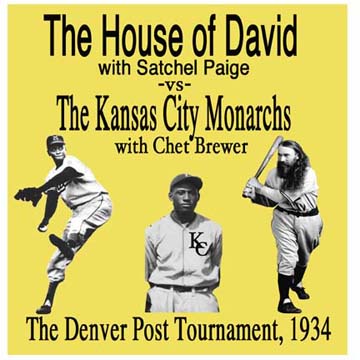
The Denver Post Tournament is often credited as being the baseball stage that gave large crowds of white fans their first good luck at the legendary Negro League pitcher Satchel Paige.  – Old Satch made his Denver event debut in 1934 with the House of David.

Look at that list above. Look at the names of the great players we could see perform, if we could just find that worm hole that leads to the golden light of the good and bad old days.

Have a nice weekend, everybody, and watch out for the icy streets, Houstonians. With eternity waiting for each of us out there as our default arrival spot, there aren’t many places we need to be today that are worth the risk of driving on frozen streets in a town where people don’t drive all that great under normal conditions, anyway.

It’s a better day to stay home and search for time travel worm holes.

Liston KO’s Harris of Cut ‘n Shoot in 1960

January 23, 2014
Sam Houston Coliseum, April 25, 1960: Roy Harris makes a brief upright appearance in the ring with Sonny Liston.

Sam Houston Coliseum, April 25, 1960: Roy Harris makes a brief upright appearance in the ring with Sonny Liston.


Sam Houston Coliseum, April 25, 1960: Roy Harris makes a brief upright appearance in the ring with Sonny Liston.

April 25, 1960 seems like yesterday. The old Pecan Park Eagle had his little world by the tail back then. He had an intelligent, beautiful, funny, and talented musician for a girl friend and he was now just a short hop away from graduation at UH with a degree in psychology that strung minors in sociology and radio/tv communications behind it like a kite tail. Prospects for a mental health scholarship to graduate school were good and there were still places around MacGregor  Park to play some pick up baseball and tennis when one could steal the time.

Stealing time was the key. We didn’t have a big “sign-up-for-life” national student loan program for us dollar-challenged students back in the day. We either went to school slower, or we worked ourselves faster. Work was my choice and, because I had taken on the presidency of my college fraternity as a junior, I was now behind in the hours I needed for graduation. My response was to take a full-time, 40-hours per week job at Rockwell Manufacturing Co. while taking 15 semester hours at night and on Saturdays in the fall and spring of my senior year. I was handling the load OK, but I would still need 12 additional semester hours over the summer to get my degree in August 1960.

It was do-able. You just had to commit to being an automaton for the short time it would take to accomplish these goals. Still, every now and then, one had to break out and do stuff that freed the spirit. And, as it turns out, April 25. 1960. ended up feeling like one of those spirit-freedom nights. As a boxing fan from our early TV days, and as an amateur participant in some of the little backyard boxing matches we staged back in our Pecan Park sandlot days, I was very excited about the big heavyweight match that was set to go from the Sam Houston Coliseum in Houston that night. So was my fraternity brother roommate, Irish Bob Murphy, a redheaded kid from rural Minnesota and an accounting major at UH. Bob worked and went to school like me too. Heavyweight Roy Harris of Cut and Shoot, Texas was going up against the brute force of Sonny Liston from Philadelphia in a 15 rounder. We just had to see it. Or so we thought.

The fight was set for 8:00 PM, I think. Bob and I decided to skip everything we were supposed to be doing that night and get ourselves downtown from the UH area by fight time. Trouble was – we made the pick awfully late. We also knew we could not afford the scalp it would take to get into the live fight at the Coliseum, but we felt we could handle the $5.00 tab to watch the fight on closed circuit TV from the City Auditorium. It was a race against time and the speed limits to get there.

After missing all the preliminary matches, we stood in line for tickets at fight time. “Has it started?” We asked. “It’s just about to start!” The ticket man answered.

Oh, well, so what if we miss the first round, we chattered, as we scurried down the long entry to the viewing area. There’s more to a fight than the first round.

Not so this night.

By the time we came into view of the screen, there was Roy Harris, laying flat on the floor. And there was the referee, raising Sonny Liston’s arm in victory.

“In 2 minutes and 45 seconds …. the winner by a TKO ….. SONNY LISTON!

Bob and I slowed to a strolling pace. – No need to even find a seat. – We had each paid five dollars to see a televised picture of the unconscious Roy Harris and a rarely smiling mean man named Sonny Liston.

Then we grabbed a beer on the way back to the house and found a way to laugh off our impetuosity. Even if we missed the fight, the struggle to get there was a lot more fun than what we would have been having with the books as per usual.

Here’s how the Associated Press reported the fight the next day in the Galveston Tribune:

———————————————————

My ‘Easiest Fight’ Says Liston of Harris Affair

Houston, Tex (AP) – Sonny Liston started with a left and ended with a right and had Roy Harris on the floor four times. It took the big Phi;Philadelphia heavyweight just 2:35 of the first round yo score a technical knockout of the Cut and Shoot schoolteacher before a record Texas crowd and closed circuit TV fans in 10 other cities.

Harris just barely had time to get in three left jabs before he was in trouble.

A left hook was the damaging blow. Harris took an eight-count under the ropes. More of a push than a punch brought another eight count. Then Harris slipped and fell to the canvas and Liston was ready for the kill.

Liston cut loose with a right that caught Harris squarely on the chin.

Referee Jimmy Webb did not take time to start counting. He just raised Liston’s hand.

“It was my easiest fight,” the Philadelphia Negro said after extending his record to 20-1 and recording his 20th knockout.

“He’s a better puncher than Patterson,” said Harris in taking his second defeat of his 30 pro fights.

In 1958 Harris lost a 12th round TKO in a Los Angeles title fight to former heavyweight champion Floyd Patterson.

Harris said he was surprised when Webb stopped the fight.

“But I wasn’t doing anything but getting up and down,” he said as an afterthought.

Both fighters agreed the left hook set up the quick ending.

“Patterson never hit like that,” Harris said.

The Coliseum gate of $70,200 was a Texas record. Liston and Harris each drew about $17,500, plus a cut from income from the closed TV circuit.

… Associated Press, Galveston Tribune, April 26, 1960, Page 7.

————————————————————

If you want to see the fight, you will see more here at this link than Bob Murphy and I did back on April 25, 1960. It’s only 2 minutes and 25 seconds long:

http://www.youtube.com/watch?v=TYA4qt-LBmA


April 8, 1984: Dickie Thon Hit in Face by Pitch

January 22, 2014
April 8, 1984: Dickie Thon lays down and knocked out from a Mike Torrez fast ball that hits him square in the face and changes the course of his baseball future.

April 8, 1984: Dickie Thon is knocked down by a Mike Torrez fast ball that hits him square in the face and changes the course of his baseball future.

It was a pitch that turned the tables on his predicted Hall of Fame future. It was a pitch that cost him his vision in one eye. It was a pitch that resounded like an exploding thud of a rock hurled against a barn door. It was a pitch that could have killed him as surely as the submarine shot from pitcher Carl Mays once killed Ray Chapman in 1920. It was a fastball from Mike Torrez of the Mets that nailed a frozen Dickie Thon of the Astros in the face at the Astrodome in a night game on April 8, 1984.

It was the most shocking and sickening moment that some of us will ever likely have again at any ballpark, anywhere. Unfortunately, the sight and sound of that brief moment of terror plays easily on a repeatable basis in the YouTube sector of my brain anytime I see or hear anything that reminds me of Dickie Thon. He was one of my favorite Astros and, even as I write this declaration, please put me in the column of others who also feel that he would have had a good chance of his play taking him all the way to the Hall of Fame, had he not experienced the pain and damage from that one pitch on April 8, 1984.

Dickie Thon looked dead as he lay on the ground after the pitch. I can’t recall how much time then passed before we got the word that he had survived, for the moment, but no one took anything for granted. And some of us remembered that Ray Chapman had even survived for hours before the swelling in his brain caused new trauma, unstoppable bleeding, and death. Our hope was that advances in the handling of head trauma would be enough to handle Thon more effectively than medicine was able to handle Chapman in 1920.

A Mike Torrez fastball broke the orbital bone around his left eye and ended Thon’s 1984 season only five games beyond Opening Day. He came back in 1985, but continued to have vision and depth-perception issues. Even changed and reduced in ability, he played for ten more seasons with the Astros, Padres, Phillies, Rangers and Brewers. He was never the same candidate for greatness that he had been prior to April 8, 1984.

Life, unfortunately, is often a matter of nanoseconds and percentage inches that make the difference between agony and ecstasy – and the ones that break bad are too hard to heal and too slow to forget.

Here’s the box score from the game that changed everything for Dickie Thon:

Baseball Almanac Box ScoresNew York Mets 3, Houston Astros 1
Game played on Sunday, April 8, 1984 at Astrodome
New York Mets ab   r   h rbi
Backman 2b 3 1 1 0
Oquendo ss 3 0 0 0
Hernandez 1b 3 0 0 0
Foster lf 4 0 1 2
Strawberry rf 4 1 3 0
Wilson cf 4 0 2 0
Brooks 3b 4 0 1 1
Ortiz c 2 0 0 0
  Staub ph 1 0 0 0
  Hodges c 1 0 0 0
Torrez p 2 0 0 0
  Leary p 1 1 1 0
  Sisk p 1 0 1 0
Totals 33 3 10 3
Houston Astros ab   r   h rbi
Doran 2b 5 0 0 0
Puhl rf 4 0 2 0
Thon ss 1 0 0 0
  Reynolds pr,ss 2 1 0 0
Cruz lf 4 0 1 0
Mumphrey cf 4 0 1 1
Knight 1b 4 0 1 0
Garner 3b 3 0 2 0
Ashby c 4 0 0 0
Niekro p 2 0 0 0
  Scott ph 1 0 1 0
  Ruhle p 0 0 0 0
  Smith p 0 0 0 0
  Spilman ph 1 0 0 0
Totals 35 1 8 1
New York 0 0 0 0 0 0 1 2 0 3 10 1
Houston 0 0 0 0 0 0 0 1 0 1 8 0
  New York Mets IP H R ER BB SO
Torrez 5.2 5 0 0 2 3
  Leary  W (1-0) 1.1 1 0 0 0 2
  Sisk  SV (2) 2.0 2 1 0 0 1
Totals
9.0
8
1
0
2
6
  Houston Astros IP H R ER BB SO
Niekro  L (0-2) 7.0 7 1 1 1 3
  Ruhle 0.1 2 2 2 2 0
  Smith 1.2 1 0 0 0 3
Totals
9.0
10
3
3
3
6

E–Backman (1).  DP–Houston 2.  PB–Ashby 2 (2).  2B–New York Strawberry (1,off Niekro), Houston Knight (2,off Torrez).  SH–Oquendo (1,off Ruhle).  IBB–Hernandez (1,by Ruhle).  HBP–Thon (1,by Torrez).  CS–Strawberry (1,2nd base by Niekro/Ashby); Puhl (1,2nd base by Torrez/Ortiz).  SB–Puhl (1,2nd base off Torrez/Ortiz).  HBP–Torrez (1,Thon).  IBB–Ruhle (1,Hernandez).  T–2:37.  A–10,625.

Game played on Sunday, April 8, 1984 at Astrodome
Baseball Almanac Box Score | Printer Friendly Box Scores

A Native Houstonian MLB Nine

January 21, 2014
"What do you think, Roy? Do you 'spose these boys from Houston will have much chance against that gang of natives from New York City???"

“What do ya’ think, Roy? Ya’  ‘spose them boys from Houston will have much chance ‘ginst that gang of fellers born up in New York City???”

Here’s a pretty salty starting lineup for a native Houstonian starting nine. Certainly other lineups and full rosters are possible, but these guys alone could have handled all comers on the diamonds of Mason Park on 75th in the Houston East End any hot mid-July Sunday afternoon. All they have in common is the shared fact of birth within the Houston city limits. This particular lineup is also a re-publication we came up with together as writers and readers at The Pecan Park Eagle quite some time ago in the past. With spring training coming upon us in a very short while, it’s a fun time again to think of the old home born and bred.

Which official city is most capable of producing the best MLB club based upon using only players born within the city limits of each club’s host city? I don’t have anything but a guess here. I’m guessing New York City or Los Angeles are the most logical guesses.

At any rate, here again is the Native Houstonian nine-man line up, by birth date and field position:

1) Michael Bourn (12/27/1982) CF

2) Curt Flood (01/18/1938) LF

3) Carl Crawford (08/05/1981) RF

4) James Loney (05/07/1984) 1B

5) Chuck Knoblauch (07/07/1968) 2B

6) Kelly Gruber (02/26/1962) 3B *

7) Craig Reynolds (12/27/1952) SS

8) Frank Mancuso (05/18/1918) C

9) George “Red” Munger (10/04/1918) P

Feel free to offer suggestions for improvement to the Houston lineup and offer your guesses as to which cities would probably fare best using only native-born players.

An Imperfect Astrodome Memory

January 20, 2014
Long Ago, But Not Too Farwa

Long Ago, But Not Too Faraway

In the late summer of 1965, I was back in Houston from graduate school and a year of employment at Tulane University in New Orleans. It was the first year of the Astrodome and my mom and teenage sister in Beeville had asked me take her to Houston to see the now famously remembered Beatles concert at the old Sam Houston Coliseum near City Hall downtown. Neither Mom or Margery were baseball fans, but, in those days, everybody wanted to see the inside view of the brand new Astrodome, even if they didn’t know the difference between a home run and a homestead exemption.

Since the Beatles Houston concert was scheduled for my sister’s actual 16th birthday, August 19, 1965, I picked up tickets for a night game between the Pittsburgh Pirates and Houston Astros scheduled for Tuesday, August 17, 1965. We also bought tickets for our cousins, big baseball fans, Jim and Mel Hunt of Houston.

Our seats were located in the left center field bleachers. Vernon Law was the starter for Pittsburgh; Turk Farrell went for Houston. Other luminaries included Hall of Famers Roberto Clemente, Willie Stargell, and Bill Mazeroski, plus future Astros manager and then current center fielder Bill Virdon  of the Pirates. Future Hall of Famer Joe Morgan, slugging Jimmy Wynn, and wise-hittting Rusty Staub paced the Astros.

It’s amazing how the memory can play long distance tricks on the truth. For years, I remembered this game as on in which the Pirates took an early 8-0 into the bottom of the 9th, when the Astros scored 7 before someone hit a bases-loaded double play, leaving Houston with a 8-7 painful loss.

Memory did not serve. Pittsburgh actually scored 4 in the 2nd, 2 in the 3rd, and 2 in the 5th for an 8-0 lead though the half game point. Houston got their first run in the bottom of 5th, added 3 more in the 7th, and then capped off their late failed rally with 2 final runs in the 9th. Law (W, 14-9) was the celebrant pitcher; Farrell (L, 8-8) bit hard on the loss.

Bob Bailey and Gene Alley both went 3 for 4 to lead the Pirates in hits, but Don Clendenon’s 2 for 4 day with a homer supplied the punch. Joe Morgan went 4 for 5 for the Astros, but Rusty Staub/s 2 for 4 day included a HR and 3 RBI,

Baseball Almanac Box ScoresPittsburgh Pirates 8, Houston Astros 6
Game played on Tuesday, August 17, 1965 at Astrodome
Pittsburgh Pirates ab   r   h rbi
Bailey 3b 4 0 3 2
Virdon cf 4 0 1 0
Clemente rf 3 1 1 0
  Mota rf 1 0 0 0
Stargell lf 5 1 1 0
Clendenon 1b 4 3 2 2
Mazeroski 2b 5 1 1 0
Pagliaroni c 3 1 0 0
Alley ss 4 1 3 2
Law p 4 0 0 1
  Carpin p 0 0 0 0
  McBean p 0 0 0 0
Totals 37 8 12 7
Houston Astros ab   r   h rbi
Maye lf 5 1 1 0
Morgan 2b 5 3 4 0
Staub rf 3 2 3 3
Gentile 1b 2 0 0 1
  Thomas 1b 1 0 1 1
Wynn cf 4 0 0 0
Brand 3b 5 0 1 0
Lillis ss 5 0 1 0
Adlesh c 5 0 2 1
Farrell p 1 0 1 0
  Giusti p 1 0 0 0
  Cuellar p 1 0 0 0
  Gaines ph 1 0 1 0
  Owens p 0 0 0 0
  Kasko ph 1 0 0 0
Totals 40 6 15 6
Pittsburgh 0 4 2 0 2 0 0 0 0 8 12 0
Houston 0 0 0 0 1 0 3 0 2 6 15 0
  Pittsburgh Pirates IP H R ER BB SO
Law  W (14-9) 7.2 12 4 4 2 2
  Carpin 0.1 1 2 2 1 0
  McBean  SV (14) 1.0 2 0 0 1 0
Totals
9.0
15
6
6
4
2
  Houston Astros IP H R ER BB SO
Farrell  L (8-8) 2.1 6 6 6 1 0
  Giusti 2.2 3 2 2 3 3
  Cuellar 3.0 3 0 0 0 0
  Owens 1.0 0 0 0 0 0
Totals
9.0
12
8
8
4
3

E–None.  DP–Pittsburgh 1, Houston 1.  2B–Pittsburgh Stargell (18,off Farrell); Clendenon (24,off Farrell), Houston Staub 2 (11,off Law 2); Brand (6,off Law).  3B–Pittsburgh Alley (4,off Cuellar).  HR–Pittsburgh Clendenon (12,3rd inning off Farrell 1 on, 1 out), Houston Staub (7,7th inning off Law 2 on, 0 out).  SH–Virdon (6,off Cuellar).  HBP–Clemente (3,by Cuellar).  IBB–Pagliaroni (11,by Farrell).  Team LOB–8.  SF–Gentile (1,off Law).  Team–12.  SB–Morgan (17,2nd base off Law/Pagliaroni).  WP–Carpin (2), Giusti (8).  HBP–Cuellar (1,Clemente).  IBB–Farrell (7,Pagliaroni).  U-HP–Ken Burkhart, 1B–Lee Weyer, 2B–John Kibler, 3B–Frank Secory.  T–2:41.  A–24,863.

Game played on Tuesday, August 17, 1965 at Astrodome
Baseball Almanac Box Score | Printer Friendly Box Scores

Mom and I did not have tickets for the Beatles Concert, so, two days after the Astrodome trip, she and I dropped my sister off at the event while we drove on to the Majestic Theater and watched Woody Allen and Peter Sellers in the movie “What’s New, Pussycat?” And that’s the way it was 49 years ago this coming summer. The world has changed a lot since then, hasn’t it?

Bill Gilbert: Analyzing the 2014 HOF Vote

January 17, 2014
Bill Gilbert is a vetran member of SABR and a regular contributing writer for The Pecan Park Eagle,

Bill Gilbert is a veteran member of SABR and a regular contributing writer at The Pecan Park Eagle,

Analyzing the 2014 Hall of Fame Vote

By Bill Gilbert

The Baseball Writers Association of America elected 3 players to the Hall of Fame this year, Greg Maddux (97.2%), Tom Glavine (91.9%) and Frank Thomas (83.7%). It was the largest class since 1999 when Nolan Ryan, George Brett and Robin Yount were elected. In addition, a veterans committee earlier elected managers, Bobby Cox, Tony Larussa and Joe Torre. Thus, induction weekend in July will feature six inductees, all of them still living. Last year there were only three inductees, all long deceased, elected by a veterans committee.

Craig Biggio received 74.8% of the vote, falling 2 votes short of the 75.0% required for election. He should make it easily next year, even with another strong incoming class. Biggio and Mike Piazza were the only 2 ballot holdovers that received more votes this year than last. The other 15 holdovers received fewer votes and some suffered significant declines. Jack Morris fell from 67.7% to 61.5% in his 15th and final year on the ballot. Rafael Palmeiro fell from 8.8% to 4.4%, below the 5.0% required to remain on the ballot. Four players recorded double-digit percentage declines – Lee Smith (-17.9%), Alan Trammel (-12.8%), Larry Walker (-11.4%) and Edgar Martinez (-10.7%). All will remain on the ballot but their chances for future election by the writers are highly unlikely.

Three players who many analysts believe should be in the Hall suffered surprising declines and will have some catching up to do. Jeff Bagwell fell from 59.6% to 54.3%, Tim Raines from 52.2% to 46.1% and Curt Schilling from 38.8% to 29.2%.

The voters are still largely negative with regards to players associated with Performance Enhancing Drugs (PEDs). Roger Clemens and Barry Bonds lost ground in their second year on the ballot and vote totals continued to decline for Mark McGwire, Sammy Sosa and Palmeiro.

One encouraging aspect this year was the increase in the average number of votes per ballot. Last year 569 writers voted for an average of 6.6 candidates. This year 571 writers voted for an average of 8.4 candidates. This will have to continue with a ballot that is getting overcrowded. The ballot next year is another strong one with candidates like Randy Johnson, Pedro Martinez, John Smoltz and Gary Sheffield.

Five ballot newcomers received enough votes to remain on the ballot, the three who were elected plus Mike Mussina, (20.3%) and Jeff Kent (15.2%).

Following is a list of candidates that received votes in the election this year. For the holdovers, vote totals for last year are also shown.

Players Ballot Years 2014 Votes 2014 % 2013 Votes 2013 % Vote Diff. Vote % Diff
Greg Maddux 1 555 97.2        
Tom Glavine 1 525 91.9        
Frank Thomas 1 478 83.7        
Craig Biggio 2 427 74.8 388 68.2 +39 +6.6
Mike Piazza 2 355 62.2 329 57.8 +26 *4.4
Jack Morris 15 351 61.5 385 67.7 -34 -6.2
Jeff Bagwell 4 310 54.3 339 59.6 -29 -5.3
Tim Raines 7 263 46.1 297 52.2 -34 -6.1
Roger Clemens 2 202 35.4 214 37.6 -12 -2.2
Barry Bonds 2 198 34.7 206 36.2 -8 -1.5
Lee Smith 12 171 29.9 272 47.8 -101 -17.9
Curt Schilling 2 167 29.2 221 38.8 -54 -9.6
Edgar Martinez 5 144 25.2 204 35.9 -60 -10.7
Alan Trammell 13 119 20.8 191 33.6 -28 -12.8
Mike Mussina 1 116 20.3        
Jeff     Kent 1 87 15.2        
Fred McGriff 5 67 11.7 118 20.7 -51 -9.0
Mark McGwire8 8 63 11.0 96 16.9 -33 -5.9
Larry Walker 4 58 10.2 123 21.6 -65 -11.4
Don  Mattingly 5 47 8.2 75 13.2 -28 -5.0
Sammy Sosa 2 41 7.2 71 12.5 -30 -5.3
Missed Req. 5% All Below Now Out Of  New BBWAA Votes and Moved to Vet Com View
Rafael Palmeiro 4 25 4.4 50 8.8 -25 -4.4
Moises Alou 1 6 1.1        
Hideo Nomo 1 6 1.1        
Luis Gonzalez 1 5 0.9        
Eric Gagne 1 2 0.4        
J.T.    Snow 1 2 0.4        
Armando Beniquez 1 1 0.2        
Jacque Jones 1 1 0.2        

The following six players were on the ballot but did not receive any votes: Sean Casey, Ray Durham, Todd Jones, Paul LoDuca, Richie Sexson and Mike Timlin.

The continued overcrowding of the ballot has prompted some complaints and suggestions for changing the voting procedure. The Hall of Fame is responsible for determining how the voting should be conducted. The Baseball Writers Association of America (BBWAA) has been selected as the voting group since the beginning. Writers must be members of the BBWAA for 10 years before they can vote. One suggestion that is being actively discussed between the writers and the Hall is that writers can be allowed to vote for more than 10 players. Other ideas have been put forth such as expanding the voting population to include internet baseball writers and analysts, trimming the ranks of voters who no longer write actively, reducing the number of years that players remain on the ballot and reducing the time (from 10 years) that writers must wait before they can vote.

None of these changes are expected to be made in the near future. The overcrowding problem may eventually take care of itself if writers continue to vote for eight or more players each year.

Bill Gilbert
1/16/2014