Bruiser Bob Bobinski

February 8, 2014
Goliath of the Beevile Bees used this bat in 3 seasons with the Beevilles Bees from 1906-1907.

Goliath of the Beevile Bees used this bat in 3 seasons with the Beevilles Bees from 1906-1907.

Bruiser Bob Bobinski was a basher – tough as Texas clay,

He loved to crush that little ball – and all who came to play,

A game of base against him – and his club down Beeville way.


They called themselves the Bees, you see,

For the sting they brought – to bruising,

They were the killer kind, – in glee – no harbor there for losing,


They kept the mainsail tight and hard – til victory was cruising.


Bobinski had a facile mind – as slugging fiend and mentor,

To all the younger swarming Bees – he was their godly sender,

And obstacles were little more – than fire’s fast building tinder. 


But then one day – from Goliad – a man came forth with offers,

A chance to swiftly fill or drain – their proudly building coffers,

A way to put to sleep – at last – those noisy neighbor scoffers.


Bruiser Bob just winked and glowed – he found it quite amusing


But Bruiser Bob did listen – to the story of this madman,

This smiling Jack from Goliad – was truly quite the sad man,

And now he offered lunacy – in ways that coaxed, “Eh Gad, Man!”


It seems that several weeks ago – old Jack had nursed a beanstalk,

That quickly climbed 2,ooo feet – as Goliad’s only street talk,

But growing as it did – one day – its future took a moonwalk,


And vanished all the way – up there – no need for false excusing.


Shortly after all seemed done,

Here came the absolute real fun,

A giant shinned his way to earth,

And boomed down hard his weighty girth.


And he “HO HO Hoed” his way from there,

To the ball field out – at the county fair.

At 20 feet tall – with a great big stick,

The giant joined the Goliad Hicks.


And quickly – fast launching – six balls – to swift flight,

He pummeled the far off Gulf – and long into the night,

As it took just that long – for those he hit out of sight,

To make full descents from their stratospheric height.


And now Jack just wanted – the wings of the Bees,

He smiled in obsequy – as if he could please,

The people of Beeville – and Goliad too,

The young Bees in earshot – suspected the screw.


But Bobinski signed up – to take the game deal,

And now it all rode – on the game outcome wheel,

With one big exception – to the Smiling Jack schpiel:

The giant could choose – his team of appeal.


Now Jack was so sure – of the giant’s allure,

That he signed on the line – to that team choice clause – for sure,

Bob winked as he signed – like he’d just found the cure,

For every addiction – but gambling – so pure.


The younger Bees all worried – how the giant might decide,

They held the fear that a Hick choice – would their money soon divide,

But Bob quickly calmed them down – “I’ve something to confide:

This isn’t so bad – that I’d really risk – our woeful hide – or even our baleful pride.”


“Six weeks back – I wrote to my brother – Goliath is his name,

I asked him to come here fast – over slow – but get here all the same.

He said that he would be here – get here just as soon as he could,

But he had to first find a farmer – and fool him – really good.”


“The rest of this big story – you mostly all know well,

Goliath found old Smiling Jack – and sized him up real clear,

Jack didn’t know beans about farming beans,

Or ‘Jack’ on catalytic growth – from our sweet-shine homemade beer.”


“Don’t worry about the little things – Goliath’s now here with us,

And once we dust off Goliad – and leave old Jack to cuss,

We’ll rumble round this state real hard – and really have some fun,

‘Cause when it comes to wins and dough – we’ve only just begun.”


What If, Lance Berkman….?

February 7, 2014
Lance Berkman: One of the All Time Astro Greats.

Lance Berkman: One of the All Time Astro Greats.

What if Lance Berkman had been able to remain in the big leagues for another five years (2014-18) at the same level he played during his five highest past batting average seasons? Would he have then done enough to have elevated his Hall of Fame estimations in the eyes of the writers’ voting group?

In my mind there’s hardly any doubt about it, in spite of the improbability that any 38-year old veteran could suddenly rip off a string of five amazing seasons at this point, given the damage that already has occurred to Berkman from aging and injury. This exercise is more of a suggestion that, if Berkman been able to sustain a slightly higher level of production and been in better shape to have avoided certain injuries over the course of his career, he might have achieved the HOF induction that now most probably eludes him forever. Lance Berkman had a good career, but not a great one.

First of all, take a look at the career batting stats for Lance Berkman at Baseball Reference.Com. Note that he batted only .293 with 366 HR, 1146 runs, and 1234 RBI over his 15 seasons in the big leagues.

http://www.baseball-reference.com/players/b/berkmla01.shtml

Now let’s take a look at what at what happens to Berkman’s career stats if he could have played those five extra seasons and achieved the identical stat outcomes that he actually produced in his five actual best seasons of 2001, 2004, 2006, 2008, and 2011. For brevity’s sake here, our first table only shows the at bats, runs, hits, rbi, and home runs for each of those seasons by Berkman and then totals what they would have added to his actual accomplishments:

The Career of Lance Berkman with the Theoretically Repeated Addition of His 5 Best Seasons

The table simply shows what could be added to Berkman’s totals from him repeating the stats of his five best seasons over the next five years.

Note: If that level of play could have been added, or interspersed over the course of a career that went to 20 seasons, Lance Berkman would have batted an even .300 and hit a monster total of 535 home runs.

ADD SEASON

TIMES AT BAT

RUNS

HITS

RBI

HR

BATTING AVERAGE

2001

577

110

191

126

34

.331

2004

544

104

172

106

30

.316

2006

536

95

169

136

45

.315

2008

554

114

173

106

29

.312

2011

488

90

147

94

31

.301

5-YR ADD TOTAL

2699

513

852

568

169

.316

+ 15-YR  CAREER

6491

1146

1905

1234

366

.293

PROJECT 20-YEAR TOTAL

9190

1659

2757

1802

535

.300

Of course, we don’t really live in a world of “what might have been,” even though our minds sometimes get trapped there. Just ask Ralph Branca, Bill Buckner, and so many others, but it is kind of fun to pick a part the question “what separates the Hall of Famers from the larger group of really good ballplayers” and to then come away with the thought that maybe the really good ballplayers fell short from not having their five best seasons more often.

No matter what, Lance Berkman will forever remain one of the best and most liked Astros of all time.

Have a warm inside Friday somewhere, everyone.

Jackie Price: Fatal Sadness of a Baseball Clown

February 5, 2014
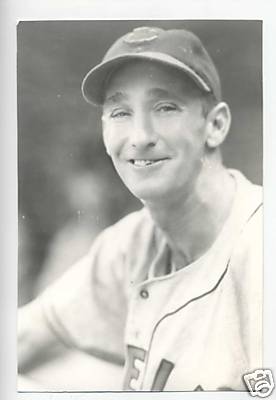
Jackie Price A talented man met a sad end.

Jackie Price
A talented man met a sad end.

My first literary exposure to depression as the infamous destroyer of life occurred in my junior year English class at St. Thomas High School. That was also  the year I recall Father Sheedy telling us, “Don’t simply listen to the measured rhyme and meter of a poem. Listen first for the life message it contains.” With that kind of aim in mind, Father Sheedy then introduced us to Richard Cory:

Richard Cory

By Edwin Arlington Robinson

Whenever Richard Cory went down town,

We people on the pavement looked at him:

He was a gentleman from sole to crown,

Clean favored, and imperially slim.


And he was always quietly arrayed,

And he was always human when he talked;

But still he fluttered pulses when he said,

“Good-morning,” and he glittered when he walked.


And he was richyes, richer than a king

And admirably schooled in every grace:

In fine, we thought that he was everything

To make us wish that we were in his place.


So on we worked, and waited for the light,

And went without the meat, and cursed the bread;

And Richard Cory, one calm summer night,

Went home and put a bullet through his head.


And the beat goes on. Last weekend, Academy Award winning actor Philip Seymour Hoffman was sadly the latest portrayal of Richard Cory, snuffing out his own life, however, unintentionally, with a heroin syringe full of deadly poison. And please, never let those of us in the baseball community ever forget people  like Don Wilson, Ken Caminiti, and Willard Hershberger of the 1940 Cincinnati Reds. They were all Richard Cory at the end of things. Drugs and alcohol may have provided the fatal bullet, but depression was the gun that fired it in the first place.

 Jackie Price was an extraordinary athlete. As a 33-year old shortstop, he went only 3 singles for 13 times at bat for the 1946 Cleveland Indians. He never walked, but he also never struck out. His ability to coordinate his body and get the bat on the ball were too uncanny for the usually handful of “K”s by a rookie breaking in to the bigs. Price retired from active play after 1946, but soon moved into a new career as a performer of incredible baseball tricks in pre-game shows at baseball parks all over the country.

Price could hit a pitched ball to the outfield while hanging upside down by his heels at home plate. He could simultaneously throw hard pitched balls to three different men at three different spots on the field. And he could chase fly balls in a Jeep that he was driving and catch them on the move in his glove as smoothly as a DiMaggio. I saw his whole act at Buff Stadium in Houston, sometime around the 1950 period, and I was just blown away by all the great athletic things that Jackie Price could do.

Price’s bravest act? He would play catcher to a pitcher throwing fast balls and curves, but he would make his catches with his back turned to the pitcher – and bent over forward so that his head and glove reappeared upside down between his own legs for the act of catching the ball.

WOW! – I could not find Jackie Price’s old act on YouTube, but they show a full old movie short of what he did on Turner Classic Movies, once in a while, usually in the time leading up to the start of baseball season. You really have to see it to believe it.

By the late 1950s, Price was pretty much washed up as America drifted into becoming a nation that stayed home to watch television more and seemed to care less about going to the ballpark and watching a guy chase fly balls in a jeep. If only cell phones had been around back then. I would have loved watching the jeep chase of fly balls with Price handling a conference call at the same time.

The word is that Jackie Price battled depression for several years. Then, one day, on October 2, 1967, at age 54, he simply ended it all, hanging himself in his San Francisco home.

Unfortunately, people too often ignore clinical depression, mistaking it for the normal down mood cycle that e all experience to some degree, until the day comes that mood deflation hatches this erroneous, but compelling thought or  feeling: “Things are horrible and they are never going to get better. Life is a bottomless, endless pit of pain and there’s only one thing that can change it – End your own life.”

One only has to be in that state of mind for as long as it takes to Load and fire a gun; hang and string a rope; or swallow a whole bottle of rat poison.

Overcoming depression is not a matter of will power. It is a serious biochemical imbalance that may or may not be linked to previous emotional trauma. It may require a combination of medication, counseling, and life style change to achieve the goal of successful recovery. Anyone whose only strategy is privately talking themselves out of suicide when the urge to leave life strikes is simply lining up to join the long line of Richard Corys that have  gone before them.

If you think you may be clinically depressed, please talk to your doctor, or someone objective you trust before it’s too late.


Historical Seed for Spring Training Fever

February 4, 2014
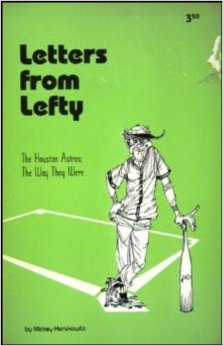
"Letters from Lefty" By Mickey Herskowitz 1966

“Letters from Lefty”
                             Mickey Herskowitz                                      1966

On February 26, 1962, in Apache Junction, Arizona, the Houston Colt .45’s opened their spring training camp as a big league baseball club with Harry Craft holding forth as their first manager. As one of the first two expansion clubs in National League history, the Colts and their newbie brethren, the New York Mets, got down to cases that day to start the process of sorting out their best variably acquired parts and to assess where they stood as a team on their fundamentals of winning baseball.

It was an atmosphere that some writers of the time described as looking more like the set for the then popular “Gunsmoke” television western than it did a major league spring camp, although, we also understand that the place was a little too short on saloons and female companionship for the single players to qualify as “the funnest town in the west.”

We also have long ago read that some players, like pitcher Turk Farrell, did use some of the off time using a six-gun to improve his proficiency in shooting rattlesnakes out on the surrounding desert. Apache Junction was also the place that gave birth to Mickey Herskowitz’s wonderful fictional Houston player “Lefty”, whose “Letters from Lefty” still live on as the great written comic narrative on what spring training is like for the Average Joe player. These began as news column reports for the Houston Post before finally coming together as a book in 1966. They are one of Mickey’s funniest works.

Sometimes, when young men are single, healthy, and looking for a good time, being buried in the arid mountain deserts for six weeks, with only beer and the repeating tale from locals about the Lost Dutchman and his long hidden gold mine just aren’t enough solace to keep the bright lights of the city from looking better than even memory recalls.

Here’s a brief account of the very first full squad practice day in Houston MLB spring training history. It’s still enough to make you hear the crack of the bat against the ball’s hide and the thump of the glove when the ball gets thrown in from the outfield – and just want to be  there to take it all in with developing visions of hope that may never be realized beyond the intoxication that is the spring.

Play ball. Nobody gets mathematically eliminated or losses the World Series in the spring. – Not even in an end of the earth place like Apache Junction, Arizona.

____________________

Craft Likes the Way .45s Working Out

United Press International

Apache Junction, Ariz., Feb. 27. – Manager Harry Craft expressed satisfaction with the condition of his Colt .45 squad that assembled full strength for the first time yesterday.

“Everybody seems to have come to camp pretty close to playing weight,” Craft said, “and that shows they’re serious about the opportunity to play.”

The regulars got in a long batting drill despite cold weather that caused Craft to cut the afternoon workout short. The squad was split into two groups for morning and afternoon work.

Von McDaniel, former “Mr. Wonderful” of the St. Louis Cardinals during his pitching days but now  a third base candidate with the Colts, hit two successive balls out of the park in batting  practice.

Catcher Hal Smith, purchased from Pittsburgh in the National League pool, was elected player representative. At  least for the spring training period. Bobby Shantz was named alternate.

…. El Paso Herald Post, February 27, 1962, Page 41.

____________________

Bill Gilbert: Most Productive Offensive Players in 2013

February 3, 2014
Bill Gilbert is a vetran member of SABR and a regular contributing writer for The Pecan Park Eagle,

Bill Gilbert is a vetran member of SABR and a regular contributing writer for The Pecan Park Eagle,

Who Were the Most Productive Offensive Players in 2013?

By Bill Gilbert

Numerous methods have been devised to measure offensive performance. The most common are batting average, on-base percentage and slugging average. Since none of these averages provides a complete picture by itself, a more comprehensive measure of offensive performance is useful. Such a measure would include the following elements:

1. The ability to get on base.

2. The ability to hit with power.

3. The ability to add value through baserunning.

The first two elements are measured by on-base percentage and slugging average. A measure of offensive performance, which encompasses both as well as baserunning achievements, is Bases per Plate Appearance (BPA). This measure accounts for the net bases accumulated by a player per plate appearance. It is calculated as follows:

BPA = (TB + BB + HB + SB – CS – GIDP) / (AB + BB + HB + SF)

Where: BPA = Bases per Plate Appearance

TB = Total Bases

BB = Bases on Balls

HB = Hit by Pitch

SB = Stolen Bases

CS = Caught Stealing

GIDP = Grounded into Double Plays

AB = At Bats

SF = Sacrifice Flies

The numerator accounts for all of the bases accumulated by a player, reduced by the number of times he is caught stealing or erases another runner by grounding into a double play. The denominator accounts for the plate appearances when the player is trying to generate bases for himself. Sacrifice hits are not included as plate appearances, since they represent the successful execution of the batter’s attempts to advance another runner.

Major league BPA for the past fifteen years are shown below along with the number of players with BPA over .550 and .600:

Year 1999 2000 2001 2002 2003 2004 2005 2006 2007 2008 2009 2010 2011 2012 2013

BPA .479 .481 .468 .457 .461 .468 .456 .470 .463 .458 .461 .446 .442 .447 .440

.550 50 50 46 39 42 33 34 46 34 41 42 19 25 12 14

.600 29 30 26 17 15 18 13 14 15 11 16 7 7 5 3

Offensive production peaked in 2000 before declining in the early years of this century. BPA in the years 2010-2013 has been the lowest of any of the last 15 years. In the 1990s, there were 14 individual .700 BPA seasons. In the eight year period from 2000 to 2007, there were 18. The highest BPA in the 1990s was recorded by Mark McGwire in 1998 (.799). Barry Bonds shattered that with .907 in 2001, the highest figure ever recorded, topping Babe Ruth’s best two years (1920 and 1921). Bonds followed that with .869 in 2002, .818 in 2003 and .882 in 2004. There have not been any hitters with a BPA of .700 since 2007. The last player to make it was Alex Rodriguez (.702) in 2007. Surprisingly, Albert Pujols has not had a .700 BPA in his thirteen seasons.

The .700 BPA seasons in 2000-2013 are listed below:

 Player Team Year BPA

Barry Bonds San Francisco 2001 .907

Barry Bonds San Francisco 2004 .882

Barry Bonds San Francisco 2002 .869

Barry Bonds San Francisco 2003 .818

Sammy Sosa Chicago Cubs 2001 .758

Barry Bonds San Francisco 2000 .745

Jim Thome Cleveland 2002 .728

Manny Ramirez Cleveland 2000 .726

Todd Helton Colorado 2000 .720

Luis Gonzalez Arizona 2001 .713

Todd Helton Colorado 2001 .709

Carlos Delgado Toronto 2000 .707

Larry Walker Colorado 2001 .707

Jason Giambi Oakland 2000 .706

Travis Hafner Cleveland 2006 .703

Alex Rodriguez NY Yankees 2007 .702

Jason Giambi Oakland 2001 .700

Ryan Howard Philadelphia 2006 .700

The yearly leaders since 1992 are as follows:

1992 Bonds .734 1993 Bonds .740 1994 Bagwell .768

1995 Belle .692 1996 McGwire .765 1997 Walker .770

1998 McGwire .799 1999 McGwire .735 2000 Bonds .745

2001 Bonds .907 2002 Bonds .869 2003 Bonds .818

2004 Bonds .882 2005 D. Lee .699 2006 Hafner .703

2007 A. Rodriguez .702 2008 Pujols .685 2009 Pujols .696

2010 Bautista .671 2011 Bautista .681 2012 Trout .665

2013 C. Davis .670

The benchmark for an outstanding individual season is .600. Following is a list of only 3 players with enough plate appearances to qualify for the batting title and with a BPA of .600 in 2013. The list is topped by Chris Davis of Baltimore replacing Mike Trout who led in 2012.

Bases per Plate Appearance (BPA) of .600+ in 2013

————————————————-

No. of 2013 2012 .600+

Player BPA BPA LG Seasons Comments ____________

1. Chris Davis .670 .521 A 1 Breakout season with 53 home runs.

2. Miguel Cabrera .663 .604 A 5 AL MVP in 2012 and 2013.

3. Mike Trout .649 .665 A 2 Finished first in 2012.

Three other players had a BPA over .600 in 2012 but fell short in 2013.

No. of 2013 2012 .600+

Player BPA BPA LG Seasons Comments

1 Ryan Braun .514 .651 N 2 Will he return to 2012 form?

2 Edwin Encarnacion .572 .623 A 1 Another pretty good year.

3 Josh Hamilton .453 .602 A 2 Major disappointment.

Four players have a BPA over .600 for their careers:

2013 Career

Player Age BPA BPA Comments

————- — —- —- —————————

Mike Trout 21 .649 .638 Quick rise to the top.

Albert Pujols 33 .447 .622 Needs a big comeback in 2014.

Alex Rodriguez 37 .486 .609 Suspended for 2014.

Ryan Braun 29 .514 .605 Once bright career in jeopardy.

Another list of interest is of players with a BPA of over .600 in 2013 who did not have enough plate appearances (PA) to qualify for the batting title.

Player Age BPA PA Comments

————— — —- — —————————

Hanley Ramirez 29 .676 336 Would be on top with more playing time.

Carlos Gonzalez 27 .651 436 Held back by injuries.

Khris Davis 25 .627 153 Very productive after promotion.

Looking at the other end of the spectrum, fourteen players who earned enough

playing time to qualify for the batting title had a BPA less than .400 in 2013.

Player BPA Comments

—————– —- ——————————

Yunel Escobar .397 Also on this list last year.

Brandon Crawford .395 Under .400 every year.

David Freese .393 Has .441 BPA for career.

Ichiro Suzuki .392 Not much left.

Erick Aybar .391 Has .421 BPA for career.

Paul Konerko .390 Fell way off in 2013.

Jose Altuve .388 Not much pop.

Nick Markakis .380 Lowest outfielder on list.

Mike Moustakas .378 Regressed in 2013.

Zack Cozart .374 Has declined each year.

Starlin Castro .355 Steep decline in 2013.

Alcides Escobar .338 Worst offensive season in career.

Darwin Barney .317 On this list every year.

Adeiny Hechavarria .303 Needs more production to stay in majors.

Two players compiled a batting average over .300, an on-base average over .400, a slugging percentage over .500 and bases per plate appearance over .600 in 2013.

Player BAVG OBA SLG BPA OPS

Miguel Cabrera .348 .442 .636 .663 1.078

Mike Trout .323 .432 .557 .649 .988

Two players have these numbers for their careers. Both play for the Los Angeles Angels.

Player BAVG OBA SLG BPA OPS

Mike Trout .314 .404 .544 .638 .948

Albert Pujols .321 .410 .599 .622 1.008

Another means of measuring offensive performance is Bases per Out, also called Total Average. The top 10 players on both lists are shown below.

Bases per Plate

Appearance Bases per Out

1. Chris Davis .670 1. Miguel Cabrera 1.184

2. Miguel Cabrera .663 2. Mike Trout 1.143

3. Mike Trout .649 3. Chris Davis 1.078

4. Paul Goldschmidt .588 4. Joey Votto 1.012

5. David Ortiz .587 5. Jayson Worth .985

6. Jayson Worth .585 6. David Ortiz .984

7. Carlos Gomez .577 7. Paul Goldschmidt .978

8. Troy Tulowitski .574 8. Shin-Soo Choo .974

Andrew McCutchen .574 9. Troy Tulowitski .959

Shin-Soo Choo .574 10. Andrew McCutchen .950

Nine players appear on both lists but not in the same order. Carlos Gomez is on the first list and Joey Votto is on the second one. They are different type players. Gomez gets his production largely from extra base hits and stolen bases while Votto gets a lot of his from bases on balls which results in fewer outs.

Bill Gilbert

2/2/14

Super Myths for Super Bowl Sunday

February 2, 2014
The sports gods and their mythology are active today.

The sports gods and their mythology are active today.

1) Since today, Sunday, February 2, 2014, is both Groundhog Day and Super Bowl Sunday, the two big events are now intertwined for this year: If Peyton Manning awakens to the sight of his own shadow in New Jersey today, there will be six more weeks of footbal, just for the hell of it.

2) By special arrangement with the NFL, Baseball Commissioner Bud Selig has announced that MLB will use pro football’s 2014 Super Bowl Sunday to determine home field advantage in pro baseball’s 2014 World Series. Seattle will play for the MLB American League and Denver will play for the MLB National League.

3) Rumors from the Pantheon of Sports Gods has it that the rules governing karmic reversal may kick in during 2014 to offset the dire 2013 finishes of Houston in both professional baseball and football. As we all know, the Houston Astros finished the 2013 baseball season with a record of 51-111, .315 for the worst mark in the big leagues. And not to be outdone, football’s Houston Texans then crashed to the bottom of  their heap in 2013 with an NFL-worst record of 2-14, .125. – If karmic reversal takes over to help compensate in one season for Houston’s dual disappointment in two major sports, the Houston Astros will finish 2014 with a record of 111-51, .685 and the Houston Texans will follow that act with an NFL tab of 14-2, .875. With those kinds of records, both of Houston’s clubs should enjoy fairly decent shots at the next World Series and Super Bowl.

4) To help sports teams get away from the political correctness cloud that keeps raining on revered and honorable team nicknames like the Indians and Redskins, the sports gods are also considering a drastic move that will no doubt move the argument to a far more urgent and relevant level. The gods are thinking about converting all players and coaches into transformational recreations of the mascot figures that define their team. For example, you could not manage, coach, or play for the New York Yankees unless you really were a Yankee, but it gets even stickier. – You couldn’t coach or play for the Chicago Bears without becoming a real bear. – In their favor for this idea, the sports gods feel that it will give team sports at all levels a lot more to be concerned about than hurting someone’s feelings. – Can you have a successful team named the Bears if it means that half the fans in the best seats stand a good chance of being carried off and eaten by the third quarter? – Can you really have a team named after any of the most popular birds now used without buying umbrellas for every fan that enters the stadium? – And what about tailgating at a Seahawks game? You better not leave any mayo or white colored dressing out for use if it isn’t covered. – Use your own imagination with any team mascot that comes to mind. If the personnel playing the game were actually all examples of that mascot, what problems would you face playing a game?

5) This one isn’t a myth; it’s wish. – Football experts keep complaining about the absence of touchdowns being scored once a team gets a first down inside the precious 20-yards of turf in front of the goal line. They call it “the problem of scoring touchdowns in the red zone.” Teams get there. Then they fail to get a first down in three tries. Then they kick a chip shot 3-point field goal on fourth down and very often then give the other team the chance to do the same on their next possession.

They could change the problem instantly by taking away the trap. Make field goals illegal, unless the ball is kicked from 40 yards or more. Then coaches wouldn’t have to fear going for it on 4th and 1 from the two yard line. They might get better results if going for TD’s was the only choice they had in the red zone.

Have a safe and happy Super Bowl Sunday, Everybody.

My Super Bowl Prediction is: DENVER 35 – SEATTLE 24.

Please feel free to go out on a limb with me by placing your own SB prediction below as a comment on today’s column. 🙂

Satchel Paige was in his Prime by 1933

February 1, 2014
Satchel Paige was a long way from his 1933 stay in Bismarck, SD when this late 1960s Astrodome picture was taken.

Satchel Paige was a long way from his 1933 stay in Bismarck, ND when this late 1960s Astrodome picture was taken.

As best we can know, Leroy “Satchel’ Paige had just turned age 27 on July 7th of the 1933 baseball season and he was already rattling the woods of Bismarck baseball with his loss to major league baseball to the level of racism that didn’t apply to the game-builders of North Dakota. Satch wasn’t driven by ego. He was more inclined to make his geographical moves on the wayward winds that blow into the souls of all those people who always get restless over time to check out what lays ahead on the other side of the mountain or down in the next valley somewhere.

In 1933, Satchel Paige did not feel the beckoning call of greater fame and opportunity that came with that invitation to pitch for the eastern Negro League all-stars at Comiskey Park in Chicago, so he turned it down to remain in the hills of North Dakota.

What a guy! Had there not been for that racist barrier known as the color  line, Satchel Paige likely would have been a four to six-year MLB veteran by 1933, and facing off earlier that summer in the first big league all-star game as either a mound opponent or replacement for Carl Hubbell of the National League. In reality, Paige had to wait for the color line to fall before he got his first shot at the majors on June 9, 1948, two days after his 42nd birthday.

Here’s a brief capsule story on how things were going for young Satchel Paige in September 1933 from the pages of the Bismarck (ND) Tribune:

—————————————————————————————

Bismarck, North Dakota, September 9, 1933

BISMARCK BASEBALL NINE WILL END BASEBALL SEASON AT JAMESTOWN NEXT SUNDAY

SATCHEL PAIGE AND BARNEY BROWN ARE EXPECTED TO PITCH

———-

GREAT BATTLE IS FORECAST

———-

Local Colored Pitcher Turns Down Invitation to Pitch at Chicago

———-

Bismarck’s potent baseball club will end its season Sunday when it clashes with the strong Jamestown nine at the Stutsman county City.

The game is scheduled to begin at 3 o’clock according to Neil O. Churchill, manager of the Capitol City contingent.

Having turned down an invitation to pitch for the  eastern colored all-stars in a World’s Fair feature game against the western all-stars at Comiskey Park, Chicago, Satchel Paige, elongated right hander, will take the field for Bismarck.

Satchel last Sunday climaxed his home  stand here by out pitching  Willie Roster (really “Foster”), left-hander who will hurl for the western all-stars at Chicago, as well as driving in all three  runs in Bismarck’s 3-2 conquest of the Stutsman county crew in 10 innings.

Brown Probable Opponent

It is likely that Manager O.K. Butts of the Jamestown team will start Barney “Lefty” Brown, another colored southpaw star who is a great pitcher despite the fact that Bismarck drove him from the box in four innings Labor Day. Brown secured eight hits in twelve trips to the plate for an average of .666 in the three game series between Bismarck and Jamestown last weekend. ….

…. Bismarck Tribune, September 9, 1933, Page 6.

——————————————————————————————————–

Skeeters’ Winter Banquet Keeps Tradition Alive

January 31, 2014
The 2014 Pre-Season HS All Stars were honored publicly because the Skeeters Banquet happened.

The 2014 Pre-Season HS All Stars were honored publicly because the Skeeters Banquet happened. – Photo by Mike McCroskey.

Some people “get it” when we talk about the importance of tradition to the ongoing support of a community institution like local professional baseball teams that play for the heart of local fans. Until a couple of years ago, Houston annually kept the torch of an annual winter baseball banquet going on like a drumbeat into the spring  downtown – and they did it from a fire of enthusiasm lighted years ago by early local baseball icons Allen and Jo Russell and with strong support from the Houston Astros.

Red Mahoney and Mike McCroskey shared a "selfie" moment.

Red Mahoney and Mike McCroskey shared a “selfie” moment.  – Photo by Mike McCroskey.

Then the Astros were sold by Drayton McLane to Jim Crane and Mr. George Postolos took over as President of the club. All of a sudden, the Astros simply withdrew their support for the banquet by treating the matter as though it didn’t exist. The banquet that sometimes drew over 1500 fans to a convening warm up at the big Hilton near MMP downtown simply stopped.

It could have been the death of a fine and healthy local moment of community  love and admiration from the baseball community for those that play the game at the high school, collegiate, and professional level, but it wasn’t – thanks to the Sugar Land Skeeters, Special Advisor Tal Smith,  and club community activist by whatever formal job title he holds, Deacon Jones.

The Skeeters and their corporate sponsors rescued the banquet concept for the first time in 2013 and they did it again last night with what they are calling their “Skeeters 2nd Annual Hot Stove League Banquet.

Sam Quintero, Bill McCurdy, and Marsha Franty share a quiet moment at the SABR table.

Sam Quintero, Bill McCurdy, and Marsha Franty share a quiet moment at the SABR table. – Photo by Mike McCroskey.

Banquet Number Two was held on Thursday, January 30, 2014, from 6:00 PM to 9:00 PM, in the Insperity Club at Constellation Field in Sugar Land. Hosted by former Astros broadcaster Brett Dolan, the banquet featured a baseball panel that was worth the $75.00 price of admission on its own – and it also represented a joint contribution of support from both the Sugar Land Skeeters and the Houston Astros. Skeeters Manager Gary Gaetti, Skeeters infielder Dominic Ramos, Astros icon slugger Jimmy Wynn, and Astros pitching prospect Ross Seaton comprised the panel.

Dolan did a great job drawing the panel into discussions that were informative, entertaining, and sometimes very funny. Previous banquets in Houston could have benefited from the panel feature.

The banquet also honored the All-Greater Houston Preseason High School Baseball Team and presented Cypress Branch High School Baseball Coach John Pope with the Distinguished Coaching Award.

Skeeters General Manager Chris Ford also addressed the crowd with some timely upbeat remarks and a silent auction was also held to benefit the work of the “Deacon’s Dugout Foundation.”

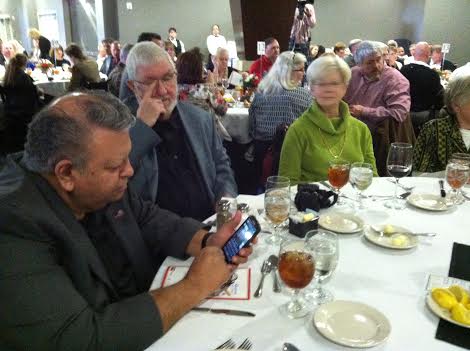
My guess is that there were about 275-300 people on hand to break bread in gratitude for our common soul in baseball, including several members of our local SABR group. Complications with my camera limited my photography this year, but I can report that the SABR members on hand included: Marsha Franty, Marie “Red” Mahoney, Tal Smith, Jimmy Wynn, Mike McCroskey, Sam Quintero, Ira Liebman, Mark Hudec, and Bill McCurdy. Houston Babies star Jimmy Disch also dined at the SABR table.

Looks like we found a big rock of support under the banquet that we thought was sinking. Get behind it next year, now that you know about it. It does good for local baseball and it deserves the kind of traditional backing that we Houston baseball folk like to give to people and programs that support our game.

Go Skeeters! – Go Astros! – Go Houston!

Duke the Canine Batman

January 30, 2014
Duke

Duke

This is one of those days that finds me getting my practical bearings straight on what’s practical and what’s not, but this one is tough. It’s about “love at first sight.”

Now hold on a minute. I’m not talking about women. I haven’t fallen in love at first sight with a woman since I met my beautiful wife Norma about a gazillion years ago, but I have flirted with the hope of meeting another special canine friend before I die. We already have Morti, our little Shih Tzu, and he’s very special – and we’ve also been boarding our son Neal’s dog, Pluto, for so long that we’ve grown attached to him too, and we don’t really have time, space, and doggie maintenance money growing on trees around our humble abode these days, but if anything else came to us as another pet, they would have to get first class health and grooming care too. That’s just the way we roll.

But ….

…. But its expensive. Did you know that if you have a little Shih Tzu that gets his hair cut and groomed four times a year, that by the time he celebrates his 10th birthday you will have spent over $2,000 on his haircuts and another $4,000 on his yearly shots, vet exams, and heart worm and flea pills? And there’s no such program out there to help called “Obarkacare!”

Be that as it is, a thing called reality, falling in love at first sight is never tethered to logic, reality, or common sense. I do remember that much from my time with the girls of my younger years. Every last one of them was special at first. And so was I. For  a while.

Jumpin’ Jeehosafat! I was so lucky to have met Norma on the last train out of Loneliville. Otherwise, I might not even still be here today. Who knows?

With dogs, unlike my early life dating relationship experience with most women, I never met a canine that I fell out of love with over time – and I certainly feel the reverse has always been true. Dogs are the most patient friends we shall ever meet.

At any rate, I saw this dog named “Duke” in a picture offered over the Internet by the Houston SPCA yesterday and just fell all over in love with him. They could have named him “Bruce Wayne”, “Gotham”, or even “Batman” and been right on target. Just look at that face.

I’m a little saddened that I couldn’t have rushed to get him this morning, but common sense prevailed. With my limited mobility these days, I couldn’t have given  Duke the action he needs to stay healthy.

I could only have given him love.

Besides, somebody’s probably got him by now. If they have, they had better not bring him here. I will never let him get away from me then.

Remembering “Blackboard Jungle”

January 29, 2014
Vic Morrow (front, left) and Sidney ottier (back, right) were the two major student adversaries in "Blackboard Jungle," 1955.

Vic Morrow (front, left) and Sidney Pottier (back, right in next row) were the two major student adversaries in “Blackboard Jungle,” 1955.

When the movie “Blackboard Jungle” was released during my 1955 junior year at St. Thomas High School in Houston, a bunch of us went downtown to the Loews State Theater to check it out. When it started, it cranked up something that felt bigger than a movie to our tired little dull and sheltered ears. It felt like a movie that had been made for our generation – and not like the kind of movie that had been censored by our parents before we were allowed to watch it.

That may be no big deal in 2014, but it was a major change for my generation. We were still working most of the time to escape the frightened censorship of “rock and roll” that some adult groups and social institutions were attempting as measures to protect us in the name of law and order.

We preferred Little Richard to Perry Como, Chuck Berry to Bing Crosby, and Fats Domino to Liberace.

“Blackboard Jungle” opened with a rock and roll bang with that famous anthem by Bill Haley and the Comets:

“ONE, TWO, THREE O’CLOCK, FOUR O’CLOCK, ROCK!

“FIVE, SIX, SEVEN O’CLOCK, EIGHT O’CLOCK, ROCK!

“NINE, TEN, ELEVEN O’CLOCK, TWELVE O’CLOCK ROCK!

“WE’RE GONNA ROCK – AROUND – THE CLOCK TONIGHT! …”

We were out of our seats, all of us, bopping in the aisles that fast. This was our music, being played at us, to us, and for us. Not a sniff of censorship or “Reefer Madness” to it at all. And it even grabbed us into watching the movie and its story of kids our age battling to survive in a school of little hope, tough gangs, and worn out teachers who couldn’t wait for the end of the day in the short run and full retirement in the long run.

Glenn Ford played the idealistic teacher who tried to change things by winning over support from the school’s baddest rep guy, young Sidney Pottier, while a young Vic Morrow played the thug kid who tried to undermine any change attempted at great cost to all in the process. I think that many of us came out of the movie with a deeper appreciation for how good we had life compared to others – and for some us an initial awareness that working in some way to make things better may be a good way to go in life.

And, for all of us, the idea that rock and roll was now here to stay almost led to the informal canonization of Billy Haley and the Comets as the official messengers of that great truth.

In spite of this powerful force, Ms Claire Booth Luce, U.S. Ambassador to Italy, succeeded in having “Blackboard Jungle” withdrawn from the Venice Film Festival because she felt “it presented an untrue view of American life and gave a bad idea of America.” Producer Dore Schary responded with a counter protest of his own, saying, “I feel the Johnston Office (the U.S. Motion Pictures Association) should file a protest of its own against the withdrawal of  “Blackboard Jungle.”

Didn’t happen.

Schary further stated that “I have asked Arthur Loew of our distributing organization of New York to make representation against this (forced withdrawal) as a very unfair and prejudicial action.”

Nothing budged the ban.

…. Pacific Stars and Stripes, August 29, 1955, Page 9.

Nothing changed the Luce-forced withdrawal of “Blackboard Jungle” from the Venice Film Festival in 1955. The majority political culture wasn’t ready for art and film to portray America’s neglected subjects of racial and economic class inequality in 1955, in spite of Brown vs. The Board of Education in 1954, but other messages were coming beyond this one. And these would not be ignored by the kind of reasoning that Ms. Luce applied in her case against the “Blackboard Jungle.”