Los Mendoza City: Base Population 50

January 22, 2015
Young Tony La Russa ~ Proof that even Bad Hair and a Bad Bat Will Not Keep Some Guys out of The Hall of Fame!

Young Tony La Russa
Proof that even Bad Hair and a Bad Bat won’t keep some guys out of the Baseball Hall of Fame!
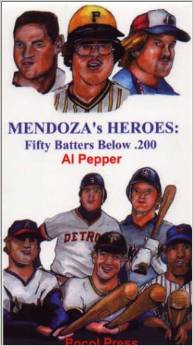
mendoza Back in 2002, a fellow named Al Pepper wrote a paperback entitled “Mendoza’s Heroes: Fifty Batters Below .200.” In a way, it was a primal research effort to start defining and recognizing certain career position MLB players who managed to actually last long enough on big league rosters to transcend the spring training and spot service coffee shops on baseball’s aggregate big club rosters as mediocre participant contributors in spite of the fact that all shared one common and glaring weakness. – None of them could hit a lick or the broad side of the barn with a brick or the Pacific Ocean if they all took turns falling out of boats.

http://www.amazon.com/dp/1929763115/ref=rdr_ext_tmb

In a way, Pepper’s work formed the basis for something that fellow writer Al Doyle of Oshkosh Wisconsin and I first called “The Hall of Mediocrity” back in 2004 – and from that point forward, but we never got around to establishing a clear set of standards for the selection of all players, positional, DH, defensive, or pitching. In the end, we reasoned that any Hall of Mediocrity worthy of its name deserved mediocrity in its compositional planning and structure as well. We took the elevated honoring of dubious distinction and ignominious notation in baseball history as serious business. As a result, eleven years later, The Hall of Mediocrity is still struggling to get off the ground as an actual place. If we had a website address, we would be happy to pass it on to you, but we aren’t that far along in our research and development efforts at this point in history.

This book by Pepper is a fun read, although I lost or misplaced my copy years ago and cannot remember all the names from heart path crossings. Pepper’s Amazon ad reminds us of six names and we have included four of these in the following table to highlight their association at the famous .200 batting average Mendoza Line:

Four Famous Offensive Failures

PLAYERS SEASONS YEARS AT BATS HITS B.A.
Bob Uecker 1962-67 6 731 146 .200
Tony La Russa 63-71, 73 6 176 35 .199
Charlie Manuel 69-72, 74-75 6 384 76 .198
Choo Choo Coleman 61-63, 73 4 462 91 .197

The Mendoza Line

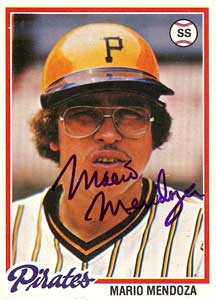
mario_mendoza_autograph Named for shortstop Mario Mendoza (Pittsburgh, Seattle, Texas) (1974-82) as a clubhouse joke, the “Mendoza Line” was established at the .200 batting average point, with those hitting there or below then shunned as offensive failures of the first order. Mendoza actually sort of removed himself from this literal negative limelight with a couple of good years (for him) near the end of his career that elevated his nine-season career batting average to .215. (See there? Nobody’s perfect! Even with a chance to clearly fix himself in measurable fact as “perfectly awful” as a hitter, Mendoza couldn’t get it done.

Trivia

One of the four men listed above also managed to complete his MLB Mendoza Line career without ever hitting a single home run. Do you know who he is? If not, please look it up at either Baseball Almanac or Baseball Reference on the Dot Com circuit. And have a better than a mediocre Thursday, if possible.


Letters From Lefty Revisited

January 21, 2015

letters-from-lefty Houston’s Mickey Herskowitz wrote a lot of very entertaining pieces during his salad days as a sports columnist for the old Houston Post, but none were more engaging than his “Letters from Lefty” to his girl, Alice. They began with the message he wrote to her on March 19, 1962 from his first spring training camp with the Houston Colt .45’s in Apache Junction, Arizona on March 19, 1962.

“The ball park is a mile from our hotel, and Dick Farrell, who used to pitch for the Phillies, always takes the short cut across the sage and underbrush. Along the way he shoots at various objects with a .22 pistol. I predict that Farrell will be the first guy in camp to lose a toe.” (Letters from Lefty, Page 4)

Now where on earth can 2015 Houston Astros fans hope to get that kind of inside job insight on what’s really going on in spring training with the current club’s season for ascendancy from the realm of hopeless mediocrity? We know that Lefty still has to be on the Astros’ 40-man roster somewhere, even it’s between the lines. He hasn’t been heard from since March 22, 1966, but that could be remedied. All he needs is for Mickey Herskowitz to help him put those letters home together again.

From the start, Mickey made it clear that the character pitcher named “Lefty” was copied directly from the great Ring Lardner’s early 20th century run with the “You Know Me, Al” series of letters about life in baseball, but he did it in the distinctive Herskowitz style. And once Lefty negotiated his base salary with George Kirksey up from $1.50 an hour to $1.75 an hour, he had struck a deal that would insure him a place in the Houston bullpen forever. We think that the record of the 2014 Astros bullpen is fair enough testimony to the fact Lefty is still with the club. He has simply lost his letter-writing buddy, Mickey Herskowitz.

If you’ve never read “Letters from Lefty,” or if, like me, you needed to retrieve a new used copy, a few dirt-cheap original 1966 printings are available at Amazon.Com. Here’s the link, in case you decide to do yourselves a nostalgic favor.

http://www.amazon.com/s/ref=nb_sb_noss?url=search-alias%3Dstripbooks&field-keywords=letters+from+lefty

And, Mickey, if you’re listening out there, and you have the time this season, each morning, a few “Letters from Lefty” on the 2015 season that you file away for a post season book sequel would make for a beautiful and popular seller in the 2016 spring training book market.

The Eight-Legged Pitcher of Old Sportman’s Park

January 20, 2015

Phantom SP4

The Eight-Legged Pitcher of Old Sportsman’s Park

By

Bill McCurdy

~ in grateful appreciation for the creative proximity of the letters “E and “R’ on the standard typing keyboard.

The eight-legged pitcher of old Sportsman’s Park,

He never showed up ’til the evening grew dark,

But once he crawled over – that creaky old roof,

He stood all alone – as massive lone proof,

That he was the guy – who wouldn’t back down,

From Babe Ruth – or Gehrig – as the Biggest Bad Brown,

He’d make ’em sweat lemons – with just a mean frown!

And send them all home – every one – a sad clown.

He never got married – but he did have a wife,

Whose hairy coarse legs – were the joy of his life,

They never drew close – far away, she did stay,

“I can’t stand his rubbing! – It’s all the wrong way!”

But still they had children – only one, one fine day,

But he looked more human – than arachnid – they say.

With eight spidery legs – and eight human hands,

The Browns saw their chances – at filling the stands.

And so they all taught him – to throw the old ball,

With eight pitch command – and eight gears recall,

On each thunderous pitch – rabbit, snail – to the wall,

All the batters got pinned there – by the eight handed pitcher,

Who mowed ’em all down, righty, lefty, or switcher.

With eight golden gloves – in as many years pitching,

There wasn’t no need – for sad groaning and bitching.

But when the Browns left – in the spring of 5-4,

Old Spider just lost it – for pitching no more,

“I’m a St. Louis guy! – Go to hell, Baltimore”

So, Spider retired – to the County, some say,

But don’t be surprised – if he comes back again,

When the last Brownie standing – lifts his last toast of gin,

And he sees his last sunset – and prepares to turn in,

Look for Spider to show up – as the truest last Brown,

And try to find some way to turn things around.

Epilogue ~

Go, Browns! Never give up!

If it takes an eight-handed pitcher leading us to the truth,

So be it. We gotta have heart.

Miles and miles and miles of heart.

True yesterday. True today. True tomorrow.


A Tom White Baseball Quiz

January 20, 2015
TOM HOUSE, SABR Larry Dierker Chapter Houston Baseball Trivia Writer

TOM WHITE, SABR
Larry Dierker Chapter
Houston
Baseball Trivia Writer

Tom White is both a nice guy and an ardent regular member attendee of our monthly SABR meetings in Houston. He also happens to be one smart cookie – with an incredible memory for baseball history and a penchant for coming out on or near the top of every monthly baseball trivia quiz that we impose upon ourselves as the last item on our agenda for every meeting. And that figures into the history of our baseball trivial pursuit like hand in glove. You see, the winner of each month’s quiz gets to design a quiz for the next meeting. Henceforth from this arrangement, Tom White has become both an engaging, but often repeating member of the test design task for next time.

Tom also has a minor claim to small fame that he is most proud of quietly sharing. His daughter is the actress in that J.J. Watts commercial at the school gym who tries to get the dance started by walking out onto to the gym court floor and shouting to a rather nerdy male teacher, “C’mon! Let’s Boogie!”

The Pecan Park Eagle thought you might enjoy taking one of Tom White’s baseball trivia quizs. Here’s the one from last night’s meeting at The Spaghetti Western restaurant on Shepherd near I-10. The correct answers are contained as the first item in the comment section which follows this column. Please feel free to leave your own comment, score, or opinion about the test as a comment too and – if you really love baseball, give some thought to joining SABR, The Society for American Baseball Research by contacting our Larry Dierker Chapter President, Bob Dorrill @ bdorrill@aol.com

SABR isn’t very costly and the baseball fellowship, talks by players and people in baseball, and countless other publication benefits are the greatest.

Now, without further adieu, here s the Tom White January 2015 Larry Dierker Chapter of SABR Houston Baseball Trivia Quiz:

____________________

THE TOM WHITE 13 QUESTION QUIZ: PLAYERS WHO DIED IN 2014

Presented to the SABR Meeting in Houston on January 19, 2015

1) Right-handed hitting outfielder who led the National League in home runs for seven consecutive years. He finished his career with 369 home runs and was elected to the Hall of Fame in 1975. He is the only Hall of Fame member born in New Mexico. (February 6)

2) Catcher who played for two American League teams between 1977-83. He was with the Seattle Mariners in 1982 and caught Gaylord Perry’s 300th win. (March )

3) Former right-handed pitcher for the Washington Senators in 1950-54. When e died in Havana, Cuba, at the age of 102, he was the oldest living former major league player. (April 23)

4) Right-handed pitcher and author of the ground-breaking book The Long Season in 1960. During his nine year career, he pitched for the Cubs, Cardinals, Reds, and White Sox. (June 28)

5) Infielder on the 1955 World Champion Brooklyn Dodgers and on the the last place 1962 New York Mets. He later managed four teams, including the 1989 Cubs that won the NL East title. (June 4)

6) Utility infielder for the Houston Astros who appeared in 67 games durng the 1981-82 seasons. His nickname was was “Shoes.”  (June 13)

7) Right-handed pitcher who who won the Cy Young award in 1990 while a member of the Oakland A’s. (June 9)

8) Left-handed hitting outfielder who spent his entire seven year major league career with the Brooklyn Dodgers. He hit a pinch hit home run in Game 1 of the 1953 World Series. His nickname was “Shotgun.” (September 29 )

9) First baseman on the World Champion Milwaukee Braves and older brother of a current Hall of Fame member. (September 13)

10) Right-handed hitting shortstop who o the Rookie of the Year award in in 1948 while playing for the boston Braves. He Was the New York Giant shortstop in 1954 when they swept the Indians in the World series. He later managed a pennant-winning National League teams and a World Series winner in the American League. (November 13)

11) Left-handed pitcher who won 20 games for the 1964 St. Louis cardinals and started Game 1 of the 1964 World Series. In May 1966, he was traded to the San Francisco Giants for Orlando Cepeda. (November 17)

12) Right-handed relief pitcher whom the the Houston Colt .45’s acquired in a trade with the White Sox on June 25, 1962. He appeared in 53 games for the Colt .45’s during the 1962 and 1963 seasons. (December 8)

13) Left-handed hitting outfielder who spent his entire 20 year career with the San Diego padres, winning eight batting titles in the process. He retired with 3,141 hits and a career batting average of .338. He was elected to the Hall of Fame in in 2007. (June 16)

____________________

Hope you did well! Tony Cavender was the winner of our meeting shot at the quiz, with 9 correct answers out of 13!


The Referee Who Looks Like Bob Newhart

January 19, 2015
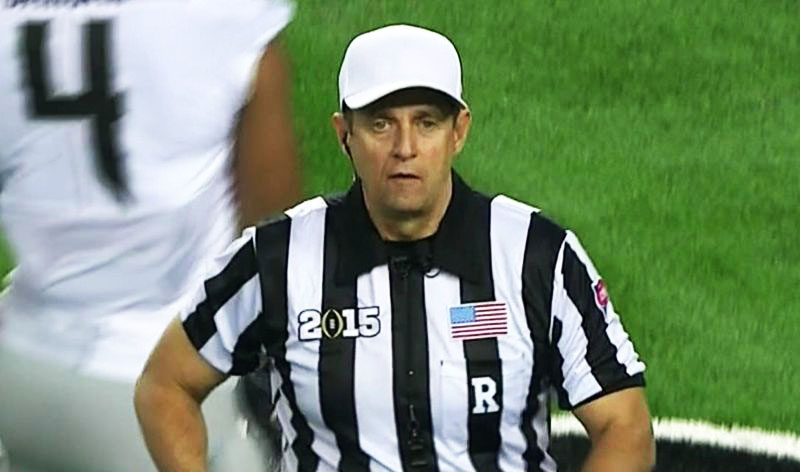
Greg Burks, one of the referees in the Ohio State-Oregon College Football Championship Game. To those who thought he was Bob Newhart, the old comic virtuoso said several things, but my favorite of his lines was: "I had to do the game. I lost a bet with Don Rickles."

Greg Burks, one of the referees in the Ohio State-Oregon College Football Championship Game. To those who thought he was Bob Newhart, the old comic virtuoso said several things, but my favorite of his lines was: “I had to do the game. I lost a bet with Don Rickles.”

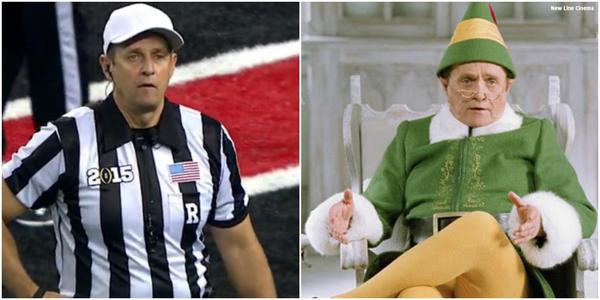
Most of you may already have seen this doppelganger story by now, but all of us who’ve grown up watching comedian Bob Newhart on television have been herded into the same united reaction, thanks to the quick response of social media to that referee in the College Football Championship Game last Monday night, January 12, 2015. Yeah, we are talking about the one who impressed us all as a dead ringer for the younger comedian Bob Newhart during his successful double series run on television during the 1970s and 1980s. – This guy, Greg Burks, not only looked like the doppelganger ghost of Bob Newhart, but he also explained calls during the game with the same kind of flattened-out-for-comedy voice style that Newhart used to portray his always understated, in-over-his-head reaction to the things that happened in his sitcoms as both a clinical psychologist and later, as a New England innkeeper.

Referee Greg Burks and Comedian Bob Newhart ~ apparently separated at birth ~

Referee Greg Burks and Comedian Bob Newhart
~ apparently separated at birth ~

Newhart’s a trooper. He knew how to play along with the joke about his mistaken identity with referee Greg Burks. When someone else asked him why he had agreed to officiate the big game, he quipped, straight face and all that “I had to take the job. You have to remember. These days, at age 85, I no longer have a TV series.”

Bob Newhart’s great. So’s life. When you cut through all the crap that all of us have to deal with at one time or another, or even adjust to for the rest of our lives, it’s still a juicy fact that life is still great – and a whole lot sweeter with stuff to smile and laugh about in the here and now on a daily basis. – Keep smiling, everybody!

And thank you, Greg Burks and Bob Newhart, for making so many of us smile over the past week with your much stronger than passing resemblance to each other.

One more last thought – about 18 hours beyond the original publication of this column ….. Maybe, Greg Burks really is ….

.... MAYBE GREG BURKS REALLY IS ....

THE LONG LOST SON OF BOB NEWHART!!!

THE LONG LOST SON OF BOB NEWHART!!!

Sixteen Candles on Conversational Speech

January 18, 2015

figures-of-speech

Earlier this week, The Pecan Park Eagle received the following sixteen candles of enlightenment on the derivation of as many figures of speech and expression. They came to us from good  friend and fellow SABR member, Father Gerald Beirne of Narraganset, Rhode Island. None are referenced to any primary source authority, so, you readers will have to either do what I did, accept the good intentions of Father Beirne and the logical flow of each explanation as “gospel truth,” or else, go do the primary source substantiation research yourself. 

Thanks again, Father Beirne, for your ongoing contributions to our always hopeful of improving state of cultural erudition. 🙂

Today is also one of those “mild-stone” (as opposed to serious milestone) days in the history of The Pecan Park Eagle. Today’s column is the 1,800th in our series since we came over to WordPress from Houston Chron.Com in 2009. Thanks to all of you who continue to support what we try to do here by your ongoing readership. We aren’t out to set the world on fire. – We just want to start – an occasional flame in your heart. – Those facts now duly noted, let’s move on to Father Beirne’s Sunday contributions.

1) A SHOT OF WHISKEY. In the old west a .45 cartridge for a six-gun cost 12 cents, so did a shot glass of whiskey.  If a cowhand was low on cash, he would often give the bartender a cartridge in exchange for a drink. This became known as a “shot” of whiskey.

2) THE WHOLE NINE YARDS. American fighter planes in WW2 had machine guns that were fed by a belt of cartridges. The average plane held belts that were 27 feet (that is, 9 yards) long.  If the pilot used up all his ammo, he was said to have given it the whole nine yards.

3) BUYING THE FARM. This expression is synonymous with dying. During WW1, soldiers were given life insurance policies worth $5,000. This was about the price of an average farm, so if a soldier died, he “bought the farm” for his survivors.

4) IRON-CLAD CONTRACT. This term came about from the ironclad ships of the Civil War. It meant something so strong that it could not be broken.

5) PASSING THE BUCK/THE BUCK STOPS HERE. Most men in the early west carried a jack knife made by the Buck Knife Company. When playing poker, it was common to place one of these Buck Knives in front of the dealer so that everyone knew who he was. When it was time for a new dealer, the deck of cards and the knife were given to the new dealer. If this person didn’t want to deal, he would “pass the buck” to the next player. If that player accepted, then “the buck stopped here.”

6) RIFF RAFF. The Mississippi River was the main way of traveling from north to south. Riverboats carried passengers and freight, but the cost was expensive, so most people used rafts. All other boats had the right of way over rafts, which were considered cheap. The steering oar on the rafts was called a “riff,” and this transposed into riff-raff, meaning low class.

7) COBWEB. The Old English word for “spider” was “cob.”

8) SHIP STATEROOMS. Traveling by steamboat was considered the height of comfort. Passenger cabins on the boats were not numbered.  Instead, they were named after
states. To this day, cabins on ships are called staterooms.

9) SLEEP TIGHT. Early beds were made with a wooden frame. Ropes were tied across the frame in a criss-cross pattern. A straw mattress was then put on top of the ropes. Over time, the ropes stretched, causing the bed to sag. The owner would then have to tighten the ropes to get a better night’s sleep.

10) SHOWBOAT. These were floating theaters built on a barge that was pushed by a steamboat. The showboats played small towns along the Mississippi River. Unlike the boat shown in the movie “Showboat,” these showboats did not have an engine. They were gaudy and attention-grabbing, which is why we say that someone who is being the life of the party is “showboating.”

11) OVER A BARREL. In the days before CPR, a drowning victim would be placed face down over a barrel, which would be rolled back and forth in an effort to empty the lungs of water. It was rarely effective. If you are over a barrel, you are in deep trouble.

12) BARGE IN. Heavy freight was moved along the Mississippi in large barges pushed by steamboats. These were hard to control and would sometimes swing into piers or other boats, so people would say that they “barged in.”

13) HOGWASH. Steamboats carried both people and animals.  Since pigs smelled so badly, they would be washed before being put on board. The mud and other filth that was washed off was considered useless “hog wash.”

14) CURFEW. The word “curfew” comes from the French phrase “couvre-feu,” which means “cover the fire.”  It was used to describe the time of blowing out all lamps and candles. The term was later adopted into Middle English as “curfeu,” which later became the modern word “curfew.” In the early American colonies, homes had no real fireplaces, so a fire was built in the center of the room. To ensure that a fire did not get out of control during the night, it was required that, by an agreed upon time, all fires would be covered with a clay pot called a “curfew.”

15) BARRELS OF OIL. When the first oil wells were drilled, oil drillers had made no provision for storing the liquid, so they used water barrels. That is why, to this day, we speak of barrels of oil rather than gallons.

16) HOT OFF THE PRESS.  As the newspaper goes through the rotary printing press, friction causes it to heat up. Therefore, if you grabbed the paper right off the press, it was hot. The expression means to get immediate information.


Remote Audiences are the Future of Everything

January 17, 2015
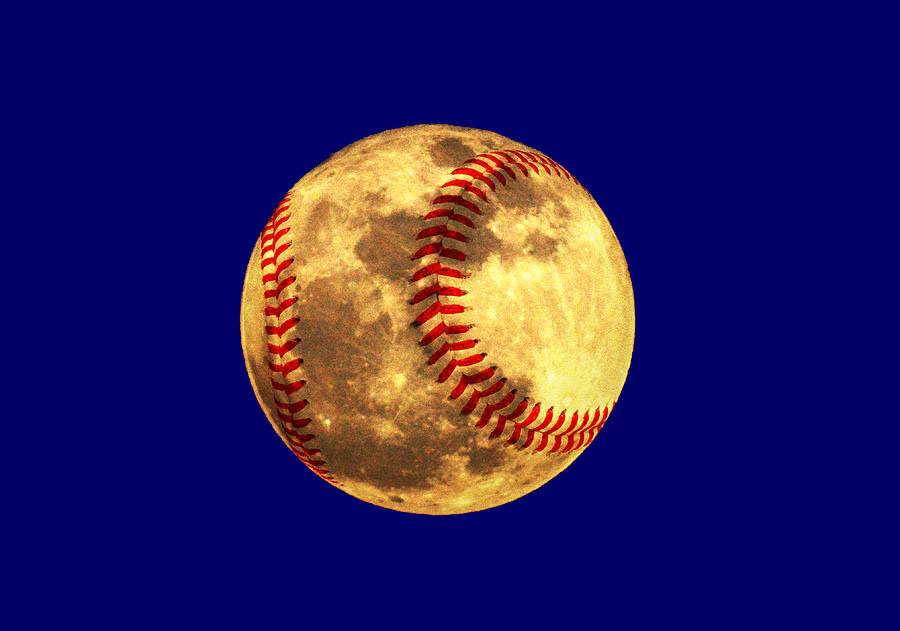
BASEBALL ON THE MOON ~ Spring Training ~

BASEBALL ON THE MOON
~ Spring Training, 2115 ~


It’s already happening. It didn’t really get revved up until our incredible breakthroughs in digital technology brought us victory over analog lined light pictures and increases in high definition picture quality hammered us at home with motion pictures at home that were both an improvement over our visions and sight lines at live events – and far sight better picture with quality sound (and home closed captioning) that made for even watching movies at home more comfortably preferable and desirable than going to the finest new stadium-seating multiplex. To say nothing of the bonus that home viewing comes with much cheaper concessions treats than the overpriced stuff we feel compelled to buy at the ballparks, stadiums, field house, and movie theaters.

Now this explosion of visual delights, which also include multiple angle, always the best possible views, instant and ad nauseum replays, our own control, via our own rewind or stop action options ability to pause everything for kitchen runs or bathroom breaks – and what do we have? We have a much better deal than we shall ever have from our one angle seat at the ballgame or movie theater. No matter how big and resolute the monster screens at stadiums grow to be, they are not the same as home viewing. All the big screens do is remind us of the fact that a better view experience awaits us at home. Otherwise, why do we go to a crowded over-priced place to watch on someone else’s big screen what we could watch at home for free on the one(s) we control?

People who need the company of many strangers to feel as though they are actually at the game are also finding sports bars preferable, and cheaper, than going to the ballpark too. Others are settling for iPad, digital tablet, and cell phone versions of the live action as the perfect fit to their always-moving multitasking pace of life schedules as attention challenged members of these latest modern times in our culture.

Departing NCAA Football Playoff Selection Committee member Oliver Luck yesterday raved over the record TV ratings achieved by the College Championship Game last Monday night. He also didn’t think the new system for determining participants needed more than the four teams selected by the committee, pointing to the TV ratings success as proof of his point.

“I think four is the right number,” Luck said, “I think it should be hard to get into the playoff. It really should.”

And therein Luck’s statement rests the flaw that comes with the still burgeoning numbers of the electronic audience that is now the primary target group for all commercial attractions. If two teams of relatively similar on-field results are up for grabs as the fourth team needed (let’s say, Ohio State and TCU, for example), how often will the much larger fan bases for the Ohio States of this world get the nod over the TCUs, Baylors, Marshalls, or Boise States as the final pick for the four-team playoff? And how much of that imbalance and vulnerability to subjective judgment could college football reduce by expanding to a field of eight contenders? Would it be worth disturbing the current comfort zones of four additional meaningless bowl games to make that possible?

At any rate, the larger point today is our need to get our perspectives straight on where the primary audience lives. In largest form, it’s the digital picture audience away from the actual venue of play. And that’s the point that even underscores the incredible stupidity of that two season TV ban that prevented 60% of the Houston audience for professional baseball and basketball from even watching their sports without either subscribing to Comcast or buying a ticket for the game.

If the main athletic fan diversions of American culture are still around in a hundred years, it makes you wonder where the actual contests will be held. Will we keep building the mammoth venues that are never as comfortable, but always more expensive than home? Or will we reverse things – and make fans buy season tickets to watch at home while the games get played out in private on either the Moon or Mars?

The Moon or Mars? Watch out Babe Ruth, Josh Gibson, and Mickey Mantle! – Your distance homer records may be in serious jeopardy!


Bill Gilbert Analyzes 2015 HOF Vote

January 17, 2015
Bill Gilbert is a veteran member of SABR, a respected and exceptional baseball data analyst, and a free lance reporter for The Pecan Park Eagle.

Bill Gilbert is a veteran member of SABR, a respected and exceptional baseball data analyst, and a free lance reporter for The Pecan Park Eagle.


Analyzing the 2015 Hall of Fame Vote

 By Bill Gilbert


The Baseball Writers Association of America elected 4 players to the Hall of Fame this year for the first time since 1955, Randy Johnson (97.3%), Pedro Martinez (91.3%), John Smoltz (82.9%) and Craig Biggio (82.7%). All four easily surpassed the 75% required for election.

Of those on the ballot who were not elected, Mike Piazza came the closest with 69.9%, putting him in position for likely election next year. Twelve of the seventeen holdover candidates received more votes this year than last led by Curt Schilling (48 votes), Tim Raines (39 votes), Piazza (29 votes) and Biggio (27 votes).

Jeff Bagwell, who finished 6th in the balloting at 55.7%, had a disappointing showing, receiving 4 fewer votes than last year. He needs a strong move next year to get back on track. Others who received fewer votes in 2015 than 2014 were Jeff Kent (-10 votes), Mark McGwire (-8 votes), Sammy Sosa (-5 votes) and Lee Smith (-5 votes). Support for McGwire and Smith continues to decline and they are running out of time on the ballot. Smith’s final year is 2015 and McGwire’s is 2016 and neither are close to election. Sosa, with only 6.6% of the vote is in danger of dropping below 5.0% next year which would remove him from future ballots. Don Mattingly, in his final year on the ballot, picked up only 3 more votes to 9.1% and will drop off the ballot.

The voters are still largely negative with regards to players associated with Performance Enhancing Drugs (PEDs). Roger Clemens and Barry Bonds each picked up only 4 additional votes and are mired in the mid 30% range. It appears that voters have not changed their minds on PEDs with roughly one third supporting them and two thirds choosing not to vote for them, at least for now.

Following is a list of candidates that received votes in the election this year. For the holdovers, vote totals for last year are also shown.


PLAYER YEARS ON BALLOT 2014 VOTES 2014 % 2015 VOTES 2015 % 14-15 VOTE #DIFFER 14-15 VOTE %DIFFER
RandyJohnson 1 534 97.3
PedroMartinez 1 500 91.1
John Smoltz 1 455 82.9
Craig Biggio 3 427 74.8 454 82.7 27 7.9
Mike Piazza 3 355 62.2 384 69.9 29 7.7
Jeff Bagwell 5 310 54.3 306 55.7 – 4 1.4
Tim Raines 8 263 46.1 302 55.0 39 8.9
Curt Schilling 3 167 29.2 215 39.2 48 10.0
RogerClemens 3 202 35.4 206 37.5 4 2.1
Barry Bonds 3 198 34.7 202 36.8 4 2.1
Lee Smith 13 171 29.9 166 30.2 – 5 – 0.3
Ed Martinez 6 144 25.2 148 27.0 4 1.8
Alan Trammell 14 119 20.8 138 25.1 19 4.3
Mike Mussina 2 116 20.3 135 24.6 19 4.3
Jeff Kent 2 87 15.2 77 14.0 – 10 – 1.2
Fred McGriff 6 67 11.7 71 12.9 4 1.2
Larry Walker 5 53 10.2 65 11.8 12 1.6
GaryScheffield 1 64 11.7
Mark McGwire 9 63 11.0 55 10.0 – 8 – 1.0
Don Mattingly 15 47 8.2 50 9.1 3 0.9
Sammy Sosa 3 41 7.2 36 6.6 – 5 – 0.6
NGarciaparra 1     30 5.5
———- ——- —— —– —– —– —– —–
CarlosDelgado 21 3.8
Troy Percival 4 0.7
Aaron Boone 2 0.4
Tom Gordon 2 0.4
Darin Erstad 1 0.2


In addition to the three ballot newcomers who were elected, two others received enough votes to remain on the ballot, Gary Sheffield and Nomar Garciaparra, although Nomar barely made it with 5.5%. In something of a surprise, Carlos Delgado, with 10 straight 30 home run seasons, fell off the ballot in his first year.

The following seven players were on the ballot but did not receive any votes: Rich Aurilia, Tony Clark, Jermaine Dye, Cliff Floyd, Brian Giles, Eddie Guardado and Jason Schmidt.

One encouraging aspect this year is the continued increase in the average number of votes per ballot. In 2013, 569 writers voted for an average of 6.6 candidates. In 2014, 571 writers voted for an average of 8.4 candidates. This year, only 549 ballots were turned in but they continued to average 8.4 votes per ballot. If this continues, the problem of an overcrowded ballot should gradually be relieved. The change that reduces the time on the ballot from 15 to 10 years will also help. The 2016 class of ballot newcomers headlined by Ken Griffey, Jr., Trevor Hoffman, Billy Wagner and Jim Edmunds is not as strong as the last two. Griffey will make it in his first year but the others are not likely to generate much first ballot support. This should improve the chances of ballot holdovers like Piazza, Bagwell and Raines and especially Schilling and Mike Mussina with other starting pitchers out of the way. It will be a critical year for Bagwell who appears to be stuck in the 55% range.


Bill Gilbert

1/15/2015


Institute for Baseball Studies Opens at Whittier

January 16, 2015
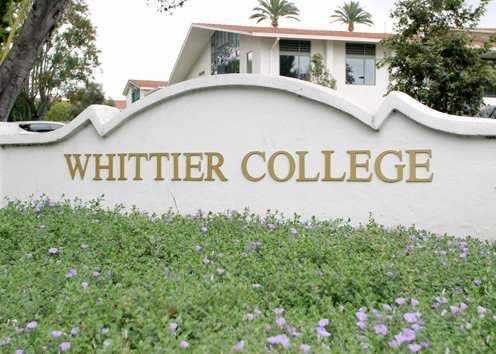
Whittier College ~ Home of the New Baseball Academic Studies Program ~

Whittier College
~ Home of the New Baseball Academic Studies Program ~

Thank you, Tom Keefe of Spokane, President of The Eddie Gaedel Society, for passing on to The Pecan Park Eagle this news about the Grand Opening tomorrow, January 16, 2015, of the Institute for Baseball Studies at Whittier College in Whittier, CA.

http://www.whittier.edu/event/grand-opening-institute-baseball-studies

A quick Google search also yielded this earlier, more informative article from October 2, 2014 about the purposes of this intended new academic program at Wittier:

“The Baseball Reliquary is a nonprofit, educational organization dedicated to fostering an appreciation of American art and culture through the prism of baseball history and to exploring the national pastime’s unparalleled creative possibilities. The Reliquary’s research collection will form the centerpiece of the Institute for Baseball Studies, which has been established to foster an intellectual community for creating and supporting interdisciplinary research and studies related to the cultural significance of baseball in American history. ”

For a full view of this informative piece, check out this link:

http://www.whittier.edu/news/baseballinstitute

Our first impression is only mildly parochial. It the Whittier program wants to encompass the big picture in their reliquary goals, they need to have a copy of our Larry Dierker SABR Chapter book, “Houston Baseball: The Early Years, 1861-1961.” Our book was important to the Hall of Library in Cooperstown – and it should be equally important.

As an unexpressed irony here, it just so happens that the claimed first academic studies program on baseball as a major cultural factor is Whittier, the undergraduate college of former President Richard M. Nixon, the biggest, most informed student of baseball history to ever occupy the White House.

If any of you know or learn anything further about the Whittier program, please leave a comment, or, even better, freelance an appropriate subject article and send it to The Pecan Park Eagle and we will publish it with you as our next distinguished gratis-pay columnist of the day.


A Few More Memories of the 1950’s

January 16, 2015
Drive In Horror Movies were big in Houston during the 1950s. They encouraged bench style front seat togetherness among young couples at places like the South Main, Trail, Hi Nabor, King Center, and Winkler Drive In Theaters, among others.

Drive In Horror Movies were big in Houston during the 1950s. They encouraged bench style front seat togetherness among young couples at places like the South Main, Trail, Hi Nabor, King Center, and Winkler Drive In Theaters, among others.

Thanks for the link, Bob Dorrill. That little three-minute music and picture cascade brought back a lot of memories for one of us who remains, so far, as one of the long-of-tooth members of that supposedly simpler generation:

http://safeshare.tv/w/FEDEwZHZXu

Back in the 1950s, when yours truly welcomed in quietly at age 12 on January 1, 1950  and later blew out hard with everyone else on his 22nd birthday, December 31, 1959, here are some of the memorable differences, large and small, that I recall:

1.) Large: Racial segregation of blacks from whites in Houston was still the embarrassing norm. There were very few Asians here in those days and only a small enclave of Latinos who mainly lived in the Magnolia Park and Harrisburg @ Wayside areas of the east end. Bob Boyd became the first black to break the color line in local baseball on March 28, 1954, when he started at first base for the Houston Buffs. As one of those fans who came to support Boyd that long ago night in Buff Stadium, it marked the beginning of a lifelong history of hero worship in me for the man with the powerful bat, the graceful glove, and the infectious, fan-friendly smile. R.I.P., Bob Boyd! Thanks to our recently published SABR book, “Houston Baseball: The Early Years, 1861-1961”, your contributions to local baseball and, more importantly, to a much better Houston, are now recorded for the ages on the great wall of history.

2) Not-So-Big, But-Still-Large: Up until 1958 and the famous televised championship game between the Baltimore Colts and the New York Giants, the NFL was little more to the national scene in the 1950’s than a “once every Sunday” grainy black and white one-camera game coverage of a game from Chicago that involved either the Bears or the Chicago Cardinals against some other ancient franchise, like the Green Bay Packers or the Detroit Lions. Red Grange, the old “Galloping Ghost” from Illinois was the somber toned solo man on the mike. The NFL spent most of its last decade in the shadows of major league baseball just trying to grab TV attention for its product. The 1958 Colts-Giants drama was the turn key that helped lead to the establishment of the AFL, the brief skirmish between the NFL and AFL in the 1960’s, the settlement of an undisputed pro football champion by the playing of a “Super Bowl” in 1967, and inevitable consolidation of all surviving teams into an NFL that would forevermore from 1969 and the birth of Monday Night Football that would usurp baseball’s undisputed control of the professional sports market for all time.

3) Huge: In the summer of 1950, 500 cases of infantile paralysis, a polio age-specific variant form of the dreaded illness were diagnosed and treated at Hedgcroft Hospital on Montrose Boulevard in Houston. Parents lived in terror of the dreaded disease and many of us were required to remain out of the sun during the so-called “heat of the day”, which was then defined as 12:00 PM to 3:00 PM. – Go figure. It makes you wonder what they thought was less harmful about the 3:00 PM to 6:00 PM daily heat of July and August? – That latter time zone was no daily “norther”, if memory serves. By 1957, the polio vaccine discovery of Dr. Jonas Salk had “won the war” against the disease for all who could win the war against their own ignorance and made sure their families had taken the medicine. Unfortunately, there is no lifetime vaccine against ignorance. Polio is making a comeback in areas where people will not take the vaccine in an early and timely way.

4) A Small Irony: During my student  days at my beloved St. Thomas High School, 1952-1956, students could be suspended or dealt with in other harsh terms for using their Physical Education class time to slip through a hole that then existed in the back gym wall for the purpose of organizing and participating in a lunch money game of Craps – you know, the game that’s played with a roll of the dice. – Tonight, however, January 15, 2015, is Casino Night at dear old STHS for all of us surviving alumni who still feel the need to help the school’s fundraiser campaign with another roll of the dice – or a game of Texas Hold ‘Em or Blackjack. I couldn’t make it due to other commitments, but I completely support the idea of Casino Night and what it is aimed to do. – That is, to help St. Thomas High School. I just can’t escape the irony of how this change of attitude toward games of chance so neatly mirrors the mentality of Las Vegas, – It’s OK to gamble in ‘Vegas too – just as long as “the house” controls the action and gets its cut. – Go Eagles! – Seven Come Eleven! – All the Way to Heaven!