Ruth’s Yankee Stadium Goodbye: April 27, 1947

March 17, 2016
Ruth's Yankee Stadium Goodbye April 27, 1947

Ruth’s Yankee Stadium Goodbye
April 27, 1947


Ruth Urges Ball Players To Start Game While Young

By Milton Richman, United Press (UP)

(Milton Richman was the 1980 winner of the Baseball Hall of Fame’s J.G. Taylor Spink Award for outstanding achievement by writers.)
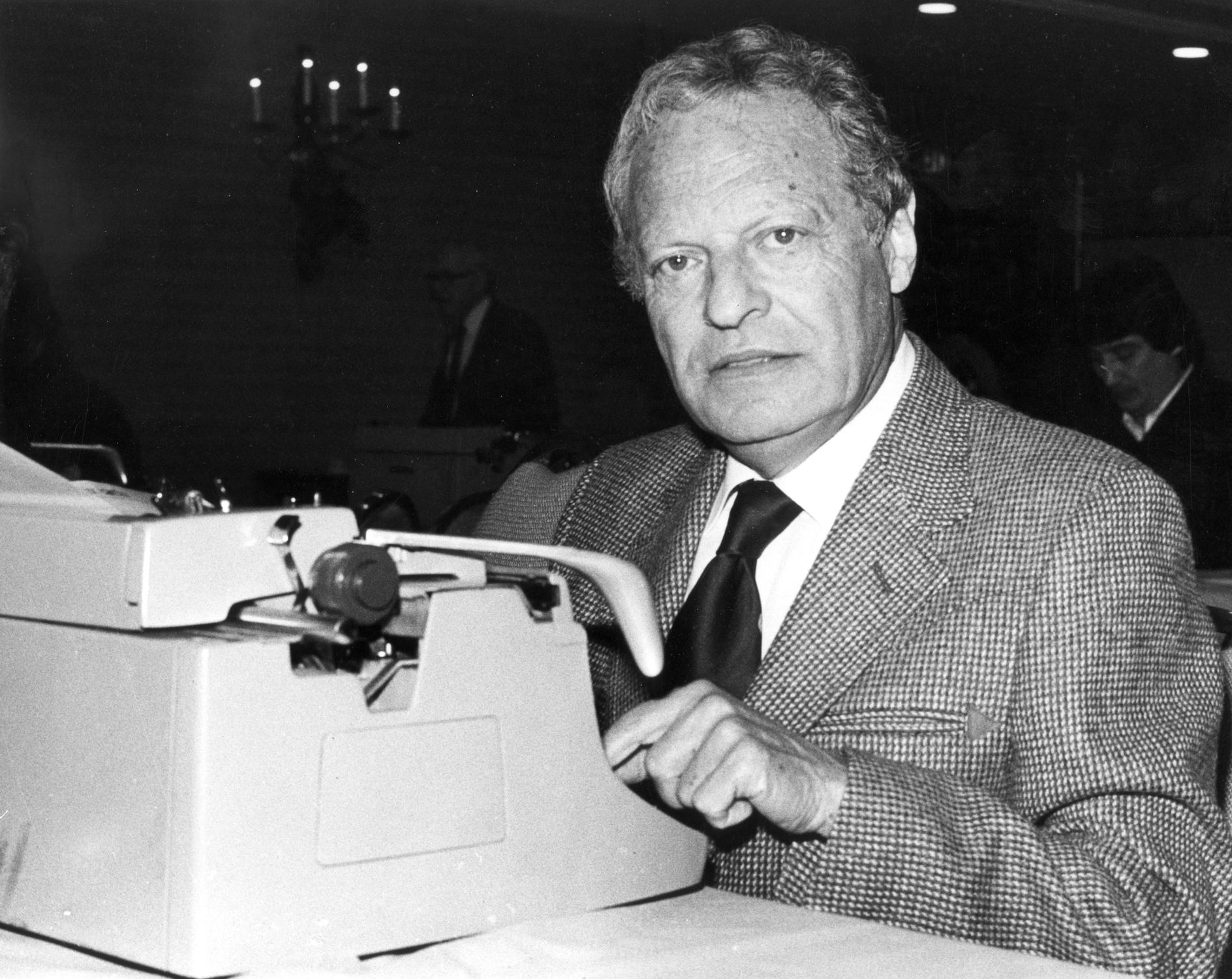
Milton Richman

Milton Richman

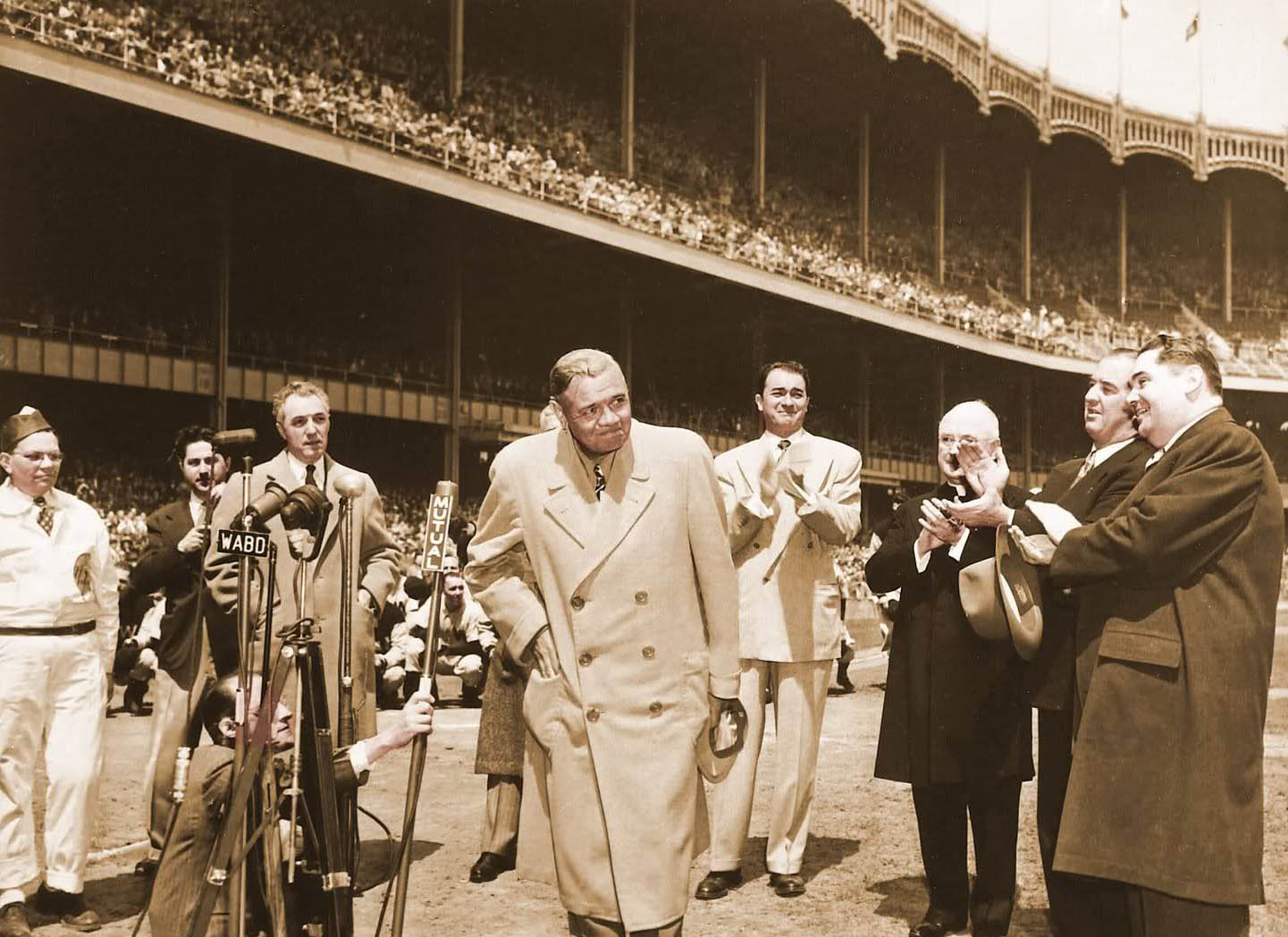
  New York, (UP) – Cheers for the Babe echoed from New York to Tokyo Sunday. But the millions of fans who listened to the broadcast of “The Babe Ruth Day” ceremonies at Yankee Stadium remembered sadly Monday how weak the voice was that addressed them.

Only the 58,339 fans who gathered in “the house that Ruth built” could see the gaunt figure, dressed in a familiar camel’s hair overcoat, as he stopped before a battery of microphones at home plate.

Only they could see that the Babe, who once strode defiantly to the plate, now welcomed a helping hand as he walked.

The crowd rose with a mighty roar as Ruth walked slowly from the dugout. A big grin lighted his face. Then the stands became silent as he began to speak.

“You know how bad my voice sounds,” he whispered. “Well, it feels just as bad.”

Ruth’s voice gained a little strength as he went to the heart of his extemporaneous speech, extolling baseball as “the only real game in the world” and telling youngsters to start playing it at 6 or 7 years of age.

“You gotta let it grow up with you,” he said, “and if you’re successful and you try hard enough, you’re bound to come out on top, just like these boys have come to the top now.” He gestured toward the New York Yankees and Washington Senators grouped around him.

“There’s been so many lovely things said about me. I’m glad I had the opportunity to thank everybody,” he concluded with a huge grin that made him look for a moment like the Babe of old.

“Thank you.”

His words were piped into every other major league park and many minor league parks, for it was “Babe Ruth Day” everywhere. Even in Japan, where programs were held in Tokyo and Osaka.

Francis Cardinal Spellman opened the Yankee Stadium program with an invocation which described Ruth as a “champion of fair play and a manly leader of youth.” Later Spellman told the Babe that he had been a great inspiration to the boys and “to me.” Ruth was raised in a Catholic orphanage at Baltimore, and had asked that Spellman be present in person at the stadium. Then Commissioner A.B. (Happy) Chandler, whose idea the day had been, outrode a chorus of boos and lauded Ruth.

Will Harridge, American league president, was next. He presented the Babe with a gold and bronze plaque inscribed, “In honor and sincere appreciation to Babe Ruth, whose contribution to baseball will live forever.” He said that Ruth’s name shone brighter than any other on the list of baseball’s greats.

Ford Frick, National League president, gave the Babe a book signed by every player in the National league and dedicated to “Babe Ruth,” whose batting average through the years is exceeded only by the size of his heart and whose capacity to hit homers is surpassed only by his ability to make and hold friends.

Thirteen-year-old Larry Cutler, an American Legion junior baseball player, welcomed Ruth as a consultant in that program.

Then Ruth spoke. Later, President Larry McPhail of the Yankees and an American league official gave Ruth envelopes. Contents were not disclosed, but they were believed to contain checks which will help the home run king – his records still stand – defray expenses of his long illness and his serious operation Jan. 3rd, from which he is recovering slowly.

There were rumors that organized baseball would start a “Babe Ruth Foundation” which the big fellow would administer to foster baseball among young boys.

Many other gifts flooded the Babe. He received a $5,000 Lincoln car from his new employers, the Ford Motor Co., and smaller gifts arrived at his apartment.

Babe said he hadn’t opened or looked at a single gift, except the car, in which he rode to the stadium.

He stayed for 7 innings of the game, then left a few minutes before Washington scored the winning run in a 1-0 victory.

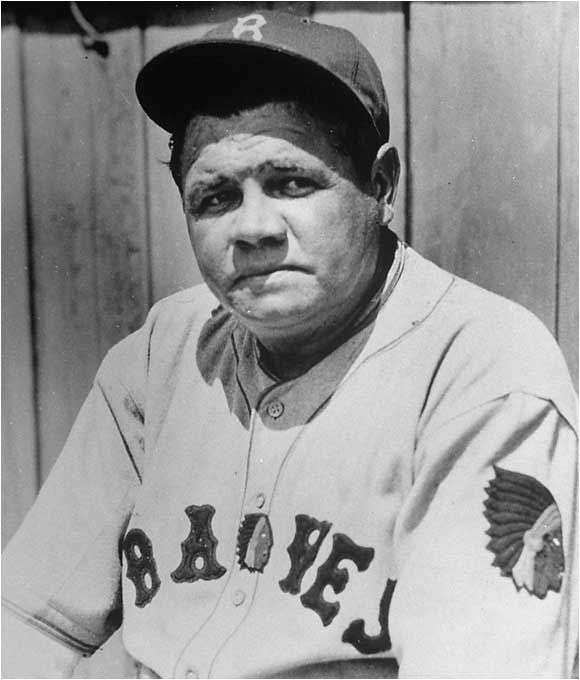
Ruth, who began his major league career in 1915 as a lefthanded pitcher for the Boston Red Sox and was sold to the Yankees in 1920, retired as an active player in 1935. He has not been connected with organized baseball since 1938, when he served briefly as a Brooklyn Dodger coach.

~ Milton Richman, United Press, Mason City (IA) Globe Gazette, April 28, 1947, Page 17.

____________________

Eagle Parting Note: Babe Ruth died of cancer the following year, August 16, 1948, at the age of 53.

____________________

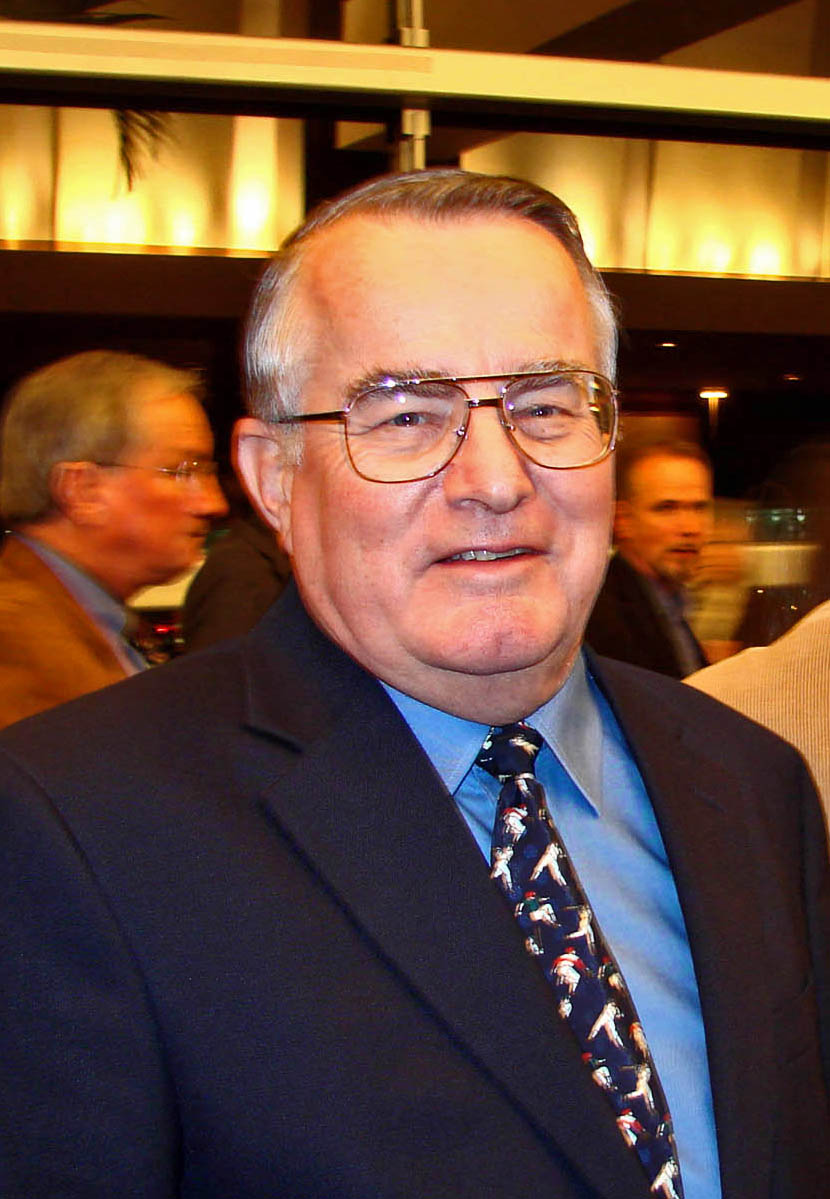
eagle-0rangeBill McCurdy

Publisher, Editor, Writer

The Pecan Park Eagle

Houston, Texas

https://bill37mccurdy.com/

The 5-Game Shadow on Ruth’s Last Big Game

March 16, 2016
The 5-Game Shadow on Ruth’s Last Big Game

The 5-Game Shadow on Ruth’s Last Big Game


Stronger Than Fiction.

When the aging Babe Ruth suddenly arose from the ashes of greatness on May 25, 1935, like the famous Phoenix fire bird, the door to his glorious departure from the game by twilight loomed as easy to see as a three-spotlight path route to his exiting stage right of baseball forever that same day. The 40-year old Ruth had been struggling all of the early 1935 season of his inglorious once-only season with the Boston Braves. And things were physically wobbly and mentally wearing. The Babe had only three home runs and a sub-.200 batting average to show for his out of shape effort – and his fielding was both slow and atrocious. Until this day, people who bought a ticket to see the great Babe Ruth in 1935 only got to witness the locust shell of the guy who once devoured pitchers like amber grains of wheat.

Suddenly, Ruth must have been struck by a lightning bolt from the baseball gods version of Zeus at Forbes Field. Suddenly, Ruth was as great as ever – one more time. He would hit 3 home runs on the day, one of which was the first to ever clear the right field roof that had been added in 1925. He also had a single mixed in there to go 4 for 4 on the day with 3 runs scored and 6 runs batted in. His last homer, a solo shot in the ninth, also took him to his magical “714” career HR number, the baseball record that would last until Henry Aaron it as an “Atlanta” Brave in 1974.

As everyone now knows, there could not have been a better day for Ruth to retire, but did he do the obvious, did he do a James Durante “Goodnight, Mrs. Kalibash, wherever you are” exit forever to a roar of loving affection – from even the fans in Pittsburgh? – From all accounts, even the Pirate fans were prepared to give him that kind of deserved and classy send-off.

No, Ruth did not.

The Human Ego Has a Mind of its Own.

Everybody has an ego – and the more we run on pride alone, the more the ego gets in the way of both common sense and an acceptance of our limitations. Nobody plays baseball forever, not even the great Babe Ruth. In the case of Ruth, as detailed yesterday in the column, “Who Was Joe Mowry?”, it was easy for this 10-year old kid in 1948 to believe the William Bendix movie version of “The Babe Ruth Story” fiction that Ruth took himself out of the 3-HR game and did retire that same day.

Again, he did not.

For Ruth, our guess is that two things probably kept him going, but they are both ego defensive stands: (1) Ruth’s ego may have wanted him to believe that his big day meant that he still had some gas for greatness left in the tank; and (2) Ruth knew that retirement might be resented by the Braves owner (Lou Perini) – and make it easier for Perini to kill any remaining hope the Babe still held for becoming the club’s manager in the near future.

After the 3-HR game in Pittsburgh, Ruth simply got on the train with the Braves and continued on to Cincinnati for a 3-game series with the Reds.

The Five Shadow Games.

It took five more games for Babe Ruth to reach an even more obvious painful conclusion that it was time to retire. The following table shows it best in short form. After the big game in Pittsburgh, Ruth would get no more major league hits. He went o for 9 in official times at bat and hitless in his total of 13 plate appearances.

Here’s the line on the missed golden moment exit game – and the five shadow games that followed:

THE 5 GAME SHADOW ON BABE RUTH’S BIG CLOSING ACT

Date @ POS AB R H RBI 2BH 3BH HR BB HBP CI SF
5/25/35 PGH RF 4 3 4 6 0 0 3 0 0 0 0
Last 5 G
5/26/35 CIN LF 4 0 0 0 0 0 0 0 0 0 0
5/27/35 CIN PH O O O O O O O 1 0 0 0
5/28/35 CIN LF 2 1 0 0 0 0 0 2 0 0 0
5/29/35 PHI LF 2 1 0 1 0 0 0 1 0 0 0
5/30/35 PHI LF 1 0 0 0 0 0 0 0 0 0 0
Ttl Last 5 G 9 2 0 1 0 0 0 4 0 0 0


The “Breaking Bad” Moment for Babe Ruth.

It happened on May 30, 1935 in a game the Braves played against the Phillies at the Baker Bowl in Philadelphia. Babe Ruth started the game in left field for the Braves and made the third out in the top of the first on an easy unassisted ground ball out to Phillies first baseman Dolph Camilli. Ruth then retrieved his glove and trotted out to left field. Although we don’t know, Ruth probably was unaware that he was about to play his last three outs of a very long and significant baseball career.

In the first, Phillies’ second baseman Lou Chiozza lifted a dying quail fly ball to left field. As best he could, Ruth came running in, trying to make the catch for the out. He simply couldn’t get there in time. The ball touched down on the clumpy hard grass in front of Ruth, and caromed past him, on a fairly speedy roll. This ball had booked a ticket to the wall as Ruth turned for it in hapless pursuit.

A base runner scored, but the lucky Chiozza wanted it more. He was going all out for an inside-the-park home run. “You can’t always get what you want” has been true forever.

Braves shortstop Bill Urbanski retrieved the ball and got it to the plate on a clothesline throw to Braves catcher Al Spohrer.  Spohrer got it in time for the swift slap tag out on the ambitious Chiozza, but the Braves blood had been spilled early. The Phillies scored three quick runs in the first inning. They would go on to take the game from the Braves by 11-6.

What Happened Next.

In an article for the Philadelphia Athletics Fan Club site back in 2005, writer Bob Warrington quoted Rich Westcott, who described what happened next in his book, “Philadelphia’s Old Ballparks”. These two sentences are an unfortunately bare, but eloquently empty statement of how the career of the great Babe Ruth came to a screeching halt at the end of the first inning at the Baker Bowl on May 30, 1935:

“As the inning ended, Ruth tucked his glove in his pocket, turned, and ran to the clubhouse in center field. The fans, sensing that the end of a glorious career might have arrived, rose and gave Ruth a standing ovation.” ~ Rich Westcott, “Philadelphia’s Old Ballparks.”

Babe Ruth never played another out of baseball. It was over.

On June 2, 1935, Ruth was given his unconditional release by the Boston Braves. He responded by formally announcing his retirement from baseball.

Nobody’s Perfect.

You should enjoy the article by Bob Warrington, but be mindful of one error. The Braves did not go from Pittsburgh directly to Philadelphia, as Warrington reports. After Pittsburgh, they first played a three game series in Cincinnati. Then they went to Philadelphia. – We forgive you, Bob. We don’t know anyone among us who is free from mistakes in baseball research and writing. One way or another, the truth is what we all seek – and making errors over the long haul of any worthwhile effort is certainly not restricted to playing baseball over the full season.

Here’s the link to Bob Warrington’s article, which we found both interesting and helpful to the ends of this column.

The Babes Last Game

____________________

eagle-0rangeBill McCurdy

Publisher, Editor, Writer

The Pecan Park Eagle

Houston, Texas

https://bill37mccurdy.com/

Who was Joe Mowry?

March 15, 2016
Joe Mowry

Joe Mowry


Who was Joe Mowry?

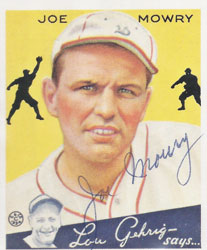
Joe Mowry was born in St. Louis, Missouri on April 6, 1908. After attending the University of Iowa, the 6’2″, 198 lb. athlete became a professional baseball player back in the 1930s and pre-war 1940s. His major league career consisted only of the 192 games he played for the Boston Braves in parts of two and all of one season. From 1933 to 1935, the switch-hitting, right hand throwing outfielder played as a reserve member of the roster for the Boston Braves, batting .233 with 2 HR for his brief big league career. For his ten season minor league career (1931-34, 1936-41), Mowry hit .328 in 908 games for several teams, also finishing with 70 career minor league home runs.

Joe Mowry’s big, but usually forgotten moment in baseball came in a game the Braves lost to the Pirates, 11-7, at Forbes Field in Pittsburgh in the afternoon of May 25, 1935, but it wasn’t  for anything he actually did by his own ability. It was for the man he replaced in one of the most legendary ordinary games in baseball history. That was the date of Babe Ruth’s “Last Hurrah” as a home run hitter. It was the day the “on-his-last-legs” Babe showed one last time as the greatest slugger of them all, crushing 3 monster home runs, and also his last career home runs #s 712, 713, and 714 – and on one a day in which a fourth hit gave him a perfect game at the plate – one capped off with 6 RBI.

It’s been often lamented that real life could not have done with this moment what the script writers did with it in the 1948 flick, “The Babe Ruth Story.”

Who would have believed it?

In the film, Ruth (played by William Bendix) has to settle for a single in his last time at bat and – at the same time – he comes to the lucid understanding, as he stumbles his way to first base, that this is the time to call it quits. In the movie, Ruth calls over to the Braves bench, signaling to his “up-until-the-three-homers-moment, critical-of-him” understudy to come take his place at first as a pinch runner.

In fiction, Babe Ruth is taking himself out of his last ever glorious game – and rightly so, turning baseball over to the next generation.

The kid (presumably Joe Mowry) runs over to take Ruth’s place as the pinch runner, but the Babe can see that the young man is feeling badly about his previous trash talk about Ruth as a has-been. Before “Mowry” can really apologize to Ruth, the Babe picks up on his mood and says something close to this paraphrase: “It’s your time now, kid. Don’t worry about it. If you take care of baseball, baseball will take care of you.”

Of course, that was the irony lost on me when I first saw the movie at age 10. This is also the time in the story line in which Babe Ruth finally realizes that the Braves were never serious about naming him their next manager, as he supposedly had been led to believe, and that they only had acquired him from the Yankees as a boost to the gate – and clearly not as a positive example of how baseball takes care of its own to those who serve the best interests of baseball by their high level of play.

Reality, of course, has been overrun by the legendary movie ending over the years. A large number of people today actually think that the 3-Homers-in-Pittsburgh show was Babe Ruth’s actual sweet adieu – and the last game of his storied career.

It wasn’t.

Babe Ruth played 5 more games after “Pittsburgh” – going 0 for 9 official times at bat, and 0 for 13 in total plate appearances before he actually played his actually last game  at the Baker Bowl in Philadelphia on May 30, 1935. (This paragraph was edited for accuracy and clarity on 3/15/2016.  In our original statement, we errored in stating that Ruth went 0 for 13 in his last 13 times at bat. We meant to say 0 for 13 in his last total plate appearances. He was 0 for 9 in official times at bat after the big game at Forbes Field.-  Our apologies.)

Joe Mowry never knew a bigger day in baseball than the time he replaced Babe Ruth in right field, late in the 3-homer game.

There also is no evidence we’ve found that Mowry ever bad-mouthed the aging Babe Ruth in reality – as the anonymous younger teammate in the 1948 Ruth film so completely did. There’s also hardly any proof, either, that many people today remember that Joe Mowry was the guy who took Ruth’s place in the field in 1935 during his last “big” game.

Joe Mowry died at the age of 85 in St. Louis, Missouri on February 9, 1994.

____________________

 eagle-0rangeBill McCurdy

Publisher, Editor, Writer

The Pecan Park Eagle

Houston, Texas

https://bill37mccurdy.com/


First March “Not-So-Mad-in-1939” Champs

March 14, 2016
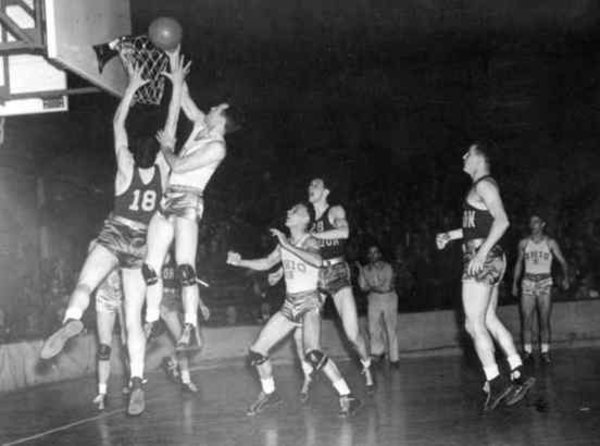
March 27, 1939: Oregon (dark uniforms) fights off Ohio State, 46-33, to become first NCAA college basketball tournament champion.

March 27, 1939: Oregon (dark uniforms) fights off Ohio State, 46-33, to become first NCAA college basketball tournament champion.


Some reports on Oregon, the first NCAA Division One basketball champions of 1939, applauded them for their 6’2″ superior average height – an advantage that still allowed them to take the court with enough speed and athleticism to handle the field. Here’s how one Associated Press report handled the first tournament championship game played on the campus of Northwestern University before 5,000 fans in Evanston, Illinois on March 27, 1939. – The final score was Oregon 46 – Ohio State 33.

____________________

Oregon Thumps Ohio State, 46-33, for NCAA Cage Championship

____________________

WEBFOOTS GET AWAY TO SIX-POINT LEAD AND STAY IN FRONT

____________________

Superior Ball Handling, Good Basket Eyes Find Bucks Bringing Up Rear.

____________________

Evanston, Ill (AP) – The University of Oregon, displaying superior ball handling and shooting ability, defeated Ohio State, 46 to 33, in the Northwestern university gym for the national basketball championship of the National Collegiate Athletic Association.

The Webfoots connected for six points before the Buckeyes found the range and the west coast five was never headed after that. The Bucks, handicapped by the height of Oregon and the fancy floorwork of their foes never were able to tie the score.

The Webfoots delighted the 5,000 spectators with their almost magical handling of the ball on the offensive. On defense, they were just as alert, seldom giving Ohio State more than one shot at the ball before regaining possession of the ball.

Winners Stall.

Ohio State remained within sight of the Oregon five until the last ten minutes of the game when the Webfoots had run a 34 to 25 lead. Thereafter Oregon breezed along with stalling tactics that precluded any sustained rally by the Big Ten Champions.

Scoring honors for the winners were rather evenly divided, with John Dick hitting for 13, Captain Bob Anet and Lauren Gale for ten each and Wally Johansen nine points.

Hull, leading scorer of the Big Ten and mainstay of the Buckeye attack all season, played brilliant ball, but on offense was held to 12 points, five under his average for the other Ohio (State) games this season. Bob Lynch and Bill Sattler were next for the Ohioans with seven points each.

Box Score:

OREGON FG FT F PTS   OHIO STATE FG FT F PTS
Gale F 3 4 0 10 Hull F 5 2 2 12
Dick F 4 5 3 13 Baker F 0 0 0 0
Wintermute C 2 0 1 4 Stafford F 0 0 0 0
Anet G 4 2 3 10 Shick C 1 0 1 2
Johansen G 4 1 1 9 Sattler C 3 1 0 7
Pavalunus G 0 0 0 0 Lynch G 3 1 3 7
Mullen G 0 0 0 0 Boughner G 1 0 0 2
Dawson G 1 0 4 2
Mickelson G 0 0 2 0
Maag G 0 0 0 0
Scott G 0 1 1 1
TOTALS 17 12 8 46   TOTALS 14 5 13 33


~ Associated Press, Lincoln Nebraska State Journal, March 28, 1939, Page 8.

____________________

 eagle-0rangeBill McCurdy
 Publisher, Editor, Writer

The Pecan Park Eagle

Houston, Texas

https://bill37mccurdy.com/

First Night Game in Houston History: 1892

March 13, 2016

manchester-logo


The following delicious excerpt from “Houston Baseball: The Early Years, 1861-1961” is simply one among a thousand or so reasons to read the only comprehensive and accurate history of baseball in the Bayou City – all the way back to its earliest discernible roots in the 19th century. Originally titled and put into preliminary research motion by yours truly, years ago, and then finally written and exhaustively researched by several of us from the Larry Dierker Chapter of SABR* – from 2011 to 2014 – this work rose as testimony to the fact that there truly are steep mountains in social research that we do not climb alone. Thanks to the great team effort by our working group, and the indomitable force that Mike Vance provided all of us as our tireless managing editor, the factual bones of Houston’s earliest baseball history now join together much better under the flesh and blood of documented content.  And if that were not enough, the whole thing soars in the mind’s eye from a plethora of historic photographs and the inspired artwork of Patrick Lopez – who recreated in watercolor inclusions how all of Houston’s earliest ballparks appeared from newspaper details of their constructions. You say you want more? – Iconic Houston sports writer Mickey Herskowitz, who was around as both an observer and a participant in the transition of Houston from a minor league town into a major league city in 1961-1962, gave the book its glorious passage to the future by writing the epilogue chapter.

Our work was beautifully published by Bright Sky Press of Houston as a 368-page hard copy with dust jacket. If you would like to order a copy, please contact our Larry Dierker Chapter President of SABR*, Mr. Bob Dorrill,

By e-mail at: BDorrill@aol.com

Or by phone at: 281-361-7874

SABR stands for the “Society for American Baseball Research”. It doesn’t cost much to join and your only qualification for membership is that you have a deep love for the game of baseball and its history. We meet once a month for a “buy your own dinner” and presentation by some of the biggest names in Houston baseball. As a member, you will also receive a number of quality production baseball magazines during the year – and it is low cost too. Seniors and everyone under 30 pays only $45 a year. Everyone else pays $65 a year. – What a deal!

If you call Bob Dorrill, talk to him about SABR memberships. They are even cheaper with 3-year memberships. Bob will be happy to sign you up, if you are interested.

____________________

First Night Game in Houston History: July 22, 1892

Although the first Houston regular season night baseball game played under permanently installed arc lights did not occur until July 22, 1930, the very first night game in Houston wasn’t even played as late as the 20th century. With the help of a primitive portable rig of arc lights, the actual first night game in Houston was played on May 21, 1892 as an exhibition of night baseball. (Houston Post, July 23, 1892.)

” (July 22, 1892) …. this was also the year of the first night game in the history of Texas or southern baseball. It took place at the park at Travis and McGowen. * Houston had gotten electricity more than a dozen years before, and when the between-the-halves series with Galveston had ended, (Houston manager) John McCloskey cooked up a plan to follow the lead of several other cities around the nation and try an exhibition under the lights.

“The momentous evening came on July 22, 1892. For three days previous, workers had been installing nine arc lights on poles at ‘different parts of the field’ to make the diamond as bright as daytime. Herb’s Light Guard Band, one of the top musical acts in town, was hired, and numerous other entertainments were planned for the circus-like event.

“About a thousand people bought tickets for the extravaganza. They were treated to multiple foot races between well matched players from each team, including a 50-yard dash by the two beefiest of the lot, first baseman Charley Isaacson of Galveston and Houston’s catcher, Tub Welch. There was a goat race, a potato race, a watermelon eating contest in which James H. Bostick consumed his entire melon in 28 seconds, and of course, a brief baseball game.

“The (Galveston) Sandcrabs wore their normal uniforms, but the (Houston) Mud Cats were attired in the widest variety of garb. Their ballplayers clad as clowns, vaudevillians, and jockeys. Manager McCloskey was dressed as the Uncle Sam-like cartoon character Brother Jonathan, and utility man Neil Donahue was decked our as Annie Rooney, a character from a popular song, complete with a dress and blond wig, which didn’t slow him down in a 100-yard race. Deemed a success, the whole affair was repeated in Galveston later in the year.”

  • On February 20, 2016, the site of Houston’s first full league professional base ball team in 1888 – and referenced in our book as “the park at Travis and McGowen” – was formerly noted by an historical plaque at the site by The State of Texas Historical Commission, in full support from the Harris County Historical Commission, by the name now determined to have been its most common identity reference – the Fairgrounds Base Ball Park. – Had it not been for the bulldog determination of our SABR editor, Mike Vance, this proper recognition, as well as the one achieved last year in behalf of West End Park as Houston’s second professional baseball venue – never would have happened. Thank you, Mike Vance, for all you’ve done and continue to do in behalf of historical discovery and preservation. The City of Houston and the State of Texas both owe you a debt of gratitude. Just be sure you prepare a small cadre of apprentices along the way. As you well know, this challenge runs forever beyond our lifetimes – and it all falls down the unguarded moment this culture wakes up to find that no one is left to care.

~ Houston Baseball: The Early Years, 1861-1961; Bright Sky Press; 2014; Mike Vance Editor; Chapter Four: Early Professional Ball, 1888-1904; By Mike Vance and Bill McCurdy; Page 76.

____________________

 eagle-0rangeBill McCurdy

Publisher, Editor, Writer

The Pecan Park Eagle

Houston, Texas

https://bill37mccurdy.com/

First Night Game in MLB History: 1935

March 12, 2016
March 24, 1935 Ethan Allen of the Phillies At Bat 1st MLB Night Game Crosley Field, Cincinnati Reds 2 - Phillies 1.

March 24, 1935
Ethan Allen of the Phillies At Bat
1st MLB Night Game, Crosley Field, Cincinnati
Reds 2 – Phillies 1.

__________

NIGHT GAME AT CINCY A SUCCESS

__________

But Big Leagues Still Wonder How Many

Nights Fans Would Still Come Out

__________

By Hugh S. Fullerton, Jr.

Associate Press Sports Writer

(Regarding Game of May 24, 1935)

__________

The first night game in baseball history was written down today as a great success.

But there still remained the business of checking up on how many of the 20,242 who turned out at Cincinnati last night to see the $50,000 floodlighting system turned on by President Roosevelt in Washington, (a) great preliminary display of fireworks, a considerable gathering of notables, and, incidentally,  a 2 to 1 victory for the Reds over the Phillies, would pay to come back some other night.

The whole question of baseball after dark in the big leagues seems to hinge on that matter. The attendance at that “experimental” game appeared to justify the cash outlay and to put to rest any fears that players might be injured because of the strange playing conditions.

The Reds got only four blows off Joe Bowman and Jim Bivin, who pitched the eighth inning, but they made them count more than Philadelphia’s six off Paul Derringer.

~ A Hugh S. Fullerton, Jr. article excerpt, Associated Press, Moberly (MO) Monitor Index, May 25, 1935, Page 6

__________

Just an opinion here. What a difference eighty years makes – and it certainly didn’t take the game that long to get where it is now. Major League Baseball in 2016, including all of its biggest shows, has been owned by the night for decades. The real story that needs to be written today is how night baseball changed the culture of players and writers who covered the game. Between the coming of night baseball, jet plane travel, and television exposure, the whole business of having fairly anonymous time for teammate and writer bonding – and night time pleasure-seeking that worked in the Babe Ruth era – was about to be altered forever.  Some players and writers will continue to have problems with drugs, alcohol, and monogamy til the end of time, but they will never again have the leisure time at night, the anonymity they once enjoyed prior to television, or the bonding opportunities they once had on long train rides together. The days for cranking up the impulse wheel of the group mind above the clickety-clack of the rails are a long time gone.

Throw in millionaire salaries today as another big variable curbing behavioral restraint for many, but certainly not all players in the 21st century – and  the fact that today’s media is not the players’ benefits buddy looms big too. Most of today’s media will publish lurid stories on player miscreant behavior. – and most players who misbehave in this era are still smart enough to be more secretive about their runs down the road to ruin. – TPPE

____________________

 eagle-0range Bill McCurdy

Publisher, Editor, Writer

The Pecan Park Eagle

Houston, Texas

https://bill37mccurdy.com/

Courtesy Runner

March 11, 2016

Courtesy-Runner____________________

Courtesy Runner


By The Pecan Park Eagle


It’s very hard to steal a base,

The pitcher’s always on your case,

To stay upon the bag – from which you lead.


He sideways takes a look, so still,

It let’s you know, if looks could kill,

That you may have to die – to fill his need.


And if you take a few steps more,

He puts you on the infield floor,

Scrambling to go back – with all due speed.


What’s with this guy, this ace lame brain?

Who’s booked you on the “stay put” train?

Why does he play all out – in awesome greed?


His club is up by eight to none,

We’re in the ninth – with two outs done,

I need this job – with four kids home to feed.


An act of simple courtesy,

Would be for him – to look and see,

A free run at this point – I could embrace.


But then again – it might backfire,

‘Cause if Ace tried – to save my hire,

Was this a time for “stealing” any base?


My manager would jump and shout,

The fans would yell – “throw this bum out,”

My wife might even hit me with a vase!


The club would quickly outright me,

Before I had a chance to plea,

My ever-sorry – sad and stupid case!


You just don’t run on two outs, see,

Trailing by eternity,

You do? – You get cut fast – in dire disgrace!


No thanks, Ace ! – I’ll pass on the courtesy run!

_____________________

 eagle-0range Bill McCurdy

Publisher, Editor, Writer

The Pecan Park Eagle

Houston, Texas

https://bill37mccurdy.com/

Revenge of the Buffalos Falls Short

March 10, 2016
Buff Revenge Dream Falls Short March 30, 1930

Buff Revenge Dream Falls Short
March 30, 1930


The day after they took a good old country butt-kicking by 17-2, from a team called the New York Yankees, no less, the Houston Buffs arose from the still smoking ashes of a sad and sore Sunday morning on March 21, 1930 to almost act out and complete their fulfillment of the immaculate perception that most over-matched losers hold for a next day opportunity. “Let us at ’em,” simply stampeded through the herd as they jumped out to a 4-0 lead in the bottom of the first inning.

Crafty little Buff right-handed starter Floyd Rose had the Yankees dancing from a string through the first six innings. Rose may have been playing over his head, juiced more than a little by the  aforementioned “immaculate perception” that a lightly regarded AA Texas League team like the Buffs could even dream for six innings of upending the high and mighty Yankees.

Using a cool and cruel curve ball over that deep six starting venture, Rose had held the Bronx Bombers at bay, striking out 7, and surrendering only 4 singles, 1 double, and 1 unearned run – as the Buffs held tight to a 4-1 lead. Sometimes, “a Rose is more than a Rose is more than a Rose.” Babe Ruth also had been held hitless – and he would end the game with an 0 for 5 goose egg by Buffs pitching on the day, failing even to get the ball out of the infield. Without further evidence, we only presume by popular public conjecture that Ruth may have used Saturday night to explore whatever passed for “night life” in Houston back in 1930. Perhaps he even discovered nearby Telephone Road.

7,000 fans had shown up at Buff Stadium for the Sunday Buffs-Yankees game. By the top of the seventh, Houston fans had reason for concern.By that time, Rose had tired and his curve ball had disappeared back to the “playing-over-my-head” shelf of the “Rosey-Hope” mind. The wilting Mr. Rose was replaced by Allyn Stout, but not before the Yankees had scored 2 runs and reduced the Buffs lead to 4-3, going into the bottom of the seventh.

A single run by the Buffs in the bottom of the seventh – and a matching single score by New York in the top of the eighth – kept the Houston lead at 1 run as the game moved to the top of the ninth with the home team holding on to a 5-4 scoring margin.

In the top of the ninth, almost every last inch and ounce of a perceived revenge win for the Buffs had disappeared. Houston pitcher Stout wasn’t able to live up to his name either. Hard hit and well placed consecutive singles by Lou Gehrig, Tony Lazzeri, and Dusty Cooke netted 2 runs, sending the Yankees to the bottom of the ninth with their first lead of the day, a 6-5 spotter.

The Buffs barely resounded a hoof-beat rally in the bottom of the 9th. Going quietly, the Yankees won again, this time by only 6-5, but this time, proving once more that – the actuality of superior talent most often wins out over the perceptual upset goals of the ability-challenged underdog. Heart helps. But you also “gotta have” strategic hits. And relief pitching stops on the other guys. The Buffs had neither.

Future Hall of Famer Waite Hoyt was today’s Yankee starter. Hoyt recovered from an early shaky start. He stayed through five innings, long enough to keep his club in the game before yielding to relief stints by Roy Sherid in the sixth and Bill Henderson in the eighth. Sherid was removed for a pinch hitter in the top of the eighth. Bill Henderson shut out the Buffs over the last two-innings to get the win. – Allyn Stout took the loss for the Buffs.

March 30, 1930 1 2 3 4 5 6 7 8 9 ~ R H E
New York Yankees 0 0 0 0 1 0 2 1 2 ~ 6 12 1
Houston Buffalos 4 0 0 0 0 0 1 0 0 ~ 5 11 2

2BH> NYY: Cooke, Koenig – HOU: Felix

3BH> NYY: None – HOU: Williamson

HR> NYY: None – HOU: None

WP: NYY: Henderson

LP: HOU: Stout

Venue: Buffalo Stadium, Houston TX

Attendance: 7,000

Time: 2 hours 20 minutes

Umpires: Owens and Dominick

References:

San Antonio Express, March 31, 1930, Page 9.

Darrell Pittman, Astros Daily, E-Mail, March 9, 2016.

____________________

 eagle-0range Bill McCurdy

Publisher, Editor, Writer

The Pecan Park Eagle

Houston, Texas

https://bill37mccurdy.com/


Ruth and Yanks Destroy 1930 Buffs, 17-2

March 9, 2016
Ruth and Kids By Opie Otterstad

Ruth and Kids
By
Opie Otterstad


It wasn’t pretty. The New York Yankees blew through town on Saturday, March 29, 1930, on their winding way to the end of spring training. While they were here, they destroyed the Houston Buffs at Buff Stadium by the resounding thump of 17-2.

Babe Ruth led the demolition with a 4 for 6 day that included his 3rd home run of the pre-season, along with a double and two singles. In his two no-hit-credit times at bat, the Sultan of Swat, even in action against minor league vermin foes, also reached first on an error and was retired once on a ground out.

Other Yankee batting assassins joined in the merriment.  2nd baseman Tony Lazzeri also homered for New York – and shortstop Mark Koenig battered Buff pitching for a 4 for 5 day. The Yankee pitching duo of starter and winner George Pipgras (6 innings) and reliever Tom Zachary (3 innings) gave up only 2 runs and 6 hits by the over-matched Buffs.

Buff starter Ray Lingrel took the loss for the Buffs. Lingrel and two other Buff pitchers gave up 17 hits on the day. Not a player of any note took the field for Houston that day. Dizzy Dean later in the season made his first fly-by appearance with the 1930 Buffs, but this was a year prior to the great Houston Buffs of 1931. That one featured both Dean and the young Ducky Joe Medwick.

I don’t really have time to research it right now, but 1930 probably was the same year when, earlier that Saturday morning, Babe Ruth had a chance to address a full house of Houston kids at the old City Auditorium in downtown Houston. (The City Auditorium was located where Jones Hall now stands.) From a photo I’ve seen of Ruth on the stage, speaking from midway to the left side as the camera point of view, the body language of the kids in the picture suggests that it was a loving, loud, and most animated lucky gang of young Houston fans in the house that very special day.

This story also drives home a thrill chill awareness to this former kid “Babe Fan,” who was only 10 years old when the Bambino died in 1948:

When Babe Ruth hit his  homer at Buff Stadium in 1930, he did it only 2.5 miles from the future home of Eagle Field in Pecan Park. That’s as close as our intrepid little future gang of Pecan Eagles would ever get to actual contact with The Babe, but that’s OK. The spiritual connection for some of us with Babe Ruth still knows no time and space physical barriers. Even now.

References

San Antonio Light, March 30, 1930, Page 49.

Galveston Daily News, March 30, 1930, Page 25.

Darrell Pittman, Astros Daily.

Reporting Note

The San Antonio Light reports that Babe Ruth went 5 for 6 in the game, but the Galveston Daily News and several others I examined report the Babe going 4 for 6, with one “safe on error” call and one ground out. My inclination to accept the “4 for 6” report as the truth. Perhaps the San Antonio papers went to press too soon to know about an infield hit call that may have been reversed later and re-designated as an error.

____________________

 eagle-0range Bill McCurdy

Publisher, Editor, Writer

The Pecan Park Eagle

Houston, Texas

https://bill37mccurdy.com/


Bill Gilbert: 7 Astros Prospects in Top 100

March 9, 2016
Bill Gilbert was the primary pioneer founder of Larry Dierker Chapter of SABR in Houston, Bill now lives in the Austin area, but he remains an avid fan of baseball, a brilliant analyst of the game, and dedicated writer of his observations. The Pecan Park Eagle is both honored and pleased to publish Bill Gilbert as a volunteer contributor to our efforts here.

Bill Gilbert was the primary pioneer founder of the Larry Dierker Chapter of SABR in Houston. Bill now lives in the Austin area, but he remains an avid fan of baseball, a brilliant analyst of the game, and a dedicated writer of his observations. The Pecan Park Eagle is both honored and pleased to publish Bill Gilbert as a volunteer periodic contributor to our efforts here.


Baseball America Ranks Seven Astro Prospects in Top 100

By Bill Gilbert, SABR Member / Baseball Analyst and Historian

With thirty major league teams, each could expect to have 3 or 4 prospects ranked in the top 100.  In 2016, Baseball America has ranked 7 Astro prospects in their top 100.  Four teams failed to place a prospect in the top 100, the Angels, Mariners, Marlins and Orioles.  In 2015, the Astros had only 2 players in the top 100, Carlos Correa (No. 4) and Mark Appel (No. 31).  Correa was promoted to the Astros in June and went on to become the AL Rookie of the year while Appel was traded to the Phillies after the season and has not yet appeared in the majors.  He is not ranked in the Baseball America Top 100 in 2016.

The Astros organization had an exceptionally successful minor league season in 2015.  Their top six minor league teams all made the playoffs and two (AAA Fresno and Rookie level Greenville) won their league championships.  Astro minor league teams had the highest overall winning percentage of all major league farm systems.  As a result, a number of minor leaguers progressed as prospects and all seven of the current players ranked in the top 100 were promoted during the season and are on the top 100 list for the first time.

The seven Astros on the 2016 list come from 3 different sources.  The two infielders were college players, the two outfielders were drafted and signed after high school and the three pitchers were obtained in trades.  The top Astros prospect is A.J. Reed (No.11), a slugging first baseman from the University of Kentucky who batted .340 and hit 34 home runs at the Class AA and AAA levels in 2015.

The next Astro player ranked is Francis Martes (No. 20), a pitcher received in a trade with the Florida Marlins.  Martes, 20, compiled an 8-3 record across 3 levels in 2015 with a 95 mph fastball and a power curve.  The third ranked prospect is shortstop, Alex Bregman (No. 42), the Astros top draft choice in 2015 from LSU who batted .294 across two Class A levels last year.  Next are the two outfielders, Kyle Tucker (No.  61) and Daz Cameron (No. 74).  Both turned 19 in January and broke in at the Rookie League level last year.  Tucker, the brother of Preston Tucker of the Astros, has some power potential and Cameron’s strong suit is speed.  They should play at low Class A this year.

The final two Astro prospects on the top 100 list are pitchers Joe Musgrove, 23, and David Paulino, 22. Both pitched across 3 levels in 2015 with positive results.  Musgrove, obtained in a trade with Toronto, was voted the Astros minor league pitcher of the year in 2015, with a 12-1 record and an ERA of 2.10.  He works in the 90-93 mph range and issued only 8 bases on balls in 101 innings pitched.  Paulino came to the Astros in a trade with Detroit and was 5-3 with an ERA of 2.98.  His fastball reaches 97-98.

Baseball America projects Reed and Musgrove to reach the majors in 2016 with Martes and Bregman to make it in 2017.  Paulino is projected for 2018 and Tucker and Cameron in 2019.

General Manager Jeff Luhnow has made a few mistakes since he took over in 2011 (releasing J.D. Martinez and drafting Appel ahead of Kris Bryant, etc.) but he has done an excellent job with draft picks and trades in putting together a competitive major league team and rebuilding the farm system that should allow the team to be competitive for the foreseeable future.  The early part of the rebuilding (2011-2013) was painful but it appears that it may be worth the wait.

Bill Gilbert

3/7/16

billcgilbert@sbcglobal.net

______________________________

 eagle-0range Bill McCurdy

Publisher, Editor, Writer

The Pecan Park Eagle

Houston, Texas

https://bill37mccurdy.com/