Archive for the ‘Uncategorized’ Category

Goodbye, Minnie, Goodbye

March 2, 2015
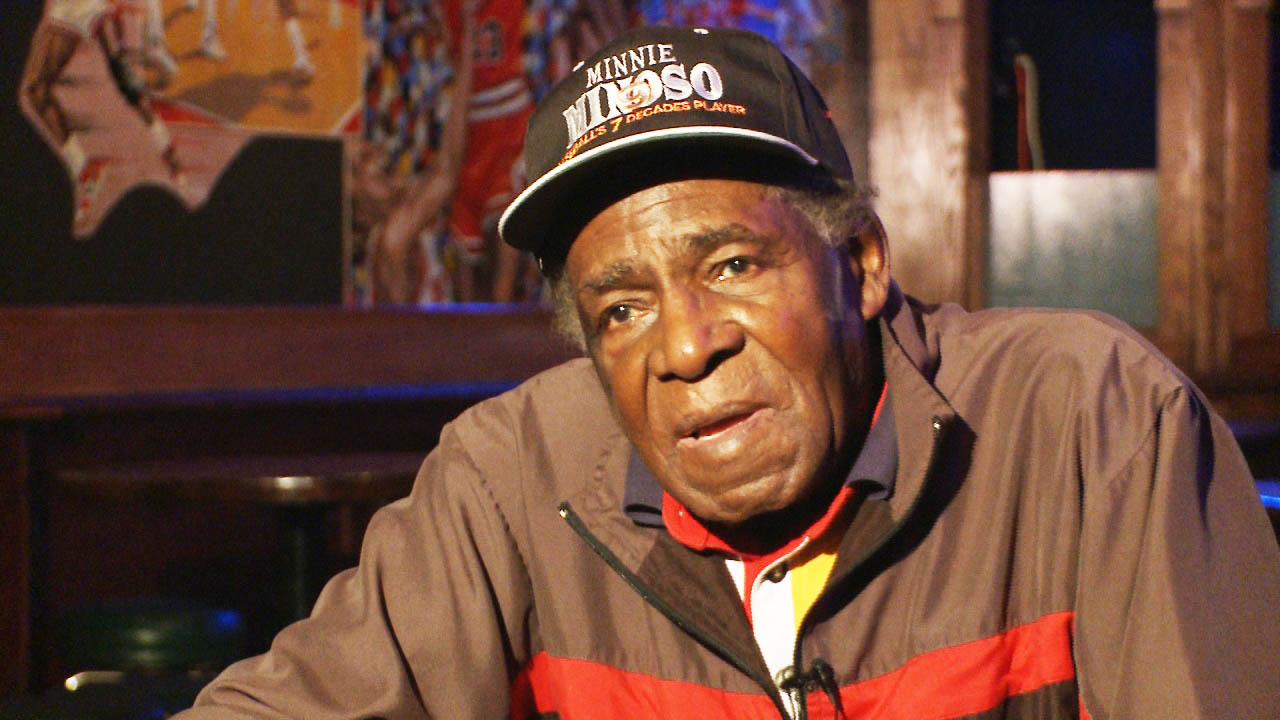
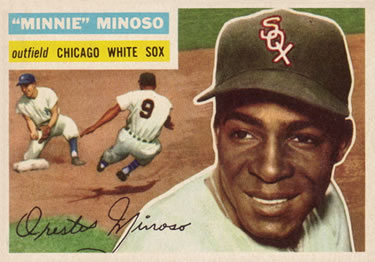
ORESTES “MINNIE” MINOSO Born: November 29, 1925 Died: March 1, 2015

ORESTES “MINNIE” MINOSO
Born: November 29, 1925
Died: March 1, 2015


Sunday, March 1, 2015. Minnie Minoso died today in Chicago at the age of 89 – thus, putting a final end to the wildly playful rumor that Minoso might be able to persuade the new commissioner to allow him another “one time at bat” token appearance with the Chicago White Sox this coming season that would expand his career MLB record to a total of six (6) decades as an active big league player. Minnie previously played for five consecutive decades (1940s, 1950s, 1960s, 1970s, and 1980s), but only the first three of those units were  serious part of his career. Minoso played three games with the White Sox in 1976 and two games again with the Chicago American Leaguers in 1980 – simply to keep the decade streak going. He was 1 for 8 total at the plate in those two extended decades, with the lone single he collected coming in 1976. When he tried to keep it going in 1990, he was refused permission by then MLB Commissioner Fay Vincent, who rebuked the continuation of this practice as a stunt that detracted from the integrity of serious play.

We don’t think that decision by Vincent was a major setback for Minnie Minoso. He wasn’t the kind of guy who would willfully do anything to hurt the reputation of the game. He was just a fiery indomitable spirit from pre-Castro Cuba who nurtured his love for the game in the heart of all those Latin American countries that breed little boys to grow up fire-breathing baseball as either their ultimate – or only – sports dream worth chasing.

Look out for the landslide of career stories that will now be forthcoming as columns in memoriam in the immediate days ahead. If you are looking to reflect on what Minoso actually did in the 15 serious (1949, 1951-64) and 2 not-so-serious (1976, 1980) years of his MLB career, check out the impressive stats he put together over time on his way to a .298 MLB career batting average. If not everything there is to his story, which they are not, the numbers will serve to help remind you, as it has me, why we have not forgotten the great (BR/TR) left fielder and third baseman. For some of us, he was another premium baseball card hero from our sandlot days – and never one of the cards that ended up as a noise maker in our bicycle spokes.

We shall conclude here with a poem dedicated to both Minnie Minoso and the rest of us. Earlier today, I had a more personal reason to send the same poem to a dying friend, but I have since been informed that he has now slipped into a coma and may never be able to see or hear of it. I almost left it out of this column because of the personal emotions that tie me to the other situation and how they got stirred by the news of his coma. We may almost certainly will never speak again. In fact, even as I write, he may be gone.

That recognition did it for me. The lesson of everyone’s life and death, and that includes Minnie Minoso and my old classmate, who may have left this world on the same day, but their life lessons are also ours. Unless we too already have slipped into comas today, “The Clock of Life” is a poem for all people and all seasons. The sooner we get its meaning, and move on in greater appreciation for each moment we are here to breathe life into today as the only time we ever own, the better.

This one’s  especially for you, Minnie Minoso, and for all we may learn from your life!

Rest in Peace ~ with Love and Peace, Orestes “Minnie” Minoso! And thank you for, once upon a time, making our sandlot dreams as blue as the Houston summer skies once were – when yesterday  was today. These days, we choose to find the even deeper blue skies of our realization that everything that is beautiful, loving, and possible for us is within reach of us in dependence upon the choices we make each day that we are blessed to be here – and without us waiting for the first obstacle-free day to get started with anything we say is important to us. – You understood that truth, Minnie. Otherwise, you never could have made the career mark you left on baseball.

God Bless you too, as in – Now and Forever!

Minoso56

The Clock of Life

By Robert H. Smith


The Clock of life is wound but once,

And no man has the power,

To tell just when the hands will stop,

At late or early hour.


To lose one’s wealth is sad indeed,

To lose one’s health is more,

To lose one’s soul is such a loss,

That no man can restore.


The present only is our own,

So live, love, toil with a will,

Place no faith in “Tomorrow”

For the Clock may then be still.


Larry Dluhy Closes Houston “House of Cards”

March 1, 2015
Larry Dluhy Larry isn't retiring! There's no retiring in baseball collectibles! ~Larry's just taking his talents to the Internet!

Larry Dluhy
Larry isn’t retiring!
There’s no retiring in baseball collectibles!
~Larry’s just taking his talents to the Internet!


Don’t miss the article by David Barron at Chron.Com about the store-closing of Sports Collectibles in Houston. That business has been a staple in Houston for the past thirty-five years as one of our premier brick and mortar locations for the purchase of old baseball cards and an endless categorical list of other collectible sports artifacts that people seek, both in the name of sentiment and business trading. An old friend and baseball colleague, Larry Dluhy, is the owner, and a nicer fellow hardly ever walked the earth, as far as I’m concerned. Another Houston memorabilia dealer who falls into this same admiration category with me is Tom Kennedy, the baseball-loving guy who almost singlehandedly kept the Houston Sports Museum alive for years at the old Finger Furniture Store location at Cullen and the Gulf Freeway, but we are talking about Larry Dluhy today – and what his Texas store closings mean and do not mean, as we see them – from our catbird seat at The Pecan Park Eagle.

We considered headlines for this column – like the one we used – just to be cute. The reality, as we see it, is not that Larry Dluhy is folding his tent and going away. He’s just going where the collectibles market now lives today – and that’s on E-Bay – or some other cyber-marketing variants of that site. Like almost all other niche market areas of the USA shopper’s frenzy – and maybe the big items are working more this way too – people aren’t wandering around the congested streets of Houston looking for deals in the same old ways. Many of them now are digitally shopping for almost everything.  A guy that opens a “card shop” today is going to die of boredom or bad business waiting on the attack of the old piranha-mentality card shoppers of the past.

It’s a new day. For all of us. For everything.

I will always consider Larry Dluhy to be a friend, a collegial soul in our shared love for the game of baseball and the stuff of its history – and, very importantly, a fellow who, in my dealings with him during the time we both served on the Board of the Texas Baseball Hall of Fame as volunteer members, I remember well.  – Larry Dluhy’s right-spirited, unselfish effort will never be forgotten. – Not by me.

During most of the time he operated his storefront business, Larry’s late wife, Betsy, worked side-by-side with him to make sure their dream of success by working at something they felt passionately about was not just possible, but probable. And so it was to be for these two honest and likeable people – with the right mixture of love, spirit, common sense, energy, and dedication – succeed was what they did – and on so many levels.

When Becky died about five years ago, her services took place in this little chapel down in Fort Bend County. And when it was all over, it was a mixture of every day and very famous people who filed out the little center aisle. Nolan Ryan and J.R. Richard were both there that day, among other notables. As they departed down the chapel aisle, and in no disrespect for Becky, I couldn’t help but gravitate to an invading thought: “When healthy, and younger, walking plainly down this little church aisle at this very moment – comes what is probably the hardest One-Two throwing punch in the history of all baseball starting rotations – and I mean all time – and today – in this simple place –  they and their families are all here to pay a departing tribute – with everyone else – to Betsy Dluhy! – That is love and respect at a very high, but most humble level, dear friends.

Here’s the link to David Barron’s wonderful story:

http://www.houstonchronicle.com/sports/article/A-sports-collectibles-store-becomes-a-part-of-6103944.php#/0

Congratulations and Good Luck, Larry Dluhy!

A few thoughts on our sandlot days baseball card collecting rush to mind. In Pecan Park (1949-1953, esp.) my buddies and I were completely imbedded, or lost,  in the endless, fascinating, and always madly compulsive pursuit of those little cardboard proofs of our delicious childhood memories we all once new as baseball cards – the kind you got almost free – five to a pack – with a nickle purchase of a bubble gum stick whose sugary flavor hardly lasted all of thirty seconds. The cards were life – or bicycle spoke jazz – depending upon our greater needs of the day and who was on the card.

Let me put that last thought more plainly. – The always available cards of the O’Brien brothers, who once almost anonymously played for the Pirates, were the stuff that made our cycle noisemakers perpetually active in the bike spokes. The hardly ever seen cards of Stan Musial, Ted Williams and Mickey Mantle were the Holy Trinity back in the day. We were driven by the crazed spiritual pursuit of them, sometimes even vainly pursuing insider advance information on – how often and when these rarest of figures were set for projected release, by percentage of production per rare card – and by store delivery time and date schedule.

We never learned anything.

Buying all the cards we could get – with all the nickles we could hustle – and always hoping that our purchase would be on the first day on the store shelf of a new shipment – and not the last day of an old stock batch. – We never knew for sure, but that was all we had going for as a strategy. – That was our little version of the roulette wheel. We would have killed for the Internet, the social network and Google back then.

At first, it was all Bowman, with their great artistic facial close-ups. I always preferred Bowman. – They gave life and identity to our Mutual Game of the Day radio heroes that most of us only had seen in one of those heavily pixelated newspaper photos – or in the newsprint styled Sporting News – the kind of photo that showed a player swinging with his eyes closed – regardless of whether he knocked it out of the park or struck out.

Topps, of course, came along and introduced us to action shots. They were cool too. – Every time Yankee shortstop Phil Rizzuto had to leap catch a line drive to keep it from becoming a hit over the radio Game of the Day, he looked in our individual mind’s eye just liked he did on his Topps card. – How cool was that?

The memory of everything – from the taste of the gum itself – to the lingering aroma that found a longtime home within the fibers of the cardboard that supported the images and player information on opposite sides – is all – like yesterday –  even though – for many of us – it was long ago – if not so faraway – that baseball cards were the currency of our once young and much more innocent lives.

The only card that remains from my sandlot days collection is now preserved in a nice looking small frame. It isn’t Musial. It isn’t Williams. And it sure isn’t Mantle. – Truth is – of all the baseball cards I owned back then, I’m not even sure how this one is the one that survived – other than the fact that it somehow got misplaced in another box of my non-baseball related school materials that we found in a storage container years ago. Maybe I had a potential trade going at school that never worked out.

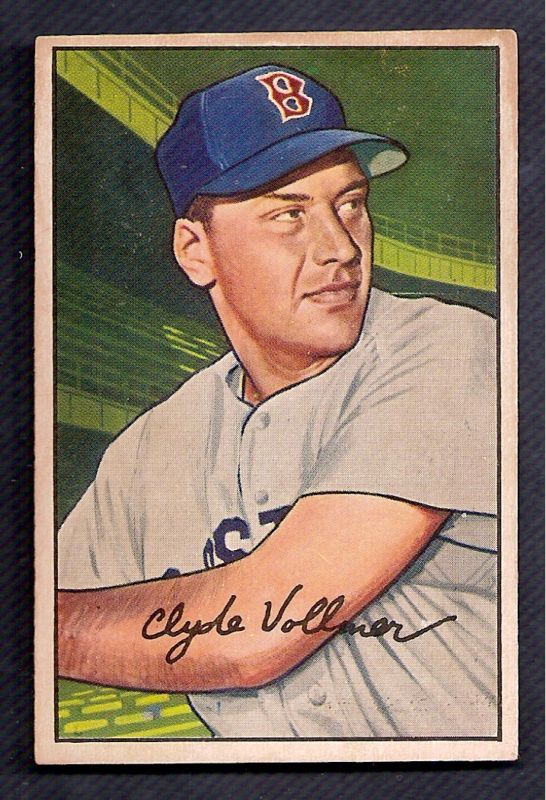
By chance, the surviving from my sandlot days collection is...  CLYDE VOLLMER.

By chance, the surviving card from my sandlot days collection is…
CLYDE VOLLMER.

Maybe, too, this is the lesson:

What is acquired by chance – only remains by chance.

And, unless I missed an important wisdom stop somewhere, and, in my case, that’s quite possible, I rather think that the just now expressed lesson about chance occurrences is a little bit larger than baseball cards alone.

Have a peaceful Sunday, everybody!


Who Are the Astros’ Top Minor League Prospects?

February 28, 2015
Bill Gilbert is a veteran member of SABR, a respected and exceptional baseball data analyst, and a free lance reporter for The Pecan Park Eagle.

Bill Gilbert is a veteran member of SABR, a respected and exceptional baseball data analyst, and a free lance reporter for The Pecan Park Eagle.

Who Are the 2015 Astros’ Top Minor League Prospects?

By Bill Gilbert

This is the time of year when various organizations involved in scouting develop lists of minor league prospects. Four such projections are from Baseball America, Baseball Prospectus, ESPN and John Sickels. Their lists of the top 10 prospects in the Astros organization are shown below:

BASEBALL AMERICA

# PLAYER AGE POS.
1 Carlos Correa 20 SS
2 Mark Appel 23 RHP
3 Vince Velasquez 23 RHP
4 Michael Feliz 22 RHP
5 Brett Phillips 21 OF
6 Colin Moran 22 3B
7 Teoscar Hernandez 22 OF
8 Josh Hader 21 LHP
9 Lance McCullers 21 RHP
10 Domingo Santana 21 OF


BASEBALL PROSPECTUS

# PLAYER AGE POS.
1 Carlos Correa 20 SS
2 Mark Appel 23 RHP
3 Vince Velasquez 23 RHP
4 Brett Phillips 21 OF
5 Derek Fisher 23 OF
6 Michael Feliz 22 RHP
7 Lance McCullers 21 RHP
8 Domingo Santana 21 OF
9 Colin Moran 22 3B
10 TeoscarHernandez 22 OF


ESPN

# PLAYER AGE POS.
1 Carlos Correa 20 SS
2 Mark Appel 23 RHP
3 Vince Velasquez 23 RHP
4 Colin Moran 22 3B
5 Brett Phillips 21 OF
6 Lance McCullers 21 RHP
7 Michael Feliz 22 RHP
8 Derek Fisher 23 OF
9 Josh Hader 21 LHP
10 J.D. Davis 22 3B


SICKELS

# PLAYER AGE POS.
1 Carlos Correa 20 SS
2 Mark Appel 23 RHP
3 Michael Feliz 22 RHP
4 Vince Velasquez 23 RHP
5 Domingo Santana 21 OF
6 Brett Phillips 21 OF
7 Josh Hader 21 LHP
8 Lance McCullers 21 RHP
9 Derek Fisher 23 OF
10 Teoscar Hernandez 22 OF


Carlos Correa and Mark Appel are clearly the top two Astro prospects. Both were No. 1 overall draft picks. Correa has steadily advanced through the minors, with a batting average of .308, but suffered a broken leg last year and missed half the season. He is reported to be fully recovered now. He should be at Double A in 2015.

Appel’s path has been a little rockier. He was hit hard, playing at Lancaster, in the High Class-A California League last year before doing much better at Double A Corpus Christi and in the Arizona Fall League. In fairness to Appel, Lancaster is considered by many to be the most difficult park in the minors for pitchers because of the constant wind and dry desert air. Appel should get some experience at Triple A in 2015.

Baseball America’s list of the top 100 minor league prospects contains only two Astros, Correa, (No. 4) and Appel (No. 31). Last year there were six. George Springer and Jon Singleton were promoted to the majors, Mike Foltynewicz was traded to Atlanta in the trade for Evan Gattis and Lance McCullers dropped off the top 100 list.

Velasquez is the consensus No. 3 prospect in the Astro organization. He was picked by the Astros in the 2nd round in 2010. However he has struggled with injuries and has pitched only 265 innings in the 5 years he has been in the organization. However, he has been effective when healthy, striking out 10.55 batters per 9 innings in his career. He should be at AA Corpus Christi this year.

Feliz has an arm that has impressed scouts since he signed out of the Dominican Republic in 2009. However, he has reached only the Low Class-A level and needs a breakout season.

Phillips had his breakout season in 2014, batting .310 with 17 home runs and 23 stolen bases in a season divided between Houston’s two Class-A teams. He was Houston’s 6th round draft choice out of high school in 2012. He should reach the Double A level in 2015.

Moran was the 6th player taken overall by the Florida Marlins in 2013. He was traded to the Astros in 2014 and finished the season at Double A Corpus Christi. He has a .297 batting average over 3 stops in his brief career but has not shown much power.

Hernandez has made steady progress through the Astros farm system in his four years since being signed out of the Dominican Republic. He had a strong 2014 season mostly at Lancaster, batting .292 with 21 home runs and 33 stolen bases.

Hader was drafted by Baltimore in the 19th round in 2012 and came to the Astros in the trade for Bud Norris. In 2014, he showed that it was possible for a pitcher to excel at Lancaster with a 9-2 record and an ERA of 2.92 and 9.68 strikeouts per 9 innings. He was named the top pitching prospect in the California League. He should be at Double A Corpus Christi in 2015.

McCullers struggled at Lancaster in 2014 with a 3-6 record and an ERA of 5.47. However, he struck out 10.32 batters per 9 innings.

Santana, the third Dominican on the top 10 list, signed with the Phillies at the age of 16 and was traded to the Astros in the Hunter Pence trade in 2011. His star lost a little luster in 2014 when he was promoted to Houston at mid-season and struck out in 14 0f his 18 plate appearances. However, he had a good year at Triple A batting .296 with 16 home runs despite an alarming total of strikeouts.

The only two players from the 2014 draft that made any of the lists were Derek Fisher, a supplemental first round pick that played in the College World Series for Virginia, and J.D. Davis, a third round pick from Cal State Fullerton. Both played well in short-season leagues. Fisher batted .310 with 17 stolen bases and Davis batted .293 with 13 home runs.

The Astros top prospects are all in the 20-23 age range and Santana is the only one who has played at Triple A. As a result, they are not likely to have an impact in 2015. Appel is the most likely to provide some help in this season. However, if their development continues, several should be ready to contribute in 2016.

If you want to check out these and other prospects, I have a deal for you. For over 20 years, I have spent a week or two checking out the Astros at Spring Training in Kissimmee, Florida both at the games and on the back fields where I first watched players like Jeff Bagwell, Morgan Ensberg and Hunter Pence. However, I won’t be going this year and our Villa at the Sheraton Vistana Resort is available for rent the weeks of March 14-21 and March 22-29 at a discounted price of $1100 per week. It is next door to Disney World and very convenient for attending Astros and Braves home games. The resort has numerous swimming pools and hot tubs, a miniature golf course and two restaurants. The Villa is well-furnished with two bedrooms, two baths, flat screen TVs and a complete kitchen. You can check it out at:

www.vistanatimeshare.com

Let me know if you are interested.

Bill Gilbert

2/26/15.

E-Mail:   bgilbert35@yahoo.com

Doc Tally: A House of David Great

February 27, 2015
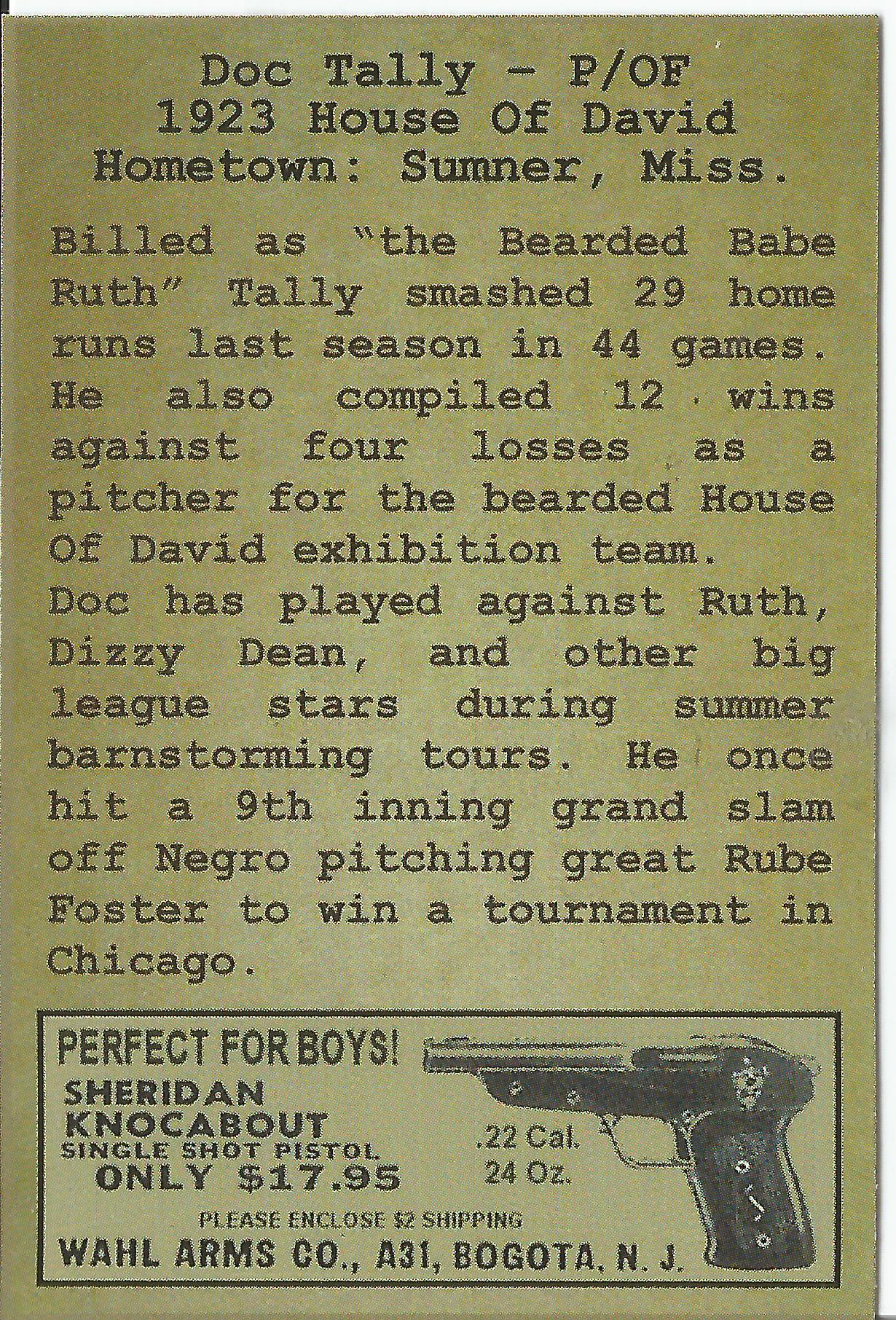
DOC TALLY HOUSE OF DAVID, 1914-1950  THE BEARDED BABE RUTH?

DOC TALLY
HOUSE OF DAVID, 1914-1950
THE BEARDED BABE RUTH?

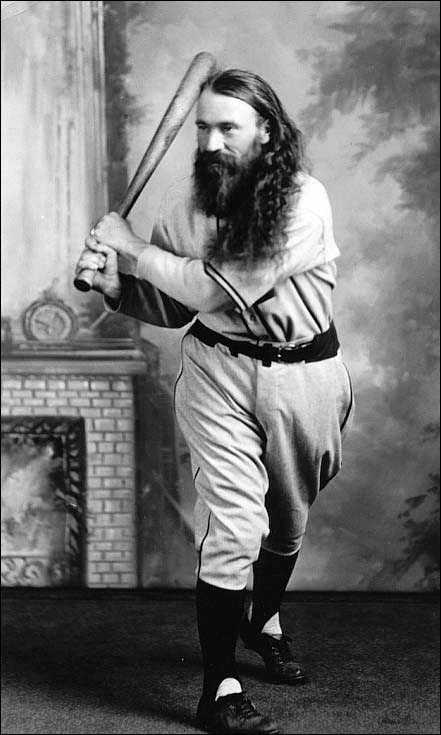
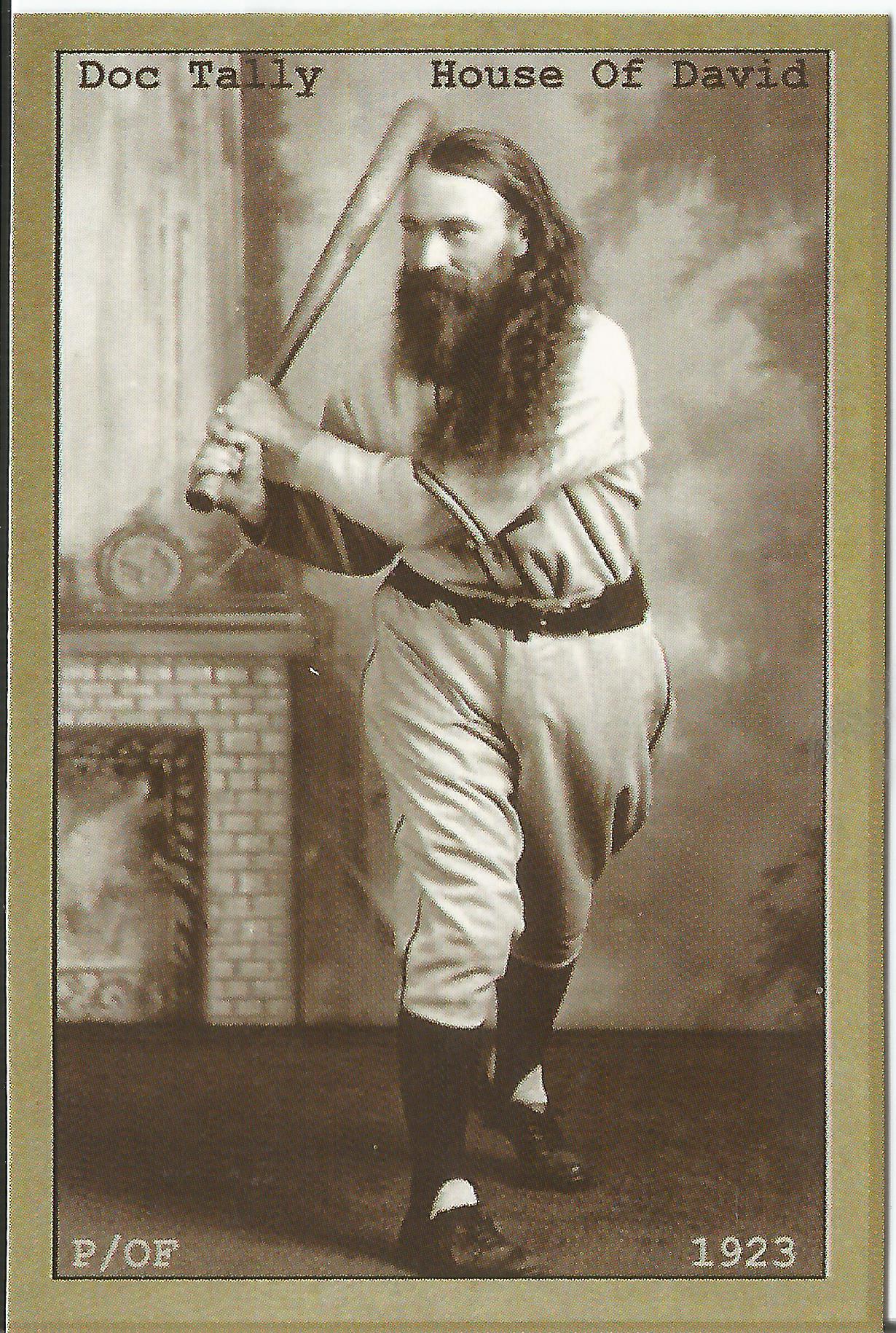
Jesse Lee “Doc” Tally of Sumner, Mississippi was a BL/TR pitcher/outfielder for the famously bearded House of David barnstorming baseball club, incredibly in itself,  from 1914 until 1950. As the back of the later shown card here says, Tally quickly found himself billed as “The Bearded Babe Ruth” – a clear “knock off” attempt to steal some gate thunder from The Bambino, but also apparently pretty well earned at his level of play. As the same card says, Tally hit 29 home runs in the 44 games that the House of David played during the 1922 season.

29 HR in a 44 game season works out to a percentage HR rate of .659 over the club’s much shorter season. Still, transposition of statistical performance for the same result at the big league level is always fun, even if flawed by too many intervening variables to even list in a brief column. The gross result is still a mind spinner. Had Babe Ruth homered in 65.9% of the 154 games of his American League season, he would have had 102 homers on the season, if we round off the last one to help him make that reach.

Clearly, there’s little to no chance that a player with that kind of potential would have been left to get lost on the back roads of America for thirty-six years, if he actually possessed that kind of insane talent.

Tally-Scan 3

Left handed slugger Doc Tally is also credited with being inventor of the famous House of David “Pepper Game” – and he also served his club as their ace knuckle ball pitcher. Unsurprisingly, House of David insiders for years considered Tally to have been their greatest player.


Thank you again, Bob and Daryl Blair, for the two contributing card images.

Thank you again, Bob and Daryl Blair, for the two contributing card images.

The history of the bearded ball club that grew as a sort of traveling ambassadorial baseball team extension of  the Israelite House of David in Benton Harbor, Michigan has been fairly widely documented. If you are interested in reading further about the club, you may want to search for a copy of “The House of David Baseball Team” by Joel Hawkins and Terry Bertolino (2000) as a place to start.

http://www.amazon.com/s/ref=nb_sb_noss?url=search-alias%3Dstripbooks&field-keywords=house+of+david+baseball+team

Here is an ancient SABR newsletter review (We do not have the date of same.) that also points to another possible supply source. I haven’t yet read this book either, so I cannot recommend it until I do and make my own decision on its merits:

http://www.peppergame.com/reviews.asp

“The House of David Baseball Team by Joel Hawkins and Terry Bertolino is one of the Images of America Series by Arcadia Publishing. Hawkins and Bertolino selected over 150 black & white photographs to illustrate the story of these traveling bearded ballplayers from Benton Harbor, Michigan. Also included in the 128-page book is a list of House of David and City of David ballplayers.”

The Society of American Baseball Research (SABR) newsletter


Postscript Addendum: Wow! Were those really the “good old days” when a “perfect for boys” .22 caliber pistol could be mail ordered for $17.95? Of course, we have to remember, back in the “good old days”,  people, especially immature, always angry, drug-addicted and drunk people weren’t around to use guns to kill other good people. The kids just used them for target practice, shooting squirrels out of trees, and the old lady’s cat from next door when it trespassed into their own back yards. If it didn’t want to die, the damn cat never should have invaded the kid’s territory. – Besides, it was just a cat. – Right? – And more than that, remember, it was only a single shot pistol! – If the kid was a lousy shot, the cat had a better than sporting chance of getting away before the kid could reload!

How To Give a Cat or Dog a Pill Differently

February 26, 2015

While researching old files for something else this morning, this irresistible piece from an anonymous source simply wouldn’t stay lost and buried in my digital creativity landfill any longer. Hope it contributes to the elevation of your spirit today as much as it has to mine. – Editor, The Pecan Park Eagle.


How to Give a Cat a Pill

HOW TO GIVE A CAT A PILL

HOW TO GIVE A CAT A PILL


  1. Pick up cat and cradle it in the crook of your left arm as if holding a baby. Position right forefinger and thumb on either side of cat’s mouth and gently apply pressure to cheeks while holding pill in right hand. As cat opens mouth, pop pill into mouth. Allow cat to close mouth and swallow.
  1. Retrieve pill from floor and cat from behind sofa. Cradle cat in left arm and repeat process.
  1. Retrieve cat from bedroom, and throw soggy pill away.
  1. Take new pill from foil wrap, cradle cat in left arm, holding rear paws tightly with left hand. Force jaws open and push pill to back of mouth with right forefinger. Hold mouth shut for a count of ten.
  1. Retrieve pill from goldfish bowl and cat from top of wardrobe. Call spouse from garden.
  1. Kneel on floor with cat wedged firmly between knees, hold front and rear paws. Ignore low growls emitted by cat. Get spouse to hold cat’s head firmly with one hand while forcing wooden ruler into mouth. Drop pill down ruler and rub cat’s throat vigorously.
  1. Retrieve cat from curtain rail, get another pill from foil wrap. Make note to buy new ruler and repair curtains. Carefully sweep shattered figurines and vases from hearth and set to one side for gluing later.
  1. Wrap cat in large towel and get spouse to lie on cat with head just visible from below armpit. Put pill in end of drinking straw, force mouth open with pencil and blow down drinking straw.
  1. Check label to make sure pill not harmful to humans, drink 1 beer to take taste away. Apply Band-Aid to spouse’s forearm and remove blood from carpet with cold water and soap.
  1. Retrieve cat from neighbor’s shed. Get another pill. Open another beer. Place cat in cupboard, and close door on to neck, to leave head showing. Force mouth open with dessert-spoon. Flick pill down throat with elastic band.
  1. Fetch screwdriver from garage and put cupboard door back on hinges. Drink beer. Fetch bottle of scotch. Pour shot, drink. Apply cold compress to cheek and check records for date of last tetanus shot. Apply whiskey compress to cheek to disinfect. Toss back another shot. Throw Tee shirt away and fetch new one from bedroom.
  1. Call fire department to retrieve the damn cat from across the road. Apologize to neighbor who crashed into fence while swerving to avoid cat. Take last pill from foil wrap.
  1. Tie the little ‘so-and-so’s’ front paws to rear paws with garden twine and bind tightly to leg of dining table, find heavy-duty pruning gloves from shed. Push pill into mouth followed by large piece of filet steak. Be rough about it. Hold head vertically and pour 2 pints of water down throat to wash pill down.
  1. Consume remainder of Scotch. Get spouse to drive you to the emergency room, sit quietly while doctor stitches fingers and forearm and removes pill remnants from right eye. Call furniture shop on way home to order new table.
  1. Arrange for SPCA to collect mutant cat from hell and call local pet shop to see if they have any hamsters.


HOW TO GIVE A DOG A PILL

HOW TO GIVE A DOG A PILL

HOW TO GIVE A DOG A PILL


1. Wrap the pill in bacon.

2. Toss it in the air anywhere near the dog.


Always works at the same percentage rate the sun achieves in  rising from the east each morning.

Plain and simple. It’s dogs over cats every time.


The Ballad of Billy Sunday

February 26, 2015

Sunday-Scan 1


“Chicago” (Sung to the tune of …. well …. “Chicago”)

Chicago – Chicago – that toddling town
Chicago – Chicago – I will show you around
I love it – bet your bottom dollar – you’ll lose – the blues in – Chicago – Chicago
The town that Billy Sunday – couldn’t shut down

On State Street – that great street – I just want to say
They do things – that they don’t do – on Broadway
They have the time – the time of their life
I saw a man – he danced with his wife in – Chicago – Chicago – my home town

Chicago – Chicago – that toddling town
Chicago – Chicago – I’ll show you around
I love it – bet your bottom dollar – you’ll lose – the blues – in Chicago – Chicago
The town that Billy Sunday – could not shut down

On State Street – that great street – I just want to say
They do things – that they never do – on Broadway – say
They have the time – the time of their life
I saw a man –  and he danced with his wife – in Chicago
Chicago – Chicago – my – home – town


Sunday-Scan2

“The Ballad of Billy Sunday” to these ancient ears always has been the great Frank Sinatra version of “Chicago” by Writer(s): Nowak, Fisher, Roy Hawkins, Lorenz Hart, Samuel L. Nestico, Rick R. Darnell, Sammy Cahn, Francois Joseph Charles Salabert, Fred Fisher and Richard Rodgers. – Some of their names read immediately like a membership list from the Songwriters Hall of Fame. The others live on more anonymously in their endless ride with the famous on the way from here to eternity.

In case you want more. ….

The Frank Sinatra You-Tube version of “Chicago” —->  

https://www.youtube.com/watch?v=NoKn7vkSMBc

The Evangelical Life of Billy Sunday —->

http://en.wikipedia.org/wiki/Billy_Sunday

The Baseball Record of Billy Sunday —-> 

http://www.baseball-reference.com/players/s/sundabi01.shtml

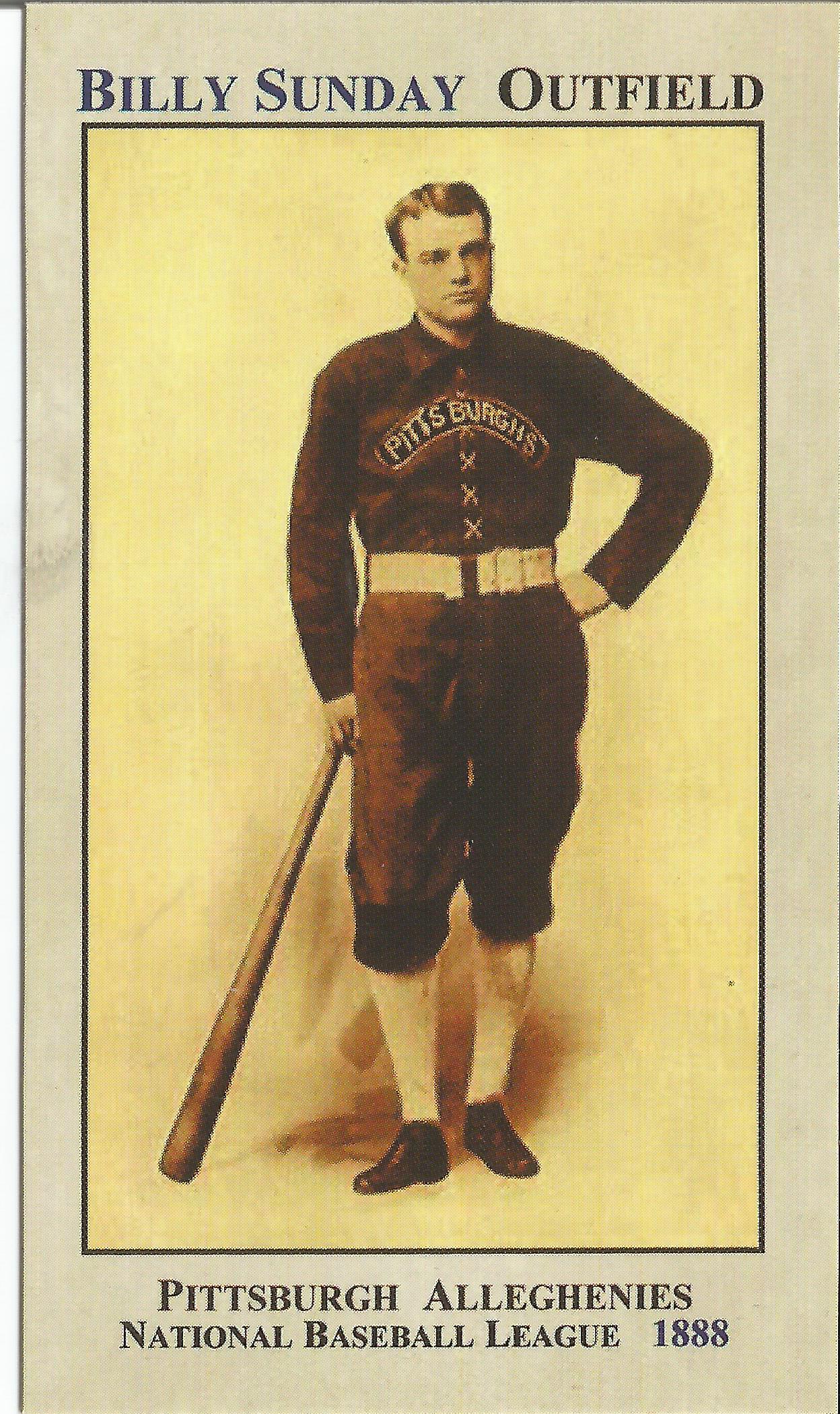
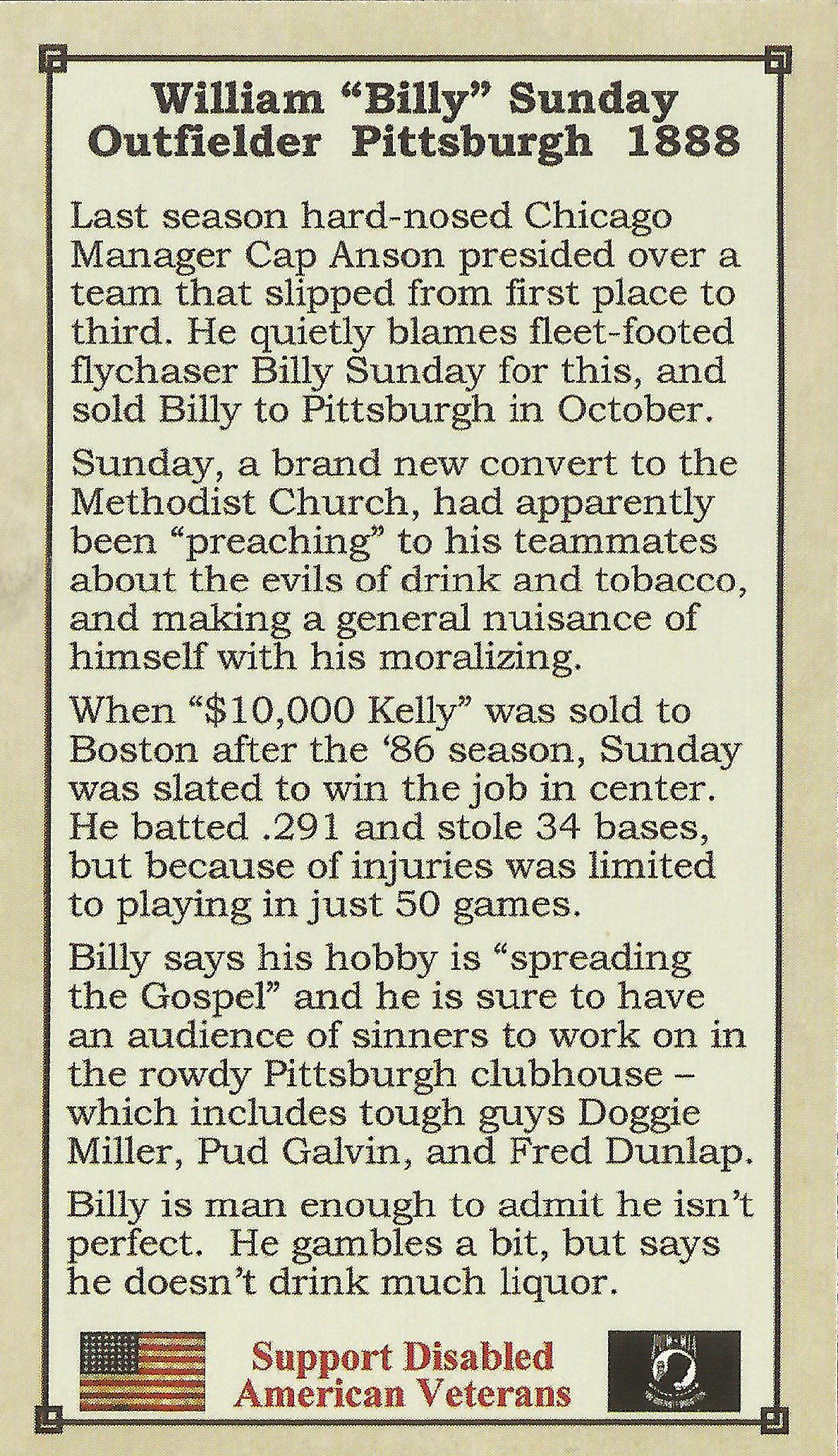
The Pecan Park Eagle again wishes to thank the Brothers Blair, Robert and Daryl, for their contribution of the card image that inspired the happy creation of this fun-to-put-together memoir of another great character from the early history of  baseball, the dead ball era predecessor or even a possible inspiration for a later born fictional character named “Elmer Gantry”, The Reverend Billy Sunday.


Mulvihill: Kid BP Pitcher for the ’51 Buffs

February 25, 2015
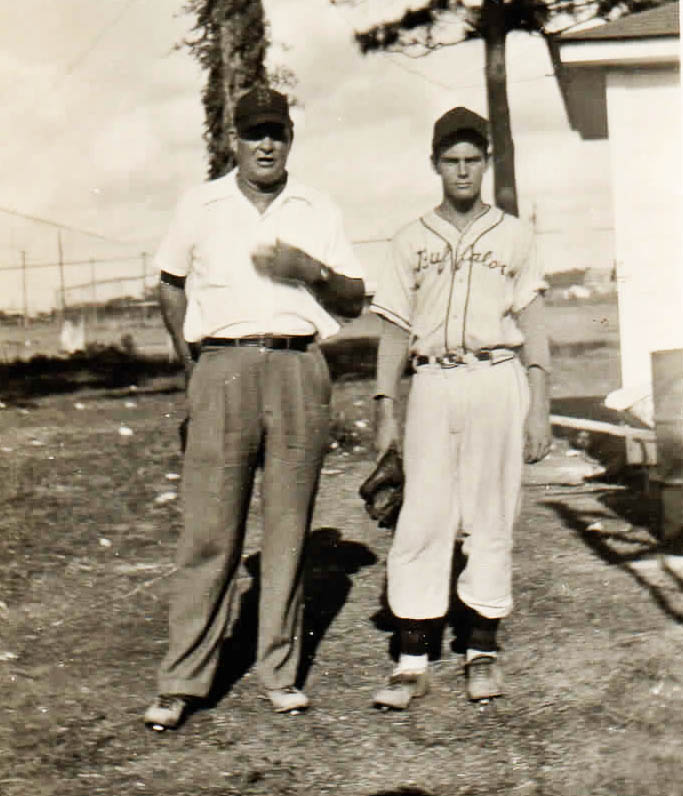
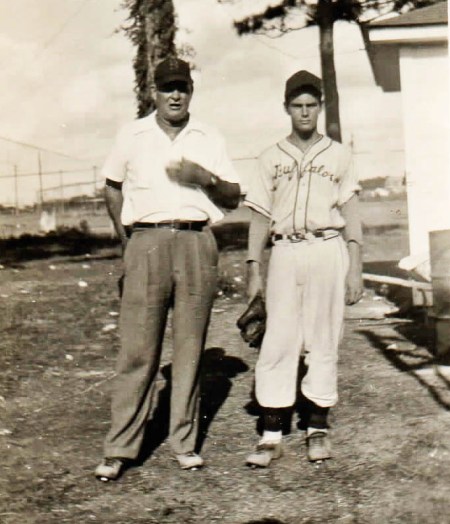
COACH WATTY WATKINS  AND MIKE MULVIHIL, AGE 13 1951 - THE KID WHO PITCHED BP FOR THE HOUSTON BUFFS ~

COACH WATTY WATKINS
AND MIKE MULVIHIL, AGE 13
1951
– THE KID WHO PITCHED BP FOR THE HOUSTON BUFFS ~

We are never too old to learn something new. Mike Mulvihill, my old friend and former classmate from St. Thomas High School (Class of 1956), is one of the most modest, down-to-earth people I’ve ever known. He never talks about his athletic accomplishments unless he is asked – and even then – it’s like pulling teeth. Mike always is guarded against the fear that someone may hear him and think that he is bragging.

Mike Mulvihill doesn’t have to brag. He was good. Dadgum good.

As one of the kids playing in our parochial school league, he was a terrific force as a pitcher in baseball and a running back in football. At St. Thomas, he teamed up with our also great Richard Quesada to lead the Eagles to three state TCIL titles in varsity baseball (1953, 1955, & 1956), also playing as a force for the St. Thomas American Legion team as it made its way to a state title in baseball during the summer of 1953. St. Thomas also won a state TCIL title during Mike’s 1952 freshman season and Mulvihill’s play in both baseball and football during high school were great enough to earn him a dual sport scholarship to Oklahoma State University starting in the fall of 1956.

As a pitcher for Oklahoma State, Mike played for the Cowboys team that took the 1959 NCAA Division One Baseball Championship at Omaha in 1959. This accomplishment established Mike Mulvihill in rarified company as the only student athlete from Houston St. Thomas who ever played for both a three-time state champion in baseball and a Division One National Champion in collegiate baseball, as well. We are hard-pressed to think of any other Houston high school to have performed that feat in baseball. Even in one exists, the accomplishment itself is spiritually singular.

Unfortunately for Mike Mulvihill, he stubbed his toe on the much later Bo Jackson cliche while playing football at OSU: “Because of an injury suffered in football, Mike’s future in either sport was taken from him.”

Post his life-changing injury, Mike Mulvihill proved that he was not the kind of guy to be derailed from a full life by adversity. He finished his degree at OSU, married Katie, a girl from Kansas and the love of his life, and then spent a professional career working in the oil field industry and raising a family. Mike is retired now – and living as a widower in a small town in north central Texas. Sadly, he lost Katie about three years ago. Although no one can replace her, Mike stays busy and in contact with his grown children, his grandchildren, and numerous good friends.

Now – here’s the proof of Mike’s modesty. A couple of days ago, Mike and I were discussing old times when, for the first time ever, he let it slip that he had once pitched batting practice against the Houston Buffs as a 13-year old youth baseball player.

“WHAT????” …. raced the thought through my head. …. “WHAT???” ….. I finally asked. – “How come you never told me about this until now?”

I got the almost expected Mulvihill answer: “I didn’t want to say anything that might sound like I was blowing my own horn or make you think I was bragging.”

As Mike relaxed and took the time to share this story with me, it proved to be one of the most awesome stories of kid achievement, old ties, serendipity, and a father’s love for his son that I’ve heard – and, believe me, I’ve heard some pretty amazing stories in my time.

The Houston Buff Story
Mike Mulvihill, Age 13 Pitcher Town House Buffs

Mike Mulvihill, Age 13
Pitcher
Town House Buffs

It was the summer of 1951. Al Hollingsworth, a native of St. Louis, was managing the Houston Buffs on their way to the Texas League Championship. Jack Mulvihill, the father of Mike Mulvihill, and also a much earlier “Kid from St. Louis”, was long-time settled and working in Houston. He was as proud as a only a father can sometimes be of his 13-year old son, Mike Mulvihill. Mike pitched for the Town House Buffs, a youth team managed by Father James Wilson, the longtime architect of the very powerful St. Thomas High School baseball program. Wilson also benefited from the presence of former Houston Buff and St. Louis Cardinal player Watty Watkins, a great baseball mentor who voluntarily helped coach and teach the young players of the Town House Buffs club. Mike Mulvihill was coming along at an astonishing rate of development as a pitcher and was also getting quite a bit of attention in Houston’s newspapers for his achievements in youth baseball.

One day, Manager Hollingsworth of the Buffs read one of these stories about the youth Buffs and noticed the name “Mulvihill”. He wondered if the kid might be related to another Mulvihill he had known back in St. Louis. He called Father Wilson at St. Thomas and learned that, yes, it was true. Mike Mulvihill was the son of his childhood friend Jack Mulvihill back in Missouri.

Hollingsworth called Jack Mulvihill, but let’s allow Mike Mulvihill to take it from here:
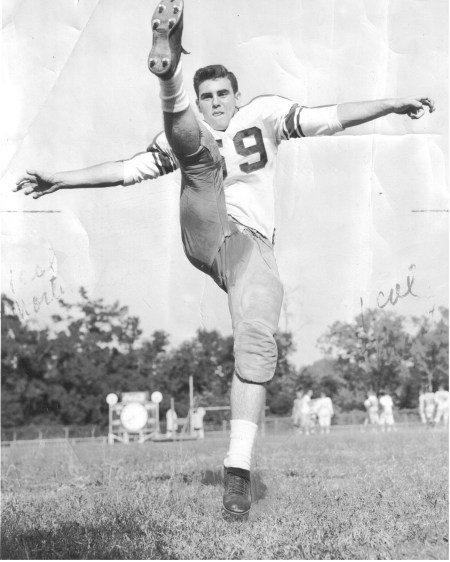
 

Mike Mulvill, Age 21 Oklahoma State Cowboys 1958

Mike Mulvihill, Age 20
Oklahoma State Cowboys
1958

“Boots Hollingsworth grew up in St. Louis, as did my father and uncle, and they knew each other as kids. All attended Beaumont High School, I believe, which was a producer of lots of famous ballplayers like Earl Weaver, Pete Reiser and Dick Williams. They also spent lots of time on the sandlots of a neighborhood area in St. Louis  known as ‘The Hill”. This was a largely Italian-Catholic area. This is where Yogi Berra and Joe Garagiola were neighbors.

 “Jack Mulvihill, my dad, hurt his knee badly in high school and that injury cut short his sports play. My Uncle Lee Mulvihill was a really good high school player. Lee gave up any hope of going to college due to finances and WWII. He joined the Navy and served in the Submarine fleet. He retired as a Lt Commander. 

“Dad was so thrilled to hear from Mr. Hollingsworth, maybe even more so than me. Dad’s excitement was my dismay. Mr. Hollingsworth had invited me to come out to Buff Stadium in my Town House Buffs uniform and pitch batting practice for the Houston Buffs.”

(It’s me again. Put yourself in Mike’s shoes. How would you have felt as a 13-year old pitcher who had just been invited to come pitch batting practice for your home town heroes at a time when they were tearing up the AA Texas League?)

“Dad really enjoyed our first BP trip to Buff Stadium. He got to visit with an old friend and, as Dad was prone to do, get in a little too much bragging to suit me. I always hated it when he did that whenever I heard it, and it was hard not to hear it when he was talking while I was pitching.”
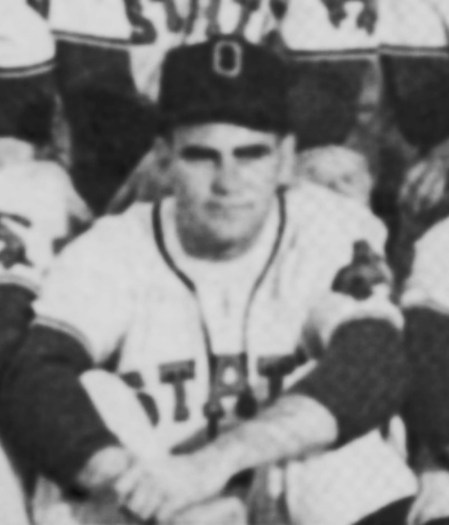
Mike Mulvihill, age 21 Pitcher Oklahoma State Cowboys

Mike Mulvihill, age 21
Pitcher, 1959
Oklahoma State Cowboys National Champions

 “I was in awe just being on the field that day in Buff Stadium. It was huge in comparison to the kinds of fields where I normally played. I remember throwing behind a screen for the first time. As  memory serves, I only threw to 4 or 5 hitters. In the back of my mind, I believe I pitched to Jerry Witte, Rip Replulski, Billy Costa and Dick Landis. I recall Landis for a special reason. Many years later, when we lived on West Galveston Island, a man came up to me and said, ‘I know you’. He explained that he used to play for the Houston Buffs and remembers this kid (me, of course) who pitched to him in batting practice. As it turned out, I remembered him also. It was Dick Landis, who was a catcher for several seasons.  

“Later I again pitched against Jerry Witte, Gerry Burmeister, Frank Mancuso and some other ex-Buffs while playing on a summer league team that Father Wilson coached. It was the St. Thomas American Legion team he entered in the summer league to play against older players. Our club was sponsored by Stuart’s Drive Inn. The competition against real professionals also gave us a real edge against players of our own age. I recall that one of the ex-Buff  pitchers was the knuckle baller, Al Papai. That was the one and only time most of us would ever have to bat against that particular pitch. Thank goodness.

“I did pitch a second short round of BP for the Buffs, but don’t remember much about the second trip. I do remember that both times I pitched the Buff hitters were not out there to show me mercy. They were swinging for the fences. As best I remember, none of them ever made it.

“My time in baseball and football are both filled with many fond memories. I still am most thankful for all the life lessons that came to me from playing team sports, and, of course, all the life long friends I’ve met as a result of this part of my life. When all  is said and done, I am simply most grateful to all the many people who helped me along the way.” – Mike Mulvihill.

The Pecan Park Eagle thanks you today for a most wonderful story, Mike Mulvihill, and I must say this to you also as an ancient friend and classmate: I know of no one from our graduating St. Thomas Class of 1956 who is more deserving of honor and respect, both for your accomplishments in sports and your genuine goodness as a most decent and giving human being. And guess what too? I am just one member of your St. Thomas legion of respectful friends and fans. You truly are – the embodiment of everything that St. Thomas High School is all about.


Now is the Time for All True Seasons

February 24, 2015
The passionate pursuits of humanity do not so easily reduce to seasonal compartmentalization.

The passionate pursuits of humanity do not so easily reduce to seasonal compartmentalization.


About a year ago this coming spring, a month or so prior to the NFL draft, one fairly otherwise ordinary day found a crisp way into the memory bank that starts all thoughts on this subject. With the car radio turned on to a Houston sports talk show, what came through the air from the voices of callers was hardly a surprise. This was during the time of year in which most local callers wanted to register their two cents on who the Texans should draft with their first pick above all others.

Would the Texans draft someone who could be the answer to their long-term QB needs – and should it be Johnny Manziel? Well, the second part of that question has now died and gone to the land of no longer relevant, but the first part already is popping up on the air in pre-March Madness time in college basketball and during the start of spring training for the Astros, but it should really hit high gear again with talk show callers once the round ball insanity finds its wrap in early April. The difference now, of course, is that the Texans no longer have the range of candidate choices and a pick in the order of things to even have a shot at either of the two strongest QB candidates. The price of improving from terrible to mediocrity in one season is the damage it does to the Texans’ position in the draft in an even less fertile field of choices.

All that aside, the thing that comes to memory this morning is the caller I heard that ordinary day who innocently, unconsciously, but most sincerely made this evaluation of the pre-NFL draft period in 2014. “This is the toughest part of the football season,” the man said.

That’s right, the man said it for the millions, probably most of whom are heavily NFL fans, but we feel fairly certain that there are some deep-blue basketball fans – and we know first hand that there are some dyed-in-the-wool baseball fans – who feel the same 24/7 year-round connection to their own favorite sports and teams.

The only thing seasonal about sports today are the generally same times of year that the “Big Three” play their overlapping game schedules, but, as rings truer by the day for almost all we do in our culture, sports too are wired in to the same 24/7 consciousness of them by the always consuming technological advances in media coverage that fan any question of shocking possibility into a consuming flame of almost ceaseless public media discussion – until some other shocker comes along and knocks it off the road of mass attention.

The Ray Rice Punch Out of his then girl friend in the elevator last year rang a very loud bell about the much larger national problem of partner abuse in relationships. From its 24/7 media coverage, however, it rippled open other specific questions about how our relevant institutions handle these matters. In the Rice case, Commissioner Roger Goodell and the NFL quickly became poster children for the way their initial “once over lightly” treatment of Rice was the perfect example of how the very entities we expect to handle tough social issues like partner abuse may actually transform themselves into enablers of the problem by their unwillingness to “know” the facts or take tougher actions. As a result of the immediate media heat that fell directly upon Godell and his “taking on water fast” first position of “I never saw the actual punch; I didn’t know how bad it really was” rhetoric, Goodell reversed course in time to partially save face and put in motion a position that may help work against ignoring the problem in the future through an aggressive program of public awareness that the NFL is opposed to men beating up on women and children. The Adrian Peterson case, of course, also fed into this change of course in the NFL’s former soft policy on abuse.

Media. Media. Media. – That one public service message for TV that the NFL put together has the look of a classic. A baker’s dozen of some of the meanest looking guys in the NFL staring angrily at the camera – all expressing a simple message – “No More – Abuse of Women” – to all the abusive men out there sitting around, clean, neat, and sober – or just on the couch in their tidy-whities, drinking beer and getting drunk by half time – was altogether pretty powerful stuff.

Everything is about change and our adaptability to undeniable forces in our lives. In today’s multi-media world, none of us may any longer even  go to the grocery store without making an appearance on someone’s security camera – and cell phone cameras? Wow! Have you ever wondered how many stranger crowd shots and selfies also include a few incidental images of you, as well? – George Orwell was right when he wrote “1984” as his future piece. He simply underestimated the timeline by not understanding how the personal computer and this thing we call the Internet and a plentiful supply of digital cameras and portable phones would change our world forever.

People still exist who write pen and ink letters. Some still use typewriters – the modern kind – the ones that run on electricity. And all these people still have land line phones, but absolutely will not get anywhere near a cell. Home phones often lack “call waiting” and “voice mail” features because – after all – we can only talk to one person at a time and – who needs a message? – If someone really wants to talk with us, they can call us back when we are “picking up”! Right?

Most of these people are called “seniors”, but not all of us seniors are so change resistant. It’s like this example. When the then younger people of my generation once bought their tickets for the train ride through life, many did not buy passage to a future they could not see coming. So, when we got here, those who didn’t like what they saw just decided to treat everything that was new, scary, or intimidating as something that didn’t exist. Computers were too out of the picture from the future they once imaged.  s

Some of us, however, only regret that we will not be around long enough to see the really great further changes that are on the way. In the meanwhile, we will just burrow into the joy of the only time zone that really exists, anyway – the here and now – and soak it all in to the best of our adaptive abilities.

The talk show caller was right. There is only one season – and that season is the present – and our involvement in the here and now with whatever fires our passion for living without harming the health of others or ourselves. I guess I’m still “old-fashioned” in that regard. If we cannot find our passion-calling in life without our actions bringing  intentional or collateral damage to others or ourselves, whatever we are doing to cause these harms is not a passion course, but a call to evil and insanity by the human ego.

The things are really important to us everyday are confined to seasonal interest only – and there’s no better example of that than Rogers Hornsby. When someone once asked him what he did during the winter, when there were no baseball games to be played, he supposedly answered, “I just stare out the window and wait for spring.”

Too bad old Rogers didn’t have access back then to a personal computer and the Internet. That little window is a lot more interesting during the winter time than the one that only peers out to the yard and today’s sky.


A Pecan Park Eagle Baseball Movie Quiz

February 23, 2015
(1) Left to right above, who are the two actors decked out here as Chicago Cubs personnel?

(1) Left to right above, who are the two actors decked out here as Chicago Cubs personnel?

Since The Pecan Park Eagle is now charged with the responsibility for developing the March Meeting of SABR’s Larry Dierker Chapter Baseball Trivia Quiz, we thought it would be fun to get a little spring training here with a practice run for all our readers to take on as free agents. This time we will stay with the baseball movie theme and again post the correct answers as the first post in the column section which follows this piece. Give yourself a point for each correct item of information you are asked to supply and please demonstrate here that your self esteem has nothing to do with test results by posting your scores and other feedback as comments on this column.

And remember, the quiz began with the question posted under the above featured photo!

(2) What mid-20th century character actor played both a St Louis catcher in “It Happens Every Spring” (1949) and a Pittsburgh manager in the original “Angels in the Outfield” (1951)?

(3) In the re-make of “Angels in the Outfield” (1994), who played the manager of the angel-infested outfield? And what team suffered the blessing this time? Was it the Pirates again? Or some other club? Name it. (Hint: If you struggle over the club’s precise name for that season, getting the location and nickname of this remake site club will get you a correct answer, anyway.)

(4) In “The Stratton Story”, pitcher Monty Stratton lost a leg in a hunting accident. Name the city and alleged ballpark where Stratton made his rather limited “comeback” as a pitcher in an organized baseball game.

(5) In “The Pride of St. Louis” (1952), who played Dizzy Dean and his brother, Paul Dean?

(6) In “The Babe” (1992), Babe Rut started hitting home runs in bunches during the dead ball era of Wee Willie Keeler and his “hit ’em where they ain’t” batting philosophy. In that context, what did Babe Ruth supposedly say (at least, in the script) to defend his power approach to the press? (No exact words are required here. Expressing enough to get the gist of his remarks generalized will earn you credit.)

(7) All right. All right. All right. What currently still hot actor had a minor role in the 1994 version of “Angels in the Outfield”?

(8) Name the actor from “Bull Durham” who played catcher Crash Davis?

(9) In the silent movie, “Speedy” (1928), what famous baseball player actually appeared as a frightened rider in the cab of Harold “Speedy” Lloyd on a sinus-clearing drive from downtown Manhattan to Yankee Stadium?

(10) Who played outfielder Jimmy Piersall and his impossible-to-please father in “Fear Strikes Out” (1957)?

(11) In “The Babe Ruth Story” (1948), Babe Ruth signs a player contract with the Boston Braves under the mistaken impression that he eventually will move up and become the manager of the club. When he generally fails as a player, and in spite of his famous last hurrah 3-homer day in Pittsburgh, he learns that he is being released and there never was a clear guarantee of his future as the manager. When someone suggests he should “sue baseball” over this issue, the movie-Babe makes a statement that we invite you to finish:

“Sue Baseball? No. That would be like _____ ___ ______ !” (Finish the statement.)

(12) In “The Winning Team” (1952), what was Grover Cleveland Alexander’s day job before he became a professional baseball pitcher”

(13) Who played Rogers Hornsby in “The Winning Team” (1952)?

(14) When Ronald Reagan  (as Grover Alexander) in “The Winning Team” (1952) comes in to face Tony Lazzeri for that famous bases-loaded real moment in the bottom of the 7th of 1926’s World Series Game 7 at Yankee Stadium, he replaces Cardinal starter Jesse Haines on the mound. Question: What famous and excellent MLB pitcher played the role of Jesse Haines in this movie?

(15) At least ten (10) then current or former big leaguers also appeared in “The Winning Team” (1952) in minor roles. Name as many as you can. Right answers are all worth a point each.

(16) The mother of actress Jamie Lee Curtis played the female lead in the original “Angels in the Outfield” (1951) movie. Name her.

(17) Who played the dual role of Professor Vernon Simpson and Pitcher Mike “King” Kelly in “It Happens Every Spring” (1949)? And what actress played his always worried girl friend?

(18) In “It Happens Every Spring” (1949), what was the secret quality of the formula that allowed a college professor to become a virtually unbeatable pitcher until his magic elixir ran out?

Here’s where the quiz gets really easy. Nobody goes home with a zero on one of our quizzes. On these two, you get 1 point credit for each – but only if you post these answers as comments below – along with your test score, including these two potential points added in advance because you did post your results. – Got it? – Good! – And many thanks for your participation.

(19) Auto Point 1): Who is your pick for the most credibly athletic actor to ever have played a baseball player in a movie?

(2o) Auto Point 2): Who is your pick for the least athletic actor to ever have played a baseball player in a film?

… You say you want more? Here’s one final BONUS POINT, but only if you get it right! Finish the following quote by manager Tom Hanks in “A League of Their Own” (1992):

“There’s no crying in ——–!”

______________________________

Thanks for spending the time with us. Hope you now have the few extra minutes left to post your results for bonus credit in the comment section.

Thanks,

The Pecan Park Eagle


Larry Dierker’s 18th Birthday 1964 1st Start

February 22, 2015
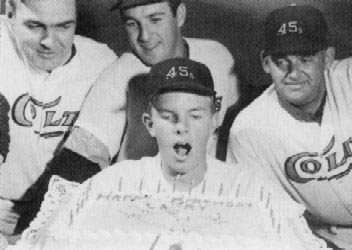
Larry Dierker's 18th Birthday Party September 22, 1964 ~How many people in the world ever got to celebrate their 18th birthday by striking out Willie Mays before they blew out the candles on their cake? ~

Larry Dierker’s 18th Birthday Party
September 22, 1964
~How many people in the world ever got to celebrate their 18th birthday by striking out Willie Mays in a big league game before they blew out the candles on their cake? ~

The Pecan Park Eagle apologizes to our friend and SABR colleague Larry Dierker for the absence of a kinder, more local source we surely would have found at the downtown Houston library, but on a late Saturday night column writing streak, we had to settle for the golden gate grist that flavors the tone of this writer’s reporting for the Oakland Tribune.

This newspaper account was the most detailed game report we could find through our digital newspaper resources that are available to us through our Newspaper Archive subscription service. The Tribune’s game story headlines bypass the storyline of Larry Dierker’s first start of his MLB career on his 18th birthday at old Colt Stadium on September 22, 1964. The header goes straight to the blaring shout that Juan Marichal will be going for his 20th win of the season in today’s game against World Series “Perfect Game” hero, also a former Giant and now an aging, but new starter for the Houston Colt .45s.

As all of who have followed his career from his incredible start on his 18th birthday to this very moment already know, Larry Dierker’s accomplishments and contributions to baseball are among the greatest in Houston MLB history – and far too numerous to bear repeating this morning in a brief first game focus.

Safe to say, Dierker was far more than good enough to have earned that retired #49 jersey number that will continue to hang forever in whatever venue survives as the future home of the Houston Astros. No one else has contributed so broadly to Houston baseball as “Dierk” has done either. As a player, columnist, essayist, book author, playwright, broadcaster, historian, community volunteer, Astros club manager and SABR Chapter namesake – nobody else in Houston baseball comes to mind who has done it better in so many important different ways.

Thanks for all you’ve done, Larry! You are very much loved, admired, and appreciated by all of us deep-orange and dark blue Houston baseball fans.

A lot of us too were breaking into our new fields of endeavor around the same time that Larry Dierker was making his 18th birthday MLB debut back in 1964. Those of us who started our careers  out of the bright public limelight that quickly found Larry in baseball had a big advantage on the “Kid from LA”. True, we also had to start our new life jobs by acting as though we already knew what we were doing before we actually did, but here’s where any similarity ends. Nobody put our daily learning curve results in a box score – and then wrote a daily public news story on how things were going for us on the job.

People like Dierker – and all other truly successful athletes – have to have owned the hides of a buffalo and the focus of an eagle to get through that crunch of media attention and still be able to play the game unfettered, if that’s even possible.-  Now it’s even worse. Today it’s 24/7 media attention. How crazy is that?

At any rate, here’s that Oakland sportswriter’s story of Larry Dierker’s first game, warts and all. The box score comes to us courtesy of that wonderful source we know as Baseball Almanac.com.

______________________________

JUAN SEEKS NO. 20 AGAINST DON LARSEN

By Emmons Byrne (Oakland Tribune, September 23, 1964, Pages 39 and 41)


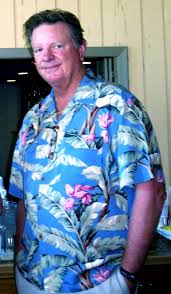
Over time, Larry became famous for his Hawaiian shirts and his "hang loose" personna.

Over time, Larry became famous in Houston for his Hawaiian shirts and his cool “hang loose” persona.

In contrast to Wednesday (It actually was Tuesday) when they started 18-year-old Larry Dierker, the Colt .45s will send Don Larsen to the post tonight against the Giants’ Juan Marichal.

Larsen’s chief claim to fame is the no-hitter he pitched in the 1956 World Series but he is also well known to Candlestick fans as a relief man the last two seasons.

The Giants sold him to Houston on May 20 and at the age of 35 he has reblossomed as a starting pitcher.  In seven starts since he moved into (the) rotation Aug. 18 he has an earned run average of 1.71.

So it would appear that Marichal will have to work for his 20th victory.

It was amateur night last evening and the 5,609 fans who turned out to see Dierker make his debut after a brief schooling in the Florida Instructional League left early.

It was just as well for the lack luster contest dragged far on into the hot and humid night before (Giants pitcher) Dick Estelle was credited with his first big league win by a score of 7-1.

Dierker, a bonus baby from Los Angeles, hit the backstop with his first pitch to Harvey Kuenn and eventually walked him.

Hal Lanier followed with a single but the 6’4″ right-hander kept on firing. Mateo Alou fouled to the catcher and Jim Hart and Willie Mays struck out.

Orlando Cepeda greeted the Kid with his 31st homer of the year, a blast into the left field seats, to open the second round.

Tom Haller and Jim Davenport singled and both advanced on a wild pitch. Haller came home on Kuenn’s sacrifice fly to right and Davenport also scored when Rusty Staub’s throw went through catcher Jerry Grote.

In his inexperience, Dierker failed to back up the play and he was well on his way to an early shower in the next inning.

He tried to pick Mays off first, but the throw was wide and Willie didn’t stop running until he reached third. He then scored on a wild pitch and Larry Yellen, another rookie just recalled from Oklahoma City, relieved.

Larry sailed fa ew balls over the batters' heads by accident, but he has been known by his wry sense of humor to also float a few punchlines over his listeners' heads at times..

Larry sailed a few balls over the batters’ heads, but rarely by accident, and he also has been known by his wry and playful sense of humor to float a few story punchlines over his listeners’ heads.

(The balance of the article is largely about the Giants’ faint pennant hopes, but the writer does note that Harvey Kuenn picked up his 2,000th hit on a 9th inning single, further noting that the ball then was retrieved by umpire Jocko Conlon for Kuenn’s souvenir case. The Giants went on to win the game, 7-1, but let’s allow writer Emmons Byrne to finish his game account.)

The lone Colt run came in the fourth on Grote’s triple against the center field fence.  Mays’ throw was up the line and Grote kept on running to score as Willie was charged with an error.

______________________________

Baseball Almanac Box ScoresSan Francisco Giants 7, Houston Colt .45s 1
San Francisco Giants ab   r   h rbi
Kuenn lf 4 0 3 1
Lanier 2b 6 1 2 0
Alou rf 5 1 2 0
Hart 3b 4 1 1 0
  Pagan ss 0 0 0 0
Mays cf 4 1 1 1
Cepeda 1b 4 1 2 3
Haller c 4 1 2 0
Davenport ss,3b 5 1 1 0
Estelle p 4 0 0 0
  Murakami p 0 0 0 0
Totals 40 7 14 5
Houston Colt .45s ab   r   h rbi
Kasko ss,3b 5 0 2 0
Morgan 2b 1 0 0 0
Aspromonte 3b 4 0 3 0
  Jackson pr,ss 1 0 0 0
Bond 1b 5 0 0 0
Wynn cf 3 0 0 0
Staub rf 4 0 0 0
Beauchamp lf 4 0 0 0
Grote c 3 1 1 0
  Bateman c 1 0 0 0
Dierker p 1 0 0 0
  Yellen p 0 0 0 0
  Giusti p 2 0 1 0
  Gaines ph 1 0 0 0
  Jones p 0 0 0 0
Totals 35 1 7 0
San Francisco 0 3 1 3 0 0 0 0 0 7 14 2
Houston 0 0 0 1 0 0 0 0 0 1 7 3
  San Francisco Giants IP H R ER BB SO
Estelle  W (1-1) 8.0 7 1 1 6 4
  Murakami  SV (1) 1.0 0 0 0 0 0
Totals
9.0
7
1
1
6
4
  Houston Colt .45s IP H R ER BB SO
Dierker  L (0-1) 2.2 5 4 2 3 3
  Yellen 1.0 2 3 3 2 0
  Giusti 4.1 5 0 0 0 3
  Jones 1.0 2 0 0 0 2
Totals
9.0
14
7
5
5
8

E–Pagan (20), Mays (5), Kasko (14), Bond (12), Wynn (7).  3B–Houston Grote (3,off Estelle).  HR–San Francisco Cepeda (31,2nd inning off Dierker 0 on, 0 out).  SH–Estelle (1,off Jones).  SF–Kuenn (2,off Dierker).  Team LOB–13.  Team–13.  WP–Dierker 2 (2).  U-HP–Lee Weyer, 1B–Jocko Conlan, 2B–Doug Harvey, 3B–Tony Venzon.  T–3:02.  A–5,608.

Baseball Almanac Box Score | Printer Friendly Box Scores