Archive for the ‘Uncategorized’ Category

Lincoln’s Granddaughter Marries Baseball “Freak”

April 1, 2015
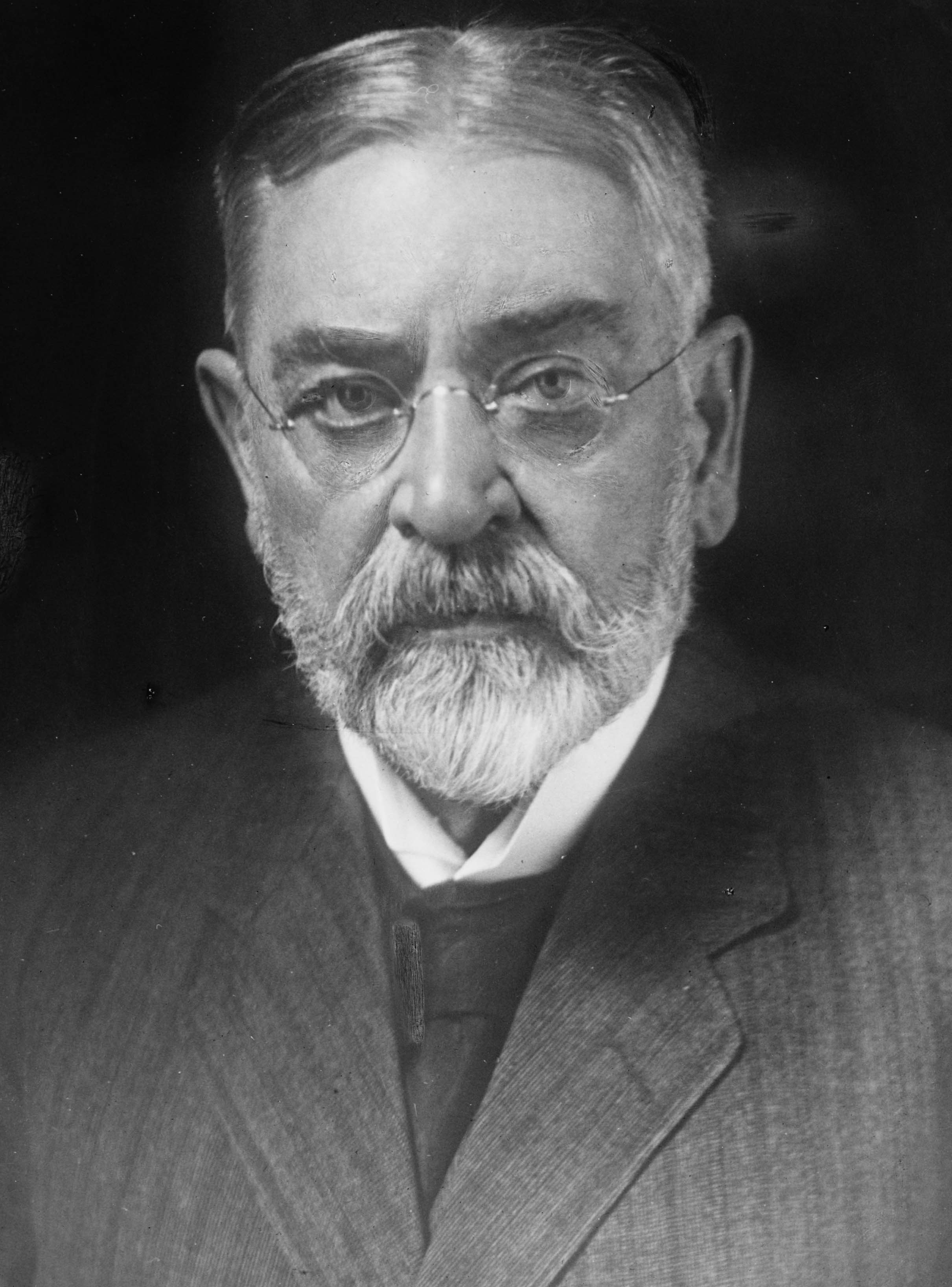
ROBERT TODD LINCOLN ~ DIDN'T RAISE HIS DAUGHTER TO MARRY A BASEBALL "FREAK".

ROBERT TODD LINCOLN
~ DIDN’T RAISE HIS DAUGHTER TO MARRY A BASEBALL “FREAK”.

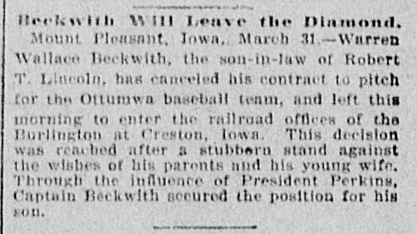
Back in the late 1890s, a young struggling and poor “ballplayer” named Warren Beckwith managed to marry into the descendant family of Abraham Lincoln by capturing the heart of the late president’s granddaughter and son Robert Todd Lincoln’s daughter, Jessie – and apparently over the strong objections of the girl’s parents, and reported by the “shocked” media of the time without the use of her first name in published accounts. It was the Victorian era – and class snobbishness dictated the feelings of some American news writers and, by conjecture, the parents of the girl that she deserved a more “prominent” life partner.

Interesting point of view, isn’t it, that it only took one generation and an incredible change in the status of the Lincoln family apparently to elevate Honest Abe’s family from “log cabin humility” to lofty self-aggrandizement in American society in their everyday views of the everyday ordinary man.

Or, perhaps, it was not really all that simple. It seems that young Beckwith, who was age 24 in early 1898, decided to seize upon his notoriety and advertise himself as a “freak” for the sake of making his place on the roster of his prospective Class D ball club in Ottumwa, Iowa more attractive to his potential employer’s designs on attracting crowds to their games.

“Freak”? – We weren’t able to find among any of the handful of stories from those times that there was any other basis for the claim offered by Beckwith at the time – and there was no reference to any two-headed or four-armed players in the game during that era. We only know that even Beckwith’s mother came forth in embarrassment to persuade the Ottumwa club to release her son for all the shame her son’s behavior was bringing to both the Lincoln and Beckwith families. It was the Victorian Era, remember, and some things were not even talked about, let alone put into news print back in that day, so we may never know the whole truth – unless someone among our readership knows more about the situation that we can discern in a morning of Internet research. – And, thanks again, to friend Darrell Pittman for alerting us to this strange case.

As Baseball Reference.com shows, Ma Beckwith’s objections and her son’s apparent lack of playing ability seemed to have proved more than enough to block Warren Beckwith from playing for Ottumwa in 1898, but he did end up on the roster of Sacramento in 1899. In fact, for the entire time that Baseball.Reference gives Warren Beckwith credit for roster status on five teams between 1895-1899, he is only shown as playing in 8 games for Sacramento in 1899 – but with no reportable field results for that year – or any other in his intriguing brief run at professional baseball.

Here are two references to the Beckwith case:

http://newspaperarchive.com/us/iowa/cedar-rapids/cedar-rapids-evening-gazette/1898/04-04/page-4?tag=warren+beckwith+robert+lincoln&rtserp=tags/warren-beckwith-robert-lincoln?ndt=ex&pd=4&pm=4&py=1898

http://chroniclingamerica.loc.gov/lccn/sn86071197/1898-04-03/ed-1/seq-11/

Here’s all that Baseball Reference has on the baseball career of Warren Beckwith:

http://www.baseball-reference.com/minors/player.cgi?id=beckwi001war

With no further information available to us on short search notice, we may only assume that his marriage to the partially anonymous granddaughter of Abraham Lincoln came to no long-term good end, but that’s nothing more than prejudicial assumption, based upon what is reported in the newspapers about how the couple started out – and we may be dead wrong to jump to that conclusion. Warren Beckwith lived to age 81 before dying in La Jolla, California in 1955. Maybe he and the former “Miss Lincoln” found a way to beat the odds and “lived happily ever after”.

Here’s a passage from Robert Todd Lincoln’s Wikipedia biography that suggests that there was some continuity in the marriage of his daughter “Jessie” to Warren Beckwith:

Of Robert’s children, Jessie Harlan Lincoln Beckwith (1875–1948) had two children, Mary Lincoln Beckwith (“Peggy” 1898–1975) and Robert (“Bud”) Todd Lincoln Beckwith (1904–1985), neither of whom had children of their own. Robert’s other daughter, Mary Todd Lincoln (“Mamie”) (1869–1938) married Charles Bradley Isham in 1891. They had one son, Lincoln Isham (1892–1971). Lincoln Isham married Leahalma Correa in 1919, but died without children.

The last person known to be of direct Lincoln lineage, Robert’s grandson “Bud” Beckwith, died in 1985.[54]

The link to that entire entry is as follows:

http://en.wikipedia.org/wiki/Robert_Todd_Lincoln

Have a great Wednesday, everybody and remember this happy thought – this time next week, we will be two days deep into the official Major League Baseball season!

_____________________

Thursday, 04/02/15, Update from Darrell Pittman:
Houston Post April 5, 1898
Houston Post
April 5, 1898

Our Top Ten New Baseball Metaphors

March 31, 2015
"Say What??? - We used all the pitchers in the All Star Game and now have to end the game as a tie??? - I've got it!!! My Acme Baseball Consultants have advised me that all will be well, if we make the winner of all future All Star Games the factor that deteremines league home adantage in the World Series!!!"

“Say What??? – We used all the pitchers in the All Star Game and now have to end the thing as a tie??? – I’ve got it!!! My Acme Baseball Consultants have advised me that all will be well, if we make the winner of all future All Star Games the factor that determines league home team advantage in the World Series!!!”

Here’s our Pecan Park Eagle List of New Baseball Metaphors (Except for the Stockholm Syndrome, which likely isn’t familiar to all, they are each fairly easy to see – and “Stockholm Syndrome”, – and maybe “Autistic Savants” are both worth a trip to Google. The ten items themselves are simply people, behaviors, and conditions that are rooted in the heart of the game and the hearts of the fans of our great game):

No. Baseball Items Corresponding Metaphors
10 Chicago Cubs Anthem “I Can’t Get No – Satisfaction”
9 Bo Porter’s Chances as Astros Manager Japanese Kamikaze Pilot
8 Road Uniform Colors in the 1930s 50 Shades of Grey
7 Designated Hitters Freddie the Freeloader, Inc.
6 Babe Ruth Autographed Ball Collectors Crack Cocaine Addicts
5 Alex Rodriguez The Strutting Male Peacock
4 1909 Honus Wagner Card Collectors “Goldfinger” Types
3 Compulsive Game Scorekeepers Autistic Savants (“Rain Man”)
2 Red Sox Fan Conversion to Yankee Fan Stockholm Syndrome Victim
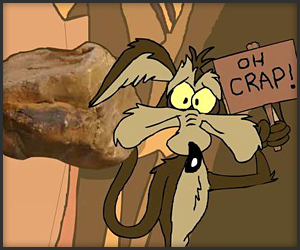
1 Bud Selig as Commissioner Wile E. Coyote

Fred Hartman: Last Buff Stadium Hurrah

March 30, 2015
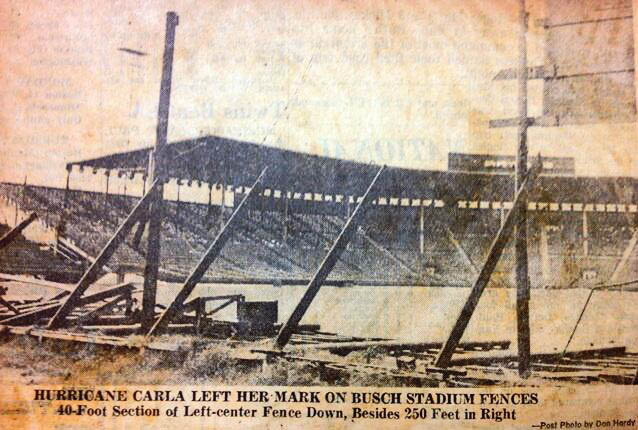
September 11, 1961: Hurricane Carla left both a physical and metaphorical message on the future of Busch-Buff Stadium in Houston. Ten days later, the Buffs played their last game ever at the quickly repaired park.

September 11, 1961: Hurricane Carla left both a physical and metaphorical message on the future of Busch-Buff Stadium in Houston. Ten days later, the Buffs played their last game ever at the quickly repaired park.

Defeated Buffs Bow Out

By Fred Hartman

Houston (AP) – Twenty-one years ago at the end of the 1940 season, the Baytown Oilers were fighting for the Houston Post semi-pro tournament championship.

They fought their way into the semi-finals, and promoters of the tournament stupidly forced the Oilers to have to win three games in one day to win the title.

They won the first two in brilliant fashion. Then their weary muscles failed them, and they fell apart in the finale.

It was a sad things to see – just as sad as the complete fall apart of the Houston Buffs Thursday night as they were shellacked, 11-4, by the Louisville Colonels.

It was a historical defeat for it came in the last game of minor league professional baseball ever to be played at Busch (formerly Buff) Stadium. (Last Game Date: Thursday, September 21, 1961.) Next spring, the fledgeling Houston Colts will begin play on a new south end field (Colt Stadium) in the National League.

Busch-Buff Stadium has been the scene of some great events, and now they are gone.

It was at home plate that Dizzy Dean and his bride were married. It was (from) there that Joe Medwick used to rattle the boards as 1961 first baseman Pidge Browne has been doing. It was (from) there that Carey Selph battled to the death as a great inspirational star. It was (from) there that Bill Hallahan’s southpaw plans won him big league opportunities. It was (from) there that Kenny Boyer began his climb to fame.

And all that is left is (are the) memories and the ignomiing (sp) (ignominy) of the final game when the Buffs, trying too hard, fell apart. How else, for instance, can you explain the seven errors, five by hustling shortstop J.C. Hartman. (?)

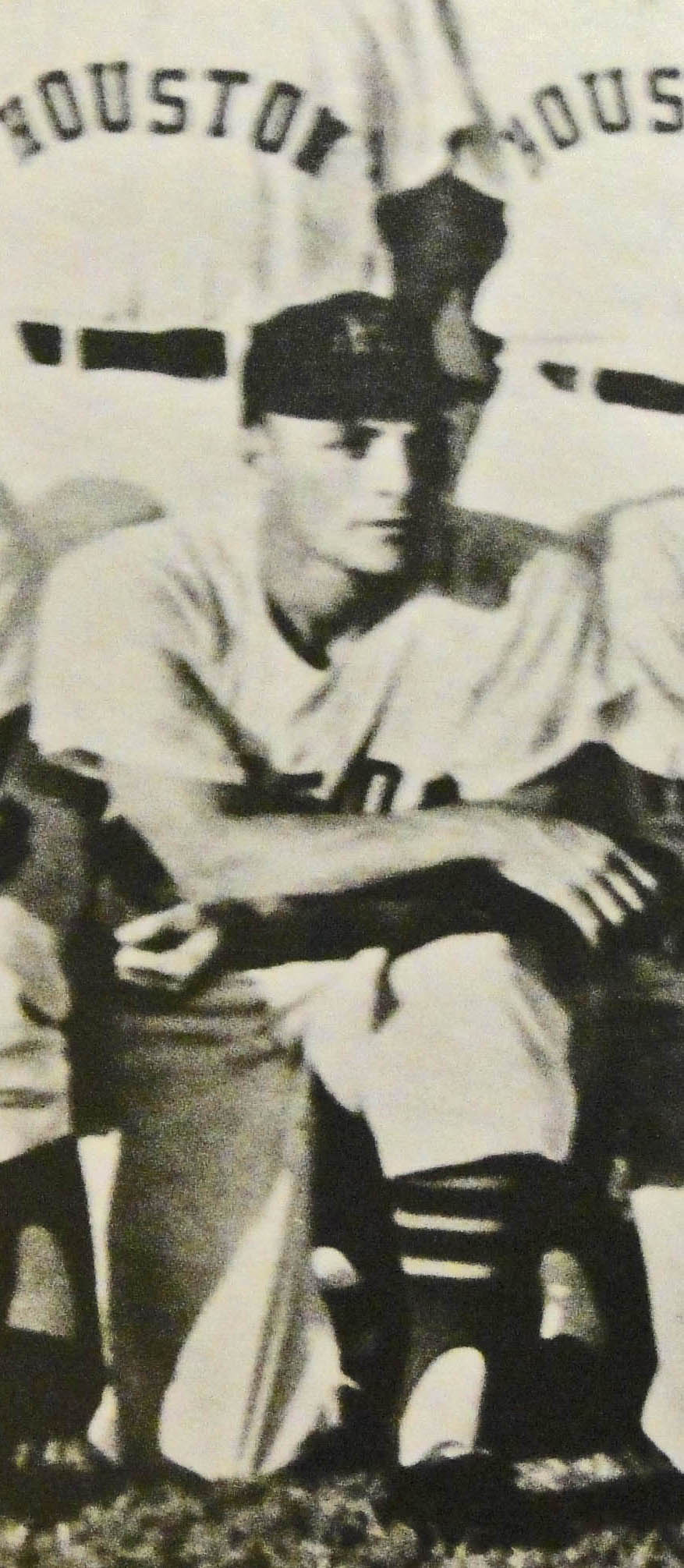
Jack Waters Hit the Last Home Run in the Last Time at Bat in the Last Inning of the Last Game Ever Played by the Houston Buffs, also in their Last Game at Busch-Buff Stadium on 9/21/1961. The Buffs still lost to the Louisville Colonels, 11-4, in Game 6 of the American Association Championship Series.

Jack Waters Hit the Last Home Run in the Last Time at Bat in the Last Inning of the Last Game Ever Played by the Houston Buffs, also in their Last Game at Busch-Buff Stadium on 9/21/1961.
The Buffs still lost to the Louisville Colonels, 11-4, in Game 6 of the American Association Championship Series.

 If you want one lingering memory of better things, Mrs. Calabash, wherever you are,  you can always remember the home run stroked by Jack Waters with a Buff aboard and the homelings behind, 11-2.

In Jerry Witte fashion, Waters hit a circuit clout far above the left field wall.  It soared high and far, and Jack took only three steps from home plate before he knew he had the big one. He trotted around the bases with feeble applause of only the faithful who there at the end. 

And the last record play was a brilliant one. Jim Campbell slashed a hard hit ball through the box. The Colonels second baseman had been edging that way. He made a great play on the ball, and an even greater throw to first to beat the Buffs catcher by a step.

Thus did Buff Stadium – we never did like the Busch appellation – stumble in(to) the past on a sour note that never could replace the sweeter moments that victory and sensational plays had produced in the 33 years since the opener in the summer of 1928.

Baytown is now a live and highly expectant major league suburb. It couldn’t have happened until that final out wrote finish Thursday night.

~ Fred Hartman, Baytown Sun, Friday, September 22, 1961, Page 7.

In Baseball or Life, The Play’s The Thing

March 29, 2015
"Where is that horse that stepped on the Galveston left fielder's head? - Anything he can do, I can do better!"

“Where is that horse that stepped on the Galveston left fielder’s head? – Anything he can do, I can do better!”

As Leo Gorcey might have apologized in advance as Slip Mahoney of the Bowery Boys, we have to start this column by saying “pardon us for protruding with exertions of reference to Wee Willie Shakespeare that may or may not be totally inaccurate, but we think it was the bard who came up with that ‘the play’s the thing’ line without ever having perspected an actual baseball game in the person because – they didn’t have no such game in jolly old England back in his time and still don’t. The English reasonabalize that they can’t play baseball ’cause it ain’t cricket.”

Reading 19th century newspaper base ball game reports isn’t quite as close to the level of difficulty we encounter when trying to catch the clear meaning and even more subtle innuendo of Shakespearean script or Bowery Boy speech, but its close. Add to that issue the problem of deciphering faded blurry type from well over a century ago and there we have it – the almost perfect storm for misunderstanding whatever the game reporter is trying to tell us. The third ingredient for achieving perfect misunderstanding in these old game reports, aside from whatever lowered intellectual capacities, presumptions, and knowledge of the game and history we bring to the table, are those same qualifiers in the writer of the story from that distant era.

Sports writers don’t write for history, but, until the Internet came along and convinced thousands of us to write one or several books on baseball history, newspaper accounts were, and still may be, the best play-by-play detailed accounts we shall ever own for the purpose of examining the nuts and bolts of each game and season. The problem with using 19th century game narratives and box score stats for that purpose are several: (1) Although we probably do the same in some ways, 19th century base ball writers were notorious for not reporting certain items of information that they “assumed” we local contemporary readers already knew. As a result, the name or location of the ballpark is often either not mentioned or only referenced as “the team’s home field.” A fly ball was caught by “Smith” – leaving us to either know Smith’s exact position or to hope that the story came with a legible box score that “we visitors from the future” could decipher from this newspaper’s type quality and the organizational style of the box score. (2) The writers from the 19th century also assumed that we, “the local contemporary readers”, already knew the rules and ground rules in play at a particular field – and they also assumed that we were familiar with local conditions in the park that serve as a hazard to players during a game.

Friend and colleague Darrell Pittman sent me a beautiful example a couple of days ago from the Galveston Daily News, dated July 27, 1889, and appearing on Page 7. It was from a report on a game played in Houston on July 26, 1889 at “the Houston base-ball park” between Houston and Galveston of the Texas League. Houston would go on to win the game, 7-5, but it’s what happened during Houston’s first time at bat in the top of the first inning that intrigued us. (And yes, that’s right. In 1889, the home team could choose to bat first and often did,)

Here’s the way our anonymous Galveston Daily News reporter described it, leaving us both in awe over what happened in the top of the first, how it was handled, and what we cannot completely decipher in certainty from the information provided. Here’s the part of the article that affects our questions, factual interjections and bold type comments:

“Houston opened at the bat. Joyce (2b) came first and got his base on balls.and when (umpire) Boggiano took his place behind the pitcher Galveston made a big kick but the matter was finally settled and Boggiano held his place. Rogers (c) came next to bat and made a great hit between center and left, brought Joyce in and took third bag himself. Sunday (rf) got first on balls. Kienzle (cf) came next with the weeping willow in his hand and struck the ball such a blow that it went over the left fielder’s (Frank Beine of Galveston) head who in pursuit of it fell under a horse driven (to?) buggy and had his head badly hurt by the animal’s shoe. In the meantime, Rogers, Sunday and Kienzle came in, the ball bounding over the fence from Kienzle’s blow. Everybody sympathized with Works (William Works, Galveston manager) but cheered the runs. (Sympathized with Works? How about some sympathy for left fielder Beine? He’s the guy that got his head stepped on by the horse!) Welkart (p) got first on balls, Isaacson (1b) out on strikes. Peeples (ss) out on (a) foul fly and Flaherty out on three strikes. (Half Inning Summary for Houston: 4 runs, 2 hits, 0 errors, 3 walks, 2 strike outs, 1 man left on base.)”

The unanswered questions for certain are:

(1) What was a horse doing on the field? Darrell Pittman whimsically suggests, perhaps, the possibility that “horse play” was allowed back in the day, but we both more seriously think it most likely because certain areas near the field foul lines were OK for transportation horse and buggy teams as places to “park” and watch from the first drive in service customer business in history. Either that – or they simply were allowed or paid for the privilege of special livery service to and from the games. That still doesn’t explain how the horse and buggy got into fair territory – and it doesn’t sound from the report that the ball in play carried into foul territory.

(2) What was the scoring basis for Kienzle’s home run? (a) When the writer says the ball “bounded” over the fence, does he mean that the ball bounced over the fence – as that word today normally implies? Or was it a clear cut fly ball HR over the fence? Or simply a bounce-homer? Or a ball that the left fielder might have chased down, even over the fence, had he not been busy getting his head stomped by a horse?

(3) No real question here. Just a statement of awe. Frank Beine got his head stomped on by a horse in the top of the first inning, but recovered quickly enough to play the rest of the game in left field. – There obviously was no concussion prevention protocol in effect back in the really far back good old days, was there?

That’s OK. Baseball has improved a lot since those earlier times. As for the reporting, make your own decision. Imagine how ESPN would have handled footage of a left fielder who got his head stepped on while chasing down a home run. And then – the viral potential for Twitter or YouTube are almost imponderable.

Have a mellow Sunday, everybody! Even with Sunday, or maybe, especially on Sunday, the play’s also the thing.

Vintage Ball Convention: Too Late To Get There

March 28, 2015
"BASE BALL TODAY" Late 19th Century By William O. McCurdy

“BASE BALL TODAY”
Late 19th Century
By William O. McCurdy


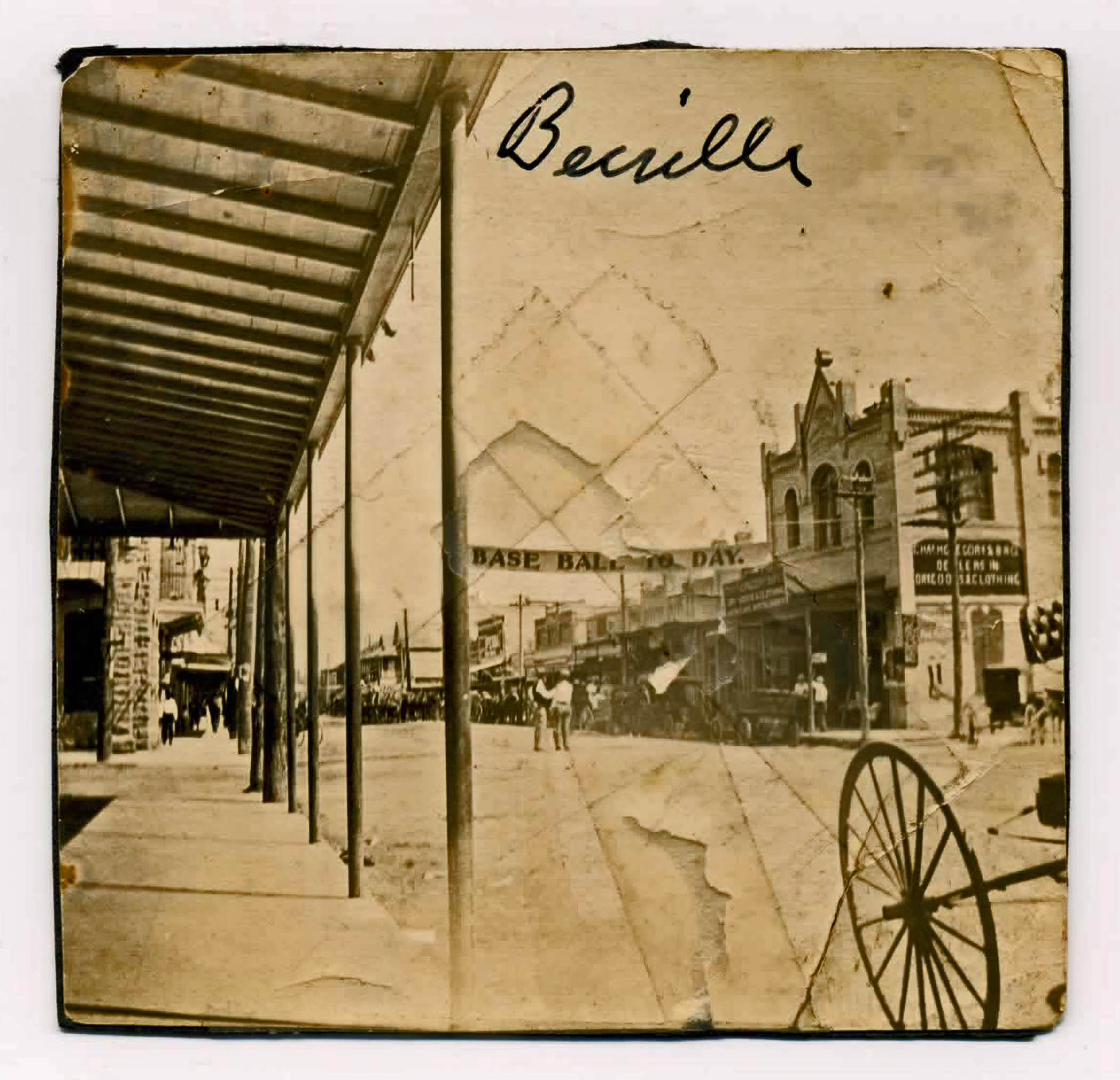
When my namesake pioneering newspaperman grandfather was busy establishing The Beeville Bee back in 1886, he relied almost entirely on local event reports by readers and what they used to call patent news that arrived by stagecoach and train prior to the local coming of the telegraph to that mostly rural part of South Texas between Corpus Christi and San Antonio – just to get our a weekly four-page rag. National ad international news, as a result, was weeks, or sometimes months old, before it reached the rolling flatland prairies of Live Oak, Mesquite and Huisache occupants.

Once in the late 1880s, Grandfather McCurdy received a handwritten, of course, Christmas celebration report from some readers in Port Lavaca. The problem was timing. It reached the humble office of The Bee within a week or so of the following Easter. – We’ve told this story previously, but today it has special bearing on the brief report The Pecan Park Eagle will soon make to each of you.

“The Bee regrets that we will not be able to publish the story received this week on the Christmas ‘doings’  of our readers over in Port Lavaca due to the fact that it is now almost time to celebrate the following Easter. Our readers must ,” Editor McCurdy wrote, “must bear in mind that time has quite a different effect upon local news than it does upon wildcat whiskey. – Local news does not get better with age.”

On that note, The Pecan Park Eagle hereby regretfully reports on an event happening that would not have passed the smell test of Grandfather McCurdy back in 1888.

Starting today, Saturday, March 28, 2015, the Vintage Base Ball Association begins their National Convention in Franklin, Tennessee in gathering of vintage ball clubs and players from all over the country, but most notably, from the Northeast and Midwest sections where it supposedly found its roots for replicated play in 1978. The VBBA itself, as we are told in the following linked article, did not get its start until 1996.

http://www.tennessean.com/story/news/2015/03/26/vintage-base-ball-players-descend-franklin/70508992/

Thank you, friend and SABR colleague, Bill Hickman of Maryland for sending us this information. I must admit to ignorance of the Vintage Base Ball Association as a national organization until I received the information you set me yesterday. I have no excuses. We live in a world today where almost all of the news that’s available on this level of things is only a Google or Yahoo search click away. Under these circumstances, the  news that the VBBA does exist is about the only news item of value here to the members of our Houston Babies, Katy Combine, and Boerne White Sox community.

The news that the national convention starts today in Tennessee sure isn’t wildcat whiskey when delivered to readers in Texas and other places on the same day its set to start.

Maybe next year.

Meanwhile, the good local news for Houston Babies vintage base ball players and fans is this note: The Houston Babies will play their first game of of the season on Saturday, April 11, 2015 in Sealy, Texas as part of that lively little community’s annual spring weekend celebration. I’m reasonably sure that the Katy Combine and the Boerne White Sox will also be on hand to provide doubleheader competition for all three teams involved, starting at 10:00 AM in the morning.

Sealy is just a breezy 50 mile ride west from Houston I-10. So, please join us for the fun, if you can make it. There will be plenty of good food, music, games, and small town good fun for all who seek a joyful spring-soul cleaning and a taste of baseball heart – all in one.

Have a great weekend, everybody! – A week from Easter Sunday, we have no real Christmas stories for you today.

First Pitch of the Season

March 27, 2015
J.R. RICHARD ~ Could've thrown the hardest Opening Day First Pitch in Baseball History.

J.R. RICHARD
Could’ve thrown the hardest Opening Day First Pitch in Baseball History.


First Pitch of the Season

By Bill McCurdy

March 26, 2015


He raises both arms

Right hand to left glove

He grips the fresh ball

Caressing with love


He holds fast the roar

As he pauses to grip

Like a marbled Adonis

The wheel of his ship


Awaiting a late sign

From the Captain of Crouch

He soon finds the signal

As his fingers branch out


Controlling the ball

Begins with the grip

But includes body rhythm

Speed and place of each trip


The pitcher rares back

As his left leg kicks high

Then the left leg steps forward

As the right arm flies by


And when he lets go

Of the little white ball

It sails on toward home

On its own special call


To rise, sink, or curve

High, low, in or out

Even sometimes to flutter

What’s that all about?


As the right leg falls forward

With the release of the ball

The pitcher now braces

Awaiting – that’s all


Ball, strike, or in play

The deed has been done

First pitch now delivered

The season’s begun

“Off-Season” is Out-of-Date Concept

March 26, 2015


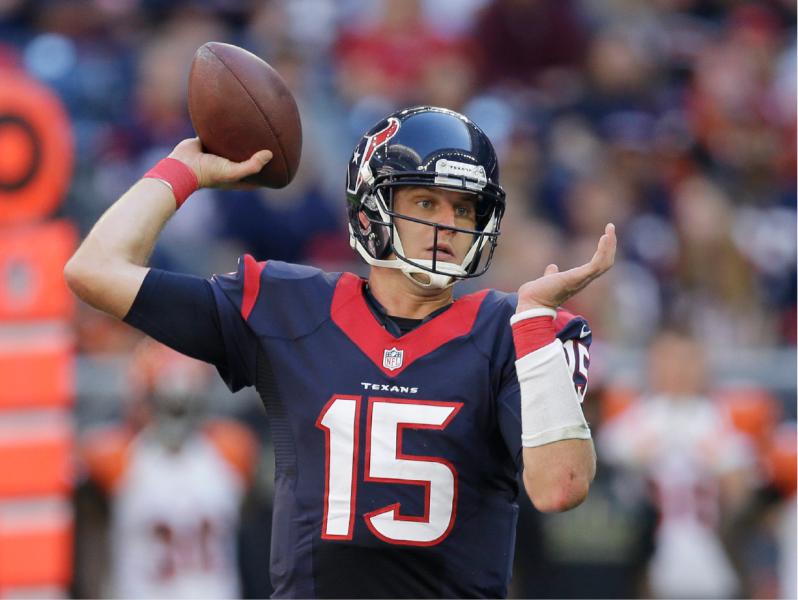
Ryan Mallett, QB, Houston Texans If the Texans schedule a one-hour televised press conference to discuss how they may have acquired the first choice in the NFL draft at the same time the Astros are playing their 1st game of the MLB season, which show will Houston fans most watch?

Ryan Mallett, QB, Houston Texans
If the Texans schedule a one-hour televised press conference to discuss how they may have (hypothetically) acquired the first choice in the NFL draft at the same time the Astros are playing their 1st game of the MLB season, which show will Houston fans most watch?

Is the concept of an out-of-season period for each of our major professional team sports now out-moded?

The truth, of course, is that the business side of sports never has known a period of time called the “off-season”. The bills and business of planning for next year are continuous for any professional club in any of the “Big Three” major American professional sports of baseball football, and basketball.

“Off-Season” always has been a term that belonged to the period of seasonal time for each sport in which the clubs were playing each of their schedules on the way to their own unique conclusions in championship competition as the fans held forth in collective consciousness to the ideas of attending games and, hopefully, cheering their favorite teams to some kind of crown as the best of them all. After that playing out of those expectations to the joy of one club and the gradient disappointment of all others , the fans could variably accept that the season was “over” and move on to other matters in life as the business of their sports went on – even if it went on more quietly and slowly with the fewer expectations that descended upon the clubs of each sport in the less media-heated climate that existed prior to the high tech social media explosion of the 21st century.

Time have changed because of the 24/7 attention upon all sports. Technology finally caught up with the original ESPN promise of a full-blast night and day coverage and the opportunities for two-way discussions between fans and media, fans and fans, and media and media on the futures of all clubs and the individual players of each game. If a fan’s sport had a steroids problem, the media was there to sting the airways and all people allegedly involved on a 24/7 basis that would often make us  sicker of the coverage than we were with the problem. After all, fans originally got hooked on professional sports as a diversion from the uglier, less mythical sides of our ordinary lives – and not to bathe in a non-stop electronic unfolding of just how humanly flawed the players and caretakers of our favorite games really are.

But that’s how it is today.

In 2014, I remembered a Houston talk show caller exclaiming around this same time on the calendar year exclaiming that “the time between the Super Bowl in January and the NFL Draft in April or May is now the toughest part of the football season!”

Football season? Yes, there it is – a fan statement that underscores the fact that fan hunger for newsworthy events on their sport is now all year round. It just seems to be higher among football fans in Texas and some other locales – and maybe even most locales. Friend and SABR colleague Tony Cavendar sent me a WSJ article yesterday that does underscore the same point. – The hunger for attractive activities between the periods of direct competition on the field is being addressed better by the NFL over all other professional sports.

Check out “How the NFL Stole March Madness” by Kevin Clark in the March 25, 2015 digital edition of the Wall Street Journal. Here’s the link:

http://www.wsj.com/articles/how-the-nfl-stole-march-madness-1427237275

Clark concludes that the NFL has done the best job, so far, of mining and directing the energies and attentions of their fans to an ever-building connect-the-dots series of interesting events during those parts of the year that no games are being played. As we see it, the NFL may have put a minor dent in the fender of  the usual attention that basketball fans pay to “March Madness”, but they may also be doing a pretty good job of stealing attention away from MLB spring training games – with the help of their many complicit local media supporters.

Ask yourself, as you peruse the Houston Chronicle over the next couple of weeks leading into the start of the MLB season, what seems to be the most important to our local media and the fans who call into talk shows or use the Internet’s many avenues of social media in the spring of 2015: the roster completion of the Houston Astros? Or the roster fulfillment of the Houston Texans?


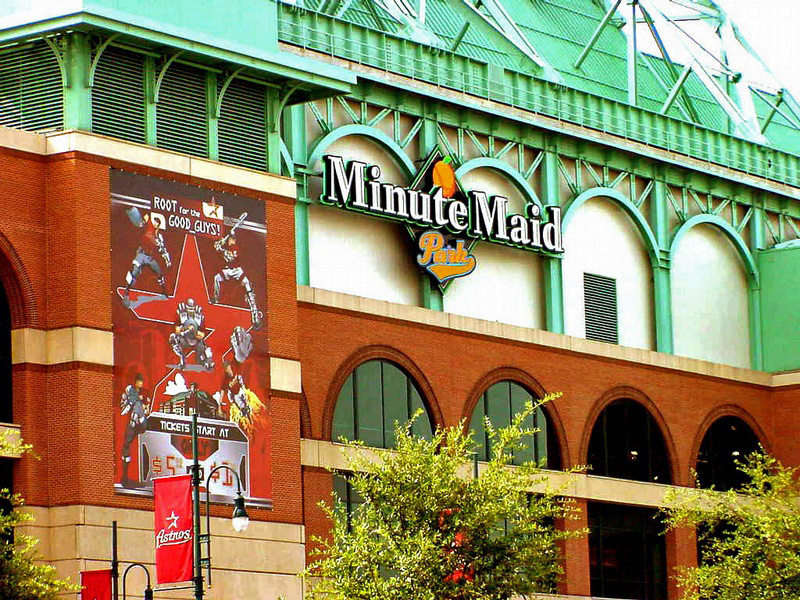
Astro Firsts at Minute Maid Park (ne: Enron Field)

March 25, 2015
2015 will be the 16th year for the Astros to play their home games at the venue we now call Minute Maid Park, but some its biggest game firsts  happened in the first two official games ever played there.

2015 will be the 16th year for the Astros to play their home games at the venue we now call Minute Maid Park, but some its biggest game firsts happened in the first two official games ever played there.

Using the eye perusal methodology at the wonderfully graphic and detailed box score records available at Baseball Almanac.com, here are the major individual credits to be extended to all those Houston Astros players who became the first to produce an outcome in each of the reported categories used in this column. Please note that we are most sure that we will leave something out. After all, the box scores do not cover the names of the first player to spit a sunflower send onto the field from the dugout – nor do they note the names of any third base coaches who were so busy blowing bubbles with their gum that they became the first windmill churner to send a lead-footed runner into a dead-duck blind end at home plate.

The first official Astros home game to be played at the ballpark that started out as Enron Field was played on Friday, April 7, 2000 against the Philadelphia Phillies. Octavio Dotel was the 1st starting pitcher in the history of the ballpark – and also the 1st Astros losing pitcher.

In that same opener, Doug Henry became the 1st relief pitcher in downtown park history when he took over for Dotel in the 7th. Henry also gave up the first sacrifice fly by an opponent to Mickey Morandini. – Jay Powell pitched the 9th to become the 1st Astro pitcher in downtown park history to be in the game at the finish. Earlier in the game, the Dotel/Tony Eusebio battery gave up the first stolen base by a foe when Doug Glanville took 2nd base.

On offense for the 2000 Opening Day game, Richard Hidalgo hit a home run in the 7th with nobody on and 1 out to become the first Astro ballpark HR hitter, scoring the first run, of course, and also picking up the first RBI at the new digs. – And that was pretty much it for the Astros offense for their maiden voyage at “Enron”.

The following day, Saturday, April 8, 2000. more of the most obvious “first time in the new ballpark Astro player records began to fall.” Catcher Mitch Meluskey committed the 1st Astros error at Enron. Craig Biggio (anyone else would have been an act of sacrilege) collected the Astros’ 1st double and Tim Bogar banged out their 1st triple.

Same game, Craig Biggio picked up the 1st new field stolen base of 2nd off the Brock/Prince battery and Ken Caminiti registered the 1st home club sacrifice fly.

Also in the second official game played on 4/08/2000, Mike Maddux was credited with the 1st downtown Houston win by an Astros pitcher in relief of starter Dwight Gooden and (remember this guy?) Billy Wagner nailed down the 1st save in the history of the Union Station grounds we now know as Minute Maid Park.

Please forgive the shortcomings of brief research for a column. Were it for a book project like our recently completed SABR jewel.  “Houston Baseball: The Early Years, 1861-1961”, we would be turning this thing inside out and sideways before going to publication, but our goals here are much more modest. That is, to see we may gleam of notable individual firsts from the box scores alone – knowing full well that they don’t show everything without a scorecard quality track of each unfolding play.

A notable missing example here is: Who registered the first hit of any kind? I doubt it was Hidalgo’s HR in the 7th, but if it wasn’t, all we can know from the box score is that is that it then had to have been an earlier single by Craig Biggio, Jeff Bagwell, Tony Eusebio, or Tim Bogar. – If you have the answer, please share it with us as a comment – along with any other glaring “firsts” we may have missed. Help us make this a better column by filing in the missing parts. Let’s build it together.

As we sort of expected when we first started looking up “famous firsts downtown” today, the list contains the names of both the famous and the forgotten of that first downtown year of the club. Nobody has to be great to be first. They just have to be good enough for someone in management to think that they deserve the opportunity. And that proved true again. Be honest here. – How many of you really remember much, if anything, about Doug Henry or Jay Powell? Today, they are mere blurs to me. Some of us will remember the names, but that’s about it – without a little side trip to the encyclopedic records of a place like Astros Daily or Baseball’s Almanac or Reference.com.

The other thing that struck me from this exercise was time – and again – how quickly it passes. 2015 will be the 16th year (2000-2015) for the Houston Astros to play their home games downtown at the place we now call Minute Maid Park. Before that, the club played 35 years at the Astrodome (1965-1999) and 3 years at Colt Stadium (1962-1964).

Time flies. – Does it not?


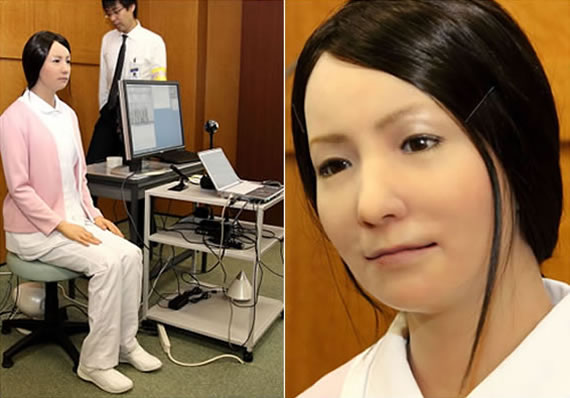
The Robot Nurse Intervention Caller

March 24, 2015
Robot Nurse Model A3452 Made in Japan Human in a Creepy Sort of Way

Robot Nurse Model
Made in Japan
Human in a Creepy Sort of Way

My Medicare Supplemental Health Plan Company has taken a position that may be typical of all these underwriters of senior citizen health needs these days – and who can blame them? For a few seniors, early dinners, no medical appointments, and bowel regularity are the trinity qualifiers for a great “fun on the run” spring break. For many others, life is about irregularity of sleep and bowels, multiple medical appointments and minor medical procedures weekly, being dry where you used to be wet, and being wet where you used to be dry. (The last two qualifiers were borrowed from the mind of the ancient, still wonderful comedic writer, Carl Reiner.)

What’s the fun of that? When genes, biology, aging, and life patterns of unhealthy behavior finally come crashing together at a single moment in time, life can radically change or totally end without a desire to live and a will to change what needs to change. So, Texans Plus (my HMO people) have devised a plan to reach out to still healthy seniors and try to reeducate some of us to life styles that will either prevent or delay the really serious stuff – like Alzheimer’s and Dementia.

The problem is – they are doing it with a health news lady automaton that I have endearingly grown fond of calling in my own mind as “The Robot Nurse”.  She doesn’t really have a job title, but I have come to the private conclusion that she’s in charge of the “Teaching Old Dogs New Tricks” department at Texans Plus.

In a moment of sweet irony this morning, before I left the house for my “day job” practice of psychotherapy, I lingered over hot tea long enough to catch a brand new call from the Robot Nurse: “Good Morning, valued Texans Plus member – and welcome to another edition of Health News,” she said. Today we are going to talk about Happiness. If you would like to hear our information, simply say ‘yes’ or press ‘1’. – If you are not interested, simply say ‘no’ or press ‘2’ – or simply hang up the phone.”

Somebody needs to tell the Robot Nurse that few of us still hang up phones these days. – We either punch them out or simply speak them away. – Also, I couldn’t get over how much the Robot Nurse reminds me of that female voice in the Starr Furniture ads on Houston TV. – Her articulation of words already smiles – and it  also resonates through the air to our ears as though her mouth and speech patterns had been molded as the hangar and flight plan for the “bluebird of happiness”. – She just sounds different – by design.

I said “yes” and punched “1”. – Who’s going to say “no” to a beautiful female voice that’s about to reveal the secret of happiness to a 77-year old man who’s already too old for “cigarettes and whiskey and wild, wild women”?

“Good,” barked the Robot Nurse, “now let’s get started:

“Much of happiness at any age,” she said, “stems from holding on to physical behavior from the past that once made you forget about everything else for a short while.”

I concluded that the Robot Nurse had not heard what I just wrote to you about me now being too old for cigarettes and whiskey and wild, wild women – and I also can’t think of a single ball club in the world that needs a 77-year old center fielder, for that matter.

“Playing cards with an old friend can be fun too,” she said. “Why don’t you call up an old friend and plan a time to play cards? It may be just the fun you need!”

You really think so, Robot Nurse? – Maybe you and I have a whole different idea brewing about what goes into a fun game of cards. I’ll pass on “cards with a friend”, but does playing solitaire on the computer count as fun? I find it numbs the mind a little – especially, if you don’t start playing until about 11:45 PM!

About the only idea that Robot Nurse had to offer that made any sense to me personally was the  one I try to do anyway, but haven’t been so good at lately – and that’s “walking”.  In fact, I plan to go on a two-mile walk in the morning. That’s my normal distance when I walk regularly. I wouldn’t say it always makes me happy, but I do breathe and feel better “in the here and now” when I’m walking. – I wasn’t really expecting Robot Nurse to turn over the keys to either the fountain of wisdom or the fountain of youth.

Which brings me to my question of the day: Once you reach a certain age, whenever that is that you suddenly realize that you are finally in a room somewhere with a group of people – and that you are the only one there who was alive on the day that JFK was shot – it is time for you to answer: As an older person with a magical wish that would come true, but you had to pick only one of these two locations for making that guaranteed wish, where would it be? At the Fountain of Youth? Or at the Fountain of Wisdom?

Anyway, the Robot Lady finally got around to the serious business of the day. “If you feel that your depression or anxiety is making you sick, would you like me to connect you with professional help today?”

“No,” I answered, not today. I’m neither depressed nor anxious. – In fact, in my ‘day job’, professional help is what I am,” I added.

“I’m afraid I don’t quite understand your answer,” Robot Nurse replied, in her usual matter of fact way, before continuing, “If you feel that your depression or anxiety is making you sick, would you like me to connect you with professional help today?”

“Oh dear mechanically-hearted lady, my dear Robot Nurse, you machines just don’t appreciate that we humans know a lot more about getting older than you give us credit for understanding. Would you like a little clue? Well here’s a little personal rhyme for describing the worst universal enemy that all aging people have to face – and that’s loneliness.

Do you know how we know when are getting older and too lonely? – Read on. …

You know you’re getting older,

As sleep in a chair comes bolder,

When the winter winds blow colder,

And the head upon your shoulder,

Is your own.

We call it loneliness – and we each must battle against it in our own ways – but we must all each help one another as friends – in our battle against the common enemy.


Update on the Dickie Kerr Statue

March 23, 2015
8/20/1966: Stan Musial at the Dickie Kerr Statue dedication in the Astrodome in Houston.

8/20/1966: Stan Musial at the Dickie Kerr Statue dedication in the Astrodome.

Update on the Dickie Kerr Statue

The Pecan Park Eagle does not really possess any breaking news on the immediate or long-term future public display of the Dickie Kerr statue except to underscore for all concerned that we are but one post of active interest in Houston as to the future handling of this publicly underwritten, magnificently artful tribute to one of the good guys in baseball who made Houston the home for his heart in his later years – the late Richard “Dickie” Henry Kerr.

So, who was Dickie Kerr? And why was he so special to Houstonians that many private citizens would rally to the idea of paying for a statue in his honor – one that would be placed on display for the ages in the Astrodome? Well, those two questions in themselves are enough to raise countless other questions about what has happened to the statue since August 20, 1966, the date the statue was installed in place at the Astrodome.

Dickie Kerr was a 5’7″, 155 lb. left handed throwing and batting MLB pitcher (1919-21, 1925) for the Chicago White Sox. Born In St. Louis on July 3, 1893, he compiled a career big league record of 53 wins, 34 losses, and an E.R.A. OF 3.84.  Dickie Kerr died on May 4, 1963 in Houston, Texas – just two months shy of his 70th birthday. He is buried in Forest Park Lawndale Cemetery in Houston.

Kerr was 13-7 with a 2.88 E.R.A. during his 1919 rookie season. He also went out to the mound and registered two complete game victories over the Reds in the 1919 World Series, but the White Sox lost the best of nine game series, 5 games to 3, and it was later determined that eight of Kerr’s teammates were suspected of throwing the games that Chicago lost. They were found innocent in a court of law, but their tainted reputations, and the widely held suspicion that they “got off” due to the mysterious disappearance of critical evidence led Commissioner Kenesaw Mountain Landis to ban them from organized baseball for life after the 1920 season.

Kerr became the “good guy” in the midst of all the “bad guys”. He also won 20 games in 1920 and another 19 in 1921. Then he made the mistake in the deep days of the old reserve clause by holding out for more money than the penurious White Sox club owner Charles Comiskey wanted to pay him in 1922. Comiskey wanted Kerr to take a $500 pay cut for 1922.

____________________

Amended, Post-Original Publication: Dickie decided to sit out the 1922 season. During that year, he decided to spend some of the time playing “semi-pro” or, as Baseball Commissioner Landis called – ‘outlaw ball’ – because it was the type of ball that was not answerable to his authority, even accepting the banned eight “Black Sox” as players. And Kerr apparently came into competitive contact with the “eight men out” in the games he played. As a result, Commissioner temporarily banned Kerr from returning to the White Sox in 1923-24 for “associating with known gamblers”, but his punishment was lifted in time for his return to the White Sox in 1925. We are sure the information is out there, but we simply do not have the name of the Texas  semi-pro team that Kerr supposedly played for in 1922 – an action that dunked him in hot water with Commissioner Landis.. – Our apologies for the original misstatement that Kerr was banned for 1922. He simply stayed out in preference to accepting Comiskey’s pay cut. It was playing in the competitive company of the permanently banned “Black Sox” that gave Landis a basis for keeping Kerr out of the big leagues until 1925.

– The Pecan Park Eagle Press

____________________

Kerr finally tried a comeback with the White Sox in 1925 after serving a three-year ban from play, but he had lost his stuff. After 12 games and 36.2 innings pitched and an 0-1 record, Kerr was finished as a big league pitcher. He hung around the minors for a couple of years – and even pitched a handful of minor league junk innings as a manager in 1937, but he was done as a player.

As the baseball coach for Rice Institute (University) in 1927, Kerr began to put down roots in Houston. He took up residence here with his wife in later years and was an active member of the baseball community on several fronts as he also continued in professional baseball as a manager and coach in the St. Louis Cardinal system.  As the manager for Stan Musial at Daytona Beach in 1940, Kerr and his wife, who still lived in that Florida community at that time, took Musial and his family under their own roof as family.

August 20, 1966. Stan “The Man” Musial, who also bought a house in Houston for Mr. and Mrs. Dickie Kerr in 1958, was on hand for the dedication of a statue in Kerr’s honor at the Astrodome for a much more personal reason. Kerr was the minor league manager who took a young Musial under his wing, like a son, and converted him from sore arm pitcher to future Hall of Fame hitter for the St. Louis Cardinals as an outfielder/first baseman.

According to a UPI report (Cedar Rapids Gazette, 8/22/66. Page 44), 45,000 fans were on hand that 8/20/66 day to sing Auld Lang Syne in Kerr’s honor – and also to hear Musial describe Kerr as the man who meant the most to his life and career. The same report also notes that the bronze, life-size, full-bodied sculpture of Dickie Kerr was paid for with donations raised by fans. There seems to be little question that the statue dedication not only highlighted the power of their relationship and the generosity of Musial, but also the charitable contributions of Dickie Kerr to his adopted home town of Houston.

The statue came to be, but, like so many contributions of this type, the euphoria of an action that is intended to be forever is more circumscribed with the cachet of a freshly plucked and presented red rose. There apparently was no written plan for the statue’s management over time. And life being what it is, things change. And the bloom and aroma of a beautiful rose will fade within a couple of literal or figurative dawns.

The Kerr Statue has remained in the hands of good baseball people over the years and, if it were not for Rodney Finger, the Finger Family, and curator Tom Kennedy, the Dickie Kerr statue might have been melted down for other uses by now.

After remaining on display for several years at the Astrodome, the Kerr statue moved to the former Houston Sports Museum operated by Finger Furniture at their now closed store on the site of the former ballpark once known as Buffalo/Busch Stadium. The circumstances and timing of that move of the statue from the Astrodome to the Finger Furniture’s Houston Sports Museum are now lost to any easily discoverable written records or the memories of anyone we know. All we reasonably know is that the moving of the statue from its original site to the Houston Sports Museum happened quite a bit sooner than the Astros’ move downtown.

With the closing of the museum, the Finger family governing interests, working with their long-time curator, Tom Kennedy, arranged with the Sugar Land Skeeters for the statue to be on display at Constellation Field in Sugar Land, where it remained in public view during the 2013 and 2014 seasons.

A plan for the future disposition and display of the Kerr statue should be forthcoming soon. That’s all we know for now. What we hope comes out with the new plan is some kind of written statement too that clarifies the statue’s legal ownership and the plan for conservatorship that will protect – forever – the public honor to Dickie Kerr that this statue was intended to convey long beyond the time that any of us now here are still around to remember who he was – and let it also be a statement intended for the protection of those citizens of Houston who decided back in 1966 to memorialize his life in this manner by picking up the tab for its creation – because they thought from the start that they were supporting an honor for Dickie Kerr that would be protected for the education of the generations to come.