Archive for the ‘Uncategorized’ Category

MMP Error Call Should Be Reversed

July 7, 2018

Yuli Gurriel
Robbed of a Double by the official scorer at MMP on Friday night.


In the Friday night big 7-run 8th inning for the Astros, Chicago right fielder Avisail Garcia was charged with an error when he allegedly misjudged a fly ball hit by Yuli Gurriel and it bounced behind him, just inside the line fair, and sailed into the near side lower right field stands. The bases were loaded at the time and two more Astros runs scored as a result. Even the Astros broadcast crew spoke what almost all our eyes first told us as we watched the tough play unfold – that Gurriel would be credited with a ground rule double and two runs batted in.

Not so, according to the official scorer, whomever that dubious authority may be. He or she ruled the play as an error on Garcia for misjudging the descent of the ball, taking away Gurriel’s double and 2 RBI, and earmarking the two runs as unearned.

The MLB office needs to both review the “E” call and also look into the MMP official scorer’s general readiness to carry out the charge that goes with this important scoring assignment. I can think of a lot of outfielders who could have made this play, but all of them are either Astros or players who are much more familiar with MMP than Avisail Garcia.

A larger point – anyone who has actually played the outfield, especially the two corner spots, would know that Garcia was not guilty of an error on that fluke play and that Gurriel has now been deprived of the ground rule double and other accolades that go with it. The call needs to be reversed and our local official scorer either needs a continuing education seminar or a replacement in this role. The integrity of the game deserves the best – and this call wasn’t even close.

Even if we don’t talk about it enough in these terms, those of us who’ve played enough outfield at any level understand this much about fly balls:

  1. The fly balls that reach us off the bat while we are positioned in the vertical cone path of ascent are the easiest to catch when they are coming at us 10 to 20 feet either side of where we stand. Of this total group, the line drives hit directly at us are the hardest to judge. On these, we have to rely heavily upon the sound the ball makes coming off the bat to tell us if a ball is going to be sinking to the ground before it reaches us – or still soaring in ascent to go over our head. “The Catch” by Willie Mays of the Vic Wertz blast in the 1954 World Series is my favorite memory of such a dangerous ball being captured. On these within the vertical cone blasts, a slight side vantage view within the cone is a big help on the depth question by the way it gives us a slant on the “coming down early” to “headed for deeper ground than me” question.
  2. The ball that “fooled” Garcia had a vertical cone path whose dead center proved to be one-foot fair down the right field line. From there, as we saw, the ball had the ability to take a high bounce foul into the stands, located only a few further feet away.
  3. Garcia was not in the vertical cone path of Gurriel’s batted ball in the 8th. He had a great bead on where it was coming down from his running view outside the cone, but he had a very long horizontal run just to get under it almost simultaneously when the ball hit the ground fair behind him and bounced – untouched by Garcia – into the stands.
  4. Even when they help us track where the ball is coming down, horizontal runs to a ball’s vertical cone path cause the head to bob as the fielder now tries to keep a closer eye on the ball’s descent from afar. At MMP, a fielder less familiar with the park may also be much more conscious at the same time of wanting to avoid an injury slam into the low-laying stands.
  5. My conclusion: Avisail Garcia did not misjudge or err in his play of the ball hit by Yuli Gurriel in the 8th inning of Houston’s 11-4 Friday night win over the White Sox. He simply could not make the play. And there is no basis for an error assignment. The error call should be reversed and a hit credit should be restored to Yuli Gurriel.


********************
Bill McCurdy

Principal Writer, Editor, Publisher

The Pecan Park Eagle
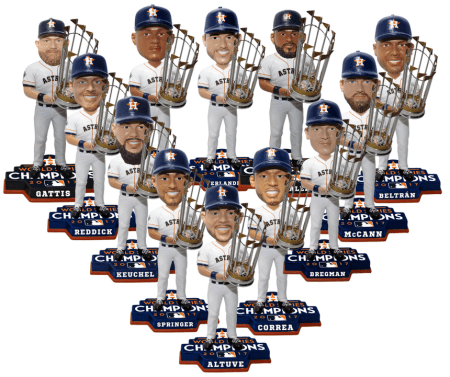


BA Question Sparks Bobblehead Possibility

June 30, 2018

BOBBLE

2018 American League Batting Average Leaders

Through Games of 6/29/2018:

# Leaders Team G AB H BA
1 Jose Altuve Astros 84 329 112 .340
2 Mookie Betts Red Sox 63 242 82 .339
3 Jean Segura Mariners 76 317 107 .338
4 Andrelton Simmons Angels 72 297 86 .322
5 JD Martinez Red Sox 79 302 97 .3212
6 Mike Trout Angels 83 287 92 .3210
7 Matt Duffy Rays 65 257 81 .315
8 Eddie Rosario Twins 77 308 96 .312
9 Michael Brantley Indians 69 280 86 .3071
10 Jon Jay Royals 59 238 73 .3067
  • Astros Above shown in bold type.

The Run of Things Going Into the All Star Break. Jose Altuve has hit a cooler spot in the long season run. It’s not as bad as George Springer’s big chill at the plate, of course, but still close enough to AC room air temp to allow Mr. Altuve more company near the top view of the whole house than he might really desire to welcome.

Anyway, that’s baseball. And it’s all part of the long season.

A curiosity. The PP Eagle will continue to run these updates sporadically during the season – and more often come September as we continue to track Jose Altuve’s pursuit of a 4th American League batting average championship. In that light, we have elected to follow the bare statistical facts that are germaine to the competition – times at bat, hits, and batting average.

We do not, however, have a ready answer to the way Baseball Reference.Com chooses to handle players who qualify by their AL numbers, but would not count, if we took their other playing time with an NL club into consideration too prior to an earlier this same season trade or pick up.

So far, John Jay, the 10th ranked hitter today, forces these questions: Does John Jay really qualify? And, at season’s end, when all of his MLB stats are considered together, will his NL stats at San Diego in 2018 undermine his chances for the AL batting title?

John Jay is hitting .307 as a 2018 AL batter. Baseball Reference.Com does not hold the .244 that Jay batted for San Diego in the 21 games he played there before joining the Royals after the start of this season. If they did, his aggregate average for the whole season would be .291, to date, and he would not be listed among the AL leaders here.

My understanding is that a batter’s performance for a whole season, both leagues combined, would be considered in determining a batting championship.

But, what if a player hit .400 in the NL but got traded at the August 31st deadline to an AL club because he ran off with the NL club owner’s wife – and then hammered the AL pitchers with enough hits in September to qualify as the batting champion of both leagues? How does that work? Do you have to get most of your hits in one league to qualify as the BA champion? Or do you just treat whatever you did in the other league that season as a non-event?

It goes without saying, but leave it to me, I’ll say it anyway: If you are hitting .400 in August, but you get traded before the deadline because it’s learned that you’ve been stepping out with the club owner’s wife, don’t be surprised if the team’s marketing people come up with the world’s first triple person bobble-head giveaway figure – just in time for the first game of the playoffs. – It will feature the club owner getting ready to deliver a serious double-duty kick to the posteriors of both his former wife and former star slugger.


********************

Bill McCurdy

Principal Writer, Editor, Publisher

The Pecan Park Eagle

 

Astro Relief? Round Up the Usual Suspects!

June 5, 2018

My apologies.

A lot of work that went into the content of this column was lost at publication by an accidental deletion, but that’s OK. This chart and what just happened in the last two games of the Red Sox Series here in Houston was the gist of it.

The Astros need to address the crack in the bullpen. Our starters are not likely to keep us from a title repeat, nor will our offense likely stop us from our second World Series, but …. that bullpen …. that bullpen we now have could cost us everything if the same guys keep showing up and failing to hold even multiple run leads in late innings. We have to take action to shore things up, by whatever ways are both practical and possible. My designated “suspects” for removal, assignment. sale, or trade are highlighted in bold type.

Yes, we know that Giles has 10 saves, but they were low pressure game saves. We think Giles has the kind of talent that will require “PTSD” treatment similar to the remedy that worked for Brad Lidge. It probably needs to happen elsewhere – and not as a member of the Astros.

2018: The Usual Suspects

Astros Relief Staff, June 4, 2018

# Suspect Age G W L IP ER H HR BB SO ERA
1 Joe Smith 34 21 2 1 18.0 11 14 3 6 18 5.50
2 Ken Giles 27 22 0 1 19.0 11 23 1 1 18 5.21
3 Will Harris 33 25 1 3 20.1 11 21 2 6 21 4.87
4 Tony Sipp 34 16 0 0 12.2 4 9 0 5 11 2.84
5 Brad Peacock 30 22 1 3 22.2 7 18 5 6 31 2.78
6 Chris Devenski 27 24 1 1 22.2 5 17 2 7 29 1.99
7 Hector Rondon 30 24 1 1 20.2 4 18 1 4 24 1.74
8 Collin McHugh 31 19 1 0 27.1 4 19 2 6 37 1.32

Astros Pitching Continues to Dominate in May

June 5, 2018

Astros Pitching Continues to Dominate in May

The Houston Astros finished the month of May with a record of 36-22 in first place in the American League West Division, one game ahead of the Seattle Mariners. The month of May was a difficult one, opening against the New York Yankees and finishing with the Yankees and Boston Red Sox, the two strongest teams in the major leagues. Their record in May was 16-12 with 5 of the losses to the Yankees.

The Astros success this season has been largely due to their incredible starting pitching. None of the five pitchers in the starting rotation have missed a start and they have combined for an ERA of 2.54, by far the best in MLB. Three of the top four pitchers in the AL based on ERA are Astros, Justin Verlander (1.11), Gerrit Cole (2.05) and Charlie Morton (2.25). Cole pitched one of the best games ever by an Astro pitcher, a one-hitter with 16 strikeouts against Arizona.

The relief pitchers have suffered a few bumps but, overall, the bullpen’s ERA of 3.04 is the 4th best in the major leagues.

While the pitching has exceeded expectations, the hitting has not. A repeat of last year’s average of 5.53 runs scored per game was not likely but the Astros are averaging 4.96 runs per game while 5 teams, led by the Yankees at 5.64 are scoring over 5 runs per game. The Astros are one of the top 6 or 7 offensive teams in MLB but not at the top as they were in 2017.

The only Astro player who is having a career year is backup catcher, Max Stassi, .307, 5 home runs. Even reigning MVP, Jose Altuve struggled in May as his batting average dropped below .310 briefly before he had a record setting stretch of 10 hits in 10 at-bats raising his average back to the .330s. Altuve, (.338) and Stassi are the only two Astros hitting over .300. George Springer (11 HR) and Yuli Gurriel are batting in the .280s but the rest of the Astro batters are in the mid to low .200s. Springer had a game in May with 6 hits in 6 at-bats. Carlos Correa batted .188 in May, lowering his average to .261 for the season.

The Red Sox, Yankees and Astros have clearly established themselves as the three strongest MLB teams in the first one third of the season. This is not likely to change. The Astros pitching may not remain as strong as it has been for the rest of the season, but it should still be the best. The hitting is expected to improve in the summer months and this combination should be enough to hold off Seattle and the Los Angeles Angels to win the AL West Division.

Bill Gilbert

6/4/2018.


Addendum:

Astros Starting Pitcher Stats

Through June 4, 2018

Courtesy of Baseball Reference.Com

2018 Astro Starters G GS W L ERA IP ER H HR BB SO
Justin Verlander 13 13 7 2 1.24 87.1 12 46 5 17 104
Gerrit Cole 12 12 6 1 2.20 81.2 20 48 9 20 116
Charlie Morton 12 12 7 1 2.84 73.0 23 56 11 23 92
Lance McCullers, Jr. 12 12 7 3 3.89 69.1 30 54 6 27 72
Dallas Keuchel 12 12 3 7 3.65 74.0 30 70 9 21 60


********************

Bill McCurdy

Principal Writer, Editor, Publisher

The Pecan Park Eagle

Good Pitching and Club Spirit Won for Buffs

May 6, 2018

(This article was produced by Associated Press nearly 70 years ago. Here’s how it appeared in the Corpus Christi Times, on Page 19, on September 25, 1947, the day following the last Texas League Playoff game for the Houston Buffs on their way to the Texas League pennant and in readiness for yet another victory over Mobile for the Dixie Series Championship.)

____________________

EPSON MFP image

Johnny Keane ~ Field Manager ~ 1947 Houston Buffs

Good Pitching and Club Spirit Won for Buffs

Houston, Sept. 25 (AP) — In the words of Johnny Keane: “I’ve never seen anything like this ball club.”

He was speaking of his Houston Buffaloes who last night defeated the defending champion Dallas Rebels, 1-0, to take the 1947 Texas League pennant and the right to represent the circuit in the Dixie Series, opening here Friday night, with Mobile’s Bears, the champions of the Southern Association.

The Buffs have had Keane, fans, and sports writers guessing all season. for, despite a noticeable absence of heavy hitters, a siege of injuries and only three “frontline” hurlers, they monopolized first place throughout most of the league’s regular schedule, defeated Tulsa four straight in the first round of of the playoff, and overcame terrific odds in the Dallas round.

But repeated analysis had indicated two things: The Buffs hit when hits count and they are firm believers in the old adage that the game is not over until the last out is recorded.

The first point is illustrated with Houston’s ranking fifth during most of the season in club batting but first in runs batted in.

And Tuesday night’s game at Dallas is proof of the second point, for it was then the Buffs, trailing by six runs and held hitless for six innings, broke loose for eight runs and 11 hits in the last three innings to take an 8-6 decision that placed them in the driver’s seat in the Rebel Series.

Only two of Keane’s crew (Hal Epps and Johnny Hernandez) finished above .300 in batting but every man in the lineup has been at one time or another a hero by knocking in winning runs.

Clarence Beers, who began his baseball career as a catcher, is the mainstay of the pitching staff, having recorded his 28th victory as against eight defeats. The only other steady winner is knuckleballer Al Papai, who finished with a 23-11 record.

The third hurler is Jack Creel (15-11), who, nursing an arm ailment, has his on and off nights.

As relief men, Keane has two right handers, Roman Brunswick (12-8) and Charlie Sproull (6-5) and two southpaws, Pete Mazar (5-6) and veteran Herb Moore (5-2).

Houston’s starting lineup, with final batting averages for the regular season, normally includes:

Solly Hemus (.277) at second, Billy Costa (.232) at short, Eddie Knoblauch (.275) at left, Johnny Hernandez (.301) at first base, Hal Epps (.302) at center, Vaughn Hazen (.280) or Stan Benjamin (.280) at right, Tommy Glaviano (.245) at third, and Gerald Burmeister (.210) catching.

The all-around utility man who has done everything except catch and pitch is Jack Angle (.251), while the reserve catchers are Doc Greene (.217) and Joe Niedson (.212).

********************

TPPE Note: Note some of the stats, especially for pitchers, are slightly at variance from the data that Baseball Reference.Com now carries for the t947 Houston Buffs.. This appears to be because the data reported in this article included playoff game data with regular season data. That may explain why Buffs pitcher Clarence Beers is credited here with 28 season wins against 8 defeats – and BBREF.com records Beers with three less wins and a 25-8 record at Houston in 1947. Further study of the discrepancy is needed.

********************

Bill McCurdy

Principal Writer, Editor, Publisher

The Pecan Park Eagle



Bill Gilbert: Pitching Carries Astros in April

May 3, 2018

SABR Analyst and Pecan Park Eagle Contributor Bill Gilbert sums up the 2017 AL Champion Astros Repeat Run through the early part of  2018.

Pitching Carries Astros in April

By Bill Gilbert

The Houston Astros compiled a won-loss record of 20-10 in April to lead the American League West Division by 2 1/2 games over the Seattle Mariners and 3 games over the Los Angeles Angels.  The starting pitching was superb. The five pitchers in the rotation each started 6 games and they collectively recorded an ERA of 2.44, by far the best in the major leagues. Three pitchers with ERA’s under 2.00 led the way, Justin Verlander (1.36), Charlie Morton (1.72) and Gerrit Cole (1.73). Cole set a team strikeout record for April with 61. The bullpen also performed well with an ERA of 2.76. Most encouraging was the rebound of closer, Brian Giles, after a poor World Series. In April, Giles converted all three save opportunities and allowed a total of only two runs in his eleven games.

The Houston offense started slowly but by the end of the month the team ranked well above the major league average in most offensive categories.   In 2017, the Astros averaged scoring 5.53 runs per game. In April 2018, they averaged 4.97 compared to the MLB average o 4.46. Six teams averaged over 5 runs per game in April led by the New York Yankees at 5.86.

Jose Altuve batted .347 and Carlos Correa hit .330 in April but the rest of the team hit in the low to mid .200’s. George Springer and Josh Reddick each hit 6 home runs.

April was the first month in the history of major league baseball when strikeouts (6,656 ) outnumbered hits (6,360). This is a continuation of a trend that may not be good for baseball in the long run. Astros pitchers were a major factor in this imbalance by striking out 316 opposing batters while allowing only 196 hits.

The New York Yankees bring their 9-game winning streak to Houston to open the month of May for a four game series with the Astros. matching the best hitting team in baseball with the best pitching team. It could happen again in the post-season.

As expected, teams in the AL West have improved, especially the Seattle Mariners and the Los Angeles Angels, but the Astros should prevail barring major injuries.

Bill Gilbert

5/2/2018


********************

Bill McCurdy

Principal Writer, Editor, Publisher

The Pecan Park Eagle
 

Ty Cobb and Power: Upon Further Review

April 27, 2018
tycobb swings

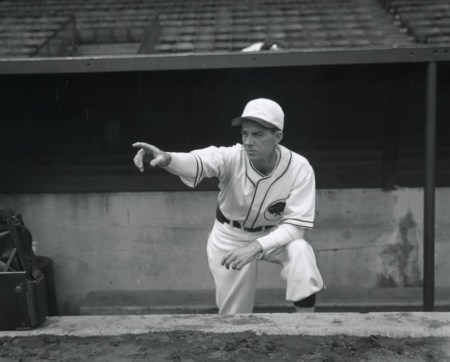
“That ought to do it!” ~ Ty Cobb Ty Cobb of the Tigers Belts walk-off HR in 9th as Detroit beats Chicago, 16-15. ********** June 2, 1925


Ty Cobb and Power: Upon Further Review

In our previous article, “Ty Cobb’s 1925 Power Show”, we covered the Games of May 5th and 6th at St. Louis in which Ty Cobb and the Tigers routed the Browns twice on the heels of a supposedly expressed Georgia Peach promise to show the world what he also was capable of doing with power, if he chose to play the game in Babe Ruth’s preferred style.

We made the comment that “His two-day game totals from May 5th and 6th of 1925 were 9 hits in 12 tries at bat (.750), 6 runs scored, 11 runs batted in on 5 HR, 1 double, and 3 singles. The experience must have sated his need to prove anything further, because Ty Cobb never repeated the dramatic two-game showing elsewhere from there.”

A fairly quick post-publication comment from good SABR colleague and distinguished baseball researcher and writer Gregory Wolf notably urged me to re-examine what Cobb did almost exactly a month later for the Tigers in a 16-15 punch out of the White Sox on a 9th inning walk-off homer by Cobb at home.

On June 2, 1925, the Tigers and Pale Hose were involved in a slap-happy slugfest, but the Tigers seemed to have secured a prospective win when they mounted a 15-5 lead by the end of the 6th.

Then. What do you know? The Sox battled back to tie the game at 15-15 going into the bottom of the 9th. Setting the table.

With one out, Ty Cobb blasted a walk-off HR to deep right center that gave the game to the Tigers, 16-15. Veteran viewers of the ballpark said it was the longest homer they ever saw Cobb hit at home. (Uh, forgiveness here. We were too late to get direct quotes and we haven’t had a chance to check the news files on what people actually said about the Cobb walk off blast. We do know from Gregory Wolf’s article. Here’s the quote: “Cobb’s blast was ‘undoubtedly the longest hit he has ever made on the Detroit lot,’ opined Detroit sportswriter Salsinger.”

While you are at it, check out the link to Gregory H. Wolf’s much more eloquently detailed report of that June 2, 1925 game. I think you will be glad you did:

https://sabr.org/gamesproj/game/june-2-1925-tigers-win-16-15-game-wild-bedlam


********************

Bill McCurdy

Principal Writer, Editor, Publisher

The Pecan Park Eagle


Rookie Larry Miggins Given Dizzy Ride

April 14, 2018

Larry Miggins

Seventy years ago this month, our 92-year old SABR member of the Larry Dierker Chapter and national baseball history treasure, Larry Miggins, was a kid struggling to catch on with a major league club during the reserve clause era days. Given the experience he had with the old waiver rules of that time, Larry more than likely had to check the newspapers daily to know where he would be playing in the afternoon. Here’s how writer Jerry Liska reported the meanderings of Mr. Miggins over that short period. — Glad you made, Larry! — The Pecan Park Eagle.

Rookie Given Dizzy Ride

By Jerry Liska

Chicago -(AP)- The complexities of baseball’s waiver rule have rookie outfielder Larry Miggins of the St. Louis Cardinals (for the moment) on a wild merry-go-round.

Within a week, 22-year old Miggins — a fine Irish husky from New York’s Bronx — was waived by the Cardinals, claimed by the Chicago Cubs, waived by the Cubs and claimed by the Cardinals.

All of this maneuvering was an attempt by both the Cards and the Cubs to shake Miggins loose for further minor league seasoning.

He was drafted by St. Louis last fall from Minneapolis of the American Association. As a drafted player, he must be waived out of the majors for minor league assignment.

The Cards still want to farm him out and the Cubs are ineligible for future claim.

H was claimed by the Cubs for the $10,000 waiver price last Saturday, and joined them at Pittsburgh. Friday he was summoned to the Cub office and informed the team had waived him and the Cards had reclaimed him.

So Friday afternoon, Larry was back on the Cardinals bench, recalling a more peaceful 1947 season when he batted .289 for Sioux City of the Western League and .233 for the Minneapolis Millers.

Manager Eddie Dyer of the Cards, who gave Miggins a whirl in spring training, says he has fine speed and a splendid throwing arm. If he can learn to hit better, he’s a good major league prospect.

— Dubuque (IA) Telegraph Herald, Page 20, April 25, 1948.


********************

Bill McCurdy

Principal Writer, Editor, Publisher

The Pecan Park Eagle


Mover & Shaker: Walter O’Malley

March 29, 2018

Do you remember why the Dodgers and Giants left Brooklyn and Manhattan after the 1957 NL season and moved to Los Angeles and San Francisco?

It didn’t have to do with fans so much, except for one thing, it did have everything to do with where the fans were now living by this time. Like so many other American families in this era, baseball fans were moving to the boondocks for a shot at more home space at cheaper prices at the expense of a big bump in the cost of daily travel to work in the cities that still served as homes to their favorite baseball teams.

The work-home commute was no big deal for Dodger and Giant fans. The East was built around a great commuter rail system that could take mostly working fathers to and from their new homes in New Jersey and Connecticut to work and back without a problem.

The problem was – how did the bulk of these diehard Dodger and Giant fans remain active patrons of their clubs, especially of the Dodgers in Brooklyn, when there was no great commuter service to Ebbets Field by rail – and only limited, expensive car space for parking, if a fan planned to drive in for a game he may have earlier in life been able to reach on foot?

I prefer to believe the following: Dodger owner Walter O’Malley worked his tail off trying to get the City of New York to help him build a new ball park in Brooklyn near a major commuter train depot – and he also sought help from the city in building this park – with plans for upgrades that even included a domed stadium design. It would have been tailor-made as a plan for retaining all the Dodgers fans that now lived in New Jersey.

It didn’t happen. For whatever political and economic factors that called the hand, the legendary NYC planning genius, Robert Moses, effectively always found a way to block all of the Dodger requests. The next thing we all knew was that the Dodgers and Giants were departing the New York area to begin the 1958 season as the Los Angeles Dodgers and the San Francisco Giants.

Owners Walter O’Malley of the Dodgers and Horace Stoneham of the Giants were breaking from the pack to become the first MLB colonizers of the long-regarded and richly coveted West Coast territory. With the growth of television baseball coverage and the newly available presence of commercial jet plane travel, it would now be possible to schedule and play a regular season of baseball without expanding the time gates on the regular season to any big extent.

What we may never know for sure.

O’Malley’s West Coast Plan B may always have been his actual Plan A. Had Moses of NYC continued to work with O’Malley in a more giving way on the “new ballpark for the Dodgers” proposal, we’ll never know if O’Malley would have found ways to reject each try for the sake of justifying his refusal of each offer in favor of the West Coast baseball version of Sutter’s Mill.

Can’t wait to read “Movers & Shakers” by Andy McCue.

Hopefully, this new work will clarify the end game intentions of what really happened in one of the most significant structural alignment changes in baseball history.

God Willing, this subject will be revisited soon.


********************

Bill McCurdy

Principal Writer, Editor, Publisher

The Pecan Park Eagle

Bill Gilbert: 2017 Offensive Productivity

March 24, 2018

Who Were the Most Productive Offensive Players in 2017?

By Bill Gilbert

With the 2018 baseball season starting next week this is a good time to take a look back at who were the most productive players in 2017.

Numerous methods have been devised to measure offensive performance. The most common are batting average, on-base percentage and slugging average. Since none of these averages provides a complete picture by itself, a more comprehensive measure of offensive performance is useful. Such a measure would include the following elements:

  1. The ability to get on base.
  2. The ability to hit with power.
  3. The ability to add value through baserunning.

The first two elements are measured by on-base percentage and slugging average. A measure of offensive performance, which encompasses both as well as baserunning achievements, is Bases per Plate Appearance (BPA). This measure accounts for the net bases accumulated by a player per plate appearance. It is calculated as follows:

BPA = (TB + BB + HB + SB – CS – GIDP) / (AB + BB + HB + SF)

Where: BPA = Bases per Plate Appearance

TB   = Total Bases

BB   = Bases on Balls

HB   = Hit by Pitch

SB   = Stolen Bases

CS   = Caught Stealing

GIDP = Grounded into Double Plays

AB   = At Bats

SF   = Sacrifice Flies

The numerator accounts for all of the bases accumulated by a player, reduced by the number of times he is caught stealing or erases another runner by grounding into a double play. The denominator accounts for the plate appearances when the player is trying to generate bases for himself. Sacrifice hits are not included as plate appearances, since they represent the successful execution of the batter’s attempts to advance another runner.

BPA Table, 2013-2017

YEAR BPA .550 .600
2003 .461 42 15
2004 .468 33 18
2005 .456 34 13
2006 .470 46 14
2007 .463 34 15
2008 .458 41 11
2009 .461 42 16
2010 .446 19 7
2011 .442 25 7
2012 .447 12 5
2013 .440 14 3
2014 .426 9 4
2015 .440 20 6
2016 .456 23 7
2017 .466 36 12

Offensive production peaked in 2000 before declining in the early years of this century. BPA declined significantly from .481 in 2000 to .426 in 2014 before significant upticks in the last three years.

In the 1990s, there were 14 individual .700 BPA seasons. In the eight year period from 2000 to 2007, there were 18. The highest BPA in the 1990s was recorded by Mark McGwire in 1998 (.799). Barry Bonds shattered that with .907 in 2001, the highest figure ever recorded, topping Babe Ruth’s best two years (1920 and 1921). Bonds followed that with .869 in 2002, .818 in 2003 and .882 in 2004. There had not been any hitters with a BPA of .700 since 2007 until Mike Trout did it in 2017.

 The .700 BPA seasons in 2000-2017 are listed below:

Player   (Team & Year)     BPA

Barry Bonds (San Francisco 2001) .907

Barry Bonds (San Francisco 2004) .882

Barry Bonds (San Francisco 2002) .869

Barry Bonds (San Francisco 2003) .818

Sammy Sosa (Chicago Cubs 2001) .758

Barry Bonds (San Francisco 2000) .745

Jim Thome (Cleveland 2002) .728

Manny Ramiriz (Cleveland 2000) .726

Todd Helton (Colorado 2000) .720

Mike Trout (LA Angels 2017) .718

Luis Gonzalez (Arizona 2001) .713

Todd Helton (Colorado 2001) .709

Carlos Delgado (Toronto 2000) .707

Larry Walker (Colorado 2001) .707

Jason Giambi (Oakland 2000) .706

Travis Hafner (Cleveland 2006) .703

Alex Rodriguez (NY Yankees 2007) .702

Jason Giambi (Oakland 2001) .700

Ryan Howard (Philadelphia 2006) .700

The yearly leaders since 1992 are as follows:

1992 Bonds     .734

1993 Bonds     .740

1994 Bagwell  .768

1995 Belle        .692

1996 McGwire .765

1997 Walker  .770

1998 McGwire .799

1999 McGwire   .735

2000 Bonds  .745

2001 Bonds  .907

2002 Bonds .869

2003 Bonds .818

2004 Bonds .882

2005 D. Lee .699

2006 Hafner   .703

2007 A. Rodriguez .702

2008 Pujols   .685

2009 Pujols   .696

2010 Bautista .671

2011 Bautista .681

2012 Trout .665

2013 C. Davis .670

2014 Trout .623

2015 Harper .694

2016 Trout .681

2017 Trout .718

The benchmark for an outstanding individual season is .600. Following is a list of the twelve players with enough plate appearances to qualify for the batting title and with a BPA of .600 in 2017. The list is topped by Mike Trout of the Los Angeles Angels with a BPA of .718, the fourth time he has finished in front. He has had a BPA over .600 in all five years that he has played a full season.

Bases per Plate Appearance (BPA) of .600+ in 2017

————————————————-

No. of 2017-2016 .600+ Player

BPA   BPA LG Seasons Comments            _________

# Player 2017 BPA 2016 BPA LG .600+ Years Comments
1 Mike Trout .718 .656 AL 6 On Top Again.
2 Aaron Judge .681 .274 AL 1 Do it again?
3 G. Stanton .659 .533 AL 4 Should thrive as NYY.
4 Joey Votto .641 .606 NL 6 Also 6th OBP Lead.
5 C. Blackmon .640 .597 NL 1 Breakout season.
6 Cody Bellinger .631 —- NL 1 Set NL rookie HR mark.
7 F. Freeman .630 .616 NL 2 Best season yet in 2017.
8 P. Goldschmidt .625 .587 NL 2 The D-Backs Do-it-all.
9. Joey Gallo .613 .333 AL 1 Home Run or Bust!
10. Jose Rameriz .612 .509 AL 1 Fast Lane Superstar!
11. Jose Altuve .601 .576 AL 1 First time over .600.
12. Kris Bryant .600 .611 NL 2 Already a ROY & MVP.

The increase in the number of players with a .600 BPA from 7 to 12 reflects the increase in overall offense in 2017. Near misses were Zack Cosart (598), Justin Upton (595) and Anthony Rendon (595).

Three players had a BPA over .600 in 2016 but failed to reach it in 2017.

No. of

2016   2017     .600+

   Player           BPA  BPA LG Seasons Comments            

1 David Ortiz     .631 —-  A   6   Retired on top.

  1. Daniel Murphy   .612   .560   N   1  Fell short of 2016 career year.
  2. Josh Donaldson .609 .617 A  2   Not enough plate appearances to qualify.

Two active players have a BPA of .600 for their careers:

2017         Career

Player            Age            BPA           BPA   Comments

————-      —     —-       —- —————————

Mike Trout           25      .718       .648   Leader by far.

Joey Votto           33    .641       .603   No sign of decline yet.

Another list of interest is of players with a BPA of over .600 in 2017 who did not have enough plate appearances (502) to qualify for the batting title.

Player           Age BPA   PA   Comments

————— —  —- —   ————————–

Rhys Hoskins     24 .684 212   Mid-season rookie sensation

J.D. Martinez   29 .679 489 Spectacular in Arizona.

Matt Olson     23 .667 216   Hit 47 homers between majors and minors in 2017.

Bryce Harper     24 .622 492   Has never reached 100 RBIs.

Josh Donaldson   31 .617 496   Consistently productive.

Martinez, Harper and Donaldson fell just short of the 502 plate appearances needed to qualify.

Looking at the other end of the spectrum, five players who earned enough playing time to qualify for the batting title had a BPA less than .400 in 2017. This list has shrunk each year from 25 players in 2014 to only five in 2017 reflecting the increase in offense.

Player         Age   BPA Team    Comments                                                                                                     ————–   —  — —-     ———————

Albert Pujols   35 .385 Angels   On .600 BPA list eight times.

Dansby Swanson 23 .381 Braves  Sophomore slump

Alex Gordon     33 .380 Royals   Where did the offense go?

Jose Peraza     23 .375 Reds     Has trouble getting on base.

Alcides Escobar 30 .347 Royals  No stranger to this list.

Four players had a batting average over .300, an on-base average over .400, a slugging percentage over .500 and bases per plate appearance over .600 in 2017.

Player             BAVG       OBA       SLG       BPA      OPS

Mike Trout         .306     .442     .629     .718    1.071

Joey Votto          .320      .454     .578     .641     1.032

Freddie Freeman      .307     .403     .586     .630     .989

Jose Altuve      .346     .410     .547      .601       .948

Trout and Votto have these numbers for their careers.

Mike Trout–Career   .306     .410     .566     .648       .976

Joey Votto-Career   .313     .428     .541     .603       .967

Trout did not lead counting categories like home runs and RBIs because he missed 48 games with an injury. However, he led the American League in important rate stats like OBA, SLG, OPS and BPA, He was clearly the best offensive and all-around player in the Major Leagues in 2017.

Bill Gilbert

3/23/18

Source of statistics used in this report is the “Lee Sinins 2018 Complete Baseball Encyclopedia”.


*******************

Bill McCurdy

Principal Writer, Editor, Publisher

The Pecan Park Eagle