Archive for the ‘Uncategorized’ Category

A Walk on the West Houston Wild Side.

February 18, 2010

For many of us in Houston these days, the walking/jogging tracks are our primary venues for physical exercise. Bear Creek Park on Eldridge has been my home field for over twenty years with  an occasional few laps at Thomas Hershey Park on Memorial Drive thrown in every once in a while to break the spell.

Over the years, it seems to me that we regulars have been seeing a lot more wildlife on the walking paths than we once did. Wild deer standing around the paths at dusk in the spring and fall, however, have been regular sights for years at Bear Creek. Snakes in the springtime and rabbits all year-round are also no big news, anymore, any more so  than the sight of raccoons, possum, buzzards, vultures, cardinals, and a wide variety of other indigenous wild birds.

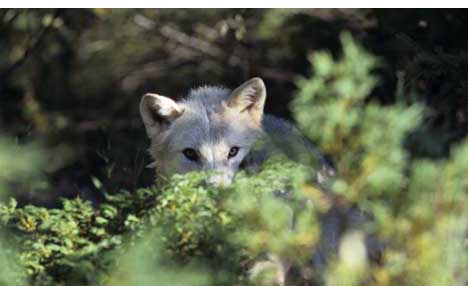
It’s just that lately we’ve been getting an increase in the sporadic sighting, especially at Hershey, which trails for great distances along side Buffalo Bayou, of more exotic predators like wolves, coyotes, and most recently, a cougar.

I wouldn’t want to meet up with any of those last few guys on any walking trail anywhere, but it’s possible that any of us might one of these days. The wildlife refuge beyond Addicks Dam has been so stirred up in recent years by the incredible residential and commercial growth west in Katy and north around Little York that it isn’t hard to figure why we are seeing more wild life moving inward upon us. They aren’t being pushed away by Houston’s growth. They seemed to getting squeezed from the perimeters to move back into some of the neighborhoods in the Memorial Drive area to look for food.

Sometimes that food source is the family pet, so keep your eyes open to what’s going on around you. It’s one of the prices we have to pay with our relentless willingness to mess with Mother Nature.

Casey’s Lucky Charm.

February 17, 2010

What's that hiding under your cap, Casey?

Back in the 1950s, you had to love this guy, even if you hated the New York Yankees and the way they routinely ran over all the other clubs like a Nazi panzer division. Remember what happened during Stengel’s rein as manager from 1949 to 1960? In that 12-year span, the Yankees took the American League pennant 10 times, and also they won the World Series in 7 of their 10 trips to the really big show.

Remember too, Casey’s managerial career wasn’t all about winning, During the 1930s and early 1940s, Stengel managed 10 second division clubs in the National League at Brooklyn ((1934-1936) and Boston (1938-1943). He also followed his run with the Yankees as the manager of the original “Amazin’ Mets” for three straight 10th place NL finishes (1962-1964) and a fourth season (1965) that finished old Casey once the club started the season 31-64.

I have to confess. I never was a big Yankee hater as a kid and I loved what I read about Casey. The story of how he once changed boos to cheers as a player at Brooklyn by bowing at home plate and releasing a bird from under his cap just cracked me up at age 11. I thought, “Man! This Casey Stengel fellow is my kind of guy.”

One of my favorite Casey Stengel stories is about the time he managed at Toledo during the 1920s. He did something there that was mindful of his managerial mentor, John McGraw of the New York Giants.

McGraw once kept an untalented tuberculosis patient named Charles Victory Faust on his pitching roster as a good luck charm. He even pitched him a couple of innings in 1911 in meaningless games with no great harmful results. Following suit, Stengel carried a fellow named Al Herman on his 1926 Toledo Mud Hen roster as a “good luck token.”

Herman had shown up that year at Toledo, asking for a tryout. A young fellow from the Bronx, he didn’t have much of anything on the ball and we don’t know why he chose Casey and Toledo to display his wares. Perhaps he already had tried McGraw in New York and then went to Toledo by referral. we don’t really know. All we know is that Casey took him in, in spite of his obvious missing talent.

Herman possessed a stiff, contorted, stunted windup that resembled something he had only tried in the confines of his Bronx apartment building before a mirror. Still, Stengel kept him on the roster for good luck until one day at Minneapolis when he was forced to use him. With no help from a pitching coach, Stengel had used up all of his real pitchers and now needed to hold onto a lead with no one else left in the pen but Herman,

Into the game came Al Herman to pitch the bottom of the 9th. He looked awful warming up.

There must have been some magic dust in the air that day. Herman faced three batters. They each hit the ball a long way, but the way was straight up in the air, as though they were batting in a chimney. Herman had retired all three batters on towering infield pop flies and saved the game for Casey and the Toledo Mud Hens. Amazing!

Stengel ended up using Herman eight times in 1926. In 15 innings, Herman walked 11 batters and struck out only one. After the season, he vanished from baseball and disappeared forever from the limelight.

Wouldn’t you love to know what happened to Al Herman after baseball? That would be some follow-up story.

The 1st Great Buff: Tris Speaker.

February 16, 2010

Tris Speaker's .314 Buff BA in 1907 Led the Texas League.

Tris Speaker hailed from Hubbard, Texas. He grew up playing baseball at the turn of the 20th century, a time when great contact hitters and fielders with built- radar screens for flying things did not go nameless for long among the early bush-beating scouts in the boondocks. Add to Speaker’s resume his intelligence, speed, baseball intuition, and quickness of mind and body reaction to events on the field. Speaker had it all.

He played his first season at age 18 for the Cleburne Railroaders of the Texas League. He batted only .268 with one homer in 82 games, but it was a pitcher’s league and a pitching season. Teammate George Whiteman led the league in hitting that season with an average of only .284. On defense, Speaker shone bright and true in the outfield from early on. He could catch anything in the air that was humanly reachable.

In 1907, the Houston Buffs celebrated their return to the Texas League from four years of toil in the South Texas League by signing Speaker for their club. Speaker promptly used the opportunity to become a 19-year old batting champion. His .314 mark led all others. and his 32 doubles and 12 triples shone forth as a preview of things to come. For the time, they were good enough to prompt his sale late in the season to the Boston American League club.

Speaker hit a buck fifty-eight in 19 times at bat for the 1907 Boston Americans, who then turned around and sold his contract to Little Rock in 1908. Speaker responded by hitting .350 in 127 games for Little Rock and the Bostons bought him back near season’s end. He only hit .224 in 31 games as a 1908 Boston tail-ender, but the corner had been turned. Tris Speaker would see the underside of .300 only twice more in his next twenty years of major league play.

He would leave the game with 3,514 hits over 22 major league seasons (1902-1928), a lifetime batting average of .345, and the all time baseball record for doubles at 792. He won a batting championship by hitting .386 for Cleveland in 1916 and he won a World Series as playing manager of the Indians in 1920. He earlier won two World Series as a player for the 1912 and 1915 Boston Red Sox.

As a fielder, Speaker was renown for playing shallow because of his ability to go back and get the long ball.  He also holds the record for most unassisted double plays performed by a center fielder over a lifetime career. His 449 career assist also are a record for big league outfielders.

The achievements are two numerous to list. These are the amazing ones to me: (1) the man batted over .380 five times; and (2) he struck out only 220 times in 10,195 times at bat in the big leagues. Tris Speaker was elected to the Baseball Hall of Fame in 1937 – a full two years before the place even opened to the public and became physically prepared to conduct its first 1939 induction ceremony.

Without a doubt in my mind, The Grey Eagle is the greatest former Houston Buff of all time. Dizzy Dean is my choice as second man on that very short, but very special list.

\

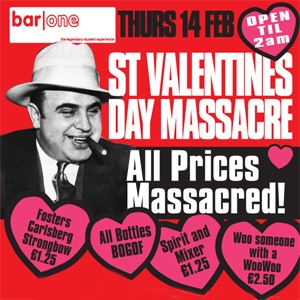
My St. Valentine’s Day Massacre Lineup!

February 13, 2010

Chicagoland: Vote Early! Vote Often! Vote for Al's Guy!

Roses are red,

Violets are blue,

Spring’s coming soon,

And baseball is too!

While we’re staring out the window at those ashen gray skies, fighting the cold dampness and awaiting the return of all that’s sweet about life, here’s a St. Valtentine’s Day lineup that’s designed to massacre the off-season blues with our love of the game. All the players on this special team are former major leaguers who mostly have passed the “ya gotta have heart” test.

The St. Valentine’s Day Love Massacre Lineup:

Pitcher: Slim Love (BL/TL) (28-21, 3.04) (1913-1920)

Catcher: Rick Sweet (BB/TR) (.234, 6 HR) (1978, 1982-1983)

First Base: Cupid Childs (BL/TR) (.306, 20 HR) (1888, 1890-1901)

Second Base: Bobby Valentine (BR/TR) (.260, 12 HR) (1969, 1971-1979)

Third Base: Jim Ray Hart (BR/TR) (.278, 170 HR) ((1963-1974)

Shortstop: Jake Flowers ((BR/TR) (.256, 16 HR) (1923, 1926-1934)

Left Field: Pete Rose (BB/TR) (.303, 4,256 career hits) (1963-1986)

Center Field: Bob Bowman (BR/TR) (.249, 129 career hits) (1955-1959)

Right Field: Moonlight Graham (BL/TR) (1 Game, 0 At Bats) (1905)

Manager: Bobby Valentine doubles as playing manger. His overly qualified back-up at second base, Cupid Childs, is too Valentine-cool not to play, so he is assigned to play first base for our club. Meanwhile, after a 105-year wait, Moonlight Graham gets a chance with this club to finally to take his first time at bat in the big leagues. How romantic is that?

Happy Valentine’s Day, Everybody! And don’t forget to treat your Special Sweetie nice on Sunday, February 14th!

The Father of the Texas League.

February 11, 2010

John J. McCloskey: Father of the Texas League & 1st Houston Pennant Manager.

As we’ve recently examined on these pages, professional baseball got off to a rough start with the 1888 Texas League season. Ballparks had to be built; patterns of regular game attendnce had to be established; players had to be signed and paid; weather and transportation had to cooperate so that games could be played on time as advertised; and ball club owners had to devise ways of making all this happen without losing money.

How this all happened over time is a total testament to patience, will, passion, and the power of professional baseball to become the first American sport to win over the hearts and minds of the American public. It didn’t come as easy as the “if you build it, they will come” exhortation from the movie “Field of Dreams”,  but it happened in Texas too, thanks to numerous pioneers, and none more notable of mention than John J. McCloskey, the man we remember today as “The Father of the Texas League”.

It all started innocently enough.

In the early fall of 1887, the world champion St. Louis Browns of Charlie Comiskey and the New York Giants of John Montgomery Ward toured Texas, mostly playing local amateur town teams that possessed only that “snowball-in-hell” chance of winning. None did.

Another team of younger minor league stars from Joplin, Missouri also came through Texas at this time and just “happened” to intersect with the Giants in Austin. The Joplins were led by a “black-haired lively young Irishman” named John J. McCloskey. In little time flat, McCloskey had arranged for a series of three games in Austin, pitting his Joplins against the Giants for what promised to be the biggest crowds that either team had seen in their separate barnstorming tours.

It was the perfect wild west scenario – a gunfight between the old established gunslinger (the Giants) and Billy the Kid (the Joplins). We don’t know today how much McCloskey played up that angle, but it would be very surprising to learn that he did not. From what we can know of the man, he was a fellow who loved baseball, but one who also possessed that P.T. Barnum huckster spirit for selling whatever angle he could find that would lure crowds to the game.

In spite of three future Hall of Fame members (John Montgomery Ward, Buck Ewing, and Tim Keefe), the Giants quickly dropped two games to the young and spirited men of Joplin. For some reason, weather or travel plan conflicts entering into it, the third game was not played and the Giants left town.

The smoke that lingered in Austin after the Giants-Joplin games included a taste for the blood offerings of professional baseball and the willing guidance of one John J McCloskey on how a Texas League of Professional Baseball Clubs could be put together fairly quickly.

McCloskey and his young Joplin aces gave Austin supporters the nucleus for a good club as “Big John” and his group spread out to all the other larger cities in the state, and as far away as New Orleans, and they recruited participants in the formation of the Texas League.

The Texas League got underway in 1888. The rest is history, shaky history, but successful history over time. The unchallenged, clearest thing about it is that John J. McCloskey, indeed, was the true Father of the Texas League. His baseball DNA is all over every park built for play in the Texas League from 1887 through about 1900.

In The Big Inning …

February 10, 2010

Houston's Baseball Tree Was Not Without Buffaloes Forever.

In the 1861 beginning of Houston “Base Ball”, there were no Buffaloes, no paychecks, and no players. Organized several weeks beyond the Texas secession from the Union, base ball had to wait for the end of the Civil War before it really took off as the most popular sport in town, but the seeds of love for the game had been planted early.

Contrary to popular theory, Houston already knew about baseball prior to the Civil War. It was not one of those southern cities that only learned about baseball through the experiences of returning Confederate veterans who had been exposed to the game as prisoners of war.

Remember. Houston’s founders, the Allen brothers, came here from New York in 1836. They brought with them other New Yorkers and they continued to attract new settlers from the northeast section of the country that was already involved in the evolution of baseball. For all we know, the first Houstonians may have been playing some kind of baseball from the very start, and certainly from beyond the 1845 date of the Cartwright-rules game that came into fashion on the Elysian Fields of New Jersey. It is most unlikely that the founding group that met in the upstairs room above J.H. Evans Store in Market Square on the night of April 16, 1861 had never played a single game of base ball on Houston soil prior to that evening.

If only F.A. Rice were here for five to ten minutes borrowed time from his eternal tour of eternity beyond the grave, he could clear up  lot of questions for us. F.A. Rice was the man the new HBBC elected as their first president on that now documented date of the group’s formation. He could clear up so much for us with even a few nods of the head. Unfortunately, that’s not how this thing works.

All we know for sure from that little newspaper clipping about the April 1861 foundation of the Houston Base Ball Club is that organized interest in the game existed in Houston at least as early as the beginning of the great Civil War.

Unfortunately, the graves and their occupants cannot be summoned to help us flesh out most of the unreported details.

On the “DL” Today …

February 9, 2010

I spent the weekend telling myself that it was just a pesky little  allergy that would blow its way by in a couple of days. Yesterday afternoon, my body answered with a resounding call of “wrong diagnosis.” Now I’m aching and running a low-grade fever. Yep. I’m down with some kind of respiratory virus today and I’ll be taking off however many day(s) needed for recovery. I will also go see my primary care physician tomorrow morning and get an antibiotic prescription to fight any secondary infection that may already be in place.

Bummer. But I’ll be back soon. God Willing.

Seems Like Old Times.

February 8, 2010

Buff Stadium in Middle Right of Gulf Freeway, Early 1950s.

It was located four miles east of downtown Houston. When its first Opening Day came around on April 11, 1928, many Houstonians still grumbled over the fact that Buffalo Stadium, the new baseball home of the Houston Buffs had been built so far out in the sticks from the city. West End Park, after all, had been right there on Andrews Street, off Smith, near where almost everybody lived back in the booming 1920s. The old park may have found its way to some  dilapidation and it may have offered  inadequate seating capacity, but it was close. And close counted for something back in the pre-freeway days.

The city had rallied to the travel problem by making sure that rail service to the new ballpark from downtown was easy to use. Union Station, the current home site of Minute Maid Mark, in fact, was one primary place to catch the ballgame  train that went out to Buff Stadium on what was then known as St. Bernard Avenue in 1928. That same thoroughfare is called Cullen Boulevard these days. It’s been Cullen so long now that hardly anyone alive still remembers it by its earlier identity.

Buff Stadium was the brain child of Cardinals General Manager Branch Rickey. Buffs President Fred Ankenman oversaw the ballpark’s construction in 1927-28, bringing in the project on budget at a cost of $400,000 much harder dollars then the kind we see today. Mr. Rickey even came down from St. Louis on the train to attend the 1928 grand opening of the new ballpark in Houston and he brought Baseball Commissioner Kenesaw Mountain Landis with him. Judge Landis was most impressed too, pronouncing the new Buff Stadium as the finest new minor league baseball park in America.

Landis’s favorable impressions were important to Rickey. Rickey hoped to soften the old man’s heart from the idea that major league ownership of minor league clubs was bad business for the local community. The original 8,000 seat Buff Stadium stood as a symbol of progress and improvement in Houston minor league baseball under Cardinal ownership. To some extent, Rickey had accomplished his mission in bringing Landis to Houston in April 1928. Nothing ever really cured the contentious relationship between these two men, as Rickey would learn years later when Landis freed Pete Reiser and a few others from reserve clause capture by the St. Louis Cardinals, but that’s a story for another day.

Look at the Houston skyline in the picture. The Gulf and Esperson buildings were still the icons of Houston architecture in the 1950s – and that freeway and its rascally pal roadways had only begun to play their role in Houston’s massive spread to the hinterlands.

The Houstonians of 1928 thought that the four-mile trip to Buff Stadium from downtown was a major expedition. Today we drive four miles just to reach a Whataburger or rent a DVD movie. So where’s all this progress we keep talking about?

1914 Houston Buffs: Texas League Co-Champs.

February 7, 2010

I especially love doing a baseball story on Super Bowl Sunday morning!

The 1914 Buffs at Union Station. Today they would be standing on the 3rd base line of Minute Maid Park in downtown Houston, Texas.

The 1914 Houston Buffaloes won 102 and lost 50, good enough to tie the Waco Navigators as the almost endlessly arguable co-champions of the Texas League after s series of post-game protests between the two clubs left them knotted in a first place tie with the same regular season record. Unfortunately, in the middle of all the legalese, ego, and other technical in-fighting, a playoff suggestion to settle the matter never broke out. As a result, the two were left to swarm on a tie that would be debated back and forth forever. Here’s the best summary I can provide you from the bit of fuzzy explanation left to us by the leaague’s erstwhile historian Willam Ruggles in “The History of the Texas League” from 1950.

Waco had been trying all summer to have one Houston win thrown out on a technicality. In a June 26th first game of a doubleheader at Houston, Austin trailed 9-1 at the end of seven innings. The visitors agreed to call the game then for the sake of saving daylight for the second contest, even though Texas League rules at the time dictated tat all first games of a DH must go nine frames to be official. The game was protested by Waco and, on September 7th, Texas League President W.R. Davidson threw the game out as a win for Houston, but he did not provide for any replay of the contest as prescribed by the rules at that time. Had the win not been taken away, Houston could have tied Waco with the same record.

Never fear. Houston got that tie, but they did it in the same way that Waco put a hole in Houston’s pennant hopes. They protested and won a verdict against Waco for using a new player too late in the season, as described by the Texas League roster rules for 1914. The win stripped Waco of a win and left them tied with Houston for the Texas League pennant. Perhaps the idea of a playoff between Houston and Waco was thwarted by the fear of further protests over whatever might have happened in an additional game.

The books closed on 1914 with Houston and Waco both finishing at 102 wins and 50 losses.

1914 was another quirky year in the Texas League. Last place Austin’s ownership was chastised early in the summer for not trying hard enough to win and for the frivolous firing of good players who may have been making too much money to please Austin owner Quebodeaux. The roster had a revolving door that almost spun its way out of control. “We tell ’em hello in the morning,” said Austin pitcher Ross Helms, “and we kiss ’em goodbye at night,” he added.

At one point, Austin lost 31 games in a row, a figure that also turned out to be their season win. The Capitol City boys finished last in the Texas League in 1914 with a record of 31 wins and 114 losses.

The only common ground that this article shares with the Super Bowl is this one: If someone wants to know who won the Texas League pennant in 1914, the only safe answer is this one:

Who dat?

Who Dat Be Sayin’ Who Dat When I Say Who Dat?

February 6, 2010

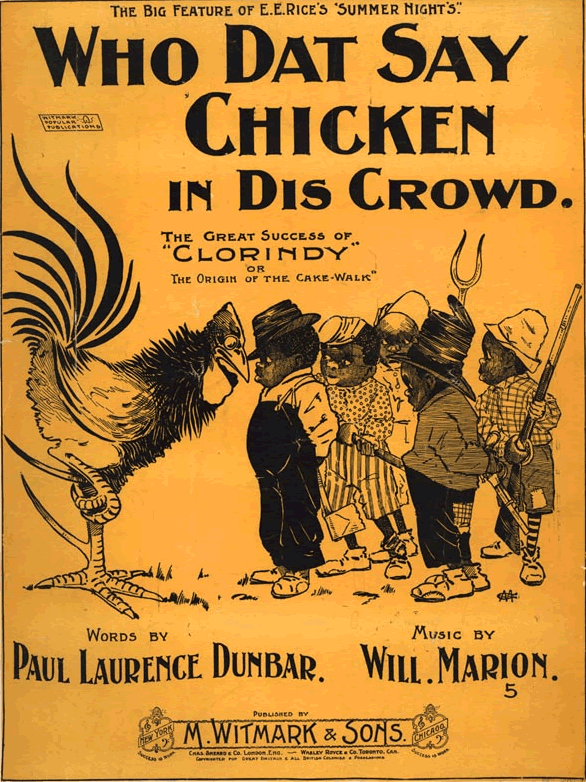
"Who Dat" Derives & Survives from Black Minstrel & Burlesque. Certainly racist by today's standards, the poster above advertises a musical presented back in 1898.

The first time I ever heard the “Who Dat” phrase, I was a graduate student at Tulane University in 1961. It came bellowing at me as a song phrase from a trio of French Quarter street singers and tap dancers who called themselves “Skeet, Pete, and Repeat.”

“Who dat be sayin’ … ‘Who Dat?’ … when I say … ‘Who Dat?’ … Who dat be … the question … of em all?” On the face of things, Skeet, Pete, and Repeat appeared for post-performance tips before their all white street crowds of that era as the very embodiment of Uncle Tomism, making fun of their own statures as men and human beings for the sake of getting money from an audience who craved demeaning affirmation of their bogus superiority over blacks.

Because of my work as an activist on black voter registration in 1964, and my natural affinity for jazz all along, I got to know a number of black families in New Orleans back in the early 1960s in ways that most whites did not experience during that period. It became a time of great joy, mighty sadness, and ultimately, of  important awakening for me. The “who dat” phrase was little more than a small part of it, but it bore a deeper significance, one that Skeet, Pete, and Repeat “dug” a whole lot better than the politically correct white scholars who cried out against it at the time as the docile language of the old Uncle Tom, yielding post-Civil War, “spooked by the KKK” black male culture.

I hope I can give you the picture of what Skeet, Pete, and Repeat did with that little phrase on the streets, one they often used in performance as the wrap-up number on the last set of the evening at the Dixieland {Jazz) Hall on Bourbon Street. Allow me to try and summarize the view, even if I do know in advance that my words will fail in adequacy. It’s important for you to know what stirred me from the visual side to talk with the guys about it – and important to understanding what the fellows really felt they were doing with “who dat” in that routine.

Here’s the picture:

Skeet, Pete, and Repeal all dressed in garish looking, zoot-suit fitting suits with formal shirts and ties. All three men tap danced extremely well. They would all take stage (or outside on Bourbon Street in earshot of the music) in a line, tap dancing up a storm to “When the Saints Go Marching In.” They would all be smiling to the point of sheer deferential obsequiousness into the faces of their usually older white tourist audiences. As the song neared its end, Pete would start dancing in a rotating circular motion between Skeet and Repeat as the latter two dancers each placed an index finger on the top of their partner’s head as though he were a spinning top. The touch of those fingers on the head would always produce a dreamy look of abject stupidity on Pete’s face, one  that invited the laughter of those people who needed help in feeling smarter by the sight of someone portraying himself as really so much dumber.

Then came the finale of the act and my introduction to who dat. The guys all returned to a line facing the audience and sang out in smiling harmonic unison as they continued to stomp-dance hard:

“Who dat be sayin’ … ‘Who Dat?’ … when I say … ‘Who Dat?’ … Who dat be … the question … of em all?”

“I said now, who dat be sayin’ … ‘Who Dat?’ … when I say … ‘Who Dat?’ … Who dat be? … It jus’ be us … that’s all!”

As I got to know Skeet, Pete, and Repeat a little bit, I had to activate my 23-year old brain and ask them one evening backstage at Dixieland Hall. “How can you guys do this routine  night after night, putting yourselves down in front of white people when you’ve all got enough talent to blow them away without all this Uncle Tom stuff?”

“You don’t get it because you’re white too, young man,” Pete told me. “When we say ‘who dat’ to all them white people, no matter how we be sayin’ it, we really be sayin’, ‘you better be ready to come up with an answer to that question, folks, because we all of us here, men and people too – and we ain’t goin’ away. – Who dat? – Dat be us!'”

Who dat’s gone mainstream now, but the question is still out there to be answered by each us about ourselves on all matters, large and small, and about nobody else. We all have to sink or swim on the heels of what we each do, and fail to do, with our own lives.

And guess what? This weekend, millions of us will be frittering away our time as answers to the question about who dat be watchin’ the Super Bowl on Sunday.

Who dat? – Dat be us.