Archive for the ‘Baseball’ Category

Ty Cobb and Power: Upon Further Review

April 27, 2018
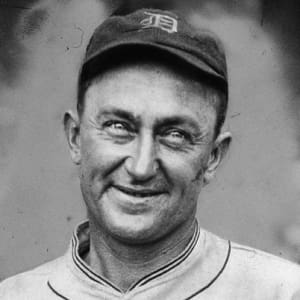
tycobb swings

“That ought to do it!” ~ Ty Cobb Ty Cobb of the Tigers Belts walk-off HR in 9th as Detroit beats Chicago, 16-15. ********** June 2, 1925


Ty Cobb and Power: Upon Further Review

In our previous article, “Ty Cobb’s 1925 Power Show”, we covered the Games of May 5th and 6th at St. Louis in which Ty Cobb and the Tigers routed the Browns twice on the heels of a supposedly expressed Georgia Peach promise to show the world what he also was capable of doing with power, if he chose to play the game in Babe Ruth’s preferred style.

We made the comment that “His two-day game totals from May 5th and 6th of 1925 were 9 hits in 12 tries at bat (.750), 6 runs scored, 11 runs batted in on 5 HR, 1 double, and 3 singles. The experience must have sated his need to prove anything further, because Ty Cobb never repeated the dramatic two-game showing elsewhere from there.”

A fairly quick post-publication comment from good SABR colleague and distinguished baseball researcher and writer Gregory Wolf notably urged me to re-examine what Cobb did almost exactly a month later for the Tigers in a 16-15 punch out of the White Sox on a 9th inning walk-off homer by Cobb at home.

On June 2, 1925, the Tigers and Pale Hose were involved in a slap-happy slugfest, but the Tigers seemed to have secured a prospective win when they mounted a 15-5 lead by the end of the 6th.

Then. What do you know? The Sox battled back to tie the game at 15-15 going into the bottom of the 9th. Setting the table.

With one out, Ty Cobb blasted a walk-off HR to deep right center that gave the game to the Tigers, 16-15. Veteran viewers of the ballpark said it was the longest homer they ever saw Cobb hit at home. (Uh, forgiveness here. We were too late to get direct quotes and we haven’t had a chance to check the news files on what people actually said about the Cobb walk off blast. We do know from Gregory Wolf’s article. Here’s the quote: “Cobb’s blast was ‘undoubtedly the longest hit he has ever made on the Detroit lot,’ opined Detroit sportswriter Salsinger.”

While you are at it, check out the link to Gregory H. Wolf’s much more eloquently detailed report of that June 2, 1925 game. I think you will be glad you did:

https://sabr.org/gamesproj/game/june-2-1925-tigers-win-16-15-game-wild-bedlam


********************

Bill McCurdy

Principal Writer, Editor, Publisher

The Pecan Park Eagle


Ty Cobb’s 1925 Power Show

April 26, 2018

Ty Cobb
“Let me show you what I can do!”
May 5, 1925


Before we take a brief look at Ty Cobb’s brief power show it is interesting to look at how top ten hitters for average in baseball history fare in home run power, relative to each other, and to all the great home run hitters, who are there, without regard to batting average figures.


Top 10 Career Batting Averages 
All Time Leaders
Courtesy of Baseball Almanac
Ty Cobb .366 (.36636) 1
Rogers Hornsby .358 (.35850) 2
Joe Jackson .356 (.35575) 3
Ed Delahanty .346 (.34590) 4
Tris Speaker .345 (.34468) 5
Ted Williams .344 (.34441) 6
Billy Hamilton .344 (.34429) 7
Babe Ruth .342 (.34206) 8
Harry Heilmann .342 (.34159) 9
Pete Browning .341 (.34149) 10


Top 10 Career Home Run Totals
By Top 10 Career Batting Average Leaders
Inspired by Baseball Almanac
Babe Ruth (8) 714 1
Ted Williams (6) 521 2
Rogers Hornsby (2) 301 3
Harry Heilmann (9) 183 4
Tris Speaker (5) 117 in 10,195 tab 5
Ty Cobb (1) 117 in 11,434 tab 6
Ed Delahanty (4) 101 7
Joe Jackson (3) 54 8
Pete Browning (10) 46 9
Billy Hamilton (7) 40 10


Top 10 Career Home Run Hitters 
All Time Leaders
Courtesy of Baseball Almanac
Barry Bonds 762 1
Hank Aaron 755 2
Babe Ruth 714 3
Alex Rodriguez 696 4
Willie Mays 660 5
Ken Griffey, Jr. 630 6
Albert Pujols 619 7
Jim Thome 612 8
Sammy Sosa 609 9
Frank Robinson 586 10
  • Only Babe Ruth qualified for the Top 10 Lists of Best Career BA and HR Hitters.


Summation

Only three of the all time batters for average were also sluggers — and only Ted Williams played as recently as 1960. Ruth, of course, easily takes the lead in a category load with early 20th century and a few 19th century players like Pete Browning and Billy Hamilton, two who unsurprisingly finish 9th and 10th on a list limited to the top ten dogs in the chase also for the game’s best career batting average of all time.

The more we do these little looks at the oil and water relationship between big power numbers and high batting averages, the more our appreciation grows for the rare talent who can do both consistently over time.

Probably no player saw this coming of power to baseball’s center stage in the 1920s via Ruth better than Ty Cobb. I figure it had to be something he felt every time his Tigers took the field against Ruth and the Yankees. He also knew that his ability to hit for an incredibly high average was at the expense of power he saved from homer chasing for the sake of hits, base running, and the like. Then, one day, he simply had to go out and make, at least, a one day correction — for the sake of the attention he hoped to draw to his message that he too (Cobb) could find the fences more often, if he so chose.

Cobb’s “I’ll show ’em my power today” game. The date was May 5, 1925. The Tigers were set to play the Browns in St. Louis and Cobb supposedly announced that he was going to show the world a sample of his own power on that date. He went out and had a 6 for 6 day at the plate that included 3 home runs, a double, 4 runs scored, and 5 RBI, leading Detroit to a 14-8 victory. The following day, Cobb led the Tigers to an 11-4 win over the Browns, hitting 2 more home runs, while scoring 2 runs and collecting 6 more RBI.

His two-day game totals from May 5th and 6th of 1925 were 9 hits in 12 tries at bat (.750), 6 runs scored, 11 runs batted in on 5 HR, 1 double, and 3 singles. The experience must have sated his need to prove anything further, because Ty Cobb never repeated the dramatic two-game showing elsewhere from there.


********************

Bill McCurdy

Principal Writer, Editor, Publisher

The Pecan Park Eagle

Out of the Mist, the Ghost of Babe Ruth

April 25, 2018


Top 10 Home Run Totals
All Time Career Leaders
 

Courtesy of Baseball Almanac

Barry Bonds 762 1
Hank Aaron 755 2
Babe Ruth 714 3
Alex Rodriguez 696 4
Willie Mays 660 5
Ken Griffey, Jr. 630 6
Albert Pujols 619 7
Jim Thome 612 8
Sammy Sosa 609 9
Frank Robinson 586 10


Top 10 Batting Averages 
Among Top 10 HR Leaders
 

Inspired by Baseball Almanac

Babe Ruth .342 1
Hank Aaron .305 (.304998) 2
Albert Pujols .305 (.304538) 3
Willie Mays .302 4
Barry Bonds .298 5
Alex Rodriguez .295 6
Feank Robinson .294 7
Ken Griffey, Jr. .284 8
Jim Thome .276 9
Sammy Sosa .273 10

As a Pitcher…. and as we all know….. Babe Ruth also was the only member of the elite top ten home run hitters of all time to distinguish himself also as a pitcher on the HOF track of accomplishment.  His career mark of 94 wins against only 46 losses produced a .671 winning percentage and an ERA of 2.88, mostly with Boston, prior to his 1920 move to the Yankees — a move that put the roar firmly into baseball’s power conversion during the 1920s — and he made that move as one who brought power to a high batting average that is now sacrificed by most power hitters for the sake of power.

Next time the “next Babe Ruth” comes to town, let’s give him a chance to accomplish all these improbably simultaneous milestones as a guy who hits with great power and high average on the days he’s not earning mention for the Cy Young.

If he really does come along some day, my dime is on the odds that it really is the ghost of Babe Ruth. Who else could it be?

Congratulations to Jose Altuve for getting his first home run of the year this afternoon against the Angels. Now the plug is out of the jug. — Way to go, Jose Altuve!

********************

Bill McCurdy

Principal Writer, Editor, Publisher

The Pecan Park Eagle

Albert Pujols’ Career Crunching #s

April 24, 2018

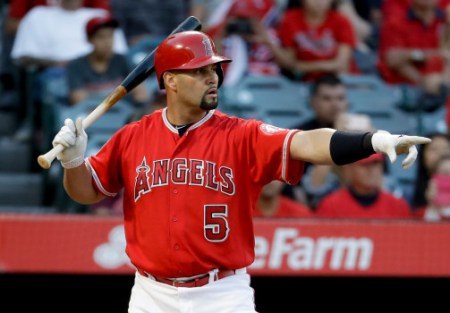
Albert Pujols
Once Upon a Time
Baseball’s King of the Beasts

Worst kept secret in baseball.

If 38-year old Albert Pujols retires at the end of this season, look for him as a first ballot Hall of Fame inductee in the first year of his eligibility in 2024. By then, he will have strung together five seasons of inactivity and qualified himself for placement on the ballots of the certified baseball writers who get those honors of anointment.

3,000 Hit Club next.

If you care to browse the hitting leadership charts that Baseball America has so neatly arranged for us, you will find that Prince Albert is all over the place among the leadership figures in many categories, all time. In fact, Pujols is on the cusp of breaking into the 3,000 hit club during the Angels current series in Houston, in spite of going hitless in the 2-0 LA victory of Monday night. Sitting on 2,992 hits this morning, we Astros fans will simply have to hope he doesn’t catch fire in the remaining games.”Eight” is a doable number when the Pujols bat gets hot.

Doubles.

Top 10 in Doubles 
All Time Leaders
Courtesy / Baseball Almanac
Tris Speaker 792 1
Pete Rose 746 2
Stan Musial 725 3
Ty Cobb 724 4
Craig Biggio 668 5
George Brett 665 6
Nap Lajoie 657 7
Carl Yastrzemski 646 8
Honus Wagner 640 9
David Ortiz 632 10
Hank Aaron 624 11
Albert Pujols 624
Adrian Beltre 621 13

Albert’s pursuit of a room in the Top Ten Doubles house is fairly obvious as a doable, but quickly losable lease. He needs only 9 more two-base hits to replace the retired David Ortiz for the # 10 spot, but the still very active and spry Adrian Beltre is only three back of Pujols and capable of making his own run at the same spot this very year. Then it will (for a while) be up to which, if either, of these hitting giants retires after 2018.

Other Hitting Categories.

Click over to the Baseball Almanac Career Hitting Leaders chart yourselves and check out all the high placements in the Top 50 that Albert Pujols has achieved during his illustrious, if often heartbreaking career for us Astros fans:

http://www.baseball-almanac.com/hitting/hi2b1.shtml

The Ruthian Royalty.

Top 10 in Home Runs 
All Time Leaders
Courtesy / Baseball Almanac
Barry Bonds 762 1
Hank Aaron 755 2
Babe Ruth 714 3
Alex Rodriguez 696 4
Willie Mays 660 5
Ken Griffey, Jr. 630 6
Albert Pujols 618 7
Jim Thome 612 8
Sammy Sosa 609 9
Frank Robinson 586 10

The chart speaks for itself, but it lacks human wit. When I recited this list to good friend Sam Quintero by phone on his way home from last night’s first Angels game, I also noted what we all know — that Bonds, Rodriquez, and Sosa were also questionable for future inductions because of the steroids taint. “Oh well,” Sam observed, “at least, A Rod has Jennifer Lopez in his life.” — Sam did not say that A Rod had Jennifer Lopez “to fall back upon,” but he may as well have.

Have fun at tonight’s Houston debut of the “Japanese Babe Ruth” when he takes the mound against the Astros tonight at Minute Maid Park. Let’s hope that Orbit loads up his Babe Ruth persona with that stack of 50 hot dogs we see him ordering in the game time TV commercials before he takes the mound.


********************

Bill McCurdy

Principal Writer, Editor, Publisher

The Pecan Park Eagle


Joe Hunter Field Gets New Look

April 23, 2018

The New Joe Hunter Field
Coastal Bend College
Beeville, Texas

The Coastal Bend Cougars are a junior college baseball team that plays its home games at Joe Hunter Field on campus at Coastal Bend College in Beeville, Texas — about 180 miles southwest of Houston, down old US Highway 59 or about 50 miles north of Corpus Christi.

Beeville also is my birthplace – and the swarm spot to this day for most of my blood relative McCurdys – some of the most loving and warm-welcoming people in the world, if I do say so myself. It was a Godsend to be there in the family company during the funeral services for my dear sister Margery McCurdy this past weekend. It made the start of our grief easier on the healing side. My brother John McCurdy and I both were glad to be surrounded by all the caring cousins who came to be with us through the services and informal gatherings.

Isn’t that one of the traits we all used to throw in the “that’s what families are for” bag?

Attached as I am to Beeville, Houston is my home. It has been home ever since Dad brought us to Houston on my 5th birthday, December 31, 1942, to take a wartime job as a welder in the Brown Ship Yard out on the channel. Everybody else moved back to Beeville in 1958. By that time I was a junior at UH. Except for some post-graduate work time at Tulane and UT, I’ve been in Houston ever since my 1966 return.

I’m not ready today, but with the research and informational help I get from John Galloway, the baseball-passionate husband of Elizabeth Ann Galloway, a McCurdy first cousin in Beeville, I plan to write an article soon on the revival of college baseball in our little honey-sweet Texas town.

CBC interests have spent a ton of money rebuilding the stadium infrastructure at Joe Hunter Field, and also covering the field with a high-grade turf that now protects games from cancellations that were more common to the old normal turf during the rain. I had no time for personal photos on this trip, but the pictures I’ve found through Google today show the difference pretty clearly from the old.

Here’s the link to an article we did on the original Joe Hunter Field back on February 23, 2010:

Joe Hunter Field, Beeville, Texas.

They must be doing something right on the recruitment phase too. Through yesterday, the CBC Cougars had posted a 31-17 record, good enough for a .646 mark and a hope-boost to further attainment in the post-season playoffs at this level.

The BCC Cougars roster of 42 players also showed that 12 of these men came directly from the rich talent region of Greater Houston.

We need to know what the scholarship availability at CBC is to consider the program’s renewed future. As we know so well at every level of the game, winning cannot be sustained for long without money — without a sufficient percentage of full scholarships at play. And we already know the difference-maker between substances that talk and those that walk.

We’ll revisit the subject soon. For now, I’m just trying to get my feet back up and running beneath me again. And I will settle for a pleasant stroll for now. Watching the Astros offensive monster awaken again is helpful to that end.


********************

Bill McCurdy

Principal Writer, Editor, Publisher

The Pecan Park Eagle

SABR: Who We Are Matters

April 20, 2018


The SABR Board has now informed the membership that the vote to change the name of our organization from the “Society for American Baseball Research” to the “Society for the Advancement of Baseball Research” has been killed and all cast votes discarded for reasons of violation to the process of getting things done. At least, that is the way we read the e-mail from Board President Vince Gennaro. — He respectfully noted hat it was their late recognition of an unfair treatment of the by laws that has caused the Board to cancel the name change electoral motion and take some time for thought to the process issues involved in this first unsuccessful attempt.

The critical cancellation paragraph was expressed by e-mail in bold type as a Board resolution:

“That the proposed bylaw amendment and name change on the 2018 ballot is withdrawn as improvidently submitted and not properly before the membership; and that any votes on the proposed bylaw amendment and name change on the 2018 ballot shall be disregarded and will be treated as if never cast.”

Thank goodness for small favors. Sometimes process issues may save us from avoiding the substantive issue that is a matter of far greater importance.

The substantive issue is not simply coming up with a new name that still lends itself to our comfortable and familiar acronym “SABR”. When we were kids, we didn’t prefer “TOPPS” bubble gum because the gum itself tasted better than “Double Bubble”, — (Most of us thought it did not.) — we bought Topps because of the baseball cards that came with the gum.

And what became of Topps without the baseball cards? — Do you really need the answer?

Most of us bought into SABR because of how it portrayed our identity. It was, and still is, the Society for American Baseball Research, — meaning that it is an organization dedicated to an ongoing and accurate examination of how “American Baseball” has evolved — and continues to evolve — on a world-wide plane.

We are not English Baseball – or Asian Baseball – or European Baseball. — We are American Baseball, as we continue to evolve world-wide in all those places it has now evolved to include.

We need to be careful that we don’t fall into the language pit that this particular era both invites and encourages — and that is the active association of the word “America” with all the equivocating political forces that use the name of our precious country as a symbol of hatred and bigotry. And, of yes, even if our wonderful beautiful game spreads to every country on earth, which I would love to see, it would still be American Baseball – now played everywhere.

We are not those hateful people who use the word “American” in the name of harm to others; nor are we those sadly neurotic people whose sense of national guilt includes the idea of erasing the conscious recognition of America at every turn in the road. We are people who either grew up in the passion fire of America’s sandlots – or older people who found it as a gift from heaven when it arrived on their shores as something that still says “Made in America” all over it.

Please take this little break in the action for deeper consideration of this matter. It is much deeper than a clumsy process issue. It is, in reality, an opportunity to both preserve and deepen our appreciation for who we are.

We are — The Society for American Baseball Research.

That’s the organization I joined. That’s the organization I will continue to support.

Sincerely,

Bill McCurdy

Larry Dierker Chapter

SABR


___________________

Bill McCurdy

Principal Writer, Editor, Publisher

The Pecan Park Eagle


The Amazing Ichiro Suzuki

April 19, 2018

Ichiro Suzuki
Baseball’s Unofficial All Time Hits Leader

Tuning in late to the Astros telecast of the game at Seattle Tuesday night, I wasn’t giving his almost eternal active presence any thought when up came the legendary Ichiro Suzuki to hit for the Mariners against youthful Lance McCullers. At age 45 years, the now snow-fleck grey haired veteran superstar promptly laced a single to center, recording the 3,087th hit of his 18 year MLB career (2001-20018) and the 4,365th total hit of his whole career, if you include the 1,278 hits he recorded in Japan over his first nine seasons (1992-2000) before coming to America for big league ball.

It all adds up to 4,365 total hits over 27 seasons. – And counting.

Unless you choose to go MLB sticky, that brings the all time hits leader board up to this:

Ichiro Suzuki 4,365 – Pete Rose 4,256.

And, as of the morning date, this 4/19/2018, Suzuki’s favorable hit advantage is  109 – and open to further differential growth only in Suzuki’s favor.

Rose vs. Suzuki, MLB Careers Only

The following little table is little more than a side bar comparison of the MLB stat careers of Rose and Suzuki. Suzuki had no chance of ever catching Rose’s hit total by the time he finally he came over to the big leagues, but his prior excellence in Japan — and certainly his incredible longevity — leaves us with pause to think. – If Ichiro could have, would have, or maybe even should have started it all here in the western hemisphere, perhaps, there would be no wonder about the certain future induction of the greatest it total leader of all time.

MLB HIT MEN AB R H 2B 3B HR RBI BA SA OBP
Pete Rose 14053 2165 4256 746 135 160 1314 .307 .409 .375
Ichiro Suzuki 9918 1418 3087 362 96 117 780 .311 .403 .355

Keep it up, Ichiro! You are an inspiration to all – and especially to everyone over age 40.


____________________

Bill McCurdy

Principal Writer, Editor, Publisher

The Pecan Park Eagle


“You Can’t Roller Skate in a Buffalo Herd!”

April 18, 2018

“Hey! Guys! Listen Up!
It’s time to play this year’s games!”

You Can’t Roller Skate in a Buffalo Herd!

And You Can’t Play Ball With a Big Ring on Your Hand!

And You Can’t Win This Year with Last Year on Your Mind!

But You Can Play Better, — If You’ve a Mind To!”

The overall condition of the 2018 Astros is pretty darn strong. One of the starters (Justin Verlander, of course) was just named AL player of the week for the effort he put in over the course of the just concluded measurable seven-day period and he seems locked and loaded for more of the same over the wrinkles of time that stretch from here to forever, a least, the part of time that includes 2018. Barring injury, he should be good-to-go the rest of the way.

Dallas Keuchel last night, Gerrit Cole every time, and Charlie Morton, as sure as salt, all look great. Only Lance McCullers needs to get his share of the shift together to steady this rotation as the most enviable starting five in baseball.

The relief crew lacks an effective lefty (or any lefty at all with Sipp on the DL) and several others, some with good starts, are still on the line of needing to prove they are better than the guys they replaced in the off-season. One thing is clear — The Astros do not have a closer.

ASTROS  PITCHING THROUGH GAMES OF 4/16/2018

STARTERS W L W% GS IP H R ER HR BB S0 ERA
J. Verlander 2 0 1.000 4 26.2 15 5 4 3 5 34 1.35
Dallas Keuchel 0 3 .000 4 23.0 24 10 9 2 10 19 3.52
L. McCullers 1 1 .500 3 14.0 18 13 12 2 10 23 7.71
Gerrit Cole 1 0 1.000 3 21.0 10 3 3 3 4 36 1.29
Charlie Morton 2 0 1.000 3 18.0 13 3 2 2 6 25 1.00
RELIEVERS W L W% SV IP H R ER HR BB SO ERA
James Hoyt 0 0 0 0.1 1 0 0 0 1 0 0.00
Chris Devenski 1 0 1.000 1 8.0 5 1 1 1 1 10 1.13
Collin McHugh 0 0 .– 0 6.2 5 1 1 1 2 10 1.35
Will Harris 0 1 .000 0 7.1 7 2 2 0 4 6 2.45
Hector Rondon 1 1 .500 0 7.0 7 3 2 0 0 10 2.37
Ken Giles 0 0 1 2.1 2 1 1 0 2 2 3.60
Tony Sipp 0 0 0 2.1 2 1 1 0 2 2 3.86
Brad Peacock 1 1 .500 1 8.2 7 4 4 3 1 11 4.15
Joe Smith 1 0 1.000 0 4.2 5 3 3 0 3 3 5.79
TOTALS FOR W L PCT. IP H R ER HR BB SO ERA
ALL  10 7 .588 152.2 125 51 46 17 49 191 2.71

The early problem is hitting. Timely hitting could have placed this Astros club at 15-2 instead of the 10-7 mark they’ve now  recorded. Anyway, it’s almost time for the second game of the Mariners series. Let’s see if the Stros can break that “hit’ em where they are” for outs binge they fell into last night.


********************

Bill McCurdy

Principal Writer, Editor, Publisher

The Pecan Park Eagle


Rest In Peace, Patrick Lopez

April 16, 2018

Rest in Peace, Patrick Lopez!
Your Devotion to Family, Your Love of Life, and Your Artistic Always Growing Gifts to the World Are Your Ongoing Legacy!

Patrick George Lopez
1937-2018

Patrick George Lopez died on Wednesday, April 11, 2018 after a brief stay in hospice. He was born in Houston on January 7, 1937 to Manuel and Carmen Lopez.

He married Barbara Jean Holman in 1961. Survivors include his wife of 57 years, his children (Claudia, Patrick, and Sarah), his grandchildren (Patrick Joey and Justin), and his brother (John David).

As an architectural delineator, he worked with some of the most important national and local architects and architectural firms of the post WWII era, including Skidmore Owings and Merrill, Johnson Burgee, and Helmut Jahn.

He loved his family, his lifelong home of Houston, his pets (Oso!), baseball, the Astros, art, buildings, music (he was a lifelong piano player), fishing, plants (he grew orchids, bromeliads, succulents), and a good meal.

A public memorial will be held in the future at an as-yet undetermined date.

Published in Houston Chronicle on Apr. 15, 2018

Title: “Buffalo Walking” or “Travis Street Park” By Patrick Lopez (at Fair Grounds Base Ball Park), One of Several Works that Patrick did for the 2014 “Early Houston” Baseball History Book researched and written by members of the Larry Dierker Chapter of SABR and published in 2014.

Patrick Lopez finished a year ahead of me at St. Thomas High School in 1955. Although we never really knew each other at St. Thomas, Patrick always impressed me then as a very nice and thoughtful person. He could often be seen staring across the front lawn during classroom breaks, looking far to the south, beyond Buffalo Bayou. We never actually met until the Houston Early Baseball book project arose, nearly 55 years later, but it was only then that the question clarified about this true 21st century Renaissance man came to roost. — He could have been thinking about anything much earlier in life — as long as it was artistic, giving of itself in part to some greater whole idea, then it probably was getting the attention of the naturally artistic Patrick Lopez.

When our team member Mike Vance, with some independent discovery work help from Darrell Pittman, finally found that the Travis Street Ballpark was our best bet as Houston’s first true organized baseball park, we had no pictures of the same, but we did possess some very detailed newspaper writing on the construction of the place.

Patrick Lopez was able to let his creative mind go to bed with all these black worn sentences on fading white paper and put together for our eyes — and the whole world — to see — how it was meant to be seen. The watercolor work featured here is only one of the many he did that gave us all a vision into how the typical game day looked to Houstonians back in the 19th century. If you can hear the sound of horse hooves making a steady beat up and down Travis — and if you can hear the thud of a bat and ball joyously, or sorrowfully, interrupting every now and then, you may actually be able to allow your own mind to travel back to the corner of Travis and McGowan at many spring afternoons of those late 19th century years and actually experience the presence of old time Houston for yourself. And, if you get there, try to remember — the now late Patrick Lopez probably helped you make the trip.

Patrick Lopez
1937-2018

Thank you, Patrick Lopez! All of us are the richer for having known you even a smidgen’s amount of eternity’s time.

And God Bless you too, Barbara! Patrick was lucky to have found and never lost you. That doesn’t always happen.

Sincerely,

The Pecan Park Eagle


********************

Bill McCurdy

Principal Writer, Editor, Publisher

The Pecan Park Eagle

Maxwell Kates: “42” – A Film Review

April 16, 2018

“42” – THE FILM REVIEW

A CELEBRATION OF JACKIE ROBINSON DAY

By Maxwell Kates
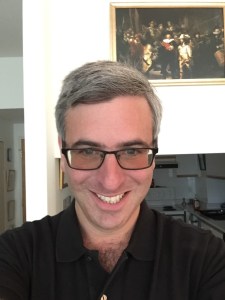
Maxwell Kates

Five years ago, in April 2013, Legendary Pictures released a film called “42”. Written and directed by Brian Helgeland, the film documented Jackie Robinson’s first season in the major leagues while emphasizing the trials and tribulations involved with breaking the colour barrier.
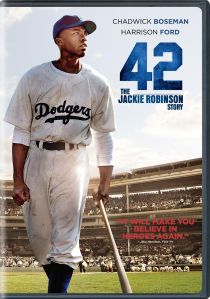
“42”

The story behind “42” is well known among baseball fans and American historians alike.  After declaring victory over Nazi Germany in May 1945 and Imperialist Japan three months later, American soldiers returned from the Second World War to a country that could not defeat its own Jim Crow laws.  A ‘gentleman’s agreement’ had existed in professional baseball which segregated white and black players into different leagues.

Branch Rickey (Harrison Ford), the President of the Brooklyn Dodgers, is a shrewd businessman, a lawyer, and a devout Methodist.  We learn in the context of the movie that he is haunted by not having done enough to fight segregation as a baseball coach some four decades earlier.  Partly out of religious conviction and partly out of opportunism, he vows to promote a black player to the Dodgers late in the 1945 season.  Rickey admires Jack Roosevelt Robinson (Chadwick Boseman), a shortstop on the segregated Kansas City Monarchs, for his talent and his hardnosed style of play, but warns him that the inability to control his volatile temper is tantamount to failure for Rickey’s ‘Great Experiment.’  In other words, Rickey did not need a player not tough enough to fight back, but one tough enough not to fight back.

Harrison Ford as Branch Rickey

The plot line begins by covering Robinson in spring training both with the Montreal Royals, the Dodgers’ top minor league affiliate, and the Dodgers. After he is promoted to Brooklyn in 1947, the film narrates how Robinson led the Dodgers to the National League pennant in spite of vitriolic players and fans, racially motivated hate mail, and the ubiquity of the press.

The movie was criticized for its lack of character development, a claim I perceived to have been justified.  The Rickey character was developed well, as was Leo Durocher (Chris Meloni), the tenacious yet morally bankrupt manager of the Dodgers who aimed to win at all costs.  However, the movie could have benefit from a more vivid portrayal of Wendell Smith (Andre Holland). Smith worked as a journalist for the Pittsburgh Courier, covering Robinson throughout the 1947 season while attempting to break barriers of his own.  A more thorough description of Robinson’s wife Rachel (Nicole Beharie) would have also improved the plotline, as her support was crucial to the success of Robinson’s campaign.

Jackie and Rachel in “42”

“42” shows balance between the players who supported Robinson from those who did not.  Pee Wee Reese (Lucas Black), Gene Hermanski (Blake Sanders), and Ralph Branca (Hamish Linklater) were three Dodger teammates depicted to have supported Robinson but their characters were scarcely developed beyond that.  The movie did address the difficult matter of Dixie Walker’s (Ryan Merriman) harsh disapproval of Robinson, arguing it to be economic rather than racial.  However, it does not expand on the complexities of the anti-Robinson camp. This group which includes Brooklyn pitcher Kirby Higbe (Brad Beyer) who circulated a petition aimed to prevent Robinson from taking the field, Philadelphia manager Ben Chapman (Alan Tudyk) and general manager Herb Pennock (Mark Harelik), and St. Louis outfielder Enos Slaughter (David Thoms).

The film aptly portrayed fans in opposing National League cities such as Philadelphia, St. Louis, or Cincinnati to be vociferous in their hatred of Robinson but did not show balance – there were many white fans in those and other cities who supported Robinson.

The Pee Wee-Jackie Moment —
As depicted in “42”

Another opportunity was missed in the side plot involving Dodgers infielder Bobby Bragan (Derek Phillips).  As the scion of a prominent family in Birmingham, Alabama, Bragan was raised with segregation and was thereby a vocal opponent of integration.  Accordingly, he refused to initially play with Robinson but later recanted.  A fact which would better drive the point but ignored in the movie is that when Jackie Robinson passed away in 1972, Bragan was among his pall bearers.

A poignant scene in the movie took place on the field at Ebbets Field as the Dodgers hosted the Philadelphia Phillies.  Manager Ben Chapman was among Robinson’s most tyrannical opponents and was not afraid to voice his opinion.  Only with the intervention of Dodgers’ infielder Eddie Stanky (Jesse Luken) a Philadelphia native and former teammate of Chapman’s did the Philadelphia manager back down.  In actuality, Stanky had been one of the players to sign Higbe’s petition but felt compelled to defend Robinson as one of his teammates.

Hank Greenberg and Jackie Robinson

Another opportunity missed was during a brawl following a beaning by Pittsburgh pitcher Fritz Ostermueller (Linc Hand).  At no point did the movie refer to prominent National League opponents who supported Jackie Robinson and the brawl scene would have presented this player in Ostermueller’s teammate Hank Greenberg.  The veteran 1st baseman discussed the racism he encountered in his own career with Robinson as the Dodgers rookie led off the base in a game with Pittsburgh.  Cardinals outfielder Stan Musial was another Hall of Famer who supported Robinson.

The movie included several historical errors and inaccuracies.  For example, the Mississippi bred broadcaster Red Barber (John McGinley) did not speak with the brogue of a New York Irishman.  Nor did Robinson wear number 9 with the Montreal Royals – he actually wore number 20.  It is unfortunate that the movie did not expand on Robinson’s time in Montreal, where he led the Royals to the International League pennant in 1946. According to Montreal sportswriter Sam Maltin, “it was probably the only day in history that a black man ran from a mob with love instead of lynching on his mind.” Lastly, in light of Robinson’s pact with Rickey to be tough enough not to fight back, the altercation with Dixie Walker in front of the Ben Franklin Hotel could never have taken place.
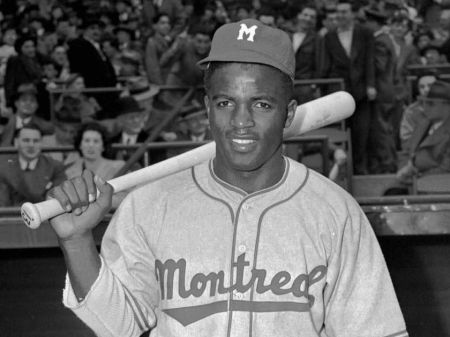
The real Jackie Robinson at Montreal in 1946.

Why did they make “42”?  For one thing, the events took place in 1947.  Infants born the day Robinson took the field are now 71 years old.  Of the journalists in the Ebbets Field pressbox that afternoon, only Jim Becker of the Associated Press is still alive and he is 92 years old.  The story of Jackie Robinson is an important one and it is important that the legacy of Jackie Robinson and what he stood for continues.  The film received criticism for its liberal use of ‘the N-word.’ To understand history is to understand context. It is only by exposure to unpleasant aspects of the English language, like ‘the N-word,’ that we become aware of their meaning and why they should not be used.

Whom did they make “42” for?  The answer to that question can be expressed by discussing the character whom I understood to have been the most important in the movie. That was the young African American child in Florida who saw Jackie Robinson in a spring training game with his mother.  Viewers learn at the end of the film that the young fellow grew up to be Ed Charles, clubhouse leader of the World Champion 1969 New York Mets. Charles, who died earlier this year, credited Robinson as an inspiration for him growing up in segregated Florida. It was important to bridge the gap with this young fan to show why Jackie Robinson was inspiration to him and many others.
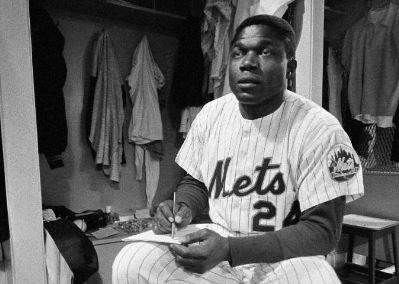
Ed Charles

Of equal significance, there was one scene where Rickey tells Robinson about the white fan on a Brooklyn street who tried to be like Jackie Robinson when he played.  Robinson broke into the major leagues in 1947, seven years before Brown v. Board of Education and seventeen years before the Civil Rights Act was signed into law.   Therefore, it is important to understand the context of the odds Jackie Robinson faced and the insurmountable mental toughness he required to overcome them.  The movie was made for young people of all races and nationalities to understand the harshness of prejudice and that any individual is capable of achieving personal triumph in spite of it.

“42” is definitely worth the price of admission and is an enjoyable movie to watch with an important message to convey.  At one point in the movie, Pee Wee Reese, a Kentucky native, tells Jackie Robinson that “maybe tomorrow we’ll all wear 42 so that nobody can tell us apart.” Tomorrow being April 15, Pee Wee’s oracle will see the light of day.

Toronto, Canada

April 14, 2013

EPILOGUE
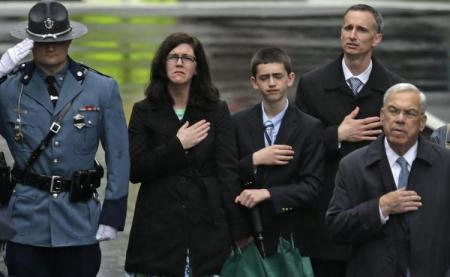
Young Boston Bombing Victim Martin Richard and Family.

One day after I wrote this film review of “42”, the city of Boston was rocked by an unthinkable tragedy. At the finish line of the Boston Marathon, two brothers detonated two homemade explosives, killing three and injuring hundreds. One of the victims, eight year old Martin Richard, lost his life as he awaited his father Bill to complete the marathon. After his death, a photo of young Martin holding a placard bearing the message “No more hurting people. Peace” circulated around the four corners of the globe. In doing so, Martin was carrying out Jackie Robinson’s legacy. His life remains important as it continues to have an impact on others.

Fenway Park, Boston
Jackie Robinson Day
2013

********************

Post Note. The Pecan Park Eagle also did a review of “42” after attending one of the opening day matinee features in the company of one of the very few remaining survivors who played in that earlier landmark color line-breaking game in 1946, when Jackie Robinson broke the organized baseball race barrier as a member of the Montreal Royals. It was our lucky day at the Eagle to watch the flim with our own Larry Miggins, who played third base for Jersey City that historical day. The date of our first publication on this topic was April 13, 2013. And here’s the link to its contents:

“42”: A Beautiful Profile in Courage

Hope you enjoy this doubleheader.

********************