Archive for the ‘Baseball’ Category

Bill Gilbert: Astros Struggle in July

August 4, 2018

SABR Analyst and Pecan Park Eagle Contributor Bill Gilbert takes a solid look at the dipsy-doodle road the Astros’ fond hopes took in July 2018.


Astros Struggle in July

By Bill Gilbert

It was bound to happen sooner or later. The Houston Astros have fallen on hard times. With Jose Altuve, Carlos Correa and Brian McCann all on the disabled list, this is not the same team that won the World Series in 2017. The starting pitching was outstanding for the first three months of this season but was below league average in July. The defense, strong in the first half, showed some cracks in July with uncharacteristic physical and mental errors. The offense has gone quiet, especially with runners in scoring position.

The three-game sweep by the Texas Rangers over the Astros in Houston in late July brought back memories of the 2011-2013 Astros as the home team fans hadn’t seen such bad baseball in more recent years. It was the first sweep of a series against Houston all year and left them with a four-game losing streak. The streak was extended to five games the following night by Seattle 2-0, before the Astros won the final game of the of month from the Mariners, 5-2, leaving them with a record of 13-11 for the month and 68-41 for the season. They actually increased their lead in the AL West Division from 1.5 games at the end of June to 4 games at the end of July.

The keys to the Astros remaining on top are 1.) The return of Correa and Altuve, which should happen in early August and 2.) A return to something close to the dominant pitching the team experienced in the first half of the season. The seventeen strikeouts recorded by Astro pitchers in the final game against the Rangers suggests that the dominance could still be there.

There were not many superlatives in the team’s July performance. The team batting average of .237 lowered the season’s average to .257. The team ERA of 3.95 raised the season average to 3.08 still the best in MLB. The only .300 hitter in July was Alex Bregman at an even 300 and he also led the team with 6 home runs and 18 RBIs. Evan Gattis also had 6 home runs. Altuve, who missed only the last 4 games hit .270 for the month. Correa and McCann both missed the entire month. Top prospect, Kyle Tucker, was promoted to the Astros but failed to hit and was sent back down.

The five original starting pitchers have still not missed a start. Performance tailed off in July except for Dallas Keuchel, who was 4-1 with an ERA of 1.65. Hector Rendon took over as closer with 5 saves replacing Ken Giles, who was sent to the minors before being traded with two prospects to Toronto for Roberto Osuna who is expected to be the closer.

The month of August will be critical for the Astros. Seventeen of their twenty-four games are against the three West Coast teams in the AL West Division. Seattle and Oakland will have their opportunities to close the gap. The Astros need to continue their winning ways to prevail.


Bill Gilbert

8/2/2018


********************

Bill McCurdy

Principal Writer, Editor, Publisher

The Pecan Park Eagle


PECAN PARK EAGLE TRIVIA CONTEST ANSWERS

August 3, 2018

PECAN PARK EAGLE TRIVIA CONTEST ANSWERS

By Maxwell Kates

As promised, if it’s Friday, August 3, 2018, it must be time for answers to the Pecan Park Eagle Trivia Contest I first issued in June that the Eagle again published again yesterday as a restatement of the questions alone. Today you finally get the answers. Remember, there were fifteen questions, mostly relating to my columns with the Pecan Park Eagle within the past year. ~ In the words of the Great One, Jackie Gleason, “…and away we go!”

(1) Which Hall of Famer was the subject of a recent biography by Marty Appel?

The Hall of Famer was Casey Stengel and the book was entitled “Casey Stengel: Baseball’s Greatest Character.” Casey (and Marty) were integral to the 2017 SABR convention held in New York. There was a Casey Stengel panel and also a book signing at Citi Field with Marty Appel before a Mets game. Marty was also integral to my New York experience, having run into him in Central Park on the 4th of July.
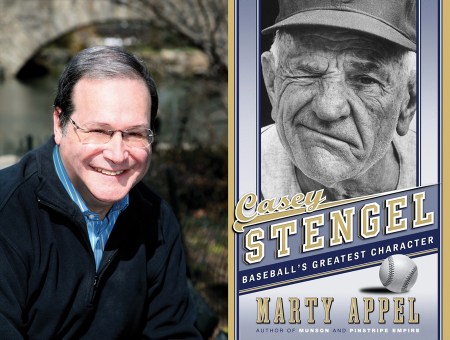
Marty Appel with Casey Stengel Book.

(2) In what major league stadium did Willie Mays hit his 600th home run in 1969?

San Diego Stadium. As I wrote last August, “Giants’ manager Clyde King told Padres President E. J. “Buzzie” Bavasi that Mays would rest for the first game, on a Monday night. The Padres’ front office decided to open the left field bleachers for the second game of the series, offering a new Chevrolet to any fan lucky enough to catch Mays’ 600th home run. More than 1,200 tickets already had been sold when King called on Mays to pinch hit in the top of the ninth of Monday. Facing Mike Corkins, Mays hit his 600th home run into a sea of empty bleachers. Promotion ruined.”
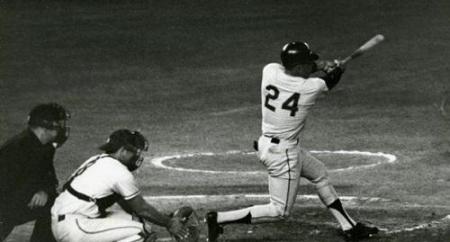
Willie Mays hit HR #600 at San Diego Stadium.

(3) Justin Verlander pitched two no-hitters for the Detroit Tigers. Who were the opponents?

Milwaukee Brewers, June 12, 2007 (in Detroit). Toronto Blue Jays, May 8, 2011 (in Toronto). I remember exactly where I was for both no-hitters: in Vienna, Austria for the first and in my living room for the second.

Last out of Justin Verlander’s 2nd no-hitter.

(4) Which Astros player hit 53 leadoff home runs in his major league career?

Craig Biggio, in a career spanning 20 years from 1988 to 2007. It’s still a franchise record, though if Connecticut George hits enough Springer Dingers…

Craig Biggio

(5) Roy Halladay was the third Toronto Blue Jays’ pitcher to win the Cy Young Award. Name the other two.

Pat Hentgen was actually the first, having outdistanced Deer Park resident Andy Pettitte for the American League Cy Young Award in 1996. He was followed by another Houston-area resident, Roger Clemens, who won the Cy Young in 1997 and again in 1998. Roy Halladay, who was killed in a plane crash in 2017, won the Cy Young for the Blue Jays in 2003.
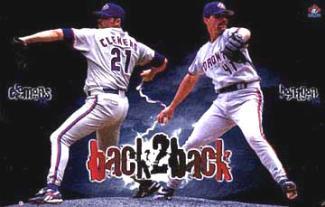
Clemens and Hentgen

(6) Who won the American League Most Valuable Player Award in 1953?

It was Al Rosen of the Cleveland Indians. Leading the league in both home runs and RBI, Rosen narrow missed the Triple Crown when he lost the batting title to Washington’s Mickey Vernon when he hit .336 to Vernon’s .337. Rosen later became a general manager, including 1980 to 1985 with the Astros.

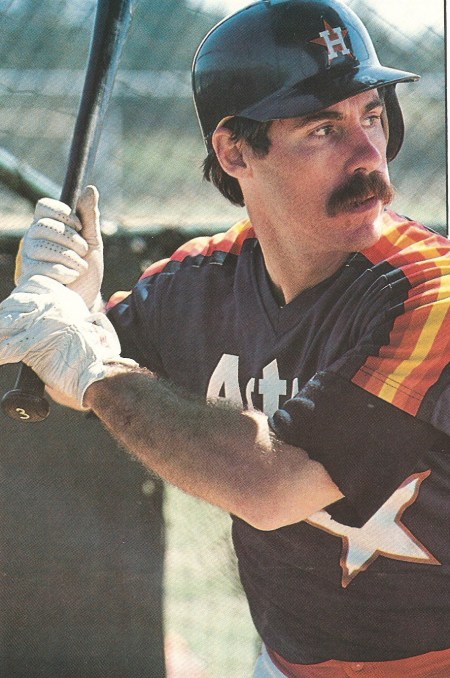
Al Rosen as Astros General Manager, 1980-1985.

(7) Five members of the 1982 Houston Astros, four in uniform and one in the broadcast booth, also managed the team. Name them.

You’ll find them all in the Astros’ 1982 yearbook:

  • Bill Virdon (manager, 1975-1982)
  • Bob Lillis (manager, 1982-1985)
  • Art Howe (manager, 1989-1993)
  • Larry Dierker (manager, 1997-2001)
  • Phil Garner (manager, 2004-2007)

Phil Garner.

(8) According to Irish folk legend, what is the surname of the only man capable of killing a local man-eating sea serpent?

This was from a book by Michael Spencer Bown called “The World’s Most Travelled Man.” His final country was Ireland, where he writes about the legend in question:

            “A local legend says that a man-eating sea serpent lives nearby and can only be slain by a man             named McCurdy wearing clothing made of calf skin, wielding a club with three nails in it that have never been used to shoe a horse.”

             It was written in the Pecan Park Eagle about the ancestor, presumably named Liam, No one in our family has read the book – and the McCurdy ancestor it references never read any books –  but we do still have this sketch of him holding the club we also still possess. – Do we still need to dispatch that Irish sea serpent?”

Liam McCurdy ~ strolling ~ in the early days of the Emerald Isle.
~ Once Upon a Time, Liam McCurdy charmed the snakes into an unconscious state. His recent descendants have since learned that sometimes a carefully worded blog column can accomplish the same end, … but only on snakes, mind you; only on snakes.

 (9) What five Astros represented the team at the 1994 All-Star Game?

 The five Astros’ All-Stars were Jeff Bagwell, Craig Biggio, Ken Caminiti, Doug Drabek, John Hudek. Not to be outdone are the five Astros at the 2018 All-Star Game: Jose Altuve, Alex Bregman, George Springer, Gerrit Cole, and Justin Verlander.

1994 Houston Astros

(10) How many African American pitchers have won 20 games in a season. Which of the ‘Black Aces’ won 20 games for the Astros one season?

There were 15 ‘Black Aces,’ African American pitchers to win 20 games in a season. The Astro was J. R. Richard, who went 20-15 in 1976.

The One and Only J.R. ~
JAMES RODNEY RICHARD
~ BIGGER THAN THE LETTERS IN HIS NAME!

(11) What village in upstate New York hosted the first SABR convention in 1971?

It was Cooperstown, on August 10, 1971. SABR 1 was attended by 16 members. One of the 16, Tom Hufford, is still a member, having attended the 2018 SABR convention in Pittsburgh.
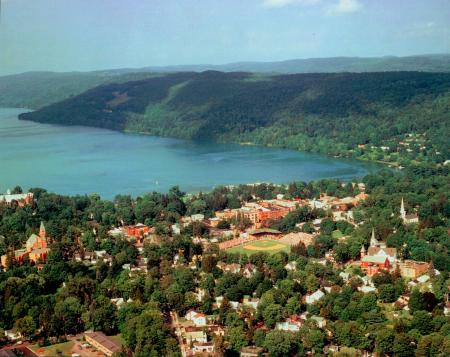
Cooperstown, New York

Editorial Note: On our far too brief only trip to Cooperstown in the summer of 1994, I had to ask one of the baseball item storekeepers what he did during the cold, often snowbound, months of winter. His answer came back with the ring in a voice that you only hear from people who get asked the same question all the time.

“Inventory,” said the Cooperstown merchant. (TPPE)

(12) Name two members of the Larry Dierker Chapter, both of Irish heritage, who played professional baseball before the formation of the Houston Colt .45s. (Note that I didn’t say MALE baseball players.)

The two were Larry Miggins and Red Mahoney. Miggins, born in the Bronx in 1925, played in parts of two seasons (1948, ’52) with the St. Louis Cardinals. After playing in parts of four seasons with the Houston Buffs (1949, ’51-53), Miggins and his wife Kathleen, along with twelvchildren, settled in the Houston area.

Meanwhile, Emily Marie “Red” Mahoney (1924-2016) was a lifelong Houstonian, the only native of the Bayou City to play in the All American Girls’ Professional Baseball League. Red was an outfielder for the South Bend Blue Sox and the Ft. Wayne Daisies, 1947-1948.

Miggins claims that his childhood acquaintance Vin Scully called half the home runs he hit in a major league uniform (he hit two). {Editor’s Note: Larry Miggins’s “claim” is true and it has been verified many times over by his childhood friend and Fordham Academy classmate, Vin Scully. – Scully made the prediction while the two were still in high school that ~ one day ~ Miggins would play in the majors and that he (Scully) would be at the mike to broadcast it and the HR that followed. It happened that way on May 13, 1952 in Ebbets Field when Larry Miggins, batting for the Cardinals, hit his first MLB homer off Preacher Roe of the Dodgers, as a very young Vin Scully made the radio call for the home town Brooklyns.} ~ TPPE

Has Anybody Here Seen Larry L-A-Double-R-Y???
HE’S RIGHT HERE WITH R-E-D RED MAHONEY!!!

(13) Who is the only living Hall of Famer to work as the director of a funeral home?

Andre Dawson. Andre and his wife Vanessa have owned the Paradise Memorial Funeral Home in the Miami area since 2008. He was inducted into the Baseball Hall of Fame in 2010.

Thanks to Russell R. Hansen for this trivia question.
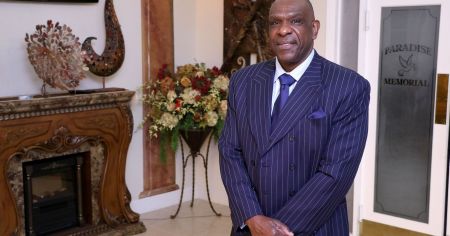
Andre Dawson is the only Hall of Fame member who also operates a Funeral Home as the owner and funeral director.

 (14) What pitcher surrendered Rick Monday’s decisive home run in Game 5 of the 1981 National League Championship Series for the Los Angeles Dodgers?

Steve Rogers. He was brought in to pitch the ninth inning. Despite a solid effort by starter Ray Burris, the Expos scored only one run in eight innings, the same as the Dodgers.
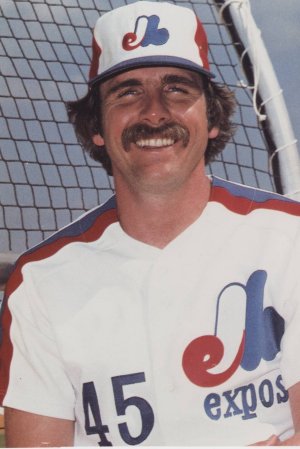
Steve Rogers.


(15) Finally, who was the winning pitcher in Game 7 of the 1964 World Series?

Bob Gibson. He pitched a complete game victory over the Yankees.

Bob Gibson, 1964 World Series.

The Percy Fielding Prize

How you did is all a matter of fun, but we would enjoy your comments on trivia quizzes? Do you like them, loathe them, or simply see them as a take-it-or-leave-it part of baseball group life?

As for our early June challenge for answer submissions to these same questions by e-mail to the writer, we do have a winner to announce. The winner is Victoria Riggsbee, who reads the Pecan Park Eagle in Raleigh, North Carolina. Vickie wins a baseball card of Percy Fielding. And that will be mailed to her by yours truly, Maxwell Kates.
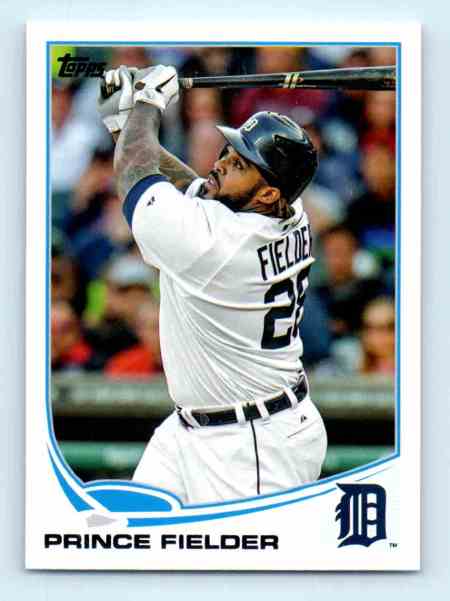
Percy Fielding
(Prince Fielder)

Congratulations to Victoria, and thanks to everyone who reads the Pecan Park Eagle. I hope everyone enjoys the balance of summer 2018!

It doesn’t go without saying. For baseball fans of contenders, a lot of your September enjoyment now rides on how your club handles the largely remaining rest of August. ~ Right, Astros fans?

Sincerely,

Maxwell Kates

Bonus Question and Answer:

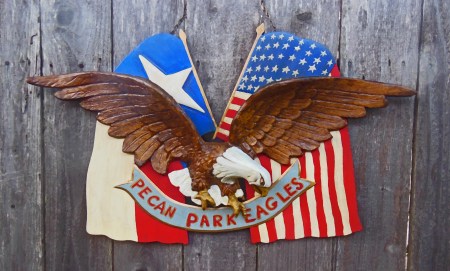
Oh yeah, Here’s the pictorial answer to the Bonus Question: “What was the name of Publisher Bill McCurdy’s 1950 east end Houston sandlot baseball team?
 

********************
Bill McCurdy

Principal Writer, Editor, Publisher

The Pecan Park Eagle


Pecan Park Eagle Trivia Contest Questions

August 2, 2018


1st Annual Pecan Park Eagle
Baseball Trivia Contest
By Maxwell Kates

Questions Today, Thursday, August 2, 2018.

Answers Tomorrow, Friday, August 3, 2018.

Note: Please do not post your answers in the Comment Section of today’s Question Phase of the quiz. We would like to keep this thing open and fun without help for all who wish to play. ~ Posting your answers or thoughts about the quiz tomorrow in the Answer Phase is both invited and encouraged.  ~ TPPE.

Sharpen your pencils, it’s time to play the first annual Pecan Park Eagle Trivia Contest. But first, some baseball nostalgia for you. Most of the questions relate in some way to columns I have written for the Pecan Park Eagle in the past year. Good luck to all those who play.

(1) Which Hall of Famer was the subject of a recent biography by Marty Appel?

(2) In what National League stadium did Willie Mays hit his 600th home run in 1969?

(3) Justin Verlander pitched two no-hitters for the Detroit Tigers. Who were the opponents?

(4) Which Astros player hit 53 leadoff home runs in his major league career?

(5) Roy Halladay was the third Toronto Blue Jays’ pitcher to win the Cy Young Award. Name the other two.

(6) Who won the American League Most Valuable Player Award in 1953?

(7) Five members of the 1982 Houston Astros, four in uniform and one broadcaster, also managed the team. Name them.

(8) According to Irish folk legend, what is the surname of the only man capable of killing a local man-eating sea serpent?

(9) What five Astros players represented the team at the 1994 All-Star Game?

(10) How many African American pitchers have won 20 games in a season? Which of the ‘Black Aces’ won 20 games one season for the Astros?

(11) What village in upstate New York hosted the first SABR convention in 1971?

12) Name two members of the Larry Dierker Chapter, both of Irish heritage, who played professional baseball before the formation of the Houston Colt .45s. (Note that I didn’t say MALE baseball players.)

(13) Who is the only living Hall of Famer to work as the director of a funeral home?

(14) What pitcher surrendered Rick Monday’s decisive home run in Game 5 of the 1981 National League Championship Series for the Los Angeles Dodgers?

(15) Who was the winner pitcher in Game 7 of the 1964 World Series?

Bonus Question:

“We DO have a bonus question for you ~ and we promise ~ it WON’T take much of your valuable time.”

What was the name of Bill McCurdy’s east end Houston 1950 sandlot baseball team?


********************

Bill McCurdy

Principal Writer, Editor, Publisher

The Pecan Park Eagle

Rogelio Armenteros: Is He Our Future Closer?

July 31, 2018

A few days ago, long before yesterday’s Roberto Osuna trade acquisition, Dr. Don Matlosz, a former Jersey Boy pitcher, UH undergrad, good friend of mine from our UT doctoral degree days, and still a professor at Fresno State, e-mailed me that he thought the future closer of the Houston Astros was now on the staff of the Fresno Grizzlies. He was talking about Rogelio Armenteros, a 24-year old Cuban guy who apparently is lighting up the “K” count pretty good this season in that role as a PCL closer. He has 100 strikeouts while also yielding only 85 hits in 91.0 innings of work for the Astros’ AAA farm club this year.

Here’s a link to his professional stats to date:

http://www.milb.com/player/index.jsp?sid=t259&player_id=660494#/career/R/pitching/2018/ALL

Of course, if Roberto Osuna works out in the closer role – and also finds a remedial way to fit in with the morale of the Astros team as someone who genuinely has healed and matured from his past problems, Armenteros could still be a most welcome addition to the set-up role job competition.

Meanwhile, lets hope that Altuve and Correa are both back in the lineup soon. We can’t keep playing with feather bats, slippery gloves, and untimely pitches too much longer and expect to still be in contention by September 1st.


********************

Bill McCurdy

Principal Writer, Editor, Publisher

The Pecan Park Eagle
Call ‘Em All Shirley

July 30, 2018

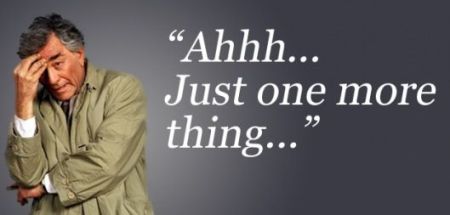
Call ’em all Shirley because that’s who they are. They are the only five Shirley surname players, so far, to do time as big league ballplayers.

Here they are ~ from fair-to-middling as MLB talents ~ to worse:

                               1. Bart Shirley (1964, 1966-68)

Bart   Shirley


https://www.baseball-reference.com/players/s/shirlba01.shtml


2. Bob Shirley (1977-1987)

Bob   Shirley


https://www.baseball-reference.com/players/s/shirlbo01.shtml


3. Mule Shirley (1924-1925)

Mule Shirley                         


https://www.baseball-reference.com/players/s/shirlmu01.shtml


4. Steve Shirley (1982)

Steve
Shirley


https://www.baseball-reference.com/players/s/shirlst01.shtml


5. Tex Shirley (1941-42, 1944-46)

Tex
Shirley                                       


https://www.baseball-reference.com/players/s/shirlte01.shtml


Have a great week ~ and let’s hope the Astros get well and find their mojo working again in Seattle!

Let’s state that even stronger. ~ Surely they will get their act together again – and sometime very soon!


********************

Bill McCurdy

Principal Writer, Editor, Publisher

The Pecan Park Eagle

Maxwell Kates: Playing Ball With Trevor Hoffman

July 29, 2018

PLAYING BALL WITH TREVOR HOFFMAN

By Maxwell Kates


Would you believe me if I told you that I once played baseball with Trevor Hoffman? No? That’s the correct answer, actually. But there’s a story behind it.

Trevor Hoffman, Hall of Fame Class of 2018

This is the Hall of Fame induction weekend in Cooperstown, New York. The Class of 2018 is a diverse one. Chipper Jones and Jim Thome, opposing 3rd basemen in the 1995 World Series, are elected on their first ballot. Joining them are Vladimir Guerrero of the Anaheim Angels, Trevor Hoffman of the San Diego Padres, and from the Veterans’ Committee, Alan Trammell and Jack Morris of the Detroit Tigers. This story, however, is all about Trevor Hoffman.

The year was 2004. The Padres had just moved into their new downtown facility at Petco Park after playing their entire tenure at Qualcomm Stadium in suburban San Diego. Their opponents were the Montreal Expos. Figuring (correctly, as it were) that it might be my final opportunity to see the Expos, I flew to San Diego to watch them play. There was some symmetry in my travel plans, as the Padres were also the opposing team in the very first Expos game I saw in Montreal.

Petco Park
San Diego, CA

Borrowing an idea from Forbes Field in Pittsburgh, the Padres built a sandlot just beyond the outfield fence within the confines of Petco Park. This particular game was a Tuesday evening and I decided to arrive a few hours early. Walking around the perimeter of the facility, I noticed some kids playing on the sandlot. Then I noticed a much taller player wearing uniform number 51, glove in hand, approaching the diamond. It was Trevor.

Born in 1967 in Bellflower, California, a suburb of Los Angeles, Trevor Hoffman almost seemed destined for a career in baseball. His father was the late Eddie Hoffman, the famous singing usher at Anaheim Stadium, while his older brother Glenn was a longtime infielder for the Boston Red Sox. Trevor’s path to the big leagues was a circuitous one. After struggling as an infielder in the Cincinnati Reds’ farm system, he was converted into a pitcher in 1991 by his minor league manager. Almost instantaneously he developed into a star, rising from Charleston to Cedar Rapids, Chattanooga, Nashville, and the Reds’ 40-man roster in slightly less than two years.

Trevor Hoffman as a Florida Marlin

Left unprotected in the 1992 expansion draft, Hoffman was selected in the first round by the Florida Marlins. As it were, Hoffman spent less time in the Sunshine State than a swimsuit model or a Sammy Miami. The Marlins traded him to the Padres in June 1993 as part of a five player deal which brought Gary Sheffield to Dade County. Although the Padres were in a rebuilding mode at the time, they had risen to the top of the National League West five years later. Hoffman was a central figure in the Padres’ resurgence. A ninth inning mound appearance by the closer became known as ‘Trevor Time,’ as AC/DC’s “Hell’s Bells” became Hoffman’s theme music when he pitched. He recorded 53 saves in 66 appearances, yielding a regular season ERA of only 1.48. Although the Padres’ plummeted to the bottom

of their division as quickly as they rose, Hoffman remained an integral component of baseball in San Diego. Though his future seemed uncertain as he missed most of the 2003 season – his contract year – with an injury, the Padres decided to sign him to a one-year, $2.5 million deal for 2004.

Hoffman decided to play catcher in the pickup game in the sandlot hours before his Padres would host the Expos. There were kids throughout the infield and more kids waiting to take their turn to hit. Even though I was taller and had more grey hair than any of them, I decided to stand in line anyways. As I was about to hit, I received a tap from the umpire.

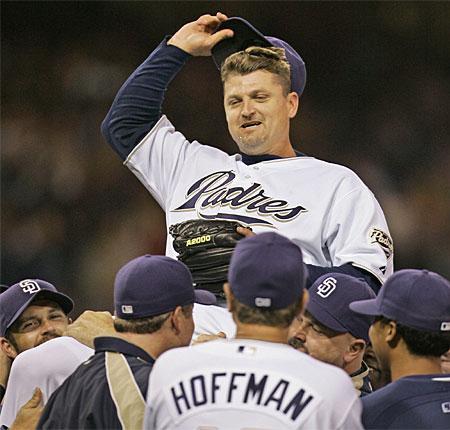
Hoffman and Padres Celebrate.

“Do you notice anything similar about all the other players but you?” he asked.

I replied, “Sorry, I’m from Canada. And we’re not too bright out there.”

“This is for KIDS!” he shot back. “YOU’RE not supposed to be here!”

I pleaded with the umpire, “Please, I just want to take one cut so I can tell my grandchildren that I played baseball with Trevor Hoffman.”

Now I know I had pushed the umpire’s buttons. “Oh yeah!” he screamed. “Well you’re outta here, Grandpa!”

Hoffman became, once again, an effective closer for the Padres in 2004, saving 41 games with a 2.30 ERA for a Padres team that went 87-75. He remained in San Diego until 2008, leading the league with 46 saves in 2006. Granted free agency, Hoffman ended his career with the Milwaukee Brewers, retiring in 2010. His lifetime statistics include 1,133 strikeouts in 1,035 games, a lifetime ERA of 3.69, while his 601 saves was the all-time lead at the time of his retirement.

And no I never did get to play baseball with Trevor Hoffman. Or so it would seem. Let’s look at Doug Brocail’s 2001 season with the Houston Astros. Although not every statistical register counts it, he appeared in one game in 2001. Brocail had no innings pitched, an ERA of infinity, and in fact, spent the entire year on the 60-day disabled list. So how does he have a game to his credit? Let’s look at the boxscore on August 5, 2001. The Astros were hosting the Expos at the stadium formerly known as Enron Field. When Brad Ausmus was hit by a pitch in the 3rd inning, his teammates protested rather vociferously. Brocail must have offered some choice words to umpire Matt Hollowell because in a moment, the injured bench jockey was ejected. Pitcher to the showers!

Pitcher to the Showers!

If Brocail is credited with an appearance for being tossed out of a game, then surely Kates may be given credit for having played baseball with Trevor Hoffman in San Diego.

“Don’t Call Me Shirley!”
~ Maxwell Kates

Is that the story? That’s the story!


            Editorial Note to Writer ~

Dear Maxwell,

As our little technicality trips go in the art of seeking a little higher shelf for expressing our involvement in “the game”, lesson number one is to never mention the game by name. If you have to call it out as “baseball”, then you are immediately disqualified from both the higher shelf you seek and the specific opportunity you are now seeking.

Any chance you had of passing unnoticed by the guard in that line of Pygmies who were waiting to do the same passed out the window when you told “that” same guard/umpire: “Please, I just want to take one cut so I can tell my grandchildren that I played baseball with Trevor Hoffman.”

The umpire in this instance was not programmed to hear the still pining deprivations of your own childhood now that you are an adult. He’s there to take care of the kids who live that need today. And you are no longer one of them. So “suck it up and move along” is all he’s going to tell you.

Take consolation in the Brocail Qualifier explanation as to how you still technically qualify by way of a box score that lists everyone that stood in line that day to take a batter’s cut at a pitch from Trevor Hoffman. ~ Even better ~ even if the list just shows 99 Pygmies and one disqualified by age and height tall gangly built Canadian guy – the rest of us will still do all we can to make sure that the world knows that the Canadian fellow was you – and not some singing Mountie like Nelson Eddy.

Too late now, but there is one thing you could have done that painful day to make all this hair-splitting on technicalities unimportant, and it’s the same thing we did on the sandlot to establish who’s in the game – and who’s not. You could have begged, borrowed, or stolen a baseball from one of the Pygmies and just thrown it in the air to Trevor Hoffman from about sixty feet away without saying a word until the ball leaves your hand.

Then you shout, “Heads up, Trev!” ~ Which he will do, of course, and be ready to make the catch with his gloved hand. And, of course, this is presuming that you can make a reasonably accurate throw from sixty feet. If so, Trevor catches the ball with a smile – and ~ from that moment on ~ every time you close your eyes ~ you get to see that Trevor Hoffman smile on the backs of your eye lids every night ~ for the rest of your life.

No technicalities here. The beautiful game always starts ~ as it usually ends ~ with a thrown ball ~ and then a catch.

Great article, Maxwell! Written like a true lover of “the game.”

Bill McCurdy, Editor

The Pecan Park Eagle


“And do call me Tex!”
~ Alvis Newman Shirley


********************

Bill McCurdy

Principal Writer, Editor, Publisher

The Pecan Park Eagle


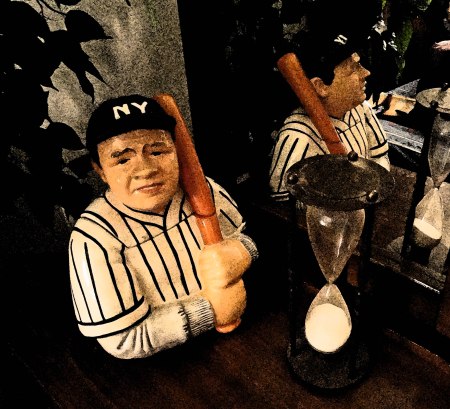
Babe Ruth’s Called Shot, Yes or No?

July 28, 2018

Babe Ruth
Yesterday’s Greatest Myth-Maker

Happy Saturday Morning, Everybody!! ~ And what a great time again to ask the question that will never be answered for certain by even the deepest, blue history thinkers in the game. Even those who do affirm it say their words of support in the most whimsical ways ~ and with everything from a slight to widely spreading smile on their faces when they do.

Did Babe Ruth call his shot at Wrigley Field against the Cubs in the 1932 World Series? ~ Or was he simply pointing at Cubs pitcher Charlie Root, from the plate to the mound, as the two engaged in what we now call “trash talk” with each other prior to the next pitch that ended up flying high and deep off the Babe’s bat as a home run to deep right center ~ and giving birth to a visual communication that engrained the perception in the crowd ~ that they had just witnessed in totality ~ Babe Ruth predicting a home run to center field and them making delivery.

And remember too ~ all this hubbub arose from the mass visual memory of this event. The film you are about to see here ~ or probably already have seen ~ was taken by rare fan in the crowd with an early silent movie camera ~ but it only came to public attention some year in the past twenty or thirty. ~This thing was born and raised on the repetition of often reported memories of those eye witnesses who were there in 1932 to record mental perceptions of Babe Ruth predicting his home runs.

It is the film that brings us the follow-up shots of Babe waving his hand at pitcher Root again as he rounds first and heads for second in his home run trot. Even those motivations can be taken as either the Babe “rubbing it in” or as evidence that it was simply more gloat from the general trash talk that Ruth had decided to engage in with Root.

Ruth doesn’t start making big claims that he called his shot until he finds out back in the dugout after the bases trot that apparently everyone else thinks he did. Then he’s all over the affirmation as the primary source authenticator of that claim.

Enjoy the brief clip and the visual part of this story. It also includes some comment by Lefty Gomez, one of the great Yankee pitchers who was there that day. Plus, a handful of other prominent baseball writers chime in too.

In the end, you will be left with the question that only you can answer: Did Babe Ruth really call his shot in Chicago, or not?

Here’s the link:


Addendum: Reader Cliff Blau‘s suggestion in the comment section below is worth the additional look because of the light it sheds on the angle and direction of Babe Ruth’s arm-pointing. Check it out too at the following link once you’ve seen our suggested site film.

https://www.youtube.com/watch?v=FwIlNSi3x7c


********************

Bill McCurdy

Principal Writer, Editor, Publisher

The Pecan Park Eagle

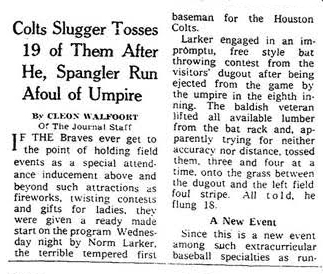
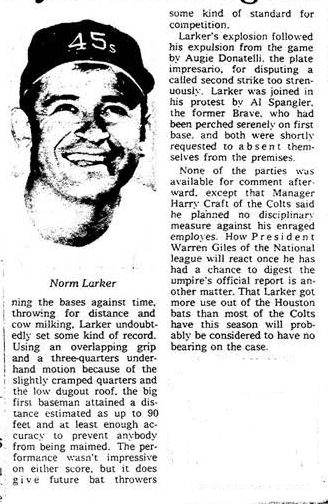
1962: Larker Finds Use for Colt .45 Bats

July 27, 2018


Another great research find by Darrell Pittman.


GGGGGGGGGGG

Deadball Era Baseball Game Footage (1900-1920)

July 26, 2018

Detroit @ Pittsburgh
During the 1909 World Series
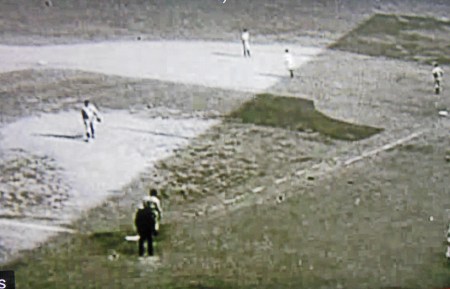
~ Check out the shape of the infield grass.

Thank you, Bill Hickman, for drawing our awareness to this fine silent film collection of baseball cation from the Deadball Era. We miss the sensory completeness that sound and the smells of hot dogs, beer, cigar smoke, less hygenic circumstances of rest rooms from those times, to say nothing of rotten food disposals and the industrial age smoke that filled all breathable air could have added to our sense of presence in what was going on, but we shall happily settle for what we got.

Groundskeeping was poor back in the day. As the featured still shot here shows of the Pittsburgh infield during the Pirates’ tangle with the Detroit Tigers that fall, groundskeeping was not a major priority back in the day. The Pittsburgh infield is half eaten or worn away – and badly harmed also by the automobiles that chugged their ways across the diamond during the pre-game activity. And that’s clodhopper dirt out there – not the carefully groomed and even soil that’s imported for use on the intentional-dirt parts of the infield and base lines.

Other Notices: All the players uniformly knew how to wear their uniforms correctly, with the socks showing from the knee down. ~ Photos. Photographers crowded home plate during crucial at bats. The lenses of that age could not handle the distance and produce photo clarity.

No World Series in 1904. The 1904 New York Giants celebrated themselves at home as “world champions” after refusing to play the AL Champion Boston Red Sox in what should have been the second World Series. The Red Sox had won the first World Series over Pittsburgh in 1903, but the Giants apparently were afraid to play them in 1904. The refusal forced baseball to declare that playing the World Series would not be furthermore left to individuals clubs. Winners of the NL and AL would play each other for the right to make “world champion” claims. And that’s the way it stood until the 1994 management-labor meltdown that cancelled only the second World Series in history.

Black Sox Footage of Joe Jackson and his White Sox Company from the 1919 World Series is very good. 3rd Sacker Buck Weaver has to be the ugliest snaggle-toothed innocent-looking guy that’s ever been banned from the game of baseball. – What a tragedy that whole murky-business in Chicago in 1919 was – and still is. Little Dickie Kerr also shows up. – He’s the little pitcher who came out of the Black Sox mess as the young “good guy” who played it straight and won games for the team that had eight men kicked out for life as a result of the gambling bribes they allegedly took to make sure the White Sox lost the World Series.

Baseball practices included much more pre-game defensive practice, including fungo-struck fly balls to the outfielders. They also seemed to like lining up the bats in a long row before their team dugouts.

Dead Ball Era Athleticism, based upon what these films provide, may lead some of us to wonder how many of these guys could compete against any 21st century MLB club. Several of the pitchers display funky wind ups that wouldn’t carry them too far in today’s game either. – See what you think when you watch the film on this very resourceful link:

Hope you enjoy this excellent opportunity for exploration of the so-called Deadball Era.

********************

A Back To The Future Addendum

Congratulations to Tom Hunter
Denver Resident but Staunch Astros Fan

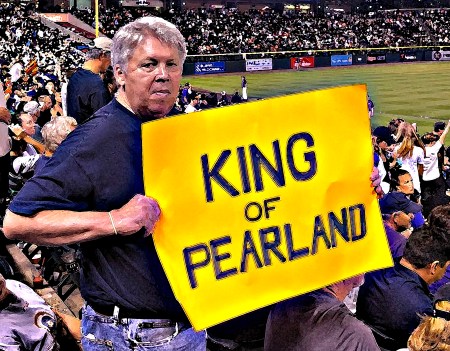
Great friend and Pecan Park Eagle supporter Tom Hunter got to Coors Field on Tuesday night, 7/24/18, just in time to proclaim his own presence as he also brought his Houston Astros a bucket of extra inning good luck! ~ Where were you Wednesday night, Tom?


********************

Bill McCurdy

Principal Writer, Editor, Publisher

The Pecan Park Eagle
A Punch Out By Cat’s Paw

July 25, 2018

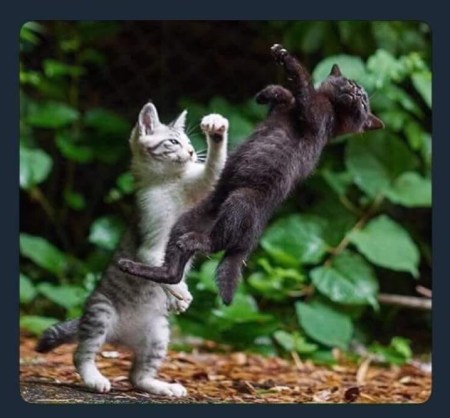
Down goes Frazia! ~ Down goes Frazia! ~ Down goes Frazia

It was one of the biggest boxing battles of all time. Could it also have been the first apparent application of the Marquis of Queensbury rules in a cat fight? We’re talking about the largest gate of nearly 60,000 people that paid to see the big fight at the Catstrodome in Las Vegas back on August 7, 1954 ~ the heavyweight championship cat fight between Cautious Catius Claye and Smokey Joe Frazia!

Today’s featured photo shows how the fight ends, but here’s the audio from the national radio broadcast on how the brief less than one round match played its way out forever into our imagery of why this particular cat fight contributed so much to our appreciation of what really charged athletic competition is all about. All the fearless cool cats were in house that night to see it – and you can take it to the bank – there wasn’t a mouse among them.

The broadcaster that night – the voice on our audio – was a guy known for his descriptive, cynical, and baritone-ringing “New Yawk” accent and precise choice of words – and ones that were used repetitively when a fighter was either in trouble – or a knockout path that had just been landed by a decisive punch.

Now gone to wherever the most judgmental of us go whenever our lives on planet earth are spun and done, our audio guide for this little moment is someone the elder among us all remember as Humble Howard Catssell. ~ “Take it away, Howard!”

Glad to do so, Billy, and isn’t it wonderful today – in 2018 – that something like a 64-year old audio tape can be programmed to actually allow a dead person like me to thank a totally live person – or maybe I should say technically live person like yourself – for the opportunity to handle this segue with all the finesse and gracious deference of the stellar personality I once had in unfair numbers above all others in my field? ~ OK, here’s the fight description – all of it transcribable in italics – for the sake of time clarity:

Good evening from the Catstrodome in Las Vegas, cat boxing fans! – This is Humble Howard Catssell bringing you the scheduled 15 round heavy weight cat fight championship match between champion Cautious Catius Claye and challenger Smokey Joe Frazia!

No soul in his right mind thinks this fight is going to go anywhere close to the distance. Both fighters are undefeated – Claye at 25 and 0 – Frazia at 21 and 0 – and all wins by both of these ferocious felines have been by the hard knock out route. 

Someone must fall tonight! – And one man’s fall will be the other man’s adornment of even higher placement on the historic wall of fighter respect. – The bell for round one has now sounded and we’re about to find out as observers to history in the making. – We may be only fly specks on the wall of history, brave listeners – but even flies draw attention – if they land in the right place – at the right time. – Just ask me. – I’ve made a career of it.

Claye goes into his peek-a-boo dance in the middle of the ring. – Frazia from Philly stalks in – like a longshoreman closing in on an open roll call for work on the docks.

Claye dances in a circle around Frazia – sending out left jabs like love pats. – Frazia moves in the middle of the circle – like the fulcrum of a watch that anchors and rotates its time-telling appendages. – Joe keeps a close watch out for any second-hand movements from Claye.

There’s a right to the belly of Claye by Frazia! – But Claye seems to both inhale and take a two-step leap backward simultaneously – softening the blow from Frazia – as Joe takes a clumsy fall forward as the end reaction to Claye’s quick escape from contact harm.

Now they’re on the ropes. – Joe is two-fisted pounding away at the taller Claye’s middle – but Claye is using the ropes famously to ease the contact harm from body fist pounding – – and he’s also extending his arms across his chest – with his elbows perpendicular to the floor to deflect many of the hard Smokey Joe blows.

Now they are at mid ring – when out of the blue – liked greased lightening – here comes a hard and high arching left to the chin of Frazia by Claye – and Frazia’s down! – Frazia’s down! – Frazia’s down!

Frazia’s not moving! – The ref is counting him out! – They’re dragging Frazia to his corner! – And the cat that stings like a bee is now dancing around the ring like a butterfly!

The winner – and still heavyweight champion of the Cat Fight Boxing Association world – its Cautious Catius Claye!

Back to you, Billy! ~ That’s all I’ve got from 1954, and besides, it’s time for me to get back to my very long nap!

Thank you, Howard! ~ And thanks too, cats in the picture, for reminding us of a time in which boxing was alive and thriving. Now they are simply a barely holding on relic of what they used to be as a once major sport – plus the everyday reminder that their sport is one of the few that still values concussion as a successful outcome.

Professional sports also need to remember that boxing exists today as a reminder to all the current most popular sports groups that none of them either should ever make the mistake of taking athlete participation or fan support for granted.

Times come and go. And people change.


********************

Bill McCurdy

Principal Writer, Editor, Publisher

The Pecan Park Eagle