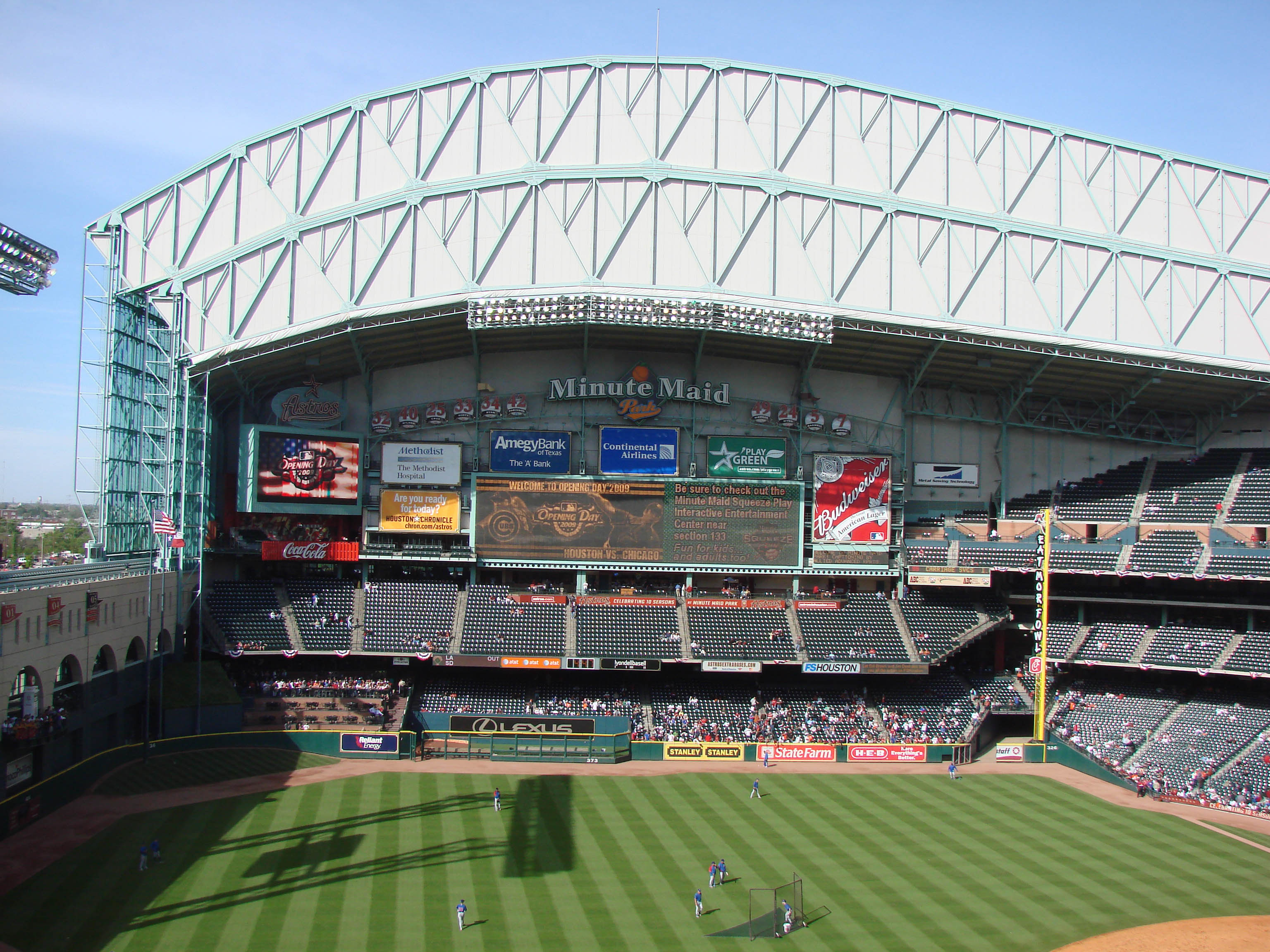
Looking for the signs of a winning team.
After 67 years of sandlot baseball, organized youth baseball, pick-up and put-together amateur baseball, and coaching kid baseball, plus watching almost endless streams of minor league baseball with the Houston Buffs and major league play by the Houston Colt .45s and Astros, one tends to synthesize certain ideas about the qualities we are looking for at each of the nine starting positions.
There’s nothing superlative, perfect, or final in what any of us see as the needs at each spot, and that sure includes me, the lifelong amateur fan. It’s simply an interesting exercise for each of to periodically examine our expectations for each position because of these are the parameters that ultimately determine our enthusiasm or frustration with certain players. Obviously, if a guy is not living up to what our general expectations are for a certain position, over time, we are going to be unhappy and looking for someone else.
Let’s start with what we’ve learned are our general expectations of MLB players at all positions:
(1) Speed is big. We will take as much as we can get, even though we know that speed is more important at positions like shortstop and center field than it is at first base and catcher, That being said, we’d prefer to have no human trees on the field at any position, if it can be avoided, and that includes at catcher. The guys who can’t run eventually always hurt the team.
(2) Quickness in reaction time is major, specially for infielders, but even for outfielders. It doesn’t help an outfielder to have a good intuitive feel for exactly how far and where a long fly ball is going if he lacks the reflexive ability to get there in time to make the best available play.
(3) Arm Strength stops a lot of runs from scoring. Even if we cut a break on arm strength for 2nd basemen, first basemen, and left fielders who possess other desirable qualities. if we can any of those positions also played by a guy with a “Clemente-like” arm, there are going to be fewer opponents scoring from second on hits to left, and few runners going from first to third on hits to right and center.
(4) Situational Alertness to where the play needs to go in advance of the actual batted ball and an almost intuitive ability to make the cut off men a possibility on any outfield throw to home or a base beyond first.
(5) Morale Builders is an idea that includes having positive-minded players who can both lead and follow, stay solid off the field, and take clear responsibility for their own mistakes and needs for correction. In other words, “Help Wanted. Good Guys Only. No Clubhouse Lawyers Need Apply.” – If I’m the manager, and I have to paddle your talented, but wild-haired butts upstream to the World Series all year, I’d sooner join Bruce Dern on his road trip to Lincoln, Nebraska to cash in that lottery ticket. If your idea of being the straw that stirs the team drink is being the guy to constantly keep punching holes in the floor of our team rowboat as the rest of us try like hell to paddle the thing upstream, we’d sooner you left now. – “Just stand up. I’ll be happy to give you the push-off the side that you’ve earned.”
(6) Strong Intuitive Skills are not qualities that come easily, if at all, to some players. In psychological terms, all of us live on a continuum between being somewhere along the gradient line that separates those of who are strongly intuitive to those of us who are strongly sensory. And here’s the difference between those two spots on the perceptual range of how people see things:
Strongly Intuitive People have some strong ideas, based on a number of inputs, about what is going to happen next. In baseball, for example, center fielder Joe DiMaggio was very good about intuitively recognizing that a certain pull-hitting lefty opponent batter tended to hit late against a certain right-handed Yankee fastball pitcher and hit the ball late, more toward center or left. As a result, Joe D. would take a few steps to his right and that would often result in a catch or better play on the ball. Under the same circumstances, a Strongly Sensory center fielder would be more likely to only respond to the flight of the ball, and miss out on the DiMaggio intuitive edge. But this is also true, I strongly believe: Ballplayers who are basically sensory (only responding to what they experience through the five senses) often possess strong compensatory skills, such as foot quickness and speed, working in their behalves.
(7) Strong Up the Middle is a baseball axiom I first read about as a kid. Personally, I have only grown in my appreciation for its importance over the year. You would lik to have your quickest, fastest, best armed athletes up the middle, even if you have to make some concessions on speed in the case of the catcher.
(8) Strike Zone Knowledgeable Contact Hitters are qualities I would seek out – and I would do my best to push the envelope away from the idea that we have to accept “good field/no hit” at shortstop and catcher, if we find players who can handle the defensive side at a high level. I would stress teaching the strike zone, the art of contact batting, and the importance of situational hitting.
(8) Catcher needs to be a good handler of pitchers, baseball’s equivalent of the defensive quarterback, and a guy with a good arm and good base runner deceptive skills. I’d like to have a catcher who could hit a minimum of .270 with about 15-20 HR a season, but would prefer to have Yogi Berra.
(9) First Base needs to have good foot speed, mobility and strong intuition for situational play. As a hitter, he’s a 3 to 6 hole guy, hopefully with enough power to produce a minimum of 35-50 homers, 100 + RBI, and a batting average around .280 minimum. How about Lou Gehrig?
(10) Second Base would be a great place for a .300 hitting good get-on-base guy. Jose Altuve’s my guy. but with a little improvement to his BA and OBP, but I would happily settle for Craig Biggio.
(11) Third Base has to be intuitive, quick, and athletic. Brooks Robinson is still my personal standard there, but I really liked Ken Caminiti when he first came up.
(12) Shortstop. Think Derek Jeter. Say no more.
(13) Left Field. Stan Musial.
(13) Center Field. Willie Mays. Nobody did it better.
(14) Right Field. Babe Ruth. I can dream, can’t I?
(15) Starting Pitcher. A rubber-armed version of Sandy Koufax works for me.
(16) DH. Ted Williams works for me.
There. I think we could win with that team. The issues that governed our expectations and the talent that manned our flag pursuit would require it of us. And, of course, the other 14 guys we picked to fill out our 24-main roster would not be cream puffs either.
Have a nice Sunday, everybody. And watch out for the rain that’s allegedly heading our way.
 The Pecan Park Eagle
March 2, 2014 at 6:46 pm |
Derek Jeter never has been one of the top defensive shortstops. I think while he is a certain future HOFer…you may do better there.
March 2, 2014 at 8:35 pm |
I’m old school but no shortstop has more rings than Phil Rizzuto with 11 and an MVP to boot. If I had to win one game I would go with “The Chariman of the Board” Whitey Ford. .
March 3, 2014 at 1:43 am |
The thing about being strong up the middle that people seem to miss is that the pitcher is up the middle. Being strong up the middle includes having good pitching.
March 3, 2014 at 2:10 am |
No question about it. Cliff. Your point is absolutely valid.
March 3, 2014 at 2:53 am |
I’d take a young Ivan Rodriguez at catcher (rocket arm and great speed for a catcher with .296 career BA and 572 doubles); Biggio or Joe Morgan at 2B (.392 career OBP and 689 SB); Mike Schmidt at 3B (10 gold gloves are fewer than Brooks Robinson, but he was more of an offensive force and his defense was great too); Ozzie Smith at SS (13 gold gloves, 580 SB, and made himself into a decent hitter as he aged); and Walter Johnson (417 W, 2.17 ERA 110 career shutouts) as my starting pitcher. The rest of your lineup is satisfactory. : )