Archive for 2013

TCM Baseball Movie Fest Brings Smiles

July 20, 2013

"HEY! BABE RUTH1 ~ I DOUBLE DARE YOU TO TRY TO STEAL 2ND BASE ON MY HUSBAND!" ~ Mrs. Pete Alexander.

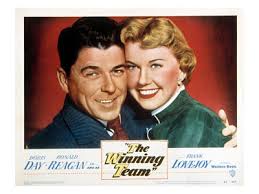
Yesterday proved itself a dawn-to-dusk baseball movie parade on the Turner Classic Movie channel, stating at 5:00 AM with Joe E. Brown in “Alibi Ike” (1935) and moving continuously on through Robert Young in “Death on the Diamond (1934), William Bendix in “The Babe Ruth Story” (1948), Ray Milland in “It Happens Every Spring” (1949), Jackie Robinson playing himself in “The Jackie Robinson Story” (1950, Paul Douglas in the original and best version of “Angels in the Outfield” (1951), and Ronald Reagan as Grover Cleveland Alexander in “The Winning Team” (1952).

Except for “Alibi Ike”, which I already have on DVD, I recorded them all on DVR. – What a treasure. Now all I have to do is figure out what I need to do to transfer them all from the Direct TV DVR to DVD disks. Just another item for the “ASK NEAL” list I keep close by for the next free time I have with my very busy adult son.

My late mom had a saying that came quickly to mind yesterday as I looked in on some of the movies that I was recording. I’d seen them all many times over, of course, but Mom’s words rang loudly on Friday. She used to say: “Sometimes you can stretch the truth so far that all the rubber falls out of a good story.”

No kidding, Mom!

How about two Cardinals getting murdered by gamblers on the day of their big pennant-deciding game with the Giants in “Death on the Diamond”. One is given a poison hot dog prior to the big game. The other is shot in the heart during the big game as he rounds third, trying to score the winning run. (The Giants catcher even tags him out before they even start checking his vital signs.)

Bendix as Babe Ruth, of course, is one truth stretch or lie piled upon another. This Ruth doesn’t merely point to center field when he calls his shot, he deliberately takes two called strikes before jabbing his finger defiantly to center and then crushing the ball there for a home run that he had promised to hit for a seriously ill kid. When Ruth dies, he is operated upon by the same doctor who saved the life of a little dog in Chicago much earlier when Ruth accidentally pulled a foul ball that hit another kid’s pet, causing Ruth to miss the game while he and the kid searched for help with “poor little Pee Wee” in an action which saves the pup but gets Ruth fined and suspended from the Yankees. The whole movie is that hokie, but I still love it because of the effect it had on this tender-hearted kid who fell in love with the goodness and greatness of Babe Ruth back in 1948. Yes, I know Ruth did not really yield his position to a rookie in the 9th inning of his big 3-HR game in Pittsburgh in 1935, and never play again, but it feels good to think he could have done so, had it occurred to him.

Mom, stretching the truth so far that all the rubber falls out of the story? Were you trying to tell me that Ray Milland could not have been an unbeatable pitcher had he been given a wood repellant substance to rub on the ball before he threw to the best hitters in baseball? I suppose you think some umpire along the way would have checked the glove he wore and discovered that big hole in the pocket with moist sponge behind it!

As for Jackie Robinson playing himself in the original movie version of what became “42” in 2013, there was no stretching of the truth here. Jackie Robinson was a great ballplayer and a terrible actor – and that’s exactly how the movie played out.

“Angels in the Outfield”? – It came off credible to me in 1951 and it still does.

As for Ronald Reagan and Doris Day as his wife in “The Winning Team”, it was a total rubber fallout for me when I learned from my own studies of that time that Alexander had not really struck out the last batter in Game Seven. That 1926 World Series ended with Babe Ruth getting thrown out on an attempted steal of second base, but that wasn’t good enough for Hollywood. They had to make it a dramatic example of how Alexander succeeded only because his loving wife was there to support him through the experience as the other member of “the winning team”.

She may have been his personal Mojo in what is arguably the greatest clutch performance by a pitcher in a World Series, but it wasn’t necessary to change the ending of the Series to get that point across. – Hey, they could’ve had Doris Day as Mrs. Pete Alexander winking at first base runner Ruth and shouting something like, “Hey, Babe! I double dare you to try to steal second base on my husband!”

Have some fun this weekend, folks! ~ Go write you own happy endings!

How Much Baseball Do Today’s Fans Really See?

July 18, 2013
Who's really watching?

Who’s really watching?

Friend and fellow SABR member Tony Cavender recently sent me this link to a Wall Street Journal article in which they disclose the results of their attempt to put the clock on “how much action” really takes place these days in your average three-hour baseball game (with the value emphasis on action over stillness in the field as important to the fans).

Time was when tuning into the stillness moments – and where the players were positioning themselves on the field – were both parts of the game that fans watched. Not today. They are too busy consuming – or getting blasted by tee-shirt slingshots – or texting – or waiting to be awakened by a home run.

Here’s the WSJ article link:

http://online.wsj.com/article/SB10001424127887323740804578597932341903720.html?mod=trending_now_1

According to the WSJ piece, the average three-hour game today contains only 17 minutes and 58 seconds of “action” as their researchers define action for this study. The details are all laid out for you in the article.

The point here is that – if we have finally reached the point of trying to define baseball as only valuable by the volume of action it generates, we have totally lost our appreciation for what made the game great on those earlier pastoral fields as the closest game to “chess in motion” ever devised as an athletic competition.

If baseball has to be sped up, or put more in motion for continuous action, or loaded with more gimmicky side actions, just to keep today’s crowds entertained between slurps and texts, then we may as well just surrender all the stadium fans to football and basketball right now. Those sports were made for continuous motion, but baseball was not. It’s what managers and players do, and fail to do, in between action plays that most often determines a baseball game’s outcome, but you won’t see any of these things, if you’ve not been taught what to look for on the field that simply looms before your very eyes, begging for an attention level you either cannot, or will not, give it.

On a related note, I received a professional flyer in the mail yesterday that came as a reminder that my mental health counseling field is now shifting gears to the new “DSM-5” diagnostic and statistical manual as a tool for diagnosing psychological and emotional disorders in children and adolescents. The flyer was prepared by a group of educators who are hoping that people like me will pick them as a source of continuing education on how to best use the changes in the new device.

There are now six new diagnostic “disorder” categories for children that all have something to do with shorter attention spans.

Gee! How hard is this picture to figure? We have become a culture of short attention spans. Is it any wonder that we are seeing more children born into this world today with some kind of attention deficit disorder already built into their systems? In effect, we seem to be in the middle of a neurological re-wiring process that emanates from our increasing dependency upon the always evolving technology that drives our cravings for more.

Whoa! That’s a heavy thought!

I’m not sure that there’s anything we can do about it, but let’s start with developing a clearer recognition of what’s going on. It isn’t all that pretty, but it is very real – and its threat goes way beyond people losing interest in baseball. Shorter attention spans breed less patience and an increase in anger and a faster trip to polarization on political issues.

I have no interest in going political here. I’m just concerned that the old ways we used to have for finding our middle ground on political problems that scream at us are now disappearing for everyone. And it all seems to share a common thread. People just cannot pay attention to anything for very long these days.

Have a nice day, everybody – and don’t forget to be patient with yourself and others along the way.

Buff Biographies: J.C. Hartman

July 17, 2013

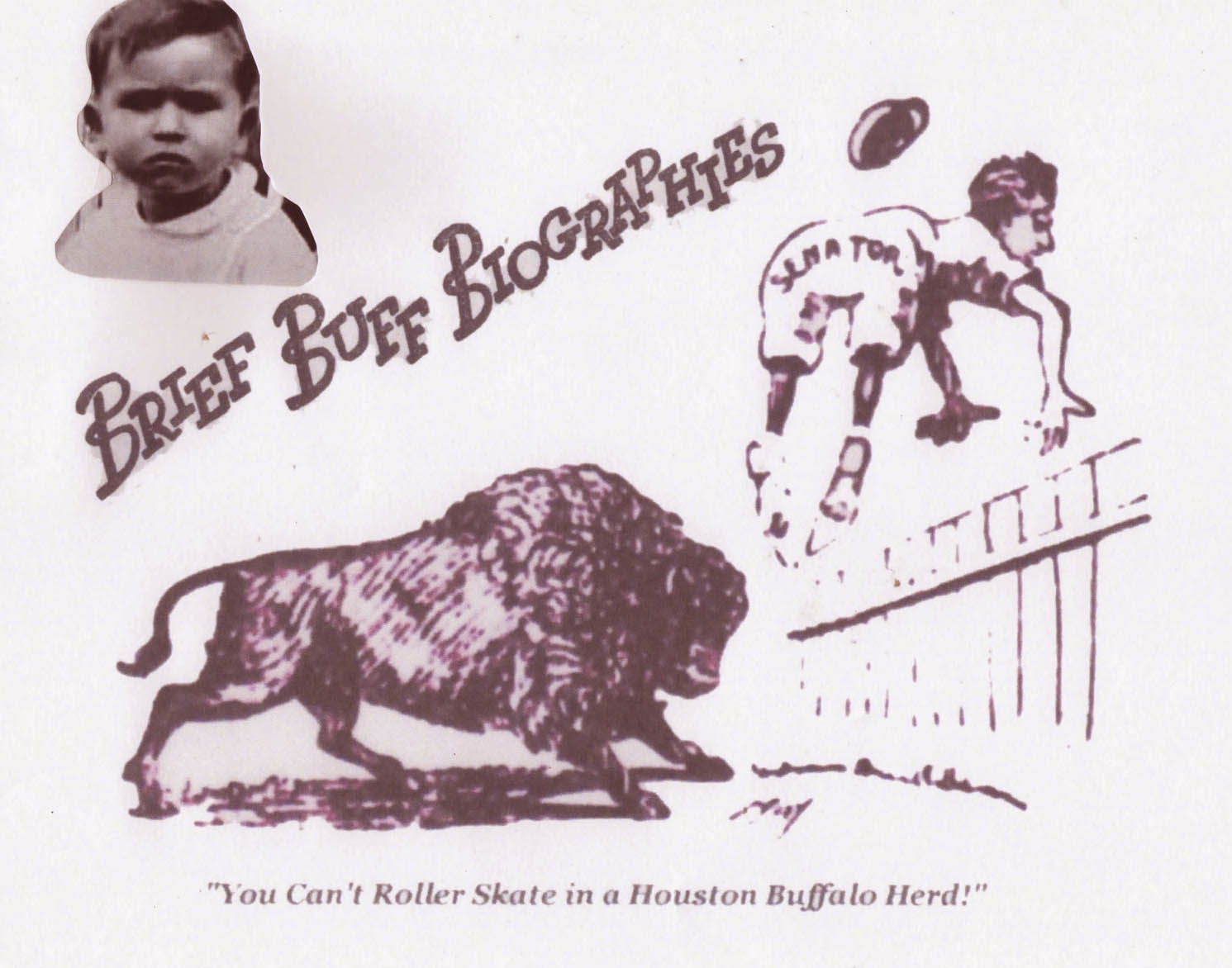
Buff Logo 4

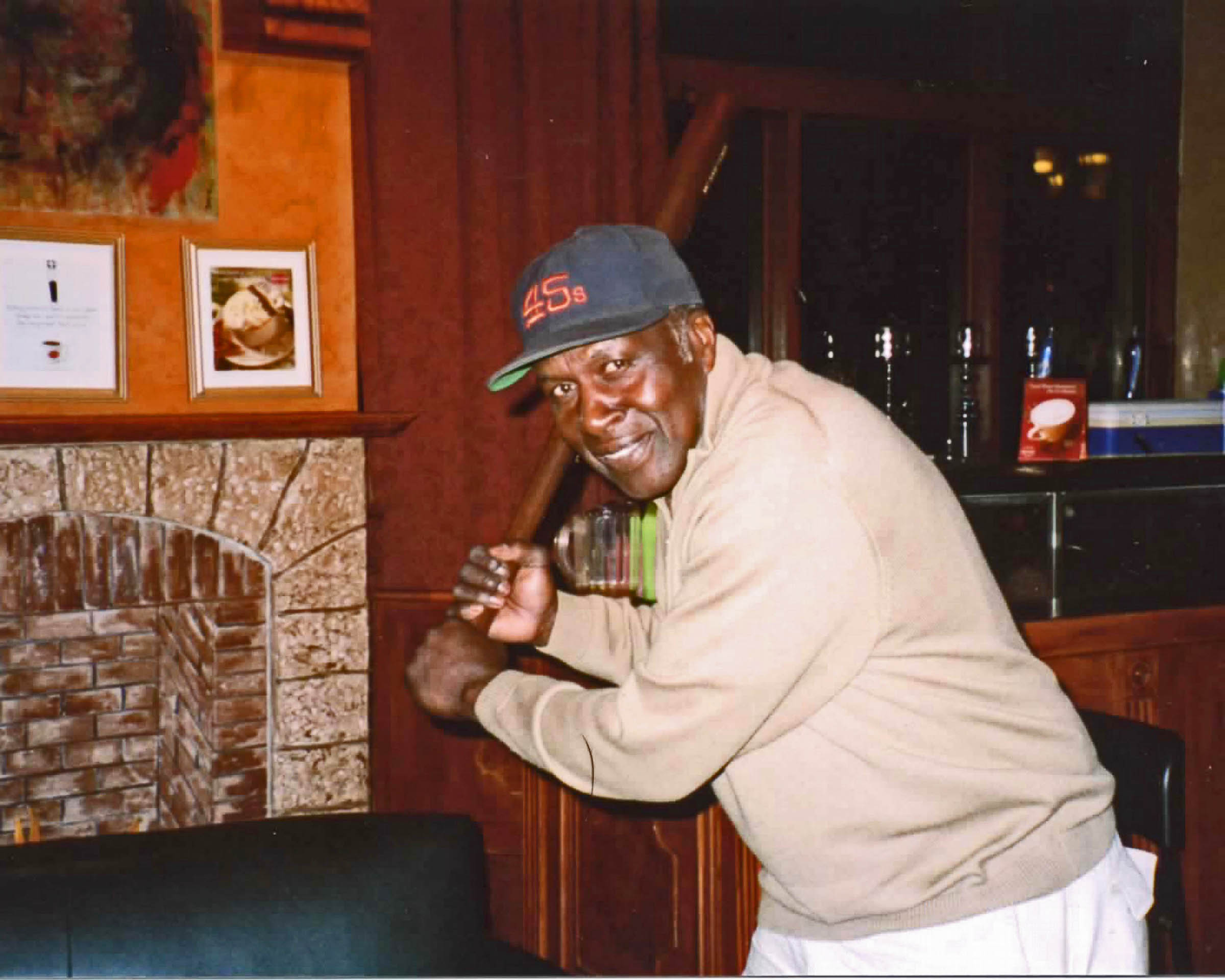
J.C. Hartman Today!

J.C. Hartman Today!

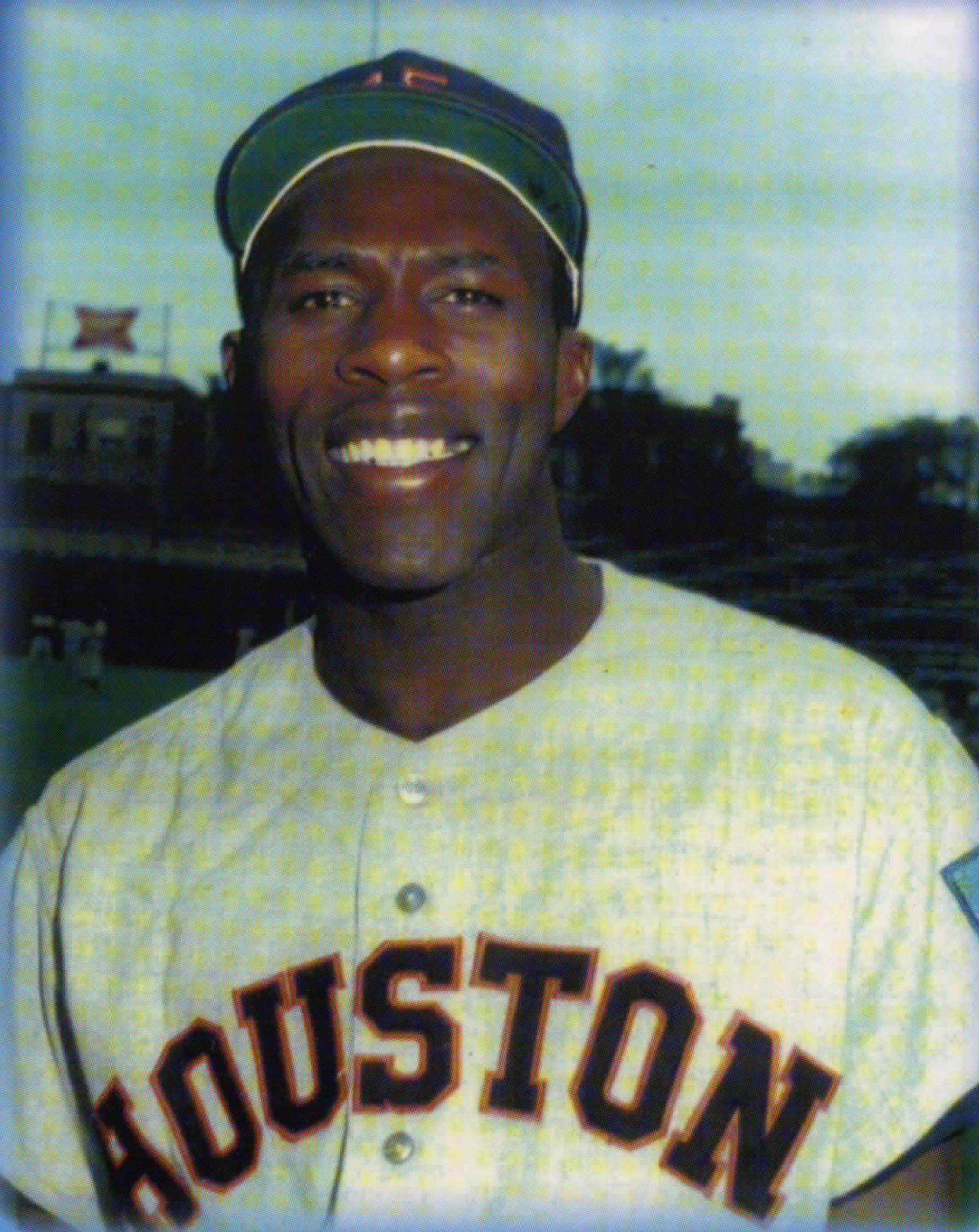
J.C. Ballplayer

J.C. Ballplayer

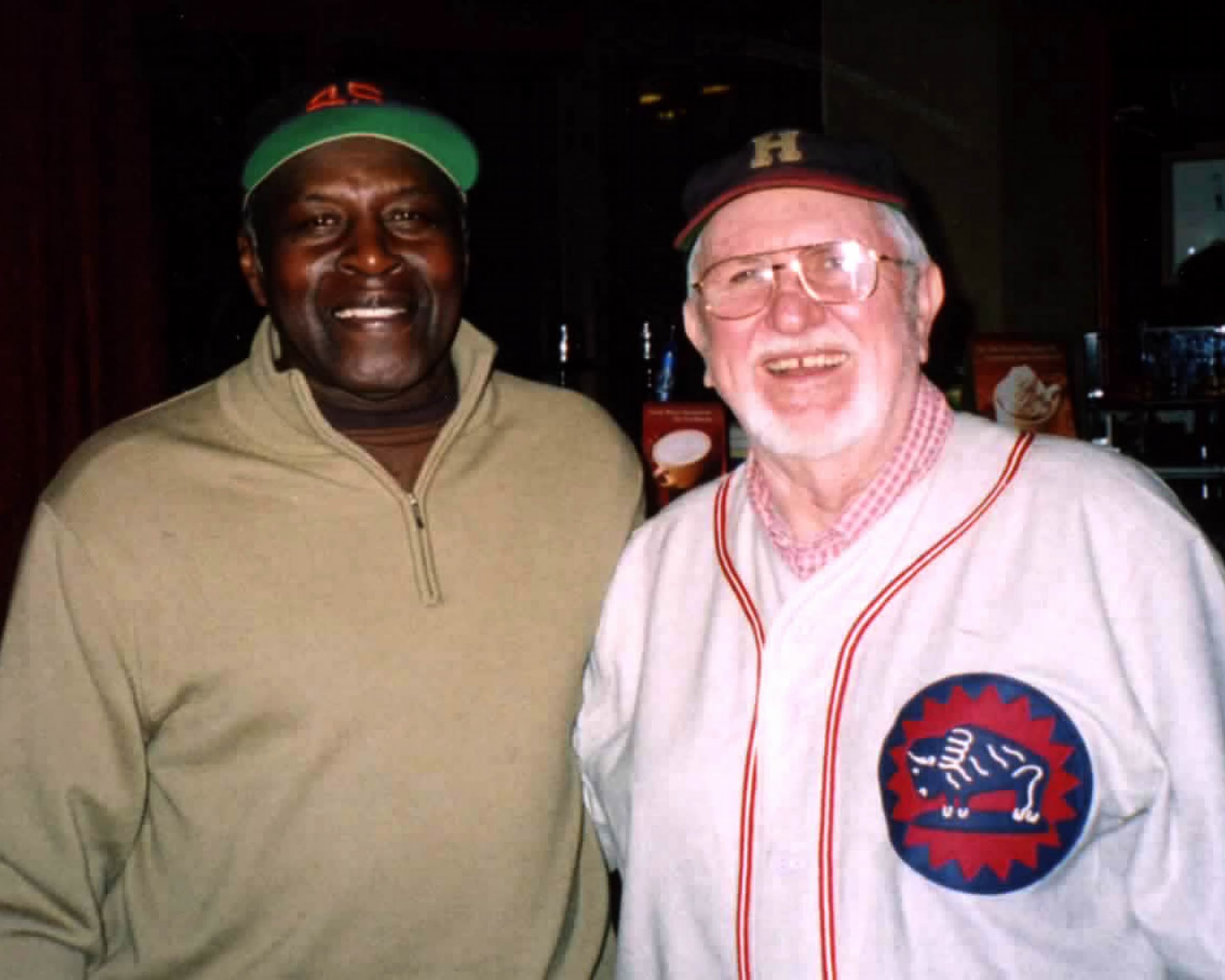
Shortstop J.C. Hartman was one of three men who played for both the last Houston minor league club and the first Houston major league team. The others were First Baseman Pidge Browne and pitcher Dave Giusti. Each man played for the 1961 last Houston Buffs team and then for the 1962 first Houston Colt .45’s club.

J.C. Hartman (6’0″, 175 lb) (BR/TR) was bon on April 15, 1934 in Cottonton, Alabama. He broke into baseball with the Kansas City Monarchs in 1955, ending up as the shortstop choice for the West in the 1955 Negro League All Star Game. His playing contract was sold to the Chicago Cubs from there, but further professional baseball was held off after a single season in Class C BALL while Hartman honored a draft invitation from the U.S. Army in 1957-58. His 1957 Fort Collins team won the All Army team championship for that year and J.C. also had a chance to team with future Country and Western singer Charley Pride and future San Francisco Giant Willie Kirkland on that military base club.

Over the course of his entire 10-season minor league career (1956, 1959-67). Hartman batted a hefty .280 with 32 homers. In his only 1961 season with the Houston Buffs, J.C. batted .259 with 6 H in 144 games.

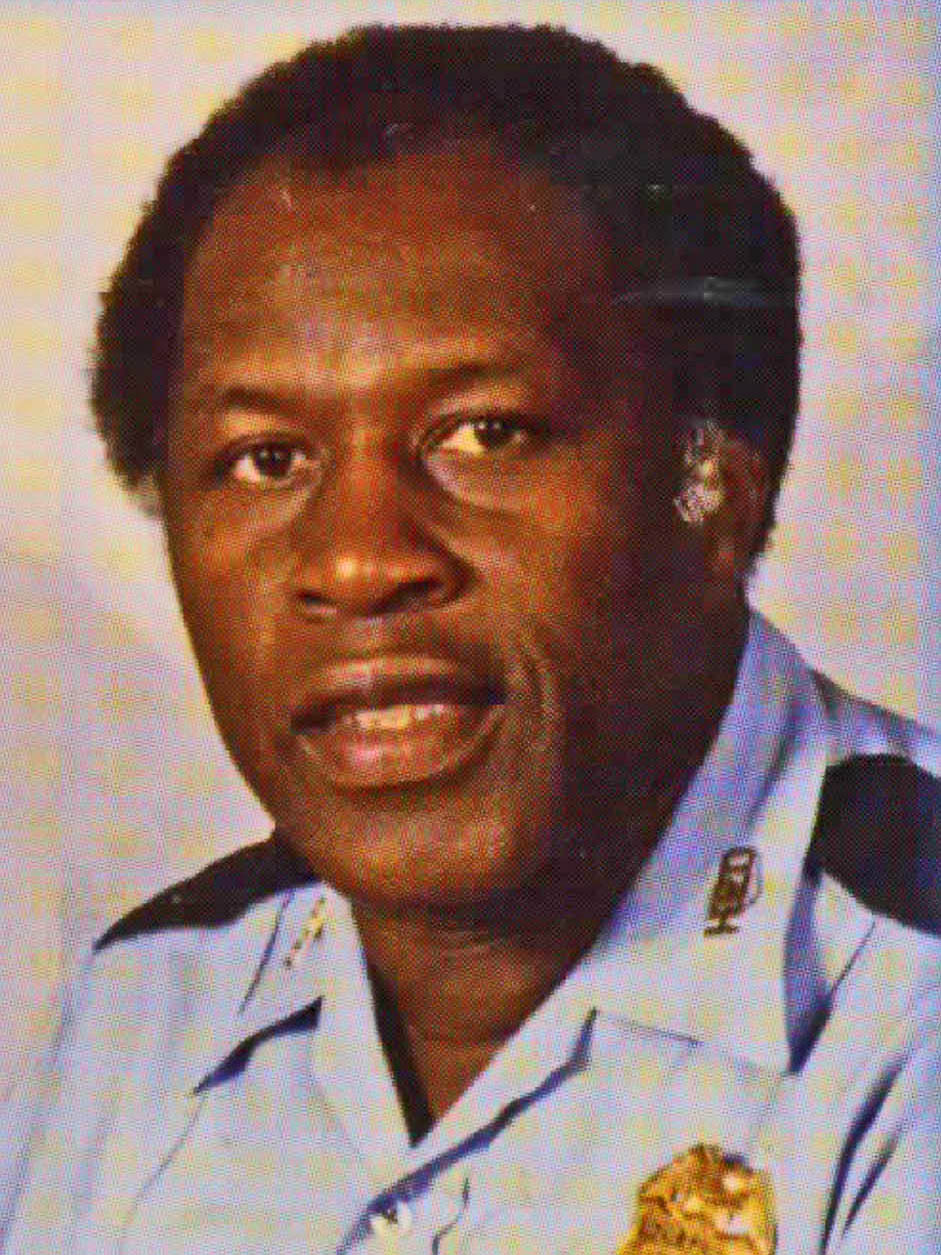
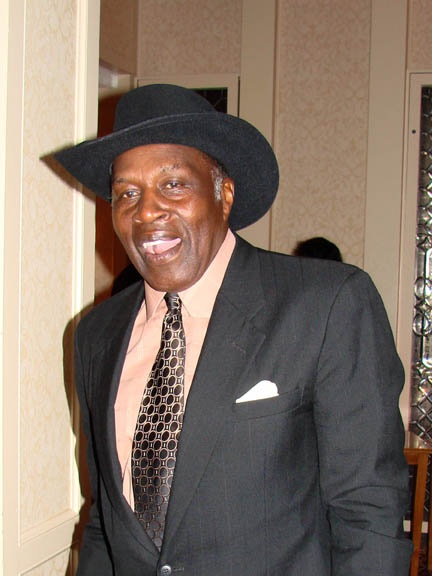
J.C. Cop

J.C. Cop

In his two MLB seasons (1962-63), both with the new Houston Colt .45’s, J.C. Hartman batted only .185 with 0 HR in an MLB career total of 90 games. His great attitude and defense wee good enough to get him a big league shot, but his bat killed his chances for longevity.

After baseball, J.C. Hartman settled here and began a law enforcement career in 1973 as a member of the Houston Police Department. He became the first black officer ever promoted to a HPD supervisory position and he takes great pride in that fact. He also married his wife Jamesetta in Houston in 1961.  The couple then had a boy and a girl together they named Jay Clayton and Jessica – and everyone lived happily ever after.

J.C. Hartman was also a successful business man and investor. “I’ve been fortunate enough to have purchased several apartment complexes, in Houston. Now, I spend a lot of my time maintaining the apartments. There is always something to do.”

J.C. Landlord

J.C. Landlord

In 2006, J.C. Hartman added “author” to his list of occupational titles when he wrote and published his life story as “Field’s Way: Through the Negro Leagues -> Major Leagues -> Law Enforcement.” What the book lacks in professional editorial and publication assistance, it makes up for it in the presentation of genuine stories of fun from a man who really took his best shot at life and made the best of everything that broke right for him along the way.

The book is still available though Amazon and I thoroughly recommend it as a true work of a good man’s heart.

Continued Good luck in All Things, J.C. Hartman – and stay as young as you look today – for as long as you can.

At age 79, you are an inspiration to us all.

"J.C. Author" Hartman with "The Pecan Park Eagle" in 2008.

“J.C. Author” Hartman with “The Pecan Park Eagle” in 2008.

Worst of the First ~ The Colt .45 All Stars

July 16, 2013
Our Worst of the First Colt .45 All Stars

Our Worst of the First Colt .45 All Stars


In homage to tonight’s MLB All Star Game, here’s my humble lineup for a special All Star Team from the  three-year history of the Houston Colt .45’s, 1962-64. It’s special only in the sense that I tried to select the players that did the worst statistically at their respective positions over the course of that three year stint who also played in a minimum of 100 games for the season they were selected.

Some of these guys were pretty good ball players who just happened to have a down year during their Colt .45 history. Such was the case with Bob Aspromonte, who also happened to have been the only third baseman of note in Colt .45 history. “Aspro” made the team by hitting .214 in 1963.

Of some interest is the fact that none of the “position player worst” stats came from the original 1962 season. Six of the position players came from 1963 and two came from 1964. Only the pitcher, Turk Farrell, came from 1962, and he made this glorious team speciously by losing 20 games in 1962, even though his ERA was a healthy 3.02.  It’s like Turk explained it himself: “Do you realize how good I had to be to lose 20 games in one season for the 1962 club?”

Yup. We do, Turk. We just had to have you in the lineup because this exercise is all in fun. Were it truly for real, we would at least have a fighting chance with you on the mound.

Here’s the batting order for our 2013 Pecan Park Eagle presentation of The Worst of the First Houston Colt .45 All Stars:

Bob Lillis (1963) SS (.198 BA/.229 OBP/.237 SLG) 1 HR in 147 G.

Ernie Fazio (1963) 2B (.184 BA/.273 OBP/.281 SLG) 2 HR in 102 G.

Cal Warwick (1963) RF (,254 BA/.319 OBP/.348 SLG) 7 HR in 150 G.

Rusty Staub (1963) 1B (.224 BA/.309 OBP/,308 SLG) 6 HR in 150 G.

Al Spangler (1964) LF (.245 BA/.311 OBP/.334 SLG/4 HR in 135 G.

Bob Aspromonte (1963) 3B (.214 BA/.276 OBP/.306 SLG) 8 HR in 136 G.

Howie Goss (1963) CF (.209 BA/.264 OBP/.328 SLG) 9 HR in 133 G. (extra: 128 K)

Jerry Grote (1964) C (.181 BA/.240 OBP/.262 SLG) 3 HR in 100 G.

Turk Farrell (1962) P (10-20, 3.02 ERA)

Too bad the laws governing reality get in the way of us issuing a challenge to the winners of tonight’s MLB All Star Game, but I will have my hands full enough simply adjusting to the fact that we Houston fans are now supposed to be pulling for the American League club tonight.

Happy All Star Game Day, baseball fans!


Game Rule Oddities and Curiosities

July 15, 2013
Don't look for big-time chess on TV anytime soon.

Don’t look for big-time chess on TV anytime soon.

There are more strange game rule conditions, oddities, and ironies out there than we will ever have time to remember or consider in total here today, but let’s have some fun, anyway, with a run at a few. Please enter your favorite example(s) here as a comment.

(1) Baseball gets criticized by some for being short on action and but too long on the time it takes to play a full game. If that’s so, how about chess? The action is 99% mental and only 1% physical – and the amount of time it takes to play a full game by mail between foes on different continents can take months. – Small wonder that the highest level chess action is not a big-time TV attraction.

(2) Sometimes different sports take totally opposite views of the same game condition. In football, the team that last had control of the ball before it went out-of-bounds gets to keep it on offense. In basketball, the team that last touches the ball before it goes out-of-bounds must then give up to the other team.

(3) I have never quite “gotten” the intentional grounding rule in football. If a QB throws the ball away to avoid getting sacked, he will be found guilty of intentional grounding and his team assessed a yardage penalty on the next play. If, on the other hand, the QB takes the snap from center and immediately throws is straight down into the ground to stop the clock, there is no penalty at all. How is the second circumstance NOT intentional grounding too? It’s even more obvious as an intentional act than the QB condition that draws all the penalties for throwing the ball away.

(4) I’ve always disliked the rules governing sacrifice fly balls in baseball – in addition to the fact that these acts variably have counted and not counted as times at bat over the years. – Why should a player be given credit for an RBI and a sacrifice attempt and not be charged with a time at bat for a ball that is caught 395 feet deep in center field just because his mighty swat gave a runner at 3rd base time to tag and walk home for a run? Are the rules makers asking us to buy into the idea that the batter gave himself up on purpose here as the batter who bunted in this situation more credibly might have truly done? – I don’t buy it. Let the long fly out guy keep his RBI, but charge him a time at bat. – If we must keep this ruse-rule, then give the guy who grounds out up the middle credit for a sacrifice grounder when it scores a runner from third base. He should get a pass on a time at bat charge too – especially, when we consider that the only difference sometimes between the ball that is driven in the air to the wall – and the one that goes bouncing on the ground up the middle – is little more than the break on the ball thrown by the pitcher. – How does “sac grounder” sound? In my book, it’s as sensible and intentional as the “sac fly”.

(5) Up through some time in the 1920’s, baseball teams occasionally asked permission from their opponents for the use of a “courtesy runner” for a player who had reached base, but had been temporarily hurt or shaken up on the play that made him a base runner. With permission granted, another healthy (presumably fast) runner would take the wounded player’s place on the base paths, but the relieved player would remain in the game once the inning changed, if he were able. Then it all stopped. – I’ve never been sure if this action was permitted by the official rules – or if it were simply one of those things that was permitted by a cavalier dismissal of the official rules by the baseball culture that was once in place. – It’s impossible to imagine it happening today.

That’s enough for one morning. Like the rest of you, I’ve got other fish to fry on my Monday calendar, but I would love to hear from the rest of you on any of these ideas – or you own favorite game curiosities.


Buff Biographies: Willard Brown

July 14, 2013
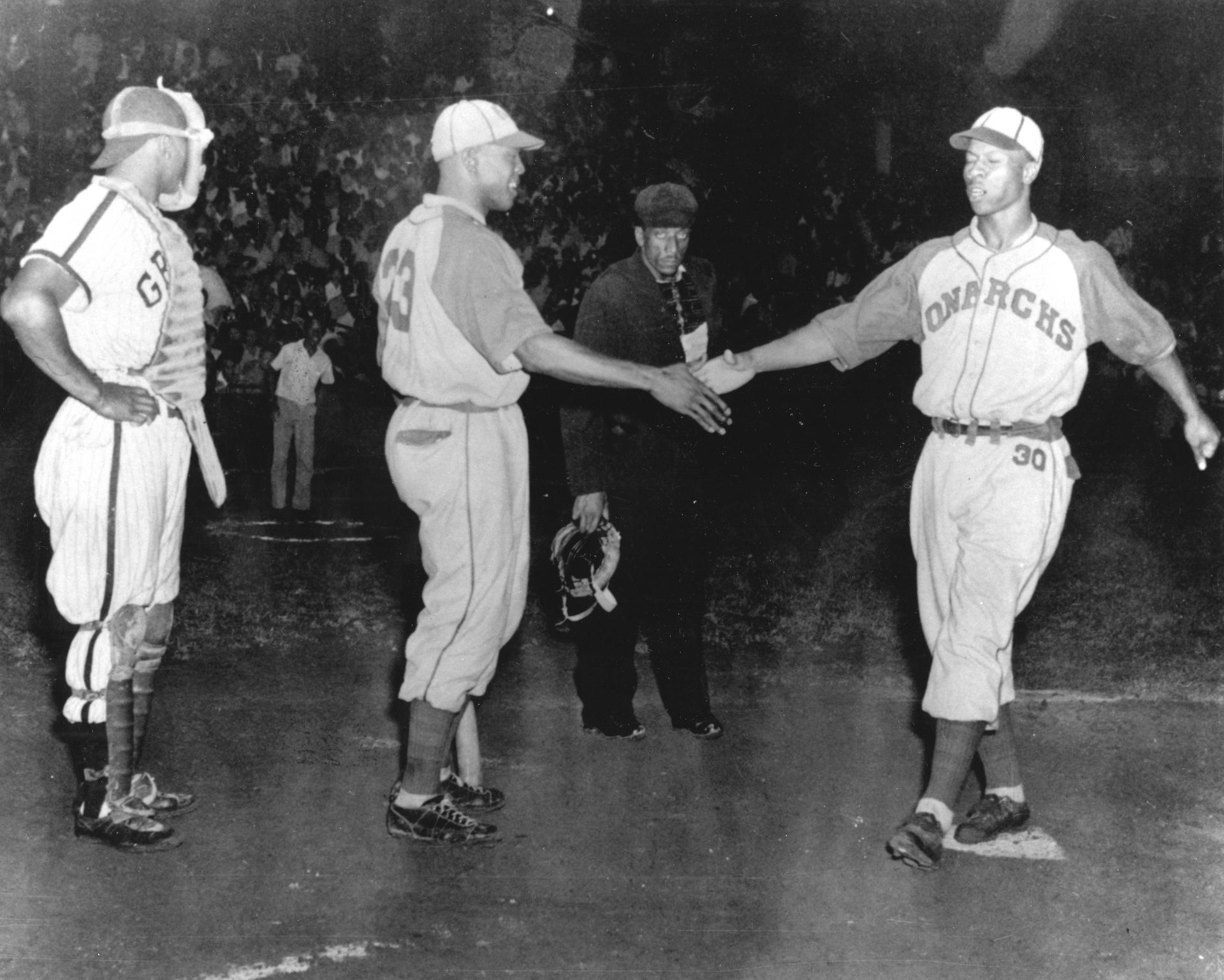
KC's Willard Brown completes his HR trot as Grays catcher Josh Gibson looks the other way. On the record, Gibson was a big fan of Brown's power. He just didn't enjoy being on the stinger side of it..

KC’s Willard Brown completes his HR trot as Grays catcher Josh Gibson looks the other way. On the record, Gibson was a big fan of Brown’s power. He just didn’t enjoy being on the stinger side of it..

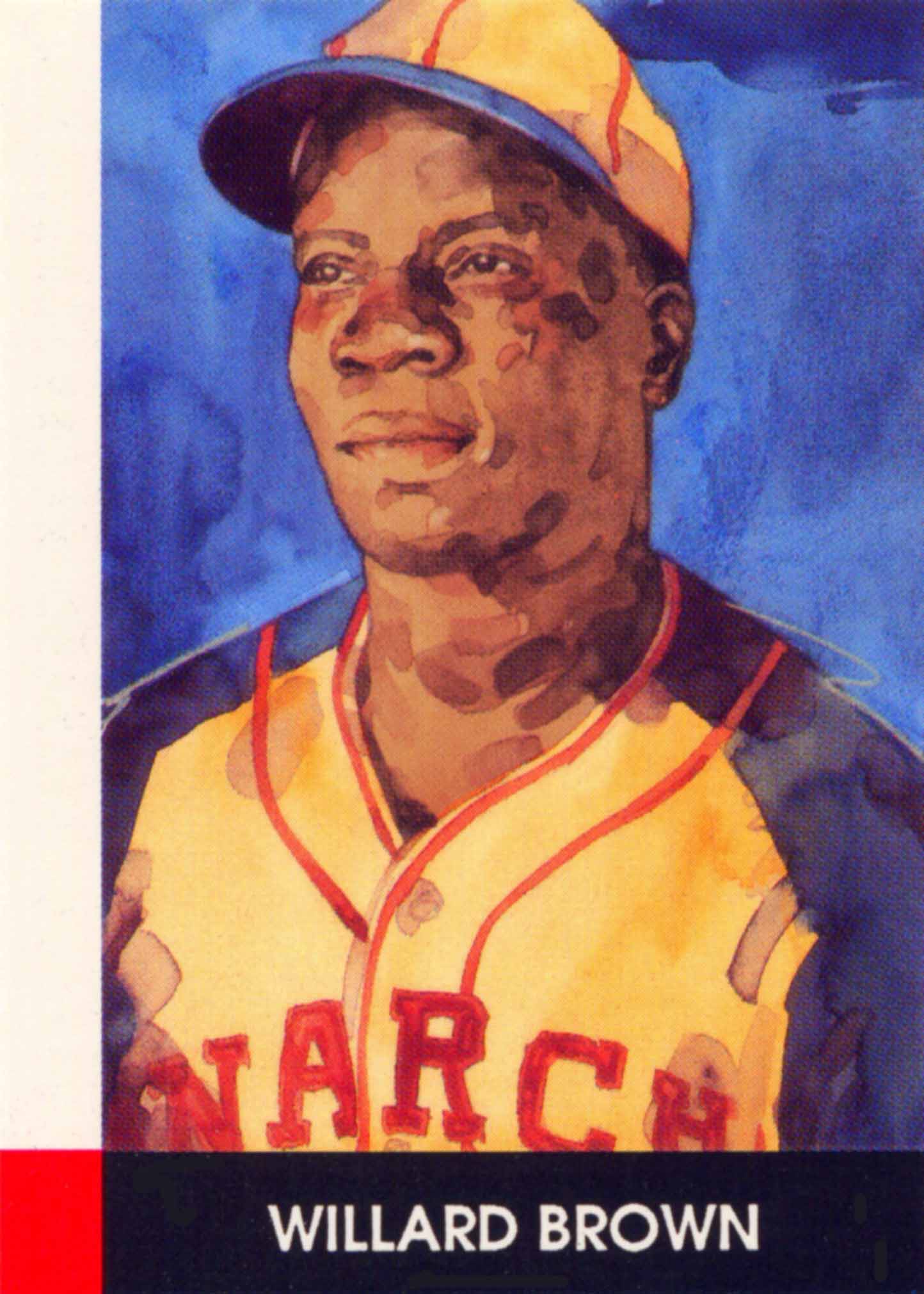
Willard Brown 03 Bob Boyd triumphantly “broke the color line” as the first black member of the Houston Buffs on May 27, 1954. Later that same year, and to much less fanfare, but to quite a bit of baseball interest, the Buffs acquired the second black player in their history. the former great slugging star of the Kansas City Monarchs and future member of the Baseball Hall of Fame, the great Willard Brown. They got him in a deal with Dallas, where he had been playing out the dregs of his baseball career as a steady .300 hitting outfielder on his way to 30 plus home runs for the season.

By the time he joined the Buffs, the 39-year old Brown was no longer the svelte-bodied and speedy base runner of his youthful Negro League days, but he still held the edge of being one of the best batting eyes and power-pounding hitters in the higher class minors in 1954. In 108 game for Dallas and 36 for Houston, Willard Brown batted .314 with 36 HR and 120 RBI.

Not bad for an old man.Willard Brown arrived in time to make his own late season contribution the late 1954 Texas League championship of the Houston Buffs. He also returned to Houston for the entire 1955 season, batting .301 with 19 HR and 104 RBI.

After 1955, Willard Brown (BR/TR) (5’11”, 200-240 lb.) finished up his four season minor league career (1953-56) with four clubs, retiring after 1956 with a career minor league average of .309 with 95 HR and 405 RBI. His earlier prime years played out as an incredible H hitter and high average batter and base running fool for the Kansas City Monarchs and several clubs in the Latin winter leagues. Although records for those times (1936-51) are spotty, Brown is credited by most with having hit more home runs than the great Josh Gibson. From 1937 to 1946, Brown helped lead the Monarchs to six pennants in ten seasons

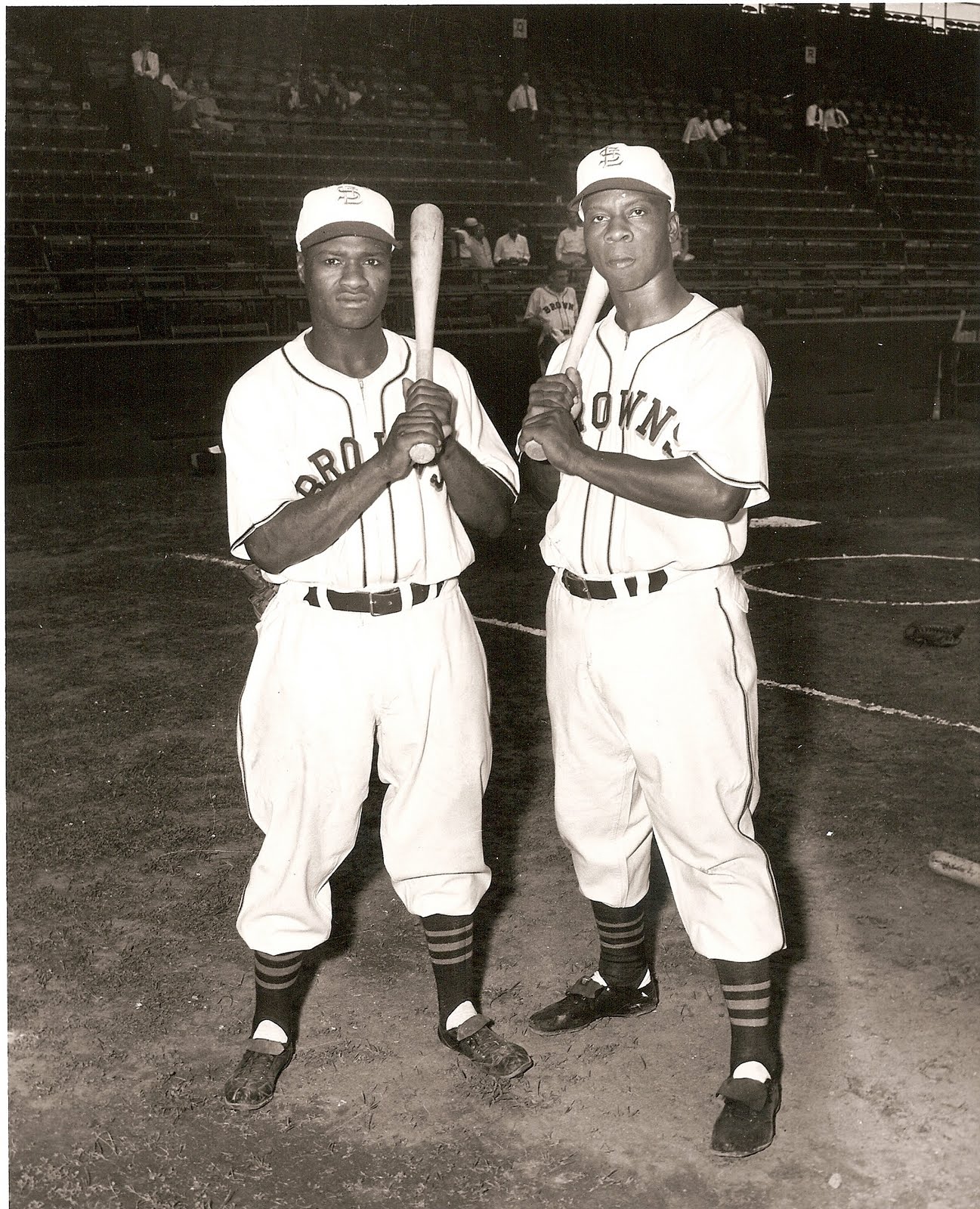
Willard Brown also got a brief stopover in the majors with the St. Louis Browns in 1947, the Year of Jackie Robinson, when he and black third baseman Hank Thompson broke into the lineup together on July 20th for a game against the Boston Red Sox. It was also the first time for two black players to appear in a major league lineup together.

Hank Thompson and Willard Brown were the fist blacks to play for the St. Louis Browns on June 20, 1947. Brown would be the first black player to hit an American League home run.

Hank Thompson and Willard Brown were the fist blacks to play for the St. Louis Browns on July 20, 1947. Brown would be the first black player to hit an American League home run.

Things didn’t go well for Brown and Thompson with St. Louis. The impression is that some of the southern white boys on the Browns team didn’t exactly welcome the two new guys with open arms. Regardless, things became a little academic when Brown hit only .179 with one HR in 21 games. Brown and Thompson both left the team before season’s end. Thompson, of course, would make a later return with the New York Giants, but it was a closing door on Willard Brown’s only shot.

Willard Brown didn’t leave the St. Louis Browns with a empty hand. His solo home run, an inside-the-park job, was the first American League home run by a black ballplayer.

How good was Willard Brown? Well, he is respected as one of the great hitters in Negro League history and, in 2006, he was deemed good enough during his prime years for induction into the National Baseball Hall of Fame,

Willard Brown acquired the Spanish nickname, Ese Hombre (“That Man”) during his playing time in the Puerto Rico Winter League. Fortunately for Houston, Ese Hombre still had some gas left in the tank during his twilight seasons with the Buffs.

Willard Brown liked Houston enough to make it his home after his playing days were done. Born in Shreveport, Louisiana on July 26, 1915, Willard Brown died in Houston at the age of 81 on August 4, 1996.


Buff Biographies: Bob Boyd

July 13, 2013

Buff Logo 4

Bob Boyd

Bob Boyd

First baseman Bob Boyd (BL/TL) (5’10”, 170 lb.) “broke the color line” for all professional, collegiate, and high school sports teams representing the City of Houston as a player for the Houston Buffs Baseball Club on May 27, 1954. For those of you who may be too young to remember, “breaking the color line” means that Bob Boyd was the first black athlete to cross that invisible line of segregation that dictated American life in the South by keeping people of the black race from participating with whites in so many areas of life well into the 1950s and 1960s.

Back then, black fans who chose to support the all-white Houston Buffs, had to sit in a segregated uncovered grandstand section located down the far right field line of Buff Stadium. Black fans also had their own segregated water fountains and restrooms. It truly was an embarrassing time for civil rights, freedom, and common decency, but it was – the way things were.

“Breaking the color line” was not always blatantly contentious. It wasn’t in Houston. Not at all. Some people don’t seem to get that fact. Often times, “breaking the color line” truly was, as it was with Bob Boyd in Houston, an act of celebration over the death of one segregation tentacle.

There was only one Jackie Robinson – and not all “color lines” by team or league were hostile propositions. The color line for all players in the Texas League, in fact, already had been broken in 1952 by pitcher Dave Hoskins of the Dallas Eagles. By the time Houston’s breaking away from this one piece of social segregation in our local baseball operation was upon us, the appearance of Bob Boyd in a Houston Buffs home uniform was pretty much greeted by most Houstonians as an inevitable development. Add to the cause for celebration the fact that the 1954 Houston club had championship potential running throughout its roster and the belief that the addition of Bob Boyd from the White Sox may have just answered our quest for that one last missing piece.

It certainly helped that Bob Boyd came though in his first game as a Buff with a triple in the second and a double in the fourth to pace Houston to a well-deserved victory over Shreveport, Bob had a steady likable personality and a baseball talent that kept on producing as he hustled his way to a .321 average with 7 homers in 94 games of  the team’s road to the Texas League pennant.

The man still had to do his baseball work in an environment that didn’t allow him to take his meals with teammates in public restaurants, stay in hotels where his co-workers stayed, drink from water fountains, use rest rooms, or attend movies in the direct company of whites.

It is a far better world today in Houston. And that is why we celebrate the coming of Bob Boyd as the man who came to town in 1954 as our guy who crossed over the old color line and buried it with both his ability as a player and also his likable dignity as a really fine and decent human being.

Bob Boyd also played for the Houston Buffs in 1955, batting .310 with 15 HR. He then moved back up to the major leagues for the completion of a 9-season (1951, 1953-54, 1956-61) career and a .293 career BA with 19 HR. Over his 10-season minor league years (1949-55, 1962-64), Bob Boyd batted .321 with 53 homers.

Bob Boyd’s best year was 1957 when he hit .318 with 4 homers in 141 games for the Baltimore Orioles. He struck out only 31 times in 552 plate appearances.

After baseball, Bob Boyd went back to his home in Wichita, Kansas and drove a municipal bus until his retirement. He died on September 7, 2004, just seventeen days shy of his 85th birthday.

Bob Boyd ~ Late in Life.

Bob Boyd
~ Late in Life.

God rest your soul, Bob Boyd. You “did us proud” down here in Houston. As one who was there to watch you break the color line as an act of celebration, I shall never forget you. You will always be honored by all who remember, know of, and understand the importance of your contribution to Houston baseball history.

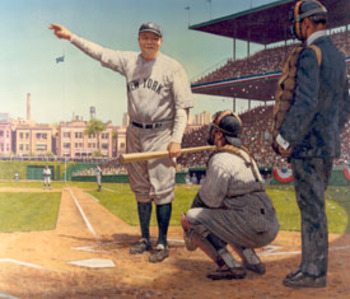
Did Ruth Call His Shot in Chicago?

July 12, 2013
Wrigley Field, Chicago Game 3, World Series 5th Inning October 1, 1932

Wrigley Field, Chicago
Game 3, World Series
5th Inning
October 1, 1932

I’m sorry, but I choose to ask it one more time, one of the most over-asked and over-worked questions in baseball history: Did Babe Ruth really call his shot in the 5th inning of Game Three in the 1932 World Series at Wrigley Field in Chicago? The answer is about as rhetorical as the query  that is so flippantly applied these days to all things obvious, “Is the Pope Catholic?”

Did Ruth really predict his 440 foot home rune to deep center field that day off Cubs pitcher Charlie Root? The answer is plain by now, or should be: ~ No! Not only “No!”, but “Hell, no!”

After more than eighty years of selective media myth-building, rational evidence-building to the contrary, and plenty of off-the-cuff denigrating comment by players who were there that October 1, 1932 afternoon in Chicago, the person who still thinks Ruth called his shot is right in there with the Mills Commission and its selection of Abner Doubleday and Cooperstown as the proven inventor and definitive home of baseball’s first game.

The whole “called shot” thing was set in motion by writer Joe Williams of the New York World-Telegram, who wrote the following headline for his same day story of Game Three: “RUTH CALLS SHOT AS HE PUTS HOME RUN NO. 2 IN SIDE POCKET.” In his article, Williams described events this way: “In the fifth, with the Cubs riding him unmercifully from the bench, Ruth pointed to center and punched a screaming liner to a spot where no ball had been hit before.” The words of the lone cherished writer who took that angle were like flint upon flint in a small pocket of sawdust-textured myth. The thing just grew into baseball’s version of the 2nd Great Chicago Fire.

For me, the greatest confirming evidence to the ruse would have been to have had one hundred ear witnesses to the following exchange between Babe Ruth and pitcher Charlie Root in 1942:

In 1942, during the making of The Pride of the YankeesBabe Herman (who was at that time a teammate of Root with the minor league Hollywood Stars) was on the movie set as a double for both Ruth (who played himself in most scenes) and Gary Cooper (who played Lou Gehrig). Herman re-introduced Root and Ruth on set and the following exchange (later recounted by Herman to baseball historian Donald Honig), took place:

  • Root: “You never pointed out to center field before you hit that ball off me, did you?”
  • Ruth: “I know I didn’t, but it made a hell of a story, didn’t it?”

Root went to his grave vehemently denying that Ruth ever pointed to center field. 

– Wikipedia …  http://en.wikipedia.org/wiki/Babe_Ruth’s_called_shot


The Most Famous Unassisted Triple Play in History

July 11, 2013
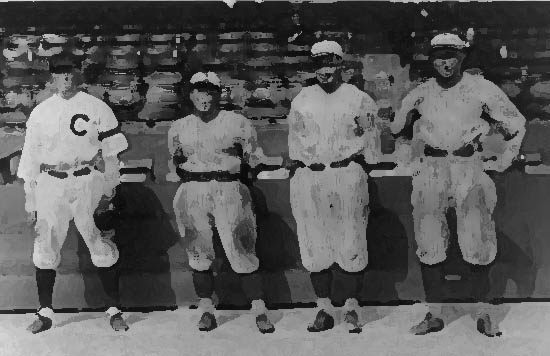
An Impressionist View of Bill Wambsgans and the three men he retired on one immortalizing World Series play.

An Impressionist View of Bill Wambsganss and the three men he retired on one immortalizing World Series play.

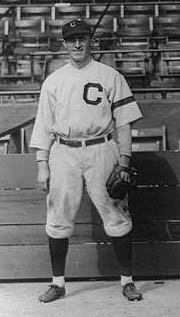
Bill Wambsgans: The Synonym for Unassisted Triple Play.

Bill Wambsganss: The Synonym for Unassisted Triple Play.

Any name beyond 1920 Cleveland Indians 2nd baseman Bill Wambsganss doesn’t count here. From the moment we first read of him in the baseball books that circulated for kids in the days beyond World War II, the name Bill Wambsganss rose to the level of deep respect in our nation of sandlot baseballists. My first impression was drawn to the fact that his name so fit the deed. A guy who is capable of pulling off one of baseball’s most unusual plays, and in a World Series, no less, ought to have an equally rare name.

What is a “Wambsganss”? He’s a fellow who makes unassisted triple plays – in the World Series, for Chris sakes!

Nobody had done it in the World Series until Bill did it 1920 – and no other player has done it since then on baseball’s biggest stage. Like Don Larsen’s 1956 perfect game for the New York Yankees in the last World Series played against the Brooklyn version of the Dodgers, Bill Wambsganss pulled off the only unassisted triple play in World Series history as a 2nd baseman for the Cleveland Indians in 1920 against the Brooklyn Robins.

Let’s recount how it happened:

“In game five of the 1920 World Series played at League Park, Wambsganss caught a fifth-inning line drive batted by Clarence Mitchell, stepped on second base to retire Pete Kilduff, and tagged Otto Miller coming from first base, to complete the first, and to date, only unassisted triple play in World Series history.” – Wikipedia.

Re-Cap (L>R) Pete Kilduff was Out #2 on a tag of the bad at 2nd;; Clarence Mitchell was Out #1 on a line drive; and Otto Miller was Out #3 on a body tag as he attempted to get back to 1st.

Re-Cap (L>R) Pete Kilduff was Out #2 on a tag of the bag at 2nd;; Clarence Mitchell was Out #1 on a line drive up the middle; and Otto Miller was Out #3 on a body tag as he attempted to get back to 1st.

The Cleveland Indians won the best five games of nine 1920 World Series, 5 games to 2, over the Brooklyn Robins. Games Five’s famous Wambsganss play also included the first Grand Slam HR when Elmer Smith hit one off Burleigh Grimes of Brooklyn in the 1st inning.

After the season, Cleveland fans presented Bill Wambsganss with a special medal for his unusual triple play on the field. Sadly, he lost the medal on a train ride in spring training the following year, fostering the imaginations of some that it’s probably in an old Mason Jar on a shelf in some ancient flea market in Georgia by now.

Bill Wambsganss retired after the 1926 season from a 13-season career that saw him bat .259 as a major leaguer, but, because of one play in the World Series, he will never be forgotten.


My Baseball Movie Fiction All Stars

July 10, 2013
The Hollywood Fictions: I picked this 22-man roster of fictional All Star baseball movie players for the first time this morning. If some o the more elite magical stars could perform in reality as they have on the screen, we wouldn't need all 22 to defeat either of the two big league 2013  All Star teams, with or without the DH rule in place. My weakest spot is 2nd base, whee I placed Richard Pryor after I could not come up with a better fictional 2nd base candidate than relocated outfielder


The Hollywood Fictions: I picked this 22-man roster of fictional All Star baseball movie players for the first time this morning. If some of the more elite magical stars could perform in reality as they have on the screen, we wouldn’t need all 22 to defeat either of the two big league 2013 All Star teams, with or without the DH rule in place. My weakest spot is 2nd base, where I placed Richard Pryor after I could not come up with a better fictional 2nd base candidate than  the relocated outfielder Charlie Snow that Richard Pryor played in Bingo Long.
Additions and changes are most welcome here. So let me hear from you. All I know is that this club’s lineup has one of the strongest power one-thirds in the 3-4-5 holes that the game has ever seen. It also helps to have a pitching ace that uses a chemical fluid that makes the ball wood-repellent. 🙂
 Pitchers ~

1) Mike “King” Kelly (Ray Milland) ~ It Happens Every Spring (1949)

2) Elmer Kane (Joe E. Brown) ~ Elmer the Great (1933)

3) Henry Rowengartner (Thomas Ian Nicholas) ~ Rookie of the Year (1993)

4) Bingo Long (Billy Dee Williams) ~ Bingo Long Traveling All Stars and Motor Kings (1976)

5) Ebby Calvin “Nuke” LaLoosh (Tim Robbins) ~ Bull Durham (1988)

6) Henry “Author” Wiggen (Michael Moriarity) ~ Bang The Drum Slowly (1973)

7) Saul Hellman (Bruce Bennett) ~ Angels in the Outfield (1951)

8) Ricky “Wild Thing” Vaughn (Charlie Sheen) ~ Major League (1989)

Catchers ~

9) Crash Davis (Kevin Costner) ~ Bull Durham (1988)

10) Leon Carter (James Earl Jones) ~ Bingo Long Traveling All Stars and Motor Kings (1976)

11) Bruce Pearson (Robert De Niro) ~ Bang The Drum Slowly (1973)

1st Base ~

12) Fat Sam Popper (Leon Wagner) ~ Bingo Long Traveling All Stars and Motor Kings (1976)

2nd Base ~

13) Charlie Snow (Richard Pryor) ~ Bingo Long Traveling All Stars and Motor Kings (1976)

3rd Base ~

14) Roger Dorn (Corbin Bernsen) ~ Major League (1989)

Shortstop ~

15) Louis Keystone (Sam Brison) ~ Bingo Long Traveling All Stars and Motor Kings (1976)

Left Field ~

16) Joe Hardy (Tab Hunter) ~ Damn Yankees (1955)

Center Field ~

17) Willie Mays Hayes (Wesley Snipes) ~ Major League (1989)

Right Field ~

18) Roy Hobbs (Robert Redford) ~ The Natural (1984)

Infielders ~

19) Emory Chambers, 3B/2B/SS (Jophery C. Brown) ~ Bingo Long Traveling All Stars and Motor Kings (1976)

20) Monk Lanigan, C, 1B, DH

Outfielders ~

21) Charlie Snow (Richard Pryor) ~ Bingo Long Traveling All Stars and Motor Kings (1976)

22) “Esquire” Joe Callaway (Stan Shaw) ~ Bingo Long Traveling All Stars and Motor Kings (1976)
Starting Line Up for the Hollywood Fictions:
1) Willie Mays Hayes, CF
2) Louis Keystone, SS
3) Joe Hardy, LF
4) Roy Hobbs, RF
5) Leon Carter, C
6) Fat Sam Popper, 1B
7) Monk Lonigan, DH
8) Roger Dorn 3B
9) Charlie Snow, 2B
Mike “King” Kelly, P