
(1) Play the game barefoot. Take off your shoes after the last day of school going into summer and leave them off, except for those times that you go to church. You will play the game shoeless as a guy named Joe once did and you will develop callouses that are as tough as buffalo hooves by summer’s end. You may get a few broken glass gashes and tin can cuts along the way, but you will be OK.
(2) Protect yourself from mosquitoes. When the mosquito spray truck comes by your field some evenings, rip off your shirt, if you are even wearing one, and run behind it in the chemical fog. Rub that DDT into your chest for even greater protection from the pesky flying skeeters.
(3) Go shirtless in the summer sun. If you’re a girl, just take off as much as you can. The sun’s rays may burn off a few flaky layers of skin, at first, but they will then tan you to some deeper skin tone than you naturally were. The deep tan will fill you with vitamins and protect you from getting sick like those people who avoid our great star’s healing light.
(4) Use your DH to step off the base path distances scientifically. Find someone who clears exactly two feet with each step he takes. Make him serve as your DH. (DH stands for “Designated Hiker”. At game time, go to the area of your sandlot that usually serves as home plate and place a stick in the ground where you think home plate ought to be. (Let’s say it’s usually found near the SE corner of your sandlot.) Then have your DH stand at the stick with a compass and walk 45 steps north and then put another stick at that point as 1st base. Then have the DH turn due west and mark off 2nd base in the same way before heading due south to do 3rd base. Then its walking due east for 45 steps. If the DH has done it right, he should be exactly at the home plate stick at the end of his fourth straight-line walk.
(5) Map out the pitching rubber distance from home plate. Now ask the DH to face due NW from the home plate stick and walk 30 steps in that direction before stopping to add the length of a six-inch pencil or cigar to the NW distance and putting another stick there for the pitching rubber location.
(6) Install the bases and pitching rubber. Find 5 big rocks or 5 tee shirts and replace the sticks in the ground with these objects as home plate, the three bases, and pitching rubber.
(7) Line out fair territory. As kids, you must only expect this step to work once and very temporarily. Run out strings from home plate to the end of the lot down both the 1st and 3rd base lines. Then carefully sprinkle flour you’ve borrowed from several mothers’ kitchens down both lines of string, all the way to where the street or sidewalk resumes on either side. Only take this step if you are willing to accept from the start that there will be repercussions that could result in the suspension of everyday play.
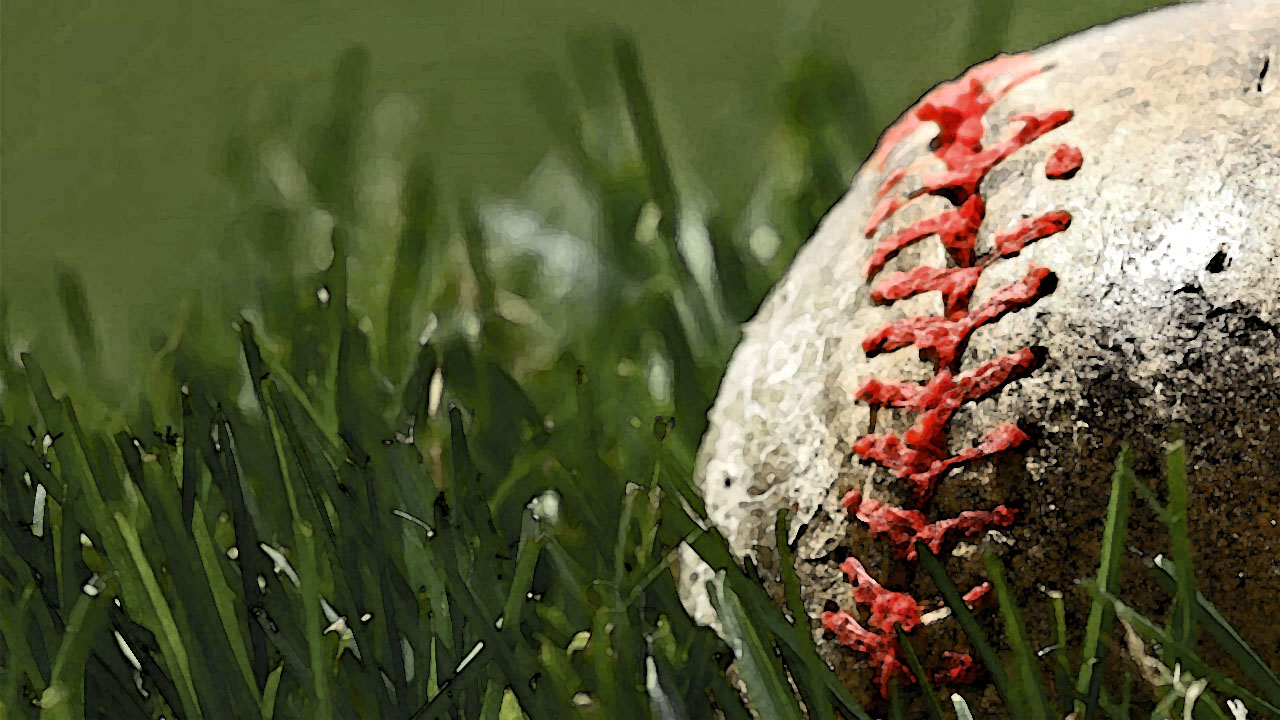
(8) Electric tape made the sandlot possible. The balls and players of sandlot baseball went on forever. Without adults in our way, we played for as long as daylight and moms allowed. We (and the scuffing concrete streets) literally knocked the cover off the ball, but that was OK. If a ball lost its skin, we just wrapped it in electric tape and the game played on until the day’s last light for continuation tomorrow – on its trek to forever.
(9) Never throw away a cracked bat. We didn’t. We couldn’t afford to throw them away, but it wasn’t necessary either. We just nailed them together and wrapped the fix-point with electric tape too.
(10) The science of the sandlot boiled down to a simple reality. Good things you love never have to end when you never give up on them. And our earlier Post World War II generation never gave up on sandlot baseball. We just grew up in a world that eventually stole away our sandlot time until some of us got old enough to fight our way back into that frame of mind.
 The Pecan Park Eagle
June 29, 2013 at 3:02 pm |
Bill,
A great reminder of long lost days. I don’t know where we got electrical tape (probably from dads tool box) but it was invaluable. Nailing and taping broken bats would mean nothing to today’s youth but it sure kept the game going. As Bob Hope would say, thanks for the memories.
June 29, 2013 at 4:57 pm |
In the olden days in the Piney Woods we specialized in developing our own baseball … we called it a rag ball and it generally was more suitable to playing around the barnyards because it was washable … designing, developing, and producing a quality rag ball became an art and a science …
June 29, 2013 at 5:16 pm |
Greatest “find” we had was some discarded lime at a neighborhood place called “Hollow Hill”–pretty good name for a hole in the ground. It was only a few houses down from where current 60 Minutes reporter/anchor Steve Kroft lived. We scooped out that lime (and crushed sinks and toilets) and used it for the base lines. That helped us keep from raiding mom’s flour! The famed “Hollow Hill” was really an unofficial landfill that has been filled for years and has houses on it now.
June 30, 2013 at 8:08 am |
Greg –
We tried lime once. It doesn’t feel too good if you rub it on your skin or get it in your eyes. That figures. Look at its intended use in the outhouse days.
– Bill