Archive for 2012

Abraham Pugg, Vampire Hunter

June 15, 2012

Abraham Pugg, Vampire Hunter

There is a new movie opening soon called Abraham Lincoln, Vampire Hunter. Apparently Lincoln had a fairly unknown underlife as a vampire hunter while he was also championing the Union through it’s most difficult crisis in history.

Abraham Pugg, Vampire Hunter is my suggestion for the initial sequel in this new franchise film trunk, assuming that people buy into the original premise that John Wilkes Booth was nothing more than a hit man for the International Brotherhood of Bloodsucking Children of the Night.

In this sequel, Lincoln’s part alien Pug, Toby “Abraham” Pugg, picks up the challenge of carrying on the fight after his master falls to the hired assassin’s bullet on April 14, 1865.

When Abraham Pugg (Toby Pugg) gets wind of his master’s/best friend’s violent mortal wounding at Ford’s Theatre, he immediately dives through an open window at the White House for the long run over to Ford’s and the recovery house across the street where Abraham Lincoln lays dying. Unfortunately, Pugg is on the second floor when he makes the jump and is knocked unconscious for about ten minutes on the east lawn.

Revived by President Lincoln’s secretary, John Hay (Shia LaBeouf), Pugg scampers past every tree on the way as he scurries to Ford’s. After a quick trip through all the legs across the street to listen to the voices of hopeless desperation about his master’s impending demise, Pugg ambles back to Ford’s Theatre. At Ford’s, Pugg picks up what he can about the man identified  as Lincoln’s assailant, actor John Wilkes Booth (Johnny Depp).

Back on the street, Pugg sniffs the spring night Washington air as his ears also perk to hear the rumble of horses moving quickly toward the bridge that leads to Maryland. Pugg quickly deduces that it is the movement of troops in hot pursuit of the scoundrel Booth and he immediately heads that way too.

Once the trail leads to a farmhouse deep in Maryland, it is Pugg who sniffs out Booth and his traveling co-conspirator, the dim-witted David Herold (Sean Penn) hiding in the barn.

Herold surrenders, but Booth holds out to make his last stand. The siege is shortened when Pugg’s barking lures Booth into an abortive attempt at strangulation of the super canine, only to lean his body into firing range of a soldier named Boston Corbett (Matt Damon). Corbett gets off a shot to the neck that mortally wounds Booth. Like Lincoln before him, Booth experiences a lingering death that only completes itself with the dawning of a new day,

For his role in bringing Booth to anger’s quick justice, Abraham Pugg is taken back to Washington by the army and hailed as a national hero. No one in Washington ever learns that Pugg also speaks, writes, and understands every language in human history – nor do they learn that he also is the only son of Archimedes Pugg, who taught math to the Incas.

In a long and winding road from the Booth death moment, Pugg is cared for by a Washington conservancy from April 1865 forward, where he secretly carries out his will to continue the initial work of Abraham Lincoln, Vampire Hunter. By the power of his magnetic intergalactic will, Pugg is able to get all kinds of help from Washington politicos. Only his personal manservant Albert (Arnold Schwarzenegger) knows of his true identity and powers – and the two often converse in the words that fit into Albert’s limited capacity for dialog. (When Arnold says, “I’ll be back!” in this movie, it’s usually because he has excused himself in mid-conversation with Pugg for the sake of consulting a dictionary.)

One day, a Hungarian actor named Bela Lugosi (Adrien Brody) drops in on Pugg to discuss the death of Booth. What happens from there is incredible, but, if you want to know more, you will have to wait and go see the movie. In the meanwhile, don’t discount the possibility that this film may likely morph into the first really great monster rock show since the iconic Rocky Horror.
Print News Remain as Our Main Voice of History

June 13, 2012

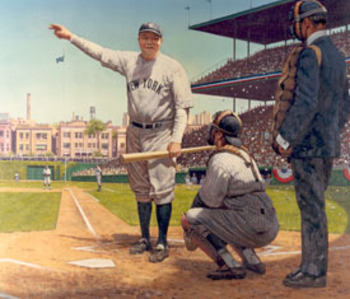
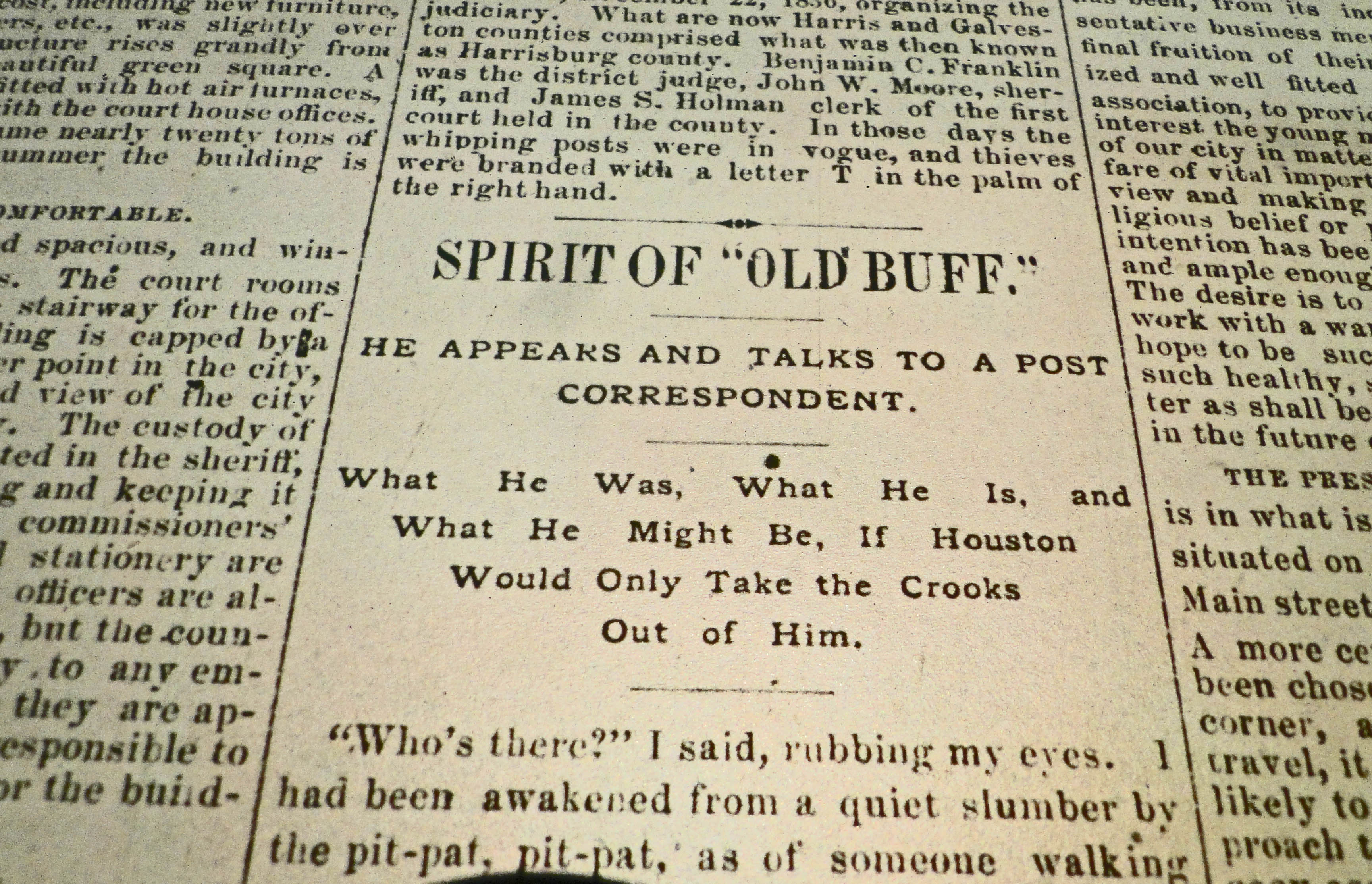
See the last paragraph of this article for an explanation of this item’s inclusion as our story’s visual of the day.

Newspaper reporters don’t write for history, they write to sell newspapers, but they still often leave us over time with the only surviving active voice on history we are likely to find, unless someone from the same period has written a personal letter or observation that pertains to our subject and we are lucky enough to find it. The precious quality of old news stories only increases as we go back in time to the turn of the late 19th century when there were no radio, television, or recordings of public comment.

Our relentless SABR research team drilling into the news files on the early history of baseball in Houston from 1861 to 1961 has been a ride to both teach and remember both the value and pitfall effect of old newspaper stories. I will not steal the thunder of our major previously unknown findings on early Houston baseball here, but I do want to talk briefly about the major methodological problem that anyone doing this kind of research needs to keep in mind:

News writers, especially those from the 19th century, often assume that readers know the full names of people and places, and also the names and locations of certain sites, so they simply write their stories on top of these assumptions. (Fictional Example: “Mayor Bob spent the afternoon watching the game at the ball park.”)

Problems for Research: What was Mayor Bob’s last name? Was Mayor Bob really an elected official – or was that simply a nickname that had been placed upon some local character who behaved as though he had more personal authority than he actually possessed? What was the name of the ball park? Or did it even have a formal name? And where was this field of play located?

This is where the research fun begins. You would check the list of Houston mayors to see if the city ever had a leader whose first name was Bob or, more likely, Robert. If you found nothing there, you might check the names of mayors for Galveston or other local communities. Or, if you were not concerned that the identity of a game patron dubbed as “Mayor Bob” was not that important to the history of baseball, you could simply put it aside and press forward in the search for more direct information about the actual games and their social and administrative developments, still noting yourself to watch for the name coming up again in the volume of stories that lay ahead of you on the reading list.

There is no one-way to resolve hard to answer questions that come up in social history research. A researcher has to be able to imagine all kinds of cross-referential avenues for finding answers that lay hidden or buried in the printed records of history. And with wonderful researchers like Mike Vance leading the way in this area, we have come up with a number of significant early findings that were previously unknown. You will have to wait until our SABR book on the early history of baseball in Houston comes out in 2014 to see what some of these discoveries have been for us. All I will say for now is that they have been considerable.

(Wink! Wink!) Some of us have talked about how wonderful it would be if we could actually travel back in time to see some of these things for ourselves – and maybe spend some time also talking with some of the anonymous writers from the Houston Daily Post of the 19th century about why they wrote what they wrote. – Our starting plan was to send a 2012 research team member by the code name “Old Buff” back to 1887 to talk with a Post writer about the coming of the new Texas League in 1888. In deference to all any of us had ever seen or read in sci-fi works, our “Old Buff” would ask the Post writer to promise he would not write about our visit from the 21st century. – We had not come to alter history. We had come only in search of the truth. (See the storyline photocopy and it’s inscription for a full understanding of this paragraph. (Wink! WInk!)


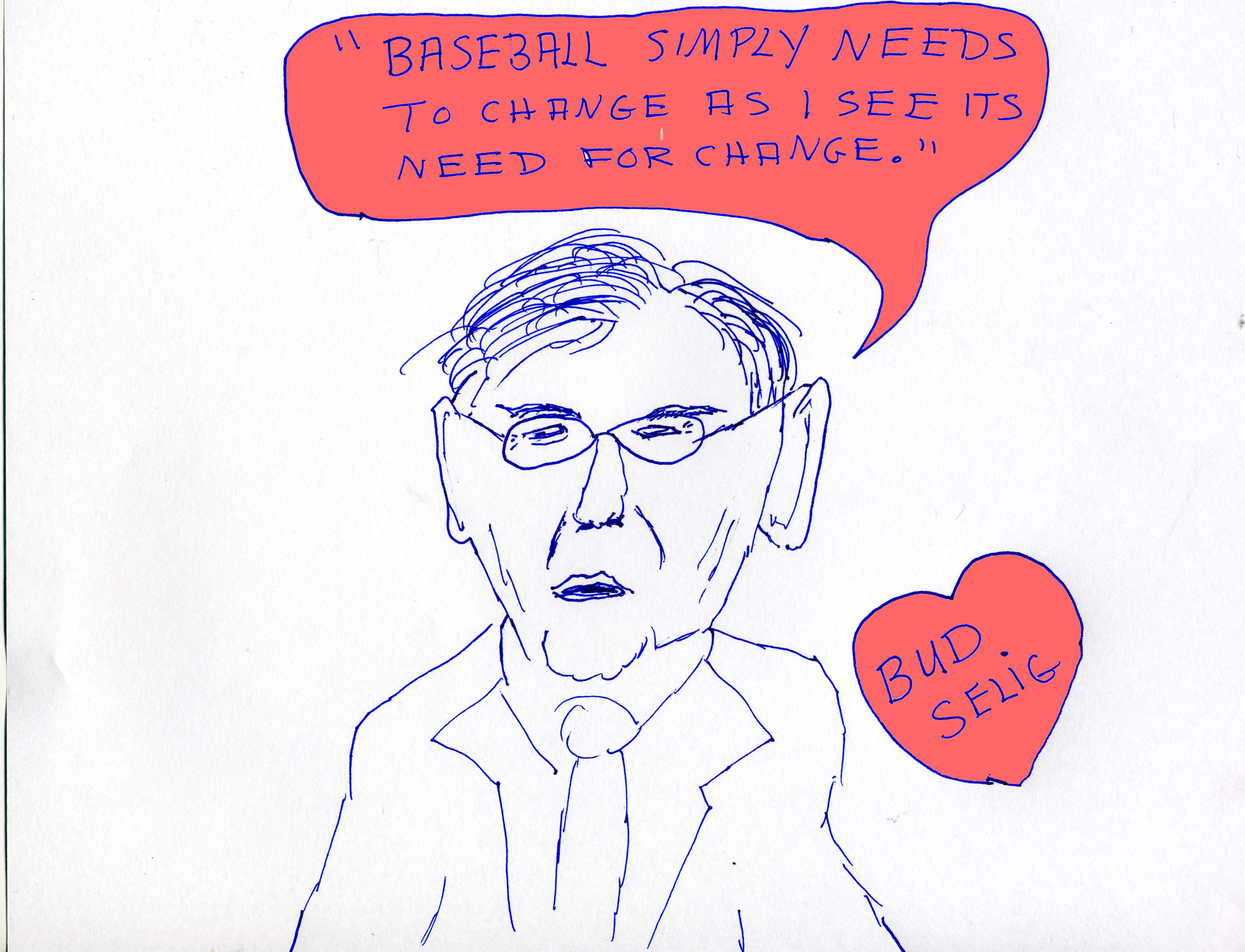
What’s Changed Over 15 Years, Mr. Selig?

June 12, 2012

Bud Selig of Milwaukee
Commissioner of Baseball

Easy for you to say, Mr. Selig.

Back in 1997, you got what you wanted as a club owner when your Milwaukee Brewers agreed to move from the American League to the National League, ostensibly to save the big leagues from being forced to rely upon inter-league play as the only practical option for season play scheduling. Then, in 2011, you again got what you wanted, this time as Commissioner of Baseball, when the Houston Astros were forced by your office to accept their relocation from the National League to the American League as a condition for getting your approval of the club’s sale to Mr. Jim Crane.

What changed, if anything, Mr. Selig, in those fourteen years? In 1997, the Milwaukee move left the American League with 14 teams and the National League with 16. The “even-numbered team memberships in each league meant that the two AL/NL groups could drop inter-league game scheduling at any point and return to traditional league only scheduling without ever leaving a club idle during each series of play. On the other hand, the odd-numbered 15-to-15 team distribution that kicks in next season means exactly the opposite. Now the two leagues will each have three 5-team divisions, but they will each have no choice but to keep inter-league play, or else, go to a “bye” schedule for one team in each league with each new regular season series.

In 1997, the addition of expansion clubs Arizona to the NL and Tampa Bay to the AL would have increased the league population in each group from 14 teams a piece to 15 teams each, making inter-league play the only option to “bye” game scheduling in each league without inter-league play. No club wanted to change leagues to keep inter-league play optional until Mr. Selig made the apparently noble gesture of offering to take his AL Brewers to the NL for the sake of restoring balance, giving the NL 16 clubs to the AL’s 14.

MLB had two 14 teams leagues at the end of 1997. The creation of the Arizona Diamondbacks for the NL and the Tampa Bay Devil Rays for the AL, starting in 1998, would have expanded MLB to two 15 team leagues by itself. The Milwaukee 1997 agreement to move to the NL in 1998 changed the balance to 16 NL clubs versus 14 AL clubs, sparing baseball from being locked into inter-league play with only the “bye” game scheduling alternative as their only option.

I’m not sure of all the politics that were going on back then, but the need for Milwaukee to move to the NL wold not have been there had MLB “simply” placed both the new franchises for 1998 in one league or the other. (I parenthesized “simply” just to note the contradiction. Baseball rarely, if ever, does anything “simply.”)

A lot has happened in the past 15-20 years to partially, or wholly, explain what’s actually changed since the 1997 Milwaukee move agreement. The two league offices and presidencies have been dissolved. The league baseballs have been eliminated in favor of one generic ball that is now made for use by all MLB teams. And the separate league umpiring groups have been consolidated into one group with standard approach to training, dress, and the use of protective gear. The absence of “designated hitter (DH)” formula in the NL is really about the only difference that still exists between the two leagues – and between the NL and all the rest of professional baseball. It’s a very basic difference on a very important point of view about how the game should be played.

Saturday at Sugar Land, I asked Tal Smith what he thought of the question I’m raising here. – What has changed, if anything, Almost fifteen years ago, Milwaukee owner Bud Selig humbly stepped forward and offered up his Brewers for the sake of preserving the power of choice with each league. – Today, Commissioner Bud Selig uses coercion to force changes (Houston to the AL by ultimatum, for example) which eat away at league differences and deliver all power to the Commissioner’s office.

Tal just smiled. “You make the point I’ve been making all along,” he added. I won’t begin to presumptuously quote Tal Smith beyond that point, but I will take responsibility for what I think, even if the AL move doesn’t seem to be as upsetting to me as others seem to think it should. I guess I’m just ready at my age to see some different teams while I have the time to see them. I’m no fan of the DH, but I will take AL baseball over none at all.

Bottom Line of the Question: Bud Selig seems to be the leader of those forces that would like to see all league differences disappear as central control builds in the Commissioner’s office. Nothing has really changed. In 1997, Selig just played the politics of “good soldier” by offering his Brewers as the sacrificial solution to keeping league options open on inter-league play. For Selig, it was really about building credit that would help him build the power he needed to reach the position he’s in today. Now he also knows he has the power to force a club to give up a half century of NL affiliation for the sake of getting a club sale approved.

You think old Bud may want to use this power again? …… You think?

And who do the Houston Astros really belong to? – Jim Crane and Company? – The people of Houston? – Astros fans everywhere? – Or do the Astros and all other clubs (except for the Yankees and Red Sox) really belong to the man who has built a considerable power base for himself, Commissioner Bud Selig?

We’ll see.

Multiple Appearances by Pitcher in Same Game

June 11, 2012

JASON LANE, BR/TL
2012: OF-LHP
SUGAR LAND SKEETERS

 Our SABR trip to Sugar Land brought us in touch with the news that former Houston Astro Jason Lane had just joined the Skeeters on Friday night, arriving in time to play left field in the earlier day first game of the Skeeters’  doubleheader. He went 1 for 3, but missed a chance in the 7th inning to drive in what would have been the game-winning run. Lane did not play in the second game, which the Skeeters also lost.

We also learned from the Skeeters folks that Jason has now gone back to his USC roots to combine left-handed pitching with his everyday role as an outfielder. The thought aroused interesting possibilities that I later discussed with Tal Smith during the game. If Jason Lane can handle both roles, I wondered, is there a possibility that the Skeeters might us use him for more than one “special lefty” appearance in the same game out of the pen. I could recall clubs in the Texas League doing that sort of thing “once upon a time,” but I wasn’t sure if the rules still allowed a man who never leaves the game to make more than one double position shift appearance as a pitcher in the same game. So, I asked Tal Smith about it.

Tal said that it was possible. As long as a player was double shifting from a field position spot to pitcher, he could do it as often as he proved to be effective and never left the game in between his separate appearances on the mound. (I later learned from someone else that a designated hitter is not permitted to double shift back and forth with a pitcher, but that the field position players could do so unlimited times and remain eligible to pitch again as long as they never left the game as active players.

Wow! The thought of possible success here is mind-boggling!

A good position player with an effective rubber pitching arm, especially if he were a lefty, as Lane is, could be a Godsend answer to that special pitcher you bring into certain situations to face one batter. As manager, you could do it as many times as it worked – as long as the player stayed in the game as a fielder in between these separate mound appearances.

As Tal Smith pointed out, there’s no current rule against the move, as he also noted that Paul Richards used to use the move back in the early 1950s. I’m not sure if Richards, or any other MLB manager ever used the same stays-in-game-elsewhere pitcher for more multiple separate appearances in the same game. At some point, such a practice would run crashing into the current rules for pitching wins, holds, and saves. A pitcher cannot get the “W” and a “Sv” in the same game, but the multiple times use of the same guy as pitcher in the same would set up the fun. – If a lefty-out-of-the-pen in the 6th just happened to be the pitcher of record when his team took the lead, and then left, but later returned in the 9th to retire the last man in a one-run lead game with the bases loaded, he would not be entitled to the normal “Sv” that usually goes with success in that moment because he was already on record as the winning pitcher.

It’s not just mind-goggling. It’s mind-numbing. You can almost hear the bricks falling off the great wall of baseball tradition.

It’s highly improbable that Jason Lane, or anyone else, is going to become this history-twisting guy, but it is intriguing to consider that the possibility is out there for someone to do it. It’s not against the current rules.

The wizened Mr. Tal Smith put the serious cap on this whole “what if” business. “If a club ever came up with a player who could succeed on a regular basis in that role,” Smith added, “you can bet that there would be a large group of teams who had no such player clamoring for a change in the rules that would make multiple pitching appearances by one player in the same game illegal.”

Today’s subject is like so many others in baseball. It simply proves, once again, that it’s not merely the probabilities of the game that fill our cups of interest. We baseball people also feed on thoughts of the possible, no matter how improbable these possibilities may be.

SABR NIGHT IN SUGAR LAND HITS SWEET SPOT

June 10, 2012

On Saturday, June 9, 2012, our Larry Dierker SABR Chapter headed for Constellation Field in SUgar Land for a meeting prior to the 7:05 PM game between the home town Skeeters and the Somerset Patriots from some town back east. About 5:00 PM, the rare threat of rain threatened to make a wash of things.

By the time the 5:30 PM started, we were all safely inside our own suite as SABR Chapter leader Bob Dorrill extended our appreciation to the Skeeters and got the meeting underway. About 34 members were in attendance. Another 16 came late, but got there in time to join us for the game.

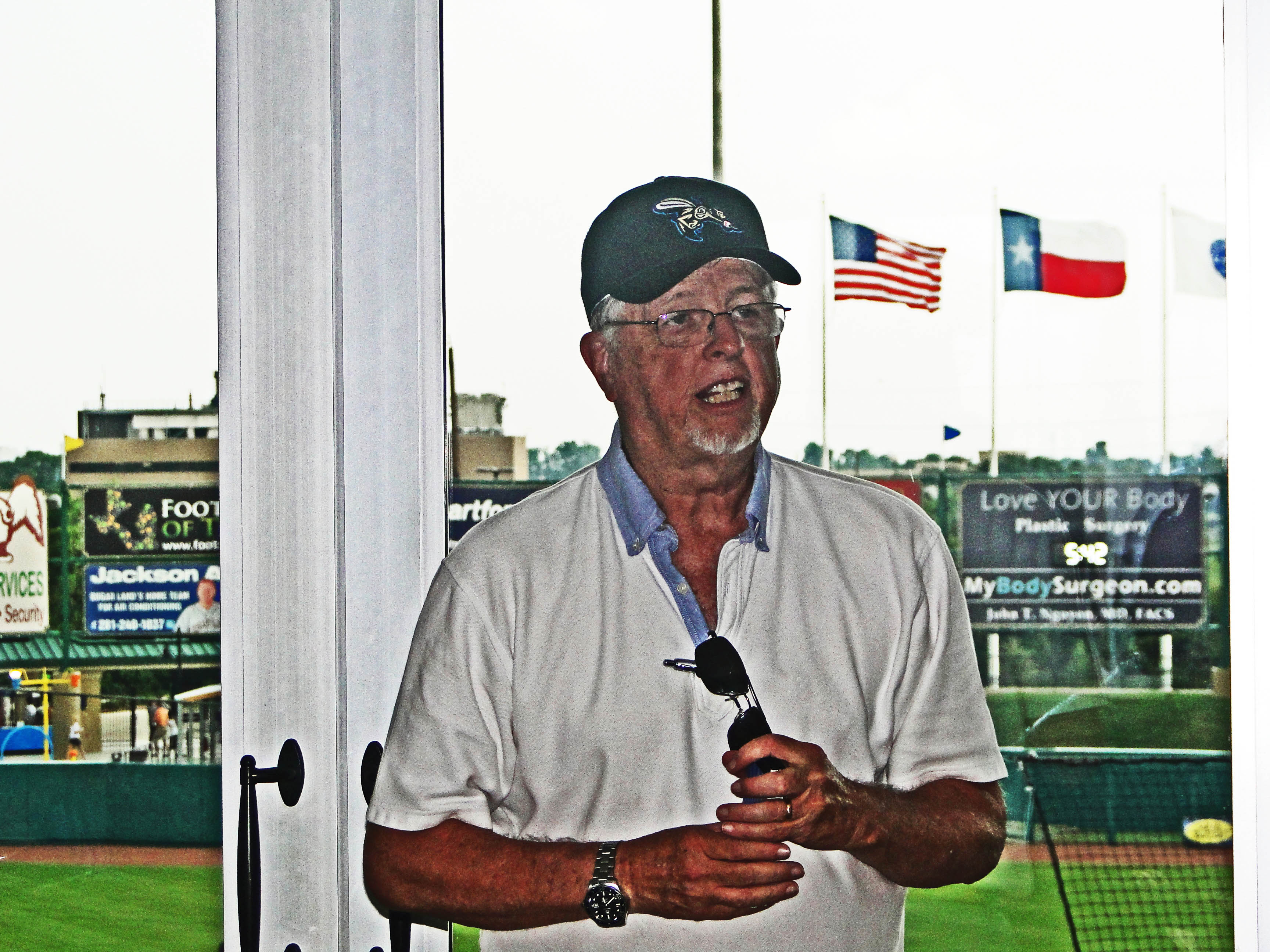
Former President of the Houston Astros and current special advisor to the Sugar Land Skeeters Tal Smith spoke first on the attractions and opportunities of baseball at the independent league baseball level and he also talked frankly of the challenges of putting together a winning team when a club’s best players can be taken by any of the major league clubs at any time. Tal also expressed his respect and appreciation for the role that SABR plays in both the analysis and historical preservation of the game.

Deacon Jones of the Skeeters also spoke of the ball club’s aims and offered his own appreciation to SABR for the help members have given him on the history of baseball in the Sugar Land area. As per usual, “The Deac” was his gracious and kind self in his praise for for the work of others. The whole truth is, nobody works harder than Deacon Jones and makes it look easier.

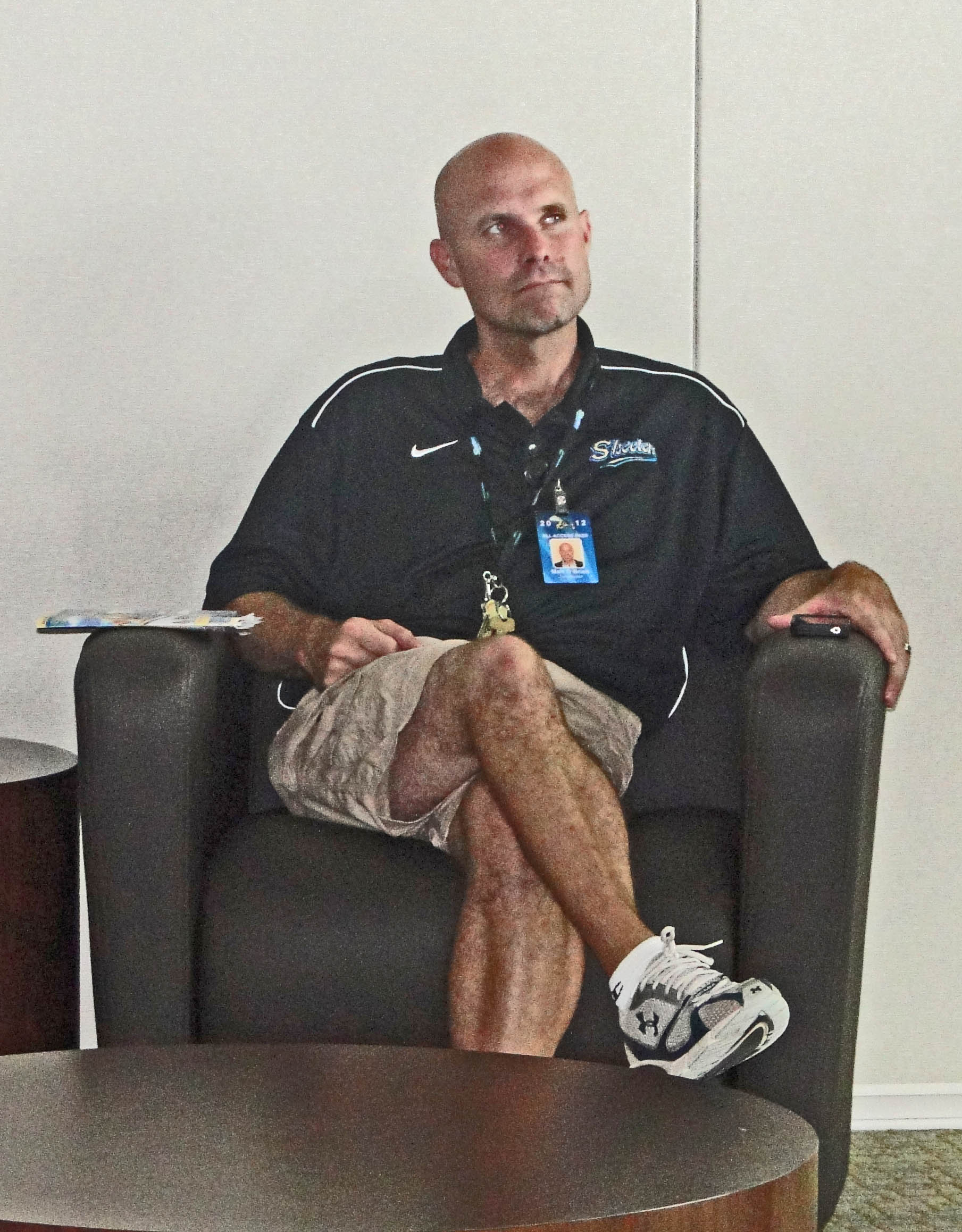
Sugar Land Skeeters President Matt O’Brien took us on an in-depth ride down the history of the Atlantic League baseball program and explained in great detail the “ins-and-outs” of matters like player acquisition and the organization’s goals as a member of the local baseball community in helping spread and cultivate a love of the game among families and young people. In so many words, O’Brien made it clear that the Skeeters were not here to compete with the Astros, but to augment interest in baseball through their own cultivation of new fans in the suburban hinterlands. “There is room for more than one full house of baseball fans in the Greater Houston Area” was his basic contention. He also expressed a willingness to work with the Astros in any way that benefitted their shared aims, but he recognizes that the Astros have to make their own decision on the desirability of that kind of collective effort.

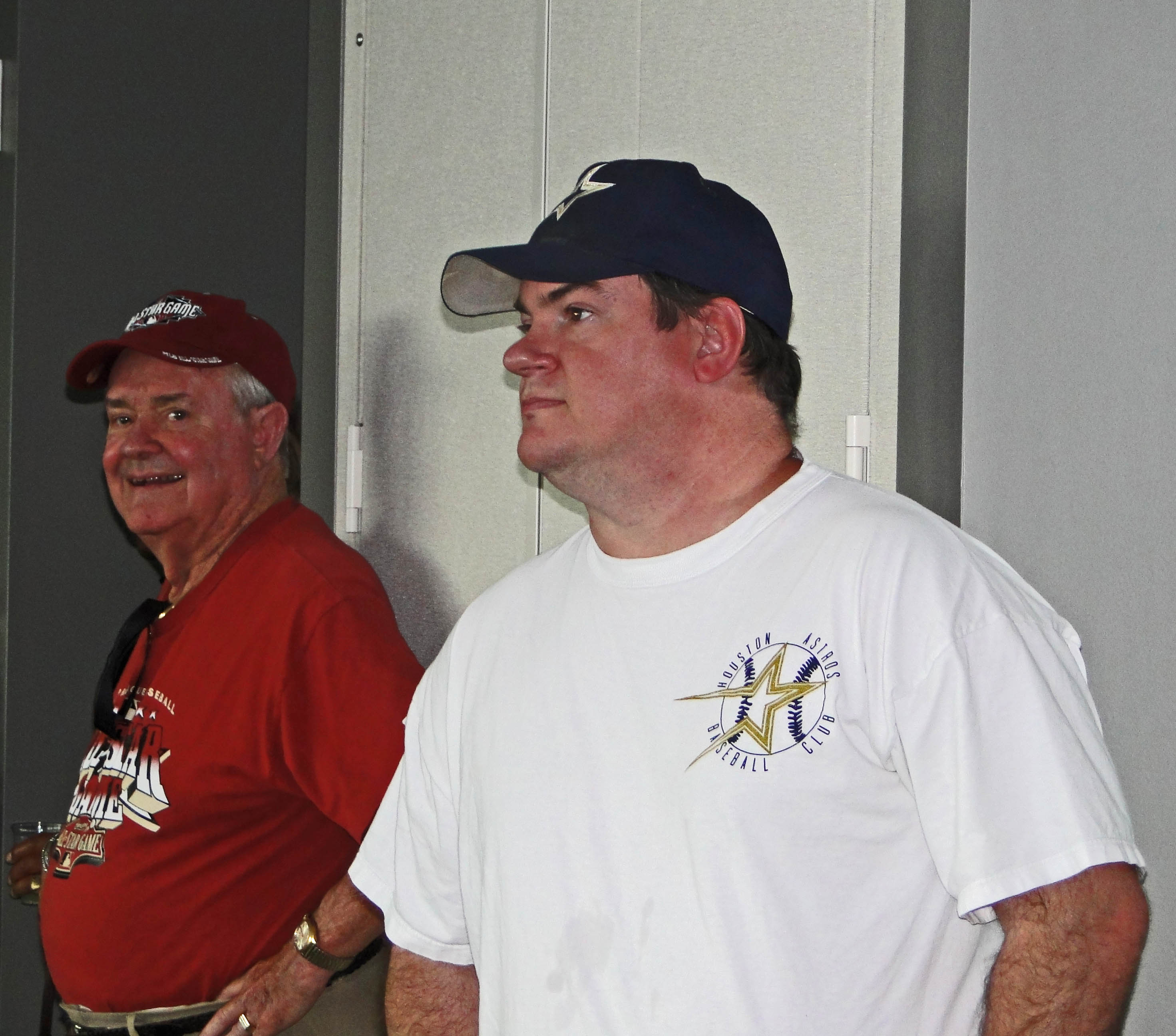
SABR members lapped up the opportunity for information and questions about baseball at the independent league level. – Who else was there? – “Round up the usual suspects.”

Mike McCroskey and Harold Jones were there. …

… and Tom Kleinworth …

… and Bob Stevens …

… and Betty Holland, Phil Holland, and Marsha Hamby ….

… and Stan “The Man Curtis and Joe “The Historian” Thompson ….

…. and Jo Russell was there in time to ask Skeeters Prexy O’Brien if his club had any interest in pursuing an exonerated Roger Clemens for a spot in the team’s starting rotation. Jo got a tempered affirmative answer that felt more like “and if Babe Ruth ever comes back from the dead, we’d love to sign him too” as it flowed  hard and clear from the longing soul of Matt O’Brien. ….

… and Bill “Your Humble Scribe/photographer” McCurdy and so many more I could not capture in digital-land today. In the end, a good time was had by all who allowed the joy of baseball to happen – and in spite of the fact that the Sugar Land Skeeters lost tonight to the Somerset Patriots by a score of 4-1.

Constellation Field, Sugar Land, Texas, June 9, 2012.

On a starry, starry night,

On a field not far away,

The Sugar Land Skeeters

Are our new Game of the Day.


Roll back the baseball clock, my friend,

To a field on Highway 6,

Joy finds the forever sweet spot,

Way out in the Sugar Land mix.

My Lucky Called Shot on Bogusevic in Chicago

June 9, 2012

Babe Ruth gave “The Called Shot” its name when he allegedly predicted his home run in the 1932 World Series against Charlie Root of the Chicago Cubs at Wrigley Field. Whether he actually did or not has long since passed from the land of conjecture and debate into the Great Hall of Cherished Baseball Myth.

Last night I got lucky. – No, not that kind of lucky. I’m 74 years old, happily married, and totally sold on the idea that nothing good really happens on the streets of Houston after nine o’clock in the evening. I’m talking about getting lucky in real-time on an actual Astros game prediction. These things happen more often than this one in my own head, but this one just happened to slip into public exposure when I expressed it to my 27-year old son Neal – right before it happened almost exactly as I said it would.

It was the top of the 9th, Houston leading 5-3, two runners on base, lefty Will Ohman of the White Sox facing lefty Brian Bogusevic of the Astros. When Ohman missed on close outside calls on his first two pitches, it just came to me. “Watch this time at bat closely, Neal,” I said. “Before it’s done, the pitcher is going to force one over the plate and Bogie is going to crush it into the right center field stands for a 3-run homer and an 8-3 Astros lead.”

Sure enough, that’s exactly what happened.

“Wow, Dad,” Neal exclaimed, “you called it. I guess watching all the baseball you’ve seen over the years has come into play again.”

“I just got lucky, son,” I answered, but it did give me pause to think. If you see the same kind of game situations over and over again, and you also develop a feel for the always rising and falling pulse of player production, as broadcasters Bill Brown or Greg Lucas do, it may leave you a little more anticipatory and less surprised when a guy like Brian Bogusevic comes along and hammers one almost exactly as you just saw it in your own mind. It happens about five times a season with me that last night’s occurrence takes place and then comes true in real time. When it does, I always see the swing and the flight of the ball in my mind before all else. Then it happens in reality.

I also have to add that sometimes I get that same strong premonition about a home run and the guy just strikes out. And that’s the part of this phenomenon that always points me back to “luck” and “wish-fulfillment” as the most logical, albeit incomplete answers as to what is going on.

All I know for sure is that it’s something more than the luck of a five-year old yelling, “Come on, batter, bit a home run,” and then it happens. And I suspect that knowledge of the game and some unconscious brain evaluation of the game situation is an important element. As in the Bogusevic instance, I think I’m much more inclined to get the “home run picture” for an Astros player when the count is 2-0 or 3-1. I don’t recall ever getting it when the count was 0-2.

The first and only other time I made a successful public call was also with Neal at the then new downtown ballpark when Jose Lima was on the mound and just been crushed for another home run.

“Watch what happens on the first pitch to the next batter,” I told Neal back in 2000. “The next batter is also going to take Lima deep too – and on the first pitch.”

And so it happened, establishing street cred for me and the 30,000 other Astros Psychics in attendance who saw the same thing coming.

Have a nice weekend, everybody. Just visualize a nice day. Then go out and have one.

The Complicated World of Free Agency

June 8, 2012

Nothing really comes free – not even in free agency baseball terms.

Time was when baseball contracts were pretty simple. During the reserve cause era, teams were free to sign any free agent they wanted at any time of the year. Once they did, even if the actual contract was the usual one-year deal, the club’s control of that player was total until they gave the nod to release said player from all future obligations. Until that happened, the player could either play baseball on the terms dictated by the club – or not play at all. In the meanwhile, the club could choose to trade, sell, or release the player and the player could then either decide to accept the decision made for him by the club. or else, retire.

If that sounds a little like slavery to you, welcome to the same choir that eventually became the Player’s Union.

Once the iniquity of the reserve clause unravelled in 1975, the Players Union and MLB came to terms on a set of rules for handling both the control needs of the clubs and the freedom needs of the players to have some say in where they choose to work. These rules for the government of free agency contracts in baseball are explained about as clearly as I’ve ever read them at Baseball.About.Com. Check out their primer page on how it all works at the following link:

http://baseball.about.com/od/majorleaguebasics/a/freeagentprimer.htm

At best, a club has about a six-year window for developing and keeping a highly rated young signee like the Number One Choice of the Astros, Carlos Correa. If Correa is as great as we Houston fans all hope he will be, the Astros will still have to come in with the most attractive long-term offer to keep him. That doesn’t mean for certain that the club will have to make him the best financial offer, but it probably will – and it most definitely will if he should shift agents to a guy like Scott Boras at some point in the “getting there” time period that stretches from here to about age 23.

If you are unfamiliar with the rules in place, you probably will find the information at this link helpful. Things start off easy to grasp. Then they get a little conditional and shifty. The thing has had way too much time for too many attorneys to get involved in the refinement of the rules.

Houston Babies Make Channel 13 Appearance

June 6, 2012

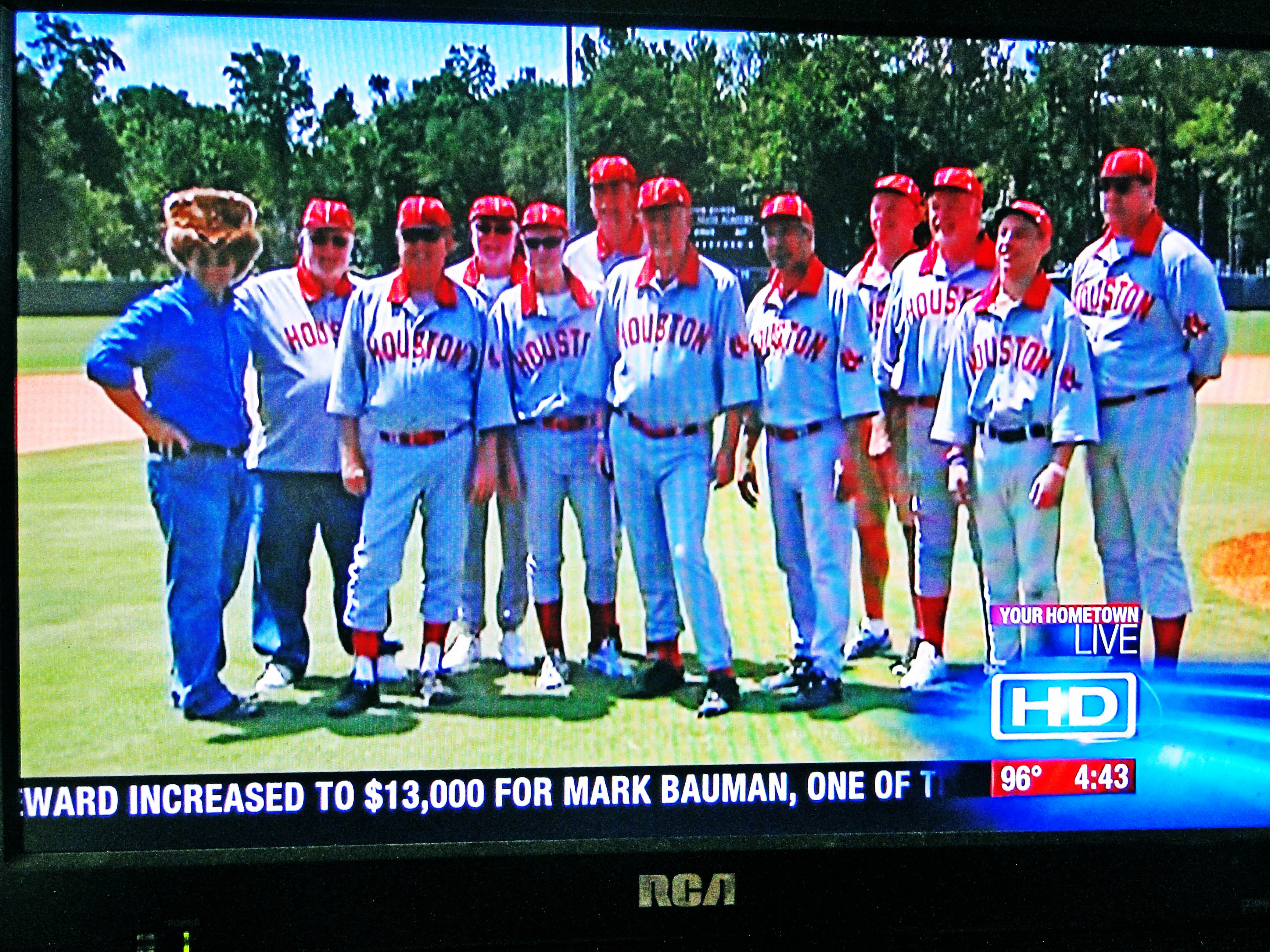
(TV Shot, Courtesy of KTRK-TV): Kevin Quinn, Ch. 13 Reporter, wearing Blind Tom hat, Bill McCurdy, Bill Hale, Bob Stevens, Robby Martin, Larry Joe (tallest head) Miggins, Manager Bob Dorrill, Robert Pena, Mark Hudec, Mike McCroskey, Zac Hajduk, & Larry Hafduk.

Those Houston Babies just keep getting famouser and famouser.

Yesterday, eleven members of the Houston Babies vintage base ball club found ways to take off from their normal jobs and duties to school, work, and retirement to assemble at the far playing field behind the Jimmy Wynn Baseball Training Center on Victory Drive in the Acres Homes area to put on a demonstration of vintage base ball and to have a nice laid back dugout interview of their various interests in the game with Channel 13 reporter Kevin Quinn.

A good time was had by all – and that end was mad much easier by the affable Kevin Quinn and his “get in there” and try the game on with the Babies from the batter’s box. Quinn took several good whacks at the ball, quickly learning the blessing/curse of the one-bounce catch for an out rule – and finding a just-as-quick lesson about what happens to runners who cannot stop at first on a dime. – “You’re out, Mr. Quinn. OK? Just as soon as you run past that bag to beat out a hit and don’t get back in time, you are going to get tagged out for not stopping on the bag, the only place a runner is safe on the base baths by the 1860 rules.”

Mike “Piano Legs” McCroskey brought his lovely and very nice just-graduated-from-high-school daughter Kate to the video practice for Channel 13, The much speedier-of-foot Ms. McCroskey had ample opportunity to serve as a courtesy runner for her father – and for reasons that should be fairly obvious from his musical instrument parts nickname.

“McCroskey really runs like he has a piano on his back,” Larry Joe “Long Ball” Miggins later offered in out dugout interview segment. “That’s OK to a point,” Miggins continued, “but every now and then, he slows down on the base paths to just play the darn thing. That’s the real killer.”

Those remarks, of course, we’re all said and received in fun – just part of the camaraderie that exists among the Babies players and their love for the vintage game and each others company. – We are all good friends on this bus. Friends of baseball. Friends in reverie for the old sandlot game we once played as kids. Friends of each other. And friends and lovers of this new old game we have discovered that is 1860 rules vintage base ball.

Here’s a link to report on the Houston Babies and Vintage Base Ball that aired on KTRK-TV, Channel 13, shortly after 4:30 PM on the afternoon of Tuesday, June 5, 2012:

http://abclocal.go.com/ktrk/story?section=news/local&id=8690217

If you think you might be interested in learning more about the Houston Babies and vintage base ball, come on out to the Fourth of July activities coming up at the George Ranch near Sugar Land. The Babies will be there, as will two or three other local area clubs that are aiming to celebrate our nation’s birthday is a way that is still the hallmark of our most American celebration with baseball, hot dogs, bands, and family fun at a country fair type atmosphere.

Thanks again, Kevin Quinn. – The Houston Babies very much appreciate all you did for us and our game yesterday.

Carlos Correa is 1st Puerto Rican to Head Draft

June 5, 2012

Carlos Correa even bears slight resemblance to Alex Rodrigues.

It’s too bad we can’t really tell the future. If we could, the Astros never would have drafted Phil Nevin over Derek Jeter back in 1992 and we might even be looking back at one of the great double play infields of all time: Jeter to Biggio to Bagwell.

That’s just not the reality that embraces us. All we can do now is hope that Mr. Jeff Luhnow, Director of the Houston Astros’ newly formed and still straddling mustang of choice, the Baseball Decision-making Science Institute, has pulled the right plug on probability and drafted a guy in Carlos Correa who will prove over time that he was not only the best pick, but also the best player available in the draft of 2012.

It’s easy to look back at any team’s previous draft record and note the great players that have been overlooked in favor of names no one recalls today. The Houston Chronicle has been doing it with the Houston Astros all week in the time leading up to yesterday’s early round choices, but that’s OK. The Nevin over Jeter pick by the Stros back in ’92 is just the most glamorized example of how wrong a team can be with their forecasting. So what? As far as I’m concerned, it’s all the more reason to support GM Luhnow’s plan to promote decision-making as a scientific process that will improve long-term results as it also improves over time as an always dynamic system for making personnel decisions.

Decison-making is a long, long trip. We are never “there yet.” We are always complexly en route, hoping to get better as we go along – and trying to learn a little something from each mistake we make that will help us the next time we reach a similar looking crossroad.

Good luck, Carlos Correa, presuming you sign with the Astros. At your current age of 17, I’ve still got some hope that our number one amateur baseball draft pick will turn out to be good enough to reach the Astros roster before I turn 80, but this much is clear, even now. You are my last hope in that regard.

Bill Gilbert: Astros Report, May 2012

June 4, 2012

Bill Gilbert, Former Leader of the Larry Dierker Chapter of SABR and now active as a member of the Rogers Hornsby SABR Chapter in Austin – and a Dedicated Astros Fan Forever.

Bill Gilbert writes some of the best pre and post season analysis material each season on the Houston Astros – and then he tops these off with an in-motion look at how the club does each month as the year plays out. To our benefit, here is Bill Gilbert’s report for May 2012. The Pecan Park Eagle is happy to share this material with all of you. – Enjoy:

Astros End May on a Low Note

By Bill Gilbert

          The only good thing I can think of about the Astros moving to the American League next year is that they won’t have to go to Coors Field every year.  The Astros started a month-ending road trip on May 23 with a record in May of 12-9 and a good chance to have their first winning month since September 2010. The starting pitchers had the lowest ERA in the league for the month and Bud Norris was a leading candidate to be pitcher of the month with a 4-0 record and a 0.37 ERA.  The road trip started out impressively with a win against Clayton Kershaw before the team lost the next two games to the Dodgers.

The problems really started when the team moved on to Denver for a 4-game series against the slumping Rockies.  The Astros had won all nine games in May when they scored at least 4 runs.  In the Colorado series, the Astros scored at least 5 runs in each game but lost all four.  The Astro pitchers were torched, especially Norris who was lit up for 7 hits and 9 runs in less than 2 innings.  The Astros record at Coors over the years is 27-50.

The Astros biggest problem is their inability to play well on the road. Their 6-19 record is the worst in the Major Leagues. At home, they were a respectable 16-10 through May.

The Astros rank near the middle of the pack in both hitting and pitching. They have scored 4.16 runs per game and allowed 4.35. The pitchers ERA at the end of May was 3.94, essentially the same as the league average of 3.89.

Individually, there were a few bright spots. Carlos Lee hit .315 for the month and Chris Johnson hit .303 with 5 home runs. Jed Lowery led the team with 6 homers in May. Jose Altuve continued hitting well with an average of .316 for the season. On the mound, Wandy Rodriguez was 2-2 with an ERA of 3.07.  Norris was 4-1 with an ERA of 3.62.  Brett Myers converted 7 of 8 save opportunities and relievers Brandon Lyon, Wesley Wright and Wilton Lopez all had ERAs under 2.00.

The top two Astro minor league clubs, Oklahoma City (AAA) and Corpus Christi (AA) were not as successful in May as they were in April posting records of 15-14 and 13-15.

The month of June is critical for the team.  If they play like they did before the Colorado trip, they should compete with the teams in the middle of the Central Division. If not, they will find themselves bottom-feeding with the Chicago Cubs.

Bill Gilbert

5/3/12