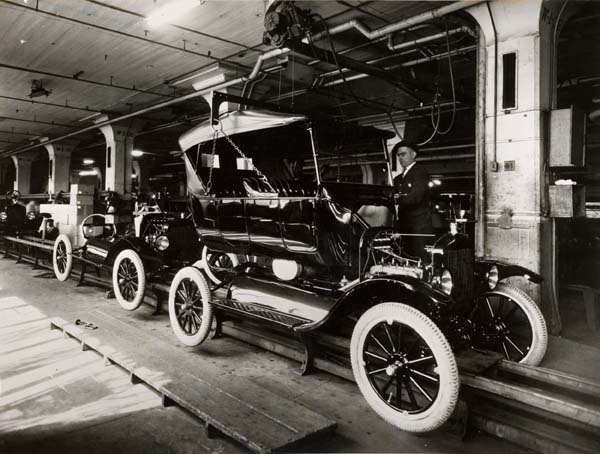
Building a World Series Champion is a little More Complex Than Building a Car.
I’ve seen Moneyball. Saw it three months ago. I’ve seen Brad Pitt as Billy Beane and Jonah Hill as the young statistical geek who effectively juices Beane into a new, more scientific way of thinking about talent assessment and the art of putting together the interchangeable parts that go into making up an affordable winning ball club. I also saw the way the movie unfairly portrayed Oakland A’s Manager Art Howe, both physically and philosophically, through the presence of acclaimed actor Phillip Seymour Hoffman.
Hoffman did a good job; he just wasn’t Art Howe. If we didn’t know any better, Moneyball The Movie asked us to believe that Art Howe is little more than a short, fat closed-minded man who dismisses any new thought in baseball that has come to light and common usage past the year 1900, the first year of the American League. The truth is that Art Howe is a tall and wiry, intelligent and baseball savvy guy who has done well in the game because of his abilities for listening and getting along with a broad range of people. Moneyball took an axe to the true character of Art Howe and, by extension to the scouting staff of the Oakland A’s that was in place when Billy Beane came on board as General Manager.
It would take a 500-page book, or probably five or six 500-page books by as many respected baseball writers to turn Moneyball completely upside down for a fairer look. I certainly don’t feel able to do that in a blog. All I wanted to do here is speak up for people like Art Howe and Tal Smith, really deep-rooted baseball people who still have much to offer. People who pass on the opportunity to learn from experts like Art Howe and Tal Smith are doomed creatures at the door of real learning. You talk to people of reputation for two reasons: (1) to learn what they’ve done that may also help you; and (2) to learn what they’ve done so that you may better avoid repeating the same errors.
Moneyball has much to offer. It simply isn’t the whole enchilada. If it were, every World Series team that gets assembled would be exactly identical to one of the iconic versions of previous winners. We’d just have to locate the right parts at an affordable point in history and plug them in. It just doesn’t work that way. Sometimes you plug-in a name like Howie Goss and the thing explodes in the light socket. Other times you plug-in a name that nobody even knew just a few years earlier back in 1998, when McGwire and Sosa were going crazy with the homers, a name like Albert Pujols, and the whole world lights up like that closing home run scene from The Natural.
We will always need the good judges of character, the people who know the culture of baseball, and the scouts like the great Red Murff, who signed Nolan Ryan. Murff didn’t sign Ryan for the Mets because of what he saw alone in this long skinny Texas kid. Murff saw the muscular physique of Ryan’s father and just knew that Nolan was only going to get better as he too grew to manhood. The day we stop listening to people like Red Murff is a bad day for baseball – but I don’t think that ever is going to happen.
Mine Moneyball for all it’s worth, but don’t throw the baby out with the bath water along the way. And while you’re working to do a smarter job, don’t forget the lady who brought you to this dance in the first place. Her name is Luck.
 The Pecan Park Eagle
January 13, 2012 at 4:19 am |
Well said!!
January 13, 2012 at 6:40 am |
I once had some stathead arrogantly tell me he could learn everything he needed to know about a player just from evaluating their statistics.
“Really?,” I said. “Statistics tell you everything you need to know about Jackie Robinson? About Jim Abbott? About Jimmy Piersall? Then you really are truly ignorant about the game of baseball.”
January 13, 2012 at 1:53 pm |
Good points, Bill, as usual.
I watched the movie on DVD just last night. The box says “based on a true story,” i.e., fictionalized. The Art Howe character is but one example.
There’s no doubt that the “new wave” of baseball statistics has changed the way teams evaluate players. But you hit the nail right on the head with this sentence: “We will always need the good judges of character, the people who know the culture of baseball, and the scouts like the great Red Murff . . . .”
January 13, 2012 at 5:38 pm |
Bill, I’m glad to know that we are not the only ones who believe the “human element” is important in baseball! Stats can play some part of baseball, but there is no way you can depend on them for the whole game, and I can’t imagine that anyone with ANY baseball knowledge would believe that you could!
It has created some interesting comments though!
January 15, 2012 at 8:10 am |
Stats can tell you about 90% of what you need to know about established players. Projecting amateurs and minor leaguers is a different story. And, I’m sorry, but this must be said – Tal Smith has all but destroyed the Astros. It’s obvious the game passed him him by decades ago.
February 8, 2012 at 5:08 pm |
Makes Sense Now…
And when I studied that article the idea finally clicked…