
George "Watty" Watkins, OF, BL/TR HT: 6'1" WT: 175 Lbs
Born in Freestone County, Texas on June 4, 1900, but mostly raised on the sandlots of Houston, George “Watty” Watkins turned out to be one of our local boys who really made good.
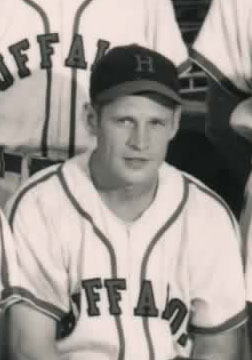
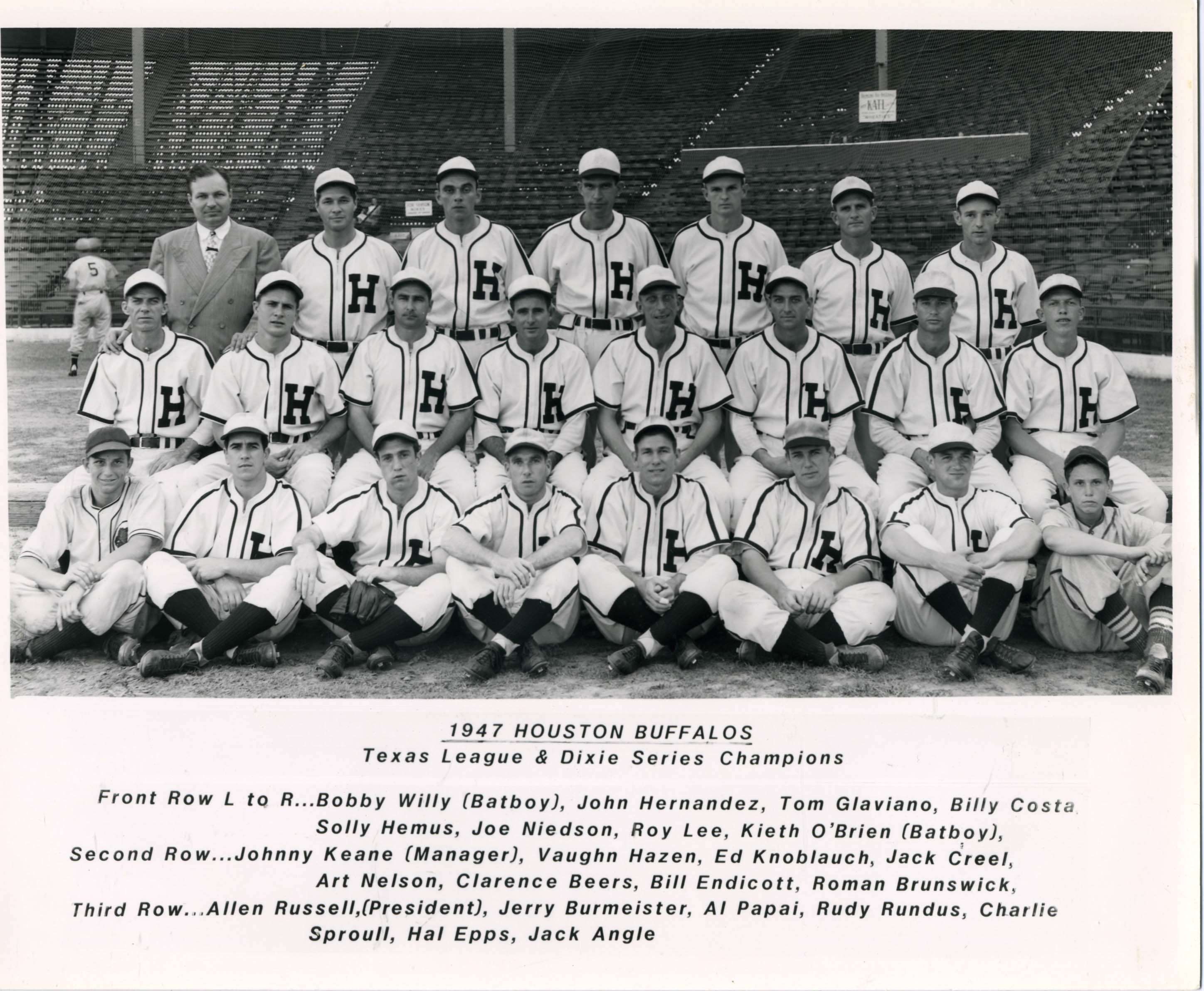
Breaking in with Marshall and Houston in 1925, Watty played for Austin, Houston, and Beaumont over the next couple of years before earning the starting job as center fielder for the 1928 Houston Buffs in that very special year. The Buffs took the Texas League pennant and Dixie Series championship in 1928 and, even more importantly, it all took place in the first season of their splendid new home in the East End – in the place we Houstonians all came to know and love as Buff Stadium.
Watkins hit .306 with 177 hits, 32 doubles, 21 triples, and 14 homers for the 1928 Buffs, as he also established himself as a killer defensive player in the large central pasture of old Buff Stadium. An even more powerful year with Rochester in 1929 (,337 BA, 20 HR) earned Watty a promotion to the 1930 parent St. Louis Cardinals.
Watkins went “lights on bright” in 1930, hitting .373 and playing a big role in the St. Louis pennant victory. The Cards went on to a 4-2 loss to the Philadelphia A’s in the 1930 World Series, but talent would rematch the clubs in the 1931 Classic. It would be the bat of Watty Watkins, including a home run, that fired a Game Seven victory for all the marbles this time. Watty Watkins was King of the World when he came home to Houston that winter.
After hitting .312 with the 1932 Cardinals, Watty dropped to .278 in 1933 and was dealt to the New York Giants prior t the 1934 season, thus, sadly missing the cardinal emergence as the Gashouse Gang.
Faltering offensive production for the Giants in 1934, the Phillies in 1935, and the Phillies-Dodgers in 1936 ended the big league career of Watty Watkins. In spite of the fact that his last four big league seasons played out like the post-midnight segment of Cinderella’s big evening, questions about Watty’s playing health over that period of time may possibly explain his sudden offensive drop off the cliff. It was an era of poor diagnostics and few good choices on medical corrections. Combine that state of medical science in what passed back then for sports medicine – and mix that again with a “shut-up-and-play” personality like George “Watty” Watkins – and we have a formula for an unexplained flat tire on the highway to baseball greatness.
 Watty wasn’t quite ready to hang ’em up after the 1936 season. He came back to play 100 games for his hometown Houston Buffs. He batted a most respectable .273, but here’s the more telling story of his lost power ability. Of his 105 Buff hits in 1937, Watkins collected only 21 double doubles and 4 triples with 0 (nada) homers. By the time I was born on December 31, 1937, Watty Watkins was about three months past the date of his last trip to the plate as a professional baseball player.
As a kid growing up in Houston, the echo of his name from the writings and words of the men who witnessed his play as fans or covered his play as reporters reached my ears long before I ever had the presence of mind to look into this background on my own.
George Watkins stayed active in the Houston baseball community until his death in Houston on June 1, 1970, just three days short of his 70th birthday. He was buried at the Broyles Chapel Cemetery in Palestine, Texas.
The rest of the story goes on from here. The other day, I received a wonderful e-mail message from a fellow named John Watkins, who introduced himself to me as the great-nephew of George “Watty” Watkins. John also sent me a scanned copy of the original program from the opening of the initial Houston Sports Museum back in the 1960s. Watkins had learned about me from one of my Pecan Park Eagle articles on the reopening of the museum at Finger’s.
I would especially like to invite John Watkins to comment further here on his great-uncle. Watty Watkins was one of the best all-time Buffs and he had one of the hottest starts in major league history. I’m sure we could all benefit from John’s family view on this great former Buff and Cardinal.




 Houston, Baseball, & Other Musings.
 The Pecan Park Eagle