Posts Tagged ‘Satchel Paige’

Satchel Paige was in his Prime by 1933

February 1, 2014
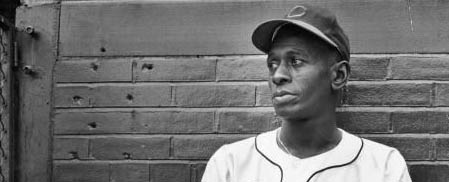
Satchel Paige was a long way from his 1933 stay in Bismarck, SD when this late 1960s Astrodome picture was taken.

Satchel Paige was a long way from his 1933 stay in Bismarck, ND when this late 1960s Astrodome picture was taken.

As best we can know, Leroy “Satchel’ Paige had just turned age 27 on July 7th of the 1933 baseball season and he was already rattling the woods of Bismarck baseball with his loss to major league baseball to the level of racism that didn’t apply to the game-builders of North Dakota. Satch wasn’t driven by ego. He was more inclined to make his geographical moves on the wayward winds that blow into the souls of all those people who always get restless over time to check out what lays ahead on the other side of the mountain or down in the next valley somewhere.

In 1933, Satchel Paige did not feel the beckoning call of greater fame and opportunity that came with that invitation to pitch for the eastern Negro League all-stars at Comiskey Park in Chicago, so he turned it down to remain in the hills of North Dakota.

What a guy! Had there not been for that racist barrier known as the color  line, Satchel Paige likely would have been a four to six-year MLB veteran by 1933, and facing off earlier that summer in the first big league all-star game as either a mound opponent or replacement for Carl Hubbell of the National League. In reality, Paige had to wait for the color line to fall before he got his first shot at the majors on June 9, 1948, two days after his 42nd birthday.

Here’s a brief capsule story on how things were going for young Satchel Paige in September 1933 from the pages of the Bismarck (ND) Tribune:

—————————————————————————————

Bismarck, North Dakota, September 9, 1933

BISMARCK BASEBALL NINE WILL END BASEBALL SEASON AT JAMESTOWN NEXT SUNDAY

SATCHEL PAIGE AND BARNEY BROWN ARE EXPECTED TO PITCH

———-

GREAT BATTLE IS FORECAST

———-

Local Colored Pitcher Turns Down Invitation to Pitch at Chicago

———-

Bismarck’s potent baseball club will end its season Sunday when it clashes with the strong Jamestown nine at the Stutsman county City.

The game is scheduled to begin at 3 o’clock according to Neil O. Churchill, manager of the Capitol City contingent.

Having turned down an invitation to pitch for the  eastern colored all-stars in a World’s Fair feature game against the western all-stars at Comiskey Park, Chicago, Satchel Paige, elongated right hander, will take the field for Bismarck.

Satchel last Sunday climaxed his home  stand here by out pitching  Willie Roster (really “Foster”), left-hander who will hurl for the western all-stars at Chicago, as well as driving in all three  runs in Bismarck’s 3-2 conquest of the Stutsman county crew in 10 innings.

Brown Probable Opponent

It is likely that Manager O.K. Butts of the Jamestown team will start Barney “Lefty” Brown, another colored southpaw star who is a great pitcher despite the fact that Bismarck drove him from the box in four innings Labor Day. Brown secured eight hits in twelve trips to the plate for an average of .666 in the three game series between Bismarck and Jamestown last weekend. ….

…. Bismarck Tribune, September 9, 1933, Page 6.

——————————————————————————————————–
Indians 4 – Browns 3 (19 innings), 7/01/1952

January 25, 2014
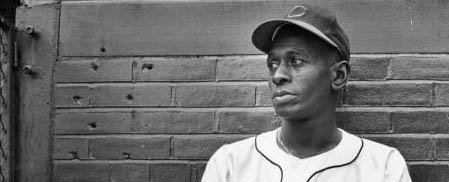
Even Satchel Paige couldn't win them all.

Even Satchel Paige couldn’t win them all.

This brief story of a game played between the home club Cleveland Indians and the St. Louis Browns on July 1, 1952 speaks volumes for how differently baseball was played from today with all the specialization and pitch count controls placed on pitchers these days as we head soon into the 2014 season. The only major similarity? The basic rules of the game were the same, except for the DH. There was no AL designated hitter back in 1951, but, as for the time of play, baseball games were even then taking a longer toll on the clock – and without much help from TV commercials. And, oh, yes, the MLB players were not all millionaires back in 1951. Most of the players worked the off-seasons they way most of us today work the whole year. It was, and is,  called “making a living.”

Sports writer John Barrington of the International News Service (INS) described the game this way in a story published on July 2, 1952:

———————————————————————————–

He Falters in 19-Inning Ball Games, Cleveland Beats Browns –

Find Satch-Mo’s Weakness

By John Barrington (INS), El Paso Herald Post, July 2, 1952, Page 28. The law of averages has been around even longer, if possible, than Satchel Paige, and not even the ancient Satch-Mo can flaunt it forever.

Satch’s trouble, it turns out, is that he weakens in 19-inning ball games.

Old Folks pitched ten innings of scoreless relief to knock off Washington in an 18-chapter marathon less than a fortnight ago. But one more inning got him last night at Cleveland. He and the St. Louis Browns lost to the Indians in the 19th 4-3.

The shame of it was that the Browns even scored a run for the super-annuated all-star in the top of the 19th, who had relieved Ned Garver in the 9th. Paige couldn’t hold the advantage. The Indians scored twice in the last half. Pinchhitter Hank Majeski singling home Al Rosen from second with the winning tally.

The four hour and forty-five minute contest tied the major league night game longevity record set last July 17 by the Chicago White Sox and Boston Red Sox. (The time of the game was later corrected to 4 hours and forty-nine minutes as a new American League night game record. See the Baseball Almanac box score for this game below that accompanies this one game presentation.)

Lou Brissie, who went the last ten innings for Cleveland after replacing Bob Feller, was credited with the win – his first of the campaign. Paige’s loss was his third against six victories.

—————————————————————————————-

Baseball Almanac Box Scores:

Cleveland Indians 4 – St. Louis Browns 3.

Game played on Tuesday, July 1, 1952 at Cleveland Stadium
St. Louis Browns ab   r   h rbi
Young 2b 6 1 2 0
Rivera cf 8 0 2 1
Kryhoski 1b 6 1 1 1
Nieman rf 7 0 1 0
Courtney c 8 0 1 0
Delsing lf 8 0 2 1
Michaels 3b 8 0 0 0
DeMaestri ss 2 0 1 0
  Zarilla ph 1 0 0 0
  Marsh ss 4 0 0 0
Garver p 1 0 0 0
  Bearden ph 1 0 1 0
  Dyck pr 0 1 0 0
  Paige p 4 0 0 0
Totals 64 3 11 3
Cleveland Indians ab   r   h rbi
Pope rf 2 0 0 0
  Fridley rf 7 0 1 0
Avila 2b 7 1 2 0
Mitchell lf 8 0 0 0
Rosen 3b 8 1 2 1
Doby cf 4 1 2 0
Boone ss 5 1 1 0
  Combs ss 3 0 0 0
  Majeski ph 1 0 1 1
Simpson 1b 4 0 2 0
Tipton c 3 0 0 0
  McCosky ph 0 0 0 0
  Hegan c 4 0 0 0
Feller p 3 0 0 1
  Reiser ph 1 0 0 0
  Brissie p 3 0 0 0
Totals 63 4 11 3
St. Louis 1 0 0 0 0 0 0 0 1 0 0 0 0 0 0 0 0 0 1 3 11 2
Cleveland 0 2 0 0 0 0 0 0 0 0 0 0 0 0 0 0 0 0 2 4 11 1
  St. Louis Browns IP H R ER BB SO
Garver 8.0 3 2 1 5 2
  Paige  L(6-3) 10.2 8 2 2 8 5
Totals
18.2
11
4
3
13
7
  Cleveland Indians IP H R ER BB SO
Feller 9.0 5 2 2 1 2
  Brissie  W(1-0) 10.0 6 1 1 2 4
Totals
19.0
11
3
3
3
6

E–Young (4), Kryhoski (6), Feller (3).  DP–St. Louis 3. Michaels-Young-Kryhoski, Marsh-Young-Kryhoski, Paige-Marsh, Cleveland 1. Rosen-Avila-Simpson.  2B–Cleveland Rosen 2 (15,off Paige 2); Doby (10,off Paige).  SH–Garver (1,off Feller); Young (4,off Feller); Nieman (3,off Brissie); Brissie (2,off Paige).  IBB–Kryhoski (1,by Feller); McCosky (1,by Paige); Doby 3 (3,by Paige 3); Simpson (5,by Paige).  Team LOB–10.  HBP–Rosen (3,by Paige).  Team–18.  SB–Young (2,2nd base off Feller/Tipton); Simpson (5,2nd base off Garver/Courtney); Avila (10,2nd base off Paige/Courtney); Rosen (4,2nd base off Paige/Courtney).  CS–Avila (5,3rd base by Paige/Courtney).  U-HP–Bill Grieve, 1B–Johnny Stevens, 2B–Jim Honochick, 3B–Bill Summers.  T–4:49.  A–19,885.

Game played on Tuesday, July 1, 1952 at Cleveland Stadium
Baseball Almanac Box Score | Printer Friendly Box Scores

A Page from Satchel Paige History

September 17, 2013
Satchel Paige, The Hero of Bismarck, North Dakota.

Satchel Paige, The Hero of Bismarck, North Dakota.

Contrary to the popular belief of some people, there was a lot written about Hall of Fame pitcher Satchel Paige in newspapers back in the early days of his Negro League career. It simply was erratic and inconsistent – and impossible to mount over time by any accurate statistical analysis of credible data.

But it was there in varied forms.

Through these excerpts from a rather lengthy report on many other factors, here’s how the Bismarck Tribune reported the success of Mr. Paige in their September 5, 1933 edition of the paper after Leroy led the local club he played for through a a critical Labor Day series weekend. It begins with four bold type layered headlines:

*********************************************************************

TWO VERDICTS AND WINS, TIE IN OTHER

————————————————————————————————————————-

Reached Dramatic Peak Sunday When Satchel Paige Out-pitched Willie Foster

————————————————————————————————————————

CRUSHED VISITORS MONDAY

———————————————————————————————————————–
Two Teams Will End Their Seasons Next Sunday With Contest At Jamestown

————————————————————————————————————————

Winning two games and earning a tie in the other contest of a three-game series with Jamestown over the Labor Day weekend, Bismarck’s potent baseball club decisively advanced its claim for the unofficial state championship.

About 7,000 fans saw the series which reached its dramatic peak in the tenth inning of Sunday’s game when Satchel Paige singled in a run from second base to win his own game with Willie Foster and came to a roaring end Monday when Bismarck routed both of Jamestown’s mound aces, Barney “Lefty” Brown and Willie Foster, to win an 11-5 verdict in a walkaway.

Bismarck will play its last home game Wednesday evening when it battles the strong Dickinson club at the city park beginning at 6 o’clock.

Finale at Jamestown

……. Besides outpitching Foster in a brilliant mound duel Sunday between the two greatest hurlers in colored baseball, Satchel Paige, Bismarck’s elongated right-hander, knocked in all three of Bismarck’s runs to nip Jamestown 3-2, Satchel’s last single coming dramatically in the 10th inning to score  Oberholzer from second and end hostilities for the day.

Paige Whiffed Fifteen

Besides restricting the visitors to six hits in ten innings, Paige whiffed 15 of the visitors. Foster, the colored race’s great southpaw, was nicked for seven safe hits and in flurries of wildness, intentional and unintentional, gave 10 free tickets to first base. ………

Figures Tell Story 

Bismarck probably be without the services of Satchel Paige this week, though it is possible he will return here for the winter and next season. Paige Tuesday was tentatively planning to accept an offer to pitch for the Easterners next Sunday against the Western All-Stars in a feature game between colored teams as a World’s Fair feature at Chicago. Willie Foster will pitch for the Western club.

More than a thousand fans turned out for the Saturday night game here, 4,000 for Sunday’s game and 1800 for the Monday contest. A special train from Jamestown Sunday brought nearly 500 here to swell the crowd into probably the largest turnout in North Dakota history.

– Bismarck Tribune, September 5, 1933, Page 6.

***********************************************************************

If we only had that working time machine today, Bismarck could have had the largest turnout in Baseball History back on the Labor Day weekend of 1933.

Eddie Gaedel Lucky He Never Faced Satchel Paige

October 16, 2011

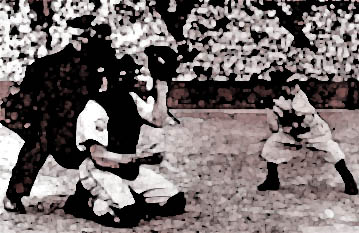
August 19, 1951: Vertically challenged Eddie Gaedel came to bat as a pinch hitter for Frank Saucier of the St. Louis Browns in Sportsman's Park, St. Louis, and drew a four-pitch walk from pitcher Bob Cain of the Detroit Tigers. He was immediately replaced by pinch-runner Jim Delsing and retired from his one-at bat career with an all-time OBP of 1.000.

The great Satchel Paige and the little unknown midget named Eddie Gaedel were teammates for one day on the 1951 St. Louis Browns. Neither man, especially Gaedel, would likely have been there at all, had it not been for club owner Bill Veeck and his PT Barnum level commitment to boosting the anemic gate attraction that was the drubbing wagon that the Browns had become in American League history through this time. By 1951, as a matter of fact, the wobbly wheels of that creaking old boneyard cart were only two years away from falling off forever and the remaining riders taking flight east as orange-breasted Orioles.

Still, the great ones never forget, even if they fail to show up or stay awake for the most secretive off-the-wall stunt ever pulled off in baseball history. For a man who wanted to goose the gate, Bill Veeck had done everything he could to keep the use of his little midget in an actual game a secret until it happened. As much as he might have preferred a big advance ballyhoo that could have attracted a larger crowd, Veeck also knew that too much advance publicity might result in either the Commissioner or the American League coming down to halt the plan before it ever happened.

Veeck settled for the element of surprise – and the hope that it would spawn a new awareness among St. Louis fans, one that would promote the idea that “I had better go see a few Browns games; there’s no telling what I am liable to miss seeing if I don’t go.”

Veeck thought of everything. He had even gotten Gaedel to sign an AL approved player’s contract prior to the day of the game in anticipation of the umpire challenge that was sure to come, which it did, but a presentation of the written document ruled over all short-term arguments by the Tigers when the Browns sent up Eddie Gaedel as a pinch hitter for lead off man Frank Saucier in the bottom of the first inning.

Once play began, the Tiger battery, pitcher Bob Cain and catcher Bob Swift, pretty much handled Gaedel as though they were facing a child by throwing his lob pitches that they hoped would move through the strike zone as such – or an easy to field come-backers to the infield. But Gaedel was no child – and he was batting under mock death threat (we think) from Bill Veeck not to swing at anything. Veeck had actually told Gaedel that he planned to watch his performance with rifle in hand from atop the stadium roof. Veeck had made it clear that he planned to shoot Gaedel if he dared swing at anything.

Eddie Gaedel did not swing at all. He walked his way into baseball history on four pitches and then departed for a pinch runner. Within hours of his triumph, his contract to play baseball was rescinded as a sham, but I’m not really sure how prejudicial the aborting language was against all the vertically challenged people in this world. I just know that he had played his one and only hand into baseball history.

But as we said earlier, the great ones never forget. And Satchel Paige was indeed one of the great ones.

Years later, as reported on page 721 of “Satchel” by Larry Tye, Satchel Paige was engaged in one of his many barnstorming trips to Canada and was pitching in a small town called Kindersley in western Saskatchewan. It was one of those days in which Paige still felt like going a full nine innings, but something happened in the seventh inning that was purely designed to bother Satchel. The manager of the local club opposition put a four-year old boy who stood only three feet tall into the lineup as a pinch hitter.

Hey! At three feet in height, the Canadian kid was a full one foot shorter than Eddie Gaedel.

“Everyone thought that Satch would lob the ball, or perhaps walk him,” remembers Bob Joyce, who was calling the balls and strikes that day. “But he threw three perfect fastballs, knee high, and I had to call the kid out. Imagine the strike zone at 60 feet, 6 inches.”

And while we’re at it, let’s recall all those stories about Satchel Paige’s ability to hit the middle of a gum wrapper paper when he needed a strike. In that kind of situation, there was no way that the great Satchel Paige was going to Eddie Gaedel this little kid to first as a free base runner.

Maybe Satchel wasn’t even at Sportsman’s Park on the day of Eddie Gaedel’s famous plate appearance of August 19, 1951. In fact, I’d like to think he wasn’t. I’d prefer to think that the real Satchel Paige would have mowed down the little kid years later up in Canada, no matter what. Anybody who steps in to hit in the game of baseball should be ready to take on all the consequences of that decision – or said person shouldn’t even be there in the first place.

Michael Hogue’s Portraits of the Negro Leagues

September 17, 2011

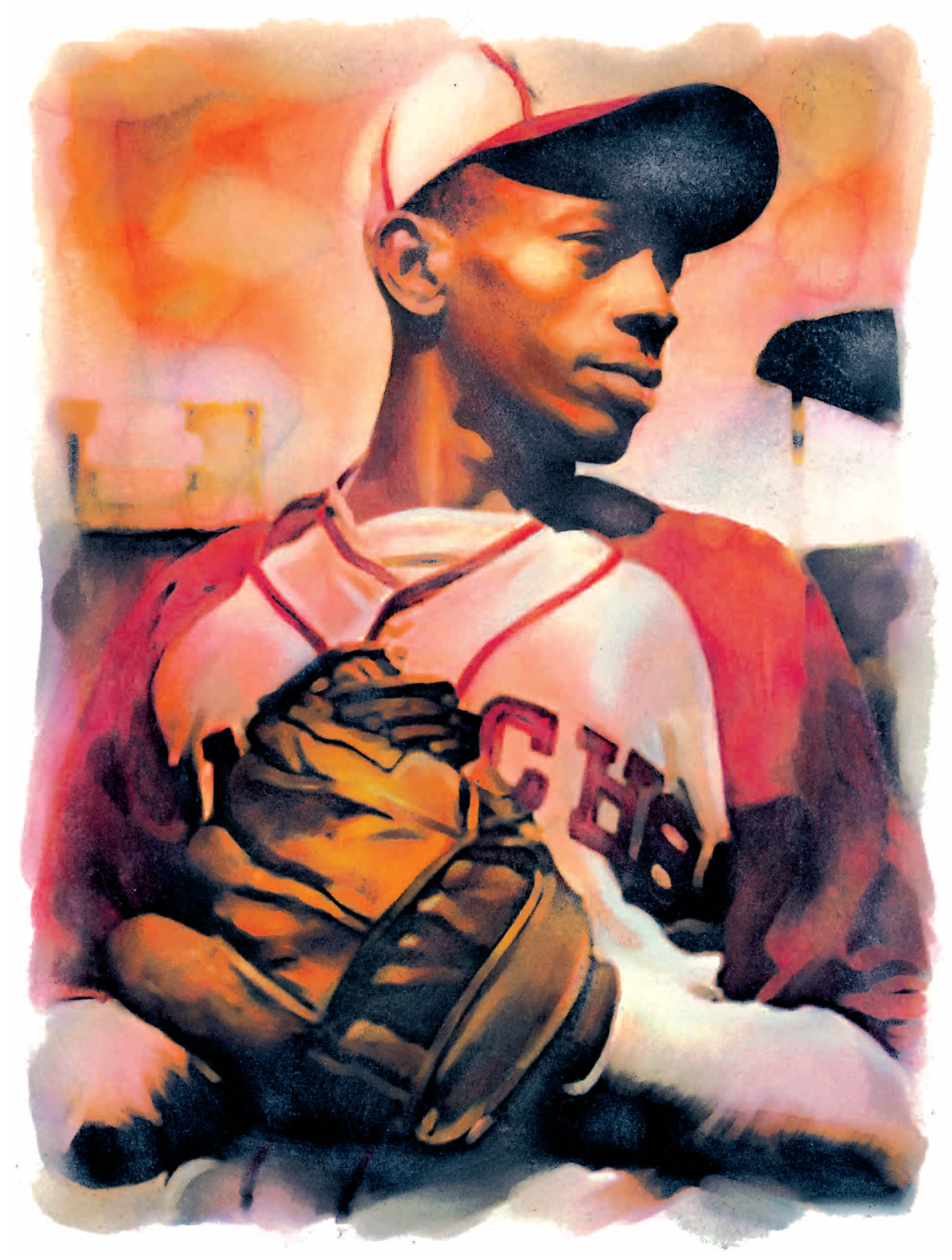
SATCHEL PAIGE by Michael Hogue of The Dallas Morning News

The following text and preceding art by Michael Hogue of The Dallas Morning News is reproduced here in The Pecan Park Eagle by written permission from Michael Hogue. Thank you, Michael, for allowing TPPE to further share the beauty and joy of your work with those who care about the Negro Leagues and their place in baseball history. We shall continue to randomly show the work you have provided until we either run out of material – or you send us some more. We are in debt to you for this valuable contribution to our humble publishing efforts in behalf of baseball, Houston, Texas, music, and pop cultural history.

Did I leave anybody out? Probably. But here it is, anyway. Readers enjoy!

Satchel Paige By Michael Hogue. Reproduced by Written Permission from Michael Hogue of The Dallas Morning News.

“I sure get a laugh when I see in the papers where some major league pitcher says he gets a sore arm because he pitches every four days. Man, that’s be just a vacation for me.” – Satchel Paige, Hall of Fame, 1971.

SATCHEL PAIGE, Pitcher, Negro Leagues 1926-1947. Paige is the best known player to come out of the Negro Leagues. This tall, lanky right-hander employed masterful pitching skill with a colorful personality to achieve folk-hero status.

He was the consummate show man. He would sometimes pull in the outfielders to sit behind the mound while he struck out the side. He was advertised as guaranteed to strike out the first nine batters he faced in exhibition games and almost always fulfilled his billing. Paige frequently warmed up throwing 20 straight pitches across a chewing gum wrapper used as home plate.

It is estimated that Paige pitched 2,600 games, 300 shutouts and 55 no-hitters.

Some major leaguers, including Joe DiMaggio, called Paige the toughest pitcher they had ever faced.

Paige was offered a contract to play for the Indians and, at age 43, became the oldest rookie in major league history. He helped Cleveland to the 1948 World Series title. He appeared in the All Star Games of 1952 and 1953. Paige was thought to be 59 (his true age was never established) when he pitched three innings for the Kansas City A’s, becoming the oldest man to pitch in a major league game.

He became the first Negro Leagues star inducted into the National Baseball Hall of Fame.

Color This Paige Satchel

September 13, 2011

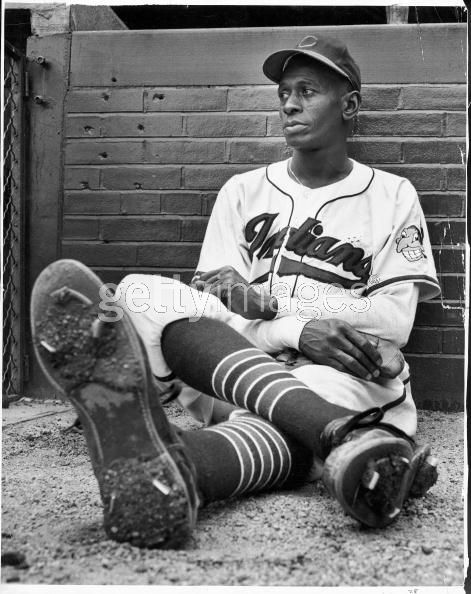
With the fall of the color line, Satchel Paige finally made it to big leagues with the Cleveland Indians in 1948 at the age 0f 42..

Satchel Paige and the face of Negro League Baseball really comes to life in the 2010 paperback work (2009 Copyright), “Satchel: The Life and Times of an American Legend” by Larry Tye. It’s one of the best written biographies I’ve read in a very long time, augmenting fact with a three-dimensional picture of how life was in the days of negro league resuscitation under the gangster-leadership of Pittsburgh Crawfords owner Gus Greenlee, who just happened also to be the dual owner of the Crawford Grill and the forgiving sponsor of the imported man-child wunderkind that was the strapping phenomenon known as Satchel Paige.

Upstairs above the Crawford Grill, was a place known as the Club Crawford. The “CC” was place frequented by powerful people from both the white and black communities, a place where politicians, prostitutes, and pimps could, and did, feel quite at home in each other’s company, drinking and sometimes drugging the night away, and listening to the some of the best jazz artists of the day back in 1934.

Cab Callaway played the “CC” – revving things up with his signature piece, “Minnie the Moocher,” and a fellow named Teddy Horne dealt poker hands while his teenage daughter, Lena, flirted her way around the room with those great beguiling eyes and that extra special voice and singing style that were all hers by genetic heritage. Can you picture the very young Lena Horne singing “Stormy Weather” with the rain coming down in sheets outside the Club Crawford?

Among others, and usually near to his reserved stool space next to mentor Gus Greenlee, young Satchel Paige rubbed shoulders and bent elbows at the “CC” with people like Pittsburgh Steelers owner Art Rooney, former black heavyweight champion Jack Johnson, and Mr. Bojangles himself, Bojangles Robinson, the tap dancer extraordinaire and later owner of the New York Black Yankees club, Bojangles Robinson.

What a time it must have been. Satchel Paige wasn’t raised with strong ideas for temperance and self-management, but he managed to survive an environment that could have destroyed more than his money supply. Fortunately for Satchel, he didn’t get drunk that often, and, if things got too bad (too broke) anywhere he happened to be, his main defense seems to have been to run away to another part of the baseball world and let his talents help him find a new ceiling.

On page 68 of the paperback version, author Larry Tye cites a white writer for the Chicago Daily Times named Marvin McCarthy with one of the most beautifully descriptive pieces of baseball action writing I’ve ever read – and I’d like to share it with you here, along with the suggestion that you read this book for yourself. I see it as the best thing I’ve ever read on the man who, with Josh Gibson, stands today as one of the the two major faces of the old Negro Leagues.

With obvious attribution to the great Christy Mathewson, McCarthy responded to Paige’s stellar performance in the 1934 East-West All Star Game at Comiskey Park in Chicago with an article called “Black Matty:”

With measured tread an African giant crosses the line and heads for the pitcher’s box. – ‘It’s Paige! Its Satchel Paige and goodbye ballgame’ whisper the stands. And it is. He must stand six feet six inches in his sox. Gaunt as old Abe Lincoln. He walks with that slow Bert Williams shuffle. Maybe it takes him two minutes to cross the fifty yards to the box. He stoops to toy with the resin bag – picks up the old apple. He mounts the bag, faces third – turns a sorrowful, but burning eye toward the plate, nods a nod that Hitler would give his eye for – turns his gaze back to the runner on second – raises two bony arms high toward the heaven, lets them sink slowly to his chest. Seconds pass like hours. The batter fidgets in his box. Suddenly that long right arm shoots back and forward like the piston on a Century engine doing 90. All you can see is something like a thin line of pipe smoke.There’s an explosion like a gun shot in the catcher’s glove. ‘Strike wun,’ howls the dusky umpire.”