
Ray Milland stars as King Kelly in 1949’s “It Happens Every Spring.” Only Tony Perkins in “Fear Strikes Out” looked worse as a ballplayer than Milland.
One of my all-time favorite baseball movies is a little black and white comedy from 1949 called “It Happens Every Spring.” Ray Milland stars as a chemistry professor, Vernon K. Simpson, whose baseball fan addiction to the club from St. Louis (the Cardinals, but never named as such) that he can hardly teach when their games are broadcast over the radio at the same time he is scheduled to lecture.
One day, when Professor Simpson is working on the application of some important groundbreaking usage formulae in his laboratory, a baseball from the college team’s practice field crashes though the lab window and destroys everything he has been working for months to prove. Grave disappointment quickly turns to wide-eyed wonder when the professor finds that he has now accidentally perfected a substance that makes any material it touches repellent to wood.
When Simpson rolls the errantly soaked baseball down the lab sink surface in frustration, he is astonished to see that the ball either rolls around or jumps over anything made of wood. When he then tacks the ball to a string and suspends it from an overhanging surface, he tries swinging at it with a long wooden handle. The ball jumps over the stick every time.
The professor tries pitching to a couple of his students who are also members of the college baseball team. The kids kill every dry ball that Simpson throws to them. They also badly miss every doctored baseball that has received even a small touch of the mysterious new substance.
It doesn’t take long for Simpson to perceive the possibility of a career change, but he understands that he has to act right away, while there is still time to help the pitching-desperate St. Louis club. He also recognizes that he cannot share his intentions with anyone, not even his fiancée, Deborah Greenleaf (Jean Peters), the daughter of Dean Alfred Greenleaf (Ray Collins), and that he must take a quick leave of absence and pursue the change with a new identity.
Simpson gets a quickie sabbatical and grabs the next train to nearby St. Louis. He may be leaving Mizzou in Columbia, but that point also is not made clear.
Once in St. Louis, Simpson barges into the office of St. Louis manager Jimmy Dolan (Ted de Corsia), offering to help the team win the pennant. He is immediately perceived as a nut case, clinching the diagnosis when Dolan asks him in sarcasm, “How many games can you win for us?” Simpson answers with a question of his own: “How many games do you need for me to win?”
Club owner Edgar Stone (Ed Begley) walks into the meeting in time to catch most of the same crazy drift, but is pushed over the edge when Simpson tells him, “Mr. Stone, if you allow me to walk out of here without giving me a chance, I’m taking the pennant with me. I’m sure the people in Chicago will be glad to give me a look.”
That did it.
“Dolan,” shouts the St. Louis owner to his manager, “take this upstart down to the field right now and let him pitch to the top of the batting order. We are going to teach him a lesson he’s never going to forget.”
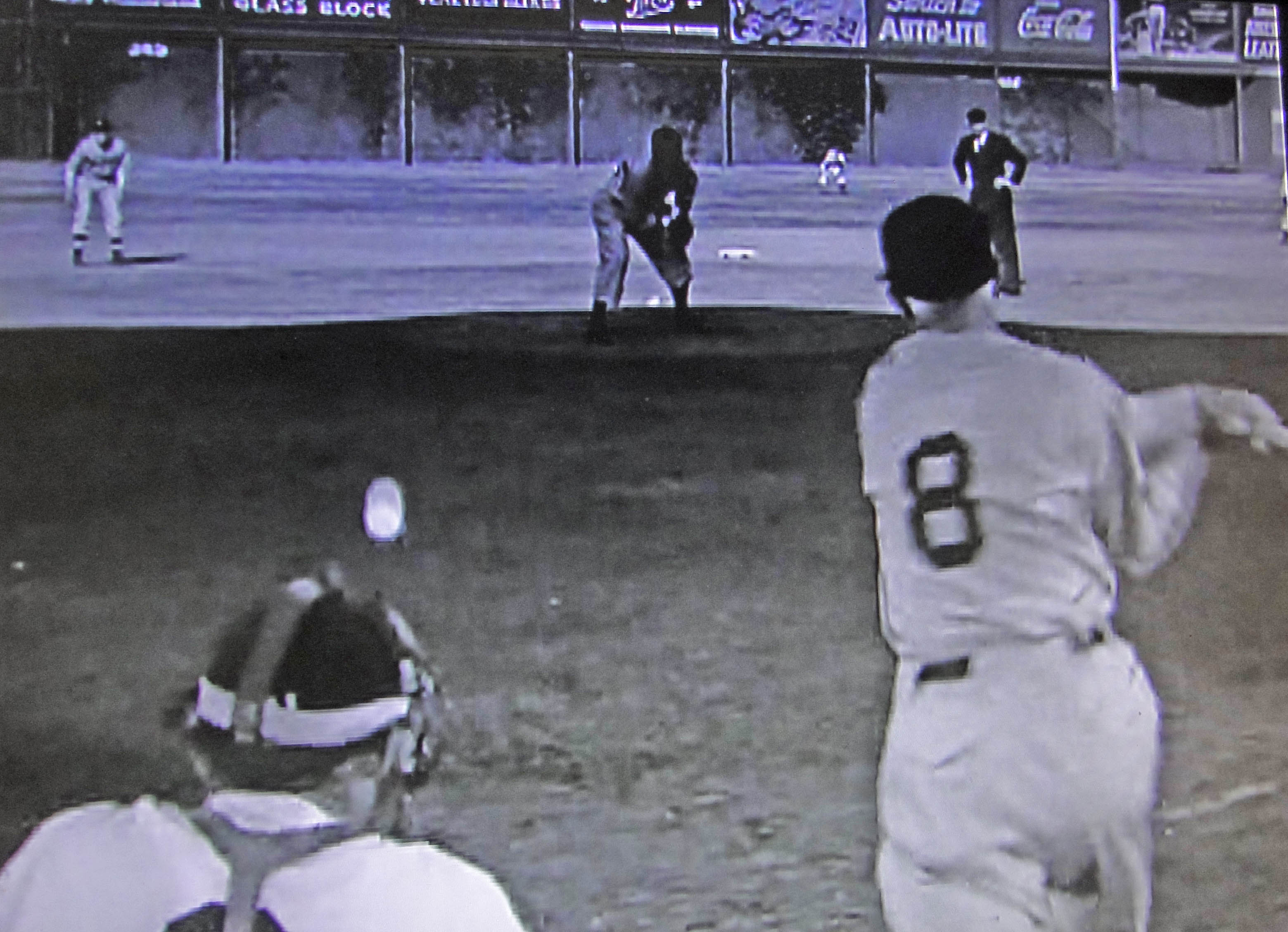
Simpson, of course, mows them all down with a ball that jumps over and around all of their mighty level swings. He gets signed as “Mike Kelly” and rapidly becomes known as “King Kelly” for his total ability to look awful, but still beat any and all comers.
Manager Dolan still thinks of “Kelly” as a whacko, assigning catcher Monk Lanigan (Paul Douglas) as a roommate who will also keep an eye on the nut job phenom.
Trouble is, Kelly keeps his magic liquid concealed in hair tonic bottles. Prior to games, he squirts a small amount into a small sponge which fits easily into the pitcher’s glove, oozing out through an enormous obvious hole in the glove’s pocket that no opposing team or umpire ever asks to see.
Kelly tells roomie Lanigan that the bottles contain hair tonic when the latter discovers these bottles have no labels and is unsure about what they are. Trouble really is, Kelly cannot make more of the unformulated substance. He has enough to get through the season, but after that, he’s done. And that’s OK too – until late in the season when Lanigan runs out of his own hair tonic and quietly borrows some from Kelly – and also lends a whole bottle to manager Dolan.
Both of the borrowers go through some funny solo scenes trying to comb their hair with wooden combs and watching the repellent features of the magic substance work some wild hair wonder in each case. But, hey! Wouldn’t you just know it? All this happens on the morning of the season’s last game. Kelly set to pitch. If Kelly wins, St. Louis takes the pennant. If Kelly loses, St. Louis goes home empty-handed.
Kelly barely has enough juice left to reach the ninth inning. St. Louis has the lead by a run, but their foes have the bases loaded with two outs – and Kelly is dry-handed.
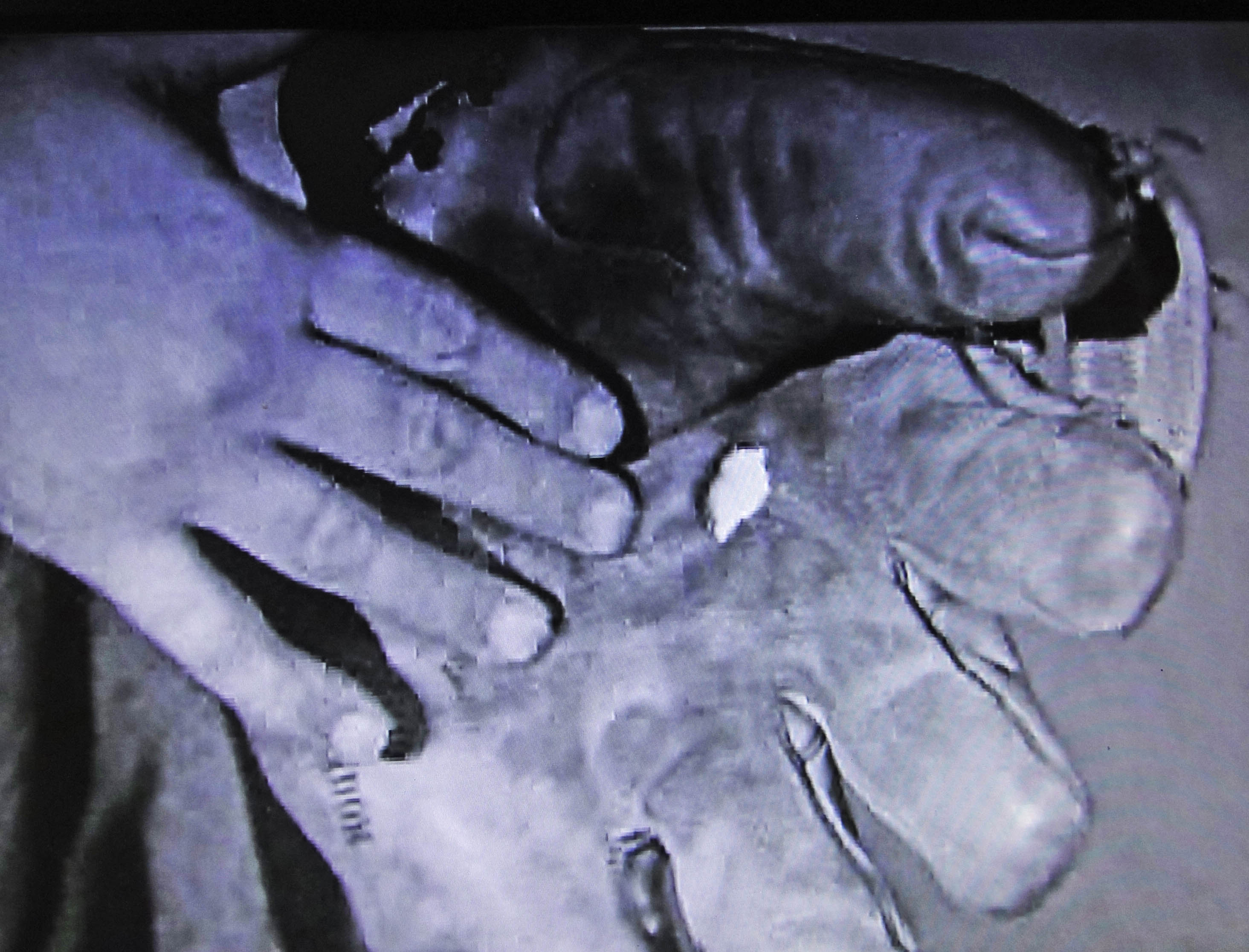
The batter lines a shot up the middle. Kelly knocks it down with his bare right pitching hand. In great pain, he scrambles to pick up the ball and then makes the throw to first. Game over. St. Louis wins the pennant.
But Kelly breaks his hand and can never pitch again. By this time, his fiancée and her Dean father all know about the adventure, but they are proud of “Vernon” for striking out on this curious road to success. They take him back to their college town where the whole community awaits his return with a brass band welcome.
Vernon gets the girl. They are married. He goes back to being just a fan on his way to academic success. And they live happily ever after.
No scandal, criminal, or civil charges arise from the professor’s journey. There is no media cry for an investigation into how many other players are doing exactly what Vernon Simpson did. And there are no notices from Cooperstown or the BBWAA that the player known as Mike “King” Kelly would be placed on the list of individuals who are ineligible for the Hall of Fame.
“IT HAPPENS EVERY SPRING” is the cheapest good time buy out there.
 Houston, Baseball, & Other Musings.
 The Pecan Park Eagle