Posts Tagged ‘Houston’

Shakespearean Baseball Quotes!

July 30, 2009

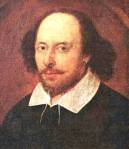
A ShakespeareIn 2008, dedicated bseball writer Paul Dickson put together a book he called “Baseball’s Greatest Quotations.”  With index, this 652 page work covered a number of the great quotes from baseball history and quite a few items that most of us had never heard previously. My own favorites were the lines from Shakespeare that Dickson found as references to baseball. Well, I nver knew that old Willie Boy could hit, throw, run, or play catch with a baseball, but I always admired his work. William Shakespeare did a pretty fair job of pitching words and ideas from the English language that covered all the bases, didn’t he? By the time he was done, he had gone through all the great plots of human edeavour, leaving all writers who followed him with the challenging task of cooking up some edible rehash.

I have no idea if Dickson came up with these excerpts from Shaakespeare that sound, at least, as if they are references to baseball, but they are pretty good fpr the most part. With the exception of one easy-to-find inclusion that burst forth from within me and begged for slip-me-in-too addition, I’ll simply present them to you here as I found them on pages 488-489:

“And have is have, however men do catch.” – King John

“And what a pitch … !” – Henry VI, Part I

“And when he caught it, he let it go again.” – Coriolanus

“And watched him how he singled …” – Henry VI, Part III

“Foul …?” – The Tempest

“He comes the third time home …” – Coriolanus

“Hence! home … get you home …” – Julius Caesar

“He’s safe.” – Measure for Measure

“I am safe.” – Antony and Cleopatra

“I’ll catch it ere it come to ground.” – Macbeth

“I ahall catch the fly …” – Henry V

“I thank you for your good counsel. Come, my coach!” – Hamlet

“Look to the plate.” – Romeo and Juliet

“My heels are at your command; I will run.” – The Merchant of Venice

“O my offense is rank, it smells to heaven.” – Hamlet

“O, tis fair …” – Troilus and Cressida

“Sweet sacrifice.” – Henry VIII

“That one error fills him with faults.” – The Two Gentlemen of Verona

“There is three umpires in this matter …” – The Merry Wives of WIndsor

“They that … pitch will be defiled.” – Much Ado About Nothing

“Thy seat is up … high.” – Richard II

“What wretched errors …!” – Sonnets

“The sainted knights of chivalrous endeavour unerringly suffer the misfortune of finishing their noble quests in the rear row of dire ignominy.” – Durocherus

“When time is ripe – which will be suddenly, I’ll steal …” Henry IV, Part I

“Your play needs no excuse.” – A Midsummer Night’s Dream

Of course, Dickson couldn’t tag ’em all. He left out my favorite quote, and one that applies to what’s on all our fans’ minds at this point in the season, just about every time the Houston Astros begin their annual second-half surge:

“To be, or not to be, that is the question!” – Hamlet
History of Houston Baseball Team Nicknames!

July 29, 2009

Mud Cats

When it comes down to baseball team nicknames, we weren’t always the Astros in Houston. Going all the way back to 1867, Houston baseball has been represented on all the various levels of competition by at least thirteen different identities – and these are simply the ones we are able to uncover with a little easy, but broadscale research smf dome “count ’em on my fingers” match. (Thirteen is the figure I got for a total after adding up all, but one of the bold type nicknames that follow in this post.)

The Houston Stonewalls are our first nickname reference. Hot on the heels of the recently concluded Civil War, the 1867 Stonewalls took their name in honor of former Confederate General Stonewall Jackson only two years after the conclusion of the war between the states, ths contributing to the idea that Houston discovered “base ball” through its association with Unionists in Prisoner-of-War camps. Not so. Remember? You’ve heard it from several times over st the old Chron.Com site: The first Houston Base Ball Club was formed at a meeting above J.H. Evans’ store on Market Square in downtown Houston on April 16, 1861. That foundation was poured only weeks after Texas already had seceded from the Union, but it happened so near the advent of conflict that base ball would have to wait until the war was done to get rolling locally. When it did, the Houston Stonewalls went into action on San Jacinto Day, April 21, 1867 and defeated the Galveston Roberts E. Lees by the runaway tally of 35-2. Yep. The Galveston nickname also helped cement the wrong understanding about when and how baseball first came to the greater Houston area. I’m not saying that no Houstonians first learned of baseball through their Civil War experiences. I am saying that we have the evidence that proves the formation of base ball activity in Houston prior to the outbreak of Civil War conflict.

Our next notable nickname came about on March 6, 1888, when the newly formed Houston Babies, the first fully professional club representing our city took the field downtown at the Houston Base Ball Park to engage the Cincinnati Red Stockings in the first local representation of our city’s name in this new venture. Team nicknames held as much permanence as a men’s dress shirt back in the 19th century. The “Houstons” simply acquired theirs by being the last club to formally sign up as a member of the brand new Texas League in its inaugural 1888 season. Hence, people in the media hooked the locals with the quickly unpopular nickname of the Houston Babies. The Babies had every reason to cry in that first game as the Cincinnatis walloped them, 22-3, and the Babies added thirteen errors, six alone by pitcher Tim Flood,  to their first professional effort.

It didn’t take long for the 1888 Babies roster to rebel against their idenity with infancy. Things were fairly literal back in those days too. So, the Houston players looked down at their solid red stockings and somebody said aloud, with a smile and a finger snap too, little doubt: “Say! Why don’t we call ourselves the Red Stockings?” They played the rest, and the bulk, of their first professional season as the Houston Red Stockings, also, I feel sure, in some unconscious referential tribute to the Ohio team that whacked them at the start.

1889 was another uniform shirt-change year. The 1889 Houston Mud Cats captured the city’s first professional championship by capturing the Texas League crown under the field leadership of Big John McCloskey, the man remembered today as the “Father of the Texas League.” The Mud Cats were declared the league champion after collapsing under financial pressure in August, but only a mere three days prior to the day the whole league folded too. As the old saying goes, you can’t sing your way to the bank without any “do re mi” on hand, and the early professionals of Texas baseball suffered painfully through the dollar version of tonsillitis.

The 1895 Houston Magnolias had a mediocre season, but the 1896 Mags took the pennant of a league that now calling itself the Texas-Southern League. Apparently, Magnolia bloom and die. Without further research and discovery, I can offer no evidence of the Magnolia going foward as a Houston team nickname beyond their championship season.

The Houston Buffalos appear for the first time in 1903, when the city fields a mediocre team in the South Texas League. The nickname resurfaces in 1905-06, when the club is still a member of the South Texas League. For the first time, the city has a nickname that is strongly connected to the city. Buffalo Bayou is the principal waterway among several similar flowing streams that thread their way through Houston. Running through downtown Houston and very near the original venue for games, Buffalo Bayou personalizes the nickname identity of the club with the image of the city. Once the club returns for its long engagement in the Texas League (1907-1958), it remains the Houston Buffalos/Buffaloes/Buffs through the crack of minor league doom in Houston – and that includes the final three years of the Houstons Buffs as members of the American Association (1959-61).

In 1904, the Houston Wanderers of the same South Texas League take the field under manager Claude Reilly. Of interest is the fact the club is so-called in honor of their 1903 manager, Wade Moore, and a brief time then they were informally known as “Wade’s Wanderers” from Houston. We’ll count Wanderers as one nickname of its own, but we shall respect the rights of all who care to spend energy on making a case for two separate nicknames in this instance.

From 1924 through 1958, minor Negro League baseball thrives in Houston through one club and a two-nickname history. Houstonians John and James Liuzza establish and run a black baseball club that starts out as the Houston Monarchs and then transforms into the Houston Black Buffs. Over this entire period, Arthur Lee Williams is the lone manager in the club’s long history. The club collapses from a decline of interest in Negro League ball that bombs attendance after integration changes the face of all organized baseball.

Speaking of the Negro League declining years, the 1949-50 Houston Eagles are the death rattle editions of the proud Negro League major level club that once represnted the City of Newark, New Jersey. They ived here long enough to give us another local nickname for our tt board.

Of course, our city went into the major leagues as the Houston Colt .45s in 1962, but that identity was changed in 1965 when Judge Roy Hofheinz of the Houston Sports Association changed their identity to match up with the new space theme he was building around the new world’s first domed stadium. The Houston Astros would play in the Astrodome from 1965 through 1999. The same ongoing Astros (by nickname, at least)  have continued to play forward in the National League from 2000 through the present time, 2009, at the downtown venue now known as Minute Maid Park.

One more name deserves placement on this list.  Since 1947, and taking nothing away from the fine national championship  program at Rice University, the University of Houston has also represented our proud city name literally. Playing all these years under only four head coaches (Lovette Hill, 1947-1970; Rolan Walton, 1971-1986; Bragg Stockton, 1987-1993; and Raynor Noble, 1994-2009 & counting). The Houston Cougars have also made several trips to the College World Series bearing our beloved identity as “Houston” in blood red letters across their uniform breasts. When they started the UH baseball program in 1947, they also shared Buff Stadium as their home park with the Dixie Series Championship club that was building on that same site with the Houston Buffs. If that combination of qualifiers doesn’t get the Cougars on this list, nothing else should. Also of sidebar note here is that one of the UH  Cougars’ first ballplayers back in 1947, pitcher Bill Henry, by name, was the first UH alumnus to then go forward to a successful major league career.

What’s in a baseball team nickname? Now I’m thinking again of a more recent product of Houston Astros in search of an answer. And here it is: Sometimes it’s simply  a ball club that can win games in the most exciting of ways. Maybe we should have counted the “Killer Bees” among our favorite Houston formal team nickname sobriquets!

Why “The Pecan Park Eagle” title here?

July 28, 2009

ppe baseball

First of all, I grew up in Pecan Park in the Houston East End, during the decade that followed the end of World War II. The values and outlook on things that formed for me there never left and flew away. We called our little rag-tag sandlot baseball team that home-based at the vacant lot at the corner of Japonica and Myrtle streets by the aspiring name of the Pecan Park Eagles. We called the place “Eagle Park” or simply “The Lot.” It was a place for all-day baseball games and dream-building. Baseball became my first love in that time and place – and it has remained so for me my entire life.

Many years beyond those Pecan Park days, my only child and son Neal came along. In the process, Neal got a dad who was old enough to be his grandfather – and I got a son who pulled me out to the playground for a little pitch, catch, and fungo hitting for the first time in umpteen hundred eons. It felt great again to be out there on the sandlot again. For Neal and me, it was an abandoned school yard near our house, one with a mixture of blossoming purple wildflowers and some pretty tall patches of high standing weeds, but we didn’t care. Besides, I had an ancient history of looking for lost baseballs in the high grass – and it was time for Neal to learn about that sort of thing too.

One day, on the Fourth of July in 1993, we had just finished a nice little workout under a sky full of tumbling cotton candy clouds when it hit me like a brick. The sounds of a wooden bat landing hard upon the ball, the one-of-a-kind smell of an old leather glove snapping up grounders and near errant throws, and the smile that broke wide on Neal’s face when he made a good play in the field — all these things and more — came rushing at me like a giant emotional wave from deep within some ancient cell in my soul. Silently I looked around for the now invisible faces of my old Pecan Park Eagle teammates, the ones that had been scattered from me by the winds of time and always changing life circumstantiality. I missed them all, and all the summer baseball time we had together back in the late ’40s and early ’50s – and I wondered if they also, now and then, ever felt the same way about me. Playing ball with my son that day had reawakened a whole beautiful chapter of my early life, but I was by then an expert at rationalizing strong feelings and pushing them down – and so I did.

Or so I thought.

As we were walking home, Neal suddenly exclaimed, “Daddy, I see a baseball in those tall weeds!” As I looked own to my left, I saw it too, and I reached down into the bramble to pull it up. My hand immediately told me that it wasn’t a whole baseball, at all, but only an old brown cover of one. Still, I worked to free it from the weeds that pinned it down and I drew it up from the earth and into the sunlight again.

I just held the baseball cover in my left hand as we continued the one-block walk home. I felt a silence within me and, for a wile, all we could both hear was the sound of our feet, sloshing through the high weeds on the way home.

“Daddy,” Neal finally broke the silence with a question, “what are you  going to do with that old thing?”

“I haven’t the slightest idea,” I said.

When we arrived home, I grabbed a pen and a piece of paper and sat down with the old baseball cover at our kitchen table. The following poem poured out of me like water from the tap faucet. It’s the best explanation I can offer as to why I chose to name this blog site “The Pecan Park Eagle.” I want this place to be home plate for all the subjects that are dear to the hearts of so many of us who love baseball, Houston, and history. All I can provide is my outlook on things, in whatever form it comes out, as either prose or poetry.

Here’s the poem that awakened something in me sixteen years ago that continues to show no signs of ever going back to sleep:

The Pecan Park Eagle By Bill McCurdy (1993): Ode To An Old Baseball Cover I Found While Playing Catch with My Eight-Year Old Son Neal On an Abandoned School Yard.

Tattered friend, I found you again, Laying flat in a field of yesterday’s hope. Your resting place? An abandoned schoolyard. When parents move away, the children go too.

How long have you been here, Strangling in the entanglement of your grassy grave, Bleaching your brown-ness in the summer sun, Freezing your frailness in the ice of winter?

How long, old friend, how long?

Your magical essence exploded from you long ago. God only knows when. Perhaps, it was the result of one last grand slam.

One last grand slam, a solitary cherishment, Now remembered only by the doer of that distant past deed. Only the executioner long remembers the little triumphs. The rest of the world never knows, or else, soon forgets.

I recovered you today from your ancient tomb, From your place near the crunching sound of my footsteps. I pulled you from your enmeshment in the dying July grass, And I wanted to take you home with me.

Oh, would that the warm winds of spring might call us, One more time, awakening our souls in green renewal To that visceral awareness of hope and possibility.

To soar once more in spirit, like the Pecan Park Eagle, High above the billowing clouds of a summer morning, In flight destiny – to all that is bright and beautiful.

There is a special consolation in this melancholy reunion. Because you held a larger world within you, I found a larger world in me.

Come home with me, my friend, Come home.


Roll Call of The Buffs!

July 27, 2009

Buff Medallion Blue

From late in the 19th century through 1961, a large number of major league baseball players wound their way through Houston as up-and-coming stars of the game. Most of the names on the following list played for the Buffs on their way up the baseball ladder to the big leagues. Some came through town on their way down the rungs of the same prescious climb. A few of these even made it all the way to the Baseball Hall of Fame.

Although the list is far from complete, it’s a pretty good sample of the quality of players we have been privileged to watch here in Houston during a local baseball interest period that is now chipping its way into a third different century of life. This roll call will not thrill any of you who care little or nothing for the game, but it speaks volumes to those who care enough to get clear on one of my favorite rant-subjects: Baseball goes back to the root years of our city. The first Houston Base Ball Club was formed in April 1861, a mere few weeks after Texas had seceded from the Union – and a good twenty to thirty years prior to the introduction of football in Houston on a minor organizational level at the Univeristy of Texas and Texas A&M Proffessional baseball finally reached Houston in 1888 with the formation of the Texas League. It would take the Texas League nearly two more decades to achieve stabilty, but once it did, it became the cradle of Houston’s greatest players in history.

In short, baseball ignited Houston first. Footbal came much later, and didn’t really take hold until electrification brought “Friday Night Lights” to Texas high school football in the 1930s.

Remember that milestone pattern the next time you are forced to hear another national talking sports head TV guy say that “Houston is growing pretty fast in its knowledge of the game for a city that is basically a football town that only recently discovered baseball!” Don’t pay any attention to these idiots. These are the same ignorant people who still come to Houston expecting to see mountains on the horizon, cacti growing wildly in our neighborhoods, and tumbleweed blowing crazily down Main Street.

The quick list shown here is pretty impressive. Look ’em up individually at either Baseball Almanac or Baseball Reference (d0t.coms) and see what I mean. Most of these guys did pretty darn well at the major league level:

Luis Arroyo, Vern Benson, Ray Blades, Don Blasingame, Don Bollweg, Bob Boyd, Ken Boyer, Al Brazle, Harry Brecheen, Willard Brown, Tex Carleton, Mort Cooper, Walker Cooper, Nick Cullop, Mike Cvengos, Dizzy Dean, Paul Dean, Murry Dickson, Dick Ellsworth, Hal Epps, Herman Franks, Don Gutteridge, Chick Hafey, Wild Bill Hallahan, Solly Hemus, Larry Jackson, Eddie Kazak, Johnny Keane, Johnny Kling, Frank Mancuso, Gus Mancuso, Fred Martin, Pepper Martin, Harry McCurdy, Von McDaniel, Joe Medwick, Larry Miggins, Vinegar Bend Mizell, Red Munger, Danny Murtaugh, Al Papai, Homer Peel, Howie Pollet, Rip Repulski, Art Reinhart, Ron Santo, Al Schacht,  Bob Scheffing, Cary Selph, Wally Shannon, Hal Smith, Pancho Snyder, Tris Speaker, Bobby Tiefenauer, Emil Verban, Curt Walker, Harry Walker, Watty Watkins, Del WIlber, Ted Wilks, Billy Williams, Jerry Witte, and  Johnny Wyrostek.

By special request from Wade Porter, I am extending this post to include my All Time Starting Line-Up based upon the Buffs/Major Leaguer pool listed previously. These decisions were based upon each player’s ability to perform at both the major and minor league level. That means I faced a tough choice on first base, choosing between my close old now deceased friend Jerry Witte and his 38-homer season for the 1951 Buffs and Bob Boyd for his two .300 plus hitting seasons in 1954-55. Both  were also men of outstanding character and fairness too. I finally had to go with Bob Boyd because of his near .400 Negro League marks and his recognition by the Negro League Hall of Fame, plus his several plus .300 or above seasons with the Baltimore Orioles after leaving the Buffs. It was the fair thing to do and I know Jerry Witte would have agreed. He was all about fairness. Jerry Witte only had two very short and not too happy trips to the majors in 1946-47. When we worked on his biography years ago, Jerry even told me: “I just want credit for the things I did. Don’t give me credit for things I didn’t do – and for God’s sake, don’t ever say I was best at something when somebody else was better.” This was one of those times, Jerry, but nobody will ever be a finer man or better person than you were. Nobody did it better in that league.

That being said, here’s my starting lineup of the Greatest Houston Buffs Ever:

Solly Hemus, 2b

Bob Boyd, 1b

Tris Speaker, cf

Billy Williams, lf

Joe Medwick, rf

Ron Santo, 3b

Johnny Kling, c

Don Blasingame, ss

Dizzy Dean, p

I must confess too. I had to go back and add Don Blasingame to fill out the shortstop position. It was hard leaving a few guys out of the starting lineup here, but as Cecil Cooper might tell you, that’s one of the tough parts about managing. Of course, if old Cecil had this talent available at peak form on the roster of the 2009 Astros, we might be running away with the NLC by now. Don’t you think?

If you see a starting lineup that you prefer, please post it below as a comment on this issue.

Have great new week everybody!

Remembering Lou Mahan!

July 25, 2009

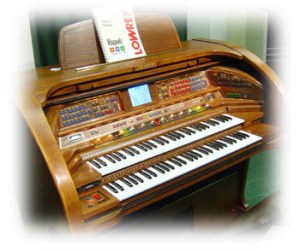
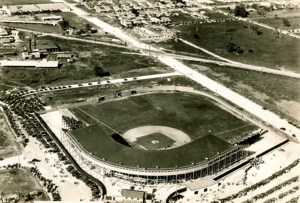
ballpark organ 3 We have Channel 13 Sports Direector Bob Allen to thank for today’s blog subject. Yesterday he sent me a nice note about his own early Houston Buff Stadium memories – and one of the names he mentioned among these jewels was Lou Mahan, the ballpark organist. Thank you, Bob! The mere mention of the talented Ms. Mahan alone simply pulls my spinal soul back to the place where it received its original baseball charge – and for people like Bob Allen and yours truly, that place was Buff Stadium on the Gulf Freeway at Cullen Boulevard, on the site of the recently closed Finger Furniture location there. If you followed my previous blog over at Chron.Com, you’ve heard me write about Buff Stadium many times. It was the home of our pre-major league Houston Buffs from 1928 through 1961.
Going to Buff Stadium during the post World War II years was a five senses, three-dimensional, technicolor immersion into everything you now read about in nostalgia accounts of baseball’s so-called glory years – and the sounds that emanated from the ballpark back in that day were as integral to the experience as all things visual.

Coming up next here is an aerial photo of Buff Stadium from the early days. As you look into it, try to allow the photo to come fully into life the way those old black-and-whites sometimes do from the early movie credits that lead us into an historical period movie. It all starts with a still, colorless, soundless picture, but the gradual awakening of certain sounds eventually brings the dull still life into full color view and energized animation. Got it? I think you do. I believe you know exactly what I’m writing about here.

Buff Stadium 001 Here comes the soundtrack … one item at a time … each new item simply adding to all others that came before it: … footsteps by the hundreds … laughter and loud voices shouting between fans who are meeting up for the game … the louder yells of early food vendors hawking hot dogs and beer to the early arrivals … the twilight ear buzz of Houston’s vampire mosquito squad … the sound of fungo bats banging baseballs into the deepests alleys of the Buff Stadium outfield … the occasionally muffled sound of private player talk, oozing into the stands as the players take defensive drill practice before the game … and one more thing – the sound of an organ playing in theme to whatever is going on upon the brilliant green playing surface of Buff Stadium.
It is the music that finally transforms the picture from black and white into color. And it is the ballpark organ that sets everything still into dynamic motion. In Houston, it is Ms. Lou Mahan, ballpark organist extraordinaire, who both follows and leads the game into three-dimensional animation, and sometimes, at the expense of getting herself in trouble. More on that little problem in a minute. First we need to set a few facts straight about the not-quite-so-ancient association of baseball to organ music.

A lot of people think that organ music and baseball go back to the early 20th century Dead Ball Era. The fact is that the organ wasn’t really introduced to baseball until 1941 when the Chicago Cubs brought one in as a one-day special event program. The music was so popular that they left the organ at Wrigley Field and began using it on a regular basis at games. Today about half the major league clubs employ a full-time organist. The rest of the clubs use those “cheater track” organ sounds of the organ doing that four-note upscale climb when a rally is needed and the like.

For more on the history of  ballpark organs and their current status, check out this link:

http://www.ballparktour.com/Organists.html

In Houston, Lou Mahan served as our Buff Stadium organist from sometime after World War II through the mid-1950s. She had a theme for everything that was going on before, during, and after every game. Balls that rolled up the angled screen behind home plate got there with the help of an organ peal up the scale. Then they came down the scale on their way to the ground, with Lou Mahan throwing in an extra bump note when they finallly rolled off the screen and hit the grass.

Lou had a situational fix put-to-music for everything that happened in the game too. You had to be up on the Buffs, up on baseball, and up on the unheard lyrics to Lou’s music to “get” everything she was throwing at us too. Here are a couple of great examples from the 1951 season:  (1) Buffs first baseman Jerry Witte comes to bat late in the game, nursing something like a three-week homer drought – but with the Buffs needing a long ball to win in the bottom of the ninth, trailing by two runs, with two runners on base. Lou plays the music to: “Kiss me once, kiss me twice, kiss me once again. It’s been a long, long time!” (2) Left fielder Larry Miggins comes to bat with the tying Buffs run on third – and the winning run on second, bottom of the 9th in another game. Lou Mahan plays: “Shrimp boats are a comin’, there’s dancin’ tonight! Shrimp boats are a comin’, their sails are in sight! — Why don’t you hurry, hurry, hurry home!

Lou’s sensitivity to unfolding game themes finally got her in trouble one day. After watching the three Texas League game umpires walking in from their left field dressing quarters prior to a game for the umpteen hundredth time, Lou Mahan could resist the urge no longer. She broke into a few bars of  “Three Blind Mice” as public address announcer Morris Frank was introducing the arbiter crew. I don’t know how severe the penalties spread from there, but Lou was throw out of the game for sliding into hilarity at the umpires’ expense. It was the only organ-silent game I ever watched at Buff Stadium

Of course, when the Buffs won any game in a 9th inning rally, which was pretty often in 1951, Lou loved playing a lively version of “Happy Days Are Here Again!” I told Bob Allen how I felt, and I meant every word of what I wrote to him about those Buff Stadium days. As much as I still love baseball in 2009, it never got better for me than it got back at old Buff Stadium. That was as good as any heaven on earth could ever get. Those early impressions, and every single one of them themed by the organ music of the wonderfully talented Lou Mahan, were electrically charged upon my young soul to last forever.

I wish I had known Lou Mahan personally. In fact, if any surviving family members should read this piece and be willing to fill us in about her life, I would love to hear from you. She was so much a part of the ballpark experience at Buff Stadium for all of us during the years that followed World War II.

Those were the days, my friend. We thought they’d never end. And in our hearts, they never have.


Houston Buffs Baseball: The “Shorts” Version.

July 24, 2009

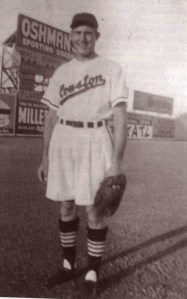
Jerry Witte Models Late 1950 Buffs Uniform Shorts. They weren’t exactly bad. They were just absolutely horrible. The 1950 Houstons Buffs of the AA minor-level Texas League were well on their way to a deserved last place finish due to a severe absence of talent. It was one of those seasons in which the parent club St. Louis Cardinals had pumped all the talent upstream to their higher AAA level Columbus, Ohio and Rochester, New York teams.

With winning out of the mix as an attendance booster for the games at Buff Stadium in July 1950, the Buffs had to fall back upon the creative inspiration of club president Allen Russell for their hope of avoiding the dreaded red ink that usually follows a losing club like an old airplane message sky streamer. In Russell, the parent Cardinals trusted. The man already had taken the Buffs through the 1948 winning season in which the AA Houston club had outdrawn the losing St. Louis Browns of the major American League.

Allen Russell would find an answer for the challenge of 1950. Or so everyone hoped.

When the Russell antidote was announced, Houston fans reacted with derisive laughter and obsessive curiosity. It was the curiosity factor that Russell was betting on as the ultimate winner in this mood tug-of-war when he announced that the Buffs would embark upon a “Beat the Heat” campaign for the balance of the 1950 season by switching to short pants as their everyday uniform lower garment. “May as well try to beat the heat,” some Buff  fans exclaimed, ” ’cause they sure as heck ain’t beatin’ nobody else!”

The first fan reaction for the first Buffs game in shorts was not totally virginal. Russell had experimented briefly with the idea during the also fairly awful 1949 Buffs season, but without this kind of marketing promotion to the plan. Most fans were seeing the “new look” for the first time and the first wave came in droves to see what there was to see.

What the fans saw was a club that was equally capable of losing in short pants. These short pants, by the way, were little more than cut-off versions of the old blousy flannel trousers that eventually found their way to the scissors-mill. In fact, the blousiness of the Buff shorts caused them to more easily resemble a short skirt –  another factor that didn’t eactly appeal to any of the ballplayers interviewed. As I reflect now upon my 12-year old memory bank of that season, all I am able to recall is the common “what choice do we have?” attitude that threaded its way through the player quotes in the Houston Post. If there were any comfortable cross-dressing Buffs on the 1950 club, they either didn’t talk, or else, they weren’t quoted in the papers of that era. At age 12, I wouldn’t have recognized them anyway.

The players really did hate the uniform shorts. Good friend and late Buffs first baseman Jerry Witte talked about this period in “A Kid From St. Louis,” a biography that I helped him write a few years ago. The pain of sliding on bare skin and the exposure vulnerability to Houston’s vampire-squad mosquito attacks were the major objections. “We produced enough (blood-scrape) strawberries to open our own fruit market,” Witte said.

The experiment didn’t last more than three weeks. Once the attendance slipped back to its previous low level and people no longer cared what the Buffs were wearing on their way to the bottom, Russell killed the campaign, allowing the Buffs to finish the season in last place, but standing tall in long pants.

Curiously, and as bad as they were, the 1950 last place in the Texas League Houston Buffs still managed to outdraw the 1950 seventh place American League St. Louis Browns at the gate. Season home attendance for the ’50 Buffs topped out at 255,809. – The ’50 Browns drew 247, 131 fans to Sportsman’s Park in St. Louis. If anything, those three weeks in shorts probably gave the Buffs the 8,000 plus extra fans they needed to again mildly  pummel the Browns at the main place it counts in baseball: that is, smack dab in the pocketbook.