Posts Tagged ‘Houston’

A Letter to Jimmie Menutis

August 15, 2010

This morning brought a pleasant surprise. It was an overnight e-mail letter to the readers of the Pecan Park Eagle from the one and only Jimmy Menutis. It’s already posted where Jimmy left it as a two-part comment on the PPE article headlined as “Jimmy Menutis: Houston Heart of Rock ‘n Roll,” but I wanted to repeat his two messages here to make sure that no one misses them:

(1) From Jimmie Menutis to Pecan Park Eagle Readers, 08/15/10, 5:06 AM ~

I am very happy to see all the reply and fond memory. I too have great memory of all my friends and customers. Guess what…..my wife of 50 years and I still dance the whip.
We are living in new orleans, also have a condo in the metropolis o w.gray in Houston. We have a business in Lafayette, la and spend time there.

We are considering having a reunion In new Orleans with one of the name artist if you wish to be invited send your name and address by mail to

Jimmie menutis
110 Travis street
Lafayette, la. 70503

Circulate this message to others you know would want to attend.

Regards
Jimmie

(2) From Jimmie Menutis to Pecan Park Eagle Readers, 08/15/10, 5:09 AM ~

Love to hear from all my friends.

Jimmie Menutis
110 Travis St.
Lafayette, La. 70503

Email
Rmenutis@brandedworksinc.com

Response Letter to Jimmie Menutis from Bill McCurdy, The Pecan Park Eagle ~

Dear Jimmie,

It is both an honor and a joy to hear from you. Although you have never met most or all of us who have written our happy recollections here lately of your once-great club on Telephone Road, we hope you will easily see from what has been written how big you still are in our hearts and memories of that wonderful period in our earlier lives.

I am also posting your contact information a second time here so that our readers will be able to contact you directly about their availability for a reunion party in New Orleans, Lafayette, or Houston somewhere down the line. My guess is that a Houston party might require the rental of a pretty large hall, sort of a “Jimmy Menutis II” site, if you please.

My wife and I would love to join you and Mrs. Menutis for such a party, if you decide to have one, and I also invite you to use this site to get out information to your many fans, as well, about a party, about the music of those good old days, or anything else you may be up to in these new good old days that you care to share with the general public. All you have to do is post it here as a comment following this article – or else, drop me an e-mail if it’s a whole new subject.

Thanks again for writing, Jimmie. And long live rock ‘n roll and the Menutis legacy.

Regards,

Bill McCurdy, Editor, The Pecan Park Eagle

Hughes News: Howard’s First Marriage

August 13, 2010

Howard Hughes, Jr.

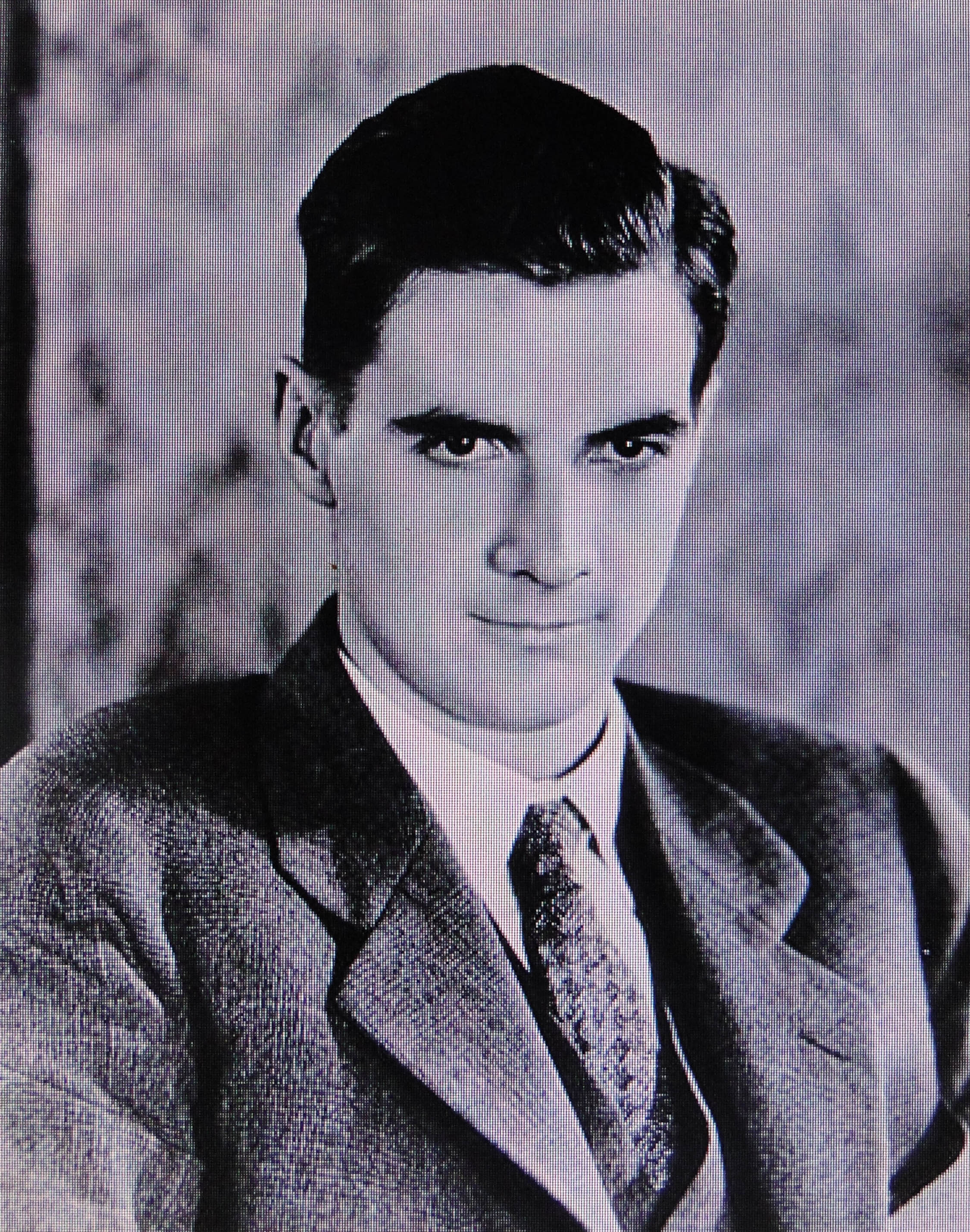
Of all the famous figures to come out of Houston over the course of history,none was ever more mysterious, more talented, richer, or more powerful than the late Howard Hughes, Jr. The attention he drew to aviation design was only matched by the futility of ego he drafted into the motion picture industry and the women he helped make famous by very personal interest and investment in their acting careers. Actresses Jane Russell and Jean Peters leap immediately to mind as the two greatest beneficiaries of Howard’s “benevolence,” but starlet Terry Moore of “Mighty Joe Young” movie fame is quickly recalled as one of the solid others.

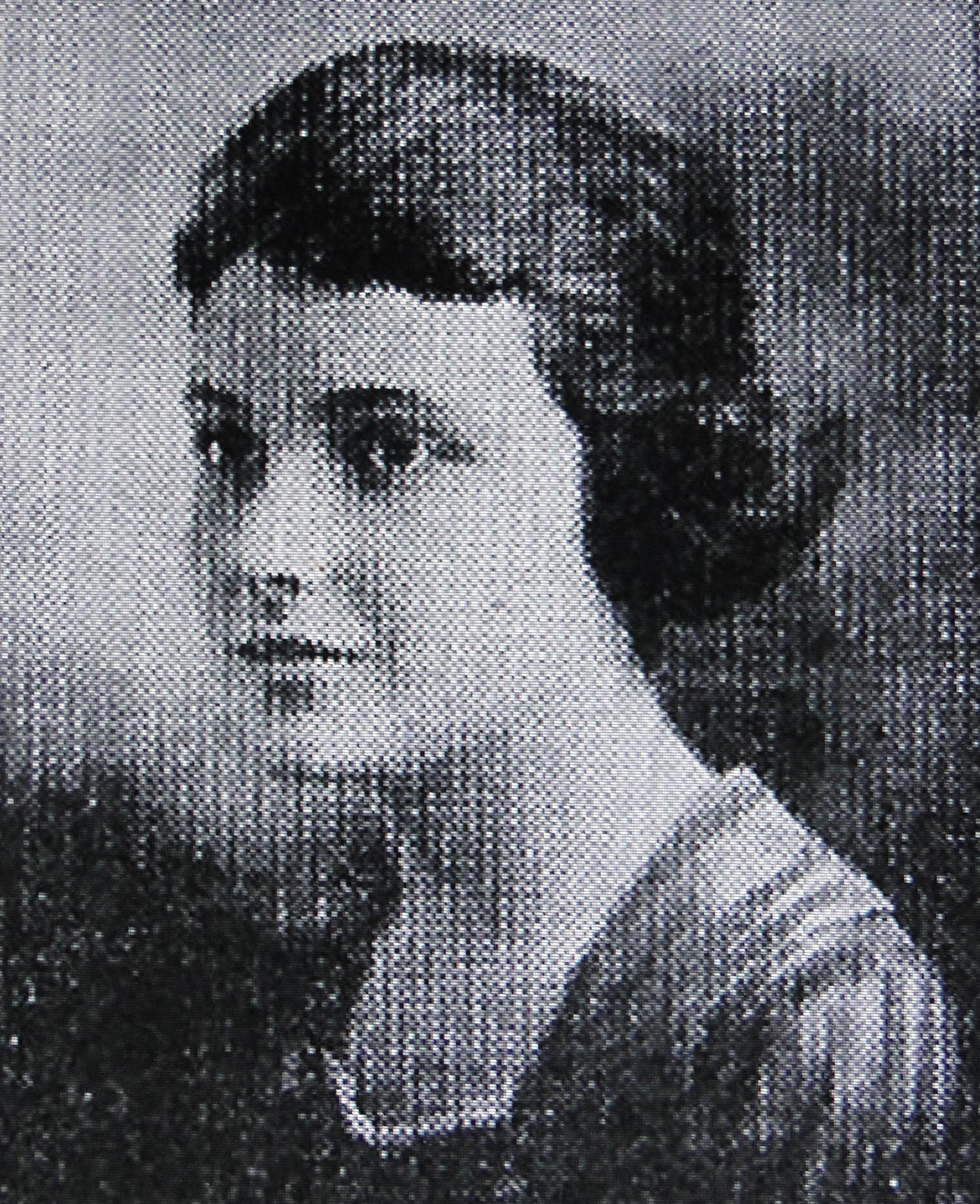
Ella Botts Rice Hughes

There are ample biographies on Howard Hughes out there – and quite a bit of information available even more easily over the Internet. That being said is being said here as simply my notation that any occasional column I write on the subject as “Hughes News” is simply anecdotal or sidebar to what we do not ordinarily see in the mainstream print about him. Today’s facts and questions are items  that you will not necessarily see without some serious or accidental search and find time in some library or personal collection somewhere.

Today’s contribution comes from a research colleague and new friend of mine named Randy Foltin. I’m not at liberty to talk abut it here, but Randy is currently working on one of the most exciting Houston history projects I’ve seen in a very long time. In the process, he sometimes uncovers peripheral information that he has no time to dally-dabble search these items because of his own research goals. As I’ve also learned over the years, the blessing/curse of historical research is that we find things of interest that we weren’t looking for, but, if we dabble into them too much for too long, we endanger the time and energy we need to spend on our particular research goals.

Sometimes, too, it’s not so easy yo know when a side junket in research is not a waste of time, but a new way of learning about the main research subject. That was not the case here. The case here was that Randy had turned up some long ago photos and information about Howard Hughes that he wanted it to pass on to me because of my general interest in Houston history. These photos had to do with young Howard’s early Houston education and his even earlier than we thought, or knew, connection with the woman who would become his first wife. The other recognition comes straight from Randy Foltin as a shrewd body language observation about young Howard Hughes from an early school class picture.

First of all, the individual photos of young Howard and his first bride are ancient. The one of Ella is the same photo used in the South End Junior High School “annual,” sometime between 1917-19, in which she also was proclaimed as the “Football Queen.” Howard Hughes also was a student at South End  back then, but it is unlikely that he and Ella were connected as a couple that early. For one big thing, she was two grades ahead of Howard at the time. For another, she was then the toast of the school jocks at the same time that the nerdier younger adolescent Hughes was busy developing both the first radio broadcasting tower and the first motorized bicycle in Houston.

By the way, South End Junior High School, south of downtown between Fannin and San Jacinto, later became better known as San Jacinto High School.

At any rate, Howard and Ella finally did get together, I understand, with the help of certain family connections, and they were married in Houston on June 1, 1925, about three months prior to Howard’s 20th birthday, but after the death of both parents and his assumption of control of the family business.

Howard and Ella moved to Los Angeles shortly after their 1925 marriage to help Howard fulfill his goal of producing movies. He succeeded as a filmmaker, but his Houston marriage didn’t work out. Ella moved back to Houston in 1929 and filed for a divorce. And Howard was already on his way. To other women. To more movies. To grand aviation projects. To great wealth. And to his final role as the most powerful and eccentric recluse in the history of the world.

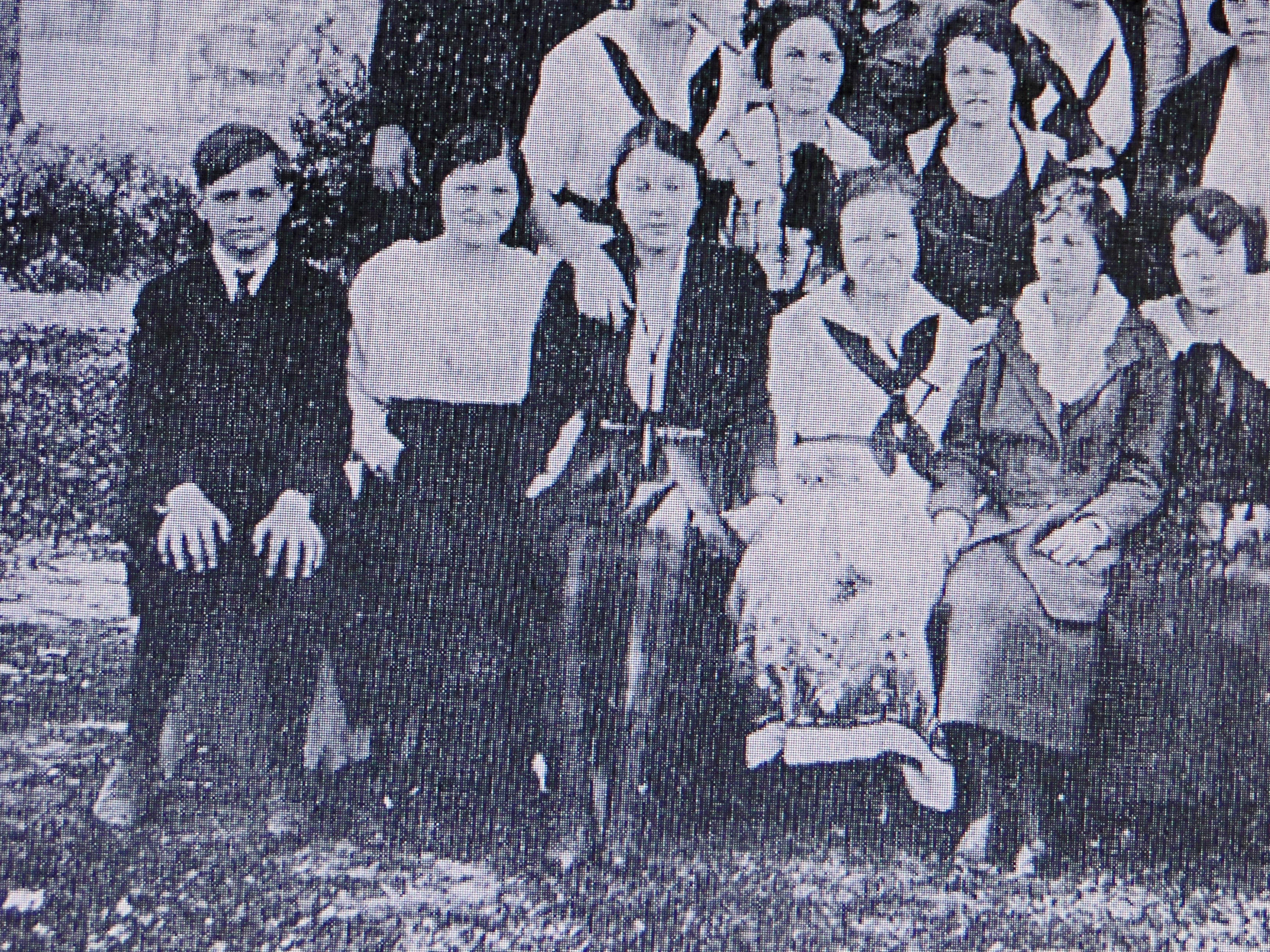
And the words “different” … “powerful” … and “recluse” all lead us to Randy Foltin’s other photo find and the observations he also attached to the display, awaiting confirmation that young man in the lower left hand front row of this South End Junior High School photo is, indeed, Howard Hughes. (What you cannot see here because it makes the photo too small for publication value – is the list of names of all students in the photo and showing one in about that lower left side spot as “Howard Hughes.”)

My call, from the second sectional crop of the young man on the lower left is that I believe it is Howard Hughes as a very young boy. Now let’s look at the photos – and then conclude with Randy Foltin’s observations about the body language communication we see in this picture of Howard Hughes.

Is that Howard Hughes on the lower left side, front row?

I am 99.999% sure that Mr Dark Suit Left is Howard Hughes.

According to Foltin, Hughes sits apart from his classmates as he eventually sat apart from all people. I agree with Randy completely. That’s what the picture says. Notice his self-containment. His hands are planted firmly on his own knees, ready to pull himself up by his own boot straps, if need be.  There isn’t a hint of emotional outreach to others here – and that’s pretty much how Hughes both lived and died. All people were little more than props in the life of this genius narcissist.  – and that trait is what eventually helped him die of malnutrition as the world’s richest man.

Randy Foltin saw that distance in the class photo and I could not resist placing my own impression of it here as a lifelong student of Howard Hughes. The man was an almost autistic genius, with the rare skill for combining strong business principles and creative vision in one human package. He simply lacked empathy for others and the drudgery issues in the human condition bored him to tears.

A prime example of Hughes’s self-centeredness in the wake of human tragedy is the great earthquake that struck Nicaragua in December 1973. Hughes was “reclusing” in the capital city of Managua at the time. Once the mighty quake hit, Howard mobilized his whole crew to the goal of getting out as fast as they possibly could – and that’s exactly what they did, escaping to the safer environs of Las Vegas, Nevada. By contrast, that was the same disaster that cost baseball great Roberto Clemente his life. While Howard Hughes was “getting the hell out of Dodge,” Roberto Clemente was getting himself killed in a plane crash while trying to fly away from the safety of his own home in Puerto Rico. His plane was loaded beyond capacity with essential supplies and it crashed into the ocean after it tried taking off, killing all the crew, and Clemente, upon impact.

The contrast between Hughes and Clemente here is stark, but it best makes the point of explaining who we are are talking about when we discuss the missing parts of loner Howard Hughes. He simply lacked a capacity for really caring about what happened to others.

Because he had no truly selfless empathy for others, Hughes did not know how to hire people who might be capable of acting with “tough love” empathy for the self-destructiveness they might have seen in him, the world’s sickest rich man. As the result, Howard Hughes, the man who once sat alone in a class photo, also died alone. surrounded by a staff who would rather let him die than get fired for standing up and saying “no” to the death choices he was making by the way he lived.

Thanks for the input, Randy Foltin. I’ve been looking for a bully pulpit on Howard Hughes for a very long time.

The San Jacinto Inn

August 8, 2010

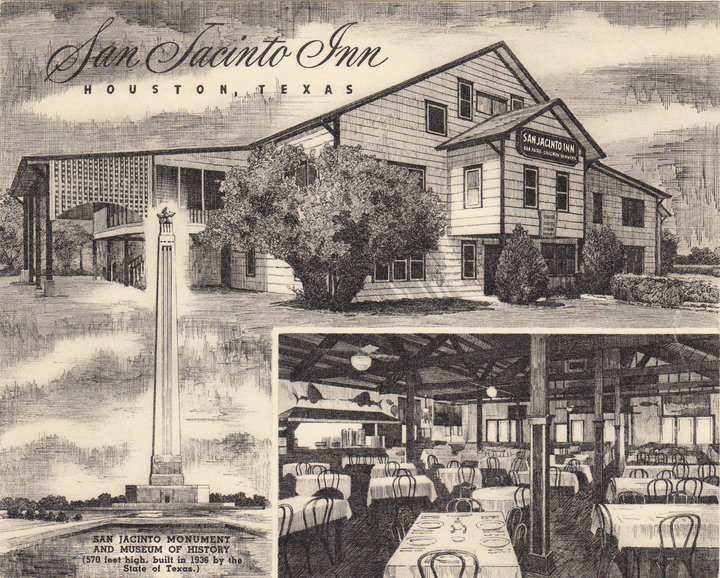
The San Jacinto Inn, 1918-1987.

For seventy years, the San Jacinto Inn reigned as the place to eat at the battlegrounds twenty miles east of downtown Houston where Texas won (or, at least, thought it had won) its independence from the Republic of Mexico. In an eighteen minute crushing battle on April 21, 1836, General Sam Houston and his Army of Texas volunteers totally overwhelmed General Santa Anna and his Mexican Army, forcing their surrender and their withdrawal from Texas. Back then, and even in 1936, when the San Jacinto Monument was started, no one had counted on the Mexican “army” pouring back into Texas one-by-one and in twos and threes from the latter 20th century forward, but that’s a whole other story altogether.

Today I’m writing about a Houston dining institution that was very special – even in an era when dining out was special. For my own mom ad dad, it was a place they liked to go, once in a very blue moon, when they really wanted to get away from us kids. I don’t recall going with them very often on any of those SJI trips. We were much more likely to get in on trips to Prince’s Drive Inn or Weldon’s Cafeteria on South Main, or to Felix’s Mexican Restaurant on Westheimer.

The San Jacinto Inn was just a place that Mom and Dad made into their own getaway destination. I was there just often enough to discover the culinary reasons that influenced their choice of it. The Inn offered all-you-can-eat shrimp, crab, or whatever other seafood was in season and on-board, plus delicious fried chicken and the most deliciously sweet and moist biscuits that ever melted in your mouth. Located on the monument grounds road that feeds directly into the Lynchburg Ferry, the San Jacinto Inn thrived as an ongoing celebration of the Texas Spirit. People just loved it – and they loved the tight connection to Texas history that came with the restaurant’s proximity to both the San Jacinto Monument and the Battleship Texas.

The all-you-can-eat feature was an almost trademark presentation of the Inn’s operations from the start, but the place’s beginnings were even simpler. Started on the north side of the Houston Ship Channel in 1918,  Jack and Bertha Sanders teamed up as a married couple by opening the place with room for only five tables. Jack supplied the fish and cooking wood from his own fishing and foraging – and Bertha did the cooking. It was said to be so good even then that people just couldn’t get enough of it.

Fire wiped out the first little place, but the Sanders couple just moved and built a bigger place, and on a site that would one day put it next door to the retired Battleship Texas. The deal grew in sweetness during the 1920s, when the all-you-can-eat price steadied at one dollar a person. The price doubled to two bucks a head (or mouth) in the 1930s, but that 100% price jump during the Great Depression didn’t stop people from swarming the place on weekends.

A major restaurant review of the Inn in 1925 elevated the local eatery into one that then and thereafter thrived upon rave national approval, transforming the audience somewhat to the regular inclusion of out-of-state diners during the vacation travel seasons. The service was southern and loyal. Many of the wait staff worked at the Inn for thirty to forty years.

A fire took the place down again in 1927, but the rebuilding resulted in the iconic two-story building you see featured as a picture with this story. Things continued beautifully until they finally came to an end in 1987.

The San Jacinto Inn remains a prime example of a larger truth: You, or Father Time, may kill something beautiful in it’s physical form, eventually, but the memory of anything lovely or happy or delicious lives on forever in those who lived it – whatever it may have been.

Long live the memory of the San Jacinto Inn!

The City Auditorium: Home of Houston Wrestling

August 6, 2010

I first wrote this basic article over on the Houston ChronCom site back on July 11, 2008. Due to renewed interest that fired from the spark of yesterday’s Jim Menutis article, here it is again. The City Auditorium was the site of some memorable concerts and appearances by some iconic people. Certainly the famous stand of Fats Domino there against segregation was major – as was the early 1930s appearance by Babe Ruth for a role model talk to the youth of Houston, but even these major events failed to leave the old place with its major venue identity.

You see, the City Auditorium will always be first remembered as the home of Friday Night Wrestling. Let’s have a nice familiar-face look this morning at that little file in Houston History:
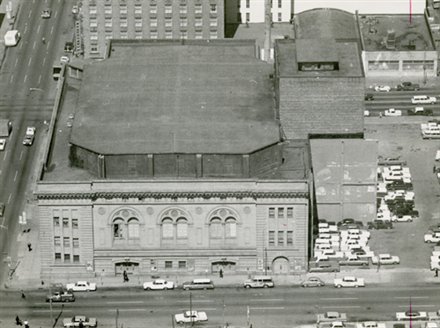
City Auditorium ~ Houston, Texas

The City Auditorium in Houston, located at 615 Louisiana, thrived from 1910 until 1962 as the downtown site of some top of the line historical speakers and entertainers. As mentioned earlier, Babe Ruth spoke there during the early 1930s. Elvis Presley performed there in 1955. Countless religious figures, including Billy Graham, conducted revivals there over the years.

The above photo is facing north. The tall building at the top is where most guests stayed, if they played the City Auditorium. It’s the Lancaster Hotel now. It was called the City Auditorium Hotel back then.
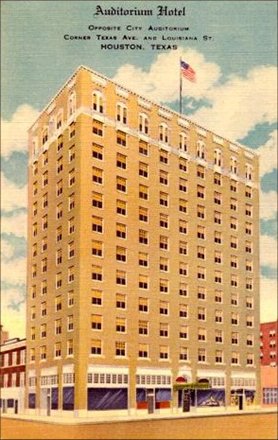
 

The Lancaster – in its days as The City Auditorium Hotel

The Lancaster Hotel is now the commodious and convenient place to be for those happy out-of-towners attending symphony concerts at the City Auditorium’s successor, Jones Hall, the venue that replaced the old auditorium in 1966.

For as long as we are honestly trying to maintain the true history of what has gone on in Houston over the years, we shall never be able to dismiss the most popular act that ever played this site as the very heart of the old City Auditorium’s dance card. The post World II popularity of professional wrestling married with the advent of television to make “Friday Night TV Wrestling” the most popular show in Houston for years.

Wrestling was not new to Houston after World War II. It had been around since the 1920s under the promotional drive of the late Morris Siegel. Wrestling just took to the “Big Eye” like fried eggs to a hot skillet. The combination instantly and simply cooked up the answer to every Houstonian’s hunger for easy answers to the many questions of Good versus Evil.

You didn’t have to think. All you had to do was watch.

We all knew it was fake. (OK, maybe 80% of us knew it was fake.) But it still didn’t matter. We tuned in to see the Good Guys and Good Gals win. (Yep!. We had “lady wrestlers” in those days too.) It would be impossible to recount them all here, but I will try to cover my favorites with a few words of special remembrance.

First of all, everything about Houston wrestling begins and ends with the name of one man, a man named Paul Boesch.
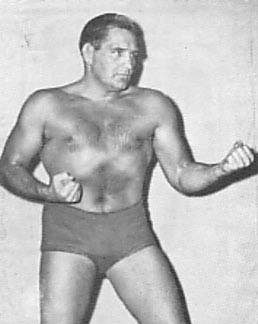
Paul Boesch followed Morris Sigel as Houston’s iconic wrestling promoter.

Paul Boesch (shown above) was a mostly retired wrestler with caulifower ears and a sharp, articulate intelligence. Boeach had an incredible intuitive feel for the dramatic moment and how to use the grudge element as everyday fodder for TV melodrama. As the announcer, and later as the promoter who replaced Morris Siegel, Paul Boesch was a master genius at knowing how to give the public what they wanted.

Once, in 1951, a bad guy wrestler named Danny Savich came on Boesch’s show to explain his atrocious behavior in a match he had just “won.” Instead of explaining, he punched out Paul Boesch too, daring him to do anything about it. By show’s end, Boesch had recovered enough to tell us over the air that he had spoken with Mr Siegel by phone – and that he would be making a one-match comeback next Friday to answer Danny Savich’s challenge.

There was just one catch. Because Paul Boesch was wrestling on the next card, he could not also broadcast that next Friday too. Anyone wanting to see the Boesch-Savich main event would have to buy tickets and see it live. I didn’t get to go, but I couldn’t wait to see the Saturday morning Houston Post sports page report. To my smiling great pleasure, the headline read: “BOESCH KOs SAVICH!”
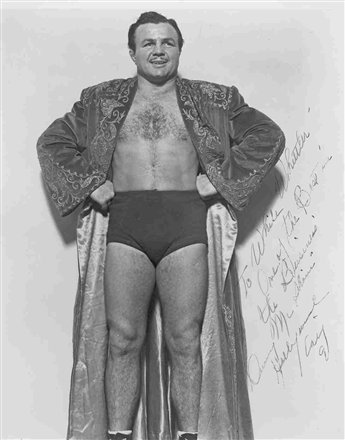


Irish Danny McShane drew love and hate.

I hated Danny Savich, but I loved Irish Danny McShane! “Irish Danny” was sort of a gray-colored anti-heroic fellow in this black and white world, one who could be a good guy or a bad guy, depending upon the character of the other wrestler and the circumstances of how right and wrong was tilting in the wind on a particular Friday. In other words, McShane was sort of a politician who wrestled. He could stand up for justice, if that’s what the fans seemed to want. Or, if need be, he could remove a bar of soap he had hidden in his wrestling trunks and rub it in a opponent’s eyes, if that would help him win. On those times he battered a foe down or unconscious, McShane had this little bold chesty rooster strut he did around the ring. It angered the fans who didn’t like him, and it frequently had a way of reviving the fallen opponent, who then would suddenly get up and whip Danny’s donkey until he begged for mercy! I hated it when I saw Danny beg. “Get up and fight, you big galoot,” I would yell at the tiny TV screen, but, if it wasn’t in the script that night, poor Danny would just get whipped. Then I got to hate him too for giving up – at least, for a while.


Duke Keomuka – He karate chopped his foes before they even called those open hand blows to the neck by that term.

In the Post World War II era, Hawaiian-born Duke Keomuka was cast in the role of a guy who was still fighting the Battle of Iwo Jima – on the side of the Japanese! Buried deep in that politically incorrect era were all kinds of racial hatreds that I couldn’t stand, even then. “How can you take sides with that dirty Jap?” some of the other kids would ask me. “That’s easy,” I answered. “The guy is really an American too. He’s just a great performer and he does things that nobody else can do! Besides, the war is over. My uncle fought there. And even he doesn’t hate all the Japanese people as you seem to hate them!” (I wasn’t the most articulate opponent of blind racial hatred in those days, but I tried.)

What could Keomuka do? He was the only wrestler back then who took his foes down with karate chops, and he was also the guy who taught all the others how to win a match with the “Asian sleep hold,” a move that fell only inches and seconds short of outright strangulation.

Boston’s Wild Bull Curry was a non-stop, two-fisted fury. The former boxer turned grappler never saw a chin he didn’t like to smack until its owner fell unconscious.

Wild Bull Curry had no redeeming or likable social qualities. He was just mean, mean, mean – and totally inarticulate on the verbal level. All he seemed to want was to separate every competitive head he saw from the shoulders of its owner, bashing his way mindlessly as a mad dog, I guess, to the top of the wrestling world. As far as I know, he never made it, but he sure left a large number of other wrestlers with smashed faces and heavy headaches along the way.
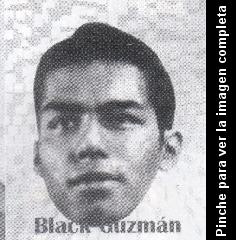
Miguel “Black” Guzman

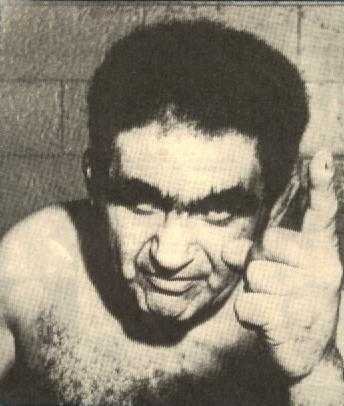
Miguel “Black” Guzman was a highly popular Good Guy and a very big star with Hispanic wrestling fans. Guzman later became one of my favorite customers when I was selling mens clothes at Merchants Wholesale Exchange as a working UH college student. Blackie always came into the store with this beautiful woman. I never asked about their relationship. I was afraid to ask. Besides, it was none of my business. – Whatever happened in Merchants Wholesale – stayed in Merchants Wholesale!

Rito Romero. You always knew that Rito was a Good Guy. It took the PA announcer twenty seconds to say his name prior to bouts.

Rito Romero was another popular Hispanic Good Guy wrestler. When he and Black Guzman fought as a tag team against Duke Keomuka and Dirty Don Evans, some of the TV viewers trucked downtown and spilled into the live attendance crowd.

Dirty Don Evans Went to Our Church (I think).

Dirty Don Evans held nothing back. He specialized in rubbing soap into the eyes of his opponents to make sure that they could see cleanly, if not clearly, I suppose. As dirty as he did it at work, Evans also attended our church on Sundays during his stays in Houston. At least, I always thought this one guy was Evans. He sure looked like him, but maybe I was wrong. Not once did I ever see the guy in church rub soap in the eyes of the person sitting in the pew ahead of him. So, maybe it wasn’t Dirty Don after all.

Ray Gunkel, Getting Advice from Jack Dempsey

Ray Gunkel was the ultimate pretty boy Good Guy when he started his career in his 20s. When he returned to Houston in his 40s, he had transformed into one of the most mean-spirited Bad Guys in town. Must’ve been something he ate, maybe something like …  alimony payments? I can’t think of anything else that may have turned a good man into somebody that mean over a fairly short passage of time.
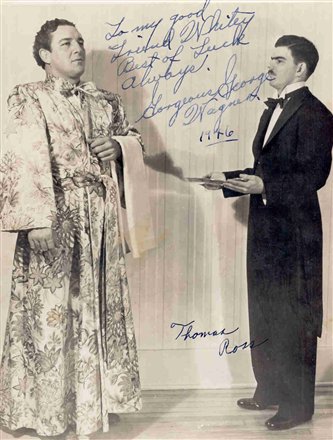
Gorgeous George dropped out of Milby High School in Houston.

Gorgeous George Wagner was a drop out from Milby High School in the Houston East End who went on to become the most famous wrestler of the early TV era. He sprayed the ring with perfume, dispensed golden bobby pins, and strutted around the ring like a haughty woman on his way to committing some dirty mayhem of his own upon “unsuspecting” opponents.

Those were the days, my friend. If you could suspend your recognition of the bogus reality that was pro wrestling back in the day, it was a great Friday night escape for Houstonians of a half century ago. And it was too, without a doubt, the main reason that most people remember the old City Auditorium today.

The place lived for years as the home of professional wrestling in Houston.

Try not to grunt and groan too much today, folks. It’s Friday and the weekend is upon us. Unfortunately for all of us, including those of you who are too young to remember: There is no more City Auditorium. No Jimmy Menutis. No Tin Hall. And, maybe worst of all, no Valian’s.

Have a nice weekend, anyway.


Valian’s: Houston’s First Pizza Pie

July 23, 2010

Valian’s, 1955 (Postcard Courtesy of Vito Schlabra)

Valian’s opened on South Main at Holcombe, across the street from the Shamrock Hotel, in 1955, as the first restaurant in Houston serving “pizza pie.”  I’ve written on this subject before, but I only received this beautiful postcard shot yesterday from Vito Schlabra, one of my old St. Thomas High School buddies. The desire to write a few more lines about the first and still best pizza to ever hit town was irresistible.

Unless you grew up Italian in Houston, chances were great heading into the 1950s that you had no idea in the world what a pizza was. Our Texan palates were just that deprived. We liked all kinds of food – and that included chicken, chicken fried steak, and a broad variety of Mexican dishes. Of course, we liked Italian food too – as long as it came in the form of meatballs and spaghetti or macaroni and cheese, but delights like  lasagna, ravioli, manicotti, fettucine, and pizza were not back then even words that ever fell from our lips in everyday speech at hunger time. We were simple cokes and burgers kids.

Then came Valian’s and everything began to change. Forever.

Slow on the draw with things new, I didn’t discover Valian’s until 1957 and the spring of my freshman year at the University of Houston. And it happened on campus during the annual Frontier Fiesta that we staged each spring for the purpose of having fun and throwing our student mean GPA out the window.

One of the fraternities, I think it was Alpha Phi Omega, ran a little cafe they built in our little Fiesta City western town called Yosemite Sam’s. They were selling Valian’s “pizza pie” by the slice. It was the first time I’d ever come close enough to smell that alluring cheese aroma and just had to give it a try. No more than two slices later, I was hooked for life.

There was something different about the unique cheese, tomato sauce, and crisp crust taste of Valian’s pizza that I’ve never tasted elsewhere – and there is nothing even close to Valian’s in the Houston of 2010 that I’ve been able to discover either.

Pizza is not this Pizza Hut, Papa John’s, Domino’s bloated “cheese bomb” that these corporate clowns like to disguise as “deep dish.” Pizza is the ultimate “man’s food” – and that includes all simple prepared foods that may be eaten on the spot, heated or cold, with virtually equivalent sensuous satisfaction to the male palate.

When the Valian’s family closed their place on South Main in the early 1980s, they also closed the door on their incomparable recipe for this terrific culinary delight. If only someone in that family knew what it could mean to bring that special pizza back to Houston in 2010. They could blow away the feeble cast of competition inside of thirty days, tops.

One funny pizza memory I have to retell. When I told my mom about Valian’s, she didn’t rush my dad out there to try it. She did what moms of that era did. She went to the grocery store, looking for ingredients, and found even more. She located one of the first “pizza pies” at the A&P on Lawndale near 75th in the still fairly new frozen food section. Knowing nothing more of pizza than the facts that it came frozen and was then called “pie” by both Dean Martin and her beloved son Bill (i.e., “when the moon hits your eye like a big pizza pie, that’s amore”), Mom bought the product at the store  and brought it home to serve cold and unthawed to my dad as dessert. – I wasn’t around to post any warning.

“What in the Sam Hill hell is this?” I think were my dad’s reported words after he bit once into the still unthawed taste of frozen pizza. Even when I later took my parents to Valian’s, dad would not try pizza prepared the right way. You see, once dad made a decision, there never was a court of higher appeal. He was like that about food and just about everything else. No matter how unfairly it may have occurred, pizza lost its only chance with Dad. It was the word “pie” and the temperature of the frozen food that misled Mom. She knew how to read, but often didn’t. So much for whatever instructions may have come with the grocery version.

Where are you Valian’s, now that Houston could use a really good pizza again?

June 30: Landmark Variety Fair Closes Doors at Day’s End

June 30, 2010

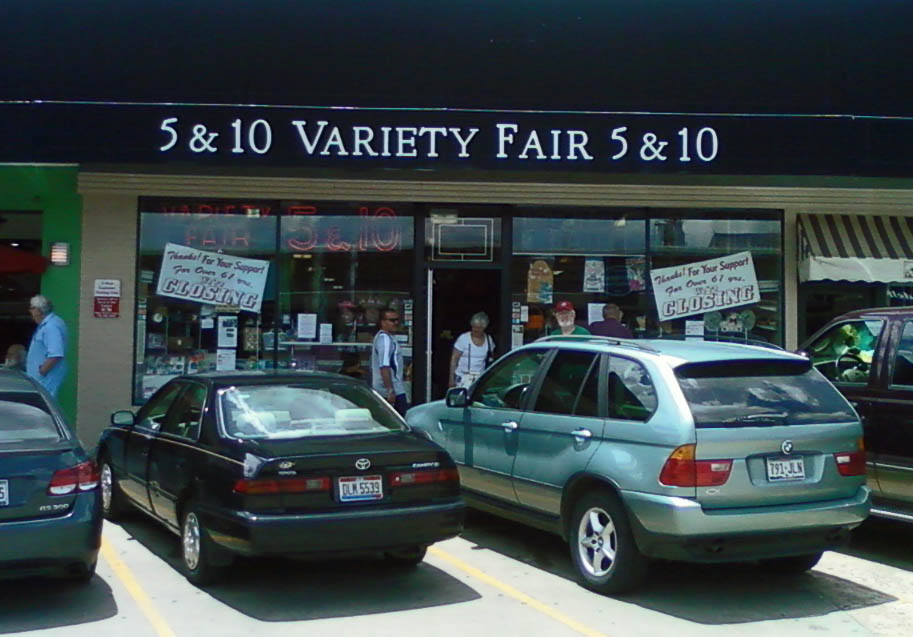
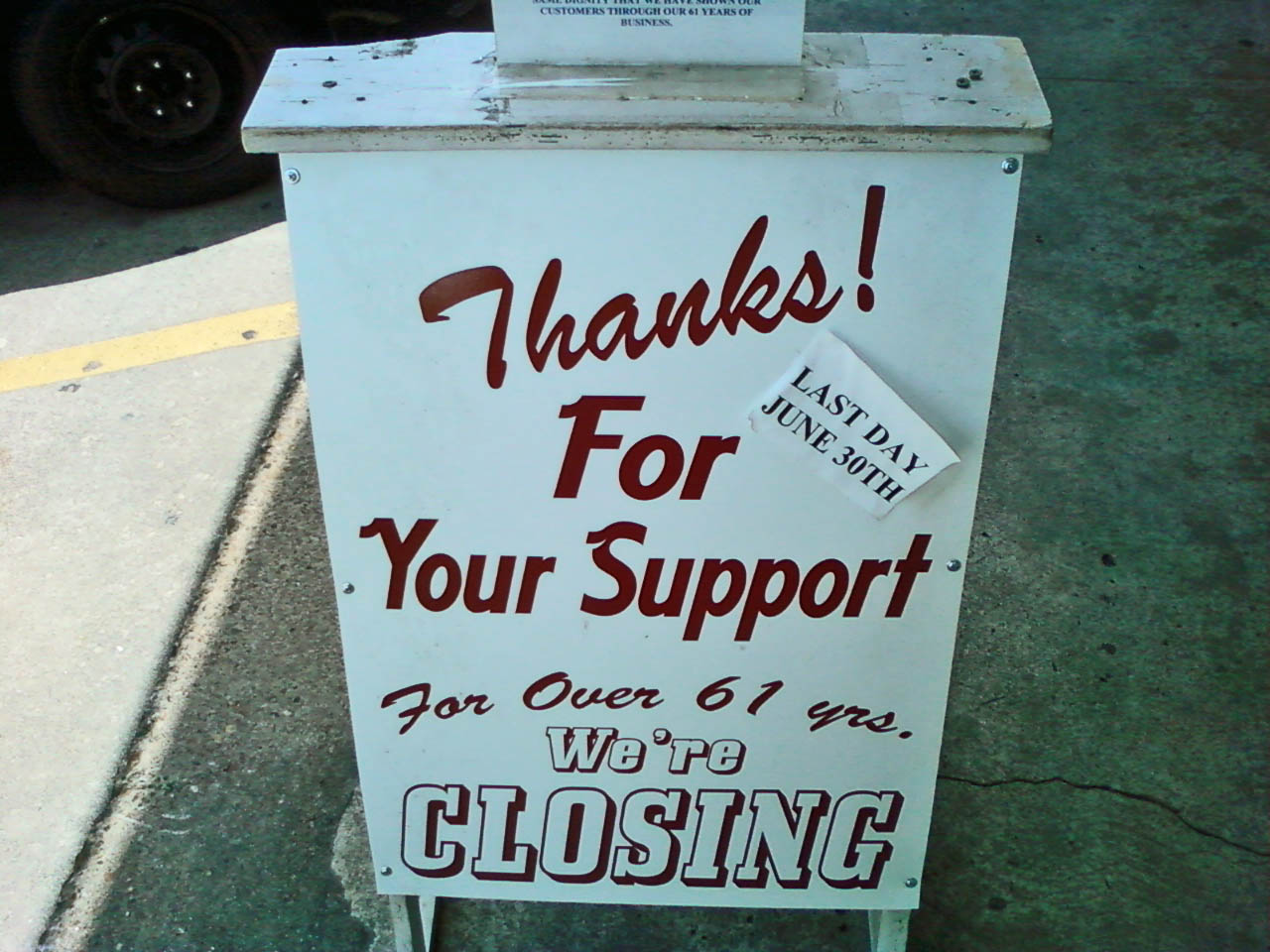
Summer clouds reflect for the last time today off the window of a store that has been open to the kids and young at heart of Houston since 1948.

Today, June 30, 2010, is the last day for business in the 61 plus year life of the Variety Fair Five and Dime Store at 2415 Rice Boulevard in the Village Shopping Center west of Rice University.

The rent’s getting too high for the store to keep running on a business model that’s been outdated for the sale of children’s toys for at least half the time the store has been open. That fact alone, however, cannot possibly tell it all. It just measures the end game dollar epitaph on Variety Fair. What began and lived on as an incredibly inspired and loving gift to all from a shining soul named Benny Klinger is now gone forever at the close of Wednesday business for the most basic of business reasons. Stores that lose money eventually close their doors. This door-closing simply took sixty-one and some odd number of extra months years to get here.

So, what hasc kept Variety Fair open all this time? Today is the last opportunity to sort of, maybe, find out for yourself, first-hand.

If you’ve never been there before, or you haven’t been there in a long time, you owe it to yourself to drop by the store today, if at all possible. Take the kids and grandkids with you too. They will never again see anything real along these same Variety Fair merchandising lines in their lifetime. That’s for sure.

There's plenty of angle storefront parking within two blocks either way of Variety Fair. Everything in the store is for sale at 50% off its normal low price.

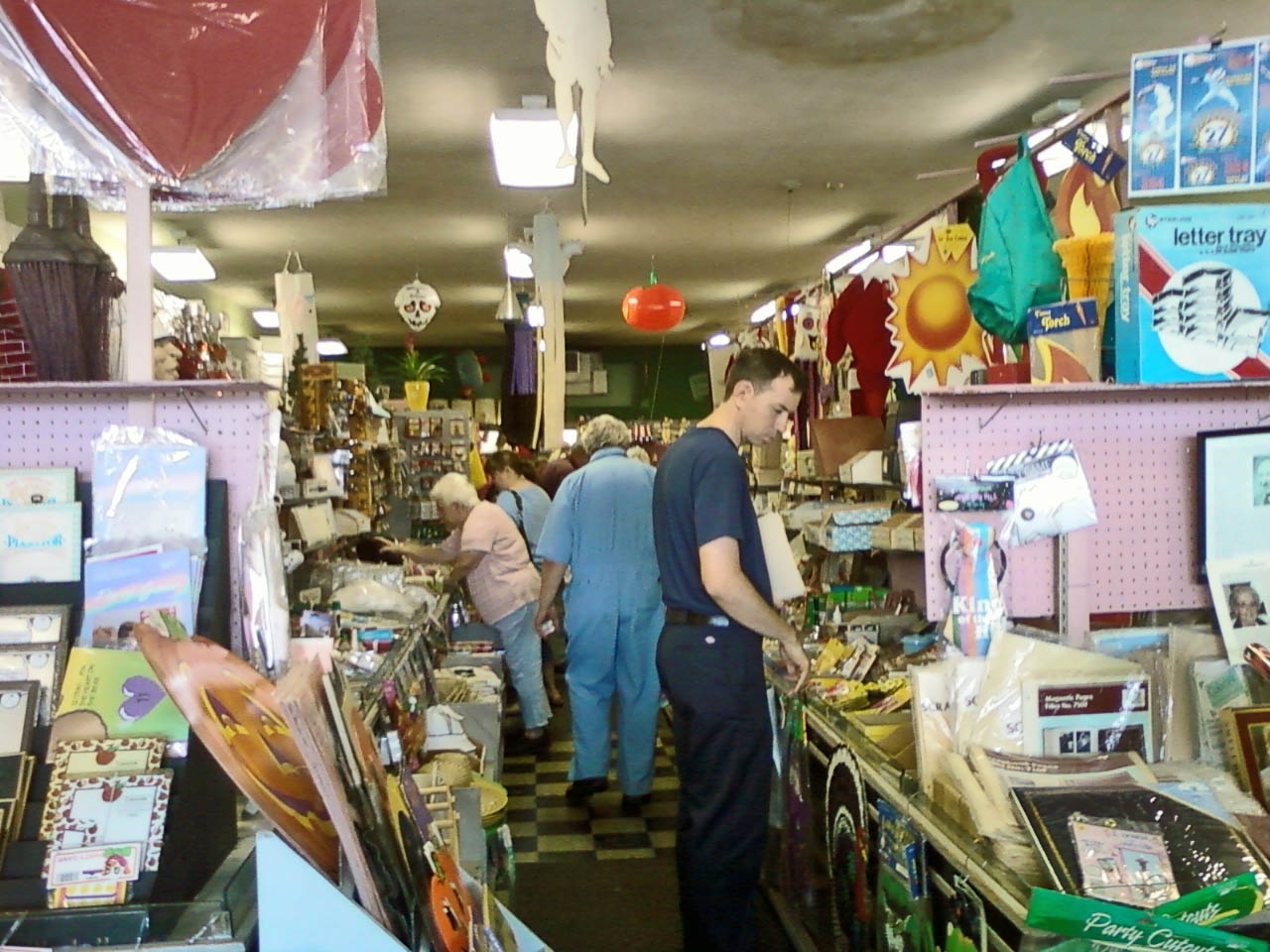
To those who don’t look too deeply at what happened at Variety Fair for over six decades, what they see may seem to be a perplexing case of chaos triumphing over order. Cheap toy merchandise is piled high and deep in stalls and shelves all over the place. There are no computer records of what is in stock. There aren’t even any computers. You simply have to turn things over on the shelves to discover what may be underneath – or look for the general theme of toys in the area you may be searching. Pretty soon you snap to how easy it is to find the Halloween gift section apart from the Christmas toy area.

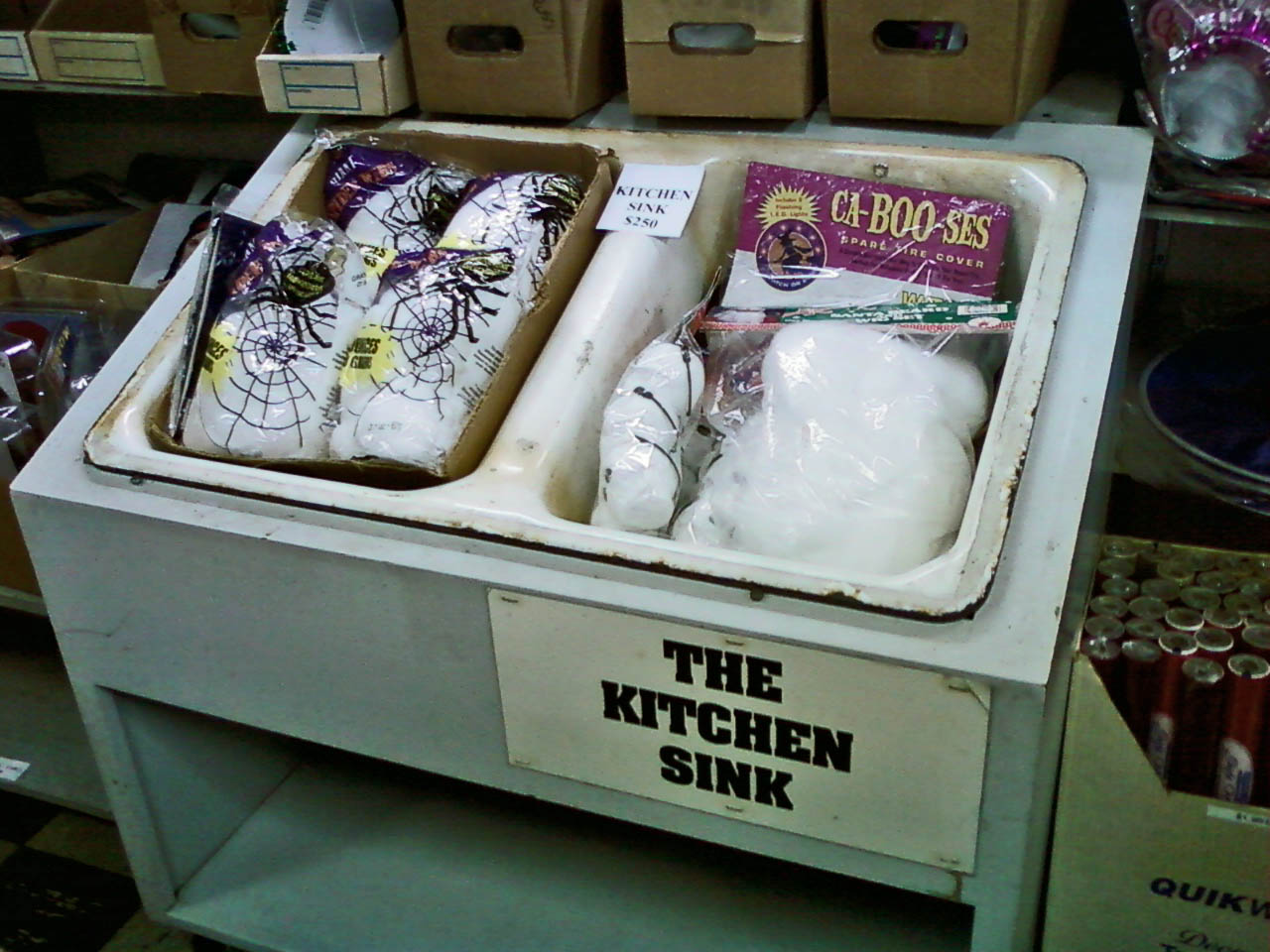
Even the kitchen sink is for sale today!

You will be able to shop in air-conditioned comfort with your neighbors.

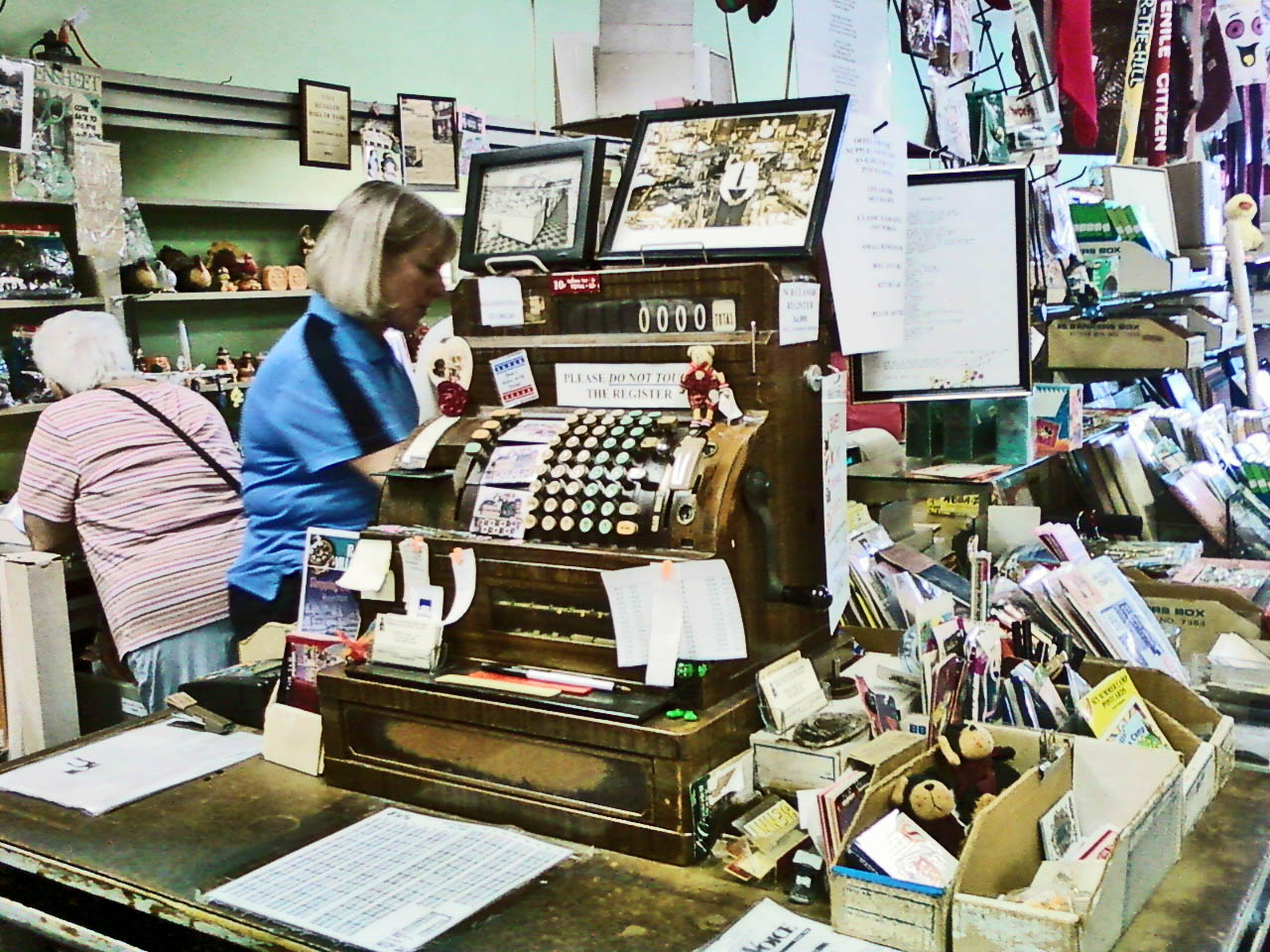
When your shopping is done, the family will ring up your sale at this classic cash register. You will get a written receipt from a handy nearby adding machine. That's Benny's daughter and store owner Cathy Irby in blue ringing up a customer as this photo was taken, as were all others here, on June 29th.

As a kid, I didn’t grow up in the Village area. My only trip here came about 1949, when I was 11 and my brother John was 7. Our mom had brought us to Variety Fair by car for a look-see visit that one time because she had some other shopping business in the Village that day. My memory of this trip was not so much tied to Variety Fair. These kinds of stores were a dime a dozen back in the late 1940s. No. My recollection was tied to the nice man who ran the store. He made us laugh and feel good about ourselves. He made us glad that we had dropped in to just look around and say hello.

That man was Benny Klinger.

Ask Benny Klinger if he was having a nice day and you would get this kind of answer: "I always have a nice day. Got it worked out with the man upstairs. There's a little 4x4 square of blue sky that travels over my head all day, no matter where I walk. It never rains on my parade. Now, don't you think you deserve the same deal? If so, I'll put in a good word for you. In the meanwhile, maybe you will find something here in the store that will help make the sun shine a little brighter until the real thing comes along!"

You just don’t meet a Benny Klinger everyday. In all the times as an adult that I “just dropped in” to the store near Christmas time and kid birthdays, I know that I was also stopping by for a dose of Benny. He knew how to reach everybody with something good, positive, loving, and giving – whether you bought anything or not. When Benny Klinger passed away in 1998, I felt a great personal loss – and I was simply one his thousands of customers, not some central character in his daily life.

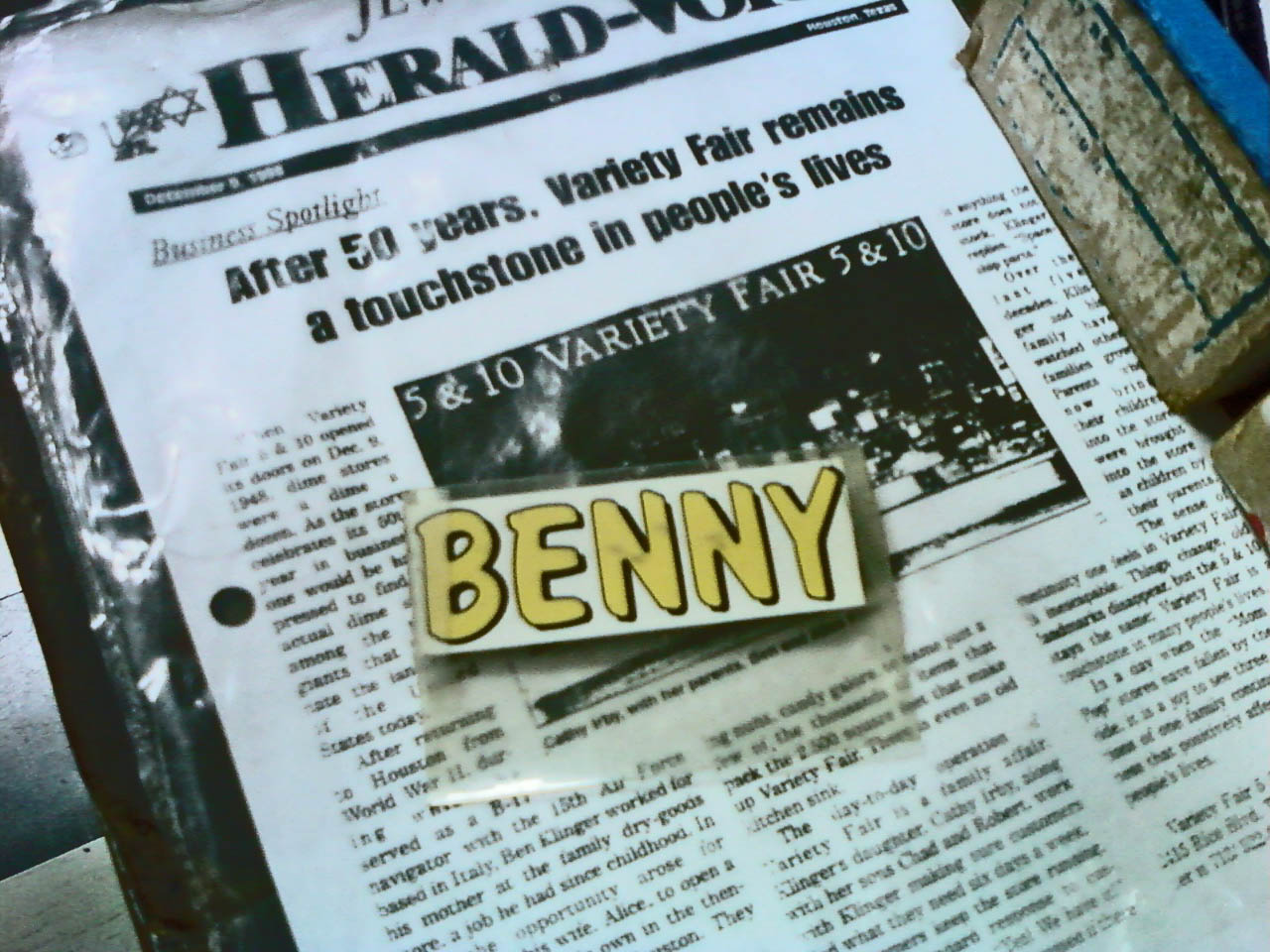
Benny's working name tag has remained by the register since he put it there on his last store day in 1998. If he could only come back and put it on again today, the store wouldn't have to close, but that isn't going to happen. Is it?

There are physical reminders of Benny throughout Variety Fair. Even if there were not, his ghost would still find you. My grown son Neal and I went to Variety Fair for our last trip there yesterday. We both left the store feeling better about everything. We also left with a few last chance souvenirs of the man and the store.

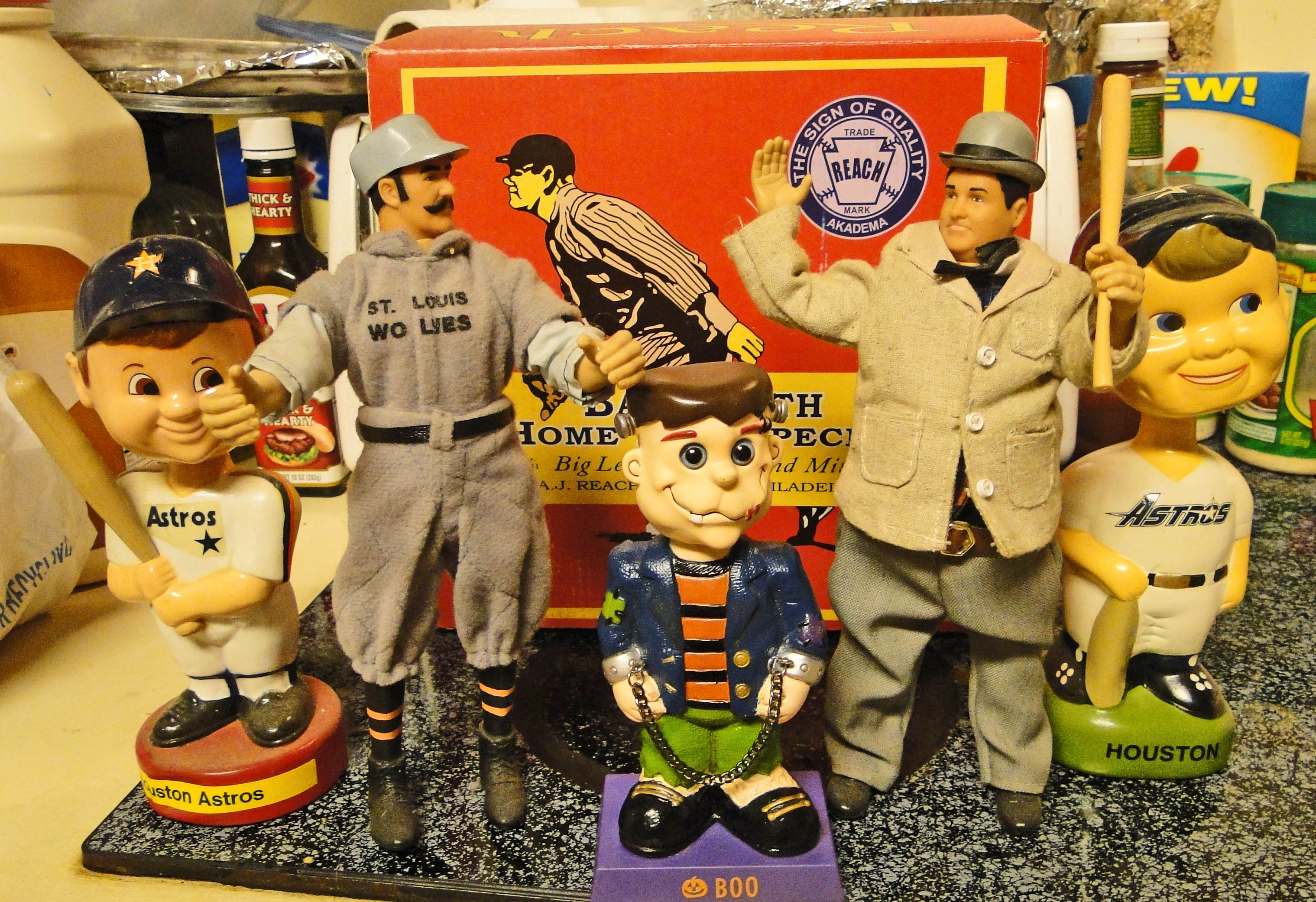
On our last trip to Variety Fair, we bought some toys for the kids in our lives, and I bought this little Frankenstein bobble head, just in case we decide to recreate "Abbott & Costello Meet Frankenstein" in our home baseball museum. Unfortunately, Frankie's tied up in another role for now. He's playing the part of the 2010 baseball season in our summer recreation of "Berkman & Lee Meet Frankenstein."

Thank you, Benny Klinger! And now that you are where you are, please don't forget to put in a good word for the rest of us!

Variety Fair is not the triumph of chaos over order. It is the victory of love over money. And that is why the place lasted for as long as it did.

Downtown Double Play

June 7, 2010

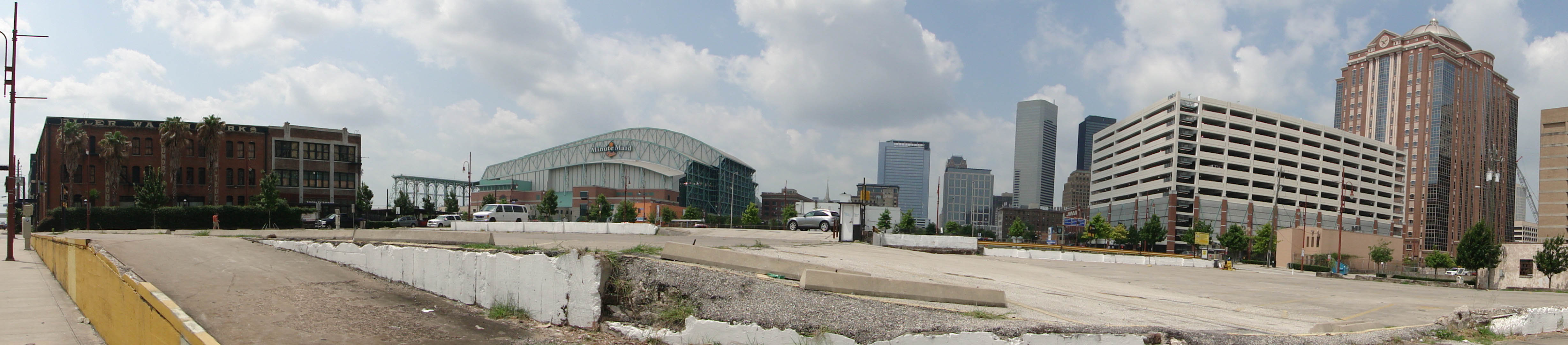
Minute Maid Park, Houston, Sunday, June 6, 2010

Minute Maid Park in Houston has been the driving present force for both change and preservation in the east downtown area now for the past eleven years. Anyone who knows anything about our city will tell you, no matter how bleak things look at any given moment, that the picture is a lot prettier today than it would have been – had the Astros remained south of the Texas Medical Center in the iconic, but falling down fast, rat-infested Astrodome over this same period of time.

Although ballgame attendance is down in 2010 due to economic and talent conditions affecting the team, the Astros have experienced some of their best years at the gate since the 2000 move to the cozier confines of the downtown “Juice Box.” We fully expect to see that three million people  season attendance gate again too – just as soon as the hope of winning and the availability of expendable income both ratchet up again a couple of notches in the hearts and pocketbooks of Houston baseball fans.

If we can ever succeed in rebuilding a well-heeled downtown living community, and a seven days a week alive service and entertainment environment going on again downtown, I think we shall also see an even clearer  rise in everyday ballgame attendance, Today there are simply too few grocery stores, other shopping places, restaurants, schools, and affordable homesite choices to make serious downtown living a practical option for most people, and especially for young families.

There’s not enough going on down there that’s affordable and people can’t wait for game days with the Astros, Rockets, and Dynamo to have choices. Of course, the other double play that enters into the picture here is the availability of work choices in the near downtown area. You can’t move to the downtown area to avoid the freeways if you still have to drive to the ‘burbs to earn a living, but there’s not a whole lot of job expansion going on downtown in the middle of our current economic climate.

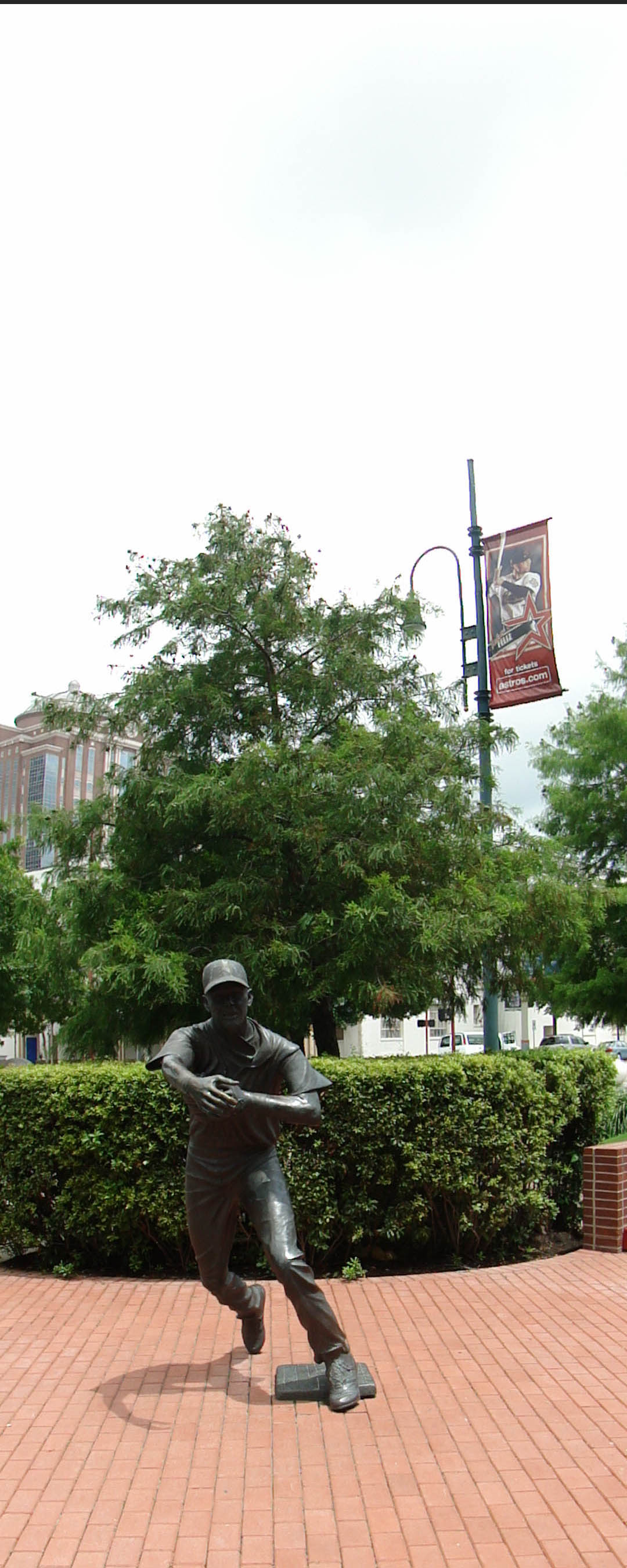
Craig Biggio makes the throw to first ....

I’m sure there must be some kind of downtown economic development council meeting somewhere in Houston today to discuss a more serious approach to improving growth conditions on the east side of downtown Houston. All I can offer are these few general thoughts and words – and the memory of our last best known downtown Houston double play combo of Craig Biggio and Jeff Bagwell.

Downtown Houston needs the dual availability of affordable, attractive area living choices, plus the availability of good-paying professional jobs in the downtown and near downtown region. Put those two plays together in some kind of stable form, where jobs and infrastructure come together in a way that people trust as real change and not a fragile promo package and we will start to see real movement to the restoration of everyday life in the downtown area.

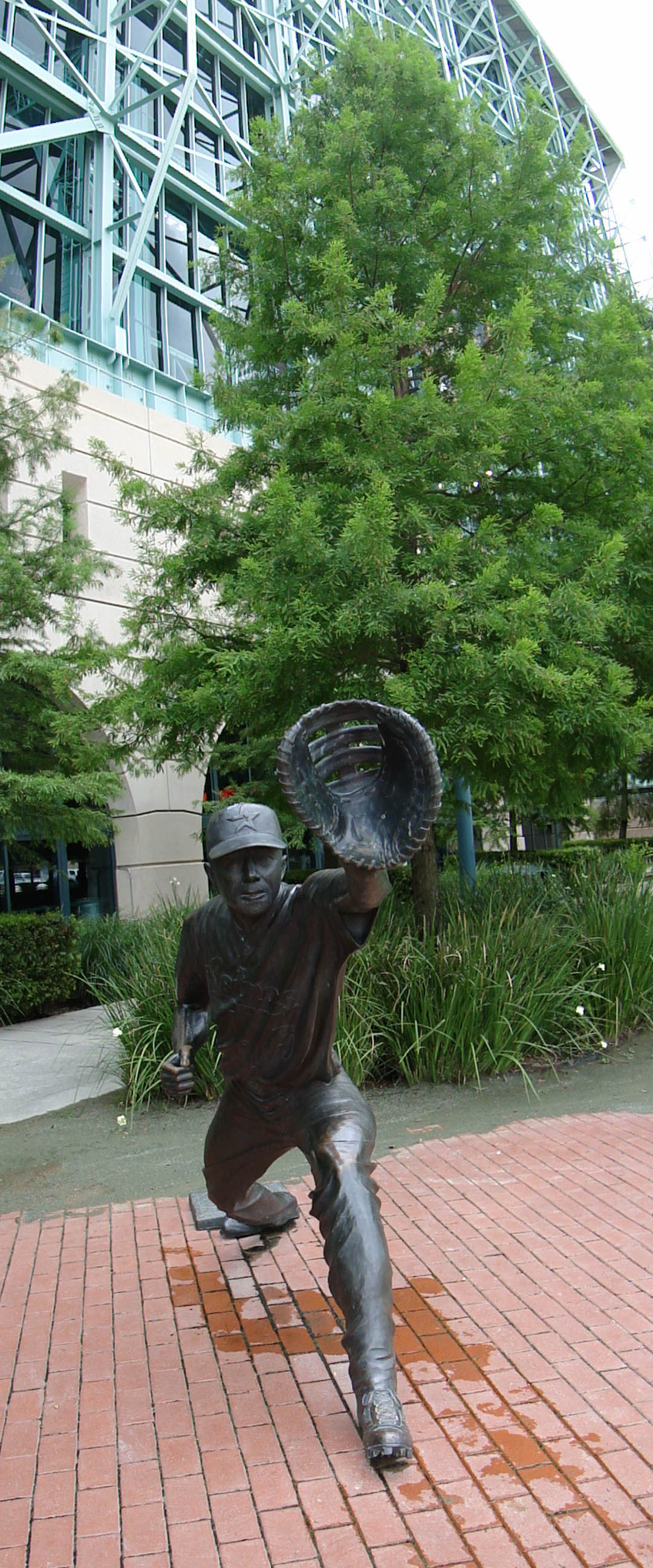
... and Jeff Bagwell takes it in to complete the double play!

The last time we pulled off a memorable double play downtown so well, we built statues to honor the facilitators. If Houston can pull off the downtown living double play, the only statues needed will come in the form of hands shaking in success.

I hate to sound like the Chamber of Commerce here, especially when I don’t even have a dog in the money hunt that certainly has to result from the success of this effort, but I see it as a move that really appeals to my personal double-play of caring for Houston.

I’d simply like to see us build a new Houston that doesn’t require us to destroy the physical and architectural  history of our local heritage in the process. Don’t tear down the old houses and buildings to simply make parking lots and new formless glass office space. Adapt the fine old structures already there for new use, wherever and whenever possible.

The Inn at the Ballpark at the corner of Texas and Crawford stands as a brilliant example of how even the tasteless old World Trade Center Building could be made like new into something that reeks with the ambience of a building it never was,

We can only hope that the relic across the street from Minute Maid Park at Union Station that was once the 12-story Ben Milam Hotel will someday soon shine even brighter once that lofty project is completed.

All for Houston. And Houston for all.

1906: 1st 35 MM Movie.

May 9, 2010

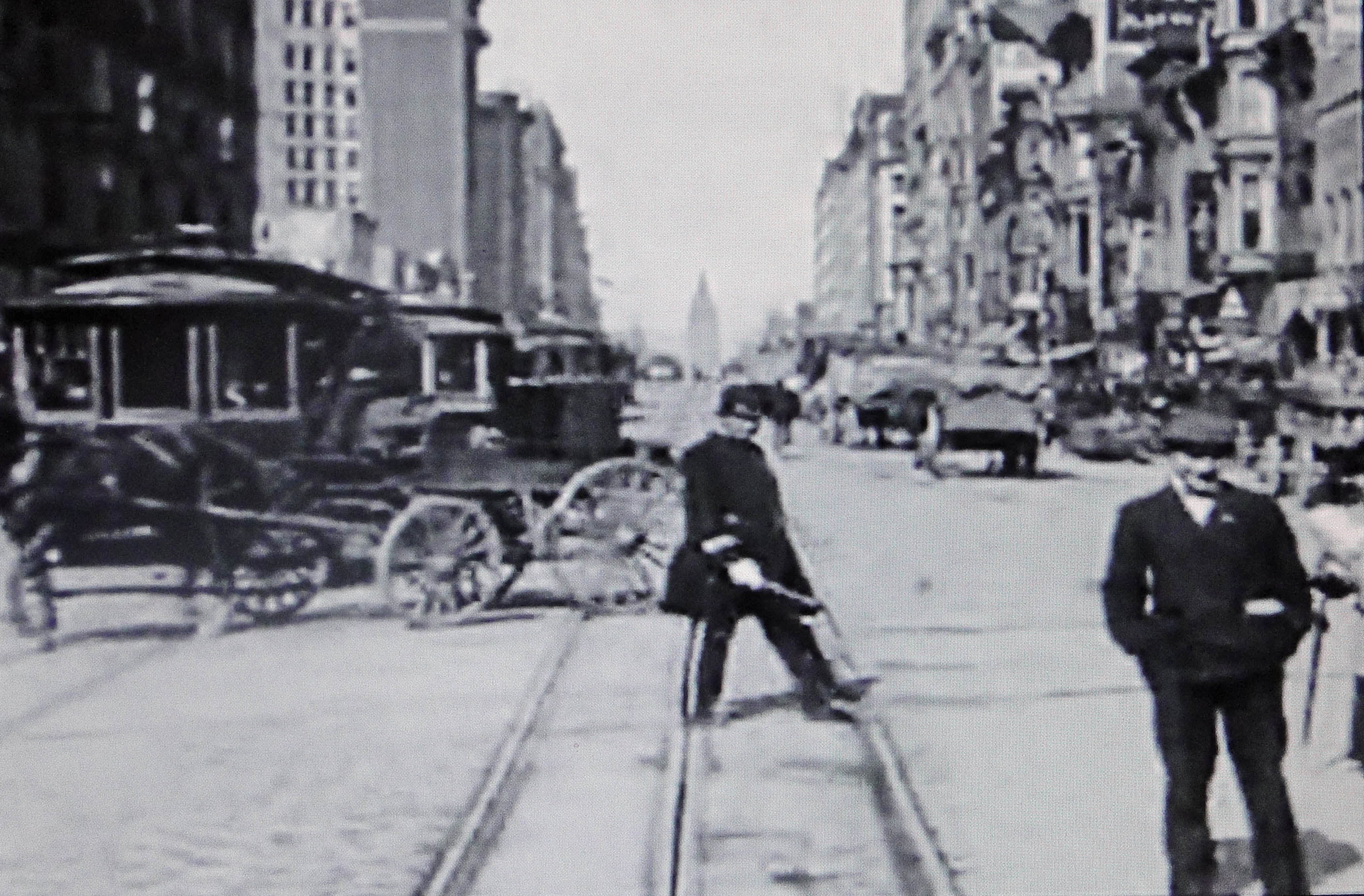
On April 14, 1906, just four days prior to the Big Earthquake, this first-ever 35 mm film clip was shot on Market Street in San Francisco.

It’s 1906 and the Houston petroleum industry is gushing over the discovery of oil at the Goose Creek Field east of the city. Thirty oil companies and seven banks are now operating in Houston. Out west, the City of San Francisco will just about crumble into dust when a great earthquake strikes the area on April 18, 1906.

A photographer friend, John Wendell Mason, and now living in England, sent me a link to this remarkable film clip overnight. Taken only four days prior to the big San Francisco Earthquake of 1906, it is the first 35 millimeter film ever shot and successfully developed in history. Aside from all else that makes this film special, that historical factor is noteworthy today. It gives all the rest of us the chance to view the mother of all modern films on Mother’s Day!

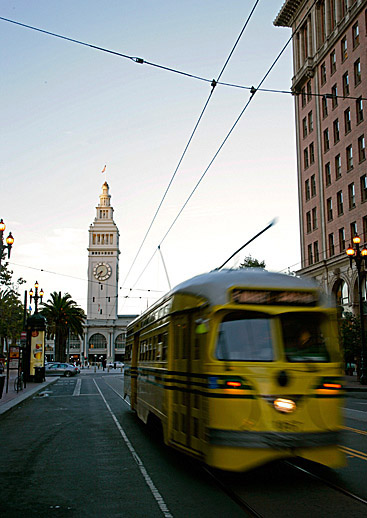
According to the information I received with the film clip link, the film was taken on Market Street by a camera mounted on the front of a cable car that ran out to the Embarcadero Wharf. The clock tower that we see prominently in the clip at the end of the ride is still there today as one of those rare sturdy survivors of what was about to soon shake the land and the city’s history.

Here’s the link. Just watch and enjoy:

http://www.youtube.com/watch?v=dGloeX1SpAU

The visual pleasures here are incredible. Check out the dressing styles of both men and women, the numbers of autos, bikes, and horse-drawn carriages, the chaos of traffic movement as people dodge the cable car at the last-minute on foot or simply turn their vehicles to cross the tracks in front of the cable car at the last second. No wonder we have so many street car/gas vehicle collisions today in Houston. Some human behaviors do not change all that much over time.

To me, the enjoyment is watching everything take place in real-time, without the herky-jerky false speed-up of a Charlie Chaplin comedy, a Teddy Roosevelt speech, or a Babe Ruth roach-speed home run trot. The film is the closest we shall ever come to a simulated time-travel arrival in San Francisco on April 14, 1906.

Back in this era, everybody got to inhale dried horse manure. It rook a while for the new gas and electricity driven vehicles to clean up all the city air by replacing all the horses.

This is a good time to reflect also on all that was going on in the Houston area back in 1906. We already know on the baseball front that 1906 was the year that the light-hitting Chicago White Sox (the so-called Hitless Wonders) rose to upset the heavily favored Chicago Cubs in the World Series, but let’s tap into more happenings from Houston in 1906.

On February 10, 1906, the suspicions of many about the artesian purity of the water being provided by the Houston Water Company when a repairman in the fifth ward discovers five catfish swimming in a water main.

On April 1, 1906, members of the new city commission form of government go to work under the new system and right away report on the increased level of efficiency and competence that the system brings to their work. I’m not sure how they measure this result on the first day in motion. Perhaps, they have a light agenda this day or maybe they are truly treating the moment for what it is – April Fool’s Day.

With public reaction to the earlier catfish find stirring them on in May 1906, the city purchases the plant and property of the Houston Water Company. Again, an improvement in water service is reported immediately. In this case, “improvement” may have been measured by the absence of catfish or tad poles in the drinking water.

Also in May 1906, Houston launches its plan for a “War on Mosquitoes.” Starting next week, the city will begin to cover every ditch in the city with a coat of oil. And where is Houston going to get the oil to be used in this treatment? – Get serious.

In August 1906, Houston’s first wireless radio station opens as one of only four that now exist in the state. The station is perceived as a competitive personal communication alternative to the telephone and telegraph. That’s how “wireless” came to be the new medium’s name. The concept of radio as a broadcast medium for general news, entertainment, and advertising was years away in 1906.

On September 3, 1906, work begins on the turning basin for the ship channel. Big ships won’t come to Houston until they have water that’s deep enough to traverse, and a place to turn around once their business is done here.

Also going up in September 1906 are Houston’s first truly named “skyscrapers.” A building that will reach eight-stories in height upon completion is under construction, much to the pride and awe of Houstonians.

The problem of Houston drivers of the new automobiles exceeding the 6 MPH speed limits around town draws the attention of city government in October 1906. Mayor Rice recommends that the city purchase an automobile for use as a police car in the chase and apprehension of speeders.

More National News, 1906: Writer Upton Sinclair publishes his novel, “The Jungle;” the 1906 San Francisco Earthquake kills 3,000 and leaves hundreds of thousands homeless in it’s almost total destruction of the city.

International News, 1906: Roll Royce Limited registers as a maker of fine cars; Mount Vesuvius erupts in Italy, devastating Naples.

When all is said and done, Happy Mother’s Day, Everybody!


Market Street Approach to Clock Tower Today, 2010.

Additional San Francisco Film Notes: “This film, originally (was) thought to be from 1905 until David Kiehn with the Niles Essanay Silent Film Museum figured out exactly when it was shot. From New York trade papers announcing the film showing to the wet streets from recent heavy rainfall & shadows indicating time of year & actual weather and conditions on historical record, even when the cars were registered (he even knows who owned them and when the plates were issued!).. It was filmed only four days before the Great California Earthquake of April 18th 1906, and (it was) shipped by train to NY for processing.” – E-Mail from John W. Mason.

1861: Baseball Comes to Houston.

May 6, 2010

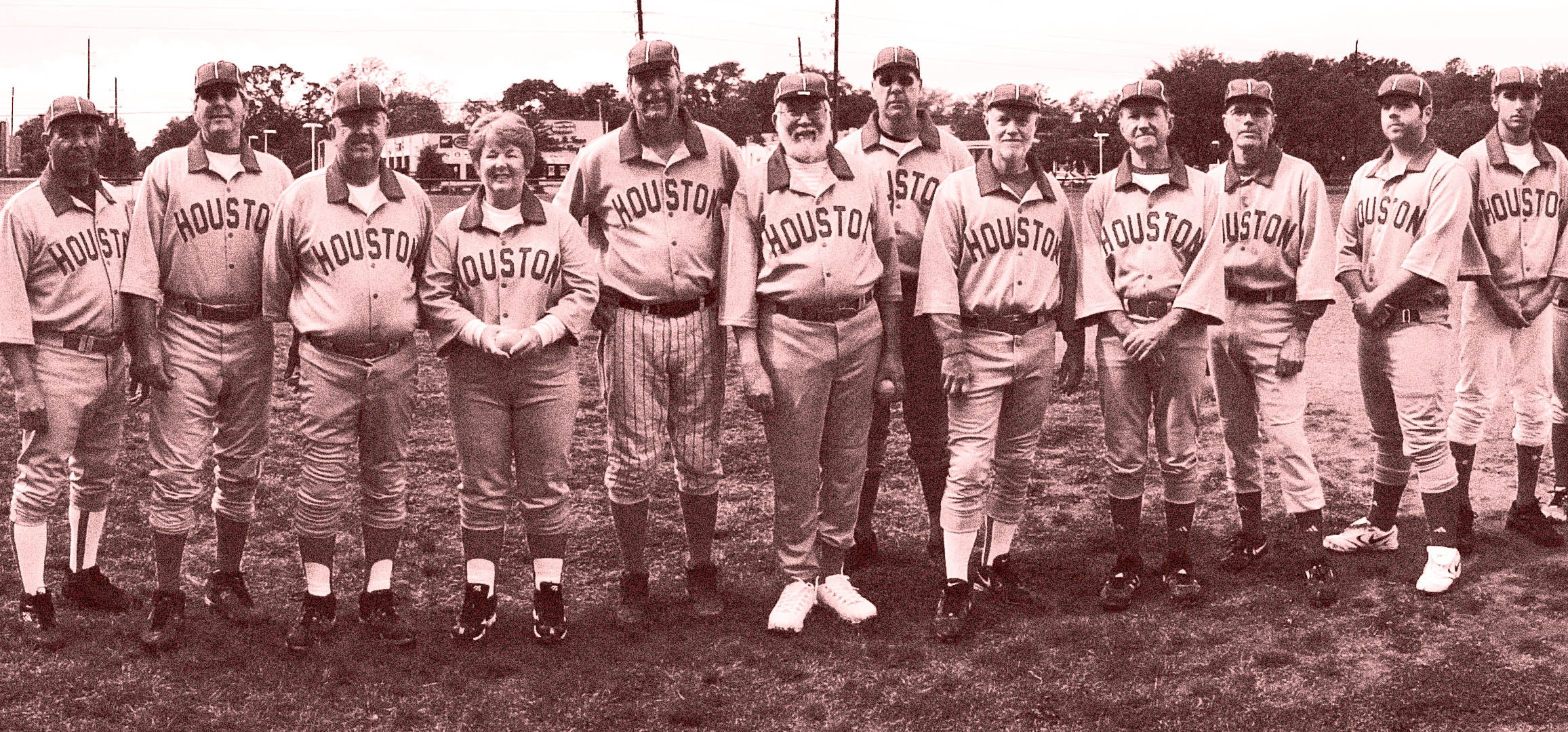
(L>R): 1861 Houston Mayor Will Hutchins. Major Abner Doubleday, Darrell Evans, J.H. Evans, CSA Capt. Dick Dowling, CSA Gen. Robert E. Lee, Glen McCarthy, 1st Houston Base Ball Club Board President F.A. Rice, Ike Clanton, Bat Masterson, Doc Holliday, & William H. Bonney. (J/K. The rest of the article is for real.)

1861 was a pretty tough, but dynamic year for the 25-year old City of Houston. The town was growing hard and fast as in inland port city and railroad transportation depot. At the same time, the winds of secession and civil war were blowing hard in the face of progress.

Local hero and city namesake Sam Houston stood strong and fast against the idea of Texas seceding from the Union that it fought so hard to join and then defend, but his was a voice of the minority in a struggle that seemed to most Houstonians as a battle between state rights versus federal authority – or more practically – the right of southern and new states to continue building their good fortunes on the backs of slave labor versus the national outcry against the hypocrisy of our American words in the Declaration of Independence and Constitution.

On the local level, Houston’s interest in the game of base ball kept on growing, in spite of the heavy hand that was about to fall on the future of all America. Houston had been founded by the Allen brothers of New York and it had been attracting settlers from the east coast region that already knew and loved the game before they arrived in Houston.

On April 16, 1861, just four days after the first shot of the Civil War had been fired at Fort Sumter in South Carolina, a core group of Houstonians met in a second-floor room above J.H. Evans’s store on Market Square for the purpose of organizing the first official “Houston Base Ball Club.” Mr. F.A. Rice was elected to serve as the club’s first Board President, but it took a while to actually get things going for actual play. Base Ball’s competition for manpower with the rapidly forming Confederate Army  would effectively delay regular play until after the Civil War’s conclusion in 1865. By then, the influx of new base ball fans from migrating Union soldiers and the return of Confederate military men to Houston had sweetened the pot of local talent.

For quite a few years, the flavor of Civil War sympathies continued to pour through the naming of local area amateur teams. On Texas Independence Day, April 21, 1867, the Houston Stonewalls defeated the Galveston Robert E. Lees in what has to be one of the great lopsided base ball games of all time. The final score was Houston 35 – Galveston 2.

One of our local SABR Chapter research goals is to confirm the exact site of the 1861 J.H. Evans store on Market Square. Regardless of what is there now, the site alone is certainly deserving of a plaque that notes the location as the birthplace of baseball in Houston. It’s time to get the job done now before this quiet, but important Houston historical fact slips through everyone’s fingers from here to eternity.

Note: In case you have not figured it out by now, or simply had no way of knowing, the folks in the gag photo above are really members of the Houston Babies, a reincarnation of the 1888 first professional baseball team in the Bayou City.

Have a nice Thursday, Everybody!

At UH, It’s Still the Same Old Story, A Fight for Love and Glory.

May 3, 2010

At UH these days, it’s still the same old story, a fight for love and glory, and maybe on the NCAA sports level, even a case of do or die, as well. The big UH sports question really is: (1) Will UH President/Chancellor Renu Khator and UH Athletic Director Mark Rhoades be able to recognize the historical entrenchment of the obstacles they each face and be able to martial the university’s fairly powerful alumni elders and legislative supporters behind them as they concurrently rally the diverse student body and general population of UH sports fans and ordinary peopled alumni to get behind this latest big push for excellence at the NCAA Division I level? The questions alone is a mouthful. The answers are far more mercurial than they always first seem. An this is not the first UH dance with this problem.

The UH fan support plight has been mentioned fairly often as a challenge in the past, but usually in far less sophisticated terms as a ticket “selling job.” It is that, but more too. We know better now. It comes down to selling tickets, but the job at hand is really so much larger.

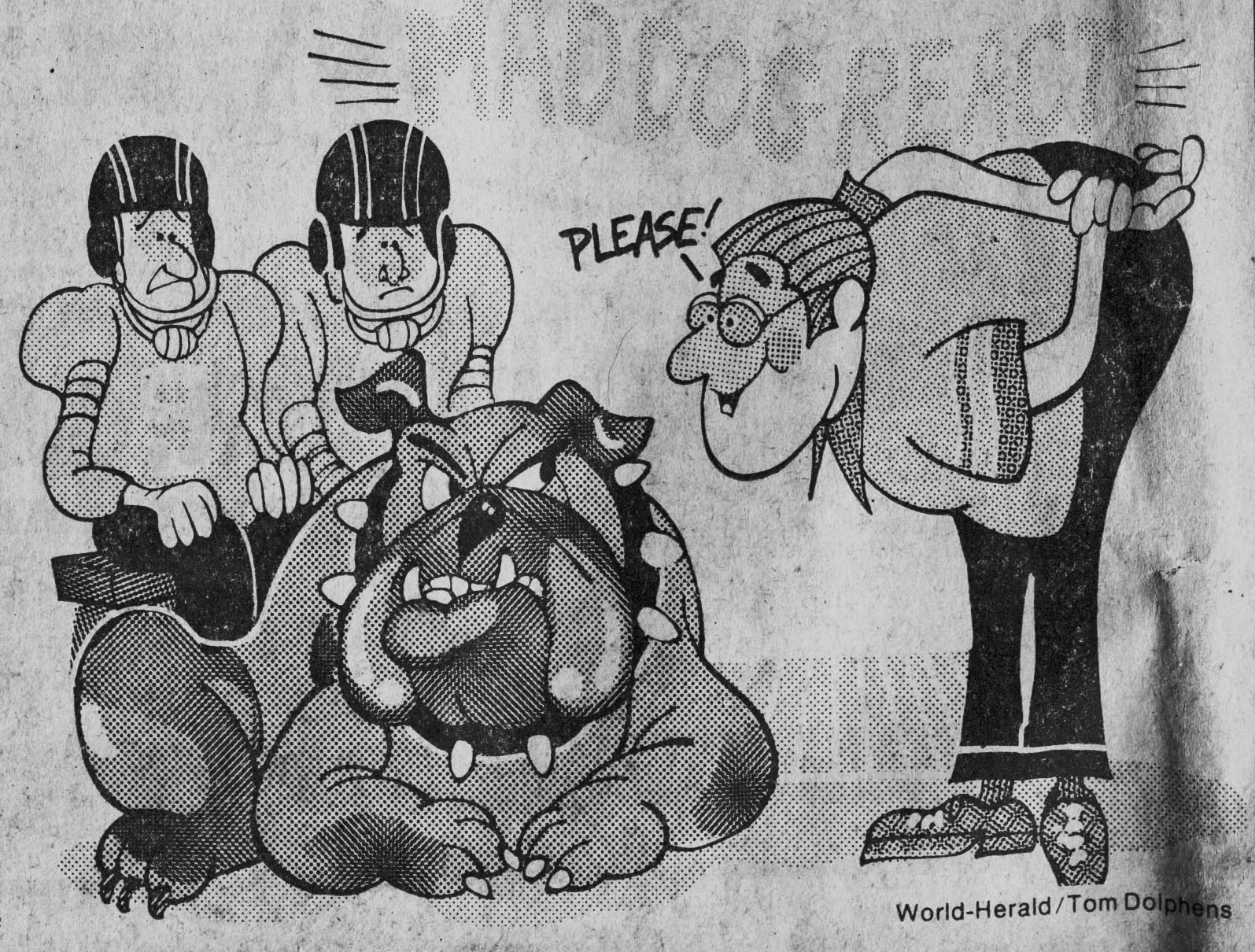
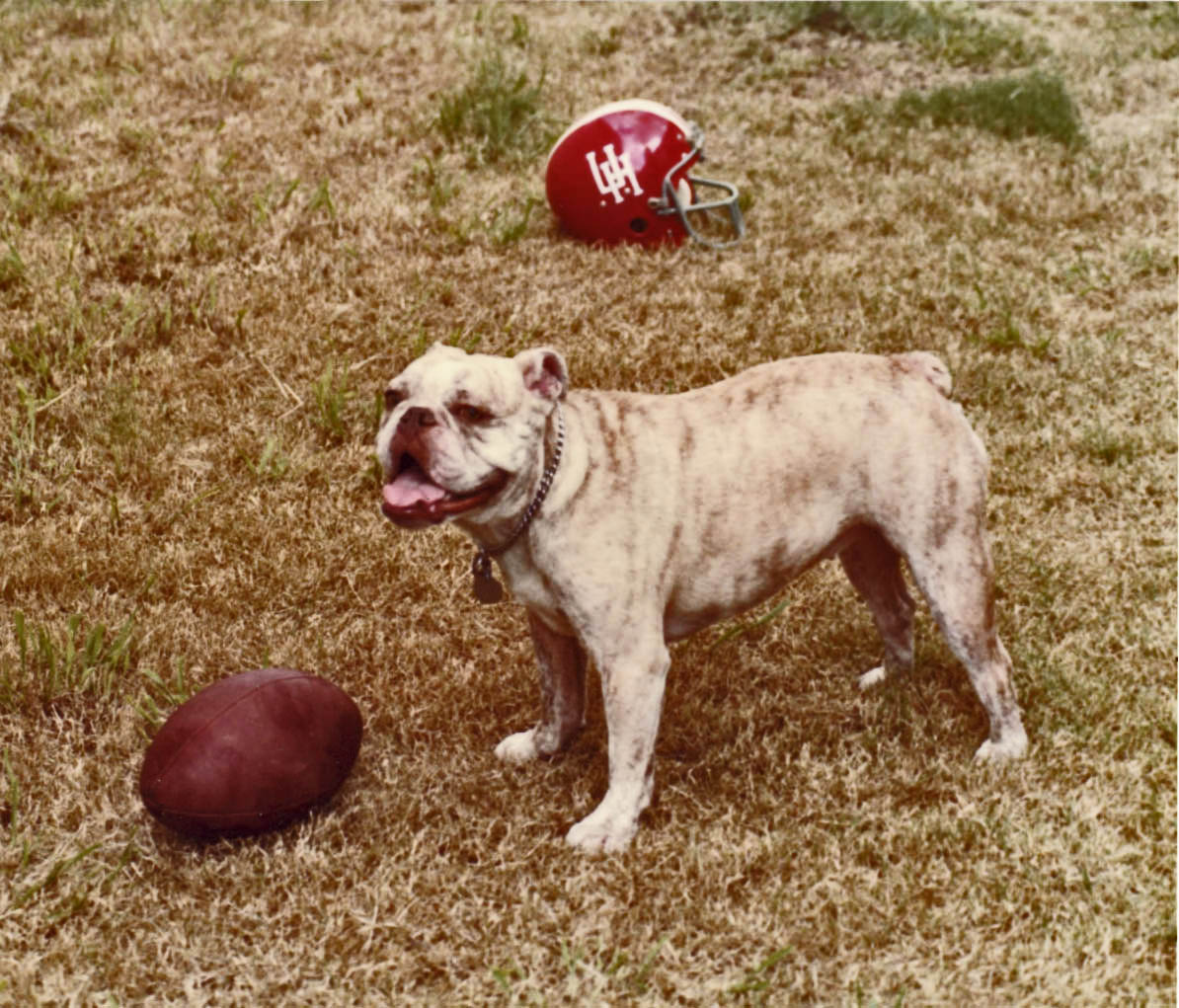
In 1979-80, Babe McCurdy served as mascot of the UH Mad Dog Defense.

As a UH alumnus (1960), I dove in for a first hand look at what I might do individually to help sell the team back in 1979. Back then I owned an English Bulldog named Babe, whom I thought would make a great mascot for the UH Mad Dog Defense. I also had a hunch that UH could do something with an authentic football game jersey that no other university or professional team had ever tried. In my proposal, UH would retail the sale of real UH football jerseys to fans. All would bear the digit #1 that currently was in use by UH linebacker Danny Brabham. At the end of the season, we would hold a retirement ceremony for #1, reserving that number of singular sensation fame from there to forever for the exclusive use of fans who bought official jerseys from UH.

As the best laid plans of mice and men so often unfold, things didn’t happen the way I hoped they would. UH ran off an 11-1 season in 1979 that included a 17-14 win over Nebraska in the Cotton Bowl and a #4 finish in the final AP Top 25 Poll, but the university dropped the ball in the way they decided to handle this incredible success: (1) The Retirement of Jersey #1 for the fans never happened. When linebacker Brabham went out with an injury early in the 1979 season, he applied and received permission for another year of eligibility in 1980. The retirement ceremony was postponed, but still never happened because the importance of the event was not communicated to the football coaching staff – who promptly promised the #1 to another recruit. And that was that. (2) Mad Dog Babe had become a darling of the fans, but the presence of the feisty and talented bulldog on the field had aroused some jealousy among members of the Cougar Guard students who took care of Shasta, the live Cougar, on the sidelines. There wasn’t much they could do with Shasta, who came to each game under heavy sedation for the safety of one and all. Meanwhile, the Mad Dog Babe was roaming the sidelines, tearing up jerseys and replicas of the opposition’s mascots and leading the Cougar defense on the field prior to games. As her owner, trainer, and good buddy in ridiculous mayhem, I got to be there with her for every game, even getting to kick a 35 yard field goal in an after midnight half time ceremony in a game with Texas A&M that had to be postponed until later in the evening due to a baseball playoff game between the Astros and Phillies back in 1980. It was simply a wonderful time for the two years (1979-80) that it lasted.

Babe was trained to move the football anytime she heard the Cougar Fight Song.

(3) The worst misunderstanding by former AD Dempsey fell hard upon Cougar Nation in 1980. Instead of grasping and flying with the jersey retirement-fan inclusion plan after that successful 1979 season, Dempsey decided to add a $100 per ticket personal seat license on sales to all UH season ticket holders. The crashing sound that followed was the clatter of UH fans, including yours truly, allowing their season ticket options to fall and hit the pavement. Babe and I were gone from UH after 1980 – and it took another twenty years and former AD Dave Maggard to get me back as a season ticket holder again.

The spirit of Mad Dog Babe is as long as her teeth.

Cedric Dempsey was simply the worst thing that ever happened to UH Athletics. He never really understood UH or the people of Houston. We cannot again afford to have anyone at the helm who either thinks or acts as Dempsey once did.  If UH athletics are to rise again to their SWC football and Phi Slama Jama basketball glory days, the Cougars are going to need (1) an infusion of new blood into the body of season ticket holders. When we remove our Cougar game caps, our current alumni bunch pans out like a field of aging cotton tops;  (2) first class facilities for football and basketball are a must; (3) more season ticket holders who are willing to pay more because they’ve been clearly told what they are paying for; (3) exceptional recruits and better salaries for ket staff that will allow us to keep coaches like the intelligent and classy Kevin Sumlin; and (4) membership in a first tier BCS football conference.

It’s a tall, tall order, but it either has to be done or we Cougars have to stop complaining. It’s put up or shut time at UH.