Posts Tagged ‘Houston Astros’

Michael Bourn Named 2009 Astros MVP!

January 22, 2010

Houston Baseball Dinner Picks Michael Bourn as 2009 Astros MVP!

The 2010 Houston Baseball Dinner at the downtown Hilton near Discovery Green came off as scheduled last night, Thursday, Jannuary 21st. The winter banquet that normally lights the hot stove fire on Houston’s hope for the coming baseball season worked its usual magic before a crowd of over 1,000, picking several Astros and a few others for post and pre season honors.

Michael Bourn was chosen by the Houston Chapter of the Baseball Writers of America as the 2009 Most Valuable Astro Player. Bourn had a breakout season in 2009, hitting .285 with a .354 one-base percentage and a National League leading total of 61 stolen bases, a figure that fell only four shy of the club record. Michael hit .353 with runners in scoring position and he led the National League in in both infield hits and bunt hits. He also ranked second in the league with 12 triples. Defensively, Bourn also became  the first Astro outfielder in 33 years to win a Gold Glove for fielding excellence.

Wandy Rodriguez Was the Astro Ace in 2009.

Wandy Rodriguez was named ast the 2009 Astro Pitcher of the Year. Wandy’s 14-12 record came with a 3.09 ERA, 9th best in the National League. His 193 strikeouts and 205 innings pitched placed him 8th in the NL, and he was 7th i the league with 33 starts. His 2009 home ERA was a remarkable 2.05. Wandy’s 4-0 record and 0.75 ERA last July also earned him Pitcher of te Month honors for that time frame.
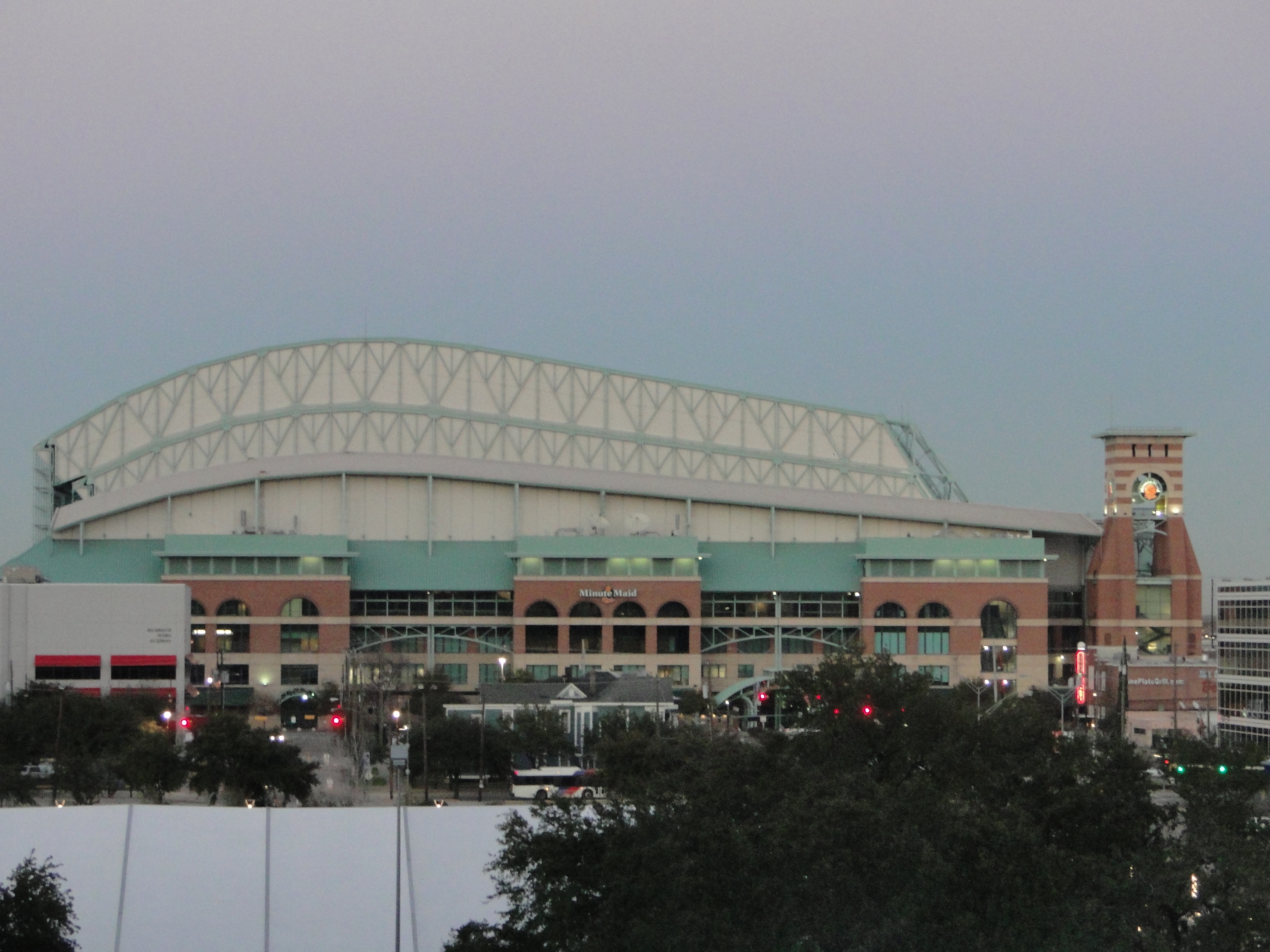
Minute Maid Park View from Banquet Site: January 21, 2010.

Jeff Fulcino won the Astro Roookie of the Year award for 2009. Fulcino posted an all relief record of 6-4 with a 3.40 ERA. He recorded 71 strikeouts in his 82 innings and 61 game appearances, holding right-handed batters to a .209 batting average.

Pitcher Brian Moehler was the recipient of the Darryl Kile Award as the player who best exemplified victory over hard times and commitment to the team above personal gain.

Outfielder Adam Dunn of the Washington Nationals won the 2009 Houston Area Major League Player of the Year Award. Dunn cranked out 38 home runs and posted 105 RBI in 2009, while also becoming only the 123rd player in big league history to hit 300 homers over his career. Dunn now ranks 106th on the all-time home run total list.

First baseman Lance Berkman took the 2009 Allen Russell Award for Distinguished Achievement, Lance is a five-time All Star who ranks 12th among active players for highest career batting average (.303), 5th among active players in on-base percentage, 12th among players in slugging percentage (.561) and 7th among active players in on-base plus slugging percentage (.983).

Former sports writer and Houston Baseball Dinner Co-Founder Ivy McLemore took the Fred Hartman Award for Long and Meritorious Service to the community.

Anthony Rendon of Rice was named as the Pre-Season 2010 College Player of the Year; Coach Jim Long of the Brenham Cubs was tabbed as the 2009 Houston Area High School Coach of the Year; and sixteen high school players were chosen as members of the 2010 Houston Area Pre-Season High School All Star Team. These high school baseball stars of the present and future included: Nick Bergmann, Memorial; Krey Bratsen, Bryan; John Cialone, St. John’s; Stefan Crichton, Cinco Ranch; Dave DeKerlegand, Pearland; Jordan Jolly, Fort Bend Elskins; Jared Lakind, Cypress Woods; Cody Perkins, Kingwood; Kendrick Perkins, LaPorte; Kevin Semien, Atascosita; Alex Silver, Bellaire; John Simms, College Park; Jameson Taillon; Trevor Teykl, Fort Bend Kempner; Erich Weiss, Brenham; and Jake Wise, Cypress Falls.

Astros General Manager Ed Wade and Field Manager Brad Mills capped the evening with some “hope springs eternal” talk about the coming new season and their 2010 roster of upside-bearing younger players. MVP Michael Bourn serves well as the poster boy for more team speed and positive change on offense and defense. How many games the 2009 Astros can actually win with their reconstructed pitching staff and roster of new starters at catcher, short, and third remains to be seen. The outfield is 67% fast and furious and 33% slow and plodding for the second year in a row. We’ll see how that string plays again too.

You had to be a deep blue baseball fan to enjoy the Houston Baseball Dinner, but all of us were. And now we’re chomping at the bit for spring training to start over  in Florida.

This year marks the 25th anniversary of the annual dinners started by Allen and Jo Russell to honor local baseball accomplishments and other community achievements by baseball people. Former Houston Buffs President Allen Russell passed away in January 1996, but his widow, Jo Russell, has done a beautiful job of making sure this torch keeps passing forward to the younger generations that make up the grand community of loyal and knowledgeable baseball fans in Houston.

Thanks, Jo Russell, for another job well done!

Have a nice weekend, everybody!
First Look at the 2010 Astros.

January 19, 2010

How many games will the 2010 Houston Astros win during the regular 162-game season? Spring training may alter some of your guesses, but it’s hard to see this year as being anything other than what it needs to be. The club has taken steps to rebuilding the talent-decimated farm system, but it will take three to five years to see how that works out. Meanwhile, I’m hoping General Manager Ed Wade and Owner Drayton McLane will resist throwing big dollar, multi-year contracts at any more lead-footed sluggers or heavy-armed over-the-hill starting pitchers. Let’s rebuild this club with good young prospects that develop within the Astros system. If our professionals can’t do that successfully, it says to me that our pros are really no better than us fans when it comes to signing talent. Given the money, any serious fan could find a way to throw one hundred million dollars at an established star. It takes a better knowledge base to draft and sign the kids who are going to grow into those star shoes in three to five seasons.

With as little comment as possible, here’s how I see the 25-man roster of the 2010 Astros based upon the current 40-man list. Using five years from now (2015) as our developmental target line, I’ve bold-typed only those players who may have some future with the club by that time. Those who aren’t bold-typed have either already convinced me we’ve seen their best and that their best is not good enough – or that they will be over-the-hill by 2015 and probably need to either retire or be traded before the time comes. I’m only looking at players on the current 40-man roster:

2010 Houston Astros (Possible 2015 Astros in Bold Type):

catchers: Humberto Quintero; J.R. Towles.

1st Base: Lance Berkman.

2nd Base: Kazuo Matsui.

3rd Base: Pedro Feliz; Chris Johnson.

Shortstop: Tommy Manzella.

Utility Infielders: Geoff Blum; Jeff Keppinger, Edwin Maysonet.

Left Field: Carlos Lee.

Center Field: Michael Bourn.

Right Field: Hunter Pence.

Utility Outfielders: Brian Bogusevec; Jason Michaels.

Starting Pitchers: Roy Oswalt; Wandy Rodriguez: Brett Myers; Brian Moehler: Bud Norris.

Spot Starters & Relief Pitchers: Feilipe Paulino; Brandon Lyon; Wesley Wright; Tim Byrdak; Jeff Fulchino; Matt Lindstrom.

That’s it for now. The club does have some prospects who are not currently on the 40-man roster, along with somenice  younger pitchers on the 40-man roster who probably won’t make the club by Opening Day, but could be around here in the very near future. It’s just hard for us Astro fans to face up to the fact that our two current greatest stars, Roy Oswalt and Lancy Berkman, probably have seen their better daysas stars. 2010 is going to tell us a lot about Berkman’s down year and Oswalt’s lingering health issues in 2009.  If those two guys don’t come back dtrong in 2010, it’s going to be an even tougher year at Minute Maid Park.

We’ll revisit this topic at the end of spring training. Spring Training is always a place where someone, or something, stirs up a new batch of hope tonic. We won’t give up hope, anyway. We will just have to place hope on a more realistic timetable. I like to think that the club is already taking that position and that it is now reinvesting in the long term as the place for big results.

No matter how you slice it, one thing should be blatantly obvious from the talent we have on hand: Reaching the World Series in 2010 is way off the table for the Houston Astros. I’d love to be wrong, but in the meanwhile, please don’t bet the ranch that I am.

Welcome to the Hall of Lame!

December 8, 2009

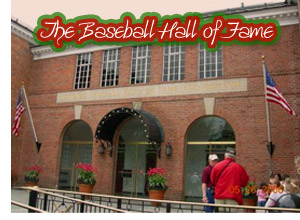
Former manager Whitey Herzog and former umpire Doug Harvey were voted into the Baseball Hall of Fame yesterday by the Veterans Committee. They each garnered 13 votes, the minimal number required for approval of older candidates from this group of veteran selectors.

Herzog missed induction status by a single vote the last time. This time, one of his former players, Ozzie Smith, was a new member of the voting group. You do the math.

Herzog is not one of my favorites as a pick for the Hall of Fame, but what do I know? Maybe six pennants and a World Series victory as manager is enough to punch the ticket. Maybe it made a difference that he sometimes did some “creative” thing, you know, like put a pitcher in right field for a couple of batters rather than remove him from the game and lose him for the rest of the struggle that day. Gee! If that’s what did it, Al Hollingsworth of the old Buffs and half the other managers in the old Texas League ought to be inducted too. With those 19-player rosters of that minor league era, Texas League managers of the 1950s were constantly placing pitchers in right field for a batter or two, just to keep them available for a return to the mound.

This comment is  nothing deeply personal against Whitey Herzog. I just think his induction is typical of how a lot of new members get into the Hall these days. They go through long periods of being almost totally off the radar screen. Then, all of a sudden, a sympathy article comes out, questioning why they were overlooked. Then several years of “near miss” unfold as the public becomes more and more aware again of the old forgotten figure. In effect, induction moves from merely being a sympathetic emotional issue into one that now has political arms and legs working to get that person into the Hall. Whitey Herzog is only the latest example of how that works. It starts with sympathy, moves to empathy, and concludes with the completion of a successful poltical movement.

In that light, I’d like to set in motion a question of my own, about someone whom I think is truly deserving. If Whitey Herzog can reach the Hall of Fame, how can we continue to overlook Larry Dierker? Oh sure, Herzog bagged six pennants and a World Series ring, but look what Dierker did. – Larry led the Astros to 4 playoff appearances in his 5 years as manager (1997-2001) and, while he never reached the World Series, he threw a no-hitter as a pitcher (1976) and posted a 20-win season (1969) and wrote two very thoughtful books on baseball after his retirement from the field. And did I mention the facts too that he also came out of a two-decade other career stint as a baseball tv analyst and baseball historian, just to manage the Astros in the first place?

I’d  like to get some sympathy started for Larry Dierker as an overlooked Hall of Fame candidate right here and now! Are you with me? We’ll worry about how we get the right people added to the Veterans Committee later. Right now, we just need more articles of awareness to Larry’s Dierker’s lonely  plight.

Think: Larry Dierker deserves to be in the Baseball Hall of Fame! It’s a cryin’ shame he’s been overlooked until now!

THE TOY CANNON: The Life and Baseball Times of Jimmy Wynn.

December 5, 2009

Hello, everybody! It’s good being back here on the blog site after an absence of about a week. The publication deadline took me away for awhile had everything to do with a project very dear to my heart. Allow me to explain.

About two weeks ago, former Houston Astro slugger Jimmy Wynn and I learned that the book he and I had been working on about his baseball and personal life story had been picked up for publication by McFarland Company, the largest publisher of baseball biographies in the country. The good news simply left me with some last minute manuscript editorial barbering and detail work to perform that took priority over all other projects in the short term. That work wrapped up yesterday when I tromped on out through the snow and FedExed all our submisson materials to the publisher. What a great sense of relief that turned out to be.

The working book title is identical to the title of this blog article, but could change between now and our release date. We missed the McFarland dance card for a spring list release, but “The Toy Cannon” will be available for purchase through bookstores and Internet sites like Amazon.Com some time between July and December 2010. We’re hoping for a publication near the 201o All Star Game.

All I can tell you for now is that working with Jimmy Wynn on his life story turned out to be the labor joy of my life. We were already friends, but this project simply drew us closer. The guy was an amazing ballplayer, alright, but he’s an even more incredible human being. Jimmy doesn’t allow an ounce of ego fat to get in the way of any life lesson he’s needed to learn for the sake of his own survival and spiritual growth. And it will all be right there on the approximate 300 pages of this book to soon be.

Jimmy and I did the book with him telling his story in the first person over numerous hours of taped interview sessions. The story begins in the snow of his Cincinnati childhood and it moves all the way through his sometimes misadventurous big league playing days and finally forward to this incredible moment today in his late-in-life second career as an Astros community services representative and blossoming FOX Network baseball television analyst.

Along the way, Jimmy doesn’t play dodgeball with the consequences that arose from certain personal experiences, nor does he miss the wisdom that only comes strongly from enrollment time in the school of hard knocks. Those lessons carried forward as the invisible binding of  this work. To put it in plain and simple terms:  This book is not just about the yearly stats of “The Toy Cannon;” it is eventually and inevitably about the soaring wisdom and soul of a man named Jimmy Wynn.

As we get closer to knowing the actual release date of the book, I will keep you informed. In the very sweet and lovely meanwhile, I have to say that it’s good to be back in the land of The Pecan Park Eagle. I’ll try not to spam you too much, but I won’t make any promises.

Have a nice weekend – and try not to eat too much as you’re watching all the conference championship NCAA college football games that are unfolding before our sports-weary eyes this very cold Saturday!

Who Is Brad Mills: Part 2?

October 29, 2009
20091027-143959-pic-994162072.preview

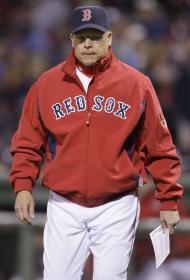
BRAD MILLS, HOUSTON ASTROS MANAGER, 2010.

Brad Mills was born on January 19, 1957 in Exeter, California. He played college baseball as a 6’0″, 195 lb. BL/TR infielder for the University of Arizona, from where he was then selected by the Minnesota Twins in the 16th round of the 1977 draft. He didn’t sign with the Twins and was later taken again, this time  in the 17th round by the Montreal Expos, in the 1979 amateur player draft.

In a five-season minor league career as a third baseman (1979-86), Brad Mills hit  .287 with 37 home runs. He marked his best year with the AAA 1981 Denver Bears, where he batted .314 with 12 HR. It was the only time he ever posted a plus .300 average and double digit homer figures over the course of a full season.

In limited major league service with the Montreal Expose over four seasons (1980-83), Mills batted .256 career with only a single home run.

Brad Mills was traded by the Expos to the Astros on July 4, 1984 for outfielder Scott Loucks, but he never saw MLB service in Houston. Moving over from Indianapolis to Tucson, the Astros’ AAA farm team in 1984, Mills’ offensive production dropped remarkably. He played another unproductive year for Tucson in 1985 and then finished his active career playing with Iowa in the Cubs’ farm system in 1986.

Brad Mills began his five-season (1987-90, 2002) minor league managing career in the Cubs farm system the following season. He didn’t set the  woods on fire in those five years, but he did finish with a winning record of 334 wins, 296 losses, and a .530 plus side winning percentage.

From there, Brad Mills has built a quiet, but glowing reputation and record as the bench coach of Terry Francona, first at Philadelphia, and since 2004 through 2009 at Boston. He was the man who helped Terry Francona lead the Boston Red Sox through the end of the Curse of the Bambino with two World Series victories in 2004 and 2006. He now comes to Houston with highest praise from Francona as an organizer and communicator.

Let’s hope that Mssrs. McLane, Smith, and Wade have just captured lightning in a bottle through the hiring of Brad Mills as new manager of the Houston Astros.

While we’re hard at hoping, let’s also try to hold the reins on our expectations that Brad Mills, or any other manager, could or will be able to fast-track the Astros to a pennant next year in spite of the talent depletion reality that now exists. Mills will have his hands full building a relationship of trust that will empower him to lead. It will remain up to McLane & Company to resolve the other, far-reaching issues.

Drayton McLane was quoted in this morning’s Houston Chronicle as saying, “We need to be where the Phillies are.” Unless I miss my guess, I’m counting fourteen other National League clubs who would probably offer the same sentiment. The difference-maker between those who get there and those who don’t simply reduces to these steps:

  1. Those who really want to be champions carefully study what champions do;
  2. Then they have to do some serious gut-checking: Do we have the will, the financial resources, and the administrative people in place we shall need to get the job done with a plan for success that will work for us in our town?
  3. Is a club willing  to commit to an overt plan for action without cutting corners on what is essential to long-term local success?
  4. And finally, if all these steps can be answered affirmatively, is a club willing, right now, to step forward forthrightly and “just do it.”

We fans can be terribly patient when we believe that a plan is in place to really deliver us to a World Series victory. In my book, hiring Brad Mills is a step in the right direction. Now let’s take the Phillies and Cardinals championship books and run with them into a plan that fits Houston.

A plan for similar success in Houston couldn’t look that that different. Could it?


Who Is Brad Mills?

October 28, 2009
77bfe38295_bradmills2_10202009

BRAD MILLS: FRESH EYE ON AGING TEAM CULTURE.

When the Houston Astros announced yesterday that Brad Mills would be the new field manager of the club in 2010, I was more than OK with it. I would have been all right with either Phil Garner or Dave Clark too, but both of those guys, especially Garner, were insiders to the organization and may have suffered already from one condition that the new manager is going to have to deal with next season, one way or another. It might have been a lot harder for Phil Garner, whom many of the current players already know well from his very recent tenure as the most vertically successful manager in Astros history. Dave Clark may have had a better shot at it, but even Dave has already suffered from being the interim manager for what, eighteen games at the tail end of this past awful 2008 season? It wasn’t the kind of formula for imbuing a man with much authority on the near future screen and scheme of things.

The “it” factor here is the influence of certain key veterans upon the rest of the team as producers and clubhouse politicians. I’m talking here about the impact of Lance Berkman, Carlos Lee, and Roy Oswalt. What each of these stars do, and fail to do, matters greatly. These guys can lead the younger players to get behind a manager from the start – or they can just as easily, no matter how subtly they do it, send out a message of disrespect for a manager that spreads like a virus. And why not? After all, this has been “their” club for years – and they’re the guys who get paid the big bucks to make Houston a champion. Brad Mills may have played some third base, but he was no Mike Schmidt. Who is he to tell anybody in this family what to do?

Our Houston stars didn’t invent that dynamic. The resistance of elitists to control by others viewed as less qualified by talent and tenure is as old as the proverbial hills. It goes way back and way beyond baseball as one of the great destroyers of aspiring kingdoms and expiring dynasties. We just seem to have it at play in Houston baseball today, even though we’ve never won anything but a single National League pennant.

Let’s face it. The Houston Astros cannot win without good production from Lance Berkman, Roy Oswalt, and Carlos Lee. They also cannot win if these key veterans fail to support Brad Mills as manager. Everybody, including us fans, loses if Brad Mills doesn’t have a clue as to how important these three guys are to both team production and morale. Just as importantly, Brad Mills needs to come in with an honest strategy for gaining their confidence and support as early as possible. All three of these players are also smart guys – and should quickly see how important resolving this issue is to each of them and the club, as well. Pretending it doesn’t exist is both foolish and potentially fatal to future success in the National League.

That issue, my friends, is the one that 90% of the 2010 season now turns upon, in my humble opinion. Let’s all get behind Brad Mills and wish him and our Houston Astros the best outcome possible.

The Niekro Family: Love Never Forgets Nor Says Goodbye!

October 10, 2009

Niekro Joe & Nat

I’ve been a fan of Joe and Phil Niekro forever it seems, but I never met either of the two great knucleballers until Joe’s November 4, 2005 induction into the Texas Baseball Hall of Fame. This happened during my tenure as board president of that organization, making it my great honor and pleasure to have some spare time with these wonderful people during the day leading up to the banquet ceremony at the J.W. Marriott near the Galleria.

Upon meeting the Niekro brothers in front of the hotel, it took about thirty seconds to feel as though we had all been close personal friends for a lifetime. I’ll never forget the fun we had, just standing around, kicking back, and talking baseball. Later I got to meet the entire Niekro entourage. Joe was accompanied by his wife Debbie and their ten-year old son J.J. His oldest son Lance, then a first baseman for the San Francisco Giants, also was present, as was Joe’s  grown daughter, Natalie Niekro. What a beautiful lady she turned out to be, but hey, the whole family was handosme and congenial. Joe had every reason in the world to be proud. The day after the banquet, I drove Joe, Debbie, J.J., and Lance to the airport.  We talked about staying in touch – and Joe even gave me a great big hug of thanks before leaving. I looked forward to seeing Joe Niekro again as a new, but very old and dear friend.

Niekro Phil Bill Joe

It was not to be.

A little less than a year later, on October 26, 2006, Joe Niekro collapsed at his Florida  home from  what turned out to be a ruptured aneurysm. He was rushed to a local hospital and placed on life support, but there was nothing that could be done to save him. Suddenly, abruptly, with no fair early warning to him or his family, Joe Niekro  passed away on October 27, 2006 from the same silent killer that takes away thousands each year, and leaving loved ones behind to helplessly ache and grieve.

There was a difference this time. The “resident medical evil” that is aneurysm had not counted on the enormous, all-out pushback from personal pain that resides in the soul of Joe’s daughter Natalie.

In 2007, Natalie Niekro established The Joe Niekro Foundation to promote fundraising for aneurym diagnostic and treatment research. Operating as a new 501 C (3) non-profit chartered organization, Natalie installed herself as President and CEO from her Scottsdale, Arizona home and flew into action of fundraising plans.

Natalie worked out an arrangement with the Houston Astros to hold the organization’s first “Knuckle Ball” banquet at Minute Maid Park in Houston during the fall of 2008, but that plan had to be postponed because of Hurricane Ike. That awful storm didn’t stop Natalie Niekro for long. It just held her up on time a little.

Promoted as “The Knuckle Ball: Now a Pitch for Life Against Sudden Death,” this first annual event finally unfolded at Minute Maid Park on Friday evening, July 31, 2009. All proceeds from the banquet and auction activities of that evening were dedicated to the support of aneurysm research at the Neurological Center of Methodist Hospital in Houston.  It turned out be the biggest star-studded sports draw in Houston athletic banquet history. With Hall of Famer Joe Morgan serving as Master of Ceremonies, other baseball greats from Cooperstown on hand for the evening included Joe’s brother Phil Niekro, of course, along with Sparky Anderson, Bob Feller, Robin Roberts, and Ozzie Smith; plus all of the Astros brass – Drayton McLane, Tal Smith, and Pam Gardner; four former Astros managers – Bill Virdon, Art Howe, Larry Dierker, and Phil Garner; former Colt .45 and Astro stars Jimmy Wynn, Carl Warwick, Mike Scott, Enos Cabell, Joe Sambito, Craig Reynolds. Kevin Bass, Dave Bergman, Enos Cabell, Ed Herman, and others I’m surely missing; former UH great basketballer and NBA Rocket and Hall of Famer Elvin Hayes, plus Mario Elle; and former Houston Oiler quarterback  Dan Pastorini.

The first annual Knuckle Ball raised $400,000 for aneurysm research, but Natalie Niekro didn’t stop there to wait on next year’s banquet to raise more money. Check out her latest  blog to see the plan she has worked out with Major League Baseball to raise money through the Arizona Fall League. While you’re there, give yourself the time and opportunity to explore the whole website for full reports and photos of the foundations past events and future plans. If you want to help too, there is ample room on this bandwagon for you. Just stay open to the possiiblity.

http://joeniekro.wordpress.com/2009/10/08/arizona-fall-league-partners-with-the-joe-niekro-foundation/

Natalie Niekro is one amazing human being, as was her dad. Natalie’s love for her father is forever. And Joe’s spiritual inspiration to his daughter is eternal. These inseparable forces of unconditional love between a father and his daughter, a motivation born in the pain of unacceptable loss, and an apparently genetic commitment to fighting the good fight all the way are what all add up to making the Joe Niekro Foundation’s dedication to the research war on aneurysms something that is, well, most simply expressed, flat out relentless.

If you can help too, please do. Get in touch with Natalie Niekro at the Joe Niekro Foundation website at your earliest opportunity. Whatever you are able to do counts big.

http://joeniekro.wordpress.com/about/

Dave Clark: Going Home as Interim Astros Manager.

October 5, 2009

Sometime early this morning, maybe even as I write, Interim Manager Dave Clark of the Houston Astros will take off for home from New York City by automobile. The ten-hour drive to Memphis, TennesseeDave-Clark should be a welcome breeze after all that Clark has been through over the course of 2009 and his brief thirteen-game career as the guy who was appointed to bring this train-wreck of a season into the station over the last few miles of its beleaguered journey.
There was nothing publicly remarkable or particularly great about the shut-em-down final ride of the 2009 Astros under Dave Clark. The Astros won 4 and lost 9 under his watch, finishing the season in New York with a mostly mailed-in, three-game series sweep-loss to the Mets that simply died with a thud on Sunday – with no Astros runs scored, and only four mild  Houston hits to show for the last on-field lost cause of a season that sltready brimmed with many lost causes, too many nagging injuries,  and too frustrating and far too many agonizing personal performances.

Does Dave Clark drive home today with much of a chance of coming back without the “interim” descriptor written in front of his managerial title? Who knows? Sometimes an interim manager is so associated with the train wreck of his predecessor’s record that he doesn’t really have much chance for a fair consideration against those candidates who will be much easier to sell as fresh answers to the same old problems. Like Clark himself, we’ll just have to wait on the Astros to answer that one.

All we can know, as fans, is that Dave Clark does seem to enjoy the trust and respect of his players. On surface, in fact, he seems to fit many of the favorable dispositional factors that I wrote about in my article on Bill Virdon a couple of days ago. He defiinitely seems to hold the respect of players like Hunter Pence, who played for Dave Clark at Corpus Christi. His strong reputation as a teacher/mentor to younger players seems to be one of his strong assets, but its hard to draw any realistic conclusions about his management of pitchers and other personnel over the final two weeks just concluded. It was a time, after all,  for experimentation and not for starting pitcher and regular lineup solidification.

Who is Dave Clark, anyway?

47-year old Dave Clark is a native of Elvis Presley’s hometown, Tupelo, Mississippi. He was the 11th round 1983 draft choice of the Cleveland Indians as a BL/TR outfielder and he would go on to a 13-season career with six clubs (1986-1998), including his final season as an Astros hitter off the bench, and batting .264 with 62 career homers over the long course.

After his playing days, Clark spent three years in the Pirates organization as a hitting ocach (2000-02) and two years as a minor league manager (2003-2004) in the Pirates’ lower minor league system. He then shifted over to the Astros, managing for three years at Class AA Corpus Christi (2005-07) and one year at AAA Round Rock (2008). In 2009, Clark joined the major league staff at Houston under Cecil Cooper, the man he succeeded a little over two weeks ago.

As Astros fans, let’s just hope that Dave Clark gets a fair shake – and, most importantly,  that we end up with the best man for the  job of leading the Astros out of the wilderness in 2010. It may say nothing about his long term ability to lead the Astros to that elusive World Series victory we’ve all been seeking forever, but I like the fact that Dave Clark started Aaron Boone at second base in that 4-0 finale loss to the Mets. Boone was making his bid to become the only man in big league history to go through heart surgery and then get a hit during the same season of his medical crisis.

Aaron Boone already had gone zero for ten trying to accomplish same and he really had nothing to prove to others. Boone  had already come back, but he still wanted that hit as a symbol of personal validation and Clark knew it –  so he put him in the game. Boone went oh for three, but that’s OK too. He gave it his best final shot, and thanks in larger part to interim manager Dave Clark, a guy who thinks with the heart of a player.

Drive safe on the way home today, Dave! OK? Regardless of what happens from here, you can drive away from 2009 with respect in your hip pocket.

.

Bill Virdon: Too Bad He’s Now Too Old!

October 3, 2009

Bill VirdonAs all Astros fans await the decision on who will take over the reins as the new full-time field manager of the club in 2010, it’s fair game time to talk about the kind of man who might best fill the bill. I sure can’t talk about it as a baseball insider, but as a forever Houston major league team fan since that first season in 1962, I’m like the rest of my crowd in the sense that I have my own strong opinions – and the first is easiest to express:

(1) Put Bill Virdon in an Age Regression Machine. If 78 year old former Astros manager Bill Virdon were only thirty years younger, I’d say, “Hire Virdon. End of discussion.” With a club record number of managerial wins (544 wins, 522 losses, and a .510 winning percentage), Bill Virdon led the Astros to two playoff appearances in 1980 and 1981. During his nearly eight seasons at the Astros helm (1975-82), the club didn’t have the big breakthrough we all still hope for (a World Series win), but they learned how to coalesce into a winning team. They reached the playoffs for the first time of their history in 1980, falling one still very  disappointing loss short of reaching the World Series, through no bigger picture fault of Virdon. I’ll always believe that the late season loss of star pitcher J.R. Richard to a stroke was the real hammer on our 1980 pennant hopes. With Niekro, Richard, Ryan, Ruhle, and Forsch all healthy and available for starting duty in the 1980 NLCS, there would’ve been no Philadelphia Phillies first World Series victory that year.

(2) Use Bill Virdon as a Role Model or Prototype. Since Virdon’s off the table as a serious candidate, let’s hope the Astros find a manager whose most like him. The rest of my comments are about qualities that I think Bill Virdon brought to the club during his tenure with the Astros:

(3) Respect. Players need to see their manager as someone they respect for his knowledge of the game, for his integrity as a man, and for his trustworthiness as someone who has their backs when bad games and slumps leave them wide open to shark bites from the media.

(4) Ability to Handle Pitchers and Young Players. Knowing how to balance the work between starters and relievers, and handling the often fragile confidences in younger players as a protective, but results-expectant mentor are essential. The Astros don’t need a mule team whip guy, nor do they need a too sympathetic wet nurse. They need a man whose brain is attached to the three demands of the real world in his understanding of the great lessons about breaking in to any field: (a) young talent still needs room to learn from their mistakes on the job; (b) young talent needs management that is capable of teaching them what they didn’t learn in “school;” and (c) young talent needs to understand that production eventually is the only thing that will keep them in their jobs. – A good manager has to be able to handle all three areas – or else, be eaten alive in time by failure, low team morale, chaos, and rebellion.

(5) Communication with the Media and the Public. This may have been the one area where Virdon may have been a little weak. I don’t remember him being very verbal or extroverted in his relations with people outside the club. I also don’t recall him ever making a big gaffe with his words. A lesser communicator can survive to fulfill the important team missions, if (a) his skin is thick enough to take the flack he will catch from those glib writers who will always enjoy playing games with sports people who are dean-pan serious – or not too quick on their mental feet; (b) he doesn’t use the media conference as a place to criticize his own players in defense of protecting his own posterior; and/or (c) he doesn’t suffer from verbal diarhea and foot-in-mouth disease.

(6) Bottom Line: In this crazy world of baseball managers, nobody’s perfect, but a Bill Virdon with “HD 2010” communication skills comes close – at least, he does in the eyes of this longtime Astros fan observer.

Jerry Witte’s Last Ballgame.

September 30, 2009

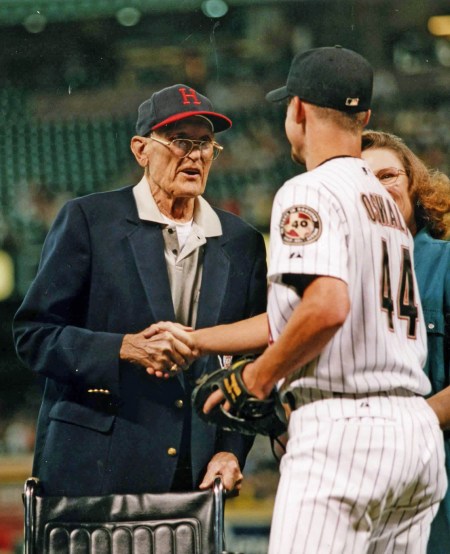
JW 2001 11A few years ago now, my best friend and all time greatest baseball hero got to throw out the first pitch at an Astros game in the place we now call Minute Maid Park. The date was Friday, August 3, 2001. My late friend and hero was a fellow named Jerry Witte.

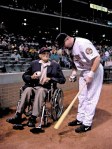
The actual game that night wasn’t exactly one for the ages, but Houston won over the Montreal Expos, 6-2, behind the pitching of Shane Reynolds, a 2 for 4 night by Jeff Bagwell, and a rare homer by Brad Ausmus. The victory bumped the Astros record to 60-49, something that always feels great late in the year of another season bound for nowhere, but the real story that night was Jerry Witte and his meetings prior to the game with Astros players Jeff Bagwell and Roy Oswalt.

As one of the people allowed on the field that evening to accompany Jerry and do a little photography, I also walked into the privilege of witneessing the first class treatment that both players and the entire Astros administrative staff all extended to the aging slugger of a Houstons Buffs team that played ball in this town a half century earlier. In fact, the big scoreboard even introduced Jerry as “the slugging firstbaseman of the 1951 Texas League Champion Houston Buffs.” How cool was that!

Most of all, the background on what led to this special evening is important to the story too. Jerry had lost his dear wife of 54 years, Mary, to cancer only two months earlier on June 10, 2001. He had been going downhill in spirit ever since, in spite of all that his devoted seven daughters and all of us other friends could do to help him rally.

With the help of Astros Vice President Rob Matwick, we were able to line up the special night for Jerry to throw out the ceremonial frst pitch. Jerry still lived in his East End Houston home, the same one in which he and Mary had raised their family, but he had never seen a game at the new Enron Field.

Jerry’s first reaction was hesitation. “I’m 86 years old,” he exclaimed. “An old bird like me’s got no place on the field anymore!”

JW 2001 07JW 2001 09JW 2001 08

JW 2001 01

Jerry soon turned around to support the idea once he grasped that the Astros simply wanted to honor him with Jeff Bagwell as two slugging first basemen from Houston who played the position fifty years apart. Jerry insisted that he wanted to give Bagwell one of his 40 ounce bats for that special occasion – and he also wanted to get in some practice throwing the ball before he took the mound. For the next three weeks prior to “the fist pitch night,” I would go to Jerry’s house and work out as his catcher. At the end of this period, I asked him to sign the ball we had used. He signed it, “To Bill, My Catcher.” I will treasure that ball forever.

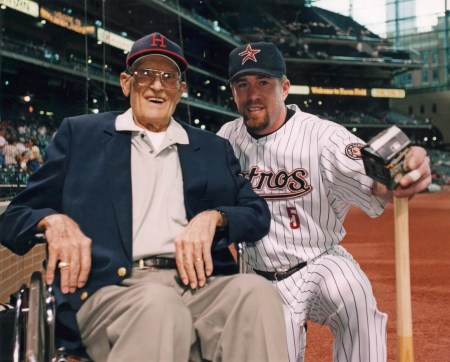
On the night of “the first pitch,” Jeff Bagwell came over down on the field and presented Jerry with a signed baseball for his use in the ceremony. Jeff was magnificent, referring to Jerry as “Mr. Witte” all the time. In turn, Jerry surprised Jeff Bagwell wth his gift of the big Witte model Louisville Slugger.  Jeff beamed in awe at the weight of the thing. and he said something about how he might have trouble getting it off his shoulder in time to catch up with a fastball, but that he did have a place of honor for it at home.

For about five minutes, the two sluggers of yesterday and today talked baseball together in quiet repose prior to the game: Jerry in his wheelchair; Jeff squatting to eye level with Jerry. In that brief moment of time, it felt as though the whole of Houston’s professional baseball history, from Babies to Buffs to Colt .45s to Astros, had been joined together forever on sacred ground.

JW 2001 04

When Jerry finally made the first pitch, he did it with unintentional dramatic flair. Using a wheel chair in place of  a walker, he actually rode to the mound behind a son-in-law, Ken Katzen. He was also accompanied there by his oldest daughter, Mary Ann Crumbaugh, a registered nurse. Jerry could walk just fine, but, of course, few in the crowd knew that fact when they saw him being wheeled onto the field. It was a moment simply born in destiny as a stage for magical impression.

Once he reached the mound, Jerry began to stir, pulling himself up from the chair, and all the while motioning away leaning offers for help from anyone. The crowd roared. Jerry then walked slowly to the back of the chair to position himself for the throw – and the crowd roared even louder. Now everyone was on their feet. Jerry then matter of factly removed the ball from his coat side pocket and heaved it into his catcher, a role now played by a young rookie Astros pitcher named Roy Oswalt. The crowd gave it up for Jerry Witte with a “Standing O.”

JW 2001 05

The brief dialogue between Jerry Witte and his “game catcher,” Roy Oswalt, said it all about the old Buff’s next encounter with the Astros’ personal respect for him on that night of long ago:

Jerry Witte: “Young man, where did you learn how to throw a baseball so well?”

Roy Oswalt: “My daddy taught me, sir.”

Jerry Witte: “Well, you tell him for me that I think he did a great job of raising you, both as a good pitcher and a fine young man.”

Roy Oswalt: “Thank you, sir. I’ll tell him, sir.”

JW 2001 12

Jerry stayed for the whole game. We’d had plenty of discussion earlier about leaving anytime he felt tired and wanted to go home, but that didn’t happen. Once Jerry settled into the ballgame, he wanted to stay til the end. Along the way, he even caught a foul ball and gave it to a little girl who was sitting nearby. The little girl then asked Jerry to sign the ball for her – and that pleased him immensely.

It turned out to be Jerry Witte’s last ballgame. He passed away on April 28, 2002 at the age of nearly 87, surrounded by all his daughters, sons-in-laws, grandchildren, and good friends. All of us who were there at the ballpark on August 3, 2001 will never forget the joy of that moment in the days of a man who lived his life so fully, so well, and so always lovingly.

JW 2001 06

Godspeed, Jerry! Just know that all of us from your old gang who remain in the game down here are still trying to play it out as best you taught us. Anytime that any of us are facing a tough choice about anything really important, we also know that you’re still sitting there next to us on the bench,  in full spirit, reminding us to just gut it through – whatever it is – and do the next right thing – whatever that may be – while we trust the rest to God.

Thank you for just being you – and for  staying here with us physically for as long as you were able. We love you, and Mary too, and we always will. – Jerry, I never met anyone who embodied the spirits of love and baseball together anymore than you. And I guess that’s possible because those two spirits are actually pretty darn close to being one and the same in some of us horsehided soul people.