 When Cecil Cooper was named manager of the Houston Astros in late 2007, the fact that he’s black was not covered by the current media as even an interesting footnote to the fact that it then had been a little more than fifty-three years since Houston saw it’s first black baseball player take the field to play for a racially integrated Houston sports team. – Think about it. From the time Houston “welcomed” it’s first black baseball player to the time it saw its first black manager in baseball, fifty-three years and three months had passed.
Thursday, May 27, 1954 shall forever remain a special date in my personal memories of the Houston Buffs. That was the date that Bob “The Rope” Boyd made his debut as a first baseman for the Houston Buffs in old Buff Stadium. (They called it Busch Stadium by then, but I stood among those who never bought into the name change when August Busch bought the St. Louis Cardinals and all their organizational holdings, including the Houston Buffs and the ballpark, a year earlier in 1953.)
Buffs General Manager Art Routzong had purchased the contract of Boyd from the Chicago White Sox about a week earlier than his debut in an effort to help the club make their eventually successful run at the 1954 Texas League championship. That was quite a club, one that also featured a rising future Cardinal star at third base named Ken Boyer.
Bob Boyd would prove to be the hitting and defensive specialist that the club needed to anchor the right side of the Buffs infield as strongly as young Boyer held down the left side. Boyd hit .321 for the ’54 season and he followed that production with the ’55 Buffs by posting a .309 mark.
It all started on a night of great change in the face of Houston sports.
I was drawn to the ballpark that 1954 twilight eve as a 16-year old kid who wanted to see Bob Boyd break the color line and, hopefully, have a good first night for the Houston Buffs. The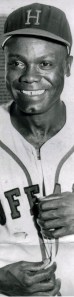 fact that I had just started to drive by that time and needed a good excuse to borrow the family car also factored into the equation. When I borrowed the car, I told my dad why I needed to be there at the ballpark that night. I wanted to see Bob Boyd play for the Buffs as the man who broke the color line in Houston.
Although I had grown up in segregated Houston, I was blessed with parents who taught love and acceptance over hate, even though they also had been raised with that blind acceptance of segregation as the way of life. Whatever it was, my parents held beliefs that left the door open for me to actively question the unfairness of segregation and to also embrace Jackie Robinson as a hero when he broke the big league color line in 1947.
No one in the family or the neighborhood wanted to go with me that night, so I went alone. I also bought a good ticket on the first base side with a little money I had earned that week from my after-school job at the A&P grocery store. I also had to buy a dollar’s worth of gas as my rental on the use of dad’s car.
There were only about 5,000 fans at the game that night and almost half of them were the blacks who were then still forced to sit separately in the “colored section” bleachers down the right field line.
The atmosphere was contrasting and electric. The so-called “colored section” fans were rocking from the earliest moment that Bob Boyd first appeared on the field in his glaringly white and clean home Houston Buffs uniform to take infield with the club. While we felt the rumble of all the foot stomping that was going on in the “colored section,” only a few of us white fans stood to show our support with the understated and reserved applause that we white people always do best at times when more raw-boned enthusiasm would have been better.
“Enthusiasm” evened into a loud foot-stomping roar from all parts of Buff Stadium when Bob Boyd finally came to bat in the second inning for his first trip to the plate as a Houston Buff and promptly laced a rope-lined triple off the right field wall. Even those whites who had been sitting on their wary haunches prior to the game rose to cheer for Bob Boyd and his first contributions to a Buffs victory, and, whether they realized it or not, to cheer for another hole in the overt face of segregation in Houston.
Here’s a taste of how iconic sports writer Clark Nealon covered it the next morning in the Houston Post:
“Bob Boyd Sparkles in Debut As Buffs Wallop Sports, 11-4”
by Clark Nealon, Post Sports Editor
“Bob Boyd, the first Negro in the history of the Houston club, made an impressive debut Thursday night.
“The former Chicago White Sox player banged a triple and a double and drove home two runs as the Buffs pounded the Shreveport Sports, 11-4, and Willard Schmidt recorded his sixth victory without a defeat.
“Before one of the largest gatherings of the year – 5.006 paid including 2,297 Negroes – the Buffs started like they were going to fall flat on their faces again, got back in the ball game on bases on balls, then sprinted away with some solid hitting that featured Dick Rand, Kenny Boyer, and Boyd.
“Rand singled home the two go ahead runs in the first, added another later. Boyer tripled with the bases load for three runs batted in and Boyd tripled in a run in the second and doubled in another to start a five-run outburst in the fourth that settled the issue. …
” … Boyd was the center of attention Thursday night, got the wild acclaim of Negro fans, and the plaudits of all for his two safeties and blazing speed on the bases.”
Yes Sir! Yes Maam! May 27, 1954 was a big day in Houston baseball, Houston sports in general, and a moment of positive change in local cultural history. So was Tuesday, August 28,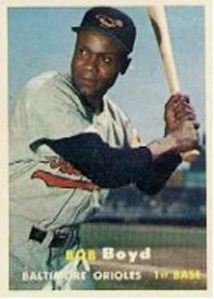 2007, the day that Cecil Cooper made his debut as a manager for the Houston Astros, a day for change, but it had nothing to do with race. Cecil just didn’t get here quite as loudly and, for reasons that have nothing to do with race, he also may leave soon, just as quietly, but maybe not. Maybe the Astros won’t unload all of the 2009 Astros’ failures on the back of their skipper.
In Houston baseball and general sports history, there was only one Bob Boyd. By the time professional football and basketball arrived here, integration was already a part of the total team package. The job of proving that race should not be a factor never had to ride again on the back of one individual player. Bob Boyd already had unlocked, opened, and oiled that gate for all who have come after him – and he did it all back in 1954.
After the 1955 Buffs season, Boyd’s performance at AA Houston earned him a second shot at the big leagues with the Baltimore Orioles. Bob had made a promising start with the Chicago White Sox (1951, 1953-54), but now. after Houston, the now 29-year old lefthanded first bagger seemed primed for a really fine major league career.
In 1956, it was time for Bob Boyd to shine in the big leagues, indeed!
Bob Boyd roped off full season batting averages of .311, .318, and .309 in his first three Oriole seasons (1956-58). His 1959 full season average dropped to .265, but he bounced back in 1960 to hit .317 in 71 games for Baltimore. Boyd played one more limited time season in 1961 for Kansas City and Milwaukee, completing his 693-game big league career with a total batting average of .293 with 19 home runs over nine seasons. Bob Boyd played three more seasons in the minors after 1961 (1962-64) and then retired completely as an active player. Interestingly too, most of Boyd’s last three years were spent in the minor league farm system of the then baby new National League Houston Colt .45s at San Antonio and Oklahoma City.
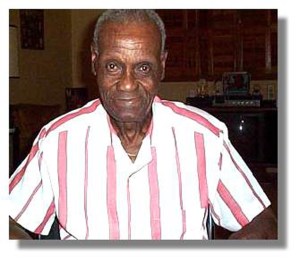 Following his far better than average baseball career, Bob Boyd returned to his home in Wichita, Kansas, where he worked without complaint as a bus driver until he reached retirement age. Bob died in Wichita at age 84 on September 27, 2004. Today, the man who started his career with the Memphis Red Sox (1947-49) of the Negro Leagues is honored as a member of the Negro League Hall of Fame and also the National Baseball Congress Hall of Fame. Hopefully, we shall always continue to remember and honor Bob Boyd and all others who took the first step toward changing things that needed to change. Bob Boyd did his job with grace, dignity, and tremendously unignorable ability.
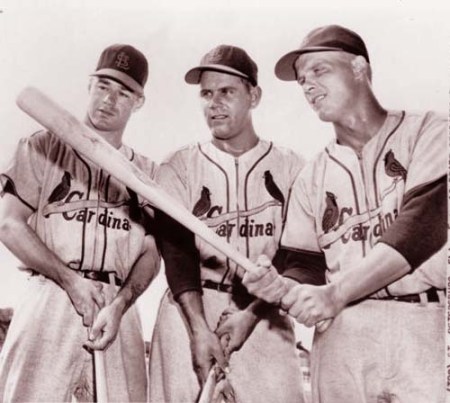 The goal of every young and upcoming Houston Buff from 1923 through 1958 was to play well enough in the Texas League to either move up the following season to AAA ball, or even better, to do so well that that they went straight on up to the roster of the St. Louis Cardinals. I’m bracketing the era as 1923 through 1958 for one simple reason: That’s the time period in Buffs history in which the Cardinals either controlled or owned the futures of all ballplayers who passed through Houston professional baseball.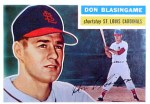

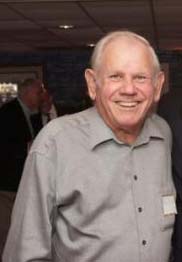 The third man, Russell Rac, never got a single time at bat in the big leagues in spite of some pretty good hitting and fielding success with the Buffs in seven of his eleven season (1948-58) all minor league career. He began in Houston in 1948 – and he left as a Buff ten years later with a .312 season average, 12 homers, and 71 runs batted in for 1958. Few, if any, other players spent as many seasons as an active member of the Houston Buffs roster. Russell Rac went back to Galveston and into business from baseball following the 1958 season, where he continues to live in retirement as a man whose heart still belongs to baseball.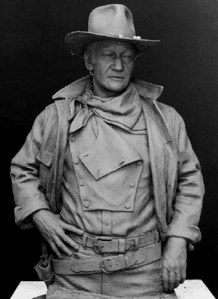
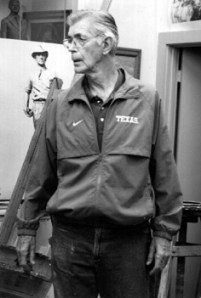

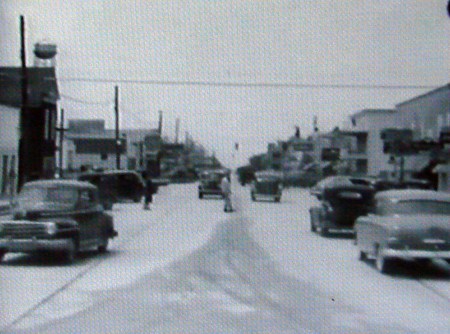
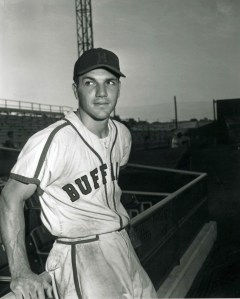 Ken Boyer was neither the first nor the last of the baseball playing Boyer boys. He was simply the best of the six brothers who ventured into the arena of the professional over the two decades that followed World War II. The Alba, Missouri native was also just one among the pack of the fourteen kids born to the rural Boyer family who discovered baseball as a way up and out to the larger world when he began his career with Class D Lebanon in 1949. Ken started as a pitcher, going 5-1 with a 3.42 ERA in ’49, but he also did something else that first year that distracted the parent Cardinal organization from seeing his future on the mound. He hit .455 for the season. Once Boyer’s pitching record slipped to 6-8 with a 4.39 ERA in 1950 with Class D Hamilton, while his battting average stayed up there at .342, the Cardinals felt that they had to keep the guy in the lineup as a position player. Ken made the transition just fine as a third baseman for Class A Omaha in 1951. He batted .306 with 14 HR and 90 RBI before going into the service for two two years (1952-53) during the Korean War. Ken Boyer resumed his career in 1954 as a third baseman for the Houston Buffs. His career took off like a rocket. Batting .319 with 21 homers and 116 runs batted in for the ’54 Buffs, Boyer led the club to the Texas League championship – as he also launched his own career to the major league level in 1955.
 We just returned last night from a two-day train trip to Lake Charles, but that’s a story for another day. This morning I want to tell you about another ex-Cardinal and former Buff pitcher who also just happened to be a good friend. His name was George “Red” Munger, a name that won’t be lost to the memories of anyone who was around during all those 1940s years of great Cardinal teams. Red Munger just happened to be a big part of that success. The native Houstonian and lifelong East Ender was smack dab in the middle of that zenith era in Cardinal history, even though he lost all of 1945 and most of the championship 1946 season to military service. Red still managed to return in time to make his own contributions to the Cardinals’ victory over the Boston Red Sox in the 1946 World Series.
 achieved some great, but unsurprising success in service baseball. He was just too good for the competition he faced at that rank amateur level. Once Red obtained his second lieutenant’s commission and was assigned to developing the baseball program at his base in Germany, he just stopped playing in favor of full time teaching. He even said that he had no heart for pitching or hitting against competitors who were too young, too green, and too unable to compete against him.
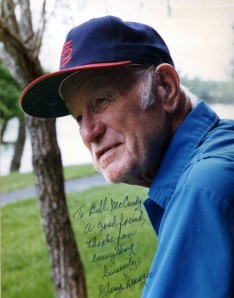 After baseball, Red Munger worked as a minor league pitching coach and also as a private investigator for the Pinkerton agency. He later developed diabetes and passed away from us on July 23, 1996 at age 77. I took that last picture of him in the 1946 Cardinals replica cap on a visit to his home, about two weeks before he died. Red gave me that cap that he wore in the picture at left on the same day. I have treasured it ever since.
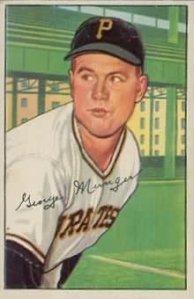 Red Munger enjoyed watching position players with strong arms and then imagining how effective they might be as pitchers. His favorite subject that last summer of 1996 was Ken Caminiti – and this was long before all the disclosures about Ken’s mind-altering and performace-enhancing drug abuse. Red Munger just liked the man as a gifted athlete. Caminiti fit the bill on what Red Munger was looking for in pitching potential. “Give me a guy with a strong arm and I can probably teach him the other things he needs to know about pitching. I can’t teach a guy how to have a strong arm – and as far as I can see, no one else can do that either beyond telling him to work out and hope for the best. As far as I’m concerned in the matter of good arms, you’ve either got one or you don’t.”
 His name was Paul Boesch. By the time the 35-year old Brooklyn native reached Houston in 1947, he had already lived the fullest life of a great adventurer and real life hero. Born on October 2, 1912, this son of a New York street car conductor was one of seven children. When his father died before Paul reached age 5, the business of survival fell upon his mother and older siblings. His mother worked as a domestic servant to well-to-do families and the struggling Boesch household survived. Graduating from high school in 1929, according to one report, young Paul Boesch soon found excellence in his pursuit of achievements that required a combination of mental and physical skills. In 1932, he placed third in the highly regarded North Atlantic Coast Lifeguard Competition. Paul soon followed that success by choosing to join professional wrestling as his career. It was a choice that eventually led him to a 2005 posthumous induction into the Wrestling Hall of Fame.
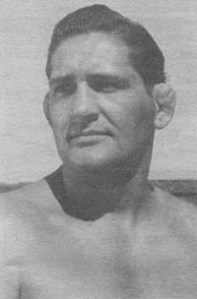 Some reports say that Paul didn’t even finish high school, but whatever the case, his education on physical and emotional survival in a difficult world was far superior to that of most kids who grew up back then with the full protection of two stable parents. He began working as a lifeguard on the Alantic Coast by age 14. Over the course of his mostly adolescent career in that field, he was credited with saving about five hundred lives.
 Paul Boesch returned to wrestling after World War II, but that all ended with a near fatal car crash in 1947 that combined with old back injuries from wrestling to effectively end his active career. He would still appear infrequently in grudge matches over the years, but the damage from the wreck removed him from full-time wrestling.
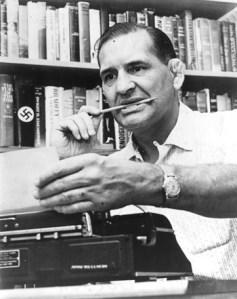 Paul Boesch took to TV like honey sticks to peanut butter. After Morris Sigel died, Paul Boesch took his place as the local promoter of wrestling at the City Auditorium while continuing as the creative director of all the “good guy / bad guy” melodrama matches through his television broadcasts and wrestler interviews. When they tore the auditorium down in the mid-1960s and replaced it with Jones Hall, wrestling moved to the Sam Houston Coliseum and Boesch went with it. Paul Boesch and Houston Wrestling were continuously on the air from 1949 through 1989, mostly on Channel 39, although Boesch had to retire from broadcasting in 1987 due to a heart condition. On March 7, 1989, the gentle man with cauliflower ears passed away, leaving Houston and all the children’s charities he supported the poorer for it.
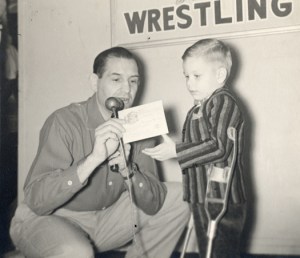 Paul Boesch was an anomaly. He was a genuine man of character – building a life on a stage that was totally sports fiction. Only the injuries and the knuckle-peppered cauliflower ears were firmly real in wrestling, but Paul Boesch was the “real deal” as a great and giving human being to the very core of his soul. The stuff he did for the neglected kids of Houston was legendary. And Houston lost a class act when this man passed from our midst.
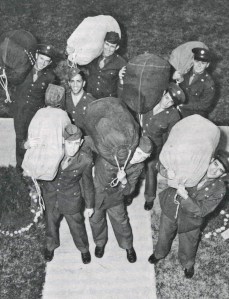 In the picture at left, that’s former Houston Buff and St. Louis Brown first baseman Jerry Witte toting his US Army duffel bag in the top center, back row position of the scene. Witte was merely one of hundreds of professsional baseball players who poured themselves into the business of fighting World War II from the very start of it all. The great Bob Feller was on his way to Cleveland to sign his 1942 playing contract with the Indians when the Japanese pulled off their sneak bombing of Pearl Harbor on December 7, 1941. Instead of signing another baseball contract, Feller took the first opportunity the very next day to join the Navy and the fight.
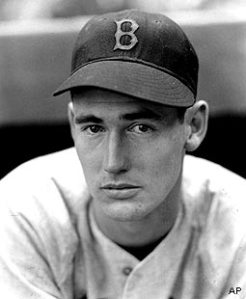 Joe DiMaggio and Bob Feller lost three seasons to World War II; Hank Greenberg (thanks to a correction supplied me by fellow SABR buddy Bob Kienzle of Dayton, Ohio) lost the better part of four and one-half seasons; Stan Musial only lost one year. Ted Williams, on the other hand, lost three seasons to World War II and almost all of two more years later when he was called back to fly combat fighter missions in Korea. You can play all day with the numbers on what they each lost to military service, but you know dadgum what? So did all our no-big-name parents and grandparents from everyday life who also put down their ploughs and welding rods at home to serve this country in wartime. They didn’t call them the “greatest generation” for any lighthanded reason.
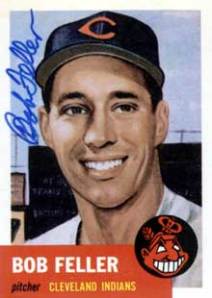 I recently saw Bob Feller at the July 31st “Knuckle Ball” in Houston. Nearing age 91, the man still possesses amazing energy and alertness. I think if you asked Bob Feller today how he felt about the baseball time he lost to World War II, he’d answer with something like, “I didn’t lose anything. I gave my time to my country when it needed me to be there on the fighting line for America.”
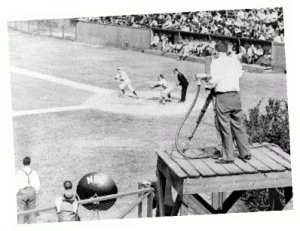 Televised baseball “ain’t” what it used to be – thank goodness! Ten years after the first televised big league game from Ebbets Field in Brooklyn in 1939, KLEE-TV, Channel 2 in Houston, our only televison station then operating locally during the pre-coaxial cable days introduced the first viewing of baseball to the few Houstonians who owned those early 10 inch screen console receving sets that sold for about $400 at places like the Bayne Appliance Store. That was a lot of money for a family to pay for television back in 1949, but it was Houston’s first year with the new medium and there were then, as now, people with both the money and ego that were large enough to buy one at the early inflated price. There were no easy credit line purchases back in the day.
 Bill Newkirk handled the first televised play-by-play at Buff Stadium of 1949 Houston Buffs games. He was assisted by longtime Buff, Colt .45, and Astro engineer Bob Green in generating those early productions. Newkirk was succeeded in 1950 by Dick Gottlieb of Channel 2, which by its second year had now been purchased by the William P. Hobby family and re-christened as KPRC-TV. Guy Savage, later of KTRK-TV Sports, Channel 13, also handled the play-by-play on a number of those early baseball telecasts from Buff Stadium.
 BASEBALL FILM FESTIVAL IN WAXAHACHIE THIS WEEKEND, AUG. 14-16. Thanks to vintage 19th century base ballist Wendel Dickason, we are now advised of a benefit baseball film festival that is scheduled for the classic Tower Theatre in Waxahachie, Texas this coming Friday through Sunday, August 14-16. Proceeds from the event are all dedicated to the support of the Waxahachie High Shool baseball team.
 Houston, Baseball, & Other Musings.
 The Pecan Park Eagle