Posts Tagged ‘History’

In The Big Inning …

February 10, 2010

Houston's Baseball Tree Was Not Without Buffaloes Forever.

In the 1861 beginning of Houston “Base Ball”, there were no Buffaloes, no paychecks, and no players. Organized several weeks beyond the Texas secession from the Union, base ball had to wait for the end of the Civil War before it really took off as the most popular sport in town, but the seeds of love for the game had been planted early.

Contrary to popular theory, Houston already knew about baseball prior to the Civil War. It was not one of those southern cities that only learned about baseball through the experiences of returning Confederate veterans who had been exposed to the game as prisoners of war.

Remember. Houston’s founders, the Allen brothers, came here from New York in 1836. They brought with them other New Yorkers and they continued to attract new settlers from the northeast section of the country that was already involved in the evolution of baseball. For all we know, the first Houstonians may have been playing some kind of baseball from the very start, and certainly from beyond the 1845 date of the Cartwright-rules game that came into fashion on the Elysian Fields of New Jersey. It is most unlikely that the founding group that met in the upstairs room above J.H. Evans Store in Market Square on the night of April 16, 1861 had never played a single game of base ball on Houston soil prior to that evening.

If only F.A. Rice were here for five to ten minutes borrowed time from his eternal tour of eternity beyond the grave, he could clear up  lot of questions for us. F.A. Rice was the man the new HBBC elected as their first president on that now documented date of the group’s formation. He could clear up so much for us with even a few nods of the head. Unfortunately, that’s not how this thing works.

All we know for sure from that little newspaper clipping about the April 1861 foundation of the Houston Base Ball Club is that organized interest in the game existed in Houston at least as early as the beginning of the great Civil War.

Unfortunately, the graves and their occupants cannot be summoned to help us flesh out most of the unreported details.

Seems Like Old Times.

February 8, 2010

Buff Stadium in Middle Right of Gulf Freeway, Early 1950s.

It was located four miles east of downtown Houston. When its first Opening Day came around on April 11, 1928, many Houstonians still grumbled over the fact that Buffalo Stadium, the new baseball home of the Houston Buffs had been built so far out in the sticks from the city. West End Park, after all, had been right there on Andrews Street, off Smith, near where almost everybody lived back in the booming 1920s. The old park may have found its way to some  dilapidation and it may have offered  inadequate seating capacity, but it was close. And close counted for something back in the pre-freeway days.

The city had rallied to the travel problem by making sure that rail service to the new ballpark from downtown was easy to use. Union Station, the current home site of Minute Maid Mark, in fact, was one primary place to catch the ballgame  train that went out to Buff Stadium on what was then known as St. Bernard Avenue in 1928. That same thoroughfare is called Cullen Boulevard these days. It’s been Cullen so long now that hardly anyone alive still remembers it by its earlier identity.

Buff Stadium was the brain child of Cardinals General Manager Branch Rickey. Buffs President Fred Ankenman oversaw the ballpark’s construction in 1927-28, bringing in the project on budget at a cost of $400,000 much harder dollars then the kind we see today. Mr. Rickey even came down from St. Louis on the train to attend the 1928 grand opening of the new ballpark in Houston and he brought Baseball Commissioner Kenesaw Mountain Landis with him. Judge Landis was most impressed too, pronouncing the new Buff Stadium as the finest new minor league baseball park in America.

Landis’s favorable impressions were important to Rickey. Rickey hoped to soften the old man’s heart from the idea that major league ownership of minor league clubs was bad business for the local community. The original 8,000 seat Buff Stadium stood as a symbol of progress and improvement in Houston minor league baseball under Cardinal ownership. To some extent, Rickey had accomplished his mission in bringing Landis to Houston in April 1928. Nothing ever really cured the contentious relationship between these two men, as Rickey would learn years later when Landis freed Pete Reiser and a few others from reserve clause capture by the St. Louis Cardinals, but that’s a story for another day.

Look at the Houston skyline in the picture. The Gulf and Esperson buildings were still the icons of Houston architecture in the 1950s – and that freeway and its rascally pal roadways had only begun to play their role in Houston’s massive spread to the hinterlands.

The Houstonians of 1928 thought that the four-mile trip to Buff Stadium from downtown was a major expedition. Today we drive four miles just to reach a Whataburger or rent a DVD movie. So where’s all this progress we keep talking about?

1914 Houston Buffs: Texas League Co-Champs.

February 7, 2010

I especially love doing a baseball story on Super Bowl Sunday morning!

The 1914 Buffs at Union Station. Today they would be standing on the 3rd base line of Minute Maid Park in downtown Houston, Texas.

The 1914 Houston Buffaloes won 102 and lost 50, good enough to tie the Waco Navigators as the almost endlessly arguable co-champions of the Texas League after s series of post-game protests between the two clubs left them knotted in a first place tie with the same regular season record. Unfortunately, in the middle of all the legalese, ego, and other technical in-fighting, a playoff suggestion to settle the matter never broke out. As a result, the two were left to swarm on a tie that would be debated back and forth forever. Here’s the best summary I can provide you from the bit of fuzzy explanation left to us by the leaague’s erstwhile historian Willam Ruggles in “The History of the Texas League” from 1950.

Waco had been trying all summer to have one Houston win thrown out on a technicality. In a June 26th first game of a doubleheader at Houston, Austin trailed 9-1 at the end of seven innings. The visitors agreed to call the game then for the sake of saving daylight for the second contest, even though Texas League rules at the time dictated tat all first games of a DH must go nine frames to be official. The game was protested by Waco and, on September 7th, Texas League President W.R. Davidson threw the game out as a win for Houston, but he did not provide for any replay of the contest as prescribed by the rules at that time. Had the win not been taken away, Houston could have tied Waco with the same record.

Never fear. Houston got that tie, but they did it in the same way that Waco put a hole in Houston’s pennant hopes. They protested and won a verdict against Waco for using a new player too late in the season, as described by the Texas League roster rules for 1914. The win stripped Waco of a win and left them tied with Houston for the Texas League pennant. Perhaps the idea of a playoff between Houston and Waco was thwarted by the fear of further protests over whatever might have happened in an additional game.

The books closed on 1914 with Houston and Waco both finishing at 102 wins and 50 losses.

1914 was another quirky year in the Texas League. Last place Austin’s ownership was chastised early in the summer for not trying hard enough to win and for the frivolous firing of good players who may have been making too much money to please Austin owner Quebodeaux. The roster had a revolving door that almost spun its way out of control. “We tell ’em hello in the morning,” said Austin pitcher Ross Helms, “and we kiss ’em goodbye at night,” he added.

At one point, Austin lost 31 games in a row, a figure that also turned out to be their season win. The Capitol City boys finished last in the Texas League in 1914 with a record of 31 wins and 114 losses.

The only common ground that this article shares with the Super Bowl is this one: If someone wants to know who won the Texas League pennant in 1914, the only safe answer is this one:

Who dat?

Who Dat Be Sayin’ Who Dat When I Say Who Dat?

February 6, 2010

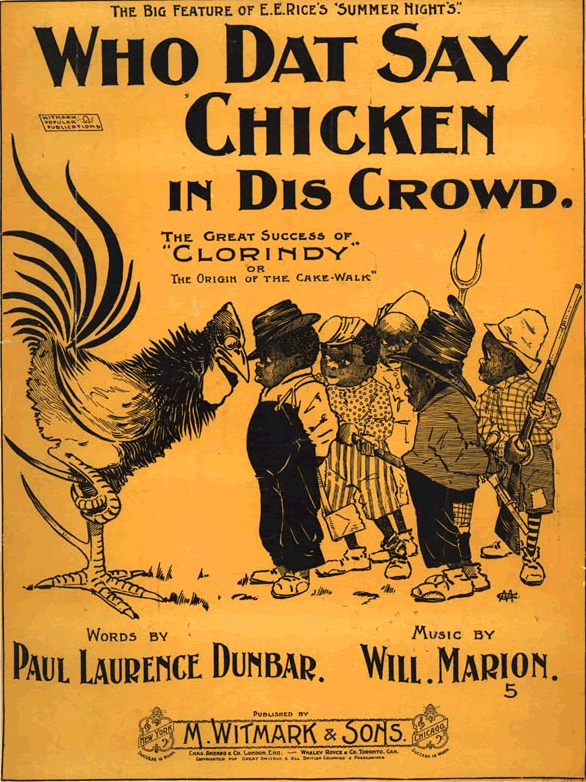
"Who Dat" Derives & Survives from Black Minstrel & Burlesque. Certainly racist by today's standards, the poster above advertises a musical presented back in 1898.

The first time I ever heard the “Who Dat” phrase, I was a graduate student at Tulane University in 1961. It came bellowing at me as a song phrase from a trio of French Quarter street singers and tap dancers who called themselves “Skeet, Pete, and Repeat.”

“Who dat be sayin’ … ‘Who Dat?’ … when I say … ‘Who Dat?’ … Who dat be … the question … of em all?” On the face of things, Skeet, Pete, and Repeat appeared for post-performance tips before their all white street crowds of that era as the very embodiment of Uncle Tomism, making fun of their own statures as men and human beings for the sake of getting money from an audience who craved demeaning affirmation of their bogus superiority over blacks.

Because of my work as an activist on black voter registration in 1964, and my natural affinity for jazz all along, I got to know a number of black families in New Orleans back in the early 1960s in ways that most whites did not experience during that period. It became a time of great joy, mighty sadness, and ultimately, of  important awakening for me. The “who dat” phrase was little more than a small part of it, but it bore a deeper significance, one that Skeet, Pete, and Repeat “dug” a whole lot better than the politically correct white scholars who cried out against it at the time as the docile language of the old Uncle Tom, yielding post-Civil War, “spooked by the KKK” black male culture.

I hope I can give you the picture of what Skeet, Pete, and Repeat did with that little phrase on the streets, one they often used in performance as the wrap-up number on the last set of the evening at the Dixieland {Jazz) Hall on Bourbon Street. Allow me to try and summarize the view, even if I do know in advance that my words will fail in adequacy. It’s important for you to know what stirred me from the visual side to talk with the guys about it – and important to understanding what the fellows really felt they were doing with “who dat” in that routine.

Here’s the picture:

Skeet, Pete, and Repeal all dressed in garish looking, zoot-suit fitting suits with formal shirts and ties. All three men tap danced extremely well. They would all take stage (or outside on Bourbon Street in earshot of the music) in a line, tap dancing up a storm to “When the Saints Go Marching In.” They would all be smiling to the point of sheer deferential obsequiousness into the faces of their usually older white tourist audiences. As the song neared its end, Pete would start dancing in a rotating circular motion between Skeet and Repeat as the latter two dancers each placed an index finger on the top of their partner’s head as though he were a spinning top. The touch of those fingers on the head would always produce a dreamy look of abject stupidity on Pete’s face, one  that invited the laughter of those people who needed help in feeling smarter by the sight of someone portraying himself as really so much dumber.

Then came the finale of the act and my introduction to who dat. The guys all returned to a line facing the audience and sang out in smiling harmonic unison as they continued to stomp-dance hard:

“Who dat be sayin’ … ‘Who Dat?’ … when I say … ‘Who Dat?’ … Who dat be … the question … of em all?”

“I said now, who dat be sayin’ … ‘Who Dat?’ … when I say … ‘Who Dat?’ … Who dat be? … It jus’ be us … that’s all!”

As I got to know Skeet, Pete, and Repeat a little bit, I had to activate my 23-year old brain and ask them one evening backstage at Dixieland Hall. “How can you guys do this routine  night after night, putting yourselves down in front of white people when you’ve all got enough talent to blow them away without all this Uncle Tom stuff?”

“You don’t get it because you’re white too, young man,” Pete told me. “When we say ‘who dat’ to all them white people, no matter how we be sayin’ it, we really be sayin’, ‘you better be ready to come up with an answer to that question, folks, because we all of us here, men and people too – and we ain’t goin’ away. – Who dat? – Dat be us!'”

Who dat’s gone mainstream now, but the question is still out there to be answered by each us about ourselves on all matters, large and small, and about nobody else. We all have to sink or swim on the heels of what we each do, and fail to do, with our own lives.

And guess what? This weekend, millions of us will be frittering away our time as answers to the question about who dat be watchin’ the Super Bowl on Sunday.

Who dat? – Dat be us.

Cy Young’s Perfect Game.

February 5, 2010

Cy Young's 511 WIns Is Baseball's Safest Record.

In the entire history of baseball, from the 19th century forward, only eighteen pitchers have thrown perfect games. Two of those gems came about in the 19th century; fifteen unfolded in the 20th century; and one by Mark Buerhle has perfectly Christened the 21st century.

They don’t come easy. an official perfect game has to go nine innings, resulting in a victory that prevents the other team from producing so much as a single base runner. That’s 27 batters up and down on outs without a hit, a walk, an error in the field, a hit batsman, or a catcher’s interference call ever happening in the game for the losing team. Unlike the much easier achievement of a no-hitter, a pitcher cannot lose a perfect game, nor will he be credited for satisfying all these conditions if the game ends earlier than nine innings due to bad weather or whatever – or if a pitcher is perfect through nine innings and then allows a base runner in extra frames.  It is possible for more than one pitcher to combine their work for a perfect game. It simply hasn’t happened yet.

Cy Young nailed his perfect game on May 5, 1904 as a pitcher for the Boston American League club that one day find their identity as the Red Sox. He did it at home against the Philadelphia Athletics and a Boston crowd of 10, 267 fans, a strong attendance for that day and time. He also did it hurling against fellow future Hall of Fame pitcher Rube Waddell and the wiley strategies of “The Tall Tactician,” Mr. Connie Mack.

10,267 fans, a good crowd for that day and time, were there to see the classic game that Young would pitch that day.They would be privileged to watch the first perfect game in 24 years. Both 19th century perfectos happened in 1880. The pitchers in those earlier contests were Lee Richmond (6/12/1880) and five days later, John Montgomery Ward (6/17/1880).

Cy Young had all his best stuff working that day and this “stuff” included a blazing fastball, a just as fast curve that broke in reverse, breaking away from a right-handed batter and then turning in like a fastball, and a slower, wider-breaking curve. Young used them all that special day, but it’s important to note that he never even admitted to having these two different curve ball pitches until long after his career was done. Young believed that owning up to what he was doing on the mound only helped batters adjust to him. He would have nothing to do with anything that brought aid or comfort to the enemy. Remember. The man won 511 big league games in the big leagues. He didn’t get there by handicapping himself.

Boston finally broke the ice with a one run in the seventh and two more in the eighth. Young’s only close call came in the third when Monte Cross of the A’s dropped a bloop fly between first and second that first looked as though it was going to drop into short right field for a base hit. Boston right fielder Buck Freeman saved the day for Young with a running grab off the top of the grass for the out.

When Young reached 26 outs, he found himself facing pitcher Rube Waddell as the last hope of the A’s and, even though the home Boston crowd curiously clamored for Mack to send in a pinch hitter so that Young could finish strong against a regular position player hitter, Waddell was allowed to approach the plate as Philadelphia’s last hope.

Waddell took two strikes and then lifted a fly ball to center that caused Boston center fielder Chick Stahl to drift back a few steps for the catch. There was never any doubt on the play. Stahl made the easy catch and Cy Young had won his perfect game.

Fans stormed the field, all wanting to shake hands with Cy Young, who tried as much as possible to oblige their wishes. One older gent even placed a five dollar bill in Cy’s hand as tangible sign of his appreciation. Young kept the tip.

The whole game took only one hour and twenty-three minutes to play. It doesn’t take long to earn eternal memory. All you have to do is be perfect.

Hippo Vaughn’s Disappointing Game.

February 4, 2010
J

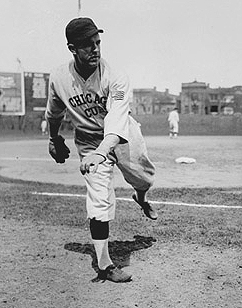
Hippo Vaughn lost a no-hitter in 10th after he and rival Fred Toney each gave up no hits in 9.

James Leslie “Hippo” Vaughn of Weatherford, Texas did allright for himself over 13 seasons as a left handed big league pitcher for the New York Yankees (1908, 1910-12), Washington Senators (1912), and Chicago Cubs (1913-21).  He won 20 games or more five times in his eight seasons as a Cub, finishing with a career record of 178 wins, 137 losses, and an outstanding ERA of 2.49. At 6″4″ and 215 pounds, he was one of the really big men of his early 20th century period and he carried his weight and size with the kind of plodding walk that over time earned him the “Hippo” nickname that all but obliterated all public memory of his given first name of James.

Hippo Vaughn also found himself involved in one of the most frustrating losses in baseball history. It happened on May 2, 1917 at Weeghman Park in Chicago in the days before that venerable venue came to be much better known for its “friendly confines” as Wrigley Field. Vaughn drew the starting assignment for the home town Chicago Cubs that day. Right-handed Fred Toney got the pitching nod for the visiting Cincinnati Reds.

The game turned out to be one of the classic pitching duels of all time. For nine innings, neither pitcher gave up a single hit. Both men also hung around to take a double no-hitter duel into the 10th inning. In those days, pitchers arms didn’t fall off after 100 pitches and the macho code of the times stated expectations straight and strong: If you can still do it, stay in there and get the job done.

Both Vaughn and Toney would take the mound for their clubs in the 10th. It was the right thing to do. It was the only thing to do.

Gus Getz, third baseman, was the first batter up for the Reds in the top of the 10th. Getz was a short-time role player in his brief big league career and, even though he batted in the two-hole this day, he only had 14 t bats for the Reds in the 1917 season. The right hand hitting Getz popped a high fly in front of the plate that Cubs  catcher Art Wilson captured easily for the first out of the inning.

Then it happened.

Batting right, the switch-hitting shortstop Larry Kopf laced a Vaughn pitch into right center for the first hit of the game. Vaughn sighed visibly in disappointment, but then quickly settled back into the important business of trying to win the game. With a man on first now and only one out, he had work to do.

Reds center fielder Greasy Neale, a lefty hitter, then lifted a can-of-corn fly ball to Cy Williams in center for the second out of the inning. Hope was floating good, even if the no-no had been lost from the Hippo bandwagon.

Then the wheels started to come off, as they sometimes do, even in the best played baseball games.

Lefty Hal Chase of the Reds followed Neale with a fly ball of his own to Williams in center, but this time, Cy dropped the ball. He got two hands on it. Then he just dropped it. What should have been the safe end of the inning for Vaughn did not happen due to the Williams error. Any runs that scored from here would be unearned, but they would be just as deadly as any earned ones. Kopf advanced from first to third on Williams’ drop of the fly ball by Chase. Prince Hal Chase held at first after the miscue, but he quickly stole second during the next Reds hitter’s time at bat. Now the Reds had runners at second and third with two outs.

The next Reds hitter was a fellow named Jim Thorpe. The great Native American Olympic champion and professional football player was now trying his skills at baseball as a right handed hitting right fielder.

Hippo Vaughn respected Thorpe’s speed and athleticism. He knew he had to bear down on Thorpe. In spite of this awareness, no one could protect Hippo and the Cubs from the damage that’s always possible from a swinging bunt. And a swinging bunt down the third base line is what Thorpe unleashed inadvertently – a high bouncer that Vaughn knew immediately would be good enough for an infield scratch hit for the speedy Thorpe.

Vaughn was the Cubs’ only hope for a play at the plate on Kopf. He raced over to get the ball and he fielded it cleanly and threw it to catcher Wilson, not realizing that Kopf was right behind him on the base path for an easy tag, had Hippo only known to turn around. Instead, Kopf stopped in the baseline and he and Hippo both stared in disbelief at what they saw happening with catcher Wilson and the ball.

The throw from Hippo bounced off catcher Wilson’s chest protector and fell to the ground. Wilson just stood there, frozen from action. Seeing that, Kopf raced in to score as Wilson just continued standing there in a state of mental paralysis.

Noting it all, Chase came tearing around third in an attempt to also score from second on Wilson’s brain freeze. Hippo screamed at Wilson in frustration: “Are you going to let him score too?”

Wilson suddenly  recovered in time to pick up the ball and tag Chase for the third out, but the damage had been done. Toney retired the Cubs with no further damage in the bottom of the 10th to preserve his own 10-inning no-hitter as Hippo Vaughn lost a heartbreaking 1-0 final score, as he recorded a one-hit losing game effort against the Reds.

The Cubs clubhouse was an atmosphere of bitter frustration after the game. Catcher Wilson broke down in tears apologizing to Hippo for his brain lock on the critical play at home. Meanwhile, Hippo bounced back and forth between his own frustration while impossibly trying to console his game-pressure-stupified catcher. Cubs owner Charlie Weeghman didn’t help matters much either by sticking his head into the Cubs clubhouse long enough to yell to the whole team, “You’re all a bunch of asses!”

Sometimes life’s not fair. And sometimes unfairness comes with an extra little twist of the knife. Hippo Vaughn found out about both these truths on May 2, 1917.
Lefty Gomez’s Biggest Day!

February 3, 2010

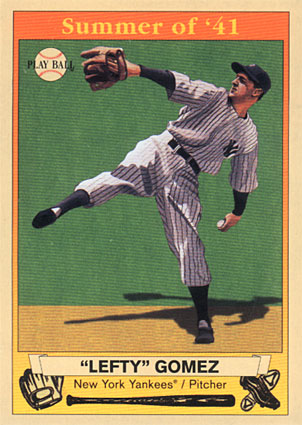
189 Wins, 102 Losses, 3.34 ERA; Inducted into the HOF in 1972.

As a tall and gangly built  left-handed flame-thrower, Lefty Gomez was one of those rarified pitchers who helped the New York Yankees bridge their way from the Babe Ruth to the Joe DiMaggio eras. He toiled for the Yankees from 1930 through 1942 and then wrapped up his career with the 1943 Washington Senators. Over his career, he was selected to the first American League All Star Team and also was named to seven all-star clubs in seven consecutive years from 1933 to 1939. As a Yankee, he got to taste the sweet joy of playing for five World Series Champions in 1932, 1936, 1937, 1938, and 1939.

Lefty was also a true character who loved the company of fellow Yankees who also embraced the gliiter and brew of the night life action and still managed to override the effects of bad habits with their superior talent the next day at the ballpark. Lefty joked that he was “like” the old whiskey soaker who could never quite recall his wife’s final instructions before he left the house for a night on the town with the boys.

“I could never remember if she said ‘have one drink and be home by 12 – or 12 drinks and be home by 1,'” Lefty quipped.

Gomez also had the the same glib sense of humor  for what happened on the field. Once, in a late afternoon game in which Bob Feller of the Cleveland Indians was striking out Yankees left and right. Lefty came to bat against Rapid Robert as the sun was going down. Before Lefty stepped in to hit, he lit a match in the batter’s box and stared out at Feller. The umpire asked if Lefty was hoping the match would help him see where the ball was crossing the plate. “Nope,” Lefty answered, “I’m just hoping the match helps Feller see where  I am!” Then, once the laughter subsided and the match burned out, Gomez stood there in the gathering darkness of the batter’s box and struck out like nearly everyone else before him.

Lefty Gomez says his biggest day in baseball occurred in Game Two of the 1932 World Series at Yankee stadium in which he scattered nine hits to defeat the Chicago Cubs, 5-2, in a complete game victory. Lefty had far better, more artistic wins  over time, but he chose this special-for-the-team game of  September 29, 1932, for what it was – his first first World Series victory at age 23. He got no second chance to pitch in ’32 because the Yankees needed only four games to dispose of the Cubs, That was also the Series in which Babe Ruth supposedly “called his shot” prior to a game-winning homer to center at Wrigley Field.

Lefty Gomez kept his quick wit for the rest of his life. He left us on February 17, 1980 at the age of 80.  Thanks for being one of the bright lights of the game, Lefty Gomez. You will always be one of those guys I wish I’d been privilieged to have watched play in person.

Uncle Louie and the Wayward Wind.

February 2, 2010

"Them frogs ain't got a chance 'ginst a fast-risin' rain!" - Uncle Louie.

Some of the most unforgettable characters I ever met came early. They were members of my own extended family, profiles for countless novels that never found their way into print and mostly, wayward wind, king-of-the road type travelers who dropped in to see us every once in a while like so many blue moons.

Only one other characteristic bound them together in any form of unity. They were all related to me on my mom’s side of DNA package.

My favorite of them all was “Uncle Louie.” He wasn’t actually an uncle, but all my cousins knew him as such too, so that’s what we also called him. Louie actually was something like a second cousin, twice removed on my maternal grandmother’s maternal side of that splintered family branch. Louie had established an identity with some of the blood kin somewhere as “Uncle Louie” and so it stuck. He was Uncle Louie – no matter how times some family members tried to remove him for creating some considerable drag on the family’s needs for social ascendancy.

Uncle Louie was just plain folks. No one seemed to be really sure of his exact age. He had one of those character faces that placed his age as being somewhere between fifty and death with no discernible change over time. He stood moderately tall, somewhere close to six feet, and he was of slender build with dark skin, high cheek bones, and a permanent smile etched into his craggy skin from a lifetime of living in the sun. To me, he always vaguely resembled Iron Eyes Cody, the Native American actor that used to shed a single tear in those old anti-litter public service messages. I will always believe that he was several parts Cherokee, but I have no proof of same beyond my eyes and intuition.

Uncle Louie was a mechanic by trade and pretty much a drifter by choice. He worked everywhere from Louisiana to New Mexico, but he also seemed to come back to South Texas, San Antonio, and Houston for short visits with family from time-to-time. He loved to fish. And he loved Tarzan movies because of the monkey named Cheetah. You see, Uncle Louie thought Cheetah was the funniest creature on God’s good Earth.

When he was in town, Uncle Louie would often take me and little brother John to the Saturday kid movies. H eseemed to love them as much as we did, especially if Cheetah was on the bill. We had a field day at the concession stand on those occasions – and that exercise was just a warm up for the malted milk shakes we then got to order at the fountain drink counter down the street at Mading’s Drug Store after the show.

Uncle Louie was what we used to call a confirmed bachelor. I always assumed he traveled alone because he wanted nothing in his life that might slow him down from his free-to-drift on the will of the wind life style. Mom came down on the harsher side in her own mind about why Uncle Louie remained single forever. “No good woman would put up with Louie for thirty days,” she opined. “Any wife of Louie would have to get used to a man who goes fishing at the drop of a hat, a man who just picks up and moves over night, and a fellow who just hardly has an opinion about anything, other than Cheetah, even if you ask him.

Mom was wrong about Uncle Louie on one count. Uncle Louie had strong opinions on weather and he described certain weather conditions in ways I have never forgotten. In fact, many of these phrases are descriptors we still use to this day. Most of these terms, and most likely all of them, were not original with Uncle Louie, but his attention to the use of them when he was around us simply underscores how important changes in the weather were to this good man. He definitely danced through life to a different drum during his long and still uncounted years on this earth.

Sleep tight on the Happy Fishing Pond, Uncle Louie! I hope that Cheetah is there with you to share the joy of a lazy afternoon on the coolest bank near the water. For everyone else, here’s my list of Uncle Louie’s Weather Terms – and my brief explanations of what I know or think they each also mean:

(1) Frog Strangler. A rain that comes down so fast that even the frogs drown before they can find the high ground.

(2) Blue Norther. A polar cold front that blows into Texas on the front of deep blue-black clouds; a cold front that drops local temperatures fifty to sixty degrees in just a few hours.

(3) Gully Washer. A flash-flooding tide of water caused by a cloudburst of rain in large volumes over a few minutes of time.

(4) Egg Fryer. “It was hot enough that day to dry an egg on the sidewalk.”

(5) Goose Bumper. “It was cold enough that day to turn your skin into goose-like flesh.”

(6) Wind Whacker. A gale like wind that has the power to throw things around and knock things over.

(7) Burger Broiler. Throw the patties on the barbeque pit. You won’t need to light a fire today. They will cook themselves.

(8) Skeeter Heater. Heat that follows a soft summer rain. It’s just warm enough to awaken the mosquito eggs that have now been hatched by the ground’s new moisture.

(9) Sweat Swamper. The humidity is now so high that we are in danger of needing canoes to navigate the swamps created by our cumulative perspiration deposits.

Uncle Louie forgot the one weather reference that most governed his sweet and innocent life. He was a man of the Wayward Wind, a man who loved to wander. In fact, as the old song says, he was more a blood relation to the wind than he was to any of us. – “For he was born, the next of kin, – the next of kin, to the Wayward Wind.

Remembering the North Main!

January 31, 2010

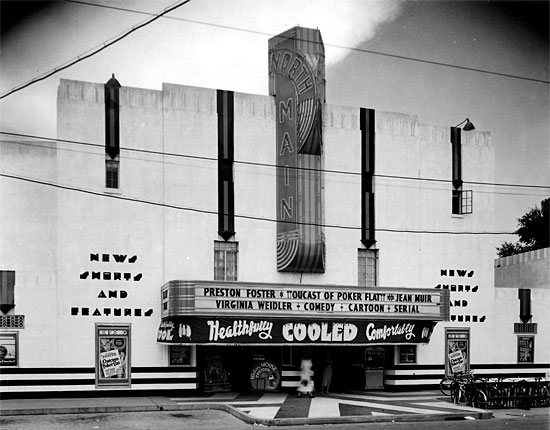
The North Main Theatre in Houston Opened for Business on Christmas Day 1936.

Like most people from my generation, neighborhood theatres, movies, and the heroes and stories we found there golden. They all etched their indelible ways onto the forever-hoping character of our American souls. For me, the first place to do that was the Rialto Theatre in Beeville, Texas, the little South Texas town where I was born. It didn’t have a lot of time to work its magic. We moved to Houston on my fifth birthday, December 31, 1942.

In my case, the job passed on to the North Main (1943), the Studewood (1944), and the Avalon (1945-56), with some considerable help to the latter from the Broadway, OST, Wayside, and Eastwood. And this roll call doesn’t even take into account all the other neighborhood suburban theatres and downtown big and fancy  houses that we also frequented. Prior to the coming of television to Houston in 1949, especially, movies were our windows on everything that ever happened, will happen, could happen, or should happen. Indeed, they were our visual gospel.

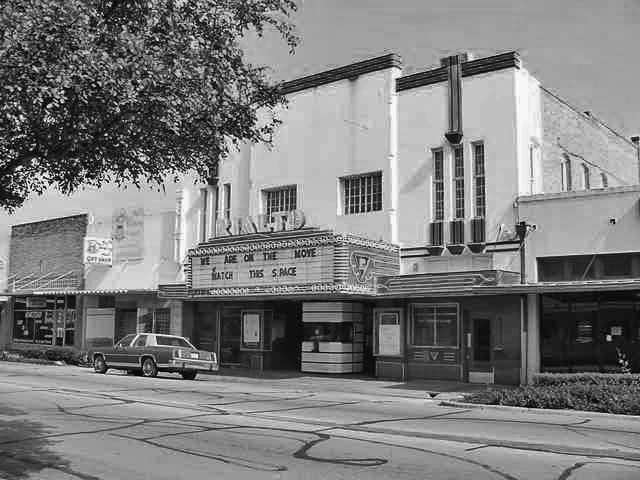
The Rialto Theatre in Beeville, Texas Opened for Business on August 19, 1922

My earliest memories of the North Main are like some kind of carnival dream. Unless my memory is tricking me again, I seem to recall a dwarf couple that operated a popcorn stand just outside the theatre on the sidewalk. I wasn’t used to making level eye contact with older people, but that was the deal with these folks and me. I thought they were Munchkins.

Dad worked a light of night shifts at Brown Shipyard in those days so Mom would walk me and my younger brother John from our little duplex on Fugate to the North Main and sometimes the Studewood, which was actually much closer. I recall walking south on North Main to the movie house of the same name one night when gun shots rang out across the street. A cop was chasing a man down the street and either missing every time, or else firing over the running man’s head on purpose. We never saw or learned the outcome of that little Houston chase scene, but we would see it again in a few hundred movies to come.

At age five, I fell in love with John Wayne and “The Flying Tigers” (1942) at the North Main Theatre. We didn’t see the movie until 1943, but I guess we saw it three or four times while we could find it there and elsewhere – and then, over the years, I continued to watch it every chance I found when it started making the late show television movie circuit.

Words fail to adequately convey the power I felt from those snarling teeth of the tiger fighting planes as they zeroed in on the warrior ships of the Imperial Japanese Air Force, especially when an angry John Wayne pushed the button on a shot of cold steel vengeance over the loss of his own men. Pilots bled from the mouth when they were hit. It was the first memory I have of what appeared to be credible death scenes.

Prior to “Tigers,” I had seen numerous movies in which actors were shot in their  tuxedos and still managed to drop dead on carpeted floors without making a mess for the investigation that was yet to come by William Powell as “The Thin Man.” “Tiger” casualties weren’t that neat. They dropped real blood when they died.

Or so it seemed.

Long before Clint Eastwood, "The Flying Tigers" knew how to settle old scores without losing their cool.

I’m curious. Did movies affect your early impressions of life too? And did you also have a John Wayne or “Flying Tigers” model, or any kind of model, that shaped your early ideas about how things are – or should be?

If so, I’m hoping you may be willing to leave your thoughts with us here as a comment on this topic. Memories of the North Main or other theatres are also most welcome – and, if anyone can help me clear up the reality of my North Main dwarf memories, I would especially appreciate your help.

Meanwhile, have a nice Sunday – and try to stay warm.

The Sicilian Joy of Patrenella’s!

January 29, 2010

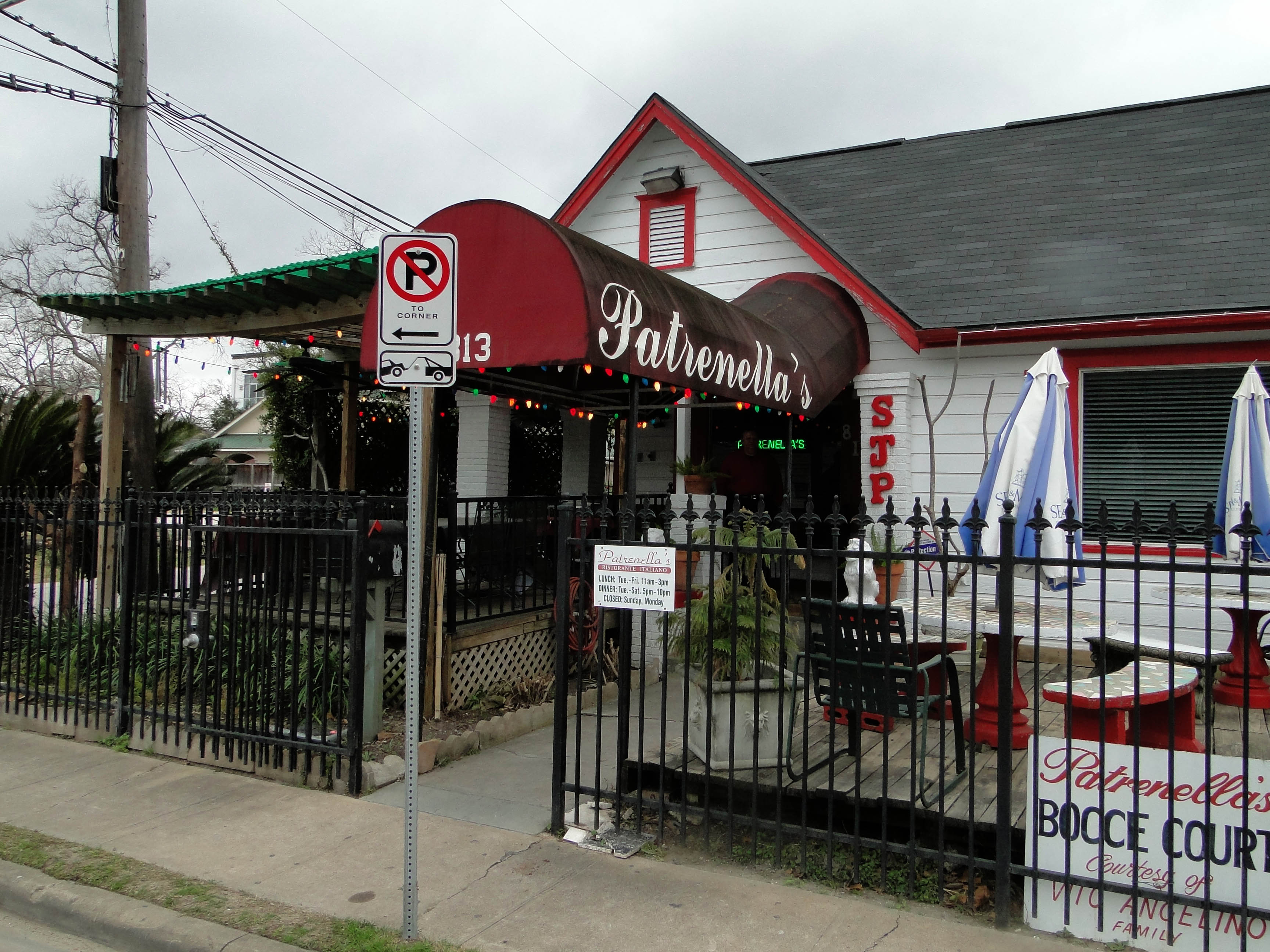
Patrenella's and the best authentic Sicilian cuisine in Houston is located at 813 Jackson Hill, at the corner of Jackson Hill and Barnes, just one block south of where the street "Ts" into Washington Avenue. NOTE: Patrenella's has its own Bocce Court too.

Sammy Patrenella, 75, and his Patrenella’s Ristorante Italiano are both Houston classics. If you have never tried Sammy’s classic Sicilian fare, you really owe it to your palate to do so. Come for the food and stay for the joy. You will be dining in a place built on the love of family, friends, and the best, most truly delicious Sicilian food in Houston when you do.

The menu includes the best beef, chicken, and seafood offerings that come to mind from the mention of any Italian food dishes, all prepared according to ancient family recipes and served with the freshest vegetable fare, pasta dishes, marinara sauce, and special oil seasonings that the veteran diner comes to expect from the true artists of Italian cooking. Patrenella’s isn’t simply good enough for Houston. It is a place that could easily hold its own with the best Italian places in The Hill section of St. Louis. Patrenella’s also bakes its own bread and offers some of the most delicious pizza in town as well. It contains its own small bar and offers all the right options of good wine to go with all the right foods for those who choose the fully European experience in dining.

In spite of its royal good taste choices in food and drink, Patrenella’s is laid back and casual in the way most Houstonians prefer their dining out experiences. Coat and tie or sporting casual wear are welcomed equally at “Sammy’s Place.”

Patrenella’s is open for lunch, Tuesday through Friday, from 11:00 AM to 3:00 PM, and for dinner, Tuesday through Saturday, from 5:00 PM to 11:00 PM. No lunch service is available on Saturdays and the restaurant is fully closed on Sundays and Mondays. For evening reservations, simply call 713-863-8223.

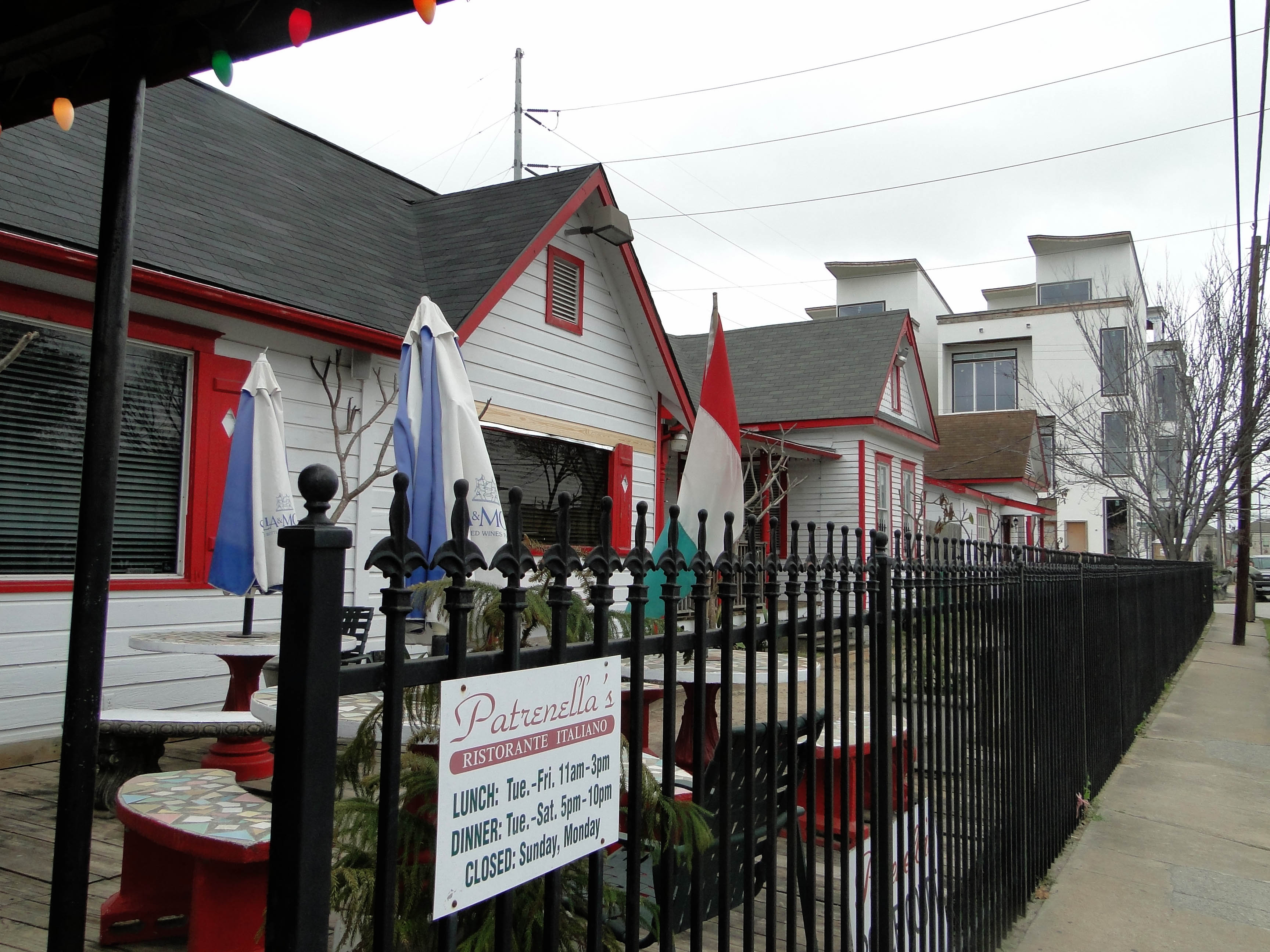
The Patrenella family home from 1938 is now the front door on a chain of three houses that owner Sammy Patrenella has strung together as the new home of his restaurant since 1991!

The story of Patrenella’s Ristorante Italiano is best told by Sammy Patrenella himself. You will find these same words on the back cover of his menu. They are written to explain the old photo featured above this section in today’s article. The original of this photo hangs proudly with other family mementos at Sammy’s Place.

Here are Sammy’s words:

“In 1938, my father, L.L. Patrenella, built this house in which you can now enjoy the food and hospitality of our family. After immigrating to Houston from his native Sicily, he started a grocery store in this neighborhood; it stood a mere block away. He and my mother, Nita, live behind the store. They were always cooking Italian recipes and giving samples away to the customers. I’ve always had a dream for a restaurant that would carry on the traditional good tastes and love of my mother and father. So, my wife, Josephine, my son, my daughters and I have uniquely renovated this house in which I was raised. We have kept it consistently dedicated to the ambiance of the historic Heights and Sixth Ward. The warmth and the great cuisine of the traditional Italian kitchen is presented to you by three generations of the Patrenella family. Please come by and enjoy.” – Sammy Patrenella.

Sammy's childhood home and two others have been linked since 1991 as the site of Patrenella's Ristorante Italiano. Safe parking is no problem in this gentle old Houston neighborhood.

When three-year old Sammy and his family first moved into their new house at 813 Jackson Hill in 1938, a Houston Chronicle human interest spotlight story described the new family home as “modern throughout.” Sammy says he later asked his mom what that meant. She told him, “Of course, it was modern throughout. The house even had an ironing board built straight into the wall.”

Thank you, Mama Petronella! We doubt that many women from the year 2010 equally share your enthusiasm for such conveniences as built-in ironing boards.

"When the moon hits your eye like a big pizza pie, that's amore!"

A friend recruited this robotic version of a famous entertainer as a gift to Sammy Patrenella a few years ago. Dino has held forth as the host of Sammy’s bar area ever since his arrival from New Orleans. The joy of life and the spirit of giving oozes from the walls of this happy place in ways large and small. This little Dean Martin “Mini-Me” simply fell into the mood of the place.

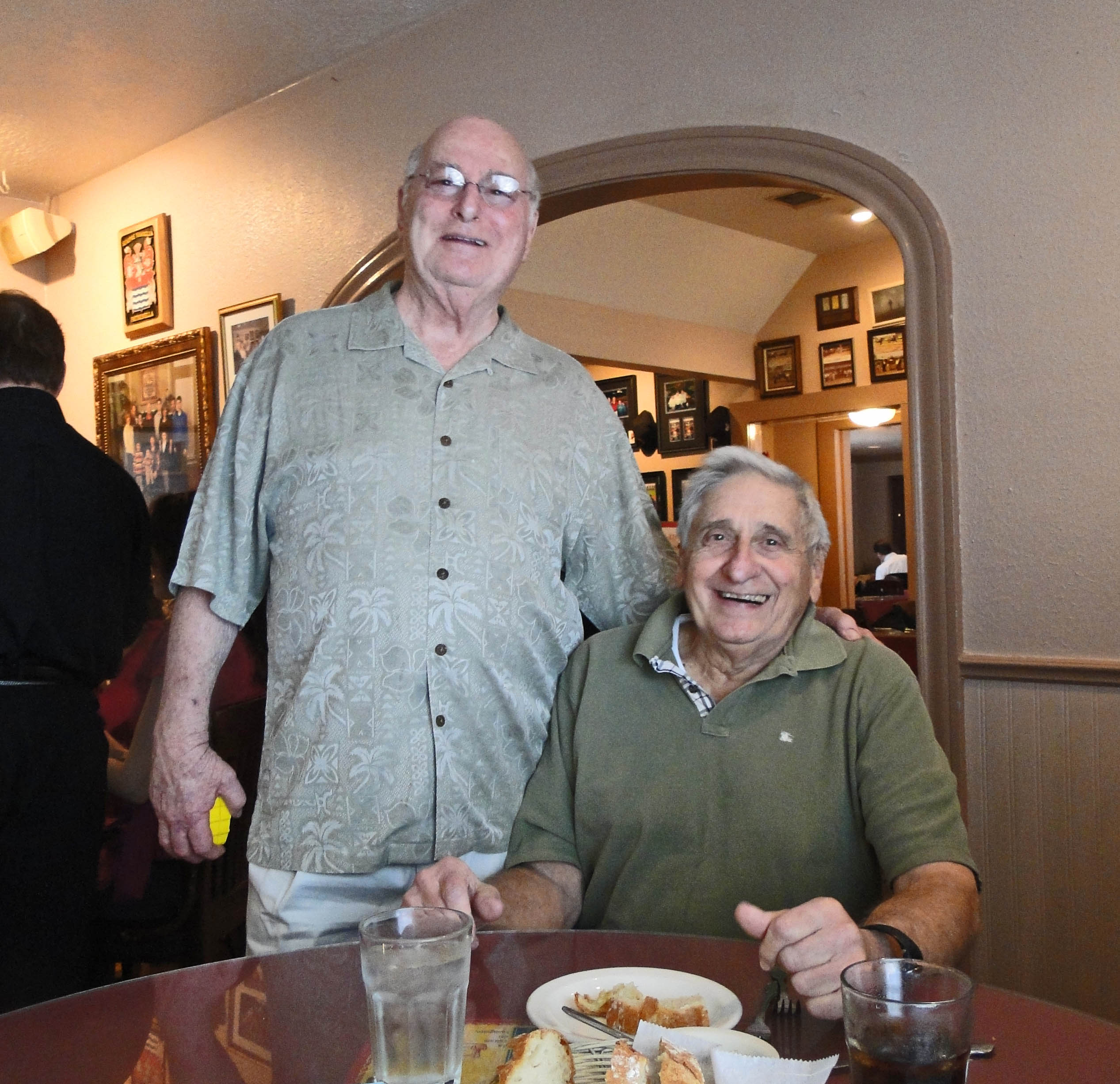
Sammy Patrenella (L) and Houston consigliere Richard Coselli.

The smile on Sammy’s face is as big as his heart. The smile you are receiving here from our last featured photo of Sammy greeting his luncheon guest and lifelong friend and fellow St. Thomas High School graduate Richard Coselli reaches out as an invitation for you to stop by sometime and also partake of the joy that is dining at Patrenella’s.

Let me put it this way: The Goombahs above are making you a dinner offer that they each hope you will not refuse. Life’s too short to miss out on the joy of this world’s best food and greatest company.

Have a terrific Friday, everybody!