Posts Tagged ‘History’

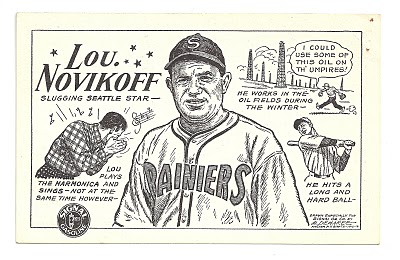
Lou Novikoff: The Mad Russian.

March 23, 2010

His family name earned him “The Mad Russian” moniker, but he may as well have been called “Cowboy” for his October 12, 1915 birthday in Glendale, Arizona, when that place was still a small western town further out on the desert from Phoenix. The place is now just another sun-tea melting suburb of the Arizona capital city, coming complete with its own fancy high-tech load as a National Football League stadium.Like a lot of other places in America, then and now are two different worlds in the history of Glendale, Arizona. Coming of age in the 1930s, the bats and throws right rookie outfielder that was young Lou Novikoff was all baseball. At 5’10” and 185 lbs,
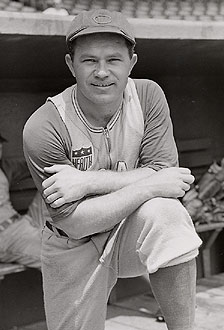
Lou Novikoff

Lou had better than average hitting ability that included greater success with fast balls than it ever did with big league curve balls and other pitches of stealth and surprise. His abilities and World War II were enough to buy him a short career in the major playing for two of the worst franchises from that era. By the time the 1945 Cubs had rallied enough to take the National League pennant, Novikoff was back in the minors, hitting .310 for the Los Angeles Angels of the AAA Pacific Coast League.

Novikoff had several light-out batting years in the minors. He batted .351 in his 1937 rookie season with Ponca City. He followed that whacker of a debut by hitting .367 for Moline in 1938 and .376 for Tulsa, Los Angeles, and Milwaukee in 1939. A .363 mark for Milwaukee in 1940 and a .370 BA for Los Angeles in 1940 were then enough to earn Lou his big time shot. With stats in the stratosphere, it’s hard to conceive that he did not raise a few hopes in Chicago that they might be getting the next Joe DiMaggio or right-handed Ted Williams.

It wasn’t to be, but that’s an all too familiar career-capper, isn’t it?

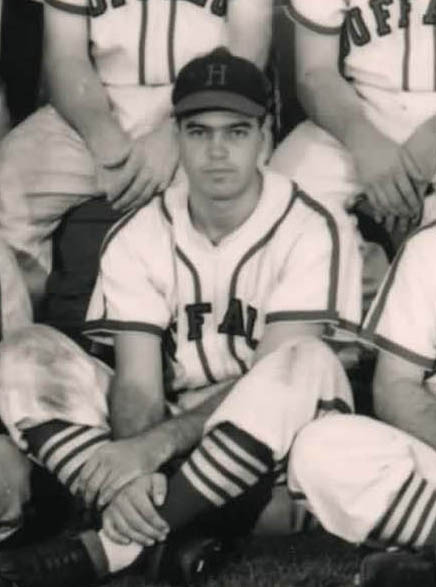
By the time I ever saw Lou Novikoff during his short time with the 1949 Houston Buffs, he was pretty much traveling on the comical recitation in the newspapers of his “Mad Russian” sobriquet. His reputations as a fun-loving goofball did not disappoint in reality, even though he batted only .230 with but a single homer for the horrendously bad ’49 Buffs. It wasn’t hard to hide mediocrity that season. Lou was surrounded by it in the Buffs dugout.

There was an occasion, in a game against Beaumont, as I remember, when Lou Novikoff seized upon an opportunity to do something on a baseball field that I had never seen before or since. During a late inning pitching change by Buffs manager Del Wilber, Novikoff left his position in left field to take a quick rest room break in the Buffs clubhouse on the other side of the Knothole Gang stands down the far left field line.

Unaware of his departure, Wilber made his change on the mound and the home plate umpire gave the signal for the game to resume … with no one in left field for the Buffs!

Meanwhile, we Knothole Gangers are yelling back at the Buffs clubhouse: ‘HURRY UP, LOU! THEY’RE GETTING READY TO START THE GAME AGAIN WITHOUT YOU!”

All of a sudden, we see Lou Novikoff running out of the clubhouse, trying to fix and button his baseball pants as he runs back to the field. He’s saying something loud, something like, ‘OHHH BOY! OHHH BOY!”

Unfortunately, Lou didn’t make it. Before he could get back on the field, a Beaumont batter had banged a dunk liner into left field. By the time the Buff center fielder had rushed over to pick it up, the very surprised Beaumont hitter had turned it into a two-run triple that would ultimately drive the nail into the Buffs’ coffin for the night.

By the time Lou Novikoff had resumed his position in left after the fatal play, Buffs manager Del Wilber was racing down the line in red-faced

Lou Novikoff as a Chicago Cub

awe, yelling, “WHERE IN THE *&$#** WERE YOU?” As I recall, Wilber pulled Novikoff on the spot and put somebody else in, but that part of the memory blurs. He may have left him in there. The nineteen player roster limits that existed in the Texas League back in that era didn’t allow for a lot of managerial object lesson opportunity. I do recall that Novikoff was soon released after the potty-run incident.

When asked about his decision to leave the field during a game, the Mad Russian had a very simple explanation for the press. “When you gotta go, you gotta go!” Lou exclaimed.

Lou Novikoff passed away in South Gate, California on September 30, 1970, less than a month shy of his 55th birthday. Like it or not, he will be remembered forever by his catchy nickname.

Is Danny Murtaugh Headed for the Hall of Fame?

March 22, 2010

On his big day in baseball, Pittsburgh Manager Danny Murtaugh (L) happily yielded the spotlight to his 2nd baseman, Bill Mazeroski.

Former Pittsburgh Pirate ace reliever Kent Tekulve may have said it best for a lot of Pittsburgh Pirate family members when he offered these choice comments about his former manager, the late  Danny Murtaugh, for two seasons in 1973-74: “”What I know about Murtaugh is there were two things you could count on. He would give you an honest evaluation or an honest answer, and you were rewarded for what you did on the field,” Tekulve said. “It didn’t matter who you were or what you looked like, he would stay with you as long as you performed. You always knew where you stood.”

Honesty, integrity, straight-shooting forthrightness, and a predictable record of rewarding those who got the job done with playing time are all qualities that lace their way through the comments of former Pirate players on Murtaugh – and they are now being heard loud enough to finally lift Danny Murtaugh into serious consideration by the Veterans Committee for future election to the Baseball hall of Fame.

For younger readers, a brief sketch of Danny Murtaugh’s career is in order.

Danny Murtaugh began his nine season Minor League career (1937-41, 1946-47, 1952-53) at Cambridge and concluding at New Orleans. He played second base for two really good Houston Buff clubs in 1940-41, hitting .299 and .317 on his way to the majors and a nine season Major League career with the Phillies, Braves, and Pirates (1941-43, 1946-51).

Murtaugh’s career minor league batting average was .297 with 16 homers. His career major league BA was .234 with 8 HR. Danny was more a speed guy who sprayed hits. As a 1941 rookie, Murtaugh’s 18 stolen bases led the National League.

It was as a manager that Danny Murtaugh stole the hearts of Pittsburgh fans and made his strong case for Hall of Fame consideration. As the Pirate field boss for all or part of 15 seasons over three decades (1957-64, 1976, 1971-71, 1973-76), Danny Murtaugh led Pittsburgh to five playoff contention seasons and two World Series championships in 1960 and 1971.

The 1960 World Series victory in seven games over Casey Stengel and the New York Yankees on the heels of Bill Mazeroski’s extra inning home run at Forbes Field is one of the signature moments in baseball history. It was a strong enough home run to eventually propel Bill Mazeroski into the Hall of Fame as a player – and it may yet have enough glow left about it to help manager Murtaugh be so duly honored too as a manager.

Let’s make this point clear. The 1960 Mazeroski home run to win the World Series may have been the deciding factor in earning enshrinement for Bill Mazeroski, but it cannot have been the only reason he got there. The man was one of the most athletic and sure-handed defensive second basemen in baseball history. He was richly deserving of the honor on these other qualities of talent and skill.

So it is with the late Danny Murtaugh. He doesn’t deserve the Hall of Fame for his shared “1960 Mazeroski Moment” alone, but for all he did as a manager to bring out the best in Pirates baseball for over three decades and twenty-nine total years of service to PittsburghPirates baseball as a player, coach, teacher, manager, and, yes, role model. Danny Murtaugh achieved by playing the game honestly with integrity. As I remember him, Danny also was the antithesis of Leo Durocher’s famously stuff-quoted expression on what happens to nice guys. Sometimes, when you are the kind of guy that Danny Murtaugh turned out to be, “nice guys finish first!”

Last fall, some of the folks in Pittsburgh got behind a movement to support Danny Murtaugh for induction into the Hall of Fame through a vote of support by the Veteran’s Committee. They came close, but walked away with no cigar. Danny Murtaugh received 8 of the possible 16 votes for Hall of Fame election. He needed 12 for induction and, who knows, maybe next year he will receive the kind of honor that this year passed to former manager Whitey Herzog.

Danny Murtaugh’s career managerial record at Pittsburgh is 1,115 wins against 950 losses. His uniform number 40 already has been retired by the Pittsburgh Pirate organization.

Unfortunately, Danny Murtaugh left us many years ago and at far too young an age. He died of a heart attack in 1976 at the age of 59.

Danny's Pirates won World Series titles in 1960 and 1971.

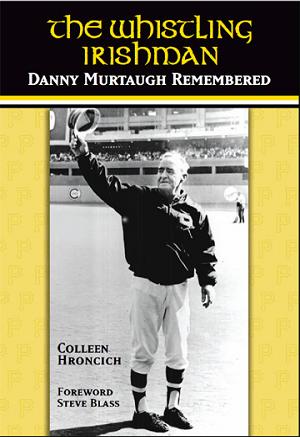
Murtaugh’s granddaughter, Colleen Hroncich, has written a biography on Danny that is supposed to be available now as “The Whistling Irishman: Danny Murtaugh Remembered.”  I have yet to see it, but here’s a website with information on its availablity:

http://dannymurtaughbook.com/

Also, if you have any strong feelings, one way or the other, on Danny Murtaugh’s qualification for the Hall of Fame, please leave a comment here as a reply to this article.

Thank you.

Did Ty Cobb Get Away with Murder?

March 21, 2010

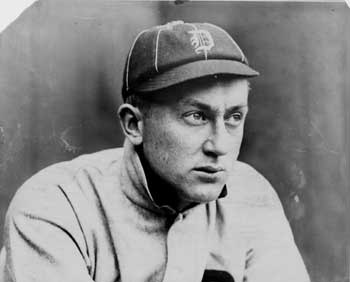
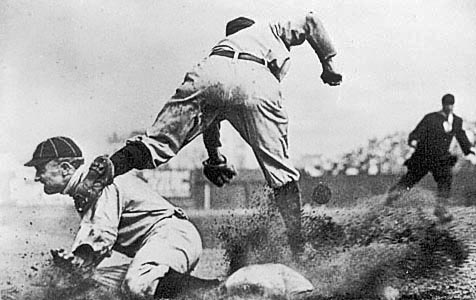
Cobb had an appetite for violence, but did that go as far as murder?

Back on August 12, 1912, Ty Cobb and his wife left their Detroit home in Ty’s Chalmers automobile, making their way to the train depot for a Tiger team road trip. Driving south on Trumbull, Cobb slowed down as they approached the Temple (formerly Bagg) Street intersection. According to researcher Bill Burgess III, it was at this junction that three men appeared suddenly and jumped on the running boards of Cobb’s vehicle. According to Cobb’s report, the men had been drinking and they also spoke to each other in a “foreign language.”  They demanded that Cobb stop the car and give them money.

Cobb stopped the car, alright, but he didn’t give them money. He gave them hell.

Several versions of “what happened next” have come out over the years from Cobb, his wife, police reports, and newspapers, but the common theme over time has remained that Cobb beat them all up, even after being stabbed with a knife. Two supposedly ran away while the third lay on his back while Cobb beat him into a bloody, senseless, unconscious, and non-breathing pulp. In my book, those symptom-descriptors would pretty much put the man somewhere about six feet beyond the pail of death, I do believe.

After Cobb’s superhero mop-up of the bad guys, he and his wife supposedly got back in their car and continued the drive to the depot in time to catch their train, not even reporting what had happened to Tiger manager Hugh Jennings until the next day in Syracuse, where they were scheduled to play an exhibition game. Cobb had the knife wounds and torn clothing as evidence that something bad had happened the previous night.

Well, the short of it is this: No one ever found a body in the street or alleyway back in Detroit, and no researchers have since found any evidence of violent trauma deaths around this time period in Detroit that match any of Cobb’s descriptions of the episode. A fellow name Bill Burgess III, whom I do not know, has done a lot of research on this incident. If you care to read his report, cut and paste the following link to your address line and check out what Burgess has to say.

http://baseballguru.com/bburgess/analysisbburgess01.html

Did Ty Cobb get away with murder? I don’t know.

Was Ty Cobb capable of murder? Most certainly. He just never did it or got caught doing it.

I do not offer my commets lightly. In my earlier career as a clinical faculty member in the Department of Psychiatry and Neurology at Tulane University Medical School in New Orleans, I was in charge of screening and evaluating research volunteers from the Jackson State Hospital for the Criminally Insane. It wasn’t the most pleasant detail of my professional life, but it was certainly one of the most memorable.

The violent personalities I met all had this much in common with Ty Cobb. They each had family histories of violent episodes from childhood forward and personal histories of violence toward others. Ty Cobb’s mother shot and killed his father two days prior to his major league debut. She was originally charged with murder, but then released and the matter closed as a case of mistaken identity. She claimed to have mistaken the elder Cobb for a burglar. The elder Cobb, however, had suspected Cobb’s mother of infidelity and many believed that she “did him in” as the result of a violent quarrel over the fidelity issue.

Cobb never believed his father’s death to be an accident. The untimely death also left Cobb with some powerful unfinished business with a father that Ty had never been able to please. Cobb was supposed to become either a lawyer or doctor. That’s what his father wanted. The elder Cobb was beyond disappointed with his son’s decision to pursue a career in baseball. All he could say to Ty when he left home to join his first team was “don’t come home a failure.”

The traumatic loss of his father left Ty Cobb with an unquenchable thirst for proving his worth by becoming the greatest ballplayer of all time. He was not trying to please anyone, but he was totally dedicated to out-performing everyone. He also hit the field and  streets alike with a tender ego for anything he perceived as a show of slight or disrespect of him by others. He would quickly lash out and fight with anyone, male or female, young or old, able bodied or disabled, who rubbed him the wrong way.

Cobb’s most notorious impulse-to-violence event occurred at the Polo Grounds in New York. A fan was really giving it to Cobb from the third base stands. When Cobb could take it no more, he jumped the rail, ran up to where he sighted the fan and started pummeling the man senseless. Tiger teammates came after Ty, yelling, “Ty! Cut it out! This guy ain’t got no arms!” Ty still had to he pulled away. When asked later by the press about the wisdom of attacking a man with no arms, Cobb said, “well, that fellow should have thought of that possibility before he decided to use rough words on me!”

Ty Cobb gave no quarter in baseball or in everyday life.

Could Ty Cobb have killed a man at some other moment? Yes. The inmates I saw in the hospital years ago either did or tried their best to do so, and their histories of violence were often less numerous than Cobb’s. Those inmates who couldn’t establish insanity as a defense got sent to Angola State Prison. The rest who did establish insanity just ended up in Jackson State Hospital – which really was also a prison that the State of Louisiana officially called a hospital.

Nobody got well there. And the screams in the night at Jackson were bone-chillng. These were all people who suffered from a variety of violent personality disorders that inevitably spread harm, damage, and death upon others.

Ty Cobb also was a violent personality disorder who just happened to have also been the arguably greatest ballplayer of all time. Society just never pinned a murder conviction on him. Even these kinds of people come with variable levels of intelligence. Ty Cobb had the intelligence, power, influence, and money to have bought his way out of much trouble along the way. We don’t know if he did, or not, but the possibility is there. It can neither be proven nor dismissed.

Old Hoss Radbourn: “59 in 84!”

March 20, 2010

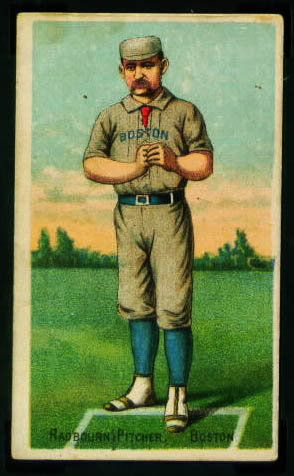
In 1884, Old Hoss started and finished 73 games.

There’s a new book out on 19th century pitching phenom Old Hoss Radbourn called “Fifty-Nine in ’84: Old Hoss Radbourn, Barehanded Baseball, and the Greatest Season a Pitcher Ever Had.” It’s by Edward Achorn, a writer who once discovered Radbourn, as did the rest of us, by running across his incredible pitching record back in the 1880s. I haven’t read Achorn’s work, but I ordered it today. I’ve read everything that’s ever been written on Old Hoss so the news of a new work reached me as simply irresistible.

In 1884, McMillan’s Baseball Encyclopedia once listed Radbourn as the winner of 60 games in 1884.. That figure has since been adjusted down to 59, but that’s still an incredible total by today’s standards. The man started and completed 73 games, achieving a record of 59 wins, 12 losses, and 2 ties over 678.2 innings of work for the Providence Grays. Incidentally, Radbourn also registered 441 strikeouts in ’84.

How’s that for some immortally graced rubber armed hard ball chunking? Contemporaries say that Old Hoss pitched with all the steel will and intensity of a win-possessed madman on the mound. He must have had a lot going for him that special year. No one needed nor dared remove him from a single game.

It was rough era. Few players used any kind of gloving in 1884 and Old Hoss wasn’t one of them. Most players drank too much, cheated relentlessly, caroused and drank to excess with loose women, and beat the crap out of each other when disagreements arose over such major issues as who owned the last biscuit on the plate at the boardinghouse. The code of misconduct and egregiously self-serving sub-culture that was major league baseball in 1884 was hardly anything to uphold all of our more fanciful images of baseball as a pastoral paradise in the 19th century. It was a good place to work and get killed. And the club owners and fans cared nothing at all about the players who suddenly failed to produce. “What have you done for me lately?” is a mentality that has been with us forever in America and it didn’t begin with baseball. Just ask George Washington or Thomas Jefferson.

Old Hoss made it to the Hall of Fame in 1939.

The 1884 game of ball was a little different, a little rougher, and a little tougher. Most pitchers were expected to finish the games they started. A pitcher began his motions in the proverbial “pitcher’s box” on flat ground and not from a mound. The edge of the pitcher’s box measured only 50 feet from the front of home plate, and not the 60’6″ it is today. Batters had to be tough too. There was no penalty for pitchers who hit batters with  a hard throw back in 1884. Batters were not awarded first as a result of getting hit. They just had to shake it off and hang in there – and maybe scheme privately on how they would go after the pitcher after the game as a course of revenge. I doubt that “reconciliation” was even passable as a real word in 1884. It certainly wasn’t one you would find in the baseball dictionary.

They say Old Hoss Radbourn was as tough as nails, but tightly strung on an intense wire about winning. A teammate once described Radbourn as bearing the raging glare of a madman after a crucial loss. It was a look that soon melted into tears of accepted condolence and self-forgiveness when another teammate came by his dressing stool and patted him on the back. Radbourn’s will to win only steeled from moments of despair. The cure for disappointment in Radbourn’s heart was to go back out there and reel off another ten wins in a row. How simple a remedy is that?

Old Hoss Radbourn’s 11-season career (1881-1891) with Providence, both Boston clubs, and one year with Cincinnati produced a career mark of 309 wins, 195 losses, and an ERA of 2.67. 1984 just happened to be the most victorious yer in the history of pitching, thanks to Old Hoss Radbourn.

Radbourn became a saloonkeeper following his retirement from baseball, but he died in 1897 at the early age of 43, very possibly from syphilis. Old Hoss Radbourn was posthumously inducted into the Baseball Hall of Fame in 1939.

The Ten Worst Teams of All Time.

March 18, 2010

The 1899 Cleveland Spiders Finished 20-134 and 84 Games out of First.

It’s hard to imagine that the ten worst clubs in big league baseball history fails to include even a single representative of the old St. Louis Browns, but failure is relative too when it comes to making it into the record book on the “biggest losers” list. This first list is also a little on the subjective side too. Pure losing percentages and “GB” from first place finishes would qualify as another list altogether. That being said the 1939 Browns deserve honorable mention for their 43-111 record and a last place finish that left the Amrican League Mound Citians some 64.5 games back of the first place World Champion New York Yankees.

The first “worst ten” list is the work of George Robinson and Charles Salzberg and it was published in 1991 by Dell as “Baseball’s Worst Teams: On A Clear Day They Could See Seventh Place.” Here’s their list in descending order from bad to worst. It’s hard for me to judge  at least three of these clubs as worse than the 1939 St. Louis Browns:

Robinson-Salzberg Worst Big League Clubs List, 1899-1990:

(10) 1988 Baltimore Orioles, 54-107, 34.5 GB.

(9) 1979 Toronto Blue Jays, 53-109, 50.5 GB.

(8) 1962 New York Mets, 40-120, 60.5 GB.

(7) 1952 Pittsburgh Pirates, 42-112, 54.5 GB.

(6) 1942 Philadelphia Phillies, 42-109, 62.5 GB.

(5) 1935 Boston Braves, 38-115, 61.5 GB.

(4) 1928 Philadelphia Phillies, 43-109, 51 GB

(3) 1916 Philadelphia Athletics, 36-117, 54.5 GB

(2) 1904 Washington Senators, 38-113, 55.5 GB,

(1) 1899 Cleveland Senators. 20-134, 84 GB.

My own Ten Worst Clubs in Big League History is based upon a more objective standard of how many games behind the league leader each club finished for that competitive year. If failure truly is relative to worse comparable time and space failures and similar greater successes, then I’m going with “GB” (Games Behind the League Leader for that Particular Season) as the barometer I shall use. In the event of GB ties, the club with the worst winning percentage takes the higher negative position on my biggest loser list. (The issue of GB ties did not arise with my top ten worst clubs.)

My Biggest Loser Big League Club List, 1899-2009:

(10) 1927 Boston Red Sox, 51-103, 59 GB.

(9) 1954 Philadelphia Athletics, 51-103, 60 GB.

(8) 1962 New York Mets, 40-120, 60.5 GB.

(7) 1935 Boston Braves, 38-115, 61.5 GB.

(6) 1942 Philadelphia Phillies, 42-109, 62.5 GB.

(5) 1932 Boston Red Sox, 43-111, 64 GB.

(4) 1939 St. Louis Browns, 43-111, 64.5 GB.

(3) 1909 Boston Rustlers, 45-108, 65.5

(2) 1906 Boston Beaneaters, 49-102, 66.5 GB.

(1) 1899 Cleveland Spiders, 20-134, 84 GB.

Most of you know why the 1899 Cleveland Spiders pretty well locked up the worst club title forever by anyone’s measure. Their owner, Frank Robison, also owned the St. Louis Perfectos. Because of poor attendance in Cleveland for Spiders games, Robison moved all his best players to St. Louis and simply furnished the Spiders club with warm bodies. The results were a Cleveland team that barely won twenty games while finishing eighty-four games out of first place and a subsequent rule change to prohibit  the syndicated or dual ownership of two big league clubs by a single person or group.

In my list, some of the lowest winners are missing, such as the 1904 Washington senators (38-113), but that club finished a mere 55.5 games behind the league leader, too shallow a grave for this GB-based listing of the most unfortunates.

If you can get inside their heads and hear that little voice that starts going off from about the third inning forward in some of the players, you will be able to pick your own list of biggest losers. They will be the clubs that have the most players whose little voices starting asking, “I wonder what we’re going to do to lose today?”

Ballpark Fences: The Art of the Distance.

March 17, 2010

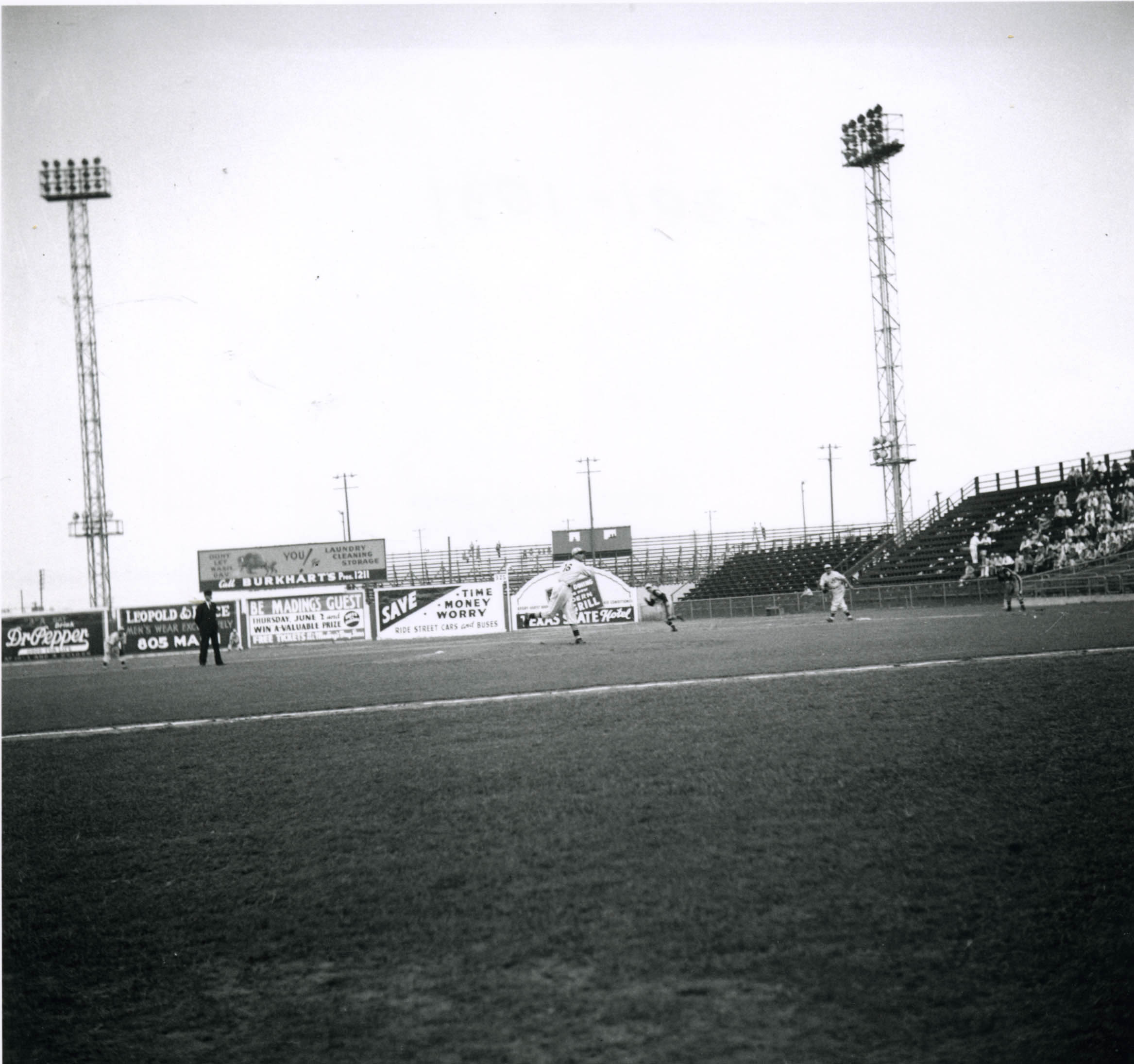
The prevailing wind at Buff Stadium came from right field. Check the flag for proof.

When baseball promoters started fencing in their ballparks in the late 19th century, it wasn’t so their players would have  home run distances to shoot for. They were just trying to make sure that any crank or fan who watched their product on the field had a purchased ticket for the privilege. As most of you know, baseballs did not travel all that hard and fast during the pre-cork center days. Incredibly faraway acreage also dominated most outfields, except in certain parks, but that was OK. Baseball venues traditionally have been built to fit the land available. It’s one of the great urban culture stories about why baseball is the game it is. Once you get past Cartwright’s ninety feet distances between the diamond of bases to cover for a score, almost all other space-length marks, including the distance of the pitching rubber to home plate, have remained in flux.

Unlike most other sports, unless you include golf, baseball is built around variants to time and space that are unheard of in, say, football. The length of games and the total size of the playing space is always at variance from game to game, day to day, and place to place.

When Buff Stadium opened on April 11, 1928 as the sparkling new model for minor league baseball park development, the place featured incredibly distant fences as the hitting challenge for power hitters. It was 344 feet down both lines and 430 feet to dead center, a much better place for line drive gap hitters than it was as a breeding tank for any of the new Ruth-copying sluggers. Remember, the Yankees had built the original Yankee Stadium only five years earlier in 1923 with Babe Ruth in mind. Their right field distance down the line was only 297 feet, some 47 feet nearer home plate than the closest right field distance at 1928’s Buff Stadium.

Buff' Stadium's right field distance in the 1950s had "shrunk" to 325 feet.

In addition to the distance, a couple of other factors worked against left-handed batters at Buff Stadium. One of these is clearly visible in the first feature photo of the old ballpark and that was the prevailing wind. The Gulf of Mexico breezes blew in from the south across the right field wall like a steady gale throughout the summer months. Sometimes they blew straight in to home plate. Most of the time they took a right field to left field course, as is clearly shown by the straight out position of the center field flag. With high fly balls to right, you could sometimes see the effects best from the first base stands. What began as a sure-sounding homer to right would suddenly hang in the air before changing course, depending on the exact wind direction, either further to center field as an easy fly out – or back toward the infield as a Candlestick Park like fly ball out. Some of those catches were interesting. Buff Stadium simply lacked the constant swirl of the bay winds. Thank God.

Sometimes the prevailing winds at Buff Stadium helped a few home runs to left, but, most of the time, they were more of a factor in blowing balls foul that were hit down the left field line.

The other factor that worked against home run hitting early at Buff Stadium was the fact the Buffs started playing night games there on July 22, 1930. The early lighting was OK for its time, but some of the players of that era complained that they couldn’t see the ball as well at night. How much of that complaint was truth and how much of it was players coming up with another excuse for bad hitting is lost in time. All I Know is that I played on some night fields that were far worse lighted than Buff Stadium ever was. Sad to say, but badly lighted night baseball neither significantly helped my pitching nor hurt my batting over what it was in the bright of day. Sometimes things just are what they are.

By 1938, Buff Stadium fence distances had crept even higher to 340 feet in center and 345 feet down the lines. After World War II, new President Allen Russell quietly adjusted things to the needs of power hitters like Jerry Witte and Larry Miggins. Right field in this photo is only 325 feet from home. The same distance to left was shortened to 330 feet. Center settled in to about 424 feet. They could have come in closer down the middle, but nobody wanted to lose the flagpole from the playing area in center field.

Buff Stadium had character. As the character of the game changed, the face of the old ballpark took a few beauty lifts with the changing times as well.

One ongoing problem in Houston existed as younger players worked their way up to Houston from New Iberia of the Evangeline League. This vignette is the best argument I’ve ever encountered about why big league clubs need to be very careful where their raw recruits are starting out.

The New Iberia Cardinals of the 1930s played their home games in a football stadium. Home plate was located somewhere near the 50-yard line, leaving the players to play on a field that was under 300 feet to center field and about 600 feet to left and right. The dimensions taught batters to hit straight away and influenced pitchers to hope batters would pull the ball. These traits then had to be corrected once the players reached Houston.

Red Munger and Howie Pollet both came to Houston from New Iberia. Red used to say that the manager there tried to steer them away from those local tendencies, but he also admitted that it wasn’t easy. “When you’re standing on that mound,” Red liked to say, “you never forgot that the wall in center was less than 300 feet away.”

I could go on all day. The art of the distance at various ballparks has many stories to tell. We will re-visit the topic here again sometime. Before then, I hope you will leave us with some of your own thoughts on the matter of outfield distances. That’s what the comment section below is all about. The more we dialogue, the more we will be able to carry a topic to other levels of consideration.

The sun is hining. Spring is coming. Have a great day too with this thought: Opening Day 2010 is less than three weeks away!

And not just “by the way,” – HAPPY ST. PATRICK’S DAY!

Houston Buffs: Forgotten Fielders.

March 16, 2010

Jack Cusick hit .174 in two big league seasons (51-52).

When I read of names on the Astros spring roster like Wladimir Sutil and Jose Vallejo, I always ask myself, “Are these guys the Jack Cusick and Elbie Flint of our franchise’s near future?”

What’s that? You say you never heard of Cusick and Flint? Well, if you have not, it will be unsurprising. They are two of the typically forgotten fielders of yesterday’s baseball past with the Houston Buffs. Jack Cusick came  here briefly in 1949-50; Elbie Flint almost took the baton from Cusick, arriving in time for his own two-seasons appearance with the Houston Buffs in 1951-52. Flint never saw a pitch of action in the big leagues. Cusick made it there long enough in 1951-52 to display his sawed-off bat and decent glove.

So, why spend any time remembering these guys here? My answer is simple. Guys like Elbie Flint and Jack Cusick are the backbone of the game for every club. Without their competitive presence, nothing else would matter – and there would be no baseline for measuring good performance versus poor performance. That’s just how sports work on the most basic level. The attribution “great” means nothing if we cannot compare it to something similar that isn’t our discovered benchmark on greatness.

Elbie Flint never had a baseball card of his own career.

Make no mistake. Both Cusck and Flint could hold their own defensively as utility infielders in the Texas League of the mid twentieth century. Both also had quickness, athleticism, and decent arms. Cusick was the better hitter of the two Punch and Judys – and that most likely was the reason that he made it to the big leagues for a short look and Flint did not. As a minor leaguer, Jack Cusick hit .268 with 6 HR over five seasons (1946-50) while Elbie Flint batted ,237 with 17 HR over the eleven seasons he played minor league ball over the stretch from 1944 to 1958. Jack Cusick also registered a big league career mark of .174 in 242 times at bat for the Chicago Cubs in 1951 and the Boston Braves in 1952.

Our Pecan Park Eagles sandlot club has a personal reason for remembering Jack Cusick from way back in 1949. One summer afternoon, as we did our baseball thing on “The Lot” at Japonica and Myrtle, a car stopped and a young man got out to watch us play our game.

“Holy Cow!” I thought aloud. “It’s Jack Cusick of the Buffs!”

In no time, we had surrounded Mr. Cusick at his car, begging him to join us or teach us something.” I now realize that Cusick was only 22 at the time, but he seemed tall and old and grown up to our dirty little bunch of  all sweat and mud sandlotters on the steaming hot day.

“Alright, you guys,” Cusick offered with a smile, “I don’t have much time, but let’s see what you fellows know about fielding before I have to get myself over to Buff Stadium.”

In a few seconds, the young Jack Cusick had us lined up taking grounders to our left, right, and head on. Giving us instruction on liners, bloopers, and the art of going back from the infield for dying quail flies, Cusick gave us his all. as did we in return. We hated that he had to go or that he never came back, but that wasn’t Jack Cusick’s fault. The Cardinals or Buffs dealt him away to Beaumont and we never saw him again, but that didn’t change the impact of that afternoon. The fact that a real ballplayer like Jack Cusick had time to help a bunch us nobody kids in the East End on his way to practicing with the Houston Buffs just deepened our love of the game and our affection for Houston’s thundering herd.

Neither Jack Cusick nor Elbie Flint shall ever fall off the cliff of “Good Field. No Hit. No Remember” in my book of baseball recollections. And let’s hope that someone younger out there is ready to pick up the cards on new  fellows like Wladimir Sutil and Jose Vallejo too. Behind every young man who tries to play the game of baseball on a professional level, there’s a good story, one with many lessons about the right and wrong things to do along the way. If we are really interested in baseball history, we need to keep an ear open to hearing what these stories are about. Their wisdoms for young people go way beyond baseball.

Opening Day Marks from 1962.

March 15, 2010

Bobby Shantz's Houston career lasted 20.2 innings.

With Opening Day of the Astros 2010 baseball season coming at us now, as always for me, like an overdue passenger train bearing a long-lost love or prodigal son, I am also always reminded of our first Houston occasion in the big leagues back in 1962. The club set records on April 10. 1962 that will last forever because they were each and all of them the first times we had done anything as a brand new member of the National League. Let’s run through a few on the going-in knowledge that we will not cover the whole first picture show.

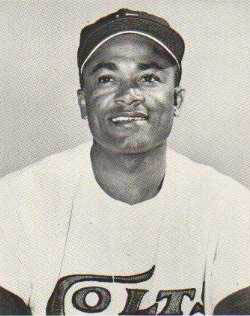
Lefty Bobby Shantz (5’6″, 142 lbs.) started and finished the first game ever pitched for Houston in the big leagues. He threw the first pitch, a curving called strike to Chicago Cubs lead-off batter Lou Brock. That action alone exemplifies the improbability that we could possibly cover all the firsts of this of this special Opening Day in old Colt Stadium. Shantz’s first pitch, per se, was also the first pitch ever made by a Houston hurler to a future member of the Hall of Fame, in an afternoon scheduled outdoors game, on an early spring day it wasn’t raining, snowing, or Sunday in the State of Texas! Now that we have disposed of some sillier first-time niches, let’s cover most of the ones that count.

Aspro got the first-ever Houston hit and run.

Third baseman Bob Aspromonte led off the 1962 opener as the first Houston batter in major league history. he proceeded to whack the first hit, the first single, and score the first run in franchise history. In between his first hit and run, Bob had to become our first baserunner too. He stopped only long enough to register the first stolen base in Houston MLB history.

Right fielder Roman Mejias became the first Houston batter to hit a big league homer on Opening Day 1962. In fact, he also became the first Houston batter to hit two homers in an Opening Day game, or any other kind of game, for that matter.

Catcher Hal smith became the first man to hit a double and the second separate player to homer for Houston. Center fielder Al Spangler became the first Houston batter to triple an and second baseman Joey Amalfitano clocked in as the first Houston batter to be hit by a pitch.

Ernie Banks of the Cubs became the first opponent batter to homer off the Astros and, since, Bobby Shantz was busy throwing the first complete game in Houston history, he got to be the first franchise pitcher to surrender an official home run too.

Mejias hit .286 with 24 HR in 1962.

Reliever Turk Farrell became the first Houston reliever to warm up and not be put in the game as Bobby Shantz hung in there to surrender only five hits in pitching the first complete game in Houston MLB history.

The club records also were resplendently established on Opening Day 1962. Had they not continued to play, the 11-2 Colt .45 victory over the Cubs on April 10, 1962 had the club on pace to average double-digit runs in their official games. That would have been a mighty record, had the Colt .45s been able to sustain it over time as their version of “Mission Impossible.”

Bob Aspromonte and Roman Mejias became the first two Houston players to collect three hits each in a game back on Opening Day 1962. By going 3 for 4 while Mejias went 3 for 5, Aspromonte’s resultant batting average of .750 is the highest mark in team annals for career to date, if only for a day.

Catcher Hal Smith and second baseman Joey Amalfitano committed the first two fielding errors in club history. I am not sure which error came first. I am only sure that these two were far from our last miscues in the field and elsewhere.

Oh well, the 2010 Opening Day train will be here soon and there’s someone aboard we are each hoping to see again. Will it be the long lost love of our first Houston World Series hopes? Or will it be the prodigal son of the long ago lost pennant that got away , now coming back as our renewed grip on that eternal belief that we will enjoy better luck this time?

Go, Astros! Rise above the slumbering ether that is forecast for us as part of the mediocrity that oozes from a team that is simultaneously growing older in one “arthroscopicked” hand while it rebuilds with the eager talent-for-cheap-wages other.

Phi Slama Jama Remembered.

March 14, 2010

Akeem Olajuwon (34) & Clyde Drexler (22) Both Became Top 50 NBA Greats.

When the featured photo of today’s article on the University of Houston Cougars was taken during the 1982-84 run of Phi Slama Jama, Hakeem was missing an “H” in his first name and Clyde had a lot more hair on his later famous bald pate. Olajuwon was two to three years into his pro career as a Houston Rocket before he bothered to correct the media that his first name was spelled “Hakeem” and not “Akeem.” Clyde’s hair style change simply ook care of itself with the help of time and Mother Nature.

Houston Post sportswriter Tommy Bonk gave those great UH men’s basketball teams of the early 80’s the nickname of Phi Slama Jama in an article he wrote about the team on January 6, 1983. It caught on like a gasoline fire as a description of the basketball winning conflagration that rolled on behind Olajuwon, Drexler, and their brethren in the World’s Tallest Fraternity. By the 1983-84 season, with Drexler already gone early to Portland of the NBA, the Cougars were even wearing Phi Slama Jama stitched into their uniform game jackets. The sky seemed to be their only limit and Coach Guy V. Lewis seemed a shoo-in for the National Basketball Hall of Fame.

The Cougars made it to the Final Four all three years of their roaring reign, but never quite got to the brass ring on the NCAA marry-go-round. In 1982, the Coogs lost to North Carolina and Michael Jordan in the semi-finals. Then came 1983 and the national championship that got away. The Cougars led North Carolina State most of the way in the low-scoring final game of the NCAA tournament at Albuquerque, but a late decision by Coach Lewis to hold onto the ball and an eight-point lead backfired. There was no shot clock in 1983 and teams could sit on the ball all night if they had both the ability and the will to do so.

Th Cougar effort backfired when the Jim Valvano-coached Wolf Pack fouled the errant shooting Cougars into surrendering the lead with missed shots at the free throw line. Then, with time running out and the game tied at 50-50, NCS inbounded a pass that Lorenzo Charles stuffed to take a 52-50 championship victory right out of Houston’s expected grasp. The UH Cougars lost their most famous bid for a national basketball championship. The Cougar loss in 1983 also halted a 26-game winning streak and left UH with a final record for 1982-83 of 26-2. The way they lost, unfairly or not, has so far been the factor that has kept a career-record deserving Coach Guy V. Lewis out of the Hall of Fame. As a Cougar alum, it makes me sick to even think about the far-reaching pain of the NC State loss and its long-range bearing on UH.

Clyde Drexler left the Cougars early after 1983, but Olajuwon was quickly joined by fellow All American star Michael Young for a return to the Final game in 1984. This time, however, the contest was not so close as the Cougars went down at the hands of Patrick Ewing and the Georgetown Hoyas. Still, the Cougars were there for three years in a row. Other than UCLA, not many other university clubs can make the same claim.

I was reminded of Phi Slama Jama by the Houston Cougars’ victory over the UTEP Miners in the final game Saturday of the Conference USA tournament. Now playing under Coach Tom Penders, the Coogs had to win games for four days in a row to pull it off, with that final 81-73 win over UTEP giving UH their first trip to the NCAA Tournament since 1992.

These Cougars are not to be confused with Phi Slama Jama, but they are quick, they are spirited, they hustle, they ride their hearts hard, they play as a team of brothers, and they never give up. It will be of passionate interest to Cougar fans to see how far UH goes from here in the tournament. No one is expecting a 19-15 club with a closing conference tourney table run of four wins to take the national championship, but it will be fun preparation for next season to find out how much gas they have left in the tank for this year’s business.

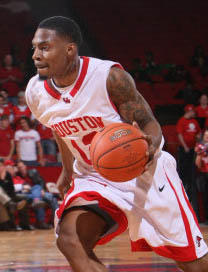
Aubrey Coleman of UH is the nation's top NCAA men's basketball scorer for 2010.

The nation’s leading scorer, Aubrey Coleman, had an off-day for UH Saturday with only 13 points, but teammate Kelvin Lewis lit up the UTEP Miners at the Tulsa-site tournament court with a 28 point contribution to pick up the offensive slack for his basketball brother.

UH 2010 may not be close to Phi Slama Jama by attribution, but they are doing pretty well since Coach Penders dubbed them as the “DMW” (Dead Men Walking) team in Game One of the tourney, These Cougars are a “Band of Brothers.” They may not win again this season, but who knows? The DMW gang has had  nothing more to lose since losing a week ago last Saturday to a 9-20 Tulane club in the final game of the regular season.

For the record, the UH miracle run played out this way in four consecutive days:

Wed., March 10: UH 93 – East Carolina 80.

Thu., March 11: UH 66 – Memphis 65.

Fri., March 12: UH 74 – Southern Miss 66.

Sat., March 13: UH 81 – UTEP 73.

As a result of this week’s hard-earned miracle win in the C-USA championship tournament, all things are now possible. The Cougars have won for themselves a NCAA tourney dance card as a 2010 Cinderella club. And you’re never a pumpkin in this old world until you start turning orange and soggy.

Wait a minute! I’m feeling something! – How’s my complexion?

Little Joe Presko: Second Look.

March 13, 2010

Presko Went 16-16 for the Last Place '50 Houston Buffs.

It’s Saturday morning and I’m a little short on time today. As a result, here’s a second look at a subject I wrote about a while back, this time with a little more reporting on his actual major league career. I’m talkng about the fellow we 1950 Houston Buff fans called Little Joe Presko.

Little Joe Presko. Baseball Almanac lists him at 6″0″ and 170 lbs., but Baseball Reference hits it a lot closer at 5’9″ and 165 lbs. Macmillan’s Baseball Encyclopedia gives Joe an extra half-inch at 5′ 9 1/2″ and 165 dead weight lbs. Today Presko is 81 and probably closer to the 5’7″ or 5’8″ we thought he was back in 1950, when Presko (BR/TR) won 16 and lost 16 for one of the worst Houston Buff clubs on record. He was “Little Joe” to us then; he’s “Little Joe” to me now, but remember too – that was a title we put on Presko in great admiration for him as one of our few Houston hopes of the season.

Born in Kansas City, Missouri on October 7, 1928, Joe Presko signed with the St. Louis Cardinals in 1948 at the age of 19. He went 16-8 with Class C St. Joseph in ’48, before moving up to go 14-9 with Class A Omaha in 1949. Those nice ladder stops elevated Little Joe to Class AA Houston and his 16-16 banner achievement for what turned out to be a pretty bad club.

Joe Presko made his big league debut on May 3, 1951 as a spot starter/reliever for the Cardinals. He went 7-4 on the year with a 3.45 earned run average. In a six-season career that was limited by appearance, but pretty evenly divided between starting and relieving, Joe Presko won 25 and lost 37 with a 4.61 ERA thrown in to boot for the Cardinals (1951-54) and Detroit Tigers (1957-58). Joe spent 1955 back in Omaha and 1956-57 and parts of 1958-59 with Charleston, ending up with Toronto in 1959 and a closed-door on his baseball playing days. He wrapped up with a minor league career record of 77-68 and an ERA of 3.46.

Joe Presko had some memorable big league moments, the kind a pitcher doesn’t get today with pitching role specialization and pitch count limitations. The following examples are referenced to reports in Baseball Library.Com:

August 24, 1952. In a game played before 34‚709‚ the largest single-game crowd at Sportsman’s Park since 1937‚ Preacher Roe and the Brooklyn Dodgers stopped the Cards’ 8-game win streak‚ 10-4. Roe registered his 10th straight win over the 2nd-place Red Birds going back to May 7‚ 195. Joe Presko took the loss‚ exiting in the 2nd inning.

April 29, 1953. An 11th inning double by Billy Johnson, along with an error‚ allowed the Cardinals to beat the first-place Phillies‚ 1-0. Curt Simmons was the loser‚ despite allowing just three hits. Joe Presko pitched 9.1 scoreless innings‚ with Al Brazle coming in late for the winner credit.

May 20, 1953. Paced by Red Schoendienst’s 6 RBIs‚ on a HR‚ two doubles‚ and a single‚ the Cardinals planked the Pirates, 11-6. Solly Hemus scored 5 runs for St. Louis‚ as Joe Presko got the best of Bob Friend.

In 128 MLB games, Joe started 61, relieved in 67.

June 17, 1954. Starter Robin Roberts scored the winning run in the 15th inning to give the Phillies a 3-2 win over the Cardinals. The loss fell to Joe Presko who took over after Gerry Staley worked the first 12 innings.

The end of Joe Presko’s playing career due to arm trouble at age 29 did not end his involvement in the game. Little Joe went home to Kansas City and got involved as an American Legion baseball coach for quite a few years thereafter. David “Prefect Game” Cone was Joe’s most successful student, but many others also grew up learning baseball the right way under Joe Presko’s skilled, experienced, and caring  guidance.

We called him Little joe Presko, but he stood tall in our youthful eyes back in 1950. The guy was a terrific role model to all of us minions out there trying to learn the game on our own through the great leveling field that was sandlot baseball after World War II prior to Little League.

Thank you, Little Joe!