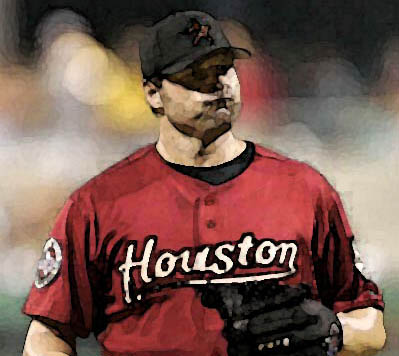
Under the present HOF voting system, a few votes for Roger Clemens this time could cost Craig Biggio his 3rd shot at the 75% support he needs from the BBWAA voters for induction.
Fellow SABR member Father Gerald Beirne of Rhode Island called our attention this week to an excellent Dec. 4th article in the New York Times by Tyler Kempner. It’s all about how our present BBWAA system of selecting candidates for the Baseball Hall of Fame is likely working against the fair consideration of some deserving former players because of the clutter on the annual ballot of former steroids-tainted people who may take up space that others could occupy, but now cannot.
In Kempner’s view, the problem stems from the structure of the current initial voting system: At the present time, supposedly based upon field performances, the BBWAA each year chooses a ballot of candidates for consideration. Based upon a HOF limitation, BBWAA voters may only vote for ten candidates on the ballot. This year (2015), the ballot contains 34 nominations. Each voting writer may choose from 0 to 10 names from this list, but they may not vote for any former player (defined as retired for five years) if that player is not on the ballot. As a result, some deserving players may be denied support because of the more popular names on the ballot.
The problem now is sharpened by the presence of so many names from the so-called steroids era. Barry Bonds and Roger Clemens are on the ballot for only the third year, but, as we already have seen with log-timers Mark McGwire and Sammy Sosa, they are likely to experience the same voter treatment. They will not come close to getting the 75% they would need for induction, but they will not either come close to dropping below the 5% minimum support total that would remove them from the ballot next year. They will simply take away two of the votes from their voting supporters that could have gone to a candidate that has a chance for election this year. (Craig Biggio jumps to mind as a perfect example.) These lost steroid souls could also manage to stay on the ballot for ten total years, blocking others, as long as they continue to receive support from at least 5% of the voters. *
Kempner’s major problem with the present system is best summarized in these five paragraphs from his article:
“Yet it is equally hard to imagine the names of Bonds and Clemens coming off the ballot. It seems as if there will always be a modest percentage of voters — certainly more than 5 percent — who look past the steroid question when it pertains to players as dominant as Bonds and Clemens were.
“So unless the Hall of Fame repeals the arbitrary limit of 10 names, voters could face still more years of a ballot logjam, with Clemens and Bonds taking up just enough space on just enough ballots to squeeze other strong candidates from remaining there.
“Perhaps, then, it is time to face this reality: Vote for Bonds and Clemens, and you are throwing those votes away. The veterans’ committee, not the writers, is destined to be their final arbiter. The writers should focus on the candidates who actually have a chance.
“Of course, for voters willing to overlook possible steroid use, it seems to defy logic to pass on the best players up for election. For them — on a ballot not limited to 10 choices — the boxes next to Bonds and Clemens should be the first checked.
“But under the current system, if they continue to vote for Bonds and Clemens, they are effectively limiting their ballot to eight spaces — not nearly enough for a field this crowded. And too many strong candidates will disappear as a casualty.”
Kempner’s piece is a thoughtful, wholistic examination of the problems that baseball now faces with the Hall of Fame voting in the steroids alumni era. Do we keep the steroids players on the ballot, knowing reasonably that their presence will only block or skew the process of legitimate consideration of others? Do we implore the Hall of Fame to drop their 10 player limit per year in the interest of making sure that legitimate candidates are not abandoned due to the throwaway votes cast for steroids-afflicted former players? Or do we find a way to simply eliminate the taint of steroids use and only judge candidates on the basis of their playing performance numbers?
Anyone who loves the idea of preserving an accurate baseball history should be thinking about this one. It’s too big to ignore.
* Footnote: I originally reported in error that this was the first year on the HOF ballot for Bonds and Clemens. Thank you, Dennis Corcoran, author of “Induction Day a Cooperstown…”, for bringing that mistake to my attention.
 Houston, Baseball, & Other Musings.
 The Pecan Park Eagle