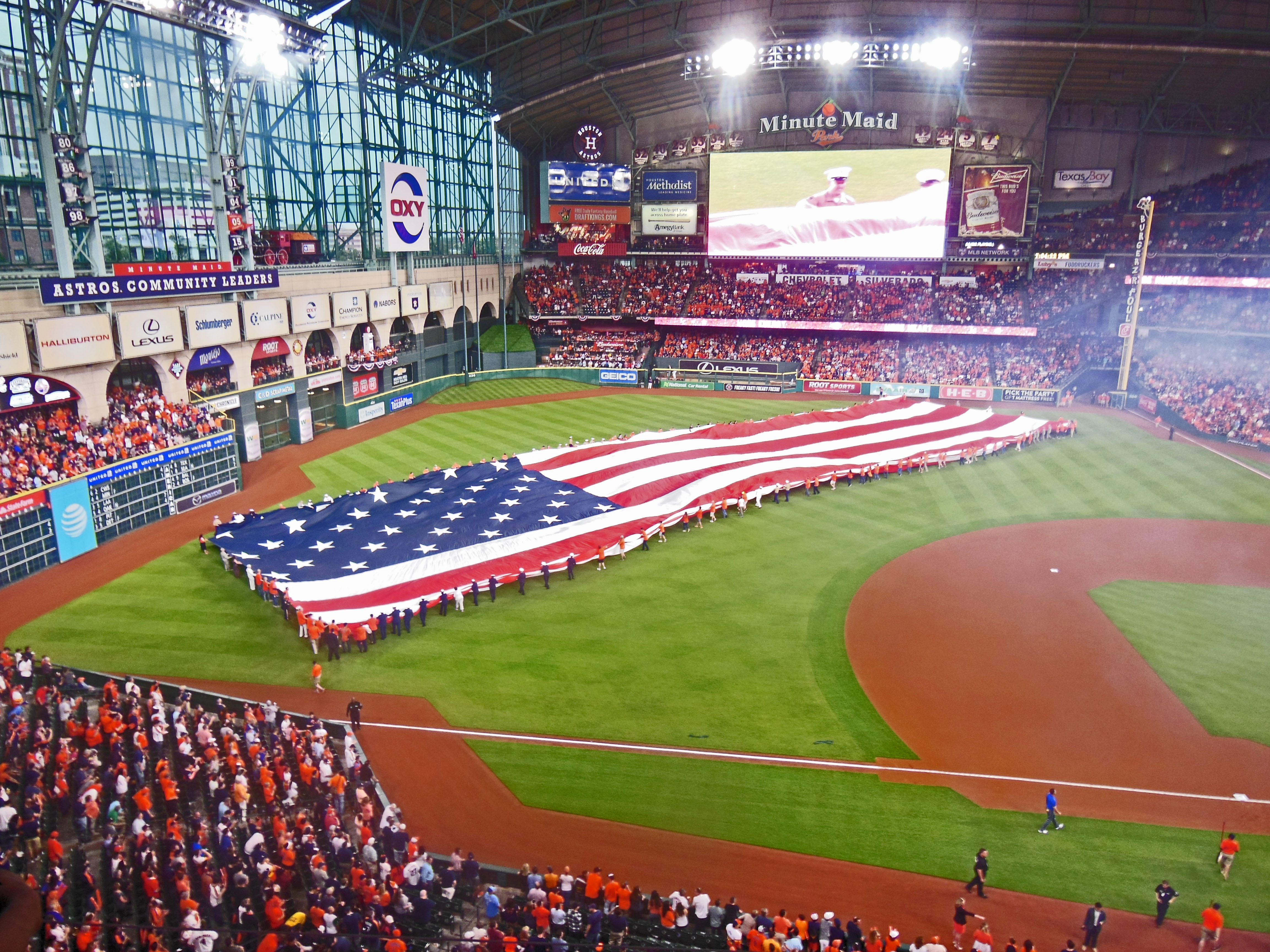
What changes in the baseball culture over the past sixty years bother you most, if at all?
Change is inevitable, but here is our personal Pecan Park Eagle List of things we miss from the baseball culture of our anciently long ago 1950s and earlier period.
- The Game We Had Prior to the Designated Hitter. The DH is not on my list for the usual reasons. I’ve gotten used to not seeing the pitcher bat since Houston moved to the AL and I don’t miss him. I’ve also come to see that the lost strategy opportunity in which the NL manager has to choose between leaving a bad-hitting pitcher in the game or removing him for a pinch hitter is vastly overrated. As Larry Dierker also has stated, it would have been better from the start had the DH rule changers simply allowed a manager to pinch hit for the pitcher a couple of times per game without having to remove a pitcher from the game. The DH is on this list because it seems to have mainly become a roster spot for “big boppers” who can’t play the field – and it has become an influence upon the growth of power baseball and highly specialized pitching – and not on pitchers who can go the distance – or keeping many bench players and batters who understand and can do situational hitting.
- Sandlot Ball. Kids are no longer free to play sandlot baseball on their own. They probably would not choose it anyway today over the digital game diversions they prefer – and the organized adult protective Little League Baseball that 21st century parents prefer for them.
- The Ballpark Organ. The ballpark organ used to do all the musical scoring for everything that happened at ballpark. From fouls ball running up and down the scale – to themes for various players, umpires, and game situations. The organist had to be careful what he or she played in reference to the umpires. Our Buff Stadium organist, Ms. Lou Mahan, was once ejected for playing “Three Blind Mice” for the umpires as they walked together to the infield from their dressing room prior to a game. Lou learned to stick with safer stuff, like “Smoke Gets In Your Eyes”, when an umpire’s call went badly against the Buffs. And she couldn’t be ejected for that call, given all the blue cigarette smoke that hung around under the covered grandstands on still nights.
- Pepper Games. Prior to games at Buff Stadium in Houston, each club would have one or two pepper games going to loosen up reflexes prior to infield practice.
- Infield Practice. Every team did it prior to every game. It was beautiful to watch and seemed important to us kids – as important as batting practice. – Guess we were wrong. It ended, somehow, and so did pepper games.
- Pitchers who could throw complete games. They reminded us kids that good pitchers hung in there for the distance ride. And pitchers with “rubber arms” could even pitch extra inning games, even extended game shutouts and no-hitters. We never heard of pitch counts. Of course, today we need pitch counts that are long enough to cover the five frames a starter needs for a win, but not so long as to deny the relief specialists all the work they need to do to justify getting paid their own salaries.
- Batters who could put the ball in play. Most guys back then knew how to hit behind the runner – and do all the other little situational things that generate runs; things like making pitchers work harder, fouling balls off to tire the pitcher and play with his nerves. One coach we had in grade school put it this way: “Nothing good for the team is going to happen if you strike out a lot, but every time you put the ball in play, it creates chances for a hit or an error by the other team that may help us get the runs we need to win.”
- Outfielders who throw the ball to the right base, especially with runners on base. If you don’t know what I’m talking about, watch a few televised MLB games and see how often you see outfielders throwing behind a base runner – or missing the cut-off man on throws to the plate. – Again, same grade school coach as before, used to tell us this way: After each change in batters, or each change caused by stolen bases, always ask yourselves: ‘What’s the situation? – How many outs?- Are there any runners on base – and where are they?’ And where am I going to throw the ball, if it’s hit to me and I get to it? – And if it’s hit over your head, who on our team am I going to be looking for to throw it to, if I do catch up to it.’ “
- The Absence of Blaring Loud Music, Tee Shirt Cannons, and Other Sideline Distractions. The old baseball park was no mausoleum. It was drenched with the sights and sounds of baseball and the smell of hot dogs – with no sideline gimmickry. We weren’t a culture back then that worried about getting bored at a baseball game. We loved keeping score, talking with friends and family, and just riding on the magic carpet of baseball drama – one that always featured our hometown good guys hoping to defeat the visitors and their bad guys.
- The Tempo of the Game was Better Back in the Day. We don’t believe that baseball has slowed itself down. We do believe that the “necessary evil” of television has done so, both directly and indirectly. Directly: Into the early 1950s, teams still exchanged places after each half inning and the next-up batting club moved immediately to the plate for their first batter up. Today, there is always that TV commercial break that stops everything, and breaking the tempo of the game for several minutes. Indirectly: Television panders to the human ego’s need for attention. And the narcissists and drama queens (kings?) among baseball players, managers, and even owners is far too long to list here who crave that camera attention. Do we really have to name them? – You know who we’re talking about. – Eh, can you think of any HOF managers over the past half century who may have been helped into the Hall of Fame by their television imagery? And had these same guys been forced to rely upon radio and print news of their game-by-game work over time, how many of them would even be recognized today.
How about you? If you have been around long enough to remember the pre-millinial baseball world, what is it that you remember and miss about the old baseball culture. Did our choices ring any bells for you? Did we leave out something that is important to you? Please share your comments in the section that follows every Pecan Park Eagle publication. – We want to know what you think too.
____________________
 Bill McCurdy
 Houston, Baseball, & Other Musings.
 The Pecan Park Eagle