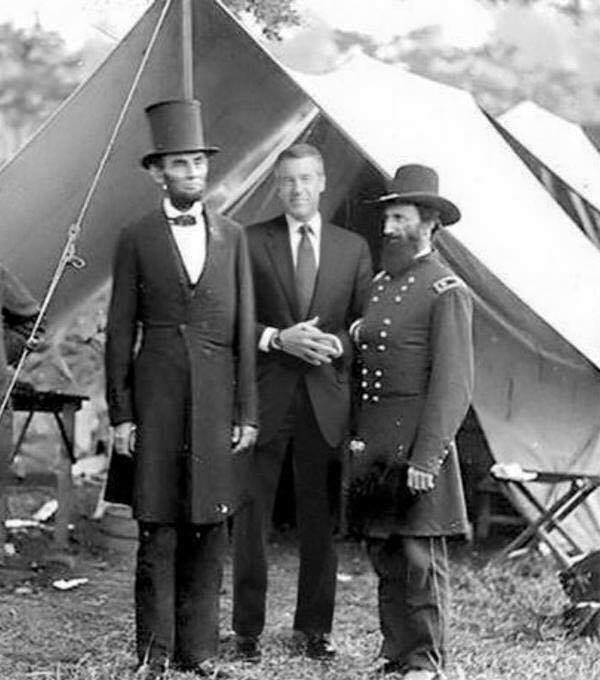
Was Brian Williams an NBC field reporter during the Civil War? In response to his admissions this week of certain “misremembered” events in the Middle East wars, someone in social media seems to think that Williams may have been there too and actually met with Lincoln.
As one who has spent a lifetime in love with words and how great writers like Hemingway, Fitzgerald, Steinbeck, Faulkner, and others string them together differentially to paint pictures in our minds, I can honestly say that I never really heard of, or gave consideration to, the words “misremembering”, or its present and past tense variants, “misremember” and “misremembered” until I heard Roger Clemens use the last cited example as the foundation of something incriminating he may have expressed earlier for the record about his alleged use of steroids that he was now hopeful of more favorably clarifying in his testimony before a Congressional Hearing on the subject of steroid use by professional baseball players.
Then, when using the same word to explain some of the erroneous statements he has made about himself and his personal involvement with enemy fire at his helicopter during a news coverage trip to the Middle East a few years ago, NBC news anchor Brian Williams now states that he was wrong to have stated several times in public ever since then that he was riding in a chopper that was hit by enemy fire – and, apparently, some others now think that Williams also may never have seen a body floating face down in the flood waters of the French Quarter in New Orleans after the 2005 storm that ravaged the city as he has previously reported. The skepticism is in respect to the fact that the area he specified was one of the few higher areas that was not devastated by hurricane flood waters.
Here’s that word again. Williams admits that he may have “misremembered” what actually happened in the Middle East. And, as was the case with Roger Clemens, the “misremembered card” did not settle the soup. – It simply turned up the heat on a boiling pot. So much so, we’ve learned today, that Brian Williams now plans to take a few days off from his anchor spot, we suppose, in the hope that time will allow for some cooling of the issue that has made him the news itself – and not the detached reporter of same. He certainly needs the time to get far enough away from what’s going on to assess where he now stands and does next.
The trust issue is big here. When anyone claims they did something wrong because they remembered what happened incorrectly, they have just thrown a sweet spot pitch to the listening public that will get hit out of the park every time. Those who take that route may as well be telling the world: “Hey, world! Listen up! Sometimes I remember and report things from my memory that didn’t happen at all. Forgive me, please. I have a ‘misremembering’ problem and I just wanted to clear these one or two stories up with you!”
Not going to happen. Once you play that card, you’ve just told your audience to go ahead and also distrust anything else you’ve either heard me say in the past – or anything I may say in the future. The audience figures: “If the ‘misremembering’ problem could affect you to the extent of causing you to say something that made you look more involved and heroic than you actually were, what’s to stop it from doing the same thing in all matters, large and small?”
This is not a new problem. It’s one of trust versus mistrust – the daily fodder of my half century long career day job as a psychotherapist and family counselor. The behavioral science publications on the importance of trust in human relationships fill our libraries by the acre of space we donate to the subject because of trust’s importance to the foundations of everything we hope to build together. And athletes and fans – and media professionals and their audiences – are two similarly important relationships in which trust is essential to ongoing continuity.
“Trust” is the answer to this Psychology 101 trivia question: “What’s the easiest thing to lose and also the hardest thing to find again?”
In brief, there is no miracle cure for the damage done by distrust or betrayal, but the essence of best recovery chances hinge upon the presence of these factors: (1) There needs to be enough love between the offending and offended parties to make healing desirable; (2) “I’m sorry and I promise not to do it again” are never enough. One must be both genuinely aware of and sorry for the harm they may have caused others and be willing to take an honest look at how much control they actually have over the offensive behavior. Sometimes addicts can make sorrowful apologies and promises for harm caused, but the forces of addiction and faulty perception are great; (3) if trust has any chance for restoration, it will only happen over a period of time and credible changes in behavior by the offending party – and there, again, is where the healing love of the offended party comes into play. If one does not care enough to forgive, trust will never live again.
Why should we even consider forgiveness? I’ll have to close a very long subject here with a one paragraph answer that really is the mother lode of all other elements:
To move on in any kind of healthy way, we don’t have to forget, but we do have to forgive and learn. We forgive because that’s preferable to living with the kind of regret that eats us alive – not the person we view as our offender. We also have to learn in the hope that we will have a better choice of how to react when the same painful lesson tries to visit us again – which it almost certainly will – in some form. The price for not learning ranges from redundancy of the same old, same old to loneliness to addiction to the mental hospital to jail or to the cemetery. None of us are perfect human beings and immune to self-deception, but the human ego’s needs to sometimes take credit for good things that the individual didn’t do, while avoiding blame for acts that the same individual did do – are off the chart big in human behavior. We all need to be honest with ourselves and not get caught up in “misremembering” things that were never true. Our capacity for honest trust begins or ends with our ability to be honest with ourselves.
 Houston, Baseball, & Other Musings.
 The Pecan Park Eagle