Posts Tagged ‘Baseball’

Why Do Fans Go To Ballgames or Stay Home?

April 9, 2010

Major League Baseball's Biggest Fear.

Why do people go to ballgames? In major league baseball, for that matter, why do some baseball fans go to ballgames in person while others simply stay home and watch on TV?

I could spend all day and several columns on this subject and still get lost in all the variables that I think  tilt people into one category or the other so let’s just hit the highlights here on my observations. You and others may likely see it differently.

(1) Multi-Tasking Opportunities at Home: Sometimes people who know the game and its history well prefer to watch from home where they can simultaneously surf the Internet for other sources of information historically on what is transpiring on the field. This group may increase their future game appearances as the technology to do certain analytical functions becomes more portable and affordable.

(2) The Personal Atmosphere and Ambience of the Ballpark: There’s something about the smell of hot dogs, the sounds of batted balls, the assorted shapes and sizes of other fans in person, the summer weather, the company of family and game buddies that are all – and I mean ALL and EVERYTHING ELSE that emanates from the senses and our emotional connections to each other that are ALL only available at the ballpark.

(3) Some people stay home because they can watch the game better on TV: The presence of strategically located TV sets at the ballpark is helping this ballpark competition from stay-at-home-ease, but HD big screen reception at home, with all of broadcasting’s multi-camera dynamic perspectives on a single game will always be superior as a view to even the best seat at the ballpark. The antidote for this problem has never been engaged fully in any of the newly constructed ballpark venues.

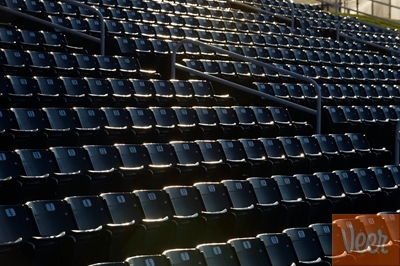
What’s the answer? Give the fans true stadium seating, the kind they are building into new movie theatres today at a record clip. These are seats that cannot be obscured by some 6’5″ bald-headed guy who gets the seat in front of you. Even if you are able to catch a glimpse of home plate around his right ear under these circumstances, you still end up with a moon-like memory of the moles and craters on his bald pate that is superior to any live recollections you may have of the action on the field. Unobstructed sight lines makes up for a lot of the loss of TV’s multiple perspectives and replays.

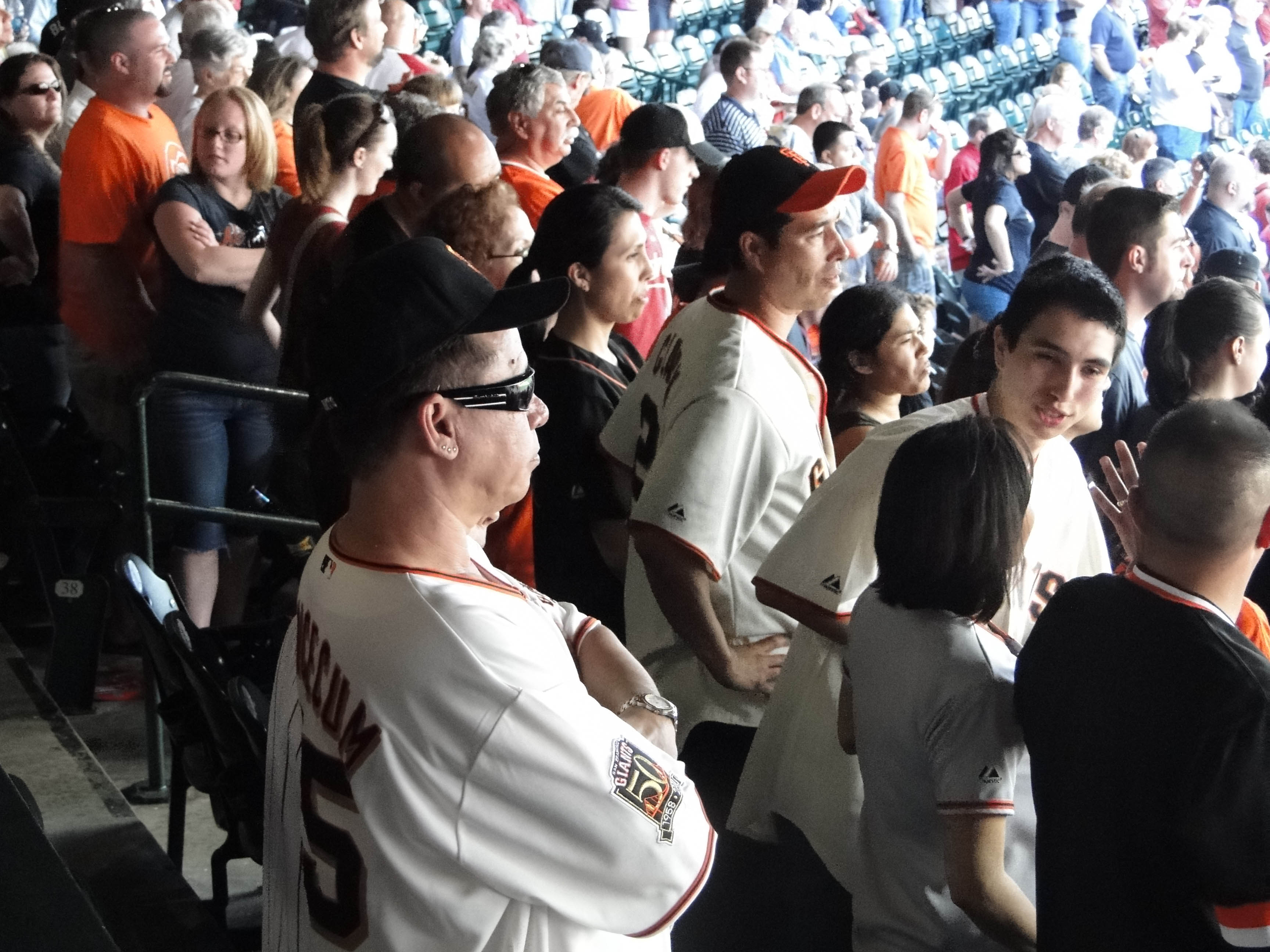
(4) Some fans go to games because they crave (and, using my day-job career as my point of reference credential,  I do mean “crave” in an obsessive-compulsive sense) an authentic connection to the game. These fans want to be near their stars, wearing the kinds of gear and uniforms that their local heroes are wearing on the field. The needs of these fans are the source of a major fairly unexplored potentially more personal revenue stream for MLB products. The next step up from here, which a few clubs already seem to realize better than others, is the sale to fans of authentic game-used uniforms and equipment. This development means that ballpark souvenir sales have gone from pennants in the beginning – to tee shirts with the team’s name on it – to replica jerseys – to authentic jerseys and game gear now – and all in just a few short years.

(5) Some fans only go to games in person when they perceive that the home club has a chance of reaching the World Series. Remember, I didn’t say that a club actually has to reach the World Series to attract this population. These fans simply have to have invested informed and sentimental hope in that possibility. Owners who pull this string to build their short-term gate need to bear in mind that fans are never fooled forever. The effort to win must be sincere and based upon some plan for winning that makes sense. Otherwise, fans are capable of turning away and never looking back. The old myth that “fans always have a short memory” is a dangerous rope bridge over troubled attendance waters in any big league market.

Conclusion: Today’s baseball fans will follow the game forever if they are not made to feel like suckers – and if they are not too reminded too often by increasing prices that they are the cash cows at the whole big-salary circus of big league baseball.

Whatever we all can do to keep the cost of MLB baseball at a family friendly budget level is all important to the future of the game. That’s especially true in this era of the new fans who are still kids playing little league ball and going to big league or minor league games with their parents. They are not quite the same as those of us who grew up loving baseball from our dawn-to-dusk sandlot days. To today’s kids, baseball is more or less just another adult-organized activity they go through seasonally, along with football, basketball, soccer, gymnastics, music, karate, and other extracurricular what have yous.

I’ll take our generational difference this far: Our post-WWII youth generation’s love of baseball from the sandlot was systemic. Baseball got into our bloodstreams and it directed everything we did. For today’s generation, however, it seems that baseball is more often than not little more than a topical condition, one applied by parents, complete with all the external things like replica uniforms we only wished for, but could never dream of affording.

Back in the day, our love of the game was for life. The value of baseball to this generation is something we shall have to wait to learn more about over the course of the next ten to twenty years. It’s this current generation that will answer an important long-term question: Who goes to baseball games and who stays home?

While we’re waiting, baseball needs to continue its efforts to find ways that will help young people choose the game for themselves. Certainly, building ballparks where kids can play the game anywhere is a nice general step in that direction. Unfortunately, the predator-danger to children in today’s world virtually wipes out the possbility of resurrecting the pure sandlot ball experience on a broad scale – and that’s a sad loss, one that goes far beyond baseball.

We used to have the freedom to work things out together as kids. Now that opportunity has been taken away from our children and our grandchildren by an increasingly dangerous street world. How sad that realization suddenly makes me.

America, where did you go?

Top 10 Best Things To Keep in Mind About the Day After Opening Day.

April 6, 2010

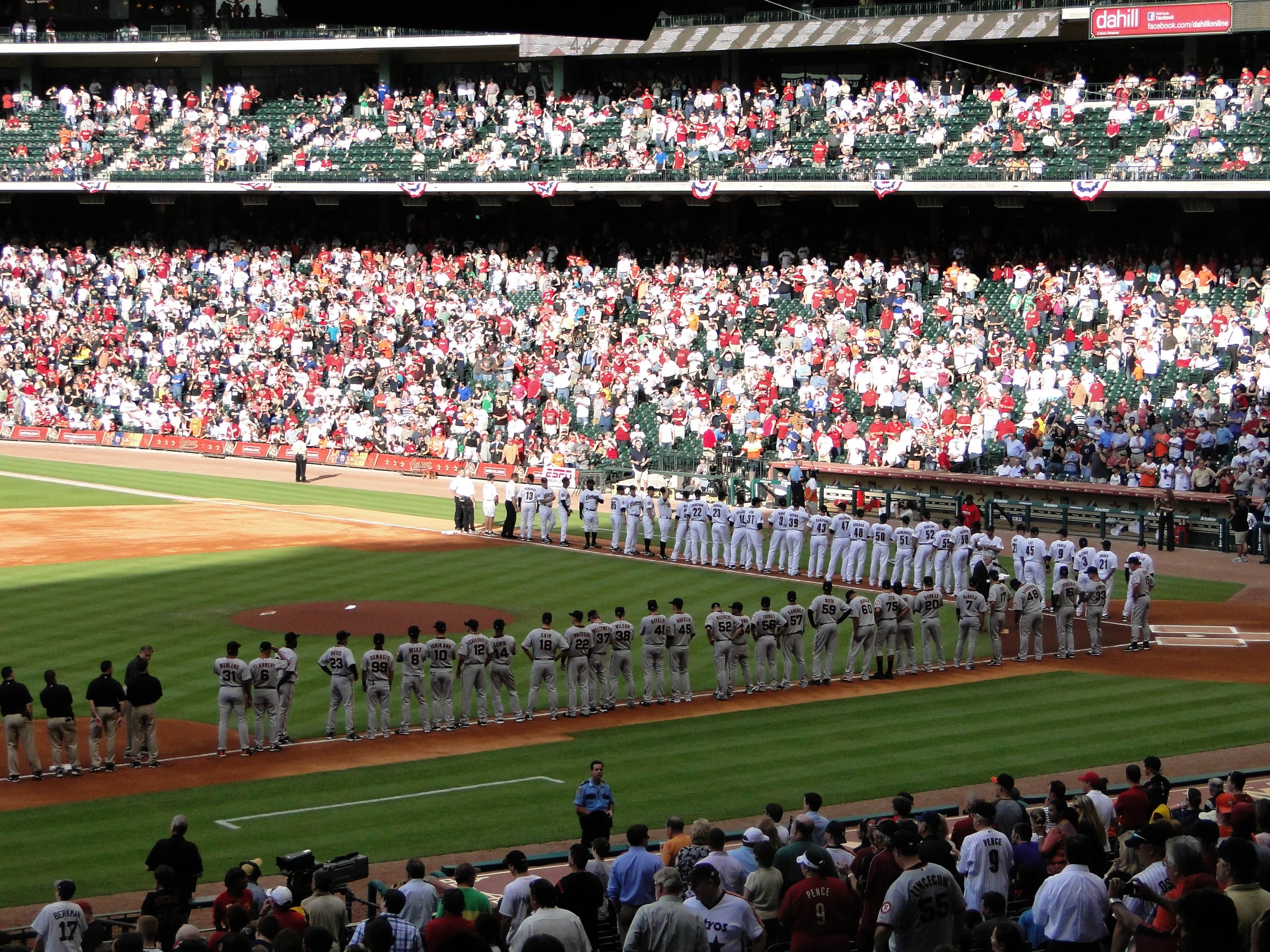
10. Even though the Astros lost, the memory of Opening Day is still a thing of beauty..

9. Roy Oswalt's 1st pitch of the season will always be the producer of an easy out.

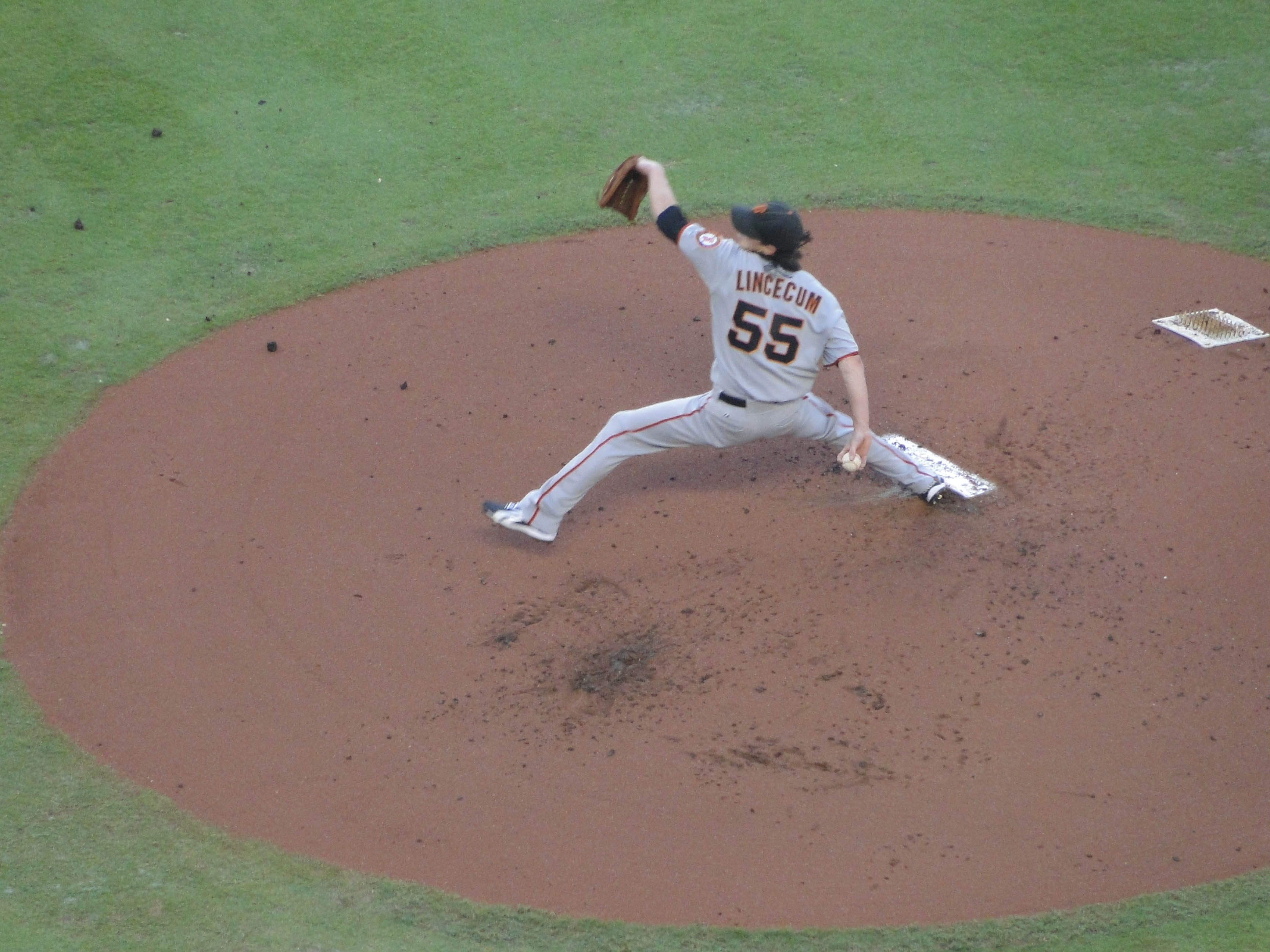
8. The Astros don't have to face Tim Lincecum again in Game Two.

7. Astro fans still outnumber the Giant fans who showed up for the Opener.

6. The Astros and Giants still have an equal number of players for Game Two.

5. Roy Oswalt's farm sign will still be there in left center for Game Two.

4. The Opener Astro loss did nothing to hurt the train's future in transportation.

3. The Astros watched a lot in Game One. They should be ready to swing in Game Two.

2. Led by Brad Mills, the Astros enter Day Two only one game back in the NLC.

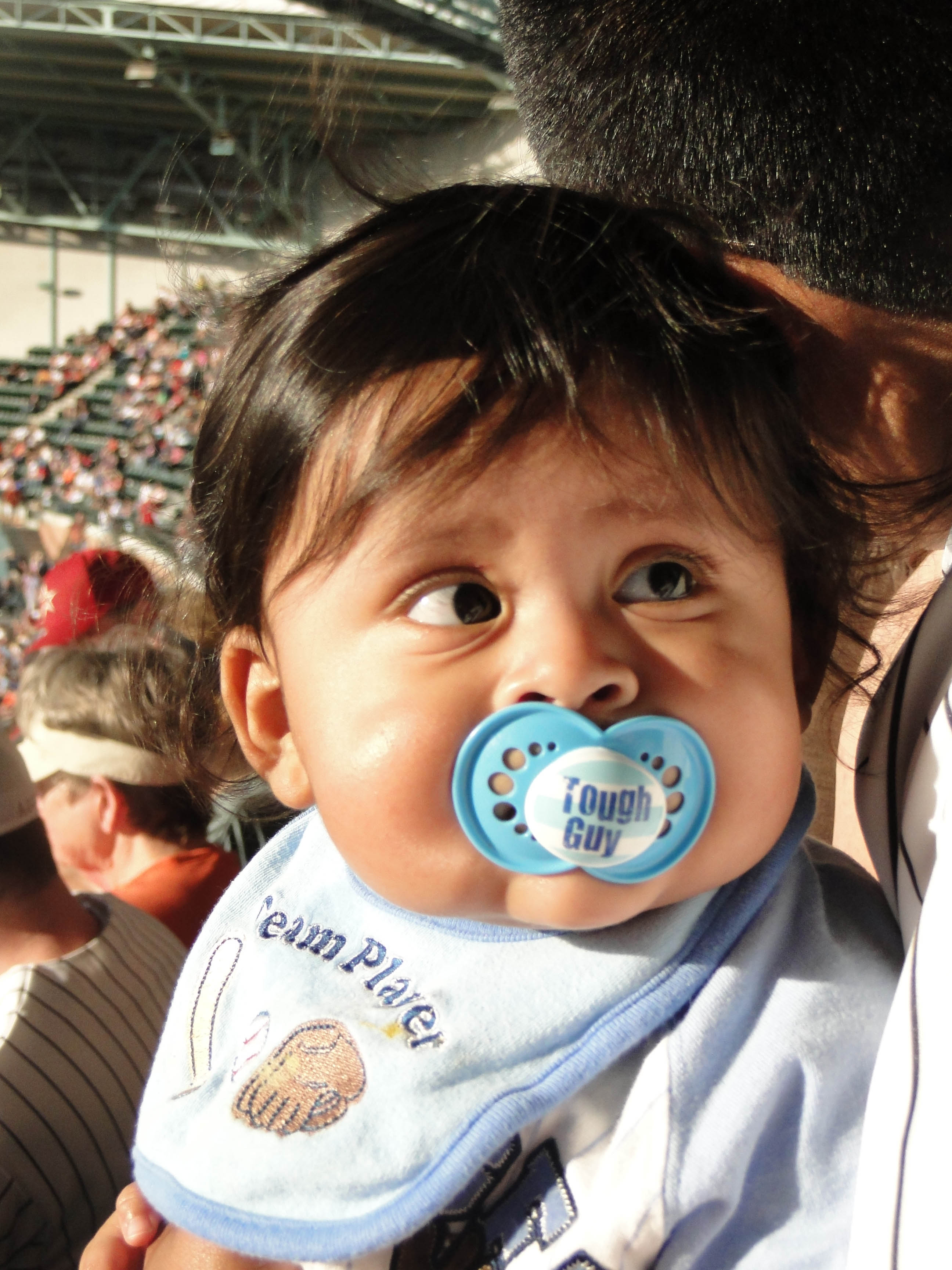
1. Attending his 1st ballgame, Little Ivan won't remember a thing about Opening Day 2010.


Top Ten Great Things About Opening Day.

April 5, 2010

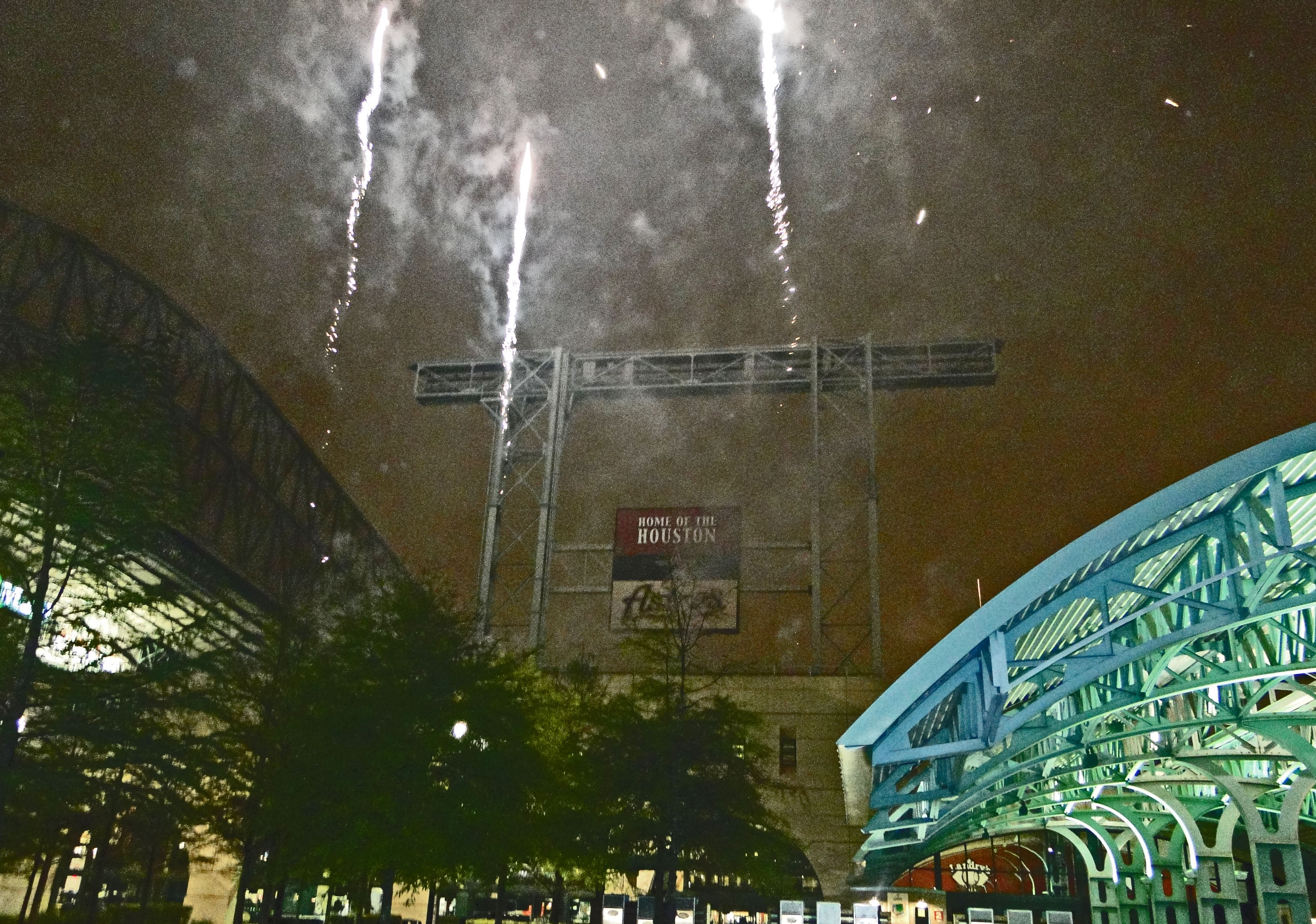
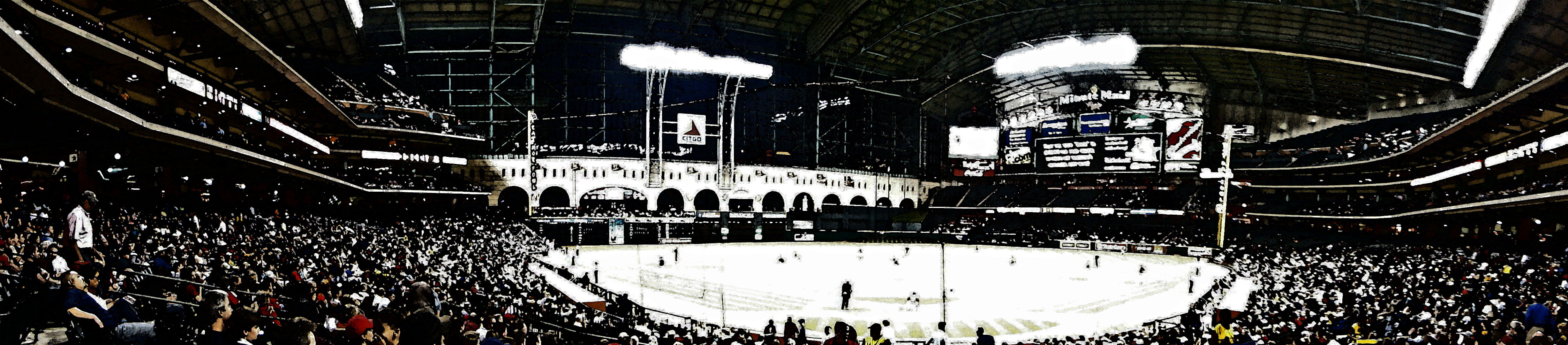
Minute Maid Park in Houston.

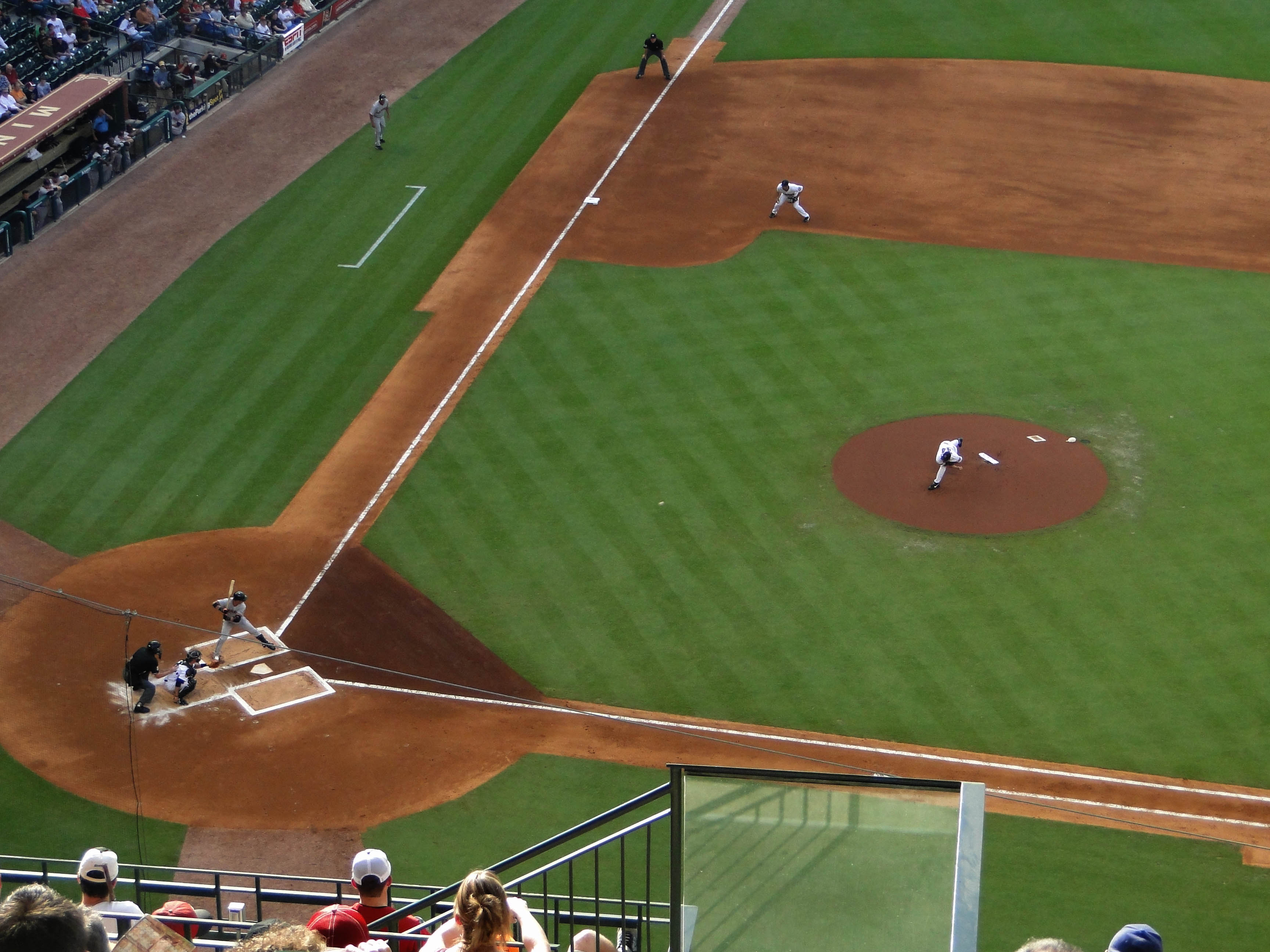
Monday, April 5, 2010, Opening Day of the National League Baseball Seasons at Minute Maid Park in Houston. San Francisco Giants vs. Houston Astros; Tim Lincecum vs. Roy Oswalt. First Pitch: 6:05 PM.

It happens every spring. The tedium and assorted dashes of hope, injury, disappointment, blooming new and old questions marks coming to a head, and the clock all finally come together. News from Florida and Arizona and all those practice diamonds that no longer matter, if indeed, they ever did, now fade away and it’s Opening Day, the time to start playing the games that count.

Now less than twelve hours from the first pitch of the new season, here’s how I see the “Top Ten Great Things About Opening Day” from the perspective of Houston Astro fans:

10. It’s the one day of the year in which the Astros go into action with a guarantee of being undefeated and tied for first place in the National League Central division.

9. It’s Houston. With beautiful Minute Maid Park as our home, we know that we are not going to get rained out.

8. The off-season has provided us with enough time to forget the cost of concessions while we whet the whistles of our appetites all day for the renewed taste of those delicious MMP hot dogs and ice-cold beer that await us downtown.

7. It’s Opening Day. It’s impossible to have been inflicted with any new hurts off the bat of Albert Pujols before the Astros have even played a single 2010 game against the St. Louis Cardinals.

Roy Oswalt

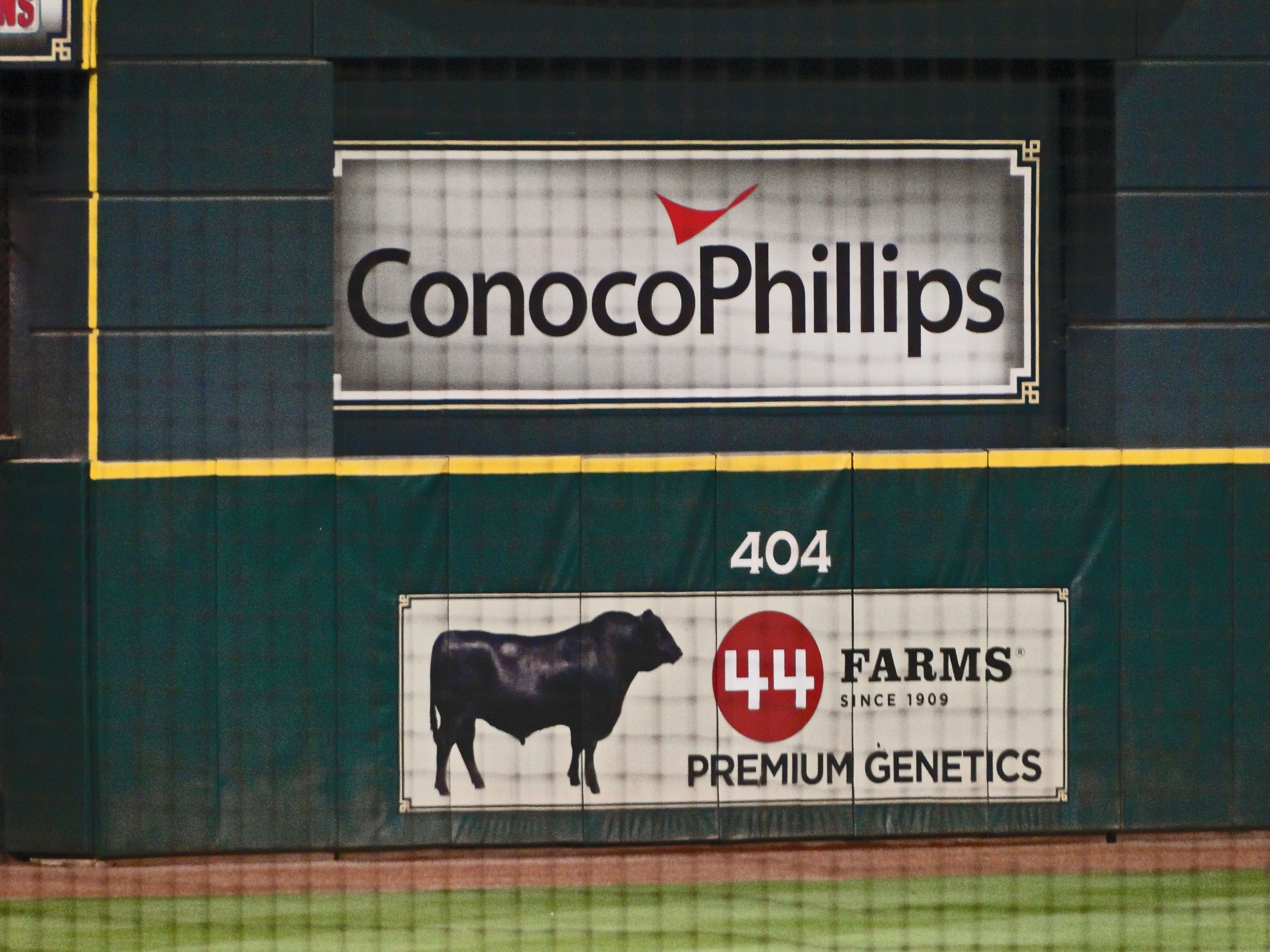
6. On this particular Opening Day, we get to see the new marketing sign for Roy Oswalt’s “44 Farm” in Mississippi for the first time. You will see it on the wall in left center field, right under the Conoco-Phillips sign. It bears the silhouette of a bull. (Correction from Astros President of Baseball Operations Tal Smith: “The ’44 Farms”’ sign in LCF is Bob McClaren’s farm in Cameron, Texas. Bob is an active rancher who conducts several cattle auctions during the year in addition to his other ventures. Despite the number 44, the farm and the ad have nothing to do with Roy Oswalt.” – My apologies to both Mr. McLaren and Mr. Oswalt for  not getting it right before I wrote it. At least now we have a chance to clear up all the misconceptions others who fell into the same assumption trap I did on the connection of “44” and anything agricultural to Roy Oswalt. – Bill McCurdy)

5. If you’re lucky, you may have a chance to shake hands with Astros owner Drayton McLane, Jr. Just in case, be prepared to answer Drayton’s eternally burning question: “What have you done today to help make Houston a champion?”

4. If the Astros can win on Opening Day, they keep alive their hopes for a 162-win, undefeated regular season.

3. It’s Opening Day. We may get to see new manager Brad Mills consulting with his pitchers for the first optimistic time in the new season. We only hope he doesn’t have to make too many trips to the mound to make pitchng changes while an inning is thirty minutes old and still in progress.

2. It’s Opening Day. The chance exists that you may also run into franchise icons like Jimmy Wynn and Larry Dierker.

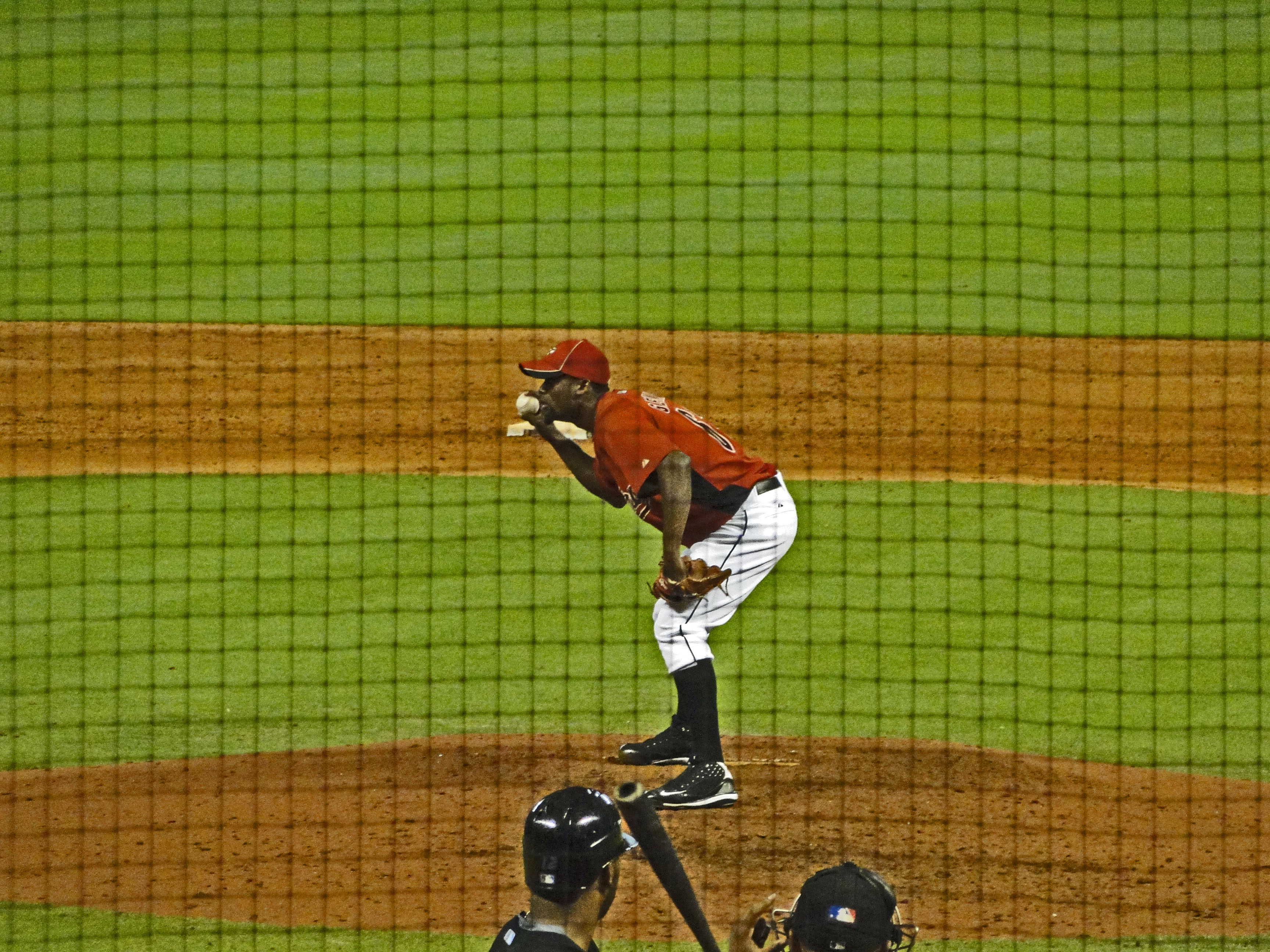
Sammy Gervacio

1. The chance is there that newcomer relief pitcher Sammy Gervacio will get into the Opening Day game. If he does, you will someday be able to tell this true story to your grandcildren: “Kids, back on Opening Day 2010, I got to watch the first Astros pitcher who always listened to his balls before he threw them to the batter.”

And what are Sammy’s balls teliing him as he intently listens? It’s the same old always important pitcher’s real estate message: ‘Location. Location. Location.”
GO ASTROS! WIN ‘EM ALL!

Easter Saturday Fanfest at Minute Maid Park.

April 4, 2010

HAPPY EASTER, EVERYBODY!

Saturday, April 3, 2010.

It was a great day for baseball. Unfortunately, it wasn’t a day in which a lot of great baseball found its way to Minute Maid Park in Houston in behalf of the home team. In their spring training finale against the Toronto Blue Jays, the Houston Astros combined hittable pitching, goofy fielding, an early evaporation of critical hitting, all the lobsters that failed critical hitting inevitably produces, and a questionable waste of reliever Jeff Fulcino for 31 pitches over two-thirds of an inning at work to fall together as a dead pigeon does on any street in downtown Houston.

Splat! After four innings of play, it was Toronto by 11-0; at the end of the day, it was the Blue Jays by 13-6.

On the bright side? At least we got spring training done without putting anyone else on the disabled list. Other than that, we shall only h0pe that this team responds with greater life, moxie, and production than they’ve shown for the most part, so far.

You may put this question in my “what the heck does this guy know?”  file any time you please, but I really didn’t see the sense of wasting Jeff Fulcino for 31 pitches over two-thirds of an inning in the top of the seventh. It was obvious much earlier in the pitch count that he had no control Saturday and that further use of that wild wing was only going to make him even more questionable for the coming up Opener that counts on Monday night.

To me, this season is really about building for the future. Sure, we need the Big Three of Berkman, Oswalt, and Lee to come through for any real hope of success this season, but the bigger long run questions are about our lack of proven production at catcher and shortstop – and the need for a vision beyond this season as to where we go at second and third base. If Chris Johnson is able to maintain anything close to the pace he’s set this spring, Johnson’s the obvious man for the long-range run at third, but we will also need to soon start grooming someone as Matsui’s replacement at second base too.

Then there’s the matter of pitching. Oswalt cannot be the ace forever. And we don’t know for sure how firm Wandy’s progress is until we see a little more of same in 2010. Either way, neither Oswalt or Rodriguez is likely to be our ace card over the next five seasons. Let’s hope our scouts are out there sifting the seeds of our talent pool crop, “looking for the next Lincecum or the potential of lightning in a bottle.” I have a hunch that we are not far away from needing a new ace yesterday, plus two or three other better than average starters who not either too young or too long of tooth today.

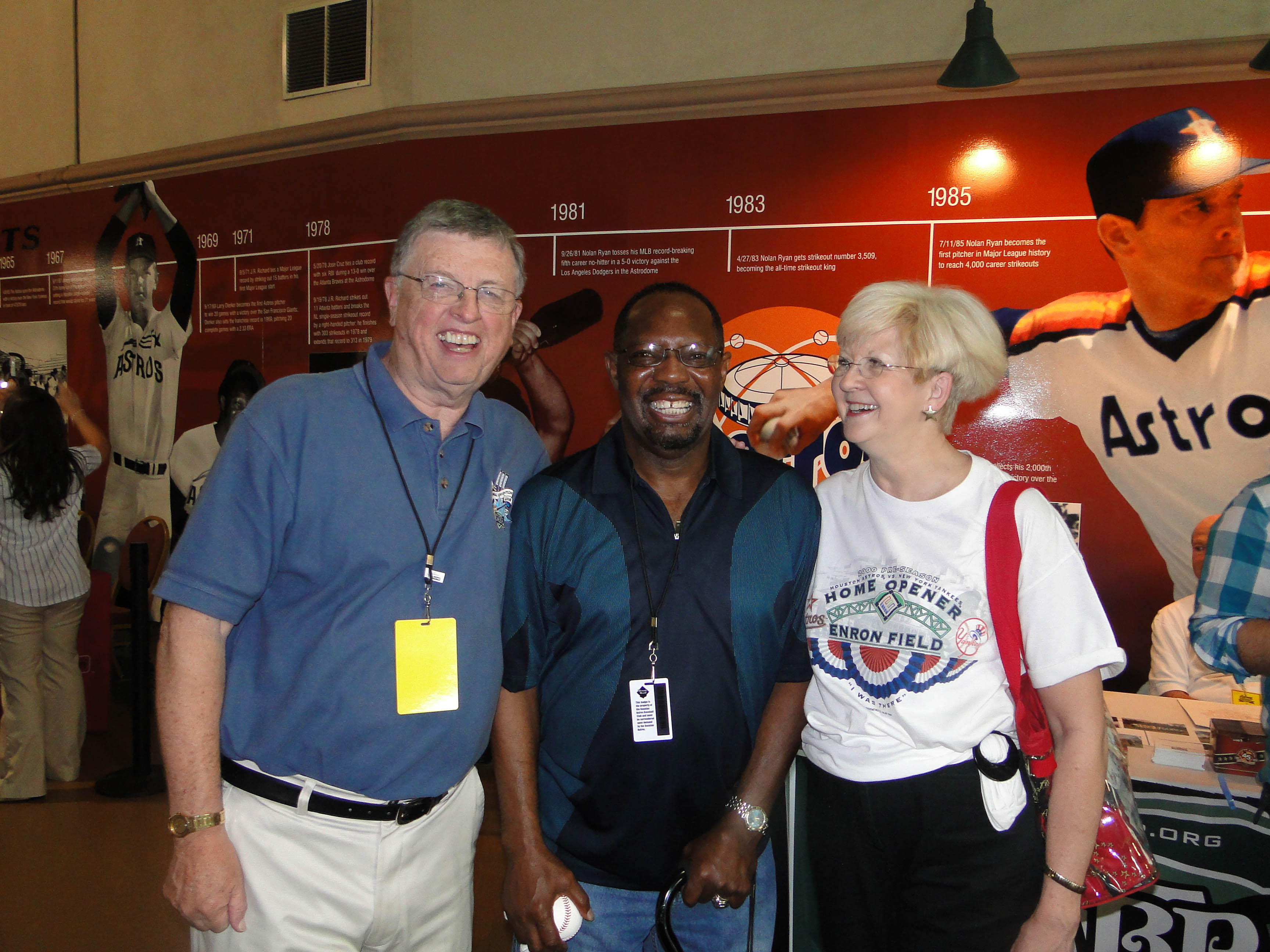
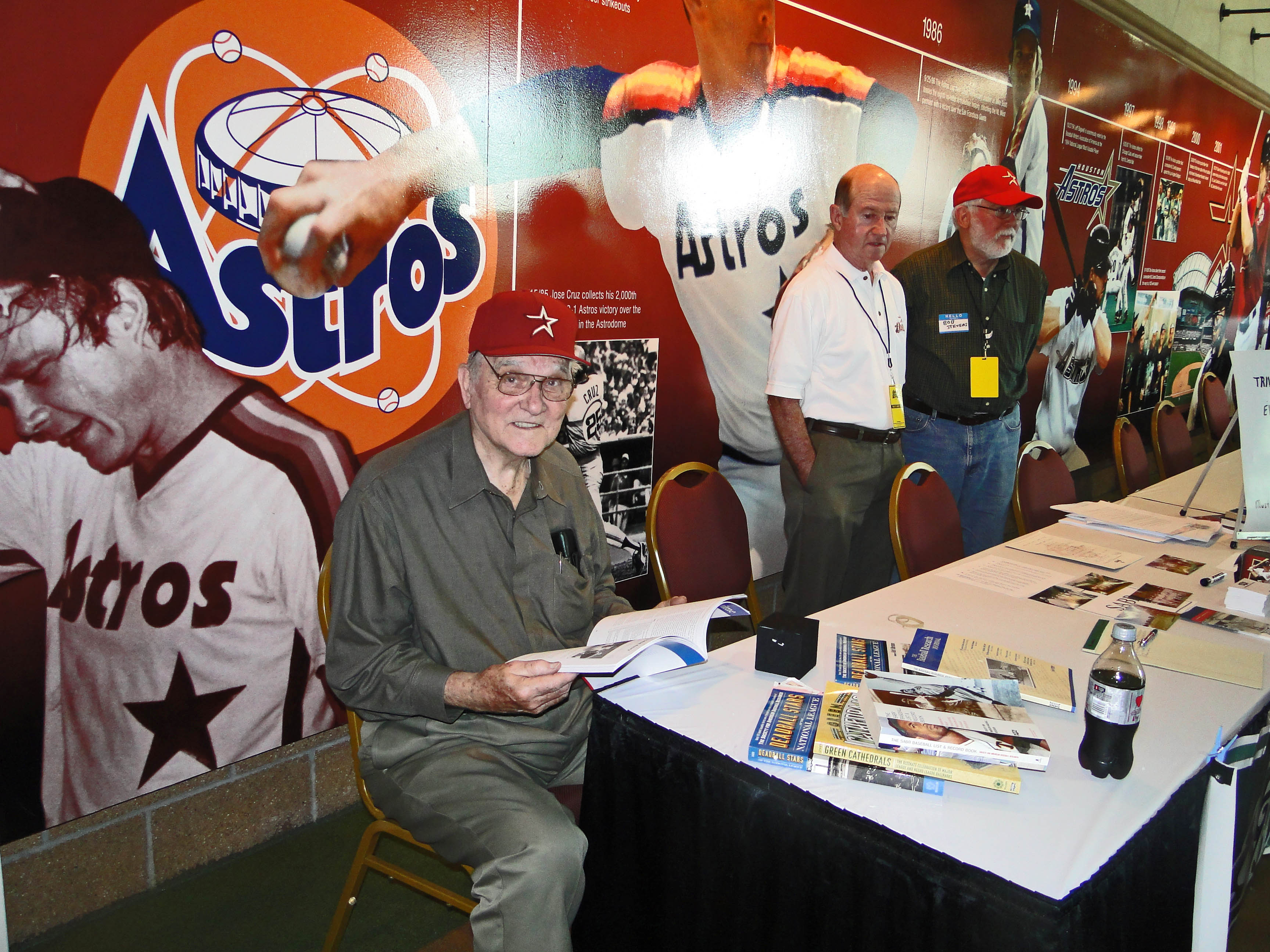
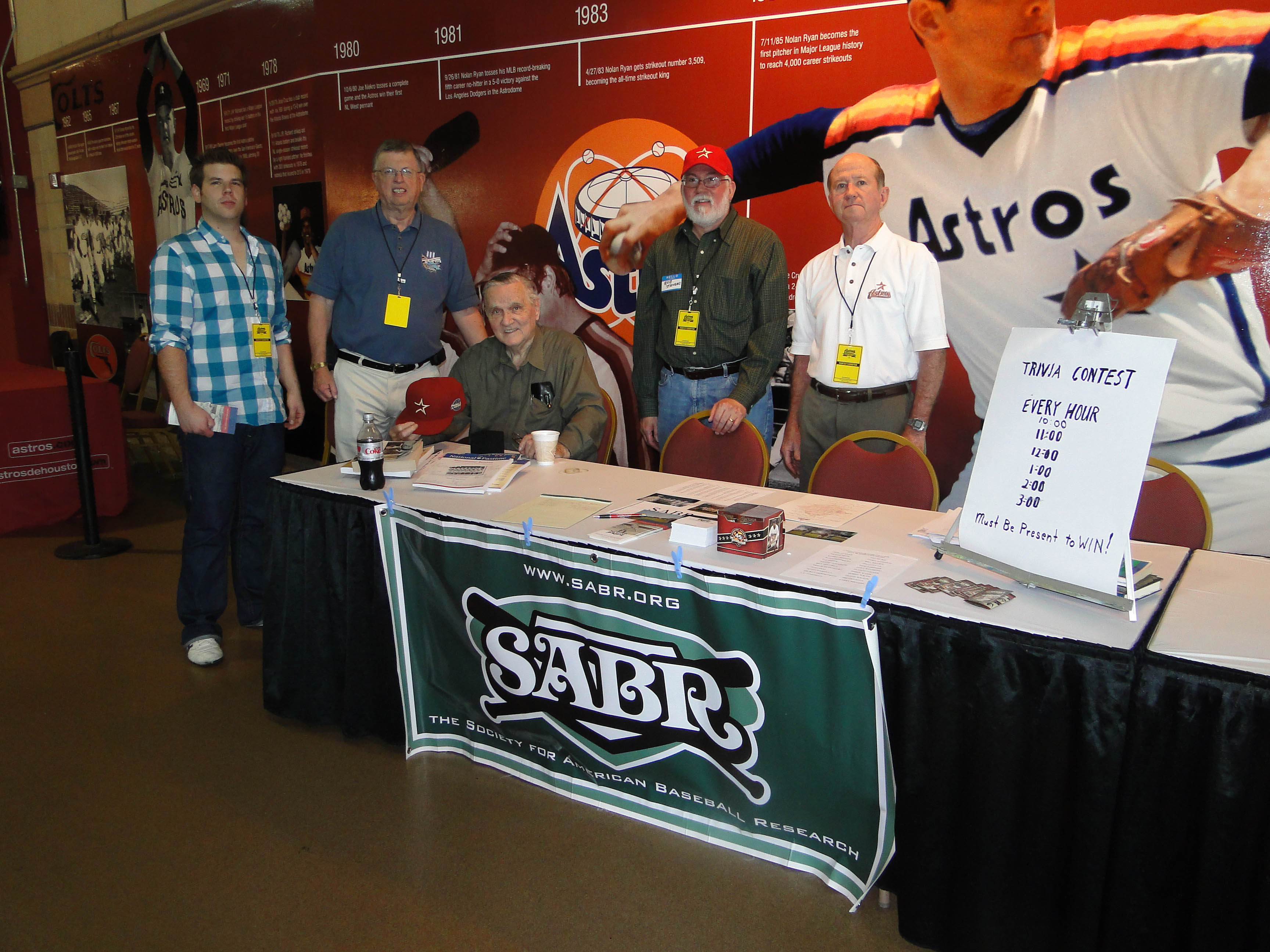
Bob Dorrill, Jimmy Wynn, & Marsha Franty share some smiles for SABR!

If you noticed how quickly I slide from “they” to “we” when discussing the Astros, it’s because I don’t work for the Houston Chronicle or FOX or anyone else who might require me to put on the mask of objective reporting, Like many of you, I’m just an Astros fan who wants my team to win it all every game, series, and season they take the field. I can accept whatever they each do, as long as I feel they are each giving it the best of their abilities. I will never rally to the defense of any player or team, however,  that “mails it in” with no apparent enthusiasm for winning. Let’s hope we see some life on the field come Monday night.
Saturday’s beautiful weather day at the ballpark also featured Fanfest, the Astros annual fun day for fans who want to collect autographs, shop for memorabilia from independent vendors, and maybe, just maybe, hear some good reasons us SABR members who manned a table to explains the benefits of belonging to the Society for American Baseball Research to other Houstonians.
Under the fine leadership of our Larry Dierker Chapter director, Bob Dorrill, a number of us showed up Saturday to pass out membership information brochures, explain SABR, show people the lights-out baseball publications available for free with membership, and have some fun with several trivia contests we used to stoke interest. Trivia contest winners won the right to select a SABR book as their prize.
Interest in SABR led to a double-digit lst of names and e-mail addresses that we shall pursue with all vigor, Once people find out the benefits, SABR sells itself.
Annual dues are only $55 for people from age 31 to 65. If you are 30 or under, or over 65, membership fees drop to $45 a year. In Houston, that will buy you monthly meetings, ten months a year, with some of the brightest stars and most entertaining figures in Houston baseball history, plus the annual arrival of several out-of-the-blue-and-into-the-mailbox baseball publications from SABR. You will get to meet and hear from great baseball people like former Astro and ongoing icon Jimmy Wynn, plus rub elbows with former Houston Buff and fellow SABR member Larry Miggins. – You will be about as deep into the bosom of the Houston baseball family that you can reach without signing your own personal services contract with the Astros.

Former Buff Larry Miggins (L), Phil Holland, & Bob Stevens man the SABR table during this shift at Fanfest.

For more information about SABR and how you may join a local chapter near you practically anywhere in the United States , check out the national organization website.

http://www.sabr.org/

SABR: For more information on the Houston Larry Dierker SABR chapter, contact our chapter leader, Bob Dorrill, at 281-361-7874.

Our thanks go out to the Houston Astros for making Fanfest possible.

Happy Easter, Everybody! Starting Monday, we’ll see you at the ballpark for the games that count!

Baseball’s Back in Town!

April 3, 2010

April 2, 2010: Astros serve up lobsters in 3-3 tie with Blue Jays.

Baseball’s back in Houston, friends. That is, if you consider a ten inning “tie” played with the DH rule in place in a National League park in a game that didn’t count, but the prices for tickets and concessions did on a night in which the Astros served up more lobsters than  a Kennedy family campaign dinner in Boston a real game.

All kidding aside, it was good to back in Minute Maid Park, and in all fairness, it was a little too little too soon to see the whole flow of this season unfolding with Berkman still out, Oswalt and Wandy yet tested under fire in games that count, and Manzella with a little more time under his belt at shortstop. What we saw is what we don’t want to see too often this year:

The starting pitcher gives up 3 runs in the first and then settles down. The offense then starts pecking away, loading the bases and, inning by inning, it starts racking up the lobsters, but no runs. The starter settles down, but the relievers are forced into being perfect as the Astros 1,1,1 their scoring way back into a 3-3 tie through nine. The ‘Stros might have taken the game in the bottom of the ninth, but a stumble-bum running older rookie named Shelton tripa on second base after doubling in the tying run and is retired to save the night for the Blue Jays. The game plays out uneventfully in the tenth as a 3-3 tie by common sense and mutual team agreement. There’s no point in wearing out arms and legs in extra innings on the last weekend of games that mean nothing in the 2010 standings.

Sammy Gervacio is straight out of the Mark Fydrich school of dramatic posturing.

I really hope that reliever Sammy Gervacio makes the bullpen roster over time this season. He is already, by far, one of the most entertaining pitchers to come down the Crawford- Street-Texas Avenue pike in years, as things stand. Gervacio’s full wind-up ritual is a thing of beauty to behold, one that would make oldtimers like Mark Fydrich and Al “The Mad Hungarian” Hrabosky quite proud. As you may be able to see in the picture, Sammy seems to listen to his baseballs before he turns with a menacing glare toward the plate and lets them fly with more body-torqing movement off the herky-jerky fulcrum area of the hip that you are likely to ever have seen.

Nobody scored on Sammy and his reliever pals, but starter Brett Myers gave us too much of a copy on a bad Wandy Day. The three-runs that Myers gave up in the first, but they proved enough to keep us from winning on a night that critical hitting failed all over the place. Hopefully, the Astros will get better before Tim Lincecum and the San Francisco Giants hit town for Opening Day on Monday, April 5th. Like it or not, the 2010 Astros are going to have to prove themselves better than mediocre. That means they can’t have too many games that are accented by early bad innings from starters and the appearance of termite bats in critical offensive situations.

Check out SABR at Fanfest Today, Saturday, April 3rd.

Just a note: Don’t miss SABR today! Our Larry Dierker Chapter of SABR (the Society for American Baseball Research) will man an information table at the Minute Maid Park Fanfest today. We will be located next to the player autograph area on the first floor concourse behind home plate. If you’re at the park this morning or later for the 1:00 PM Astros game with the Blue Jays, drop by and say hello. Find out the simple and affordable benefits of SABR membership and consider joining us. SABR is for every fan that enjoys close up contact with the people who play and run the game – and it thrives for folks who like their baseball news served up on a year round basis. There’s also plenty of room for those who want to do research or writing on baseball, but those aren’t the main things you have to crave to enjoy SABR. You simply have to love baseball in a way that never tires your desire for more.

Former Astros slugger Jimmy Wynn and others have promised to dropped by our table today, so please join us, if possible. You never know who you may run into and have a chance to meet.

Meanwhile, Happy Easter! And GO ASTROS!

Sandlot Days: Making Do with What We Had.

April 2, 2010

"Eagle Park", Japonica@Myrtle, Houston, Texas.

For a lot of us who grew up back then, the years following World War II were not even close to the cornucopian basket that others have known in this land of the fatted calf. In East End regions of Houston like Pecan Park, we had to make do with whatever we had – or repaired – or built – or simply imagined our way into use as tools in the art of play.

Sometimes our imaginations got us into trouble. And street war games became a ripe arena for a number of mistakes we made in pursuit of authenticity. One time, for example, about six of us caught hell for the unauthroized requisition of eggs from our home refrigerators for use as hand grenades. Another time, my little brother John used a real grenade casing that our Uncle Carroll had brought us from World War II and heaved it through the open window of slow driving car that was passing by the front of our house.

The driver of the car turned out to be a veteran. The sudden presence of the grenade on the seat next to him provoked screams of PTSD horror I shall never forget – and neither will brother John. The man stopped his car down the street and came running back to our house with mayhem in his eye. Fortunately for John, our dad came rushing out of the house to intervene and to administer a “whipping” that I’m sure John has never forgotten. I’ve never seen Dad so mad – except on those occasions when he was equally mad at me for some stupid thing I did.

“Now you stay out of the street and never let me catch you throwing hand grenades again!” Dad ordered.

“What if I run out into the street and get killed by a car? Then what are you going to do?” John asked.

“II’ll probably be so mad you disobeyed that I will whip you anyway!” Dad answered.

I later got a whipping like that for a far worse offense. That was the time I asked a machinist neighbor to build us some working pipe guns that we could use to ward off invasion at Eagle Park from the kids on Kernel Street. We didn’t explain our true purposes in wanting the guns. We said we needed them for target practice, but that was never our true goal.

I’ve written about this gun incident before. My dad caught us in the act of firing these weapons at the Kernel kids and took them away. Then he made us Japonica-Myrtle Eagles settle our differences with the Kernel kids in a game of baseball. Then he whipped my posterior in a way that left me virtually buttless. It was one of those corner-turning experiences from childhood that would have gone a very different route had it not been for the presence of the greatest hero in my life, my dad.

At Eagle Park, we made do with what we had. The gloves we did have were hand-me-downs from dads and older brothers. The balls we used were most of the time those cheapos that flattened out on one side with the first solid contact smack of the bat. The few good baseballs that we captured at Buff Stadium stayed in play for as long as we could hold them together with black electrical tape. Even the best of all  baseballs could not hold up for long against the skinning they each took with the one-block skip and roll down concrete streets as a result of mighty hits one way – and catcher misses the other.

To cut down on the damage to balls from catcher misses, and mainly to have a ball retriever, we created a tenth defensive position we called the “hind catcher.” We would not have needed a hind catcher nearly so often if we had been blessed with a backstop, but that was a piece of equipment we didn’t have at Eagle Park.

The hind catcher stood about ten feet back of the catcher. It was his or her job to stop an balls that got past the catcher, or else, chase them down Japonica Street and get them back in as soon as possible. It was job we always gave to the youngest, most naive kids, the one who were trying to earn their way into the actual game. We stressed to our hind catcher recruits that those who stopped balls most often and went after the loose ones the fastest had the best chance of breaking into the everyday game on the field.

It was a popular job among the little kids. Sometimes we would even have a hind-hind and a hind-hind-hind catcher out there backing up the hind catcher. At the end of the day, or as some kids had to go home early from the field, all our hind catchers moved into the actual game and got to bat – at least once.

The system worked for us. It’s how we all started.

Bat preservation also presented certain challenges. Since all our bats back then were also old and always wooden, they eventually cracked and became useless without repair. We nailed and taped our bats back together too, looking for every last hit we could ring out of each sacred bludgeoning weapon that still stood moderately straight in our baseball war chest. A bat had to break totally in half before we gave up on it for all time.

As for bases, we used what we could find. We never had permanent bases at Eagle Park. Garbage can lids  worked for home plate, but they sure expanded the strike zone. We used everything from decaying hunks of sidewalk curb concrete to tee shirts for our actual bases.

On those days we couldn’t field eighteen players for a regular game, we played “Work Up.” It was just baseball with fewer players and a slightly different goal. You had three to four batters in Work Up. The object was stay at bat as long as possible. If the defense got you out, all the fielders rotated from 9 to 1, with the number 1 fielder, the pitcher now going in to bat. The number 2 catcher now moving to pitcher, etc. You, of course, moved to the number 9 right field position to try to do what game says, “work up” to becoming a batter again.

Another popular game for a small number of players was “Flies and Rollers.” In this game, one player hit fungos to the other players in the field. The first fielder to successfully handle either three flies or nine rollers, without a miscue, got to replace the fungo stick batter, who would now take the field.

Somehow we survived. A big part of that “somehow” was the fact that we all mostly had parents who cared; we lived in neighborhoods where other parents could and did intervene and deal with issues of bad judgment and miscreant kid behavior; and the world was still safe enough for us kids to go out there and work things out on our own.

A lot of us didn’t have much back then, but we neither thought of ourselves as poor or entitled to everyday salvation at the expense of the community. Our parents taught us that jobs were the answer to financal needs and that you simply didn’t buy things you could not afford. We learned to make do with what we had.

We did OK, even if a very important part of our little world was being  held together most of the time by electrical tape.

In Search of a Few Ballparks.

April 1, 2010

Bob Dorrill of SABR surveys the turf at “Eagle Park.”

On Tuesday, March 30, 2010, good friend and fellow SABR member Bob Dorrill, our esteemed Larry Dierker Chapter leader and field manager of our vintage base ball Houston Babies, and I spent the day in search of some old local ballparks. For the most part, we knew that all of them on our list were long gone in physical form, but we were searching for something a little harder to see. We wanted to make whatever contact that might still be possible with the essence of these neighborhoods that spawned them long ago. Going in, we also knew that most of the cultures that once existed in each area we visited had long ago either mutated or been run off to the hinterlands. It was a daunting task, sort of on the level of trying to travel through time without a time machine, but that’s the very nature of historical baseball research. You always end up yearning for that one-hour direct view of the game or event or place itself that is under study – or for that one interview moment with the last eyewitness on the fiftieth anniversary of their burial in the cemetery. Neither ever happens.

Here’s a thumbnail on what we found and didn’t find.

(1) Buff Stadium.


Buff Stadium 1928-1961 (Forget the years they called it Busch Stadium.)

As I described yesterday, Buff Stadium was our first and main stop. The memory of the grandest old ballpark in Houston baseball history is well protected by the Finger family on the site of their store on the Gulf Freeway at Cullen. The Houston Sports Museum is again operating within the store in a vastly improved and tasteful presentation of Houston baseball history under the capable direction of Curator Tom Kennedy.

(2) Eagle Park.


Eagle Park, 1947-54; Sandlot Home of the Pecan Park Eagles.

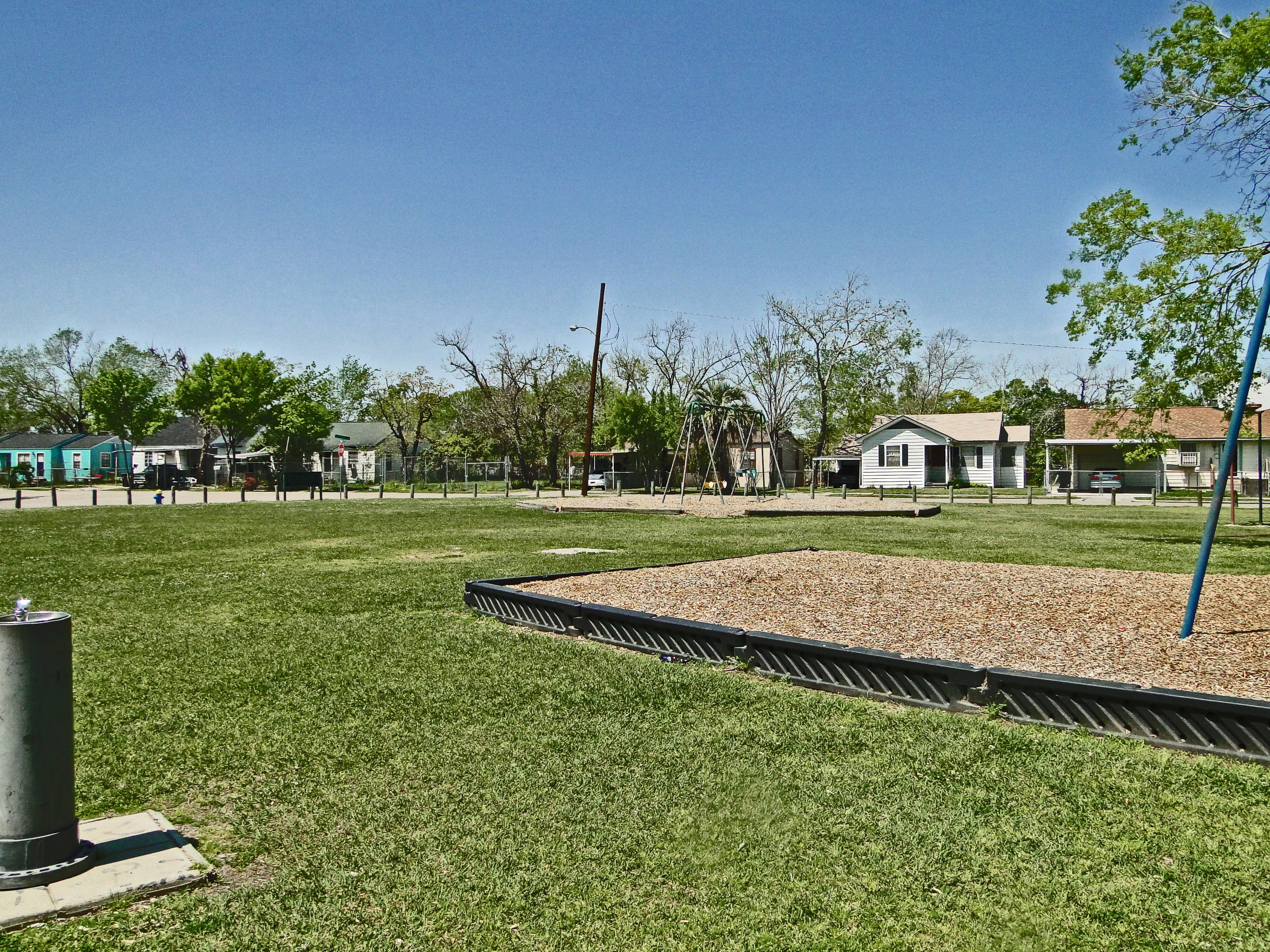
Eagle Park was the name a few of us Japonica-Myrtle Street kids gave the little city park we claimed as home field of our Pecan Park Eagles. The place represents all the thousands of sandlots that once filled daily in the Houston summertime from dawn to dusk for some serious non-stop baseball. We had to stay inside during the so-called “heat of the day” (12:00 PM to 3:00 PM) in 1950 due to the threat of polio, but we made up for lost AB’s once we were again paroled to the streets.

The above featured photo shows the field perspective from where home plate used to stand. All of that dumb playground equipment and the water fountain weren’t around back in 1950. We would have torn that stuff to the ground for getting in the way of baseball back then. Now the kids don’t play sandlot ball on their own out of some natural love for the game. If they play the game at all. it’s the Little League version under constant adult supervision. No wonder the kids lost interest in the game. Organized youth sports offer no freedom and about two games and six at bats per week. We had days on the sandlot when the individual times at bat ran well into the hundreds.


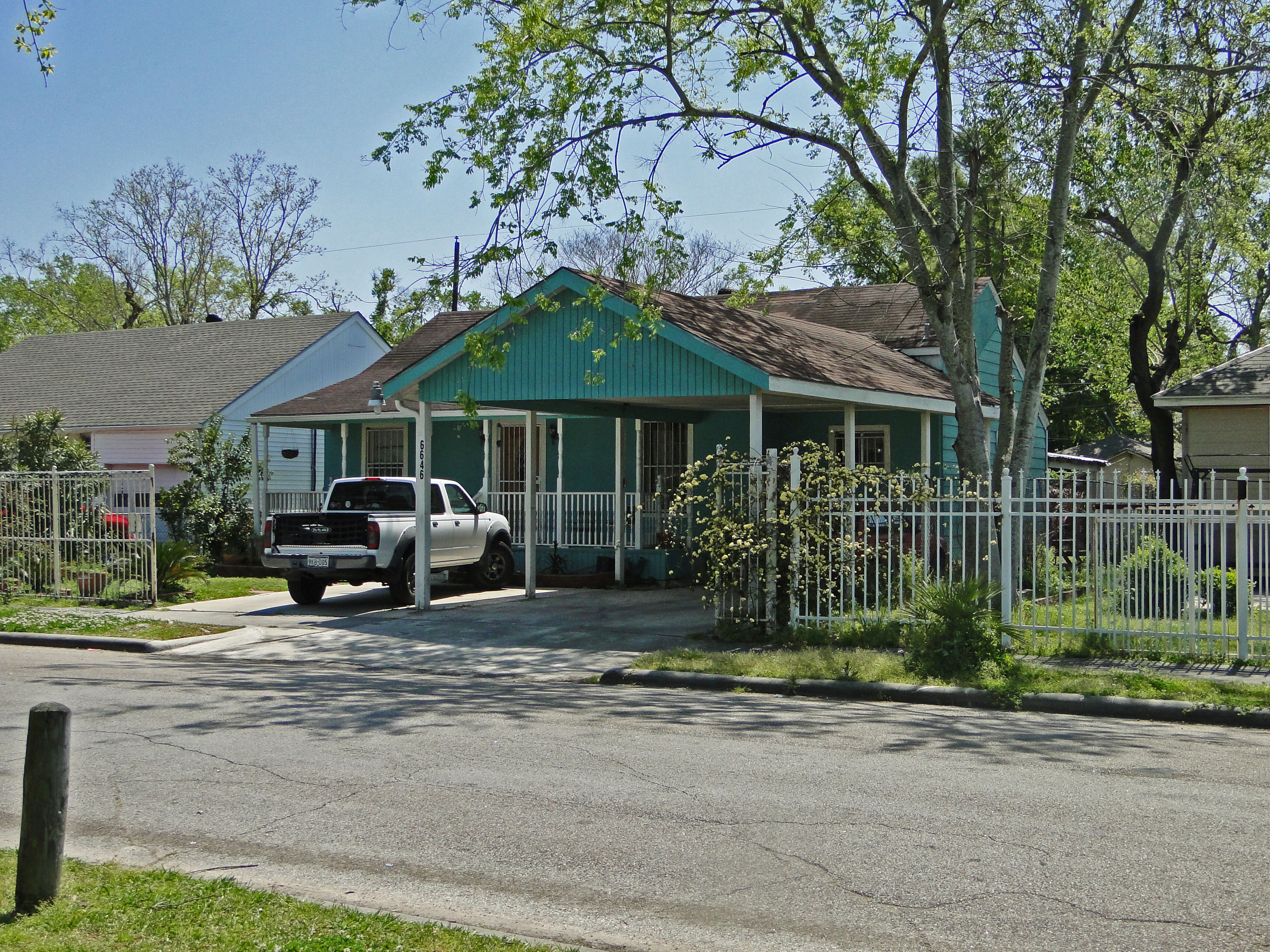
6646 Japonica Street, Houston 17, Texas.

The front door of my childhood home was just about ninety feet from home plate at Eagle Park. The house wasn’t blue back in the day, but neither was I. The world of hope spread out before me as the endless lawn of summer fun with other East End street urchins as we pursued our all-day, no matter what, from here to eternity passion for the game of baseball.

(3) East End Park.

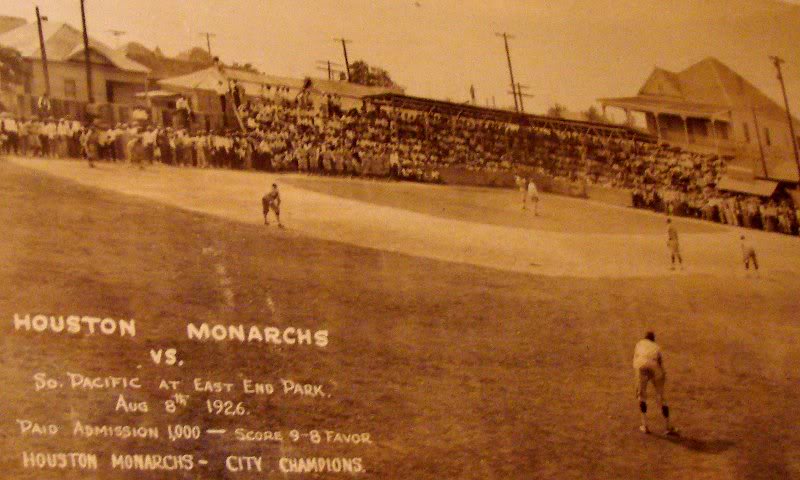
East End Park, 1920s, on Cline off Clinton Drive.

Thanks to team owner John and James Liuzza, East End Park was the thriving home of black baseball for several years in Houston during the early decades of the 20th century. Both the Houston Monarchs and their later named selves, the Houston Black Buffs, played here, especially to enthusiastic crowds on Sundays.

Everything in the photo is gone or changed beyond recognition today. Some dilapidated one-story shanties now stand on the street where the two-story homes once stood. The ballpark is completely gone, now replaced by a large and fairly new and well-kept looking garden apartment building project. Because of the old fifth ward neighborhood’s proximity to downtown, new homes and bastille-guarded apartments are springing up like orchids in a patch of architectural weeds in this area, but there is no  sign of baseball  here. Not now.

(4) Monarch Stadium. No picture is available to us, but the Liuzza Brothers  built a second ballpark in the 1930s near East End Park on Gillespie Street. It also is gone, leaving no trace of where it ever prevailed as a site for baseball. When people change directions, they eventually or sooner change the landscape too.

(5) West End Park.


West End Park, Home of the Houston Buffs, 1907-1927.

We took Smith Street south from downtown to Andrews Street, the little lane that angles off the northern side of of Allen Center and past the southern side of the iconic Antioch Baptist Church. A few short blocks to 601 Andrews put us right where the 1919 Houston Street Directory tells us was the 601 Andrews Street mailing address for West End Park. Today it is some kind of power grid for the electric company. It is only  a short block from where the freeway cuts off Andrews from further movement southwest. Mike Acosta of the Astros believes that the old location for home plate at West End Park would now be found under the freeway. If the field was laid out facing southeast, as we “think” it was, then Mike’s guess is probably right on target. Like the others, West End Park is now gone, without a trace of evidence remaining that it ever existed in the physical world.

(6) Minute Maid Park.


Minute Maid Park 2000-Now.

We finally found a ballpark that still lives, houses baseball, sells beer and hot dogs, puts a Houston team on the field that tries its best to win ballgames, and one that brings the thrill of a pennant race into our lives almost every single year. It’s at this ballpark, where baseball has a present and future to go along with its rich past, that all comes to new life. While we were there, I even managed to pick up a couple of nose-bleed tickets for Opening Day next Monday and the Oswalt-Lincecum match-up between the Astros and the San Francisco Giants.

It was a great day. If those of us who love baseball could have more days like the one that Bob Dorrill and I shared last Tuesday in search of old ballparks, we would all live happily to about the age of 150.

See you at the ballpark, friends!

My Souvenir from Ballpark Search Day.


Straight from the Heart. (That’s the Eagle Park dirt in the glass jar.)

My souvenir from the ballpark search day was no accidental find. I planned it by bringing a tall glass jar and a small garden hand spade with me on Tuesday. The bottle now contains something I’ve wanted to bring home for years. It’s a bottle filled with dirt from the home plate area of Eagle Park – and it is just as black and hard as the gumbo we played on sixty years ago. – And why shouldn’t it be black and hard and similar? It’s beyond similarity. It’s the same ground we played on a lifetime of ballgames ago.

Have some fun, folks. None of us are getting any younger.

The Houston Sports Museum Is Back!

March 31, 2010

Rodney Finger Has Reincarnated an Improved Tribute to Houston History at his “new” store on the Gulf Freeway at the Site of Legendary Buff Stadium (1928-61).

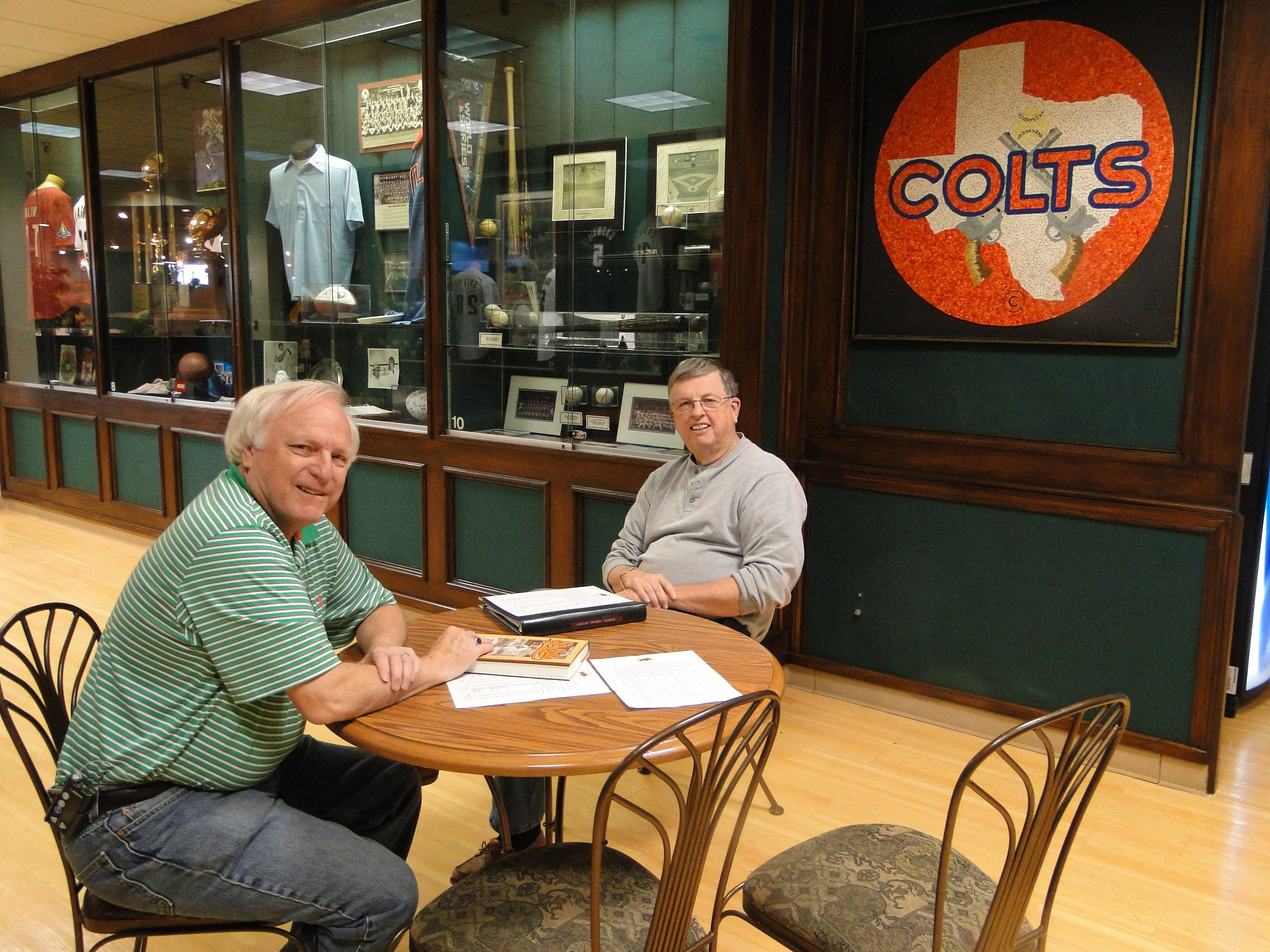
Yesterday Bob Dorrill of SABR and I went over to meet with Tom Kennedy, the Curator of the Houston Sports Museum, and to get his tour of what is happening with the newly reopened facility at the also newly remodeled and reopened Finger furniture store at that historical location.

Words alone fail. That’s why you will be getting many photos today. Rodney Finger and Tom Kennedy are pulling out all the stops to make sure that the presentation and artifact preservation issues that plagued the “HSM” in the past are now resolved and replaced by a rotating exhibit of items that are truly unique and valuable to history.

The HSM will keep its historic name and honor its dedication to remembering the Houston Oilers and Earl Campbell as well, but this evolving version of the dream will be mostly about baseball, as was the original intention of 1960s founder and Rodney’s grandfather, Sammy Finger.

Bob Dorrill (L) and Tom Kennedy talk things over in front of a new mural version of Buff Stadium on its original Opening Day, April 11, 1928.

On display are two of the original 80 36″ diameter metal buffalo medallions that once rimmed the exterior perimeter stadium walls of Buff Stadium.

In a DVD narrated by Gene Elston, the story of Houston professional baseball from 1888 forward now plays continuously on a high-definition television set within the museum. Other digital telecasts are planned for inclusion in the future on a rotating basis.

The quiet, classy hand of Houston Astros Acquisitions Director Mike Acosta is also visible in the new HSM on several levels. Acosta has been working with Kennedy to help make the new Finger’s showcase the first order presentation it is fast becoming.

“It’s not how much space you have, but how you use the space you have that matters.” Kennedy and the HSM are dedicated to the idea that choice items, rotated for view on a frequent thematic basis, will help keep giving people reasons to return. The public will have a chance to view the world’s oldest baseball card from 1869 at some undetermined point in the near future.. Rodney Finger has asked card owner JeFF Rosenberg, the owner of Tri Star Productiions, to allow the HSM to display it sometime soon and it is expected that this will happen. Say tuned for further specific details from Tom Kennedy. Everything well done takes time. To better protect historical treasures, HSM also has installed protective lighting to help preserve artifacts and help prevent the fading of important signatures from autographed items. In case you are wondering, that’s an ancient Houston Buffs jersey on display in this photo, along with several books that are important to local baseball history.

The former exact site of home plate is still imbedded in the floor of the HSM. It will soon be joined by the return of the larger than life statue of Dickie Kerr, the late-in-life Houstonian who once pitched as the “honest man in” for the 1919 Chicago Black Sox.

The art of LeRoy Neiman’s Nolan Ryan rises above the lesser light of some dedicated less celebrated Astro heros.

The history of Houston baseball is all here. Look for word of the HSM’s Grand Re-Opening Day, but drop on by anytime now to check the progress. Tommy Kennedy says he has about sixty per cent of their Finger’s items on display and that further acquisitions are planned. It’s a show that will never end or be complete and it’s Houston baseball history in its purest form. The vision of Rodney Finger and the hard work of Tom Kennedy is out there saving the day for something that could have been lost forever. Thank you, Rodney! And you, Tom! The business of museums belongs in the hands of those people of integrity who truly care about history – and you guys are both such folks!

Many of us grew up reading our first baseball game stories from the mind and pen of former Houston Post writer Clark Nealon. It is only right and fitting that the HSM honors the late Nealon in the fine way it does.

There will always be room at the HSM for a fellow named Earl, even if he didn’t play baseball.

Rodney Finger is a man of vision. He took out a wall so that visitors to the new Finger’s store on the Gulf Freeway would have this view of the Houston Sports Museum as they entered the building. Good luck, Rodney! Based upon what we saw in a nearly three-hour meeting with Tom Kennedy yesterday, I think it’s safe to say that Bob Dorrill and I both walked away quite impressed. Know too that we will be around to help you any way we are able – and that we will spread the word to other SABR members about your plans and actions to date.

Have a nice spring day, everybody. We’ll see you at the ballpark soon.

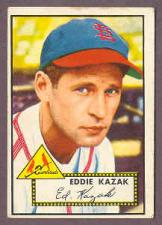
Eddie Kazak, 3B, ’42-’51 Houston Buffs.

March 30, 2010

Eddie Kazak, 3B, '42, '51 Buffs

He came here young and left here old. In between his two years of service as a third baseman for the 1942 and 1951 Houston Buffs, Eddie Kazak (6’0″, 175 lbs., BR/TR) of Steubenville, Ohio carved out a pretty fair mostly minor league career for himself in the St. Louis Cardinal system. Born July 18, 1920, Kazak began his first tour with the ’42 Buffs at age 21; he was 32 with three seasons of major league experience at St. Louis behind him by the time he returned to the Lone Star State.

I remember Eddie Kazak as a far superior hitter and fielder at third base than Tommy Glaviano, our column subject yesterday. He was slashing, line drive hitting without a lot of home run power, but the kind of guy that Buff fans trusted in those pinch moments when Kazak came to bat.

Eddie Kazak hit .304 with 13 homers and a slugging average of .474 in 104 games for the ’51 Buffs. His offensive numbers earned him a late season call up to the parents Cardinals. In 1942, Eddie batted only .257 with 5 HR for the Buffs. In 17 seasons as a minor leaguer (1940-42, 1946-60), Eddie Kazak batted pretty darn well. He registered a batting average of .307 with 153 home runs and  slugging average of .445. His best minor league season came after his last gasp as an MLB prospect when he batted .344 with 104 RBI, 19 HR, and a slugging average of .532 for the 1954 Beaumont Exporters as a farm club property of the Chicago Cubs.

Kazak’s major league numbers offensively were adequate to less than inspiring. In five seasons and 238 games (all but the last 13 games were spent with the Cardinals; the final quiet MLB hurrah for Eddie came as a Cincinnati Red), Eddie Kazak batted .273 with 11 HR 71 RBI, and a slug(gish)ging average of .383.

In 1949, Eddie helped compound the Cardinal frustration in their search for an adequate replacement for Whitey Kurowski at third base by chipping in 19 errors in 258 total chances at the hot corner. Tommy Glaviano, the other former Buff Cardinal third base suspect/prospect contributed another 19 errors in 267 total chances that same 1949 season. Cardinal ownership and the fans were tearing their hearts out in frustration – and Ken Boyer, who wasn’t even on the radar screen in 1949, wouldn’t get there as a solution until 1955.

Eddie Kazak was a fun-loving buddy of first baseman Jerry Witte while the two played together on the 1951 Buffs Texas League championship club and it’s easy to see why. They shared a Polish Catholic background and they both grew up in blue-collar families in northern cities. Witte hailed from the St. Louis area. Both men liked working with their hands and both loved hunting.

“We didn’t have much time to hunt and it was the off-season for hunting when we played for the Buffs,” Jerry Witte used to say, “but we made life pretty miserable for the turtles of Sims Bayou near Kazak’s place.” The two Buffs used to quell their appetites for shooting by taking aim with a .22 caliber rifle at turtle heads that surfaced on the Sims Bayou in the Houston’s East End. Back in the day, most people around here didn’t see this little recreation as cruelty to animals. In fact, for two Polish guys who liked to hunt, it was just “something to do.”

Eddie Kazak remained in Texas after his baseball career concluded. He died in Austin, Texas on December 15, 1999 at the age of 79.

Tommy Glaviano, 3B, 1947 Houston Buffs.

March 29, 2010

Tommy Glaviano, 3B, 1947 Houston Buffs

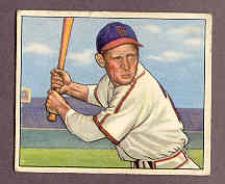
Tommy Glaviano may not have been the greatest stick and glove man who ever rounded the bend, but he held down the third base job pretty well for the 1947 Texas League-Dixie Series Champion Houston Buffs. On his way up for a brief career with parent St. Louis Cardinals, the 23-year old Glaviano batted .245 with 13 home runs and a .405 slugging average for the ’47 Buffs.

Tommy Glaviano (BR/TR) was born in Sacramento, California on October 26, 1923. At 5’9″ and 175 lbs, Tommy wasn’t exactly big enough to offer a wall of protection against slashing grounders and twisting cannon ball shot liners, but he was fast enough to have earned the nickname “Rabbit” for his speed and reflexive quickness. Tommy’s errors often came on the mental part of the throw that had to follow the great stop, but he wasn’t the first third baseman to suffer from that issue.

After signing with the Cardinals as a very young free agent, Glaviano broke in as a 17-year old 53-game rookie for the 1941 Class C Fresno club, batting .253 with 1 HR. The following full season, Tommy batted a combined .223 with Fresno and another Class C Cardinal farm team at Springfield, Ohio, where he played for future Hall of Fame manager Walt Alston.

1943-45 took Tommy Glaviano into the service of his country in World II. He returned to baseball in 1946, again on assignment to Fresno. This time it would be for an appointment with his greatest year in baseball, bar none. In 1946, Glaviano batted .338 in 126 games. He collected 29 doubles, 13 triples, and 22 home runs for a lights-out slugging average of .616 on the season.

A season like that at age 22 is enough to buy you at least a cup of coffee in the big leagues on the road ahead, even in the players-controlled-like-cattle era of the reserve clause and heavy club investment by some in their farm systems. In spite of Tommy’s down and disappointing statistical dive with the ’47 Buffs, he would get his run at the majors after an improving year with AAA Columbus, Ohio of the American Association in 1948. Glaviano batted .285 for Columbus, collecting 17 doubles, 7 triples, and 18 homers that bounced his slugging average up to .30 on the season.

Tommy Glaviano began a five season (1949-53) big league career the following spring. He never quite found the brass ring. In fact, he missed it by a country mile. In his five seasons (four with the Cardinals and one with the Philadelphia Phillies), Tommy Glaviano batted .257 in 1,008 official times at bat. He recorded 55 career doubles, 6 triples, 24 triples and a sluggish .395 slugging average.

After 1953, Glaviano played for two more full seasons (1954-55) and a doughnut-dunk at San Antonio in 1957, finishing with an eight-season minor league career batting average of .257 (same as majors) with 69 homers.

Tommy Glaviano passed away in retirement at his home in Sacramento on January 19, 2004. He was 80 years old. Tommy may not have lived up to his hoped-for potential, but he was old school. His death was another loss to our living remembrance of that golden earlier era in the game’s history. It will be up to the rest of us who also remember to make sure that Tommy and his baseball pals are never forgotten.

Long Live the Houston Buffs. Long Live the memory of the game.