Posts Tagged ‘Baseball’

Bye, Bye, Bobby!

August 12, 2010

Do you suppose it was something Bobby Cox said?

Bye, Bye, Bobby! – Wednesday’s wrap-up game between the Atlanta Braves and the Houston Astros at Minute Maid Park brought an end to an era. After 29 years at the helm as manager of a major league club, and with 25 of those years cemented into the history of the Atlanta Braves, Bobby Cox has said goodbye to Houston following his last trip here as the field general of a big league team.

Bobby leaves Houston on a winning note; his Braves took two out of three games from the Astros on this last trip to town in 2010 – and they also leave here in first place in the NL East. In spite of all who hate him, as many or more Braves and Bobby fans out there are alive and pulling for Cox to win one last NL flag and bag another elusive World Series title before he departs the Braves helm.

Tuesday Night at MMP: How many times over the years have we seen "Ole #6" out there, pulling one more string on a pitcher he hopes can get somebody out?

Bobby Cox doesn’t need another division title, league pennant, or World Series victory to assure his near certain future induction into the Baseball Hall of Fame. His 2,479 managerial wins through and including that 8-2 extra inning slammer the Braves put on the Astros Wednesday, August 11th, already places him in fourth place in managerial wins for all time, trailing only the uncatchable (1) Connie Mack (3,731), followed by (2) John McGraw (2.763), and (3) the also still active Tony LaRussa (2,6i6 through all games of 8/11/2010).

It’s conceivable, if not highly probable, that the other Hall of fame for sure guy, La Russa, will hang around long enough to surpass McGraw, but that also unnecessary extra validation of Tony does nothing to either make him more worthy – or Bobby Cox any lesser so. Both LaRussa and Cox have reached points in their careers in which numbers are little more than forgettable add-on features. Greatness already has been established by each of them in far many other ways.

How many times did Bobby Cox make this trip in 29 years? I don't know, but he did it afew more times on the night of Tuesday, August 10th.

Success is stamped all over Bobby Cox’s managerial career. At Atlanta alone, his Braves established themselves as the perennial division champion in the NL East throughout most of 1990s. In 15 seasons (1991-2005), Atlanta finished in first place in the NL East on 14 of those occasions, also taking 5 NL pennants (1991-2, 1995-96, 1999) and one World Series title (1995) over that extended halcyon period. The Braves also took some criticism for not winning it all more often because of their constant presence at the top of the heap during the regular season, but that critique in itself became a compliment to Cox over time. Not many other wildly successful managers and teams have been criticized so hard and so often for not being more perfect than Cox and the Braves.

Bobby Cox managed the National League All Star Team on five separate occasions (1992, 1993, 1996, 1997, and 2000). While managing the Toronto Blue Jays, he also was named Manager of the Year in the American League for the 1985 season and then another three times with the Atlanta Braves, the writers picked Cox as Manager of the year in the National League (2001, 2003, 2005).

The Astros honored Bobby Cox prior to Tuesday night’s game and well they should have. Good for the Astros! And good for Bobby Cox! What a worthy and often frustrating opponent he was to our Houston aspirations over the years. Will we ever forget the eighteen inning marathon victory over the Braves in the 2005 playoff game at Minute Maid Park? More painfully, will we ever be allowed to dis-remember that play at the plate in the Dome in 1999 that allowed the Braves to knock us out of the playoffs because Cox’s drawn in infield with the bases loaded did what they had to do, via a 6-2 Walt Weiss miraculous force out stop and throw, to kill our playoff chances?

Like him or hate him, Houston fans simply have to respect Bobby Cox for the worthy opponent he has always been. Now the guy walks away from baseball action on the field at age 68 with nothing more to prove.

Bobby Cox also leaves as the most ejected manager in baseball history. His 143 career ejections is a total far beyond anyone else, and these totals do not even include the two additional ejections he received in World Series play.

Why did Bobby Cox get tossed so much? Who knows?. Maybe it was just something he said that the umpires didn’t like. Maybe it was the way he said things. Maybe it was for just showing up in the face of the umpire on the heels of a tough call and being Bobby Cox. All I know is – baseball is losing a good man on the field after 2010 and I, as one fan, will miss him – even if he always was the guy on the other side in the wrong dugout,
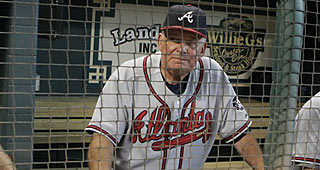
Bye, Bye, Bobbie! We're going to miss you in Houston too!
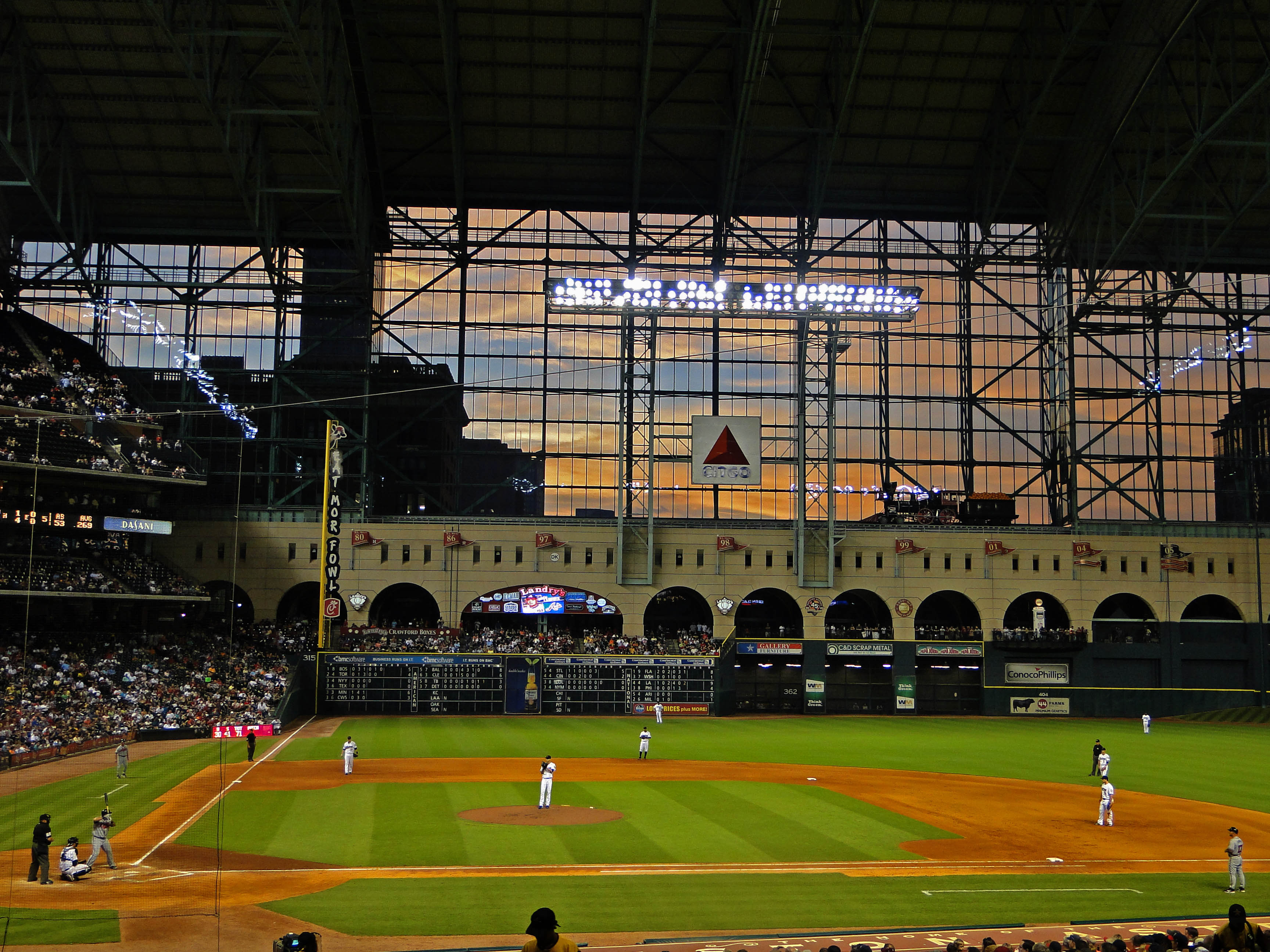
An Astros-Cranky Morning

August 11, 2010

"Some" Nights at Minute Maid Park Aren't Picture Perfect!

I woke up this morning with some good news and some bad news affecting my experience at the Braves@Astros game that my grown son Neal and I attended Tuesday night at Minute Maid Park.

The bad news is that several things on the field , especially losing as we did, affected our enjoyment of the game and one thing at the concession stands struck both Neal and me as an abomination to the memory of an iconic Houston business reputation. Speaking only for me now, the good news is that I still care about the fates and fortunes of our hometown Astros and the way we handle the good things in our history when it comes down to putting them into commercial service to any private group.

Let’s deal with the game stuff first. It isn’t all bad.

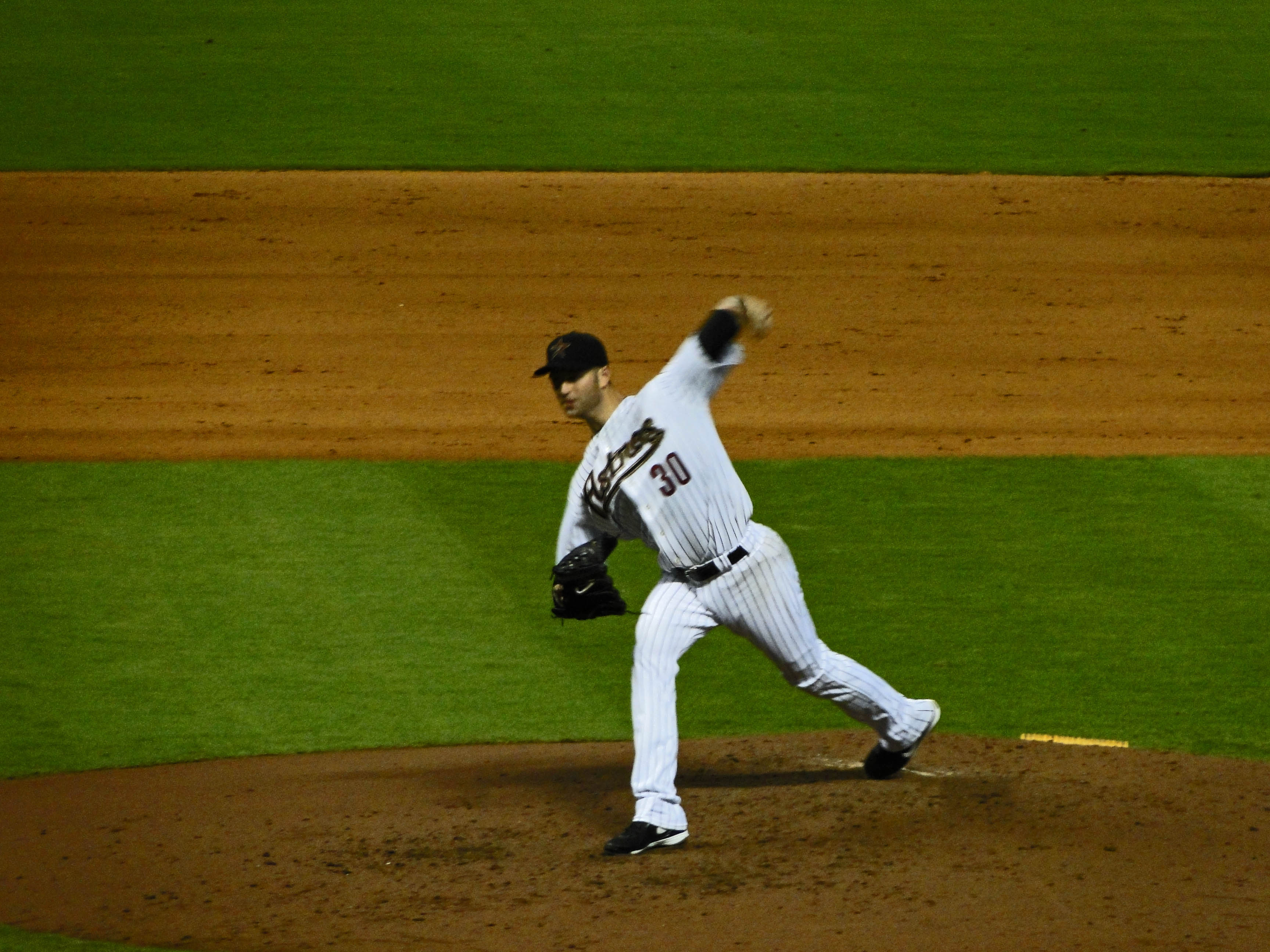
J.A. Happ pitched another great game Tuesday night!

J.A, Happ and Brett Wallace – two of the three young players we got in the Roy Oswalt trade – are already paying dividends on the future. Wallace is hitting .333 and swinging with fluid authority from the port side against right and left-handed pitching – and Happ is two for three in great starts as an Astro. In a physically remindful appearance to Andy Pettittee, Happ worked 111 pitches for 6 1/3 innings last night, giving up only one run on two hits, while walking four and striking out six. The Astros simply could not get him any runs off Atlanta pitching until sloppy defense by the Braves opened the door for a two-spot in the bottom of the eighth.

The Astro stuff that bothered me happened in the eighth and ninth innings.

The Astros had just tied the lead at 2-1 on a Braves throwing error and had Pence at second and Lee at first with only one out – and with our hottest hitter, Chris Johnson, at the plate. That’s when somebody (Pence, third base coach Dave Clark, or manager Brad Mills) decided to just run us out of next scoring opportunity. Pence took off and was retired at third for the second out on a questionable call, but that was not my problem, My problem was that Pence went at all from scoring position with Johnson batting.

As soon as Pence was called out, you knew what was coming next for sure. Johnson rammed the single to right that would have scored Pence from second and increased the lead to 3-1. All it did was advance Carlos Lee to third with two outs and bring rookie Brett Wallace to the plate with a scoring opportunity.

UhOh! Now it’s managerial genius time!

Are the Astros inadvertently training Wallace to think he cannot hit lefties when the game is on the line? Operant behavioral modification is a technique I've studied for a thousand years in my primary field. Don't think it cannot happen.

Atlanta’s Bobby Cox brought in a lefty, Venters, to face Wallace, so naturally, Brad Mills felt as through he had to bring in the right-handed Jason Michaels to pinch hit for the lefty rookie. I know all about the righty-lefty percentages. I didn’t just wake up yesterday – nor am I unaware that “JayMike” has played a hot hand lately. – And, no, I don’t know what special game circumstances with Wallace may have made a contribution to Mills’s decision.

I just wouldn’t have lifted Wallace – and for a couple of good reasons: (1) Wallace is hitting .333 in the early go and is already showing signs that he can hit lefties as well as righties; (2) as a manager, I want to show Wallace that I have confidence in his ability to hit lefties in a game-pressured situation. I do not want to train him to expect the hook whenever this situation comes up again.

On the surface of things, I felt Mills let his rookie down when he pulled him for Michaels. Of course, as you might also expect, Michaels completed the cycle of disappointment by taking strike three for the third out with the bat on his shoulder.

The final disappointment was s hugely shared one. Closer Lindstrom came in to pitch the ninth for the Astros and then  surrendered three runs on two homers to blow the game into a 4-2 Atlanta win. How can Mills showing confidence in Lindstrom as a pitcher be more important than showing confidence in Wallace as a hitter? There seemed to be an air of that difference involved in the way last night’s game played out.

Lindstrom has good stuff, but he’s slightly off track now, and that diversion has grown quickly into the difference between victory and defeat. We don’t want young Wallace to lose his confidence as a hitter against lefties in tight situations – and we do want Lindstrom to get his confidence back as a closer. It’s not there at the present time.

Prince's Burgers "Fit for a King?" - Not at Minute Maid Park!

We finally got around to trying the Prince’s hamburgers at Minute Maid Park for the first time. It will also be our last. What they are serving there as the iconic Prince’s hamburger from 1934 is both a culinary disaster and an embarrassing insult to the Prince family name. The current licensees to the use of the Prince family name should be ashamed of themselves for placing  this piece of food garbage out there at Minute Maid Park. To put in mildly, the Prince’s hamburger at Minute Maid is one horrendous misrepresentation of the original great Prince’s recipe for burgers. They don’t even have the famous original sauce available at MMP.

The whole purchase and attempted consumption experience was ridiculous  to the extreme of becoming almost laughable. First of all, the counter help has no idea what the original Prince’s burgers were all about to Houstonians for generations. When you ask for “original recipe sauce,” they simply tell you “we ain’t got nothing like that. What we got is a burger, with or without cheese. You have to put your own stuff on it from one of those carts out there.”

The burger comes fried to a bone dry crisp with no salt. American processed cheese is your only choice, if you want it, and it comes laid out on a toasted bun that could be from anywhere. The basic burger is $8.75 because you have no choice but to buy it with fries. The fries are pretty good – and you can order them separately for $4.25. When we asked about buying a burger separately, the guy told us, “You may as well take the fries, ’cause we going to charge you for them anyway. If you don’t want ’em, just throw ’em in that trash can over there.”

"Ain't That a Shame" - by Fats Domino (It's a good fit.)

A Better Look at the MMP Prince's Prices

As things turned out, it was most of both the burger and the unwanted fries that Neal and I each tossed, We figured: “Better to toss it this way now than another way later.”

Look! I have no problem with the price of concessions at the ballpark. If people want an economic meal, they need to dine elsewhere, either before or after the game. My problem is with paying high prices for poor quality – and in this case, paying for something that is basically a desecration of what always stood out as THE burger standard in Houston, Texas since 1934.

The Prince family is simply shamed by this egregious abuse of their family name at Minute Maid Park. Shame on the vendors who sold this idea to the Astros!

As someone who always has supported the Houston Astros, it is my hope that the Prince’s vendor plan is either totally corrected or eliminated by the time we get to the 2011 season. It’s just plain awful as it is.

Eddie Dyer: A Man for All Seasons

August 10, 2010

Eddie Dyer: The Man Who Could Do It All

Eddie Dyer. He could pitch, hit, manage, balance the books, make out payroll checks, and then go into business after baseball and became wildly successful in oil, real estate, and insurance. Oh yeah. One more thing. He knew how to win a World Series too, as he and his 1946 St. Louis Cardinals proved to all against Ted Williams and the Boston Red Sox in the seven-game thriller that was the 1946 title contest that will always be remembered for Enos Slaughter’s “mad dash” from first to home.

Born in the heart of Cajun Country in Morgan City, Louisiana on October 11, 1899, the Irishman Dyer made his way to Rice Institute (now University) as both a bright student and highly touted ballplayer. He signed with the St. louis Cardinals in 1922 as a (BL/TL) pitcher-outfielder. The future looked as bright as dawn upon the dark swamps of his birthplace.

Over parts of six seasons, 1922-27, Dyer then appeared in 129 games for the Cardinals. As a big league pitcher, he split 30 decisions and posted an ERA of 4.78. Dyer also marked a 3 win-5 loss record in a  partial season with the 1923 Houston Buffs during this same period. It was his only season as an actual player for the Buffs, but his impact as a manager was coming down the line. In 157 times at bat as a major league outfielder in the 1920s, Eddie batted only .223 and seemed well on his way to mediocrity or total oblivion.

1927 proved to be Eddie Dyer’s pivotal year. Optioned by the parent Cardinals to the Syracuse Stars of the then AA International League as a pitcher, Dyer won his first six games before an arm injury ended his pitching career for all time. His now proven intellect and leadership qualities next led the Cardinals to shift Dyer into gear as a playing manager-outfielder in their minor league system.

From 1928 through 1933, Dyer continued as a playing manager, also establishing himself along the way as a superb minor league hitter. Upon retirement from active play, Dyer hung up a career minor league BA of .311 for ten seasons. He also began to compile a list of great players who came up through the Cardinal system under his tutelage. The first of these was future Hall of Famer Joe Medwick, who played for Eddie as an outfielder for the Scottdale Scotties of the Class C Western Association in 1930. All Joe  Medwick did that year was hit .419 to lead the league.

Dyer was a triple duty money-saver for the Cardinals while he still played and then fell only to a double duty bargain after his active playing retirement in the lower minors. In each of those early stops, the Cardinals also installed Dyer as either the general manager or club president too. He may have even driven the team road-trip bus under this Branch Rickey-inspired, money-saving  mindset. I’m not sure about that bus driving extra job, but it wouldn’t surprise.

If we look closely here at the order of these next few facts, we may be able to see one of the big reasons that Eddie Dyer was headed toward dynastic minor league success in the later 1930s and early 1940s. In 1938, the Cardinals placed Dyer in charge of supervising all of their minor league operations in the southern and southwestern parts of the United States. The following season, the Cardinals made Eddie Dyer their choice for service as manager of the Houston Buffs.

Uh Oh! Going into the 1939 season, guess who has a major say and the most performance information at his fingertips and under his control for assigning players to the Houston Buffs roster?  I’m not saying we can know it worked out this way, but so what, if it did? Eddie Dyer would have been foolish not to load up at Houston, if he had the inside chance.

The results speak pretty loudly for the talent, leadership, and performance of the Buffs during Eddie Dyer’s three seasons at the helm from 1939 through 1941. The Buffs finished in first place all three of those seasons, averaging 102 wins per year and winning the playoffs for the league championship in 1940. Sadly, the 1940 Buffs then lost the Dixie Series title to the Nashville Vols in five games.

The Texas League then shut down from 1942 through 1945 due to World War II, but Eddie Dyer stayed connected to the Cardinals as he also pursued his business interests in Houston. He became manager of the St. Louis Cardinals in 1946 and then quickly led the club that contained many of his former Houston players, pitchers like Howie Pollet, Red Munger, and Ted Wilks, to a playoff pennant victory over the Brooklyn Dodgers and a seven-game World series title over the Boston Red Sox.

The Cardinals remained fiercely competitive for the last four years of Eddie Dyer’s managerial service to the Cardinals (1947-50), but the Dodgers, Braves, Dodgers again, and Phillies got in the way of any further Dyer-Cardinal pennants.

After a fall to fifth place in 1950, Eddie Dyer resigned as manager of the Cardinals and returned to his business interests in Houston. He left a major league managerial record on the books that spoke well for his accomplishments. 446 wins. 325 losses, and a .578 winning percentage is plenty to write home about.

Eddie Dyer passed away in Houston at age 64 on April 11, 1964. His death was both a big loss to baseball and to our community because he was one of those people with the ability to infect others with his plans for success and happiness. You never want to run out of the Eddie Dyer types in this world. The loss is always felt hard and sharp.

I’ve written about Eddie Dyer in the past. I’ll no doubt write about him again in the future. I only wish his players were still around to write his whole story. I’ll bet you that most of them would also say they were helped to becoming better performers because of Eddie Dyer. All I know is – the more you read about the guy and study his record – and the more you examine the names of the players he managed – the more you may find yourself pulled to the same conclusion I also reached.

Eddie Dyer was a builder of better worlds – in baseball, in business, in life.

Lagniappe and Marse Joe McCarthy

August 4, 2010

Lagniappe is a word I learned during my graduate school years at Tulane in New Orleans. Spanish in origin, it basically means anything you give to another person as a little something extra. It pretty well conveys the same idea we embrace in English as the “baker’s dozen.” In lagniappe, the reward is in the giving itself. – How’s that for a novel idea?

At any rate, my lagniappe addition today to my usual lagniappe column, anyway, is to point out or try to clarify my transferential association of Astros new first baseman Brett Wallace in physical appearance to a certain comic from yesterday.

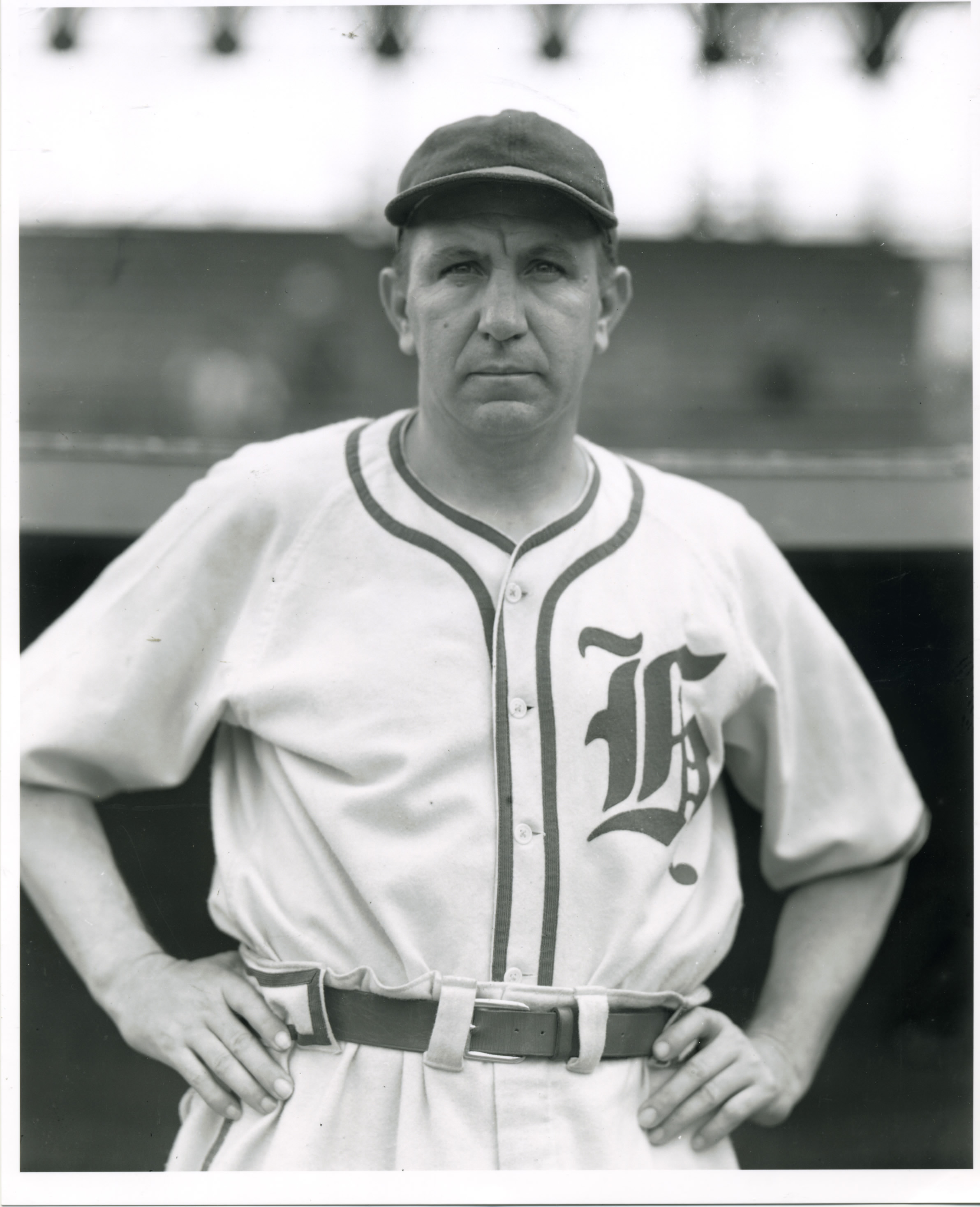
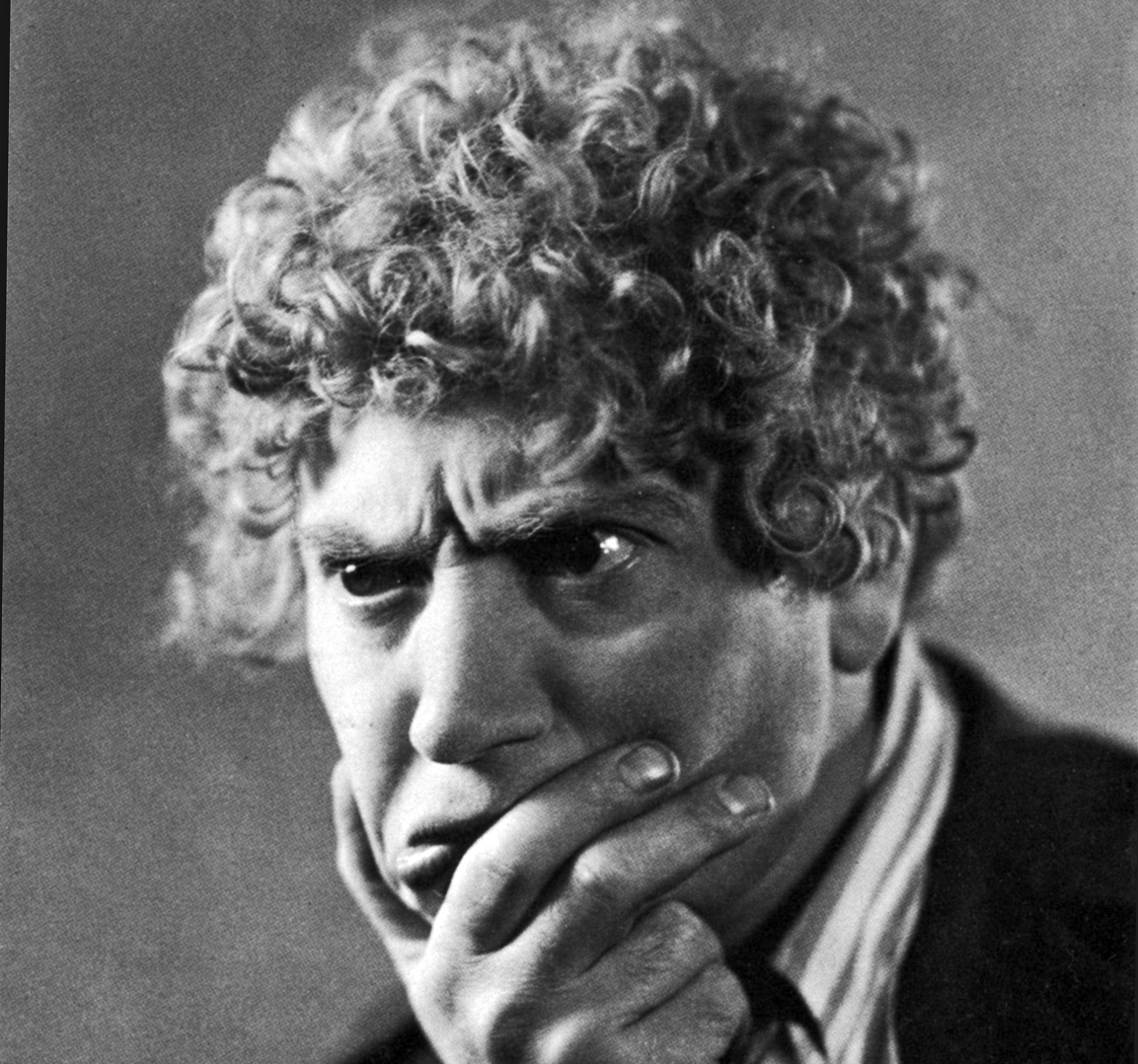
Am I wrong, or does Brett Wallace sort of look like a youthful version of Harpo Marx, before his hair turned white with the help of a fright wig? Check out these comparison photos and let us know what you think in the space below. Please.

Brett Wallace

Harpo Marx

Now for a few comments on Marse Joe McCarthy, the manager who capitalized the “D” in Dynasty when he took over the club’s field reins in 1931. Over the next thirteen seasons, the modest, unselfish McCarthy would lead the Bronx Bombers to eight AL pennants, seven World Series titles, and the first run for any team through four World Series championships in a row (1936-39).

How unattached was “Marse Joe,” a racist-sounding nickname for his plantation slavedriver status in the New York Yankee baseball killing fields, – how really attached was McCarthy from his own needs for ego attention during this several season melee?

The answer: plenty. Joe McCarthy didn’t even wear a uniform number on his back.

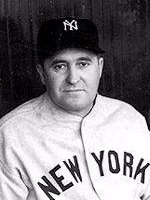
Joe McCarthy

Lacking the need for personal attention isn’t to be construed as an assessment of Joe McCarthy as an angel. He had some ego needs all right, and they just happened to mesh perfectly with the man who hired him, Yankees owner Jacob Ruppert. You see, Joe McCarthy lived to destroy his opponents by as big a run margin as possible. McCarthy would have loved walking around in Astros Manager Brad Mills shoes last night. He loved scores like 18-4 – as long as the heavy first figure favored his Yankees.

It’s no wonder the  world hates the Yankees. Owner Ruppert cared little about close individual game outcomes. He just wanted to know how soon the club was going to clinch the pennant each year. Jake Ruppert hated finishing second and so did Joe McCarthy.

In Talmadge Boston’s excellent work, “1939,” he outlines Yankee manager Joe McCarthy’s Ten Commandments of Baseball:

(1) Nobody ever became a ballplayer by walking after a ball.

(2) You will never become a .300 hitter unless you take the bat off your shoulder.

(3) An outfielder who throws back of a runner is locking the barn after the horse is stolen.

(4) Keep your head up and you may not have to keep it down.

(5) When you start to slide, slide. He who changes his mind may have to change a good leg for a bad one.

(6) Do not alibi on bad hops. Anybody can field the good ones.

(7) Always run them out. You never can tell.

(8) Do not quit.

(9) Do not find too much fault with the umpires. You cannot expect them to be as perfect as you are.

(10) A pitcher who hasn’t control, hasn’t anything.

In spite of his demands for excellence, Joe McCarthy was not a screamer. He believed in giving pats on the back and nurturing the best from his players in his own grandfatherly way. A player simply had to go all out and show signs of excellence to get any long-term support from Joe McCarthy. The player didn’t put out was quickly dumped. When ace reliever Johnny Murphy finally convinced Joe McCarthy that he was concerned more about himself than the Yankees, the club shipped Murphy off to Cleveland.

Most players can have a big league career winning some and losing some. To play for Joe McCarthy, and just about every other New York Yankee club that’s come down the pike ever since, you had to win some and then win some more – just to stick.

Joe McCarthy was one of the strongest early links in the Yankee chain of winning. As a player, you didn’t have to like him. You just had to play on a level you may never previously have realized you had in you to stay on the Yankee roster.

Stay out of the Houston heat today, folks. It literally sucks the life out of you, if you push it too hard.

Graham McNamee: The Inventor of Play-by-Play

August 3, 2010

Graham McNamee: Father of the Play-by-Play

“The father of us all.” That’s how renowned sports broadcaster Dick Enberg described Graham McNamee, the man who invented play-by-play broadcasting as e know it today. Deservedly, McNamee stood out as one the first class inductees when the American Sportscasters Association (ASA) formed and created their Hall of Fame in 1984. The other members of that tribute to high standards in sports broadcasting included Red Barber, Don Dunphy, Ted Husing, and Bill Stern. Only Barber was strictly baseball, but none did baseball earlier, or contributed anything more basic to the performing art than Graham McNamee. Yet, when the National Baseball Hall of Fame organized its own annual Ford C. Frick Award in 1978 for contributions to baseball broadcasting it chose Mel Allen and Red Barber, plus a hot of others since, but never Graham McNamee for his most essential contribution to baseball over the airways, first and foremost, among all American sports.

What did Graham McNamee do? All he did was invent play-by-play broadcasting in real-time. All he did in 1923 was to become the first broadcaster to cover baseball on a more than sporadic basis from the Polo Grounds – and then to broadcast all games of the 1923 World Series between the Giants and Yankees. All he did was become the guy who called the phenomenal fourth game of the 1929 World Series in which the Philadelphia Athletics came roaring back from an 8-0 deficit to the Chicago Cubs be scoring 10 runs in the bottom of the seventh for a 10-8 win and a 3-1 lead in games. All he did was broadcast Babe Ruth’s “called shot” home run for the New York Yankees in the 1932 World Series against the Chicago Cubs.

All he did too, unfortunately, was get so good at what he did that he was the man people wanted to hear whenever a major sporting event came down the pike in America. He had a national relationship with his audience back in the time when nobody wrote or spoke of such things in such highfalutin social science terms. All the advertisers knew was that people listened when Graham did the contest, no matter what it was. Graham NcNamee, for example, was the guy that called the famous “long count” win for Gene Tunney over Jack Dempsey for the world heavyweight boxing title in 1927. He also worked radio shows with famous stars of the day, Ed Wynn and Rudy Vallee – and he did a lot newsreel voice-over work too.

Sadly, that explosive demand for McNamee’s talents in the early days of a medium that he practically invented single-handedly now costs him due recognition among those who annually vote on the Ford C. Frick Award.

I once asked Astros broadcaster Milo Hamilton for his thoughts on the long-neglect of Graham McNamee by the Ford C. Frick voters. I found his answer to be quite revealing. “He didn’t broadcast baseball long enough (to be recognized by the Baseball Hall of Fame with a Frick Award),” Milo told me. I’ve since learned that Milo isn’t alone in that opinion. I just beg to differ with it.

No, he didn’t do it very long by comparison to today’s full season, baseball-only broadcasters. All he did was invent and continue to improve upon play-by-play in the nineteen years that passed between his first radio game in 1923 and his death in 1942.

The Graham McNamee story is straight out of the mind of a 1930s or 1940s screenplay writer: A young man from Minnesota goes to New York City in the early 1920s with hopes of becoming an opera singer. Early on, he takes what work he can find, but draws jury duty one day. While walking to the courthouse in 1923, he spies a “help wanted” ad in the window at radio station WEAF. On a whim, he decides to drop in and check it out.

McNamee walks right into an audition for an announcing job and is hired on the spot. He soon finds himself working as a sort of back-up man with a rotating crew of writers who are starting to cover the New York Giants over the radio at the Polo Grounds. The writers cover the game as though it were a typed report for their newspapers. If a batter grounds out 6-3, the writer/announcer would simply watch as the play was transpiring. Then he would say something like: “The batter just hit a ground ball to the shortstop. The shortstop threw the ball to first base for a put out.” Then the air would just go silent until something else happened that could be reported in the past tense.

McNamee jumped on the dead air. He started telling people what the day looked like, what the fans were doing, and, sin-of-sins, he started talking about the game in real-time, speculating on strategies and the like. What he mainly got in return from his colleagues was silence, but that didn’t stop young 33-year old Graham McNamee. He was going to inject some color into the game or die trying.

Then, one destiny-day it happened. Not death, but life descended upon baseball broadcasting. While working with the iconic writer Grantland Rice, who hated the radio responsibility, anyway, McNamee suddenly found himself on the air alone. Rice told him to just finish the game by himself, that he had worked it all he wanted and was moving on.

Whoa! All of a sudden, young McNamee has the plane to himself as pilot Rice hits the silk. What does he do?

You bet right. He starts describing the game in real-time – and in a most informal and conversational way – one that speaks for his desire to be the listener’s partner in “seeing” this game fully as it plays out in the theater of the mind. He was wildly successful at these efforts from the start – so much so that the call for his radio services reached quickly beyond baseball alone.

Does Graham McNamee deserve better recognition by Cooperstown for his primal contributions to sports broadcasting than he has so far received to date? You tell me. Then tell the Hall of Fame. I’m tired of watching politics rather than serious contribution win out in the battle for recognition by so many various halls of honor. To me, the Ford C Frick Award without Graham McNamee is like any building that leaves out a serious foundation plank. The thing is going to wobble.

The Old Scotchman, Gordon McLendon

August 2, 2010

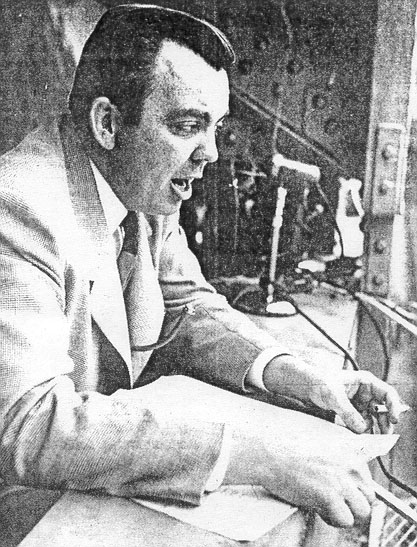
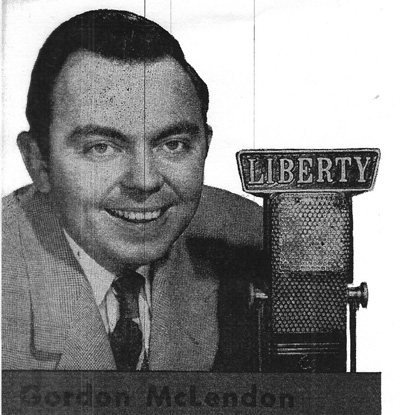
From 1947-1952, young Gordon McClendon, the “Old Scotchman,” mastered the art of baseball game recreations at his Liberty Broadcasting System studio in Dallas.

29-year old Gordon McLendon walked among us in the years following World War II as one of the shrewdest, most creative independent broadcasters ever  to come down the pike. Recognizing the appeal of baseball far beyond the narrow confines of the few eastern and midwestern cities of the big leagues, young McLendon pieced together the Liberty Broadcasting System in the Dallas suburb of Oak Cliff in 1947 and proceeded from there over the next three years to build a national audience for his studio-recreated games of major league baseball.

In competition with the powerful Mutual Broadcasting System and their live big league game coverage, Gordon McLendon understood that his battle was not against the money and talent that MBS could throw against his LBS for the national audience at stake. “G Mac” figured correctly that his challenge was in the “Theatre of the Mind.” The network that best captured the visual imagination of the fans through this strictly words and sounds medium would be the winner down the line.

G Mac guessed right. As a 12-year old in the summer of 1950, I can attest to his victory and I can relate exactly when and how it happened for me. Confined indoors during the so-called “heat of the day” (12-3PM). I struggled like most of my friends with a choice of the two networks for big league action during the daily time of confinement from the sandlot. We knew that LBS was giving us simulated broadcasts and, no matter how good we found G Mac to be, that fact alone often pushed us over to MBS and the mellow voice of Al Helfer and live action.

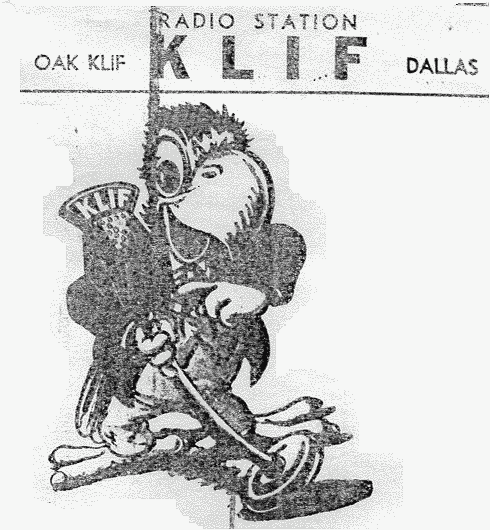
G Mac bought a parrot and confined him to a room all day that played his station call letters, “K-L-I-F” on a recorded loop for as long as it took the bird to learn to say those words. Then the bird went on the air with G Mac and said the call letters on cue at break time.

Then one day that all changed. Somehow, G Mac and LBS came up short on a big league game to broadcast and were forced to either cancel or go to musical “rain out” programming. G Mac chose to go another way. He went to the history books and pulled up a detailed account of Game Two from the 1916 World Series. All of a sudden, I’m listening to Babe Ruth warming up on the sidelines; the date is October 9, 1916; Ruth is getting ready to face off against Sherry Smith and the visiting Brooklyn Robins.

I was captivated by G Mac’s time-machine-invite to join him for a batter-by-batter trip back to that golden day in baseball history. And G Mac and LBS brought me everything from what happened each step of the way to changes in the wind that caused uniform sleeves to flap and trash and dust to blow across the infield – and, of course, all of the changes in light patterns brought about by cloud movements and the length of the game. 14 innings later, Ruth and the Red Sox had prevailed over Smith and the Robins by a 2-1 final score. This may have been the day that my lifelong romance with baseball history found its truckload of cement. I just remember being hooked on the trip through time.

Legendary LBS Broadcaster Gordon McLendon ~ The Old Scotchman – G Mac. He’s the reason that Houston Radio Station KILT first bore those call letters as an affiliate.

For a complexity of reasons, including the new era of franchise-shifting and MLB closing down harder on independent broadcasters who made an unregistered living off the labors of major league baseball, the LBS broadcasts began to fade. By 1952, the network was dead and McClendon had moved on to other things, like inventing “Top 40 Song Hits of the Week” programming – and producing  one mildly disastrous independent horror movie in which he also starred as a mad doctor in “The Killer Shrews” (1959). G Mac also served as Executive Producer of “The Giant Gila Monster” that same year. “Shrew” has since become something of a cult horror movie classic among fan circles that have nothing to do with baseball.

Gordon McLendon died in 1986 at the age of 65. He was posthumously inducted into the Radio Hall of Fame in 1994.

To me, G Mac will always be one of those people who made history come alive. He didn’t invent   simulated game broadcasting. He simply fine tuned it into a magic carpet ride into baseball history.

Thanks, Old Scotchman! A lot us out here shall remember you forever!

Who’s On First, Astros-Style

August 1, 2010

Abbott: "Who's on first." Costello: "Berkman." Abbott: "Not anymore, he's not."

The classic Bud Abbott and Lou Costello “Who’s on First?” routine lays the groundwork for our look at all the changes in the lineup of the 2010 Houston Astros on this first day of August. As best we can tell from the settling of all the trade dust that got kicked up these past 72 hours, here are the names of the current nine starters for the Astros as we head into the homestretch of this going-nowhere-for-now-but-tooling-up-fast-for-the-future season:

Pitcher: J.A. Happ (Too bad a certain Astros draft choice at catcher from recent years had to get get sick and fade as a prospect. We could have been getting ready to put a battery of Happ & Sapp on the field once every four days.)

Catcher: C. Astro

First Base: Who Dat Nguyen

Second Base: Dam F. Eyeno

Third Base: Oma Godd

Shortstop: L.O. Loudd

Left Field: Careless Lee

Center Field: Michael Bourn

Right Field: Hunter Pence

And in honor the wonderful routine perfected by Abbott and Costello, here’s a verbatim on the “Who’s On First?” routine that plays continuously during all the open visiting hours of the Baseball Hall of Fame and Museum in Cooperstown, New York. Enjoy and have a great Sunday, away from the triple digit heat that is predicted for Houston this afternoon:

Who’s On First? By Bud Abbott and Lou Costello

Abbott: Well Costello, I’m going to New York with you. You know Bucky Harris, the Yankee’s manager, gave me a job as coach for as long as you’re on the team.

Costello: Look Abbott, if you’re the coach, you must know all the players.

Abbott: I certainly do.

Costello: Well you know I’ve never met the guys. So you’ll have to tell me their names, and then I’ll know who’s playing on the team.

Abbott: Oh, I’ll tell you their names, but you know it seems to me they give these ball players now-a-days very peculiar names.

Costello: You mean funny names?

Abbott: Strange names, pet names…like Dizzy Dean

Costello: His brother Daffy.

Abbott: Daffy Dean

Costello: And their French cousin.

Abbott: French?

Costello: Goofè.

Abbott: Goofè Dean. Well, let’s see, we have on the bags, Who’s on first, What’s on second, I Don’t Know is on third…

Costello: That’s what I want to find out.

Abbott: I say Who’s on first, What’s on second, I Don’t Know’s on third.

Costello: Are you the manager?

Abbott: Yes.

Costello: You gonna be the coach too?

Abbott: Yes.

Costello: And you don’t know the fellows’ names?

Abbott: Well I should.

Costello: Well then who’s on first?

Abbott: Yes.

Costello: I mean the fellow’s name.

Abbott: Who.

Costello: The guy on first.

Abbott: Who.

Costello: The first baseman.

Abbott: Who.

Costello: The guy playing…

Abbott: Who is on first!

Costello: I’m asking YOU who’s on first.

Abbott: That’s the man’s name.

Costello: That’s who’s name?

Abbott: Yes.

Costello: Well go ahead and tell me.

Abbott: That’s it.

Costello: That’s who?

Abbott: Yes.

PAUSE

Costello: Look, you gotta first baseman?

Abbott: Certainly.

Costello: Who’s playing first?

Abbott: That’s right.

Costello: When you pay off the first baseman every month, who gets the money?

Abbott: Every dollar of it.

Costello: All I’m trying to find out is the fellow’s name on first base.

Abbott: Who.

Costello: The guy that gets…

Abbott: That’s it.

Costello: Who gets the money…

Abbott: He does, every dollar. Sometimes his wife comes down and collects it.

Costello: Whose wife?

Abbott: Yes.

PAUSE

Abbott: What’s wrong with that?

Costello: Look, all I wanna know is when you sign up the first baseman, how does he sign his name?

Abbott: Who.

Costello: The guy.

Abbott: Who.

Costello: How does he sign…

Abbott: That’s how he signs it.

Costello: Who?

Abbott: Yes.

PAUSE

Costello: All I’m trying to find out is what’s the guy’s name on first base.

Abbott: No. What is on second base.

Costello: I’m not asking you who’s on second.

Abbott: Who’s on first.

Costello: One base at a time!

Abbott: Well, don’t change the players around.

Costello: I’m not changing nobody!

Abbott: Take it easy, buddy.

Costello: I’m only asking you, who’s the guy on first base?

Abbott: That’s right.

Costello: Ok.

Abbott: All right.

PAUSE

Costello: What’s the guy’s name on first base?

Abbott: No. What is on second.

Costello: I’m not asking you who’s on second.

Abbott: Who’s on first.

Costello: I don’t know.

Abbott: He’s on third, we’re not talking about him.

Costello: Now how did I get on third base?

Abbott: Why you mentioned his name.

Costello: If I mentioned the third baseman’s name, who did I say is playing third?

Abbott: No. Who’s playing first.

Costello: What’s on first?

Abbott: What’s on second.

Costello: I don’t know.

Abbott: He’s on third.

Costello: There I go, back on third again!

PAUSE

Costello: Would you just stay on third base and don’t go off it.

Abbott: All right, what do you want to know?

Costello: Now who’s playing third base?

Abbott: Why do you insist on putting Who on third base?

Costello: What am I putting on third.

Abbott: No. What is on second.

Costello: You don’t want who on second?

Abbott: Who is on first.

Costello: I don’t know.

Abbott & Costello Together:Third base!

PAUSE

Costello: Look, you gotta outfield?

Abbott: Sure.

Costello: The left fielder’s name?

Abbott: Why.

Costello: I just thought I’d ask you.

Abbott: Well, I just thought I’d tell ya.

Costello: Then tell me who’s playing left field.

Abbott: Who’s playing first.

Costello: I’m not… stay out of the infield! I want to know what’s the guy’s name in left field?

Abbott: No, What is on second.

Costello: I’m not asking you who’s on second.

Abbott: Who’s on first!

Costello: I don’t know.

Abbott & Costello Together: Third base!

PAUSE

Costello: The left fielder’s name?

Abbott: Why.

Costello: Because!

Abbott: Oh, he’s centerfield.

PAUSE

Costello: Look, You gotta pitcher on this team?

Abbott: Sure.

Costello: The pitcher’s name?

Abbott: Tomorrow.

Costello: You don’t want to tell me today?

Abbott: I’m telling you now.

Costello: Then go ahead.

Abbott: Tomorrow!

Costello: What time?

Abbott: What time what?

Costello: What time tomorrow are you gonna tell me who’s pitching?

Abbott: Now listen. Who is not pitching.

Costello: I’ll break your arm, you say who’s on first! I want to know what’s the pitcher’s name?

Abbott: What’s on second.

Costello: I don’t know.

Abbott & Costello Together: Third base!

PAUSE

Costello: Gotta a catcher?

Abbott: Certainly.

Costello: The catcher’s name?

Abbott: Today.

Costello: Today, and tomorrow’s pitching.

Abbott: Now you’ve got it.

Costello: All we got is a couple of days on the team.

PAUSE

Costello: You know I’m a catcher too.

Abbott: So they tell me.

Costello: I get behind the plate to do some fancy catching, Tomorrow’s pitching on my team and a heavy hitter gets up. Now the heavy hitter bunts the ball. When he bunts the ball, me, being a good catcher, I’m gonna throw the guy out at first base. So I pick up the ball and throw it to who?

Abbott: Now that’s the first thing you’ve said right.

Costello: I don’t even know what I’m talking about!

PAUSE

Abbott: That’s all you have to do.

Costello: Is to throw the ball to first base.

Abbott: Yes!

Costello: Now who’s got it?

Abbott: Naturally.

PAUSE

Costello: Look, if I throw the ball to first base, somebody’s gotta get it. Now who has it?

Abbott: Naturally.

Costello: Who?

Abbott: Naturally.

Costello: Naturally?

Abbott: Naturally.

Costello: So I pick up the ball and I throw it to Naturally.

Abbott: No you don’t, you throw the ball to Who.

Costello: Naturally.

Abbott: That’s different.

Costello: That’s what I said.

Abbott: You’re not saying it…

Costello: I throw the ball to Naturally.

Abbott: You throw it to Who.

Costello: Naturally.

Abbott: That’s it.

Costello: That’s what I said!

Abbott: You ask me.

Costello: I throw the ball to who?

Abbott: Naturally.

Costello: Now you ask me.

Abbott: You throw the ball to Who?

Costello: Naturally.

Abbott: That’s it.

Costello: Same as you! Same as YOU! I throw the ball to who. Whoever it is drops the ball and the guy runs to second. Who picks up the ball and throws it to What. What throws it to I Don’t Know. I Don’t Know throws it back to Tomorrow, Triple play. Another guy gets up and hits a long fly ball to Because. Why? I don’t know! He’s on third and I don’t give a darn!

Abbott: What?

Costello: I said I don’t give a darn!

Abbott: Oh, that’s our shortstop.

Bill McKechnie: Manager for the Ages

July 31, 2010

Bill McKechnie: Only Manager to Take Three Different City Clubs to the World Series.

Hall of Fame baseball manager Bill McKechnie had a personality reputation that wore out all the most popular clichés on the subject. “Dull as dishwater” and “a man bearing all the excitement of watching paint dry” jump immediately to mind.

All the man did was quietly and quickly come in and take three different clubs to the World Series during the first half of the 20th century. He was never “the show” that a few of his more famous contemporaries were. Fiery guys like John McGraw and the umpire-baiting Leo Durocher may have been a lot more fun to watch. They just didn’t accomplish what Bill McKechnie did with three wholly different franchises.

As often happens, this great historical manager had not been a great player. Over an 11-season big league career played non-contiguously from 1907 to 1920, McKechnie the infielder batted .251 with only 8 home runs, but he went to school on all phases of baseball during that period and he impressed others with his quiet observations and suggestions for personal improvement. He apparently was one of those teachers who understood that a teacher has nothing to teach unless he has a student who is willing to listen. It became a characteristic of McKechnie’s that he surrounded himself with players with raw talent who would also listen to ways they could improve. Pitchers were the key to winning in McKechnie’s book and having pitchers who were willing to improve themselves and extend their innings of effective pitching were important to Manager Bill.

By the time that Bill McKechnie reached the Reds in 1938, the common wisdom in baseball had distilled to this simple straightforward advisory to pitching prospects joining his Reds clubs: “If you can’t pitch for McKechnie, you can’t pitch for anybody.”

Bill McKechnie managed the Pittsburgh Pirates for five seasons (1922-26), leading the club to the World Series championship in 1925 over the Washington Nationals. He next managed the St. Louis Cardinals for two seasons (1928-29). He quickly led the Cards to a National League pennant in 1928 before losing the World Series to the New York Yankees. McKechnie then spent eight seasons (1930-1937) managing the Boston Braves/Bees, a club that couldn’t win for anybody, before taking over for a final nine-year run (1938-46) as manager of the Cincinnati Reds. At Cincinnati, McKechnie would lead the Reds from the last place club they were in 1937 to the NL pennant in 1939 and then to another Series loss to the ’39 Yankees, a club that many consider as the greatest team of all time. McKechnie then returned  the Reds to the top in 1940 for a World Series victory over the Detroit Tigers, his second title in four tries at three spots.

McKechnie was a laid back, quiet fatherly type who quickly earned the trust of any player worth keeping. That trust was crucible to the art of him getting across his beliefs about the central role of pitching and what he expected from his staff. McKechnie had a simple philosophy about pitching: (1) No big league pitcher can get by with a fast ball alone. He believed that a pitcher has to develop a curve that he can control for strikes. (2) McKechnie forbade his pitchers from throwing sliders. He believed that all sliders did was hurt pitching arms and shorten pitching careers. (3) He wanted starters to build confidence and belief in their stuff – and their abilities to win. (4) He wanted his pitchers to develop the stamina to pitch a complete game, whenever possible. (5) McKechnie believed that pitching required constant intelligence to the job at hand and that anger in any form robbed a pitcher of his ability in that moment to work intelligently. No matter how well a pitcher was throwing, McKechnie would take his man out if he saw signs of anger on the mound. His pitchers understood that was going to happen too, if they had fits on the mound, and they adjusted to the idea of “don’t get mad; stay focused and give the next pitch your best shot.”

Pitchers on the Reds like Paul Derringer, Bucky Walters, and Johnny Vander Meer blossomed under McKechnie. Vander Meer, in fact, pitched his back-to-back no-no’s for the 1938 Reds. He also gave McKechnie credit for prolonging his career through the 1951 season due to changes he made in his pitching style under Bill’s guidance. The main change was that he gave up the more stressful sidearm delivery for a straight over the shoulder throw.

Bill McKechnie also managed the National League club in the 1940 and 1941 All Star Games.

Bill McKechnie’s record speaks for itself. Not counting a minor league starter job as a playing manager with Newark in 1915, he finished his major league managerial career with a mark of 1,842 wins and 1,678 losses.

“Deacon” Bill McKechnie received the nod into the Hall of Fame by the Veteran’s Committee in 1962. Three years later, on October 29, 1965, he passed away in Bradenton, Florida at the age of 79. He will be quietly missed and remembered forever by all people who choose to scratch the surface on the study of people who made the game of baseball the great national sport it became.

The baseball chain of cause and effect even reaches directly to Houston in the matter of Bill McKechnie. His Reds center fielder for five years (1938-42) was an eager-to-learn young fellow named Harry Craft, the same fatherly, good-listening first manager of the first ever major league club in Houston, the 1962 Houston Colt .45’s.  If there ever was a mystery as to who mentored Harry Craft into becoming the just- right-for-the-times manager he became for us in Houston back at the start, consider that question now resolved. And try to keep that very clear example in mind when you look around at what and who you are mentoring now in life by your own role model behavior. The chain of cause and effect is never-ending.

I’m just glad that Bill McKechnie and Harry Craft were part of our Houston baseball chain. And based upon what I’ve seen of him, so far, I kind of think that current Astros manager Brad Mills may be cut out of the same good quality spiritual cloth. Let’s just hope that Brad is now being provided with the kind of young talent that both needs to learn and knows how to listen to the wiser heads that are being made available to them.

Have a nice Saturday, everybody!

Oswalt for Happ, Et Al? Astros Have Done Worse

July 30, 2010

Joe Morgan: Little Joe was the key figure in the worst Astros trade of all time.

Count me among those who feel OK about the Roy Oswalt trade with the Phillies. When a player says he’s ready to move on, for whatever reason, you’ve already lost him. From there it’s just a matter of whether or not your club is going to find any takers on a deal – and if you are going to get any value for him in return. In my opinion, Astros General manager Ed Wade did as good a job as possible in working out both those ends, plus the other contingency in Oswalt’s case – gaining the support of owner Drayton McLane on the matter of eating a big part of Oswalt’s contract for the sake of making any move palatable to another club.

Oswalt was always a fast-working, even-steven guy on the mound, but I really didn’t see his heart or usual confidence working all that much in recent outings. With three chances to tie and break Joe Niekro’s all time franchise record of 144 wins before the July 31st trading deadline, Roy blew two of those “ops” and then left the third one dead-still on the table tonight. Instead, Roy will be in Washington this evening, going for his first win as a Phiilie, while J.A. Happ makes an attempt at his first Astros victory at Minute Maid park.

Two minor leaguers,  shortstop Jonathan Villar and Michael Bourn model outfielder Anthony Gose were the two decent prospects that came with Happ to Houston from the Phillies, but Wade quickly did a turnaround trade with Toronto, acquiring minor league hitting prospect Brett Wallace, a first baseman, from the Blue jays for the Michael Bourne-redundant Gose. That secondary move made good sense from the standpoint of meeting another potential position need down the road.

Happ looked good in his first outing back from a flexor stress injury this year, a no-decision outing against the Rockies and he says he feels fine now. Last year he pitched well enough to earn runner-up honors in the NL Rookie of the Year award. At 27, the lanky lefty who relies a lot on location pitches, could be a quality starter here for years, if he stays healthy.

The eleven million that the Astros have to kick in to help pay Oswalt’s salary commitment is just part of the cost of doing business in this case. They had to pay more than that amount, if Roy stayed, and his age and damaged motivation would hardly have seemed worth the price. With the trade, money, players, and all, at least, the club gets something of apparent good value in return that fits in with our plans for the future.

Good luck to Roy in Philadelphia! Even better luck to J.A. and company in Houston!

As for our worst Astros trades ever, it’s going to take an incredible GM someday to surpass the efforts of the Rembrandt of Incompetence, former Astros General Manager Spec Richardson. Singlehandedly, Spec cost us the losses of Joe Morgan, Rusty Staub, Mike Cuellar, and Jimmy Wynn  in four of the worst deals in Astros history.

Some of our other bad trades have cost us people like Kenny Lofton, Curt Schilling, Ken Caminiti, Steve Finley, and John Mayberry, but we did pick up Jeff Bagwell for Larry Andersen once upon a time. That one worked out pretty well, didn’t it?

Oswalt for Happ, Wallace, and Villar – younger talents with fresh energy, younger men who all want to be here? I’ll take my chances on this one.

Nice going, Ed Wade!

The Bruise Brothers of Baseball All Stars

July 29, 2010

My Big Day with Phil & Joe Niekro, November 2005.

Thinking of the Niekro Brothers this morning lit a fire for putting together an All Star team comprised only of major league brothers. The following is the result of that thought. It may be short on left-handed pitching, but I’ll take my chances going into battle with these Bruise Brothers of Baseball any day of the week and twice on Sundays. The only selection rule I followed was the requirement of using at least two brothers from a family of MLB players.

Here’s the roster for The Baseball Bruise Brothers (Hall of Fame Members in bold type):


Pitching Staff:

* Dizzy Dean, P (150-83, 3.02 ERA)

* Phil Niekro, P (318-274, 3.35)

* Stan Coveleski, P (215-142, 2.89 ERA)

* Gaylord Perry, P (314-265, 3.11 ERA)

* Joe Niekro, P (221-204, 3.59 ERA)

Jim Perry, P (215-174, 3.45 ERA)

Paul Dean, P (87-37, 3.75)

Harry Coveleski, P (81-55, 2.39)

Bob Forsch, P (168-136, 3.76 ERA)

Ken Forsch, P (114-113, 3.37 ERA)

Cloyd Boyer, P (20-23, 4.73 ERA)

* The Five Starters

Position Players:

Sandy Alomar, Jr. C (.273 BA, 112 HR)

Luke Sewell, C (.259 BA, 20 HR)

Ed Delahanty, 1B (.346 BA, 101 HR)

Roberto Alomar, 2B (.300 BA, 210 HR)

Ken Boyer, 3B (.287 BA, 282 HR)

Joe Sewell, SS (.312 BA, 49 HR)

Clete Boyer, INF (,242 BA, 162 HR)

Jim Delahanty, INF (.283 BA, 19 HR)

Paul Waner, LF (.333 BA, 113 HR)

Joe DiMaggio, CF (.325, 361 HR)

Hank Aaron, RF (.305 BA, 755 HR)

Lloyd Waner, OF (.316 BA, 27 HR)

Dom DiMaggio, OF (.298 BA, 87 HR)

Tommy Aaron, OF (.229 BA, 27 HR)

Opening Day Lineup:

Paul Waner, LF

Joe Sewell, SS

Joe DiMaggio, CF

Hank Aaron, RF

Ken Boyer, 3B

Roberto Alomar, 2B

Ed Delahanty, 1B

Sandy Alomar, Jr., C

Dizzy Dean, P

That’s it for me, but let us know your own choices. There were plenty of others out there that qualify for a team of this type. Also, if you haven’t weighed in your support for the Houston Astros retirement of #36 in honor of Joe Niekro, please go over to the past column on that subject and check in with a statement.

Thanks. Here’s the Niekro article link:

https://thepecanparkeagle.wordpress.com/2010/07/13/its-time-to-retire-joe-niekros-astros-36/