Posts Tagged ‘Baseball’

Will Jeff Bagwell Reach The Hall of Fame in 2011?

December 1, 2010

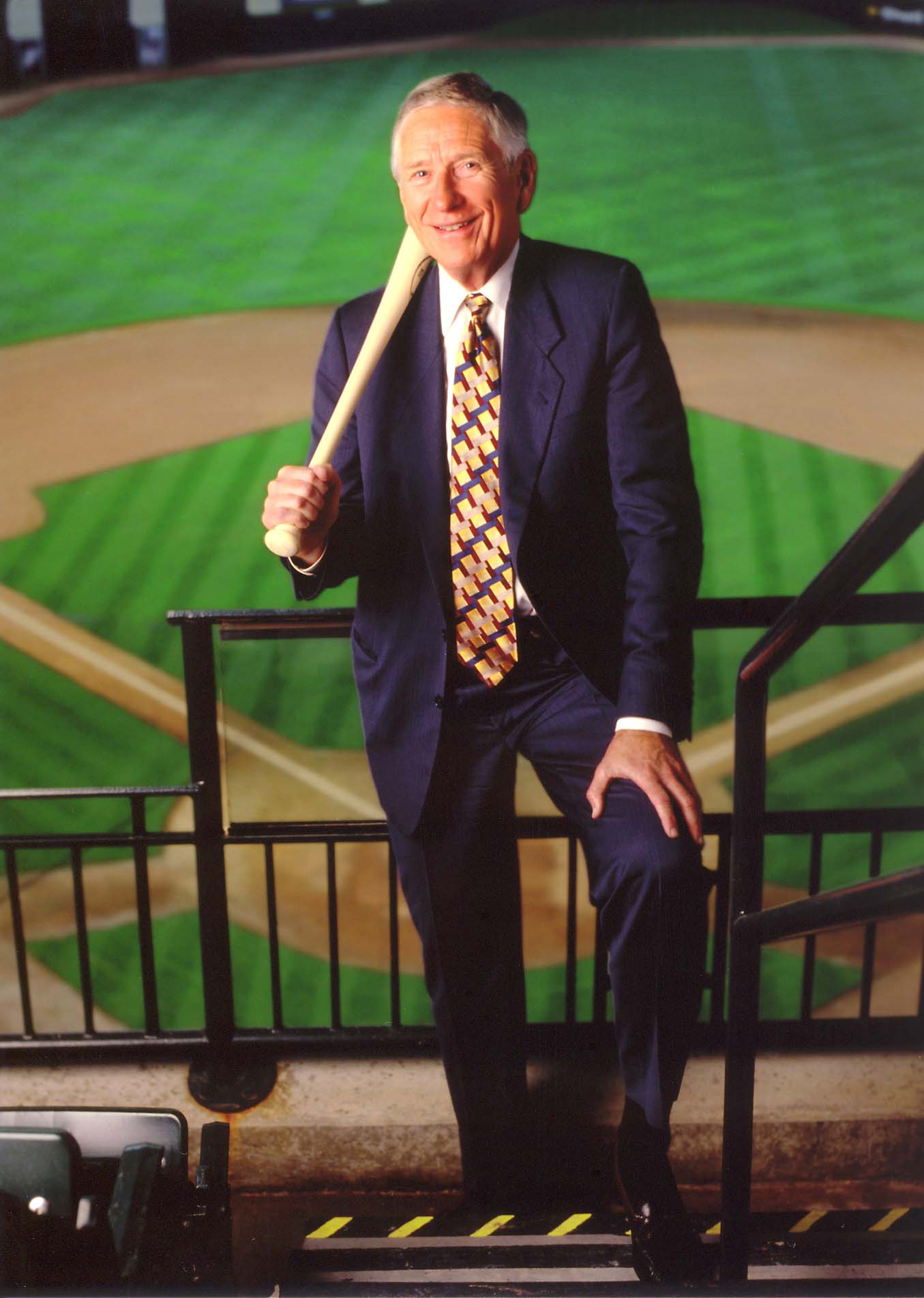
A bad shoulder stopped Jeff Bagwell at 449 HR through 2005.

I thought of five different ways to ask the question that needs to be asked about Jeff Bagwell’s chances for the Baseball Hall of Fame. All are important – and all will remain in play – even if we don’t get to them sufficiently in one column. I would also very much like to know what you guys think as comments upon this article and subject.

Here’s my fairly quick dance through the questions:

(1) Does Jeff Bagwell belong in the Hall of Fame? Based upon his hitting and slugging accomplishments, relative to others, plus his prowess in the field at first base,  he would get my vote, if I had one.

(2) Will Jeff Bagwell make it into the Hall of Fame on his first 2011 ballot listing as an eligible candidate? It’s hard to say. There are thirty-three candidates on that list and a couple of those names fell only a handful of votes short of the 75% support-level needed for election in 2010. Long-time candidate Bert Blyleven and second year man Roberto Alomar are expected by many, including yours truly, to have the best two shots of becoming the Class of 2011.

If no one fans the fires of “guilt by association” in the direction of Jeff Bagwell as a slugging member of the steroids era, Bagwell could make it into the Hall too on his first try as a third 2011 inductee choice above all the other candidates. I really don’t see any of the other candidates making it next year.

(3) How big is the steroids cloud over the Hall of Fame elections of this decade? From what I see, it’s pretty big for now and the foreseeable near years to come, whether it’s talked about or not. It’s already kept the late and reluctant steroid-use confessor Mark McGwire out of the Hall through 2010 when all of his HR-hitting accomplishments alone should have put him into the Hall on the first ballot; and, it isn’t likely that demonstrated steroids-use liar and first ballot candidate Rafael Palmiero is going to fare any better.

Jeff Bagwell has consistently denied any steroids use during his career, or ever, but he still happened to have bulked up his body during an era in which it turns out that many of his contemporaries were also doing so with considerable chemical assistance. Only yesterday I was talking with another writer from Boston who independently brought up that quiet suspicion about Baggy.

As one who trusts the word and character of Jeff Bagwell, I don’t believe, or want to believe, that he ever used steroids for purposes of healing or performance enhancement. He says he didn’t and I am willing to go with that statement as the truth.

The problem is – not everyone is gong to give Jeff Bagwell the benefit of trust in this matter and here’s why that’s important. A Hall of Fame candidate doesn’t have to admit to steroids use, or be caught lying about it, to  get hurt by the voters. All he has to do is to be splashed by the fall-out from that era. The 1990’s were also a decade in which a number of players started pushing iron in the gym for the main sake of becoming stronger hitters. It isn’t fair that those guys who accomplished that aim honestly should be lumped into the same cloud with the steroids abusers, but that’s the way life often goes. It isn’t always fair.

Please comment on Jeff Bagwell’s candidacy for the Baseball Hall of Fame – or any other issue raised by this column, or in your own mind, about the impact of the steroids era on Jeff’s chances.

The main question is: Do you think Jeff Bagwell belongs in the Baseball Hall of Fame?

For a list of all the candidates and a little more detail about the voting, check out this link:

http://www.canada.com/sports/newcomers+eligible+hall/3904485/story.html

.

Astros Farmhand Dedicated To Duke Baseball

November 28, 2010

Ryan McCurdy

Some of you will recall the column I wrote for The Pecan Park Eagle earlier this past summer, shortly after the Houston Astros signed a young catcher out of Duke University named Ryan McCurdy.

McCurdy left college play after his 2010 graduation with a record for athletic/academic excellence and a reputation for great playing dexterity and defensive accomplishment.  In four seasons as a starter at Duke, McCurdy  excelled at three positions.He started at second base man during his freshman season, then moved over to third base for his sophomore and junior years. Then, as a senior, McCurdy picked up the so-called “tools of ignorance” for the first time to play catcher for the very first time in his young life s an organized baseball player.

As a catcher, all McCurdy did was play error-free ball while throwing out 19 runners attempting to steal. These results made sense. During his four complete seasons at Duke, McCurdy committed only 19 errors in 865 career chances for a defensive success percentage of .978. All 19 of McCurdy’s errors occurred during his freshman and sophomore years. He made no errors in the field as a full-time starter again during his junior and senior seasons.

What else, you ask? The guy was tough for the hard-throwing “K” boys, striking out only 44 times in 820 college career plate appearances. He als posted a career on base percentage (OBP) of .397 and set a Duke and Atlantic Coast Conference (ACC) career record for HBP (hit by the pitcher) first base reaches with 69. As a throw in on his brains credit, McCurdy earned All-ACC Academic Baseball Team honors twice and also made the ACC Academic Honor Roll three times.

https://thepecanparkeagle.wordpress.com/2010/07/07/astros-sign-mccurdy/

After signing with the Astros, the Tampa, Florida native McCurdy played in only 20 games at the Rookie League and Class A levels, going 4 for 37 and .148 batting average in a handful of break-in season times at bat. The real test at the professional level for young Ryan McCurdy lays ahead of him. The book on his intelligence, character, and dedication to Duke University baseball is already in.

During this off-season, McCurdy has agreed to serve as a volunteer member of the coaching staff at Duke until its time to leaving for his own 2011 spring training obligations to the Houston Astros farm system.


Even if we didn’t share the same last name, I’m pulling for Ryan McCurdy to make it all the way to the starting job as catcher for the Houston Astros someday. Traits like character and intelligence don’t necessarily have to accompany athletic ability for a young guy to make it to the majors, but it sure doesn’t hurt to find them in the field general position of catcher, especially. The great Brad Ausmus and young Jason Castro of our current Astros roster are both good examples of those types as well. Come on, Ryan McCurdy, let’s get it going. There’s room in Houston for both you and Mr. Castro.

Ramblings of a Baseball Soul

November 27, 2010

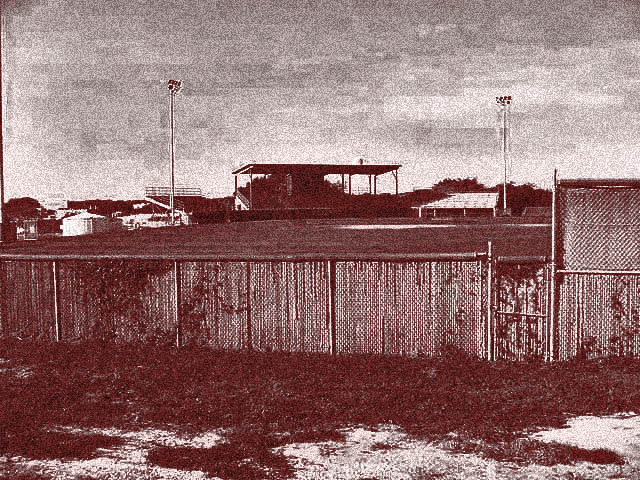
Joe Hunter Field, Coastal Bend College, Beeville, Texas

My two earliest memories feature my dad. The first dates all the way back to 1939, when, at tops,  I was maybe eighteen months old. It is quite brief. My uncle, who was only nine years older than me, had climbed a tree in the back yard of my grandparents’ house in San Antonio. Uncle Albert was my mom’s youngest of three brothers. He had slipped and was hanging by the neck from a limb fork and moaning loudly. I can still see and hear the frightening sight and sound of him dangling by his neck in the sky as my memory stands me again in the yard to only watch.

Even as I “recall’ these images for this written recollection, I am confronted again with the reality that I had no way of really assessing the full meaning of everything my toddler senses were taking in. I think I saw that my uncle was in trouble and that my dad had come to rescue him, but that may have just been the explanation my maturing mind added later to the visceral experience.

All I know for sure is, I can still see my dad tearing his shoes off as he races out the back door and up the tree to bring my uncle down. I have a brief picture of Dad carrying poor Uncle Albert across the yard and into the house. Then everything fades to black.

The second earliest clear memory is of baseball. With later help from Mom and Dad, I was able to pin this one down to the later spring or summer of 1940. That would have put me close to the 2 1/2 year old age.

Dad is playing right field for the Beeville town ball team. Retired major leaguer Curt Walker is playing center field. I don’t have any of those facts available to me at the time. All I know for sure  is that Mom and and I are sitting in the stands at the old Bee County (TX) Fairgrounds Park, and given what I now know about the game of baseball, we were situated down the rignt field side of things because there was Dad down there on the near field in front of us, wearing his gray Beeville uniform with the dark blue legging socks and dark cap.

This memory too is very brief. Mom is sitting. I am walking the wooden planks of the mainly empty seats. It is night. Bugs are flying all around the arc lights. The players make a lot of chatter on the field. Mom keeps calling my name. When she catches my eye, she points to Dad in the field, as if to say, “watch what’s going on.”

When I look at Dad, I don’t see much going on. Dad either has his hands on his hips or his knees. At times, he is sort of hunched over, leaning forward, looking in at something.

When Dad comes to bat, I hear another Beeville player yelling, “C’mon, Bill! You’re the baby, Bill! You can do it, Babe!” I have no idea what any of that encouragement means, but I do see Dad hit the ball and run to first base, where he stops. I don’t know at the time why he ran, or where he ended up, or whar it all meant, but I saw it happen. And I did like the fact that people in the stands were clapping because of something my dad did.

Later, a ball is hit to Dad in right field. He catches it on one bounce and throws it into second base. I have only the visual memory of what he did. Why he handled things in that way only made  sense as years passed and I learned more about baseball  from personal experience. At any rate, this memory also faded to black, just as soon as Dad threw the ball into the infield ahead of the runner. I never even knew who won the game and Dad couldn’t remember either – or, at least, said he didn’t.

The old photograph of Hunter Field just set me off on this track this morning. It reminded me of all those times my buddies and teammates at St. Christopher’s in Houston walked over to nearby Glenbrook Golf Course Field to practice and play our parochial school games in the springs of 1951 and 1952.

I got to be a Grade AAAA  skywatcher around that time, always looking out for dark clouds that  might threaten our ability to play. I can still feel the shuffle of shells under our feet as we crossed the little creek bridge and made our way off to the left and the short walk/jog down to the backstop for after school baseball. What an absolutely soul-soaring memory that is, even now.

To have played baseball at all as a kid grew into the great joy of my life, as it did for so many others of you. Sometimes, like last night, I even dream that I’m back there again, playing ball with all the ability I thought I had. That kind of dreaming makes waking up a bittersweet thing. At least, last night’s dream helped me to write this column for Saturday. I had a wonderful time back then, folks. Now, if only I can get back there tonight, I’ll take another ticket on the Dreamland Clipper for sure.

Those were the days, my friend. We thought they’d never end.

Three Great Future Managers from the 1937 Houston Buffs Roster

November 26, 2010

Over the years of their total existence in the 20th century as the Houston Buffaloes, or Buffs, our minor league baseball club produced some pretty fine baseball players, Tris Speaker and Dizzy Dean, most notably. come to mind. In 1920, Mr. Speaker also went on to become the first former Buff to win a World Series as a major league manage . He was followed by four other ex-Buff players who managed at least one big league club to a World Series crown. This total list of five former Buff World Series Winning Managers includes Tris Speaker, Eddie Dyer, Danny Murtaugh, Walt Alston and Johnny Keane – a quietly spoken testimony to Houston as baseball’s version of football’s “Cradle of Coaches,” or, more accurately in this case, a baseball “Cradle of Managers.”

Numerous other former Buffs, including men like Solly Hemus, have also done some quality time as big league field generals, but probably no year ever equalled what happened in the tough off-production year of 1937. That was the season that two future World Series winning managers and another pretty good one stumbled through a low finishing time as players for the low-performing 1937 Buffs.

John Watkins also returns to The Pecan Park Eagle as a guest columnist this morning to bring us that story. – Bill McCurdy:


Houston Buffs: A Cradle of World Series Winning Managers.

Three Great Future Managers from the 1937 Houston Buffs

By John Watkins, Guest Columnist          jnowat@gmail.com

The 1937 season was not a memorable one for the Houston Buffs, who finished seventh in the Texas League with a 67-91 record, 33.5 game behind first-place Oklahoma City. Attendance dropped along with the Buffs’ winning percentage, avraging fewer than 1,000 fans per home game. One highlight of the dreary season was the league’s second all star game, played July 17 at Buff Stadium before a crows of more than 8.000.

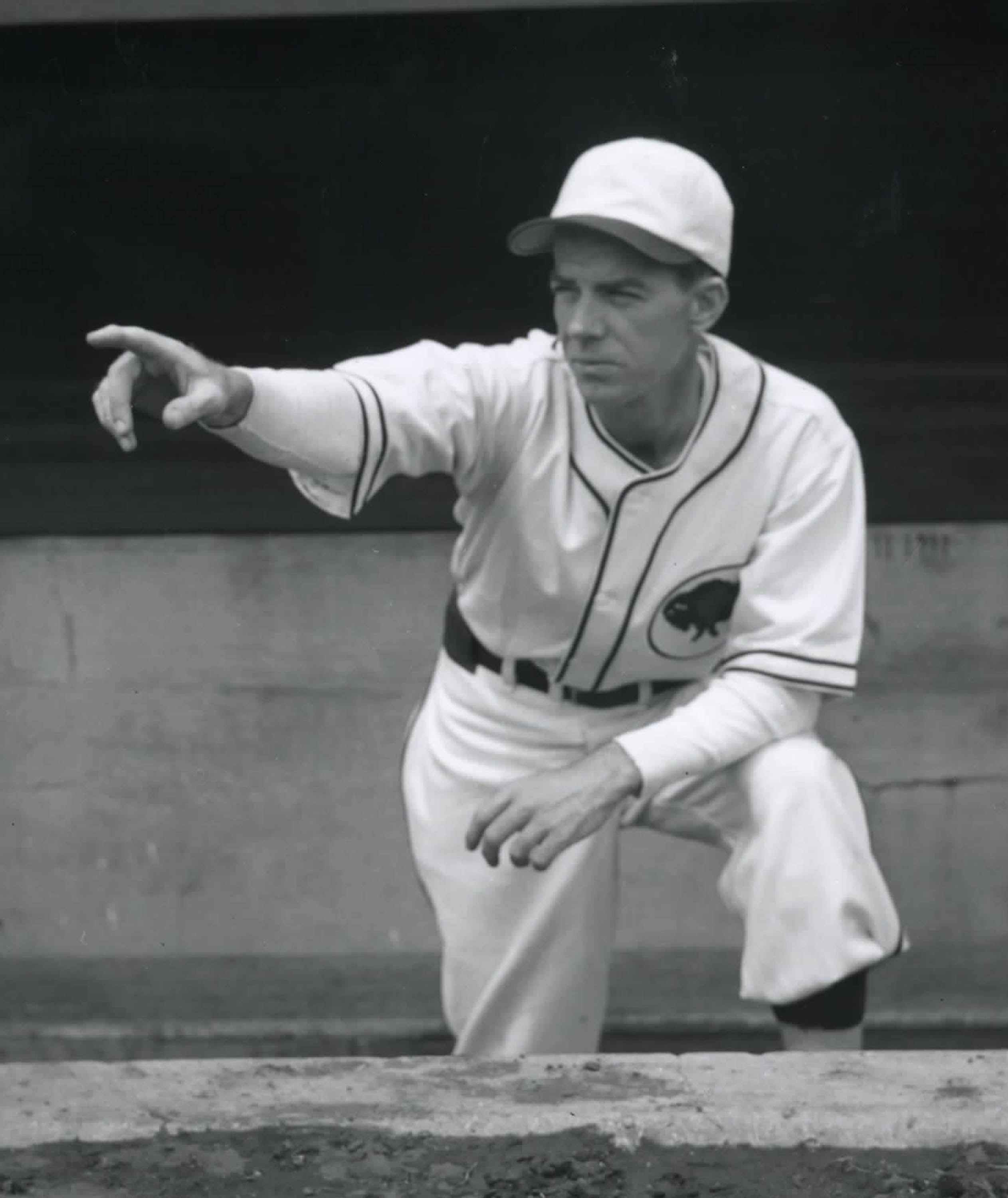
The fans also caught a glimpse of three Houston players who would become major league managers: Johnny Keane (Cardinals, 1961-1964; Yankees, 1965-1966), Walter Alston (Dodgers, 1954-1976), and Herman Franks (Giants, 1965-1968; Cubs, 1977-1979).
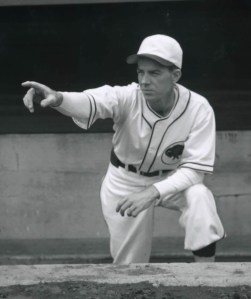
Johnny Keane

Johnny Keane was in his third season with the Buffs in 1937. At age 25, he was a veteran ballplayer with seven professional seasons under his belt. In 1935 and 1936, he was the Buffs’ regular shortstop, but in 1937 he played primarily at third base and hit .267 in 158 games. Thereafter, the Cardinals made him a player-manager in their organization, and that proved to be his path to the major leagues, where he was a coach and manager. The 1935 season was pivotal in this change in direction. That year, Keane was hit by a pitch and suffered a skull fracture that left him near death for two weeks.

After managing in the low minors, Keane returned to the Buffs in 1946 for what became a three-year stint as manager. In 1947, the team finished first with a 96-58 record, nosing out the Fort Worth Cats by a half-game. While the Buffs swept Tulsa in the first round of playoffs, however, the Cats lost to Dallas in seven games. Houston then dispatched Dallas, four games to two, to win the championship and went on to defeat Mobile in the Dixie Series. Keane moved up to Rochester, the Cardinals’ farm team in the Class AAA International League in 1949 and led the Red Wings to a first-place finish the next season. After another year in Rochester, he served seven seasons in the Triple A American Association before joining the Cardinals in 1959 as a coach under manager Solly Hemus, his second baseman on the 1947 Buffs.

When the Cardinals dismissed Hemus in July 1961, Keane was given the top job. In the tumultuous 1964 season, his Redbirds overtook the faltering Philadelphia Phillies to win the pennant by one game and then defeated the New York Yankees in the World Series. St. Louis owner Gussie Busch had fired general manager Bing Devine when it appeared that the Cardinals had no chance to catch the Phillies, and at that time he was reportedly planning to fire Keane at the end of the season. After the World Series, however, Busch was prepared to offer Keane a multi-year contract. In a stunning development, Keane resigned to take over the Yankees from Yogi Berra, who had just lost his job.

In New York, Keane inherited a team in decline. With several players benched by injuries in 1965, the Yankees fell to sixth place with a 77-85 record. The next season was worse. Through the first ten 10 games, New York’s record stood at 1-9; through 20, it was 4-16. At that point, the Yankees fired Keane and replaced him with Ralph Houk. The team was then last in the American League, and that is where it finished the season. On January 6, 1967, Keane died of a heart attack at age 55 in Houston, where he had made his home since 1935. He is buried at Memorial Oaks Cemetery.
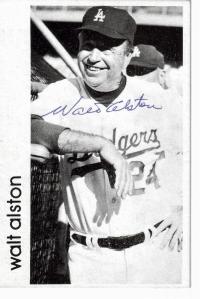
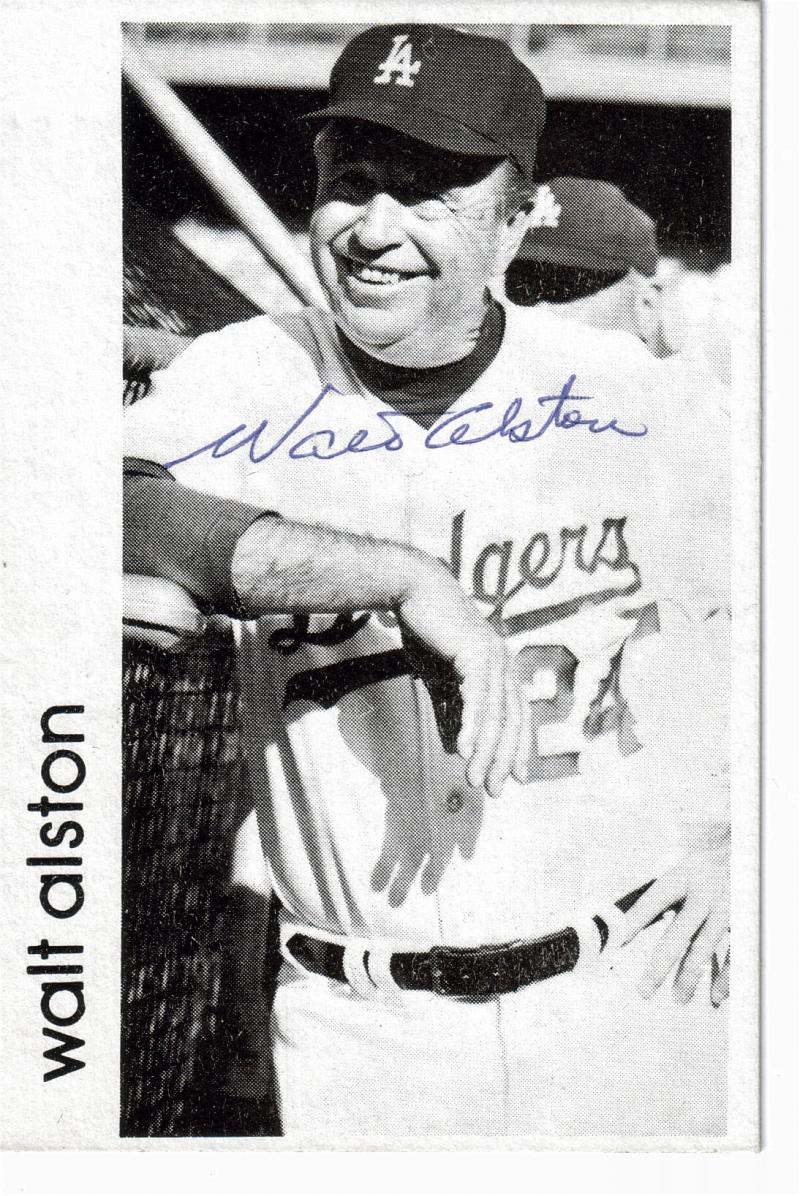
Walt Alston

Walter Alston was 25 years old in 1937 but only in his third year as a professional player, having graduated from Miami University in his native Ohio before joining the St. Louis “chain gang.” A first baseman, he split the season almost equally between Houston and Rochester, the Cardinals’ Class AA farm club in the International League. For the Buffs, Alston hit only .212 in 65 games. He fared better in Rochester, batting .246 in 66 games.

The year before,  he was called up to St. Louis at the end of the 1936 season and got into the final game, against the Cubs at Sportsman’s Park. It turned out to be his only appearance in the major leagues, and it came about when Cardinals first baseman Johnny Mize was ejected arguing with the umpire over a called strike. Alston made one error in two chances and struck out in his sole at-bat.

The Cardinals made Alston a player-manager in 1940 when he took over their farm team in the Class C Middle Atlantic League. He was there for three seasons and then had back to Triple A as a player for Rochester in 1943, but the Cardinals released him before the season ended. By that time, former St. Louis executive Branch Rickey had moved to the Dodgers, and he hired Alston as a minor-league manager. Starting in the Class B Interstate League in 1944, Alston steadily moved up in the Dodgers’ organization, reaching Triple A Montreal of the International League in 1950.

After four seasons in Montreal, Alston took over the Brooklyn club in 1954. He managed the Dodgers for 23 years, leading them to four World Series titles (the first in Brooklyn in 1955, the others in Los Angeles) and seven National League pennants. He was known for his studious approach to the game and for signing only one-year contracts with the Dodgers even as multi-year contracts became common. His 2,040 wins as a manager rank ninth on the all-time list. He was inducted into the Hall of Fame in 1983 and died at age 72 on October 1, 1984, in Oxford, Ohio.
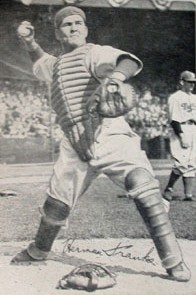
Herman Franks

Herman Franks appeared in only 10 games for the Buffs in 1937 and hit just .130 in 23 at-bats. A 23-year-old catcher, he had begun his pro career five years earlier. Franks spent most of the 1937 season at Sacramento, the St. Louis affiliate in the Class AA Pacific Coast League, where he hit .265. He eventually made it to the Cardinals for 17 games and 21 plate appearances in 1939, but the club sold his contract to Brooklyn in early 1940. Franks was the Dodgers backup catcher in 1940 and 1941 under manager Leo Durocher, who became a mentor. After Franks was discharged from the Navy after World War II, he played alongside Jackie Robinson on the Dodgers’ Montreal farm team that won the 1946 International League pennant.

In 1947, Branch Rickey named Franks as player-manager of the St. Paul Saints, the Dodgers’ Double A affiliate in the American Association. In August, however, Connie Mack told Rickey that the A’s needed a backup catcher, and Franks was sent to Philadelphia. He also played for the A’s in 1948. The next season, Durocher, by then the Giants’ manager, hired Franks as bullpen coach. Franks also made his final appearance as a player that season, going 2-for-3 in one game.

According to Joshua Prager’s book, The Echoing Green (Pantheon 2006), Franks played a crucial role in Bobby Thomson’s “Shot Heard Round The World,” the home run off Brooklyn’s Ralph Branca in the 1951 National League playoffs that won the pennant for the Giants. On Durocher’s orders, Prager says, Franks was stationed in the team’s center-field clubhouse at the Polo Grounds, where he used a telescope to steal the Brooklyn catcher’s signs and relay them to the Giants’ coaches and hitters.

As a manager, Franks had very good teams in San Francisco but finished second four consecutive seasons despite winning more than 90 games three times. (In 1965 and 1966, the arch-rival Dodgers won the National League, and in 1967 and 1968, the Cardinals captured the pennant.) Franks was not as successful in his three years with the Cubs, who finished no higher than third and never won more than 81 games. Franks died at age 95 on March 30, 2009, in Salt Lake City.
A Message from Drayton McLane, Jr.

November 23, 2010

Drayton Clarifies His Work Ethic

I received an e-mail from Drayton McLane, Jr. yesterday. Drayton appreciated most of what I had to say in my column of last Friday, “A 1st Goodbye to Drayton McLane,” but he understandably wanted to take a swing at the legend of his work habits and expectations that I had dredged up for inclusion in my comments.

If you carefully read and fairly digest everything Drayton says here in a few well chosen words, it all makes perfect sense as a genuine correction of his legendary reputation as a boss whose shadow looms long and large over double-time work days at the ballpark. Those things aren’t always driven by some kind of central slavedriver. They may happen too because of one’s personal ethics, psychological needs, and something that rolls on wheels inside the heart of a person that takes its beat from a particular “love of the game” – and whatever the game happens to be.

As one who independently works long and crazy hours in behalf of those goals and projects that fire the passions of my own heart, what Drayton is talking about here makes perfect sense to me, but none of us see our own movements in this world quite as others do from the other side of our outer skin. Drayton deserves the space to speak for himself in this matter.

Here’s the message from Drayton McLane, Jr. to me of 11/22/2010. I am reprinting it here in the hope that it helps to better clarify Drayton’s personal relationship to work and his Astros administrative employees.

If nothing else, it certainly clarifies Drayton’s perspective on the issue of his work disposition:

Bill,

Thank you for the thoughtful blog.  I must confess that I am guilty of an elevated work ethic, but I must clarify that it is exaggerated that I expect my employees to work 12-18 hours a day.  During the season when there is a home game, they might come in around 9:30 a.m. and some of them stay until the game ends.  They do this because they have a high work ethic, enjoy their job, and they take pride in customer service.  That’s why we have very little turnover, and an overabundance of people trying to get their foot in the door.  We have great people who truly care about the fan experience and they deserve the recognition.

Thanks as always for your support!

Drayton

Watkins On Houston Kid Baseball: 1950.

November 21, 2010

Back in 1950, when organized kid baseball was just getting started in Houston, former Houston Buff and 1931 World Series hero Watty Watkins stepped up to the plate as one of the first really qualified adults to work with this new wrinkle in local baseball.

Friday’s very-much-alive guest columnist, John Watkins, sent me these materials on Watty Watkins and the Town House Buffs. They are materials from a story sent to him by Mike Mulvihill, a former Houston kid baseball star and old high school classmate and friend of mine. In fact, Mike sent me these same materials awhile back. It’s just taken me this long to realize what a great column they would make for TPPE.

The headline, pictures, and article that are the work of today’s posthumous guest columnist, former Houston Press and Post writer John Hollis, now deceased, but alive forever as a hard-punching wordsmith on the local sports scene of yesteryear. I don’t have the date on this piece, but it was sometime in the late summer of 1950, the club’s first year of existence, and it was written for the long moribund Houston Press. Another old friend, classmate, and Pecan Park Eagle reader, Jack Murphy, also played for the Town House Buffs, but during a later season.

TEXAS CHAMPIONS - The eyes of Texas shone directly on the young baseball heroes pictured herein, Houston's Town House Buffs, as they captured the Texas Teen Age baseball title at Galveston last week. Front row, in the usual order, Ken Stevens, Paul Nabors, Anthony Falcone, Leighton Young, Eddie Gore, Paul Fahrenthold, Luke Cash. Back row, John Given, Ora Massey, Father Wilson (head coach), Mike Mulvihill, Joe Landy, Dick Grant, Angelo Vasos, Jim Exley, Jim Daigle, Fred Morgan, Watty Watkins & John Schuler.

WATTY WATKINS, WORLD SERIES HERO OF 1931,

HUSTLES HARD TEACHING TOWN HOUSE BUFFS

By John Hollis, Houston Press Sports Staff (1950)

It looked like a crucial World Series game, the way the big man in the gray sweatshirt and Brooklyn Dodger baseball cap was “sweatin’ it out” in the third-base coaches’ box.

Watty Watkins: Sold on kid baseball.


“C’mon, get me some runs,” the big guy yelled. “Be a hitter up there.” He clapped his hands together encouragingly, shifted from one end of the box to the other, then stood with hands on hips as the third Town House Buff on the inning tapped an easy grounder to the shortstop.

“One of those days”

Walking over to the fence that encloses the Houston Teenage League’s Cougar Field, George (Watty) Watkins, always the aggressor who loves to win, grimaced painfully:

“This is just one of those days where nothing goes right. This Town House club hasn’t lost a game all season.”

“You been working with ’em long, Watty?” we asked.

“Yeah. I’ve sorta been helping Father Wilson. The Pro ball association assigned me to the club.” Watty grinned. “This Teen-Age League is just what the kids needed. And we’ve got plans for enlarging our operations for next year. Here’s what I’ve suggested…”

“Ought to Be More”

The big red-faced gent’s enthusiasm was contagious. He was a study in enthusiasm as he outlined his pet plan for helping kid baseball next year. We couldn’t help but think, “This baseball is great. Here’s a guy who spent his years in the ‘Big Show,’ won a World Series with a home run, a real good old pro who’s known all the big thrills and who’s getting probably a bigger one now out of helping kids.”

Watty finished his outline …

“… there oughta be 13 leagues like this around town. There oughta be enough so’s every kid who wanted to could have a chance to play. It’s not only good for kids, it’s good for baseball.”

That 1931 Homer

We nodded … then asked, “Say Watty … that George Watkins who hit the homer to win the 1931 World Series for the Cardinals … was that you?”

Watty grinned.  “”Yes sir! It was me all right. We beat the (Philadelphia) Athletics in that one. They’d beaten us the year before. I remember that hit. … It was the deciding game and tied up, 2-2. We went into the third inning and Andy High got on base (for us). Gabby Street, the (Cardinals) manager, told me to go go up there and hit the first pitch, if it looked good, and if it didn’t, to move up a step for the second pitch. Well, that first pitch came in there about letter-high. I hit it … a line drive to right. … i hit is so hard on a line that I didn’t think it was going to be a homer. I ran as fast as I could until I reached second base. Then I realized I’d put it outa the park.”

“That home run meant a difference of $3,230 to us each in the players’ share of the World Series gate. Gues you could call it a real ‘money hit’ at that, huh?”

“Who’d you hit it off of, Watty/”

“George Earnshaw. He threw me me a fast ball. Hit one off him in the 1930 series, too. It was my first World Series and my first time at bat. He threw me a fast one then, too.”

“”Then I had to room with the guy when we both were sold to Brooklyn a few years later,” Wally chuckled.

“Those 1931 Cardinals were the greatest there’s ever been,” Watkins recollected. “They had everything. Who’s the greatest pitcher I’ve ever seen? … Carl Hubbell … the greatest pitcher who ever picked up a baseball. He had all the stuff in the world, the good curve, screwball, fast ball, the change, and lots of control. I was in the stands that day he fanned the six batters in a row in the 934 All-Star game. I remember Charlie Gehringer doubled, then Heinie Manush walked. That brought up Babe Ruth.”

“Hubbell looked at Ruth, then backed off and loosened his belt, hitched up his pants and threw three straight pitches past him. Ruth never touched a one. Then he fanned Gehrig and Foxx. And I think Foxx was the only one to even get a piece of the ball. He fouled one back into the screen.”

“Hubbell, you’ll remember, went on to fan Al Simmons, Joe Cronin, Bill Dickey, and Lefty Gomez to record what is acknowledged (as) the greatest pitching performance in the history f the All-Star game. Still, the American Leaguers won that one, 9-7.”

Watty, who outfielded for the Dodgers after service with the Cards, was a Houston Buff in 1928 when the Buffs beat Wichita Falls for the Texas League title. A member of the Houston Professional Baseball layers Assn., with the pro baller’s immense interest in kids, Watty’s teaching ’em what he knows now.


A 1st Goodbye to Drayton McLane

November 20, 2010

No One Else Will Ever Walk Quite as Tall in These Boots!

As our entire little baseball world knows by this time, Saturday morning, Drayton McLane, Jr. has now announced that he is putting the Houston Astros up for sale after eighteen years of family ownership. The news came officially at a press conference conducted personally by Drayton yesterday at Minute Maid Park in downtown Houston.

That press conference itself speaks volumes. This was no corporate announcement, no impersonal and cold statement about an impending change in control of our National League baseball club, and no basis for concluding that this change will be one for the better. No, this press conference was conducted by the flesh and bone, mind and spirit, body and soul owner and leader of the Houston Astros, the one and only Drayton McLane. Jr.

There will never be another Drayton McLane, Jr. in Houston’s baseball future – and there may never be another individual face and voice that speaks so strongly and visibly for the ownership of the Houston Astros. Given the general cost of things these days, and the current flow of ownership patterns, the next “face” of the Houston Astros is most likely to be the talking head of some corporate or syndicated group and be subject to a number of controls that presently do not not impinge upon the public utterances of Mr. McLane.

We are going to miss Drayton McLane, Jr. as Houstonians in ways that have yet to register this early in the game of change. For me, it is close to a feeling of saying goodbye to a distant old friend upon the early news of his impending retirement.

Drayton and I are close in age. We were in college separately at Baylor and Houston back in the 1950s, coming of age in different Texas cities under different economic circumstances, but both invested in the values of that earlier period, even though we were not destined to meet until much later in life.

I met Drayton McLane, Jr. in 2004, while I was involved as a volunteer in a project that pertained to the preservation of Texas baseball history. Drayton was both engaged and supportive of our goals and even took it upon himself to address a number of historical preservations at Minute Maid Park that are very important to the story and legacy of the Houston Astros. The retirement of Larry Dierker’s uniform #49, Jimmy Wynn’s #24; Jeff Bagwell’s #5, and Craig Biggio’s #7 have all taken place on Drayton’s watch since the club moved downtown in 2000.

It is our hope that the club’s unofficial plans to create an onsite museum honoring local baseball history will continue in some form in spite of the now impending sale of the franchise. Such a move would send a strong message to whomever the new buyers turn out to be that Houston is a city that cares about its history with the game – and that this historical cord is the real binding force behind our fans’ abilities to offer strong support for the Astros. Kill that caring – and a new owner could be left with only casual fan support during pennant-contending seasons only.

I think of Drayton McLane, Jr. as a remote friend. We don’t travel in the same social circles, nor do we inter-commerce, but we each are products of the same earlier Texas era, and we both care about history, Houston baseball, and particularly, the Houston Astros. That’s a lot of common ground to cover. When I hear from Drayton by e-mail, with a comment about something I’ve said or written, it’s always welcomed and invariably upbeat.

During his eighteen year ownership period (1992-2010 & counting), Drayton McLane, Jr. has taken the Houston Astros into their new downtown ballpark at Union Station (2000) and presided over the club’s first and only pennant and World Series appearance (2005). He has received praise and criticism, both for being a tightwad and also a spendthrift with certain players, but he has never surrendered his contact with the fans in the ballpark and his salesman’s encouragement that we are all responsible for making Houston a champion.

Stories of Drayton’s expectations for his employees are now the stuff of legend. Word on the street is that game days were times in which anyone with any hopes of “moving up” often showed up at the ballpark at dawn and stayed until midnight. However exaggerated that claim may have been, the disappearance of certain Astros employees over the years suggests that burnout and attrition cleared several names from the administrative “prospect” list.

It occurs to me that buying a major league sports franchise is a lot like getting yourself elected President of the United States. Both are apparently instant routes to public hatred – and you may find yourself condemned in both cases for what you do and what you fail to do. The difference-maker is that the owner of a sports franchise finds redemption in winning a championship. Winning the World Series would make all Houston Astro fans happy.

American presidents, on the other hand, don’t have a single thing they could deliver that would make everyone happy. Even if we had full employment, a robust economy, no racism, and affordable health care, there would still be large groups of people out there, unhappy about something.

Well, we aren’t losing a president, nor an owner who delivered that “one-win-pleases-all” World Series victory, but we are losing the only owner whoever got us to a World Series, and I, for one, am going to miss him.

Take care, Drayton, and please stay in touch. Your personal welfare remains important to many of us.


Watty Watkins Wows ‘Em in ’31 Series!

November 19, 2010

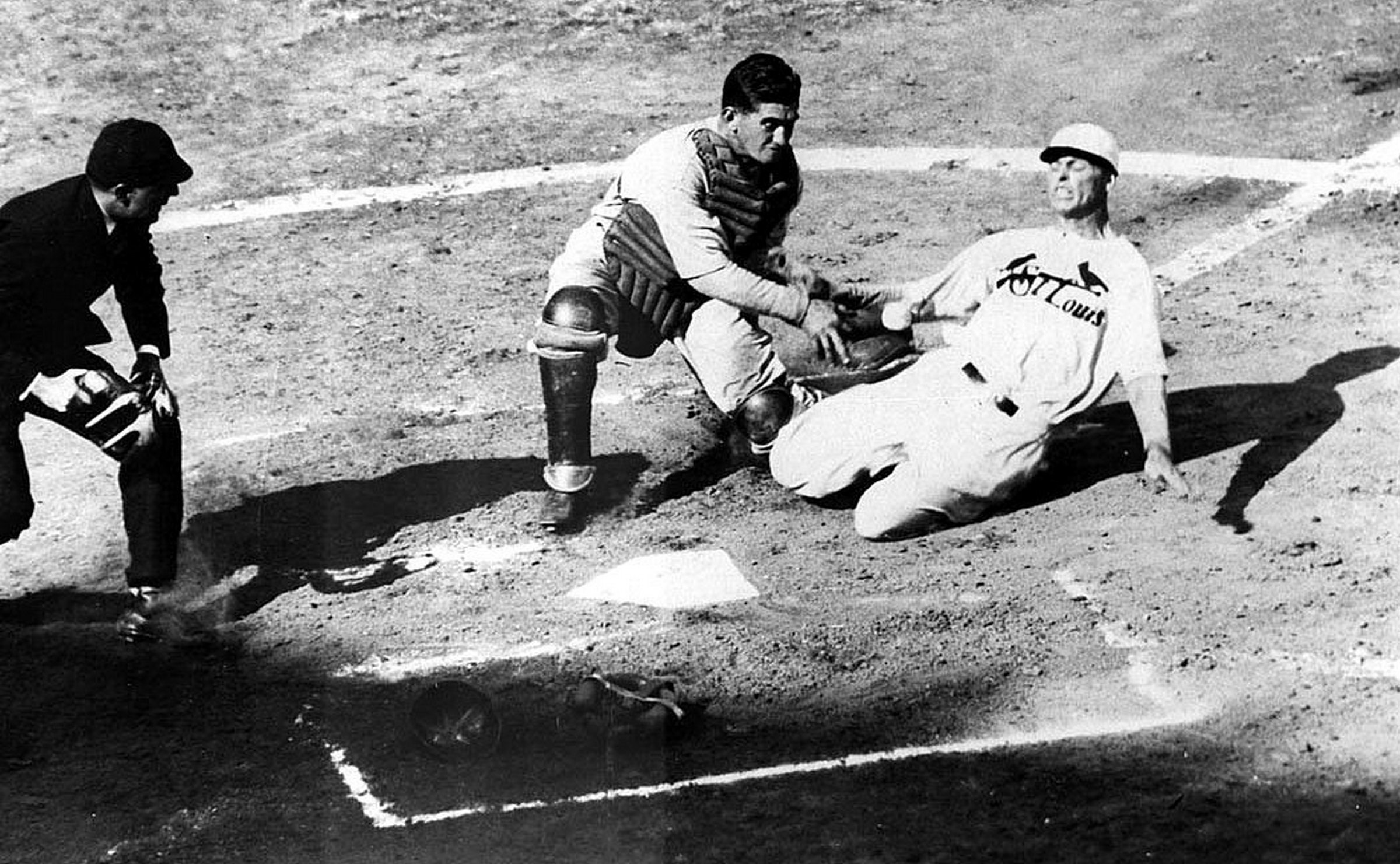
In the above photo, Watty Watkins slides under the tag of Mickey Cochrane of the Philadelphia A’s to score a big run for the St. Louis Cardinals in the 1931 World Series.
The following article was written for The Pecan Park Eagle by John Watkins, the great-nephew of George “Watty” Watkins. Watty Watkins was an early hero for the Houston Buffs over four seasons of work (1925-26, 1928, 1937) that encompassed the beginning and end of his professional baseball career. He was an important member of the 1928 Buffs club that became the first to play in the new Buffalo Stadium on their way to victory as Texas League and Dixie Series champions. Watty also enjoyed a seven season big league career (1930-36) with the St. Louis Cardinals, New York Giants, Philadelphia Phillies. and Brooklyn Dodgers. The Pecan Park Eagle is deeply indebted to John Watkins for this personal vignette memory of an important tong ago moment in World Series history.
———————————————————————————————————————–
Bill, your post the other day with the memorable baseball photos prompted me to scan the above attached photo of Watty Watkins for you. It reminds me of the Cardinals’ Enos Slaughter’s slide into home following his “mad dash” from first base in the deciding play of the 1946 World Series.
The Watkins picture is also a big moment in World Series history. It is an Associated Press photo from the first inning of Game Seven of the 1931 World Series. The catcher is Mickey Cochrane of the Philadelphia A’s, and Watty is scoring the second St. Louis run of the game. For the era, it’s a pretty good action shot.

The play came about this way. Andy High of the Cards, playing in place of the injured Sparky Adams, led off the inning with a bloop single to left. Watty followed with a Texas Leaguer of his own, and Frankie Frisch sacrificed the two runners to second and third. With Pepper Martin at the plate, A’s righthander George Earnshaw threw a high outside pitch that bounced off catcher Mickey Cochrane’s glove and rolled to the wall. High scored on the wild pitch and Watkins took third. The flustered Earnshaw walked Martin, who promptly stole second.

Earnshaw recovered to strike out Ernie Orsatti, who was in the lineup because Chick Hafey, the N.L. batting champion, was in a terrible slump. But Cochrane could not handle the pitch and had to throw to first to retire Orsatti. Watkins immediately broke for home in what Giants manager John McGraw called “a daring play” in his newspaper column written during the Series. First baseman Jimmie Foxx “threw late and low to Cochrane,” the New York Times reported, “the ball scudding out of the tangle [at the plate] as Watkins slid into Cochrane and both went down.” Martin advanced to third as Watkins scored, but Jim Bottomley struck out to end the inning.

Two innings later, High and Watkins again got back-to-back hits. High lined Earnshaw’s first pitch to center for another single. Watkins also swung at the first pitch he saw and, as McGraw wrote, “drove it over the top of the right field grand stand against the wind.” Those two runs proved crucial, as the A’s scored twice in the ninth against a tiring Burleigh Grimes before Bill Hallahan got the last out with the tying runs on base.

The 4-2 victory resulted in the Cardinals’ second World Series championship and avenged their loss to Connie Mack’s Athletics in 1930. While Watkins, a Houston resident and former Houston Buff outfielder, had played a key role in the seventh game, two other ex-Buffs — Martin and Hallahan — were the hitting and pitching stars of the Series. Pepper hit .500 and stole five bases, and Wild Bill won two games, registering what would today be called a “save” in the finale, while allowing of only one earned run in 18-1/3 innings of work on the mound.

The 1963 All Rookie Colt .45 Lineup Game

November 18, 2010

The Colt .45s' All-Rookie Team Back row: Brock Davis (LF), Aaron Pointer (RF), Jimmy Wynn (CF) Middle row: Glenn Vaughan (3B), Sonny Jackson (SS), Joe Morgan (2B), Rusty Staub (1B) Front row: Jay Dahl (P), Jerry Grote (C) (c) Houston Astros

In late 1963, the two-year old Houston MLB franchise found itself in a position that would become even more familiar as the years of trying to field a winner grew in numbers. Late September in Houston is deep into football season. A baseball club that’s finishing near the bottom doesn’t draw very well at the gate against the competition from professional, college, high school, and kiddie game football in the State of Texas as the clock ticks closer and closer to October.

So, in what seemed like a good promotional idea to pique the interest of the curious fans, and maybe give people a glimpse of better days to come, the Houston Colt .45s decided to promote a game on September 27, 1963 that would feature an all rookie starting lineup against the club’s even more hapless expansion club brothers, the New York Mets.

The starting lineup for Houston read like this: (1) Sonny Jackson, SS; (2) Joe Morgan, 2B;  (3) Jimmy Wynn, CF; (4) Rusty Staub, 1B; (5) Aaron Pointer, RF; (6) Brock Davis, (LF); (7) Glen Vaughan, 3B; (8) Jerry Grote, C; & (9) Jay Dahl, P.

Six other rookies would also enter the game before Carl Warwick broke the theme in the bottom of the 8th at old Colt Stadium in a pinch-hitting role as the first veteran player to enter the game.

It was a fun experiment, but the major hopes for victory and a big crowd got snuffed out pretty early. Only 5.802 fans showed up to watch as New York jumped to an 8-0 lead through the first three innings. The Mets won the game by a final score of 10-3.

For an account of how the game played its way to the door, let’s go back and follow the action through the eyes and words of Houston’s greatest sportswriter. Here’s how Mickey Herskowitz covered the game for the Houston Post:

Mets Wallop Colt Rookie Lineup, 10-3
by Mickey Herskowitz
Houston Post, Saturday, September 28, 1963

Houston’s team of tomorrow found the going rather rough in the here and now Friday night. The New York Mets, the big bullies, whomped them, 10-3, in the opener of the season’s final series at Colt Stadium.

As promised, Manager Harry Craft started an all rookie line-up, and he stuck by it through thin and thinner. Fifteen Colts saw service before a non-rookie, Carl Warwick, entered the game as a pinch hitter in the eighth. The Mets took advantage of Houston’s youth, as the saying goes, to pound five pitchers for 15 hits and make life easy for Lefty Al Jackson.

Carl Warwick: 1st vet in game as 8th Inning pinch hitter.

Nevertheless, the night was an historic one for the Colt .45s.

Chunky Jay Dahl, a 17-year-old southpaw from California, became the youngest pitcher to start a game in the majors since Joe Nuxhall made his wartime debut for the Redlegs in 1945, at 16. Von McDaniel was a mature gentleman of 18 when he made headlines for the Cardinals in 1957, fresh out of high school in Oklahoma.

Dahl, the first of three rookie southpaws to perform for the .45s, gave his all, and the Mets took it. They scored three in the second — with the help of two errors — and five more in the third, strafing Dahl and Danny Coombs for seven hits. That gave New York an 8-0 lead at the end of three, and a crowd of 5,802 faithful Colt fans settled back to a long, quiet evening.

One of the highlights of the game came in the next inning, when the Mets seemed headed for another big rally. But with runners at second and third and one out, Lefty Joe Hoerner struck out Tim Harkness, and the crowd appreciated it. They cheered loudly, and a moment later the inning was over.

You could forgive the Colt rookies if they were a bit jittery Friday night. Five of them had never played pro ball before this year, and three of them were starting for the first time in a major league game, sort of. It may be stretching a point to say that Dahl had a major league lineup behind him. And if you wanted to be unkind — and why not? — you could say it was doubtful that he had one facing him.

The Colts started their greenhorn squad for the novelty of it, and out of curiosity, and just possibly for the sake of a little publicity. There was no reason to be disappointed, except, that this ended Houston’s four-game winning streak.

Ol’ Casey Stengel didn’t exactly play fair. He started his best pitcher, Jackson, who is even tough on adults. Al wasn’t at his sharpest Friday night, but the Colts could do little with the several chances they had.

Joe Morgan Tripled in 9th.

Jackson gave up 11 hits, and at least one Colt reached base in every blessed inning. But he struck out eight, and Houston left 12 bodies on base. Al more or less coasted to his 13th victory against 17 defeats. Rusty Staub scored the first Colt run in the fourth and drove in the second an inning later, and then Joe Morgan tripled home the last one in the ninth. There were .45s at first and third when Jackson retired the next three hitters to end the game.

Jim Wynn and Aaron Pointer were the only Houston starters old enough to vote Friday night. When the rookie Colt pitchers got in trouble it was Staub who walked over to give them a comforting word, as befits a veteran of 19.

Dahl, Coombs and Hoerner — all southpaws — went the first six innings, before rookie right-hander Jim Dickson came on. Dick Drott pitched the ninth, giving up the final Met run. Hoerner, 24, and up from San Antonio, did a fine job in his three-inning chore, blanking the Mets on two hits and striking out two.

The average age of the Houston team that took the field Friday night was 19 years and four months, a fact that has been rather widely advertised. So it was duly noted in the press box that when Rod Kanehl replaced Frank Thomas in left field in the eighth, it lowered the Met average to 32 years and four months.

The fact that the Colt rookies failed to win did not exactly ruin the night. They provided some sort of thrill on almost every play as typified by Brock Davis in left field. He overran one base hit and dropped a fly ball for an error, then made two spectacular catches, one facing the wall in left center and another into the Houston bullpen.

So the Colts still need one victory to surpass last year’s total, and they send Don Nottebart after it Saturday at 1:30 PM against New York’s Craig Anderson.

———————————————————————————————————————

Thank you, Mike McCroskey, for suggesting this game as a great subject for this column.

Extra Base Hits and RBI Leaders

November 17, 2010

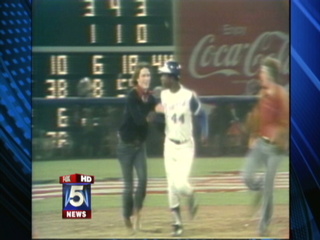
Hank Aaron finishes his most famous extra base hit in the company of the two bozos who invaded history.

As important as it is to get on base in the game of baseball, it’s also vital to have people in the lineup that can bring those ducks in off the pond once they land there. By and large, the best work in this regard is performed by the hitters who are capable of getting the extra base hit. RBI is fine here as a measurement, but RBI is an EFFECT stat that is largely the result of a CAUSE stat, like “hit”, and most often from a big CAUSE stat like “extra base hits.”

I’m not one of these people who chases the meaning of life down some ten place decimal point, but I do enjoy a look at something like these two Top 50 Lists for Career Extra Base Hits and RBI for some safe general confirmations. To no big surprise, Hank Aaron is  both the cause and effect leader of what power baseball produces over time.

Stay with me here for a simple thought for a second, but I have to think about it to hold onto it. This isn’t “E” equals “MC Squared,” but it fits in with my comments yesterday about why having players in your lineup who can get on base often – is always important to winning:

Extra Base and RBI leader Hank Aaron played with a number of teams that put men on base fairly often. As a result, his prodigious number of extra base hits became the cause of more runs batted in than any other player has ever before, or since, produced.

Of local note, we find that former Astro Jeff Bagwell ranks at #39 on the all time extra base hit list and is also tied for the #45 spot on the RBI list with Tris Speaker. Craig Biggio checks in even higher on the extra base hit list at #30, but is way off our charts here at #155 on the all time RBI list. Had Biggio not batted first or second for so long, he could have been a far more prodigious RBI man, but that’s OK. He was just fast and too good at getting on base to move him back in the order. When you’ve got a guy leading off who can start the game with a runner on second, you leave him there. Craig Biggio holds the National League record for home runs by the lead-off batter to start the game. On 53 occasions, Biggio’s lead-off wall-bangers traveled a few extra feet and became leadoff homers. Rickey Henderson holds the MLB record in this category with an amazing 82 lead-off game-starting homers.

Again though, the subject today is extra base hits as the major cause of runs batted in.

Check out how often that seems to be true for so many others among the leadership in both categories below. Cap Anson of the 19th century small-ball era is the major exception as a basic singles hitter who also ranked high enough with his frequent “dinks” to place 3rd on the RBI list.

Then I hope you simply enjoy finding your own confirmations and exceptions to the general rule that getting men on base and then sending a great contact-making power hitter to the plate is not a bad way to go for managers seeking genius status in the media.

Have fun!

TOP 50 EXTRA BASE HIT LEADERS

Rank Player Extra Base Hits Bats
1. Hank Aaron+ 1477 R
2. Barry Bonds 1440 L
3. Stan Musial+ 1377 L
4. Babe Ruth+ 1356 L
5. Willie Mays+ 1323 R
6. Ken Griffey 1192 L
Rafael Palmeiro 1192 L
8. Lou Gehrig+ 1190 L
9. Frank Robinson+ 1186 R
10. Carl Yastrzemski+ 1157 L
11. Ty Cobb+ 1136 L
12. Tris Speaker+ 1131 L
13. Manny Ramirez 1122 R
14. George Brett+ 1119 L
15. Jimmie Foxx+ 1117 R
Ted Williams+ 1117 L
17. Alex Rodriguez 1116 R
18. Eddie Murray+ 1099 B
19. Dave Winfield+ 1093 R
20. Cal Ripken+ 1078 R
21. Reggie Jackson+ 1075 L
22. Mel Ott+ 1071 L
23. Jim Thome 1043 L
24. Pete Rose 1041 B
25. Andre Dawson+ 1039 R
26. Sammy Sosa 1033 R
27. Frank Thomas 1028 R
28. Luis Gonzalez 1018 L
29. Mike Schmidt+ 1015 R
30. Craig Biggio 1014 R
31. Rogers Hornsby+ 1011 R
32. Ernie Banks+ 1009 R
33. Gary Sheffield 1003 R
34. Honus Wagner+ 996 R
35. Al Simmons+ 995 R
36. Jeff Kent 984 R
37. Carlos Delgado 974 L
38. Al Kaline+ 972 R
39. Jeff Bagwell 969 R
40. Chipper Jones 966 B
41. Tony Perez+ 963 R
42. Robin Yount+ 960 R
43. Fred McGriff 958 L
44. Paul Molitor+ 953 R
Willie Stargell+ 953 L
46. Mickey Mantle+ 952 B
47. Billy Williams+ 948 L
48. Dwight Evans 941 R
49. Dave Parker 940 L
50. Eddie Mathews+ 938 L

+ = Hall of Fame Member

Bold Type = Active Player in 2010

TOP 50 RBI LEADERS

Rank Player Runs Batted In Bats
1. Hank Aaron+ 2297 R
2. Babe Ruth+ 2213 L
3. Cap Anson+ 2075 R
4. Barry Bonds 1996 L
5. Lou Gehrig+ 1995 L
6. Stan Musial+ 1951 L
7. Ty Cobb+ 1938 L
8. Jimmie Foxx+ 1922 R
9. Eddie Murray+ 1917 B
10. Willie Mays+ 1903 R
11. Mel Ott+ 1860 L
12. Carl Yastrzemski+ 1844 L
13. Ted Williams+ 1839 L
14. Ken Griffey 1836 L
15. Rafael Palmeiro 1835 L
16. Dave Winfield+ 1833 R
17. Alex Rodriguez 1831 R
18. Manny Ramirez 1830 R
19. Al Simmons+ 1827 R
20. Frank Robinson+ 1812 R
21. Honus Wagner+ 1733 R
22. Frank Thomas 1704 R
23. Reggie Jackson+ 1702 L
24. Cal Ripken+ 1695 R
25. Gary Sheffield 1676 R
26. Sammy Sosa 1667 R
27. Tony Perez+ 1652 R
28. Ernie Banks+ 1636 R
29. Harold Baines 1628 L
30. Jim Thome 1624 L
31. Goose Goslin+ 1609 L
32. Nap Lajoie+ 1599 R
33. George Brett+ 1595 L
Mike Schmidt+ 1595 R
35. Andre Dawson+ 1591 R
36. Rogers Hornsby+ 1584 R
Harmon Killebrew+ 1584 R
38. Al Kaline+ 1583 R
39. Jake Beckley+ 1578 L
40. Willie McCovey+ 1555 L
41. Fred McGriff 1550 L
42. Willie Stargell+ 1540 L
43. Harry Heilmann+ 1539 R
44. Joe DiMaggio+ 1537 R
45. Jeff Bagwell 1529 R
Tris Speaker+ 1529 L
47. Sam Crawford+ 1525 L
48. Jeff Kent 1518 R
49. Carlos Delgado 1512 L
50. Mickey Mantle+ 1509 B

+ = Hall of Fame Member

Bold Type = Active Player in 2010