Posts Tagged ‘America’

All Time Big College Football Champs

October 19, 2010

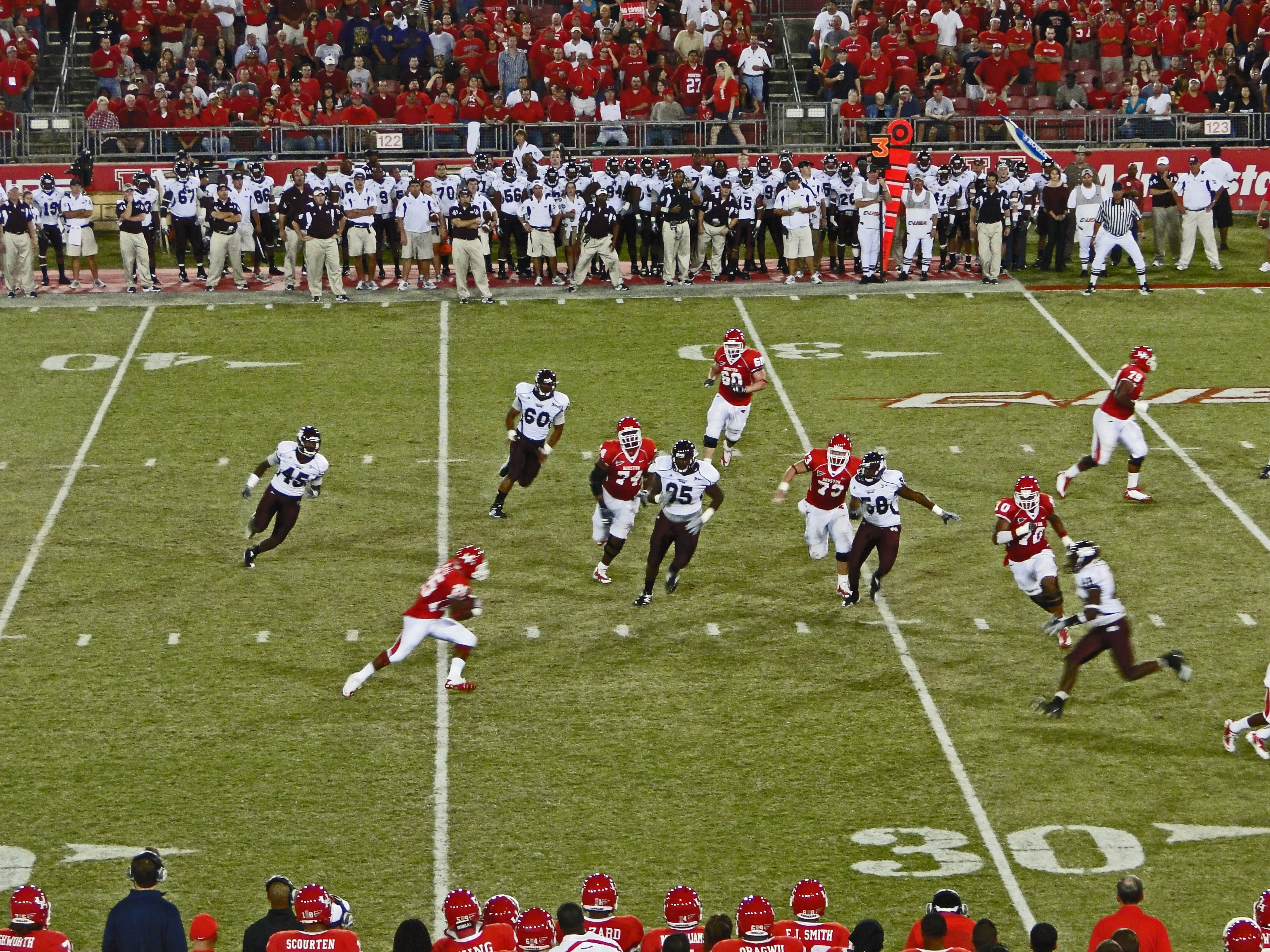
"Run, UH, Run! - You've got a lot of ground to cover to ever catch the big guys on this list!"

When you think about it for five seconds, is it really a big surprise as to which schools are in the running for a national championship in big-time college football every season? Just follow the scent of money, alumni power, and the support of the broadcasting networks, advertisers, and other marketing forces of the American body politic and it all comes out in rolling tides of gator chomps and horns that hook ’em.

The following group is a top ten school list of those universities that won the most national football championships from pollsters since 1901. If we were to start this list from the first awards of national recognition from 1869 forward, the leader-board would also contain a tinge of Ivy League, but we chose to ignore that earlier era here for the sake of keeping this list more in contact with the reality of how the college game is played today.

Here’ what we found:

Big School College Football Championships (1901-2009):

(1) Alabama – 13

(2t) Michigan – 11

(2t) Notre Dame – 11

(2t) USC – 11

(5) Pittsburgh – 9

(6t) Ohio State – 7

(6t) Oklahoma – 7

(8t) Michigan State – 6

(8t) Minnesota – 6

(8t) Tennessee – 6

Two Others of Local Interest …

LSU – 4 (1908, 1958, 2003, 2007)

Texas – 4 (1963, 1969, 1970, 2005)

The whole article on past championships going back to 1869 is very interesting. Simply cut and paste the following link to your address live and check it out. …

http://en.wikipedia.org/wiki/NCAA_Division_I_FBS_National_Football_Championship

If we go back to include schools that mainly did their trophy-winning in the 19th century, Princeton (28) and Yale (27) rise to the top of the heap above all others. These Ivy League schools are disqualified here for having used true student athletes to rack up all the honors from those earlier era, very misinformed pollsters as to what is really important in life, especially to the extent that honesty and integrity should have anything to do with intercollegiate athletic competition.

Alma Mater Fidelity

October 10, 2010


Freshman David Piland Gets "Baptism Under Fire" at QB for UH.


The Houston Cougars ended their 18-game home winning streak last night before 32,067 fans at Robertson Stadium by falling decisively to the bigger, faster, more experienced  and hungrier Mississippi State Bulldogs, 47-24.

UH Coach Kevin Sumlin continued his search for a successor to the ill-fated and career-finished hopes of former star Case Keenum by inserting his other true freshman QB prospect into the game in the form of young David Piland. Piland did OK, but his two TD passes were more than off-set by two interceptions, one of which led to a fatal touchdown run back near the halftime mark that left the Cougars in a 33-10 hole at the mid-game break.

The other freshman QB, Terrance Broadway, got in the game long enough near the end to throw a 17-yard TD pass to Isaiah Sweeney with 4:36 to go, preventing the game from become the most lopsided loss in Coach Sumlin’s three-year history at UH.

We Cougars took the disappointment in stride and moved on. After case Keenum went down forever as a UH Cougar in the UCLA game of Sept. 18th, none of us were really surprised by last night’s outcome. Few clubs at the college level are deep enough to survive the loss of their only superstar with any hopes of the season playing out as the final realization of their  once great expectations.And UH is no different from the rest in that regard.

For UH, major victory on the gridiron remains more of a hope and a distant memory than it is an actual realization. UH’s 37-7 win over Michigan State at East Lansing in 1967, that 30-0 shutout of UT at Austin in 1976, and the 17-14 thumping of Nebraska in the 1980 Cotton Bowl jump to mind, but none of those wins happened recently and all were against big name teams that aren’t likely hot to play the UH Cougars again anytime soon.


A few UH plays worked well early against MSU last night.


Today’s piece isn’t really about last night’s game, or even about becoming a team that is perfect enough to to win a national championship or stay in the hunt for one at any cost, every year, including especially the cost of young futures that sometimes get thrown into the fires of  ambition fanned by the universities and their wealthy alumni.

Today’s question is simply: Why be loyal at all to the universities that gave so many of us a good start in life? And, more complexly, why celebrate that loyalty by throwing so much of our support into paying for the athletic programs, especially the lucrative football and basketball programs?

From a money standpoint, the first question speaks for itself and the second virtually answers itself. We are indebted to the university as one of the great givers in our lives. We are loyal to our university’s sports teams because of the complex identity we share with the university and all others who gone there as we did and who have also come out into the world as Cougars, Longhorns, Aggies, Owls, and the like. We carry it even further by incorporating the colors, emblems, hand-signs, and slogans of our group into a ritual show of affiliation by our mode of dress and behavior.

Has anyone ever heard the guy whose luxury care horn plays “The Eyes of Texas?”

Look! I’m not going egghead on you this morning, but for me, it works something like this. I can’t really speak for anyone else: (1) I not only did my undergraduate work at UH, but I also grew up only two miles from the campus. UH always was, and always will be, part of who I think I am – a kid from the East End of Houston who caught an early  break and worked his way into a slightly larger world of possibility and opportunity through a door-opener on higher education. And that open-door, as long as I was willing to both work at my studies and also support myself by working at whatever honest student job I could find, was the University of Houston.

(2) My affiliation with UH’s athletic programs was an easy fit for me. Sports are a way of defining our successes and failures in measurable terms that often are blurred or simply expunged from everyday life matters due to certain politically correct factions that would prefer we behave as though “winning does not matter.” Of course, winning matters. If it didn’t matter, we wouldn’t have all these companies, including NASDAQ, manufacturing scoreboards and all the other kinds of scorekeeping equipment.

(3) I say the scoreboards are for measuring progress, not perfection. If they are merely measurements of perfection, than all college sports fans are doomed to the disappointment that Alabama suffered yesterday because of their 35-21 loss to South Carolina. Perfection says: “So what if you won the national championship last year? You didn’t win yesterday! And that makes you imperfect and, de facto, no good!”

By my standards, the UH loss to Mississippi State last night was simply a toll both on the road to progress, just part of the price of getting better as the team searches for somebody who has a chance of growing into Case Keenum’s shoes at Quarterback. Our UH goal is always, “in time” (our longtime university motto) to get better. – We show improvement by learning from everything that turns out painful on the road to progress – just as we hope to learn from our disappointments in everyday life.

(4) We watch college sports also because they are fun to watch. It’s not much fun watching researchers working on a new health care vaccine, or math theory., but I also believe that our dedication to pure progress includes financial donations to our universities and their academic programs to the extent that we can afford to do so.


"All Hail to Thee, Our Houston - University!"


(5) Alma Mater. Always Faithful. Everything hinges on the important ongoing relationship of fidelity and trust between a university and its alumni. Both should be conscious of the need to take care of each other by mutual effort – and not be turning the entire reciprocal act of mutual caring into another wasteful play of institutional entitlement.

The only entitlement here belongs to the students. Students are entitled to the best academic opportunity the university can provide them without any exploitation of the student’s funds or talent resources,

At any rate, that’s how I see my relationship to my alma mater, the University of Houston. Last night’s football loss to MSU was simply another painful toe-stumper on the road to progress with larger goals and accomplishments for us all in the wider, deeper scheme of things to come.

Have a happy 10-10-10, everybody!

Early Houston TV Programs & Personalities

August 21, 2010

Bunny Orsak: Channel 13’s “Kitirik” mascot from 1954 to 1971.

Thinking for long on the subject of Houston’s early TV years brings to mind a ton of pleasant memories and so many unforgettable personalities. I’m going more for volume than explication this morning. with a look back at what’s still with me off the top of my pointed head by way of a Saturday morning notion of how each fits together by group association.

Here’s what I’ve come up with. Please feel free to add your favorites and all the others I’ve forgotten in the comment section of this column:

Local Station Caricature Figures: Kitirik of Channel 13, Milk Drop Mo, Cadet Don, Jock Mahoney.

Early Station Singers and Musicians: Howard Hartman, Marietta Marek, Don Estes, Johnny Royal, Paul Schmidt and the Tune Schmidts, Curly Fox, and Miss Texas Ruby.

Dick Gottlieb

1950s Station Announcers, News People, and Personalities: Dick Gottlieb, Lee Gordon, Bob Dundas, Bob Marek, Guy Savage, Paul Boesch, Pat Flaherty, John Wiessinger, Gus Mancuso, Lloyd Gregory, Bruce Layer, Jack Hamm (artist), Joy Mladenka, Page Thompson, and Jane Christopher.

1960s People: Carl Mann, Sid Lasher, Gene Elston, Loel Passe, Dave Ward, Dan Rather, Anita Martini, Larry Rasco, Doug Johnson, Bill Ennis, Bill Worrell, and Dan Rather.

Early Kiddie Shows: Crusader Rabbit, Mr. I. Magination, Mr. Wizard, Smilin’ Ed McConnell, Buster Brown,  Kukla, Fran, and Ollie, Howdy Doody, Mr. Rogers, Captain Midnight, Sky King, Batman, and Superman.

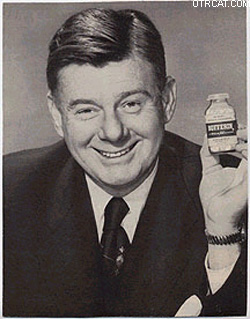
Arthur Godfrey, Hawking Aspirin.

Early Variety and Game Shows: The Texaco Star Theatre with Milton Berle, Arthur Godfrey Time, The Gary Moore Show, Stop the Music, Toast of the Town/Ed Sullivan, The $64,000 Question, Beat The Clock, Name That Tune, Who Do You Trust?, Twenty Grand, I’ve Got A Secret, What’s My Line?,  The Tonight Show with Steve Allen, George Gobel, The Jackie Gleason Show, and Password.

Early Sitcoms: My Little Margie, The Life of Riley, I Married Joan, Leave it to Beaver, Ozzie and Harriet, Amos ‘n Andy, The Addams Family, and Mr. Peepers,

Early Westerns: Gunsmoke, Cheyenne, Paladin, Wyatt Earp, The Lone Ranger, Wagon Train, Sugarfoot, Grizzly Adams, The Rifleman, The Cisco Kid, Roy Rogers, and Gene Autry.

Early Drama/Adventure/Cop Shows: Dangerous Assignment with Brian Donlevy, Boston Blackie, I Led Three Lives, One Man’s Family, Playhouse Ninety, Studio One, Dragnet, Route 66, Outer Limits, and The Twilight Zone.

Sports: Major League and Houston Buffs Baseball, plus one game of College Football every Saturday and a Red Grange telecast of the Chicago Bears or Cardinals from the NFL every Sunday – and it was all there for us on that tiny little fuzzy black and white TV screen with the visible horizontal separator lines running all across the picture, but so what? What did we know back then about the greater possibilities that lay ahead for us down the technological advancement line in years to come? Based on the “nothing” we had prior to TV, we thought we had died and gone to Heaven!

Family Famous Last TV-Related Words from Our Mom Back in 1952: “Hey, kids, why don’t we all sit down and watch ’em blow up that atomic bomb out in Nevada before you leave for school today?”

Early TV Was Like Radio with Pictures

August 20, 2010

TV Reached Houston on January 1, 1949.

It came. We saw. It conquered us all. It was the middle of the 20th century and our communication media preferences were changing fast, from radio to television, and from big movie theaters out there in the world to those little theaters that moved just for us in our own homes. What a wild world it was turning out to be.

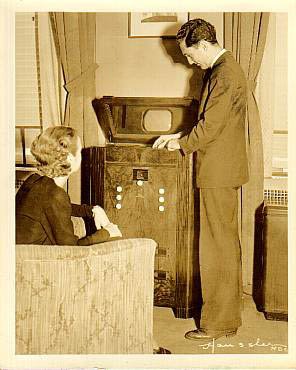
In spite of the fuzzy, squint-sized black & white pictures that came with our first 10 inch screen TV sets, the medium rapidly addicted us all to the idea that we could actually possess in our own homes, and for our own personal use, with no one sitting in front of us to block our view, a little machine that produced moving pictures for our individual home entertainment.

At first, television broadcasters and their home audiences shared this state of mind in common: Neither really knew what they were doing. Some may argue that this truth still holds today, but if it does, it is no longer a condition we may attribute to naiveté.  If it’s still true today, it’s now due to the kind of missing creativity that spawns reality television programming over great storytelling.

Back in 1949, when TV first came to Houston, everyone labored with two wrong handles on the new medium. Broadcasters and viewers alike treated the medium as either (1) radio with pictures; or (2) the movies with a small screen.

Nobody really knew what kind of baby had landed on their doorstep – and we especially misunderstood and underestimated the potential and demand for interaction that television would produce as the medium matured. In the beginning, people just saw it as a medium for putting out pictures that other people could watch for the sake of movement alone. Old movies became popular fare at local stations and slapstick comedy, boxing, and wrestling were all big too – because they all moved rapidly into action..

The early news broadcasts were literally radio with pictures. You got to watch a man sitting behind a desk literally reading the news from the typed paper in his hand. The only movement was the reporter’s lips as he read – and the papers being placed down on the desk as each page of reading was finished.

At commercial break time, the news man might pull out a Camel cigarette from his coat pocket and light one up to show you how mild and satisfying it was before he placed it down in the ash tray to keep on smoking as he finished reading the news.

At KPRC-TV in Houston back in 1950, the news, weather, and sports  were  handled by Pat Flaherty (Thanks for the correction on Pat’s last name, Bill Bremer!), John Wiessenger, and Bruce Layer. There were no anchor women back in the day and all the broadcast faces were white. Fortunately, in spite of our many ongoing imperfections, we have grown up as a people since the middle of the last century, but we should never forget from whence we came – so we don’t ever go back. Not everything in the good old days was all that good or fair, but it was interesting.

Weatherman Wiessinger of Channel 2 always began his weather-casts with this statement: “Good evening, ladies and gentlemen! Let’s see what the weather’s been doing.” He would then turn over his right shoulder, and using a stick of chalk as his pointer, he would indicate on a blackboard that contained an outline of the USA where the big weather-makers were occurring. Sometimes he drew clouds so that we might have an idea of what the next norther was going to look like. Lightning bolts made for a nice storm symbol too, but the rain drops he drafted were often hard to figure. The board would then be flipped to show the State of Texas – where Wiessinger would write the high/low temps from around the area. Sometimes the temps from the previous day would have to be erased first. That discovery always seemed to irritate John.

Once again, it was radio with pictures in that news era. Even if broadcasters had a bigger image of their job, they lacked the technology to do much more than what amounted to radio with pictures.

Bruce Layer on sports was a favorite of mine. I didn’t know about it back in 1950, but Bruce Layer had broadcast the first Houston Buff game back on April 11, 1928, the season opener for the Houston Buffs in their very first official game at the then new Buff Stadium. Bruce was knowledgeable in a droning sort of way, but he liked the Buffs – and that made him alright with me.

One live program I really enjoyed each spring on Channel 2 was a weekly pre-season show called “The Hot Stove League.” Moderated by Lloyd Gregory with the help of Bruce Layer and writer Clark Nealon, The HSL was dedicated to examining the upcoming season of the Houston Buffs from about eight weeks over the time that led into the regular season. The show would feature guests like Buffs President Allen Russell and the Buffs manager and featured players as they became available.

Lloyd Gregory had been the arguably leading sports writer in Houston from the late 1920s forward, He is the guy who gave Joe Medwick his “Ducky” nickname during the latter’s 1934 season in Houston. After a female fan wrote Gregory, suggesting that Medwick should be called “Ducky” because he walks like a duck, Gregory just picked it up and put it on poor Joe and it stuck. For life.

This small slice of memory is pretty much how local programming worked here until the coaxial cable reached Houston and connected us to live broadcasting from New York on July 1, 1952. The flow of live TV into Houston via cable began to change everything, but I don’t think TV really separated itself from radio until the late 1970s, when satellite pictures and videotape enhanced the availability of fitting action pictures a thousand times over to the field of news reporting.

Just my thoughts. – Have a nice weekend, everybody!

Judas Asparagus and the Like.

August 19, 2010

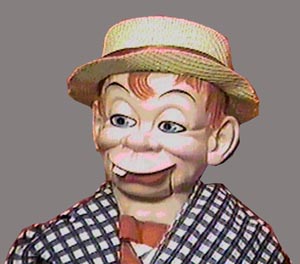
Whenever I heard the name "Harold Square" from that song, he looked like Mortimer Snerd in my child's mind.

One of the things about being kids was that we heard things literally as they sounded to our ears. For my big personal example, I only have to go back to that old George M. Cohan song, “Give My Regards To Broadway” for an example. Whenever I heard the lyric, “Give my regards to Broadway. Remember me to Herald Square,” I heard the latter part as the name of a person, some guy named “Harold Square” and, to make it worse, “Harold” conjured up the image in my mind of the biggest square I could think of back in the day, a puppet that radio’s Edgar Bergen called “Mortimer Snerd.”

I never thought much about that confusion until I grew older and learned that some other people had done the same thing with many other words and phrases they heard. Former broadcaster Hugh Downs admitted on 20/20 once that he used to hear that old song about “carry moonbeams home in a jar” and think that some guy named Cary Moonbeams was staying home inside a jar.

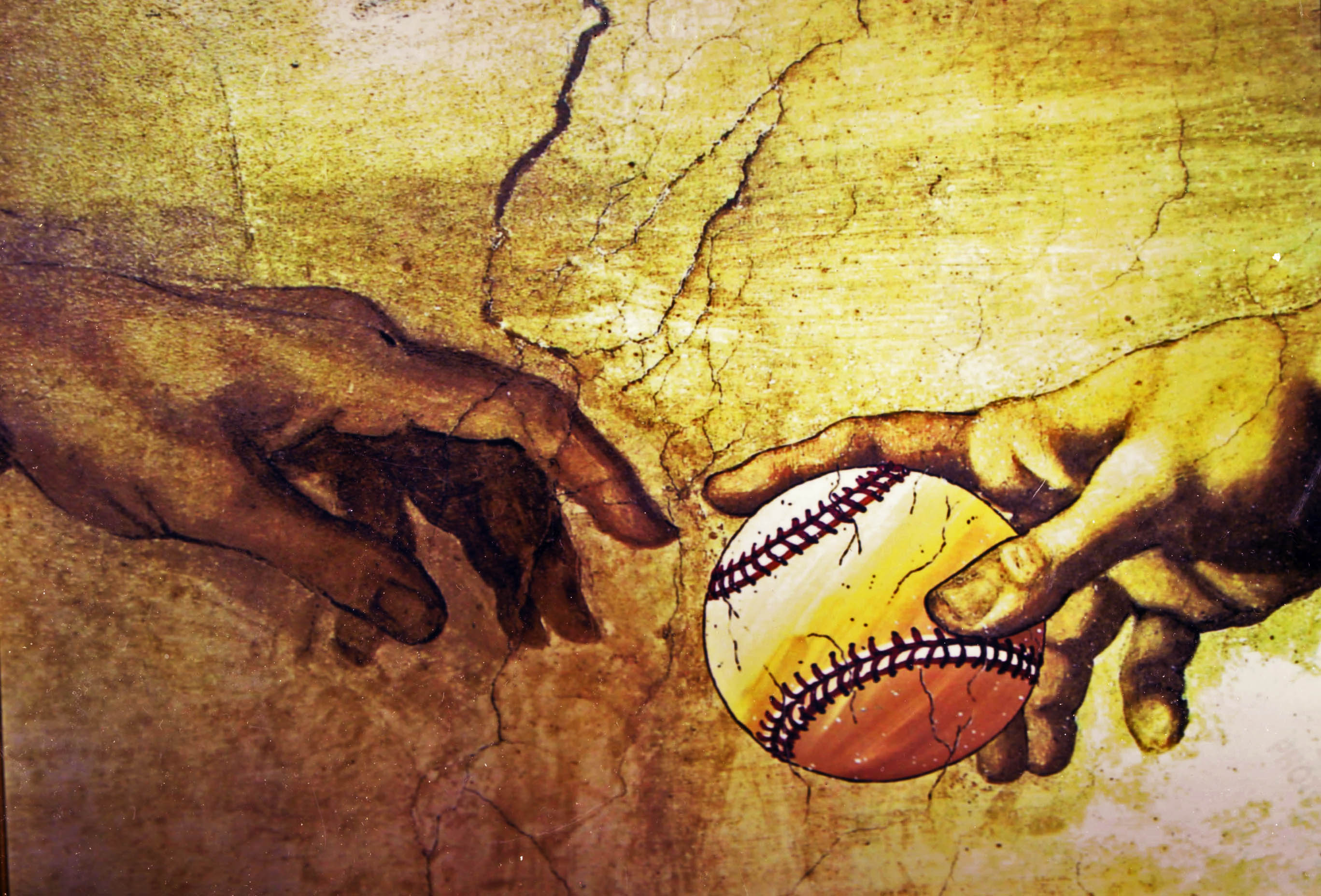
Wow! It’s a good thing we sometimes get smarter as we age. Sometimes. Remember hearing someone reading Genesis from the Bible for the first time and thinking it was about baseball because the story starts out, “In the big inning?”

"In the big inning ..."

How many people still misunderstand the start of Genesis? Apparently the artist who did this wonderful baseball version of the beginning, at least, thought it once or twice in his or her early life. Wish I could give him or her full credit for a job well done here, but I most apologetically do not know who did the piece. I will make an effort to find out and let you know what I learn, sometime down the road.)

One of my former classmates from St. Thomas High School, the one and only Vito Schlabra, sent me an item an overnight that stirred the inspiration for today’s column on literal childhood thinking. “Judas Asparagus” also comes to us with no author making claim for its contents. As one result, there is no one around to explain if these materials are actually the products of childhood misunderstanding – or simply the adult reconstructions of what easily could’ve been misunderstood by a child as he or she listened to these bible stories long ago.

No disrespect to the Bible is intended here. Anyone who thinks so is already living in a hell that I want no part of. I can’t imagine spending eternity with a group of people who have no sense of humor. One evening with same is bad enough.

At any rate, Judas Asparagus (by our anonymous/unknown author) is both funny and engaging. I hope you agree and, also, regardless of your personal beliefs, that it helps tilt your Thursday even closer to the weekend. Enjoy!

Judas Asparagus

Judas Asparagus

A child was asked to write a book report on the entire Bible.  This is amazing and brought tears of laughter to my eyes. I wonder how often we take for granted that children understand what we are teaching???

Through the eyes of a child:

The Children’s Bible in a Nutshell

In the beginning, which occurred near the start, there was nothing but God, darkness, and some gas.  The Bible says, ‘The Lord thy God is one, but I think He must be a lot older than that.

Anyway, God said, ‘Give me a light!’ and someone did.

Then God made the world.

He split the Adam and made Eve.  Adam and Eve were naked, but they weren’t embarrassed because mirrors hadn’t been invented yet.

Adam and Eve disobeyed God by eating one bad apple, so they were driven from the Garden of Eden…..Not sure what they were driven in though, because they didn’t have cars.

Adam and Eve had a son, Cain, who hated his brother as long as he was Abel.

Pretty soon all of the early people died off, except for Methuselah, who lived to be like a million or something.

One of the next important people was Noah, who was a good guy, but one of his kids was kind of a Ham.  Noah built a large boat and put his family and some animals on it. He asked some other people to join him, but they said they would have to take a rain check.

After Noah came Abraham, Isaac, and Jacob.  Jacob was more famous than his brother, Esau, because Esau sold Jacob his birthmark in exchange for some pot roast.  Jacob had a son named Joseph who wore a really loud sports coat.

Another important Bible guy is Moses, whose real name was Charlton Heston. Moses led the Israel Lights out of Egypt and away from the evil Pharaoh after God sent ten plagues on Pharaoh’s people.  These plagues included frogs, mice, lice, bowels, and no cable.

God fed the Israel Lights every day with manicotti.  Then he gave them His Top Ten Commandments. These include: don’t lie, cheat, smoke, dance, or covet your neighbor’s stuff.

Oh, yeah, I just thought of one more: Humor thy father and thy mother..

Joshua fought the battle of Geritol and the fence fell over on the town.

After Joshua came David.  He got to be king by killing a giant with a slingshot. He had a son named Solomon who had about 300 wives and 500 porcupines. My teacher says he was wise, but that doesn’t sound very wise to me.

After Solomon there were a bunch of major league prophets. One of these was Jonah, who was swallowed by a big whale and then barfed up on the shore.

There were also some minor league prophets, but I guess we don’t have to worry about them.

After the Old Testament came the New Testament. Jesus is the star of The New.  He was born in Bethlehem  in a barn.  (I wish I had been born in a barn too, because my mom is always saying to me, ‘Close the door! Were you born in a barn?’ It would be nice to say, ‘As a matter of fact, I was.’)

During His life, Jesus had many arguments with sinners like the Pharisees and the Democrats.

Jesus also had twelve opossums.

The worst one was Judas Asparagus. Judas was so evil that they named a terrible vegetable after him.

Jesus was a great man. He healed many leopards and even preached to some Germans on the Mount.

But the Democrats and Republicans put Jesus on trial before Pontius the Pilot. Pilot didn’t stick up for Jesus.  He just washed his hands instead.

Anyway, Jesus died for our sins, then came back to life again.  He went up to Heaven, but will be back at the end of the Aluminum. His return is foretold in the book of Revolution.

My Top Ten Early Rock ‘n Roll Hits

August 17, 2010

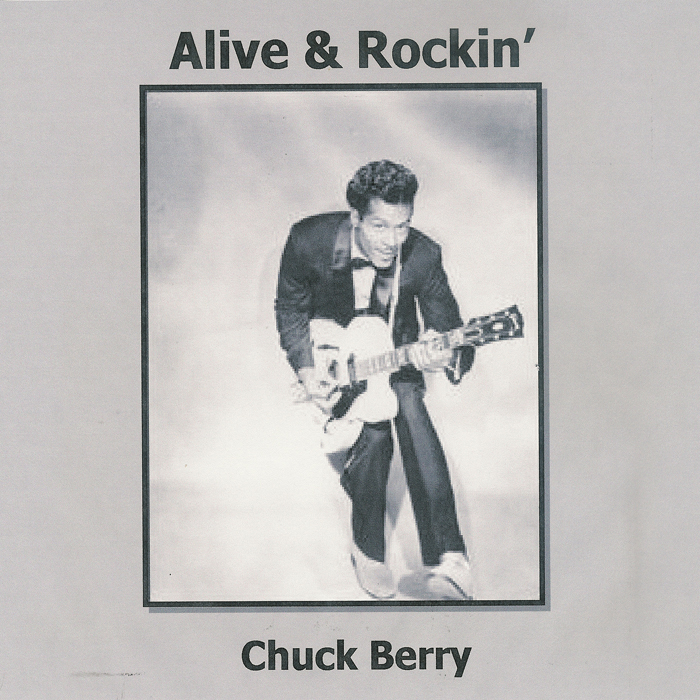
This has to be said up front. There really is no way to come up with a Top Ten Early Rock ‘n Roll Hits list that doesn’t leave someone or something deserving totally out of the picture. When it come to all the early performing giants, people like Little Richard, Chuck Berry, Fats Domino, Jerry Lee Lewis, and Elvis, we could take almost any of their songs and justify its place on a legitimate list.

With that much in mind, what I’ve tried to do here is simply list the songs that came along and struck me hard, from 1954 through 1957, when I was 16 to 19 years old, when Jimmy Menutis’s club in Houston was about to start its reign, as the mind-set, music, and culture changing songs of that era. The songs I love from that era are ten times greater, at least, so that means that my final top tem bunch leaves out many great hits – and even some great artists – people like Buddy “Cricking” Holly, for gosh sakes. That being said, here’s my list:

Turner's work fore-ran the great radio crossover of "black music" to mainstream radio, but it all begin to happen in 1954.

(1) “Shake, Rattle, and Roll” (1954). Who among us from that era could ever forget the beat and the lyrics of the song – and the deep, happy voice of the man who performed them, Big Joe Turner? “I’m like a one-eyed cat, peepin’ in a seafood store! – I can look at you and tell you ain’t no child no more!”

“Shake, Rattle, and Roll” should be the unarguable first rock ‘n roll song on everyone’s list. If it’s not, you weren’t listening at the moment of the genre’s big bang experience, when the music you could only hear on all black radio stations suddenly got too big and too commercial to be passed over any longer by the all-white “Goodnight, Irene” – playing music stations. I may be wrong, but I think “Shake” was the first to make it all the way over to Houston’s two most popular white AM radio DJ’s, Paul Berlin of KNUZ and Bob Byron of KILT.

"Maybelline" was a real gas pedal pusher.

(2) “Maybelline” (1955). This one blows past our earliest discovery of Elvis in “That’s All Right” and I don’t know how many other songs by Little Richard and Fats Domino, plus all those great group hits. like “Earth Angel” by The Penguins, but it was the great Chuck Berry at his “drivin’ fool” first best effort at singlehandedly taking over the new music that both accelerated and satisfied the angst of our testosterone-pumping, adolescent minds, bodies, and souls – and especially so when we climbed behind the wheels of our muscle machines and hit the Gulf Freeway for Galveston with our girls by our sides on those ever always practical bench car seats that used to be the app that made our driving world a happy place to be.

“As I was a motivatin’ over the hiil, I caught Maybelline in a Coupe DeVille; Cadillac rollin’ on a open road; nothing out-run my V-8 Ford.”

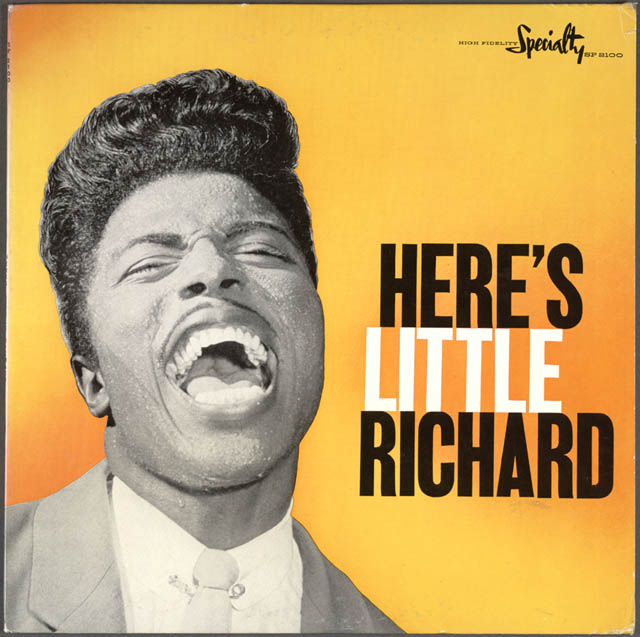
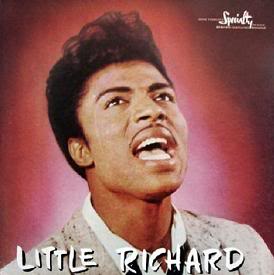
(3) “Long Tall Sally” (1955). Little Richard is one of the music artists with a legitimate claim on the “Father of Rock n’ Roll” title if it weren’t for the fact the presence of so many others in that category suggests that the change was a process movement in music and not a sudden birth in high C section from the rhythm and blues genre. If anything, rock n’ roll came together in a way that united early black and white music folk forms, taking a whole lot from black rhythm and blues, but also borrowing from white country and western too.

We could easily substitute “Tutti Frutti” or “Rip It Up’ here and lose nothing from the idea that Little Richard was a major first contributor to the earliest echoes of rock ‘n roll.

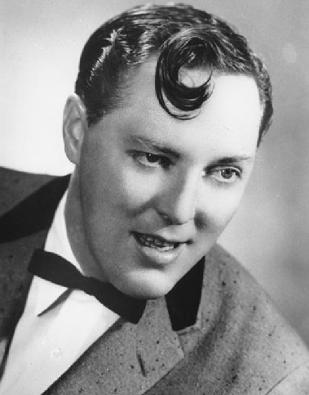
Bill Haley and The Comets hit us big time!

(4) “Rock Around The Clock” (1955). No rock and roll song ever landed harder upon my generation of the 1950s, not even “Blue Suede Shoes.” When a bunch of us first heard it, we had all gone together as a group to the Loews State Theater in downtown Houston to see the highly touted new movie of teenage rebellion called “Blackboard Jungle.” Unknown to us until that moment, the movie started with Bill Haley and the Comets performing this now iconic song for the first time that any of us had ever heard it.

“One! Two! Three O’Clock! Four O’Clock Rock! ~ Five! SIx! Seven O’Clock! EIght O’Clock Rock! ~ Nine! Ten! Eleven O’Clock! Twelve O’Clock Rock! ~ We’re Gonna Rock! Around! The Clock Tonight! …”

What happened next was both amazing and original to the situation. We were all on our feet cheering. And dancing in the aisles. We’ve been dancing and cheering ever since. And “Rock Around the Clock” remains today the same as it was from public birth – The International Anthem of Rock ‘n Roll Joy!

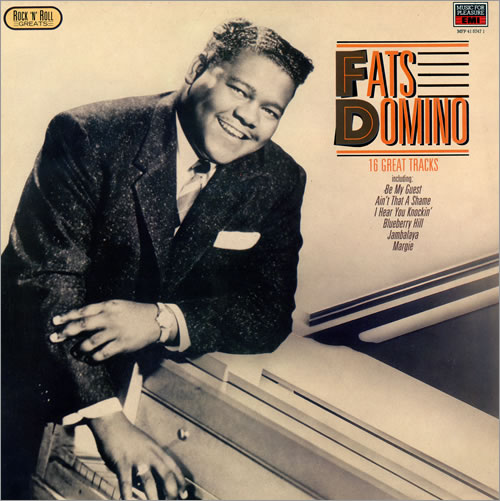
Fats Domino: "Baby, don't you let your dog bite me!"

(5) “I’m In Love Again” (1955). So many other great hits from the music genius of Fats Domino would fit here. This one just happened to hit my teenage ears over the car radio on a night I was driving home from another new venture into falling in love. Unfortunately, it was neither my first nor last trip over the falls of bittersweet pain, but good old Fats did his part that night in helping to write the soundtrack of my early times life.

“Yes, it’s me, and I’m in love again! – Had no lovin’ since you know when! OOH-WEE, BABY! – OOH-OOH-WEE! BABY DON’T YOU LET YOUR DOG BITE ME!”

It wasn’t her dog that bit me back in the day; nor was it the bittersweet music of good old Fats that tore into my heart and soul where women were concerned. I just had some growing up to do about love and what was really possible in a relationship between a man and a woman, including the big bopper lesson that learning about love is a lifetime school.

Carl Perkins

(6) Blue Suede Shoes (1956). Carl Perkins wrote it. Elvis Presley gave it immortality.  In the minds of many, it remains as the greatest rock ‘n roll hit of all time. – I remember going to see Carl Perkins perform at the old Sam Houston Coliseum in Houston around this time. The place was packed because of “Blue Suede Shoes” hit and we were literally swept away in the human crush of a packed house when Perkins finally got around to doing his famous number. It was also around this same time period tha Carl’s friend, ELvis, was making and releasing his own version of “Blue Suede Shoes” in a much faster and hipper tempo and style on a record that would carry the hit to other galaxies.

Perkins wrote the song one night after he came home from playing a high school prom and over-hearing a young man telling his date, “Listen, when we’re dancing, please try not to step on my blue suede shoes. OK?” Sometimes good things happen when we are paying attention.

Right Carl?

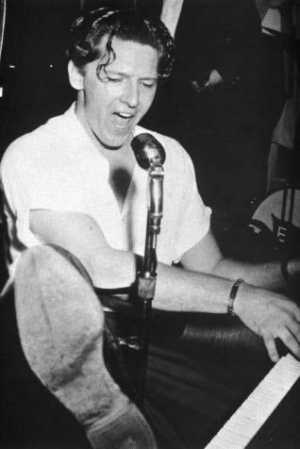
Jerry Lee Lewis

(7) Great Balls of Fire (1956). Substitute “Whole Lotta Shakin’ Goin’ On” or any other favorite Jerry Lee Lewis song here and I have no problem with the change as long as the man and his dawn-stormin’ music makes the list. Jerry Lee was the most insanely talented early contributor to “R&R” from the country/white Protestant gospel culture that produced him.

The life and music of Jerry Lee Lewis left everybody breathless and with a whole lot of shakin’ goin’ on.

(8) “Good Golly, Miss Molly” (1957). Little Richard returns to the list with a hit that was big enough to impress a 10-year old future President of the United States. Young Bil Clinton of Hope, Arkansas was busy picking up the saxophone and the music of Little Richard around the time this mega-hit came out. He loved it so much that he would one day prevail upon the “Father of Rock n’ Roll” to perform “Good Golly, Miss Molly at a party celebrating his 1993 presidential inauguration while he, the new American President, accompanied “LR” on the sax. (This act would have been big at Jimmy Menutis back in the day.)

(9) Johnny B. Goode (1957). “Go, Johnny, Go!”  The hard-driving lyrics of this classic rock ‘n roll number by Chuck Berry still pound the message of the genre out there at a rate faster than the culture of that time could absorb it. It was about freedom of artistic expression on a level that went way beyond the in-bred marriage of the majority white culture to the values of prudence and control of the arts, two qualities that eventually go beyond directing energy and start choking creativity.

“Long live rock ‘n roll! Deliver us from the days of old” – Chuck Berry.

"Thank you! - Thank you very much!"

(10) “Hound Dog” (1957). By this time in 1957, you could have picked a number of other Elvis Presley hits for this lace in the Top Ten List. I chose “Hound Dog” because I think it represents something of a final victory point in the culture war for rock ‘n roll’s right to survive. as an everyday part of our main culture life. Back in 1954-55, the airways were battling to play rock ‘n roll live over the air on pretty much of a case-by-case basis. Artists like Little Sylvia Vander pool were being banned for “suggestive” lyrics. Sylvia took the ban for a little song called “Fine Love,” in which she sang about “fine love…fine kisses…right here.”

The lyrics to “Hound DOg” were fairly innocuous, but they were being sung by Elvis Presley, and it was now 1957, and rock ‘n roll was here to stay.

Places like the Jimmy Menutis club in Houston helped seal the deal on “R&R” becoming a permanent part of our everyday American lives. Thank you, Jimmy!

Long live rock ‘n roll! And long live Jimmy Menutis and his contributions to American music history!

Also, please comment below. We’d love to hear your own top ten lists too.

Hello, Detroit! Is Anybody Home?

August 9, 2010

Pleas take a look at these two car body styles. The first is the popular 2010 Honda Accord, all decked out in the coveted colorless blend-in silver tone shading that, along with the often chosen gray-colored version, is the quiet rage among folks who are looking for the most aerodynamically efficient and anonymous-looking carrier forms they can climb into for their five-day weekly trip into the land of 9 to 5.

2010 Honda Accord

Now take a long look at our second body style offering, an American-made, all-steel and chrome  1936 Studebaker Roadster, resplendent in pay-attention-to-me red and just aching for a moving violation ticket on the joy-breeze drive you make on your own terms to a job or career you really want to do, on those days you truly feel like doing anything at all. This car is also available in Emerald City Green or Sunrise Orange, but we will go with Looka-Here Red today as your other choice.

1936 Studebaker Roadster

All things being equal on the inside, let’s next assume that either of these body models is available to you with all of the modern engineering we now possess in 2010 for computerized power, cooling, steering, fueling, transmission,  suspension, braking, wheels, and tires.

Which body type would you choose for your personal car? Remember: One of them is basically made of plastic, making it lighter on fuel, but more fragile on impact, and the other is made of steel and chrome, American-made steel and chrome.

OK, I’ll admit it. I’m pulling your leg a little bit. I do realize that some people, perhaps, more than I think, are more concerned with aerodynamic performance over looks, and many others today associate the face of classic cars with out-of-fashion looks and the outdated technology that once drove them.

Yet, I still think that Detroit is missing a bet by not reviving the classic look as the wrapper on modern technology for all those car buyers who do prefer the differential character face of classic cars over the one-look-fits-all design that goes into most cars today, American or foreign.

Wouldn’t some of you today like to go out and buy a car that ran like a new one, but looked like a 1950 Ford, a 1951 Oldsmobile, or a 1957 Chevrolet?  We could have it, but we don’t because of fears among the automakers that we will see it as “old-fashioned” or less efficient on the fuel usage side.

Neither of those factors would hold me back, but then, maybe I’m all alone in that view – or maybe, I’m just too old to realize that style and class no longer matter for much of anything, even in cars.

Chrysler tried to wake up to this idea, but then stumbled over their own lack of fortitude for going all the way. Their PT Cruiser sort of started out as a classic echo design, but then they got caught up in making sure it retained the anonymous oval shape. When they ran totally out of imagination, Chrysler designers simply chopped it off in the back and made it too small to be noticed for long by the buying public.

C’mon, Detroit, wake up! You have the chance now to rock ‘n roll your new car sales way, way past the Asian companies who didn’t grow up here, but you have to first wake up the American echoes to see the technicolor sunrise of a brand new day in classic car design.

Rise and shine, Detroit! It’s back to the future time!

Price Check on Aisle 2010

August 7, 2010

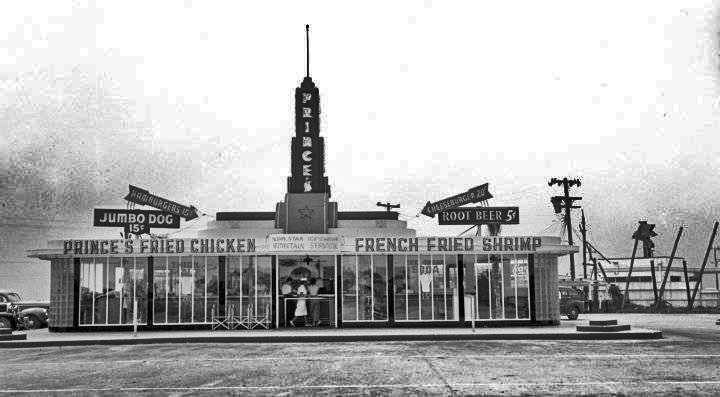
In 1946, Princes's burgers were 15 cents; a nickel more with cheese.

For those of us who came of age in the late 1950s, a couple of ridiculous factors stand out about the economics of those times, when you look at it by today’s money standards. One was the low-cost of everything; the other was how little we got paid for anything we did. In fairness though, can we really compare economic conditions in 2010 with those in 1955? I don’t know. Wiser heads than me have said we cannot, but I’m sometimes a ornery curmudgeon. (You don’t have to be ornery all the time to become a curmudgeon. You just have that gene in you and get older to earn the distinction.)

Economists are a little like baseball historians in this regard when it comes to comparing conditions from one era to those of another. Many say you can’t do it because of the deflationary/inflationary slide that prices take on both income possibility and the cost of living due to changes in the world economy.

What the heck does that mean? If something like a Prince’s hamburger cost us 15 cents in 1945 and now sells for five to six bucks, if minimum wage in 1945 was 40 cents ann hour and then $7.25 an hour in 2009, shouldn’t we be a little concerned with trying to simplify the reasons things have changed. To me, that makes sense, but what do I know? I grew up in the Houston East End, where nobody I know ever took any courses in economics, and where the goal of making $10,000 a year someday seemed like the best answer to all our basic needs.

With all that in mind, here’s what I’ve tried to learn and piece together from banging around in the world for a half century in the marketplace. Feedback, corrections, and additions from all of you are welcome. Today’s subject is about as close as I will ever come to a serious column on world conditions.

Here are the differences i now see between 1956, the year I finished high school and started college, and 2010:

(1) In 1956, we didn’t live on credit cards. If we didn’t have the money for something, we didn’t buy it.

(2) In 1956, we were the manufacturing giant of the world. We lost much of that ability to make things for sale to ourselves and others because (a) our own cost of union labor and (b) federally guaranteed minimum wages took us out of competition from countries that had large supplies of incredibly cheap, exploitable labor.

(3) Even though we make fewer things today, our population continues to grow, increasing competition for the skilled jobs available and pushing more people toward minimum wage service jobs, and subsidy living paid for by the government at all levels.

(4) Job competition in the past half century also has increased rightfully too as a direct result of a more balanced playing field for women and minorities. In spite of the good changes, we still have fewer people working at taxable jobs that pay for everything else.

(5) Americans are now so busy that this need for immediate help from others drives the product and service markets to become the best at “give it to them now and put it on the card” kinds of selling. If it’s popcorn at the movies or a house full of new furniture, you just put it on the credit card and worry about it tomorrow.

(6) Unfortunately, our culture also now gives us a Congress that puts “our” government program needs on the credit “tab” that leaves both the problem and the explanation for debt to our grandchildren and politicians of the future.

(7) Bottom Line: At our present rate, we are in line for a “going out of business” sale that will be immensely helped by the booming new economy of China.

So, what can we do about it, if anything? I’m not sure, but here’s what seems important to me:

(1) We need to find a true bipartisan approach to solving the national debt problem. This business of the party on the outside always doing everything it can to promote the failure of the party on the inside is getting to be like the two sailors arguing over who put the hole on “my side of the boat” with the harmed party getting even by putting a hole on his sailing mate’s floor – just to get even.

(2) We need to start making things we need again – and buying only those things we need with cash. If we sink the credit-spending industry, maybe that’s what we need to do. How can we ever hope to get out of debt when  a whole industry exists to make sure we stay there?

(3) If we could do the first two things, maybe we could also find a way to install the third leg of this stool. And that is – to find a reasonable balance between income and expenses for our so-called American “way of life.” It seems to me that the balance will find itself if we are all trying to live on what we make and then buying only what we can afford to pay for now.

(4) I also think it’s imperative that we find a way to control our borders so that immigration takes place as a legal process. Illegal immigration creates a source of cheap labor that actually becomes an addiction to the American industries that depend upon it, while at the same time passing on the cost of health and educational programs for the children of illegals to the American workers who are paying taxes.

We can’t keep doing what we’re doing and hope to survive as the America we know and love. I will be going back to baseball, local history, and the lighter side tomorrow, but I just had to get this stuff off my chest this Saturday morning.

We are going to need all the guts and wisdom we can muster to survive this one, folks, and I sure make no claim for having any or all the answers. Maybe debt is important to economic expansion, or simply  practically necessary in the matter of homes and cars, but what else do we have to go in the hole to own, season tickets to the Astros home games? As much as I love our team, I don’t think so.

Maybe we can all start the turnaround in this way: It’s Saturday. If you’re going out to a weekend movie, try not to charge the tickets or the pop corn. It’s a start.

And please weigh in with your own thoughts about what we need to do to right the ship of our economy. If we wait on our politicians to come up the answers, left or right, we may just be waiting until hell freezes over. Most politicians seem to be about taking good care of their own needs while they strive to take or hold on to power while hoping to come across to the voting public as people who care about their constituents and their country.

Jimmy Menutis: Houston Heart of Rock ‘n Roll

August 5, 2010

Jimmy Menutis: Houston’s Home for Rock ‘n Roll

Sometime in the late 1950s, a swarthy-looking, cigar-chomping, ever-smiling Greek fellow named Jimmy Menutis bought The Wayside, an east end suburban movie theatre on Telephone Road, near Wayside Drive, and turned it into a club for contemporary music and dancing. For about five years, the place flourished as the biggest big-name rock ‘n roll music venue to ever hit Houston.

Jimmy Menutis’s place boomed fast as no ordinary club in town ever had – and with good reason. Jimmy started bringing in some of the biggest, most popular rock ‘n roll, jazz, and blues stars in the country – and they were all pumping their talents into the lore of the Houston East End at a scale and rate that no one could ever  have predicted, or accepted as reality, until it actually landed on top of us and happened.

Louis Armstrong, Chuck Berry, Fats Domino Little Richard, Jerry Lee Lewis, Bo Diddley, Brook Benton, Sam Cooke, Earl Grant, Jimmy Reed, and countless others were simply a few of the headliners who played at Jimmy Menutis. Except for Elvis, and I’m not sure what happened there; Elvis loved playing Houston; just about everyone else made it here to play this hottest venue in the South.

Menutis had gutted the old theater seats, replacing that area with ample table settings and plenty of room left over for dancing. The old stage remained for performers, but acts were free to wind their away into the seating areas and perform up close and personal for members of the audience.

As a young man who got to experience the greats of rock and roll in live performances because of Jimmy Menutis, all I can tell you is that it was one “cool and crazy” ride, my friends. For me personally, on a site  that stood no more than two miles from my childhood home in Pecan Park, I was getting to hear all of my major music heroes in person, doing all the popular music I then still owned on vinyl .45’s and very  breakable .78s.

“Maybelline” by Chuck Berry, “Good Golly, Miss Molly” by Little Richard, “Blueberry Hill” by Fats Domino, “Jeepers Creepers” by Louis Armstrong, “What a Wonderful World It Will Be” by Sam Cooke, “Whole Lotta Shakin’ Goin’ On” by Jerry Lee Lewis, and “Ain’t That Lovin’ You, Baby” by Jimmy Reed,  are just a few of the great songs that came straight to the heart of Houston because of Jimmy Menutis.

Jimmy Menutis closed sometime in the mid-1960s, during the time I already had moved to New Orleans for graduate school at Tulane. Music was changing by then and so was the country. By then, the Beatles had captured the hearts of the even younger generation and Viet Nam and the Civil Rights Movement had put a final wrap on our old 1950s age of innocent denial or oblivion to weightier matters.

Rock ‘n Roll wasn’t going away with the death of places like Jimmy Menutis. It was simply heading into a quieter phase of it’s still continuous evolution as an American musical art form. Those of us who came of age with Chuck, Fats, Jerry Lee, and Little Richard will keep their brash bashing of words, beat, and melody alive for as long as we all last and longer.

By the time I came back to Houston from school and teaching at Tulane, some of the old rock ‘n rollers were still skirting through Houston for a few gigs and, as a still single young man at that time, I did what I could to catch their acts whenever any of the biggies came to town.

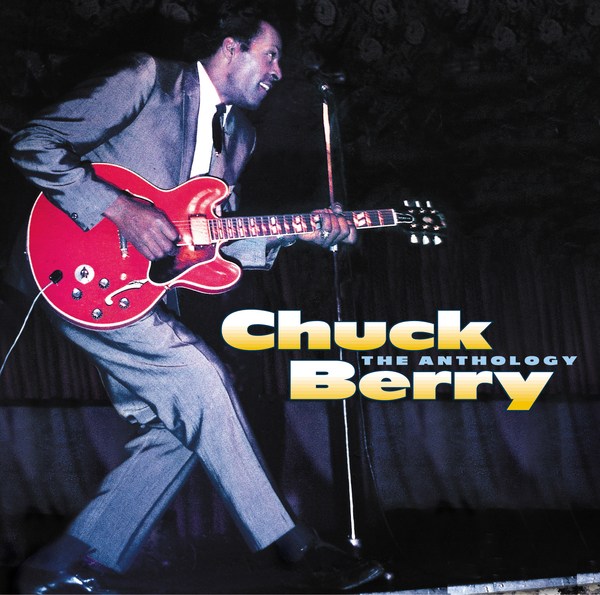
My favorite memory dates back to 1970, when my date and I went out to the Club Bwana in Pasadena to hear a weekend performance by Chuck Berry. It’s good we made early reservations for the Saturday night show because the little place was packed with people waiting on stand-by in the hope of getting in. Our small table was right near the performer’s dressing room, which was great because Chuck Berry would have to pass right by us to get to the stage. My back was to his dressing room door, but I kept looking over my shoulder, hoping to catch him from the moment he appeared.

I didn’t make it. I got distracted by the emcee’s introduction. Then it suddenly dawned on me that he was no longer doing a blah-lah about someone else. He was introducing Chuck Berry.

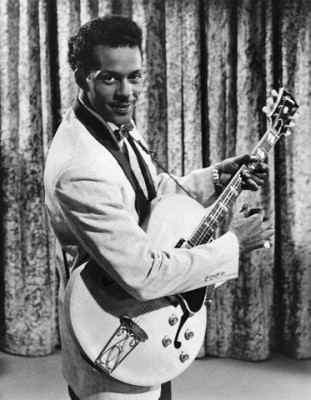
Chuck Berry Rocked the Club Bwana Back in 1970!

I turned to my left and abruptly found myself staring eye-level into the shine of a beautifully red-surfaced, heart-shaped guitar. Lifting my gaze, I just as suddenly found myself staring into the eyes of the one and only Chuck Berry. He was standing right beside our table, waiting for the emcee to finish his intro.

“Hi Ya, Chuck!” I blurted out.

“How you doin’, man?” Chuck Berry answered.

“LADIES AND GENTLEMEN, … THE ONE AND ONLY … CHUCK BERRY!” The emcee boomed.

The golden moment had ended, but the imagery lives on forever in my brain, right there with the time I made eye contact with Joe DiMaggio in April 1951, right after he caught a fly ball in the outfield at Buff Stadium and I was standing behind the SRO crowd ropes in left center field near the spot of his catch.

People like me never forget a conversation with someone like Chuck Berry, even one as short as ours in 1970.

The rest of the night was legendary for all who crowded into the Club Bwana that night. Chuck Berry played on violently for about two hours, stopping only long enough to wipe perspiration and slug down another glass of water. He was getting all of our love that special night and he fed on it with a non-stop heart and soul performance.

I don’t get around much, anymore, but I sure remember the times I did. And I wouldn’t trade any of them for anything in the world. And places like Jimmy Menutis and the Club Bwana hold a lot of very special memories for me.

The 1949 Baseball Season: King James Version

July 9, 2010
Back in the spring of 1949, in a parallel universe to our own. free agency in baseball had been a reality since the end of World War II in 1945, which fortunately concluded in that similar world as it did in our ours. The Allies whipped the Axis forces and restored a form of freedom to many parts of the governing world. In the process, the spirit of the war also liberated professional baseball players from the tyranny of the reserved clause.

Time: 1949; Place: A Parallel Universe; Event: Ted Williams & Stan Musial discuss their plans for playing together as teammates with a few other new faces on the roster of the 1949 St. Louis Cardinals.

“If baseball players can go overseas and fight for their country in wartime,” pinko-socialist pundit and labor advocate Henry Wallace shouted to Congress, “the least we can do in Congress is to revoke the reserve clause and give them all the right to choose where they will work as ball players in peacetime!”

And so it was written. In that parallel version of our God-Blessed America, on Flag Day, June 14, 1945, President Harry S. Truman signed into law a bill from Congress that killed the reserve clause and gave unrestricted free agency to professional baseball players.

Not much happened among the old school ball players until March 2,1949, when the Boston Red Sox met the St. Louis Cardinals in an early spring training game played at this universe’s base for the Cardinals in St. Petersburg, Florida. Everything changed that day.

Unsigned by the Red Sox, but working out with the club on his own nickel, pending contract resolution with Boston, slugger Ted Williams and Cardinal great Stan Musial suddenly announced that the man some called “The Thumper” would stage a thirty minute radio show over station KMOX is St. Louis from the Cardinal clubhouse after the game.

The purpose of the broadcast, according to a spokesman for Ted Williams, would be to announce his decision about his plans for the 1949 season. Had Williams worked things out with the Red Sox? Or would he be making plans to play elsewhere, …. as in, perhaps, …. St. Louis, maybe?

The press and all the world was told that they would have to wait for the “decision broadcast” over KMOX that was being beamed to a national audience.

The decision came forth about twenty minutes deep into the radio broadcast. It came on the heels of a seemingly endless stream of “Holy Cow” possibilities expressed over the air by the show’s host and sole monologist, Harry Caray. Listeners were ready for anything, but more Harry opinions.

With a smiling Stan Musial sitting quietly to his left, Ted Williams moved dead-panned closer to the mike that had been shoved in his general direction by Caray. The following is a verbatim account of  what happened next:

Harry Caray: “Well. Ted, America’s been holding its collective breath out there. Can you tell us what this business is all about? More exactly, can you tell us what this decision is all about that made it so important that you had to use up my post-game after show time just to do it?”

Ted Williams: “Sorry. Harry, but sometimes things happen in baseball that are even more important that anything you have to say. I’ll make it brief since our time is short. – After much thought, I have decided not to return to the Boston Red Sox for an eighth season. Instead, I will be taking my talents to Missouri to play for the St. Louis Cardinals, along with my friend Stan Musial here, plus George Kell of the Tigers and Warren Spahn of the Braves, who have both also chosen to sign with the Cardinals for the 1949 season. – All three of us new Cards want a World Series ring – and we think we may be able to make a difference here by joining hands with Stan and a bunch of guys that already know how to win the big one.

Harry Caray: “Holy Cow! That’s wonderful, Ted! Are you worried at all about how badly the fans back in Boston may react now, especially in light of the fact that they’ve already lost Spahnie to us from their National League club! Holy Cow!”

Ted Williams: “Spit on ’em, Harry! I gave those GD Boston fans all I had for seven seasons! They ought to be grateful I stayed as long as I did. I also gave my all to the war effort. Now it’s time to think about me and I want a GD World Series ring. I don’t give a flying-flip where I win it – just as long as I win it in my playing lifetime.”

Harry Caray: “Do you think you owe the fans anything, Ted, even an apology for leaving Boston?”

Ted Williams: “I don’t owe the fans a damn thing, Harry! I gave ’em my best – and half the time, they didn’t even appreciate that! Fans don’t get it. We ballplayers play to win for ourselves. We don’t play to win for them – or out of some loyalty to the community. – Hell, if this were about loyalty, I’d still be out there in the PCL playing for my hometown San Diego Padres!”

Harry Caray: “If it’s not about loyalty, Teddy, how do you explain the guy sitting next to you? Around here, the love and loyalty that exists between Stan Musial and the city and fans of St. Louis is a two-way, can’t-pry-it-apart street in every direction! Explain that phenomenon for me, Ted.

Ted Williams: “I won’t even try, trickster, except to say that any guy born in a place named Donut-Hole, PA is capable of doing just about anything. St. Louis is damn lucky to have him – just as they will be doubly lucky to have the both of us and Kell in the same everyday lineup and Spahnie pitching every fourth day. – Now, if you don’t mind, I need to break this off and go grab some shut-eye. I’ve got a big fishing trip planned for tomorrow!”

Harry Caray: “But, Ted, I only want to ….”

Ted Williams: “PATOOEY!!!!” (Ted Williams spits on the floor as he off-handedly shakes Musial’s hand and rises to abruptly take leave of the clubhouse broadcast setting.)

Of course, these events did not unfold in our universe, but they might have had an interesting impact upon the 1949 pennant races and World Series outcomes, had they unfolded. In our reality, the 1949 St. Louis Cardinals finished second to the Brooklyn Dodgers in the National with a 96-58 record. They were only one game back of Brooklyn, who went on from there to lose a seven-game World Series to the New York Yankees in the first year of new Yankee manager Casey Stengel. – Stan Musial hit .338 with 36 homers and a league-leading hit total of 207 for the ’49 Cards.

In our 1949 reality universe, Ted Williams of the Red Sox batted .343 with 43 homers and AL leading totals of 150 runs scored and 159 runs batted in. – Third baseman George Kell of the Tigers led the AL in batting with an average of .343. – Pitcher Warren Spahn of the Braves led the NL with 21 wins and 151 strikeouts.

Hmmm! Do you think, maybe, the 1949 St. Louis Cardinals might have had a chance at the World Series crown had the King James version of the universe unfolded as described in this little fantasy piece? And if they had won it all, would victory have tasted as sweet to the Cardinal fans as any of their previous dramatic victories to this 1949 point in history?

To me, the saddest part of the Lebron James decision was the fact that he never even came close to thanking the fans of Cleveland for their support of him. He talked profusely about how much he gave to Cleveland, but none at all about what Cleveland had given to him.

James was all “me, me, me” and “I gotta do this for me. – I gotta win a championship somewhere!” in his “decision telecast.”  He also stated that he didn’t think fans understood how important winning it all was to players.

Maybe not, King James, but maybe the fans of Cleveland really do understand more about loyalty than you do. It’s far deeper than a word you may have tattooed to your chest. It’s a personal decision to care about some goal or commitment to others, or  cause,  that is much greater in value and far beyond the culmination of your personal satisfactions or desires to be recognized as an NBA champion.

Once upon a time, baseball players like Stan Musial and Jackie Robinson understood what I’m writing here to the “nth” degree. You just happened to be a man of this generation – a player who doesn’t get it and never will.

Believe me or not, LeBron James, if you had decided to stay with Cleveland and then never ever won an NBA ring during your career, your legacy would have been greater than it could ever be now. It doesn’t matter if you win rings at Miami, and then at Chicago, and then at New York, and then in LA.

The question, “Who did you win them for” has already been answered. You won them for yourself; you sure didn’t win them for the fans. The fans didn’t even deserve a word of thanks when you packed your bags and took your “loyalty-tattoed” chest off to South Beach. Are the fans of Miami really supposed to buy into the bull that you are really playing for them? Or are they just supposed to put out the ticket and souvenir money, shut up, and simply be adoringly grateful that you brought your wondrous talents to South Florida?

Good Luck, King James!