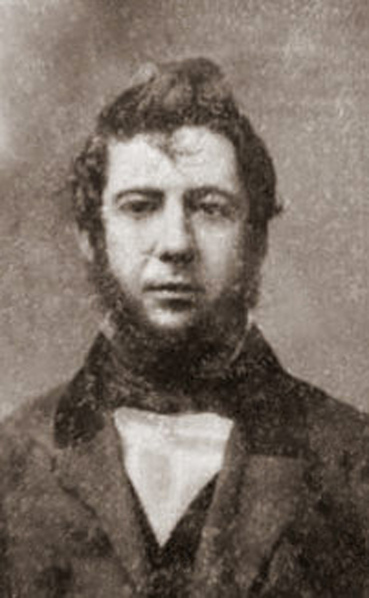
His name is Alexander Cartwright and, as most of you already know, he’s considered by most historians today as the almost unarguable Father of Baseball. The only holdouts are those who trace the genesis of the game to nameless evolutionary forces that shaped the sport from its roots in either American town ball or English rounders. Of course, we probably should also acknowledge the possibility that there still exists a small population of folks out there too that never got the word about Abner Doubleday either, but that tiny sub-group grows smaller by each passing year.
I’ll settle for “Papa Alex” as the most identifiable father of our great game. As far as I’m concerned, Cartwright and his new rules for playing the game on the plains of the Elysian Fields near the Jersey Shore in the mid-1840’s were the existential equivalent to the “Big Bang” event in the evolving history of baseball. Once the basic baseline length was set at 90 feet, and a few other structural rules about puts out, balls, strikes, and play by innings were put in motion to evolve into their current form, baseball had the fuel it needed to go the whole distance.
Cartwright did not think out the needs of the game all by himself. The Knickerbocker Rules developed by Cartwright’s Knickerbocker Base Ball Club by 1845 were the product of a committee put in place for this purpose, but it was the energy and leadership of old Alex that got the ball of innovation rolling.
Laying the field out in a diamond shape, with its three bases and home all configured at right angles, and each set 90 feet apart from home to first, first to second, second to third, and third to home – well, that pretty well set in motion the defining structure of what a team had to accomplish, by intellectual stealth or mindless power, to win a game. Cartwright also gave us “three strikes and you’re out” forever, and he forcefully led the game away from the New England practice of “plunking” runners with a thrown ball as a means of retirement. Tags and force plays would now be the only normal back ups to strike outs and caught flies. Of course, setting the number of game-active players at any time at “9” for each team was also very important to the development of fielding strategies.
Here is a Baseball Almanac presentation of the Knickerbocker Rules for Baseball:
http://www.baseball-almanac.com/rule11.shtml
So, Cartwright simply didn’t do all he did for the game without help, nor was he only possessed by thoughts of baseball. Alexander Cartwright had more than one dream. In 1849, he fled New York for the California Gold Rush and later moved from there to Hawaii, where he taught baseball to residents and natives of the Sandwich Islands. In Hawaii, Cartwright spent a number of years working as a fire chief and he was also very active in local politics. He died in Oahu in 1892 at the age of 72, but to very little attention from the powers-that-be in the game back on the mainland. By the 1890’s, former pitching great and evolving baseball equipment magnate Albert Spalding was coming into his own as a force behind the scenes – the same force that sixteen years later would buy into the unfounded legend of Abner Doubleday as baseball’s “inventor.”
Had Cartwright and Spalding been socially closer, history night have developed clearer, sooner.
Spalding passed through Hawaii with a world baseball touring group late in Cartwright’s life. They stopped briefly in Oahu for a banquet, but Spalding had no time to arrange a contact with Cartwright.
Fortunately, Alexander Cartwright was never totally forgotten. He was inducted into the Hall of Fame in 1938 and, in 1953, the United States Congress even officially declared him to be the “inventor of baseball.”
Happy Father’s Day, Alexander Cartwright. I think the following picture best describes how it all came about.
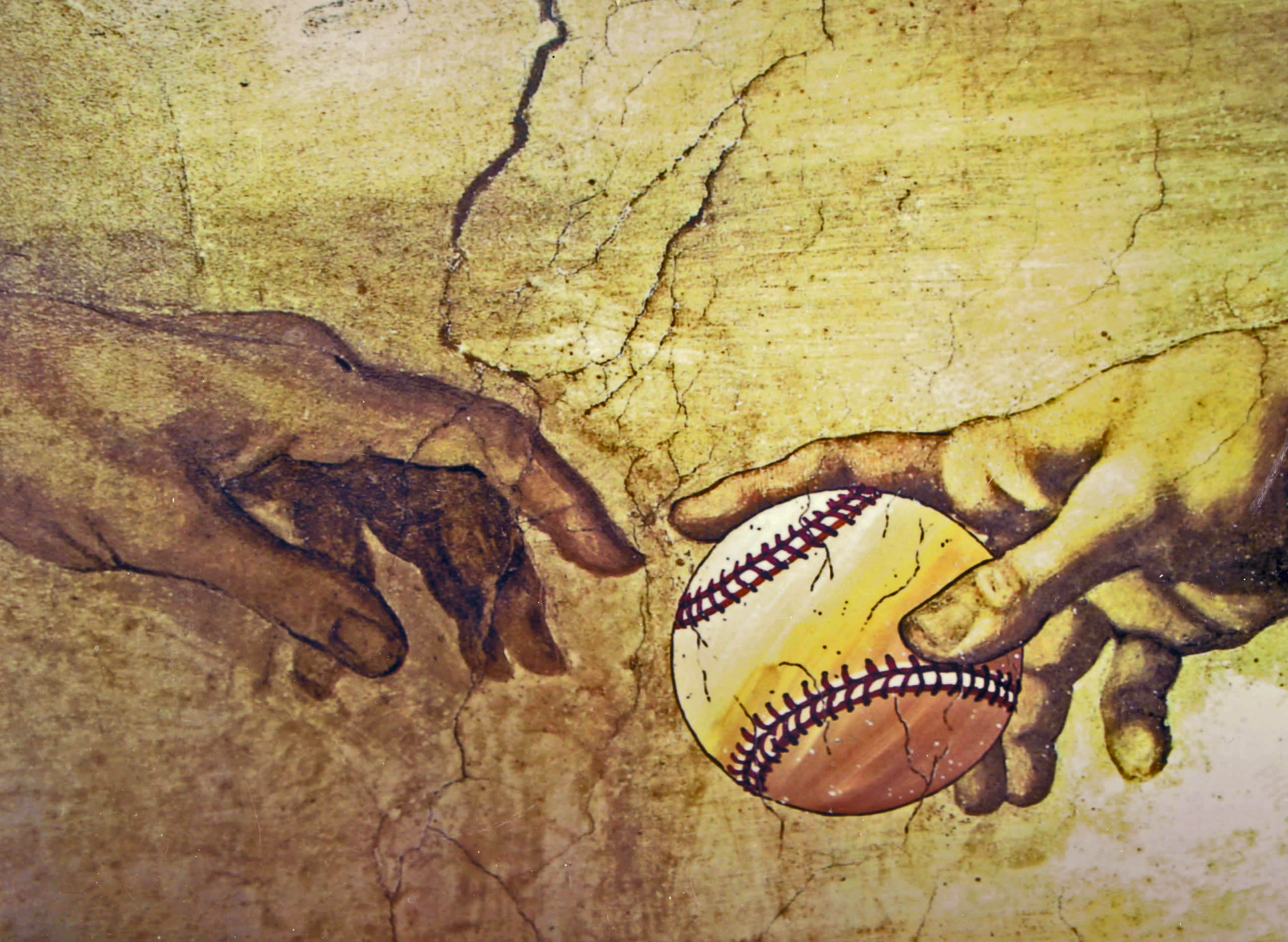
In the big inning, God said to Alex, “Go and invent the game of baseball in my behalf so that people will have some glimpse of what eternal life is like behind the Pearly Gates – and please save this original first ball. It’s going to be worth something someday.”
 Houston, Baseball, & Other Musings.
 The Pecan Park Eagle