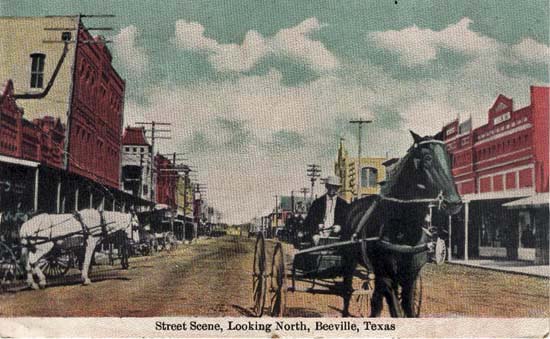
Looking North on Washington St., Near the Turn of the 19th Century to the 20th.
This recently acquired postcard of Beeville, Texas, my birthplace and home until my family moved to Houston on my 5th birthday, December 31, 1942, also managed to set off a flood of old thoughts about Beeville, most of which we have covered here in previous columns. Today is an attempt to string a few Beeville photos together in ways that tell a story of Beeville the town and its contributions to the sport of baseball.
If you look just the other side of the white horse in the above photo’s lower left side, you will be symbolically introduced to the one-story red brick building above the horse that served as the locale of the Beeville Bee, my grandfather’s first newspaper in town from 1886 until today, when it is now long ago out of the family and known as the Beeville Bee-Picayune. Grandfather (William O. McCurdy) started the operation alone as a 20 year-old and he remained in business until his early death from tuberculosis at age 47. He died at Santa Rosa Hospital in San Antonio in May 1913, the same place where Hall of Fame lefty Rube Waddell also passed away nearly a year later in April 1914 at age 37.
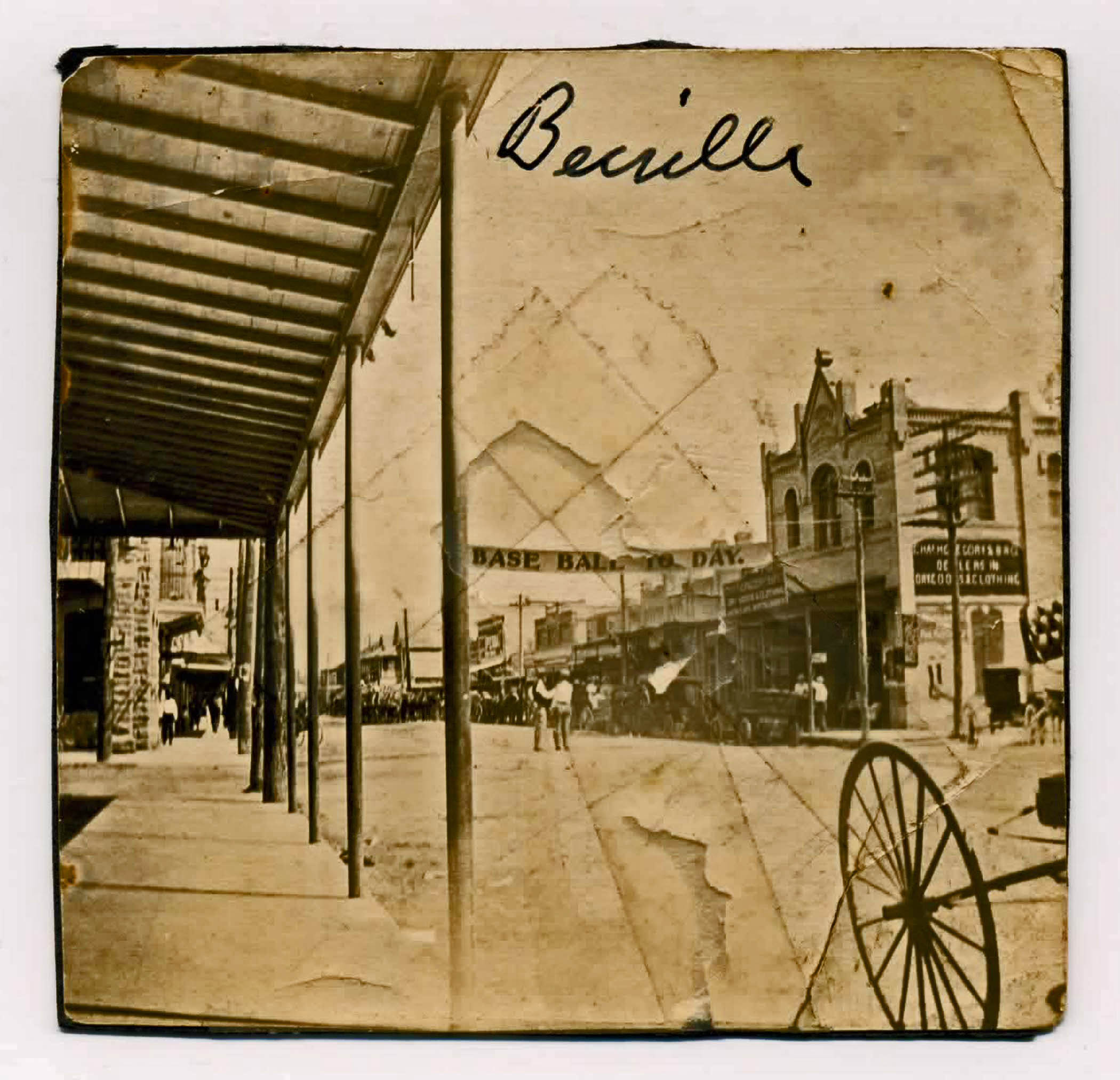
Grandfather took this picture from the front door of The Bee, also looking N across the street to the “Base Ball To Day” banner that straddles Washington. Date of the photo is now thought to be 1910, Beeville’s first year in professional baseball.
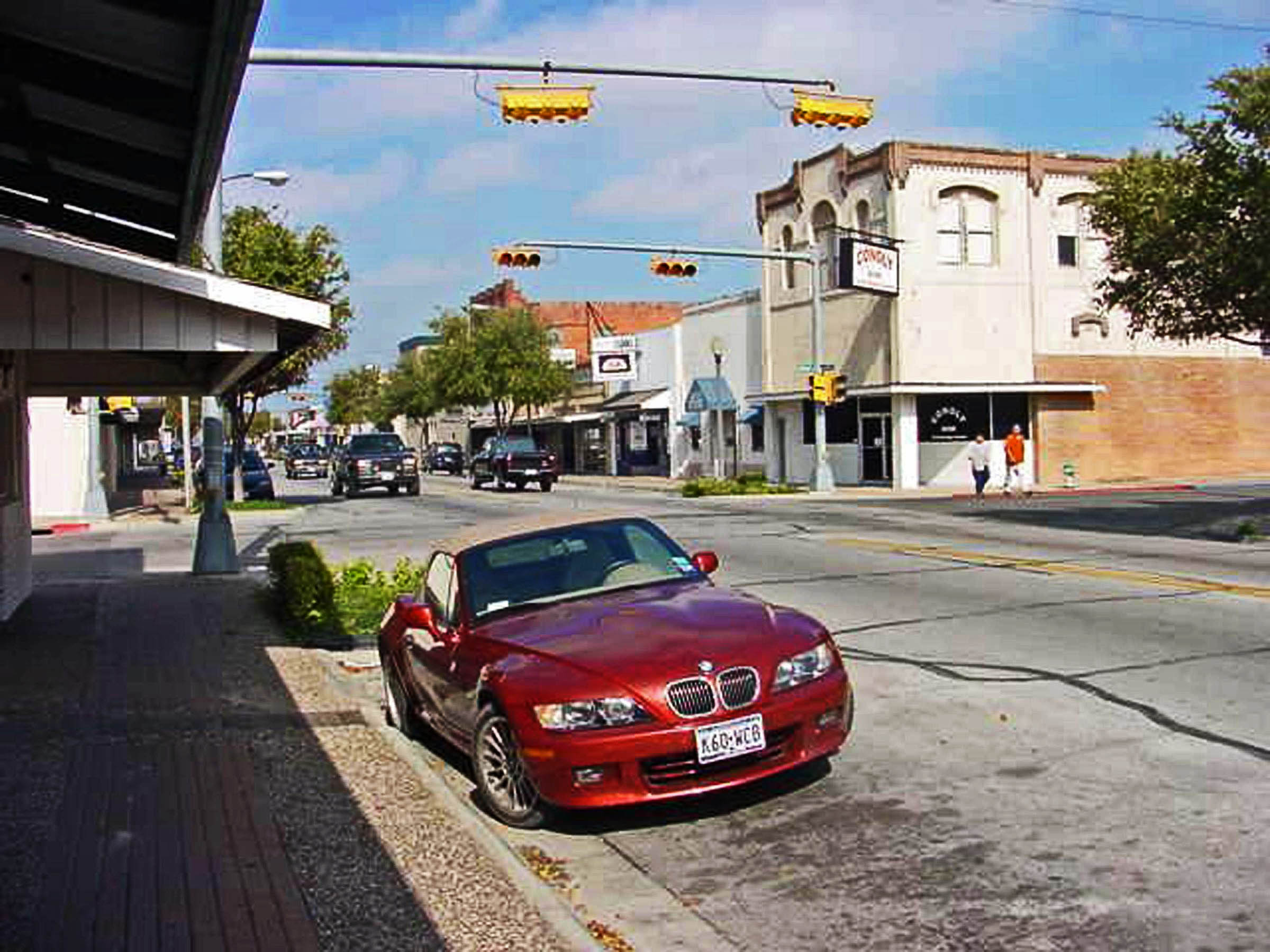
Here’s the same perspective photo I took in 2001 of my grandfather’s work in the previous shot so many years earlier.
As is true in most “Then and Now” comparative photos, some things change big time time. And some things seem to remain the same.

Masthead banner of the Beeville Bee in 1889. If it were a little larger here, you would also see that the “influence” of The Bee reaches to the far right geographical side of the picture and the little town of Houston.
Grandfather was a populist and a champion of the little guy in his day. I’ve always regretted that he had to die a full quarter of a century prior to my birth, but I’ve also been grateful that he was a writer. Writers always leave their words and often a part of their soul in print.. He was also funny. For example, in his early years, Grandfather relied a lot on local “write-ups” of small ton events for some “space-filling” among his patent press news and editorials. His patince wor thin one year, however, when some readers down in Port Lavaca waited until nearly Easter to send the previous Christmas Party Report to The Bee for publication.
The Port Lavacan social write-up didn’t make it into print by The Bee, as Grandfather McCurdy explained in this light-hearted, but serious explanation that did appear:
“We regret to inform our friends down in Port Lavaca that The Bee is unable to publish the report of their Christmas ‘doings’ as we are now on the clock and ready to roll into Easter. Our local Bee contributors are deeply appreciated, but all need to member this simple fact. – The hoary hand of time has quite a different effect upon local news from what it does to the aging of wine. – It doesn’t get better with age.”
Beeville, Texas today is a city of about 14,000, Its economy is supported by cattle, oil and gas, agriculture, and the presence of a state maximum security prison. It is located 180 miles southwest of Houston on US Hwy. 59. It is 90 miles south of San Antonio and 50 miles north of Corpus Christi.
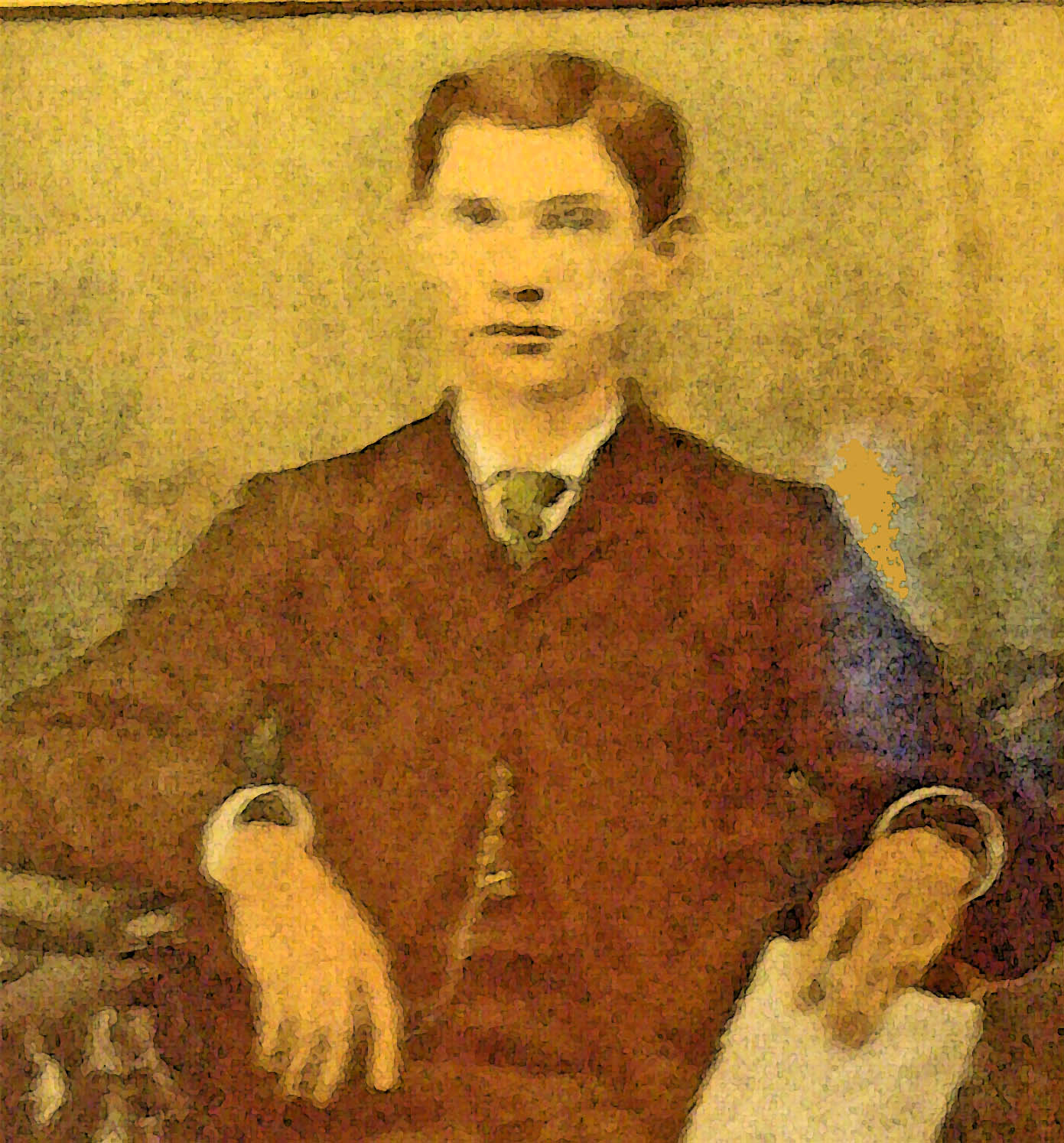
William O. McCurdy
Publisher, Editor, Reporter
The Beeville Bee
1886-1913
“The Mason (TX) News wants an editor who can read, write, and argue politics, and, at the same time be religious, funny, scientific, and historical as well; write to please everybody, know everything without being told; always have something good to say about everybody else; live on wind, and make more money than enemies. For such a man, a good opening will be made in the graveyard!”
~ W.O. McCurdy, Editor, The Beeville Bee, May 3, 1889.
NOTE: Grandfather was age 23 when he published that typical-of-him declarative statement.
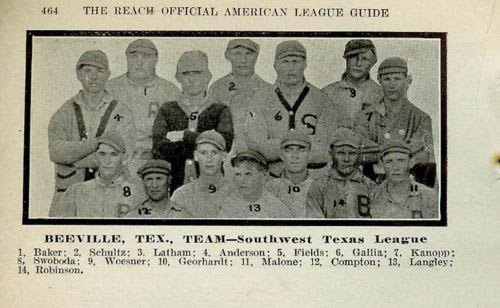
The Beeville Orange Growers, 1910.
The Beeville Orange Growers existed as Beeville’s first foray into professional baseball as members of the Southwest Texas League in 1910-11. The loop collapsed from a lack of financial support and a heavy presence of inter-city ill will doing that probably included some corruption and incompetence among the umpiring officials. In spite of the dark side factors, 1910 produced the first of four native Beevillans who would go on to play major league baseball. (See #6 in the back row, Melvin “Bert” Gallia (RHP, MLB: 1912-1920). The club was also managed for most of 1911 by future UT coaching icon, Billy Disch. Professional baseball made another brief run in Beeville during the late 1920s and also had a brief spin in independent league baseball in the 1970s, but never really gained a permanent home in the little cattle, ad, and oil community that loved playing the game as an amateur town team in some form well into the 1960s.
THE FIVE NATIVE BEEVILLIANS OF MAJOR LEAGUE BASEBALL
1) MELVIN “BERT” GALLIA: LIFE SPAN: 1891-1976; RH PITCHER; MLB YEARS: 1912-1920; MLB RECORD: 66 W – 69 L – 3.14 ERA.
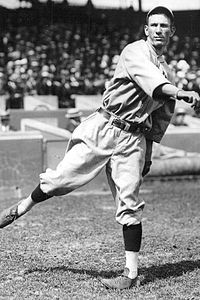
BERT GALLIA
BEEVILLE NATIVE
MLB: 1912-1920
2) CURT WALKER: LIFE SPAN: 1896-1955; OUTFIELDER, BL/TR; ; MLB YEARS: 1919-1930; BA: .304,; 2BH: 235; 3BH: 117: HR 64; Struck out only 254 times in 5,575 plate appearances.
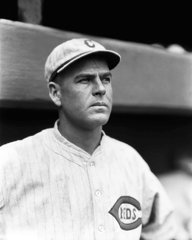
CURT WALKER
BEEVILLE NATIVE
MLB: 1919-1930
TEXAS BASEBALL
HALL OF FAME
3) LLOYD “LEFTY” BROWN: LIFE SPAN: 1904-1974; LH PITCHER; MLB YEARS: 1925, 1928-1937; 1940; MLB RECORD: 91 W – 105 L – 4.20 ERA.
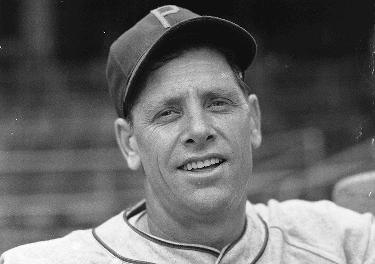
LLOYD “LEFTY” BROWN
BEEVILLE NATIVE
MLB YEARS: 1925. 1928-1937, 1940.
4) RUDY JARAMILLO: Life Span (1950-Still Living) Rudy never played in the majors, but the BL/TR former minor league outfielder/first baseman excelled for years as a major league batting instructor for the Texas Rangers. His work was good enough to get him elected to the Texas Baseball Hall of Fame in 2001. He was every step of the way accepted for his employment as a major league asset to the clubs that employed him as an effective teaching coach.
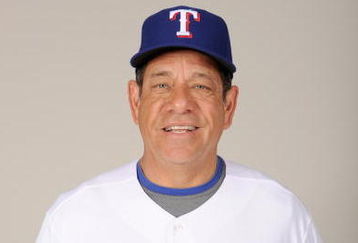
RUDY JARAMILLO
BEEVILLE NATIVE
MLB BATTING COACH
TEXAS BASEBALL HALL OF FAME
5) EDDIE TAUBENSEE: LIFE SPAN: 1968 – Still Living; CATCHER, BL/TR; ; MLB YEARS: 1991-2001; BA: .273,; 2BH: 251; 3BH: 9: HR 94.
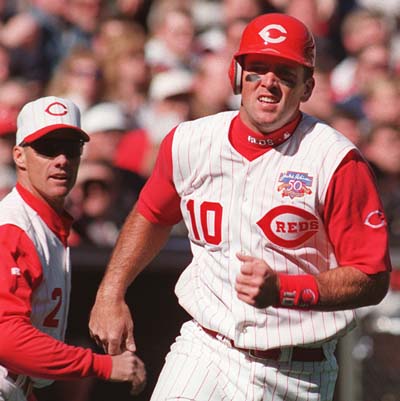
EDDIE TAUBENSEE
BEEVILLE NATIVE
MLB YEARS: 1991-2001
The people of baseball today still love baseball:
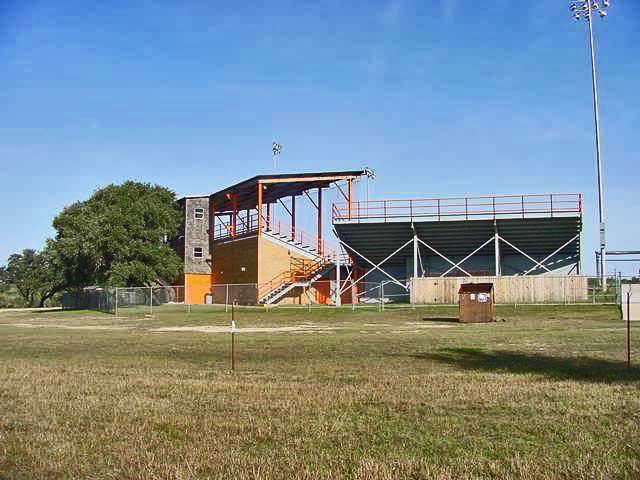
Joe Hunter Field at Coastal Bend College
Beeville, Texas
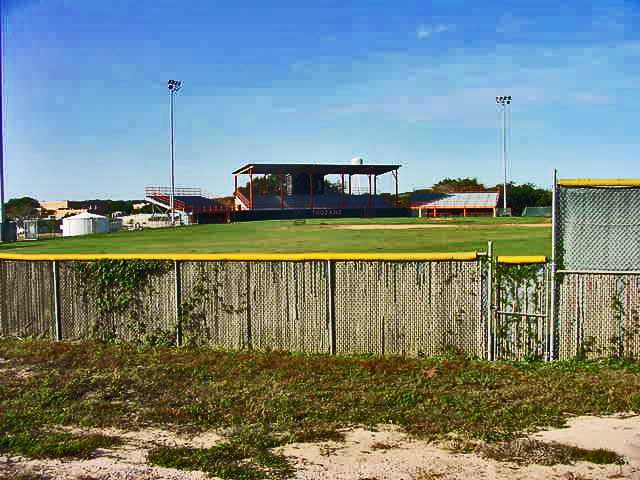
Joe Hunter Field
From Beyond the Wall
Many of them also love art. The Beeville Art Museum recently received a nice review in The Houston Chronicle. Here are four outside photos of the approximate grounds that once served as land belonging to the Hodges family back in the 19th century:
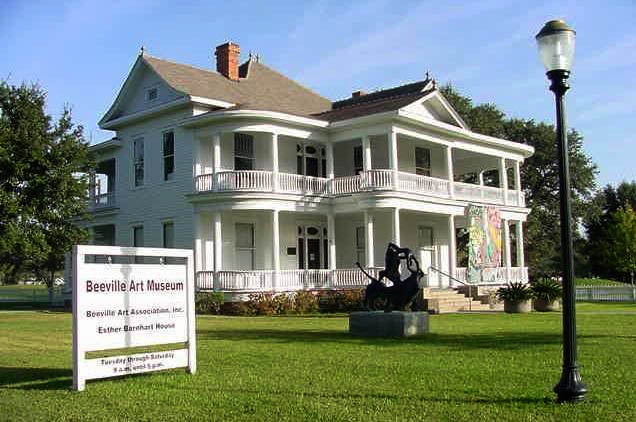
Beeville Art Museum
Beeville, Texas
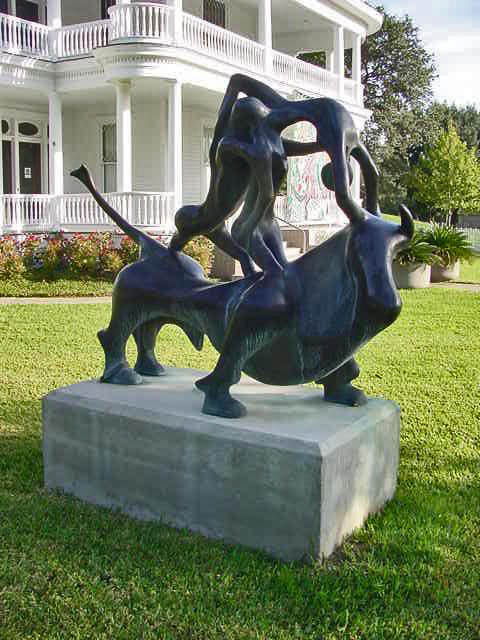
Beeville Art Museum
Beeville, Texas
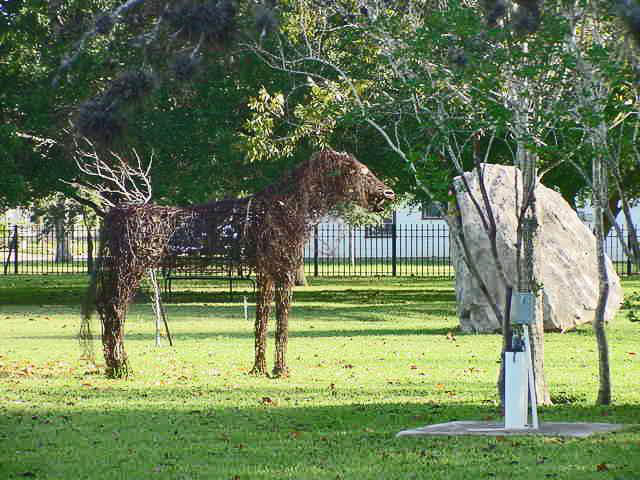
Beeville Art Museum
Beeville, Texas
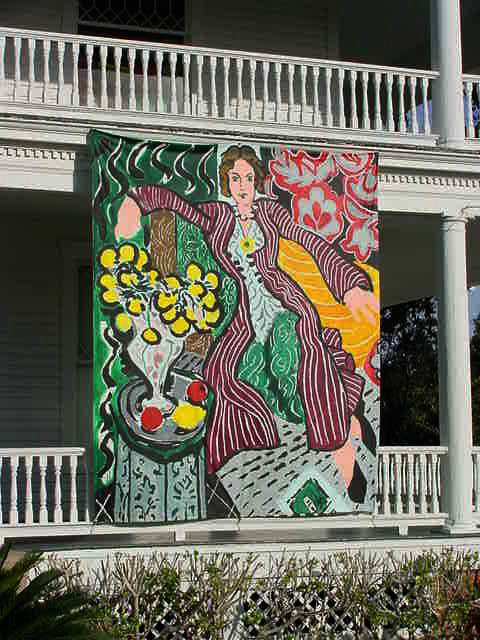
Beeville Art Museum
Beeville, Texas
Meanwhile, something new and creative found The Beeville Bee once this column went to digital print this morning. Lance Carter. that terrific professional photographer who helped us as a researcher during the SABR Early Houston Baseball book project took it upon himself to do one of his “Ghosts of Baseball” photo art jobs on those two then and now (1910 and 2001) shots from the same vantage point of downtown Beeville that I presented earlier in this column. To get the great effect that you shall see in the following photo, Lance superimposes one photo on top of the other and than brings them to visual life again in a way show some of the new and old life aspects bound together as through that spot has been forever frozen in time. I also think I then got Lance Carter’s agreement to do a “Ghosts of Baseball” (or the Houston Past and Present) as a pictorial using the same technique in the near future.
Here’s the Carter “Ghost” version of my two previous Beeville main street photos from 1910 and 2001:
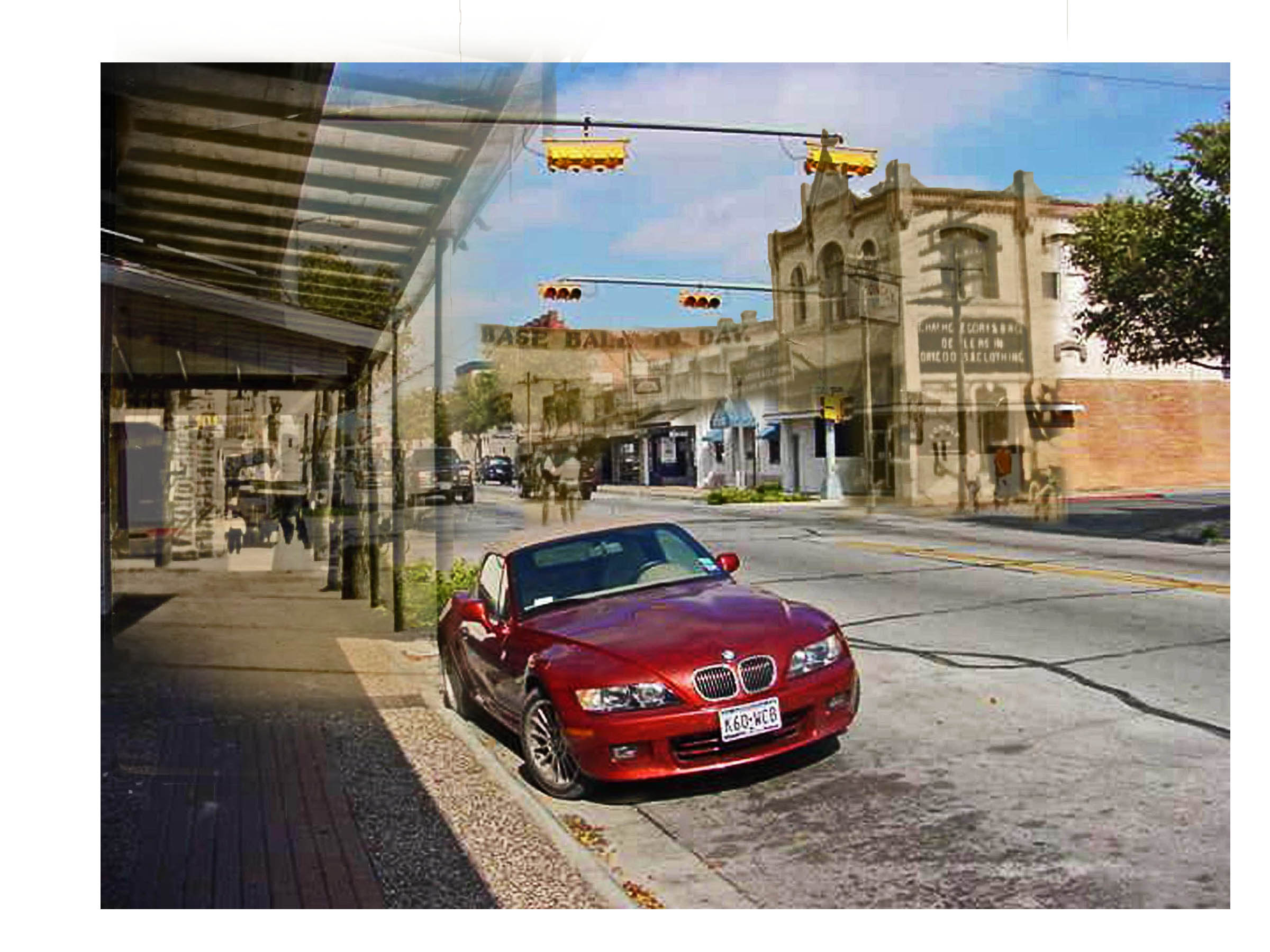
Ghost of Baseball
1910 and 2001
Beeville, Texas
By Lance Carter
And, if you’ve never seen Lance Carter’s photo website, check it out at www.lancepcarter.com – or visit with Lance at www.facebook.com/lpcphoto
That’s enough of Beeville for now. Have a nice Thursday, everybody!
 Houston, Baseball, & Other Musings.
 The Pecan Park Eagle