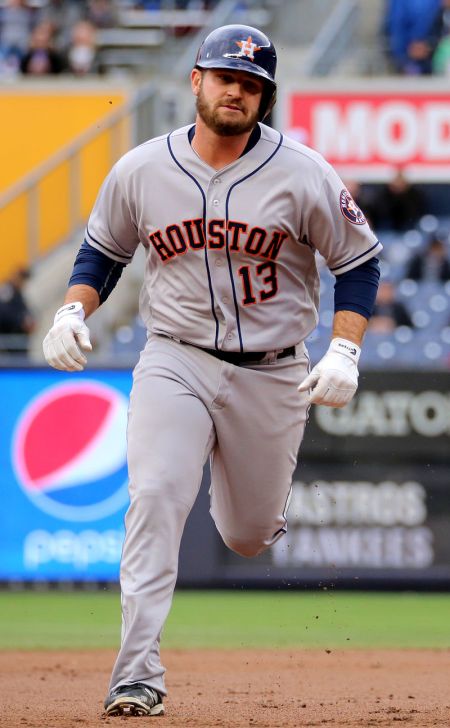
Pecan Park Reverie: Taking Mental Pictures

August 9, 2017

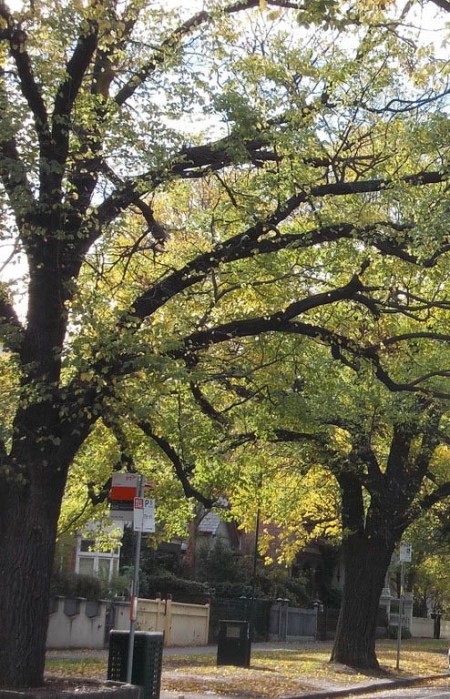
Those big trees with ascending limbs were a lot of fun.


During the early post-World War II period, we had a game we played as Pecan Park kids that required both a tall tree and a soft landing spot underneath. We called it the “taking mental pictures” game.

Our perfect spot for the game turned out to be the big elm tree in the back yard of the McGee house. The McGees lived right across the street from the McCurdys. The McGees also were one of very few childless couples in the block, but they never seemed to mind us taking our games onto their property without ever asking permission.

We liked to play a game we invented called “Taking Mental Pictures” in the McGee’s back yard because of the big elm tree that grew there. In the moments prior to each game we played, the nightmare elm called to us like the “Siren of Stupidity”.

“Taking Mental Pictures” was an easy, if not intelligent game to play. And we played it with daredevil abandon to any risk involved. And here’s how:

One at a time, we climbed up the McGee back yard elm tree trunk, about four feet up from the ground, and then we took the first long ascending lower limb that jutted out toward the middle of the back yard. One at a time, we each started moving out on it like tight rope walkers with a little a little help from the smaller steady-branches that descended into our moving field of vision. At all times, we had about four or five climbers in the tree – and everyone else, the watchers, seated in a semi-circle on the ground around the target jump area.

One catch: If you weren’t willing to be a jumper, you weren’t allowed to stay in the yard and be a watcher.

Back to the actual point of the game:

When an individual jumper reached the approximate middle yard area, where the carpet grass below was very soft during a normal summer rainy season, he stopped at about 15 feet up from the ground and gave notice that he was about to jump. (Note: Only guys played this game. We would have accepted girl players, but the girls on our block chose to leave themselves out of the mix. The easy explanation: Remember what we said. – This wasn’t an intelligent game.)

The “jumper” gave notice to the watchers: “be ready”. It was time to take mental pictures of what someone from a great height looked like jumping from the sky – without having any film or Kodak camera with us as “watchers” to preserve their short moment of flight or descent, however best you might choose to describe it.

By closing our eyes quickly and leaving them completely shut at our own chosen moments during the jumper’s descent, we watchers learned that the mind captured a still shot image of the person jumping. Arm and leg positions were frozen differently in each mind. Sometimes the jumper’s expression was clear. They were all like individuals photos. We simply couldn’t show them. We had to hold them in our minds and try to describe what we saw to each other – without the help of technology.

Amazingly, I don’t recall any serious energies resulting from this little exercise in free play.

Oh well. Too bad we didn’t have smart phones in our day. We might have been smart enough to not be jumping out of trees from leg, arm, and neck breaking heights.

Besides, today’s Mr. and Mrs. McGee couples wouldn’t want to risk the liability of allowing their neighbors’ kids to risk harm to themselves on their personal property. Had a kid been injured or killed today playing the “mental pictures” game under these same circumstances, some lawyer probably would quickly make an “attractive nuisance” case against the McGees for owning an elm tree that was so alluring to the kids that it caused them to trespass onto the grounds for the purpose of jumping from the elm tree’s branches.

Any current legal opinion on the inherent liability problem that would exist today for property owners from an injury that occurred under these circumstances will be most welcomed as a comment upon this column.

********************

Bill McCurdy

Principal Writer, Editor, Publisher

The Pecan Park Eagle


The Astro Tree

August 8, 2017

Sunday, August 7, 2017
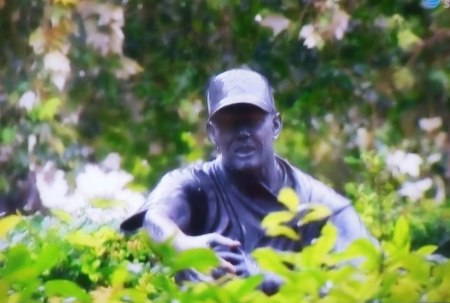
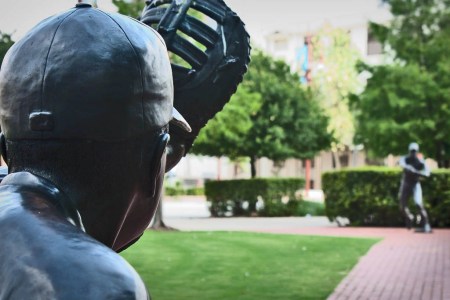
The statue of Craig Biggio at MMP is completing the 4-3 play he does everyday, apparently across the bush to the statue of fellow Astros Hall of Famer Jeff Bagwell.

Any Other Day at MMP ~
Biggio now stands in front of the bush to make the Bagwell play. ~ So how was Craig able to get behind the bush this past Sunday? Was he seeking shelter from the rain under that tree?


The Astro Tree

By Bill McCurdy


I think that I shall never see

A DP messed up by – a tree.


A tree whose Houston mouth is sipping

All those sweet water skies keep dripping;


A tree that looks at Bags all day,

As Bidge throws hard to make the play;


A tree that may in Summer bear,

Some nearby echoes of despair;


But now – more often – it’s the roar,

Of winning madness – we explore;


Never forget for a moment – the men in bronze outside;

Their 4-3 perfection daily – is forever’s all-weather tide.


And thank you, Craig and Jeff, – wherever you may be;

For steering Astro spirits – from here to sweet eternity.

********************


AMERICAN LEAGUE WEST STANDINGS

THROUGH GAMES OF MONDAY, AUGUST 7, 2017 

RANK AL WEST W L PCT. GB
1 ASTROS 71 40 .640  
2 MARINERS 57 56 .504 15.0
3 ANGELS 55 58 .487 17.0
4 RANGERS 53 58 .478 18.0
5 ATHLETICS 50 62 .446 21.5

AMERICAN LEAGUE WEST GAMES

THRU GAMES OF MONDAY, AUGUST 7, 2017

ORIOLES 6 – ANGELS 2.

(only game played today)

*********************

Bill McCurdy

Principal Writer, Editor, Publisher

The Pecan Park Eagle

Maxwell Kates: A Brief History of the Washington Stars

August 7, 2017

Dear Readers,

Please make sure you read this wonderful contribution by another of our talented independent writing contributors to the baseball richness of The Pecan Park Eagle, Mr. Maxwell Kates. Besides, you never know when we may pull a pop quiz on you around here and expect you to know something about the brief history of the Washington Stars.

Regards,

Bill McCurdy, Owner

The Pecan Park Eagle

********************

A BRIEF HISTORY OF THE WASHINGTON STARS

By Maxwell Kates

(Originally appeared in “The National Pastime” in 2009)


Have you ever wondered why Willie McCovey and ten other Padres were identified on their 1974 Topps cards as “Washington National League”?

Willie McCovey
in his
1974 Topps Card

The history of the American League in Washington was not among the more glamorous chapters in baseball history. In 71 seasons, two franchises called the Senators combined for only three American League pennants and only one World Championship, in 1924. The original American League Senators, who moved to Minneapolis-St. Paul in 1960, ended 24 of 60 seasons in seventh or eighth place. Only once, in 1946, did either Washington franchise draw better than one million spectators. As elected representatives and government official comprised a fair representation of the fans at Griffith and RFK Stadiums, there were likely at least as many cheering for the visiting teams. An expansion franchise was awarded to Washington in 1961, and after eight second division finishes, the Senators showed flashes of brilliance by winning 86 games for new manager Ted Williams. Earlier that year, the team was sold for $9 million to Minneapolis hotelier and Democratic National Committee treasurer Robert Short. The 1969 Senators proved to be a one-year wonder, returning in 1970 to their habitual doormat as “first in war, first in peace, and last in the American League.” Despite high-profile trades, which brought Curt Flood and Denny McLain to the District of Columbia in 1971, the Senators finished 63-96. Only the presence of the Cleveland Indians spared them last place in the American League East.

High ticket prices to see a mediocre team and an unsafe neighbourhood kept fans away to augment the losses on Short’s financial statements. The result – a September announcement that Short was moving the team to the Dallas-Ft. Worth Metroplex. Washington fans saved their worst for September 30, the final American League game played in Washington, when unruly behaviour caused umpire James Honochick to forfeit a 7-5 lead to the visiting New York Yankees.
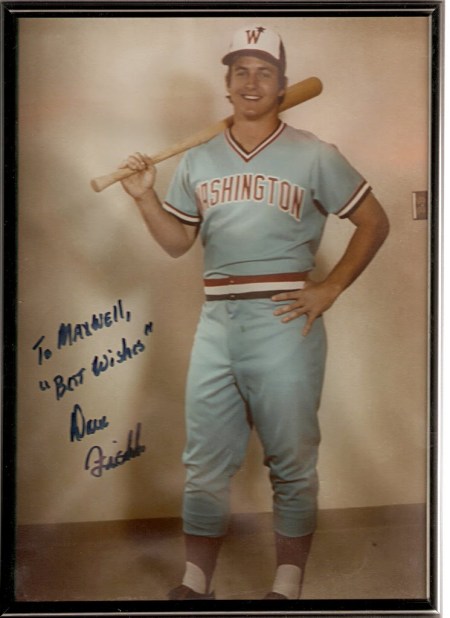
Photo of Dave Freisleben.
It has been signed to writer Maxwell Kates.

The city of Washington and its business leaders spent the next 33 years courting existing and expansion franchises to return Major League Baseball to the nation’s capital. Before the American League approved a bid to dispatch the Senators to Texas, it received a counteroffer from supermarket magnate Joseph Danzansky. Although he pledged to keep the Senators in Washington, his offer of $8.4 million was deemed “insufficient immediately” by American League owners and baseball commissioner Bowie Kuhn. Also in 1971, Cleveland restauranteur Vernon Stouffer announced that he was selling the Indians. Had Danzansky’s bid succeeded, he would have transferred the Indians to Washington before the 1972 season. However, the American League chose to approve a sale to lawyer Nicholas Mileti, who kept the team in Cleveland.

Commissioner Kuhn developed a plan in 1975 that would see every major league team play two home games at RFK Stadium, but it didn’t happen. When the American League decided to expand in 1976, Washington was one of the finalists slated to join Seattle before junior circuit owners voted on Toronto. After Edward Bennett Williams purchased the Baltimore Orioles in 1979, rumours persisted that the noted criminal lawyer would move the team to Washington until taxpayers voted in 1988 to approve the construction of a new stadium at Camden Yards. Professional baseball did return to the Washington area in 1984 with the arrival of the Prince William Pirates of the Carolina League. Minor league clubs were subsequently awarded to the Maryland communities of Frederick and Bowie. When the Nationals played their first game in 2005, they ended a 106-year hiatus of National League baseball in Washington. However, the San Diego Padres were the most likely candidate to relocate to the District of Columbia. During that summer of streaking, odd/even gasoline rationing, and presidential resignation, Washington nearly fielded a team featuring Willie McCovey and Dave Winfield in its lineup and a pitching rotation bolstered by Randy Jones. To borrow a Bob Prince aphorism, they missed “by a gnat’s eyelash.”
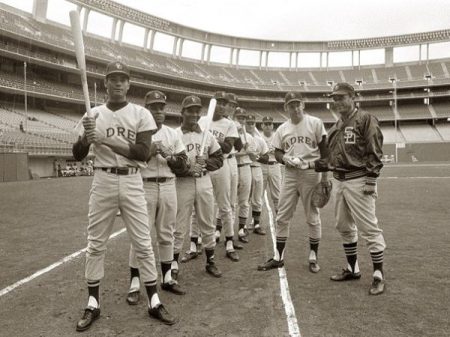
The 1969 San Diego Padres at San Diego Stadium with manager Preston Gomez

The San Diego Padres initially capitalized on the city’s proud history as a proud history as a Pacific Coast League franchise by sweeping the Houston Astros in its first three games. As the Padres sat atop the National League West, coach George “Sparky” Anderson” thought the Padres could play the 1969 season undefeated. Batting instructor Wally Moon reminded Anderson that “come August, we’ll be so far out, a search party couldn’t find us.” Moon was correct. Over the ensuing five years, the Padres never won more than 63 games, finishing within 28 1/2 games of the divisional lead, escaping last place, or even drew one million fans. Tying the Montreal Expos for the worst National League record in 1969, at 52-110, the Padres were awarded the first choice in the June 1970 draft and selected Mike Ivie, a young catcher from Atlanta. After turning professional, however, Ivie developed a mental block behind the plate. He had no trouble making the throw to third base or throwing out base runners at second, and he was equally adept at making the throw to first base, but what he couldn’t accomplish was throwing the ball back to the pitcher. Rick Monday compared Ivie’s catching skills to “a $40 million airport with a $30 control tower.”

Whenever the cellar dwelling Padres developed clever promotions, it backfired. When the San Francisco Giants visited for a weekend series in September 1969, future Hall of Famer Willie Mays was sitting on 599 lifetime home runs. Giants’ manager Clyde King told Padres President E. J. “Buzzie” Bavasi that Mays would rest for the first game, on a Monday night. The Padres’ front office decided to open the left field bleachers for the second game of the series, offering a new Chevrolet to any fan lucky enough to catch Mays’ 600th home run. More than 1,200 tickets had already been sold when King called on Mays to pinch hit in the top of the ninth of Monday. Facing Mike Corkins, Mays hit his 600th home run into a sea of empty bleachers. Promotion ruined.
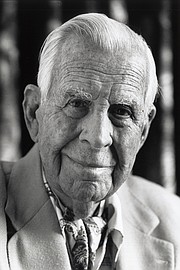
C. Arnholt Smith, Owner
San Diego Padres, 1969-73

The Padres were owned by banking magnate C. Arnholt Smith. The son of a German baker, Smith was born in Walla Walla, Washington in 1899, and was raised in San Diego. Quitting school at age 15, he rose up the ranks from messenger and grocery clerk to purchasing a controlling interest in the United States National Bank in 1933. Over the next two decades, Smith’s empire grew to include the Westgate Hotel and other real estate properties, transportation companies, silver mines, and a tuna cannery. The man known as “Mr. San Diego” bought the Padres, then a Pacific Coast League franchise, in 1955 for $30,000. When the National League awarded an expansion franchise to San Diego in 1968, Smith produced the $10 million fee to purchase the big league club. As a major league owner, he was unwilling to spent the money necessary to fund player development.

After the Ivie fiasco, the Padres drafted infield prospect Doug DeCinces. Potentially an anchor at third base for years to come, DeCinces asked for a $6,000 bonus to finance his college. When the Padres could offer only $4,000, DeCinces signed with the Baltimore Orioles. In one of the last interviews conducted before he died, Bavasi blamed a lack of television revenue as a source of the Padres’ cash flow problems. “From 1969 to 1971, we were never featured on Game of the Week, so we never received any TV revenue.” At one point, San Diego management asked its players to wait until Monday to cash the checks they received on Friday. The Padres were able to sign bona fide prospects like Dave Winfield by 1973, but by then, the writing was on the wall.
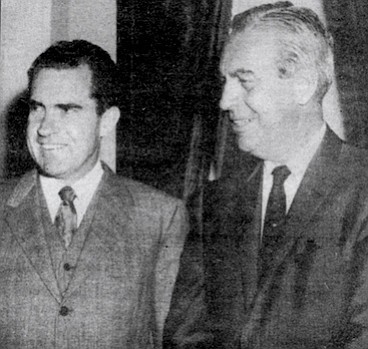


C. Arnholt Smith with Richard Nixon

One might wonder how a successful businessman such as C. Arnholt Smith was unable to pay his players and lose a star like DeCinces over a $2,000 differential. In the spring, the U. S. Comptroller of the Currency forced Smith to step down as the chairman of the U. S. National Bank. At the time, Smith owned 28 percent of the 200,000 shares outstanding. According to Time Magazine, the bank loaned greater than the legally permissible 10 percent of its assets to companies controlled by one individual, who happened to be C. Arnholt Smith. Meanwhile, the U. S. National Bank showed losses and uncollectible loans of $143 million, a majority of which were represented by bad debts on Smith’s companies. Smith also owed the Internal Revenue Service over $22.8 million in unpaid taxes, plus interest. A staunch Republican and personal friend of Richard M. Nixon, Smith was also being investigated for illegal contributions to the President’s 1972 campaign. The National League made it perfectly clear that they wanted no part of C. Arnholt Smith, and after the U. S. National Bank declared bankruptcy, he was forced to sell the Padres. In 1979, he was convicted of tax evasion and grand theft and served seven months of a one year sentence. He died in 1996, at the age of ninety-seven.

Fred Norman
1972 Topps Card

On May 27, 1973, Joseph Danzansky presented an offer of $12.5 million, which Smith accepted. Danzansky paid a $100,000 deposit in exchange for a pledge that Bavasi would not conduct any player transactions without his approval. With Danzansky installed as the de facto owner, general manager Peter Bavasi soon announced that the Padres were bound for Washington in 1974. In 2005, broadcaster Bob Chandler told reporter John Maffei, “[Bavasi] told everyone to be quiet, not to tell a soul. Of course, it was on the news that night and in the papers the next morning. Two weeks later, we were in Philadelphia and since it’s two hours from D.C., the ballpark was crawling with media.” Meanwhile, the Padres continued to pare its roster to meet its debt obligations. In order to minimize the debt, Danzansky asked Bavasi to deal pitcher Fred Norman to the Cincinnati Reds and infielder Dave Campbell to the St. Louis Cardinals. Bavasi overruled trading pitching ace Clay Kirby, a Washington native who could be a gate attraction.

As the 1973 season progressed, San Diego baseball fans continued to display apathy towards the Padres by drawing as few as 1,413 spectators on September 11. Washington interests were so certain of acquiring the Padres for 1974, the nickname “the Stars” was chosen. Haberdashers designed a sky blue road uniform with Washington emblazoned across the chest, in red block letters. The Stars cap featured a red W, a golden star on a white peak, and a blue background (similar to the Atlanta Braves caps of the era). The Bavasis considered hiring Minnie Minoso and Frank Robinson to manage the Stars, while Topps jumped the gun on its 1974 cards by identifying several Padres a “Washington National League.” For one Padre, reality set in with a visit to the San Diego Stadium clubhouse in December of 1973.

Randy Jones

“Everything in the office was boxed and taped shut,” remembers Randy Jones. “I’m a southern California guy. Grew up in Orange County, played at Chapman College. Now the team was moving across the country. I was bummed.” History has demonstrated that the Washington Stars never played an inning in the National League. Moreover, when play resumed in 1974, the Padres remained in San Diego. What happened?

As the clubhouse contents were ready to be shipped, the city of San Diego filed an $84 million lawsuit against the Padres for breaking its lease on San Diego Stadium. With Smith out of the picture, it became Buzzie Bavasi’s to find an alternate ownership group committed to keeping the Padres in San Diego. He found one in Marjorie Everett, the principal stakeholder in the Hollywood Park racetrack. Everett’s group, which included songwriter Burt Bacharach, matched Danzansky’s offer of $12.5 million.

Dave Winfield

Opposition to the Everett consortium was vocal among National League owners. John Galbreath of the Pirates and Joan Payson of the Mets were particularly vociferous by expressing negative feels over Everett’s dealings in the racing industry. Other owners became suspicious when Everett’s father was tired to a political scandal in Illinois. After the Everett group announced that it would only commit itself to San Diego for “a couple of years,” National League owners rejected her bid, 8-3. Ironically, the alternative bid prompted by the lawsuit may have been enough to keep the team from moving to Washington. Danzansky refused to indemnify the lawsuit and demanded the refund of his down payment. The ownership saga was finally resolved on January 25, 1974, when the Padres were sold to McDonald’s magnate Ray Kroc for $12.5 million.
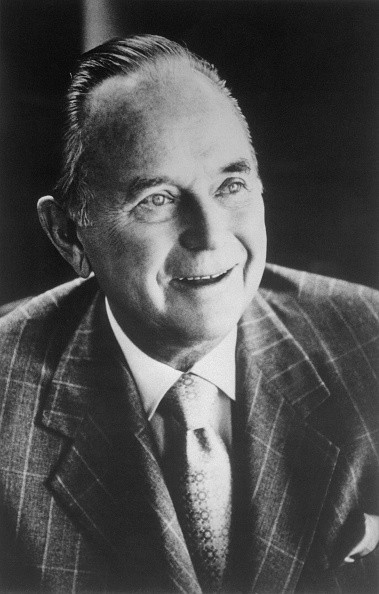
McDonald’s magnate Ray Kroc bought the Padres in 1974

Three decades passed before Major League Baseball returned to Washington with the transfer of the Montreal Expos. Their expansion sisters remain in San Diego to this day.
Winnable And Losable: Two Haves of the Whole

August 7, 2017

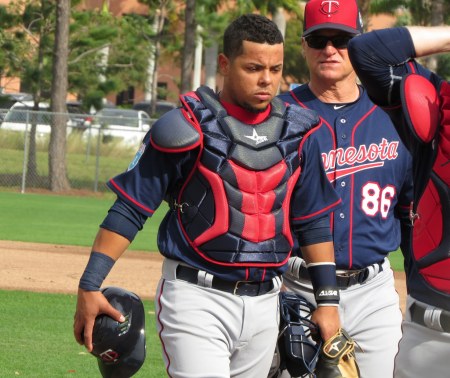
“Don’t sweat the small stuff, Juan! You’re going to have a game catching for the Astros next season that you will never forget!”


“Astros Win Losable Game Due To Amazing Clutch Hitting”

~ SABR Friend, Colleague, and Pecan Park Eagle Contributor, Mark Wernick.

Thanks, Mark, for reminding us that every game that hangs on the often fragile balance between winning and losing is ultimately one team’s loss of a winnable game – or the other club’s adrenaline-pumping victory in an apparently lost cause. Sunday’s bottom of the 9th inning 4-run rally by the Houston Astros produced a 7-6 walk-off game and series win and yet another confirmation that Yogi Berra was oh so right when he advised all of us to always remember that the game “ain’t over til it’s over.”

That truism has never been more alive than it is today with this good hitting Astros ball club. You just never know when it’s going to start shattering the air of any ballpark with doubles, triples, and homers like the sound of machine gun fire at a garage on Clark Street in Chicago. Once the Astros get started in a bottom of the 9th rally situation, they don’t ever seem to stop until they are the only team walking away in joy.

It happened again Sunday, closing out the 7-game home stand on a much happier moment we had a right to expect. For those of you didn’t see or hear it, here’s a brief recap of its unfolding:

Bottom of 9th, Blue Jays leading 6-3, right hand closer Roberto Osuna enter the game to finish the job.

(1) Jose Altuve slaps a one-strike pitch up the middle for a single.

(2) Josh Reddick is called out on strikes on a 2-2 pitch. Reddick’s rage gets him tossed. 1 out; Altuve still on 1st.

(3) Yuli Gurriel bangs the first pitch he sees to left field for a base hit; Altuve moves to 2nd with 1 out.

(4) Marwin Gonzalez works the count to 2-1 before lacing a sharp single to right; with Altuve holding at 3rd, Gurriel hugging 2nd, and Gonzalez now perched on 1st, the bases are now loaded with only 1 out.

(5) Carlos Beltran has a chance for the Grand Slam moment. Not to be this time. Beltran works the account to 2-1 before lashing a ball to the right side; the ground ball turns into a 6-3 force out at 2nd, but Beltran reaches 1st safely to prolong the game as Altuve scores from 3rd. With 2 outs, the score now is 6-4, Blue Jays, with Gurriel now moved over to 3rd and Beltran on 1st.

(6) Alex Bregman crushes the first pitch he sees into the left center gap for a triple, his 8th straight game with an extra base hit, and a ball that scores Gurriel and a sliding Beltran to tie the game now at 6-6, with two outs, and Bregman grinning from 3rd like the potential winning run that he is.

(7) Juan Centeno, a call-up catcher, was down to 1-2 in the pitch count, when he turned the page on the 2017 Astros rally script and promptly dumped a single to right field to score Bregman with the winning run.

Final Happy Dance Card Score: Astros 7 – Blue Jays 6.

********************

AMERICAN LEAGUE WEST STANDINGS

THROUGH GAMES OF SUNDAY, AUGUST 6, 2017 

RANK AL WEST W L PCT. GB
1 ASTROS 71 40 .640  
2 MARINERS 57 56 .504 15.0
3 ANGELS 55 57 .491 16.5
4 RANGERS 53 58 .478 18.0
5 ATHLETICS 50 62 .446 21.5


AMERICAN LEAGUE WEST SCORES

GAMES OF SUNDAY, AUGUST 6, 2017

 ASTROS 7 – BLUE JAYS 6.

 MARINERS 8, 1 – ROYALS 5, 9. (Double Header)

 ATHLETICS 11 – ANGELS 10.

 TWINS 6 – RANGERS 5.


AMERICAN LEAGUE BATTING AVERAGE

THROUGH GAMES OF SUNDAY, AUGUST 6, 2017

RANK PLAYER TEAM AB H 2B 3B HR BA
1 JOSE ALTUVE HOU 423 154 33 3 16 .364
2 CARLOS CORREA HOU 325 104 18 1 20 .320
3 JOSE RAMERIZ CLE 417 132 34 5 18 .317
4 ERIC HOSMER KC 424 134 22 1 17 .316
NR * MARWIN GONZALEZ HOU 300 94 19 0 20 .313
5 JEAN SEGURA SEA 344 107 20 1 6 .311
6 GEORGE SPRINGER HOU 368 114 22 0 27 .310
7 JOSH REDDICK HOU 339 105 25 3 11 .310
8 DIDI GREGORIUS NYY 341 105 16 0 17 .308
9 DUSTIN PEDROIA BOS EE36 103 17 0 6 .307
10 BEN GAMEL SEA 346 105 19 4 6 .303
23 YULI GURRIEL HOU 379 110 30 0 14 .290
34 ALEX BREGMAN HOU 363 99 28 3 13 .273
       

NR * = NEEDS MORE “AB”S TO QUALIFY FOR RANKING.

********************

Bill McCurdy

Principal Writer, Editor, Publisher

The Pecan Park Eagle

Astros Lose Winnable Game To Situational Errors

August 6, 2017

“We’d be happy to come back to Houston for a post-season visit some time, Astro fans, even if it won’t be this year. When we do, just be careful where you park your hopes!”


Saturday night’s 4-3 loss of a winnable game to Toronto due to quirky bounces of the ball, situational thinking errors on infield defensive play, and the second shaky pitching performance of the one guy we got in a deadline trade were hardly encouraging to our hopes for October, but, hey, Cool Hand Luke Gregerson did his job again and Tyler “Great” White supplied us some reason to hope that the challenges of rising to the occasion and our club’s ability to respond to the taste of blood in the water are still our allies. In White’s first time up, he hit his third home run in a row going back to the two he crunched his last two trips to the plate in Friday’s big Astros win. It wasn’t enough to save Saturday, but the delivery by White and another, even earlier bash by Josh Reddick still stood as current reminders of this team’s potential on offense at any time. After Liriano gave up the fatal fourth run to the Jays in the 9th on a sliding missed tag by catcher McCann after a dinker league hit, Cool Hand Luke came in to fan the next man and retire the side without further damage.

Two earlier Toronto runs scored on brain freezes. The first happened with men on first and third when rookie third baseman J.D. Davis came running in to grab a tapper to the left side. He looked briefly to second for a possible force out attempt and threw to first for the out. Had he thought about it earlier, he may have been ready to throw out the runner trying to score from third. He didn’t. And the run scored.

Another time, with a Blue Jay runner at third, White took a slow roller near the bag and threw home for a play by McCann at home. Instead of making the play, McCann just stepped on the plate and walked away, almost as though he thought he had a force out going on at home – which he did not. There was no tag attempt. And another run scored. Not sure what did happen there, but it wasn’t pretty.

When I coached 7-8 year old kid baseball about thirty years ago, we used to do regular infield drills called “What’s the situation?” As a coach, I hoped to teach the kids that they’ve got to stay up with their choices for throwing the ball based upon the game situation – and that they needed to have those best choices in mind before the next ball was hit or thrown to them. The kids learned it well enough to win our district championship.

After last night, I’m thinking. – Maybe the situation defensive drill is not something that only 7 and 8 year olds need.

********************

ASTRO*NOTES

Without even playing, Carlos Correa has now ascended to the #2 spot behind #1 hitter Jose Altuve in the AL batting average race.

As soon as Marwin Gonzalez qualifies with enough “AB”s in the next series, he, Josh Reddick, and George Springer could also be holding down the # 6,7, and 8 spots on the same list.

There still a lot of time for change, but one has to wonder: How long has it been since 5 of the top 8 hitters in the same big league were all teammates? It doesn’t ring any bells with me, but it sure seems like a possibility in 2017.

********************

AMERICAN LEAGUE WEST STANDINGS

THROUGH GAMES OF SATURDAY, AUGUST 5, 2017 

RANK AL WEST W L PCT. GB
1 ASTROS 70 40 .636  
2 MARINERS 56 55 .505 14.5
3 ANGELS 55 56 .496 15.5
4 RANGERS 53 57 .482 17.0
5 ATHLETICS 49 62 .441 21.5
           

AMERICAN LEAGUE WEST SCORES

GAMES OF SATURDAY, AUGUST 5, 2017

 BLUE JAYS 4 – ASTROS 3.

 MARINERS @ ROYALS, ppd., rain.

 ATHLETICS 5 – ANGELS 0.

 RANGERS 4 – TWINS 1.


 AMERICAN LEAGUE BATTING AVERAGE

THROUGH GAMES OF SATURDAY, AUGUST 5, 2017

RANK PLAYER TEAM AB H 2B 3B HR BA
1 JOSE ALTUVE HOU 418 151 33 3 16 .361
2 CARLOS CORREA HOU 325 104 18 1 20 .320
3 JOSE RAMERIZ CLE 414 132 34 5 18 .319
4 JEAN SEGURA SEA 337 107 20 1 6 .318
5 ERIC HOSMER KC 415 131 22 1 16 .316
NR * MARWIN GONZALEZ HOU 296 92 19 0 20 .311
6 JOSH REDDICK HOU 334 104 24 3 11 .311
7 GEORGE SPRINGER HOU 368 114 22 0 27 .310
8 BEN GAMEL SEA 342 105 19 4 6 .307
9 STARLIN CASTRO NYY 316 97 14 1 12 .307
10 DUSTIN PEDROIA BOS 336 103 17 0 6 .307
23 YULI GURRIEL HOU 374 108 30 0 14 .289
34 ALEX BREGMAN HOU 359 98 28 2 13 .273
       

NR * = NEEDS MORE “AB”S TO QUALIFY FOR RANKING.

********************

Bill McCurdy

Principal Writer, Editor, Publisher

The Pecan Park Eagle


JJJJJJJJJJJJ

Nice Stats from AT&T Sports Net Astros Broadcast

August 6, 2017

Jeff Bagwell, First Base
Houston Astros 1991-2005
Hall of Fame, 2017
~ and the kid stayed long enough and played well enough to have been the greatest run producer of his entire career era.


After of a fun season of Todd Kalas and Geoff Blum bringing us these little extra sidebars of relevant history in statistical terms on their AT&T Sports Net telecasts, we decided to capture a couple of good examples to share with those of you who may not be watching – or paying attention. We think the new network and the broadcasting team that includes Julia Morales and variable others is doing an excellent job of presenting the game in a much more enjoyable way this season.

It’s taken science and art about a half century to get televised baseball down to the fine status its achieved, but man! Only those of you who are old enough remember what it was like to try and watch Houston Buffs 1949-50 baseball on a 10″ fuzzy resolution black and white screen, with pictures emanating from one camera behind the batter, will remember the horror of that experience. But that’s a much longer story. One we’ve already described years ago.

These two tables were tailored for quick and easy electronic viewer consumption. The first one simply dramatizes the importance of Jeff Bagwell and Craig Biggio to big league run production from 1991 to 2005, the period of Bagwell’s total MLB career.

NOTES on the Run Production Totals: They are derived by adding together a player’s Runs Scored and Total RBIs over a specific period of time. By year or total career are common, but they may also be used in many of other ways. Comparing how a player performed at various club stops in his career, for example.

The Bagwell figure used below is also an excellent teaching example since his 1991-2005 career total is being used to chart how Jeff did in comparison to all others who played during the years that corresponded to the same period of measurement. A productive player could be included if he played less than 15 years, as long as all those included years also fell between the 1991-2005 Bagwell career range.

Note to remember going into a really simple calculation: Every time a player hits a home run, that feat is recorded as such, but it is also recorded in several other separate batting stat columns. The only ones that concern us here are the “Runs Scored” and the “Runs Batted In” columns.

Doing the Math: Here’s how the calculators determined Jeff Bagwell’s “Run Production” total for 1991-2005 in the first chart below:

(1) They went to  a record book source like Baseball Reference.com and pulled up the page for Jeff Bagwell. (Use the next link to see it for yourself):

https://www.baseball-reference.com/players/b/bagweje01.shtml

(2) They found that Bagwell had scored a total of 1,517 runs under the Standard Batting column marked “R” for that whole 1991-2005 period of his total career; and they also found that Jeff had been credited with 1,529 runs batted in under the column marked “RBI”. Then they added those two figures together and derived a sub-total of 3,046.

1,517 + 1,529 = 3,046.

(3) 3,046 could not be Jeff Bagwell’s final Run Production number for the reason we explained earlier. As with all players, Bagwell’s 449 career home runs already had been added to both the “R” and “RBI” columns all along the way. So, simple as this sounds, what happens next is the follow step. To eliminate the duplication, subtract the number of home runs hit during the period of study (in this case, over the entire Bagwell career), and the derived new figure stands as Jeff Bagwell’s Run Production number for 1991-2005:

3,046 – 449 = 2,597.

(4) Jeff Bagwell’s Run Production Value Number is 2,597 for the 1991-2005 period and it is 62 points higher than Barry Bonds’ registration number of 2,535 for the same period.

(5) And all of that tabular information is available to us this morning because Todd and Geoff’s AT&T Sports Net team flashed both these items shown here on the screen for about 20 seconds each last night during the Saturday Night winnable game loss that the Astros absorbed from those Canadian peckers that fluttered through Minute Maid Park like the Blue Jays of Unhappiness.

(6) Nevertheless, enjoy the tables. And thanks again, AT&T Sports Net!

Major League Baseball

Table One: Run Production Leaders

1991 – 2005

Top 5 Run Producers Runs Produced
1) Jeff Bagwell 2,597
2) Barry Bonds 2,535
3) Rafael Palmiero 2,464
4) Craig Biggio 2,282
5) Frank Thomas 2,281

Table Two: Switch Hitters Only

All Time Extra Base Hit Totals

Top 5 SH Extra Base Hitters Extra Base Hits
1) Eddie Murray 1,099
2) Carlos Beltran 1,070
3) Chipper Jones 1,055
4) Pete Rose 1,041
5) Mickey Mantle 952

With a strong 2017 finish and another season of regular everyday play, it looks like Carlos Beltran has a shot at capturing first place on the leader board for most extra base hits by a switch hitter, if that sort of thing is even important to him at this point in his life, but he certainly doesn’t need to do anything greater here to prove what he’s already shown about his hitting ability.

********************

Bill McCurdy

Principal Writer, Editor, Publisher

The Pecan Park Eagle


Back in the Saddle Again (plus stats)

August 5, 2017

April 7, 2016: Tyler White hits his first MLB HR as an Astro on the road. Last night, on August 4, 2017, White bagged the 9th and 10th HR of his big league career at home in MMP to pace the Houston Astros 17-6 win over the Toronto Blue Jays.


AMERICAN LEAGUE WEST STANDINGS

THROUGH GAMES OF FRIDAY, AUGUST 4, 2017 

RANK AL WEST W L PCT. GB
1 ASTROS 70 39 .642  
2 MARINERS 56 55 .505 15.0
3 ANGELS 55 55 .500 15.5
4 RANGERS 52 57 .477 18.0
5 ATHLETICS 48 62 .436 21.5


AMERICAN LEAGUE WEST SCORES

GAMES OF FRIDAY, AUGUST 4, 2017

ASTROS 16 – Blue Jays 7.

MARINERS 5 – ROYALS 2. 

ANGELS 8 – ATHLETICS 6

TWINS 8 – RANGERS 4.


AMERICAN LEAGUE BATTING AVERAGE

THROUGH GAMES OF FRIDAY, AUGUST 4, 2017

RANK PLAYER TEAM AB H 2B 3B HR BA
1 JOSE ALTUVE HOU 414 151 33 3 16 .365
2 JOSE RAMERIZ CLE 410 132 34 5 18 .322
3 CARLOS CORREA HOU 325 104 18 1 20 .320
4 JEAN SEGURA SEA 337 107 20 1 6 .318
5 ERIC HOSMER KC 415 131 22 1 16 .316
NR * MARWIN GONZALEZ HOU 296 92 19 0 20 .311
6 JOSH REDDICK HOU 331 103 24 3 10 .311
7 GEORGE SPRINGER HOU 368 114 22 0 27 .310
8 BEN GAMEL SEA 342 105 19 4 6 .307
9 STARLIN CASTRO NYY 316 97 14 1 12 .307
10 DUSTIN PEDROIA BOS 336 103 17 0 6 .307
22 YULI GURRIEL HOU 370 108 30 0 14 .292
36 ALEX BREGMAN HOU 356 97 27 2 13 .272
       

NR * = NEEDS MORE “AB”S TO QUALIFY FOR RANKING.

********************

ASTRO*NOTES

Was last night the awakening that many fans have hoped to see? Or was the 16-7 cruncher that the Astros put on the Blue Jays at MMP last night simply what happens when these two clubs meet? The last time these teams played in Canada, the Astros put a 19-1 stomp-and-sting upon the Jays. Maybe the Astros batters simply see the words “Toronto” or “Blue Jays” sprawled out upon the breastplates of those Canadian team jerseys and read something that looks more like “Five-Hour Energy Drink” to their hit thirty eyes.

Perspective. The only thing that last night demonstrated was the fact that, “yes, this is the Astros team we’ve been watching all season.” Even with Correa, Springer, and Altuve all out of the lineup for reasons of injury and rest, the dynamo at work here seems to even have the power to positively infect the performance of everyone else in the lineup. Recent call-up Tyler White kicked in 5 RBI and 2 HR to a mauling that also included homers by Gonzalez, Bregman, and Gurriel. Perspective again. Astros starter Peacock pitched well enough to win a game backed by 16 runs of support, but he still gave up 7 runs in 6 innings of work. Without the flood of run support, a 7-0 loss last night would hardly have won Peacock any confidence medals.

The real test still awaits the Astros in October. Will the Astros be healthy and good enough to put this kind of offense into play, at least, some of the time against the great kinds of pitching they can expect to see in a short playoff series? Scoring one more run per game against their opponents each time remains as all that’s needed. And can this Astros pitching staff hold back the kinds of batters they will be facing in return, come October?

We’ll see. And we can hardly wait.

********************

Bill McCurdy

Principal Writer, Editor, Publisher

The Pecan Park Eagle

A Rainbow Start WIth No End In Sight

August 5, 2017

“Even if you wear it here, they will come.”

Don’t miss the great ESPN article by Paul Lukas for ESPN.Com on the 1975 introduction of the Houston Astros rainbow jersey. It’s dated August 2, 2017 and it amounts to a guided retrospective dialogue conducted by Lucas among the same people, including our own Tal Smith, who conceived, designed, and put it into the marketplace of our minds, changing forever our perceptions of how a major league baseball uniform could look – with a little runaway imagination – and a lot of public presence – over time.

Here’s the link:

http://www.espn.com/mlb/story/_/id/20219881/the-history-houston-iconic-rainbow-uniforms-story-worth-telling

I’ll never forget the first time I saw the design. It wasn’t on the jersey itself, but upon a panel truck that had stopped at a neighbor’s house, sometime in early 1975. I don’t know who the driver of the truck was – maybe he was one of the participants in the article’s retrospective – but my curiosity compelled me to ask about the truck, which also was clearly marked as the new design format for the Houston Astros.

Contact was superficial and hurried as I shouted a friendly question to the driver from my front yard as he scrambled to leave the house he briefly visited.

“Is that the new design for a fleet of Astros panel trucks?” I hollered.

“No, but it is how the new Astros jerseys are going to look!” The man yelled back in a friendly voice.

What a dynamite idea the rainbow turned out to be. Thanks to Charlie Finley, owner of the Oakland A’s, the artistic palate door already had been swung wide open with his early 1970s introduction of how many things a club could do with brightly contrasting jersey combinations of yellow and green. And now the Astros were about to take things to an even wilder level. It was the logical extension of the Aquarian Age, even if MLB was posting no affinity for psychedelic identity through the new rainbow view of things at field level.

And now the rainbow is back – for reverent retro game use – and an everyday apparel option for fans who want to show their historical support for the Astros from the stands – in the company of those artistic hearts who simply love wearing rainbows. Anywhere.

**********

Thanks to Tal Smith and Darrell Pittman for their separate notices about this linked historical article.

**********

Bill McCurdy

Principal Writer, Editor, Publisher

The Pecan Park Eagle


A Brief Astros Catechism (Plus Stats)

August 4, 2017

Carlos Correa
For some Astros, the spark that lights the fire may come again with the sight of Carlos Correa, back in the cage, returning to do one of the things he does so well for the good of the team.


AMERICAN LEAGUE WEST STANDINGS

THROUGH GAMES OF THURSDAY, AUGUST 3, 2017 

RANK AL WEST W L PCT. GB
1 ASTROS 69 39 .639  
2 MARINERS 55 55 .500 15.0
3 ANGELS 54 55 .495 15.5
4 RANGERS 52 56 .481 17.0
5 ATHLETICS 48 61 .440 21.5


AMERICAN LEAGUE WEST SCORES

GAMES OF THURSDAY, AUGUST 3, 2017

 RAYS 5 – ASTROS 3.

 ROYALS 6 – MARINERS 4.

 ANGELS 5 – PHILLIES 4.

 RANGERS 4 – TWINS 1.

GIANTS 11 – ATHLETICS 2.


AMERICAN LEAGUE BATTING AVERAGE

THROUGH GAMES OF THURSDAY, AUGUST 3, 2017

RANK PLAYER TEAM AB H 2B 3B HR BA
1 JOSE ALTUVE HOU 414 151 33 3 16 .365
2 JOSE RAMERIZ CLE 406 131 33 5 18 .323
3 CARLOS CORREA HOU 325 104 18 1 20 .320
4 ERIC HOSMER KC 411 131 22 1 16 .319
5 JEAN SEGURA SEA 333 105 20 0 6 .315
6 GEORGE SPRINGER HOU 368 114 22 0 27 .310
NR * MARWIN GONZALEZ HOU 291 90 19 0 19 .309
7 BEN GAMEL SEA 338 104 19 4 6 .308
8 STARLIN CASTRO NYY 316 97 14 1 12 .307
9 DUSTIN PEDROIA BOS 336 103 17 0 6 .307
10 JOSH REDDICK HOU 327 100 24 3 10 .306
24 YULI GURRIEL HOU 367 105 29 0 13 .286
34 ALEX BREGMAN HOU 351 96 27 2 12 .268
       

NR * = NEEDS MORE “AB”S TO QUALIFY FOR RANKING.


ASTRO*NOTES

What else could he say? When Astros Manager A.J. Hinch spoke at the post-game media conference last night, there wasn’t much else he could do. It was “fall on your sword time” following the clubs third consecutive sleeper level of play loss to the Tampa Bay Rays in as many nights at Minute Maid Park on Thursday evening. Like anyone else whose been paying attention, Hinch hasn’t forgotten that this is the same Astros club that already has 69 wins and a big double-digit lead in the AL West.

They just aren’t playing like it this week. Whether it’s due to injuries, normal August exhaustion, a tad of foreboding and disappointment in our pitching, and our inability to hopefully improve the same through deals prior to the playoffs, so far, doesn’t really matter.

This is how baseball plays out. Slumps are real. And only good teams have them. When bad teams lose, it’s because losing is what bad teams do, without serious hope of recovery.

How do we know the Astros are a good team that is capable of winning? Here’s a quick Astros Catechism lesson:

Q1) Can we look to any one thing that tells us that the Astros are a good team? Answer: Yes, because they’ve already proved it. You don’t build a record of 69-39 in early August on good luck alone.

Q2) Do the Astros have enough talent now to win it all in October? Answer: Of course, they do. It’s just a matter of them waking up to the fact that they already know what they each can do to help make it happen – and then going out there in bonded numbers attachment to the same goal and getting it done.

Q3) How does that “earn it” 2017 club motto fit into the plan – or was that simply a marketing scheme? Answer: No marketing plan alone is strong enough to do what this club has done all year to this point. They’ve earned every inch of that monster lead they hold over the other AL West clubs. And now that they’ve set up the banquet hall of great expectations, it’s nearing the time they shall be called upon to earn the benefits of the Playoff and World Series banquet itself.

Q4) How soon can we expect this current mini-slump to end – and for the big turnaround roll to start rocking? Answer: Who knows? It could be today. It could ignite over something that suddenly reminds and energizes everyone else as to what needs to happen all over the roster for this season to end in success. Now, if enough people start performing their jobs on the same level that Jose Altuve performs his work (How’s that for a wishful thought?), there should be no need for further questions about where this team is going in October.

********************

Happy Birthday, Dave Hoskins!

Born: August 3, 1925; Died: April 2, 1970.

Dave Hoskins was the first black player in the the Texas League as a member of the 1952 Dallas Eagles.

Here’s a link to a column we wrote about him on March 3, 2010:

Dave Hoskins: First Black Texas Leaguer, 1952.

********************

Bill McCurdy

Principal Writer, Editor, Publisher

The Pecan Park Eagle


Bill Gilbert: Astros Bats on Fire in July

August 3, 2017

SABR colleague and analyst Bill Gilbert presents his monthly report on the July portion of the 2017 Houston Astros MLB season. As always, it is both confirming and informative to anyone who cares to follow the Astros season on a more complete level. As always too, The Pecan Park Eagle thanks Bill Gilbert for all of his contributions to our efforts here.


Astros Bats on Fire in July

By Bill Gilbert

billcgilbert@sbcglobal.net


When a pitching staff allows a 5.08 ERA as Astros pitchers did in July, a downturn could be expected. Not so with the 2017 team as the Astros batters recorded possibly their best month ever, leading the major leagues in essentially every offensive category by a wide margin and posting a 15-9 record to increase their lead in the AL West division from 13.5 games at the end of June to 16 games at the end of July.

In July, the Astros led the major leagues in batting average (.323), on-base percentage (.380), slugging percentage (.568), runs per game (7.25), home runs (44) and stolen bases (23). Their on-base plus slugging average of .948 was more than 100 points higher than the runner up Colorado Rockies at .840.

Essentially everyone contributed to the offensive explosion in July. Jose Altuve led the way, batting .485 for the month with an on-base average of .523 and a slugging percentage of .727, leading the major leagues in all three categories. Included in the month were a 19 game hitting streak and six straight games with three hits. Carlos Correa and George Springer both batted over .400 and six others batted over .300. Ten players had slugging averages over .500, led by Correa at .833. Evan Gattis and Marwin Gonzalez had a team-leading six home runs and Josh Reddick and Altuve each drove in 21 runs. Altuve was named the league’s player of the month in July and Yuli Gurriel was named rookie of the month. Unfortunately, Springer and Correa, both having MVP caliber seasons, suffered injuries and finished the month on the disabled list.

The pitching was another story. Ace Dallas Keuchel was on the DL for most of June and July. He made only one start in July after returning and lasted just 3 innings. Lance McCullers Jr. came off the DL in late June and made four starts in July, none of which were successful (0-2, 9.64 ERA), before returning to the DL with back problems. Collin McHugh, on the DL all season, finally came back and made two starts. He struggled in his first start but pitched well in the second one.

Another impact of the starting pitcher problem is the toll it puts on the bullpen. Astro relievers posted an ERA of 2.91 in April but it has declined every month since then to 3.88, 5.14, and 5.79 in July. The team used 19 different pitchers in July. Relievers, Will Harris, Michael Feliz and Tony Sipp, finished the month on the disabled list.

Compounding the pitching problem was the failure by the Astros to trade for a front line pitcher before the July 31 non-waiver trading deadline. Unfortunately, their likely opponents in the post season (Red Sox, Yankees, Nationals, Cubs and Dodgers) did. The Astros did pick up a left-handed relief pitcher (Francisco Liriano) who should help but the big need is for more depth in the starting rotation, especially in view of the injury history of the current starters. Before the deadline, the Astros were widely considered to be a likely World Series participant but that sentiment seems to have shifted to the Yankees and Dodgers.

Fortunately, second line starters Charlie Morton, Brad Peacock and Mike Fiers all pitched reasonably well as the team won 11 of the 14 games started by these three pitchers.

The Astros placed six players in the All Star Game played on July 11. Altuve, Springer and Correa were all in the starting lineup but went 0 for 7 with 4 strikeouts, suggesting that the strong pitching they are likely to see in the playoffs will be a notch above what they are seeing in the regular season. Chris Devenski pitched a scoreless inning but Keuchel and McCullers did not appear in the game.

Probably the most remarkable aspect of the Astros successful season is their consistency, particularly in road games, where their record is 32-14. They have done well in interleague games against NL teams with a record of 9-1. Through July, they had played 33 series winning 23 and losing only 8 with two series splits. They have lost only two series on the road and the only teams with a winning record against Houston are the Cleveland Indians, Boston Red Sox and Kansas City Royals, all potential playoff opponents. From June 14 through July 28, the Astros never lost two straight games.

Can the Astros continue this record pace? It will be difficult with the questionable condition of the pitching staff and the uncertain availability of Springer and Correa.   It’s not reasonable to expect July’s offense to continue. Their lead in the AL West Division appears insurmountable with the other teams in the Division unable to mount a serious threat. The focus should be in preparation for the playoffs where they will need to be at full strength to prevail.

8/3/17

********************

Bill McCurdy

Principal Writer, Editor, Publisher

The Pecan Park Eagle