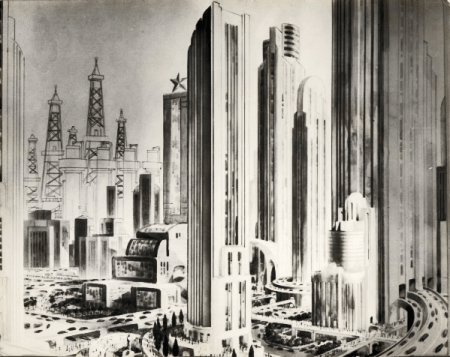
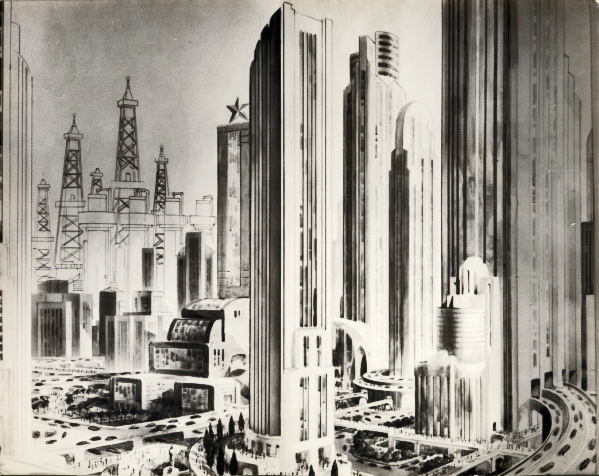
How The Houston Post in the 1920s Saw Houston's Skyline in 1980.
That column I did yesterday on the changing image of Houston brought about some evocative contributions and challenges. Darrell Pittman of our Early Houston Baseball Research team sent me the above JPG of how writers in the Houston Post projected that the Houston skyline would look in 1980. It made sense. Back then, New York City already had established the standard indicator of urban progress as the presence of very tall vertical structures in the city’s main business district.
Other smaller US cities followed suit. Or tried. They built skyward, even if the cost or availability of land was not the premium construction issue that it almost always has been on the tiny island of Manhattan. People went up. Not establishing community uniqueness. But doing a good job of building that generic look of downtown buildings that we see from all major city’s downtown skyline pictures.
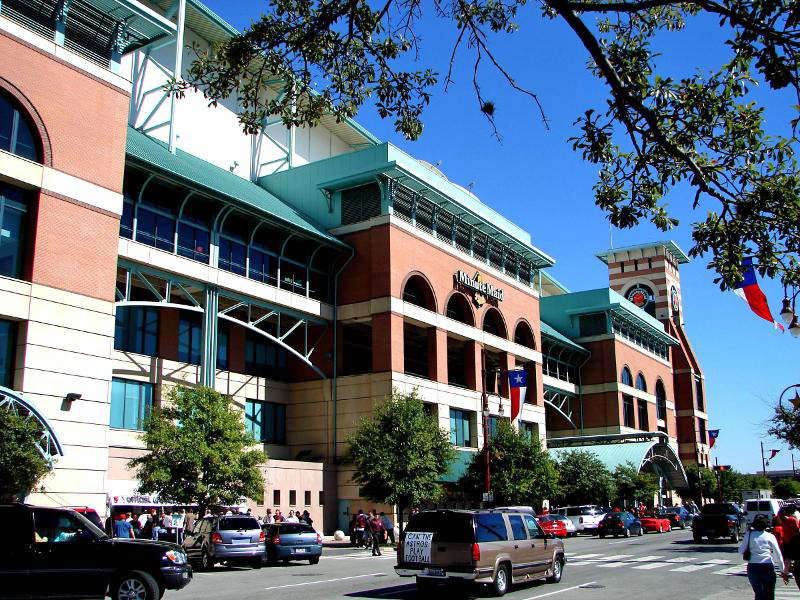
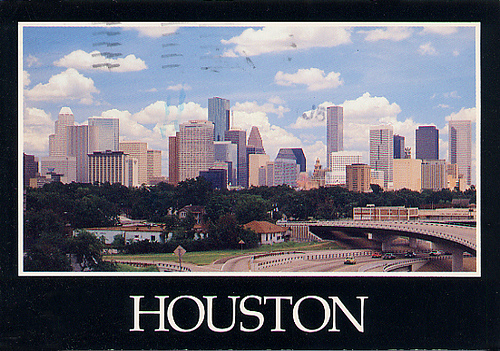
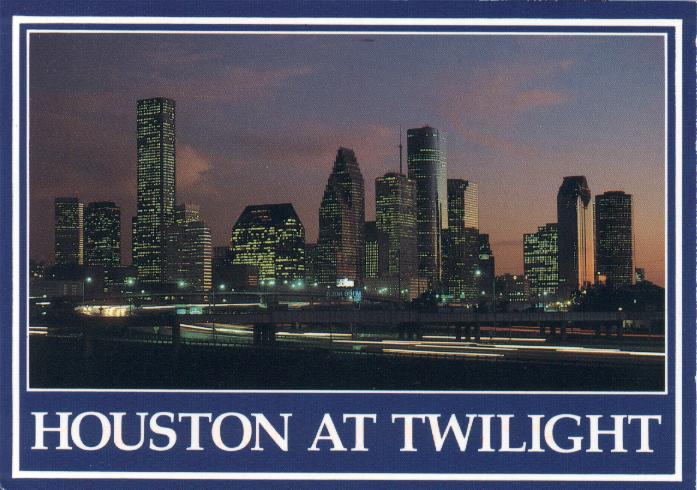
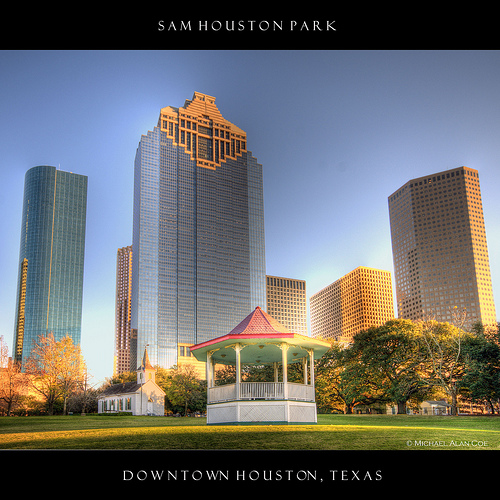
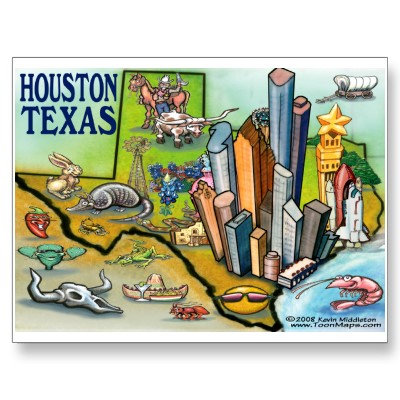
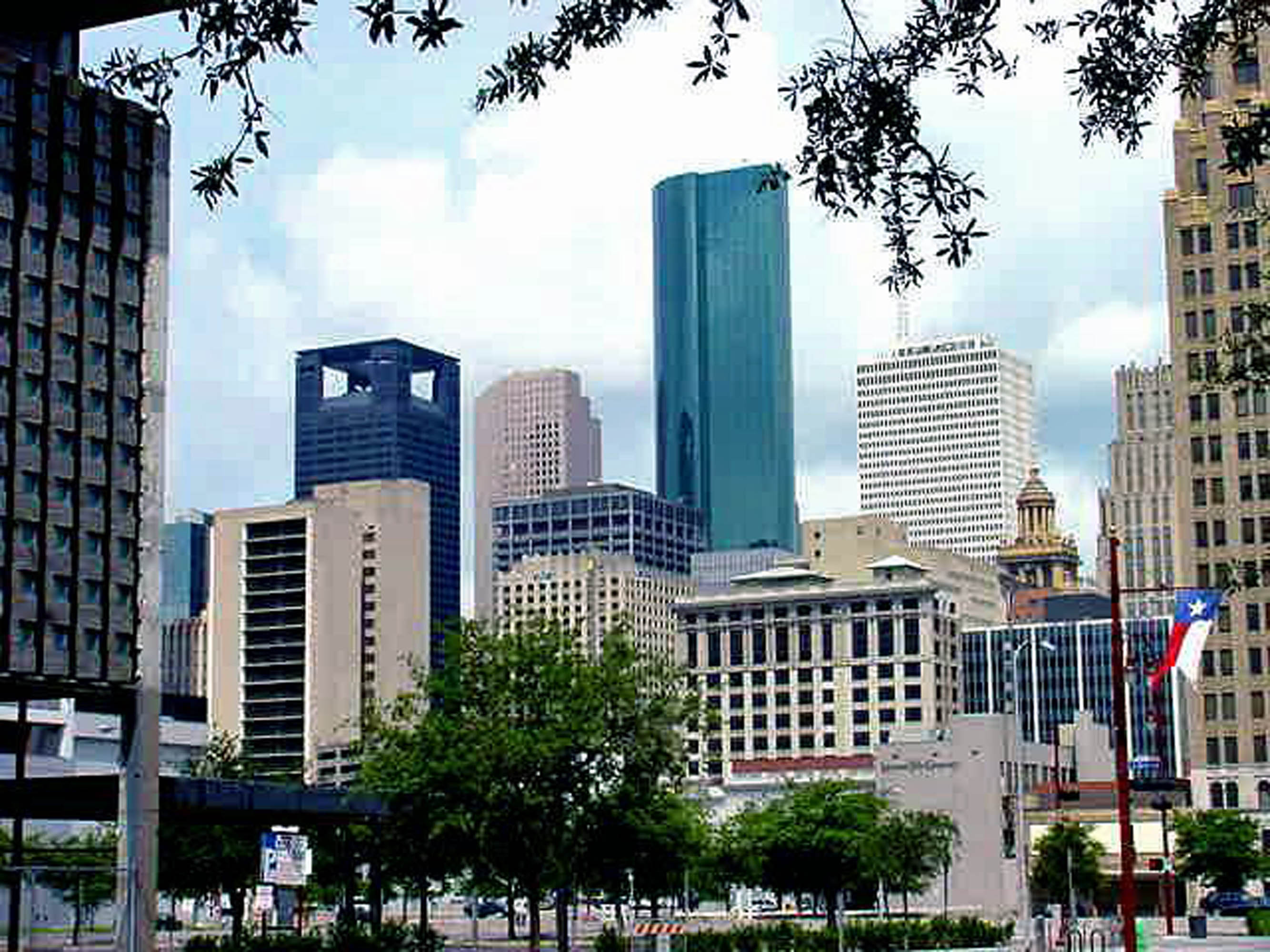
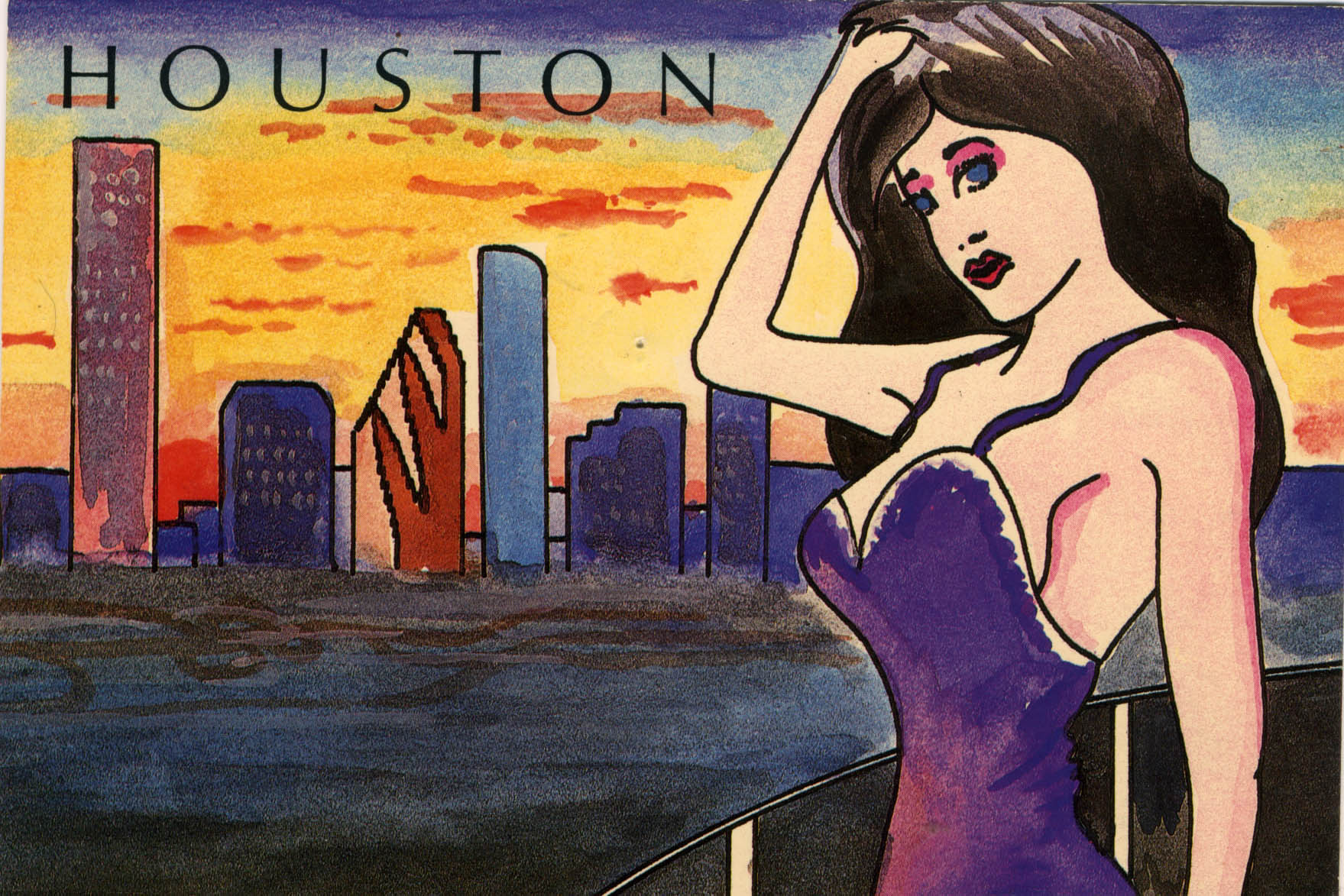
Bob Hulsey called it right when he then wrote me “To the uninformed,” Hulsey wrote, “the Houston skyline could be the generic one of any metropolis.” Hulsey went on to describe the absence of any unique natural or constructed landmark that sets aside the Houston skyline from all others.
Bob’s right. St. Louis has the Cardinals baseball and the Arch. Seattle has computers, coffee, airplanes, and the space needle. Los Angeles has palm trees, star searchlights, an old style crank handle movie camera, and the Hollywood signage on the hill. New Orleans has jazz and the ancient look of the French Quarter architecture, Jackson Square, and St. Louis Basilica.
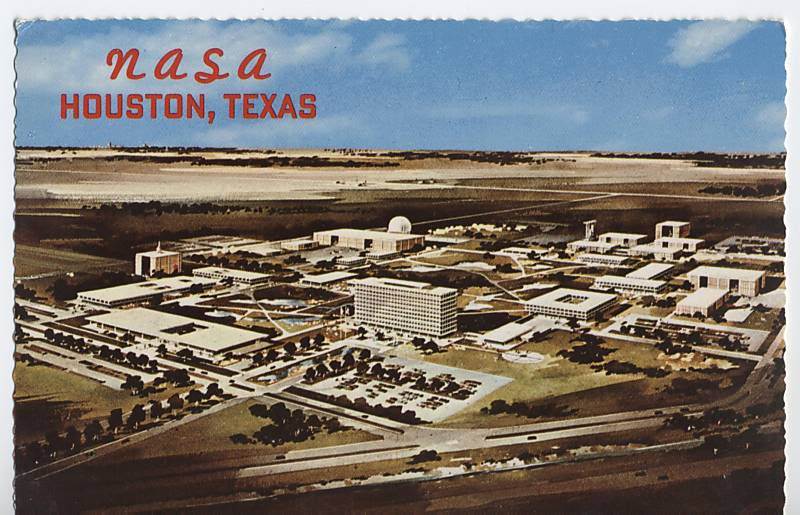
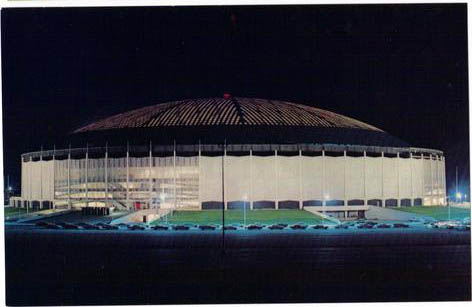
You got it. What does Houston have that makes out skyline unique? We once stood strong on oil derricks, NASA, and the Astrodome (back in its eighth wonder days), but as Bob Hulsey also points out, we’ve lost the latter two and may soon have the first mentioned oil derricks legislated away from us too.
If Houston needs a physical symbol of its identity uniqueness, we are a little short on natural jaw-dropping wonders in these flattened-out mud and sand plains of the near gulf coast terrain. We would have to build something. Like St. Louis, who couldn’t figure out a way to co-opt the image of the Mississippi River from New Orleans and Memphis for its own use, Houston needs to build something that will remain standing in good times or bad to tell people who we are.
An idea suddenly hit me along the lines of that old joke about the batter waiting on a fastball. Remember that one? “I was standing at the plate, thinking about my chance to whack at a fastball. – Then it hit me.”
“WHOA,” I thought. We’ve got most of our answer in tow already. All we need to do is move it here to downtown Houston and do a first class job of its presentation.
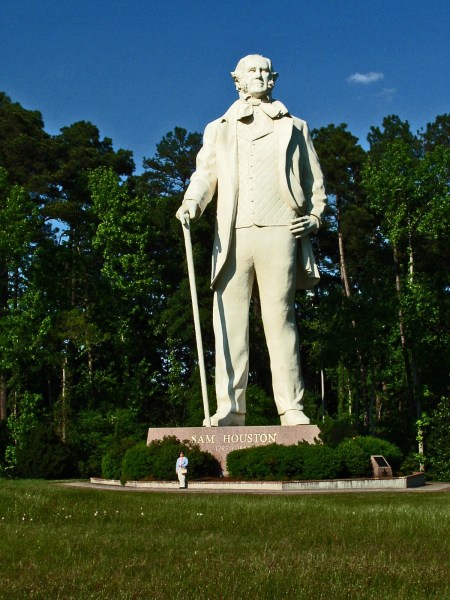
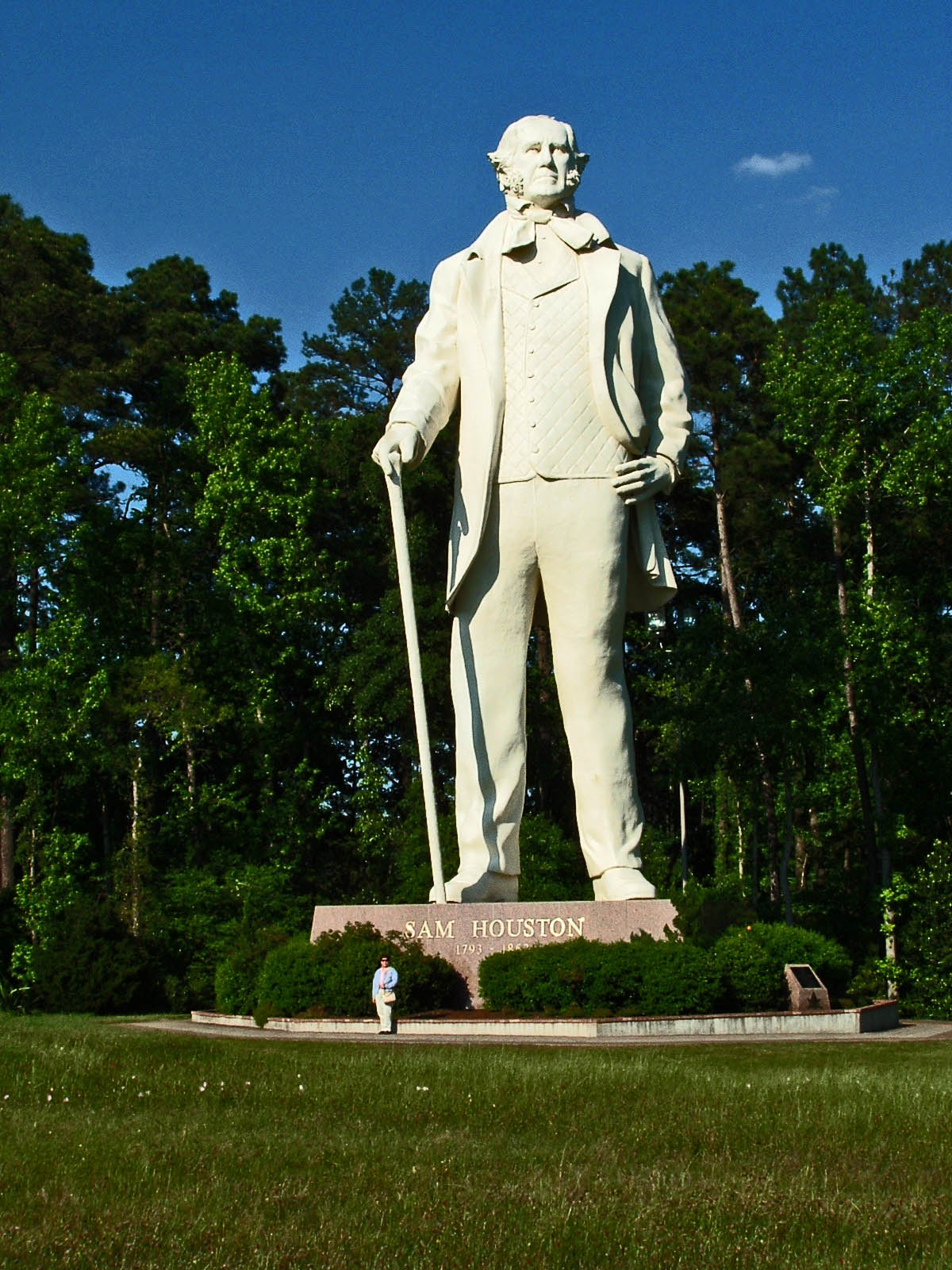
Let's bring Sam home so he can greet the whole world for us.
What do you say we head on up I-45 North and arrange to pull dear old General Sam Houston out of the weeds of that rest stop south of Huntsville and bring him to Houston as our iconic architectural greeter to the world. But we don’t just put him anywhere. Here comes the “class” and crass part of this proposal.
We acquire the property for a six-columned base on both sides of Main Street at the extreme north side of downtown, on the south side of Buffalo Bayou, across the bridge from the UH Downtown campus. Build a pedestal that is 500 feet above street level to make sure that a full body view of Sam is never obscured by any building from the several freeways view of his complete torso. Then pass ordinances against the construction of any high rise buildings on the near north side of the bayou that would obstruct the view.
Each columnar base could be built out large enough at street level to accommodate six informational and retail centers that each specialize on the goods, opportunities, and foods of Houston’s diverse ethnic and business community.
Artist David Adickes built the 67-foot high steel, concrete, and fiberglass structure that is now located south of Huntsville. If the relocation of that specific statue raises too much political sand, let’s raise the ante on our dreams and expectations. Let’s commission Adickes to build an even taller version, altered somewhat for uniqueness from the Huntsville version – and this time – let’s do the whole thing in white marble, if that’s feasible. If not, then just do it in the best, most lasting way.
Houston deserves its own larger version of the famous “David.” Our “Sam” would put Italy’s “David” in the shade – at least, in size and vantage point, if not in artistic genius. After all, “David” is the work of Michelangelo. “Sam” is the work of David Adickes.
Standing at the spot I’m proposing, Sam would be there to personally greet all newcomers to Houston who came here through the big airport. And he could be here forever. If we want to go first class.
I ran the first skeletal plans for this icon construction by Bob Hulsey last night. “As long as I’m not paying for it,” Hulsey says, “they can put whatever they want. Even a 50-foot tall Craig Biggio.”
Good point, Bob. Here’s what I propose: The city sells the sponsorship, naming, and management rights of the street level base store or stores to some individual or group managed inter-corporate operation. The company(ies) who step forward to help Houston do this project right will put themselves on the market integrity level in a way that no amount of public relations splurge could ever hope to attain. They would weld themselves to the history of Houston itself as the makers of a major American icon.
And those are my thoughts for this Thursday. Let me hear what you think of the idea.






 Houston, Baseball, & Other Musings.
 The Pecan Park Eagle
What Will They Think of Next?
July 5, 2011...Houston Daily Post, May 7, 1899.
What will they think of next?
Good friend and fellow early Houston baseball researcher Darrell Pittman sent me a copy of this ancient cartoon over the weekend. One of the wonderful bi-products of our current SABR project work is the discovery of all kinds of interesting other facts and points of view from the past. This cartoon demonstrates beautifully how current points of view can so totally distort our perspectives on the future.
As the new medium of radio was coming into being during the last decade of the nineteenth century, and for almost two decades into the twentieth century, people basically saw this new technology as a form of either the telephone or the telegraph – and a new way to send mail and messages by wireless transmission – and nothing more. The prospects of radio’s use as a medium for broadcasting live current events and vital topical news to listeners at home had yet to really take form. Once the ideas of reaching the public with a combination of news and advertising together took place, however, and the captains of industry began to see the money to be made, radio broadcasting was off to the races in ways the designers of our 1899 cartoon hardly could have imagined.
While watching one of the the Red Sox-Astros games in HD on one of our flat screens over the weekend, I’m thinking, “It can’t get any better than this?” And no, I don’t mean the quality of the Astros’ play – I mean the television picture itself. – Come on! Really! – How much better does a picture need to be? With today’s HD, you already can see every skin mole or speck of dandruff. – Who wants more?
OK, add 3-D, but only if you can find a way to make it practical to watch without those stupid glasses.
Maybe one day we will all have hologram rooms in our homes, special areas where we may watch movies and sporting events in true 360 degree 3-D perspective action without going anywhere. Watch “Casablanca” from the perspectives of either Rick Blaine, saloon keeper, or Major Strasser of the Third Reich. Or maybe we even have a way to get into the hologram action by taking the table next to Rick and Elsa in “Casablanca” – and then eavesdropping on the first conversation the couple has had since Paris.
The hologram theatre possibilities are endlessly fascinating.
Sit next to Manager Brad Mills of the Houston Astros during the World Series – or maybe visit every planet in the universe in the company of astronaut Neil Armstrong. Both opportunities should be available some day – on the Hologram HD3DTV System’s Science Fiction Network.
Who really knows what our most brilliant technological minds will think of next? Whatever it may be, let’s hope we also grow in our mass need for creative contact and engagement with other people – and with life in general. There has to be more to communication than texting or tweeting others what we just had for lunch.
Tags: comment on future tv possibilities
Posted in Uncategorized | 3 Comments »