Michael Hogue’s Portrait of Rube Foster

September 19, 2011

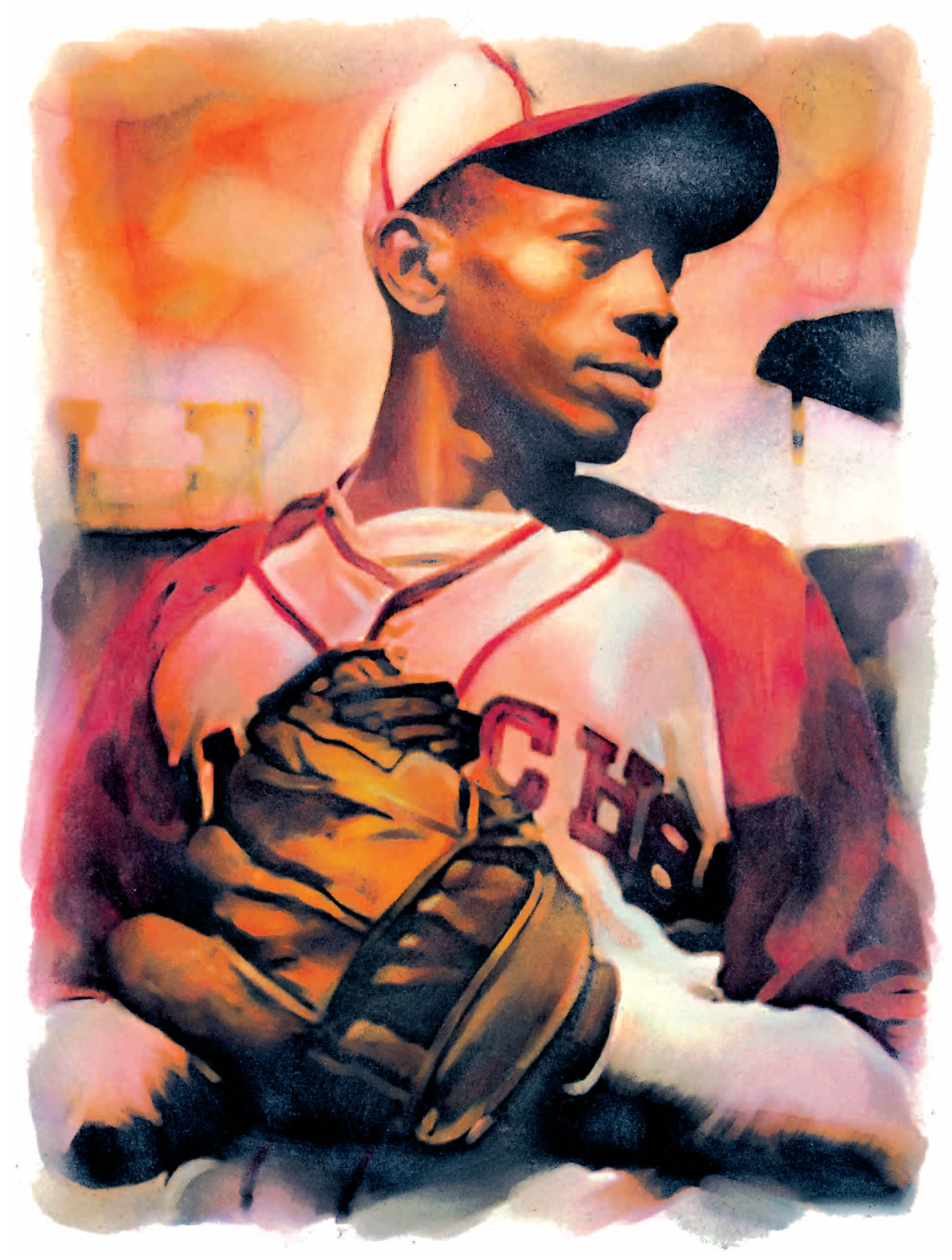
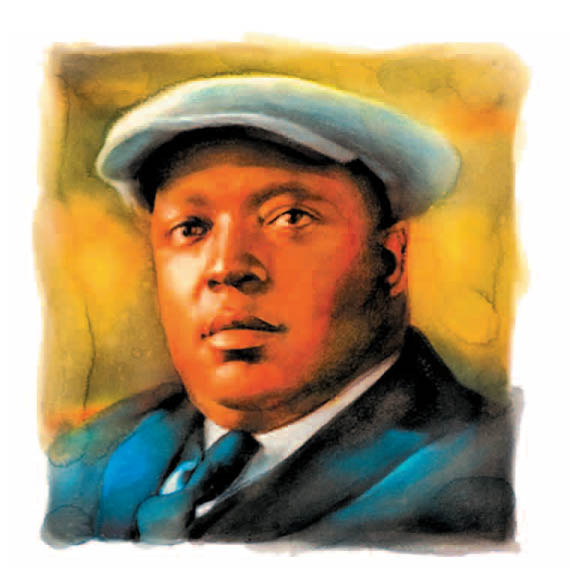
Andrew "Rube" Foster, Father of the Negro Leagues and 1981 Baseball Hall of Fame Inductee by Michael Hogue of the Dallas Morning News

The following text and preceding art by Michael Hogue of The Dallas Morning News is reproduced here in The Pecan Park Eagle by written permission from Michael Hogue. It is Offering 2 and a continuation of this fine Texas artist’s work, Portraits of the Negro Leagues. Thank you again, Michael, for allowing TPPE to further share the beauty and joy of your work with those who care about the Negro Leagues and their place in baseball history.

Andrew “Rube” Foster By Michael Hogue is reproduced here by written permission from Michael Hogue of The Dallas Morning News.

“He was born in Calvert, Texas and began his career pitching with the Waco Yellow Jackets. Later, he moved to Chicago, where he became the most dominant pitcher in black baseball for nearly a decade.

“In 1911, he formed the Chicago American Giants and built them into the midwest’s dominant black team. In 1920, he organized the Negro National League.

“Rube Foster is considered the greatest manager in black baseball and the man most responsible for its success.”

Heartbreak Redemption

September 18, 2011

"I've hated the score of 35-34 since January 1, 1979, when UH lost to Notre Dame on the frozen tundra of the Cotton Bowl on the last play of the game, after leading the Irish 34-14 with 7:20 to go. Now, after the happier result of September 17, 2011, when my Cougars came back from a 34-7 deficit late in the 3rd quarter to defeat mighty Louisiana Tech, 35-34, I can love it too." - Bill McCurdy

Heartbreak on any level is tough, but it always seem to hit hardest from those sources that hit us first in the land of long ago. As a kid growing up in the Houston East End during the post-WWII years, the Houston Buffs were my first heartbreakers. When the 1950 Buffs finished last behind the Shreveport Sports on a shot at 7th place in the last couple of days of the season, I remember crying myself to sleep the night that I listened over the radio to the Buffs losing out on their hoped for escape from the cellar. I had to cry quietly, but I cried just the same. The Buffs pain carried over with some slightly diminished power over me through the early years of the Colt .45s and Astros. I thought it was gone completely, until Houston’s losses in the NLCS to the Phillies in 1980 and to the damn Mets in 1986 came along to teach me differently.  I didn’t cry those times, but I probably should have. It hurt so bad.

Right behind the Buffs, however, I learned about an even deeper personal heartache when I lost my childhood sweetheart over something young and stupid. That one was a real seasoning experience to this thing we call “loss,” but it turned out to be an experience we almost have to go through on some level to survive some of the even steeper  trenches that await us on the various roads of life. I’m a little wiser from that one today. At least, that’s what I keep telling myself.

The heartbreaker I never seem to toughen to, or learn from, however, is this ancient emotional investment I have in the athletic fates of my undergraduate alma mater, The University of Houston Cougars, and, especially in the trials and tribulations of the football team. The football crossover for this baseball man is easy to trace. I grew up very near the UH campus and my dad took me to some Cougar football games from very early on, from their very first game ever played in 1946 – and I was hooked on the Coogs. From our Salad Bowl victory over Dayton in 1951, behind running back Gene Shannon and onward through  the years of QB Bobby Clatterbuck through the great era of Bill Yeoman, the Veer, Warren McVea, Paul Gibson, Elmo Wright, WIlson Whitley, the Mad Dog Defense, the 1967 pasting of Michigan State, 37-7, at East Lansing and the 30-0 rout of UT at Austin in 1976. These memories are simply delicious to the Cougar appetite for gridiron glory.

But anything that joyful, I’ve learned, bears the equivalent power to generate sorrow. On that level, it doesn’t matter if it’s your team in the big game, the woman you thought would be the joy of your life forever, or that big job or career move you hoped was going to put you on the path of “happily ever after.” If it can raise you up, it can drop you down.

How do you avoid it? Don’t go there. It’s just that simple.

Oh really? If 90% of us heeded that advice, every major commercial sport in America would shut down tomorrow, as would every major luxury mall and fine new car dealership, or must-live-here gated new homes community. We won’t do it. We won’t give up these things.  – Winning! – It’s the tiger blood in us all. We live to have our clocks wound with new and high expectation, but the rub is – even for the Steinbrenners of this world, that we also always hang around long enough to have our clocks cleaned eventually by the competitive expectation needs of someone else.

Yesterday I was watching my UH Cougars go down 34-7 to those great titans of college football, the Louisiana Tech Bulldogs. With about five minutes to go in the third quarter, on the fabled fields of Ruston, the Coogs looked down and out for good. An undefeated team from C-USA was about to get crushed by a nobody club from the WAC. No surer path to collegiate football ignominy than that exists anywhere else. I’m already thinking, “If this is the best we can do, we may as well hang it up in our pursuit of a better conference membership!”

Then it happened. The Cougars scored to make it “only” a 34-14 twenty point deficit. Then they caught fire on turnovers and new life to score 21 unanswered points in the fourth quarter to take their first lead , and the win, with their last score coming in the last minute and one-half of the game.

UH won, 35-34, by a margin and mark that had been my least favorite final score in the whole world  previously, thanks to Joe Montana on New Years Day 1979. Now it also instantly had become my favorite final score as a result of the Ruston Resurrection.  Like a fresh chip of crack cocaine, I had been injected again by the chemical effect of these events upon my nervous system with the wild hope that UH could overcome all odds against them on the road to Tier One status at every level of their university existence. I do believe we will get there, but that it will be equivalently as easy as that victory in football last night.

I’m pumped. But anything that can be pumped can also be deflated.

GO COOGS! EAT ‘EM UP!

Michael Hogue’s Portraits of the Negro Leagues

September 17, 2011

SATCHEL PAIGE by Michael Hogue of The Dallas Morning News

The following text and preceding art by Michael Hogue of The Dallas Morning News is reproduced here in The Pecan Park Eagle by written permission from Michael Hogue. Thank you, Michael, for allowing TPPE to further share the beauty and joy of your work with those who care about the Negro Leagues and their place in baseball history. We shall continue to randomly show the work you have provided until we either run out of material – or you send us some more. We are in debt to you for this valuable contribution to our humble publishing efforts in behalf of baseball, Houston, Texas, music, and pop cultural history.

Did I leave anybody out? Probably. But here it is, anyway. Readers enjoy!

Satchel Paige By Michael Hogue. Reproduced by Written Permission from Michael Hogue of The Dallas Morning News.

“I sure get a laugh when I see in the papers where some major league pitcher says he gets a sore arm because he pitches every four days. Man, that’s be just a vacation for me.” – Satchel Paige, Hall of Fame, 1971.

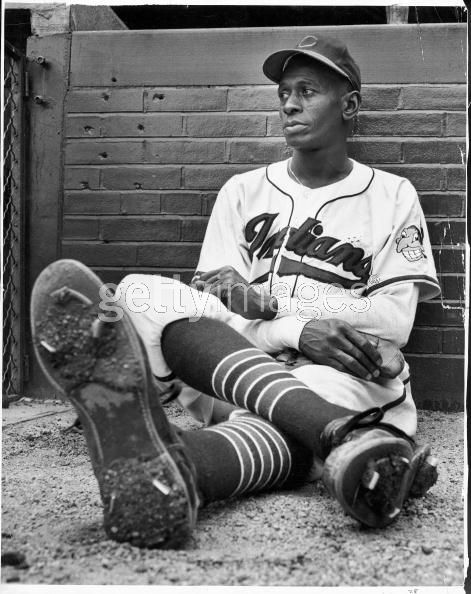
SATCHEL PAIGE, Pitcher, Negro Leagues 1926-1947. Paige is the best known player to come out of the Negro Leagues. This tall, lanky right-hander employed masterful pitching skill with a colorful personality to achieve folk-hero status.

He was the consummate show man. He would sometimes pull in the outfielders to sit behind the mound while he struck out the side. He was advertised as guaranteed to strike out the first nine batters he faced in exhibition games and almost always fulfilled his billing. Paige frequently warmed up throwing 20 straight pitches across a chewing gum wrapper used as home plate.

It is estimated that Paige pitched 2,600 games, 300 shutouts and 55 no-hitters.

Some major leaguers, including Joe DiMaggio, called Paige the toughest pitcher they had ever faced.

Paige was offered a contract to play for the Indians and, at age 43, became the oldest rookie in major league history. He helped Cleveland to the 1948 World Series title. He appeared in the All Star Games of 1952 and 1953. Paige was thought to be 59 (his true age was never established) when he pitched three innings for the Kansas City A’s, becoming the oldest man to pitch in a major league game.

He became the first Negro Leagues star inducted into the National Baseball Hall of Fame.

Satchel Paige: The Astrodome’s 1st Pitcher?

September 16, 2011

Satchel Paige May Have Been The Dome’s 1st Pitcher – or, at least, the first uniformed player to warm up as a pitcher in the Dome.

A few days ago, a fellow researcher sent me an E-Bay link to the sale of two related wire photographs of Satchel Paige dressed as a 1965 Houston Astro uniform and apparently roaming around the early Astrodome on April 9, 1965 as though he was about to pitch a game. One of the photos featured an up-looking frontal view of  old Satch, hands over head and ball and glove in pause,  looking skyward in the presence of some invisible catcher behind us, with the girders of the Dome ceiling protecting us all as subject and viewers. The familiar shooting star and the words “STROS” are visible across the breastplate of Paige’s jersey. The front “A” must have been hidden in a fold of the shirt as a result of Satchel’s skyward reaching pose, but it was Paige all right, at age 59, getting ready to deliver his famous hesitation pitch into the empty abyss of the apparently as yet untested canyon that would soon be billed through the universe by Judge Roy Hofheinz as “the Eighth Wonder of the World.”

The other picture is a full body shot of Satchel Paige in motion to deliver a pitch on a dirt-covered mound on a dirt-covered infield.

ttp://www.ebay.com/itm/LEROY-SATCHEL-PAIGE-ASTROS-1965-ORIGINAL-WIRE-PHOTO-/330480948265?pt=Vintage_Sports_Memorabilia&hash=item4cf2331429#ht_2539wt_1138

Wow! What was this all about? I had no idea. In 1965, I was living in New Orleans, employed as clinical faculty at Tulane Med School and in-between work on my master’s and doctoral degrees. I had no idea that Satchel Paige had ever come anywhere near the Astrodome during those later years of his life.

Well, once I sent out the above link, with notice, it didn’t take long to get some answers, although I was almost as surprised by the number of Astros insiders by history who also knew nothing about the Paige appearance. Thanks to SABR’s Bird Dog Bob Dorrill, however, no mystery in this cosmos has much chance for survival for very long. Bob took all of my limited information and ran it through every potential resource we know. And he hit pay dirt when he made contact with, who else, Houston’s iconic sportswriter, the great and funny Mickey Herskowitz.

End of mystery.

Mickey Herskowitz didn’t know how the photographs came to be, but here’s what he told Bob Dorrill by e-mail: “The year WAS 1965, as Bill recalls.  Satchel had been through lean times, as he frequently had, and was in town as the ‘coach’ of one of the teams — maybe the Washington Generals — playing the Harlem Globetrotters.  The game was at the old Sam Houston Coliseum and Satch’s coaching technique consisted primarily of chain smoking Lucky Strikes and ignoring his players.”

“He was once a GREAT pitcher who struck out Babe Ruth three times in an exhibition game.  He wanted to see the Astrodome, which was a few days away from being opened — and being finished, thus no signs on the fences and no turf around the mound.  I’m sure Satch asked to throw a few from the mound for his own amusement, but do not recall who had the creative instincts to fetch a photographer.  Maybe Bill Giles? 
“The basketball game was that night so he had time to kill.  I’m not sure where the Astro players were, but I’m guessing he showed up at the Astrodome around noon so most of them were probably still asleep.
“Wish I had more details or background, but hope this helps. Satchel’s team (the Generals? or whatever) lost to the Globe Trotters. I covered the game and interviewed him at halftime. That was when he reflected momentarily on his life and times and gave me the famous quote, ‘Life is a long and twisty road.’ “

Later in the day, former Astro and franchise icon Jimmy Wynn called Bob Dorrill to supply some additional detail on how Paige happened to make it to the Dome in game-dressed form. According to Bob Dorrill, “Jimmy (Wynn) said that while the players were in spring training George Kirksey wanted to know if a curveball would actually curve indoors so he invited Satchel Paige to come to the Dome right before the season started and throw a few. Apparently they worked fine.”

As you may recall, George Kirksey was the media point man on Houston’s late 1950s successful bid in 1960 for a major league baseball franchise in Houston and he also was a prominent founding member of the Houston Sports Association’s original ownership group.So, if anyone would have been able to pull off this trick, Kirksey would’ve been able to do it.

What’s amazing is that the Astros of 1965 failed to mine this thing for far more publicity than they could have gotten from it, but it sounds as though it happened so spontaneously, probably because Paige was in town anyway due to the basketball act, that it really was done to test the movement of a breaking ball in the new covered conditions of the world’s first contemporary domed stadium.

Still, it’s hard not to think of how the whole appearance of someone like a Satchel Paige would be handled in today’s world. For one thing, Mike Acosta of the 2011 Astros game-used authentication program would have jumped all over that uniform that Paige wore during his brief tour of duty. It would not have been thrown back in the uniform pool, awaiting use by the next gangly Andy Warhol prospect on the pitching staff, as it probably was dispatched in 1965. Mike would have grabbed it for historical preservation – and probably also have bagged the ball, glove, and cap that Satchel used too.

Forget probably. Satchel Paige would have been lucky today to have departed a similar performance at Minute Maid Park in his underwear.

UH Mad Dog Babe: 1980

 Also One for the Strange Affinity Department. It just hit me on another level. Knowledge of Paige’s Astrodome feat has now pulled me into a weird cloud of strange, if albeit worthless, affinity with the great pitcher. In 1980, while my bulldog “Babe” was working for the University of Houston as mascot (1979-80) for the Cougars’ Mad Dog Defense, I also worked with my undergrad alma mater on half time stunts. And a big one came about as a result of the 1980 Astros-Phillies playoff Series at the Dome.

Because of the NLCS in Houston, UH and Texas A&M were forced to start their football game after the baseball had finished. Well, wouldn’t you know it? That Saturday baseball game turned out to be one that lasted forever. The football game didn’t start until midnight.

Two things happened for as a result. Prior to the football game, I got called in to warm up as a pitcher along the left field foul line, dressed in an Astros uniform – and coming complete with a ball, glove, and catcher. Hard to believe it now, but I could still hum some fastballs in 1980, which I did, even as some of the fans along the line groaned away with, “Oh No! No more baseball today! Please!” I just tuned them out and dropped some harder pop into my catcher’s mitt.

Bottom Line: Satchel Paige and I both got to pitch in the Dome wearing Astros uniforms in situations that don’t count for diddily. How big a history club is this one?

One more landmark for me from the 1980 Midnight Hour Football Game. At half time, I got to successfully kick a 35-yard field goal as part of our UH entertainment routine. As far as I know, it remains on the books today as the only post-midnight field goal in Astrodome history.

Odd College Mascot Names

September 15, 2011

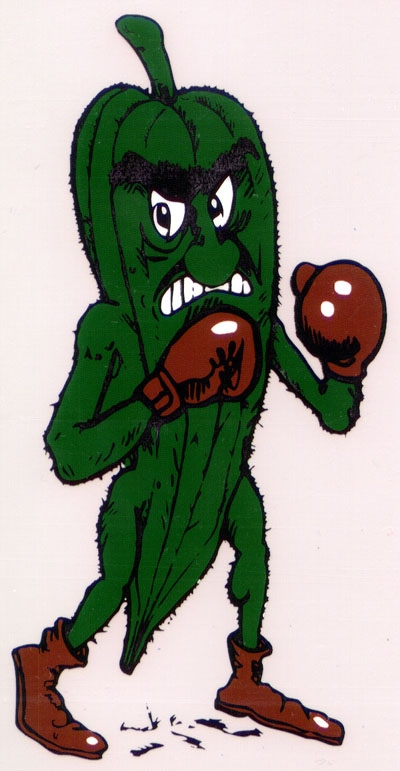
Delta State Fighting Okra

Staying on topic with yesterday’s foray into the inane, I have to tell you – all this ego-seed and big time greed that seems to underline today’s game of musical chairs with NCAA Division 1 schools and their various conference plans to bolt, or stay, and let the chips fall where they may, is getting pretty tiresome to me.

Less known is the fact that there are some college folks out there from smaller, more off-the mainstream-track schools that seem to be having some fun with their institutional nicknames too. In fact, here are few of my favorites. These say to me that some schools may have a greater chance of sending more people out into the world with a college education that includes the lesson of learning how to not to take your personal ego so dadgum seriously in the process.

What a bonus that turns out to be to the goal of happiness and personal growth.

Here are a few of my off-the-wall, out-of-the-box favorite college nicknames. Let’s just go ahead and put them all in the same conference:

The Odd Mascot Name Conference

UC Santa Clara Banana Slugs

Scottsdale Community College Artichokes

Delta State University Fighting Okra

UC Irvine Anteaters

St. Louis College of Pharmacy Eutectic

Evergreen State College Geoducks

I’m leaving one bizarre unofficial mascot off my odd list here because I couldn’t find a way to write about it and also keep this column a family friendly place at the same time – and the latter goal was more important to me than the shock-value weight of mentioning the former. I will also leave disclosure of the place and name I have in mind up to those of you whose prurient curiosities and Internet search skills are equivalently up to the task of an investigative chase with no further help from me.

Have a nice Thursday afternoon, everybody!

The Ferocity-Enigma Factor in Sports Nicknames

September 14, 2011

"How fierce can I be? Check my growl! Can't you see? - The Green Wave is coming to get you!"

Lions and Tigers and Bears – Oh My!

Never a doubt of the fierce in their eye!

Roll out some others – and what do we get?

Green Waves and Hokies and Hoyas – to pet!

In the middle of all the fairly recent concern for political correctness about the historic mascot selections of various collegiate and professional sports teams is the far older and more basic question: What’s the purpose of a mascot identity to a sports team in the first place?

Back in the 19th century, it appears to have been more to the task of assigning an identity to the club based upon where we are located, what we are wearing, or what we do where we come from. Thus we saw the birth in baseball of the Cleveland Forest Citys, the Cincinnati Red Stockings, and the Boston Beaneaters.

Sounds simple enough. It just didn’t stay there. As competitive sports grew as a way to demonstrate conquest and domination over rival cities and colleges, it became important for more teams to adopt mascots that expressed the ferocity of their pursuits for absolute domination over others. A few folks maintained their sense of commitment to identity with a little sense of humor by adopting nicknames such as Hokies, and Hoyas and Mud Hens.

Oh my.

The trouble with fierce is that it so easily overlaps into farce – or enigma. For example, where’s the fierce in Tulane’s “Green Wave” or Alabama’s “Crimson Tide?” Green Wave suggests that there’s something contagious in the waters and that we had better not try to swim wherever the Green Wave lands. A Crimson Tide is slightly more trauma-suggestive that there may be sharks in the waters and that are capable of drawing blood as they eat you up.

Of course, Green Wave and Crimson Tide developers took these mascot ideas and ran them straight into enigma – not fierce. The Green Wave is today characterized by a Smurf-like character who cannot begin to smirk his way into fierce, a condition reenforced by athletic teams that seldom scare anybody either, while Alabama simply muddied up the mascot waters by inserting an elephant into the mascot theme of their Crimson Tide theme. As far as I know, and except for short spot on the Gulf around Mobile, there is no reach of any tide, let alone a crimson one, that reaches all the way to Tuscaloosa, the home of The University. There also are no wild elephants running loose at night as stars fall on Alabama. The rolling Tide just carries its enigmatic nickname with them, but winning in football more often than most others seems to assuage any existing concern over the enigma factor in their mascot name and symbols.

There’s really no deep thought attached to these ideas, just this playful set of questions: What is the basis for your own favorite team’s mascot? Is it one that’s there as a statement of regional identity? A clear statement of ferocity? An intended good idea that lapsed into enigma? An insider joke? An innocuous attempt to avoid all conflict with political correctness? Or one that truly is offensive to others?

It still amuses me that my own bloodline racial group background is apparently the only ethnic group in America that is not offended by their ages ago adoption as the symbol of ferocity. And so today we still have the Notre Dame Fighting Irish, with no protestation. Can you think of any other group under the sun that would not be suing that university for a change of mascot designations?

Color This Paige Satchel

September 13, 2011

With the fall of the color line, Satchel Paige finally made it to big leagues with the Cleveland Indians in 1948 at the age 0f 42..

Satchel Paige and the face of Negro League Baseball really comes to life in the 2010 paperback work (2009 Copyright), “Satchel: The Life and Times of an American Legend” by Larry Tye. It’s one of the best written biographies I’ve read in a very long time, augmenting fact with a three-dimensional picture of how life was in the days of negro league resuscitation under the gangster-leadership of Pittsburgh Crawfords owner Gus Greenlee, who just happened also to be the dual owner of the Crawford Grill and the forgiving sponsor of the imported man-child wunderkind that was the strapping phenomenon known as Satchel Paige.

Upstairs above the Crawford Grill, was a place known as the Club Crawford. The “CC” was place frequented by powerful people from both the white and black communities, a place where politicians, prostitutes, and pimps could, and did, feel quite at home in each other’s company, drinking and sometimes drugging the night away, and listening to the some of the best jazz artists of the day back in 1934.

Cab Callaway played the “CC” – revving things up with his signature piece, “Minnie the Moocher,” and a fellow named Teddy Horne dealt poker hands while his teenage daughter, Lena, flirted her way around the room with those great beguiling eyes and that extra special voice and singing style that were all hers by genetic heritage. Can you picture the very young Lena Horne singing “Stormy Weather” with the rain coming down in sheets outside the Club Crawford?

Among others, and usually near to his reserved stool space next to mentor Gus Greenlee, young Satchel Paige rubbed shoulders and bent elbows at the “CC” with people like Pittsburgh Steelers owner Art Rooney, former black heavyweight champion Jack Johnson, and Mr. Bojangles himself, Bojangles Robinson, the tap dancer extraordinaire and later owner of the New York Black Yankees club, Bojangles Robinson.

What a time it must have been. Satchel Paige wasn’t raised with strong ideas for temperance and self-management, but he managed to survive an environment that could have destroyed more than his money supply. Fortunately for Satchel, he didn’t get drunk that often, and, if things got too bad (too broke) anywhere he happened to be, his main defense seems to have been to run away to another part of the baseball world and let his talents help him find a new ceiling.

On page 68 of the paperback version, author Larry Tye cites a white writer for the Chicago Daily Times named Marvin McCarthy with one of the most beautifully descriptive pieces of baseball action writing I’ve ever read – and I’d like to share it with you here, along with the suggestion that you read this book for yourself. I see it as the best thing I’ve ever read on the man who, with Josh Gibson, stands today as one of the the two major faces of the old Negro Leagues.

With obvious attribution to the great Christy Mathewson, McCarthy responded to Paige’s stellar performance in the 1934 East-West All Star Game at Comiskey Park in Chicago with an article called “Black Matty:”

With measured tread an African giant crosses the line and heads for the pitcher’s box. – ‘It’s Paige! Its Satchel Paige and goodbye ballgame’ whisper the stands. And it is. He must stand six feet six inches in his sox. Gaunt as old Abe Lincoln. He walks with that slow Bert Williams shuffle. Maybe it takes him two minutes to cross the fifty yards to the box. He stoops to toy with the resin bag – picks up the old apple. He mounts the bag, faces third – turns a sorrowful, but burning eye toward the plate, nods a nod that Hitler would give his eye for – turns his gaze back to the runner on second – raises two bony arms high toward the heaven, lets them sink slowly to his chest. Seconds pass like hours. The batter fidgets in his box. Suddenly that long right arm shoots back and forward like the piston on a Century engine doing 90. All you can see is something like a thin line of pipe smoke.There’s an explosion like a gun shot in the catcher’s glove. ‘Strike wun,’ howls the dusky umpire.” 

Houston Birthday Party Goes Well

September 12, 2011

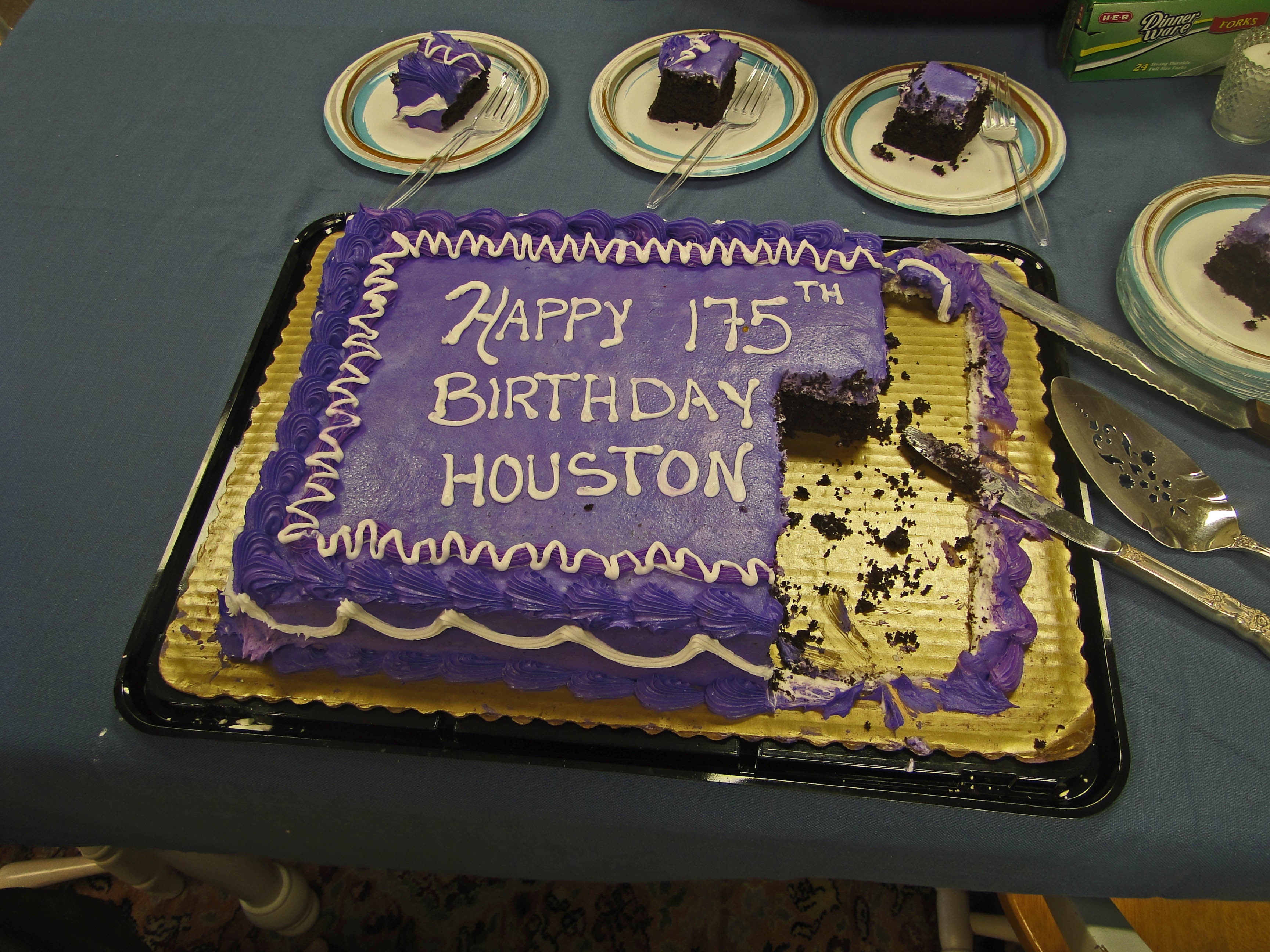
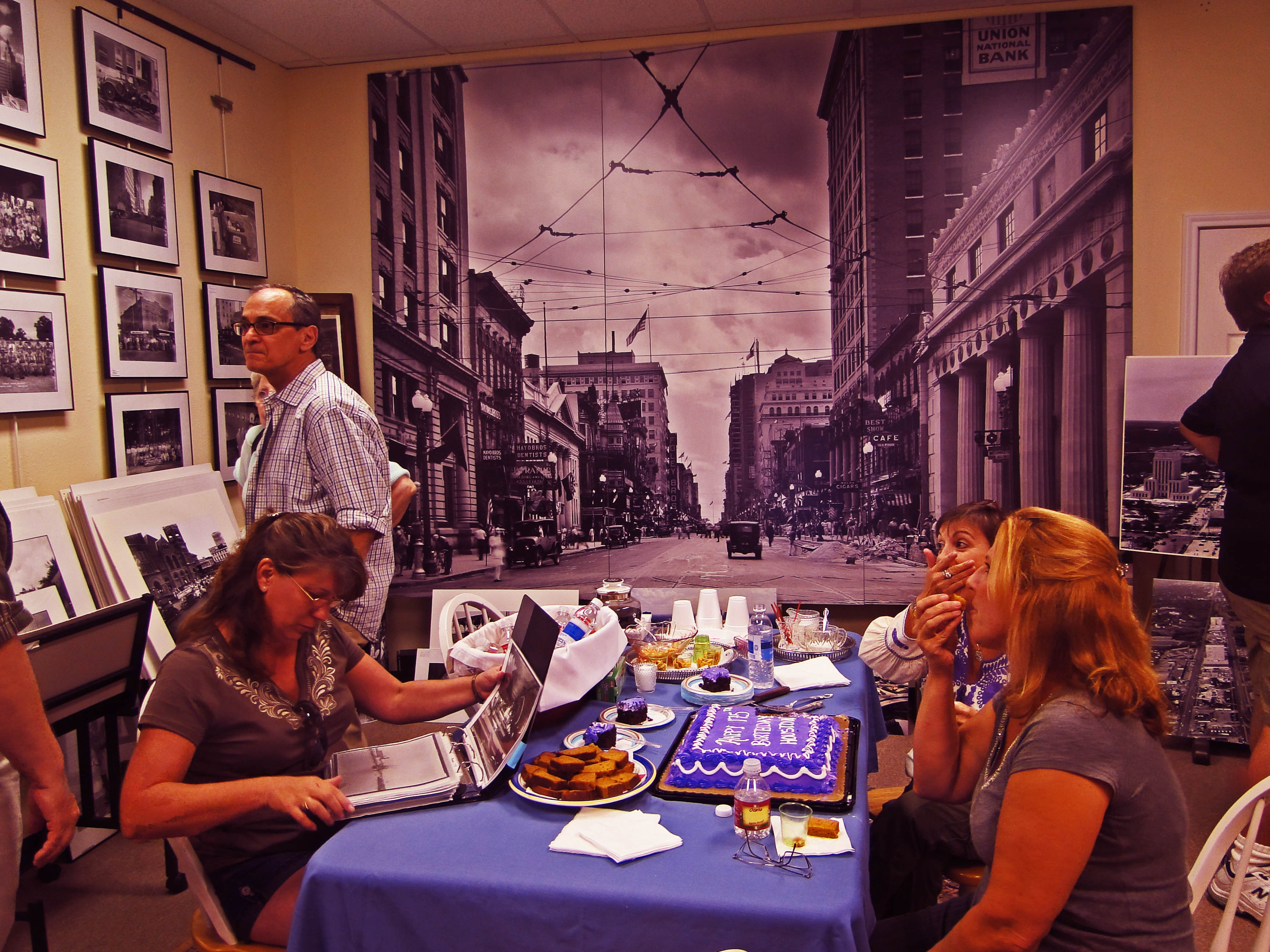
The party took place on Sat., Sept. 10th, at Story Sloane's Gallery, 1570 S. Dairy Ashford in Houston.

Saturday was a fun afternoon at Story Sloane’s Gallery on Dairy Ashford near the Bria Forest intersection. Classic photographer and local historian Story Sloane turned his place into a birthday celebration for the City of Houston in honor of the 175th anniversary of our town’s establishment on the banks of the Buffalo Bayou by the Allen Brothers of New York back in 1836.

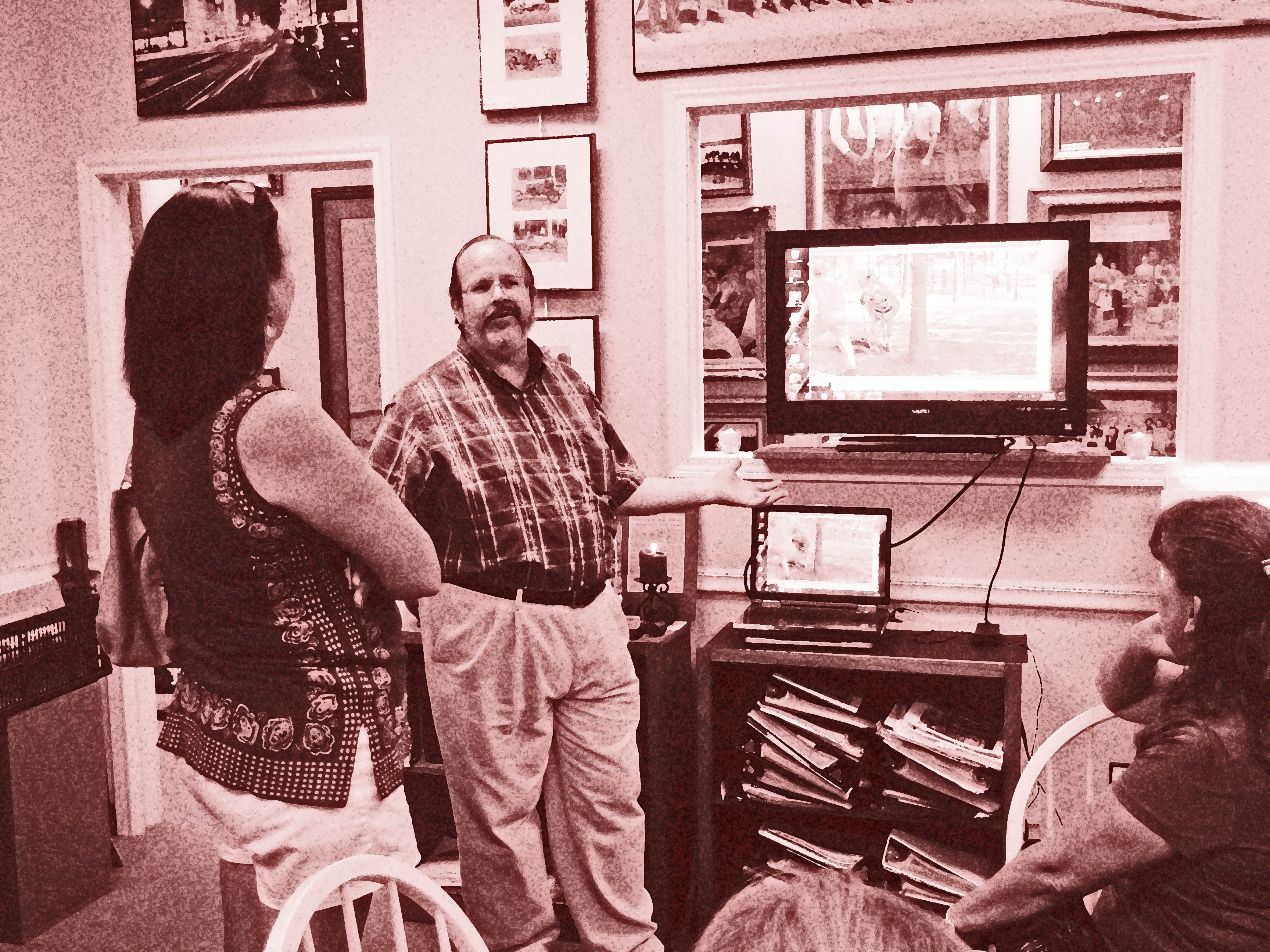
It was a natural fit. The Sloane Gallery already specializes in classic photographs of the Houston area that date back to the 19th century, but owner Story Sloane took it further on Saturday. He ran a motion picture that he had put together from clips of local events that dated back to the early decades of the 20th century – and then he wound himself into an impromptu historical narrative of what we were watching, even extending his interpretations and historical lacings to the still photographs that hang all around you normally in 360 degree fashion at the gallery.

The mural photo of Main Street, looking south from the Franklin intersection, was taken in 1928 by Calvin Wheat, the official photographer of the Democratic National Convention.

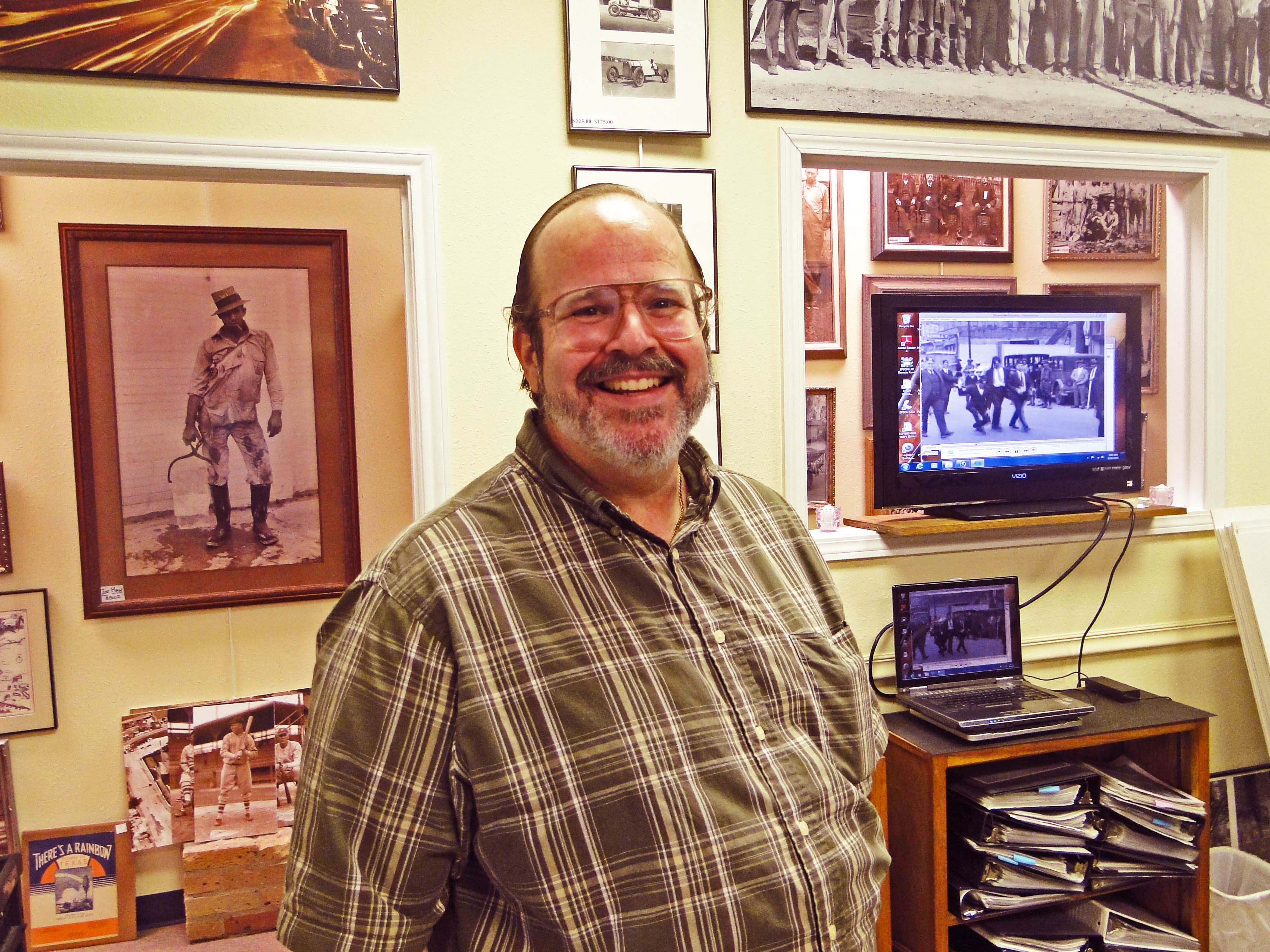
Story Sloane comes naturally to his passion by genetics and historical background. His father before him was a photographer of great local and national repute, leading Story in so many ways, however that works its wonder, to pursue the same general goals beyond his graduation from college at Texas A&M Commerce. Since that time, Story has devoted his life to the aim of assisting, augmenting, and leading the local search for historical research, publication, and preservation. He has been involved in numerous publications on the history of Houston, most recently publishing a fine visual and informative work for Arcadia Publishing as Story Jones Sloane III as “Houston in the 1920s and 1930s.” Copies of that book are still available through Barnes & Noble or the Sloane Gallery.

Story Jones Sloane III of Houston.

Those of us now working on the SABR project, “Houston Baseball, The Early Years, 1861-1961,” are fortunate to have Story Sloane on our research, writing, and production team as our photograph and graphic art specialist. The telling of Houston’s long and somewhat unknown history as a bastion of baseball passion that far precedes the city’s newer loyalties to football is only enhanced by the photos of that vitality we have obtained from the Sloan collection, the Houston Public Library, and other private sources.

sepia tones and simpler times ...

Sepia tones and simpler times seem to fit hand in glove, even if those basic ascriptions to the past are more illusional than real. Nevertheless, the photography of the past collected by people like Story Sloane is essential to our search for a a more complete picture of what life was like “back in the day,” whenever that day might have been. Story Sloane has dedicated his life to a business line that is there to help preserve and illuminate history. In fact, Story will tell you that truth in this simple statement: “We sell Houston’s history to preserve it.” 

In other words, when you buy a photograph from the Sloane Gallery, a large part of the profit beyond Story’s living expenses is going back into the maintenance of his business and the acquisition of “new” old photos. Maybe it’s just the kind of person I am, but I like doing business with people who care about their local histories, and especially with those who care about leaving a legacy of truth about things to the generations that will come after us. I like doing business with a fellow named Story Sloane because he embodies both of those values – and because he specifically cares about how we write the history of Houston.

Next time you want to break the doldrums of whatever leisure time rut you may be in, consider dropping by the Story Sloane Gallery for a look-see at Houston history. Located at 1570 S. Dairy Ashford, the gallery is located in a strip mall on the west side of the street, about two blocks south of the Briar Forest Drive intersection.

Store hours are 12 noon to 6 pm, Tuesday through Friday; 12 noon to 4 PM, Saturday; and closed on Sunday and Monday. For further information, call 282.496.2212 during business hours.


1949: Houston’s 1st TV Day

September 10, 2011
On January 1, 1949, KLEE-TV went on the air with the first commercial television station broadcast in Houston history. KLEE-TV, which would later become KPRC-TV in 1950 and remain so to this day, was not without its start-up problems, however. Houston Radio History did a great job of explaining what happened back there at the start in a column written on June 30, 2007:

http://houstonradiohistory.blogspot.com/2007/06/klee-tv.html

So, the television era came upon us, not as “Houston, the eagle has landed,” nor even as :Houston, we have a problem.” The KLEE-TV first Houston station apparently came on the air some three plus hours late on that first day with “There’s been trouble…plenty of trouble.” And it all emanated from an earlier water leak in the day from an equipment cooling agent, causing an electrical short and a late start for the Houston Television Era. And so it all began with what now sounds like a befuddled apology from the new station’s manager.

My interest here is in the program schedule for that first Houston day of telecasting:
As reported back on June 30, 2007 by Houston Radio History, the “schedule for the first night, after some opening remarks (was as follows):”
We didn’t have a television set at my house for this first day and I don’t even recall now, that, at age 11, I was even aware it was happening. As I’ve written earlier, my first discovery of television would come a few days later, when my neighborhood pal, Billy Sanders, would invite me in to see the new phenomenon for the first time.
Here’s what I do recall of this earliest programming:
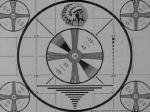
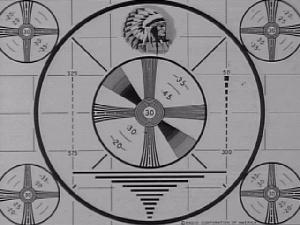
test pattern

 6pm – Test Pattern: Back in the day, TV sets came with vertical and horizontal adjustment knobs in the back. We had to adjust our own sets by using the test pattern as our guide to a perfect circle. Too much knob-moving up and down, or left and right, and you made the picture too tall or too spread out. Do it way too much and you created everything from picture flicker, roll, or that little tormenting blank space on either the sides or top and bottom of the screen.

Anytime the picture failed, we just assumed from our normal states of neurotic guilt that it was our fault and started twisting all those knobs in the back of our sets. In recognition of same, stations constantly came on the air to apprise us of all the times the problem was coming from them: “We are currently experiencing technical difficulties. The problem does not lie with your set. Please do not make any adjustments. We expect to have the problem corrected shortly.”

6:15pm – Allen Dale Show – a musical variety show set in a record shop. Not much to it. There were a lot of fifteen minute shows at the start of the TV era. In this one, people just happened in to the record shop to either sing or hear host Allen Dale sing ballads of the day.

6:30pm – Lucky Pup (CBS) – children’s puppet show about a little dog who inherited $5M and what he did with it. I remember Lucky Pup quite well. I was a little old for this show in 1949, but we weren’t quite as sophisticated back then. We would watch just about anything that moved and talked.
6:45pm – Make Mine Music – Tony Mottola Trio – musical variety show; ‘as most video shows are, it is held together with a plot and action.’ I don’t remember the plot they describe, but I liked the jazz quality of the music.
7pm – Newsreel. These were like movie newsreels that had been pulled over to TV. Most were several days old or even more dated. Nothing was really current, but so what? They had no competition from any faster media out there.

7:10pm – film short – music. These were the late 1940s versions of today’s MTV. Hundreds of three-minute musical performances had been made for use in visual jute box players around the country and now these performances were showing up as time-filler programming on local TV stations. Very important to me, these films introduced me to performers like George Shearing and Oscar Peterson – and setting in motion a lifetime of love for jazz.
7:15pm – Places Please (CBS) – a Barry Wood show which takes place behind the scenes of a Broadway theatre; different guest stars appear on the program. Barry Wood came to us on kinescope in the days prior to our live cable connection to New York. Kinescope was basically a film copy of what the live camera saw. Prior to the cable connection which made live national telecasts possible, the networks worked mainly from New York, performing live there, and then mailing out kinescope copies of these shows to the rest of the country for re-airing in two to three days.
7:30pm – To a Queen’s Taste (CBS) – A French chef takes over to cook a special dish. Mrs. Dione Lucas, employee of the Cordon Bleu, gives out the recipe and shows how it’s done. It takes her 30 minutes to demonstrate. This lady cooked stuff that my Pecan Park East End of Houston Mom was never going to prepare, but that’s OK. I wouldn’t have eaten it anyway.

8pm – Winner Take All (CBS) – the audience gets to see the fantastic prizes given away on the Bud Collyer quiz program. Smilin’ Bud Collyer was the man with the million dollar smile and the $64.00 grand prize. I don’t recall the exact amount of the big winner pot, but it wasn’t much. Just as he did later on “Beat The Clock,” Collyer charmed his audiences into making a big deal out of nothing. He would have been a great host today for something like “The Price Is Right” or “Wheel of Fortune.” He could probably make “Wipeout” seem less demeaning and stupid than it actually is.
8:30pm – Fashions on Parade – New York and Paris fashions will be shown. A plot and entertainment make this more than a style show. I buzzed out on this one. No way this male kid from the East End was going to get caught up in watching a fashion show. A couple of years later, however, I did get caught up in stealth viewing of Houston’s Joy Mladenka and her “Fashions in Motion” show. By this time, I was into puberty and really appreciative of the lady models who did such a good job of bringing me up to speed on what women would be wearing in the new season to come.

9pm – Kobb’s Korner (CBS) – Spike Jones has competition when the Korn Kobblers make music from balloons, rubber tubes, auto horns, cowbells and washboards. Crazy stuff. Watchable, but never as good as Spike Jones, whom I was getting to know from the film short series.

9:30pm – Doorway to Fame – Danton Walker has a professional talent show. Little known performers get a chance to be on a television show. This program was the early version, along with Ted Mack’s Original Amateur Hour, of today’s “America’s Got Talent” and “American Idol.” There really is nothing new under the sun.
10pm – Swing into Sports – a sports lesson, currently golf; Dick Altman, KLEE-TV Sports Director. I barely remember Dick Altman. He wasn’t long for the Houston public eye. And sure didn’t stay with it long enough to have become the icon that could have gone to the first tv sports talking head in Houston. What happened, Dick? Couldn’t you handle the lack of competition?
10:30pm – Morey Amsterdam Show (CBS) – a variety comic show. We thought Morey Amsterdam was the funniest guy under the sun, but rarely were we able to negotiate staying up late enough to watch him, unless there was no school the following day. Our bedtime was 9:30 PM – and that’s another reason I barely recall sports broadcaster Dick Altman.

11pm – sign off. Think about it.  Today we have 24/7 telecasting over a gazillion stations and some people never turn their sets off. They just wake up and go to sleep with TVs playing in the background to their other involvements over the Internet and MP3 and cell phone texting distractions.
Hmmm. – Maybe that four to five hours of TV per day was enough in the first place.
Astros’ McCurdy Coming Along Fine

September 9, 2011

Ryan McCurdy, Catcher

In the middle of all the doubt and distrust generating from the way the delayed sale of the Astros to Jim Crane is working out, the bright spot remains the play of the kids that have been brought up to pay out the end of the 2011 season as the face of the future Houston Astros. Some of these players, like Jose Altuve, J.D. Martinez, and J.B. Shuck, are home-grown Astros products all the way. Others are recent trade-acquired prospects like Jimmy Paredes, Brett Wallace, Mark Melancon, Henry Sosa, and David Carpenter. The Astros had to give up stars like Roy Oswalt, Lance Berkman, Hunter Pence, and Michael Bourn to get these latter new guys, and a few others, like a fellow named “Singleton”, who isn’t here yet, but these energetic and productive young guys are fast becoming our clearer and clearer dream portrait of how successful the future of the Astros can be, if only …. (You fill in the rest of the blanks here for a complete true thought).

One of the babies who isn’t here yet bears a name that’s very familiar to me, so, it’s only natural that I’m quite attracted to the prospect that there may be somebody out there who is capable of taking our family name where I could never bring it. Ryan McCurdy (no relation to anyone here at The Pecan Park Eagle) is the young man out of Duke University whom the Astros signed as a catching prospect during the 2010 season.

Ryan McCurdy hit only .148 in 20 games for Rookie League Greeneville and Class A Tri-City in 2010, but this year, he just finished the 2011 season at Tri-City of NY-PA League with a.328 batting average (33/102) with 6 doubles and 17 RBI. At age 23, he’s now moved up to finish the year on the roster of Lexington in the Class A Sally League.

And who knows? Maybe Mr. Jason Castro will leave a little open space for a second young catcher on some future roster of the Houston Astros? Let’s hope that all our young guys come through so strongly that right decisions on who to keep are the biggest problem facing the club.  By then. let’s hope that the franchise has a clear stable head with deep enough pockets and the business and baseball savvy they will need to lead this train of talent to where the City of Houston wants to go in the fairly near future.

Need I spell out where we want to go with our local efforts in major league baseball? It’s a place we’ve visited once, with a “close, but no cigar” result. Well, all we want is to finally win a few of these battles – and to be in contention every year, more often than not. Is that too much to ask for the 4th largest city in the United States?

My late dad once gave me some advice as a young man about buying cars that I think also applies to major league baseball franchises and just about anything else we pay big bucks to own. Dad Said: “Never buy a car you cannot afford to drive.” 

The application here is obvious: You don’t buy a major league franchise for $680 million dollars, if you cannot afford to run the organization as though it were really worth that much money. Just as you don’t buy a Cadillac to hide in the garage and never drive for the sake of protecting your investment, you don’t buy a major league club to hide away and depreciate in value because you could not afford to drive it to the winner’s circle at the World Series.

If you are the new owner of the Astros, get behind the kids and help them develop as the best team of major leaguers Houston could assemble!

Go Ryan! Go McCurdy! Go All! Go Astros!