Skeeters Buzzing. Think Big. Why Not?

April 26, 2012

The Sugar Land Skeeters open their inaugural season in the independent Atlantic League tonight, 7:05 PM, April 26, 2012, at Constellation Field against the York (PA) Revolution. It could be the start of something much bigger down the line for Houston Baseball.

Let’s think big. Really big.

The start of independent league baseball in Sugar Land is certainly reason enough for area fans to rejoice. The game will bring a brand of ball to one Houston suburb that will mostly compliment and generate interest in the major league game going on downtown with the Astros. There may be a few lost Astros fans as a result of the closer-to-home, cheaper tickets, freshly branded product of family focused baseball in Sugar Land, but I think we all know that any big downturn at the Astros turnstiles this season will not be the fault of the Skeeters’ new hatch in the former rice and sugar cane fields south of town. The real reason? The big league Astros are  a losing, while rebuilding, young club and not a serious choice to compete in the World Series any time soon. Attendance there will improve as the club’s performance and chances for winning improve, even as they move to the American League next year that is so dreaded by so many National League fans. Even the American League move will not stop the fans for supporting a winner. It’s how the mass of Houston sports fans are. Build a winner and they will come.

So, what about building a winning business plan on multiply tiered levels? Here’s what I mean:

One of the big expenses in professional baseball is maintaining a layered performance level graded farm team system that works to prepare new players for the big league team in a way that also makes players reasonably available for call up to the big team by moves that are quick, efficient, and economical.

Now think local.

What if the Astros eventually hooked up with the Sugar Land Skeeters and made them their AAA farm team by some kind of working agreement with their ownership? Astros fans could then grab extensive looks at parts of the big club’s future by traveling to Skeeters games as fewer do now to AA Hooks games in Corpus Christi and once did to AAA Round Rock near Austin. I doubt that many Houston area Astros fans are going to AAA Oklahoma City games now that the Red Hawks are the Astros club. It’s just too far.

In my opinion, putting the AAA farm club in Sugar Land eventually could expand, not contract, attendance in both venues and make call ups no more than a local cab or personal car, 30-minute drive away. The call ups could also result in a fan call up of those who followed these players to see how they performed at the big league level.

The key is getting the baseball decision makers on both clubs to see that their connectivity is the key to successful potentiated growth.

Now let’s push the envelope about as far as it may shove on this plane.

Let’s say the Astros and Skeeters eventually get together and run both their cups over through an important big league-aaa club working agreement. Why not then go north of Houston to those suburbs and look into starting a similar lower level AA minor league operation in someplace like The Woodlands, Kingwood, or Montgomery County?

If that works, a good prospect could work his way through the top two levels of minor league play to the Astros and do it all in the Houston Metro Area as he drag-lined a collection of new fans that already had seen him play in person by the time he broke in with the Astros, bringing his new personal fan base with him.

We need to see how the Skeeters operation goes first, of course. I’m not talking about “putting the cart before the horse here.” I am saying, about as strongly I know how, that how we see the launching of the new baseball operation is key to there being future options. If both the Astros and Skeeters stay open to the future mining of opportunity, it could help the kind of growth possibility that is best for both clubs through something better than we have now. That is, a larger plan for baseball in the Greater Houston area.

One other thing. On some other subtle level, this may be the most important point I hope to make.

If you are on the Internet (and you really need to be these days to see where marketing and merchandising is going) you know that high-tech sales over Amazon have practically been the single cause for driving Best Buy out of business. Consumers today would rather buy a digital camera online at 2:43 AM than wait until the stores open and drive to Best Buy for it.

The lesson? Immediacy is taking over as a driver in consumer purchases because of the Internet. Having a major league club and its top two minor league farm teams located in the same geographic area could make baseball immediately available somewhere just about any day in the baseball season. Fans following three clubs personally in real-time would be the equivalent of the Internet user having three windows open at the same time on the same subject. Instead of having Baseball Almanac, Baseball Reference, and Retrosheet open on the computer to study the career of Craig Biggio, Houston fans could be “bricks and mortar” open to the Houston Astros, the Sugar Land Skeeters, and the Woodlands Woodies in their ignited fan support of Houston baseball.

Think big. It only hurts for a little while. Then your head bursts and you find yourself awakening in a brave new world. – Hold onto your ticket stub when you get there too. It’s proof you paid your way to the dance. You did it by having the courage to think big.
Casey at the Bat Revives in Sugar Land

April 25, 2012

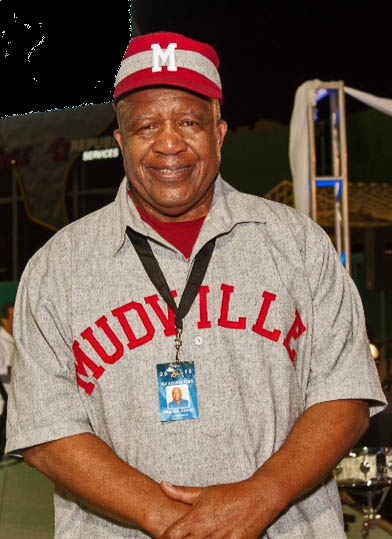
Deacon Jones, Late of the Mudville Nine, Now of the Sugar Land Skeeters.

Casey at the Batby Ernest Lawrence Thayer ©
Published: The Examiner (06-03-1888)

The Outlook wasn’t brilliant for the Mudville nine that day:
The score stood four to two, with but one inning more to play.
And then when Cooney died at first, and Barrows did the same,
A sickly silence fell upon the patrons of the game.

A straggling few got up to go in deep despair. The rest
Clung to that hope which springs eternal in the human breast;
They thought, if only Casey could get but a whack at that –
We’d put up even money, now, with Casey at the bat.

But Flynn preceded Casey, as did also Jimmy Blake,
And the former was a lulu and the latter was a cake;
So upon that stricken multitude grim melancholy sat,
For there seemed but little chance of Casey’s getting to the bat.

But Flynn let drive a single, to the wonderment of all,
And Blake, the much despis-ed, tore the cover off the ball;
And when the dust had lifted, and the men saw what had occurred,
There was Jimmy safe at second and Flynn a-hugging third.

Then from 5,000 throats and more there rose a lusty yell;
It rumbled through the valley, it rattled in the dell;
It knocked upon the mountain and recoiled upon the flat,
For Casey, mighty Casey, was advancing to the bat.

There was ease in Casey’s manner as he stepped into his place;
There was pride in Casey’s bearing and a smile on Casey’s face.
And when, responding to the cheers, he lightly doffed his hat,
No stranger in the crowd could doubt ’twas Casey at the bat.

Ten thousand eyes were on him as he rubbed his hands with dirt;
Five thousand tongues applauded when he wiped them on his shirt.
Then while the writhing pitcher ground the ball into his hip,
Defiance gleamed in Casey’s eye, a sneer curled Casey’s lip.

And now the leather-covered sphere came hurtling through the air,
And Casey stood a-watching it in haughty grandeur there.
Close by the sturdy batsman the ball unheeded sped-
“That ain’t my style,” said Casey. “Strike one,” the umpire said.

From the benches, black with people, there went up a muffled roar,
Like the beating of the storm-waves on a stern and distant shore.
“Kill him! Kill the umpire!” shouted someone on the stand;
And its likely they’d a-killed him had not Casey raised his hand.

With a smile of Christian charity great Casey’s visage shone;
He stilled the rising tumult; he bade the game go on;
He signaled to the pitcher, and once more the spheroid flew;
But Casey still ignored it, and the umpire said, “Strike two.”

“Fraud!” cried the maddened thousands, and echo answered fraud;
But one scornful look from Casey and the audience was awed.
They saw his face grow stern and cold, they saw his muscles strain,
And they knew that Casey wouldn’t let that ball go by again.

The sneer is gone from Casey’s lip, his teeth are clenched in hate;
He pounds with cruel violence his bat upon the plate.
And now the pitcher holds the ball, and now he lets it go,
And now the air is shattered by the force of Casey’s blow.

Oh, somewhere in this favored land the sun is shining bright;
The band is playing somewhere, and somewhere hearts are light,
And somewhere men are laughing, and somewhere children shout;
But there is no joy in Mudville – mighty Casey has struck out.

“Phin”

Casey at the Bat by Ernest Lawrence Thayer ©

Thanks to Baseball Almanac.Com for this beautiful depiction of the famous Ernest Lawrence Thayer poem. “Casey at the Bat” was first published on June 3, 1888 in the San Francisco Examiner and went on from there to become the spinal rhyming spirit of all fans who have ever closely , and with great emotional attachment, followed the great American sport of baseball.

In baseball today, no one depicts the heart and spirit of the game any greater than the great Grover “Deacon” Jones of the Sugar Land Skeeters. The Skeeters begin their first season of independent league ball tomorrow night, April 26, 2012, before a home sell out crowd against the York (PA) Revolution behind former Houston Astro big leaguer and first Skeeters manager Gary Gaetti.

Watch the Chronicle and Internet for further details on upcoming games and come see the Skeeters for yourself as you are able. And look for old Deacon Jones walking around while you’re there at the Sugar Land ballpark. He’ll be the only one walking around the concourse with a bat in his hands. If the bat isn’t in his hands when you spot him, rest assured, it’s on his mind. Good hitting and genuine smiles are both a happy kind of habit thing with the good Deacon.

The world needs more people like him. Running into Deacon Jones unexpectedly is like all-of-a-sudden watching the sunburst breaking through the sky on an otherwise long and overcast charcoal cloudy day. I think the Good Lord puts sparks like the Deacon on this earth to keep the rest of us moving toward the sights, smells, sounds, tastes, and touches of hope for something better. Always moving steady toward the truly good. And always reaching openly for the things that rest deep in the heart of soul.

Thank you, Deacon Jones, for being with us here in Houston and for becoming such a big part of the new Sugar Land Skeeters baseball club. We shall see you at the ballpark.

This Weak in Baseball: April 16-22, 2012

April 24, 2012

At This Weak in Baseball, the spelling of "weak" in the title is intentional.

SCOOP! SCOOP! SCOOP! TAL SMITH TO BE JOINING SUGAR LAND SKEETERS AS SPECIAL ADVISOR!

Tal Smith


Here’s a story to watch. I have it from a reliable anonymous source that former Houston Astros Baseball President Tal Smith is on deck to join the Sugar Land Skeeters as a special administrative advisor to the new independent league ball club. All I can say is that the folks down in Sugar Land are even smarter than anyone could have ever imagined. Tal Smith is not merely the administrative icon of Houston big league baseball history, he is also the perfect link between the Skeeters, the Astros, the fans, and what’s best overall for baseball in the greater Houston area.

Hopefully, the announcement will come soon in a way that particularizes Tal Smith’s assignment and degree of participation  in planning, player evaluation and procurement duties, and his community service, if included, to the goal of bringing about greater union to the goals of MLB and independent league baseball in our region of Southeast Texas.

ASTROS AT A GLANCE: This past week, April 16-22, the Houston Astros won 2 and lost 5 combined in their two series with the Washington Nationals on the road and the Los Angeles Dodgers at home. The ‘Stros were 1-3 against the Nats and 1-2 against the Dodgers. In each instance, Houston had to take the final game of the series to keep from getting swept.

Other scoring patterns were discernible. The Astros hung lose and battled for the most part in the five low scoring games they lost and then exploded in their 11-4 and 12-0 wins over the Nats and Bums respectively. I know they don’t work out of Brooklyn anymore, but there are still a few seedy folks in LA too – even in 2012.

Refocus on the results. A 23-4 run total for the two wins sure boosted the Astros’ run differential for the year. In spite of their 6-10 losing mark, the Astros are double-digits on the plus side of runs scored against their foes for the year at 71-61 through the first 16 games. Six of those games have been decided by one run, with the Astros on the deficit side of a 2 wins and 4 losses margin.

The Fact & Fantasy Division Comparisons: Here’s how the Astros are doing in both the Fact & Fantasy side of things through all games of  April 22nd. It’ simple: One box shows how the 2012 Astros are doing as members of the National League West. The other standings box shows how the Astros would be doing had they already joined the American League West this year instead of next.

2012 NL Central (Fact) W L PCT GB
St. Louis Cardinals 11   5 .688
Cincinnati Reds   7   9 .438 4.0
Milwaukee Brewers   7   9 .438 4.0
Pittsburgh Pirates   6   9 .400 4.5
Houston Astros   6 10 .375 5.0
Chicago Cubs   4 12 .250 7.0


2012 AL West (Fiction) W L PCT GB
Texas Rangers 13    3 .813
Oakland Athletics   8    9 .471 5.5
Seattle Mariners   7  10 .412 6.5
Houston Astros   6  10 .375 7.0
Los Angeles Angels   6  10 .375 7.0

What do the two divisions share in common? Well, most obviously, they are each led in 2012 by the two teams that met and played out a seven-game World Series in 2011, the victorious St. Louis Cardinals of the NL and the combative Texas Rangers of the AL. Next thing up is equally open for view. The Cardinals and Rangers each head up the only two 2012 divisions led by the only team in the joint with with a winning record.

The Astros are five games back of the Cardinals, but they would be seven games down had they already moved to the American League West this year.

Philip Humber of Rice and the Chicago White Sox pitched Perfect Game No. 21 on 21 April in Seattle against the Mariners.

Polar Points of View on Humber’s Perfecto!

In response to my column about Philip Humber’s perfect game …

Darrell Pittman wrote: “Can’t be a “perfect” game… it was inherently flawed with a DH!:

Herb Whalley then wrote: “Actually, the DH makes the feat even more amazing as Humber did not face any poor hitting pitchers.”

To each his own.


Congratulations, Philip Humber of the Rice Owls!

April 22, 2012

Philip Humber of the Chicago White Sox, and formerly of the 2003 NCAA Champion Rice Owls, pitched the 21st perfect game in baseball history in a 4-0 masterpiece against the Mariners at Seattle yesterday, Saturday, April 21, 2012.

How cool was that? And on Jacinto Day too!

In the small case you haven’t heard, yesterday, Saturday, April 21, 2012, Texan Philip Humber pitched the 21st perfect game in major league baseball history going back to the 19th century. For those who don’t know, a perfect game is one in which a pitcher faces and retires every single batter he faces in a regulation game. Yesterday at Seattle, pitching for the 4-0 victorious White Sox, Humber faced 27 batters in the regulation length 9-inning game, retiring all he faced on ot plays without any batter reaching base by any means.

The game ended dramatically on a “go get it” play.

With two out down in the bottom of the 9th inning for the Seattle Mariners, pinch hitter Brendan Ryan was rule to have gone around on an attempted checked swing at strike three. The problem was – the ball got away from White Sox catcher A.J. Pierzynski – throwing the door open for the batter to reach first base on a missed third strike catch of the play for the final out.

“Go get it!” Humber yelled at his catcher. And as A.J. was running the ball down before the stunned batter Ryan could take flight as a runner, Humber yelled an addendum to Pierzynski as the catcher reached for the rolling ball several feet behind and to the right of home plate:

“Now throw him out!”

And so he did. Throw him out at first, that is. And the deed was done. Now Philip Humber’s name joins one of the most select lists in the great hall of very special baseball attainments.

In 2003, Sophomore Phillip Humber pitched the decisive third complete game victory for the Rice Owls as they flew to the NCAA baseball championship over Stanford, 14-2. Now, in 2012, he stands tall as a reminder of why those who accomplish great things are most often those who have proven their metal on the way to glory.

Humber was drafted by the New York Mets in 2004, but the road has been bumpy since the days of his collegiate success. After several major league stops as he was trying to break in, Humber finally landed with the White Sox. As of yesterday, he is now listed high in that club’s book of greatest franchise achievements.

Congratulations from all your fellow Texans too, Philip Humber! We are all proud of you and happy for you. Any Texas baseball fan who isn’t excited for you doesn’t deserve to be counted. Remember that. Remember the Alamo. And Remember too – you did it on San Jacinto Day.

Getting Perfect Game 21 on 21 April isn’t too shabby a numerical connection on Memory Lane either, come to think about it.

My All Time Drinking Lineup

April 21, 2012

"... if one of those bottle should happen to fall, 98 bottles of beer on the wall!"

Baseball is like the rest of our culture in its incidence of appetite abuse, psychological obsession and compulsion, and appetite addiction to a wide range of mind altering chemicals, with legal alcohol still the principle drug of choice for most. Like the rest of our larger society too, not everyone who over does it gets diagnosed or loses their productivity. Some, in fact, fellow like George Herman Ruth and Paul Waner, Hall of Famers both, seemed to even do better under the influence. The story of Ruth getting to a ball game late and quickly hitting a home run while he was still under the influence from a night of excess and debauchery is legend. And the tale of Waner going on the wagon and straight into a hitting slump until his manager gave him orders to stay out all night drinking is also pretty famous too. Waner supposedly did as he was told and then showed up just in time to go go something like 4 for 5. I forget the exact performance figure. And maybe Norman Macht could prove that it never even happened.

Who knows? Good baseball stories are often like that. Long on legend. Short on fact.

The point here is that we can always offer the “what might have been” opinion that some of the great substance abusing baseball players in history could have done even better had they been clean, or came clean through recovery, but there still will never be any way to prove it. For one, I’d sure like to have seen the career marks that Mickey Mantle might have posted without all the physical and psychological damage he took into his playing career along with the alcohol he consumed. I just can’t help but believe he could have done a whole lot better.

In the meanwhile, here’s my starting lineup of players who liked old Jack Daniels and his partners too much. I’m not diagnosing any of them, but what they share is the fact that they all had public records of using alcohol heavily. In a few instances, you could even make the case that it killed them.

It’s a strange world, isn’t it?

My All Time “Drinkers” Starting Lineup:

Mike Kelly, c

Paul Waner, lf

Mickey Mantle, cf

Babe Ruth, rf

Miguel Cabrera, 1b

Vern Stephens, ss

Jim Thorpe, 3b

Billy Martin, 2b

Rube Waddell, p

There are plenty of other candidates for this club, so, if you have some favorites for the best Drinking Team lineup of all time, please post your extra roster suggestions below as a comment upon this column.

Thank you – and have a nice weekend – hopefully sober, of course.

One of My Relatives is Relatively Aged

April 20, 2012

A lot of hope, as in, just about all of it. is invested in the youth and potential talent blossom of the current and ever-changing to younger 40-man Astros player roster. A brief look at the current relativity of certain things is fun to do.

On Opening Day 2012, the home program for the Houston Astros detailed thirty-eight (38) men that were then currently the players listed on the 40-man major league player roster. I’m sure it’s probably filled out and even changed in some way from even that recent publication, but probably not enough to destroy the trends that were in place in that time demographically.

First of all, take a look at the raw data on birthplaces for the 38 men from the original list:

Alabama 2

California 3

Dominican Republic: 10

Florida 3

Illinois 2

Indiana 1

Missouri 1

New Jersey 1

New Mexico 1

Nicaragua 1

Ohio 1

Oregon 1

Panama 1

South Carolina 2

Texas 2

Utah 1

Venezuela 4

West Virginia 1

Based on birth sites alone, 42.1% (16/38) of our current Astros were born in Caribbean, Central, and South American countries, and principally in the Dominican Republic. Only 4 come from Venezuela, the country that has housed the club’s past baseball academy program and there is no one on the roster from the Commonwealth of Puerto Rico. WOnder what happened there?

26.3% (10/38) of our current Astros were born in the Dominican Republic.

13.2″ (5/38) of our current Astros were age 21 or older on the morning of the horrendous 9/11 attack in 2001. Most were still kids living at home back then and even wetter behind the ears than they are today.

Neal McCurdy

Here’s the one, of course, that really drives home the point for me about the current youthfulness of the 2012 current Astros: Of the 38 men on the extended roster Opening Day of 2012, 24 of them were younger than my 27-year old son Neal. That’s a 63.2% rate on how many of the current players are now younger than my “grown kid.”

Wow! That means, if I were the manager of the Astros, or one of Brad Mills’ coaches, I would have to show up everyday with the wisdom of a father on how to treat each one in similar or different situations. I would have to know who to pat on the back and who to kick in the butt – and get it right 95% of the time. It would also help if I were fluent in Spanish.

Good luck, Brad Mills. In the end, I hope the club gives you the credit you deserve.

The Astrodome: A Future as Art

April 19, 2012

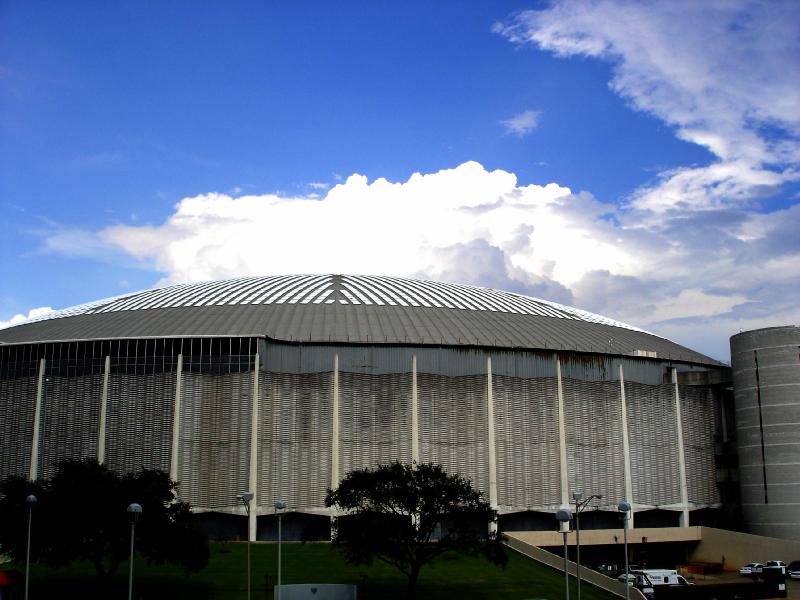
Dame Astrodome: Maybe we let her go out the way she came in back in 1965 - all sculpted girders as a living eco-green reminder of her place in history and with no more costly gridlock on how we save her for some other newfound commercial venture.

Less than a month ago, Early Houston Baseball Research artist Patrick Lopez suggested that we should consider “saving” the Astrodome in the most energy-efficient way available to us. Lopez suggested we strip the iconic symbol of all new sports venue domed stadium construction in the world down to only the steel structure that still defines her structure and thus allow the old girl to breathe the free air as a girded reminder to all of her place in the world history of architecture. The interior could be developed as an open air Astrodome Memorial Park, perhaps, even preserving in some kind of flexible way a plan for preserving home plate and the diamond dimensions for some further use of the place for fun baseball games – and maybe even the home field of our vintage baseball league team, the Houston Babies.

What a combo that would make! The resurrected 1888 Houston Babies, the city’s first professional baseball club, playing their games within the architectural heart of this town’s and the world’s first domed multi-purpose sports stadium!

The place could be dotted with convenience features like clean, operative rest rooms, fast food service, souvenir and historical tour shows – maybe even a small museum with a theater that could show the history of the Dome and other historical Houston features – everything from our history in sports to our city’s role in medicine, the performing and visual arts, the ship channel, the Texas Medical Center, the petrochemical industry, higher education, NASA, and the roles of our various sub-cultures in Houston’s growth as a significant international city.

The place could be landscaped for shade and greenery – and maybe the Houston Zoo will get involved in locating a rotating display there of all the zoo animals that are in need of protection from extinction in the wilds.

It could be anything we choose to make it. My words are simply my sketch. We are only limited by the volume of our passion, the flight-worthy character of our imaginations, and the steel of our political resolve to see that the Astrodome comes to a rightful new purpose before it slips irrevocably into a state of irredeemable costly repair.

This will be a low maintenance working, living, breathing memorial that serves as an ongoing family fun spot, teaching and recreational venue, and promotional spotlight on whatever side of Houston we want to promote to visitors. And there will be no “Big Bertha” AC bill to pay every month. The Astrodome itself will have become the sculpture that defines what is special about this very special spot of Houston ground. Other lower maintenance costs can most probably be covered by good planning for an array of year-round events that are staged on site to help cover most, if not all, of the costs.

If we could just tear our way through the overwhelming squelch of apathy and get some of that old-fashioned Houston hustle and muscle behind this kind of plan, we could get her done – and sleep a lot better in the knowledge that we, as Houstonians, didn’t just sit idly by until the old girl died from the structural equivalent of human cancer.

What do you say, folks? Can you see what Patrick Lopez and I are talking about? And are you willing to get behind the promotion of such a plan to our local government leaders?

It’s going to take a combination of creativity, leadership, expertise, and a love for Houston and the Astrodome  to get this kind of ball rolling – and all I can think to do for starters is to make this plea and to make sure I also send a link to this column to County Judge Emmett and Mayor Parker. If anyone cares to step forward and organize a formal appeal plan, I, for one, will be glad to help you in any way that I am able. I’m just not young enough, politically big enough, or fool enough, to take on this beast by myself. We need a courageous individual or group of  similar-minded Houstonians to take on the job of putting together a plan for the Astrodome Arboretum – or whatever we may choose to call it.

Step up now and speak your mind by leaving a comment on this column. As I see it, the time is pretty close to now or never.

I can also be reached by e-mail at houston_buff@hotmail.com

Houston: The More Things Change …

April 18, 2012

Downtown Houston, April 17, 2012

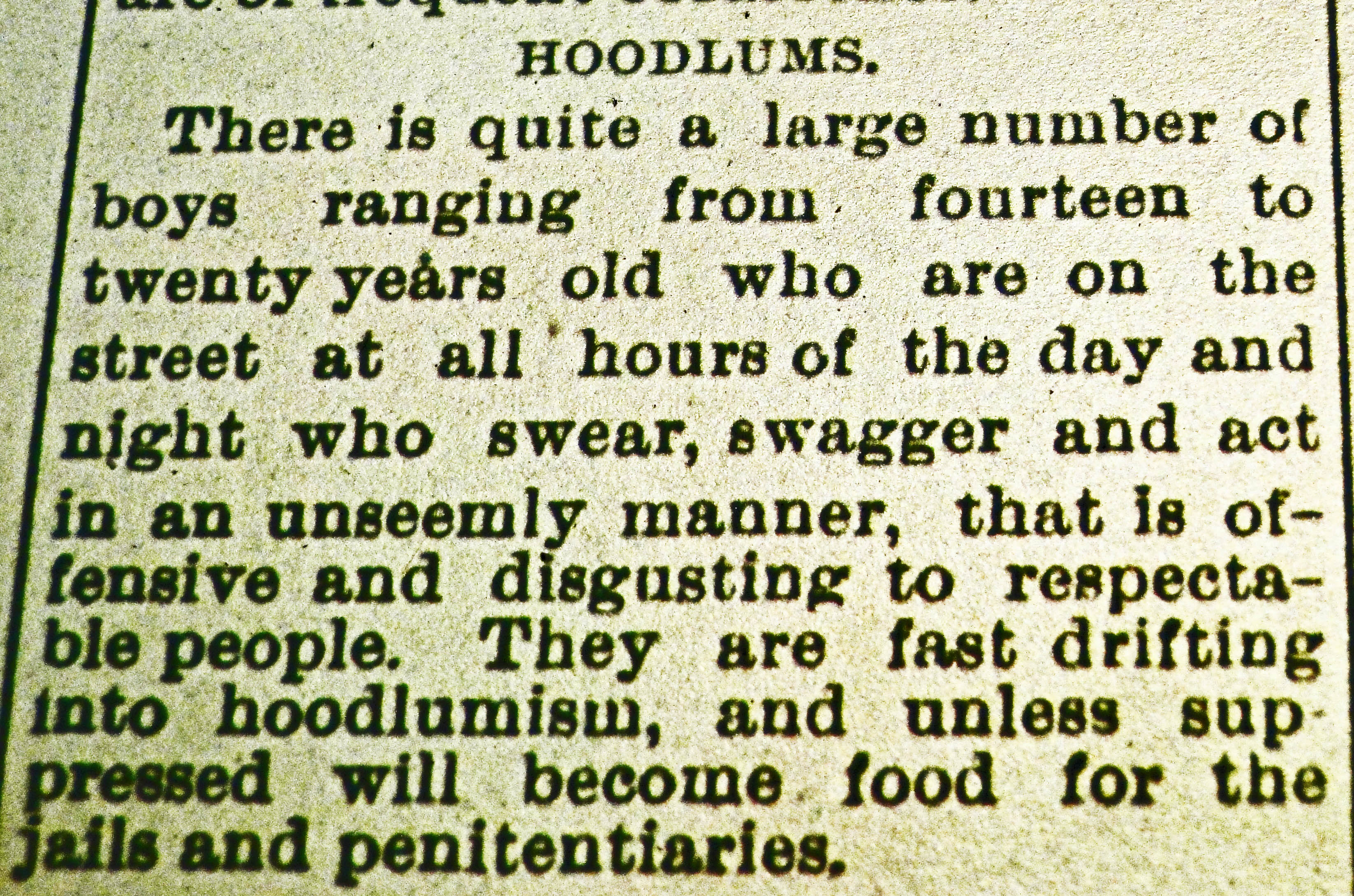
We are not the same world we were in Houston back in the 19th century, but in so many ways, we are. Today we often wrestle with worries over the character, behavior, and fate of our young people, but check out this note from the Houston Daily Post back on May 22, 1886:

Houston Daily Post, May 22, 1886

Worrying about the next generation is not a new invention. The young people of 1886 Houston didn’t have Facebook, Twitter, cars and credit cards, or designer drugs available to them, but they had other stuff. Store shelf home remedy medicines in those days contained everything from opiates to cocaine to alcohol in unregulated volumes. That was enough to do it. And course, Houston in 1886 already had its saloons, pool halls, and other dens of inequity too – and in those times, young people carried no papers to validate their ages by driver’s license.

In 2012, Houston has three fairly new professional sporting venues for baseball, basketball, and football, another brand new one on the way for soccer, and one really old and historic multi-purpose place called the Astrodome that is falling down around itself, and that’s to say nothing of the new and remodeled venues in the works at UH, Rice, and HBU for collegiate football. We also have a plethora of first class performing arts venues downtown that could have only existed as dreams back in 1886,

Ou Houston entertainment facilities were not so fancy and plentiful back in 1886. Check out this posted hue and cry from those times:

Houston Daily Post, June 3, 1886

It’s still the same old story in 2012. What we don’t have, we want. What we do have, we take for granted. What we have over time, we too often simply destroy without further thought, or worse – we allow whatever it is to simply fall apart at our expense. Does that sound familiar on any level in Houston?

Houston's most famous now abandoned "temple of amusement.."

That’s right. It’s still the same old saw, in Houston, and elsewhere. – The more things change, the more they remain the same.

The Jack Kevorkian of Baseball Myth

April 17, 2012

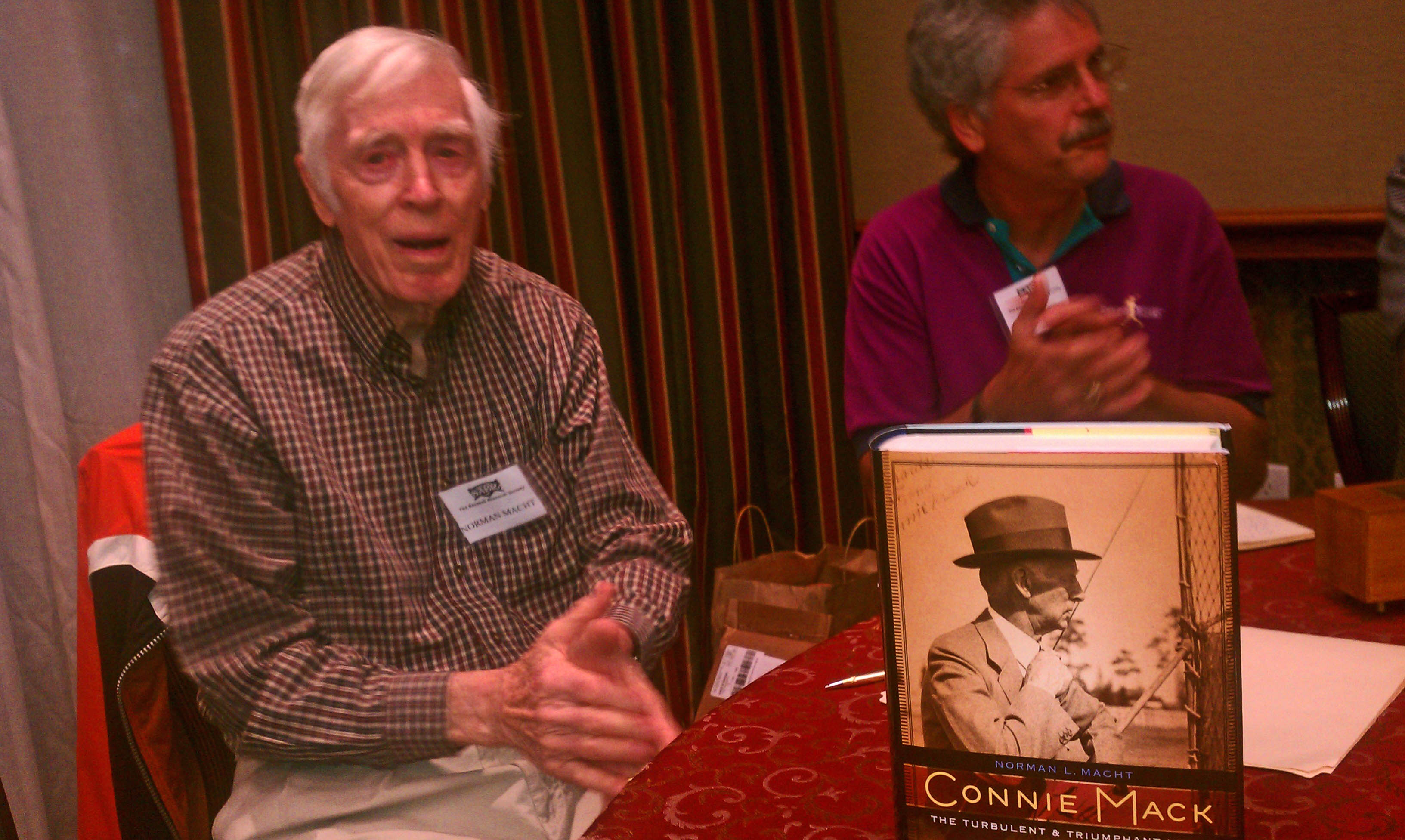
Norman Macht is the author of "Connie Mack: The Turbulent and Triumphant Years, 1915-1931. This work is Volume II in a three-part planned biography of the iconic owner/manager of the Philadelphia Athletics that Macht has been working on for over 30 years. Based on his talk to the Houston SABR Chapter last night (4/16/12), one could only conclude that Macht's search for the truth in all places large and small is nothing short of relentless.

Norman L. Macht has been one of my favorite baseball researcher/writers since he first published Volume I of his landmark work on the life and times of the great half century owner/manager of the Philadelphia Athletics, the legendary Connie Mack. Macht published his first treatment of Mack in collaboration with the grand old man’s grandson, Connie Mack III, in 2007. That starter kit to Macht-addiction was entitled “Connie Mack and the Early Years of Baseball.”

It was high honor to simply meet the man for a light meal prior to hearing him speak before the monthly meeting of the Larry Dierker Chapter of SABR, the Society for American Baseball Research, Monday night, April 16th, at the Inn at the Ballpark across the street from Minute Maid Park in Houston. Macht was the third of three wonderful speakers on the evening and he was preceded by sports media writer David Barron of the Houston Chronicle and former third baseman and current administrative employee of the Houston Astros, the great Enos Cabell, who each serially brought news of the Astrodome’s demise and the Astros’ plans to rise. Both were very good in their own rights, but it is Macht who draws my attention here today because of what he represents as a role model to our own current research into the first one hundred years (1861-1961) of baseball history in Houston.

The man is totally dedicated in all his searches to a pursuit of verifiable truth – and that’s not easy when the subject matter is baseball, a game that has sewn its seeds plentifully and often on the wings of stories by sportswriters that weren’t “necessarily so.”

Macht best describes his pursuit of the truth in a mere few words as the one-sentence second paragraph of his opening acknowledgement section of his new book. In lamenting the loss of a valuable research colleague, Macht writes the following:

“Without Jim ‘Snuffy’ Smith’s zealous pursuit of the truth and accuracy in all matters, I would have fallen further short of the holy grail of getting it all right.”

“Pursuit of truth and accuracy in all things” is the active operant ticker heart of this man, Norman Macht.

Working on any history in the baseball world, one must wade through a culture that has already built a thriving self-image around a plentiful supply of lies and legends about events that most probably never happened. (Uh, “The Babe Calls His Shot in Chicago, 1932,” for example). Sports writers learned early that baseball stories don’t have to be true to sell newspapers. They simply have to be entertaining – “funny” helps and “magical” transcends.”

As one example of the stories that Macht has taken apart, he told the story of a column written by the esteemed Dave Anderson in the New York Times, I believe, back in 1975. Anderson wrote a story, one supposedly told by Joe DiMaggio at a banquet arouned that time. (I may get some facts wrong here. i wasn’t taking notes last night.)

In the tale, DiMaggio of the Yankees hits a home run off a fastball thrown by BoBo Newsom of the Philadelphia Athletics. The next time up, and before he bats, A’s manager Mack tells pitcher Newsom: “DiMaggio teed off on your fastball last time, Bobo. This time, show him your curve. Newsom did the curve, but it didn’t break much. DiMaggio hit it into the upper deck in left at Shibe Park. As DiMaggio is rounding third on that second homer of the day off Newsom, Bobo supposedly walks off the mound to yell into the dugout to his manager: “Hey! Mr. Mack! Guess what? He hit your pitch even further than he hit mine!”

Great baseball story. Full of breakfast table smiles for the avid readership. But there’s just one thing. Was it true?

Norman L. Macht took the story and did what few will do. He researched the hard-core record books: Was there ever a game in which Joe DiMaggio hit two runs in a single game against the Athletics? If so, did he ever do the deed against Bobo Newsom.

Macht found that the first set of answers were “yes” and “no.”

If memory serves, “yes,” DiMaggio had three double homer games against the A’s in his career, but “no,” none of these games occurred against Bobo Newsom.

Those results don’t settle things for a relentless searcher like Norman Macht. He carries it further to the possibility that maybe the story is right, but the facts are wrong. Of the three double homer games, Macht rules out one game in which the two homers came against two different men. Then he methodically eliminates both of the separate pitchers who did surrender double homers in games against DiMaggio for psychological reasons. One was shy and retiring; the other was shell-shocked into a quiet state from service in World War II. Neither was a candidate for shouting from the playing field to their manager,

The story did not pass the Macht smell test. It was just an amusement, but not worth the ink on the pages of actual history. So Macht put it to sleep until some boob like me jumps on it for its entertainment value and repeats it here. How many of you out there who now act to share the DiMaggio story with others will also go through the steps of explaining that it’s not true, clarifying that it’s just a funny story, one that probably fired off the pistons that once cranked off the entertaining mind of a writer named Dave Anderson? * (See footnote at end of column.)

Answer: Probably not too many.

Forgave me, Norman. You still have my utmost respect for all you do in the name of historical truth.

I came away from the evening in even greater awe of Norman L. Macht, but with a new perspective on his characteristic role in baseball research. It was a new image for me of the man – and one helped greatly on the transferential level by his physical similarity to another great historical man who found himself captured tightly by his obsession with rightful purpose.

Norman L. Macht and Volume II of his Connie Mack story.

It finally came to me this morning. Norman L. Macht is the Jack Kevorkian of baseball research. He is totally dedicated to the goal of assisting all untrue stories in baseball to the cemetery of the unpublished waste pile. If they are not verifiable in some hard copy form, he will not use them in his own work, He is, and I think rightfully so, distrustful of what others write in blogs, books, and sports columns and articles that offer no hard fact support as the truth.

Keep up the good work, Norman. The truth needs you as much as you need the truth.

* Footnote, 4/18/12: As the result of word from Norman Macht in response to this column (see his comment below), I have been duly corrected that it was Dave Anderson, not Red Smith, who told the DiMaggio story used in this piece. Because it both stands as bonus proof of Mr. Macht’s desire for truth, and my propensity for human hearing and memory error, I have replaced Smith in the story with the correct name of Anderson. I share Mr. Macht’s desire for getting all things right, even when my human capacities sometimes get in the way. Thanks you again, Norman Macht, for calling this error to my attention. – Bill McCurdy.

Column Addendum, 4/18/12: Here’s a better shot of Norman Macht as he personally euthanized the “Two Homers off Bobo Newsom by Joe DiMaggio in the Same Game” story for being untrue at the 4/16/12 meeting of SABR’s Larry Dierker Chapter on Monday Night at The Inn at the Ballpark next to Minute Maid Park in Houston:

Historical Euthanization in Progress: "Way to go, Norman! You metaphorically put the whole DiMaggio-Newsom Two Homer tale to its eternal rest away from the big book of history as untrue on Monday night. And we thank you for so acting."

Thanks again, Norman Macht, Baseball research needs more people on board who are as careful with the truth as you are.

Astros Need Situational Hitting

April 16, 2012

That's Chris Snyder of the Astros taking a called strike against the Braves in the recent home stand. We can't really blame Snyder for the growing club tendency to fail in the clutch. It just happened to be the only recent photo I have of an Astro taking another pitch with his bat on his shoulder.

The astute Zachary Levine of the Houston Chronicle beat me to the punch this morning in his coverage of the rubber game loss the Houston Astros just absorbed in the final game of the all three “5-4” score games they played over the weekend in Little Havana against the Miami Marlins. I had just been offering to former Astros batting coach and new erstwhile Sugar Land Skeeters marketing magician Deacon Jones at lunch on Saturday that I felt the current young Astros showed two major problems coming out of the gate: (1) On offense, they lacked good clutch or situational hitting – and that includes everything from the pile of LOB totals they are building to the times in late innings in close games that they start things in an inning with a one pitch out. (2) On defense (Games One and Six of the first home stand confirm), the Astros suddenly turn from good play carriage to rookie pumpkin rot and start making dumb errors of execution all over the field. In a flash, they seem to have the ability to go from very competent to guys who look as though they had never seen a baseball until this latest one was hit to them.

Deacon Jones agreed with me to the point of jumping out of his chair and giving me a great big smile with his knuckle hand follow-up contact with my own receptive fist. (I gotta tell you – I didn’t mind getting the Deacon’s approval for a baseball comment. I didn’t mind it at all.)

Then came Sunday and two more exclamation points on the offensive failure side get posted in colors that would stand out, even  in the garish splash of tropical juice sights that are splashed all over the new Marlins Park in Miami. – Jordan Schafer fanned with the bases loaded in the 6th inning to kill the Astros’ chances of expanding a 3-2 lead. Then, in the 8th, with Houston now up by 4-2, shortstop Jed Lowrie also struck out to retire the side and kill the club’s last scoring “op” of the day. The Marlins then took over the game on a tying two-run shot to deepest center field by Hanley Ramirez in the bottom of the 8th – and then won it. 5-4, on a bases-loaded, extra-long single by Jose Reyes in the bottom of the 11th.

As Levine of the Chronicle so adroitly points out, this was the 11th time in the 9 games of the 2012 season now played that the Astros have loaded the bases and failed to get a single run across as the result of their work. As Deacon Jones points out, this sort of thing doesn’t often happen to clubs like the New York Yankees because those teams invariably have a guy like Derek Jeter in the house somewhere in their lineup. And guys like Jeter don’t leave all bases loaded situations fruitless on the run production slot in the scoreboard.

For now, at least, the young Astros have shown that they can hang around until the finish. They just can;t harvest what they plant. And they don’t have a harvesting crew chief named Derek Jeter.

For the heck of it, here are the up-to-date fact and fiction standings for 2012. The fact group is simply the Astros’ actual position in the current National League Central. The fiction batch is also the Astros’ current record, but placed where they would be in 2012 had they already moved to the American League West.

The FACT & FICTION HOUSTON ASTROS STANDINGS THROUGH ALL GAMES OF 04/15/12:

2012 NL Central (Fact) W L PCT GB
St. Louis 7 3 .700
Houston 4 5 .444 2.5
Cincinnati 4 6 .400 3.0
Milwaukee 4 6 .400 3.0
Pittsburgh 3 6 .333 3.5
Chi Cubs 3 7 .300 4.0


2012 AL West (Fiction) W L PCT GB
Texas 8 2 .800
Seattle 6 5 .545 2.5
Houston 4 5 .444 3.5
Oakland 4 6 .400 4.0
LA Angels 3 6 .333 4.5