J.R. Richard Reaches Astros Walk of Fame Today

June 1, 2012

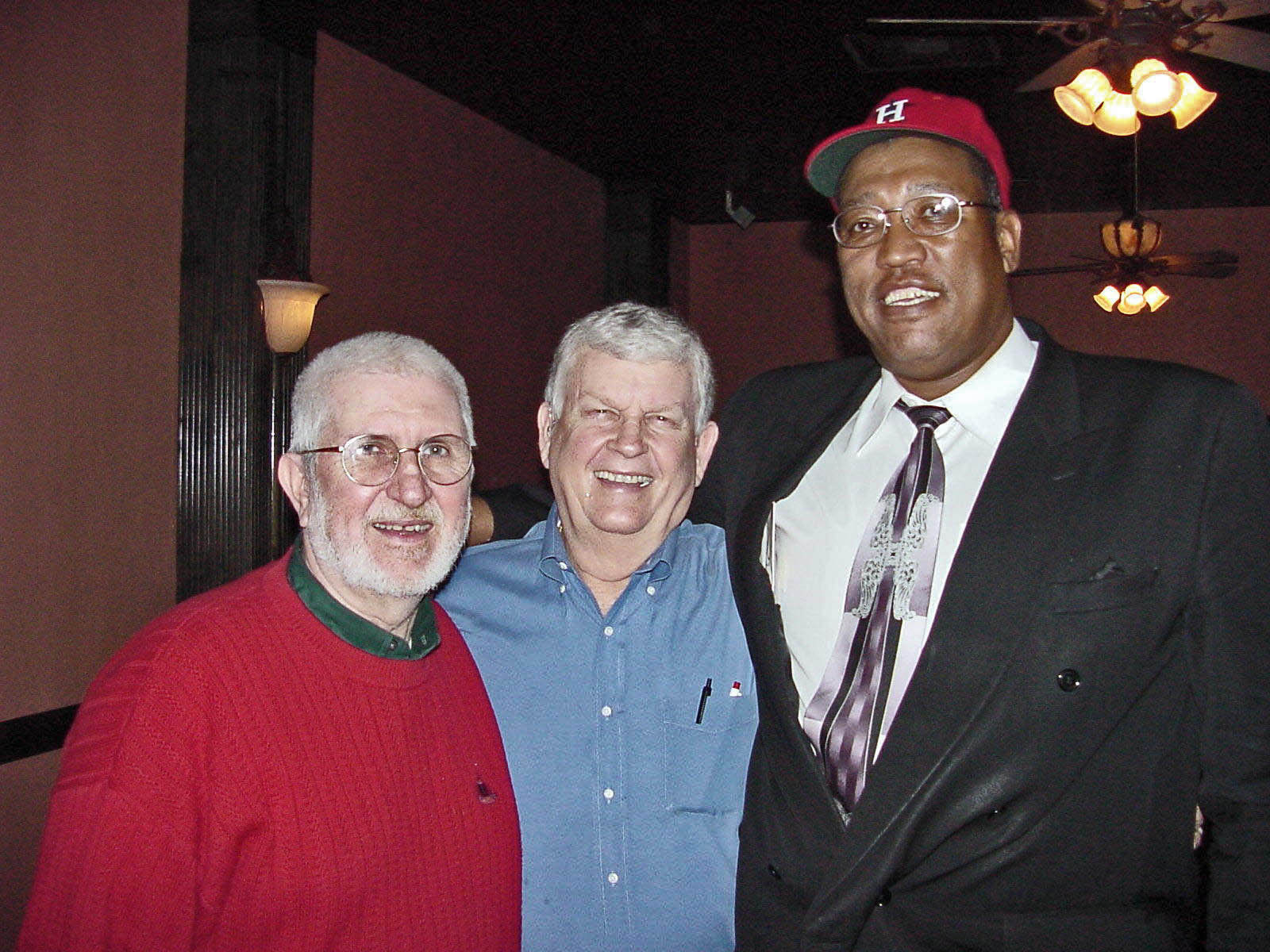
Bill McCurdy, John Storenski, & J.R. Richard, Josephine’s Ristorante, 2002.

No former Astros player is more deserving of the honor. When the name of J.R. Richard is plaqued into the new Astros Walk of Fame on the sidewalk around Minute Maid Park today, it will be a recognition of the man who is collectively over-due, most deserving, and still a tad shy of full payment on honors and acknowledgements due from the club he once elevated to new heights until the 1980 date he literally collapsed in the dirt of the Astrodome from at July 1980 stroke.

What was the big result for Houston baseball? Former Astros player and manager Art Howe called  it out in a Chronicle story on J.R. Richard just the other day. Howe expressed his very clear opinion that, had the the Astros not lost Richard in the summer of 1980 to a stroke, that the 1980 Astros of Manager Bill Virdon  would have taken the National League pennant and then  been favored to have won the World Series.

Didn’t happen. That’s not how life works.

The stroke ended Richard’s career, almost took his life, and also started J.R. on a downward spiral through his now infamous period as a homeless street person. It also started the legend of how J.R. Richard got there by genetic misfortune, a self-abusive life style, and the neglectful overworking misuse of his giant talent by the Houston Astros.

The stories and legal tension between the Astros and J.R. Richard over the question of stroke-causation opened up a giant hole in J.R. Richard’s life following the stroke. It was a human sinkhole that was big enough to swallow a man who stood 6’8″ and weighed well over 300 pounds.

Back in 2002, I nominated J.R. Richard for induction into the Texas Baseball Hall of Fame. It was around this time that he and I also met and got to be friends around our mutual interest in baseball. In 2002, he man was still struggling to right the shipwreck  of his personal life from 22 years earlier, but he does seem to have made some progress since that time through his 2010 marriage and his newly chosen profession or “calling” as a preacher.

Ten years ago, J.R. Richard was still a great big kid that just wanted to play – as long as he didn’t have to pay. That trait alone did not make him unusual in the sense that many former famous athletes get into – or even remained mired – in a condition we have now come to call and know as “entitlement.”

In 2002, nobody ever felt more entitled to a free ride than J.R. Richard. It wasn’t an intentionally malicious position he took either. It was just how he felt as one result of the stroke and what seemed to J.R., at least, like his abandonment by the Astros and baseball following his 1980 stroke.

I think entitlement was a concept that J.R. Richard had mixed up with love. (i.e., “If you love me, you will do for me. Feed me. Pick up the tab.”)

We never felt personally stung by any of J.R.’s entitlement hungers, but I do know that some others did. One time, J.R. learned that my wife Norma knew how to cook ox tail soup – and he just loved the taste of ox tails as one of his favorite soul food treats.
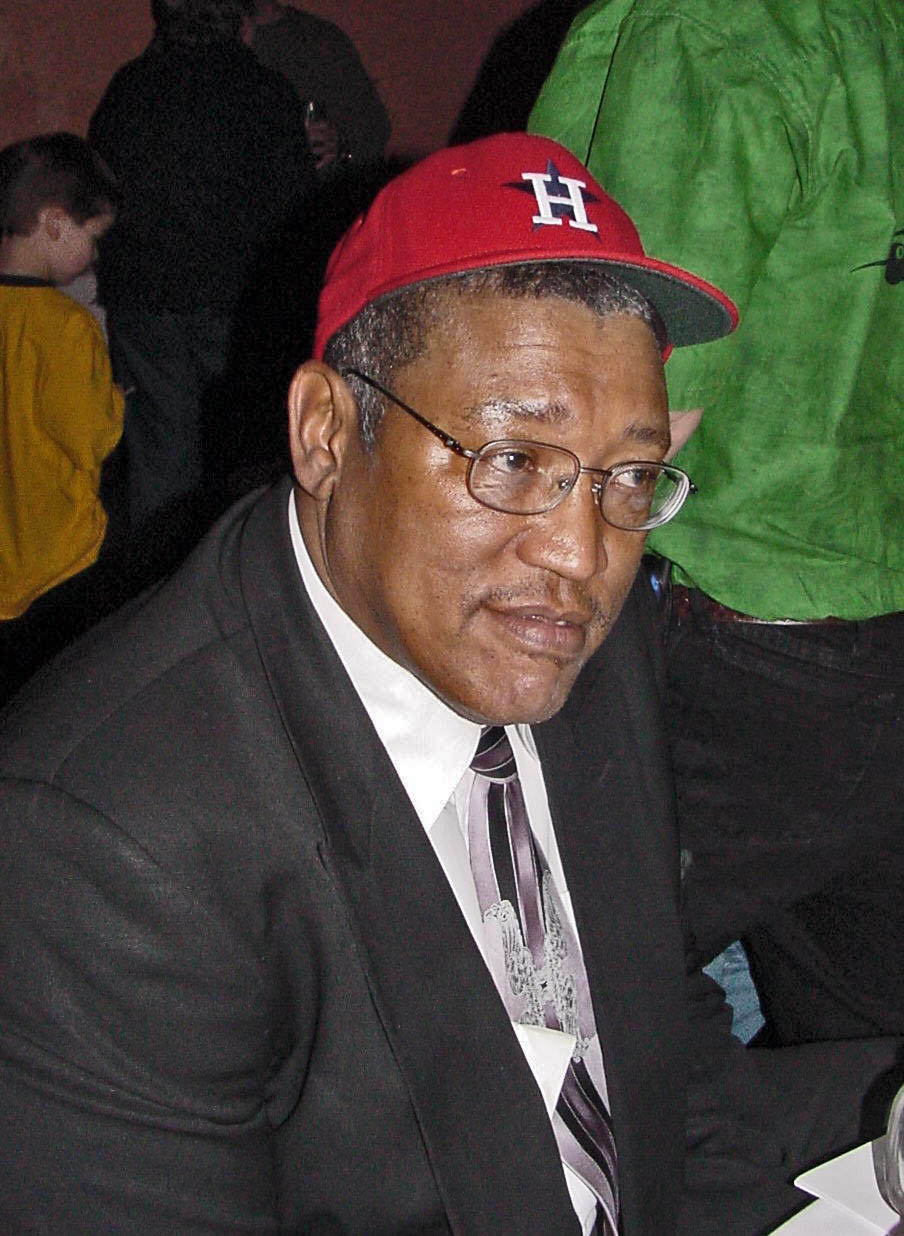
J.R. Richard, Texas Baseball Hall of Fame, 2002.

“Norma,” J.R. asked one day on a drop-in visit, “would you please cook me some ox tails some time soon? – And when I say ox tails – I don’t mean no short order plate. – I mean a whole great big old boiling pot-load stomach-filling several plate-loads of them?”

Sweet Norma smiled. And Sweet Norma did. And J.R. Richard came over and consumed everything that was in the pot before he almost passed out. He felt full. And he felt loved. Meanwhile, I passed on ox tails in favor of steak, but I felt loved too.

J.R. Richard was also still a pretty good basketball shot back in 2002. On another visit, we shot some horse on our driveway hoop until J.R. tired of all the easy shots and took the ball down the right side of the house to take a shot from about 50 feet away from the imaginary far right corner. It was a shot that had to partially disappear over an exterior house gable before again finding view in the driveway at the basket.

J.R. took the shot. It was nothing but net on the first and only try.

Game over.

Here’s hoping that the game is only warming up on the peaceful valley, gets-his-full-recognitiom side of recovery for J.R. Richard.

After this year, the Astros have only two more numbers of former players that also need to be retired and those are J.R. Richard’s # 50 and Joe Niekro’s # 36.

Let’s get ‘er done. Mr. Postolous. The sooner the better. These great franchise stars of the past are way over-due.
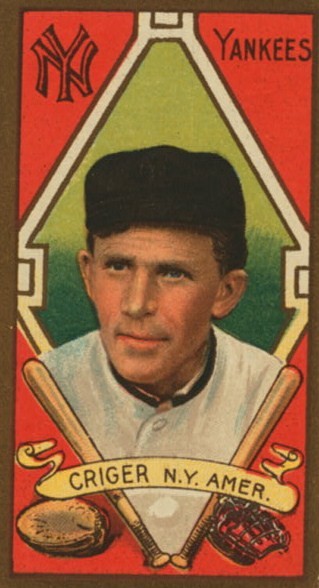
Criger Was a Catcher, Not a Crook

May 31, 2012

 Lou Criger had a 16-year big league career as a catcher for the Cleveland Spiders (1896-98), St. Louis Cardinals (1899-1900), Boston Red Sox (1901-08), St. louis Browns (1909, 1912), and New York Yankees (1910). He batted only .221 for his career, never getting more than 22 extra base hits is a single season.

Criger was not a hitter, but he more than made up for it as one of the finest defensive catchers of his era and for his reputation as the preferred receiver of the winningest pitcher of all time, Cy Young. Lou Criger was the man behind the plate for most of the big games in Cy Young’s career, including his 1904 perfect game and his 1908 no-hitter.

There was one other notable mark in Lou Criger’s history. As the result of a courageous act of honesty, Lou Criger was granted a lifetime pension at a time when major league baseball was handing out benefit programs to no former players. On page 287 of John Thorn’s “Baseball in the Garden of Eden,” the author writes that the American League’s reward to Criger came as the result of his refusal and prompt report of a gambler’s $12,000 offer to throw the first 1903 World Series for the Red Sox against the Pittsburgh Pirates. The offer represented an amount that as three times as large as Criger’s $4,000 salary from Boston.

“In gratitude,” writes Thorn, “the American League awarded Criger a lifetime pension at a time when no player received postcareer benefits.”

What Thorn’s account fails to show is that none of this action took place immediately. Coverage of Criger’s career in the Baseball Reference Bio Project leaves what happened next to unclarity, One of two things happened: (1) Lou Criger apparently was asked to sit on the bribe attempt as his personal secret while the American League dealt with the issue quietly. Twenty years later, he returns to American League President Ban Johnson and uses his early career honesty as bargaining chip for gaining help with a serious help condition; or (2) Criger simply holds the matter secret from everyone for twenty years and, in 1923, he then goes to AL President Ban Johnson seeking help with the treatment expenses he is going through for tuberculosis.

Either way, Johnson is impressed by Criger’s character and need – and quickly arranges for a life pension. Johnson probably assumes that Lou Criger does not have long to live, but that turns out to be wrong when the old catcher survives another eleven years, finally passing away on May 14, 1934.

The underside of this story is that the gambler who made the 1903 pre-World Series bribe offer to Criger for $12,000 in exchange for “soft pitch” calls was a fellow named Anderson, who had been personally introduced to Lou Criger prior to the first Series by no one less than the biggest sleaze ball character of the era, Muggsey John McGraw, the New York Giants manager – and the same guy who would kill the idea of a second consecutive and voluntary World Series in 1904 between his club and the reigning champions, the Boston Red Sox.

The gambling fix flies swarmed all around some of the game’s biggest stars through the first three decades of the 20th century, but none attracted more attention than John McGraw. It’s too bad old Muggsey never got what he really had coming to him.


Predicting Wireless Telephony

May 30, 2012

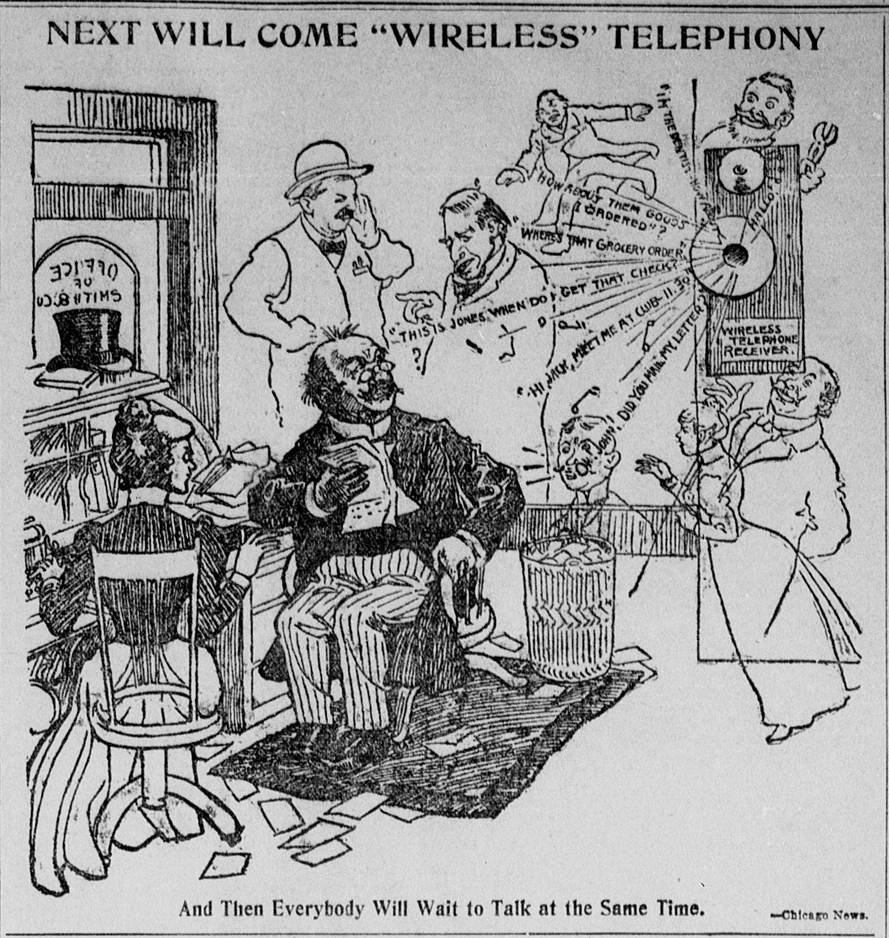
Wireless Telephony? – What will they think of next?


Predicting the future has always been as easy as placing your bets on trends that are already in place and moving and then not having these items knocked away by true future events that we can’t even see coming at the time we open our mouthes. When this thing called radio came along at the turn of the 20th century, it came on the heels of the telegraph and telephone, the first two media of electronic communication that changed the world. Therefore, it was the easiest projected footfall of logic that radio’s next contribution would be to the idea of interpersonal communication between points A and B without the cumbersome attachment of messaging to wires.

With the production of the radio, people could see, even in the early 1900s, the coming of the day in which we would be in touch with each other through wireless electronics. We simply did not have the whole expanding picture that television, the microchip, space satellites, and a little item to be called the World Wide Web in view back then.

What’s interesting to me is that the invention of radio did not come along with an understanding of the media’s value as a broadcast item from the very start. That outreach to massive one-way communication of news was still the purview of newspapers back in those earlier times. It would not be until the 1920s that radio began to come into its own as a broadcast medium for reaching the masses – leaving wireless two-way communication between individuals on a mass level to Dick Tracy and his “two-way wrist radio” in the funny pages.

We’ve certainly unshackled ourselves from landline telephony in the past five years, have we not?

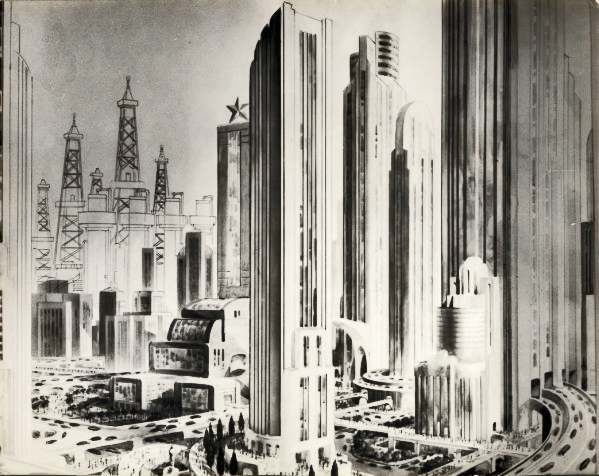
The Houston Post came close to seeing the city’s 1980s future when they published this view of their vision back in the 1920s. They just missed on the allowability of downtown oil drilling, unless those are really buildings designed to resemble derricks.


Earlier Houston projections of the city’s future face have been better than some of those that most of us have seen of New York City. Theirs always include that legion of flying mass transit balloons going in and out of the projected Manhattan skyline – a little item that was never to be for a number of intertwined technological and cultural reasons. Although New York’s predictors got the perpendicular “up” part of their expected growth right too.

If there was any easy trend in place to predict “more to come” about in the 1920s America it was “up, up, and away” for downtown growth in major city areas.

I started my wandering and sometimes wayward professional life of studies in 1956 as a radio and television major at the University of Houston, a school that early on established itself as a leader in the collegiate field by establishing the first public educational TV channel in the USA at KUHF-TV.

Our problem back then was that no one really saw the potential for television. Staff and students alike were all pretty much treating TV in 1956 as though it were “radio with pictures” – and, boy, were we all so very, very wrong!

Oh well, by the year 2050, we should have pretty much cured, or masked over, the presence of ambulatory schizophrenia in the general population by implanting the microchip for two-way wireless telepathy in everyone’s brain. If you then see someone sitting alone on a park bench, and you also witness his or lips move, you won’t know if he’s talking to himself – or else, simply calling home to ask “what’s for dinner?”

Happy futuring, dear friends!

Who Do the Astros Pick as #1 in the MLB Draft?

May 29, 2012
          How long has it been since the Astros have had a player capable of inspiring the kind of bovine adulation that our cow friend in the cartoon is getting? Will having the first choice in the upcoming  draft really become the medium that brings the best player prospect in the world? Or will it simply be the opportunity to pick the most signable player that the team can afford who also comes the Astros way without a pain-in-the-rear agent who just can’t wait to turn all success in Houston for a few years into a bidding war down the road? – Well, maybe all agents are that way to a a lesser or greater extent, but they aren’t all named Scott Boras.
          The first part of the question, the name of the player, we’ll soon enough learn when the draft takes place. And I feel confident that Jeff Luhnow and Company are about to cover this ground from every data and variable angle level available before they make that precious choice. More and more, this guys impresses as an analyst that leaves no stone unturned on goals, ways, and means – and especially when it comes to building a talent base.
          Jeff Luhnow is not a guy who is out there, simply looking to get lucky when it comes to player acquisition. He’s out to make the best choice he has among all options from a system aiming to becoming more reliable and more replicable as time goes by. This is the mindset that now dominates the rebuilding process of the Houston Astros.
          SABR friend Mark Wernick wrote some of us the following note this Memorial Day weekend. I’d like to reprint it here as a broader invitation to all of you to express your own thoughts here on your own favorite needs, players, and warnings for the Astros in the coming draft. Just write your heart out in the comment section, if you so desire. It’s not every year that the Astros have the number one pick period – and a chance to turn or burn the road to future success.
          First, read Mark Wernick’s remarks and check out the talent rankings on available top players through the link he has provided:. – Bill McCurdy
          Take her from here, Mark Wernick. – What should the Astros do?
          So there’s one perk that comes out of our  106  loss debacle last year.  And now the big moment is at hand:  what will we do with our # 1 pick?  I’ll give us this much,  we have top-notch fielding.  I like what I’ve seen of our defense.
 
          We need pitching.  Our pitching is so thin.  Seasoned Stanford pitcher Mark Appel is a highly touted choice.  
 
          We need hitting.  Our hitting is woeful,  as the just-completed series with the Dodgers makes so clear.  We were very competitive with the Dodgers,  surprisingly so,  considering they have great pitching,  and great hitting  (sans Kemp this series.)  The folks at My MLB Draft.com have us picking Byron Buxton with our  # 1 pick in their mock draft.
 
          He’s fresh out of high school and apparently declaring for the draft.  For those curious about him,  here’s an article that seems to imply we’re likely to be regarded as the Village Idiots of MLB if we don’t select him.  
 
http://sportsillustrated.cnn.com/2012/writers/albert_chen/05/22/byron.buxton/index.html 
 
          Do we risk a Mark Newfield or a Brian Taylor or another early-career Phil Nevin if we choose him?  I do really like the way his character is described,  and character is  80%  of the hurdle.   He’s raw,  unproven,  plays against questionable competition in rural Georgia,  and is likely two or three,  maybe even four or five years away.  Not sure I’ll live that long.  But he threw a football  82  yards.  (Yes,  he was his team’s quarterback.)  He’s also his school’s best pitcher and clocks  99  on the gun.
 
          I’d like to see us take this guy,  if not for me,  then for the next generation.  If he has a Stan Musial-type career,  and I can stay alive for all of it,  I’ll be a bit shy of  90 when he retires.
          I’ll go with a smile on my face if he ties on the whole 2.5 decades with the Astros,  and certainly so if he helps us to a few World Series titles along the way.  I see him as the type of player around which a team could be built.  Tough to build a team around a pitcher,  and we have some building to do.
 
          I invite follow-up discussion about this.  Who should we take with our  # 1 pick?
 
          Mark Wernick, Larry Dierker Chapter, SABR
 

Remembering Uncle Carroll on Memorial Day

May 26, 2012

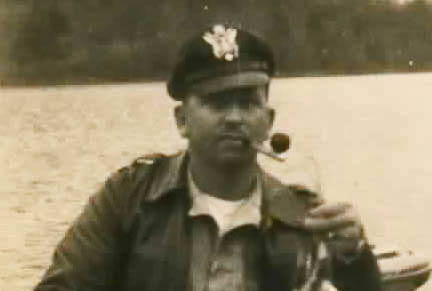
Major Carroll Houston Teas, United States Army AIr Corps

I already wrote the most personal Memorial Day story of my life a couple of years ago. Here’s the link, if you haven’t seen it, or, if you care to see it again.

https://thepecanparkeagle.wordpress.com/2010/05/30/remembering-uncle-carroll/

And please, please, please – feel free to post your own memoirs of the special people in your life whom we should not either forget on this latest Memorial Day observance of 2012. The Pecan Park Eagle would be most honored to have their names mention here.

Have a safe and happy Memorial Day with family and the other special people in your lives this weekend. I’m still not up to speed health-wise, but I’m hanging in there.

God Bless America.

My Catch of the Season

May 25, 2012

“I’d rather catch a baseball than a dad gum cold.”

Maybe it’s the weather. Maybe it’s my age. Maybe it’s just the bad luck of being somewhere someone else sneezed at just the wrong time for me. Or maybe it’s just life as we know it on Planet Pollution. Whatever it was, I came down with an upper respiratory infection Monday night that has taken me through an initial loss of voice, sore throat, coma-like sleep, and now the purgation of phlegm that feels like gravel that’s been first run through a trough of molasses. I think I’m on the upside of things now, but I’m still having trouble staying awake for long periods of time. And don’t worry, I’m not likely to show up anyplace you might be going until the middle of next week.

Good old Vick’s Vaporub. It may not really help you get well, but it still makes you think it’s helping. Just open the bottle and rub a little under your nose. And hey – I’m on the road again.

Just a note on the obnoxious visiting fans. Bill Hickman is a SABR friend of mine and a devoted Chicago Cubs fan – and nothing like the clowns who show up at Minute Maid Park wearing Cubs gear. Here’s what Bill had to say and how I answered, in case you missed it:

“Just a reminder that stereotyping is always dangerous. This Cubs fan is hardly a Yuppy. I know plenty of other Cub fans who are older and have been through the Cubs’ travails for a number of years as well. We don’t go to the ballpark to get soused or throw beer on anyone. We simply root for the team which represents our hometown, just as the Houston fans so passionately do.” … Bill Hickman, Chicago Cubs fan.

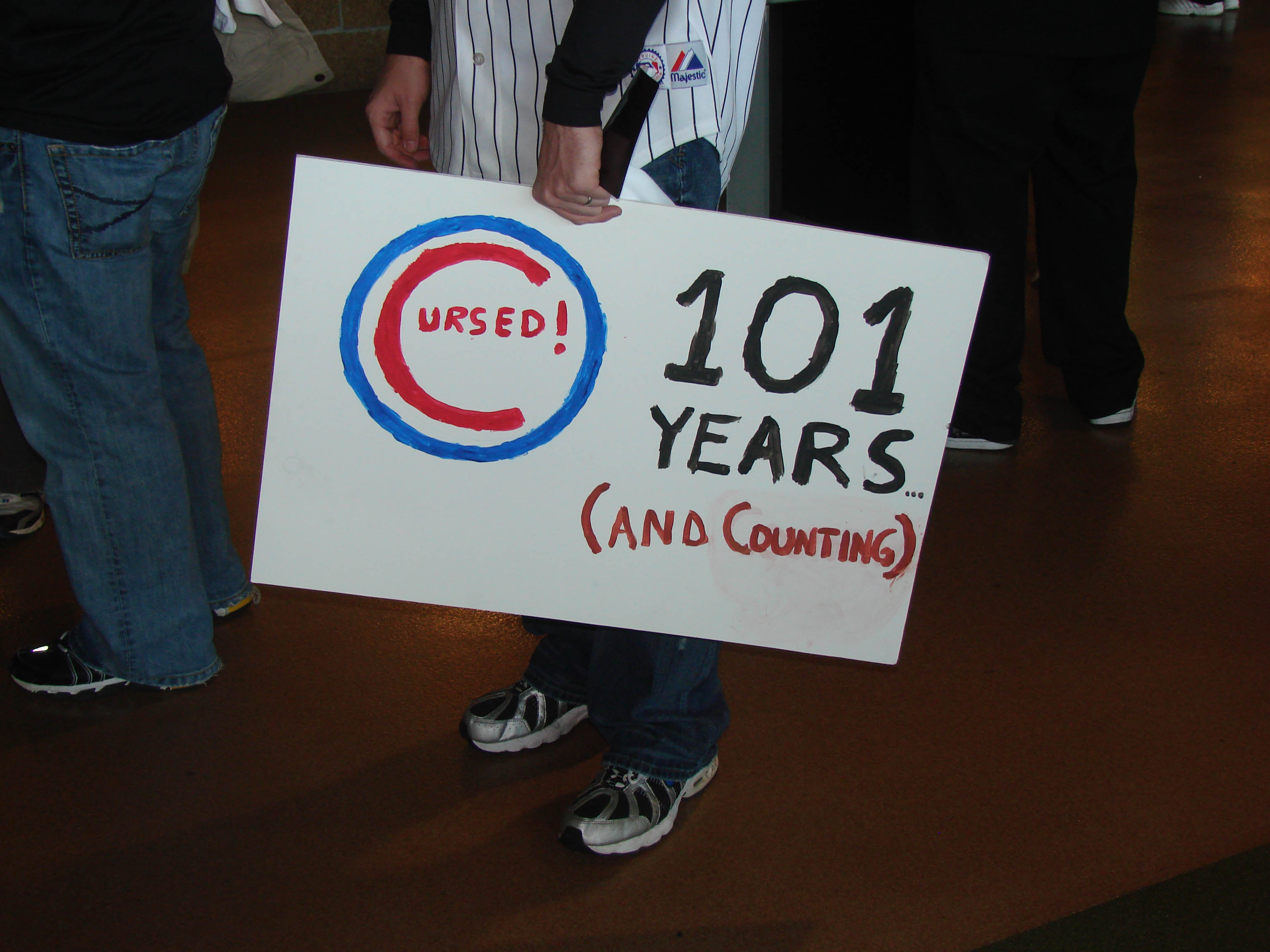
“Thanks, Bill, for stepping up to the plate for Chicago and all its Cub fans on the North Side. (I never met any Cub fans on the South Side.) I was remiss in my utter failure to point out that all Cub fans making the road trip to Houston are not rude or falling down drunk – and that includes the fan that brought the “cursed” sign with him to a game here three years ago. He was just carrying out his private act of hope in the mire of historic despair.

“Any Houston fan who could meet you or a number of other people I know from Chicago would have to back off the totality of their issue with Cub fans as loose cannons. Unfortunately, that would not stop the harm to Chicago’s image that is caused by too large a number of the drunken idiots who throw on Cub Jerseys and come to the games in Houston. Those are the folks causing the stereotyping.

“John Q. Public isn’t going to spend this much time sorting out the good from the bad, the acceptable from the unacceptable.” – Bill McCurdy, Houston Astros fan and blogger-in-charge at The Pecan Park Eagle Press.

It helps me to get well to know that baseball has fans like Bill Hickman in Chicago, Bud Kane in St. Louis, Mike Moran in Los Angeles, and Bob Dorrill in Houston. I could name many others in pretty close to all the MLB cities, but we would be here all day.

Bill’s right. We need to be more careful not to stereotype any city for the rude behavior of some fans. It’s the downside to all the easy access that we fans have to MLB jerseys and caps today. If you’ve got the money, they will sell the gear and the image of any city to any jackass who steps up and plunks down the cash.

Have a great Memorial Day weekend, everybody. I’ll see you back here tomorrow unless I slip back into a coma

Obnoxious Visiting Team Fans

May 24, 2012

Cub fans bring their lamentation over 1908 to Minute Maid Park in Houston, Is that act, in itself, obnoxious – or is it the falling-down, drunken, discourteous way they try to make their case the total behavior that seals our negative opinion of them?

Friend and Astro usher Bill Hale says the Chicago Cubs fans are the most obnoxious fans that visit Minute Maid Park and he should know, better than most. Dealing with fans, after all, is what ushers are hired to do. Bill says more Cub fans are asked to leave the ballpark than any other.

Up til next season, we’ve mainly been dealing with fans of other National League cities, although we’ve just gotten a preview this past weekend that Texas Ranger fans may be on our list of undesirable home game companions in the future. I personally don’t have any problem with true fans of other cities coming here, wearing their own club’s gear, and cheering like crazy for the visitors. It’s our fault if we cannot answer in kind as Astro fans.

My problem is with the “bandwagon Houston area residents” who line up with the Rangers, or any other team, just because they are winning, and then come to our ballpark dressed as the visitors to cheer against their own home team.

Transplants from Dallas, Chicago, Boston, and Atlanta, for example, are forgiven their support for “the other.” The “pick-a-winner” Houston area people are not. Not in my book, Of course, I may be speaking through the voice of a dead or dying culture that says that loyalty seeds and grows from your earliest experiences. Maybe today loyalty is simply another thing we place as a choice, like picking Apple over PC, or Sprint over AT&T, or Canon over Sony.

After years of watching the Cubs, Braves, and Cardinals bring their fans either to Houston to see the games, or from Houston to see the games in the other team’s gear, we are about to start finding out what awaits us in the American League that may be comparable – or worse. So far, the Red Sox look to be worse than anything we’ve ever seen from any NL club team and its fans. That bunch that came here for a weekend series in 2011 even brought their own songs, Minute Maid Park was turned into “Fenway Park Southwest.”

We’ll see soon enough. 2013 will be here before you know it.

Minute Maid Park, May 19, 2012. – All I care to say is: I hope these two fans didn’t grow up in Spring Branch or Meyerland.

Baseball Language Issue in the 1890s

May 23, 2012

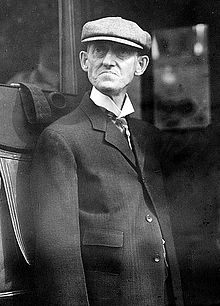
John T. Brush

Sometimes we romanticize baseball in the olden days to a point of ignoring the ugly reality of how players often behaved and spoke to  each other and umpires during the games. Can you imagine the reaction that clubs were starting to receive from the Victorian element that was starting to support the sport to the extent of bringing ladies to the games – and then hearing some umpire-baiting angry player shout at an umpire these exact words?

KISS MY A**, YOU SON OF A B****!”

Guess what, folks? That exact epithet was just one of the more printable expressions recorded on a list ordered into preparation in March 1898 by New York Giants and Cincinnati Reds owner John T. Brush. This was during the brief period in which men of power and money could own more than one club in the same league. Brush wanted to “suppress obscene, indecent, and vulgar language on the ball field by players.”

As a result of Brush’s initiative, a document entitled “Special Instructions to Players” was delivered to all twelve National League clubs of those words and expressions that were forbidden from further use at the risk of serious consequence if established by conclusive proof. The unclear penalty ranged from removal of the offending player from the field “for a day or all time.”

Not so surprisingly, only one known copy of this blue language filled document survives to this day. I’m not really sure where it is, but historian John Thorn gives it a pretty good treatment on page 246-248 of his “Baseball in the Garden of Eden.”

As we understand better today, banning bad words doesn’t make them go away. The language only changes with the culture of the people playing and watching the games. Throw in a few thousand people getting beered-up without eating and the formula for unfit family hearing goes through the roof.

What do you think of player and fan behavior at the ballpark in 2012? Are these problems or not?

And please comment. I’d really like to hear what you think.


Buffs in The Dixie Series, 1920-1958

May 22, 2012

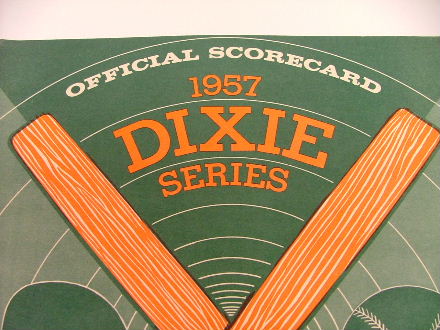
The Dixie Series, 1920-1958

For 38 seasons, the Dixie Series was the Super Bowl of minor league baseball in the South and Southwest. Created by the owners of the Texas League and the Southern Association, the Dixie Series was designed to emulate the meaning and format of the then 17 year old World Series that determined the so-called World Champions of a game played in few places back then beyond our national shores.

The World Series was major league and national. The Dixie Series was minor league and regional. The Midwest had their own minor league regional show in which the champions of the American Association and the International League played annually for supremacy in another best four games of seven competition that carried the weighty titles of Little World Series (1905-1931) and Junior World Series (1932-75) . The heavy meaning was intentional. We were supposed to think that the Little/Junior World Series regional match was merely a second and inch away from the big one, The World Series.

After the American Association shut down after 1997, the International League took on the champions of the Pacific Coast League, the  other surviving AAA level group from that era, in what was briefly (1998-2000) called the Triple A World Series, but that’s neither here nor there. Our focus today is the Dixie Series.

As kid growing up in Houston, the idea of the Buff making it to the Dixie Series was big – really big. The World Series was still biggest, of course. We only got grainy television pictures of the big league championship series, but we did get a picture to watch. The Dixie Series was far more mysterious. I was just one of the many East Enders who took the three strikes to our status zone that always seemed to find us at big game time:

No television  No tickets. No influence.

Thank God for radio and dear old Loel Passe. We didn’t miss a play from the Dixie Series that slipped by the critical objective (smile) eye of  Loel’s “hot ziggety dog and good old sassafras tea” observations and airways reports to the home crowd.

As far as I remember and know, there never was a plan in place to televise the Dixie Series back in the 1950’s. Neither baseball promoters or their network counterparts seemed to understand the commercial potential of television back then – and it’s a little hard to be cutting edge if no one in the kitchen even recognizes the cutting board they now have at their disposal.

Eventually, they all learned from Gillette, the first great all-by-themselves sponsor of those early World Series telecasts:

Look sharp. Feel sharp. Be sharp.

To look sharp – and be on the ball,

To feel sharp, and to have it all,

To be sharp, try Gillette Blue Blades,

For the smoothest shave you’ll ever know.

But I digress. Our story today is the record of the Houston Buffs in the Dixie Series.

The Houston Buffs made it to the Dixie Series eight times – and five of those appearances came during my 1947-1958 era as a Buffs-Texas League fan. The Buffs won it all in 1928, 1947, 1956, and 1957; they lost in 1931, 1940, 1951, and 1954.

Of special interest to me are these facts:

(1) The Buffs won the Dixie Series for the first time in 1928, their first year in residence at the new Buff Stadium;

(2) The 1931 Buffs (#42) and the 1941 Buffs (#65) are both ranked among the 100 greatest minor league teams of all time, but neither won the Dixie Series. The 1931 Buffs fell in seven games to the Birmingham Barons; the 1941 Buffs failed to even get there after falling in the Texas League post-season playoffs.

(3) Both the 1931 Buffs and the 1951 Buffs feel to the Birmingham Barons, the first in seven games, the second in six games, due greatly to health problems with their ace pitchers, Hall of Famer Dizzy Dean from 1931 and Wilmer “Vinegar Bend” Mizell from 1951.

(4) When the 1951 Dixie Series opened in Houston, a band took the field to play the National Anthem and also to perform numbers in honor of the two teams. For the Birmingham Barons, the band played “Dixie;” for the Houston Buffaloes, they came back with “The Eyes of Texas.”

(5) WHen the 1951 Dixie Series concluded in Houston with a 4-2 in games mastery by Birmingham, Buffs organist Lou Mahan played music to match the blue mood of Houston Buff fans. With the stands empty and the lights dimming, she was churning out a number that some of you older fans may remember as “I Remember You.”

I wasn’t there to know these facts first hand. We simply used to have sports writers who tuned in to the mood and disposition of Houston fans beyond the actual facts of a big game. In this instance, “I Remember You” served as a wistful reminder of how a few days earlier we had held such strong hopes for the Dixie Series Championship. And now they were gone, but still not forgotten.

What else can I say? It’s a long time Houston story – the remembrance of what might have been.

For the record, here are the outcomes for all Dixie Series matches:

 The Dixie Series 1920 – 1958

YEAR WINNING LEAGUE WINNING TEAM LOSING TEAM RESULTS
1920 Texas League Fort Worth Panthers Little Rock Travelers 4 games to 2
1921 Texas League Fort Worth Panthers Memphis Chicks 4 games to 2
1922 Southern Association Mobile Bears Fort Worth Panthers 4 games to 2
1923 Texas League Fort Worth Panthers New Orleans Pelicans 4 games to 2
1924 Texas League Fort Worth Panthers Memphis Chicks 4 games to 3
1925 Texas League Fort Worth Panthers Atlanta Crackers 4 games to 2
1926 Texas League Dallas Steers New Orleans Pelicans 4 games to 2
1927 Texas League Wichita Falls Spudders New Orleans Pelicans 4 games to 0
1928 Texas League Houston Buffaloes Birmingham Barons 4 games to 2
1929 Southern Association Birmingham Barons Dallas Steers 4 games to 2
1930 Texas League Fort Worth Panthers Memphis Chicks 4 games to 1
1931 Southern Association Birmingham Barons Houston Buffaloes 4 games to 3
1932 Southern Association Chattanooga Lookouts Beaumont Exporters 4 games to 1
1933 Southern Association New Orleans Pelicans San Antonio Missions 4 games to 2
1934 Southern Association New Orleans Pelicans Galveston Buccaneers 4 games to 2
1935 Texas League Oklahoma City Indians Atlanta Crackers 4 games to 2
1936 Texas League Tulsa Oilers Birmingham Barons 4 games to 0
1937 Texas League Fort Worth Cats Little Rock Travelers 4 games to 1
1938 Southern Association Atlanta Crackers Beaumont Exporters 4 games to 0
1939 Texas League Fort Worth Cats Nashville Vols 4 games to 3
1940 Southern Association Nashville Vols Houston Buffaloes 4 games to 1
1941 Southern Association Nashville Vols Dallas Rebels 4 games to 0
1942 Southern Association Nashville Vols Shreveport Sports 4 games to 2
1943 No Series WWII      
1944 No Series WWII      
1945 No Series WWII      
1946 Texas League Dallas Rebels Atlanta Crackers 4 games to 0
1947 Texas League Houston Buffaloes Mobile Bears 4 games to 2
1948 Southern Association Birmingham Barons Fort Worth Cats 4 games to 1
1949 Southern Association Nashville Vols Tulsa Oilers 4 games to 3
1950 Texas League San Antonio Missions Nashville Vols 4 games to 3
1951 Southern Association Birmingham Barons Houston Buffaloes 4 games to 2
1952 Southern Association Memphis Chicks Shreveport Sports 4 games to 2
1953 Texas League Dallas Eagles Nashville Vols 4 games to 2
1954 Southern Association Atlanta Crackers Houston Buffaloes 4 games to 3
1955 Southern Association Mobile Bears Shreveport Sports 4 games to 0
1956 Texas League Houston Buffaloes Atlanta Crackers 4 games to 2
1957 Texas League Houston Buffaloes Atlanta Crackers 4 games to 2
1958 Southern Association Birmingham Barons Corpus Christi Giants 4 games to 2

1958 was the last encounter in the Dixie Series between the Southern Association and Texas League. Beginning in 1959 it was replaced by the Pan-Am Series, the Texas League vs. the Mexican League.

 
SOURCE: The Encyclopedia of Minor League Baseball, Volume 2

Retrieved from “http://www.baseball-reference.com/bullpen/Dixie_Series


Three Names from the 1921 Houston Buffs

May 21, 2012

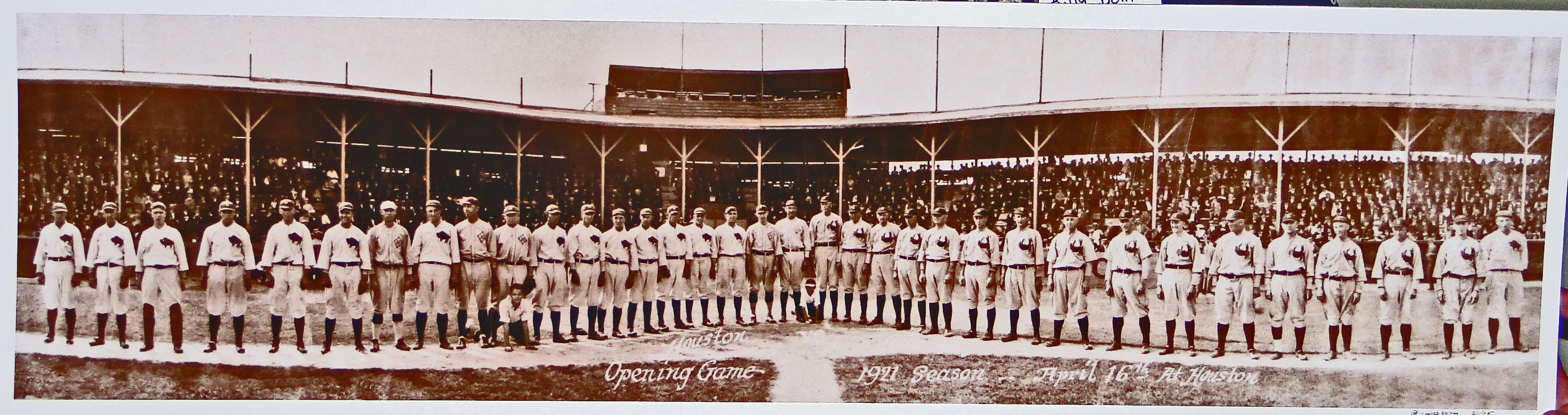
Opening Day 1921, West End Park, Houston.
– Courtesy of the Billy Buscha Family.

Saturday’s May Meeting at Minute Maid Park in Houston was a blast, indeed, and one of the highlights was the introduction of the panorama photo of the Houston Buffs and the visiting Galveston Sand Crabs as they prepared to square off at West End Park on Opening Day of the 1921 Texas League baseball season. The presentation was mad by Billy Behler of LaGrange, Texas, whose great-grandfather, Billy Buscha, was a pitcher for the ’21 Buffs. His family owns the negative to this previously unpublicized excellent picture of West End Park and Behler is now busy producing a limited edition print of the work for the sake of raising money for a memorial to his great-grandfather.

Another claim is made for the photo, but that claim must go unaddressed here until The Pecan Park Eagle receives the further documentation we have requested that could either verify, or come closer to banishing reasonable doubt. It’s nothing personal here in this request for evidence that goes beyond testimonial or pictorial reference alone.. It’s simply a statement of our SABR commitment to establishing hard proof for all historical claims.

Regardless of how the pending point turns out, the photo is valuable in itself. It also raised questions Saturday as to what players may have come from that 1921 Buffs team who either came to, or went on from, that club to bigger names in baseball. With great assistance from SABR’s Mark Wernick on our first entry, here are three names from the 1921 Houston Buffs that stretched a little broader than the boundaries of that single Texas League season:

George Whiteman, LF

 George Whiteman was 38 years old by the time he stood in that line as an outfielder for the 1921 Buffs. He would play a full season for the Buffs in 1921 and then return in 1922 to repeat his performance as an everyday player for the entire run. Whiteman, in fact, would go on to play in the minor leagues for other clubs for several years hence, finally retiring at the end of the 1929 season at the age of 46.

Prior to Opening Day 1921, Whiteman appeared in 86 games for the New York Yankees and Boston Red Sox over the three spread out seasons of 1907, 1913, and 1918. He batted a respectable .271 for his big league time and, as Mark Wernick  pointed out on his note to my column yesterday, Whiteman also started every game of the 1918 World Series for the Boston Red Sox.

George Whiteman apparently made Houston his home in retirement too. He died here in 1947 at the age of 64.

Ray Blades, CF

Ray Blades was only 24 and a season away from his 10-year big league career (1922-28, 1930-32) with the parent club St. Louis Cardinals on Opening Day 1921. Blades would go on to play for the first Cardinals World Series championship club of 1926 and again on their 1931 championship club. He would also player for two World Series losing Cardinal clubs in 1928 and 1930, but, my gosh, there really isn’t any losing to a ten season big league career that includes four World Series stops in the baseball world spotlight.

Ray Blades batted .301 for his major league career.

Jim Bottomley, 1B

  Jim Bottomley was best known for his sunny personality and the jaunty way he wore his baseball cap and smiled at everyone. At the age of 21 for the ’21 Buffs, “Sunny Jim” was also only a season away from his long career with the St. Louis Cardinals and some shorter finishing time with the Cincinnati Reds and St. Louis Browns (1922-1937).

Bottomley also would play for the Cardinals’ first two World Series champions of 1926 and 1931 and also be there for two World Series losing years of 1928 and 1930.

After hitting .310 lifetime in the big leagues, Bottomley was selected for the Baseball Hall of Fame by the Veterans Committee in 1974. And that’s some pretty tall cotton for the spikes of a young man who was only 21 when he took the field at West End Park for the Houston Buffs back in 1921.

Congratulations again to yo too, Billy Buscha. – You played with some pretty solid baseball guys back in 1921. These guys, and others among you, were not bad at all.