ROOTS: The Day It Rained Baseballs

February 10, 2013
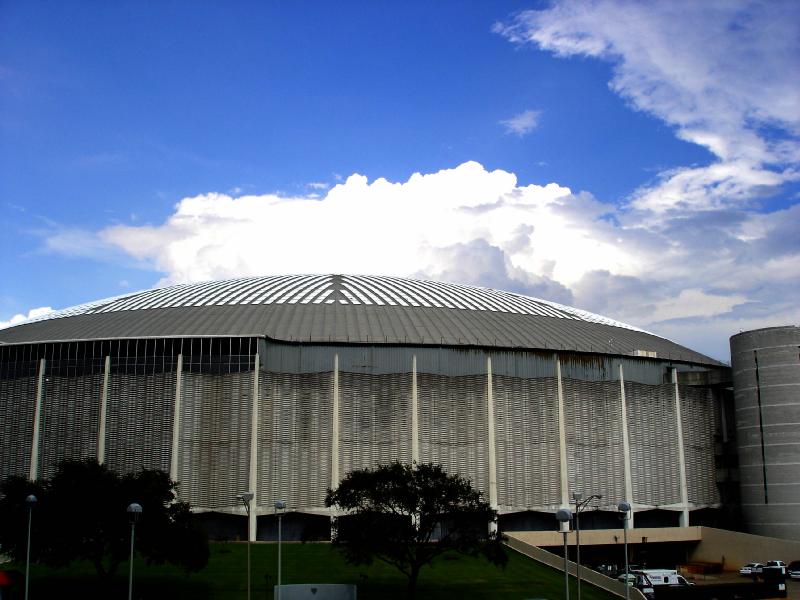
The Astrodome had just knocked off King Kong to take over his spot as The Eighth Wonder of the World in April 1965!

The Astrodome had just knocked off King Kong to take over his spot as The Eighth Wonder of the World on Friday night, April 9, 1965! After defeating the New York Yankees, 2-1 in 10 during the previous evening’s original contest, the Houston Astros were getting ready on Saturday morning, April 10, 1965, to square off at 1:30 PM against the Baltimore Orioles in the second domed game of all time, but the first to be held in the fearsome daylight. – It would not be mere rainbows that kept falling on the outfielders’ heads that fateful day.

Even though Houston Chronicle writer John Wilson would type a post-game homer column for the Sunday edition that found a headline title of “Astros Say It Wasn’t Bad at All,” it was. The Astros would take the Orioles that afternoon with 11 runs, 17 hits, and 3 errors against a tote board of 8 runs, 11 hits, and 3 errors for the Birds, but guess what was helping this game to produce a grand total of 19 runs, 28 hits, and 6 errors? Baseball doesn’t have an “invisible ball” stat column. Anything that falls safely to earth while a fielder is frozen in motion or ducking or covering his head has to be ruled either a hit or an error.

And so they did. – On the “E” side, errors were charged to catcher John Orsino,  1st baseman Boog Powell, and shortstop Luis Aparicio of the Orioles; to 3rd baseman Leon McFadden, right fielder Rusty Staub, and center fielder Jimmy Wynn of the Astros; and to two miscues that I will assign here and now, nearly 48 years later, to John Wilson and the Houston Chronicle: (E7): for not seeing the Orioles press guide clear enough to know that catcher John Orsino does not spell his last name as “Orsini” – and for constantly repeating that error throughout the game story and box score; and, (E8): for making that typical Houston Comical error variance from the truth in even those earlier times that the visual problem on fly balls wasn’t bad at all, according to the Astros! – What a douche-bag, suck-em-up to the Judge play for more free rides and whiskey that story was!

It was awful. Even fans lost sight of balls hit into the daylight glare of the dome. The effect on vision had to play into almost every failed catch in any game to be played under these circumstances. The club would have to paint the roof, block the sun, kill the grass, and bring in AstroTurf to save the day. It was either do that much – or else, stop calling what they played under the circumstances of the first Astrodome day game by the name of “baseball.”


ROOTS: Astrodome as the Eyeful Tower

February 9, 2013

EPSON MFP image

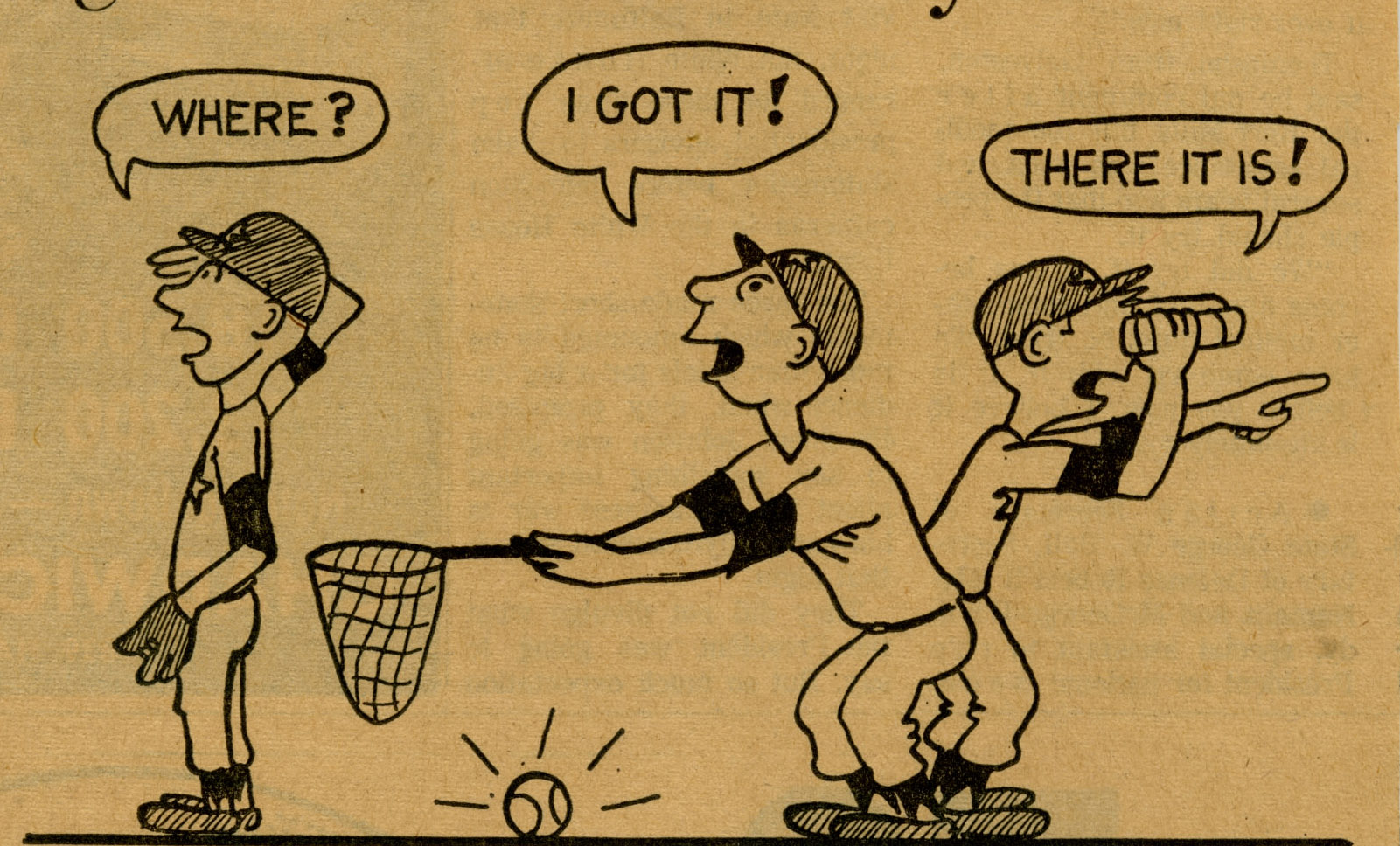
In that article I wrote last week on the print artifacts from 1965 that my friend Paul Sofka recently gave me, one item was a column written by Houston Post reporter Doug Freelander in early April 1965 on the problem that outfielders, especially, were having seeing fly balls in time to catch them in the menacing glare of day games. Freelander attempts in print what he hopes is a funny route, taking off on a fictional discussion between two scientists near an Astrodome concession stand at game time on best solutions to the new problem of glare upon fly balls in the daytime at the domed stadium.

In a column entitled “The Eyeful Tower: More Light on the Elusive Flyballs”, Freelander covers  these bantered solutions in his dialogue between his two alter ego scientific characters, as they casually watch a game at the brand new Eighth Wonder of the World:

(1) Use orange baseballs.

(2) Install a fogging device in the Astrodome roof that would silhouette fly balls and make them more catchable.

(3) Use the advertising plane from old Colt Stadium to simply fly above the dome during games with a device that would create a dense external fog that blocked the glare of the sun.

(4) Build a giant panoply about a half mile above the dome to block the sun. In other words, build the world’s largest beach umbrella for the Astrodome.

(5) Change the Rules for the Astrodome I: No batter is allowed to run to first until a fly ball hits the ground.

(6) Change the Rules for the Astrodome II: Do away with gloves. Allow fielders to use large nets.

(7) Change the Rules for the Astrodome III: Either double the size for each team, or else, allow each team in the field to use six extra fielders to catch fly balls.

(8) Change the Rules for the Astrodome IV: Double the size of the baseball. (Isn’t that called softball?)

(9) Change the Rules for the Astrodome V: Use balls that flash blinking lights when they are hit in the air.

(10) Change the Rules for the Astrodome VI: Use balls that whistle as they begin to fall. (Wasn’t that the same principle the Germans used in World War II with their buzz-bombs? And buzz-bombs already had taught people to duck.)

(11) Change the Rules for the Astrodome VII: Reenforce the baseballs with steel and allow the fielders to wear magnetic gloves.

(12) Alter the Dome Structure: “Coat the dome with black paint so no light can get in and then, with the lights on, every game will be a night game.” (Freelander)

Freelander probably didn’t know it at the time, but his frolic through the ridiculous finally brought him top-side again with the solution that would cure the visual problem, even if it did kill the grass and open the barn door for the new artificial grass athletic turf industry. And, who knows? Maybe the Astros even got their idea for painting over the Dome’s clear roof from reading this silly little piece by a Houston Post special topic writer?

———————————

Production Note: My seven-year old Epson printer has abruptly informed me this morning that certain of its parts have now outlived their predicted date of effectiveness and that it will no longer service my further requests for access to my photos library until its own needs for restoration are handled.

Epson, you selfish, impersonal machine, you! Just for doing that to me, you are headed for the recycling bin. My guess is, that by the time a printer reaches age seven years, it probably will be cheaper to buy a new one than fix the old one. – Man! Are you old enough to remember when we actually fixed things that broke down?

Where are the landfills of tomorrow? Are we going to use this incredibly never-ending supply of digital age products to build barrier reef islands in the Gulf of Mexico to protective us from storms as we work hard at home to work our way through new items for the next level of barrier reenforcement? And isn’t there a lot of toxic stuff inside something like a printer or a flat screen TV that probably wouldn’t be too good for the ecology of Gulf life forms?

I should have a new or fixed printer soon. Til then, my stories alone are going to have to produce whatever pictures you need to see. (Update: The printer suddenly allowed me to add a photo that appeared with the original Freelander article. Maybe, it read my words about sending it off to the printer graveyard.) 🙂

Have a nice weekend.

MLB 2013 Payrolls Top $3 BIL; Astros Down 47%

February 8, 2013
RADE NEWS SONG: "We're off to play with Houston - for twenty-five dollars per week!"

TRADE NEWS SONG: “We’re off to play for Houston – for twenty-five dollars a week!”

According to one mid-January source, MLB salaries for 2013 are up over what they were in 2012, but no thanks to the incredible shrinking Astros. Taking into account the most recent Jed Lowrie salary dump, the Astros now are somewhere in the $20 mil territory at the #30 and bottom-feeder spot in MLB payrolls while the next lowest club, the Miami Marlins even looks whale-humping huge at $45 mil. Of course, the Los Angeles Dodgers’ $113 mil for the #1 spot even edges #2, the New York Yankees, at $110 mil.

Check out the information on payrolls that’s available in this column by a writer named Jeff Passan. He wrote this piece in mid-January, 2013, before the Lowrie trade reduced Houston down into the mid-$20 mil range.

http://sports.yahoo.com/news/opening-day-mlb-payrolls-to-exceed–3b-for-first-time–dodgers–jays–nats-see-biggest-spending-increases-224840102.html

Am I nuts? – Or are Astros fans being asked to buy into the idea that paying nobody now is the way to go in making the club a big winner tomorrow? – If that’s true, friends, please tell me how that works? If we happen to have some rookie prospects who show that they truly are the stars of tomorrow, aren’t they going to want to be paid the big money too, someday? Or we supposed to try to keep “big money” out of the picture by never discussing it in their presence? Or what?

If money is what i takes to field a winner, and some of the clubs seem to think it is, why didn’t we just pay more money for a few more players that are capable of winning now? Is it simply impossible to maintain a respectable MLB club and rebuild the farm system at the same time? Apparently not.

Anyway, without major league ready players on the roster now, the season shapes up as little more than a 162-game tryout camp for rookies we pay on the cheap.

That slow-for-me growing realization is starting to take the edge away that I was starting to feel about the coming of the new baseball season in the American League. The only edge left may be this one: What will be the over/under number for most Astros losses during the 2013 season? 110? Or 115?

ROOTS: Symmetrical Field No “Patsy” Park

February 4, 2013

EPSON MFP image

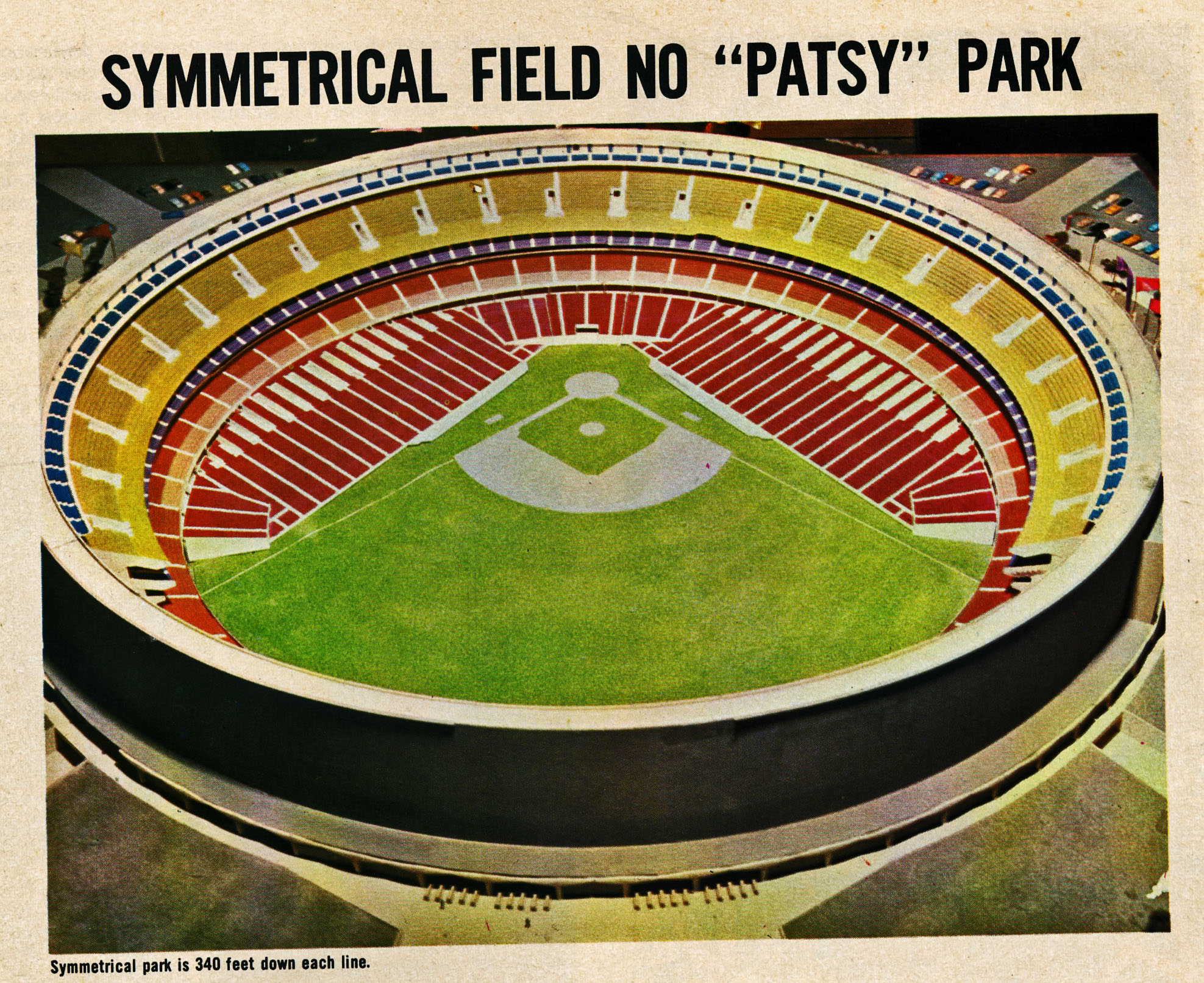
When the Astrodome opened in 1965, there wasn’t any discernible sentimental support for a quirky, retrospective venue for baseball in Houston. People wanted sci-fi level modernity in their new space age stadium construction, a place for economy and multi-level service to the needs of everything from baseball to football to rodeo to Elvis  to heavyweight boxing matches to wrestling to basketball to political and corporate conditions to whatever else out there loomed as new and bright and shiny.

The Dome’s built-in adjustable seats were tailor-made for a culture that valued flexible seating capacities and new site lines far above architectural aesthetics or nostalgic connection to the past. Houston was a roaring, rumbling Corvette in 1965. If you were one of the people who drove Houston in those days, all you cared about was getting there fast and first. The brand new Astrodome accurately reflected your self-image too – and to a tee.

It isn’t surprising then that we would find this description of the new ballpark’s baseball dimensions on page 60 of the original game program magazine, “Inside the Astrodome: The Eighth Wonder of the World”:

The Astrodome will be no patsy park for cheap home runs. Anybody who hits a homer in the dome will deserve it. It is one of the most symmetrical parks in the major leagues. The distances are:

Left Field Foul Line – 340 feet

Left-Center Power Alley – 388 feet

Center Field – 406 feet

Right-Center Power Alley – 388 feet

Right Field Foul Line – 340 feet

The fence around the outfield is 17 feet, 11 inches high from the left field line to the  left/center where the pavilion seats start. From this point to right/center where the pavilion seats end the height is 13 feet, 10 inches, and the 17 feet, 11 inch height begins again and continues to the right field foul line.

Speculation over whether the ASTRODOME would be a pitcher’s park ora hitter’s haven caused the Houston club officials to consult experts before the stadium was ever opened for an educated prediction. Massachusetts Institute of Technology, Rice University and two sporting goods companies, Spalding and McGregor, concurred that a ball hit over a 406-foot fence would vary less than an inch or two in contrast to one hit in any of the other uncovered major league parks.

Conditions of humidity and temperature will remain constant inside The ASTRODOME at 50% humidity and 74 degrees. The ball will rect the same way inside The ASTRODOME as it would under the same conditions of temperature, humidity and elevation anyplace else.

Gee, that sounds so equally scientific and settled. You might think that those same MIT and Rice brainiacs also could have anticipated that daytime fly balls in the Dome were going to be almost impossible to see, let alone catch, but they didn’t. Or wouldn’t.

Sometimes the human ego gets in the way of our early clear discovery and admission of what is obvious.


Central Casting Strikes Again: Bob McNair

February 2, 2013
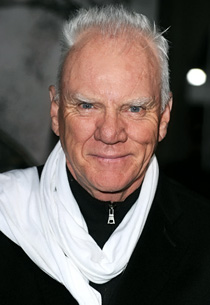
Actor Malcolm McDowell IS...>

Actor Malcolm McDowell IS…>

On the Saturday preceding the Super Bowl, it is only fitting that The Pecan Park Eagle today

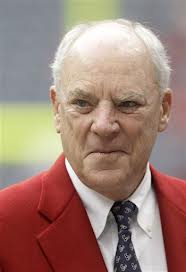
>...Houston Texans owner Bob McNair!

>…Houston Texans owner Bob McNair!

will feature a lighter-than-air football topic and here it is: If there’s ever a movie to be made about the NFL’s Houston Texans, Central Casting is sending us this wonderful actor/character match up for the role of team owner, Bob McNair. Credit goes where credit is due. – My son, Neal McCurdy, suggested it, immediately hitting my “you are so very right” gear and bumping this post into motion.

That being said, here’s where you have to be a little bit of an ancient movie buff or film historian to really get the following comment: If someone ever made this movie, with this casting, it’s too bad the original team color of the Texans also was not as orange as the baseball Houston Astros sprang on us back in 1962. If it were, then actor Malcolm McDowell would be the perfect man to lead the color reversion back from battle-red and steel-blue at every retro-jersey game. As most know, Malcolm McDowell comes to this role with ample knowledge of how to turn the clockwork back to orange.

My Super Bowl guess:

Baltimore Ravens 31 – San Francisco 49ers 27. 

Change Always Constant in Skies Over Houston

February 1, 2013
January 31, 2013: View of Dpwntown Houston from the Gulf Freeway, near the former site of Buff Stadium.

January 31, 2013: View of Downtown Houston from the Gulf Freeway, near the former site of Buff Stadium, 1928-1961.

Over time, we all get to know the old wisdom saw up close and personal that the only thing constant in life is change – and that change is most likely just another variant of the same old constant forces of resistance that perpetually stand in the way of our realized full potential on a self-actualized basis. 

Houston Baseball Translation: The more one reads of this city’s early to current efforts on the road to reaching and winning a World Series, the more we see how hard this goal is to attain. (1) A club has to have the will, intelligence, resources, and confidence to get there; (2) a club has to have the right blend of talent to become the best winning and crunch-time playing team; (3) a club has to overcome and be superior to those same aforementioned forces in the other 29 teams that also are trying to reach the same goal; and (4) it doesn’t hurt a club to have a little mad “extra-talent” spending money in the late season, plus a whole lot of luck.

Houston started its MLB journey in 1962, but did not reach its first and only World Series until 2005, the 44th season of a continuous trial. It didn’t win, but what’s scarier is the World Series “rate of arrival stat”. If it takes another 44 years to reach the next one, Houston has only two more World Series trips to look forward to in the 21st century – and each of these are not scheduled to get here until most of us current fans have already departed for the big slumber in green pastures.

Winds of rapid positive change, are you finally here? – Are was that just another grand weather streak that we got to see in Houston’s yesterday-beautiful Thursday sky?


ROOTS 2: 1965 Astros Radio and TV Network

January 31, 2013

ROOTS 2 is the second of numerous columns The Pecan Park Eagle plans to publish from materials found in the old attic box of a now deceased 9o plus years old widow and original Houston Astros fan. As each of these new, but old treasured subjects unfold, they will always be entitled here by the introductory “ROOTS” DESIGNATION, plus the number in the series. Today features ROOTS 2, the second in this now and then, ongoing look at Houston’s baseball past from one small box in a fan’s attic. Enjoy! 

Voices of the Astros - Gene Elston (seated left) and Loel Passe (seated right) are the on-air broadcasters. In the background are engineer Bob Green (left) and producer Bob Boyne (right).

Voices of the Astros – Gene Elston (seated left) and Loel Passe (seated right) are the on-air broadcasters. In the background are engineer Bob Green (left) and producer Bob Boyne (right).

ASTROS RADIO AND TV NETWORK

What follows is a restatement of the written material shown above from page 138 of the 1965 program, “Inside the Astrodome”:

The Houston Astros radio and tv network reaches over 17 million people on 25 radio stations and 12 television stations throughout the southwest (Texas and Louisiana). 

The Joseph Schlitz brewing company purchased the play-by-play broadcast rights for three seasons beginning in 1965 for $5.3 million dollars. The Coca-Cola Company and the Duncan Foods Company will be sharing the pre and post game show sponsorships.

Broadcasters Gene Elston and Loel Passe will be broadcasting 162 regular season games and 30 exhibition games on radio originating on KPRC in Houston. In addition, the Astros will telecast 14 road games on Sundays originating on KTRK-TV in Houston.

The Astros have a unique radio network set-up in that they are the only major league baseball club to operate their own complete network organization. Most clubs sell their rights to a station who in turn handles all packaging and network arrangements.

The Astros do their own “packaging”, network organization, production and promotion under Hugh Cohn, director of radio and television, and Dick Blue, supervisor of broadcast operations.

Bob Boyne, the producer of the broadcasts, and engineer Bob Green are always in the booth with Gene and Loel and make all trips with the Astros to visiting National League cities.

During the baseball season, the Astro network conducts special contests and promotions for fans including a “Miss Astros” contest and a “Boy’s Baseball Contest.”

ROOTS: A Treasure Trove of the Astros in 1965

January 30, 2013

EPSON MFP image

About a week ago, one of my 1956 classmates from St. Thomas HS called to offer me a small box (actually, a plastic bag) of baseball “stuff” that was left over from some estate settlement he had worked out for a client. Paul Sofka (whose father built and ran Otto’s BBQ on Memorial for years) had no idea about the early Houston baseball book we are working on through SABR; he just knew about me and baseball. “Either you take these things, Bill, or they go in the garbage,” was Paul’s approach.

No way that was going to happen.

Today I picked up these items at the funeral of our classmate, Sam Sacco. It’s all from 1965 and really offers nothing new to our earlier history project, but they are still a treasure trove on many other levels.
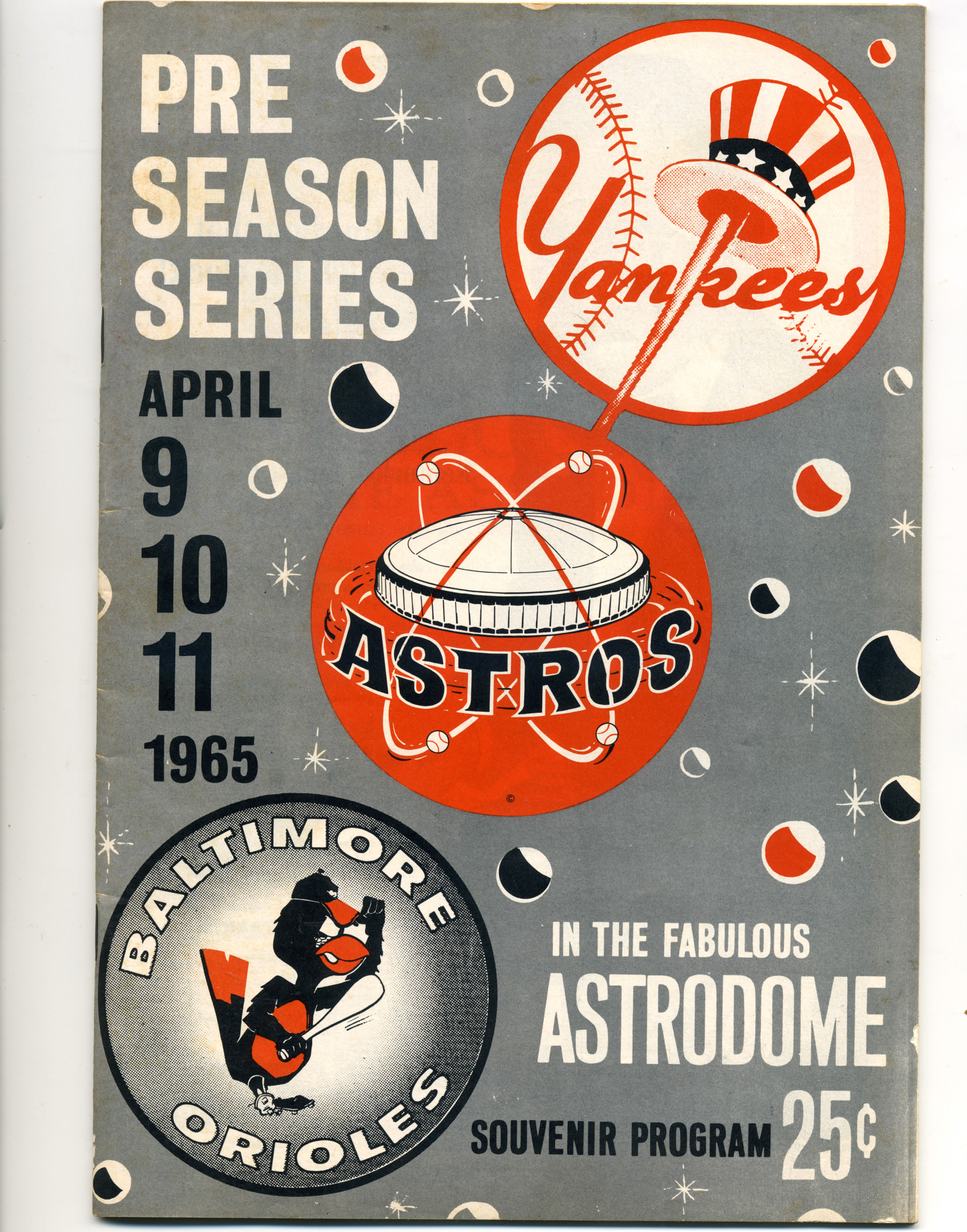
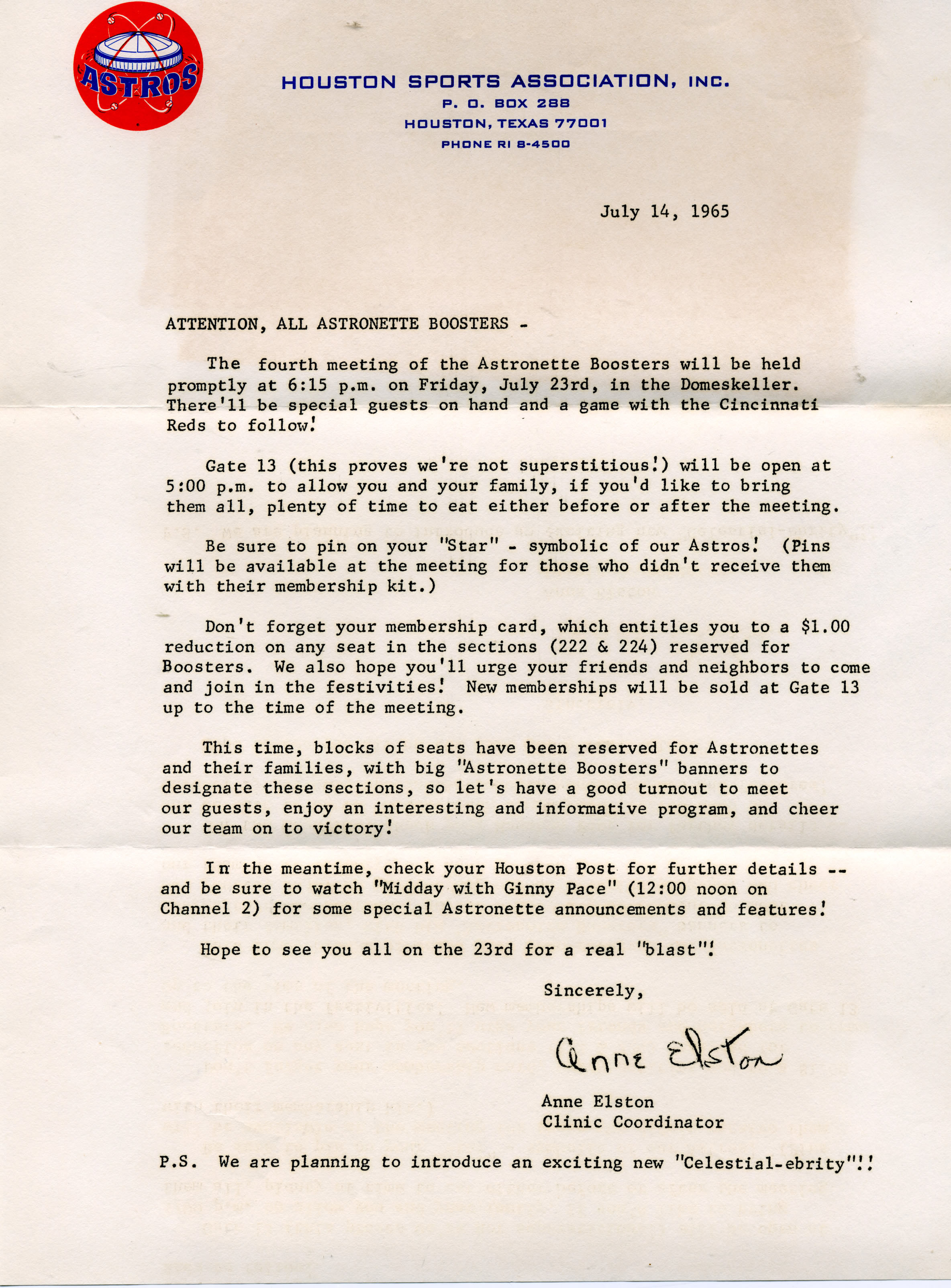
The central piece is a really good copy of the very first game program from the Astrodome, the 2-1 Astros win over the Yankees on April 9, 1965. It was even score-kept for the entire 10-inning drama and the winning RBI by Nellie Fox. – Next up are two attachments alluding to a 1965 fan organization called the “Astronettes” – apparently, a female fan club effort back in those more repressive days of male dominance and “don’t you worry your pretty little head” messages from the good old boys to their ladies. I never heard of them, perhaps, because I was too young, masculine, and single back then to be on this kind of Astros mailing list.
EPSON MFP image
EPSON MFP image
Interesting to note that “Anne Elston” was the author of the club letter to the Astronettes. She may have been the wife or some other relative of Astros broadcaster Gene Elston, but I have no confirmation of that assumption as a fact without further research. – The last piece here, “The Eyeful Tower” by Doug Freelander of the Houston Post, on some unsaved date in 1965, may have been the earliest attempt to treat the quickly discovered daytime baseballs-in-the-sky visual problem with degrees of measured reality and humor. Even then, Freelander is unable to conjecture the death of grass that will occur from a painted ceiling solution that will lead to Astroturf and a change in the way sports are played that is actually the broadest effect that spun from the creation of the world’s first domed stadium.
EPSON MFP image
Other items include more Astrodome game programs and extensive newspaper accounts from that first big night in the Dome. I will be using other information in future historic columns here at The Pecan Park Eagle.
If anyone remembers the “Astronettes” – please leave a comment online with this column.

Ben Milam’s Crumbling Goodbye.

January 29, 2013
What remains of the Ben Milam Hotel across the street from Union Station will not be around for long.

What remains of the Ben Milam Hotel across from Union Station will soon be gone.

The 10-story Ben Milam Hotel on Crawford at Texas Avenue came to life in 1928, across the street from Union Station, the city’s major long distance land depot to the rest of the Western Hemisphere. By 1932, the Ben Milam proudly advertised itself to the world as Houston’s only completely air-conditioned building. It’s a safe bet that those guests who traveled to Houston in the summer of 1928 to attend the 1928 Democratic National Convention would have appreciated the AC news even better, had the hotel started that way.

Maybe there’s a crate of old registration books packed away somewhere that will give us a better clue as to the names of all the world-famous people who stayed at “The Ben” during its hay-day. Along that line, Pecan Park Eagle reader Peter Denman wrote us this interesting back story on the Ben Milam this past weekend in response to the Sunday column about the SABR’s National Meeting story: “Dizzy Dean lived at the Ben Milam in 1931. If anyone in SABR is interested in Diz, there is an old magazine called the Gargoyle which they have down at the Houston Public Library, and one issue of it has a great interview with Dizzy in it which was conducted in his room at the Ben Milam.”

Wow! Those of us working on the Houston early baseball history book need to search out that issue of the Gargoyle to see what Old Diz had to say back in 1931. He apparently lived at The Ben a year prior to full air conditioning and we have no idea if that upgrade occurred gradually enough to have comforted the great young pitcher a year earlier – or if everyone had to wait until 1932 for it to arrive in one fell swooping flick of the power-on button.

Most of us emerging blue-collar middle class Houstonians of that earlier time didn’t feel the blast of home window air conditioning (and at first, only on a one-at-a-time-for-your-favorite-house-room-basis) until 1957. Until then, we lived through summers, damp-cool under the sucking breath of home attic fans and  hot as hell in church with small undertaker-advertising-underwritten hand fans. Otherwise, we refrigerated ourselves as Texas cucumbers in one of the city’s many air-conditioned movie theaters. Night baseball was tolerable weather when the gulf breezes blew well into Houston from the coast, but if they died down, the Houston mosquito family took over the night. Those were the days, my friend.

At any rate, getting back to our central character for the day, the now deceased Ben Milam Hotel. It would have been a beautiful, but expensive restoration piece, but those costs, and the limited projections on income from its smaller space availablity to developers won out. As reader Bob Copus wrote in response to the same column this past weekend: “Due to the business I am in, I had many opportunities to get inside the Ben Milam Hotel within the last few years. It was the first hotel with air conditioning in Houston. Unfortunately, by the time I was able to enter the hotel, deterioration had set in and vagrants made their presence known. The site is going to become a multi-family hi-rise with retail and restaurant(s) on floor 1.”

Unfortunately, the now explosive new panorama of downtown Houston that is available only as a view from the highest points of the right field seats at Minute Maid Park (above the unspeakable internal signage), will be short-lived. Local historian and Executive Director of Houston Arts and Media Mike Vance explains clearly in a comment on yesterday’s signage column why we need to check out the new view early in the new season: “The giant new structure that will be built where the Ben Milam Hotel once stood will block not only the view, but much of the evening sun. Such is life in a city run by developers with no zoning or height/sight line restrictions such as exist in most every other city in the United States.”

This is Houston, folks. We’re getting better at historical preservation, but when the developers and their money talk hard, it’s “tear it down and build something new that makes bigger money now” time again.

At least, the developers will no longer have to worry about the Ben Milam getting in the way of progress. Nothing remains of it now, but a disappearing mountain of concrete rubble and a giant hole in the ground.

Have a nice Tuesday, everybody!


One More Word on the MMP Signs and I’m Done

January 28, 2013
Minute Maid Park, 01/26/13: ... You know what? That guy that wrote graffiti on the Picasso at the Menil is still in jail. pending bail.

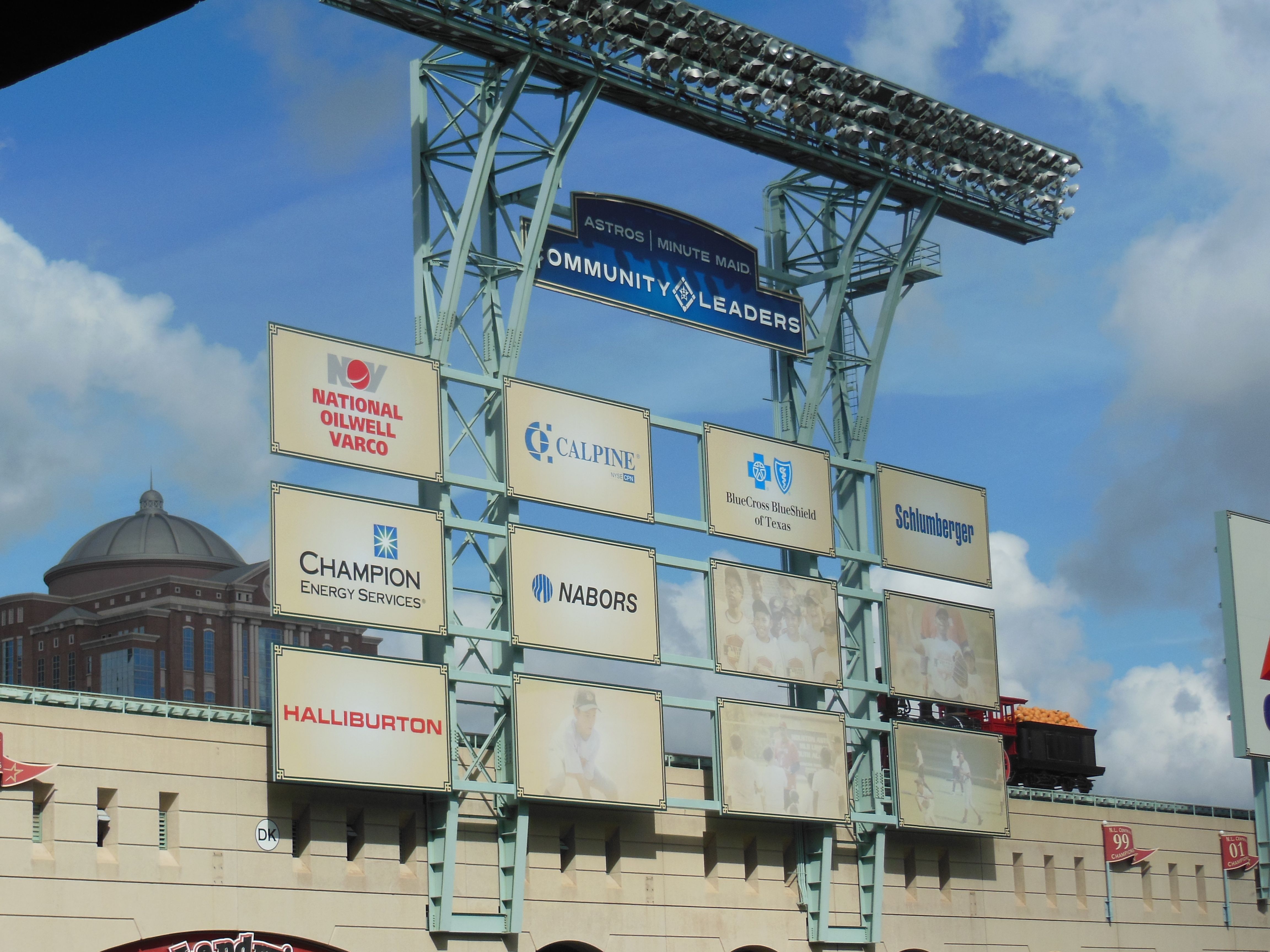
Minute Maid Park, 01/26/13: … Here’s how the “community leaders” sponsorship signs look from inside the ballpark to fans sitting along the 3rd base line. Can you find the train? Can you see the sky? Do you even care that the signs now interrupt the natural flow of the venue’s intended horizontal sight lines to the downtown skyline that fans on the 1st base side once got to see with unobstructed architectural clarity?
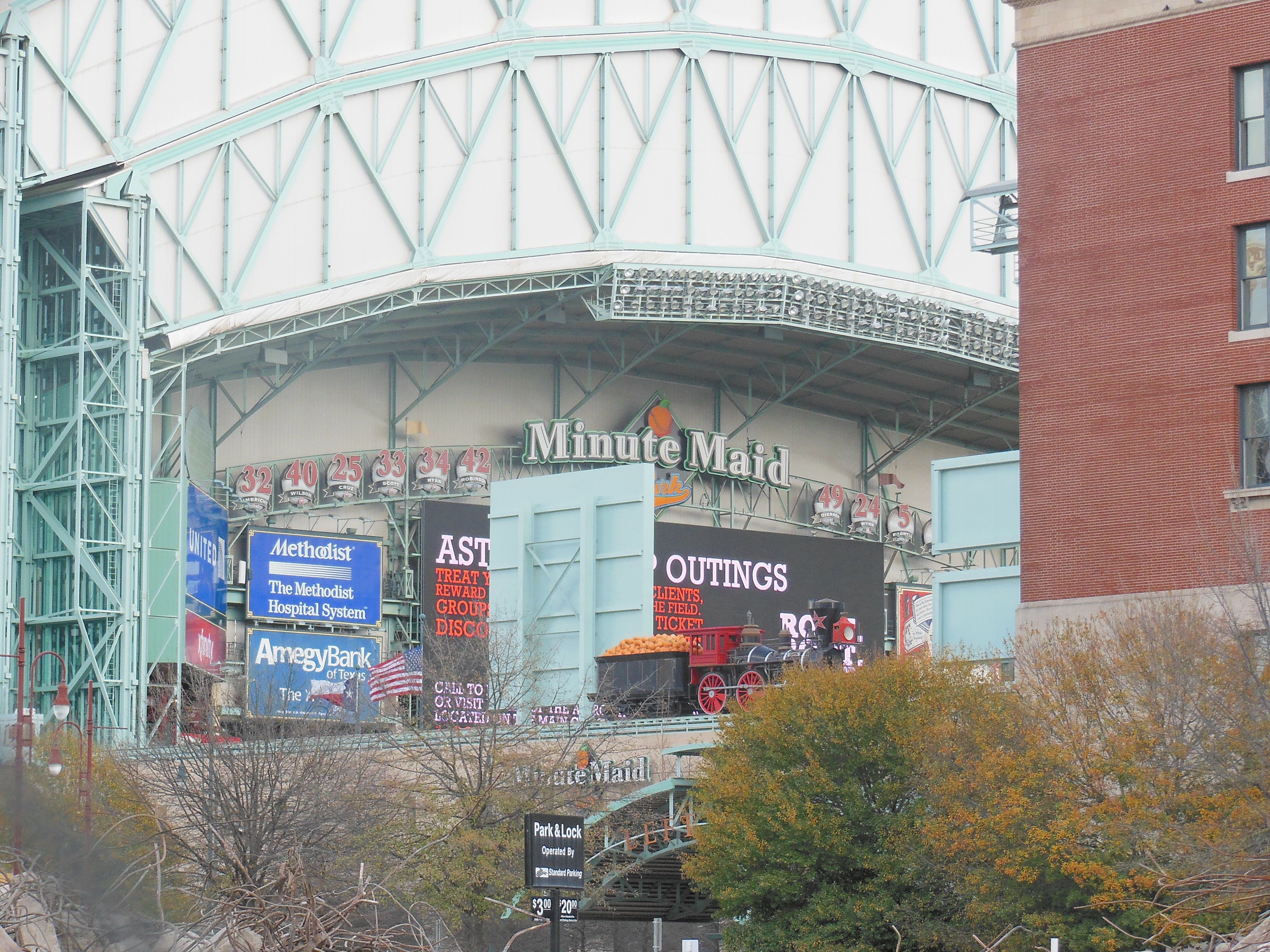
Minute Maid Park: 01/26/13 ... Here's the train! From the Crawford Street side, the Union Station memorial train is clearly visible and we still get a partially blocked, once inviting view of the interior scoreboard.

Minute Maid Park, 01/26/13: … Here’s the train! From the Crawford Street side, the Union Station memorial train is clearly visible and we still get a partially blocked, once inviting view of the interior scoreboard. (The pale blue backside of the signs shows here from the street.)

For the record here, I don’t dislike everything I see in the new Houston Astros ownership out of hand. I didn’t like the dismissive and disrespectful way they dumped Tal Smith at the start, but I respect the fact that they paid a whole lot of money for the sake of handling anything the way they chose. If they felt that taking a pass on Tal’s half century of baseball wisdom was the way to go, it was their right to handle things exactly as they did.

At the start, I was one of those people who hated the Bud Selig edict that forced the Astros to accept a move to the American League as the condition for determining MLB’s final approval of the club’s sale to the Jim Crane interests at a reduced sales price. In time, for some inexplicable reason beyond these few words, I simply caught up with the idea that, at my age, it might be fun to see how the Astros might fare in the Land of the DH Giants. I hated losing the Cardinals from our schedule, but the thought of the Yankees and Red Sox coming to Houston on a regular basis, as opposed to annual visits by the Brewers and Pirates, completely made up for my short-lived National League withdrawal pains.

I also have come around to liking the selection of Greg Luhnow as General Manager and I am wholly behind his plan to rebuild the club from scratch, starting with the revitalization of young talent infusion into the farm system – and extending to his use of statistical analysis as a parallel track to scouting in the determination of which players the club shall pursue.

From there, the hiring of Bo Porter as the new Astros field manager is the piece de resistance move on the get-results talent level prospectus sheet. Having now had the opportunity to have broken bread with Bo and heard him speak to SABR back on 01/14/13, I cannot recall when I have ever been more impressed with a managerial selection prior to actually seeing him work. Even now, this much appears sure: Under Bo Porter, the young Astros may not yet have the talent to win a lot of games, but they will not fail to put out effort to match or surpass any club they face. Bo is going to have those young legs, arms, and bats on a “running and gunning” pace from the git-go of spring training forward.

Throw in the fact that I love the new Astros caps and uniforms, and their return to the orange and dark blue color scheme of ancient history, and I’m also now set up for a 2013 case of baseball fever as I haven’t felt one in a very long time.

I just don’t like those ugly signs in left field, even if I do know that Jim Crane and the Astros are  simply trying to honor the sponsors who support the club’s efforts to rebuild baseball opportunity for children in Houston’s inner city neighborhoods. That’s a wonderful program, one that all of us baseball fans should support and be quick to acknowledge in recognizing those same people and entities that subsidize its success.

I’m just saying, I’m just asking: Can’t we do the “thank yous” in a way that doesn’t detract from the beautiful architectural design of Minute Made Park? Or am I the only one who thinks that this sort of thing even matters?

How about using the new electronic scoreboard to periodically flash attractive acknowledgements of all sponsors at each game? It’s already been proven in marketing that moving, changeable messages hold public attention longer than dull stationary billboards ever do, anyway – and the signs at MMP are as deathly still and “dull as dishwater” as any billboard most people have ever seen. – Attractive “Hall of Fame” quality, eye-level plaques on the street level concourse at MMP would also grab more tasteful positive attention than those already-ignored-for-their-message-but-abhorred-for-their-clutter monsters in the left field Houston skies.

That being said, I will have nothing further to say on this subject – and I respect Mr. Crane’s right as the ballpark’s landlord to do what he thinks is best for the City of Houston and the paying fans in this matter.

To me, this isn’t about winning an argument or trying to tell Mr. Crane what to do. He’s apparently done all right in life for himself without input from people like me up until now, and I would expect that condition to continue full-steam, no matter what he eventually decides to do permanently in this matter.

I’m just hoping that he is willing enough to see this point of view and to consider other ways to fulfill his duty to public expressions of gratitude in more effective, less obstructive ways. I’ve suggested a couple of alternatives here, but I’m sure there are many others.

It’s about finding the best way to do the right thing, Mr. Crane. All we can hope for here is that you will show us your willingness to listen and do something alternative to the left field signs. As the keeper of the key to the lease on our Houston ballpark, we completely respect that the final decision is yours, whether we agree with you or not.

That’s it. Thank you for your patience.