The Painful Pursuit of Accuracy

March 24, 2013
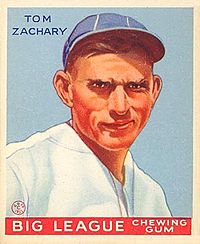
Tom Zachary, BL/TLMLB, 1918-1936

Tom Zachary, BL/TL
MLB, 1918-1936

Why is it so important that our baseball records are recorded as accurately as possible? To me, that answer is simple: If we cannot continually strive to get them recorded as right as rain as possible, we may as well not keep them at all. If they are to tell us anything of what has gone before us, they need to be as correct as possible about the facts that really matter about individual hitting, pitching, and fielding. We don’t need to know at any given moment that a state of 100% accuracy in detail has been finally attained. We simply need to always remain committed to the pursuit of that condition.

What brings records accuracy to mind this morning is another delightful insight into the subject from the great work of Norman L. Macht on the history of the game through the half century career (1901-1950) of Philadelphia Athletics manager Connie Mack in that one position alone.  You see, early in his managerial career, Mack established a pattern of awarding tryout career starts to countless young guys who managed to catch his eye or grab his ear for one of these “try me and sign me, if you play me and like me” quick-look opportunities.

The problem often was the fact that the young talent often feared the loss of amateur status that came with making even a one-batter game appearance under his real name. So, he, or Connie Mack, or both would come up with a false name that would protect the young player’s amateur eligibility in the event that the professional tryout plan didn’t pan out.

Such was the case with famous lefty pitcher Tom Zachary, whose 19-season MLB career (1918-1936) was highlighted by him becoming the 1927 season pitcher for the Washington Senators who gave up Babe Ruth’s 60th home run. The more intriguing truth was the fact  that Zachary started his career as one of Mack’s re-named pitching minions.

In 1918, “Jonathan Thompson Walton (Tom) Zachary” was a young man cooling his heels in Philly as a World War I “conscientious objector” awaiting assignment to Red Cross duty in Europe when his baseball pitching skill came to the attention of Connie Mack. Zachary was offered a tryout pitching opportunity with the A’s, but he was one of those kids that wanted to protect his amateur college eligibility for after the war, just in case.

No problem.

Either Zachary or Mack, it isn’t clear which, publicly changed his name from “Tom Zachary” to “Zach Walton” and he proceeded to pitch and win two games for the A’s in 1918 before shipping out overseas.

In 1919, Tom Zachary returned and signed with the Washington Senators under his real name. I’m not sure how many years it took for the two 1918 wins to slide under his credit too, but I would imagine they were a more recent correction to the record. Perhaps, Norman Macht can shed some light on how the correction took place in the case of Zachary and also comment on the wild guess wonder about other false name players who either remain on the books as failed short-term players – or whose early false name records remain disconnected in the record books from the famous real name players they later became.

Ain’t baseball history wonderful?

Dierker Quits Astros!

March 23, 2013
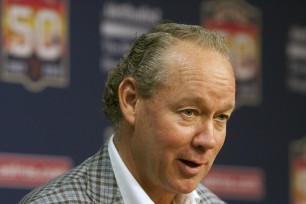
Larry Dierker

Larry Dierker

We’ll miss you, Larry, but some of us won’t say goodbye. After all, our Houston SABR group isn’t named the Larry Dierker Chapter for any idle reason. When we picked your name to carry our banner of Houston MLB history a few years ago, we did so because we wanted for our own identity the one name that has characterized the full length and breadth of things over the long course of Houston big league history. And that person was you, by length of service and depth of contribution at so many essential levels as a player, communicator, and manager.

Your resignation from the Astros yesterday also flies with no impunity upon the reputations of all the other former Astro stars who remain on the club’s payroll as public relations specialists that you have now chosen to leave the club rather than stay on the payroll as a greeter or personal appearance icon. Those roles are legitimate service and the kind of work that many former players can handle just fine. It’s just not the kind of substantive work that your soul cries out to do at this point in your life. You’ve either got more books to write or new creative job dragons to slay.

Now you will just have to do what all of us non-icons do when faced with the same challenge: Find some place to work in which there appears to be a true opening to the blue sky of possibility, however modest it may first appear to be – or ultimately turn out to be. You, at least, will always have the Dierker Charisma rolling out the road-to-downtown path for what you really want to do.

And you will be OK because – you already are. And because you are loved. And revered by the fans of Houston baseball.

David Barron’s column in this morning’s March 23rd Houston Chronicle is well worth the read. We are going though a change in Houston MLB ownership that is much larger than the single departure of Larry Dierker. You may want to give it a fresh read, if you haven’t yet seen it:

http://blog.chron.com/ultimateastros/2013/03/23/after-nearly-50-years-with-astros-larry-dierker-severs-ties-with-rebuilding-team/

Good luck, Larry! We’ll see you around.


Take Your Super Bowl and Shove It, Mr. Goodell!

March 22, 2013

Seven Days Ain’t Bad. For better, worse, or same difference, I’m back. After seven days on the 15-game DL, I’ve been given permission to return to my Pecan Park Eagle blog about Houston, baseball, and the general culture of the muses. I’m 70% of the way through an antibiotic script that’s been juicing my defenses against what turned out to be a crude and rude bacterial invasion, but that war is being won, even as I continue to take all the medications, all the way out, no matter how much better I feel this early. Lesson learned from the past:  Never quit punching on a bacteria until you know for sure that the thing is completely cold cocked and dead out on the canvas, gone.

Besides, I couldn’t let this modest response to the self-aggrandizing Commissioner Roger Godell of the National Football League fly unfired upon from my arsenal of concern about how we take care of history in Houston in the 21st century. Some are of the impression that we Houstonians can still be bought out for the right price on anything, if the right sized orange carrot is dropped in front of our Houston rabbit nose. 

If they are right, shame on us. We’ll be getting what we richly deserve – the short end of the stick.

Would you rather it serve as an architectural icon and Home of All Houston History - or just a space to park 1500 more rodeo car visitors?

Would you rather it serve as an architectural icon and Home of All Houston History – or just a space to park 2500 more rodeo and football car visitors at Reliant Stadium?

The rodeo-football people have already done their homework. They’ve done a new study on what it will cost to tear down the Astrodome and turn it into space for 2500 more parking spaces. They’ve even managed to get the Eunuch Chieftain of the NFL, Commissioner Roger Goodell, to state that tearing down the Astrodome for an additional 2,500 car parking spaces will help the City of Houston get the bid to host the 2017 Super Bowl. – Makes you wonder why those spaces weren’t that critical for the last SB we hosted in the first decade of this century.

Let’s put the proposition slightly differently: What is more important to Houston, preserving the architectural prototype for all covered athletic stadiums from the late 20th century forward – or providing additional parking space for 2,500 more Bruno Mars fans at the next rodeo performance?

I find the remarks by Commissioner Goodell to be both self-serving and short-sighted, and also most likely to have been words encouraged into expression by owner Bob McNair of the Houston Texans and the homey board chiefs of the Houston Rodeo group. For whatever reason, those people have never wanted to make the future of the Astrodome a plan hat could also benefit their interests beyond increasing the area for cars or carnival food stands. I can’t prove that either had anything to do with the Goodell statement, but I would be most unsurprised to learn that they were behind this little tempest in a teapot.

As an architectural achievement, the Astrodome rests on a level of significance that is historically equivalent to that one of the Eiffel Tower in Paris, The Empire State and Chrysler Buildings in Manhattan, the Washington Monument in the District of Columbia, the Coliseum in Rome, and the Statue of Liberty in the New York Harbor. Unfortunately for the Astrodome, it first saw the light of day in Houston, where the forces for fair preservation often lose to the expedient needs of today’s fast buck business culture.

Our fault? We should have had a Plan B for the Dome years ago. We didn’t have one. When the Astros left after 1999, it was just abandoned, left to decay under inadequate care that would still cost millions of taxpayer dollars over time. We would see a bump of public interest in doing something to save the Astrodome every now and then, but each plan would fall quickly to doom for want of vision, support, or money when it came time to line up against the real-time costs of putting the old place into shape for new use.

Look! As much as I hate to admit it, I’m beginning to finally see my city of Houston as one of those places that just isn’t big enough to take care of historical landmarks. What else is there to conclude?

If we cannot take care of the Astrodome, let’s, at least, take responsibility for putting the old girl out of her misery on our own dime. We don’t also need to be remembered as the town that took down the Astrodome under an ultimatum from the NFL in order to get 2,500 extra parking spaces at Reliant and a 2017 Super Bowl award. Throw in an extra thirty pieces of silver, if we elect to go this route.

Once upon a time, we could have converted the Astrodome into the coolest historical museum and entertainment center in the world. Too bad. We just didn’t have the people, the timing, and the plan that would work to get the job done. All we are doing now is running into a wall on the Astrodome’s life span that has been waiting for us forever, given the way history is devalued in Houston.

Goodbye, Astrodome! Wish we had been the kind of people who knew how to preserve the major construction project in the history of Houston. As it turns out, we just didn’t have it in us as a community – and your disappearance shall be our eternal loss – and not some stupid trade result from a deal we made with the NFL over a Super Bowl.

Pecan Park Eagle on DL

March 15, 2013

Astro Tie    The Pecan Park Eagle is temporarily on the Disabled List, recovering from a mysterious chest congestion or allergy. We shall return as soon as we can again view our world with eyes that don’t bleed inside a head that doesn’t throb on top of a chest that doesn’t wheeze like a straw sucking up the last few wet tastes of a chocolate malt. Fortunately, my stretchy old sense of humor has somehow managed to stay off the casualty list.

Regards, Bill McCurdy

The Thundering Hooves of Memory

March 13, 2013
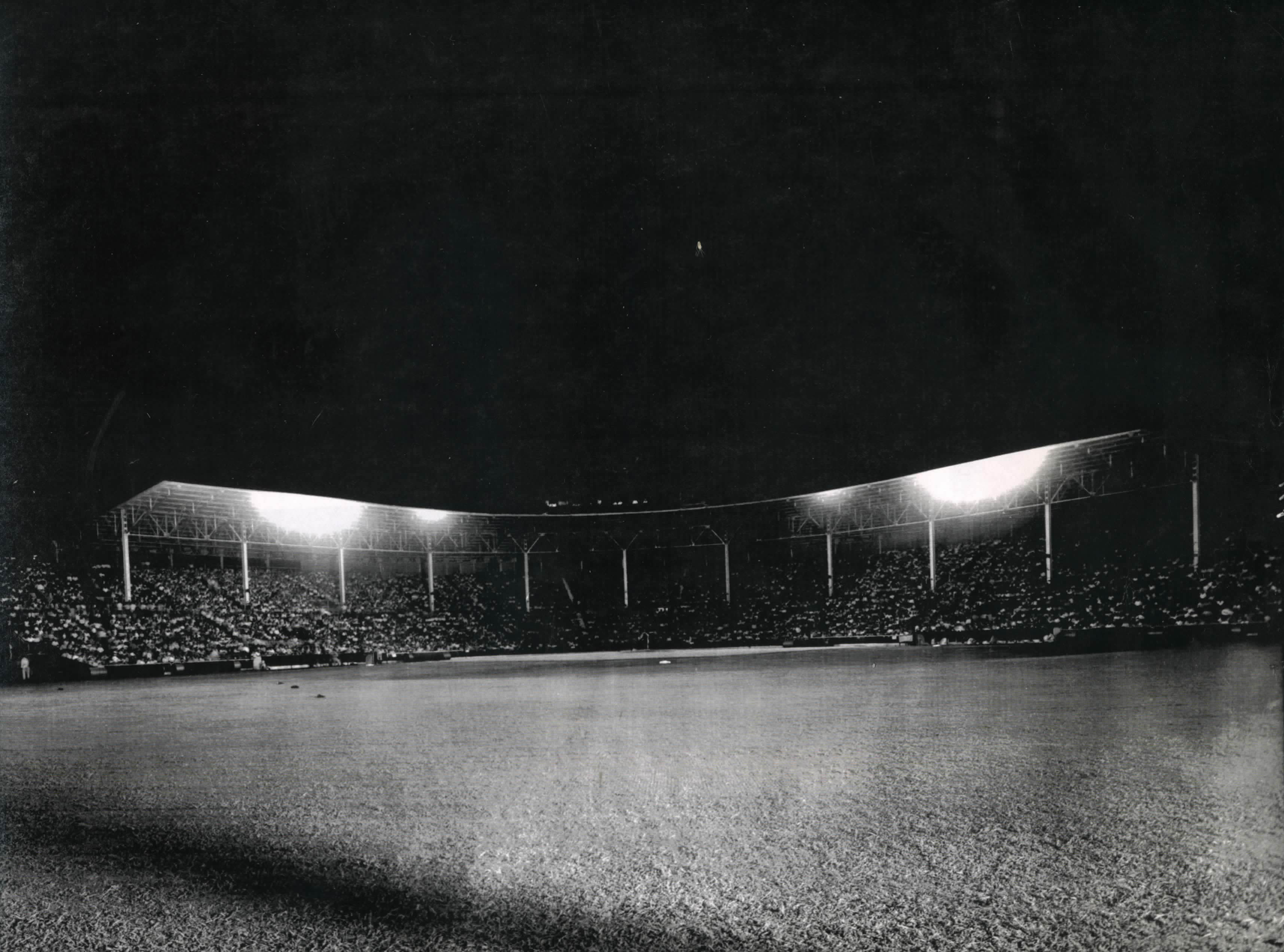
Once Upon a Time:Buff Stadium in Houston.

Once Upon a Time:
Buff Stadium in Houston.


The Thundering Hooves of Memory

by Bill McCurdy


The thundering hooves of memory,

Stir our souls to rise and roar,

In hot pursuit of destiny,

On passion’s fiery shore.


And so it was with baseball,

In sandlot games galore,

Inspired by human buffaloes,

Into the ball – bats tore.


We played from light to fading sight,

Our twilight whisper game,

And then we slept to rise again,

And play ’til we fell lame.


And if the day shall come for us,

When echoes call the herd,

We’ll race with wild abandon,

To the place it once occurred.


“Pick up your gloves and follow me!”

Is the order of our day.

“It’s time to play the game for keeps!”

Our hearts can’t wait ’til May.

Top 10 Similarities and Differences Between the College of Cardinals and the St. Louis Cardinals

March 11, 2013

Cardnals College

Top 10 Similarities and Differences Between the College of Cardinals and the St. Louis Cardinals

(10) The St. Louis Cardinals wear red and white uniforms.

(9) The College of Cardinals wear red and white uniforms, but with no covered stirrup socks or spiked shoes.

(8) In honor of the recently retired Pope Benedict, a College of Cardinals Committee on Appropriate Poetic Parody is now working on an adaptation of “Casey at the Bat” in recognition of his handling of rogue priest issues, the downturn in religious vocations, and the role of women within the Church.

(7) The College of Cardinals is considering the adaptation of a St. Louis Cardinals uniform design for their new summer cassocks. If approved, the new College breast-plate logo will feature two new Popes each season, facing each other from standing positions on both ends of a horizontally inclined obelisk.

(6) One Vatican observer noted that the College of Cardinals may have a very clear profile of what they are seeking in the next Pope. “They are looking for Jesus Christ with an M.B.A.,” he remarked. Meanwhile, the St. Louis Cardinals have some clear ideas on leadership too. The more their managers look, think, and act like Tony LaRussa, the better.

(5) The St. Louis Cardinals are falling a little behind in their use of modern media technology. The College of Cardinals still prefers smoke signals to Twitter, texting,  or e-mail.

(4) Growing up, I once knew a religious and athletic Italian fellow named Johnny Sicola. Johnny couldn’t make it with the St. Louis Cardinals because he didn’t quite have major league ability. So, he became a priest, but he couldn’t make it to the top because the College of Cardinals decided that no one would pay serious attention to a church leader who wanted to be known by his given name as “Pope Sicola.” *

(3) College of Cardinals members pray for heavenly help to pass through the Pearly Gates; the St. Louis Cardinals play for heavenly managers (and a few from that other place) to get through the Gateway Arch and win a World Series whenever it’s possible.

(2) College of Cardinals members wait until they die before they go play with the angels.

(1) The College of Cardinals have never been perfect; the St. Louis Cardinals once had Stan Musial.

* 3/12/13: What are the odds? Yesterday morning, I included the “Pope Sicola” tale   in this piece after carrying it in my heart for well over a half century, and guess what? Last night, Jay Leno used the same story in his monolog! He changed the lead in part of the joke, of course, but the punch line was straight out of this Pecan Park Eagle column.

They even had a prop Pepsi bottle made up that said “Pope Scola” on the label, even though Jay very clearly pronounced the name with an “i” as “Sicola” in his TV bit. Don’t worry, Jay. I’m not going to sue you.

Remembering Sin Alley

March 9, 2013
"Sin City? Ah Yes! I remember it well!"

“Sin City? Ah Yes! I remember it well!”

Looking back to what it really was for Houston in the 1960’s, it really wasn’t such a big deal on the sin scale, unless you were a member of that fundamentalist group of world viewers who saw everything that led to dirty dancing (and all good dancing was dirty) as an act of immorality.

It was, on the other hand, the start of social change that was going to pound the beaches of American culture into a new shape for all times over the next half century. As a member of that coming of age Houston generation in the 1960’s that did not marry their high school sweethearts after graduation, or at all, I can only comment on what it was that made it easier for some older people from those days to write the time off as an era of sliding moral turpitude.

In Houston, we had a physical place back then that came to characterize the zeitgeist of the 1960’s as we crashed as an American culture into the Janis Joplin and Bob Dylan music driven, LSD-fed San Francisco Summer of Love in 1967. In Houston, the place where many young singles lived and partied was on a stretch of Mid Lane that descended south from Westheimer Road, inside Loop 610. It ran only a few blocks south of Westheimer, or all the way down Mid Lane to Richmond Avenue, depending on your personal experience.

We called it “Sin Alley,” but it bore little resemblance to the new drug-based, free love, hippie culture of the Haight-Asbury area in San Francisco that spawned out there in the summer of 1967. By 1969, that local legacy of the Haight had taken route in the Montrose area. Sin Alley was more for the mainstream middle class as a place for trying out new social roles and ways of life that didn’t involve going straight from one’s childhood homes and head-first into the land of anointed marriage and the land of happily ever after.

It was a different time. Back then, two young people of the same-sex could live together in a social apartment building and others would not automatically assume or suspect that the two roommates were homosexual. If a guy lived with two girls, on the other hand, he might sometimes be forced to convince the landlord that he was gay, just to allay their fears of unmarried sex taking place under the owner’s roof.

Got the picture on “Sin Alley” now folks? Yeah, there were some wild parties, heavy on alcohol consumption and with an increasing availability of cannabis and amphetamines as the decade rolled into the 1970s, but the heavier drugs of heroin, cocaine, and LSD were much more centered by supply and demand in the Montrose.

Sin City was a place where Houston’s new middle class of the 1960’s and early to mid-1970’s experimented with pre-marital sexual relations and first time love partnerships with people from other religions, and differing ethnic and racial backgrounds. Bi-racial dating was the hardest obstacle to overcome at that time, especially between whites and blacks. It’s embarrassing to remember too, but a number of Houston businesses, restaurants, clubs, and movie houses still segregated against the admission of blacks at that time.

I met my first Jewish girl friend in Sin City. What a neat woman she turned out to be, a tall beautiful brunette with an incredible brain. Alas! She finally moved to Israel and joined the Israeli Army. I never heard from her again, but I was still all the richer for having known her a short while back in my salad days.

Remembering Gail makes me appreciate the memory of Sin City all the more. In a very real way, Sin City was our Sim City. It gave us a place to connect experientially with people who were different from us by race, religion, and sociology. Some of those relationships lasted forever; others didn’t. What lasted for all time was the way each of us was changed because these relationships and experiences had a place to unfold.

Like the old song says: “If that’s a sin, then I’m guilty.”

A Big Idea May Be Coming Home to Roost

March 8, 2013
Astros Owner Jim Crane Thinking About Moving the Club's AAA Affiliate to the Woodlands Area.

Astros Owner Jim Crane Thinking About Moving the Club’s AAA Affiliate to the Woodlands Area.

Back on April 26, 2012, in an article I wrote about the new Sugar Land Skeeters, my mind moved quickly to the bigger possibility down the road that one day the Astros might be ready to entertain the idea of operating a AAA franchise in Sugar Land and a AA club in the general Woodlands area – or vice versa, by implication. The big plan would be to have the MLB Astros’ two highest minor league clubs located in the Metro area for the sake of killing two birds with one stone: (1) to make it easier and cheaper to option players back and forth between the MLB club and its two largest minor league affiliates; and (2) to give Houston fans and talent scouts a good shot look most of the time at upcoming talent.

Here’s a link to that 2012 column and what I actually wrote back then:

https://thepecanparkeagle.wordpress.com/2012/04/26/skeeters-buzzing-think-big-why-not/

It’s funny how ideas grow, isn’t it? Today there is an article out on the Internet that suggests that Mr. Jim Crane is also now thinking that it might be a good thing to relocate Houston’s AAA farm club to a new site just north of the Woodlands area.

http://blog.chron.com/ultimateastros/2013/03/07/astros-could-move-class-aaa-minor-league-franchise-to-woodlands-area-owner-jim-crane-says/

That would be a good start, Mr. Crane. Then we could let the Rangers take over Corpus Christi, which Nolan Ryan’s family owns, anyway, and work something out with the Sugar Land people to take over a new Texas League AA franchise spot.

The Woodlands (AAA) and Sugar Land (AA) would control two discrete population markets in the Metro Houston area, yet, both would be easily available to fans of these mostly future Astros. Add to it the fact that affiliation with the Astros would make the Sugar Land Skeeters and whatever they shall end up calling the Woodlands area team a lot more interesting to the average fan.

Words on paper. Sometimes they are the stuff that dreams are made of.

Goodbye, Foley’s, Goodbye!

March 7, 2013
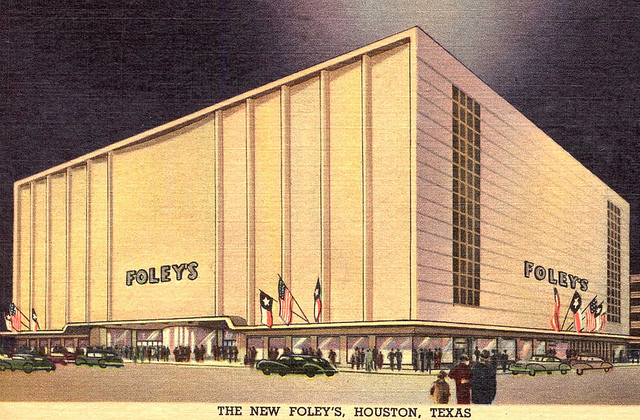
Foley's opened their new 10-story site at Main and Lamar in Houston in 1947.

Foley’s opened their new 10-story site at Main and Lamar in Houston in 1947.

Forget the fact that the roomy ten-story departments store at Main and Lamar in downtown Houston has been Macy’s for several years now, it will always be Foley’s to those of us who grew up with the Foley’s name as the hub of local retail sales on everything from clothing to appliances. Operating in Houston from the early 1900s forward, Foley’s relocated from a smaller nearby location to their locally famous flagship downtown site in 1947, about nine years prior to the opening of the city’s first suburban mall at Gulfgate off the Gulf Freeway in 1956.

This coming Saturday, 03/09/13, the downtown “Macy’s” store opens its doors for the last time. Sometime, thereafter, the ten-story building will be demolished to make room for something else in one of the only time-honored traditions of the Houston developers’ mentality. This time, there don’t seem to be as many tears over demolition. The building worked great as Foley’s and Macy’s, but who else now needs a ten-story building with no windows beyond the first floor?

The place was also built with central AC, but no heating system. Heat was supposed to be supplied by the body warmth of a constantly heavy flow of retail customers. The place drops to crypt-level comfort on the temperature side with no one in the place on cold days.

You really had to be here in Houston prior to the development of our freeway system and the new suburban shopping malls at Gulfgate, Sharpstown, Northline, The Galleria, Northwest, Willowbrook, Greenspoint, and Almeda to get what the new 1957 downtown Foley’s store meant to local shoppers. It was the center of everything else and, like everything that had anything to do with serious shopping, almost everything was located downtown. Even kids hopped on busses to go shopping downtown back in those days.

Here’s a link to another article from today about the downtown store closing that should be able to also connect you to a two-part KUHF-FM spotlight clip on the old place’s history and upcoming last days.

http://app1.kuhf.org/articles/1362587475-Touring-Macy’s-Foley’s-in-Downtown-Houston-One-Last-Time.html

My favorite Foley’s shopping experience story started in the summer of 1952 and stretched into the fall of the same year. As an incoming freshman at St. Thomas High School, I had ordered a red and white athletic jacket because I simply could wait to show my new school colors. Foley’s promised me that it would arrive in time for the first cool weather.

It didn’t.

By mid- October, I was still waiting, with all that was left of my little summer job money tied up at Foley’s, and nothing to show for it. I’d stop by Foley’s everyday after school to see if it had arrived, only to hear again the dreaded “not here yet” three words from the clerk at “will call.”

One day, I finally just exploded in a burst of immature excitement over the importance of my order and buying power to the Foley’s marketing plan.

“I’ve had enough,” I told the clerk at Foley’s. “If you can’t get my jacket here by the end of the week, I’m going to cancel my order and do everything I can from there to put Foley’s out of business by not buying anything else from this store for as long as I shall live.”

“Do what you have to do, young man,” said the smiling Foley’s lady.

I didn’t have to do anything. The next day the jacket came in. I guess I showed them.

Right?

Anyway, Saturday’s our last chance to personally check out another disappearing Houston landmark.

Statesmen, No; Fodder of the Funny Men, Yes!

March 6, 2013
Open Comedy Season on US Presidents may have started with LBJ, but it kicked into high gear with Richard Nixon.

Open Comedy Season on US Presidents may have started with LBJ, but it kicked into high gear with Richard Nixon.

Today’s late night “comedic” television hosts depend upon scandal, impropriety, criminality, stupidity, and licentiousness in the presidency for their daily joke grind. Sadly enough, the net result of this hunger for jokes about our perceived leader deficiencies have turned the late night shows into the only places where millions of Americans will make their choices for president in the next election.

Maybe, that’s OK. The more we move deeper into becoming a culture of people who depend upon Twitter over reading as our medium for communicating facts and ideas, well, maybe that’s all we deserve. Let’s everybody just base our votes upon what we got out of the material we heard on Letterman, Leno, and Kimmel. Maybe we’re just starting to get exactly what we deserve: Some clown, Democrat or Republican, male or female, white majority or ethnic minority, conservative or liberal, whomever/whatever – that all share one thing. – They each exit office with their own pockets full, a lifetime system of support and protection looking after them, a new library for all the books and records about them that no one is ever going to really study and read, and with a red sail into the sunset of happily ever after sealed by a reservation card that is left at the White House door on their way out for some relative by blood or marriage to take a leg up run at the same office in the near future.

We’ve had scandals and jokes about the presidency forever, but never anything so engulfing as the job done on pols today by the principal exposure media of television and the Internet. It’s just too bad that it doesn’t seem to be shining anyone toward dealing with the fact that all politicians seem to prefer to avoid serious action on taxation and spending, education and opportunity for all, immigration and border control, balancing the budget versus increasing the national debt, and entitlement versus equal opportunity.

We can build incredible bureaucracies with enough people there to write 13,000 word reports on each difficult subject the government does cover, but that doesn’t mean anyone, including the President or the Congress that approves these actions, is going to actually read what’s in the reports that portend to explain everything about what’s contained in a new law or piece of legislated social action. That job is going to still fall to the same phone bureaucrats whom you can’t reach in human form when you have to call to find out why you cannot, on Medicare, for example, sometimes continue to see a doctor who once saved your life for important treatment of a new problem.

Maybe it’s best that we can laugh prior to sleep. Otherwise, we might have to drown in our own tears.

Have a great Wednesday, everybody. I’ll feel more optimistic tomorrow – just as soon as I can get my “wall of denial” about really serious stuff back to its normal sky-scraping level.