The SW Texas League: My Grandfather’s World

September 27, 2013
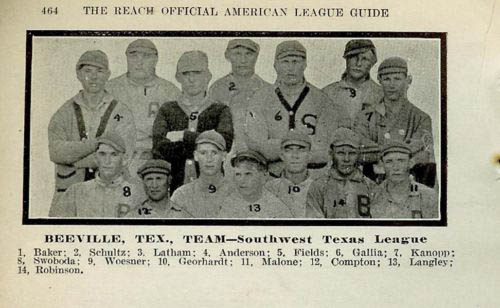
The 1910 Beeville Orange Growers Southwest Texas League 1910-11

The 1910 Beeville Orange Growers
Southwest Texas League
1910-11

The Southwest Texas League: It started with the best of intentions

The Class D Southwest Texas League lasted only two years back in 1910-11. Its six teams included the Bay City Rice Eaters, the Beeville Orange Growers, the Brownsville Brownies, the Corpus Christi Pelicans, the Laredo Bermudas, and the Victoria Rosebuds. Brownsville won the 1910 pennant and was awarded a beautiful trophy as their reward. Beeville won the 1911crown when playoff opponent Bay City refused to play them in a championship series due to some still live grievances the Bay Citians held for Beeville and the behavior of their fans. By this time, all unresolved team feuds were moot to the fact that the league was now busted financially and out of business. Before the final death rattle, the league office tried to retrieve the championship trophy from Brownsville so they could transfer it to the 1911 winner. Brownsville reacted firmly, in effect, sending the league this message: “The 1910 trophy belongs to Brownsville. Go buy another one for this year’s winner.” It never happened. Beeville did not win their championship on the field. And their was no money left for a new one, anyway. The trophy and the league were done.

Round Up the Usual Suspects
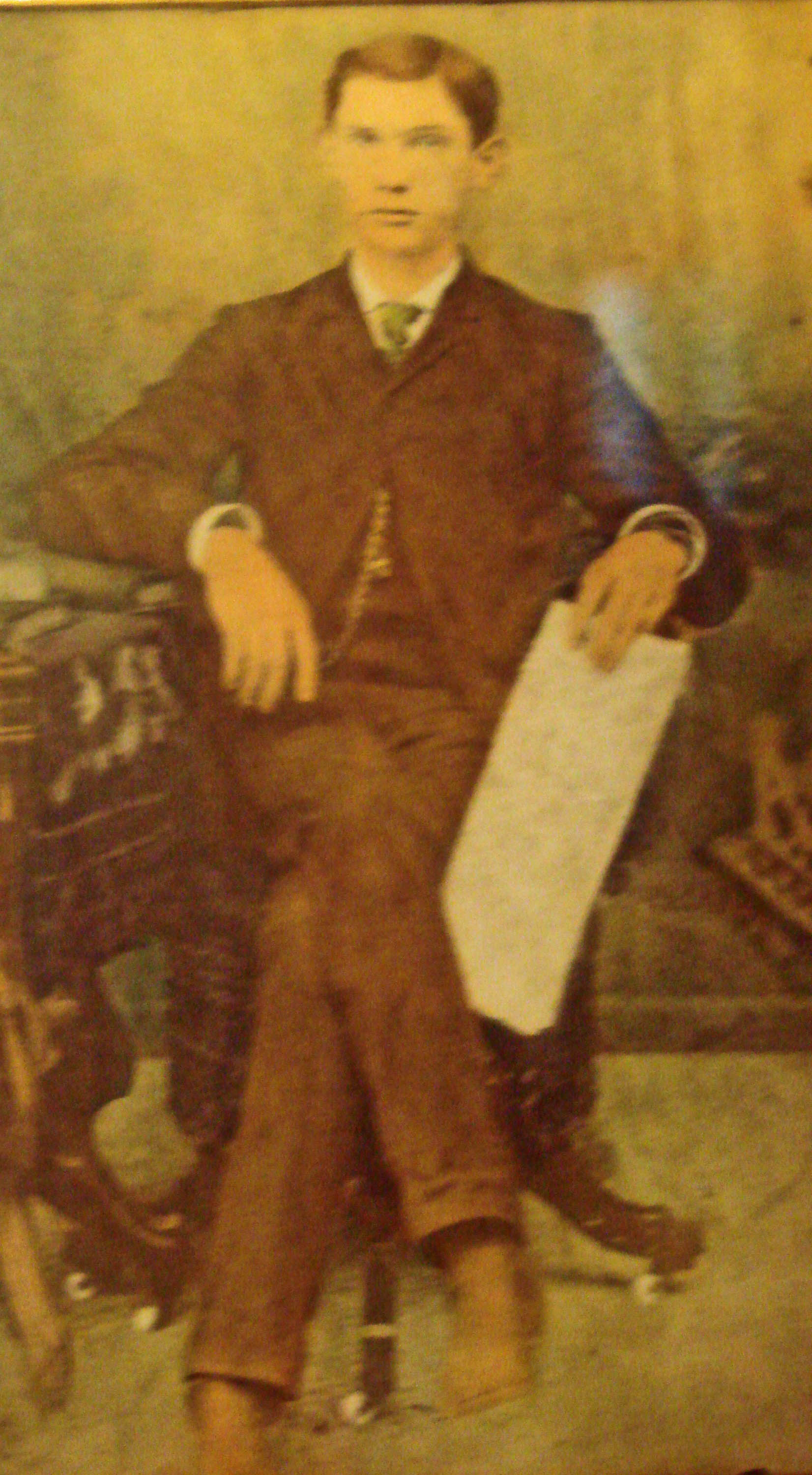
W.O. McCurdy Publisher/Editor The Beeville Bee 1886-1913

W.O. McCurdy
Publisher/Editor
The Beeville Bee
1886-1913

It’s easy to make an unscientific case for the usual reasons for failure. When human organizations of any kind are governed by the driving forces of ego, greed, and a lack of concern for others, things can go bad fast. The variables attendant to keeping baseball trusted and credible also kick in like mules. Not surprisingly, gambling and drinking figured into the failures of trust and integrity between participating towns. Here’s what my grandfather, William O. McCurdy I, Publisher and Editor of the Beeville Bee (1886-1913), wrote about the situation following a three-game sweep of the visitors from Beeville down in Brownsville in 1911, as quoted in this re-print from the Victoria Advocate:

“As was expected, the Orange Growers lost all three games to the Brownies. Gambling on baseball has certainly played havoc with baseball as a clean sport. The national game is all right as long as all gambling is prohibited, and all who best on the game should be prosecuted. This condition is not so bad in Beeville as it is in the Rio Grande cities. Down there they bet a good sum of money and are going to do their best to win that money, whether they do so fairly or otherwise. These umpires are easily bribed and many a good ball team loses a ball game because the umpire is receiving a commission. One umpire can win more games than a lot full of Ty Cobbs.” – W.O. McCurdy, Beeville Bee, as quoted in the Victoria Advocate, 4/22/11.

Grandfather McCurdy was also convinced that baseball scouts who doubled as game umpires were also subject to calling balls and strikes in favor of the players they represented. If the umpire/agent’s client was the batter, he was likely to draw a four pitch walk. If the pitcher was the umpire-man’s client, he had a good chance of getting a three called strike “K” by pitching way inside or way outside. We may only suppose that things then got as fair as possible only when the umpire was the representative for both pitcher and batter – and he had no team money behind his game-calling choices.

Other complaints about play in the SWT League included widespread fan rowdyism and drinking at games that often spilled onto the field as fighting between home crowds and visiting teams, poor gate proceeds, and clubs missing paydays of their players due to the lack of funds.

Failure to Communicate
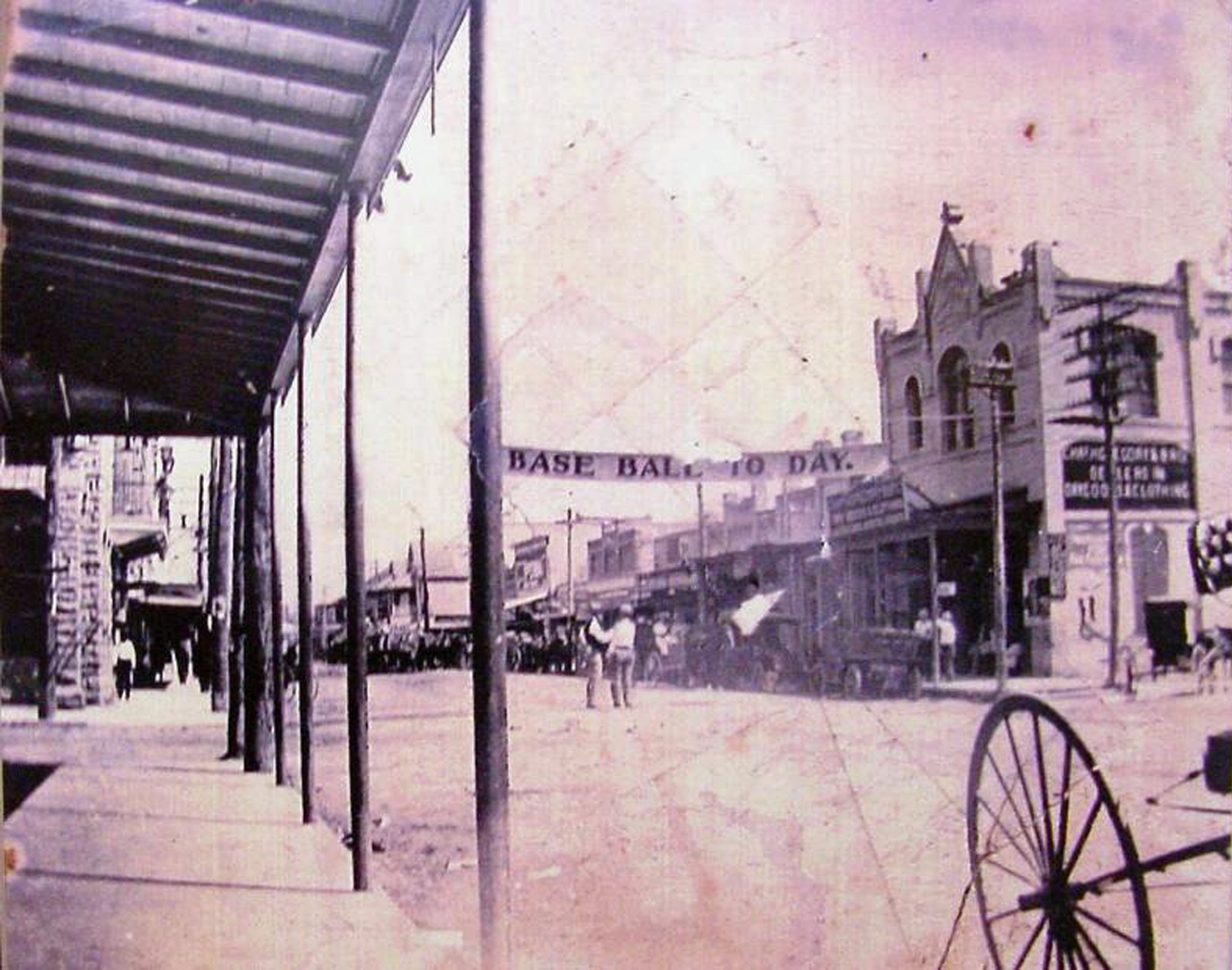
Base Ball Today Beeville, Texas Early 20th Century

Base Ball Today
Beeville, Texas
Early 20th Century

 It happened when the league and Brownsville ran into different understandings about the temporary/permanent presence of the championship trophy down in the Valley town in 1910, and it happened again, big time, when Victoria withdrew from the league in 1911 because of what they felt was a blanket bias against their city by the other teams in the circuit. When they tried to reclaim their $500 deposit that all clubs had been required to put up at the start, they learned that only $100 was coming back to them because most of these monies had been used to help Corpus Christi make payroll and to take care of other unspecified league office expenses. There had been no clear discussion or written contract set up for how the deposit money could be used when it was collected.
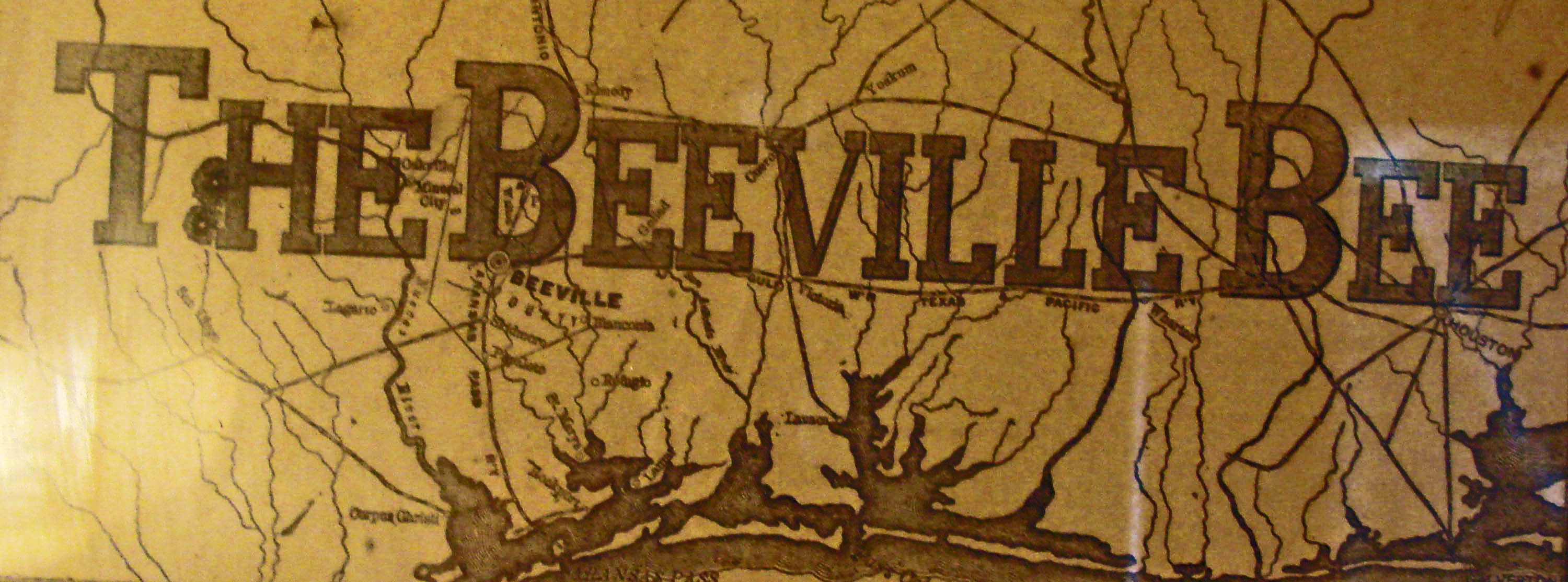
Grandfather McCurdy chose a newspaer masthead that bore the full weight of his great expectations. He once wrote that "a newspaper must never grow larger than its search for the truth". I've always liked knowing that fact about the grandafther I never got to meet.

Grandfather McCurdy chose a newspaper masthead that bore the full weight of his great expectations. He once wrote that “a newspaper must never grow larger than its search for the truth”. I’ve always liked knowing that fact about the grandfather I never got to meet.

Goodbye, Southwest Texas League!

Beeville did enjoy having future UT great Coach Billy Disch join them as Manager of the Orange Growers for most of the 1911 season, but even that cherished figure could not offset the climate that killed this effort to cultivate organized baseball in South Texas. Sadly for my dad and me, Grandfather McCurdy died of tuberculosis in 1913. My dad had to grow up from age 3 without him. And I never even had the chance to know him – except through his 27 years of writing for The Beevile Bee.

Hello, Native Major Leaguers!

In spite of the SWTL failure, the 3,062 people who made up the population of Beeville in 1920 apparently had a baseball gene running through their bloodlines. Shortly before and after 1920, three native sons of Beeville had gone on to successful careers in the big leagues. They were Melvin “Bert” Gallia, RHP, Curtis “Curt” Walker, OF, and Lloyd “Lefty” Brown, LHP. For more information, check out this earlier column I wrote on the total history of organized baseball in my birthplace of Beeville, Texas on 6/26/2012. I have a little clearer idea today of what went amiss in the SWTL, but this is still a nice survey of organized baseball history in the place that is now a city of 14,000 people.

https://thepecanparkeagle.wordpress.com/2012/06/26/professional-baseball-in-beeville-texas/

Have a nice day!
Top 10 Reasons for Astros’ Record Losing Year

September 26, 2013
"What we have here is - failure to communicate." - Cool Hand Luke.

“What we have here is – failure to communicate.” – Cool Hand Luke.

Top Ten Reasons for The Astros Record Losing Year

10) The other teams had much better players in 2013.

9) Reason # 10 was also true during the club’s previous record losing years of 2012 and 2011.

8) The Astros are getting “better” at breaking bad.

7) The club is rebuilding. Nobody wins when they are rebuilding.

6) The club misses Carlos Lee, but Chris Carter is working hard at fulfilling that role on the cheap.

5) The DH. All the good ones play for other teams.

4} The Astros got to the World Series in 2005. That’s enough winning for one century.

3) It’s being in the much tougher American League that keeps the Astros down.

2) Baseball is a business. Sometimes businesses have to take a hit for the company profit line.

1) The Astros did their darndest to keep this horrible record year a secret, but, somehow, 900 people found a way to see their games on TV – and they told everybody else.

*****************************************************************

If you have your own top ten list answers to this same subject, please post them below as comments on today’s topic.

Sept. 11, 1965: First Astrodome Football Game

September 25, 2013


UH had little to growl about in the first football game played at the Astrodome on 9/11/1965. The Cougars lost, 14-0, to the Tulsa Golden Hurricane in a day game.

UH had little to growl about in the first football game played at the Astrodome on 9/11/1965. The Cougars lost, 14-0, to the Tulsa Golden Hurricane in a day game.

In 1965, when the Houston Oilers pulled out of the plan to make the brand new Harris County Domed Stadium their home too, it may have been a decision helped along by Judge Hofheinz’s brainstorming choice to commercially rename the groundbreaking new facility in his own baseball club’s  favor as the Astrodome. Regardless of the actual cause behind the Oilers’ pick to play their NFL home games at Rice Stadium that year. it left the door open for The University of Houston, the Dome’s other fall sport tenant, to play the first football game in the Astrodome.

The date was Saturday, September 11, 1965, and it was a big deal, at least, for one other reason. The game marked the UH introduction of Warren McVea, the first black player in the university’s history.  And it wasn’t just that factor alone. McVea came wrapped in more great expectations than a fully trimmed and decorated Christmas tree.

It just wasn’t meant to be a great day for Warren McVea and the Houston Cougars. From McVea’s fumble of the game opening kickoff to the effective passing arm of Tulsa quarterback Bill Anderson, it was all Golden Hurricane Day in the first football game ever played in the air-conditioned Astrodome.

Here’s how The Ada (OK) Evening News handled the AP story on Page 11 of their Sunday, September 12, 1965 edition:

****************************************************************

GOLDEN HURRICANE WINGS WAY BY HOUSTON, 14-0

Anderson Hurls Two TD Passes

Houston, Tex. (AP) – Bill Anderson, a former defensive halfback, threw two touchdown passes Saturday in leading the 1965 edition of the aerial minded Tulsa Golden Hurricane  to a 14-0 victory over the University of Houston in the air-conditioned Astrodome.

A crowd of 37,138 escaped 96-degree temperatures by moving indoors to witness the nationally televised game that brought football to the dusty turf of the $31.6 million (dollar) domed structure.

Houston was a narrow favorite, but Anderson’s passes, spectacular catches by Howard Twilley and Neal Sweeny, and a rugged Hurricane defense that caused four Houston fumbles permitted Tulsa domination most of the way.

Houston crossed midfield only three times – under its own power in the third and final periods and after a Tulsa punt traveled only 18 yards in the fourth. The Cougars got no deeper than the Tulsa 30.

A few fists flew and two players were ejected as the former Missouri Valley Conference rivals met for the 16th time.

Referee John Overby stepped in quickly to end a third period flare-up by ejecting Calvin Enderli, Houston tackle, and Sheldon Moomaw, Tulsa guard, before either connected with a damaging blow.

Anderson specialized on defense last year while serving as a seldom used understudy to Jerry Rhome, the collegiate ebon champion, but his passes triggered every offensive threat as the Bluebonnet Bowl champions moved to their seventh consecutive victory.

Both of Anderson’s touchdown passes came in the second period, a six-yarder to Twilley and an eight-yarder to Sweeny. The scoring drives were good for 67 and 42 yards with Anderson contributing 119  yards by completing 10 of 12 pass attempts.

Starting from his own 41, Anderson got another drive under the way in the closing minutes, before a fumble by Twilley, after a five-yard pass completion, enabled Houston to take over on the Cougar six.

Twilley was the favorite receiver as Anderson completed 25 of 47 passes for 230 yards. He had only one interception. Twilley’s 11 receptions covered 111 yards.

Four Houston first half fumbles were charged to Warren McVea, a sophomore speedster who scored 591 points during his schoolboy career at San Antonio’s Brackenridge High.

McVea carried 11 times for a net of 21 yards. Dick Post led Houston with 37  yards in 10 plays, while Ken Parsons led Tulsa with 34 yards in 10.

Game Stat Categories TULSA HOUSTON
First Downs 15 11
Rushing Yardage 91 111
Passing Yardage 230 109
Passes: Comp/Attempts 25/47 8/20
Passes Intercepted By 1 1
Punts-Ave Yards 8-36.1 7-40.3
Fumbles Lost 1 4
Penalty Yards 56 35


Scoring 1st Quarter 2nd Quarter 3rd Quarter 4th Quarter FINAL
TULSA 0 14 0 0 14
HOUSTON 0 0 0 0 0


Scoring By Players TULSA HOUSTON
1st Quarter 0 0
2nd Quarter    
Tulsa– Twilley, TD, 6 yard pass from Anderson (Twilley, PAT) 7 0
Tulsa– Sweeny, TD, 8 yard pass from Anderson (Twilley, PAT) 14 0
3rd Quarter    
4th Quarter    
FINAL SCORE 14 0
ATTENDANCE -> 37,138  


– Ada (OK) Evening News, Sunday, September 12, 1965, Page 11

********************************************************************************

Sept. 23,1967: Great Day for Cougars!

September 24, 2013
UH 37 - Michigan State 7. East Lansing, Michigan September 23, 1967

UH 37 – Michigan State 7.
East Lansing, Michigan
September 23, 1967

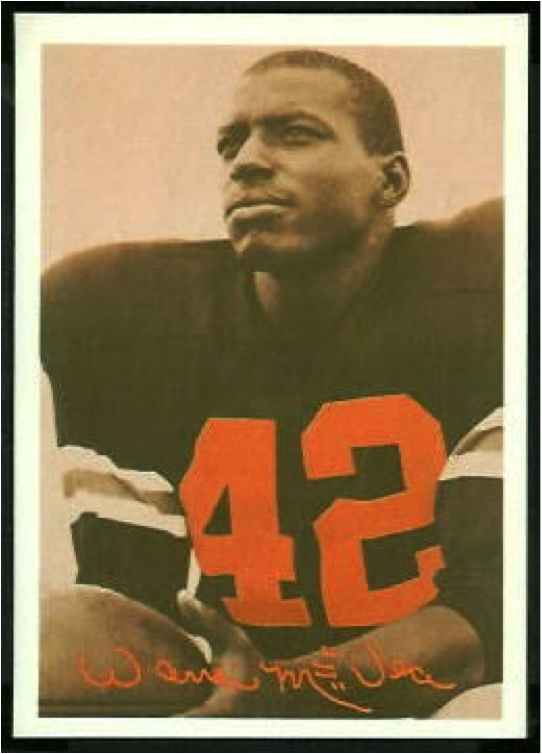
UH’s Wondrous Warren McVea (with his number 42 only visible as 2) takes off to the right on a 50-yard run in the second quarter that will result in several faked out jock straps strewn one by one on the grass of the Michigan State side of the field as he winds up eventually scoring near the far left side pylon.

Here’s how The Port Arthur News handled the Associated Press story on Page 14 of their Sunday, September 24, 1967 edition:

********************************************************************

GREAT DAY FOR COUGARS!

Mighty Spartans Fall, 37-7

East Lansing, Mich. (AP) Long bomb artist Dick Woodall and slithery Warren McVea led Houston to a smashing 37-7 football upset of third-ranked Michigan State, the defending Big Ten champions.

It was the first loss for the Spartans since the 1966 Rose Bowl and their worst beating since 1947, when Michigan pounded them 55-0.

Coach Bill Yeoman of Houston, formerly an assistant to Coach Duffy Daugherty, was asked if he was surprised by the 30-point victory by his unranked Cougars.

“Man,” drawled Yeoman in the dressing room, “that’s like asking Custer if he was surprised about all those Indians.”

Daugherty said the team tutored by his former aide deserved to win.

Warren McVea

Warren McVea

McVea, a 5-foot-8 halfback who averaged 10 yards per carry the past two seasons, zipped away on a touchdown sprint of 50 yards, (earlier) cut loose on a 48-yard run deep into MSU territory and piled up 155 yards rushing in the rout.

“You had to be close to him to appreciate some of his faking,” Daugherty praised. “He’s the quickest runner I’ve seen in a long time.”

Woodall, a 6-foot-1 senior, came back from an ankle injury last week to hit touchdown passes of 77 yards to end Ken Hebert on a 77-yard play and flanker Don Bean on a 76-yard play, both in the second half.

The Cougars, fresh from a 33-13 trouncing of Florida State last weekend, posed the first test for the Spartans, who had a seasoned offense built around quarterback Jimmy Rae.

But the 6-foot-1 Woodall, also a senior,  outsparkled Michigan State’s attack, and McVea, who cut loose on a 48-yard run in the first quarter, had a 105 yards rushing in the first half.

Spartans Fizzle

The Spartans offense fizzled at several key junctures, including advance to the Houston three and 10, where a penalty helped the Cougars halt the Spartans.

But Houston throttled Michigan State’s passing game at key points, too, turning an interception by Mike Simpson into a 59-yard touchdown run with 34 seconds left in the game.

An interception by Tom Paciorek gave Houston possession on its 39 while the Cougars trailed 7-3 in the second period. Ken Bailey, in relief at quarterback, passed 29 yards to Hebert. McVea, a swift, squirmy sprinter, (then) broke for 50 yards up the middle and scored the touchdown that put Houston on top to stay.

On the second play after an MSU punt, Woodall hit the streaking Hebert for the 77-yard touchdown that gave Houston a ten point lead, 17-7 (in the third quarter).

Spartans Pass

The Spartans came back passing, with Raye hitting end Al Brenner for 13 yards, but successive passes went incomplete and Michigan State punted.

An exchange of punts followed and Houston set up on its 11. McVea ran for 14 yards on the first play. Then Woodall lofted a bomb to Bean, who sprinted in on a 76-yard play. (UH now led, 24-7.)

Six plays carried 66 yards in Michigan State’s only scoring march. Thomas took a pitchout from Raye and skirted the left sideline on his 44-yard touchdown trip (1st Quarter, giving MSU a 7-3 lead.)

Daugherty had worried about his defense, which was riddled by losses from graduation. Bubba Smith, George Webster, and Charlie Thornhill were among the veterans who went to the professional ranks. Daugherty learned his fears were not unfounded.

155 for McVea

McVea, only 5-foot-8, did ballet steps as he slithered easily through the MSU defense on his 50-yard scoring run. The little zipper, who average 10 yards per carry in his first two seasons as a college player, had 155 yards rushing for the afternoon. Paul Gipson was (the) second top rusher for the Cougars with 58 yards.

Thomas led MSU statistics with 60 yards rushing – most of it in his touchdown bolt. Raye, who been noted as a running quarterback, was held to 45 yards on the ground. Dwight Lee made 38 yards for MSU.

“It’s been a long time since we’ve taken our lumps like that,” MSU Coach Duffy Daugherty concluded in a sidebar comment after the game.

Game Stat Categories HOUSTON MICHIGAN STATE
First Downs 13 15
Rushing Yardage 200 174
Passing Yardage 216 133
Return Yardage 120 227
Passes: Comp/Att/Int 5/12/1 10/24/3
Punts-Ave Yards 7-44 8-36
Fumbles Lost 0 0
Penalty Yards 25 67
Scoring 1st Quarter 2nd Quarter 3rd Quarter 4th Quarter FINAL
Houston 3 7 7 20 37
Michigan St 0 7 0 0 7
Scoring By Players HOUSTON MICHIGAN STATE
1st Quarter
UH – Hebert, FG 3 0
2nd Quarter
MS – Thomas, TD, 44 yard run (unreadable PAT) 3 7
UH – McVea, TD, 50 yard run (Hebert PAT) 10 7
3rd Quarter
UH – Hebert, TD, 77 yard pass from Woodall (Hebert PAT) 17 7
4th Quarter
UH – Bean, TD, 76 yard pass from Woodall (Hebert PAT) 24 7
UH – Bailey, TD, 2 yard run (Bailey PAT) 31 7
UH – Simpson, TD, 59 yard pass intercept (kick block) 37 7
ATTENDANCE -> 73,000 PLUS

– Port Arthur (TX) News, Sunday, September 24, 1967, Page 14

1963: The Brightest Ever Friday Night Lights

September 23, 2013
Warren McVea

Warren McVea

The Dallas Morning News called it the Game of the Century. On November 29, 1963, two San Antonio high school powerhouses, the Lee Vols (10-0-0) and the Brackenridge Eagles (8-2-0), met in the quarter-finals of the state “big school” championship playoffs at venerable old WPA-built Alamo Stadium in the Alamo City.

“Brack” was the defending state champion, but that accomplishment bore no weight on this game. Lee was big and powerful and undefeated and hungry for the 1963 crown. – And, they had a powerful and smart running back named Linus Baer who had almost personally kept them perfect over the season in their pursuit of a championship destiny.

“Brack” had Wondrous Warren McVea, the arguably most elusive, quickest running back in State of of Texas high school or college football history. The wily little water bug was only 5″8″ and 165 lbs., soaking wet, but he could incredibly weave his way through a line of massive grabbing arms and bumping bodies and then come out the other side on his rabbit-running way to the other team’s goal line.

“Fear the Water Bug!”

If they had talked that way in 1963, that’s what all past foes of McVea would have said to the upcoming ones.

It was a strange time too. The game took place only one week past the assassination of JFK and most of America was still very much in grief and shock over that horrendous act. A certain level of hesitation still came with the business of getting on with life and matters like playing a high school football game, even one for high stakes. Eased by the knowledge of JFK’s love for the sport, the games went on. Only his heart had died. The heart of America beat as strong as ever.

I just happened to have been at my parents’ house in Beeville that weekend, home from graduate school classes at Tulane due to a brief suspension of university activities in mourning respect for the deceased president. As a result, my dad and I got to watch the highly touted Brack-Lee game on television. JFK would have approved.

It was amazing! Not in the hackneyed current misuse of that word we’ve come to expect from Reality TV participants, but truly amazing, leaving a recognizable blur for one’s long-term memory. And my memory was no exception. It was a black and white, fuzzy rural reception picture we watched and it featured two football-warring ant hills, each with a king ant who scored every time he got his pincers on the ball. A lot of running took place, by McVea through and around tacklers, by Baer through and over tacklers. In the end, and that only came with seconds to play and Lee scoring the final TD, it went to wrap for all time as Lee 55 – Brackenridge 48.

Warren McVea finished with 215 yards rushing, 6 touchdowns, and 38 points scored. Linus Baer called it a night with 150 yards rushing, 5 touchdowns, and 37 points. The two stars were also friends as well as respecting rivals. They walked off the field arm and arm that night in some kind of shared youthful awareness that their game this evening had been a special one in Texas high school football history.

Indeed it was.

Warren McVea was moving on to the University of Houston as the first black player in the school’s history. Linus Baer was heading for the University of Texas where his collegiate accomplishments were somewhat diminished by an injury he sustained in a post-high school career all-star game. Among may other great accomplishments at UH, McVea led the Cougars to a 37-7 upset of Michigan State at East Lansing in 1967.

For those of us who saw the game, the memory lingers forever.

For more information in-depth on the “Game of the Century”, please check out this article from 2008 by Randy Lankford:

http://www.saisd.net/dept/athletics889/index.php?option=com_docman&task=doc_view&gid=1004

“Last” Bayou Bucket Goes to UH

September 22, 2013
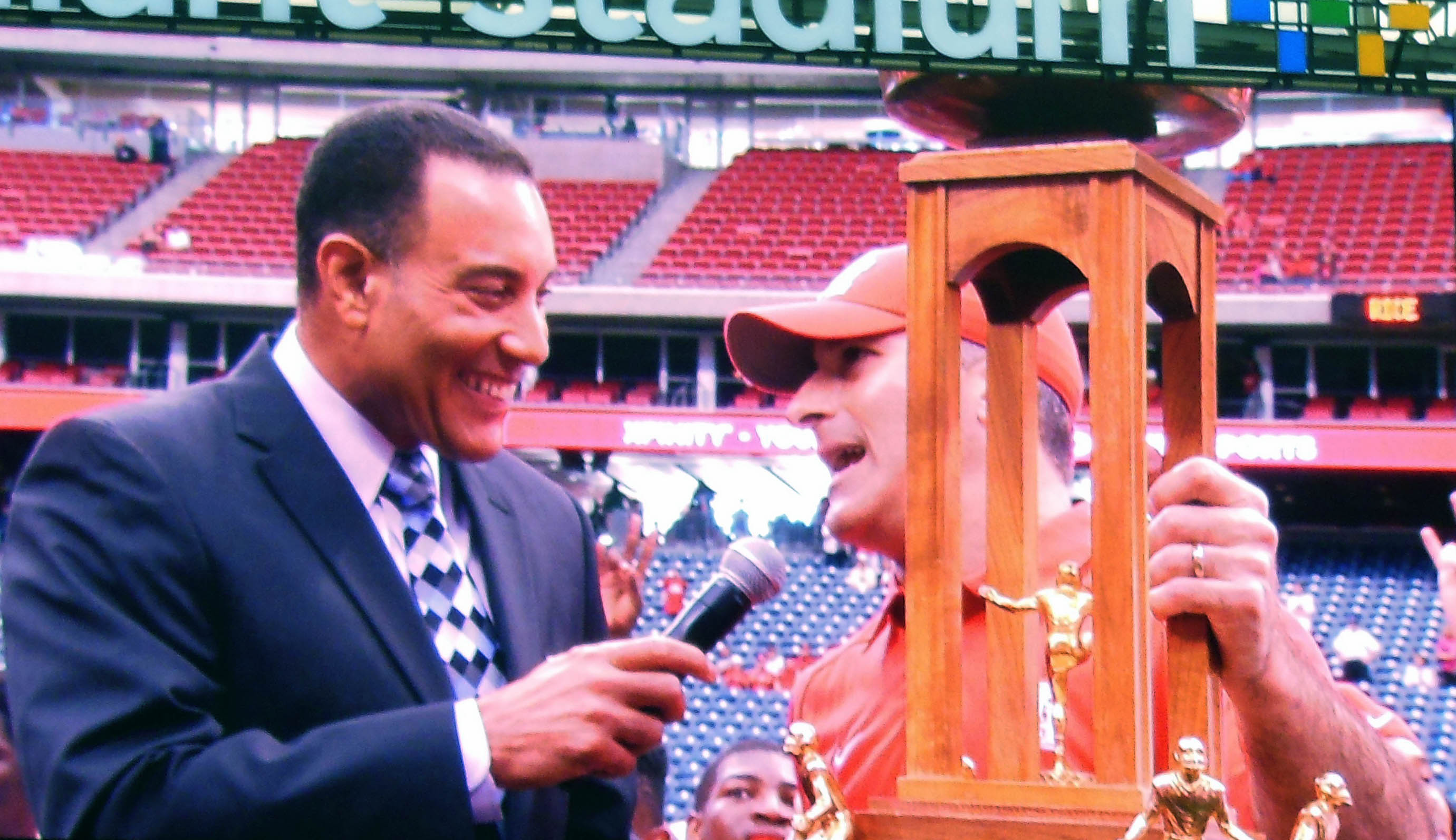
UH Coach Tony Levine accepts semi-final (?) possession of the Bayou Bucket from Program MC Butch Alsandor on 9/21/2013 at Reliant Stadium.

UH Coach Tony Levine accepts semi-final (?) possession of the Bayou Bucket from Program MC Butch Alsandor on 9/21/2013 at Reliant Stadium.

The Bayou Bucket is a wrap, for now, at least. Yesterday, September 21, 2013, the Houston Cougars and the Rice Owls closed the door on their annual intra-city college football game between the two major universities of our town due to foreseeable future scheduling problems. With Houston leaving the C-USA membership they have shared with Rice and also moving to the American Athletic Conference, neither school can now see a clear way to keep their own annual playing date on the tab for years to come, but both schools expressed hope that they will find a way to get together again someday.

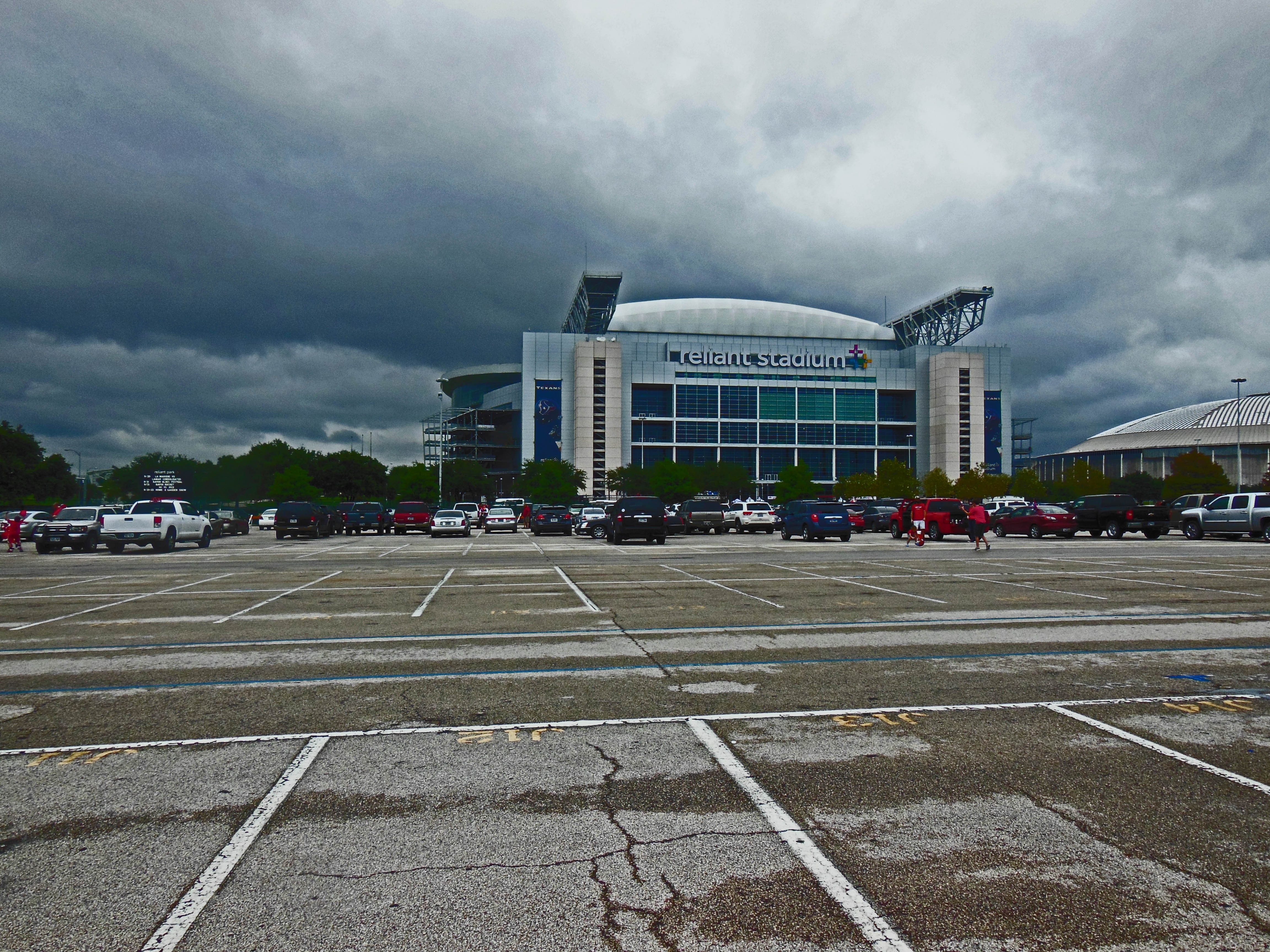
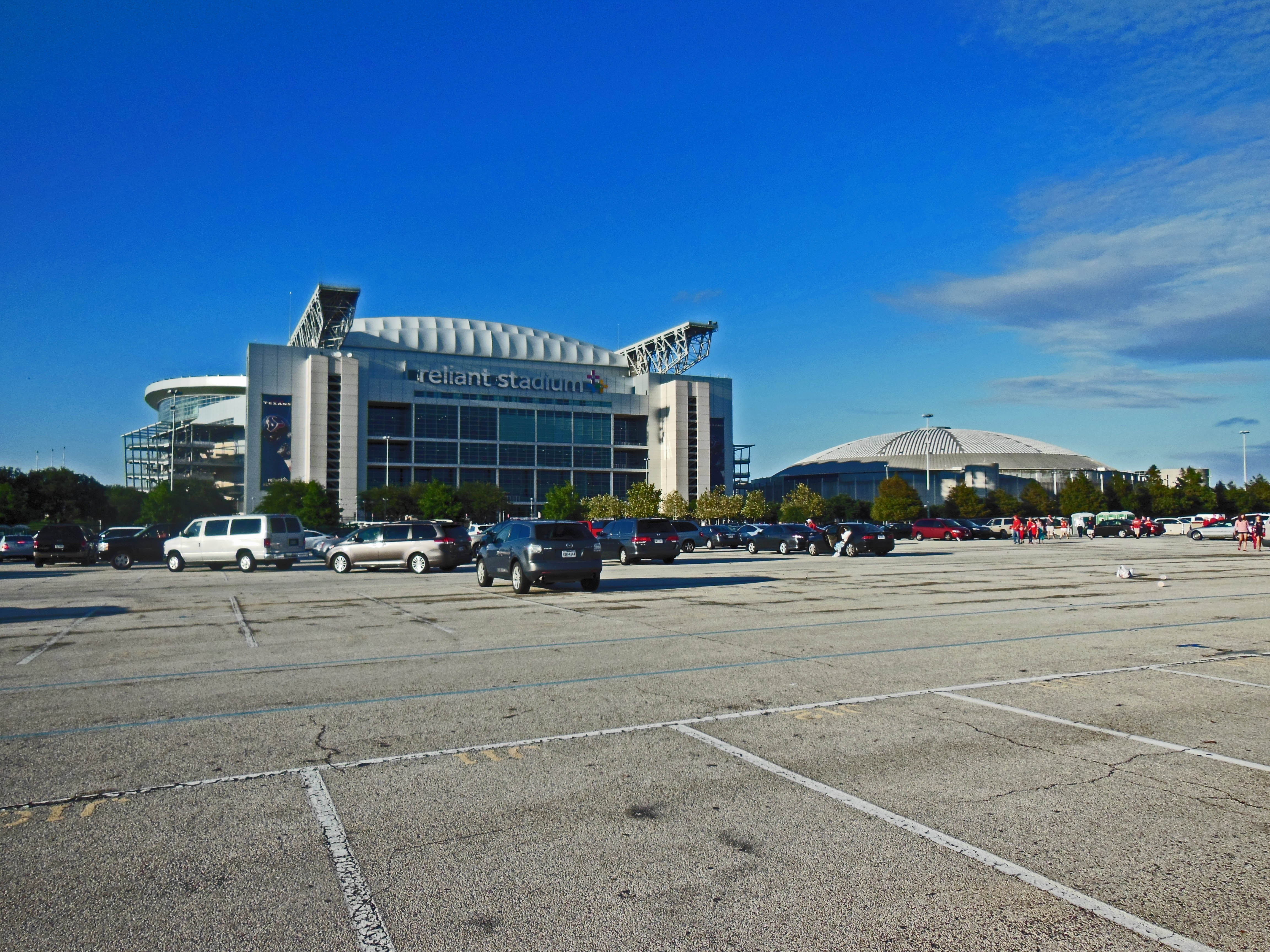
1:30 PM, 9/21/2013: The Bayou Bucket started under foreboding skies and a major chance of heavy rain. Fortunately, Reliant Stadium has a roof.

1:30 PM, 9/21/2013: The Bayou Bucket started under foreboding skies and a major chance of heavy rain. Fortunately, Reliant Stadium has a roof.


As a partisan alumni supporter of UH, but also a Houston childhood fan of Rice, my hope follows the flow of both schools. The game is good for both universities and also for the City of Houston. The amicable rivalry between UH and Rice has been an excellent model for the condition we usually describe as good sportsmanship – and also for community focus on these two jewels of higher learning that always belong by their shared roots to life quality in their City of Houston.

The Bayou Bucket game between Rice and UH has been played almost annually since 1971. Except for a daunting three-year hiatus (1996-98) that followed the collapse of the Southwest Conference, the two schools have met every other season since, through their game of yesterday. With UH winning, 31-26, in 2013, the series record wheel stops with the Cougars leading in wins, 29 to 11.

Wikipedia does an excellent job summarizing the history of the Bayou Bucket Series, but they have yet to update their “All Time Series” totals to reflect that UH has 29 wins now, not the mere 27 wins they show. The game-by-game chart has them there all right, but some website tender simply failed to do the upkeep math on the tote board. 

http://en.wikipedia.org/wiki/Bayou_Bucket_Classic

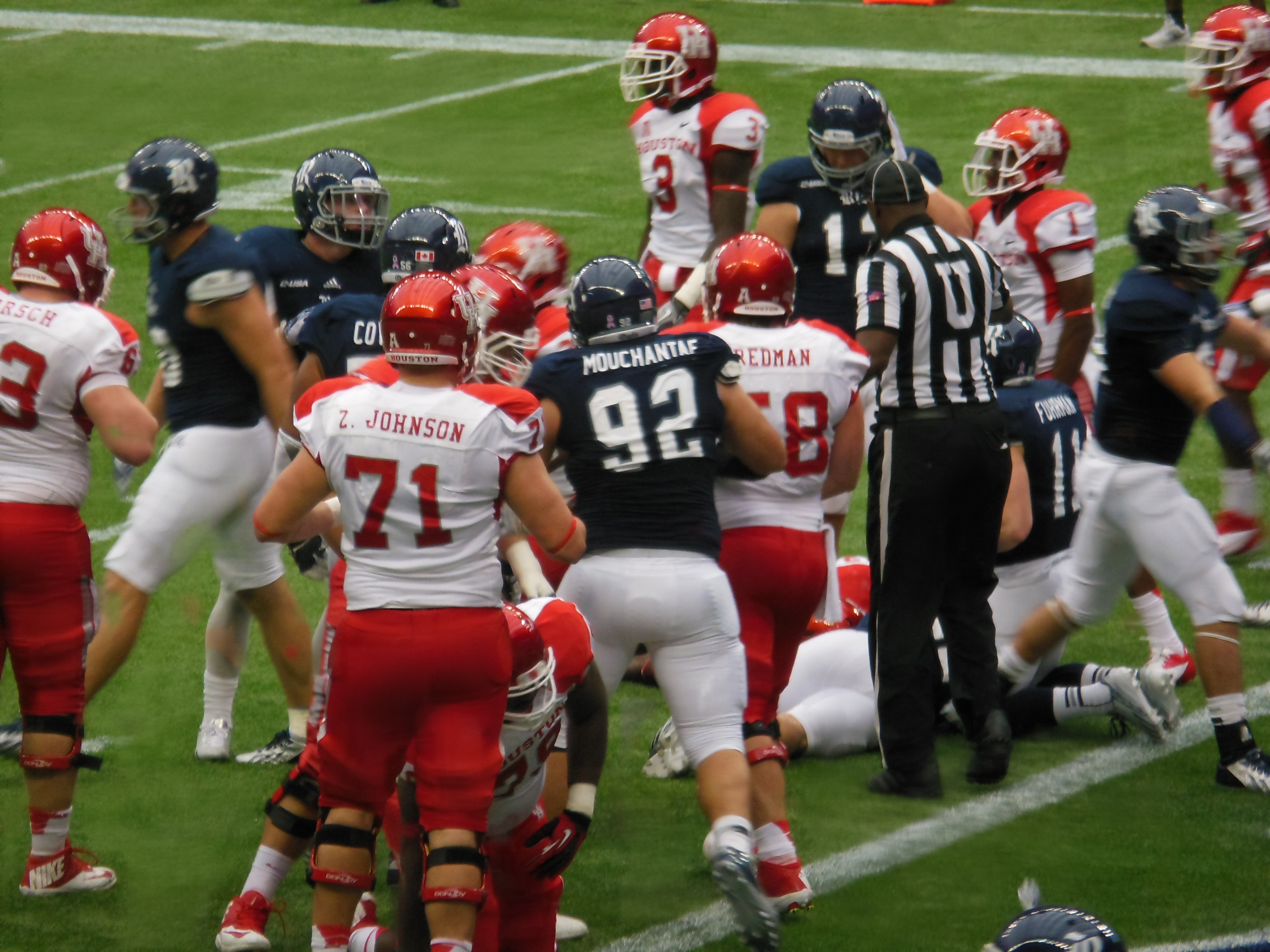
As per usual, the Owls and Cougars mixed it up with a lot of fire for the local trophy bragging rights.

As per usual, the Owls and Cougars mixed it up Saturday with a lot of fire for the local trophy bragging rights.

Yesterday’s game itself was a thriller, one made possible by defensive errors, sputtering offenses, and some tactical late play decision-making and poor time management by UH.

Leading late in the fourth quarter by 31-20, UH could have run out the clock had they run the ball in bounds more and kept the clock moving for a couple of first downs, starting from about their own 25. Instead, they use first down to run a sweep right for no gain that stops the clock when the runner has no choice but to be pushed out of bounds. That’s followed by a second down long pass up the middle by freshman QB John O’Corn that is totally uncatchable, stopping the clock again.

An abortive third down forces a punt. UH gets the ball back after a “three and out” by Rice and UH drives to about the Rice 32 before the drive stalls with about two yards needed for a first down on fourth. Instead of going for it to possibly ice the game against a Rice club with no timeouts remaining, UH Coach Tony Levine elects to try a field goal from the 39.

Meanwhile, waiting on the kick, I’m thinking: “Tony, is this really a good idea? The worst that could happen on the running try for a first down is the loss of the ball on downs to a club that now has to go nearly 70 yards in about two minutes with no timeouts – just to get within one score of catching up. Whereas, the worst thing about a field goal here is ….

“Whereas” happened.

Alex Lyons of Rice blocked the UH field goal try and ran it back 61-yards for the Owl TD. They missed the extra point, but now Rice trailed by only 31-26. If they could get the ball back on an onside kick and then score another TD against a tired UH defense, they could win the game.

“Nightmare on Cougar Street” was delivered.

The Owls pulled off the most beautiful onside kick I’ve ever seen. The Owls recovered the ball on their own 47 with two minutes left to complete the job, but they could not do the miracle full cycle.

Houston won, 31-26, before 34,831 real fans of both schools, allowing the UH Cougars to keep the Bayou Bucket trophy until, if and when, the two same city schools meet again.

Goodbye, Rice Owls! We’ll see you again – somewhere down the road!

“Who?”

I said, “Goodbye, Rice Owls! We’ll see you again – somewhere down the road!”

“Who?”

6:00 PM, 9/21/20i13: Same day, different sky. By day's end, the heavens had changed. This is the sky that UH fans saw at game's end.

6:00 PM, 9/21/20i13: Same day, different sky. By day’s end, the heavens had changed. This is the sky that UH fans saw at game’s end.


… Have a nice laid-back Sunday, Everybody!


Elmer: The Dizziest, Daffiest Dean of ‘Em All

September 21, 2013
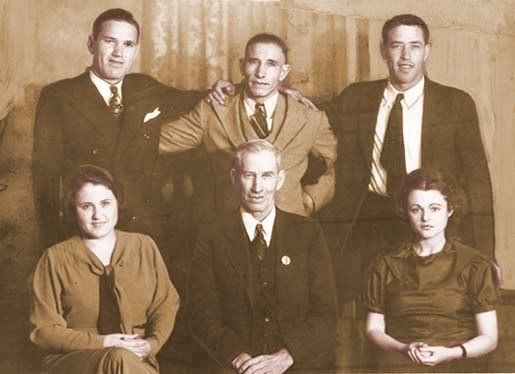
The Dizzy Dean Family

The Dizzy Dean Family

As many of you know, Dizzy Dean had another brother beyond Daffy. And his name was Elmer Dean.

While searching some sources for a friend on this subject, I came across the picture above and the unconnected story below that pretty well capsules the story of Elmer Dean’s short-lived baseball career as well as any I’ve found. The picture is a Google image – and it comes unexplained as a photo without explanation of content or source. The only mysteries in the photo are the identities of the two featured ladies. Most probably, they are either Dean blood relatives, or else. the wives of Dizzy and Paul “Daffy” Dean. I don’t have time to research the issue further this morning, but will do so later. If you know the answer, please leave a comment below.

The males in the photo, top, left to right, are Dizzy, Elmer, and Paul Dean. The seated male in front is their father, sitting in between our two “guess who” girls.

What follows is the article I found online with the direct help of NewspaperArchive.com. It is reproduced here from a story that appeared on Page 4 of The Joplin (MO) News Herald of August 10, 1934:

**********************************************************************************************

Where’s Elmer?” Now Answered. Dizziest of Deans in St. Louis

St. Louis, Aug. 10 – (AP) Dizzy Dean and his brother, Paul, aces of the Cardinal pitching staff are not the only Deans who are likely to attract attention in Sportsman’s Park during the present home stand of the Cardinals.  home stand which ends August 20. In answer to the question “Where’s Elmer/” a third Dean brother of that name is about to go into action.

Elmer Dean is a pitcher. But he will not report to Manager Frisch in an effort to solve his pitching problem. Instead, he will report to Blake Harper, chief of the concession department at the ball park. For Elmer pitches peanuts to fans in the stands. He sells soda pop, hot dogs, pop corn and almost anything.

Elmer Dean is said to be dizzier than either Dizzy or Paul. He was lost for four years when Dizzy and Paul, driving a flivver, got across a railroad track ahead of a freight train and he didn’t. When the long freight train finally got out of the way, Dizzy and Paul were out of sight and Elmer was four years in catching up with them.

Elmer had a tryout with Houston as a pitcher in the spring of 1933, but as a ballplayer he led the experts to believe he’d make a great peanut vender. His pitching was all right except his follow through wound up with Elmer sprawled out on his face and the ball went over the plate – that is. once in a while. After providing hilarity for the Houston camp several days, he found his nich(e) as a peanut vender, and has been a personage in the Houston Ball park ever since.

He wears a cap on which his name is printed in large capital letters. But he doesn’t need any label. Like Dizzy, he speaks for himself and for the Dean family, extolling their pitching prowess and other virtues.

Elmer has one particular hobby – it isn’t going to movies or collecting old coins – he loves to ride elevators. So if you see a fellow who looks like Dizzy or Paul Dean constantly riding in one of the elevators of the Telephone building or the Railway Exchange, well, it’s Elmer Dean getting the thrill of his lifetime. Down in Houston, Elmer is said to have traveled more miles up and down elevators than Lindbergh has flown in a plane.

– The Joplin (MO) News Herald, August 10, 1934, Page 4  

************************************************************************************************

The Four Horsemen of The 1928 Houston Buffs

September 20, 2013
Pastureland for the Four Horsemen of the Houston Buffs.

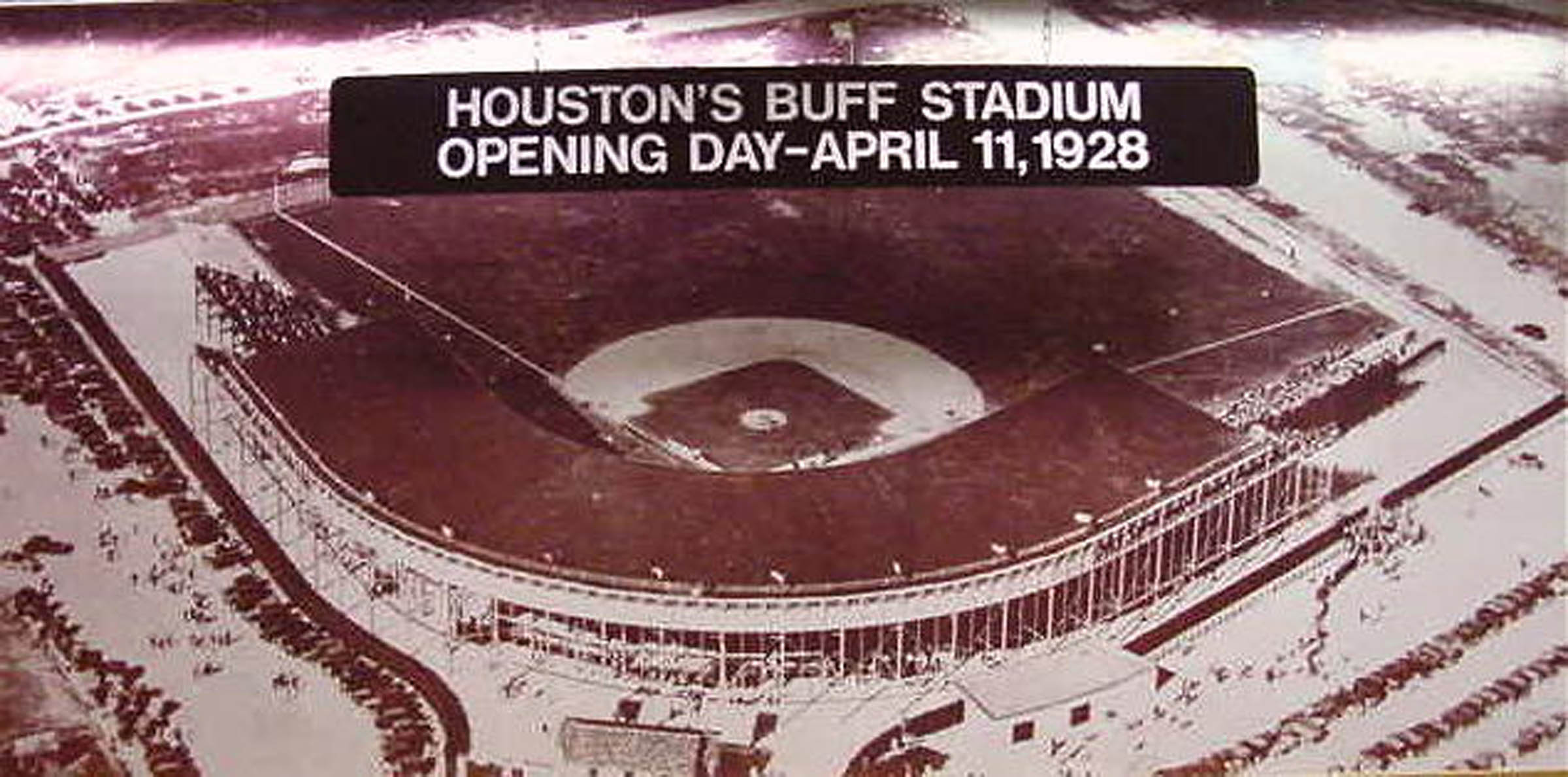
Pastureland for the Four Horsemen of the Houston Buffs.

As in all other things, times have changed greatly in baseball since 1928.  Pitchers who once went all the way are now sharply divided into starters and a whole sub-species of pitchers who do the various specialty jobs as relievers by inning and game situation. Starters have done their job in 2013 when they have either gone five or six innings or thrown 100 pitches. As one result, the so-called “W”s that go to one man per game for a winning effort are now more easily spread throughout the staff, along with “H”s and “Sv”s that didn’t even exist back in 1928.

Throw in the fact on the major league level that any starter today who wins 20 games in a single season is going to earn a salary that will make it harder for a club that’s strapped for cash to sign others like him and you have a formula for teams winning championships with probably none or only one 20s-count official game winner.

With a record of 104-54, .658, the 1928 Houston Buffs still managed to only take the first place finish by one game over the second place Wichita Falls Spudders, who finished at 104-56, .650. The Buffs also then defeated the Spudders, 3 games to 1, in a pennant playoff series to advance to the Dixie Series against the Birmingham Barons, Champions of the Southern Association. The Buffs then took the Barons, 4 games to 2, to win the Dixie Series, the pinnacle of their opportunities.

Here’s a pitcher-by-pitcher capsule look at how the 1928 Houston Buffs of the Texas League won the pennant and also captured the Dixie Series with a pitching staff that included four 20-game winners. These men were, even though I’ve never read them described as such, The Four Horsemen of the 1928 Houston Buffs:

Jim Lindsey

Jim Lindsey

 1) Jim Lindsey, Age 29 (25-10, .714 W%, 3.49 ERA) (BR/TR) (6’1″, 175 LB.) Lindsey had a 9-season career in the big leagues (1922, 1924, 1929-34, 1937, posting a career MLB record of 21-20, .512 W%, 4.70 ERA.

Over the longer course of his 13-deason minor league career (1923-29, 1933-38), Lindsey posted a total mark of 143-114, .556 W% with a 4.01 ERA. Lindsey won 20 games one other time and it also occurred with Buffs the following season of 1929 when he went 21-10, .677 W%. with a 2.87 ERA.

Jim Lindsey passed away in 1963 at the age of 64.


Wild Bill Hallahan

Wild Bill Hallahan

 2) Wild Bill Hallahan, Age 25 (23-12, .657 W%, 2.25 ERA) (BR/TL) (5’10”, 170 LB.) Hallahan enjoyed an 11-season career in the big leagues (1925-26, 1929-38) and played an important pitching role for three Cardinal NL pennant winners in 1930, 1931, and 1934. The Cardinals also took the World Series in 1931 and 1934. Hallahan went 19-9 for the 1931 club and he finished his big league time with a record of 102-94, a .520 W%, and an ERA of 4.03.

Wild Bill had a 5-Season (1924-24, 1927-28, 1939) minor league career, posting a record there of 62-49 with a .559 W% and an ERA of 3.50. His 23 win season in his only year with Houston was his only time to ring the 20 game winner season bell on any level

Wild Bill Hallahan passed away in 1981 at the age of 78.


Ken Penner

Ken Penner

 Ken Penner, age 32 (20-8, .714 W%, 3.47 ERA)  (BL/TR) (5’11”, 170 lb.) Ken Penner is nothing short of minor league pitching roalty. He worked a 23-season career over 30 years (1913-25, 1927-38, 1942-43).  Penner had an amazing minor league career mark of 315-269 with a W% of .539 and an ERA OF 2.93. In the minors, Penner earned a minimum of 20 wins in 5 different years and he also won 17-19 games in 6 other seasons. In Penner’s other 1927 season as a Buff he had chalked up one of those 19-win marks. in  In spite of his overwhelming success at the minor league level, however, Ken only enjoyed two widely separated cups of coffee in the majors in 1916 and 1929, coming up with an MLB career mark of only 1-2 with a .333 W% and an ERA of 3.55.

Ken Penner died in 1959 at the age of 63.


Frank Barnes

Frank Barnes

 Frank Barnes, age 28 (20-9, .690 W%, 2.95 ERA) (BL/TL) (6’2″, 195 lb.) Frank Barnes also went n to a peekaboo MLB pitching career in 1929-30, posting a career mark withe the Tigers and Yankees of  0-2, .000 W%, 7.79 ERA.  Frank’s 20-win season in his only year with Houston also would be the sole time he came close that to that charmed level again, anywhere else.

Frank Barnes died in 1967 at the age of 67.


Things just came together for the ’28 Buffs. They had a brand new jewel of a ballpark and a hunger for winning that carried them to every chance for glory that lay in their realm. Together, the four horsemen of the 1928 Houston Buffs led the way to glory as 20-win pitchers, one and all.

1946: UH Cougars Play Their First Football Game

September 19, 2013
UH's new stadium is now under construction on the site where the Cougars played their first intercollegiate football game on 9/21/46.

UH’s new stadium is now under construction on the site where the Cougars played their first intercollegiate football game on 9/21/46. (THE STADIUM WILL NOW BE LAID OUT E-W, NOT N-S, as shown in this original drawing.)

Founded in 1927 and only raised to the status of a four-year university in 1934, the University of Houston did not begin play in football until September 21, 1946, when they opened against Southwestern Louisiana Institute at Jeppesen Stadium on Cullen Boulevard, which then belonged to the Houston Independent School District as their high school stadium.  That property was eventually acquired by the University later in the 20th century and renamed Robertson Stadium, a named it retained through the 2012 season. Robertson has now been demolished in preparation for the new stadium now under construction for UH football in 2014 on the same site.

Here’s how the Galveston Daily News reported that first UH game, with the help of Associated Press:

*********************************************************************************************************

SLI Spoils debut of Houston, 13-7

Houston, Tex., Sept. 21.,  AP  The Bulldogs of Southwestern Louisiana Institute scored twice in the last 17 minutes of play here tonight to spoil the University of Houston’s debut in intercollegiate football, 13-7.

SLI tied the game at 7-7 midway in the fourth period when Di Gizzani, a guard, recovered a Cougar fumble on the UH 22. Niel of SLI then passed to Ferris  on the Cougar 7. From there Budd powered over in four tries, the last time from the 1 yard line. Pettit kicked (the) goal and the score stood at 7-7.

With one minute and twenty-five seconds remaining in the game, Niel, proving himself very much a thorn in the Cougars’ side, intercepted a pass on the Bulldog 21 and ran it back to the 46. From there Niel passed to Diddier on the Cougar 43.

Another pass, Niel to Diddier, pulled the game out of the fire for SLI. Diddier took the heave on the Cougar 35 and raced down the sidelines for the winning marker. Seventeen seconds were left as the Bulldogs kicked off after the try for (extra) point and the Cougars were never able to put the ball into scrimmage.

– Galveston Daily News, Sunday, September 22, 1946. Page 12.

********************************************************************************************************

Post-Report Notes: The AP report left out the mention of any Cougar players in the first game, but from Wikipedia it should be noted that Charlie Manichia, the first Cougar quarterback, also scored the first UH touchdown earlier in the game for a 7-0 lead that faded away. The Cougars were only 4-6 in their first season under first Coach Jewell Wallace, but they did win their first game in history on their second try, taking out West Texas State Teachers College (Now known as West Texas A&M), 14-12.

Jewell Wallace would coach the Cougars in their first two seasons (1946-47) and then yield the reins to Clyde V. Lee (1948-54).

As for that conflicting report in the story that says the Bulldogs did not score until 17 minutes remained in the games, and also that they first scored “midway in the fourth period”, all I can presume is that someone typed “17” when they meant “7” minutes were left on the clock.

One New Stadium Note: The new UH stadium will not be laid out N-S as Robertson was. The new one will place the end zones in an E-W opposition to each other. The Cougar home stands will then occupy the “S” side, giving the home club fans the sun at their backs for day games and a breathtaking view of downtown on the “NW” near horizon from the campus.

Those of us with strong Cougar ties are happy about the powerful driving energy that now directs our university and we are looking forward to even brighter tomorrows.

Eat ‘Em Up, Cougars!

A Day in the Life of the Houston Eagles

September 18, 2013
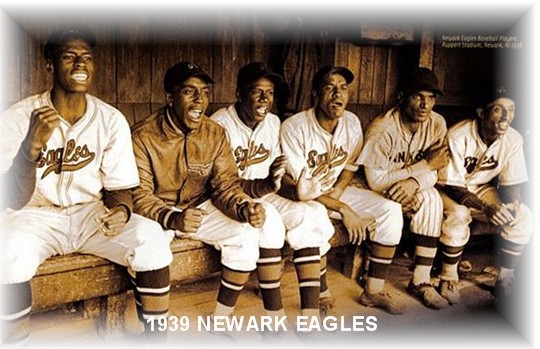
The Newark Eagles were once a force in Negro League baseball, but that all changed rapidly for all segregated black clubs once integration finally arrived.

The Newark Eagles were once a force in Negro League baseball, but that all changed rapidly for all segregated black clubs once integration finally arrived.

The Newark Eagles moved to Houston for the 1949-1950 seasons as the result of a dramatic loss of support for Negro League baseball back east following the integration of organized baseball. With Eagle stars like Monte Irvin signing with the New York Giants and pitcher Don Newcombe casting his lot with the Brooklyn Dodgers, old Newark fans were abandoning their home club in droves to watch their former heroes compete in integrated baseball.

For those two 1949-50 seasons, the transplanted Houston Eagles played out their home schedule as sub-let tenants at Buff Stadium in the hope of developing a fan base that could keep the club alive. When it didn’t happen, the Eagles moved again in 1951, this time heading 369 miles east to New Orleans, where they played out a few seasons during the death rattle days of Negro League baseball.

Here’s a Day in the (brief) Life of the Houston Eagles, as reported in a headline story on Page 14 of the August 30, 1950 edition of the Benton Harbor (Michigan) News Palladium:

**********************************************************************************************

Benton Harbor Cubs Face Houston Eagles Tonight

———————————————————————————————-

Contest to Start at 8:30

———————————————————————————————–

Strong Colored Nine, Loaded with Talent, At House of David

 ———————————————————————————————-

One of the “big” names in Negro baseball, the Houston Eagles, will come to town tonight at 8:30 to engage the Benton Harbor Cubs in an exhibition game at House of David Park.

The Eagles, who are reported to be an up-and-down club, seem to be in one of their uphill periods at present. After getting off to a slow start at the beginning of the season, Houston strengthened itself recently for the second half push in the Negro American league and is now a strong contender for loop honors. Ever since the acquisition of four new players, the Eagle gang has been a rough bunch to beat.

Much credit for helping to turn the Houston outfit from a so-so team into a red hot club fighting for first place in a tough league may be given to Willie Grace, formerly with the Cleveland Buckeyes, and Wiley Griggs. Grace, a hard-hitting outfielder, has added much balance to the Houston hitting attack, while Griggs, a fine third baseman, has tightened the inner defense. Two other new players are catcher Billy Bailey and Bill Scruggs, a pitcher.

Besides this quarter (quartet), a star-studded array of old “standbys” graces the Eagle lineup. The infield is reportedly fast and steady, with Johnny Washington at first, Eddie Brooks at second, (Wiley) Griggs at third, and “Curley” Williams at short. Williams is rated the leading shortstop in the league.

SPEEDY OUTFIELD 

A speedy outfield which boasts three good hitters is also a factor in Houston’s success. Bob Harvey, the team’s home run leader, holds down right field, with (Willie) Grace in center, and “Cotton” Williams in left. Jenosie Heard, a clever southpaw, heads a strong mound corps, and Leon Ruffin works behind the plate.

Harvey, Washington, Heard, and “Curley” Williams were all named as members of an All-Star team in the East-West battle recently in Chicago.

– Excerpt from an article on Page 14 of the August 30, 1950 edition of the Benton Harbor (Michigan) News Palladium.

**********************************************************************************************