Our Legacy Book on Early Houston Baseball

May 23, 2014

HOUBASE 01

It’s a beautiful book. Rigorously researched and fact-checked for three-years, 2011-2014. Edited and organized by our SABR chapter team  for broad and specific treatment of Houston baseball history in an exhaustive reach for the inclusion of good and accurate information about the flow of adult amateur, organized baseball for children,  semi-pro, women’s, and black baseball in the greater Houston community in parallel to the professional game that was taking hold of the future. It started with the city’s creation in 1836 by developers from New York, one of the principal states that was tinkering with the new “base ball” game when our gulf coast Texas giant first opened his eyes to find that his “creators” had brought a bat and ball mentality with them to the Southeast Texas plains and marsh lands.

A number of people in the SABR family, including Editor Mike Vance, Chapter Chair Bob Dorrill, SABR members Mickey Herskowitz, Marsha Franty, Tony Cavender, Joe Thompson, Patrick Lopez, Harold Jones, Herb Whalley, John Watkins, Tom Murrah, Tom Trimble, yours truly, Bill McCurdy,  plus non-SABR members Darrell Pittman, Susan Pittman, Steve Bertone, Lance Carter, Story Sloane, and Sumner Hunnewell, – all these people, plus all the others who gave us help from within the systems of information we sought from archivists, employees of libraries, universities, and baseball organizations, – all these people aided in our determined deep-dredge search for the truth

The writers of the manuscript included Mickey Herskowitz, Mike Vance, Bob Dorrill, Joe Thompson, Marsha Franty, Steve Bertone, and yours truly, Bill McCurdy.

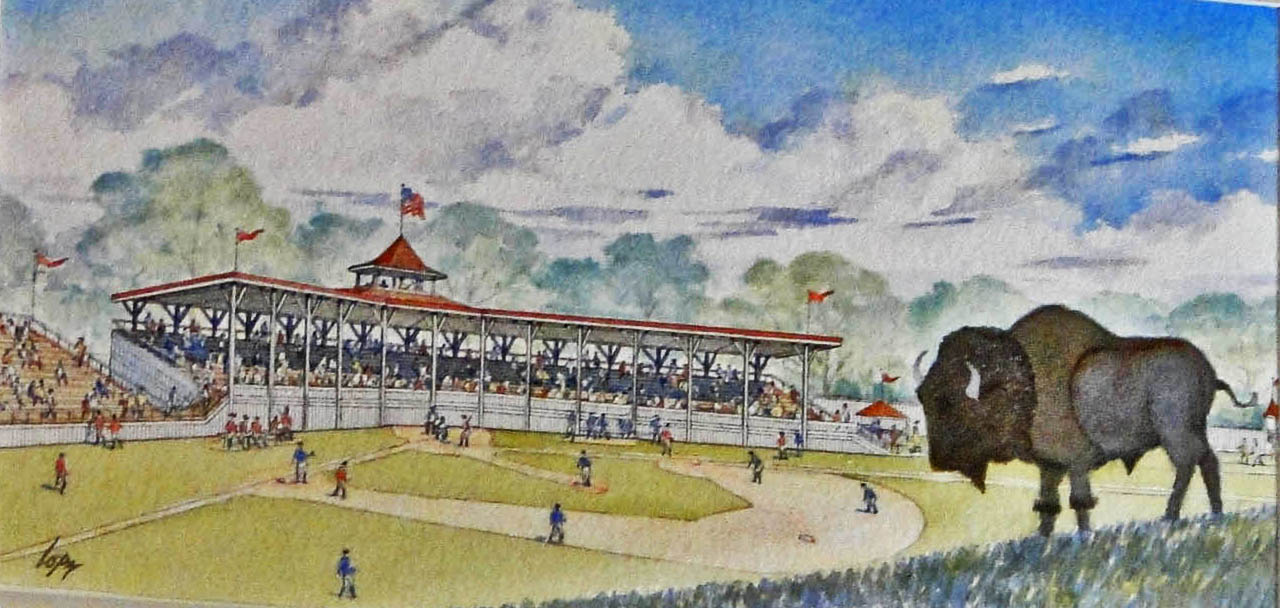
Patrick Lopez is responsible for the beautiful watercolor graphics that depict baseball in 19th century Houston.

Mike Vance was the editor and procurer of most photos used in the book – and he was most responsible for the beautiful final layout, with the assistance of the fine production crew at Bright Sky Press.

The former Buff Jim Basso family contributed a previously unpublished photo of Ernest Hemingway with their father for use in our book.

National writer and pure-blood Houstonian Mickey Herskowitz wrote the important factually-bound “Afterword” section that bridged the gulf on how Houston transitioned from minor league town to major league city.

In summary, “Houston Baseball, The Early Years: 1861-1961” is now a template for all other communities who choose to write their own stories about how baseball came and thrived in their own communities.

And, as I’ve said and written often in the past two months, our book is now one for the ages. It belongs to all of us who brought it to life as the fine work of social research it is in fact. It is our shared legacy that we have put in motion a piece of important Houston history that would not have existed, had we each not done, all we could. There are no small contributions on a performance stage this important to history. If you only feel you showed up  to listen, out of caring, your presence alone empowered someone else on the  team to do something different that proved positively critical to the final product.

Thank you. Our shared legacy is forever. And who knows what it may inspire us to do next as either individuals or a group?

Have a nice Memorial Day Weekend, Everybody!

"Buffalo Watching" ~ an original work of art by Patrick Lopez

“Buffalo Watching”
~ an original work of art
by Patrick Lopez

A Nice Article by Ron Paglia of Pennsylvania

May 22, 2014
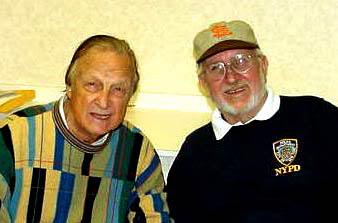
Stan Musial and Bill McCurdy, St. Louis, 2003.

Stan Musial and Bill McCurdy, St. Louis, 2003.

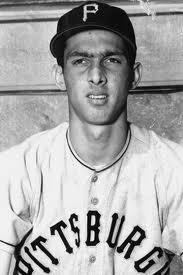
Ron Necciai, 1952.

Ron Necciai, 1952.

Sometimes the serendipity that flows from an almost random contact with someone we’ve never previously met leads to a nice wave coming back to the home beach from which it began.

A couple of months ago, I got involved in some wonderful long distance communication with Ron Necciai, the fellow who struck out 27 men in one minor league no-hitter he pitched for Bristol (TN) back on May 5, 1952. We really hit it off as we talked, I felt, and I learned that he was set to being honored for his accomplishment up in the Monongahela Valley region of Stan Musial’s and Ken Griffey’s western Pennsylvania this coming June with his induction into the Pennsylvania Sports Hall of Fame.

And that led me to contact with Ron Paglia, a writer for the Monongahela Valley Independent, who was already covering the event with all the proverbial adhesion of fly paper.

This morning I received the following link from Mr. Paglia on one of the stories he has written. This one was about the contact that happened between Ron Necciai and yours truly.

Thank you, Ron Paglia! And please give my regards to the celebrated guy of your same first name. He is both a deserving and very genuine human being – and deserving of all you Valley people can do for him.

Here’s the link to the article by Ron Paglia.

http://triblive.com/sports/otherlocal/6151378-74/necciai-mccurdy-baseball#axzz323sH7jYl

Have a nice day!

1998: Adventures in WouldaCouldaShoulda Land

May 21, 2014
October 4, 1998" "Turn out the lights. - The party's over."

October 4, 1998″ “Turn out the lights. – The party’s over.”

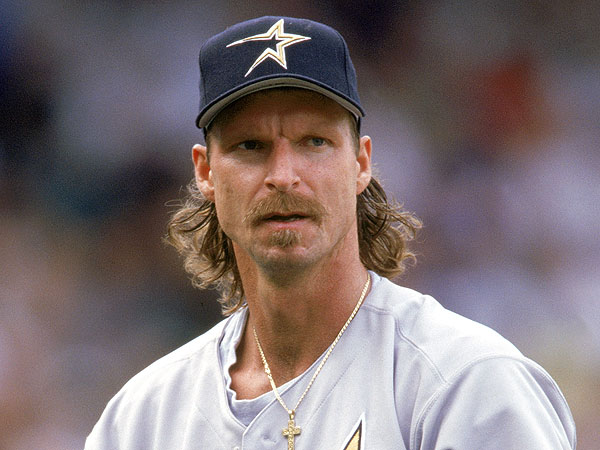
The 1998 National League Division Series between the Central Division Champion Houston Astros (102-60) and the West Division Champion San Diego Padres (98-64) was supposed to be the year our southeast Texas guys finally made it to the World Series.Second year manager Larry Dierker had just led the Astros to their second straight trip to the playoffs with their best season record in history. GM Gary Hunsicker had pulled off a great trading deadline deal with Seattle that brought towering right-hander Randy Johnson to town in time to post a 10-1 record that pushed the boys over the top.

The Astros were heavily favored over manager Bruce Bochy and his San Diego Padres in their best three of five game series for the right to play in the NLCS, but again, one more time, it wasn’t meant to be.

Padre starters Kevin Brown and Sterling Hitchcock provided the start and finish “book end” wins over the Astros in Games 1 and 4. Randy Johnson (0-2) took the loss in each. And San Diego catcher Jimmy Leyritz provided the offensive buzz with three home runs that proved critical to San Diego victory.

When all was said and done, the normally high-scoring Astros had scored only 8 runs in their 3-1 NLDS loss to south-most SoCal that is the always cool old San Diego.

To add to the bummer, the Astros were unable to retain Randy Johnson for the 1999 season as he was soon=as=he-got-here-gone to Arizona in 1999 and the chase for championships dreams elsewhere.as another club’s big dreams meal ticket.

Losing in 1998  was different from those near-miss losses that many of us were around to endure in 1980 and 1986. When 1998 was over and done, I felt as Tom Kleinworth expressed it in his comment on an earlier playoff loss column. ” I was depressed after the 1980 and 1986 playoff, ” Kleinworth noted. “After 1998, I was just angry.”

You know what, Tom? I don’t think Mr. Dierker was too happy about it either.”

Here are the four line score summaries. I don’t even want to get into the hyperbole of how they lost:


Game 1, September 29

Astrodome in Houston, Texas

Team 1 2 3 4 5 6 7 8 9 R H E
San Diego 0 0 0 0 0 1 0 1 0 2 9 1
Houston 0 0 0 0 0 0 0 0 1 1 4 0
WP: Kevin Brown (1–0)   LP: Randy Johnson (0–1)   Sv: Trevor Hoffman (1)
Home runs:
SD: Greg Vaughn (1)
HOU: None

Game 2, October 1

Astrodome in Houston, Texas

Team 1 2 3 4 5 6 7 8 9 R H E
San Diego 0 0 0 0 0 2 0 0 2 4 8 1
Houston 1 0 2 0 0 0 0 1 1 5 11 1
WP: Billy Wagner (1–0)   LP: Dan Miceli (0–1)
Home runs:
SD: Jim Leyritz (1)
HOU: Derek Bell (1)

Game 3, October 3

Qualcomm Stadium in San Diego, California

Team 1 2 3 4 5 6 7 8 9 R H E
Houston 0 0 0 0 0 0 1 0 0 1 4 0
San Diego 0 0 0 0 0 1 1 0 X 2 3 0
WP: Dan Miceli (1–1)   LP: Scott Elarton (0–1)   Sv: Trevor Hoffman (2)
Home runs:
HOU: None
SD: Jim Leyritz (2)

Game 4, October 4

Qualcomm Stadium in San Diego, California

Team 1 2 3 4 5 6 7 8 9 R H E
Houston 0 0 0 1 0 0 0 0 0 1 3 1
San Diego 0 1 0 0 0 1 0 4 X 6 7 1
WP: Sterling Hitchcock (1–0)   LP: Randy Johnson (0–2)
Home runs:
HOU: None
SD: Jim Leyritz (3), Wally Joyner (1)

Last Night at SABR

May 20, 2014
Larry Dierker Chapter Houston

Larry Dierker Chapter
Houston

Last night at the June 19, 2014 monthly meeting of SABR’s Larry Dierker Chapter at the downtown Westin on Texas at Crawford, the group’s Houston Baseball, The Early Years, went on sale with all but one of the authors present for signings.

Chris Chestnut delivered an interesting report on one of those single  game major leaguers (and whose name I have quickly forgotten) who played about ten years ago but racking up only a strike our before hitting into a triple play and then a double lay in his only three times at bat. My apologies to Chris and his subject for adding the obscurity of being nameless to this brief history of frustration and disappointment.  – At least he had his day in the MLB sun that the rest of us could only fream bout.

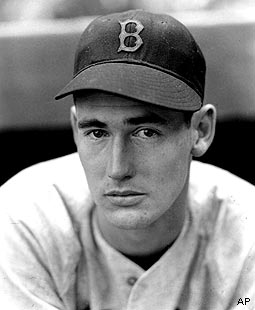
Young Ted Williams had no idea where his head would finally end up..

Young Ted Williams had no idea where his head would finally end up..

 Tony Cavender then gave us a pretty good summary of the 800 plus page new biography on Ted Williams called “The Hid”. This treatment even includes the details of how Williams’ head was severed when he died for storage in an Arizona crogenics lab in the hope of the distant day it wll be brought back to life as the second coming of Ted Williams. Some of us also learned from Tony last night that Ted’s unscrupulou son also shortly after his father and that he also willed that his own head be severed for storage at the Tucson facility. And so it was.

The second Williams noggin freezing raised this question for me: If  the Arizona lab took on the skull and contents  of both Ted Williams and his son after their deaths, did the facility offer  the Williams family the “doubleheader rate” for these services?

No one was sure.

A representative from the Astros RBI Summer Baseball and Softball Leagues for boys and girls made an appeal for volunteers to help the organization play their games this summer as scoreboard and scorekeepers. All games are played ay the Jimmy Wynn complex on Victory Drive near Acres Homes on Monday  Friday, 6:00 PM through 10:00 PM.

If you are interested in helping, please call the Houston Astros Urban Youth Academy (UYA) as soon as possible, @ 281-260-9166,

Herb Whalley wound up the evening with the story of 2013 adventure visit too all major league ballpark. Herb says he enjoyed the views in San Francisco and Pittsburgh better than all others. The interior of closed Tampa Bay stadium was his least favorite view. Funny thing is, and maybe not so surprising, those three parks are my two most favorite and single least favorite too – and I’ve only seen them on TV.

Thanks for another nice gathering of the SABR faithful.

Bob Dorrill brought us up to date on  plans for the SABR 44 National Convention (July 30-Aug. 03). We need volunteers – and we need items for the silent auction. If you can help in any way, please get in touch with Bob Dorrill, ASAP. His contact info is listed below – which is also the best way to order our new SABRA-Legacy Houston Baseball History book.

Have a nice Tuesday afternoon, all of you ancient Moody Blues-zers!


More Bad Astros Memories: The 1986 NLCS

May 19, 2014
A 14th Inning Hero

A 14th Inning Hero


Hey! Houston Astros fans? ~ Need more angst on the heels of the previous story of bad memories from the 1980 NLCS? Well, let’s zip forward six years to the next ime our boys came close.

Game 6 of the 1986 NLCS, the New York Mets vs. the Houston Astros.

Wednesday, October 15, 1986 at Astrodome in Houston, Texas

Team 1 2 3 4 5 6 7 8 9 10 11 12 13 14 15 16 R H E
New York 0 0 0 0 0 0 0 0 3 0 0 0 0 1 0 3 7 11 0
Houston 3 0 0 0 0 0 0 0 0 0 0 0 0 1 0 2 6 11 1
WP: Jesse Orosco (3–0)   LP: Aurelio López (0–1)
Home runs:
NYM: None
HOU: Billy Hatcher (1)

Seems like yesterday. Disaster always does.

Now playing a first four wins in  seven games in the 1986 National League Championship Series, the Houston Astros went into the top of the ninth in Game Six leading 3-0 with lefty Bob Knepper floating by on cruise control of the visitors. The Astros were three outs away from tying the series at 3-3, and forcing the Mets to face their arch nemesis Mike Scott in Game Seven at the same deadly venue for Big Apple hopes.

Then that old magic that is Houston’s spell, that old black magic that fate weaves so well, began to splatter the canvas of Houston’s eternal rainbow dreams.

First a  tobacco-chewing lumpy cheeked rat named Lenny Dykstra laced a triple that seemed to cast a spell over center fielder Billy Hatcher’s ability to corral a catchable ball in the right-center gap.. It ended up as a triple to start the latest Houston descent into the darker regions of hope’s hell. Mookie Wilson then singled to make it 3-1, Astros. An out later, Keith Hernandez doubled, scoring Wilson. The Mets had quickly pulled to a mere 3-2 deficit.

Goodnight, Mr. Knepper. Go grab a Dr. Pepper. Why’d you have to be a schlepper too?

Dave Smith was in – to save our melting skin – but would he bring us back to life again?

Smith proceeded to walk Gary Carter and Darrell Strawberry to load the bases.

Ray Knight then hit a sac fly to right field that scored Hernandez. Danny Heep then struck out to end the inning, but not the game. Now shock-blasted by the sudden 3-3 tie, the game now headed for extra innings with ominous warning cues reverberating through the disappointment-seasoned Astros crowd.

A pumped and ready Roger McDowell came in to pitch the bottom of the 9th for the Mets. He was ready, alright. McDowell held the Astros to no runs and one hit for five innings through the 14th. Meanwhile, Dave Smith and Larry Anderson were also holding back New York from further scoring from the 10th through the 13th.

Things finally gave again in the top of the 14th. After Gary Carter walked and Darrell Strawberry singled, another little water bug named Wally Backman singled to right of reliever Aurelio Lopez. a run scored when right fielder Kevin Bass’ throw from right field sailed high at the plate. The Mets scored only once in the 14th, but it could have been fatally worse. Mookie Wilso struck out with two outs and the bases loaded.

Going to the bottom of the 14th, the Mets led the Astros, 4-3, They also led the NLCS, 3 games to 2. Three more outs and the Mets would be headed to the World Series as the NL champs.

The bottom of the 14th brought about one of those legendary minor moments of compensatory triumph in the history of our losing Houston franchise. With one out, Billy Hatcher launched a deep high drive down the left field line. – Would it stay fair? – Yes it has. – The ball just bounced off the foul pole screen. Minor madness in the moment. One of the watchers near home gives way to the pure joy of a double fist pump. It is Billy Hatcher. His homer in the bottom of the 14th has saved the Astros, tying the game at 4-4. When he crosses the plate, it almost feels as though we just won the game. Time to go home now and wait for Scott and the joy of tomorrow.

No, wait. We can’t leave. The game is only tied. The Astros still have to score more runs than the Mets in Game 6 to make Game 7 possible.

The Astros could not finish the job in the 14th. And nobody scored in the 15th. But, going into the top of the 16th, the Mets turned up the gas.

Top of the 16th, Lopez still pitching for Houston. After Strawberry doubles, Knight singles him across the plate for a 5-6 Mets lead. And Jeff Calhoun replaces Aurelio Lopez on the mound for the Astros.

Calhoun is running over with adrenaline and a lack of control. On his way to walking Backman, Calhoun throws two wild pitches that plate Knight and stretch the Mets advantage to 6-4. Then he gives up a single to Dykstra that scores fellow rug-rat Backman with the 7th and final Mets run of the day.

Going to the bottom of the 16th, the Mets lead the Astros, 7-4. New York will need every one of those three runs before this inning and game are finally done.

With Jess Orosco now on the mound, Davy Lopes managed a one-out pinch walk and went to 2nd base on a single by Billy Doran. Hatcher then singled in Lopes to make it 7-5, Denny Walling then reached on a fielder’s choice second out and Glenn Davis followed with a single to center field that plated Doran. The Mets’ lead had shrunk to 7-6, but the Astros had two outs, the tying and winning runs at on 2nd and 1st with Kevin Bass at the plate.

For a mighty long minute or two, with Kevin Bass batting,  hope for deliverance struggles under our skins with our history of local disappointment. For a moment there, we could see Kevin Bass either taking Orosco deep or pleating a caroming triple into the gap that scored two to win the game for Houston by 8-7.

Didn’t happen.

Kevin Bass struck out swinging at a ball in the dirt and the latest collapsing chapter in Houston’s failure in big games had been written anew.

__________________________________________________________________________________________________

ON A BRIGHTER NOTE …

EXTRA! EXTRA!

HOUBASE 01

HOW TO ORDER YOUR COPY OF “HOUSTON BASEBALL, THE EARLY YEARS: 1861-1961” ~

Don’t deny yourself, Order a copy today.

We do not  have credit card or PayPal payment service at this time, although we are hopeful that limitation will change in the near future.

That being said, payment should now be made by personal check, bank check, or money order only. No cash, please.

We have also determined that we cannot afford to handle all the postage on book sales. My regrets for stating originally that we could. Our new baby weighs 4 pounds

Payment should be endorsed to “Houston Baseball: The Early Years” for $49.95. Please add $5.50 for the shipping of one book – or $6.50 for the shipping of two books to any destination in the United States.

Out of the country buyers should first contact our Bob Dorrill by e-mail prior to mailing your order so that you can work out your international shipping charges. The e-mail address for Bob Dorrill is:

BDorrill@aol.com

Please mail your completed order with full payment and a clearly printed merchandise receiving address to:

Houston Baseball: The Early Years

c/o Bob Dorrill

2318 Crimson Valley Ct.

Houston TX 77345-2101


To Contact Bob Dorrill:

By E-Mail: bdorrill@aol.com

By Phone: 281-361-7874


A Request of All Pecan Park Eagle Readers

May 18, 2014

aa question marks

It’s been brought to my attention by another Pecan Park Eagle reader that they are having trouble posting a public comment on our columns, but getting all kinds of bizarre messages and reactions from WordPress that only serve to block leaving their written thoughts on-line in the space that follows each comment.

I have been unsuccessful in getting help from WordPress, so far, with this issue.

Now I’m asking all of you to use this technical problem post as a column in which as many of you as possible try to leave  public comments below, just to see if the process works for you. You may write whatever you wish, of course, but a simple four-letter typing of “test” will do. – And please don’t hold back because a number of others seem to be getting through. If there’s a problem, I want to build a broad data bank that we can dump onto WordPress in a formal request for help.

Again, leave the “test” comment below in the “Leave a Reply” box, treating this post as though it  were a normal column.

If you cannot get  through to leave a comment, please e-mail me with the details of your problem accessing the comment section.

houston.buff37@gmail.com

Thank you very much.

~ Bill McCurdy

Bad Memory Dept.: Games 4 and 5, NLCS 1980

May 18, 2014
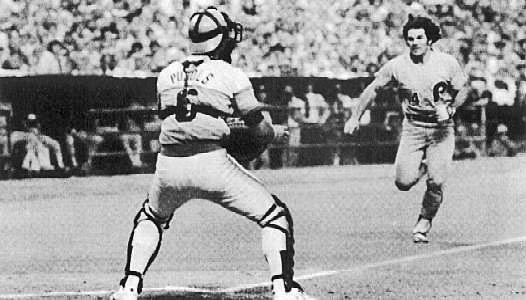
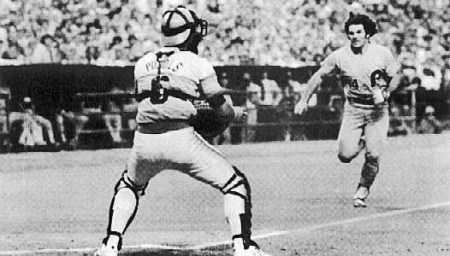
ASTROS CATCHER LUIS PUJOLS PREPARES FOR A PLAY AT THE PLATE ON PETE ROSE OF THE PHILLIES DURING THE 1980 NLCS.

ASTROS CATCHER LUIS PUJOLS PREPARES FOR A PLAY AT THE PLATE ON PETE ROSE OF THE PHILLIES DURING THE 1980 NLCS.

Back in 1980 the Houston Astros played the Philadelphia Phillies in a Best 3 of 5 Games National League Championship Series. The teams came back to the Astrodome in Houston for Games 4 and 5, with the Astros leading the Series 2 games to 1 and needing only one more victory to take the NL pennant and make their first trip to the World Series. It was no lead pipe cinch. The Phillies had been to two modern World Series in 1915 and 1950, but they had yet to win. And on October 11, 1980, the Phils still had some fight left in them.

Game 4, Saturday Afternoon, October 11, 1980, @ the Houston Astrodome: If you were at the game, you probably remember the top of the 4th inning controversy that ultimately went against the Astros. It didn’t cost the Astros the game, but it seemed to set in motion a chain of events that led to one of those famous historic defeats in City of Houston athletic experience.

This “bad news bears” play is best recalled through the eyes of the UPI writer who described it in real time for the newspapers of the following day:

__________________________________________________

Triple Play dropped, Phillies catch up

HOUSTON (UPI) Vern Ruhle insists he caught the ball. Dallas Green says he didn’t. Doug Harvey isn’t sure.

A bizarre double play, which triggered a twenty-minute controversy, occurred in the fourth inning of Saturday’s National League Championship Series game and nearly cost the Philadelphia Phillies a 5-3 triumph over the Houston Astros.

The play came about when Bake McBride and Manny Trillo were on first and second after having singled to open the inning. Gary Maddox, the next batter, then hit a soft, broken-bat line drive which Rule gloved near  his left foot. The only question was: Did he catch it or trap it? Even the videotape replays can’t tell for sure.

Harvey put his palms down, indicating the ball was not caught. But Ruhle, knowing he had caught the ball, threw to first to double off Trillo. When first base umpire Ed Vargo’s hand went up into the air to signal an out, Phillies manager Green and a number of players raced to the field to protest.

While they were arguing, Astros first baseman Art Howe ran down to second base and tagged the bag for what he felt should have been an inning-ending double playsince McBride was standing down on third. Second base umpire Jerry Crawford signaled an out and then all bedlam broke loose.

For twenty minutes, the Phillies argued with the umpires and finally, after the umpires converged by themselves and then with National League President Chub Feeney. McBride was waived back to second and the double lay was allowed.

Harvey said the final decision was reached because his view of Ruhle’s catch had been blocked by the batter and that therefore he was relying on the judgment of Vargo and third base umpire Jerry Engel, both of whom Harvey thought had a better view of the play.

“When he (Maddox) made contact, he leaned over and blocked out my view,” Harvey said. “My immediate reaction was that (the) ball was half speed and that it might come up short. Well, I gave a no-catch sign at first.hen I looked up and saw the charge of people coming at m. I immediately called time and conferred with my umpires.

“Ed Vargo who was at first said it was a catch as did Jerry Engel at third.  We ruled that the runner at first was out, but that the runner at third could go back (to second) and not be out. I felt that my no-catch call put the runner at second in jeopardy. He went to third base on my call. I felt the runner at first broke mmediately and could not have got back no matter what my call was.

“The jeopardy rule has been in the rule books for a long time. It gives the umpires the power to It gives the umpires the right to correct a mistake if he feels his (unclear or erroneous) call has put the runner in (a) bad position. That’s exactly what happened.”

GREEN, HOWEVER, was adamant that Ruhle never caught the ball.

“We must have been watching different games,” Green said. “What I saw and what they  saw were not the same game. It was efinitely a trap. It was neither a double play or a triple play.. It should have been men on second and third and one out.”

Green originally protested the game following the call, but withdrew the protest when the Phillies won. Astros manager Bill Virdon also protested the game on the grounds that (the controversial play) should have been (ruled) a triple pay, but his protest was disallowed by Feeney because the play had no effect  on the outcome of the game.

Ruhle said he definitely made the catch.

“As far as I’m concerned, I caught the ball. That’s why I went to first,” Ruhle said. “(Astros catcher) Luis (Pujols) pointed to first. Evidently, there was time for me to go to second too.  He (Pujols) was the first one I could see and I figured he could see the play better than I could.

“It was real close as far as me catching it. I reached out as far as I could. It hit the edge of the webbing and came up in my glove. Had I not thought I caught the ball, I would have looked to third base (for a force out).

“Why didn’t they give us the triple play? The play was continuous. You can’t call time out in the middle of a play.”

~ United Press International, Suburban Chicago Daily Herald, October 12, 1980, Page 33.

__________________________________________________

After all the 4th inning hoopla, the Phillies failed to score. Through seven, the Astros held a 2-0 lead, but the Phillies bunched enough hits in the top of the eighth to take a 3-2 advantage, with the Astros tying the game and sending things into extra innings with one run of their own in the bottom of the ninth for a 3-3 tie.

In the top of the tenth, Greg Luzinski of the Phillies double down the left field line to score Pete Rose, who also had to knock over Astros catcher Bruce Bochy to secure the goahead run, Manny Trillo then singled to plate Luzinski with the second Phils run in the tenth. The Phils’ 5-3 lead held up as the final score as the Astros went down in order in the bottom half. The Series was now tied at games a piece,

Game Five, Sunday EVENING, October 12, 1980:

For many Astros fans, deciding Game Five of the 1980 NLCS with the Phillies was just as frustrating as our deciding home Game Six loss to the Mets six years later in the 1986 NLCS.

Moving into the top of the eighth, the Astros had just taken a 5-2 lead in the bottom of the seventh on a three-run scoring frame and Nolan Ryan was taking the mound for the club that was now only six outs away from their first National League pennant.

Everyone in the Dome was energized. The gates of The Promised Land were only two shut-em-down innings away. Nolan Ryan … wait a minute … allow me to re-phrase this sentence the way it actually felt at the start of the eighth …. Nolan “Freakin’ Awesome” Ryan was about to defend us Houstonians from any collapse of heart and good intentions on the homestretch furlongs part of the road  to baseball happiness. It just needed to be acted out accordingly.

Didn’t happen!

Before we could sneeze or get our plans settled about where we planned to celebrate, the Phillie marched to the plate in the top of the eighth and filled the bases with three singles off the foreboding arm of the legendary Ryan Express. These nettlesome hits included an infield hit by Bob Boone and a bunt single by former Astro Greg Gross. And they did it all with nobody yet retired as an out.Two Phillies runs crossed the plate when Pete Rose walked and Keith Moreland grounded out. The Astros lead had been trimmed to 5-4 with one out and Phillies runners now on second and third.

A single by Del Unser then tied the game at 5-5 and Many Trillo’s two-RBI triple gave the Phillies a 7-5 lead as the top of the eighth version of the Hindenburg landing in Houston finally wrapped. The Astros had taken a deep penetrating turkey fork to the breast in that late stanza, but they weren’t quite dead. Not yet, anyway.

In the bottom of the eighth, the Astros managed to tie the game at 7-7 on RBI singles by Rafael Landestoy and Jose Cruz. Neither team scored in the ninth and the game went into extra innings at 7-7.

In the top of the tenth, Del Unser and Gary Maddox produced a run that would prove prove to be the finally fatal fork-stab by the Phillies offense off Astros reliever Frank LaCorte. as Dick Ruthven came on in the bottom of the tenth and retired Houston in 1,2,3 order. The Phillies had won their third National League pennant in history.

It would be another 25 years before the near-miss Astros would win their first NL pennant in 2005 and go “0 for 4” against the White Sox in the World Series.

Take Heart.

Have a nice weekend, everybody. And pleasant memories and dreams to you too.

Try to remember: Our day will come. We’ve got to have heart. And we’ve got to believe. Anything less drops us all into the dark abyss that allows for no survivors.

We are Houston. In every way we can be  Houston. And we have not built this great city by giving up, but by learning from our mistakes and past disappointments what works and what doesn’t. And by never separating soul from all that’s important to the success of anything that survives and flourishes in Houston.


Communication: Early TV to Today’s ‘Going Viral’

May 16, 2014
Going Viral

Going Viral

We live in a wonderful age of ever-expanding technology. Giant home screen HD 3-D television in digital format is bigger, better, clearer, and fuller sounding than the movie house version of the same picture and any sporting event can be followed better at home than it can in even the finest new stadiums.  Once NL fans figure out that they are  paying for season tickets just to watch their home club play on the big screen at the stadium, many will opt to stay home and watch a picture that is even more pleasing in the comfort of their own homes.

Some of us grew up in an era when there was onl radio at home for electronic program entertainment and record players for special music collections. Remember 78’s?

In Houston, we finally got television on January 1, 1949 when a fellow named Albert Lee opened Channel 2 as KLEE-TV. The station soon was sold to the Hobby family and re-named what it still is to this day, KPRC-TV. Channel 11 joined the Houston TV airways in 1953 as KGUL-TV, later becoming KHOU-TV as the station’s base of operations moved from Galveston to Houston. KUHT-TV, Channel 8,  signed the air on May 25, 1953 as Houston’s third television station and the first public television station in the nation at the University of Houston. KNUZ-TV, Channel 39, soon  joined the Houston airways as the fourth local station in October 1953, but its shaky financial operations were bought out by KTRK-TV, Channel 13, when they came on the air the following month in November 1953.

In those beginning times, TV’s were big clunky console models with 10″ screens and poor picture quality, but we didn’t care. Back ten, we would pretty much watch anything that moved, And that movement included variety acts on the Ed Sullivan Show, Texas League baseball from Buff Stadium, Friday Night Wrestling from the Municipal Auditorium with host Paul Boesch, Hopalong Cassidy westerns movies from the 1930’s, and the lips of local singers like Howard Hartman ad Marietta Marich on the PM weekdays Channel 2 talk show with host Dick Gottlieb.

Not much changed with programming until Houston got connected to the media center of the world in New York by the coaxial cable that brought the Today Show streaming into the city on July 1, 1952. “Good Morning,” said Today host Dave Garroway as Houston watched live picture feed from New York for the first time. – And the rest was history.

Not much changed on the technical side from there until the 1960’s when color TV finally arrived with its somewhat garish version of the color spectrum, but the sound was  still small, tinny, and bad – especially for music. I even recall Johnny Carson commenting one night after a big performance on the Tonight Show. “It’s too bad you folks at home couldn’t really here how that sounded,” Johnny lamented. :With all the big improvement we’ve made with our color picture, the sound still comes from that tiny little tin-sounding box.”

The sound got better in time. By the late 1970’s, cable networks and VCR recording devices had increased the pressure for better sound. Today, with the interfacing of the computer and Internet, television is becoming in itself a mere component in a far more powerful approach to the communication of new, complex interactive contact, education, and daily living.

Once the turn of the 21st jacked up the high-tech crank on the new communications era, everything changed forever on how we make contact with each other. And, more and more, those who leave the Internet and the cell “phones” out of their lives are leaving themselves out of possibility’s mainstream artery.

Houston seems to be on the universal track with everyone else. Sure, millions still only “watch” TV, but millions of other primarily younger people, are using the multimedia technology that’s evolving to carve bold  new avenues of life for  themselves and others. The person today with the right technology know-how behind them can have an idea, a business  notion, a political agenda, or a hit song all out there playing virally to the whole world overnight, if they catch the right drift of broad public attention and receptivity. (See “Facebook” and “Twitter” as Grade A examples.)

Dream big, everybody. There’s an elephant in the room with us. And he isn’t going away. Possibility for anything has never been more probable.If you are on board with the evolving ways people use to communicate with each other 24/7.

.


Lay Off the Cubs. Others Have Lost More.

May 15, 2014
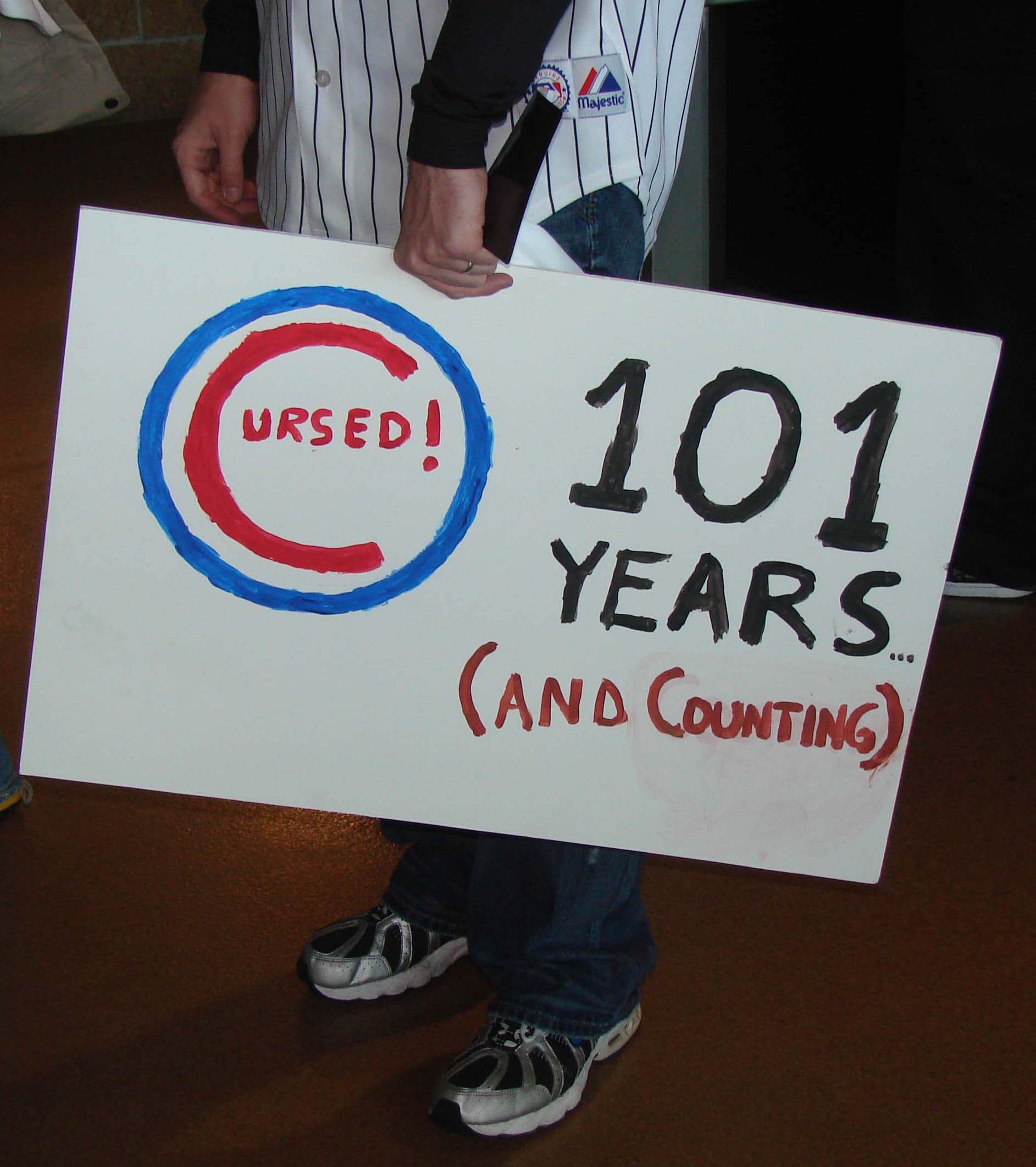
WATCH OUT, CUB-HATERS! The Cubs are NOT The Biggest All Time Losers.

WATCH OUT, CUB-HATERS!
The Cubs are NOT The Biggest All Time Losers.


You probably read or heard the other day that the Chicago Cubs have now lost 10,000 games over the course of their entire MLB history. That’s a lot of losses, but, before an Cub-Haters out there get too horsey about it, also take into account that two other still existent franchises out there have preceded the Cubs past the 10,000 Loss level without anyone saying or writing a thing about it.

One of the most interesting pages at Baseball Reference.Com keeps track of the total Win/Loss record for all teams at this link:

http://www.baseball-reference.com/teams/

The old “win some, lose some” philosophy doesn’t apply to the records on this page. If a club plays far beyond a century, as many of these clubs have, you move into “win a lot, lose a lot” territory, sometimes to the surprising drumbeat of unexpected findings.at the bottom line. For example:

(1) The Phillies (10,483)  and Braves (10,178) have both lost more MLB games than the Cubs (10,001) over the course of all their total lifetimes. How come we didn’t hear as much about those clubs hitting 10,000 losses as we did the Cubs? Do other  fans really hate the Cubs that much? I don’t, but I’m still hooked on the fact that Billy Williams and Ron Santo both came through Houston as Buffs and the fact that I always loved Ernie Banks. Plus, Wrigley Field is my kind of ballpark and Chicago used to be my kind of town for long weekend visits. Great, great people there – and great, great food – and a devotion on the north side to the Cubs that will never die. True Chicagoans are not like so many of the Cub-jersey wearing trolls that come to Minute Maid Park when the team is in Houston. They are first class friendly and baseball knowledgeable.

(2)  Only three clubs have passed the 10,000 franchise career Wins mark – and none of them are the Yankees:

The leaders in Wins are the (a) Giants at 10,718; (b) Cardinals at 10,400;(c)  Pirates at 10,072; and (d) Yankees at 9,967.

(3) Our relatively short-lived Astros have an overall record of 4,064 Wins, 4,272 Losses, and a Winning Percentage of .488.

I’ll leave the other observations, calculations,, imaginings and personal musings to the rest of you. Have fun with a very interesting page,

_______________________________________________________________________________________________


HOUBASE 01

“Houston Baseball, The Early Years: 1861-1961″ is available now for check and money orders, but please end no cash. Credit sals will be established later.

For United States orders, send $49.95, plus $5.95 shipping on one book, $6.95 on two books. Mail your check, endorsed to “Houston Baseball”,  with a clearly printed book-receiving address to:

Houston Baseball

c/o Bob Dorrill

2318 Crimson Valley Ct.

Houston, TX 77345-2101

For orders from outside the USA, please check on the cost of shipping for a 4 lb. book from Houston to your address and add that amount to the $49.95 book price before sending your order with a clearly printed book-receiving address to Mr. Dorrill at the same address listed for domestic orders.


1951: Veeck Inserts Midget Pinch-Hitter

May 14, 2014


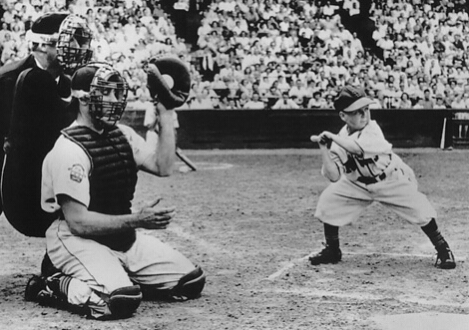
Eddie Gaedel Sportsmans Park August 19, 1951

Eddie Gaedel
Sportsmans Park
August 19, 1951

__________________________________________________

August 20, 1951 News Article

Veeck Inserts Midget Pinch-Hitter

18,369 Brownie Fans Treated to Gigantic Celebration

ST. LOUIS, Aug. 19 (1951) – (UP). Bill Veeck pulled out every trick in his favorite assortment today – including a midget-sized pinch hitter – to treat 18,369, (the) largest crowd at Sportsmans Park since 1947, to a wild celebration of the 50th anniversary of the American League.

In between games of today’s Browns-Tigers doubleheader, the new Browns owner reached a peak in his campaign to give Brownie fans “a lot of fun” even if they haven’t a good team, yet,

The celebration started with serial bombs exploding, and an eight-piece band, composed of Brownie players, tooting away at home plate.

Meanwhile, a hand-balancer performed at first base, trampoline acrobats jumped nimby around second, and a juggler went through his act at third.

But that wasn’t all. Old-fashioned cars and cycles paraded around the field and coach Max Patkin, an accomplished comedian and contortionist, staged a jitterbug dance.

Then a huge birthday cake was trundled onto the field as the band played “Happy Birthday.”  The midget jumped out of the cake and was introduced to the throng as “the last of the ral Brownies.” The midget, bearing the fraction “1/8” on his Brownie uniform was Eddie Gaedel, 28, of Chicago. Manager Zach Taylor promptly sent hm to home plate as the (pinch-hitting for center fielder Frank Saucier) lead-off man for the second game against the Tigers. Gaedel weighs 50 1/8 pounds.

The Tigers protested but Taylor came up with a perfectly legal contract showing Gaedel to be a full-fledged member of the Browns. The Browns were four men under the player limit and Gaedel had taken one of the vacant spots.

The umpires decided everything was official and ordered Detroit Pitcher Bob Cain to play ball. Cain couldn’t find the midget-sized strike zone and promptly walked Gaedel on four pitches. A pinch runner (Jim Delsing) went in to take his place.

The Browns eventually loaded the bases, but failed to score.

It was a great day. But it would have been even better if the Browns hadn’t lost both games, 5-2 and 6-2.

But Veeck wasn’t downhearted. He’s going to use one of those player vacancies still left to hire a “grandstand manager”  from among the fans.

The grandstand manager will handle decisions that Veeck doesn’t like to handle himself.

~ United Press, Independent Long Beach, August 20, 1951, Page 18.

__________________________________________________


The Ballad of Eddie Gaedel
(All verse stanzas are in regular shade type and are sung to the main tune of “Rudolph, The Red-Nosed Reindeer.” The two chorus stanzas, shown in bold type, are sung to the chorus tune from “Rudolph” that goes with “Then one foggy Christmas Eve, Santa came to say, etc.”)

by Bill McCurdy, 1999.

Bill Veeck, the Brownie owner,
Wore some very shiny clothes!
And if you saw his sport shirt,
You would even say, “It glows!”

All of the other owners,
Used to laugh and call him names!
They wouldn’t let poor Bill Veeck,
Join in any owner games!

(chorus)
Then one humid summer day,
Bill Veeck had to – fidget!
Got an idea that stirred his soul,
He decided to sign a – midget!

His name was Eddie Gae-del,
He was only three feet tall!
He never played much baseball,
He was always just too small!

(chorus)
Then one day in Sportsman’s Park,
Eddie went to bat!
Took four balls and walked to first,
Then retired – just-like-that!

Oh, how the purists hated,
Adding little Eddie’s name,
To the big book of records,
“Gaedel” bore a blush of shame!

Now when you look up records,
Look up Eddie’s O.B.P.!
It reads a cool One Thousand,
Safe for all eternity.

“Have a Nice Smile, Everybody!” – Eddie Gaedel.