Archive for the ‘Uncategorized’ Category

Stand for Stan!

June 10, 2010

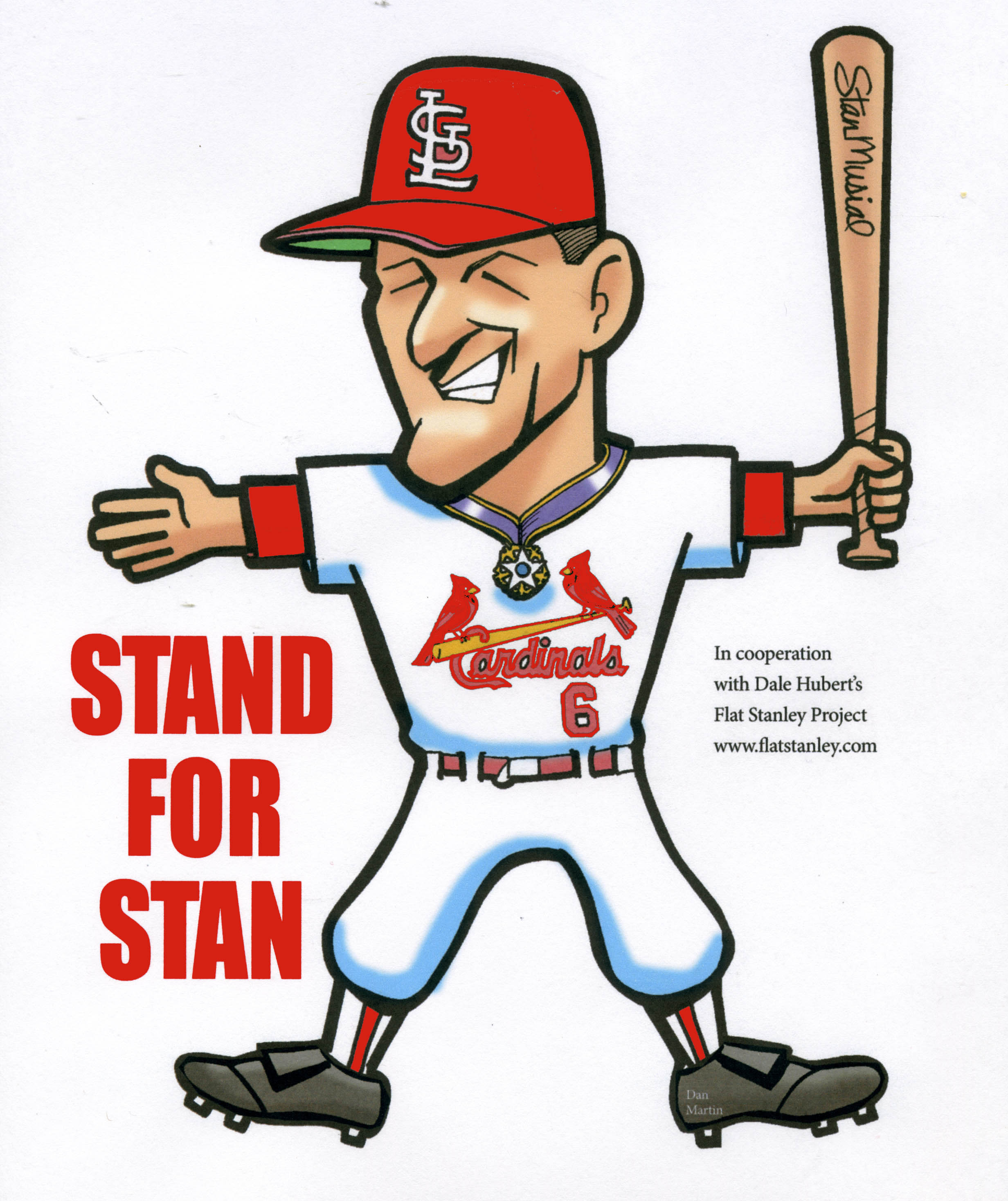
Back Stan Musial for the Medal of Freedom Award!

St. Louis people and the St. Louis Cardinals have organized a campaign that many others of us could stand to support just as well. “Stand for Stan” is all about getting President Obama to recognize the great Hall of Fame former Cardinal Stan Musial for all of his off-the-field financial and quiet service contributions over the years to so many worthy causes of aid to people, especially to children. The whole effort is best summarized in this open letter from Cardinal President William O. DeWitt, Jr.  to President Barack Obama:

Dear Mr. President:

On behalf of the St. Louis Cardinals, I would like to strongly endorse Stan Musial for the Presidential Medal of Freedom to honor his lifetime of achievement and service.

Not only is Stan Musial one of the greatest players to play the game of baseball, he is also an extraordinary American deserving of the nation’s highest civilian honor. Attached you will find a document that we have prepared that thoroughly makes the case for why Stan Musial is deserving of a Medal of Freedom, as well as support letters from both our United States Senators and the Governor of Missouri. In the coming days, you should also be receiving additional support letters from various members of our regional Congressional delegation.

Stan Musial’s baseball accomplishments are legendary. Stan compiled a .331 lifetime batting average, with 3,630 hits, 475 home runs, and 1,951 RBIs during his twenty-two seasons with the St. Louis Cardinals. Stan held 17 Major-League records, 29 National League records and nine All-Star Game records at the time of his retirement in 1963. Stan is one of only three players to amass over 6,000 total bases in his career (the other two are Hank Aaron and Willie Mays). During his entire playing career, including 3,026 regular-season, 23 World Series and 24 All-Star Games, Stan was never ejected from a game by an umpire – a mark of his great sportsmanship and self-discipline.

While Stan’s baseball accomplishments are enough to make him worthy of joining his contemporary baseball Medal of Freedom winners Joe DiMaggio and Ted Williams, his off the field heroics over a lifetime make him especially deserving.

Stan served in the Navy during World War II, was chairman of President Lyndon Johnson’s Presidents’ Council on Physical Fitness from 1964 to 1967, acted as an unofficial emissary to Poland and for generations he has quietly donated his money and his time to thousands of charitable and community causes, particularly those dealing with children.

Throughout his life, Stan has never sought recognition for his good works. His happiness comes from doing the right thing and bringing joy to others. While Stan does not know of our efforts to nominate him for this honor, we respectfully request your consideration as Stan has been a true role model – exemplifying the humility, grace and generosity we so desperately need to see in our American sports heroes. Thank you for your thoughtful consideration of this request.

Sincerely,

William O. DeWitt Jr.

For years I was an annual attendee of the St. Louis Browns Historical Society's banquets in St. Louis and got to see Stan Musial there on several occasions. He was as gentle and friendly to us ordinary people as he was to his pals on the old Browns clubs.

Stan Musial possessed a modest self-effacing sense of humor about the things he did for others, never bringing them up on his own except to make light of his actual contributions. Over the years, Stan did a lot for older people in nursing homes, but he used these real morale-boosting services to the elderly to make fun of himself. Here’s what I mean:

Stan played the harmonica. He even organized his own harmonica trio to go with him as performers at nursing homes in the St. Louis area.

“We all loved playing the harmonica,” Stan said. “Unfortunately for the older people and other shut-ins, we decided to take our talents out on them,” he added with a great big Musial smile.

“On these musical occasions at the nursing homes,” Stan said, “the staff would usually gather the residents in a large room; line ’em up in chairs and wheel chairs in front of us; and let us play”

“That was fine with us,” Stan added, “except I had this habit of closing my eyes while I played. I just got so involved in my music that I wanted to just close my eyes while we were performing and just hear the sounds myself.”

“The old folks cured me of that habit,” Stan concluded. “One time we finished a long number and I then opened my eyes to see if I could conclude from the people’s expressions if they liked our music.”

“They all had their eyes closed.”

If you were a fan of Stan Musial years ago, check out the “Stand for Stan” campaign and sign the petition of support for presidential action on the Medal of Freedom Award. I can’t think of any other previously overlooked person from the world of baseball that is more deserving. Besides, if the great Ted Williams and Joe DiMaggio were both deserving of this signature award, which they were, so is fellow Hall of famer and military service veteran Stan Musial.

Here’s the link. Simply copy, cut, and paste it to your address line – or else, go to Cardinals.Com at MLB.Com for further information on the Stand for Stan campaign.:

http://stlouis.cardinals.mlb.com/stl/fan_forum/standforstan_index.jsp?partnerId=ed-3661971-141530142

Have a nice day, folks, and remember too: You don’t have to be a Cardinal fan to be a Stan Musial admirer. When it came down to who this man really was as an exceptional player, an outstanding  person, and a genuine American spirit, the man from Donora, Pennsylvania was right up there with the very best, just quiet on the need for public recognition that some others campaign to receive.

Stand for Stan. –  It’s time that America duly and fully honored the Quiet Man of Baseball.
SABR MEETS AT HOUSTON SPORTS MUSEUM

June 9, 2010

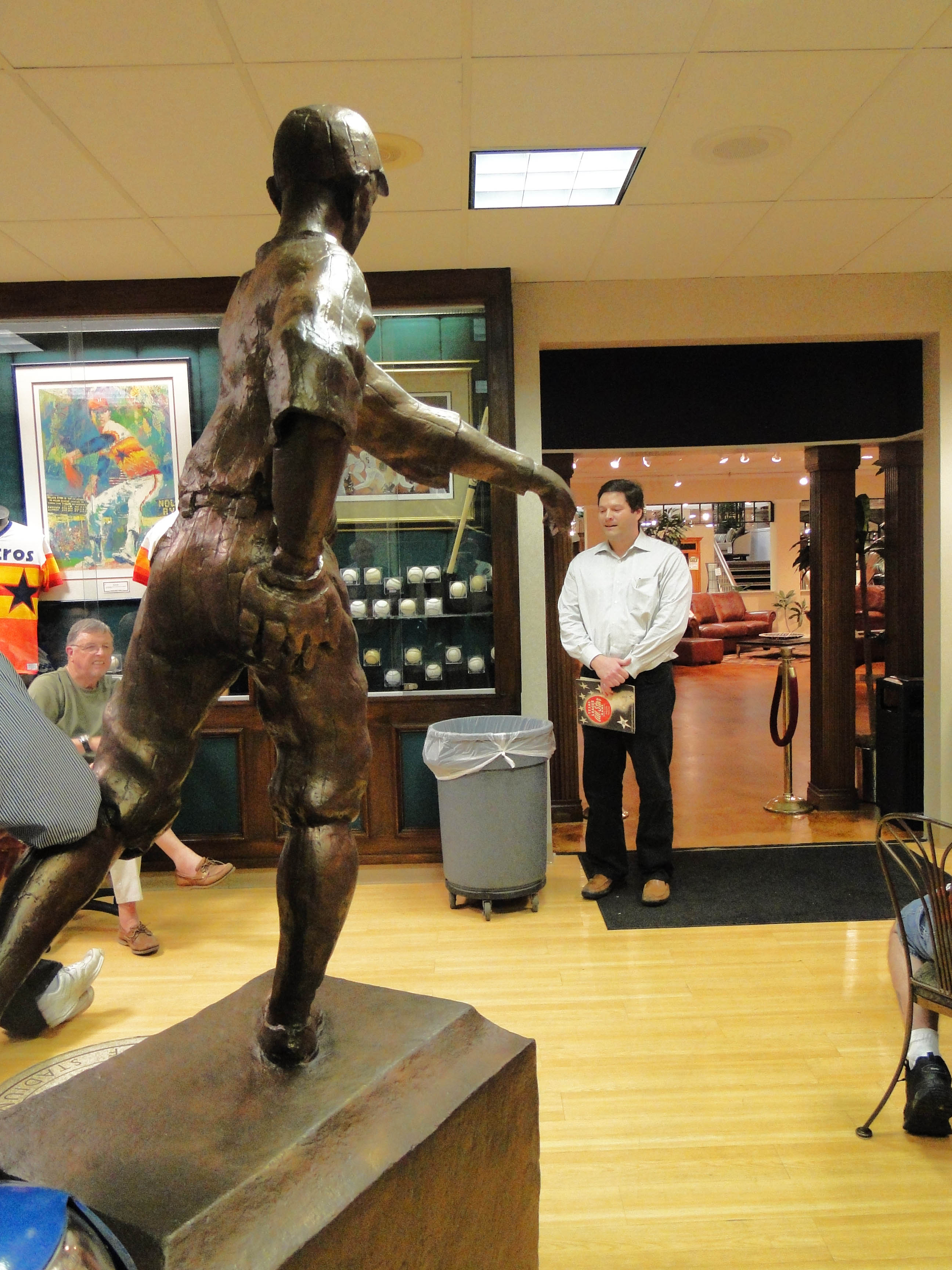
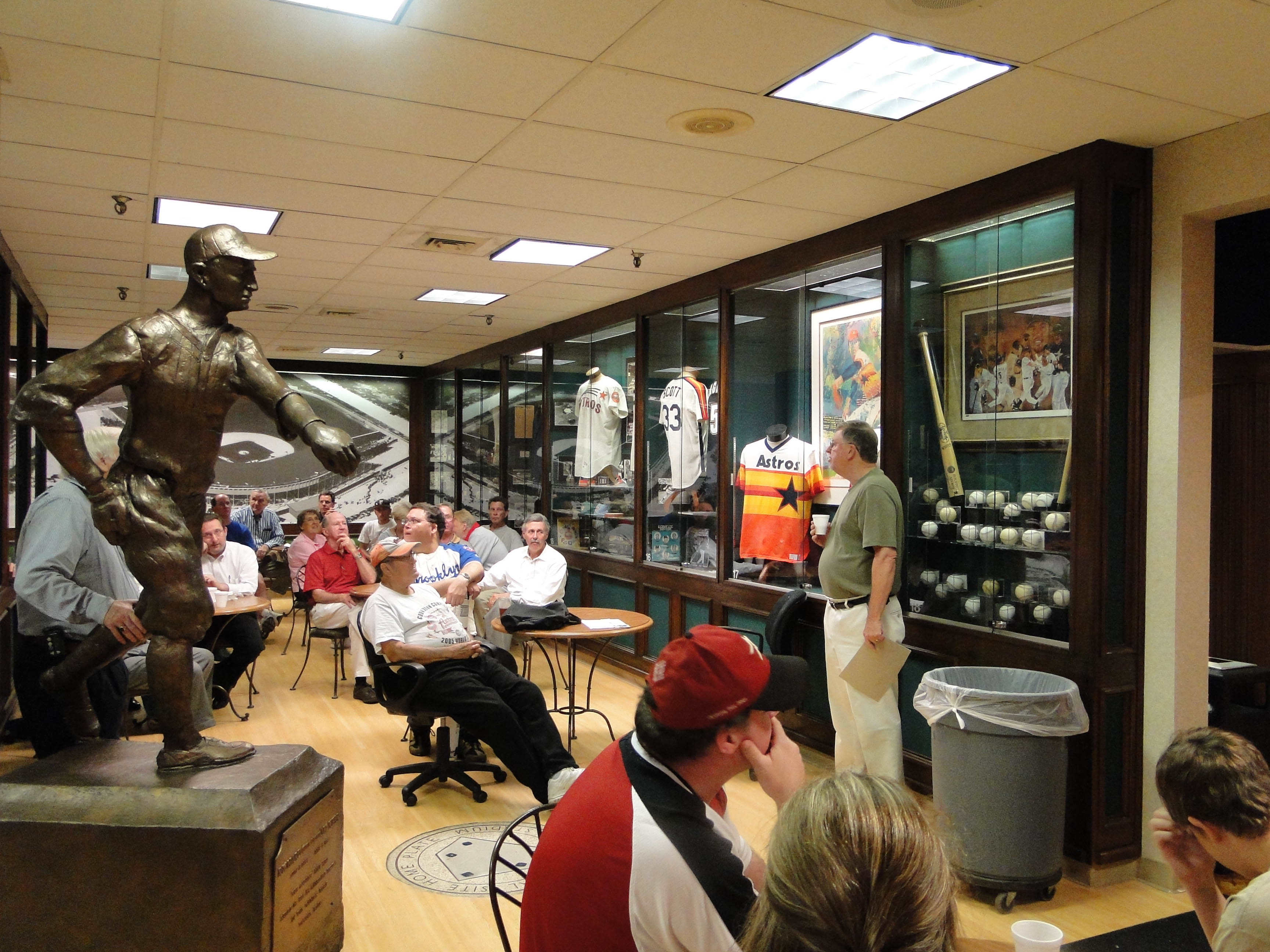
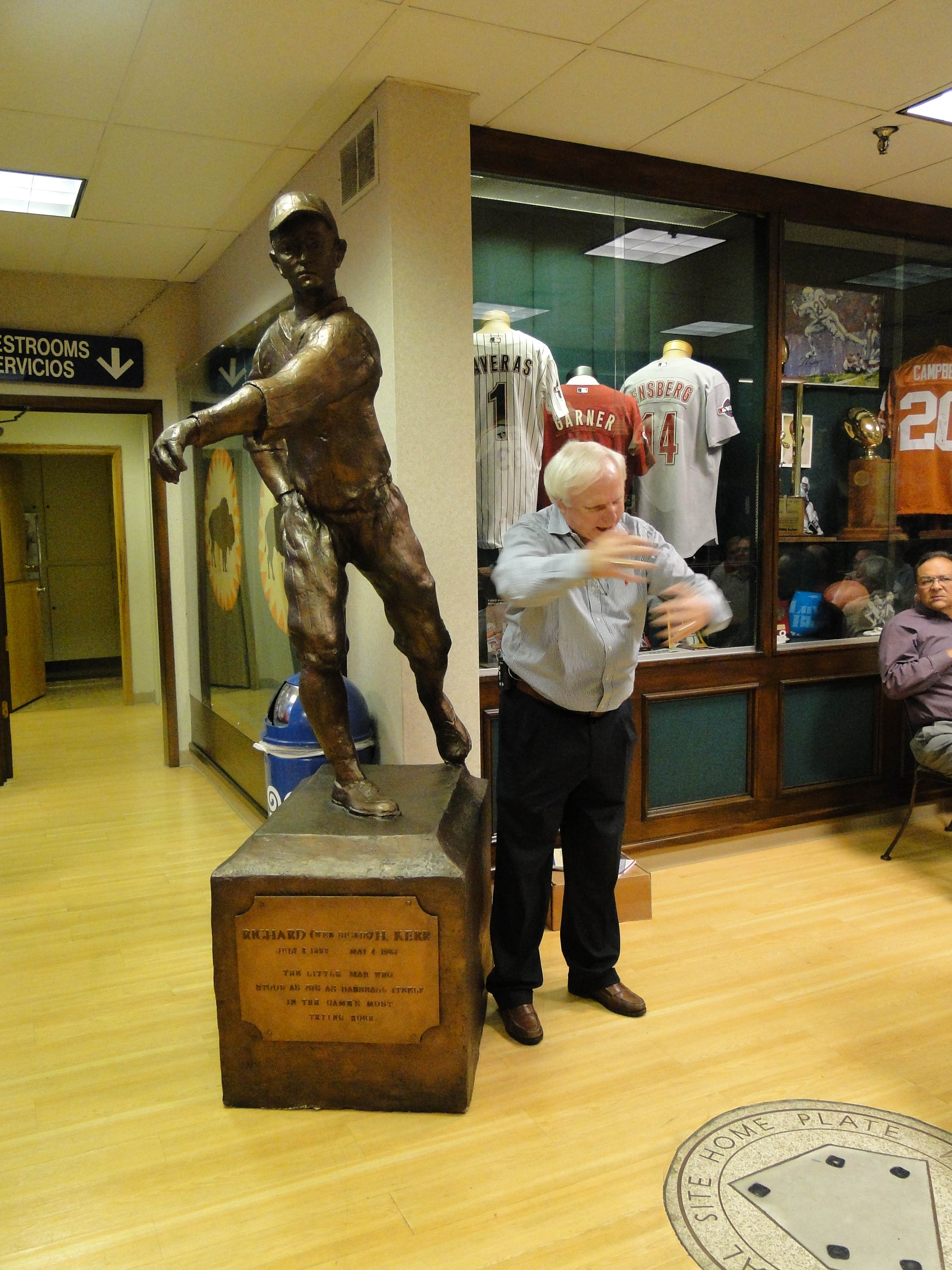
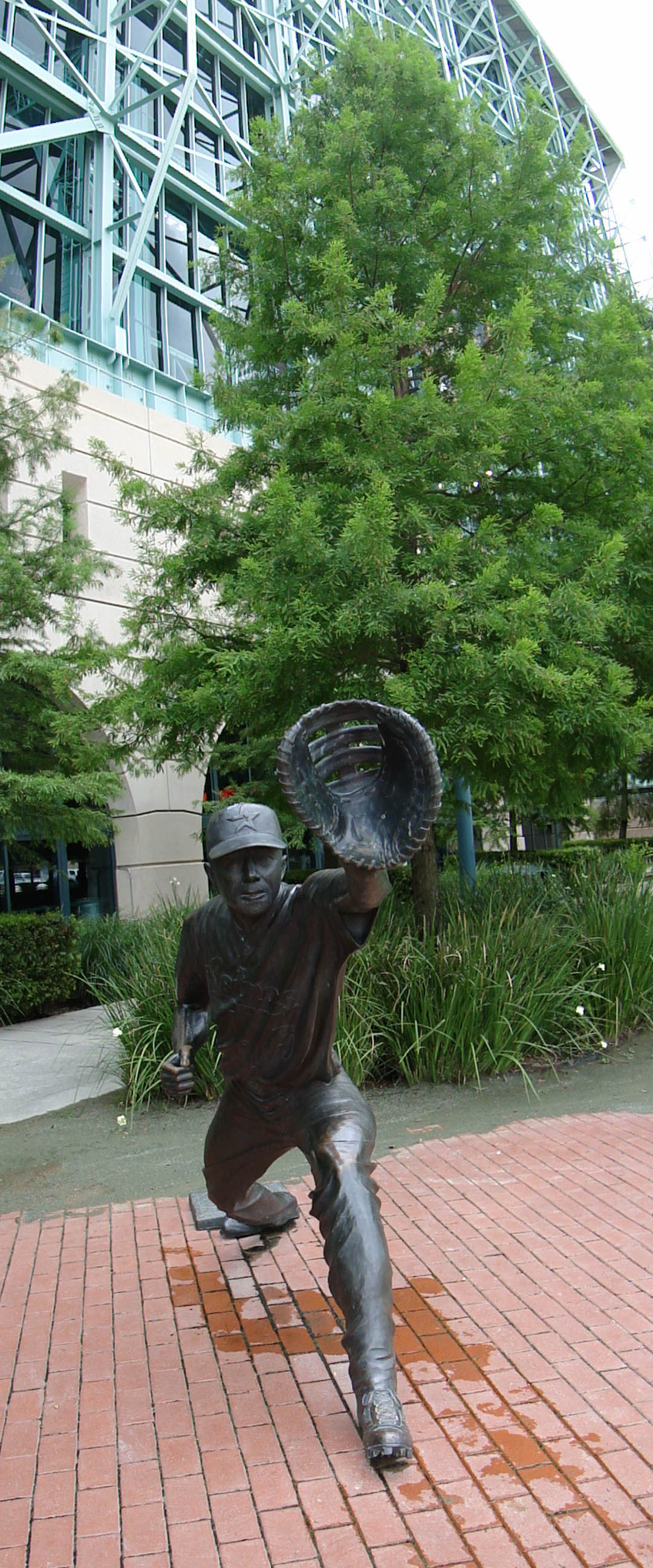
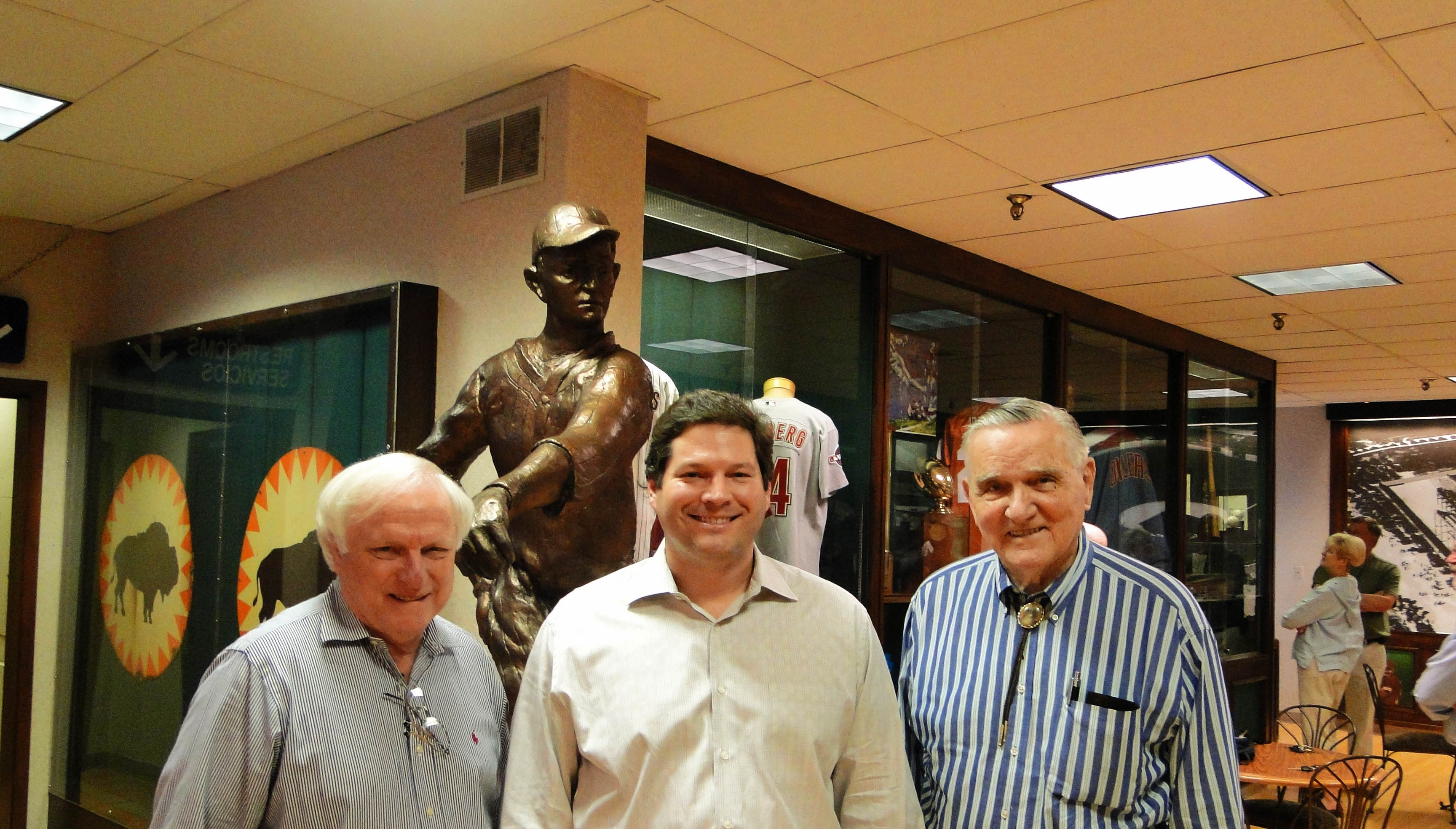
HOUSTON SPORTS MUSEUM: Curator Tom Kennedy, Owner/Sponsor Rodney Finger; & Former Buff Larry Miggins, June 9, 2010. Behind these men is the statue of Dickie Kerr, the little Chicago White Sox rookie who won 13 games and both his starts in the 1919 World Series.

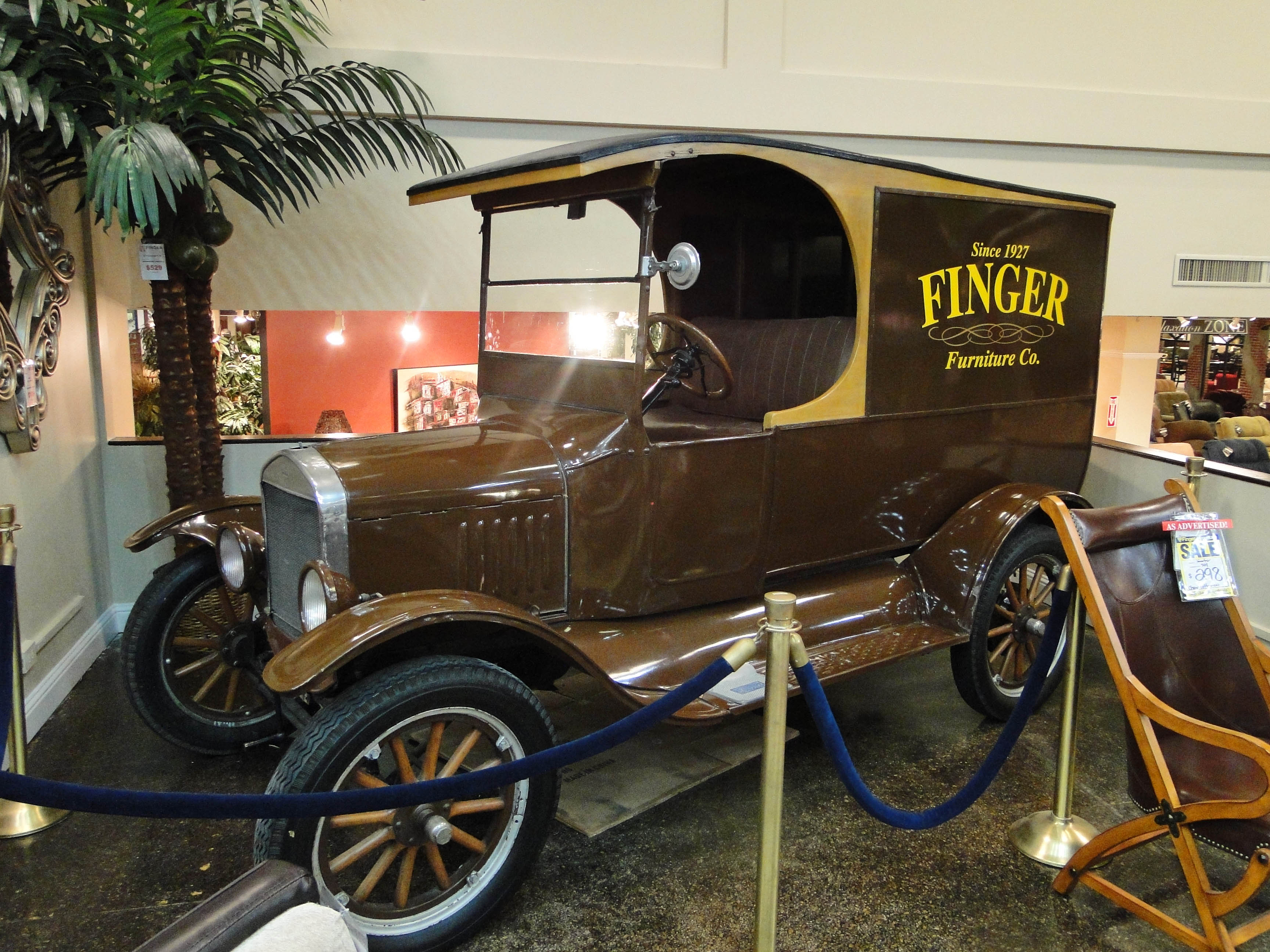
For the first time ever, the Larry Dierker Chapter of SABR (the Society for American Baseball Research) held one of its monthly meetings at the newly renovated and reopened Houston Sports Museum inside the also new again Finger Furniture store on the Gulf Freeway at Cullen. Museum Owner/Sponsor Rodney Finger treated our presence there last night, June 8th, with all the gracious kindness of a five-star host. We are especially  grateful to Mr. Finger for his hospitality. As is the trademark of the Finger family, doing things first-class comes naturally to their involvement. It was so with the delicious fajita dinner that Mr. Finger served us. It is true with the newly renovated work on the museum. And it is true with the furniture store that is up and running again. All those many generations of the family know how to get things right.

The Finger famly legacy is their involvement and caring for the City of Houston and their efforts over the years to help preserve what is important about our town’s history.

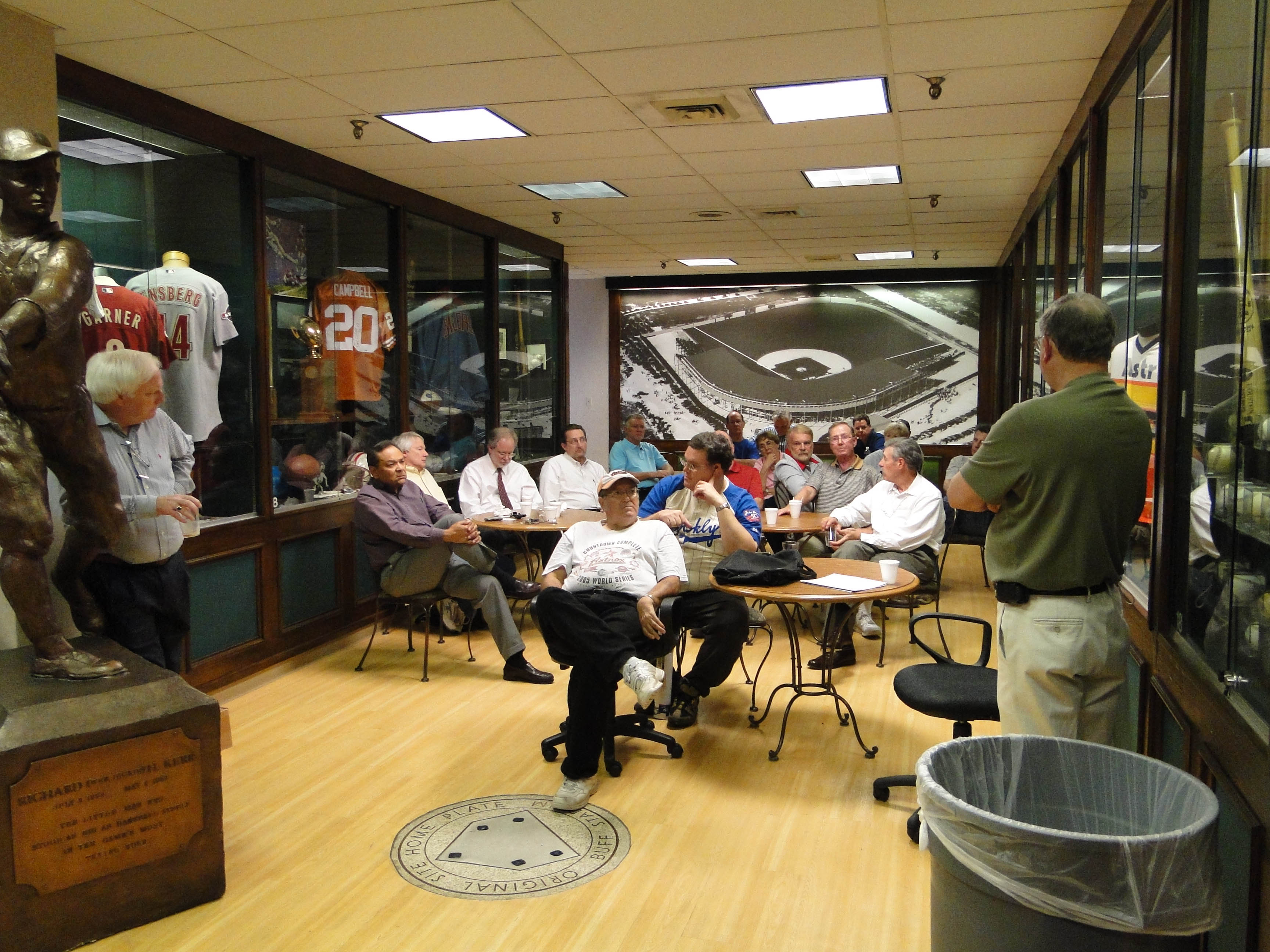
Rodney Finger addresses the 37 people who attended the June 8th SABR meeting, The “found again” statue of DIckie Kerr seems to be handing the ball to Rodney Finger to say what is on his mind as SABR Chapter Leader Bob Dprrill listens up in the lower left corner.

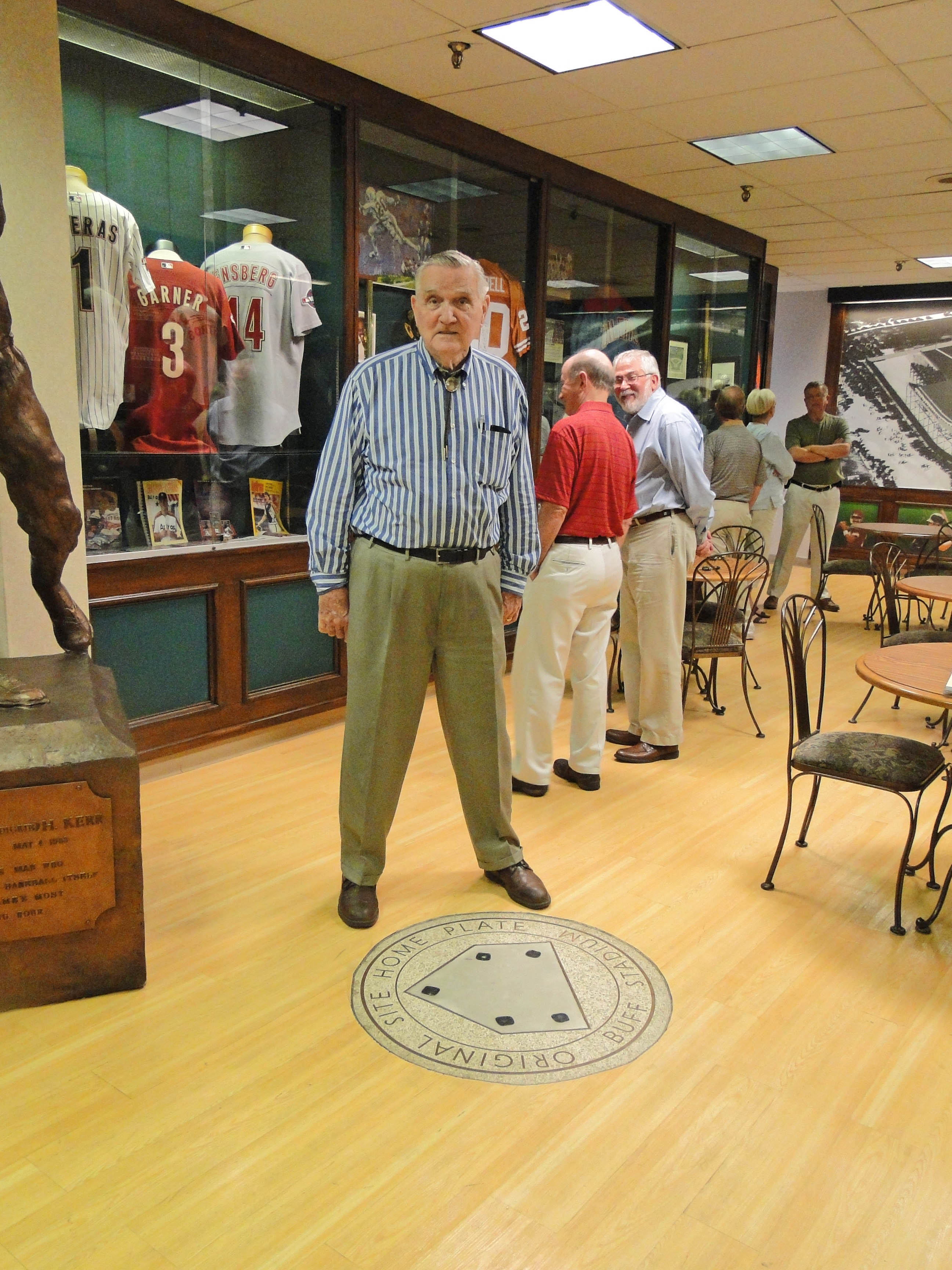
Rodney Finger spoke from the heart when he delivered his reasons for wanting to make the museum come alive again, For those of you who don’t know, the Houston Sports Museum was started by by Rodney’s late grandfather, Sammy Finger, in the mid 1960s as a way of memorializing the fact that this particular store location had been built on the former site of Buff Stadium, the home of our once proud minor league club, the Houston Buffs, from 1928 through 1961. That venerable old ballpark was abandoned after Houston entered the baseball major leagues in 1962 after nearly being destroyed the previous years by the 1961 coming of Hurricane Carla. When the wrecking ball came, the Finger family was there through Sammy to purchase the property and to do what they could to preserve the history of what had come before them on this hallowed baseball ground. The Houston Baseball Museum was born from that family love for the game and their city. And now it lives again in a restyled presentation of materials that are nothing less than authentic artifacts of Houstoon baseball history.

Dickie Kerr lived out his latter years as a Houstonian in a house located only blocks away from Buff Stadium. Kerr’s heroics in the 1919 World Series were the bright side of an otherwise tarnished fix attempt by arguably all of the eight White Sox players later banned from baseball for their parts in a scheme that delivered the World Series title to the Cincinnati Reds.

Tom Kennedy, Curator, Houston Sports Museum

Much of the museum credit here goes to curator Tom Kennedy, the former Houston Post writer and long-time Houston-based baseball item collector. Kennedy has taken the Rodney Finger commitment to keeping alive the legacy of his grandfather and done all that’s good and possible to make it happen. Tom has put his historical knowledge to work in partnership with just about everyone else in this community that he deemed as helpful to come up with a brilliant use of limited space that tracks the history of professional baseball and early professional football in Houston. There is even a one-page complete history of Houston minor league baseball for every year the game was played as a minor league enterprise  from 1888 through 1961.

Future plans include an ongoing rotation of some items that will always keep what’s on display fresh to the viewing public’s eye. To the extent that refreshing change is possible consistently over time, this one promises to have it.

Kennedy has plans to bring in a group of several well known former players for the June 19th formal Grand Opening of the museum. The facility is open now during normal store hours, but you will want to make the Grand Opening too, if possible. It will be a chance to see and get autographs from some of your all time favorite Houston players and sports personalities.

Bob Dorrill addresses the crowd during our regular meeting. A lively discussion was in place on the blown perfect game call in Detroit last week.

The last time Larry Miggins took a batting position on this spot was 1954 when he hit a home run to beat the San Antonio Missions on his last swing of the stick for the Houston Buffs.

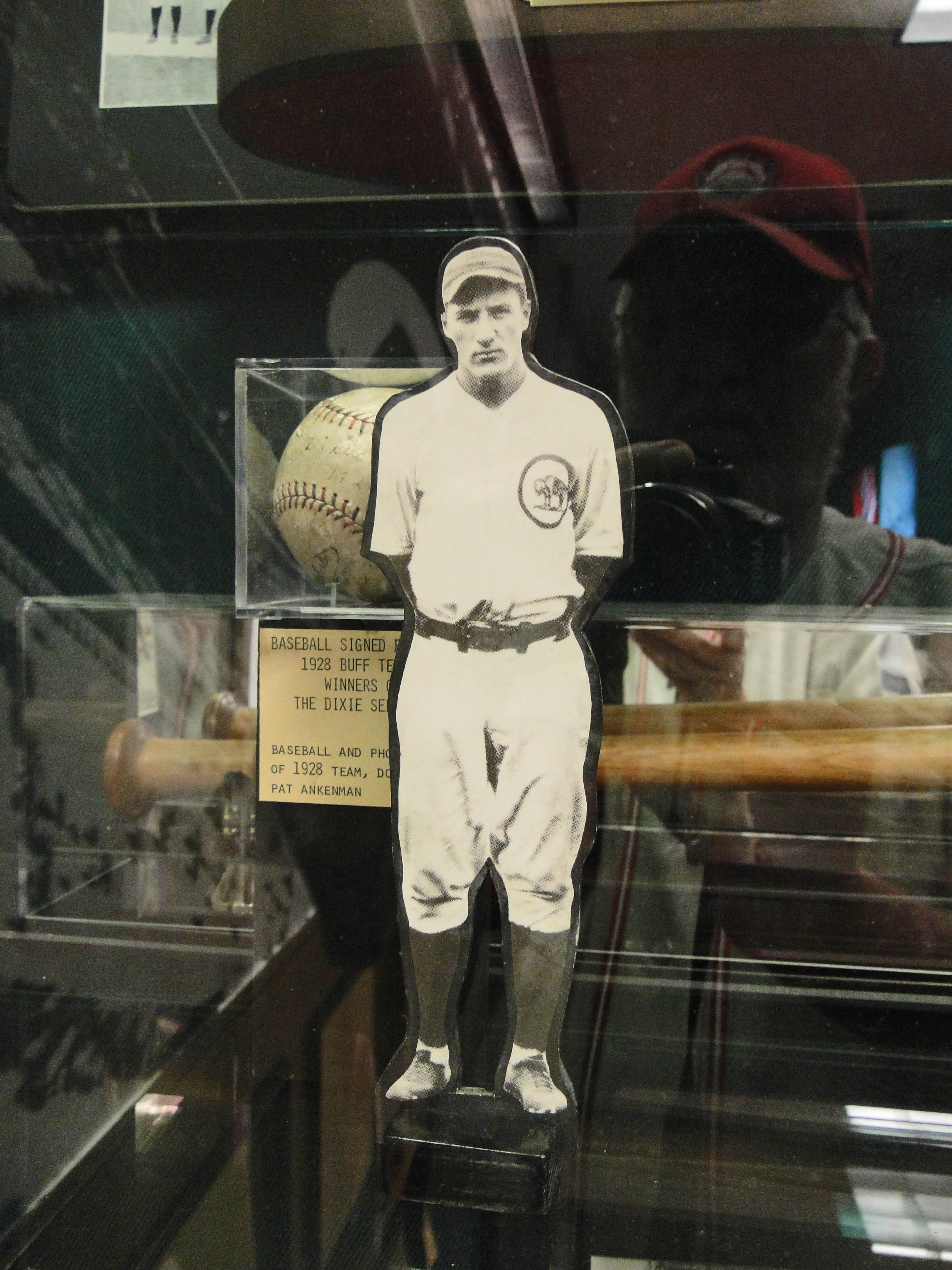
“In behalf of all the artifacts here at the Houston Sports Museum, we’d like to thank all you SABR members who came to see us last night. We’ll look for the rest of you Houstonians to drop by anytime, but for sure on our Grand Opening this coming June 19th!” – Old Buff Figure in Photo.

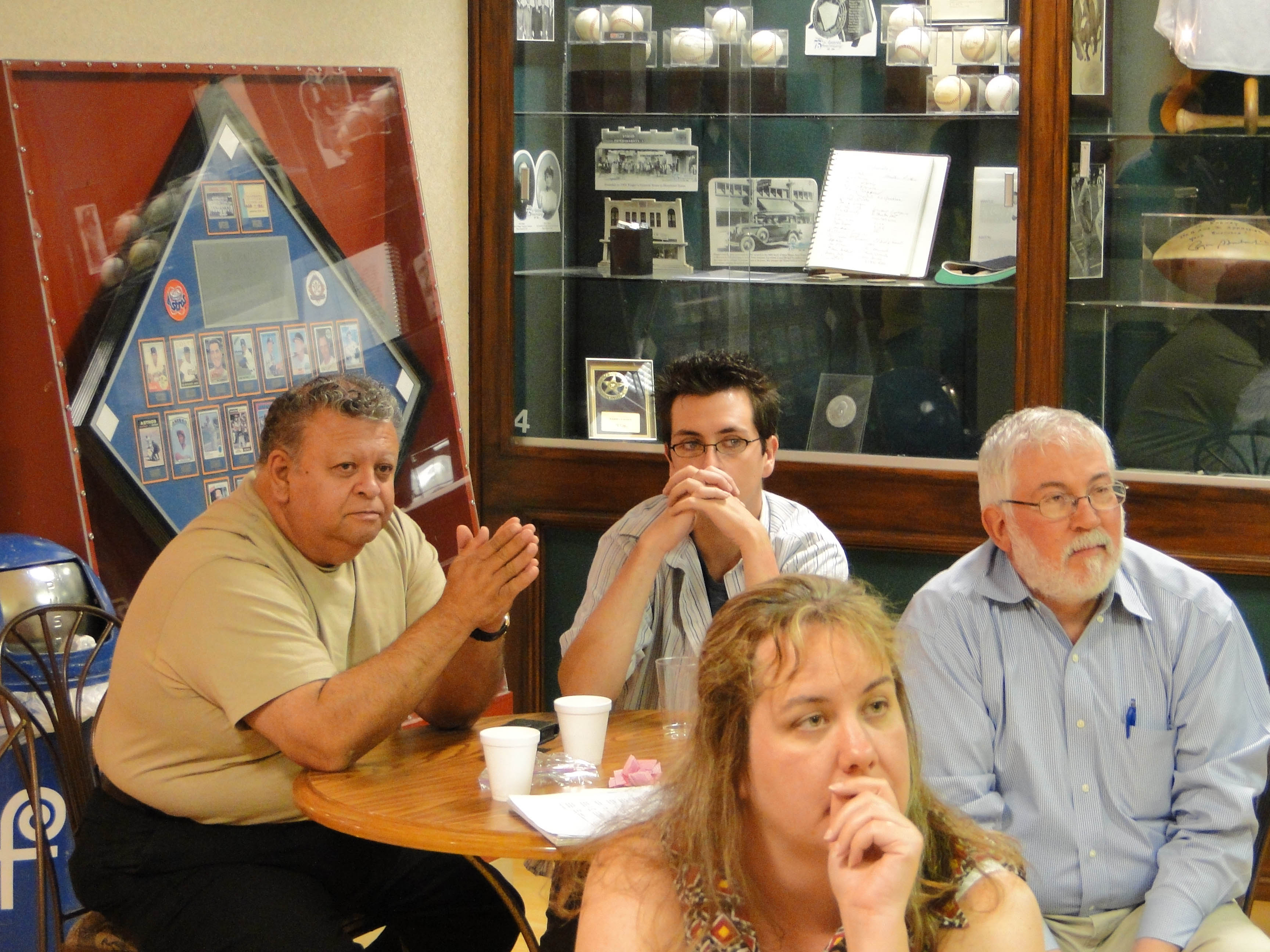
37 members & guests of SABR enjoyed the evening program & Finger family hospitality.

Curator Kennedy’s words came forth with great animation of genuine caring..

The SABR crowd hung attentively on Tom’s every word.

If you paid attention to some of the materials in the exhibit area, you were swept away with the feeling that even the figures of history were listening to what was happening at the Houston Sports Museum on this special night. This photo features former Houston Buff telecaster Guy Savage, young Buff Larry Miggins, & former big leaguer Gus Mancuso.

Finger’s is ready to deliver the goods again, Houston – and we’re talking loudly and voluntarily here about furniture and local baseball history. I cannot speak for SABR; I can only speak for myself in this matter. Finger’s has my support. Next time I need furniture, they are going to be the first place I look and buy, if they’re anywhere in the ballpark on price. If anyone else out there wants my support for their commercial enterprises, let them first go out and do as much as the Finger family does on a daily basis for the preservation of Houston area history.

What else can I say? Go see the new Houston Sports Museum. It’s the only worthwhile display on the years-deep history of Houston baseball that you will find in our area – and it is well worth your time.

Also, and I’m not paid to say this: Think first about meeting your furniture needs at Finger’s on the Gulf Freeway. If we want the museum to remain alive forever, and  on this special spot, the store has to succeed too. And you can’t move the museum elsewhere and succeed on the same level. It’s already sitting on the only actual site for Buff Stadium that will ever be.

Have a nice Wednesday, everybody!

Arch Baseball Exhibit Held Over

June 8, 2010

Baseball Gateway to West Exhibit at St. Louis Arch Held Over through 2010.

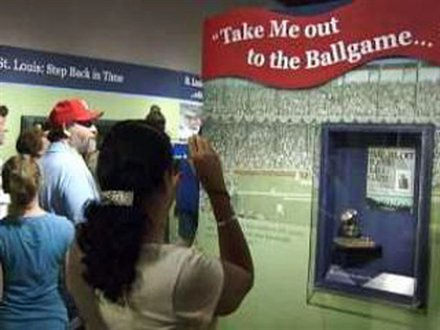
The highly successful and attractive baseball exhibit in St. Louis that opened in the Mound City prior to the 2009 All Star Game has been held over for most of 2010 by popular demand. “Baseball’s Gateway to the West” display will continue at the Jefferson National Arch on the Mississippi River through October 31, 2010, sponsored for s second year as a collaborative effort of the St. Louis Cardinals Museum and Hall of Fame in conjunction with the National Park Service at the St. Louis Arch.

If you are planning to be in the St. Louis area on vacation or business between now and Halloween, you owe it to yourself to take in the show. Under the careful guidance of St. Louis Cardinals curator Paula Homan, the exhibit is packed with authentic one-of-a-kind items that are associated with the western expansion of baseball to the hinterlands of all western regions of the country. Three of my own loans to the show all came from items given to me by one of the foremost former Buffs, the late Jerry Witte. These include (1) a home plate from Jerry Witte’s last 1952 season of play at Buff (Busch) Stadium in Houston. I accepted the gift years ago after asking the donor to sign it “Jerry Witte” for the sake of history; (2) A 1951 Houston Buffs Scorecard; and (3) a 1951 Texas League All Star Game Program from the contest played at Buff Stadium that year. All of these items and others from my personal collection of over sixty years will someday be donated to an appropriate museum that can guarantee their protection and appropriate display in perpetuity. As to where that place is, I’m still looking. For now, at least, three of them are doing just fine as artifactual greeters to the thousands of fans still streaming through the Arch.

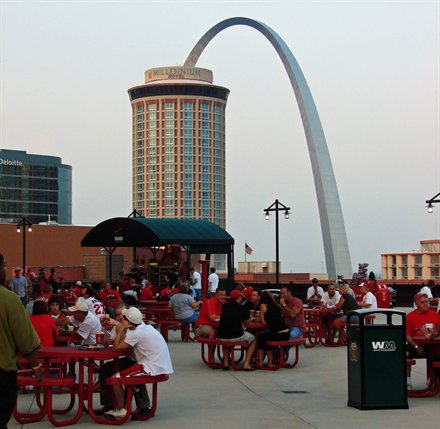
The Arch is only a few blocks away from Busch Stadium III in downtown St. Louis.

If you’ve never been to St. Louis, you owe it to yourself to visit one of America’s great baseball cities before you die. The place simply reeks with baseball history and people who are capable of talking about same – and there few places finer for watching a game than Busch Stadium III. I prefer the intimacy of Minute Maid Park in Houston, but the vistas of the Arch and downtown St. Louis from the open-feeling Busch venue can’t be beat. Unlike MMP, however, where it’s possible to walk completely around the field of play on the first concourse without taking your eyes off the field, Busch is chopped up into sections that prevent visitors from doing the same in St. Louis.

Either way, both places are about baseball, and the cities of St. Louis and Houston shall be forever joined in baseball history as members of the same family tree. As a top farm club of the Cardinals for the better part of nearly four decades, the Houston Buffs will always be more than just a little bit “St. Louis” like in their baseball bloodlines. Former Buff greats Dizzy Dean, Pepper Martin, Joe “Ducky” Medwick, George “Red” Munger, Howie Pollet, Eddie Dyer, Johnny Keane,  Solly Hemus, Wilmer “Vinegar Bend”  Mizell,  and Ken Boyer are all former Buffs who passed through the Bayou City on their ways to the City of the Mound.

Baseball ties are forever. It’s best we try to remember them with the honor they each deserve. The Arch program is run by people who understand that old-fashioned notion. Give them your support this summer. Check out the show in St. Louis.

Downtown Double Play

June 7, 2010

Minute Maid Park, Houston, Sunday, June 6, 2010

Minute Maid Park in Houston has been the driving present force for both change and preservation in the east downtown area now for the past eleven years. Anyone who knows anything about our city will tell you, no matter how bleak things look at any given moment, that the picture is a lot prettier today than it would have been – had the Astros remained south of the Texas Medical Center in the iconic, but falling down fast, rat-infested Astrodome over this same period of time.

Although ballgame attendance is down in 2010 due to economic and talent conditions affecting the team, the Astros have experienced some of their best years at the gate since the 2000 move to the cozier confines of the downtown “Juice Box.” We fully expect to see that three million people  season attendance gate again too – just as soon as the hope of winning and the availability of expendable income both ratchet up again a couple of notches in the hearts and pocketbooks of Houston baseball fans.

If we can ever succeed in rebuilding a well-heeled downtown living community, and a seven days a week alive service and entertainment environment going on again downtown, I think we shall also see an even clearer  rise in everyday ballgame attendance, Today there are simply too few grocery stores, other shopping places, restaurants, schools, and affordable homesite choices to make serious downtown living a practical option for most people, and especially for young families.

There’s not enough going on down there that’s affordable and people can’t wait for game days with the Astros, Rockets, and Dynamo to have choices. Of course, the other double play that enters into the picture here is the availability of work choices in the near downtown area. You can’t move to the downtown area to avoid the freeways if you still have to drive to the ‘burbs to earn a living, but there’s not a whole lot of job expansion going on downtown in the middle of our current economic climate.

Craig Biggio makes the throw to first ....

I’m sure there must be some kind of downtown economic development council meeting somewhere in Houston today to discuss a more serious approach to improving growth conditions on the east side of downtown Houston. All I can offer are these few general thoughts and words – and the memory of our last best known downtown Houston double play combo of Craig Biggio and Jeff Bagwell.

Downtown Houston needs the dual availability of affordable, attractive area living choices, plus the availability of good-paying professional jobs in the downtown and near downtown region. Put those two plays together in some kind of stable form, where jobs and infrastructure come together in a way that people trust as real change and not a fragile promo package and we will start to see real movement to the restoration of everyday life in the downtown area.

... and Jeff Bagwell takes it in to complete the double play!

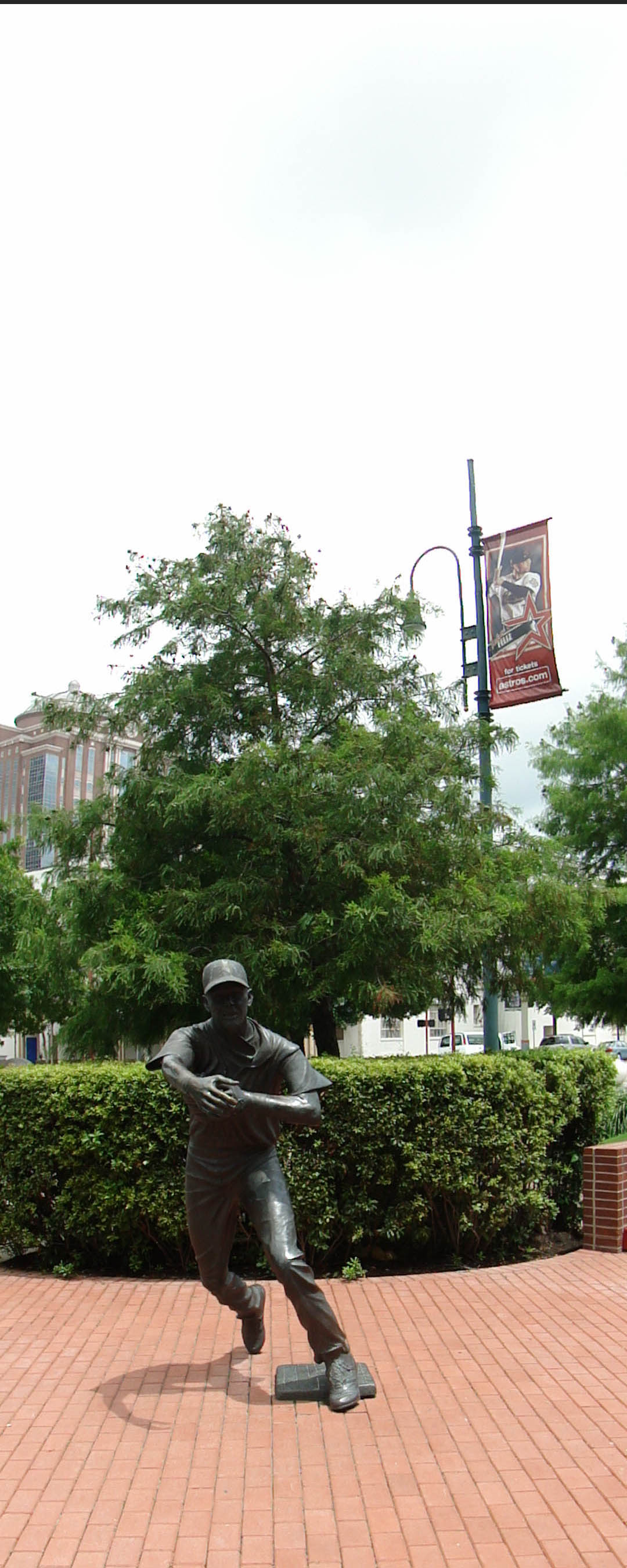
The last time we pulled off a memorable double play downtown so well, we built statues to honor the facilitators. If Houston can pull off the downtown living double play, the only statues needed will come in the form of hands shaking in success.

I hate to sound like the Chamber of Commerce here, especially when I don’t even have a dog in the money hunt that certainly has to result from the success of this effort, but I see it as a move that really appeals to my personal double-play of caring for Houston.

I’d simply like to see us build a new Houston that doesn’t require us to destroy the physical and architectural  history of our local heritage in the process. Don’t tear down the old houses and buildings to simply make parking lots and new formless glass office space. Adapt the fine old structures already there for new use, wherever and whenever possible.

The Inn at the Ballpark at the corner of Texas and Crawford stands as a brilliant example of how even the tasteless old World Trade Center Building could be made like new into something that reeks with the ambience of a building it never was,

We can only hope that the relic across the street from Minute Maid Park at Union Station that was once the 12-story Ben Milam Hotel will someday soon shine even brighter once that lofty project is completed.

All for Houston. And Houston for all.

America the Breakable

June 6, 2010

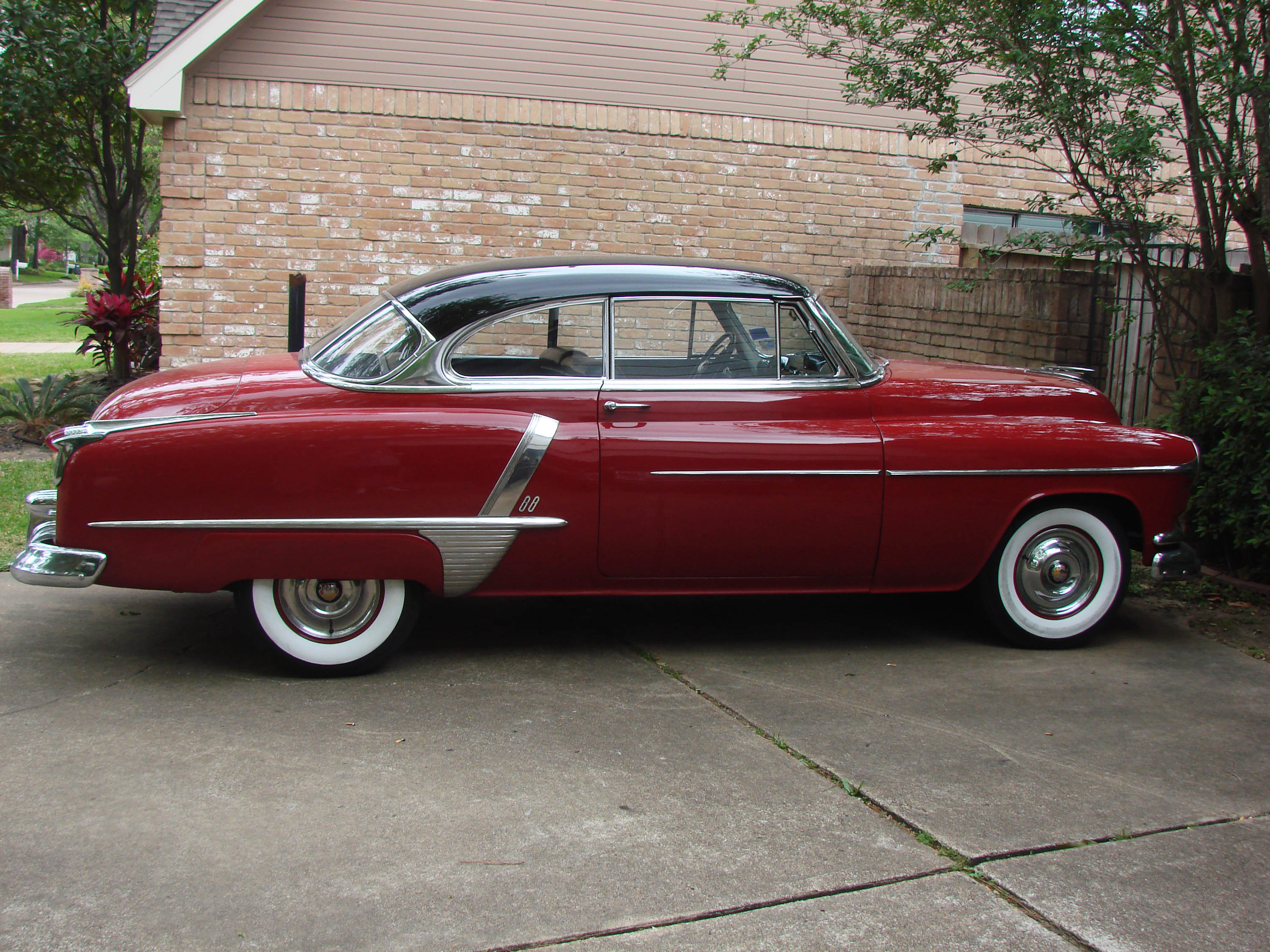
The 1951 Oldsmobile was once one of the classiest cars on the All American highway.

Fords and Chevys and proud Chryslers too,

They once all rolled ‘cross the Red White and Blue,

But they had lots of company; what else can I say?

They were all born and bred in the USA!

Hudson and Nash and Kaiser-Fraser we knew,

‘Long with Packard, DeSoto, and Studebaker too.

Our affections resounded in many a pucker,

As we each laid a kiss on our happy new Tucker.

We built them with steel and extra cheap oil

That just seemed to flow from American soil.

We made them with care, taking nothing for granted,

We left trains for highways; we were simply enchanted.

Four wheels on gas would run us forever,

And Ike’s new roads worked like pushing a lever,

We rodded to the suburbs and a screaming new call,

That resulted in cities that strangled on sprawl.

Somewhere in time we stopped paying attention,

And the quality we built in them grew too slight to mention.

And new cars from Europe – and then from Japan,

Came in to soon challenge – the kings of car land.

And then one by one, our cars fell aside,

And we stopped making steel – as oil prices skied.

We borrowed more money – to just stay afloat,

As others from worse fates climbed onto the boat.

And now we all sit – on a bloated national debt,

As the oil spill floods us – and the terrorists fret,

Over who’s going to take us, hardest and first?

The threat of their bombs? Or the damn oilrig burst?

To all I say, “Listen! – It’s time for a change,

Back to that spirit we once found on the range.

We saw it in the Lady near old Ellis isle,

We found it on the trains that we built with great style.

New Americans and Old – it’s time to rebuild,

On passion not prices – on good and not greed.

I know we can do it – setting politics aside,

But how we do what – escapes my limited hide!”

Suggestions are welcome here.

Suggestions that work are more important than rhymes.

Baseball Cord Travels Far & Wide

June 5, 2010

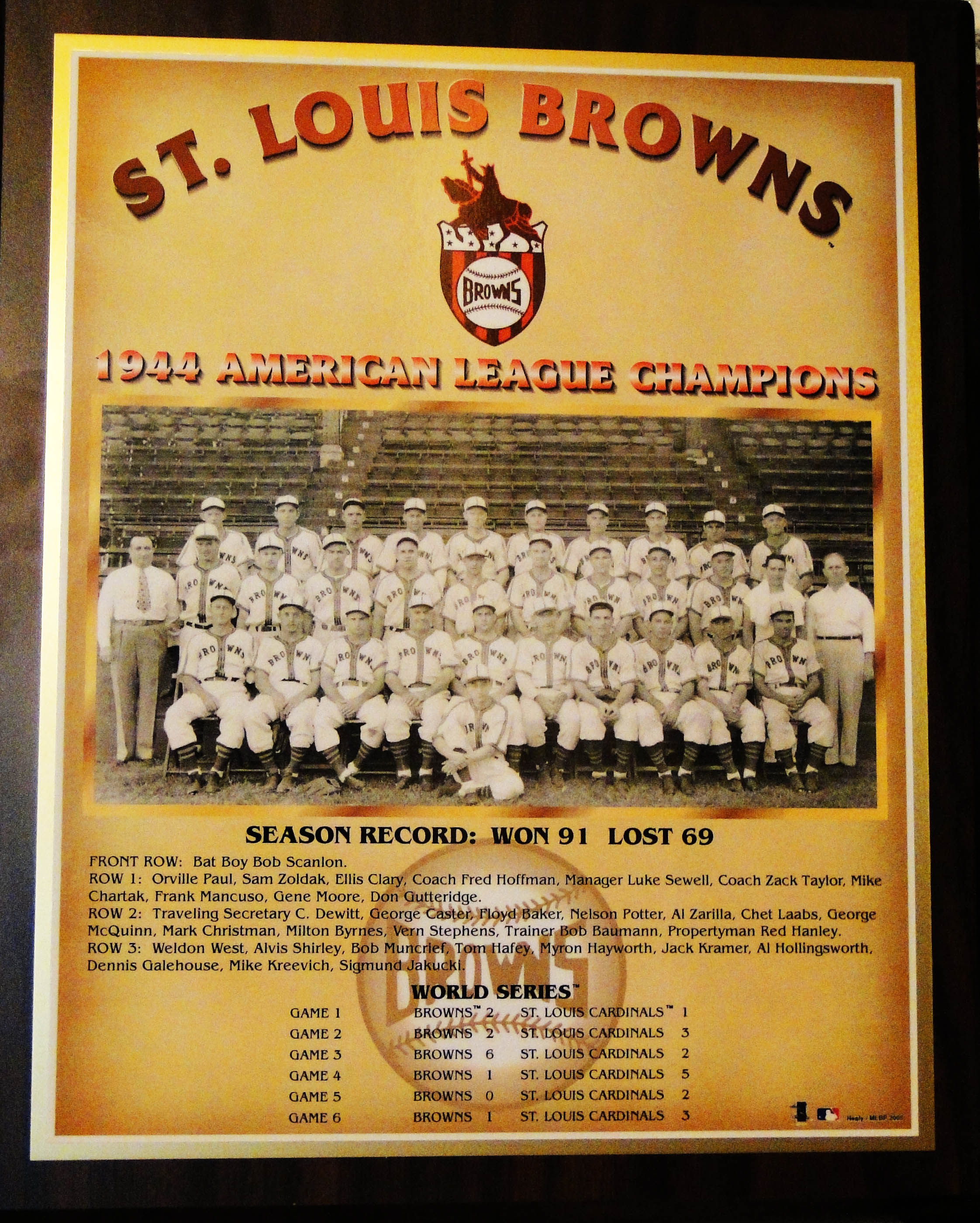
I received this beautifully framed photo narrative of the 1944 St. Louis Browns yesterday as a gift from Ron Pawlik, a buddy I played ball with back in 1951, but only yesterday caught up with again for only the second time in the past year.

Yesterday I attended an alumni luncheon at St. Thomas High School in Houston where, I must note, the natives are quite happy with their still new baseball coach, Craig Biggio. Just in case you haven’t heard, and in only his second season at the helm, Coach Biggio has now led the fighting Eagles to a state high school baseball championship. We can only hope that Craig stays a while before he heeds the big league call to manage somewhere.

Something else happened yesterday to powerfully remind me of how far-reaching the cord of baseball has traveled in my life. Out of the blue, but not really, I ran into Ron Pawlik, a buddy of mine from St. Christopher’s Parochial School in Park Place. Ron was a year ahead of me in school, but we played in the same outfield together one year for the 1951 ever-rambling St. Christopher Travelers. I had seen Pawlik at last year’s alumni luncheon for the first time since 1997, when we held a reunion at old St. Chris, and before that time, I had not seen Ron since his graduation from St. Thomas in 1955.

The short of it is the fact that he gave me that beautiful framed Browns piece displayed here. Ron had been reading some of blog articles over the past year and had become aware of my affinity for the old Browns. I was both shocked and appreciative of his generosity. I really like the Browns piece on ts own merit, but also because it simply helps drive to the surface the realizations I’m trying to express this quiet Saturday morning.

Like a lot of you, the long  cord of baseball has been with me forever, often serving as the X factor in whether or not I became friends with, or worked things out with, other human beings that came into my life over time. Once I knew that someone liked baseball, and was sure they understood not to call runs points, umpires referees, or managers coaches, we could overcome just about all other obstacles to working out the parameters of our everyday life relationship.

When I was a kid, growing up in the Houston East End, we were all Houston Buff fans. of course, and almost 100% of the adults I knew were St. Louis Cardinal fans when it came down to supporting a favorite major league club. I too became a Cardinal fan as a result. They were the parent club of my local Buffs – and their roster was loaded with all the Buffs who played good enough to get there.

My admiration for pitcher Ned Garver converted me into a St. Louis Browns fan in 1951, but I now think that change was helped by my need as a kid to rebel against the Cardinal blanket that totally  surrounded me. Besides, I didn’t totally abandon my support for the Cards. I just added the hapless Browns as my underdog battling American League club.

By the time I reached St. Thomas High School, I was assigned to a home room that was run by a Basilian priest scholastic named “Mr. Klem.”

Aha! Now there’s a major clue as to the ongoing presence of the baseball cord. Mr. Klem turned out to be the nephew of Hall of Fame umpire Bill Klem, a real baseball guy, and a fan of the New York Giants, his home state club. I had never met a Giants fan previously, but Mr. Klem seemed to be as knowledgeable of baseball as all the Cardinal people I grew up knowing. It made me think that maybe Giants fans weren’t all that bad after all. Besides, Mr. Klem seemed pretty high on his club’s young center fielder, Willie Mays, and of course, 1952 was the year that followed the 1951 Shot Heard Round the World. During Mr. Klem’s religion classes on miracles in our daily lives, we got to hear a lot about Bobby Thomson as a primary example of same.

For some unfortunate reason, I never dated any women that really cared for, or knew much about, baseball. I did have a Freudian theory professor in graduate school at Tulane whose brilliance was matched, and  somewhat neutralized by her thick German accent and the upside down Nazi-way she held her lighted cigarette during lectures. I couldn’t find the baseball rope or Freudian string on this period in my life, but I survived.

“You vill learn zee theories of Herr Freud und you vill not be deceived by all zee sick patients who unconsciously or sociopathicly wish to manipulate you, zee doctor, unto seeing zem as honest und trustworthy!”

I survived Dr. Gestapo and the concerted efforts of the formal education process I had embarked upon to change the way I thought, talked, wrote, and viewed life in general, If I was of any help to people who sought me out as clients over my years of practice as a professional counselor, it was because of what I had learned from baseball and from growing up in Pecan Park – and not from some cold burial in the theoretical alien-spirited offerings of Tulane University.

A good friend of mine in New Orleans, a fellow named Donald M. Marquis of Goshen, Indiana, wrote one of the seminal books on the history of jazz in 1979. That book, which is now being made into a movie, is called “The Search for Buddy Bolden,”  and it took Don Marquis seventeen years of focused research and investigation into the life of jazz’s first trumpet man before it was finally done.

Where did Don Marquis acquire his patience for the job? Easy. He was a Cleveland Indians fan. If you want something done that takes a ton of patience, hire an Indians fan.

One of my best friends in graduate school at Tulane was Sue Elster-Hepler-Liuzza. Sue was easy to like. She’s a north side Chicago girl who loves the Cubs and, of course, hates the White Sox. I was a little shocked, but not really surprised earlier this week when Sue told me that she never even stepped foot on the South Side until well into her adult years. She also explained that she is typical of many North Siders. They want nothing to do with the South Side or the White Sox. Unfortunately, this knot n Sue’s baseball rope came at a cost. She never got to see the original Comiskey Park in person. By the time she went there, it had been torn down.

My own baseball rope on life trucks on, flaring lessons all the way: (1) The days of our lives are like the games on the schedule of the long baseball season. You win some. You lose some. And you take each day one at a time and go on from there. (2) Whatever you’re doing, keep your eye on the ball. A few of the pitchers we face in everyday life may try to throw a few emery balls at us. (3) Pick a project team of people you know you can trust – and go into combat with them. There aren’t many things you can do out there well alone without help and you probably will need to rely upon people who know their jobs and your expectations of them – ones who will also cover your backside honestly, but still be strong enough to hit you with the truth when you need that feedback most. (4) keep your word. (5) take responsibility for your “E”s, learn from them, and move on. (6) Look for some kind of joy in all you do. (7) Never give up on anything that’s really important to you.

That’s enough for now. And thanks again, Ron Pawlik. And thanks to you too, great wondrously flexible cord of baseball. You keep popping up to remind me where my real education came from in the first place. The Pawlik gift is simply another life reminder:

(8) Loyalty and real friendship are forever.

Commissioner Selig Blows the Bigger Call

June 4, 2010

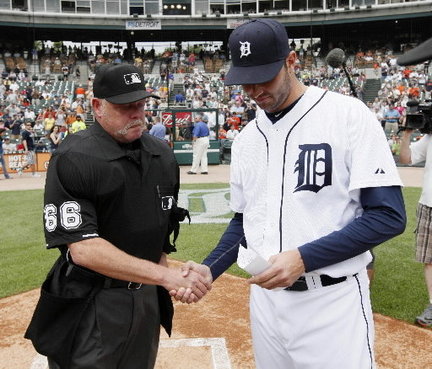
On the Day After the Perfect Game Blown Call, Umpire Jim Joyce joins Pitcher Armando Galarraga at home plate to enter the Tiger's Thursday lineup and take their places together in history as two joined-at-the-soul-hips "Heartbreak Kids."

Cleveland Manager Manny Acta is among those who think that Commissioner Bud Selig did the right thing by refusing to reverse the blown call by umpire Jim Joyce that blew the perfect game of Detroit pitcher Armando Galarraga on the 27th and potentially final out of Wednesday’s perfect game effort against the Indians. “If he had done something like that, he would have opened a whole can of worms,” said Acta. “If you change that, then the next thing we’d want him to do is change the play before that one.”

Acta had to be engaging in hyperbole in this instance. Does anyone remember the play before the big one at first base? And the one before that one was the Willie Mays-like catch by the center fielder. Does anyone really want to reverse that call?

As I told a friend of mine last night, I fully respect his support for the idea of leaving things as they stand in protection of the “sanctity” of baseball history, but that I no longer feel married to that point of view in situations where an obvious uncontested wrong call could be corrected for the sanctity of  getting things rights for the record in baseball history.

Galarraga’s perfect game would have been the third in a month, but only the 21st in a history of baseball that goes back to 1869. How big is that? No one is arguing in favor of the original “safe” call that even umpire Joyce admirably now admits was a blown call. Unless Bud Selig had been willing to use his power “for the greater good of baseball” to make it right by reversing the call and ending the game on that play as the 3-1 put out it actually was, that record is now lost forever.

Please note: I would not support the reversal had the game continued from Joyce’s blown call and turned into an Indians’ victory, but that did not happen. The very next batter was retired to end the game as a Detroit win, the result that would have followed from the perfect game victory. I also would not have supported reversing the call if the safe/out verdict by instant replay had been in question – or if umpire Joyce had stuck steadfastly to his original call. Under either of those circumstances, or by reversing a Cleveland victory, we would have been tampering with history in ways that go far beyond correcting an obvious wrong.

Twenty years ago, I would not have even entertained this idea, but I’ve changed, for better or worse. Today I think getting the truth right, especially when it frees people from unwarranted pain, is far more important than standing on ceremony. As things now stand, two people, pitcher Galarraga and umpire Joyce are going to be forced to live with the full brunt of an untruth (the runner was safe for a “hit”) that alters each of their lives forever.

No one on earth can take away the pain that Wednesday’s game will be forever spoiled by what actually happened, but Commissioner Bud Selig does have the power to right a wrong that will especially punish the diligent conscience of umpire Joyce forever, if he does not.

The criminal justice system is fairer. If the courts send a man to prison for a crime he didn’t commit and that fact is later proven to be the case, what do they do? They let him out. They don’t just stand on the idea that “well, we’d like to let the man out, but sending him to prison already has happened so we’ll just have to leave him there,” nor do they buy into Acta’s implied concern that “we can’t free a single innocent man. If we let one free person out of jail, then all the wrongly imprisoned will want out too.”

Do the right thing in a timely way. Restore Armando Galarraga as the owner of baseball history’s 21st perfect game and free two men from a lifetime balance of pain over an outcome that could have been reversed for a greater good that far surpasses one man’s loss of a badly earned infield single.

Next up? Don’t wait for a clearer warning, baseball. Get your act together on how you want to use technology in the near future (as in – as soon as possible) to help avoid this sort of thing without slowing the game into a pool of total molasses.

Perfect Game Lost to Imperfect World of Umpires

June 3, 2010

Blown Umpire Call on 27th Batter Costs Detroit Pitcher Galarraga His Perfect Game!

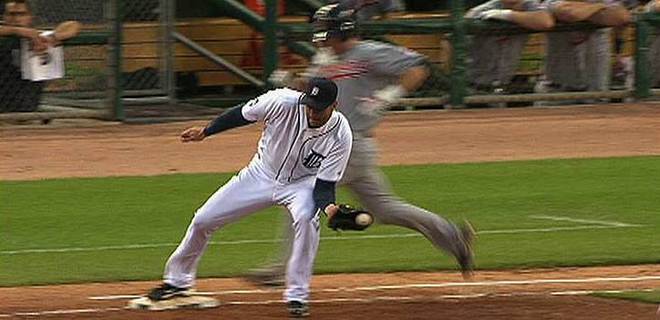
I was piqued the other day when umpire Bill Hohn tossed Astro pitcher Roy Oswalt in the third inning for being frustrated with his postage stamp strike zone. Today I am enraged over the fact that a horrible call by umpire Jim Joyce yesterday on the 27th batter of the game has cost Detroit Tiger pitcher Armando Galarraga his perfect game. With the pitcher himself covering first base on what should have been – indeed was – the last out by way of a grounder on every batter he had faced, Joyce called the runner safe. He would admit his error later upon an examination of the replay after the game, but the perfect game was still lost forever.

The Galarraga perfecto would have been the third such animal in thirty days, the only time that three of these most improbable of all baseball jewels have adorned the neck of our national game in a lone season of play. It would’ve also been only the 21st perfect game in major league history. Now it will simply have to be the shared bad dream of pitcher Galarraga and umpire Joyce, and all others of us who care about these things, from here to kingdom come.

I haven’t been this upset over the outcome of a baseball contest since Game Six of the 1986 National League Championship Series between the New York Mets and the Houston Astros. At least that one turned on managerial decisions and what happened on the field. This one – THIS ONE – turned only on  what one game official saw with his naked brain and eye against what we could have ascertained accurately had instant replay been permissible under the circumstances.

Look! Nobody wants this kind of outcome. Not umpire Joyce. Not pitcher Galarraga. Not the players. And not the fans. As per usual, change will now come to baseball on the heels of disaster. It’s time to make even greater use of instant reply to keep this sort of thing from happening again.

When instant replay was approved a couple of years ago for fair/foul and distance marker calls on home runs, it was done to keep blown perceptual decisions of the umpire’s fallible human eye from wrongly affecting the outcome of games. Shouldn’t we also try to extend that same protection to the integrity of baseball history?

We already know that instant replays do not resolve all questionable calls and that it would be too time-consuming to allow them on every play. Some errors are going to simply continue, especially on the distorted ways the human eye sees the strike zone differently from umpire to umpire. Until we can get to a point of calling balls and strikes by laser ray, I don’t see balls and strikes consistency getting much better,

This thing that happened yesterday, however, is a horse of a different color. Instant replay clearly showed that the 27th batter of the game was OUT by a couple of feet on the grounder play at first base. Had instant replay been allowable under the circumstances, history could have been correctly registered with no shame upon the umpire’s missed observation – and we would not all be sitting around today trying to figure out a way to make anger, remorse, and regret digestible.

What kind of sauce tastes good with a boiled dead rat, anyway?

Here’s what I propose as protection against the repetition of yesterday’s improbable rat boil:

Any time a pitcher enters the ninth inning with a no-hitter going, instant replay should be allowable on any questionable field play affecting safe/out calls. For an umpire’s “safe” call on any runner to be reversed, there must be clear evidence on tape to support an overrule. This condition will continue in the game for as long as the pitcher remains in a position to throw either a no-hitter or perfect game. and will cease as an appeal option as soon as a hit is recorded. Decisions on instant replay reviews will be handled in the same manner as the one in place now for foul/fair balls and home runs.

Do it now, Commissioner Selig. The integrity of the game’s history is on the line.

Curt Walker and the Boys of Beeville

June 2, 2010

Curt Walker, MLB, 1919-30; .304 BA; Struck Out only 254 times in 4,858 official times at bat.

When my dad was growing up in our little Texas birth town of Beeville back in the early part of the 20th century, the city population of this little farm and ranch community was only about 3,000, but they were all mostly people who loved baseball. It showed on the rough playing fields of South Texas too. Beeville sent three players to the major leagues during those early times, all of whom got there with enough staying power to carve out careers in the big time over several seasons.

Two of the these men were pitchers: (1) Melvin “Bert” Gallia, 1912-20, W 66 L 68, ERA 3.14 and (2) Lloyd “Lefty” Brown, 1925, 1928-37, 1940, W 91, L 105, ERA 4.20.

Gallia (1918-20) and Brown (1933) both spent some of their time pitching for the old St. Louis Browns. Gallia was a 17-game winner for the Washington Senators in 1916-17 consecutively. Brown leads the Lou Gehrig victim lst for having given up 4 of the Iron Horse’s career-leading 23 Grand Slam Homers.

Then there was outfielder Curt Walker, who played a major role modeling place in my dad’s life as a young ballplayer. Grandfather McCurdy published, edited, wrote for, and printed the local Beeville Bee, but he died when Dad was only two years old. One result was that Dad grew up needing some other local adult male to look up to – and it turned out to be Curt Walker, who also worked in Beeville during the off-season at his other occupation as one of the town’s leading undertakers.

By the time Dad was old enough to follow Curt Walker as he broke into the big leagues with the 1920 New York Giants, radio had yet to take over as a coast-to-coast medium of mass communication. If you wanted to follow the daily changes in baseball back in that era, you either had to have access to large daily newspapers and be able to check the sports pages for the stories, box scores, and up-to-date standings – or else, you had to do what Dad and other small town people did back then. You had to walk downtown to your weekly newspaper office, or Western Union station, and check for news and box scores as they came streaming live through every little nook and cranny of America. Some of these places, as was the practice of the Beeville Bee and Beeville Picayune, kept chalk board accounts in their Main Street windows that detailed scores, standings, and brief news on what the “Boys of Beeville” were doing on a given summer day.

Dad often described these walks downtown for scores in the late afternoon as the highlight of his summer day as a kid.

For me, Curt Walker would become the reason behind my eventual involvement in the Texas Baseball Hall of Fame. When I attended my first TBHOF induction banquet in Arlington in 1996 and learned that Walker was not a member of the state hall, I began campaigning for his induction. It took five years, but the late Curt Walker finally was inducted into the Texas Baseball Hall of Fame in 2001.

Curt Walker had hung out in the shadows of Texas baseball history for too long. If you will take the time to compare his career marks with fellow Texan contemporary Ross Youngs, an inducted member of the National Baseball Hall of Fame, you will not find a lot of significant difference. Both were deserving players from this state. Walker just got lost by posting his best season batting average of .337 and 196 hits with the 1922 Philadelphia Phillies and then spending most of his big league career (1924-30) in the hinterlands with the Cincinnati Reds.

Curt Walker’s lifetime MLB batting average of .304 and his limited 254 strike outs in 4,858 official times at bat pretty much speak for themselves and his batting ability over time – although he arrived in New York with a scouting tout that even Curt could not fulfill in reality.

When the Giants purchased the contract of Curt Walker from the Augusta Georgians in 1920, they paid $7,000, or ten times what the Tigers paid for Ty Cobb’s services from the same club back in 1905.  Many South Atlantic League veteran observers were saying they felt that Walker was better than Cobb at that stage of his development. Of course, that scouting report turned out to be a major oversell, one that led John McGraw to deal Curt Walker away in 1921 to the Phillies, but he was a steady good ballplayer for years to come – and much better than average. He also was a smart and speedy runner and fielder with a good arm.

Years later, catcher Eddie Taubensee would become the fourth native Beevillian to make it to the big leagues. Also, famous big league hitting coach Rudy Jaramillo, a native of Dallas, but a kid who grew up in Beeville would also rise up to leave their own marks on the game.

Two other things I always note about Walker are these: (1) Curt played 41 games for the Houston Buffs in 1919, his first year in professional baseball; and (2) As a member of the 1926 Reds, Walker tied a major league record that will always be very hard to break. In a game against the Boston Braves, Curt collected two triples in the same inning.

What are the odds against anyone ever hitting three triples in the same inning? I’m guessing they are about equal to Curt Walker’s chances of ever being inducted into the National Baseball Hall of Fame.

Balls and Strikes

June 1, 2010

Good thing Roy Oswalt didn't have a perfect game going into the 9th yesterday!

When Astros starting pitcher Roy Oswalt got tossed by plate umpire Bill Hohn yesterday in the third inning of his game against the Washington Nationals for expressing his frustration over the strike zone, it not only strongly effected the outcome of the contest, but it reawakened all the key arguments over what baseball should do about it:

(1) Make the umpires go to school on what the strike zone is so that calls are made more uniformly. That’s been tried and I’m sure that many umpires would tell you that they still do get together and try to make sure they are all coming from the same page on balls and strikes. Oh yeah? Go see a few games and watch how these guys variously call the strike zone. Either a lot of people are lying or the strike zone is so subject to variable perception that getting all the umps to call it even close to the same way is either highly improbable or probably impossible.

(2) Leave things as they are and let pitchers and batters adjust to the variations in the strike zone as they occur from umpire to umpire. That’s probably what will happen here, but the Oswalt ejection highlights an ongoing problem. Oswalt was ejected for ostensibly baiting umpire Hohn for not calling strikes on the outside corners of the plate. Oswalt says he was just venting his frustration – and what’s wrong with that? If we are going to cut the slack of imperfect human nature and allow umpires to vary the strike zone, can’t we at least allow pitchers to stomp around the mound and mumble to themselves when their equally human frustration spills over? Why do the umpires have to take those actions personally? Are umpires the center of the universe? Are umpires the reason we buy tickets to go see  ballgame? I don’t think so.

As things stand, it’s now up to the umpire to diagnose the intent of the pitcher as he moves around and mumbles. If the umpire chooses to take the pitcher’s actions personally, he then has the power to throw the whole game out of whack by dispatching a club’s ace at any junction in the game or point of time in the season.

What if Oswalt had been tossed in that last game at St. Louis in the 2005 NLCS playoffs? What if Roy Halladay of the Phillies had been ejected with one out to go in his perfect game effort last week? Neither happened, but they could have happened under the current rules.

For now, the umpire has the power to change the history of baseball in any game he chooses by acting on a perceived offense and ejecting a key player. If the cause was protested and found to be poorly administered later, it might help baseball rid itself of a poor official – but that wouldn’t bring back the pennant or a perfect game that may have been lost by the original act of ejection.

So, what’s the alternative?

(3) Laser Tech or Looser Rules on Player Frustration Acts. I really have no idea where we are on the use of laser technology for calling balls and strikes, but if we are anywhere close, I’m all in favor of baseball looking into it. I don’t think it serves the best interests of the game when any club’s ace, especially, is dispatched as Oswalt was yesterday, but neither do I think we are talking about a change that only protects aces in big games. We need a change that protects all pitchers in all games.

More practically, we may have to get a clearer definition of what are acceptable acts of frustration by a pitcher when he is struggling on the mound over the strike zone or for any other reason. Common sense by the umpire points the way here. If a pitcher stomps around and kicks dirt and mumbles something the umpire cannot hear, let him do it. If a pitcher points his finger at the umpire and calls him something like a “Blind SOB” – by all means – throw him out of the game.

Just please, Mr. Umpire, stay away from initiating conversations with the upset pitcher that begin with you walking toward the mound, asking, “What’s that you said?” If you do that, it just tells us fans that you have already decided to toss the pitcher because you can’t handle anything that may be taken as criticism of your umpiring abilities.

Mr. Umpire, as a fan, I don’t go to the ballgame to watch you umpire. I don’t even go to the ballgame to learn your name and, chances are, if you are doing your job well, I never will know your name.

Do you get my drift  here this morning, Mr. Bill Hohn?